Review

Engineering Assessment of Small-Scale Cold-Pressing Machines and Systems: Design, Performance, and Sustainability of Screw Press Technologies in Serbia


Faculty of Technology Novi Sad, University of Novi Sad, Bulevar Cara Lazara 1, 21000 Novi Sad, Serbia
*
Author to whom correspondence should be addressed.
Eng 2025, 6(12), 347; https://doi.org/10.3390/eng6120347 (registering DOI)
Submission received: 20 October 2025 / Revised: 12 November 2025 / Accepted: 29 November 2025 / Published: 2 December 2025

Abstract

Cold pressing is a sustainable oil extraction method that operates without chemical solvents, requires relatively low energy input, and preserves bioactive compounds, making it a recognized green technology in line with circular economy principles. By enabling full utilization of raw materials and valorization of by-products, it supports resource efficiency, waste reduction, and the development of bio-based products. This study provides the first comprehensive mapping of Serbia’s small-scale cold-pressed oil producers, based on data from the Central Register of Food Business Operators, local inspectorates, agricultural fairs, and social media, classified according to NUTS 2024 statistical regions. A total of 55 producers were identified, with over 60% operating as artisanal units (≤15 t/year), typically using screw presses of 20–50 kg/h capacity. Pumpkin seed was the most common raw material (30 producers), followed by sesame (21), hazelnut (20), sunflower (19), and flaxseed (19), while niche oils such as jojoba, argan, and rosehip were produced on a smaller scale. Medium and large facilities (>15 t/year) were concentrated in Vojvodina and central Serbia, focusing on high-volume seeds like sunflower and soybean. Integration of green screw press technologies, zero-kilometer supply chains, and press cake valorization positions this sector as a driver of rural development, biodiversity preservation, and environmental sustainability, providing a strong basis for targeted policy support and process optimization.

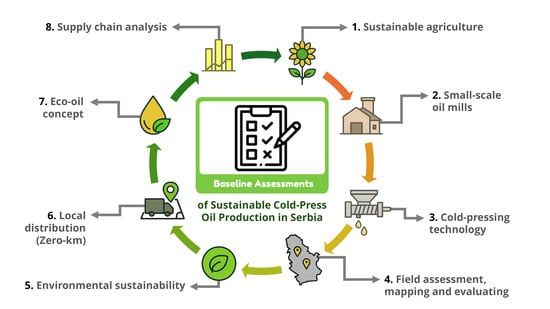
Graphical Abstract

1. Introduction

In recent years, sustainable food production has become a central topic within agricultural and food policies worldwide. Driven by the growing need to reduce environmental impact, ensure food security, and improve resource-use efficiency, various strategies have been developed aiming to make food systems more resilient and environmentally friendly [1,2,3]. Conventional mass agricultural production, focused primarily on yield, has been achieved through excessive use of chemical fertilizers and pesticides, irrational utilization of agricultural waste, and heavy reliance on fossil fuels [3]. This has led to degradation of water bodies [4], deterioration of soil quality and land in general [5,6,7], as well as greenhouse gas emissions [8,9]. Optimizing food production quantities with an emphasis on reducing food and water waste by planning based on actual demand forms the foundation of economically sustainable production. This approach reduces the ecological footprint of the industry while conserving valuable resources. Furthermore, redirecting surplus food to those in need mitigates food supply uncertainty and hunger [10]. The green transformation of food production represents the shift from traditional extensive production models toward adopting green production concepts and technologies [3]. It is estimated that by 2050, the global population will increase by 2 billion, intensifying the demand for energy and resource consumption [11,12]. Key global trends include the promotion of low-energy, low-emission technologies, circular economy approaches, and decentralized small-scale processing units supporting local economies. Local facilities enable the supply chain to be shortened almost to zero kilometers, thereby reducing resource consumption. Global supply chains and mass production have resulted in a situation where more than 70% of international trade today involves intermediate products, raw materials, and value-added services crossing borders multiple times before reaching final consumers as finished products [13,14]. Consumers increasingly demand products that are not only safe and nutritious but also produced with minimal environmental impact. This has led to a significant rise in interest for traditional and minimally processed food products, often labeled as “natural,” “organic,” or “cold-pressed.” Cold pressing of oilseeds fits perfectly within this framework, as it is a mechanical process that does not require chemical solvents, consumes relatively low energy, and preserves the nutritional and bioactive components of oils [15,16,17,18]. The resulting cold-pressed oil is produced in a safe, cost-effective, and environmentally friendly manner [19]. Consequently, cold pressing is increasingly recognized as a green technology for edible oil production [20,21,22]. Its applicability in small processing units and alignment with sustainable development goals make it particularly relevant for both developed and developing countries. Moreover, international organizations and regulatory bodies are progressively incorporating sustainability criteria into food labeling, trade, and production standards, thereby further encouraging the adoption of environmentally friendly technologies throughout the supply chain [14].
This is especially important in countries with pronounced regional disparities in agricultural production, such as Serbia [23], where localized oil production in small-scale facilities enables better utilization of locally available oilseeds, reduces the need for long-distance transportation of raw materials and products, and encourages retention of added value within communities. Additionally, smaller facilities predominantly use screw presses, which consume significantly less energy compared to industrial extraction systems, making them suitable for green and low-carbon production strategies [18,22]. Small oil mills in Serbia provide flexible, local processing of a wide range of oilseeds—from conventional (such as sunflower, soybean, and rapeseed) to alternative and specialized raw materials (including flax, chia, pumpkin seed, hazelnut, and walnuts). These facilities play an important role in valorizing locally grown raw materials, preserving traditional production methods, and promoting rural development through self-employment and circular economy principles. However, despite their significance, Serbia still lacks a systematic registry of small oil mills, their technical capacities, quantities of processed raw materials, and market performance of their products. Specifically, the primary objective of this study is to conduct a comprehensive mapping and engineering assessment of small-scale cold-pressing facilities in Serbia, encompassing their geographical distribution, processing capacities, and technological characteristics. The secondary objective is to analyze the range of screw-press machines available on the market and evaluate their relevance for sustainable production models, thereby linking technological choices with the long-term competitiveness of the cold-pressed oil sector. This dual approach provides a solid foundation for evidence-based policy planning and future comparative studies at the regional and international level. This review provides the first integrated engineering and sustainability assessment of small-scale cold-pressing systems beyond the olive oil sector, filling an evident research gap and offering a methodological framework applicable to other EU regions.

2. Serbia’s Small-Scale Oil Mills

Creating a unified register of processors is challenging because these are small-scale productions, often agricultural households, and processing is closely tied to annual crop yields. Consequently, such facilities frequently open and close depending on the harvest. Until now, only a very limited number of studies have focused on small-scale producers of cold-pressed vegetable oils, and such research is almost non-existent beyond olive oil. The study by Modica et al. (2024) [24] was limited to small Sicilian olive oil producers and did not include other oilseeds or processing technologies. Given the absence of similar systematic studies in international databases, the present work represents the first attempt to develop such an approach at the national level in Serbia, providing a foundation for future international comparisons and benchmarking.
For the identification of registered cold-pressed oil producers in the Republic of Serbia, the Central Register of Food Business Operators (CRFBO) was utilized. This register is maintained by the Ministry of Agriculture, Forestry and Water Management of the Republic of Serbia, in cooperation with the Serbian Business Registers Agency (APR) [25,26]. It represents an official database including all legal entities and individuals engaged in the production, processing, and trade of food products, including cold-pressed vegetable oils.

2.1. Methodology of Register Search

The register search was performed via the official online platform available at registarobjekata.minpolj.gov.rs (accessed on 21 July 2025). The search process involved the following steps:
  • Keyword Input—Relevant keywords such as “cold-pressed oil,” “vegetable oils,” “sunflower oil,” “flaxseed oil,” “pumpkin oil,” and “oil production” were entered to identify pertinent entities efficiently.
  • Filter Application—The register allows refining the search by facility type (e.g., agricultural farm, processing company), activity type, geographic location (municipality), and production capacity.
  • Results Analysis—The obtained list of entities was reviewed in detail, including company or farm name, address, contact details, and specifics of production activities.
To supplement and verify the collected data, additional approaches included:
  • Contact with Local Agricultural Inspectorates—These authorities provide up-to-date information on registered producers within their regions.
  • Participation in Agricultural and Food Exhibitions—Trade fairs offered opportunities to engage with current producers, learn about their products, and explore innovations in cold-pressed oil production.
  • Monitoring Social Media Channels—Many small and medium producers use platforms like Facebook and Instagram to promote products and communicate directly with customers, providing additional current information.
This comprehensive methodology enabled systematic data collection on cold-pressed oil producers, which is essential for market analysis, production planning, and strategic sector development. These citations refer to EQI 2024 data, which include NUTS 1 and NUTS 2 regions of Serbia. Although Serbia is not yet officially part of the NUTS system, the European Commission has agreed with Serbia on a nomenclature called “statistical regions” for statistical purposes (SR 2021—SR 2024) [27].
For creating the interactive map without programming, the Google My Maps service was used. Input data were prepared in Microsoft Excel 2024 format with columns for producer name, latitude, and longitude. The table was imported into Google My Maps, where points were automatically positioned based on coordinates. Colors, descriptions, and labels were added via the service interface according to analysis needs. An interactive map illustrating the study area and relevant spatial data is available via the following link: https://www.google.com/maps/d/viewer?mid=1dtv-HSTKER2U8wewXqvQTNkgfxnzPTE&usp=sharing (accessed on 23 August 2025), providing readers with access to detailed geographical information used in this study.

2.2. Mapping

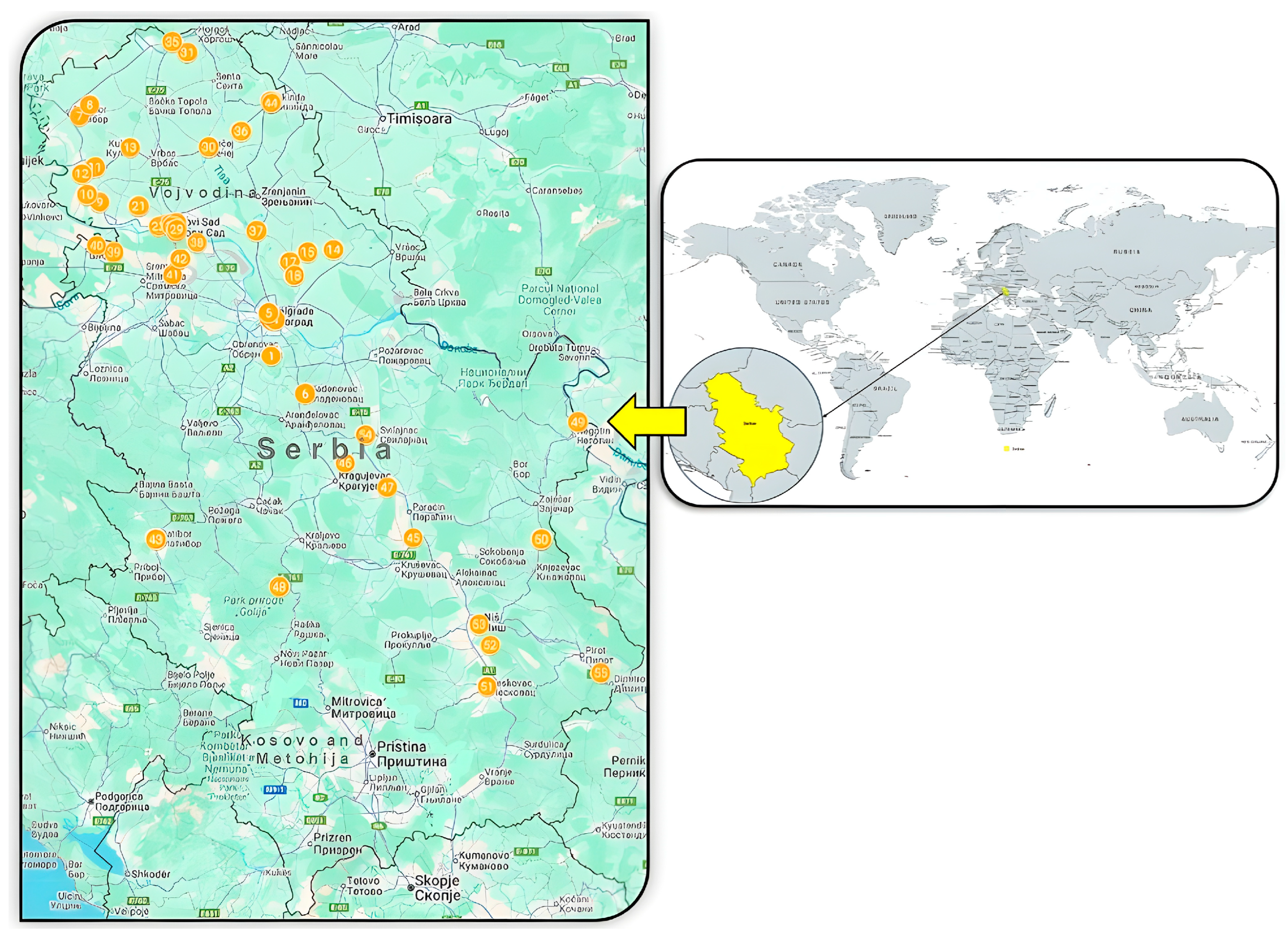
The first comprehensive overview of cold-pressed oil producers in Serbia, focusing on dominant raw materials, estimated processing capacities, facility categories, and potential oil applications, is presented in Table 1 and Figure 1.
Data are classified according to regions consistent with the NUTS 2024 classification, enabling clear visualization of the geographic distribution of production. The data in Table 1 indicate that most producers fall into the category of small artisanal facilities (≤15 tons of raw material per year), which form the backbone of domestic cold-pressed oil production. These facilities typically operate seasonally, with fewer daily working hours and limited press capacities (20–50 kg/h), making them suitable for local markets and a “zero-kilometer” distribution approach. Such producers often offer a wide range of oils—from sunflower and pumpkin seed oils to specialty oils (rosehip, argan, hemp)—enabling supply not only to the food sector but also to cosmetics and pharmaceuticals. Medium-sized (15–100 t/year) and large (>100 t/year) facilities, although fewer in number, are mainly concentrated in Vojvodina and central Serbia. These units operate multiple screw presses with higher capacities (80–500 kg/h) and work nearly year-round, ensuring stable market supply and export potential. They primarily process mass oilseeds such as sunflower and soybean, whereas smaller facilities more often process pumpkin seeds, flax, sesame, nuts, and fruit kernels, contributing to product diversity.
Geographically, Vojvodina is clearly identified as the central cluster of production, particularly the West Bačka and South Bačka districts, thanks to its well-developed agriculture and raw material availability. The Belgrade region hosts a significant number of smaller, specialized producers focusing on premium and multifunctional oils. Southern and Eastern Serbia exhibit a sparser distribution of facilities, primarily oriented towards specific raw materials and value-added products, often targeting niche markets. This database highlights not only production capacities but also the potential for the development of green screw press technologies and the enhancement of the “zero-kilometer” supply chain. It emphasizes that small producers can play a key role in preserving biodiversity of raw materials, promoting local varieties, and sustainable processing, while larger facilities ensure supply continuity and competitiveness in broader markets.

2.3. Raw Materials in Cold-Pressed Oil Production

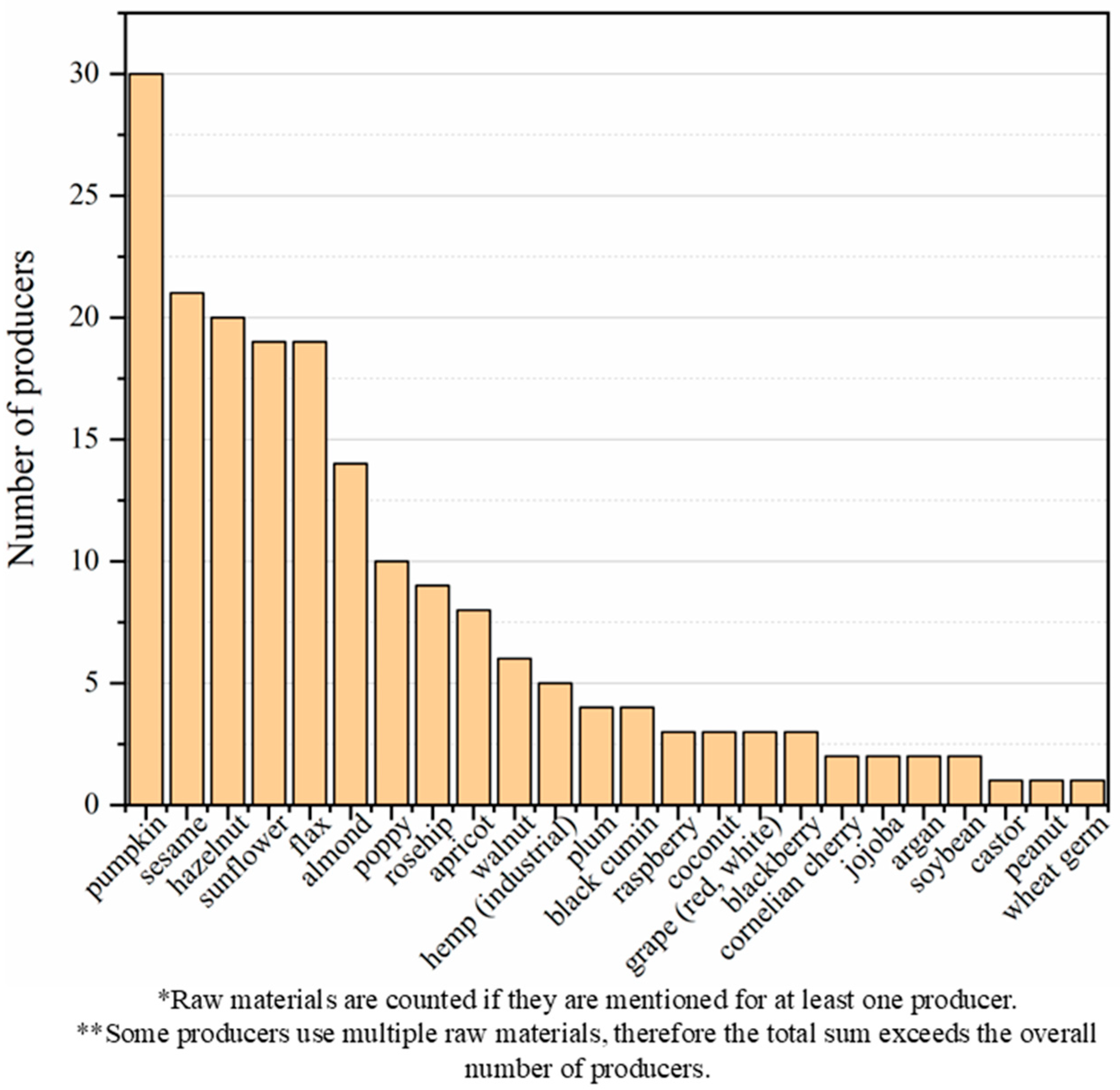
The analysis of dominant raw materials, shown in Figure 2, reveals significant diversity in cold-pressed oil production in Serbia, alongside a clear dominance of several oilseed and nut types. The most prevalent raw material is pumpkin seed, used by 30 producers, reflecting a long tradition, raw material availability, and recognized nutritional and market value of pumpkin seed oil. The high share of pumpkin seeds in the raw material structure is also linked to smaller seasonal facilities, as this oilseed does not require continuous year-round processing and is well-suited for local supply chains within the “zero-kilometer” concept.
Sesame (21 producers), hazelnut (20), and sunflower (19) follow as raw materials with strong presence. While sesame is recognized for its high-value oils in both food and cosmetic industries, hazelnut oils primarily belong to premium assortments, often targeting narrowly specialized markets. Sunflower seeds, although dominant in industrial oil production, here mainly appear in small and medium-sized facilities, often combined with other raw materials, imparting specific sensory and nutritional characteristics to the oils. Flaxseed (19 producers) shares the fourth place in prevalence, reflecting the growing demand for omega-3 fatty acids and functional food products. Among specialized raw materials, almond (14), poppy seed (10), rosehip (9), and apricot kernels (8) stand out, generally processed in smaller batches and used in cosmetic and pharmaceutical sectors. Less common but still market-recognized raw materials include walnut (6), industrial hemp (5), plum (4), black cumin (4), raspberry seeds (3), coconut (3), grape seeds (3), blackberry seeds (3), and cornelian cherry (2). More exotic and import-dependent raw materials such as jojoba (2) and argan (2) are found exclusively among producers oriented toward cosmetic and dermocosmetic markets. The least represented raw materials—castor (1), peanut (1), and wheat germ (1)—indicate the presence of experimental or highly specialized productions, often aimed at very specific consumer groups. This raw material structure indicates that cold-pressed oil production in Serbia combines traditional crops (pumpkin, sunflower, flax) with high-value raw materials for niche markets, thereby achieving product diversification, reducing market risks, and opening avenues for innovation in the green technology sector of screw press oil production.

3. Technology Behind Cold Pressing

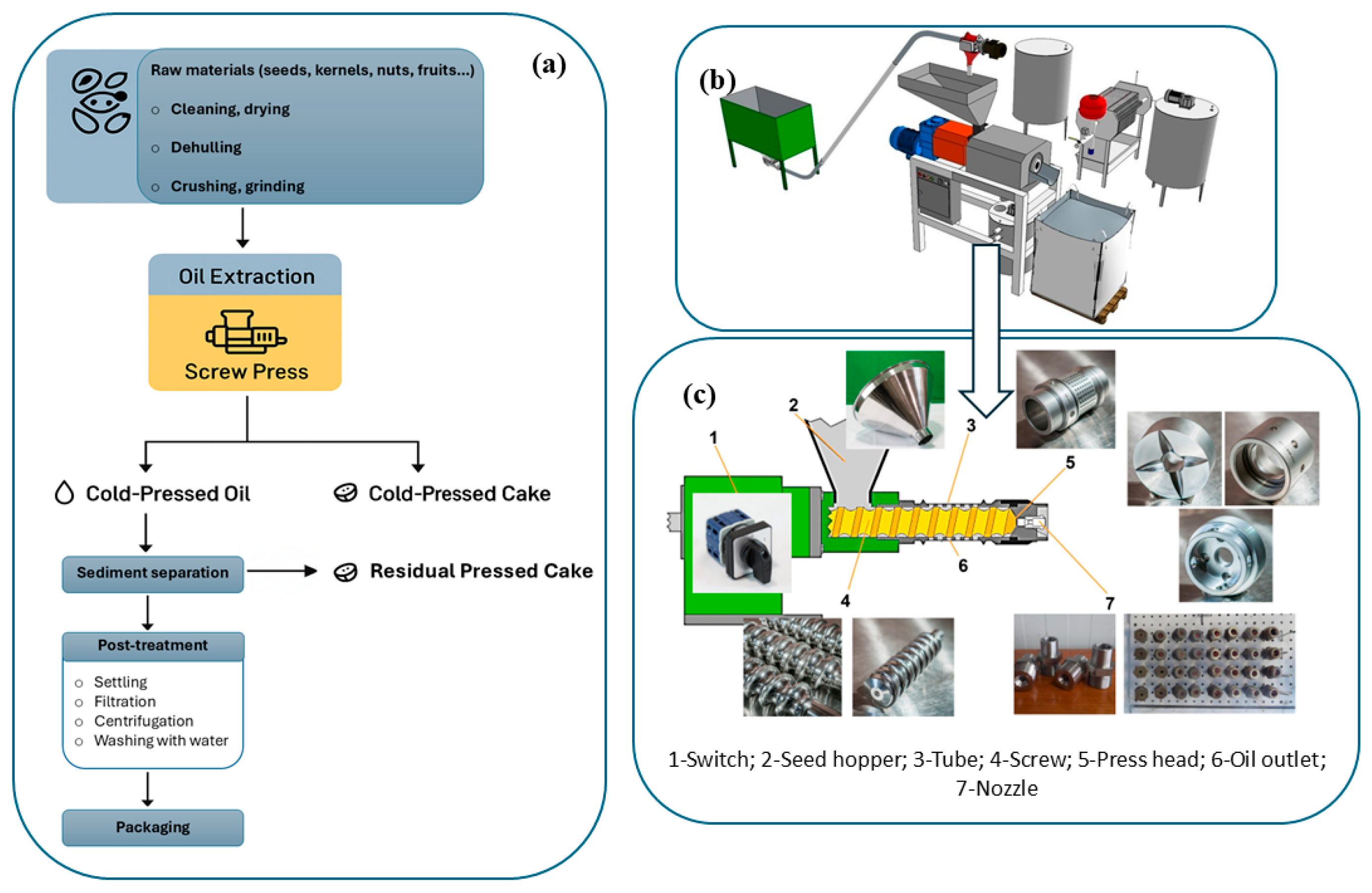
Among the available oil extraction techniques, cold pressing is considered the most sustainable method, as it avoids the use of chemical solvents and reduces energy consumption compared to other industrial extraction processes [20,28]. In the production process of cold-pressed oil, illustrated in Figure 3a,b, raw material preparation (seeds, fruits, or their parts) represents one of the most critical steps, as it directly affects the quality and stability of the final product. Prior to extraction, plant raw material is carefully cleaned, dried, and—depending on the type—partially or completely dehulled. This is followed by mechanical size-reduction operations such as crushing and/or grinding, ensuring optimal texture for efficient oil pressing using a screw press [15,29,30]. The extraction yields crude oil and a solid by-product known as cold-pressed cake. Immediately after pressing, the crude oil contains suspended particles, moisture, and mucilaginous substances that can adversely affect its clarity and oxidative stability. Therefore, sedimentation (settling) is an essential post-pressing step in which heavier impurities gradually settle at the bottom of the tank, while the clarified oil layer is separated and transferred to another vessel. The efficiency of this process depends mainly on temperature, storage time, and particle size, and it can be accelerated by gentle heating and by maintaining the process under an inert gas atmosphere to prevent oxidation. Well-conducted sedimentation improves oil transparency and reduces the load on subsequent filtration units, thereby contributing to the production of stable and high-quality cold-pressed oils. Sedimentation is followed by filtration, after which the filtered oil is stored in crude-oil tanks under controlled conditions. Only physical treatments are permitted in the production of cold-pressed oils—sedimentation, filtration, centrifugation, and water washing [31,32]—while the addition of any additives is strictly prohibited [30]. Cold-pressed oil retains the characteristic properties of its raw material, and its chemical composition and sensory attributes largely depend on both the quality of raw material preparation and the pressing conditions [33,34,35,36].
Screw presses are continuous presses consisting of (Figure 3c): a horizontal screw, a barrel surrounding the screw, a feeding and dosing device, a nozzle for adjusting cake thickness, a gear transmission, and a press housing [37]. In screw presses, oil is separated by forcing the material from a larger into a smaller enclosed space, resulting in compression of the material and a subsequent increase in pressure, which leads to “squeezing” the oil out [38,39]. Due to high friction within the material, a temperature rise is inevitable [40]. Typical operating temperatures of high-capacity industrial presses are around 100 °C. In cold-pressed oil production, however, the outlet oil temperature should not exceed 50 °C [18]. To achieve this, presses of special design must be used, or pressing must be carried out at lower pressures, which results in a lower oil yield [41]. Despite being classified as a cold extraction method, mechanical friction can cause localized temperature spikes exceeding 70 °C, depending on pressing conditions [21]. Studies indicate that temperatures above 50–60 °C can compromise oil quality, leading to oxidation, hydrolysis, and degradation of key bioactive compounds [42]. The most important factors affecting pressing efficiency include [37]:
  • Type and characteristics of the raw material;
  • Preparation of the material for pressing: particle size distribution, residual hull content;
  • Screw press design and power;
  • Pressing parameters: pressure, temperature, process duration, moisture content of feed material, oil content in the cake, etc.
Numerous studies have confirmed that these factors significantly influence both oil yield and the quality of the final product. Heriawan et al. (2018) [43] investigated four types of screw presses and two types of filters for oil extraction from Calophyllum inophillum L. seeds, concluding that process optimization is essential, as seed type significantly affects yield. Lužaić et al. (2021) [15] analyzed sunflower seed cold pressing and reported yields ranging from 20.10% in edible hybrids to as high as 75.61% in oilseed hybrids. Crimaldi et al. (2017) [44], using a 2.2 kW screw press, studied the influence of temperature (50 and 70 °C), screw rotation speed (22 and 32 rpm), and seed pre-treatment in tobacco seeds. The highest yield (73.38 ± 0.31%) was achieved at 70 °C and 32 rpm. Gikuru and Lamech (2007) [45] examined the influence of compression ratio and duration of applied force on soybean oil yield, showing that increasing these parameters positively affects yield, with an optimal temperature limit that should not be exceeded. A linear relationship between yield and both force intensity and pressing time was also observed.
In addition to yield, the literature devotes considerable attention to the impact of process parameters on oil quality and the content of bioactive compounds, as these determine the nutritional and functional value of the final product. Dalgıç et al. (2011) [46] studied the effect of roasting Pistacia terebinthus seeds at 100, 120, and 140 °C on the characteristics of cold-pressed oil. They found that higher temperatures increased tocopherol content (α, β, γ), total phenolics, carotenoids, palmitic and palmitoleic acids, but also increased acidity, peroxide value, and conjugated diene and triene contents—highlighting the trade-off between yield and quality. Rabadán et al. (2018) [47] analyzed the influence of heating-ring temperature (50–200 °C) and screw speed (17, 49, and 96 rpm) on outlet oil temperature when pressing almonds, walnuts, and peanuts. Higher screw speeds were shown to reduce oil exposure to elevated temperatures, thereby preserving functional properties. Rombaut et al. (2015) [48] investigated the effect of die diameter, preheating temperature, and screw speed (20–110 rpm) on grape seed oil extraction, noting that harvest and storage time of the raw material greatly affect total phenolic retention. By combining appropriate process parameters, both yield and phenolic content can be improved, whereas higher seed moisture content negatively affects both metrics.
As shown in Table 2, operating parameters during oil pressing vary considerably depending on the oilseed species used as raw material. These data confirm that there is no single, universal solution for optimal oil extraction from different plant materials. On the contrary, each raw material requires specifically defined and adjusted process parameters to achieve maximum yield while preserving oil quality [18,49]. Recommended values for press die diameter, heating temperature, and screw rotation frequency clearly demonstrate the importance of individual physicochemical and structural characteristics of seeds in shaping the technological process. For example, flaxseed requires considerably higher press heating temperatures (140–150 °C) compared to sunflower [15] or pumpkin seed, indicating a more compact cell wall structure and the need for more intensive mechanical and thermal treatment to release the oil [50]. Conversely, sesame and pumpkin seeds require lower temperatures and slower screw speeds [51], reflecting their greater mechanical sensitivity and lower thermal degradation threshold for oil quality [52].
These recommendations, originating directly from domestic equipment manufacturers, are particularly valuable for small and medium-sized producers in Serbia, who in most cases do not have access to sophisticated devices for automatic process control and optimization. In this context, clearly defined processing parameters for different raw materials can significantly contribute to the standardization of production, reductions in energy and material losses, and preservation of the functional and nutritional properties of the oil [18,37]. Moreover, such technical guidelines represent an important step toward the professionalization of small oil mills, which form the backbone of local processing and the cold-pressed oil market in Serbia. Their implementation can support greater production stability, improved quality control, and increased competitiveness both in domestic and international markets, especially in the functional food and value-added natural product sectors [53].
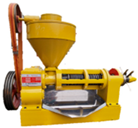
The data presented in Table 3 offer a comprehensive overview of currently available technical solutions for cold-pressing processes on the market, both internationally and domestically. Information was collected through systematic review of manufacturers’ and vendors’ websites, with certain details—such as pricing—obtained through direct communication. Analysis of the selected models reveals a broad range of working capacities (from 15 to 125 kg/h), motor power, dimensions, energy sources, and market prices. This diversity allows producers, particularly small and medium-scale processors, to choose equipment according to their specific needs, spatial constraints, production volumes, and available budgets. For instance, the KernKraft KK 40 F Universal press from Germany offers a high degree of flexibility, with a capacity of up to 40 kg/h and dual power supply options (single-phase and three-phase), making it suitable for diverse production environments. Its robust construction and technical reliability frequently place it within the premium equipment segment, ideal for producers aiming for stable and long-term sustainable operations. In contrast, models such as the Chinese-made YZYX90 offer significantly higher processing capacity (up to 125 kg/h) at a fraction of the cost, making them an attractive solution for producers with limited initial investments or those aiming for rapid capacity scaling. However, lower cost often entails trade-offs—including limited access to technical documentation, slower spare part delivery, lack of local service, and language barriers that may hinder optimal usage and maintenance of the equipment [29]. In this context, domestic cold-press equipment manufacturers such as Elektro motor—Šimon from Senta and MIKRON SZR from Temerin present a significant competitive advantage for local processors. Their presses are generally tailored to the specific characteristics of oilseeds commonly used in the Serbian market, as well as to the technical conditions prevalent in small- and medium-scale processing facilities. An additional advantage is the possibility of direct communication with the manufacturer, fast availability of spare parts, and operator training in the native language, all of which significantly enhance the efficiency and reliability of the production process. Beyond technical and economic aspects, the choice of press has broader implications for business sustainability—including energy efficiency, oil quality, extraction yield, and waste generation. Therefore, proper equipment selection is not merely a technical matter but a strategic decision that directly affects the competitiveness and market positioning of cold-pressed oil producers.

4. Cold Pressing as a Green Technology

Cold pressing represents a sustainable and environmentally friendly oil extraction method from plant materials, increasingly recognized as part of the so-called “green technologies” in the food industry [54,55,56,57]. This process contributes to energy conservation and the retention of nutritional and bioactive compounds while minimizing waste generation [19]. As such, cold pressing has emerged as a desirable alternative to solvent-based extraction methods, aligning with contemporary consumer demands for safe and natural food products [54,55,56].
Unlike conventional extraction techniques that often involve organic solvents and elevated temperatures, cold pressing operates without the use of chemicals and under temperature conditions that prevent degradation of thermolabile compounds [58,59]. This allows for the preservation of key bioactive components such as tocopherols, polyphenols, and phytosterols, which exhibit antioxidant and functional properties [60,61,62,63], with applications not only in food, but also in pharmaceutical and cosmetic industries [64]. In addition, these natural biologically active components improve the oxidative stability of the oil [60,61]. Furthermore, the absence of chemical solvents eliminates the need for their removal from the final product and eliminates risks of contamination, ensuring both product safety and environmental protection [19]. Cold-pressed oils are therefore compliant with growing demands for natural and clean-label food products. At the industrial level, the advantages of cold pressing include lower energy consumption, reduced environmental footprint, and comparatively low capital investment. The process requires relatively little energy input, as it proceeds without preheating or complex downstream processing steps [65,66], which further enhances its sustainability and classifies it among low-carbon technologies. In addition, due to the absence of toxic solvents, the process does not generate wastewater, contributing to a safer working environment.
One of the main limitations of mechanical oil recovery via cold pressing is its relatively low extraction efficiency and variability in product quality [67]. Residual oil content in the press cake may range from 8% to 14% [68]. Moreover, cold-pressed oils are often rich in polyunsaturated fatty acids, which can compromise oxidative stability. They also tend to contain higher amounts of pro-oxidant compounds, resulting in a shorter shelf life compared to refined oils [69,70].
Importantly, cold pressing generates minimal process waste, which contributes to its economic feasibility. The residual press cake, rich in fibers, proteins, and remaining oil, has numerous potential applications in animal feed and food industries—as protein isolates, concentrates, hydrolysates, antioxidants, dietary fibers, enzymes, biosurfactants—as well as in mushroom cultivation, biopolymer packaging, and biofuel production [71,72]. A variety of studies have evaluated the characteristics of press cake from different oilseeds, with a summary of recent findings presented in Table 4.
Particularly notable is the high protein content, often exceeding 30% of dry matter, making these protein fractions suitable for use as concentrates, isolates, hydrolysates, or structurally functionalized extracts in human nutrition, animal feed, functional food formulations, emulsifiers, and biofilms. For example, the high protein value of rapeseed and flaxseed cakes, along with their technological functionality (e.g., gelling, emulsification), supports their use as added-value functional ingredients [79,84,86]. The presence of polyphenolic components, especially in flaxseed and rapeseed cakes, further enhances their antioxidant potential, offering opportunities for application as natural additives in functional and clean-label foods [78,86]. These compounds not only prolong shelf life but also improve the health profile of final products, aligning with current nutritional trends.
An innovative valorization pathway for press cakes lies in their use as substrates for fermentation. Recent focus has been placed on biotechnological production of biosurfactants—particularly surfactin—using press cakes as low-cost alternatives to conventional nutrient media [87]. Studies have demonstrated that sunflower and rapeseed press cakes, owing to their protein and residual oil content, effectively support the growth of Bacillus subtilis and biosurfactant synthesis [85]. Key nutritional contributors in this process include proteins (as nitrogen sources) and residual lipids (as carbon sources and precursors for lipopeptide synthesis). This approach not only reduces production costs but also improves the ecological sustainability of the overall process.
Another promising application involves the use of press cake-derived proteins for biopolymer production. For example, proteins extracted from camelina and pumpkin seed cakes have been used to develop biodegradable films and oil packaging materials with good barrier and antioxidant properties [82,83]. This positions cold pressing as an entry point in an integrated biorefinery concept, where all components of the raw material—oil, press cake, and sediment—are utilized in a value-added production chain. The effective utilization of by-products would be greatly enhanced through detailed industrial-scale characterization of raw materials and press cakes, including nutritional profiling, antinutritional factors, microbiological safety, and physicochemical properties. Establishing such quality standards is critical for safe and consistent application across various industries. Overall, the literature clearly indicates that cold-pressing by-products should no longer be treated as waste but rather as high-value raw materials with significant application potential [72]. Their use enhances not only the economic viability of production but also reduces its environmental impact, in line with the principles of green chemistry and circular economy [88].

5. Market Trends and Potential

Over the past decade, there has been a growing global demand for cold-pressed plant oils, a trend that is also increasingly evident in Serbia. According to Future Market Insights, the global cold-pressed oil market is projected to expand from USD 24.6 billion in 2025 to USD 40.5 billion by 2035, reflecting a compound annual growth rate of 5.1%. These oils are highly valued for their elevated levels of bioactive compounds such as tocopherols, phytosterols, polyphenols, and carotenoids, which are better preserved compared to refined oils, as mentioned previously. The rising consumer preference for natural, minimally processed, and vegan products [89] further fuels the market growth.
In Serbia, consumers are increasingly recognizing the value of unrefined oils derived from sunflower, pumpkin, flax, and sesame seeds. The concept of “zero-kilometer food,” which emphasizes local production and short supply chains, aligns seamlessly with the practices of small-scale cold-pressed oil producers. These oils are commonly sold through farmers’ markets, health food stores, and direct-to-consumer channels, ensuring freshness, traceability, and transparency.
Cold-pressed oils are subject to national food safety regulations and labeling requirements. In Serbia, these products are regulated by the Rulebook on the Quality and Other Requirements for Edible Vegetable Oils and Fats, Margarine and Related Products (2006) [90], as well as the Food Safety Law (2009) [91], Regulation on Maximum Concentrations of Certain Contaminants in Food (2024) [92] and Regulation on Maximum Residue Levels of Plant Protection Products in Food and Feed (2022) [93] which mandate clear disclosure of production method, origin, composition, and the absence of additives or solvents, maximum permitted concentrations of contaminants and residues of plant protection products. As cold-pressed oils are often positioned as premium products, accurate and transparent labeling is critical for building consumer trust. Nonetheless, inconsistencies in the use of terms such as “virgin,” “unrefined,” and “natural,” along with weak enforcement, remain a challenge in the Serbian market.
At the EU level, general food law [94], food hygiene requirements [95], and microbiological criteria for foodstuffs [96] form the foundation of food safety legislation, preceding Codex Alimentarius (1999) [31] guidelines and Regulation (EU) No 1169/2011 [97] on the provision of food information to consumers. For small Serbian producers aiming to export to the EU, alignment with these regulations is essential.
Serbia holds considerable export potential in the segment of high-quality cold-pressed oils [98]. Favorable agroecological conditions for oilseed cultivation and the widespread use of screw presses in small-scale facilities provide a solid foundation for developing the export sector. Several domestic producers are already exporting to neighboring markets such as Slovenia, Croatia, and Hungary, while interest from Western European buyers is growing. Nevertheless, international expansion remains constrained by several factors: inconsistent product quality, lack of certification (e.g., organic, non-GMO), weak branding, and limited access to distribution channels. Further investment is required in quality assurance, process standardization, and marketing strategies to fully capitalize on Serbia’s cold-pressed oil potential abroad.
E-commerce, including the sale of cold-pressed oils, has grown significantly, especially after the COVID-19 pandemic [99], which shifted consumer behavior toward direct purchasing from producers via websites, social media, and specialized platforms for healthy foods. Online sales allow small producers to bypass conventional distribution channels and communicate directly with consumers, reducing costs while offering space to highlight unique product features such as seed origin, pressing method, and safety certifications. However, success in e-commerce demands investment in visual identity, packaging quality, logistics, and customer service [100,101,102]. Producers of cold-pressed oils in Serbia have adapted to this global trend.
Cold-pressed oils are positioned in the market as premium products, priced significantly higher than industrially refined oils. The Statistical Office of the Republic of Serbia does not track retail prices of cold-pressed oils. However, in its April 2025 bulletin, the average price of refined sunflower oil was reported at 187.34 RSD/L–1.59 €/L [103]. In contrast, cold-pressed sunflower and pumpkin seed oils sell for 7–15 €/L, while walnut, hazelnut, flaxseed, and hemp oils can reach 17–42 €/L, depending on raw material type, seasonality, packaging, and retail channel. On EU markets, regionally produced cold-pressed oils command prices of €10–€20 per 250–500 mL bottle, particularly if they carry organic, geographical indication, or artisanal production labels. The premium price of cold-pressed oils is justified by consumers primarily through their nutritional and functional qualities. Beyond health benefits, consumers also value product authenticity, raw material provenance, small-scale production practices, and sustainable manufacturing practices—especially within the context of “zero-kilometer” food systems.

6. Conclusions

This review demonstrates that Serbia’s cold-pressed oil sector is diverse, regionally distinctive, and technologically adaptable, with small-scale artisanal mills forming the backbone of production. The mapping identified 55 producers, of which over 60% operate with limited seasonal capacities and target both food and non-food markets, including cosmetics and pharmaceuticals. Vojvodina emerged as the primary production hub, particularly the West Bačka and South Bačka districts, owing to favorable agricultural conditions and raw material availability. Smaller facilities frequently process specialty seeds such as pumpkin, sesame, and hazelnut, contributing to biodiversity preservation and product diversification, while larger plants ensure year-round supply and export potential through processing mass oilseeds like sunflower and soybean. In addition, the review of cold-pressing machines available on the market highlights the range of technical solutions accessible to producers and emphasizes the importance of selecting equipment that aligns with production scale, seed type, and sustainability goals. The integration of zero-kilometer concepts and green screw press technologies positions the sector well for alignment with EU sustainability criteria. Importantly, this study represents the first systematic national-level mapping and engineering assessment of small-scale cold-pressing facilities in Serbia, providing a foundation for future international comparisons and benchmarking. The collected data on producers, processed raw materials, and pressing technologies not only addresses a critical knowledge gap in the national context but also offers insights applicable to small-scale oil production across Europe. The absence of a systematic registry of production capacities highlights the need for future research focused on establishing a national database of small-scale cold-pressed oil producers, advancing technological assessment of pressing equipment, and innovating processing methods tailored to specific oilseeds. These actions would strengthen Serbia’s competitiveness in domestic and international markets and provide a solid foundation for future comparative studies at the European and global level.

Author Contributions

Conceptualization, R.R. and T.L.; methodology, R.R. and T.L.; software, R.R. and T.L.; validation, R.R. and T.L.; formal analysis, R.R. and T.L.; investigation, R.R. and T.L.; writing—original draft preparation, T.L.; writing—review and editing, R.R.; visualization, R.R. and T.L.; All authors have read and agreed to the published version of the manuscript.

Funding

This research was supported by the Ministry of Science, Technological Development, and Innovation of the Republic of Serbia, under contract numbers 451-03-136/2025-03/200134 and 451-03-137/2025-03/200134.

Institutional Review Board Statement

Not applicable.

Informed Consent Statement

Not applicable.

Data Availability Statement

The original contributions presented in this study are included in the article. Further inquiries can be directed to the corresponding author.

Conflicts of Interest

The authors declare no conflicts of interest.

References

  1. Dharmayanti, N.; Ismail, T.; Hanifah, I.A.; Taqi, M. Exploring sustainability management control system and eco-innovation matter sustainable financial performance: The role of supply chain management and digital adaptability in Indonesian context. J. Open Innov. Technol. Mark. Complex. 2023, 9, 100119. [Google Scholar] [CrossRef]
  2. Puspikaa, W.; Masudina, I.; Saputroa, T.E.; Alfarisi, S.; Restuputri, D.P.; Shariffc, S.R. Sustainable economic production quantity optimization (SEPQ) considering food waste emission and water waste emission using genetic algorithm. Sustain. Oper. Comput. 2025, 6, 140–152. [Google Scholar] [CrossRef]
  3. Fu, Z.; Zhang, C.; Huang, Z.; Jia, L.; Sun, G.; Wang, W. Advancing sustainable and innovative agriculture: An empirical study of farmers’ livelihood risks and the green transformation of food production. J. Innov. Knowl. 2025, 10, 100732. [Google Scholar] [CrossRef]
  4. Varekar, V.; Yadav, V.; Karmakar, S. Rationalization of water quality monitoring locations under spatiotemporal heterogeneity of diffuse pollution using seasonal export coefficient. J. Environ. Manag. 2021, 277, 111342. [Google Scholar] [CrossRef] [PubMed]
  5. Zalidis, G.; Stamatiadis, S.; Takavakoglou, V.; Eskridge, K.; Misopolinos, N. Impacts of agricultural practices on soil and water quality in the Mediterranean region and proposed assessment methodology. Agric. Ecosyst. Environ. 2002, 88, 137–146. [Google Scholar] [CrossRef]
  6. Wan, X.; Yang, J.; Song, W. Pollution status of agricultural land in China: Impact of land use and geographical position. Soil Water Res. 2018, 13, 234–242. [Google Scholar] [CrossRef]
  7. Wang, H.; He, P.; Shen, C.; Wu, Z. Effect of irrigation amount and fertilization on agriculture non-point source pollution in the paddy field. Environ. Sci. Pollut. Res. Int. 2019, 26, 10363–10373. [Google Scholar] [CrossRef]
  8. Burch, D. Greenhouse gas emissions in UK agriculture. Vet. Rec. 2020, 186, 729. [Google Scholar] [CrossRef]
  9. Wang, X.; Chen, Y.; Yang, K.; Duan, F.; Liu, P.; Wang, Z.; Wang, J. Effects of legume intercropping and nitrogen input on net greenhouse gas balances, intensity, carbon footprint and crop productivity in sweet maize cropland in South China. J. Clean. Prod. 2021, 314, 127997. [Google Scholar] [CrossRef]
  10. Galford, G.L.; Peña, O.; Sullivan, A.K.; Nash, J.; Gurwick, N.; Pirolli, G.; Richards, M.; White, J.; Wollenberg, E. Agricultural development addresses food loss and waste while reducing greenhouse gas emissions. Sci. Total Environ. 2020, 699, 134318. [Google Scholar]
  11. Ragini, Y.P.; Karishma, S.; Kamalesh, R.; Saravanan, A.; TajSabreen, B.; Koushik Eswaar, D. Sustainable biorefinery approaches in the valorization of agro-food industrial residues for biofuel production: Economic and future perspectives. Sustain. Energy Technol. Assess. 2025, 75, 104239. [Google Scholar] [CrossRef]
  12. Panić, S.; Đurišić-Mladenović, N.; Petronijević, M.; Stijepović, I.; Milanović, M.; Kozma, G.; Kukovecz, A. Valorization of waste biomass towards biochar production—Characterization and perspectives for sustainable applications in Serbia. Environ. Technol. Innov. 2025, 37, 104043. [Google Scholar] [CrossRef]
  13. Antràs, P. Global Production: Firms, Contracts, and Trade Structure; Princeton University Press: Princeton, NJ, USA, 2016. [Google Scholar]
  14. Awokuse, T.; Lim, S.; Santeramo, F.; Steinbach, S. Robust policy frameworks for strengthening the resilience and sustainability of agri-food global value chains. Food Policy 2024, 127, 102714. [Google Scholar] [CrossRef]
  15. Lužaić, T.; Romanić, R.; Grahovac, N.; Jocić, S.; Cvejić, S.; Hladni, N.; Pezo, L. Prediction of mechanical extraction oil yield of new sunflower hybrids—Artificial neural network model. J. Sci. Food Agric. 2021, 101, 5827–5833. [Google Scholar] [CrossRef] [PubMed]
  16. Lužaić, T.; Nakov, G.; Kravić, S.; Jocić, S.; Romanić, R. Influence of hull and impurity content in high-oleic sunflower seeds on pressing efficiency and cold-pressed oil yield. Appl. Sci. 2025, 15, 3012. [Google Scholar] [CrossRef]
  17. Alessandra, D.; Ramadan, M.F.; Vita Di Stefano, M.L. Cold pressed oils: A green source of specialty oils. Front. Nutr. 2023, II, 1224878. [Google Scholar]
  18. Rathod, M.L.; Angadi, B.M.; Bhavi, I.G. A review on optimization of process parameters of cold pressed oil extraction for high output and for enhanced quality and retained nutrients. Food Humanit. 2025, 5, 100698. [Google Scholar] [CrossRef]
  19. Masoodi, L.; Gani, A.; Sircar, D.; Jan, K. Quality analysis of walnut oil extracted by cold press and solvent methods for in vitro phytochemicals, antioxidant activity and GCMS analysis. Meas. Food 2025, 18, 100223. [Google Scholar] [CrossRef]
  20. Tura, M.; Mandrioli, M.; Valli, E.; Gallina Toschi, T. Quality indexes and composition of 13 commercial hemp seed oils. J. Food Compos. Anal. 2023, 117, 105112. [Google Scholar] [CrossRef]
  21. Sannino, M.; Piccolella, S.; Maresca, G.; Siano, F.; Picariello, G.; Pacifico, S.; Faugno, S. Cooling-assisted cold-pressing: A sustainable approach to high-quality hemp seed oil extraction. Future Foods 2025, 12, 100714. [Google Scholar] [CrossRef]
  22. Lubna, M.; Gull, A.; Masoodi, F.A.; Gani, A.; Nissar, J.; Ahad, T.; Nayik, G.A.; Mukarram, S.A.; Kovács, B.; Prokis, J.; et al. An overview on traditional vs. green technology of extraction methods for producing high quality walnut oil. Agronomy 2022, 12, 2258. [Google Scholar] [CrossRef]
  23. ETIP. Bioenergy: Wieselburg, Austria, 2020.Serbia. In Bioenergy Fact Sheet; ETIP Bioenergy: Wieselburg, Austria, 2020. [Google Scholar]
  24. Modica, G.; Pulvirenti, A.; Spina, D.; Bracco, S.; D’Amico, M.; Di Vita, G. Clustering olive oil mills through a spatial and economic GIS-based approach. Clean. Environ. Syst. 2024, 14, 100207. [Google Scholar] [CrossRef]
  25. Business Registers Agency of the Republic of Serbia. Central Register of Business Entities. Available online: https://www.apr.gov.rs (accessed on 28 July 2025).
  26. Ministry of Agriculture, Forestry and Water Management of the Republic of Serbia. Central Register of Food Business Operators. Available online: https://registarobjekata.minpolj.gov.rs (accessed on 21 July 2025).
  27. Charron, N.; Lapuente, V.; Bauhr, M. The Geography of Quality of Government in Europe. Subnational Variations in the 2024 European Quality of Government Index and Comparisons with Previous Rounds; Working paper series 2024:2; University of Gothenburg: Göteborg, Sweden, 2024. [Google Scholar]
  28. Izzo, L.; Pacifico, S.; Piccolella, S.; Castaldo, L.; Narváez, A.; Grosso, M.; Ritieni, A. Chemical analysis of minor bioactive components and cannabidiolic acid in commercial hemp seed oil. Molecules 2020, 25, 3710. [Google Scholar] [CrossRef]
  29. Romanić, R. Cold pressed sunflower (Helianthus annuus L.) oil. In Cold Pressed Oils: Green Technology, Bioactive Compounds, Functionality, and Applications, 1st ed.; Ramadan, M.F., Ed.; Academic Press: London, UK, 2020; pp. 197–218. [Google Scholar]
  30. Oroian, M. A new perspective regarding the adulteration detection of cold-pressed oils. LWT—Food Sci. Technol. 2024, 198, 116025. [Google Scholar] [CrossRef]
  31. Codex Alimentarius. Standard for Named Vegetable Oils Codex Stan 210-1999; Codex Alimentarius: Rome, Italy, 1999. [Google Scholar]
  32. Tsimidou, M.Z.; Mastralexi, A.; Ozdikicierler, O. Cold pressed virgin olive oils. In Cold Pressed Oils: Green Technology, Bioactive Compounds, Functionality, and Applications, 1st ed.; Ramadan, M.F., Ed.; Academic Press: London, UK, 2020; pp. 547–573. [Google Scholar]
  33. Grahovac, N.; Lužaić, T.; Živančev, D.; Stojanović, Z.; Đurović, A.; Romanić, R.; Kravić, S.; Miklič, V. Assessing nutritional characteristics and bioactive compound distribution in seeds, oil, and cake from confectionary sunflowers cultivated in Serbia. Foods 2024, 13, 1882. [Google Scholar] [CrossRef]
  34. Lužaić, T.; Kravić, S.; Stojanović, Z.; Grahovac, N.; Jocić, S.; Cvejić, S.; Pezo, L.; Romanić, R. Investigation of oxidative characteristics, fatty acid composition and bioactive compounds content in cold pressed oils of sunflower grown in Serbia and Argentina. Heliyon 2023, 9, e18201. [Google Scholar] [CrossRef]
  35. Momot, M.; Stawicka, B.; Szydłowska-Czerniak, A. Physicochemical properties and sensory attributes of cold-pressed camelina oils from the Polish retail market. Appl. Sci. 2023, 13, 1924. [Google Scholar] [CrossRef]
  36. Ali, E.A.E.; Mohammed, D.M.; El Gawad, F.A.; Orabi, M.A.; Gupta, R.K.; Srivastav, P.P. Valorization of food processing waste byproducts for essential oil production and their application in food system. Waste Manag. Bull. 2025, 3, 100200. [Google Scholar] [CrossRef]
  37. Çakaloğlu, B.; Özyurt, V.H.; Ötleş, S. Cold press in oil extraction. A review. Ukr. Food J. 2018, 7, 640–654. [Google Scholar] [CrossRef]
  38. Elhassan, S.H.A.R. Mechanical Expression of Oil from Sesame (Sesamum indicum L.). Ph.D. Thesis, University of Khartoum, Khartoum, Sudan, 2009. [Google Scholar]
  39. Nde, D.B.; Foncha, A.C. Optimization methods for the extraction of vegetable oils: A review. Processes 2020, 8, 209. [Google Scholar] [CrossRef]
  40. Piravi-Vanak, Z.; Dadazadeh, A.; Azadmard-Damirchi, S.; Torbati, M.; Martinez, F. The effect of extraction by pressing at different temperatures on sesame oil quality characteristics. Foods 2024, 13, 1472. [Google Scholar] [CrossRef]
  41. Subroto, E.; Manurung, R.; Heeres, H.J.; Broekhuis, A.A. Optimization of mechanical oil extraction from Jatropha curcas L: Kernel using response surface method. Ind. Crops Prod. 2015, 63, 294–302. [Google Scholar] [CrossRef]
  42. Senphan, T.; Mungmueang, N.; Sriket, C.; Sriket, P.; Sinthusamran, S.; Narkthewan, P. Influence of extraction methods and temperature on hemp seed oil stability: A comprehensive quality assessment. Appl. Food Res. 2025, 5, 100702. [Google Scholar] [CrossRef]
  43. Heriawan, Y.; Indartono, S.; Ika, A.K. Optimization of mechanical oil extraction process of Nyamplung seeds (Calophyllum inophyllum L.) by flexible single screw extruder. AIP Conf. Proc. 2018, 1984, 020013. [Google Scholar] [CrossRef]
  44. Crimaldi, M.; Faugno, S.; Sannino, M.; Ardito, L. Optimization of hemp seeds (Canapa Sativa L.) oil mechanical extraction. Chem. Eng. Trans. 2017, 58, 373–378. [Google Scholar]
  45. Gikuru, M.; Lamech, M.A. Study of yield characteristics during mechanical oil extraction of preheated and ground soybeans. J. Appl. Sci. Res. 2007, 3, 1146–1151. [Google Scholar]
  46. Dalgıç, L.; Sermet, O.S.; Özkan, G. Farklı kavurma sıcaklıklarının menengiç yağ kalite parametreleri üzerine etkisi. Acad. Food J./Akad. GIDA 2011, 9, 26–36. [Google Scholar]
  47. Rabadán, A.; Pardo, J.E.; Gómez, R.; Álvarez-Ortí, M. Influence of temperature in the extraction of nut oils by means of screw pressing. LWT—Food Sci. Technol. 2018, 93, 354–361. [Google Scholar] [CrossRef]
  48. Rombaut, N.; Savoire, R.; Thomasset, B.; Castello, J.; Van Hecke, E.; Lanoisellé, J.L. Optimization of oil yield and oil total phenolic content during grape seed cold screw pressing. Ind. Crops Prod. 2015, 63, 26–33. [Google Scholar] [CrossRef]
  49. Romanić, R.; Lužaić, T. Dehulling effectiveness of high-oleic and linoleic sunflower oilseeds using air-jet impact dehuller: A comparative study. Food Sci. Technol. 2022, 42, e58620. [Google Scholar] [CrossRef]
  50. Chand, M.; Chopra, R.; Singh, A.; Prabhakar, P.K.; Kamboj, A.; Kumari Singh, P. Enhancement of flaxseed oil quality and yield using freeze-thaw pretreatment optimization: A novel approach. Food Chem. X 2025, 26, 102328. [Google Scholar] [CrossRef]
  51. Rabrenović, B.B.; Dimić, E.B.; Novaković, M.M.; Tešević, V.V.; Basić, Z.N. The most important bioactive components of cold pressed oil from different pumpkin (Cucurbita pepo L.) seeds. LWT—Food Sci. Technol. 2014, 55, 521–527. [Google Scholar] [CrossRef]
  52. Melo, D.; Álvarez-Ortí, M.; Nunes, M.A.; Costa, A.S.; Machado, S.; Alves, R.C.; Pardo, J.E.; Oliveira, M.B.P. Whole or defatted sesame seeds (Sesamum indicum L.)? The effect of cold pressing on oil and cake quality. Foods 2021, 10, 2108. [Google Scholar] [CrossRef]
  53. Wandhekar, S.S.; Pawar, V.S.; Shinde, S.T.; Gangakhedka, P.S. Extraction of oil from oilseeds by cold pressing: A review. Indian Food Ind. Mag. 2023, 4, 63–69. [Google Scholar]
  54. Ramadan, M.F. Healthy blends of high linoleic sunflower oil with selected cold pressed oils: Functionality, stability and antioxidative characteristics. Ind. Crops Prod. 2013, 43, 65–72. [Google Scholar] [CrossRef]
  55. Kiralan, M.; Çalik, G.; Kiralan, S.; Ramadan, M.F. Monitoring stability and volatile oxidation compounds of cold-pressed flax seed, grape seed and black cumin seed oils upon photo-oxidation. J. Food Meas. Charact. 2018, 12, 616–621. [Google Scholar] [CrossRef]
  56. El Makawy, A.I.; Ibrahim, F.M.; Mabrouk, D.M.; Ahmed, K.A.; Fawzy Ramadan, M. Effect of antiepileptic drug (Topiramate) and cold pressed ginger oil on testicular genes expression, sexual hormones and histopathological alterations in mice. Biomed. Pharmacother. 2019, 110, 409–419. [Google Scholar] [CrossRef] [PubMed]
  57. Siejak, P.; Neunert, G.; Kaminska, W.; Dembska, A.; Polewski, K.; Siger, A.; Grygier, A.; Tomaszewska-Gras, J. A crude, cold-pressed oil from elderberry (Sambucus nigra L.) seeds: Comprehensive approach to properties and characterization using HPLC, DSC, and multispectroscopic methods. Food Chem. 2025, 464, 141758. [Google Scholar] [CrossRef] [PubMed]
  58. Jiang, L.; Wu, J.L.; Liu, S.; Wu, W.W.; Liao, L.Y. Effect of alkaline microcrystalline cellulose deacidification on chemical composition, antioxidant activity and volatile compounds of camellia oil. LWT—Food Sci. Technol. 2023, 186, e115214. [Google Scholar] [CrossRef]
  59. Jiang, L.; Wu, W.; Wu, S.; Wu, J.; Zhang, Y.; Liao, L. Effect of different pretreatment techniques on quality characteristics, chemical composition, antioxidant capacity and flavor of cold-pressed rapeseed oil. LWT—Food Sci. Technol. 2024, 201, 116157. [Google Scholar] [CrossRef]
  60. Bhatnagar, A.S.; Gopala Krishna, A.G. Lipid classes and subclasses of cold-pressed and solvent-extracted oils from commercial Indian Niger (Guizotia abyssinica (L.f.) Cass.) seed. J. Am. Oil Chem. Soc. 2014, 91, 1205–1216. [Google Scholar] [CrossRef]
  61. Prescha, A.; Grajzer, M.; Dedyk, M.; Grajeta, H. The antioxidant activity and oxidative stability of cold-pressed oils. J. Am. Oil Chem. Soc. 2014, 91, 1291–1301. [Google Scholar] [CrossRef] [PubMed]
  62. Wei, C.Q.; Liu, W.Y.; Xi, W.P.; Cao, D.; Zhang, H.J.; Ding, M.; Chen, L.; Xu, Y.Y.; Huang, K.X. Comparison of volatile compounds of hot—pressed, cold—pressed and solvent—extracted flaxseed oils analyzed by SPME—GC/MS combined with electronic nose: Major volatile scan be used as markers to distinguish differently processed oils. Eur. J. Lipid Sci. Technol. 2015, 117, 320–330. [Google Scholar] [CrossRef]
  63. Belhoussaine, O.; El Kourchi, C.; Mohammed, A.; El Yadini, A.; Ullah, R.; Iqbal, Z.; Goh, K.W.; Gallo, M.; Harhar, H.; Bouyahya, A.; et al. Unveiling the oxidative stability, phytochemical richness, and nutritional integrity of cold-pressed Linum usitatissimum oil under UV exposure. Food Chem. X 2024, 24, 101785. [Google Scholar] [CrossRef]
  64. Carra, F.; Jaouhari, Y.; Disca, V.; Cecchi, L.; Mulinacci, N.; Giovannelli, L.; Ferreira-Santos, P.; Martakos, I.C.; Thomaidis, N.S.; Gallina, A.; et al. A comparative study of bioactive and volatile components in cold-pressed apricot and peach kernel oils: Implications for nutritional, nutraceuticals and cosmetics functional properties. Food Biosci. 2025, 68, 106585. [Google Scholar] [CrossRef]
  65. Teh, S.S.; Birch, J. Physicochemical and quality characteristics of cold-pressed hemp, flax, and canola seed oils. J. Food Compos. Anal. 2013, 30, 26–31. [Google Scholar] [CrossRef]
  66. Kaseke, T.; Opara, U.L.; Fawole, O.A. Quality and antioxidant properties of cold-pressed oil from blanched and microwave-pretreated pomegranate seed. Foods 2021, 10, 712. [Google Scholar] [CrossRef]
  67. Ramadan, M.F. Introduction to cold pressed oils: Green technology, bioactive compounds, functionality, and applications. In Cold Pressed Oils: Green Technology, Bioactive Compounds, Functionality, and Applications; Ramadan, M.F., Ed.; Academic Press: London, UK, 2020; pp. 1–5. [Google Scholar]
  68. Kabutey, A.; Herák, D.; Mizera, C. Assessment of quality and efficiency of cold-pressed oil from selected oilseeds. Foods 2023, 12, 3636. [Google Scholar] [CrossRef]
  69. Brühl, L. Determination of trans fatty acids in cold pressed oils and in dried seeds. Fett/Lipid 1996, 98, 380–383. [Google Scholar] [CrossRef]
  70. Rotkiewicz, D.; Konopka, I.; Zylik, S. State of works on the rapeseed oil processing optimization. I. Oil obtaining. Rośliny Oleiste/Oilseed Crops 1999, 20, 151–168. [Google Scholar]
  71. Ancuța, P.; Sonia, A. Oil press-cakes and meals valorization through circular economy approaches: A review. Appl. Sci. 2020, 10, 7432. [Google Scholar] [CrossRef]
  72. Grahovac, N.; Aleksić, M.; Trajkovska, B.; Marjanović Jeromela, A.; Nakov, G. Extraction and valorization of oilseed cakes for value-added food components—A review for a sustainable foodstuff production in a case process approach. Foods 2025, 14, 2244. [Google Scholar] [CrossRef] [PubMed]
  73. Sakač, M.; Marić, A.; Đermanović, B.; Dragojlović, D.; Šarić, B.; Jovanov, P. Characterisation of fibre-rich ingredients obtained from defatted cold-pressed rapeseed cake after protein extraction. LWT—Food Sci. Technol. 2025, 222, 117671. [Google Scholar] [CrossRef]
  74. Qin, Z.; Chang, Z.L.; Qin, Z.; Liu, H.M.; Chen, Z.M.; Zhu, X.L.; Wang, Y.G.; Fan, W.; Mei, H.X.; Gu, L.B.; et al. A novel strategy for preparing lignan-rich sesame oil from cold-pressed sesame seed cake by combining enzyme-assisted treatment and subcritical fluid extraction. Ind. Crops Prod. 2024, 218, 119041. [Google Scholar] [CrossRef]
  75. Baker, P.W.; Preskett, D.; Višnjevec, A.M.; Schwarzkopf, M.; Krienke, D.; Charlton, A. Pilot scale extraction of protein from cold and hot-pressed rapeseed cake: Preliminary studies on the effect of upstream mechanical processing. Food Bioprod. Process. 2022, 133, 132–139. [Google Scholar] [CrossRef]
  76. Yuan, D.; Cao, C.; Kong, B.; Sun, F.; Zhang, H.; Liu, Q. Micronized cold-pressed hemp seed cake could potentially replace 50% of the phosphates in frankfurters. Meat Sci. 2022, 189, 108823. [Google Scholar] [CrossRef]
  77. Waszkowiak, K.; Myszka, K.; Makowska, A.; Barthet, V.J.; Mikołajczak, B.; Zielinska-Dawidziak, M.; Kmiecik, D.; Truszkowska, M. Fermenting of flaxseed cake with Lactiplantibacillus plantarum K06 to increase its application as food ingredient—The effect on changes in protein and phenolic profiles, cyanogenic glycoside degradation, and functional properties. LWT—Food Sci. Technol. 2025, 217, 117419. [Google Scholar] [CrossRef]
  78. Fadairo, O.S.; Nandasiria, R.; Abbasid, S.; Eskina, N.A.M.; Alukoa, R.E.; Scanlon, M.G. Efficacy of green processing techniques on the recovery of phenolic compounds from canola meal. Appl. Food Res. 2025, 5, 100976. [Google Scholar] [CrossRef]
  79. Vahedifar, A.; Wu, J. Heat-induced pressed gels from canola press cakes: Exploring the impact of starting materials, stirring conditions, and carbohydrase pretreatment. Food Res. Int. 2024, 181, 114111. [Google Scholar] [CrossRef]
  80. Pascual, A.; Pineda-Quiroga, C.; Goiri, I.; Atxaerandio, R.; Ruiz, R.; García-Rodríguez, A. Effects of feeding UFA-rich cold-pressed oilseed cakes and sainfoin on dairy ewes’ milk fatty acid profile and curd sensory properties. Small Rumin. Res. 2019, 175, 96–103. [Google Scholar] [CrossRef]
  81. Vujetić, J.; Fraj, J.; Milinkovic Budinčić, J.; Popović, S.; Đorđević, T.; Stolić, Ž.; Popović, L. Plum protein isolate-caffeic acid conjugate as bioactive emulsifier: Functional properties and bioavailability. Int. J. Food Sci. Technol. 2024, 59, 6183–6193. [Google Scholar] [CrossRef]
  82. Šuput, D.; Pezo, L.; Rakita, S.; Spasevski, N.; Tomičić, R.; Hromiš, N.; Popović, S. Camelina sativa oilseed cake as a potential source of biopolymer films: A chemometric approach to synthesis, characterization, and optimization. Coatings 2024, 14, 95. [Google Scholar] [CrossRef]
  83. Hromiš, N.; Lazić, V.; Popović, S.; Šuput, D.; Bulut, S.; Kravić, S.; Romanić, R. The possible application of edible pumpkin oil cake film as pouches for flaxseed oil protection. Food Chem. 2022, 371, 131197. [Google Scholar] [CrossRef]
  84. Östbring, K.; Malmqvist, E.; Nilsson, K.; Rosenlind, I.; Rayner, M. The effects of oil extraction methods on recovery yield and emulsifying properties of proteins from rapeseed meal and press cake. Foods 2020, 9, 19. [Google Scholar] [CrossRef] [PubMed]
  85. Ciurko, D.; Czyznikowska, Z.; Kancelista, A.; Łaba, W.; Janek, T. Sustainable production of biosurfactant from agro-industrial oil wastes by Bacillus subtilis and its potential application as antioxidant and ACE inhibitor. Int. J. Mol. Sci. 2022, 23, 10824. [Google Scholar] [CrossRef] [PubMed]
  86. Gumul, D.; Kruczek, M.; Szary-Sworst, K.; Sabat, R.; Wywrocka-Gurgul, A. Quality, nutritional composition, and antioxidant potential of muffins enriched with flax cake. Processes 2025, 13, 1875. [Google Scholar] [CrossRef]
  87. Vučurović, D.; Bajić, B.; Trivunović, Z.; Dodić, J.; Zeljko, M.; Jevtić-Mučibabić, R.; Dodić, S. Biotechnological utilization of agro-industrial residues and by-products—Sustainable production of biosurfactants. Foods 2024, 13, 711. [Google Scholar] [CrossRef]
  88. Pandey, A.K.; Thakur, S.; Mehra, R.; Singh Kaler, R.S.; Paul, M.; Kumar, A. Transforming agri-food waste: Innovative pathways toward a zero-waste circular economy. Food Chem. X 2025, 28, 102604. [Google Scholar] [CrossRef]
  89. Drabinska, N.; Siger, A.; Jelen, H.H. Unravelling the importance of seed roasting for oil quality by the non-targeted volatilomics and targeted metabolomics of cold-pressed false flax (Camelina sativa L.) oil and press cakes. Food Chem. 2024, 458, 140207. [Google Scholar] [CrossRef]
  90. Official Gazette of the State Union of Serbia and Montenegro. Regulation on Quality and Other Requirements for Edible Vegetable Oils and Fats, Margarine and Other Fat Spreads, Mayonnaise and Related Products; Official Gazette of the State Union of Serbia and Montenegro: Belgrade, Serbia, 2006; No. 23/2006; Official Gazette of the Republic of Serbia: Belgrade, Serbia, 2013; No. 43/2013. (In Serbian) [Google Scholar]
  91. Official Gazette of the Republic of Serbia. Food Safety Law; Official Gazette of the Republic of Serbia: Belgrade, Serbia, 2009; No. 41/2009 and 17/2019. (In Serbian) [Google Scholar]
  92. Official Gazette of the Republic of Serbia. Regulation on Maximum Concentrations of Certain Contaminants in Food; Official Gazette of the Republic of Serbia: Belgrade, Serbia, 2024; Nos. 73/2024, 90/2024, 47/2025, 61/2025. (In Serbian) [Google Scholar]
  93. Official Gazette of the Republic of Serbia. Regulation on Maximum Residue Levels of Plant Protection Products in Food and Feed; Official Gazette of the Republic of Serbia: Belgrade, Serbia, 2022; Nos. 91/2022, 26/2024. (In Serbian) [Google Scholar]
  94. European Union. Regulation (EC) No 178/2002 of the European Parliament and of the Council of 28 January 2002 Laying Down the General Principles and Requirements of Food Law, Establishing the European Food Safety Authority and Laying Down Procedures in Matters of Food Safety; Official Journal of the European Union: Brussels, Belgium, 2002. [Google Scholar]
  95. European Union. Regulation (EC) No 852/2004 of the European Parliament and of the Council of 29 April 2004 on the Hygiene of Foodstuffs; Official Journal of the European Union: Brussels, Belgium, 2004. [Google Scholar]
  96. European Union. Commission Regulation (EC) No 2073/2005 of 15 November 2005 on Microbiological Criteria for Foodstuffs; Official Journal of the European Union: Brussels, Belgium, 2005. [Google Scholar]
  97. European Union. Regulation (EU) No 1169/2011 of the European Parliament and of the Council of 25 October 2011 on the Provision of Food Information to Consumers; Official Journal of the European Union: Brussels, Belgium, 2011. [Google Scholar]
  98. Titin, S.; Popović, R.; Matkovski, B. An assessment of Serbian international sunflower oil trade. Econ. Agric. 2025, 72, 759–773. [Google Scholar] [CrossRef]
  99. Young, M.; Soza-Parra, J.; Circella, G. The increase in online shopping during COVID-19: Who is responsible, will it last, and what does it mean for cities? Reg. Sci. Policy Pract. 2022, 14, 162–178. [Google Scholar] [CrossRef]
  100. Su, J.; Wang, S. Influence of food packaging color and food type on consumer purchase intention: The mediating role of perceived fluency. Front. Nutr. 2024, 10, 1344237. [Google Scholar] [CrossRef]
  101. Ck, V.; Fukey, L.N.; Wankhar, V. Does packaging affect consumer preference during the purchase of chocolate? ECS Trans. 2022, 107, 5827–5838. [Google Scholar] [CrossRef]
  102. Liu, C.; Samsudin, M.R.; Zou, Y. The impact of visual elements of packaging design on purchase intention: Brand experience as a mediator in the tea bag product category. Behav. Sci. 2025, 15, 181. [Google Scholar] [CrossRef]
  103. Statistical Office of the Republic of Serbia. Monthly Statistical Bulletin 04/2025; Statistical Office of the Republic of Serbia: Belgrade, Serbia, 2025; pp. 22–23. ISSN 2217-2092.
Figure 1. Geographical distribution of cold-pressed oil producers in Serbia. The orange circles indicate the locations of the producers, and the numbers correspond to those listed in Table 1. The interactive map is available via the following link: https://www.google.com/maps/d/viewer?mid=1dtv-HSTKER2U8wewXqvQTNkgfxnzPTE&usp=sharing (accessed on 23 August 2025).
Eng 06 00347 g001
Figure 2. Dominant raw materials in cold-pressed oil production in Serbia.
Eng 06 00347 g002
Figure 3. Overview of cold-pressed oil production: (a) process flow diagram, (b) equipment layout, and (c) screw press components.
Eng 06 00347 g003
Table 1. Overview of cold-pressed oil producers in Serbia, their dominant raw materials, estimated total capacities, category, and potential applications of oils [25,26,27].
No.Original Producer NameRegion Based on NUTS 2024 1,2MunicipalityDominant Raw Materials (Seeds, Kernels, Nuts, Fruits, etc.)Estimated Total Capacity (Tons of Raw Material per Year, Based on 2020–2024), and Category 3Potential Applications of Oils
1“Riznica zdravlja Ripanj” Ltd., RipanjRS110Voždovac, Belgradesunflower, pumpkin, poppy12–15
(small)
foods
2Jasna Stojanović Entrep. Trade All Nut, BelgradeRS110Stari Grad, Belgradeapricot, plum, hazelnut, blackberry, raspberry, rosehip8–10
(small)
foods, cosmetics, pharmaceuticals
3Hyperic Ltd., BelgradeRS110Belgradepumpkin, almond, sesame, flax, coconut, black cumin10–12
(small)
foods, cosmetics, pharmaceuticals
4Probotanic Ltd., BelgradeRS110Belgradeblack cumin, apricot, wheat germ, grape seeds, jojoba, hazelnut, avocado8–10
(small)
foods, cosmetics, pharmaceuticals
5Kosta Professional Cosmetics, BelgradeRS110Belgraderosehip, argan, jojoba, castor5–7
(small)
cosmetics, pharmaceuticals
6Agrose Ltd., Granice, MladenovacRS110Mladenovacrosehip2–3
(small)
cosmetics, pharmaceuticals
7Agricultural Cooperative Živinostok, SomborRS121Somborflax, pumpkin, sesame, almond, hazelnut4–5
(small)
foods, cosmetics, pharmaceuticals
8Linum Ltd., ČonopljaRS121Somborsunflower, flax, pumpkin, sesame, poppy, walnut, plum, rosehip, cornelian cherry20–25
(medium)
foods, cosmetics, pharmaceuticals
9PanićAgro17 Ltd., TovariševoRS121Bačka Palankahazelnut3–5
(small)
foods,
cosmetics
10Vojel Ltd., BačRS121Bačsunflower, soybean250–300
(large)
foods
11Bački Dukat Plus Ltd., OdžaciRS121Odžacisunflower, pumpkin, flax155–160
(large)
foods
12Agro jedinstvo Ltd., KaravukovoRS121Odžacipumpkin12–15
(small)
foods
13Agricultural Cooperative Agrokula, KulaRS121Kulapumpkin22–25
(medium)
foods
14“Olda Group” Ltd., SeleušRS122Alibunarsunflower80–90
(medium)
foods
15Miroslav Pavela Entrep. Oil Production HC ulje, PadinaRS122Pančevosunflower, rapeseed, pumpkin, hazelnut, poppy5–7
(small)
foods
16Agricultural holding Čorogar, Pančevo RS122Pančevorapeseed, apricot, flax, hemp (industrial), poppy12–15
(small)
foods, pharmaceuticals
17Uvita Ltd., DebeljačaRS122Kovačicasunflower, flax, pumpkin, sesame10–12
(small)
foods
18Miloš Stojkov PR Lala ulje, CrepajaRS122Kovačicasunflower, hazelnut8–10
(small)
foods
19Agrolek Ltd., Novi Sad, production facility BačRS123Novi Sadsunflower450–500
(large)
foods
20Petrovec Agrar Ltd., Bački PetrovacRS123Bački Petrovacsunflower, pumpkin, flax300–350
(large)
foods
21Progres Ltd., Bački PetrovacRS123Bački Petrovacsunflower250–300
(large)
foods
22Pan—Union Oil Ltd., VeternikRS123Novi Sadpumpkin, flax, sesame, raspberry, blackberry45–50
(medium)
foods, cosmetics
23Pavle Berbakov Entrep. “Eliks Verde”, FutogRS123Novi Sadpumpkin, flax, sesame, hazelnut, almond12–15
(small)
foods, cosmetics
24Agricultural Cooperative Gramina, Novi SadRS123Novi Sadhemp (industrial)8–10
(small)
pharmaceuticals
25Vivaseed Ltd., Novi SadRS123Novi Sadpumpkin, flax, sesame, hazelnut, almond10–15
(small)
foods, cosmetics
26Sanja Arbutina Entrep. Tvoja Pilja, Novi SadRS123Novi Sadsunflower, flax, pumpkin, hazelnut, sesame3–5
(small)
foods
27Biokanna Ltd., Novi SadRS123Novi Sadhemp (industrial)10–12
(small)
pharmaceuticals
28Đorđe Mladenović Entrep. Quantum Satis, Sremska KamenicaRS123Novi Sadpumpkin, flax, sesame23–25
(medium)
foods
29Be Green International mj Ltd., Sremska KamenicaRS123Novi Sadwalnut, hazelnut, grape, almond, apricot12–15
(small)
cosmetics, pharmaceuticals
30Željko Nićin Entrep. Omega Oil, BečejRS123Bečejpumpkin, sesame, almond, hazelnut15–20
(medium)
foods, cosmetics
31Agro-Kirish Ltd., Male PijaceRS124Kanjižapumpkin, flax, sesame, hazelnut, almond12–15
(small)
foods, cosmetics
32Agricultural holding Krstonošić, KikindaRS124Kikindapumpkin, hazelnut, almond, sesame, poppy10–12
(small)
foods, cosmetics
33Agricultural holding Krnić, KikindaRS124Kikindapumpkin, hazelnut, almond, sesame, poppy12–15
(small)
foods, cosmetics
34Agricultural holding Stepanov, KikindaRS124Kikindapumpkin, hazelnut, almond, sesame, poppy8–10
(small)
foods, cosmetics
35Suncokret Ltd., HajdukovoRS125Suboticasunflower, flax, pumpkin, sesame, poppy, walnut, plum, rosehip, cornelian cherry45–50
(medium)
foods
36JS&O Ltd., Novo MiloševoRS126Novi Bečejpumpkin65–70
(medium)
foods
37Biberova ulja Ltd., PerlezRS126Zrenjaninsunflower, flax, pumpkin, sesame12–15
(small)
foods
38Agricultural Cooperative AlmaRosa, Sremski KarlovciRS127Sremski Karlovcirosehip4–5
(small)
cosmetics, pharmaceuticals
39Vitastil Ltd., ErdevikRS127Šidsunflower15–20
(medium)
foods
40Vladimir Kovač Entrep. Ekovital, Bikić DoRS127Šidsunflower, flax, pumpkin, hazelnut, almond, sesame, poppy15–20
(medium)
foods, cosmetics
41Agricultural holding Đurković, RumaRS127Rumahemp (industrial)5–8
(small)
pharmaceuticals
42Vinarija Kovačević, IrigRS127Irigred grape, white grape7–8
(small)
foods,
cosmetics, pharmaceuticals
43Tijana Tomašević Entrep. Srbuška, ZlatiborRS211Zlatiborrosehip1–2
(small)
cosmetics, pharmaceuticals
44Agricultural holding Ivan Savić, UžiceRS211Užicepumpkin, hemp (industrial)4–5
(small)
foods, pharmaceuticals
45Cold-pressed Oil Production ĆićevacRS214Ćićevacsunflower, soybean, pumpkin, walnut, flax10–12
(small)
foods
46Ivan Nešić Entrep. AgroPremium, Milatovac, BatočinaRS215Batočinapumpkin, walnut, hazelnut, almond, sesame, poppy12–15
(small)
foods,
cosmetics
47Danijela Martinović Entrep. Aronica, JagodinaRS215Jagodinahazelnut, apricot, plum, raspberry, blackberry, strawberry4–5
(small)
cosmetics, pharmaceuticals
48Monastery Studenica, BrezovaRS217Kraljevopumpkin5–6
(small)
foods
49Vladejić Ltd., DušanovacRS221Negotinhazelnut18–20
(medium)
foods, cosmetics
50Agricultural holding Živanović, Mali Izvor, production facility Bor RS223Zaječarpumpkin, walnut, hazelnut, almond, sesame, peanut10–15
(small)
foods, cosmetics
51Tatjana Ratković Entrep. Master Life Tid, LeskovacRS224Leskovacflax, sesame, apricot, rosehip, black cumin, coconut, argan6–8
(small)
foods, cosmetics, pharmaceuticals
52Jovana Milutinović Entrep. Promontis, VilandricaRS225Gadžin Hanapricot, plum3–5
(small)
foods, cosmetics, pharmaceuticals
53Beyond Ltd., NišRS225Nišpumpkin, sesame, flax, coconut, black cumin12–15
(small)
foods, cosmetics, pharmaceuticals
54Vladan Stanojević Entrep. Biser, MarkovacRS227Velika Planasunflower450–550
(large)
foods
55Pharmanais Ltd., BabušnicaRS228Babušnicasunflower, almond, rosehip, apricot12–15
(small)
foods, cosmetics, pharmaceuticals
1 RS1 Serbia—North; RS11 Belgrade Region—RS110 Belgrade Area; RS12 Vojvodina Region—RS121 West Bačka District, RS122 South Banat District, RS123 South Bačka District, RS124 North Banat District, RS125 North Bačka District, RS126 Central Banat District, RS127 Srem District; 2 RS2 Serbia—South; RS21 Region of Šumadija and Western Serbia—RS211 Zlatibor District, RS214 Moravica District, RS215 Pomoravlje District, RS217 Raška District; RS22 Region of Southern and Eastern Serbia—RS221 Bor District, RS223 Zaječar District, RS224 Jablanica District, RS225 Nišava District, RS227 Podunavlje District, RS228 Pčinja District; 3 Producers of cold-pressed oils can be divided into three categories based on the size of the facility: (a) small artisanal facilities, ≤15 tons of raw material per year, (b) medium-sized facilities, >15 to ≤100 tons of raw material per year, and (c) large facilities, >100 tons of raw material per year. Based on data collected from producers, the classification considered typical equipment (screw presses) and operating regimes: (a) small artisanal facilities have equipment capacity of 20 to 50 kg/h and operate 4 to 6 h per day, mostly seasonally, (b) medium-sized facilities have equipment capacity of 80 to 150 kg/h and operate 6 to 8 h per day, mostly 200 to 250 days per year, and (c) large facilities have equipment capacity of 200 to 500 kg/h and operate 8 to 16 h per day, mostly 250 to 300 days per year. Medium and large facilities use multiple screw presses in operation. Data for the Autonomous Province of Kosovo and Metohija are not available.
Table 2. Parameters for setting the screw press provided as recommendations from the screw press manufacturer Elektro motor—Šimon, Senta for the model SPU-40 for various raw materials.
Pressing MaterialNozzle Diameter
(mm)
Heating Temperature
(°C)
The Frequency of Screw Rotation
(Hz)
Dehulled sunflower seed5–860–8040–60
Pumpkin seed6–880–10020–30
Sesame10–1280–10020–30
Flaxseed10–12140–15040–50
Poppy6–860–8040–60
Industrial hemp seed6–880–10040–50
Soybean8–12180–20040–50
Caraway, pomegranate seeds8–1080–10040–60
Thistle seed6–880–10040–60
Grape seed10–12100–12030–40
Walnut, hazelnut kernel8–1080–10040–60
Almond, apricot kernel, peanut6–880–10040–60
Table 3. Specification of selected screw presses present on the market.
ModelCountrySeed
Capacity
Engine PowerVoltageDimensions
(L × W × H)
WeightProducer or SellerPricePhoto
KernKraft KK Oil prince F UniversalGermanyup to 15 kg/h2.2 kW400 V|3-phase950 × 465 × 510 mm80 kghttps://cms.oelpresse.de/ (accessed on 23 August 2025.)4300 €Eng 06 00347 i001
KernKraft KK 20 F UniversalGermanyup to 20 kg/h2.2 kW230 V|1-phase 400 V|3-phase
230 V|3-phase
480 × 480 × 620 mm135 kghttps://cms.oelpresse.de/ (accessed on 24 August 2025.)5900 €Eng 06 00347 i002
KernKraft KK 40 F UniversalGermanyup to 40 kg/h3 kW230 V|1-phase
400 V|3-phase 230 V|3-phase
550 × 475 × 630 mm200 kghttps://cms.oelpresse.de/ (accessed on 23 August 2025.)7900 €Eng 06 00347 i003
Reinartz AP 08Germany30–40 kg/h4 kW/1800 × 500 × 800 mm400 kghttps://www.reinartz.de/ (accessed on 23 August 2025.)6100 €Eng 06 00347 i004
Keller KEK-P0020 screw pressGermany20 kg/h1.5 kW/1500 × 810 × 700 mm152 kghttps://www.keller-kek.de/ (accessed on 23 August 2025.)3100 €Eng 06 00347 i005
AgOil M70 Oil PressUSA12.5–24 kg/h/220 V2235 × 1499 × 1118 inches80 kghttp://www.agoilpress.com/images/dealers/-OilPress-Brochure.pdf (accessed on 24 August 2025.)8450 €Eng 06 00347 i006
YZYX70China50 kg/h4 kW380 V1090 × 405 × 806 mm195 kghttps://www.honest-industrial.com/ (accessed on 23 August 2025.)1250 €Eng 06 00347 i007
YZYX90China125 kg/h5.5 kw380 V1200 × 550 × 1000 mm285 kghttps://www.honest-industrial.com/ (accessed on 23 August 2025.)1400 €Eng 06 00347 i008
Mikron SZRSerbia25–30 kg/h2.2 kW380 V|3-phase1300 × 800 × 1200 mm105 kghttps://mikronszr.com/?page_id=33&lang=sr (accessed on 25 August 2025.)2900 €Eng 06 00347 i009
Elekro motor—Šimon, SPU-40Serbia10–40 kg2.2 kW380 V|3-phase1012 × 559 × 824 mm95 kghttps://elektromotor-simon.com/ (accessed on 25 August 2025.)2700 €Eng 06 00347 i010
Table 4. Literature review of by-products in the production of cold-pressed oils and their applications.
Raw MaterialFunctional ComponentContentApplicationSource
rapeseedfiber38.0 ± 1.22%functional components for enriching food products[73]
sesamelignan1.26–1.35%lignan-rich sesame oil[74]
rapeseedproteins7.5–27.5%functional food ingredients[75]
hemp seedphosphates5.53 ± 0.67 mg/g on dry matterfrankfurter production[76]
flaxseedprotein 36.18%fermenting with Lactiplantibacillus plantarum to increase its application as food ingredient[77]
phenolic components3.56 ± 0.09 mg GAE/g
canolaphenolic compounds3.8–5 mg GAE/gfor food applications[78]
canolaprotein37.83 ± 2.47% on dry matterheat-induced pressed gels for product alone and for a micro-structured protein extract[79]
sunflowerunsaturated fatty acids42.49%ewe feeding, for better milk fatty acid profile and curd sensory properties[80]
rapeseed36.16%
plumprotein93.61 ± 0.21% in protein isolatewith addition of caffeic acid for production of bioactive emulsifier [81]
camelinaprotein/biopolymer films[82]
hull-less pumpkinprotein/pouches for flaxseed oil protection[83]
rapeseedprotein65 ± 2% in sediment on dry matter emulsifier production[84]
sunflowerwhole cake/fermenting with Bacillus subtilis for Biosurfactant (Surfactin) production[85]
rapeseed
flaxseedpolyphenols14.76 ± 0.37 mg catechin/g on dry matterproduction of muffins enriched with flax cake[86]
Disclaimer/Publisher’s Note: The statements, opinions and data contained in all publications are solely those of the individual author(s) and contributor(s) and not of MDPI and/or the editor(s). MDPI and/or the editor(s) disclaim responsibility for any injury to people or property resulting from any ideas, methods, instructions or products referred to in the content.