



J. Clin. Med., Volume 14, Issue 21 (November-1 2025) – 441 articles
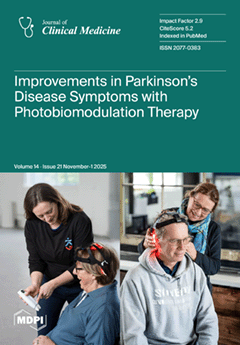
Cover Story (view full-size image):
Few therapeutic options meaningfully improve symptomatology plus quality of life (QoL) in Parkinson’s disease (PD), emphasising the need for novel, evidence-based interventions. This study evaluated the efficacy of photobiomodulation therapy (PBMt) combined with exercise on motor and non-motor outcomes in PD. Sixty-three participants were first enrolled in an 8-week randomised, sham-controlled stage with a 4-week washout, followed by a crossover to all active treatments with a 4-week washout, then an optional extended treatment of up to 48 weeks. Moderate–vigorous exercise was maintained. Extended PBMt yielded significant improvements in timed up and go (TUG), anxiety, and MDS-UPDRS II, with UPDRS total and other outcome measures approaching significance. This supports its potential as a safe, scalable, home-based adjunct to standard PD management. View this paper
- Issues are regarded as officially published after their release is announced to the table of contents alert mailing list.
- You may sign up for e-mail alerts to receive table of contents of newly released issues.
- PDF is the official format for papers published in both, html and pdf forms. To view the papers in pdf format, click on the "PDF Full-text" link, and use the free Adobe Reader to open them.
Previous Issue
Next Issue