




Next Issue
Volume 16, August
Previous Issue
Volume 16, June


Behav. Sci., Volume 16, Issue 7 (July 2026) – 218 articles
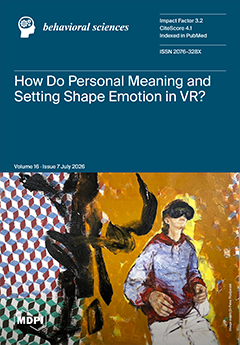
Cover Story (view full-size image): Virtual reality (VR) is increasingly used to support wellbeing, yet little is known about which features of VR environments drive emotional change. This study examined two theoretically grounded features: environmental setting (nature vs. urban) and level of personal meaning (self-selected vs. experimenter-selected locations). Participants experienced four VR conditions in a within-subjects design. Results showed that personal meaning influenced emotion outcomes while setting did not. Personally meaningful environments elicited a mixed emotional response, increasing both positive emotion and sadness, a pattern consistent with eudaimonic engagement. These findings suggest that allowing users to self-select personally meaningful VR environments may be a promising avenue for future research into VR-based wellbeing applications. View this paper
  • Issues are regarded as officially published after their release is announced to the table of contents alert mailing list.
  • You may sign up for e-mail alerts to receive table of contents of newly released issues.
  • PDF is the official format for papers published in both, html and pdf forms. To view the papers in pdf format, click on the "PDF Full-text" link, and use the free Adobe Reader to open them.
Order results
Result details
Section
Select all
Export citation of selected articles as:
13 pages, 959 KB  
Article
The Longitudinal Association Between Parent-Child Attachment and Adolescent Depressive Symptoms: Moderation by Oxytocin Receptor Polymorphisms
by Xiujin Lin, Wanyu Ye, Yuzhe He, Pei Chen, Jian Mao, Yingying Lai, Wenhao Gu, Yiling Luo, Shengnan Li and Yangang Nie
Behav. Sci. 2026, 16(7), 1259; https://doi.org/10.3390/bs16071259 - 22 Jul 2026
Viewed by 502
Abstract
Maternal and paternal attachment may relate differently to adolescent depressive symptoms, but the potential contribution of oxytocin receptor (OXTR) gene single nucleotide polymorphisms (SNPs) to these associations remains unclear. This six-month longitudinal study included 746 seventh- and tenth-grade students (50.7% female) from Guangzhou, [...] Read more.
Maternal and paternal attachment may relate differently to adolescent depressive symptoms, but the potential contribution of oxytocin receptor (OXTR) gene single nucleotide polymorphisms (SNPs) to these associations remains unclear. This six-month longitudinal study included 746 seventh- and tenth-grade students (50.7% female) from Guangzhou, China. Parent-child attachment and saliva samples for genotyping were collected at baseline, and depressive symptoms were assessed at follow-up using the CES-D-10. Overall, 48.8% of adolescents screened positive for depressive symptoms. Compared with adolescents below the cutoff, those who screened positive reported lower parental trust/communication and higher alienation (all p < 0.01). In adjusted linear regression models, father-child trust/communication was negatively associated with subsequent depressive symptoms (β = −0.26, p < 0.01), whereas mother-child alienation was positively associated with subsequent depressive symptoms (β = 0.15, p = 0.02). Exploratory moderation analyses showed a nominal rs2254295 × mother-child alienation interaction before correction (β = −0.07, p = 0.046), but this effect did not survive FDR correction. Father-child trust/communication and mother-child alienation showed distinct associations with adolescent depressive symptoms. The possible moderating role of OXTR rs2254295 should be regarded as preliminary and requires replication in larger independent samples. Full article
(This article belongs to the Section Developmental Psychology)
Show Figures

Figure 1

28 pages, 316 KB  
Article
A Q Methodological Study on Algorithmic Intimacy, Social Connection, Well-Being, and the Boundaries of Autonomy in University Students’ Conversational Artificial Intelligence Experiences
by Kyoung Yeon Moon and Taeeun Shim
Behav. Sci. 2026, 16(7), 1258; https://doi.org/10.3390/bs16071258 - 22 Jul 2026
Viewed by 1012
Abstract
This study explores how university students experience conversational artificial intelligence (AI) in the era of generative AI from the perspectives of algorithmic intimacy, social connection, well-being, and autonomy, and identifies their subjective meaning structures. Specifically, it examines how university students perceive conversational AI [...] Read more.
This study explores how university students experience conversational artificial intelligence (AI) in the era of generative AI from the perspectives of algorithmic intimacy, social connection, well-being, and autonomy, and identifies their subjective meaning structures. Specifically, it examines how university students perceive conversational AI in relation to emotional regulation, self-understanding, relational boundaries, and autonomy, and how these perceptions relate to intimacy and well-being. Unlike previous studies focused primarily on AI use and acceptance, this study analyses how students interpret their experiences with conversational AI and negotiate relational boundaries. Using Q methodology, we developed 40 Q statements from literature review and in-depth interviews. Fifty-six university students in South Korea with experience using conversational AI completed the Q-sorting process. A four-factor solution explained 55% of the total variance and yielded four distinct types: (1) Relationship-Negating Instrumentalists, (2) Selective Emotional Utilizers, (3) Reflective Distancers, and (4) Autonomy Defenders. Although none of the groups viewed AI as a complete substitute for human relationships, they differed in their acceptance of algorithmic intimacy, use of AI for emotional support and regulation, concerns about dependence, and efforts to protect autonomy. These findings suggest that conversational AI experiences involve negotiating intimacy and boundaries rather than producing uniformly positive or negative outcomes. This study complements variable-centred approaches by identifying distinct subjective meaning structures in university students’ human–AI relationship experiences. Full article
23 pages, 517 KB  
Review
Effects of Digital Nature Interventions on Positive Psychological Outcomes: A Scoping Review
by Dev Bandhu Poudel, Karl E. Mitchell, Samjhana Acharya, Chandra Gurung and Yasuhiro Kotera
Behav. Sci. 2026, 16(7), 1257; https://doi.org/10.3390/bs16071257 - 22 Jul 2026
Viewed by 2183
Abstract
(1) Background: Digital nature, delivered through different media, has been proposed as a scalable substitute for physical nature exposure to support psychological well-being, especially in high-income countries. This scoping review aimed to map the evidence on digital nature interventions and positive psychological outcomes. [...] Read more.
(1) Background: Digital nature, delivered through different media, has been proposed as a scalable substitute for physical nature exposure to support psychological well-being, especially in high-income countries. This scoping review aimed to map the evidence on digital nature interventions and positive psychological outcomes. (2) Methods: Following PRISMA-ScR guidelines, we searched PubMed, ScienceDirect, and Google Scholar, supplemented by AI search and citation tracking, for studies published between 2020 and 2025. The first search was conducted between 15 November 2025 and 25 December 2025 and revisited between 5 June 2026 and 10 June 2026. We included articles published in English in peer-reviewed journals with the full text available. (3) Results: Our search yielded 67 studies from diverse cultural settings in three categories: primary studies (N = 46), review articles (N = 19) and conceptual articles (N = 2). Digital nature was associated with reduced stress and anxiety, better mood, greater restorativeness, and stronger nature connectedness, across healthy individuals, older adults, and clinical populations; reviews supported these findings at a larger scale, though some flagged mixed results for specific outcomes and technologies. Two conceptual articles explained these patterns through biophilic design and digital placemaking. (4) Conclusion: Overall, digital nature appears to be a promising approach for promoting psychological well-being, particularly where access to natural environments is limited. However, the evidence is mixed, geographically concentrated in Europe, East Asia, and North America, and methodologically heterogeneous, with no studies from low-resource settings. Further research is needed in these underrepresented regions. Full article
(This article belongs to the Special Issue The Effects of Nature Therapy on Affective and Cognitive Functioning)
Show Figures

Figure 1

26 pages, 1079 KB  
Article
GenAI Use and GenAI-Assisted Learning Procrastination in University Students: The Roles of Planned Behavior Constructs and Learning GenAI Anxiety
by Zilin Li, Jiali Huang and Zhaodi Cui
Behav. Sci. 2026, 16(7), 1256; https://doi.org/10.3390/bs16071256 - 22 Jul 2026
Viewed by 1393
Abstract
The rapid proliferation of generative artificial intelligence (GenAI) has reshaped university students’ learning practices, yet the association between GenAI-assisted learning and procrastination remains insufficiently understood. Drawing on the Theory of Planned Behavior as an established framework, this study offered a contextual extension of [...] Read more.
The rapid proliferation of generative artificial intelligence (GenAI) has reshaped university students’ learning practices, yet the association between GenAI-assisted learning and procrastination remains insufficiently understood. Drawing on the Theory of Planned Behavior as an established framework, this study offered a contextual extension of TPB and procrastination research into the GenAI domain by examining the association between students’ use of GenAI for learning task completion and GenAI-assisted learning procrastination among 1243 Chinese university students. Path analysis showed that students’ use of GenAI was negatively associated with GenAI-assisted learning procrastination (β = −0.195, p < 0.001). Behavioral attitude (β = −0.164, p < 0.001), subjective norm (β = −0.171, p < 0.001), perceived behavioral control (β = −0.331, p < 0.001), and behavioral intention (β = −0.137, p < 0.001) were each negatively associated with GenAI-assisted learning procrastination. The indirect associations linking GenAI use to GenAI-assisted learning procrastination through these Theory of Planned Behavior constructs were statistically significant, with the total indirect association accounting for approximately 30.9% of the total association (standardized indirect association = −0.086, p < 0.01). Learning GenAI anxiety moderated the association between behavioral intention and GenAI-assisted learning procrastination, with the negative association being stronger among students with higher anxiety (b = −0.268, SE = 0.040, p < 0.001) than among those with lower anxiety (b = 0.006, SE = 0.052, p = 0.915). The model explained 71.6% of the variance in procrastination in GenAI-assisted learning. Given the cross-sectional design and the sample’s specific characteristics, these findings should be interpreted as conditional associations rather than causal evidence, and their generalizability requires further investigation. Nevertheless, the results highlighted the roles of beliefs, intentions, and emotional experiences in understanding procrastination in GenAI-assisted learning. Full article
Show Figures

Figure 1

20 pages, 2065 KB  
Article
How Language Attitudes Shape French Language Achievement: The Mediating Role of Student Engagement
by Jiarui Gong, Xinli Chen and Yinuo Li
Behav. Sci. 2026, 16(7), 1255; https://doi.org/10.3390/bs16071255 - 22 Jul 2026
Viewed by 485
Abstract
Drawing on positive psychology, this study investigated the relationships among language attitudes, student engagement (including its cognitive, emotional, behavioral, and social dimensions), and academic achievement in French. A total of 335 Chinese junior high school learners of French as a foreign language (FFL) [...] Read more.
Drawing on positive psychology, this study investigated the relationships among language attitudes, student engagement (including its cognitive, emotional, behavioral, and social dimensions), and academic achievement in French. A total of 335 Chinese junior high school learners of French as a foreign language (FFL) completed a French proficiency test and filled out validated scales measuring language attitudes and student engagement. Correlation analyses revealed significant positive associations across all three constructs, with effect sizes ranging from small to large. Structural equation modeling (SEM) further demonstrated that: (1) language attitudes were significantly and positively associated with all four dimensions of student engagement; (2) of the four dimensions, only behavioral engagement showed a significant positive path to French achievement and emerged as the only significant positive mediator of the attitudes–achievement relation, with the direct path from language attitudes to achievement being non-significant; (3) the indirect effects through cognitive, emotional, and social engagement were non-significant. These findings contribute to the further examination and extension of Control-Value Theory (CVT) and offer practical implications for FFL pedagogy. Full article
Show Figures

Figure 1

26 pages, 4635 KB  
Article
How Is Generative AI Use Associated with Employee Creative Behavior? Uncovering Capability- and Risk-Based Psychological Pathways
by Jingya Yang, Haikun Shan, Ji-Na Lee and Zhaoqi Li
Behav. Sci. 2026, 16(7), 1254; https://doi.org/10.3390/bs16071254 - 22 Jul 2026
Viewed by 844
Abstract
The rapid diffusion of generative AI is profoundly transforming knowledge-intensive work and reshaping how employees innovate. Although prior research has highlighted the positive role of generative AI in improving work efficiency and performance, the underlying mechanisms through which it promotes employee creative behavior [...] Read more.
The rapid diffusion of generative AI is profoundly transforming knowledge-intensive work and reshaping how employees innovate. Although prior research has highlighted the positive role of generative AI in improving work efficiency and performance, the underlying mechanisms through which it promotes employee creative behavior remain insufficiently understood. Drawing on Social Cognitive Theory and Psychological Safety Theory, this study develops a moderated dual-path model to examine how generative AI use influences employee creative behavior through creative self-efficacy and psychological safety. Using a three-wave time-lagged survey design, data were collected from 297 employees in highly digitalized industries. The results indicate that generative AI use is positively associated with subsequent self-reported employee creative behavior. Both creative self-efficacy and psychological safety significantly mediate this relationship. Furthermore, digital leadership strengthens the positive effects of generative AI use on creative self-efficacy and psychological safety, thereby further enhancing its indirect effects on employee creative behavior. The findings not only extend the literature on generative AI and employee creative behavior but also deepen the theoretical understanding of AI empowerment mechanisms by identifying two critical pathways: a capability-enhancement pathway and a risk-reduction pathway. This study provides important theoretical insights and practical implications for organizations seeking to effectively leverage generative AI to foster employee creative behavior in the context of digital transformation. Full article
Show Figures

Figure 1

25 pages, 311 KB  
Article
How Does the Duration of an Undergraduate Research Training Program Impact the Development of Professional Research Skills, Student Engagement, Sense of Belonging, and Academic Outcomes?
by Kim-Phuong L. Vu, Erin H. Arruda, Chi-Ah Chun, Panadda Marayong and Jesse Dillon
Behav. Sci. 2026, 16(7), 1253; https://doi.org/10.3390/bs16071253 - 22 Jul 2026
Viewed by 515
Abstract
Formal undergraduate research training programs are typically two years in length to support student development over time. However, some evidence suggests that many benefits of research participation can be achieved in a shorter duration, raising the question of whether shorter models can be [...] Read more.
Formal undergraduate research training programs are typically two years in length to support student development over time. However, some evidence suggests that many benefits of research participation can be achieved in a shorter duration, raising the question of whether shorter models can be as effective. This prospective study compared outcomes for two concurrent cohort-based research training models: a two-year Scholars Program and an accelerated one-year Fellows Program. The Fellows Program was designed for advanced students who joined the training program later than their peers for a variety of reasons. Both programs provided students with financial support, faculty-mentored research, a Learning Community, and other resources for professional development. The longer duration allowed Scholars to report significantly higher levels of research skills and produce more publications and professional presentations than Fellows by the end of their respective training programs. In contrast, the programs did not differ on graduation GPA, number of awards, or graduate school enrollment. Fellows also did not significantly differ from Scholars on psychosocial measures, including science/researcher identity, belongingness, cultural compatibility, family support, or time management. Findings suggest that a high-intensity, one-year model can deliver many broad academic and social benefits associated with the two-year model, while a longer two-year model provides students with more time and additional research opportunities to be more productive. We conclude that both types of programs should be available to best meet students’ needs and to make the most effective use of program resources. Full article
21 pages, 301 KB  
Article
Domain-Differentiated Generative AI Competency Self-Efficacy Among University EFL Teachers: Patterns and Predictors
by Aser Altalib
Behav. Sci. 2026, 16(7), 1252; https://doi.org/10.3390/bs16071252 - 22 Jul 2026
Viewed by 1625
Abstract
Self-efficacy, a person’s belief in their capability to carry out a given task, shapes whether teachers attempt, persist with, and transfer new practices. Yet teachers’ perceived capability to use generative AI (GenAI) is often treated as a single general readiness rather than examined [...] Read more.
Self-efficacy, a person’s belief in their capability to carry out a given task, shapes whether teachers attempt, persist with, and transfer new practices. Yet teachers’ perceived capability to use generative AI (GenAI) is often treated as a single general readiness rather than examined across the distinct domains in which it is now used. Guided by Bandura’s self-efficacy theory, this study provides a domain-differentiated account of GenAI competency self-efficacy among university teachers of English as a Foreign Language (EFL) in the Saudi higher-education context. A sample of 232 EFL teachers at Saudi public universities completed a contextually adapted version of the Generative AI Competency Self-Efficacy Scale for Teachers and Researchers (GAICS-TR). Data were analysed using repeated-measures analysis of variance, correlational analyses, and hierarchical multiple regression. Overall self-efficacy was only slightly above the scale midpoint, and the overall score concealed an uneven pattern across domains. Teachers felt most capable in Basic GenAI Understanding and Teaching with GenAI, less so in Professional Engagement, and least confident in Research with GenAI, with the lowest confidence reported for data analysis. Prior AI training and frequency of GenAI use were associated with overall self-efficacy, whereas teaching experience and academic rank were not. The findings suggest that overall measures of GenAI readiness can mask lower-confidence areas within specific domains, especially in research-facing uses such as data analysis. Accordingly, supporting teachers’ development in using GenAI calls for targeted, domain-sensitive professional development that reaches teachers at all career stages rather than broad familiarisation with the tools. Full article
(This article belongs to the Section Educational Psychology)
11 pages, 740 KB  
Protocol
Applying the Behavioural Science Approach to Realist Reviews and Evaluations (BARR/E): A Protocol for a Review of Antidepressant Deprescribing Interventions in Primary Care
by Bethany Atkins, Caroline Smith, Debi Bhattacharya and Sion Scott
Behav. Sci. 2026, 16(7), 1251; https://doi.org/10.3390/bs16071251 - 22 Jul 2026
Viewed by 452
Abstract
1-in-5 people are prescribed an antidepressant for a common mental disorder (CMD), such as depression or anxiety. Most people do not require lifelong treatment, however more than half continue antidepressants for ≥2 years despite no ongoing symptoms. Antidepressant deprescribing is not routine practice [...] Read more.
1-in-5 people are prescribed an antidepressant for a common mental disorder (CMD), such as depression or anxiety. Most people do not require lifelong treatment, however more than half continue antidepressants for ≥2 years despite no ongoing symptoms. Antidepressant deprescribing is not routine practice in primary care and healthcare professionals report barriers including concerns about withdrawal effects, perceived patient attachment to antidepressants and limited availability of withdrawal-informed support. Drawing on realist principles and behavioural science, this review will identify behavioural mechanisms and contexts from academic and grey literature to formulate programme theories describing how to facilitate primary care healthcare professionals to deprescribe antidepressants. The review is guided by the Behavioural science Approach to Realist Reviews/Evaluations (BARR/E) and will follow five steps: (1) define the review scope, (2) develop initial programme theories, (3) evidence search, (4) selection and appraisal and (5) data extraction and synthesis. Peer-reviewed literature will be identified through MEDLINE, Embase, PsycINFO and CINAHL, supplemented by grey literature identified through expert consultation, database and citation searches. The evidence will be assessed for relevance, rigour and richness, and data extracted and synthesised to develop context–mechanism–outcome configurations. Findings will be reported in accordance with RAMESES quality and publication standards. Full article
Show Figures

Figure 1

27 pages, 752 KB  
Article
From Scarcity Cues and Social Proof to FoMO: A Dual-Mediation Model of Urgency in Consumer Decision-Making
by Severina Pal and Borut Milfelner
Behav. Sci. 2026, 16(7), 1250; https://doi.org/10.3390/bs16071250 - 22 Jul 2026
Viewed by 1230
Abstract
This research examines the psychological mechanisms that drive consumers’ fear of missing out (FoMO) in the context of digital marketing. Consumers are increasingly influenced by market dynamics that affect product availability and vendors’ supply chains, often alongside the widespread impact of suppliers’ marketing [...] Read more.
This research examines the psychological mechanisms that drive consumers’ fear of missing out (FoMO) in the context of digital marketing. Consumers are increasingly influenced by market dynamics that affect product availability and vendors’ supply chains, often alongside the widespread impact of suppliers’ marketing messages and social factors. Using the S-O-R (stimulus–organism–response) model, we test a double-mediation model via structural equation modeling on a sample of online customers. The main goal of the study is to examine how the effects of social proof and perceived scarcity create a sense of urgency, thereby influencing FoMO. The results indicate that customers’ perceptions of scarcity have a strong and statistically significant effect on urgency, while social proof exerts a weaker yet notable influence. Moreover, urgency significantly amplifies both the socially related component and the general fear of missed opportunities. Mediation analyses reveal that perceived scarcity affects FoMO indirectly through urgency. Although this supports the proposed mediation pathway, the substantial empirical overlap between perceived scarcity and urgency suggests that this relationship should be interpreted with caution. In contrast, social proof’s indirect effects are not statistically significant. These findings suggest that urgency serves as a crucial psychological mechanism mediating the influence of perceived scarcity on consumers’ emotional responses, while social proof may operate through alternative channels, such as social comparison or normative influence. This paper contributes to the S-O-R model and offers new insights into commodity theory and cognitive dissonance theory. Full article
Show Figures

Figure 1

15 pages, 3734 KB  
Article
Development, Implementation, and Refinement of a Mental Health Consultation–Liaison Model in the Neonatal Intensive Care Unit: A Learning Health System Approach
by Allison G. Dempsey, Jessalyn Kelleher, Danielle L. Cooke, Susanne Klawetter, Jack Dempsey and Alejandra Santisteban
Behav. Sci. 2026, 16(7), 1249; https://doi.org/10.3390/bs16071249 - 22 Jul 2026
Viewed by 449
Abstract
Proactive mental health consultation–liaison (C-L) services in neonatal intensive care units (NICUs) are increasingly recognized as essential to infant health and family functioning, yet there is limited guidance on how to develop sustainable and effective programs in real-world clinical settings. This paper describes [...] Read more.
Proactive mental health consultation–liaison (C-L) services in neonatal intensive care units (NICUs) are increasingly recognized as essential to infant health and family functioning, yet there is limited guidance on how to develop sustainable and effective programs in real-world clinical settings. This paper describes the development, implementation, and iterative refinement of a NICU mental health C-L program using a learning health system (LHS) framework. Grounded in a theory-driven model that conceptualizes the infant as the identified patient, the program was designed to target proximal mechanisms influencing infant regulation, parent–infant interaction, and medical course. Consistent with LHS principles, program elements were introduced incrementally and refined through embedded data collection, rapid feedback loops, and multidisciplinary team learning. Data sources emphasized feasibility, reach, implementation processes, and acceptability rather than hypothesis-driven outcome testing. Over six years, this approach supported the expansion of multiple integrated service components, including dyadic intervention services, parent mental health screening and referral pathways, unit-wide family engagement initiatives, and neurobehavioral care practices. Rather than presenting a fixed protocol, this paper offers a replicable framework for developing NICU mental health C-L services that balances developmental theory, implementation realities, and sustainability. The LHS approach provides a pragmatic roadmap for NICUs seeking to build or refine mental health services in contexts characterized by clinical complexity, evolving evidence, and system-level constraints. Full article
Show Figures

Figure 1

15 pages, 253 KB  
Article
Grandparent–Grandchild Reminiscence Program for Asian American Families: Intergenerational and Cultural Reflection from Dyad Participants
by Ling Xu, Soeun Jang, Qinzheng Xu, Jaclyn E. Kirsch and Darren Yang
Behav. Sci. 2026, 16(7), 1248; https://doi.org/10.3390/bs16071248 - 22 Jul 2026
Viewed by 607
Abstract
Background: Intergenerational solidarity between grandparents and grandchildren is a longstanding tradition that strengthens family bonds and supports the psychological wellbeing of older adults, particularly within Asian families. Drawing on theories of lifespan development, social connectedness, and narrative identity, an intergenerational reminiscence program was [...] Read more.
Background: Intergenerational solidarity between grandparents and grandchildren is a longstanding tradition that strengthens family bonds and supports the psychological wellbeing of older adults, particularly within Asian families. Drawing on theories of lifespan development, social connectedness, and narrative identity, an intergenerational reminiscence program was developed to promote emotional well-being and deepen generational connections among Asian American families. Methods: This study qualitatively examined the reflections of 12 grandparent–grandchild dyads who completed the program. Grandparents participated in six weekly, one-hour guided life review and reminiscence sessions, conducted either in person or online and facilitated by grandchildren. Following the intervention, individual interviews were conducted with the dyads. Interview data were analyzed using Braun and Clarke’s six-step thematic analysis approach. Results: Three themes emerged describing participants’ experiences with intergenerational storytelling and learning. The first, engagement with family history and stories, captured participants’ enjoyment of sharing and discovering family narratives, uncovering previously unknown histories, and building curiosity about their ancestry. The second theme, transmission of wisdom and life lessons, reflected the intergenerational sharing of career guidance, practical life advice, perspectives on resilience, and strengthened appreciation for personal circumstances. The third theme, intergenerational and cultural understanding, highlighted increased awareness of generational differences, respect for cultural and personal viewpoints, and strengthened emotional bonds. Conclusions: The findings align with cultural transmission theory, intergenerational solidarity theory, and psychological theories of reminiscence and identity formation. Reflections from both grandparents and grandchildren suggest that intergenerational reminiscence effectively fosters closer relationships across generations by revisiting family history and cultural roots. Lessons learned and recommendations for future culturally responsive interventions with Asian American families are discussed. Full article
(This article belongs to the Section Social Psychology)
27 pages, 5075 KB  
Article
AI Versus Human Feedback in Gamified Color Education: A Four-Arm Cluster Randomized Controlled Trial
by Xiheng Shao, Fulong Liu, Jiao Wu and Mageswaran Sanmugam
Behav. Sci. 2026, 16(7), 1247; https://doi.org/10.3390/bs16071247 - 22 Jul 2026
Viewed by 634
Abstract
Empirical evidence for AI formative assessment combined with gamification remains scarce in subjective aesthetic disciplines. This study examined whether such integration enhances metacognitive regulation in undergraduate color education and whether the effect is conditional on learners’ prior AI credibility belief. A four-arm, four-wave [...] Read more.
Empirical evidence for AI formative assessment combined with gamification remains scarce in subjective aesthetic disciplines. This study examined whether such integration enhances metacognitive regulation in undergraduate color education and whether the effect is conditional on learners’ prior AI credibility belief. A four-arm, four-wave cluster-randomized controlled trial (N = 540, 24 classes, eight cross-allocated teachers) compared gamification with AI feedback, gamification with dose-matched human feedback, gamification only, and traditional instruction; the primary outcome was metacognitive regulation measured 4 weeks post-intervention. Gamification produced a small-to-medium effect over traditional instruction (d = 0.34, p_Holm = 0.015). AI and human feedback did not differ on average (d = 0.07; underpowered). Autoregressive mediation confirmed metacognitive regulation as a longitudinal mediator of intervention effects on motivation and achievement. On an exploratory basis, prior AI credibility belief moderated the AI-versus-human indirect effect on motivation (p_Holm = 0.034) but not achievement (p_Holm = 0.054), with higher-belief learners benefiting; given the limited power of the AI-versus-human comparison, this conditional pattern is reported as a tentative finding rather than as confirmatory evidence. These findings extend self-determination theory and the self-regulated learning framework to aesthetic education and provide preliminary support for the deployment of prior-trust-aware AI feedback, pending replication. Full article
Show Figures

Figure 1

32 pages, 421 KB  
Article
Meaning Construction: Online Narratives of Supervisor-Postgraduate Relationships in Digital Communities
by Jingjing Zhou, Yushu Zhang, Yujie Dong, Lingli Xia, Yuxin Qin and Xiaoli Ye
Behav. Sci. 2026, 16(7), 1246; https://doi.org/10.3390/bs16071246 - 21 Jul 2026
Viewed by 610
Abstract
As digital media become deeply embedded in postgraduate students’ daily learning and social interactions, online narratives of supervisor–postgraduate relationships have emerged as a crucial means for them to express authentic experiences and seek emotional support. Adopting a sensemaking perspective, this study employs online [...] Read more.
As digital media become deeply embedded in postgraduate students’ daily learning and social interactions, online narratives of supervisor–postgraduate relationships have emerged as a crucial means for them to express authentic experiences and seek emotional support. Adopting a sensemaking perspective, this study employs online ethnography and thematic analysis to investigate postgraduate students’ narratives of supervisor–postgraduate relationships on a Douban group. The findings reveal four core thematic dimensions of these online narratives: identity formation, emotional interaction, experience sharing, and social connection. These dimensions help postgraduate students clarify their self-perception, release emotions, acquire practical experience, and establish a sense of group belonging, particularly in contexts where institutional support is insufficient. Online narratives essentially serve as a compensatory self-help channel for postgraduate students to cope with real-world challenges. They highlight structural shortcomings in offline supervisory governance and offer theoretical and practical insights to optimize supervisor–postgraduate relationships in the digital age. Full article
23 pages, 1381 KB  
Article
Ambivalent Sexism, Social Roles, and Body Compassion in Albanian and Italian Women
by Cristian Di Gesto, Eriada Çela, Sonila Dubare, Amanda Nerini, Camilla Matera and Giulia Rosa Policardo
Behav. Sci. 2026, 16(7), 1245; https://doi.org/10.3390/bs16071245 - 21 Jul 2026
Viewed by 561
Abstract
This study investigated the relationships between ambivalent sexism, social roles, and body compassion in Albanian and Italian women. The participants were 251 Albanian and 280 Italian women who completed validated measures assessing hostile and benevolent sexism, social role transcendence, link to social roles, [...] Read more.
This study investigated the relationships between ambivalent sexism, social roles, and body compassion in Albanian and Italian women. The participants were 251 Albanian and 280 Italian women who completed validated measures assessing hostile and benevolent sexism, social role transcendence, link to social roles, and three subdimensions of body compassion (defusion, common humanity, and acceptance). Path analyses indicated excellent model fit across samples. In Albanian women, hostile sexism negatively predicted social role transcendence and positively predicted a link to social roles, both of which were associated with lower body compassion. Benevolent sexism was positively associated with social role transcendence, which in turn was related to higher body compassion. In contrast, Italian women showed a different pattern: benevolent sexism positively predicted a link to social roles, while social role transcendence and link to social roles were both negatively related to defusion. Age positively predicted defusion and acceptance, highlighting a possible protective effect. Explained variance was higher in the Italian sample, particularly for the link to social roles. Overall, the findings suggest that the pattern of associations between sexist attitudes, social role attitudes, and body compassion was not identical across the two samples. These findings should be interpreted as exploratory evidence from two distinct sociocultural contexts rather than as formal cross-cultural comparisons. Full article
Show Figures

Figure 1

22 pages, 741 KB  
Article
Servant Leadership Through a Gendered Lens: Role Congruity, Warmth–Competence Perceptions, and Leader Effectiveness
by Ge Cao and Guoyang Zheng
Behav. Sci. 2026, 16(7), 1244; https://doi.org/10.3390/bs16071244 - 21 Jul 2026
Viewed by 605
Abstract
This study pivots from the universally beneficial view of servant leadership and examines how leader gender shapes its effectiveness evaluations through followers’ warmth and competence perceptions. Combining role congruity theory and the stereotype content model, we propose a congruity trap model and suggest [...] Read more.
This study pivots from the universally beneficial view of servant leadership and examines how leader gender shapes its effectiveness evaluations through followers’ warmth and competence perceptions. Combining role congruity theory and the stereotype content model, we propose a congruity trap model and suggest that servant leadership produces different effectiveness evaluations depending on leader gender. Specifically, we hypothesize that servant leadership interacts with leader gender to produce divergent warmth and competence perceptions, and these perceptions in turn lead to perceived leadership effectiveness. In a 2 × 2 between-subjects online experiment (Study 1; N = 298), we found that servant leadership and leader gender interacted to predict both warmth and competence perceptions as hypothesized. In a three-wave time-lagged field study with full-time employees in China (Study 2; N = 194), we obtained partial support that the servant leadership and leader gender interaction was significant for competence perceptions but not for warmth perceptions. Gender-contingent differences in perceived effectiveness were more clearly transmitted through the indirect pathway involving competence. Taken together, these findings suggest that the competence perceptions constitute the more consistent mechanism through which servant leadership behaviors produce divergent evaluation outcomes for female and male leaders. Overall, our model and findings reveal that the benefits of servant leadership are not equally available to all leaders, illuminating how gender stereotypes create divergent evaluation outcomes from identical leadership behaviors. Full article
(This article belongs to the Section Organizational Behaviors)
Show Figures

Figure 1

15 pages, 690 KB  
Article
Associations Between Traumatic Event Exposure and Depressive Symptoms Among Chinese University Freshmen: A Conditional Process Analysis of Interpersonal Difficulties and Only-Child Status
by Fengting Wang, Xinyue Hu, Yangziye Guo, Yu Sun, Zhicheng Lu, Xue Chong, Shuang Li, Lily Wang, Guanchen Zhu, Ziwei Chen, Fuqin Mu, Yi Qiao, Min Liu and Yan Liu
Behav. Sci. 2026, 16(7), 1243; https://doi.org/10.3390/bs16071243 - 21 Jul 2026
Viewed by 358
Abstract
Depressive symptoms are highly prevalent among university students, yet the psychosocial correlates linking exposure to potentially traumatic or severe adverse events with depressive symptoms remain incompletely understood. This study examined the association between traumatic event exposure and depressive symptoms among Chinese university freshmen, [...] Read more.
Depressive symptoms are highly prevalent among university students, yet the psychosocial correlates linking exposure to potentially traumatic or severe adverse events with depressive symptoms remain incompletely understood. This study examined the association between traumatic event exposure and depressive symptoms among Chinese university freshmen, focusing on the mediating role of interpersonal difficulties and the moderating role of only-child status. A cross-sectional survey was conducted among 8079 freshmen from three universities in Shandong Province, China. Depressive symptoms were measured using the PHQ-9, traumatic event exposure was assessed using the Severe Traumatic Events Questionnaire, and interpersonal difficulties were evaluated using the Comprehensive Diagnostic Scale of Interpersonal Relationships. Mediation and moderated mediation analyses were performed using Hayes’ PROCESS macro (Model 15), controlling for sex, age, and residence. Results showed that traumatic event exposure was positively associated with depressive symptoms (β = 0.194, 95% CI [0.169–0.221]). A statistically significant indirect association through interpersonal difficulties was observed (indirect effect = 0.110, 95% bootstrap CI [0.097–0.124]). Only-child status moderated both the direct association between traumatic event exposure and depressive symptoms and the association between interpersonal difficulties and depressive symptoms. These findings suggest that interpersonal difficulties may represent an important factor associated with the relationship between traumatic event exposure and depressive symptoms, and that only-child status may influence the strength of these associations among university students. Full article
(This article belongs to the Section Social Psychology)
Show Figures

Figure 1

30 pages, 1256 KB  
Article
Self-Efficacy for Self-Regulated Learning Across Different Stages of the COVID-19 Pandemic: A Three-Wave Study with High-School Students
by Mirella Dragone, Lucia Di Martino, Grazia De Angelis, Concetta Esposito and Dario Bacchini
Behav. Sci. 2026, 16(7), 1242; https://doi.org/10.3390/bs16071242 - 21 Jul 2026
Viewed by 405
Abstract
The COVID-19 pandemic caused sudden changes in school routines, creating conditions that may have been relevant to students’ self-efficacy for self-regulated learning (SESRL). This research investigated high-school students’ SESRL during the initial lockdown (Study 1) and across three pandemic stages (Study 2). Using [...] Read more.
The COVID-19 pandemic caused sudden changes in school routines, creating conditions that may have been relevant to students’ self-efficacy for self-regulated learning (SESRL). This research investigated high-school students’ SESRL during the initial lockdown (Study 1) and across three pandemic stages (Study 2). Using a cross-sectional retrospective design, Study 1 (N = 802, 32.5% males; Mage [Time1 (T1)] = 16.40, SD = 1.52) revealed a significant difference between retrospectively reported SESRL for the pre-pandemic period and SESRL perceived during the first lockdown. Also, higher perceived teacher support and effortful control were associated with higher SESRL during the lockdown. Latent Growth Curve Analyses in Study 2 [N (T1) = 455, 31.9% males; Mage (T1) = 15.37, SD = 1.10; 71% attrition rate] showed a declining trend for perceived SESRL over time, regardless of gender and school grade, whereas COVID-19-related life disruption showed a significant time-varying effect. Specifically, higher levels of COVID-19-related life disruption were associated with lower SESRL at each time point. These findings highlight the potential value of monitoring students’ SESRL and exploring educational initiatives that support self-regulatory skills and positive teacher–student relationships, particularly during periods of widespread educational disruption. However, the longitudinal findings should be interpreted cautiously given the substantial attrition across waves. Full article
(This article belongs to the Section Developmental Psychology)
Show Figures

Figure 1

14 pages, 503 KB  
Article
Physical Literacy and College Adjustment Among Chinese International Students Who Regularly Participate in Basketball in South Korea: The Mediating Role of Well-Being
by Shuangrui Liu, Seungwoo Choi and Ansu Lee
Behav. Sci. 2026, 16(7), 1241; https://doi.org/10.3390/bs16071241 - 21 Jul 2026
Viewed by 401
Abstract
Chinese international students studying in South Korea may experience academic, sociocultural, and psychological challenges that may undermine well-being and successful adaptation to university life. Physical literacy, which encompasses motivation, confidence, physical competence, knowledge, and understanding related to physical activity, may represent a behavioral [...] Read more.
Chinese international students studying in South Korea may experience academic, sociocultural, and psychological challenges that may undermine well-being and successful adaptation to university life. Physical literacy, which encompasses motivation, confidence, physical competence, knowledge, and understanding related to physical activity, may represent a behavioral and psychosocial resource that supports adaptive functioning. This cross-sectional study examined the relationships among perceived physical literacy, well-being, and college adjustment among 288 Chinese international students in South Korea who participated in basketball at least once per week. Physical literacy was assessed using the Perceived Physical Literacy Instrument, well-being using the Mental Health Continuum–Short Form, and college adjustment using the Student Adaptation to College Questionnaire-25. Confirmatory factor analysis and structural equation modeling were conducted, and the mediating effect of well-being was tested using bootstrapping with 2000 resamples. Physical literacy was positively associated with well-being (β = 0.305, p < .001), well-being was positively associated with college adjustment (β = 0.358, p < .001), and physical literacy was positively associated with college adjustment (β = 0.180, p = .002). The indirect effect of physical literacy on college adjustment through well-being was significant (β = 0.109, p = .001), indicating partial mediation. These findings suggest that, within this sample of Chinese international students who participated in basketball at least once per week, physical literacy may be relevant to college adjustment as a behavioral and psychosocial resource, partly through well-being. Full article
Show Figures

Figure 1

18 pages, 388 KB  
Article
Parent-Coached Sibling-Mediated Intervention for Social Communication in Children with Autism Spectrum Disorder: A Pilot Single-Case Study
by Atikah Haira Bagawan, Sarah N. Douglas and Grace Hetke
Behav. Sci. 2026, 16(7), 1240; https://doi.org/10.3390/bs16071240 - 21 Jul 2026
Viewed by 503
Abstract
This pilot study examined the effects of parent-delivered training and coaching in the Speak, Play and Listen intervention, implemented with neurotypical (NT) siblings to support the social communication development of children with autism spectrum disorder (ASD). Three families, each consisting of a [...] Read more.
This pilot study examined the effects of parent-delivered training and coaching in the Speak, Play and Listen intervention, implemented with neurotypical (NT) siblings to support the social communication development of children with autism spectrum disorder (ASD). Three families, each consisting of a parent, an NT child, and a child with ASD aged 5–12 years, participated in the study. A single-case multiple-probe design was employed to evaluate changes in sibling social interactions. Results showed increases in positive social communication behaviors across all three sibling dyads. Semi-structured interviews indicated that family members perceived the intervention goals, procedures, and outcomes as acceptable, feasible, and socially meaningful. The study highlights the importance of considering family-wide participation, implementation fidelity, and family capacity when designing and delivering interventions for children with ASD. Full article
Show Figures

Figure 1

19 pages, 1925 KB  
Article
Spatial Orientation in a Cue–Target Task: Effects of Distance, Cue Direction, and Swimming Training Background
by Yunhao Zhang, Yi Liu, Yufei Ren, Senlin Lan, Ye Mao, Haoping Yang and Yi Peng
Behav. Sci. 2026, 16(7), 1239; https://doi.org/10.3390/bs16071239 - 21 Jul 2026
Viewed by 281
Abstract
This study examined visually guided spatial updating and endpoint estimation under visual-only conditions and assessed whether performance varied by distance, cue direction, and swimming training background. Thirty-six right-handed male participants aged 18–20 years, including expert swimmers and amateur controls, completed a cue–target spatial [...] Read more.
This study examined visually guided spatial updating and endpoint estimation under visual-only conditions and assessed whether performance varied by distance, cue direction, and swimming training background. Thirty-six right-handed male participants aged 18–20 years, including expert swimmers and amateur controls, completed a cue–target spatial orientation task with two distance conditions, short and long, and four cue directions, N, E, S, and W. Movement time, spatial error distance, and proportional movement time were analyzed using 2 × 2 × 4 mixed-design repeated-measures ANOVAs. Bayesian independent-samples comparisons were further conducted to quantify evidence for the null hypothesis of no robust group differences. The results indicated that task demands were the main determinants of performance. Compared with the short-distance condition, the long-distance condition yielded longer movement time, larger spatial errors, and higher proportional movement time, suggesting increased demands on spatial updating and movement execution. Cue direction also affected proportional movement time and spatial error distance, indicating direction-specific differences in visual cue integration and reference-frame transformation. By contrast, no robust overall group differences were found across the three primary behavioral measures, and the Bayesian analyses generally supported the null model. Although a significant Group × Distance interaction was observed for spatial error distance, this interaction reflected a group-related difference in the extent to which error increased from the short- to the long-distance condition, rather than evidence for a consistent expert advantage. Overall, performance in the present visual-only cue–target task was driven mainly by visuospatial updating load, attentional allocation, and task structure, whereas swimming-related expertise was not consistently expressed under the current task constraints. Full article
Show Figures

Figure 1

17 pages, 480 KB  
Article
Relationships Between Psychological Resilience, Rejection Sensitivity, and Short-Video Addiction in University Students: A Cross-Lagged Analysis
by Yang Liu, Min Xie and Shuyue Zhang
Behav. Sci. 2026, 16(7), 1238; https://doi.org/10.3390/bs16071238 - 21 Jul 2026
Viewed by 594
Abstract
Short-video addiction has emerged as a growing behavioral concern in the context of the widespread use of platforms such as Douyin and TikTok, posing potential risks to young adults’ psychological well-being. Psychological resilience and rejection sensitivity are considered important psychological characteristics that may [...] Read more.
Short-video addiction has emerged as a growing behavioral concern in the context of the widespread use of platforms such as Douyin and TikTok, posing potential risks to young adults’ psychological well-being. Psychological resilience and rejection sensitivity are considered important psychological characteristics that may function as protective and risk factors, respectively, in the development of addictive media use. However, the longitudinal interplay among these variables remains insufficiently understood. This study examined the longitudinal relationships among psychological resilience, rejection sensitivity, and short-video addiction over time among university students. A two-wave longitudinal design with a six-month interval was conducted among 1394 Chinese university students. Participants completed validated measures assessing short-video addiction, psychological resilience (CD-RISC-10), and rejection sensitivity (RSQ). Cross-lagged panel modeling (CLPM) was employed to investigate the bidirectional predictive associations among these variables while controlling for autoregressive effects. All three constructs demonstrated substantial temporal stability across the two measurement waves. Cross-lagged analyses indicated that higher psychological resilience at Time 1 predicted lower rejection sensitivity and lower short-video addiction at Time 2, whereas higher rejection sensitivity at Time 1 predicted lower psychological resilience and higher short-video addiction over time. Although these longitudinal associations were statistically significant, their effect sizes were modest. These findings suggest that psychological resilience and rejection sensitivity may represent protective and vulnerability-related psychological characteristics associated with short-video addiction over time. The findings support the I-PACE model by highlighting the dynamic and longitudinal associations among psychological resources, interpersonal vulnerability, and addictive digital behaviors. Interventions aimed at strengthening psychological resilience and reducing rejection sensitivity may contribute to preventing short-video addiction and promoting healthier digital engagement among university students. Full article
Show Figures

Figure 1

19 pages, 528 KB  
Article
Sculpted by Love: Attachment Security and the Michelangelo Phenomenon
by Yiwen Gu, Madoka Kumashiro and Ximena B. Arriaga
Behav. Sci. 2026, 16(7), 1237; https://doi.org/10.3390/bs16071237 - 21 Jul 2026
Cited by 1 | Viewed by 594
Abstract
The Michelangelo phenomenon describes an interpersonal model of personal growth in which romantic partners affirm each other’s ideal selves, thereby enhancing their relational and personal well-being. The present study examined how attachment security relates to this process. Based on cross-sectional data from N [...] Read more.
The Michelangelo phenomenon describes an interpersonal model of personal growth in which romantic partners affirm each other’s ideal selves, thereby enhancing their relational and personal well-being. The present study examined how attachment security relates to this process. Based on cross-sectional data from N = 452 individuals in 258 couples, the results replicated prior work and provided new insights. Greater partner affirmation was associated with higher relationship quality, higher life satisfaction, and lower depression, but was not associated with general anxiety. Movement toward the ideal self mediated the links between partner affirmation and well-being outcomes. Importantly, attachment security (lower attachment anxiety and avoidance) was directly associated with greater partner affirmation and indirectly associated with greater well-being outcomes through partner affirmation and movement toward the ideal self. The effects were particularly robust for lower attachment anxiety, relative to lower attachment avoidance. The findings suggest that attachment security may allow individuals to better rely on close relationships to experience personal growth. Full article
(This article belongs to the Special Issue Experiences and Well-Being in Personal Growth)
Show Figures

Figure 1

15 pages, 16367 KB  
Article
Are Sexual and Reproductive Behaviors Related to Mental Health Symptoms in Indigenous Communities? A Cross-Sectional Study in La Guajira, Colombia
by Kevin Rico-Gutiérrez, Andrés Felipe Mora-Salamanca, Pedro Barrera-López and Sandra Barrera-Ayala
Behav. Sci. 2026, 16(7), 1236; https://doi.org/10.3390/bs16071236 - 21 Jul 2026
Viewed by 370
Abstract
Sexual and reproductive behaviors and mental health among indigenous peoples are influenced by structural, cultural, and territorial determinants. In Latin America, indigenous populations face inequities related to health service access, sexual education, and mental health care. We assessed the association between sexual and [...] Read more.
Sexual and reproductive behaviors and mental health among indigenous peoples are influenced by structural, cultural, and territorial determinants. In Latin America, indigenous populations face inequities related to health service access, sexual education, and mental health care. We assessed the association between sexual and reproductive factors and the presence of mental health symptoms in Wayúu indigenous communities. A cross-sectional study was conducted between 2024 and 2025 in Wayúu communities in Manaure, La Guajira, Colombia. A structured survey including sociodemographic variables, sexual and reproductive history, and mental health symptoms was applied to adult Wayúu indigenous people. A composite score of mental health symptoms was constructed, and the presence of ≥3 symptoms was defined as a “high burden of mental health symptoms.” Descriptive analyses and multivariate logistic regression were performed to estimate adjusted odds ratios (OR). In total, 245 (203 women and 42 men) people participated in the study. The median age was 30 years (IQR 24–38). Forty-nine percent did not receive sex education, and 65% did not use family planning methods. Between 28% and 33% reported persistent symptoms of emotional distress. In multivariable analyses, female sex showed a non-significant association with a higher burden of mental health symptoms (aOR 2.20; 95% CI 0.91–6.19). No statistically significant associations were observed for age, lack of sex education, non-use of family planning methods, or number of children. These findings highlight the high frequency of poor sexual and reproductive health indicators and emotional distress symptoms in Wayúu communities, underscoring the need for integrated, culturally relevant approaches to sexual, reproductive, and mental health care in this population. Full article
Show Figures

Figure 1

21 pages, 618 KB  
Article
Does Educational Assortative Mating Matter? Parental Education Matching and Children’s Academic Achievement in Urban China
by Jiazhe Li, Xuechun Wang, Jijun Yao and Shike Zhou
Behav. Sci. 2026, 16(7), 1235; https://doi.org/10.3390/bs16071235 - 20 Jul 2026
Viewed by 505
Abstract
Parental education, as institutionalized family cultural capital, is significantly associated with children’s academic performance. Using provincial-level academic quality monitoring data, this study employs hierarchical linear models and path analysis to examine how parental education levels and matching patterns relate to urban primary school [...] Read more.
Parental education, as institutionalized family cultural capital, is significantly associated with children’s academic performance. Using provincial-level academic quality monitoring data, this study employs hierarchical linear models and path analysis to examine how parental education levels and matching patterns relate to urban primary school students’ academic performance. Key findings: Higher overall parental or paternal education is positively associated with performance; however, maternal education exhibits an inverted U-shaped relationship. Compared to both parents non-highly-educated families, students perform significantly better when both parents are highly educated or when fathers are highly educated and mothers are not, but significantly worse in families where the mother is highly educated while the father is not. Path analysis indicates that the negative association in mother-hypergamy families is partly statistically associated with reduced paternal learning involvement, which in turn is related to heightened academic pressure and poorer outcomes. The study suggests that the lower academic performance observed in mother-hypergamy families may be partly associated with reduced paternal learning involvement, highlighting the importance of family educational configuration and balanced co-parenting dynamics. These findings suggest that the association between parental education and children’s academic performance is not straightforward. While consistent with cultural reproduction and family investment perspectives, the detrimental effect of the mother-hypergamy pattern highlights the importance of family configuration and points to the potential roles of role conflict, co-parenting dynamics, and expectation-pressure mechanisms that warrant direct empirical investigation in future research. Full article
(This article belongs to the Section Educational Psychology)
Show Figures

Graphical abstract

22 pages, 2472 KB  
Article
Intergenerational Coparenting Across Physical Distance: Grandparenting Styles, Parental Remote Parenting, and Mental Health Among Left-Behind Children in China
by Yean Wang, Wenjie Li, Yifan Du and Yixin Wu
Behav. Sci. 2026, 16(7), 1234; https://doi.org/10.3390/bs16071234 - 20 Jul 2026
Viewed by 566
Abstract
The family care of left-behind children often combines in-person grandparental caregiving with parental remote parenting; yet, how these two forms of care jointly relate to children’s mental health remains underexplored. Drawing on family systems theory, this study used data from 6317 rural left-behind [...] Read more.
The family care of left-behind children often combines in-person grandparental caregiving with parental remote parenting; yet, how these two forms of care jointly relate to children’s mental health remains underexplored. Drawing on family systems theory, this study used data from 6317 rural left-behind children cared for by grandparents in the 2023 Hubei Province Survey of Vulnerable Children. Latent class analysis (LCA) and regression models were applied to identify grandparenting styles, parental remote parenting, and their interaction. Grandparenting styles were identified as warmly controlling, indifferent punitive, and mildly interventional. Compared with the mildly interventional style, the warmly controlling style was associated with higher resilience and lower psychological distress, whereas the indifferent punitive style showed the opposite pattern. Parental remote parenting was associated with higher resilience and lower psychological distress, but its strength varied across grandparenting contexts. In the indifferent punitive style, its positive association with resilience was weaker; in the warmly controlling style, its negative association with psychological distress was weaker. These findings suggest that parental remote parenting serves as a conditional family resource embedded in grandparental care environments, contributing to the mental health of left-behind children. The study shows the asymmetric role of intergenerational coparenting in psychological resilience and distress. Full article
Show Figures

Figure 1

17 pages, 315 KB  
Article
Factorial Invariance of the Entrepreneurial Intentions Scale Among Colombian and Ecuadorian University Students
by Ignacio Norambuena-Paredes, José Luis Gálvez-Nieto, Eulalia Elizabeth Salas-Tenesaca, Cristina Tavera-Cuellar and Constanza Norambuena-Candia
Behav. Sci. 2026, 16(7), 1233; https://doi.org/10.3390/bs16071233 - 20 Jul 2026
Viewed by 409
Abstract
Entrepreneurial intention is a key antecedent of entrepreneurial behavior and an essential construct for understanding the educational and occupational trajectories of university students. In comparative research, its assessment requires psychometrically equivalent instruments to ensure valid cross-national comparisons. This study aimed to evaluate the [...] Read more.
Entrepreneurial intention is a key antecedent of entrepreneurial behavior and an essential construct for understanding the educational and occupational trajectories of university students. In comparative research, its assessment requires psychometrically equivalent instruments to ensure valid cross-national comparisons. This study aimed to evaluate the psychometric equivalence of the Entrepreneurial Intentions Scale among Colombian and Ecuadorian university students. A quantitative, instrumental, and cross-sectional design was employed with a sample of 803 students, including 319 Colombians and 484 Ecuadorians. Participants completed the six-item Entrepreneurial Intentions Scale using a seven-point Likert response format. Descriptive analyses, confirmatory factor analysis, configural, metric, and scalar invariance testing, latent mean comparisons, and reliability analyses using McDonald’s Omega and Cronbach’s Alpha were conducted. The results supported a unidimensional structure in both samples, with positive and statistically significant factor loadings. Invariance analyses demonstrated adequate model fit, confirming configural, metric, and scalar equivalence across countries. Latent mean comparisons revealed no statistically significant differences between Colombian and Ecuadorian students. Furthermore, the scale exhibited high internal consistency in both groups. These findings demonstrate that the Entrepreneurial Intentions Scale is a valid, reliable, and measurement-invariant instrument for cross-national research involving Latin American university students. Full article
(This article belongs to the Section Social Psychology)
17 pages, 579 KB  
Article
The Impact of Short-Form Video Addiction on Sleep Quality: The Mediating Roles of Emotional, Cognitive, and Executive Components
by Shiying Yang, Tao Dong, Xiaoyan Wang, Shaobo Lyu and Bo Song
Behav. Sci. 2026, 16(7), 1232; https://doi.org/10.3390/bs16071232 - 20 Jul 2026
Viewed by 774
Abstract
With the rapid growth in the number of short-form video users, short-form video addiction (SVA) has drawn increasing attention due to its significant impact on individuals’ daily lives. This study examines the relationship between short-form video addiction and sleep quality, as well as [...] Read more.
With the rapid growth in the number of short-form video users, short-form video addiction (SVA) has drawn increasing attention due to its significant impact on individuals’ daily lives. This study examines the relationship between short-form video addiction and sleep quality, as well as the mediating mechanisms of social anxiety and self-control. Using the College Student Short-Form Video Addiction Scale, the Interaction Anxiousness Scale, the Brief Self-Control Scale, and the Pittsburgh Sleep Quality Index, we surveyed 677 Chinese college students. Correlation and mediation analyses were conducted using SPSS and the PROCESS macro. The findings revealed that SVA was negatively associated with sleep quality both directly and indirectly, with higher social anxiety and lower self-control mediating the indirect effect. By showing that addictive behavior is linked to its risk factors through affective, cognitive, and executive pathways, this study provides preliminarily elucidates how addictive behavior feeds back to reinforce its own risk factors proposed in the Interaction of Person–Affect–Cognition–Execution (I-PACE) model. Full article
(This article belongs to the Section Health Psychology)
Show Figures

Figure 1

11 pages, 443 KB  
Article
Understanding Factors Which Help and Hinder Engagement with Weight Management Interventions and Related Research
by Tanisha Douglas, Elizabeth Linforth, Michelle Lee, Jeffrey Stephens and Laura Wilkinson
Behav. Sci. 2026, 16(7), 1231; https://doi.org/10.3390/bs16071231 - 20 Jul 2026
Viewed by 435
Abstract
Those engaged in healthcare and research within the context of weight management report persistent difficulties with engagement. The aim of the current study was to identify factors which help or hinder engagement in weight loss interventions and associated research. Participants (N = [...] Read more.
Those engaged in healthcare and research within the context of weight management report persistent difficulties with engagement. The aim of the current study was to identify factors which help or hinder engagement in weight loss interventions and associated research. Participants (N = 98) who were currently attempting or had recently attempted to lose weight by a diversity of means (including ‘going it alone’) were recruited through an online platform. Participants were asked to complete an online questionnaire with closed- and open-ended questions assessing the factors which helped and hindered their engagement. The results of the reflexive thematic analysis of open-ended responses generated three themes related to (1) components of the intervention (e.g., goal-setting tools and peer support), (2) commitment influences (e.g., time), and (3) motivational influences (e.g., emotional experiences). Our findings resonate with key components of behaviour change approaches and potentially support their use in the context of improving engagement with weight loss interventions and associated research. Future studies should take inventive approaches to understanding barriers to engagement amongst very disengaged individuals. Full article
(This article belongs to the Special Issue Eating Behaviours in Diverse Populations)
Show Figures

Figure 1

31 pages, 707 KB  
Article
To Accelerate or Not? Decision Making for Gifted Students: Insights from a Tri-Case Study on Cognitive-Achievement Alignment and Program Fit
by Yusra Zaki Aboud
Behav. Sci. 2026, 16(7), 1230; https://doi.org/10.3390/bs16071230 - 20 Jul 2026
Viewed by 524
Abstract
Academic acceleration decisions for gifted students require a shift from single-scale, grade-based approaches toward integrated, multi-domain assessments that consider cognitive abilities, academic performance, and psychosocial readiness together. This mixed-methods case study examines three Saudi students who experienced academic acceleration and who present distinct [...] Read more.
Academic acceleration decisions for gifted students require a shift from single-scale, grade-based approaches toward integrated, multi-domain assessments that consider cognitive abilities, academic performance, and psychosocial readiness together. This mixed-methods case study examines three Saudi students who experienced academic acceleration and who present distinct cognitive–academic profiles—designated as “Outstanding” (O.F.), “Inconsistent” (O.L.), and “Inconsistent and Regressing” (O.M.)—to explore how the congruence among cognitive abilities (measured by CogAT), academic performance (evaluated through predictive descriptive modeling), and psychosocial readiness (assessed by the modified PDAS) influences acceleration decision making. Data were collected from cognitive tests, academic records, PDAS scores, and semi-structured interviews with students, teachers, and parents. Findings indicate that strong convergence across the three domains was associated with successful whole-grade acceleration, whereas domain-specific mismatch and significant weakness in fluid reasoning were associated with academic decline, psychological distress, and social difficulties. Composite scores masked substantial variations within these asymmetric patterns, leading to potentially inappropriate classifications. Although parental support varied across cases and appeared associated with student outcomes, a causal relationship could not be established within this exploratory design. The study concludes that acceleration policies should move beyond general averages toward individualized, profile-based assessments that consider subject-specific acceleration and psychosocial support when needed. All findings are preliminary observations that require replication with larger samples and longitudinal designs before definitive conclusions can be drawn. Full article
Show Figures

Figure 1

Previous Issue
Next Issue
Back to TopTop
