



Sports, Volume 13, Issue 12 (December 2025) – 45 articles
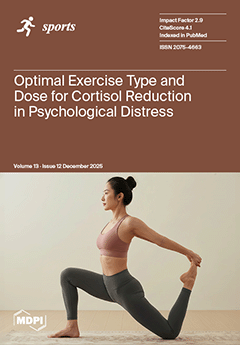
Cover Story (view full-size image):
This systematic review and network meta‑analysis evaluated the effects of different exercise modalities on cortisol levels in adults with psychological distress. The review included 44 randomized controlled trials and found that yoga showed the greatest effect, followed by qigong. Dose‑response analysis revealed an inverted U‑shaped relationship, with optimal cortisol reduction observed at approximately 530 MET‑min/week and greater benefits from longer intervention durations. These findings suggest that exercise, particularly mind–body practices, can help regulate hypothalamic–pituitary–adrenal activity in individuals with psychological distress, supporting its role as a non‑pharmacological strategy for stress modulation. View this paper
- Issues are regarded as officially published after their release is announced to the table of contents alert mailing list.
- You may sign up for e-mail alerts to receive table of contents of newly released issues.
- PDF is the official format for papers published in both, html and pdf forms. To view the papers in pdf format, click on the "PDF Full-text" link, and use the free Adobe Reader to open them.
Previous Issue
Next Issue
