



Next Issue
Volume 16, January
Previous Issue
Volume 15, November
error_outline You can access the new MDPI.com website here. Explore and share your feedback with us.


Life, Volume 15, Issue 12 (December 2025) – 158 articles
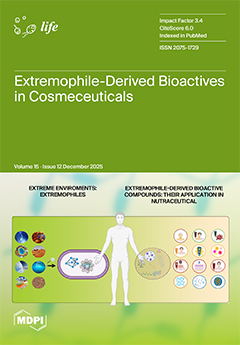
Cover Story (view full-size image): Extreme environments harbour an unexplored treasure trove of extremophile microorganisms, adapted to harsh conditions. Extremophiles produce unique compounds which exhibit antioxidant, anti-inflammatory, photoprotective, and regenerative properties. The integration of extremophile-derived bioactives into cosmeceuticals and nutricosmetics provides a new means of improving skin health through both topical and systemic approaches. Extremophile-derived ingredients combine biological efficacy with environmental sustainability, positioning them as key assets for next-generation skincare. Future directions include clinical validation, regulatory harmonization, and the development of personalized, microbiome-friendly formulations. View this paper
  • Issues are regarded as officially published after their release is announced to the table of contents alert mailing list.
  • You may sign up for e-mail alerts to receive table of contents of newly released issues.
  • PDF is the official format for papers published in both, html and pdf forms. To view the papers in pdf format, click on the "PDF Full-text" link, and use the free Adobe Reader to open them.
Order results
Result details
Section
Select all
Export citation of selected articles as:
24 pages, 2232 KB  
Article
Longitudinal Fecal Short-Chain Fatty Acid Trajectories in Preterm Infants with Early-Onset Neonatal Sepsis: A Pilot Study
by Evgenii Kukaev, Olga Krogh-Jensen, Natalia Starodubtseva, Alisa Tokareva, Irina Nikitina, Anna Lenyushkina, Vladimir Frankevich and Gennady Sukhikh
Life 2025, 15(12), 1943; https://doi.org/10.3390/life15121943 - 18 Dec 2025
Viewed by 380
Abstract
Background: Early-onset neonatal sepsis (EONS), defined as systemic infection occurring within the first 72 hours of life, remains a major cause of morbidity and mortality in preterm infants. Increasing evidence indicates that the gut may play an active role in systemic inflammation, yet [...] Read more.
Background: Early-onset neonatal sepsis (EONS), defined as systemic infection occurring within the first 72 hours of life, remains a major cause of morbidity and mortality in preterm infants. Increasing evidence indicates that the gut may play an active role in systemic inflammation, yet the temporal behavior of fecal short-chain fatty acids (SCFAs) during EONS has not been characterized. SCFAs and branched-chain fatty acids (BCFAs) are key microbial metabolites involved in epithelial maturation and immune regulation and may provide a non-invasive window into early inflammatory vulnerability. Methods: This pilot prospective longitudinal cohort study enrolled 49 preterm infants (≤32 weeks’ gestation) originally identified as at high risk for necrotizing enterocolitis (NEC) and subsequently stratified into EONS and non-sepsis groups. Serial stool samples were collected at predefined timepoints (TPs; TP1 ≈ 3 days of life [DoL], TP2 ≈ 7 DoL, TP3 ≈ 14 DoL, TP4 ≈ 21 DoL, and TP5 ≈ 28 DoL). Samples were analyzed using gas chromatography–mass spectrometry (GC–MS) to quantify a panel of 12 SCFAs, including BCFAs and medium-chain fatty acids (MCFAs). Both absolute concentrations and relative fractions were evaluated, with emphasis on ratio-based metrics (e.g., acetic/propionic acid ratio) and timepoint-specific group contrasts, complemented by partial least squares discriminant analysis (PLS–DA). Results: At the earliest sampling window (TP1), infants with EONS exhibited distinct early changes in SCFA composition, including a significantly lower median relative fraction of acetic acid (86.6% vs. 94.5% in non-sepsis), while several non-acetate components—including propionic, valeric, and branched-chain acids—were relatively enriched. Acetate-to-non-acetate ratios were markedly reduced in EONS (e.g., acetic/propionic and acetic/isobutyric ratios), indicating an early shift away from acetate dominance. PLS–DA at TP1 demonstrated partial separation between groups, with acetic-acid depletion and non-acetate enrichment among the strongest contributors to discrimination. By later TPs, these early differences narrowed to a small subset of BCFA-related ratios and largely attenuated by the end of the first month. Conclusions: In this pilot cohort of preterm infants, EONS was associated with early, structured alterations in fecal SCFA profiles, characterized by reduced acetic-acid dominance and relative enrichment of non-acetate acids. Dynamic, ratio-based assessment proved more informative than absolute concentrations alone, revealing transient intestinal metabolic signatures accompanying systemic infection. These findings provide the first longitudinal evidence of gut metabolic involvement in EONS and lay the groundwork for larger, multi-center studies integrating SCFA trajectories with microbiome and immune profiling to refine early risk stratification for systemic infection in high-risk neonatal populations. Full article
Show Figures

Figure 1

13 pages, 755 KB  
Article
Long-Term Effects of Elexacaftor/Tezacaftor/Ivacaftor on Nocturnal Cardiorespiratory Polygraphy Parameters in Patients with Cystic Fibrosis: A Prospective Study
by Monica Tosto, Giuseppe Fabio Parisi, Santiago Presti, Maria Papale, Giulia Pecora, Enza Mulè, Vittorio Ornato, Donatella Aloisio, Sara Manti and Salvatore Leonardi
Life 2025, 15(12), 1942; https://doi.org/10.3390/life15121942 - 18 Dec 2025
Viewed by 367
Abstract
Cystic fibrosis (CF) is a genetic disorder caused by mutations in the CFTR gene, leading to multi-system impairment. Sleep respiratory disorders (SRDs) are frequent in individuals with CF—even in those with normal or mildly impaired lung function—and may adversely affect overall health. The [...] Read more.
Cystic fibrosis (CF) is a genetic disorder caused by mutations in the CFTR gene, leading to multi-system impairment. Sleep respiratory disorders (SRDs) are frequent in individuals with CF—even in those with normal or mildly impaired lung function—and may adversely affect overall health. The triple combination of elexacaftor, tezacaftor, and ivacaftor (ETI) has markedly improved clinical outcomes in CF; however, its long-term impact on SRDs remains unclear. This study aimed to assess the effects of ETI on nocturnal cardiorespiratory parameters in individuals with CF over a two-year period. Thirty-five clinically stable patients aged ≥13 years, eligible for ETI therapy, were enrolled. Nocturnal cardiorespiratory polygraphy and spirometry were performed at baseline (T0), one year (T1), and two years (T2) after ETI initiation. After one year, significant improvements were observed in mean oxygen saturation (mSpO2), time with SpO2 ≤ 90% (t ≤ 90%), and respiratory rate. Spirometric indices (FEV1, FVC, FEF) also significantly increased (p < 0.05). Correlation analysis revealed positive associations between mSpO2 and FEV1 (ρ = 0.515, p = 0.002) and between FEV1 and FVC (ρ = 0.894, p < 0.001), while t ≤ 90% negatively correlated with FEV1 (ρ = −0.404, p = 0.016). No additional significant changes were found at T2. ETI therapy resulted in sustained improvements in nocturnal oxygenation and lung function, supporting the importance of nocturnal respiratory monitoring during follow-up. Full article
(This article belongs to the Special Issue Cystic Fibrosis: A Disease with a New Face)
Show Figures

Figure 1

11 pages, 1072 KB  
Article
The Influence of Demographic Characteristics, Pre-Existing Conditions and Laboratory Parameters on Postoperative Hemorrhage After Brain Tumor Surgery
by Anatoli Pinchuk, Nikolay Tonchev, Anna Schaufler, Claudia A. Dumitru, Klaus-Peter Stein, Belal Neyazi, I. Erol Sandalcioglu and Ali Rashidi
Life 2025, 15(12), 1941; https://doi.org/10.3390/life15121941 - 18 Dec 2025
Viewed by 328
Abstract
Background: Postoperative hemorrhage (POH) is a rare yet serious complication of cranial surgery, potentially resulting in extended hospitalization, neurological impairment, or death. Existing predictive models often encompass diverse cranial pathologies, despite differing mechanisms of POH depending on the underlying condition. There is a [...] Read more.
Background: Postoperative hemorrhage (POH) is a rare yet serious complication of cranial surgery, potentially resulting in extended hospitalization, neurological impairment, or death. Existing predictive models often encompass diverse cranial pathologies, despite differing mechanisms of POH depending on the underlying condition. There is a lack of large-scale investigations focusing exclusively on POH following surgery for intracranial tumors. This study aimed to assess demographic variables—age, sex, and blood type—and pre-existing medical conditions as potential risk factors for POH in this specific context. Methods: A retrospective review was conducted on medical records of 1862 adult patients who underwent primary surgical resection of intracranial tumors. Univariate and multivariate analyses were applied to identify associations between POH and demographic or clinical characteristics. Results: POH, defined as postoperative hematoma necessitating surgical evacuation, was observed in 31 patients (1.7%). Univariate analysis revealed no statistically significant correlation between POH and demographic factors (age, sex) or pre-existing conditions such as hypertension, diabetes mellitus, cardiac disease, or liver dysfunction. Conclusions: The study found no evidence that demographic variables or pre-existing medical conditions independently contribute to the risk of POH following intracranial tumor resection in adults. Full article
(This article belongs to the Special Issue Advancements in Postoperative Management of Patients After Surgery)
Show Figures

Figure 1

20 pages, 5795 KB  
Article
Bat Cave Vulnerability to Anthropogenic Factors: Status and Priorities for Conservation Within the Mount Elgon Region, Uganda
by Aggrey Siya, Benard Matovu, Lillian Nalukenge, Micheal Mutebi, Betty Nalikka, Kevin Castle, Tanya Dewey, Kalani M. Williams, Natalie R. Wickenkamp, Emma K. Harris, Innocent B. Rwego, Eric Sande, Charles Masembe, Rebekah C. Kading and Robert M. Kityo
Life 2025, 15(12), 1940; https://doi.org/10.3390/life15121940 - 18 Dec 2025
Viewed by 759
Abstract
Uganda is home to a rich diversity of bats, which carry high ecological and socioeconomic value through the ecosystem services that they provide. However, critical bat habitats, including caves, are facing increasing anthropogenic pressures, and the types and frequencies of disturbances to cave-roosting [...] Read more.
Uganda is home to a rich diversity of bats, which carry high ecological and socioeconomic value through the ecosystem services that they provide. However, critical bat habitats, including caves, are facing increasing anthropogenic pressures, and the types and frequencies of disturbances to cave-roosting bats are not well understood in Uganda. Therefore, we examined the role of anthropogenic disturbances in caves to assess the threats posed to bat populations. We used the Bat Cave Vulnerability Index (BCVI) framework to score 14 caves inhabited by bats within the study region. We included qualitative surveys with human communities to better understand various aspects within the BCVI. All bat species recorded were of the IUCN category “Least Concern”. The BCVI indicated 50% of the caves (with insectivorous and frugivorous bats) require urgent conservation interventions due to high bat diversity and anthropogenic disturbances (e.g., guano collection). Most of the caves studied were highly vulnerable to anthropogenic disturbances, as assessed in the study. All the caves we studied (except two) are outside the protected area, and due to their imputed vulnerabilities, interventions ought to be implemented to balance cave conservation and human use in the Mt. Elgon area. Such interventions should integrate human factors. Full article
(This article belongs to the Section Animal Science)
Show Figures

Figure 1

21 pages, 1555 KB  
Article
Pharyngeal Airway Changes After Functional Orthodontic Treatment in Growing Class II Patients: A Retrospective Cephalometric Comparison of Twin Block, RPE and AMCOP®
by Alessio Danilo Inchingolo, Angelo Michele Inchingolo, Irene Palumbo, Daniela Di Venere, Cinzia Maspero, Francesco Inchingolo, Filippo Cardarelli, Grazia Marinelli and Gianna Dipalma
Life 2025, 15(12), 1939; https://doi.org/10.3390/life15121939 - 18 Dec 2025
Viewed by 608
Abstract
Pharyngeal airway morphology is closely linked to craniofacial development, and children with Class II malocclusion—often characterized by mandibular retrusion—may present reduced airway dimensions and a higher risk of obstructive sleep apnea. This retrospective single-center study evaluated whether functional orthodontic appliances can improve pharyngeal [...] Read more.
Pharyngeal airway morphology is closely linked to craniofacial development, and children with Class II malocclusion—often characterized by mandibular retrusion—may present reduced airway dimensions and a higher risk of obstructive sleep apnea. This retrospective single-center study evaluated whether functional orthodontic appliances can improve pharyngeal airway space by promoting mandibular advancement during growth. Fifty patients aged 6–12 years with skeletal Class II malocclusion (ANB > 4°) were treated with a Twin Block appliance (n = 18), Rapid Palatal Expander (RPE; n = 16), or AMCOP® elastodontic device (n = 16). Pre- and post-treatment lateral cephalograms were analyzed to assess skeletal (SNA, SNB, ANB, Co–Gn), dentoalveolar (overjet, overbite, IMPA), and pharyngeal airway variables (SPAS, MAS, PAS). Intra-group changes were tested with paired t-tests and inter-group differences with one-way ANOVA and Tukey post hoc tests (α = 0.05). All appliances produced statistically significant increases in pharyngeal airway dimensions. The Twin Block group showed the greatest improvements, with mean increases of 2.1 mm in SPAS (p < 0.001), 1.8 mm in MAS (p < 0.001), and 1.5 mm in PAS (p < 0.001), together with a significant mandibular advancement (ΔSNB = +1.7°; ΔANB = −1.5°) and elongation of mandibular length (ΔCo–Gn = +3.3 mm). RPE and AMCOP® induced more moderate, yet significant, skeletal and airway changes (RPE: SPAS +1.4 mm, p = 0.006; MAS +0.9 mm, p = 0.009; PAS +0.8 mm, p = 0.022; AMCOP®: SPAS +0.9 mm, p = 0.034; MAS +0.9 mm, p = 0.041; PAS +0.6 mm, p = 0.037). Within the limitations of this small, retrospective single-center sample, the findings indicate that functional orthodontic treatment during growth may be associated with increases in pharyngeal airway dimensions in Class II patients. Among the appliances evaluated, the Twin Block showed the most pronounced skeletal and morphological airway changes. Full article
Show Figures

Figure 1

16 pages, 3926 KB  
Article
In Vivo Assessment of Anti-Inflammatory Effects of Aqueous Extracts of Nepeta nuda ssp. nuda L. in Experimental Model of Peripheral Inflammation in Male Long Evans Rats
by Milena Keremidarska-Markova, Veneta Evtimova-Koeva, Tsvetozar Penchev, Dilyana Doncheva-Stoimenova, Miroslava Zhiponova, Mariela Chichova and Bilyana Ilieva
Life 2025, 15(12), 1938; https://doi.org/10.3390/life15121938 - 18 Dec 2025
Viewed by 333
Abstract
Background: Recently various plants have attracted considerable scientific interest as potential therapeutic alternatives to known drugs used in anti-inflammatory therapy. Therefore, we have investigated the possible anti-inflammatory and analgesic effects of aqueous extracts from flowers of the medical plant Nepeta nuda ssp. [...] Read more.
Background: Recently various plants have attracted considerable scientific interest as potential therapeutic alternatives to known drugs used in anti-inflammatory therapy. Therefore, we have investigated the possible anti-inflammatory and analgesic effects of aqueous extracts from flowers of the medical plant Nepeta nuda ssp. nuda L. (naked catmint) in a model of acute peripheral inflammation induced by intraplantar injection of λ-carrageenan in the hind paw of Long Evans rats. Methods: Two routes of N. nuda extract application were used: locally by intraplantar injections at dosages of 2.5 mg/kg and 25 mg/kg and systemically by intraperitoneal administration at dosages of 50 mg/kg and 200 mg/kg, respectively. Paw volume was measured prior to the carrageenan application and 1, 2, 3, and 4 h after carrageenan injection. Spontaneous locomotor activity of the rats was assessed 3 h after carrageenan injection, corresponding to the peak of acute paw inflammation. Results: Local application of the higher N. nuda dose led to a marked reduction in inflammatory paw edema at the 4th hour after carrageenan injection, comparable to the effect of the positive control diclofenac sodium. Interestingly, a similar anti-inflammatory effect was observed at the 1st hour when both extract doses were administered intraperitoneally. Only the higher intraplantar dose of N. nuda extract significantly enhanced the vertical activity in comparison to the group treated with carrageenan alone. Conclusions: Our data indicate that the aqueous N. nuda extract possesses potent anti-inflammatory effects following both local and systemic administration in rats. Furthermore, when administered locally the extract exerts significant analgesic activity in inflammatory pain. Full article
Show Figures

Figure 1

15 pages, 1009 KB  
Article
Assessment of Genotoxicity and Cytotoxicity of Tepary Bean (Phaseolus acutifolius) Seed Protein Extract
by Carmen Valadez-Vega, Lizbeth Ortigoza-Fonseca, Gabriel Betanzos-Cabrera, Raúl Velasco-Azorsa, Víctor Manuel Muñoz-Pérez, José A. Morales-González, Belinda Patricia Velázquez-Morales, Aurea Bernardino-Nicanor, Leopoldo González-Cruz, Diego Estrada-Luna and Olivia Lugo-Magaña
Life 2025, 15(12), 1937; https://doi.org/10.3390/life15121937 - 18 Dec 2025
Viewed by 275
Abstract
Beans are widely consumed worldwide and are a good source of amino acids and micronutrients; however, they contain anti-nutrients, such as lectins, tannins, protein inhibitors, saponins, and phytic acid, among others, which can reduce the food’s quality and cause adverse health effects. In [...] Read more.
Beans are widely consumed worldwide and are a good source of amino acids and micronutrients; however, they contain anti-nutrients, such as lectins, tannins, protein inhibitors, saponins, and phytic acid, among others, which can reduce the food’s quality and cause adverse health effects. In this study, we analyzed the genotoxic and cytotoxic effects of a protein extract from Phaseolus acutifolius (TBE) seeds. The extract contained some antinutritional compounds, with a higher lectin content and an activity of 2701.85 HU. The acute toxicity test in mice showed that the extract was not lethal at the concentrations tested, as it did not cause any mortality. The in vitro cytotoxicity study on small intestinal epithelial cells indicated that the lectin-rich extract was cytotoxic in both assays, with IC50 values of 10.08 µg/mL and 108.91 µg/mL for the free cell and intestinal fragment assays, respectively. In the in vivo study, an erythropoiesis-stimulatory effect was observed, with significant genotoxic damage noted at 48 h, evidenced by 11 micronucleated erythrocytes at 1000 mg/kg TBE. However, no genotoxicity was detected with prolonged treatment times. These results indicate that TBE is cytotoxic within the tested concentration range, and genotoxic damage is influenced by both concentration and exposure time. Full article
Show Figures

Figure 1

7 pages, 200 KB  
Article
Outpatient Management of Aural Fullness: A Retrospective Case Series of 100 Patients with Cerumen Impaction, Keratosis Obturans, and External Auditory Canal Cholesteatoma
by Giovanni Motta, Domenico Testa, Giuseppe Barba, Rosa Grassia, Francesco Chiari, Arianna Di Stadio and Giuseppe Tortoriello
Life 2025, 15(12), 1936; https://doi.org/10.3390/life15121936 - 18 Dec 2025
Viewed by 359
Abstract
Background: Aural fullness is a common symptom in routine otolaryngological practice. Although it is most commonly attributed to cerumen impaction, other, less frequent conditions may present similar symptoms and are often initially misdiagnosed as cerumen. These include keratosis obturans (KO) and external auditory [...] Read more.
Background: Aural fullness is a common symptom in routine otolaryngological practice. Although it is most commonly attributed to cerumen impaction, other, less frequent conditions may present similar symptoms and are often initially misdiagnosed as cerumen. These include keratosis obturans (KO) and external auditory canal cholesteatoma (EACC). Accurate differentiation among these entities is crucial for appropriate management. These distinctions are crucial for appropriate management. Methods: We retrospectively reviewed 100 patients who presented with a chief complaint of aural fullness from 2021 to 2025. All patients underwent microscopic and/or micro/endoscopic otologic evaluation and were subsequently treated with outpatient otologic procedures. These procedures ranged from simple cerumen removal for CI cases to aural toilettage of the external auditory canal for KO and initial debridement attempts for EACC. Results: Among 100 patients, 87 were diagnosed with CI, 10 were diagnosed with KO, and 3 were diagnosed with EACC. In 97 patients, outpatient microscopic management was effective and successful, leading to the complete removal of the underlying condition and resolution of the ear fullness. In the remaining 3 cases—all diagnosed with EACC—microscopic outpatient debridement was not sufficient. These patients were subsequently scheduled for surgical intervention following audiological and temporal bone CT evaluations. Conclusions: Our findings confirm that CI is the most frequent cause of aural fullness and that microscopic outpatient removal represents an excellent standard of care. However, clinicians should remain aware that KO and EACC may present similar symptoms. Their management is often more complex, potentially requiring multiple sessions and, in the case of EACC, can necessitate surgical intervention. Accurate diagnosis is, therefore, essential to ensure effective and appropriate treatment. Full article
(This article belongs to the Special Issue New Trends in Otorhinolaryngology)
12 pages, 6437 KB  
Article
The Umbilical Cord Clamp Method—Procedural Description and Safety Assessment of a Novel Method of Umbilical Catheter Fixation After Side Entry Insertion
by Anna Tomaszkiewicz, Piotr Kruczek, Piotr Szymański, Piotr Teplicki, Rita Abu Faraj-Batko, Alina Sobczak, Sonia Kahtan, Boris W. Kramer and Jan Mazela
Life 2025, 15(12), 1935; https://doi.org/10.3390/life15121935 - 18 Dec 2025
Viewed by 382
Abstract
Background: Umbilical venous catheter (UVC) placement is common in neonates but carries risks of migration and infection. This study evaluates safety of a novel fixation technique using the umbilical cord clamp after a side-entry insertion. Methods: A retrospective analysis of 264 neonates was [...] Read more.
Background: Umbilical venous catheter (UVC) placement is common in neonates but carries risks of migration and infection. This study evaluates safety of a novel fixation technique using the umbilical cord clamp after a side-entry insertion. Methods: A retrospective analysis of 264 neonates was conducted at a tertiary center in order to assess safety of the novel UVC fixation method. The new technique involved side-entry catheter insertion without severing the cord, secured to the clamp with a sterile patch. Catheter tip position was confirmed and monitored every 24 h via ultrasound. Results: Catheter migration occurred in 18.9% of cases, mostly inward into the right atrium which was managed by repositioning. Migration into the ductus venosus requiring removal occurred in 0.7% of cases and unscheduled removal due to stump detachment in 1.5%. No central line-associated bloodstream infections (CLABSIs) were observed. Conclusions: The umbilical cord clamp method is a safe, single-operator alternative for UVC fixation. This technique had a low rate of catheter migration, did not increase the risk of infection, and was cost-effective and simple. Full article
Show Figures

Figure 1

14 pages, 1769 KB  
Article
Chlorogenic Acid from Peucedanum japonicum Attenuates TNF-α-Induced Oxidative Stress and Inflammatory Damage in Human Dermal Fibroblasts
by Neil Patrick Uy, Minseo Kang, Jang Hoon Kim, Young Ho Hoon, Sanghyun Lee and Sullim Lee
Life 2025, 15(12), 1934; https://doi.org/10.3390/life15121934 - 18 Dec 2025
Viewed by 287
Abstract
Intrinsic aging and external stimuli such as UV exposure contribute to heightened MMP-1 expression, leading to collagen deterioration and weakening of the skin’s structural framework, hallmarks of aging tissue. Peucedanum japonicum, a plant consumed in East Asia, contains antioxidant and anti-inflammatory compounds, [...] Read more.
Intrinsic aging and external stimuli such as UV exposure contribute to heightened MMP-1 expression, leading to collagen deterioration and weakening of the skin’s structural framework, hallmarks of aging tissue. Peucedanum japonicum, a plant consumed in East Asia, contains antioxidant and anti-inflammatory compounds, but its effects on skin aging remain unclear. This study profiled six major bioactive compounds in P. japonicum leaves and roots and evaluated their protective effects in TNF-α-stimulated human dermal fibroblasts (NHDFs). Phytochemical profiles were determined, and biological activity was evaluated by measuring intracellular ROS, MMP-1 secretion, and COL1A1 expression. Both leaf and root extracts exhibited antioxidant and anti-inflammatory activity, with leaves generally showing stronger effects. Among the six compounds, chlorogenic acid (1) demonstrated the most potent activity. It markedly decreased intracellular ROS, suppressed MMP-1 secretion, and enhanced COL1A1 expression in TNF-α-stimulated NHDFs, indicating protection against inflammation-induced collagen degradation. These findings suggest that P. japonicum, particularly its chlorogenic acid (1) content, may be a promising natural resource for anti-aging skincare and therapies targeting inflammation-associated skin damage. Full article
(This article belongs to the Special Issue Innovative Approaches in Dermatological Therapies and Diagnostics)
Show Figures

Figure 1

22 pages, 2914 KB  
Article
Temperature-Dependent Regulation of Co-Occurring Toxins, Odor Compounds, and Disinfection By-Product Precursors in Two Bloom-Forming Species
by Lixia Shang, Yunyan Deng, Xiang Bai and Muhua Feng
Life 2025, 15(12), 1933; https://doi.org/10.3390/life15121933 - 17 Dec 2025
Viewed by 210
Abstract
Cyanobacterial blooms pose significant threats to aquatic ecosystems and drinking water safety, primarily through the release of diverse secondary metabolites. This study systematically explored the dynamics of secondary metabolites in Microcystis aeruginosa and Anabaena sp. under controlled conditions, focusing on the effects of [...] Read more.
Cyanobacterial blooms pose significant threats to aquatic ecosystems and drinking water safety, primarily through the release of diverse secondary metabolites. This study systematically explored the dynamics of secondary metabolites in Microcystis aeruginosa and Anabaena sp. under controlled conditions, focusing on the effects of temperature (10 °C, 25 °C, 35 °C) and growth phases (exponential, stationary, decline). Key parameters measured included cell density, dissolved organic carbon (DOC), microcystins (MC-LR, MC-RR), taste and odor compounds (β-cyclocitral, β-ionone), and disinfection by-product formation potentials (trihalomethanes (THMs) and haloacetic acids (HAAs)). Results revealed striking interspecific differences: M. aeruginosa exhibited significantly higher metabolite production, with peak DOC, extracellular MC-LR, and particulate β-cyclocitral observed in the decline phase at 25–35 °C. In contrast, Anabaena sp. showed an “early accumulation advantage” for THM precursors and “residual release” in the decline phase. Temperature played a critical regulatory role, with 25 °C as the optimal for most metabolites, while 35 °C enhanced extracellular release of dissolved β-cyclocitral in M. aeruginosa. Growth phase dynamics were consistent across species, with stationary and decline phases marked by elevated metabolite concentrations due to intensified synthesis and cell lysis, particularly for HAAs. These findings highlight species-specific metabolic strategies and their environmental drivers, providing critical insights for assessing and managing cyanobacterial bloom risks in aquatic ecosystems. Full article
(This article belongs to the Section Diversity and Ecology)
Show Figures

Figure 1

25 pages, 1537 KB  
Systematic Review
Inter-Individual Heterogeneity in Aerobic Training Adaptations: Systematic Review of the Evidence Base for Personalized Exercise Prescription
by Haili Xiao and Jianchang Ren
Life 2025, 15(12), 1932; https://doi.org/10.3390/life15121932 - 17 Dec 2025
Viewed by 347
Abstract
Personalized exercise prescriptions require identifying inter-individual differences in exercise intervention effects. This review examined whether true inter-individual differences exist after accounting for measurement error. PubMed, Web of Science, and EMBASE databases were systematically searched. Inclusion criteria included: (1) original randomized controlled trials or [...] Read more.
Personalized exercise prescriptions require identifying inter-individual differences in exercise intervention effects. This review examined whether true inter-individual differences exist after accounting for measurement error. PubMed, Web of Science, and EMBASE databases were systematically searched. Inclusion criteria included: (1) original randomized controlled trials or controlled trials using standardized, supervised aerobic exercise interventions, or meta-analyses examining inter-individual differences in aerobic training adaptations; (2) explicitly identifying the assessment of inter-individual response variability as a research objective; (3) Reporting sufficient statistical information to quantify inter-individual variability. The search yielded a total of 3203 studies, and ultimately 78 studies were included for systematic review. Main findings included: (1) Few studies appropriately considered random measurement error and within-individual variability when quantifying inter-individual differences. (2) Analysis of both primary studies and existing meta-analyses revealed a consistent lack of statistical evidence for true inter-individual differences. (3) Observed inter-individual variability was primarily attributed to uncontrolled measurement error or within-individual variability, not true individual response differences. The evidence analyzed in this systematic review indicates that there is insufficient support for true inter-individual differences in the effects of aerobic exercise training intervention. Given physiological complexity and methodological limitations, any conclusions on exercise intervention heterogeneity or individual responsiveness require caution. Full article
Show Figures

Figure 1

13 pages, 784 KB  
Article
Meta-Analysis and Experimental Studies Reveal Mitotic Network Activity Index (MNAI) as Breast Cancer Metastasis and Treatment Biomarker
by Yimeng Cai, Chun Fung Kwok, Hang Chang and Jian-Hua Mao
Life 2025, 15(12), 1931; https://doi.org/10.3390/life15121931 - 17 Dec 2025
Viewed by 263
Abstract
Objective: Identifying biomarkers that predict metastatic potential or guide treatment selection is critical for improving breast cancer (BC) management. Previously, we established the Mitotic Network Activity Index (MNAI) as a prognostic marker in BC. Here, we bioinformatically and experimentally evaluated MNAI as a [...] Read more.
Objective: Identifying biomarkers that predict metastatic potential or guide treatment selection is critical for improving breast cancer (BC) management. Previously, we established the Mitotic Network Activity Index (MNAI) as a prognostic marker in BC. Here, we bioinformatically and experimentally evaluated MNAI as a biomarker for metastasis risk and therapeutic response. Methods: We used Kaplan–Meier and Cox proportional hazard regression analyses to assess the association between MNAI and distant metastasis-free survival (DMFS) across 14 published BC datasets. A total of 16 publicly available clinical trial datasets, including the I-SPY trials, were used to evaluate the predictive value of MNAI for treatment response. Additionally, wound-healing and transmembrane assays were conducted to determine the effects of PLK1, CHEK1, and BUB1 inhibition on BC cell migration and invasion. Results: High MNAI levels were strongly associated with shorter DMFS. Multivariate analysis further confirmed MNAI as an independent risk factor for DMFS, beyond estrogen receptor status and PAM50-based molecular subtypes. Functionally, pharmacologic disruption of the mitotic network using PLK1, CHEK1, or BUB1 inhibitors significantly reduced cell migration and invasion in MDA-MB-231 and BT-549 BC cell lines. Moreover, BC cells with high MNAI increased sensitivity to microtubule-targeting agents such as docetaxel, paclitaxel, and ixabepilone but increased resistance to tamoxifen, AKT1/2 inhibitors, and mTOR inhibitors. Consistent with these findings, analysis of 16 clinical trial cohorts revealed that patients with high MNAI achieved higher pathological complete response rates to taxane-containing and ixabepilone-based therapies. Conclusions: Our findings demonstrate the MNAI as a clinically actionable biomarker that can refine risk stratification and guide the selection of targeted or chemotherapy regimens, advancing precision medicine in BC management. Full article
(This article belongs to the Special Issue Advances in Integrative Omics Data Analysis for Cancer Research)
Show Figures

Figure 1

14 pages, 1246 KB  
Article
Adjuvant Tegafur-Uracil Improves Survival in Low-Risk, Mismatch Repair Proficient Stage IIA Colon Cancer: A Propensity Score-Matched Analysis
by Min-Chi Cheng, Hsu-Lin Lee, Shiue-Wei Lai, Jia-Hong Chen and Po-Huang Chen
Life 2025, 15(12), 1930; https://doi.org/10.3390/life15121930 - 17 Dec 2025
Viewed by 320
Abstract
Background: The benefit of adjuvant chemotherapy for low-risk, mismatch repair proficient (pMMR) stage IIA colon cancer is uncertain. Surveillance is standard, but some patients relapse. Tegafur-uracil (UFT) is a low-toxicity oral option that may offer benefit; Methods: This retrospective study included [...] Read more.
Background: The benefit of adjuvant chemotherapy for low-risk, mismatch repair proficient (pMMR) stage IIA colon cancer is uncertain. Surveillance is standard, but some patients relapse. Tegafur-uracil (UFT) is a low-toxicity oral option that may offer benefit; Methods: This retrospective study included patients with resected low-risk, pMMR stage IIA colon cancer (2013–2022). Patients receiving ≥5 postoperative UFT prescriptions were compared with those under surveillance. Propensity score matching (1:1) was applied, and disease-free survival (DFS) and overall survival (OS) were analyzed using Kaplan–Meier and Cox models with sensitivity analyses.; Results: Among 279 eligible patients, 71 matched pairs were analyzed. UFT reduced the risk of recurrence or death by 57% (DFS HR = 0.43, 95% CI 0.25–0.75, p = 0.002) and mortality by 62% (OS HR = 0.38, 95% CI 0.21–0.68, p < 0.001); Conclusions: UFT improved DFS and OS in low-risk pMMR stage IIA colon cancer, suggesting surveillance alone may undertreat some patients. Prospective trials are warranted. Full article
(This article belongs to the Special Issue Contemporary Therapeutic Strategies for Solid Tumors)
Show Figures

Figure 1

17 pages, 1360 KB  
Article
Predictors of 30-Day Mortality in Trauma: A Single-Center Retrospective Exploratory Study
by Irina-Anca Eremia, Cătălin-Alexandru Anghel, Horia Alexandru Nica, Eduard-Alexandru Eremia, Ionuț-Lucian Antone-Iordache, Adrian-Gabriel Borcan, Daniel Iulian Voiculescu and Silvia Nica
Life 2025, 15(12), 1929; https://doi.org/10.3390/life15121929 - 17 Dec 2025
Viewed by 229
Abstract
Background and Objectives: Trauma remains a leading global cause of preventable mortality, and outcome prediction tools are essential for both triage and resource allocation. Timely and effective medical response to trauma patients is of the essence. While there are already some widely [...] Read more.
Background and Objectives: Trauma remains a leading global cause of preventable mortality, and outcome prediction tools are essential for both triage and resource allocation. Timely and effective medical response to trauma patients is of the essence. While there are already some widely accepted trauma scores, our aim was to build a more precise model tailored to our cohort as a framework for future research. Materials and Methods: A retrospective cohort of 91 patients was analyzed, using several clinical and paraclinical factors to build a logistic regression model that predicted 30-day mortality. Results: After adjusting for collinearity, our final multiple regression model, comprising systolic blood pressure, glycemia, urea serum levels and number of fractures, showed an excellent model fit (McFadden R2 = 0.682; AUC = 0.94) for predicting 30-day mortality. Systolic blood pressure was significantly associated with mortality (OR = 0.944, 95% CI: 0.920–0.969). In our cohort it seems to surpass the performance of The Trauma and Injury Severity Score (McFadden R2 = 0.56; AUC = 0.90). Conclusions: Commonly available clinical parameters could contribute to risk stratification, highlighting the prognostic importance of hemodynamic instability and metabolic response. This study was conducted on a small cohort as an exploratory analysis. Further research and validation based on multicentric cohorts are needed. Full article
Show Figures

Figure 1

18 pages, 6631 KB  
Article
Effect of Supplemental Bamboo Leaf Extract on Milk Production, Composition, Biochemical Indices, and Fecal Microbiota Diversity in Grazing Yili Mares
by Chuankun Wang, Jianwen Wang, Bingqiang Ma, Ting Liu, Xinxin Yuan, Jun Meng and Yaqi Zeng
Life 2025, 15(12), 1928; https://doi.org/10.3390/life15121928 - 17 Dec 2025
Viewed by 280
Abstract
Purpose: This study investigated the effects of dietary bamboo leaf extract (BLE) on milk parameters and intestinal microbiota in lactating Yili mares. Methods: Twenty-four Yili mares of similar age (10 ± 2 years), weight (360.62 ± 15.23 kg) and body condition [...] Read more.
Purpose: This study investigated the effects of dietary bamboo leaf extract (BLE) on milk parameters and intestinal microbiota in lactating Yili mares. Methods: Twenty-four Yili mares of similar age (10 ± 2 years), weight (360.62 ± 15.23 kg) and body condition were selected for this study and randomly divided into four groups of six mares each: an untreated control group (CG) and three experimental groups (EG1, EG2, EG3) were fed a basal diet supplemented with 0, 10, 20, or 30 g/day of BLE, respectively, for 60 days. Then, horse milk composition, antioxidant activity, and immunoglobulin levels along with the relative abundance of fecal microbiota were measured. Results: Compared with the control group, supplementation with BLE for 60 days significantly improved milk yield and composition. The protein content in the EG1 was significantly higher than that in the CG, the milk yield and fat content in the EG2 was significantly higher than that in the CG, and the lactose content in the EG3 was significantly higher than that in the CG. BLE also significantly increased the milk’s antioxidant capacity, vitamin C, IgG, IgM, and IgA levels, with the antioxidant and immune properties in the EG2 being significantly higher than those in the CG. Furthermore, BLE feeding promoted communities of beneficial intestinal microbes. Bacteria associated with energy metabolism and organic matter decomposition increased significantly in BLE-fed groups, especially the EG2, which had elevated abundance of UCG-002 and the NK4A214_group. BLE also significantly reduced the abundance of Euryarchaeota, Verrucomicrobiota, Methanobacteriaceae, and Methanobrevibacter. Conclusions: Dietary supplementation with bamboo leaf extract is a safe and inexpensive way to enhance milk yield and quality and to promote the growth of beneficial intestinal microbes in Yili horses. Full article
(This article belongs to the Section Animal Science)
Show Figures

Figure 1

17 pages, 3264 KB  
Article
Effects of Invasive Solidago canadensis and Biochar on the Remediation of Soil Cd Contamination and Greenhouse Gas Emissions
by Xiaokang Ni, Yadi Yu, Xi Liu, Wanqing Nie, Yuli Hu, Jian Bai, Ziyi Yan, Wei Li, Lifei Xiong, Xixian Xie, Yuanyuan Zhu, Zihan Zeng, Qingye Yu, Shuli Wang, Qin Ying, Nansheng Wu and Ling Zhang
Life 2025, 15(12), 1927; https://doi.org/10.3390/life15121927 - 16 Dec 2025
Viewed by 250
Abstract
Cadmium (Cd) contamination in agricultural soils threatens food security and exacerbates climate change through its impact on greenhouse gas (GHG) (CO2, N2O and CH4) emissions, in which N2O and CO2 are the dominant fluxes [...] Read more.
Cadmium (Cd) contamination in agricultural soils threatens food security and exacerbates climate change through its impact on greenhouse gas (GHG) (CO2, N2O and CH4) emissions, in which N2O and CO2 are the dominant fluxes of the terrestrial carbon-nitrogen cycle whose magnitude is directly amplified by Cd stress. Key remediation approaches for this dual challenge are phytoremediation and biochar amendment. This study aims to investigate the effects of Solidago canadensis (CGR) and biochar (BC) on soil remediation and GHG emissions under different levels of Cd contamination. A pot experiment with four Cd concentration gradients (0, 5, 10, and 30 mg kg−1, i.e., Cd-0, Cd-5, Cd-10, and Cd-30, respectively) and three remediation measures (control, BC addition, and CGR cultivation) was set up to measure available soil Cd (ACd), soil physicochemical properties, GHG emissions, and plant Cd accumulations. The results demonstrated that ACd was significantly reduced by BC via adsorption through surface complexation and by CGR via immobilization through root uptake and sequestration. CGR decreased ACd by 46.2% and 41.7% under mild and moderate Cd contamination, respectively, while BC reduced ACd by 8.9% under severe contamination. In terms of GHG emissions, CGR increased cumulative CO2 by 83.4% in Cd-10 soil and 53.8% in Cd-30 soil, whereas BC significantly lowered N2O emissions by 22.1% in Cd-5 soil. Mantel analysis revealed strong correlations between ACd and key carbon and nitrogen indicators, which mediate the bioavailability of Cd. Therefore, CGR cultivation is better suited to mild-to-moderate contamination given its high removal efficiency, while BC amendment is targeted at severe contamination by stabilizing Cd and mitigating N2O. This provides a scientific basis for the remediation of Cd-contaminated soils. Full article
(This article belongs to the Section Plant Science)
Show Figures

Figure 1

39 pages, 609 KB  
Review
Memory in Psychiatric Disorders: A Review
by Riccardo Gurrieri, Matteo Gambini, Gerardo Russomanno, Federico Mucci, Manuel Glauco Carbone, Giorgia Sità, Elena Pescini, Sibilla Stagi, Anna Chiara Casucci, Diletta Mastrogiacomo, Francesca Bressan and Donatella Marazziti
Life 2025, 15(12), 1926; https://doi.org/10.3390/life15121926 - 16 Dec 2025
Viewed by 753
Abstract
Memory constitutes a fundamental cognitive domain, and converging evidence suggests that its dysfunction represents a prominent, though not exclusive, transdiagnostic dimension across major psychiatric disorders. This review aimed to integrate neurobiological, cognitive, and clinical evidence on domain-specific memory impairments in mood, anxiety, obsessive–compulsive, [...] Read more.
Memory constitutes a fundamental cognitive domain, and converging evidence suggests that its dysfunction represents a prominent, though not exclusive, transdiagnostic dimension across major psychiatric disorders. This review aimed to integrate neurobiological, cognitive, and clinical evidence on domain-specific memory impairments in mood, anxiety, obsessive–compulsive, post-traumatic stress, and psychotic disorders. A comprehensive search was conducted on PubMed, Scopus, and Web of Science up to November 2025 for peer-reviewed studies examining short-term, working, long-term, episodic, semantic, and prospective memory, prioritizing both landmark and recent contributions. Two recurrent transdiagnostic patterns emerged: (i) consistent impairments in working-memory control, and (ii) reduced episodic/autobiographical specificity, while procedural memory appeared relatively preserved. Disorder-specific profiles include overgeneral autobiographical memory in major depression, enduring working and episodic deficits in bipolar disorder, variable impairments in anxiety disorders, functional rather than structural memory inefficiencies in obsessive–compulsive disorder, broad mnemonic disorganization in post-traumatic stress disorder, and pervasive working and episodic deficits in schizophrenia and related psychoses. Across conditions, converging neurobiological data implicate fronto-hippocampal dysconnectivity, altered plasticity, and impaired consolidation processes. Unlike previous reviews, this work syntetisizes evidence across multiple memory systems and across major psychiatric categories, linking neurobiological mechanisms with cognitive and clinical manifestations to support a dimensional, transdiagnostic interpretation of memory dysfunction. These findings could suggest that memory dysfunction represents a recurrent and clinically relevant dimension across psychiatric conditions, warranting further mechanistic and longitudinal investigation. Full article
(This article belongs to the Section Physiology and Pathology)
18 pages, 720 KB  
Article
Genetic Characterization of the Arabian Horse Population in Tunisia Using Microsatellites
by Mariem Jlassi, Iheb Dhifalli, Hatem Ouled Ahmed, Faten Lasfar, Mohamed El Gtari and Bayrem Jemmali
Life 2025, 15(12), 1925; https://doi.org/10.3390/life15121925 - 16 Dec 2025
Viewed by 341
Abstract
The genetic diversity and population structure of Tunisian Arabian horses were assessed using highly polymorphic microsatellite markers, which are critical for conservation and breeding programs. Despite the cultural and economic importance of Arabian horses in Tunisia, molecular data supporting their management remain limited. [...] Read more.
The genetic diversity and population structure of Tunisian Arabian horses were assessed using highly polymorphic microsatellite markers, which are critical for conservation and breeding programs. Despite the cultural and economic importance of Arabian horses in Tunisia, molecular data supporting their management remain limited. In this study, DNA from 130 horses was genotyped with 17 ISAG-FAO-recommended microsatellites to evaluate diversity within Eastern and Western Arabian lineages and their relationship to Thoroughbreds. Eastern Arabians showed an average of 5.176 alleles per locus, observed heterozygosity of 0.657, expected heterozygosity of 0.677, and a fixation index of 0.028, while Western Arabians displayed 5.941 alleles, heterozygosity values of 0.689 (Ho) and 0.688 (He), and a fixation index of −0.006. Genetic differentiation was low between Eastern and Western Arabians (0.011) but moderate between Eastern Arabians and Thoroughbreds (0.071), with high gene flow within Arabian subpopulations (0.950). Principal component analysis confirmed distinct subpopulations. These findings highlight high genetic diversity in Western Arabians and variable heterozygosity in Eastern Arabians, providing a molecular basis for targeted breeding strategies to preserve genetic traits, control inbreeding, and ensure the long-term sustainability of Tunisian Arabian horse populations. Full article
(This article belongs to the Section Animal Science)
Show Figures

Figure 1

29 pages, 2427 KB  
Perspective
Stochastic Nature of Fascia: From Layered Pedagogical Artifact to Morphogenetic Reality in Clinical Anatomy
by John Sharkey and Karen B. Kirkness
Life 2025, 15(12), 1924; https://doi.org/10.3390/life15121924 - 16 Dec 2025
Viewed by 1076
Abstract
Fascia research suffers from definitional fragmentation, with no universal agreement about what fascia actually is, why it matters, or how to define it. Researchers often pursue lines of inquiry based on their existing expertise, yet traditional and newer approaches that might resolve these [...] Read more.
Fascia research suffers from definitional fragmentation, with no universal agreement about what fascia actually is, why it matters, or how to define it. Researchers often pursue lines of inquiry based on their existing expertise, yet traditional and newer approaches that might resolve these issues frequently conflict. To address this challenge, the authors use a hermeneutic framework to integrate their combined half century of anatomical experience with a narrative literature synthesis. They propose that fascia functions as a stochastic morphogenetic field rather than a discrete anatomical system, a stochastic process displaying opportunistic dynamics at atomic, molecular, and cellular scales that produces deterministic mechanical properties at macroscopic tissue levels. Four key conclusions emerge: (1) anatomical “virtual spaces” are hyaluronic acid (HA)–tissue manifolds tightly coupled with calcium coordination; (2) fascia functions as a stochastic morphogenetic field where clinically and educationally relevant deterministic patterns emerge; (3) a conceptual framework for context-flexible fascial nomenclature; (4) hermeneutic approaches enable synthesis across theoretical domains. The conclusions support the understanding of HA-mediated EMT/MET plasticity and its “Go or Grow” phenotypes as central conduits for both healing and cancer progression. Understanding the stochastic nature of fascia is thus essential for physicians as well as clinicians in the allied health setting. Optimal fascia-aware movement and manual therapy interventions are those that recognize fascia as a self-adapting morphogenetic field. Full article
Show Figures

Figure 1

15 pages, 631 KB  
Article
Associations Between PFAS Exposure and HPG Axis Hormones in U.S. Women
by Yu-Wei Fang, Ching-Way Chen, Hsuan-Cheng Lin, Ta-Chen Su, Chikang Wang and Chien-Yu Lin
Life 2025, 15(12), 1923; https://doi.org/10.3390/life15121923 - 16 Dec 2025
Viewed by 411
Abstract
Purpose: This study aimed to investigate the associations between serum per- and polyfluoroalkyl substances (PFAS) and reproductive hormones, including follicle-stimulating hormone (FSH), anti-Müllerian hormone (AMH), estradiol, and progesterone, in U.S. women. Approach and Results: We conducted a cross-sectional study using data [...] Read more.
Purpose: This study aimed to investigate the associations between serum per- and polyfluoroalkyl substances (PFAS) and reproductive hormones, including follicle-stimulating hormone (FSH), anti-Müllerian hormone (AMH), estradiol, and progesterone, in U.S. women. Approach and Results: We conducted a cross-sectional study using data from the National Health and Nutrition Examination Survey (NHANES) 2017–2018. The study included 612 women aged ≥18 years with available PFAS and sex hormone measurements. Serum concentrations of four major PFASs (linear perfluorooctanoic acid [n-PFOA], perfluorooctane sulfonic acid [PFOS], perfluorononanoic acid [PFNA], and perfluorohexane sulfonic acid [PFHxS]) were analyzed, along with serum levels of FSH, AMH, estradiol, and progesterone measured by isotope dilution liquid chromatography–tandem mass spectrometry. Higher serum PFAS concentrations were associated with increased FSH and decreased AMH, estradiol, and progesterone. For example, each interquartile range (IQR) increase in ln-PFNA was associated with a 42.0% increase in ln-FSH (p = 0.01) and 32.2% lower ln-AMH (p < 0.001), 33.0% lower ln-estradiol (p = 0.004), and 40.9% lower ln-progesterone (p = 0.02). A PFAS exposure index was related to higher FSH and lower AMH, estradiol, and progesterone, with stronger effects in premenopausal women. Conclusions: PFAS exposure was linked to broad endocrine disruption in women, with consistent alterations across gonadotropins and sex steroids. These findings suggest that PFAS exposure was associated with hormonal patterns consistent with diminished ovarian reserve and potential changes in reproductive function, underscoring the need for longitudinal studies and regulatory actions to mitigate exposure. Full article
(This article belongs to the Section Medical Research)
Show Figures

Figure 1

35 pages, 3850 KB  
Review
Glial Ion Channels in Myelin Pathophysiology: Insights from Leukodystrophies
by Marcello Belfiore, Sergio Visentin and Elena Ambrosini
Life 2025, 15(12), 1922; https://doi.org/10.3390/life15121922 - 15 Dec 2025
Viewed by 595
Abstract
Leukodystrophies (LDs) constitute a heterogeneous group of genetic diseases in which mutations in glial cell genes lead to alterations in myelin formation and/or maintenance, ultimately causing white matter dysfunction. Increasing evidence on the genetic basis of LDs has revealed that proteins expressed not [...] Read more.
Leukodystrophies (LDs) constitute a heterogeneous group of genetic diseases in which mutations in glial cell genes lead to alterations in myelin formation and/or maintenance, ultimately causing white matter dysfunction. Increasing evidence on the genetic basis of LDs has revealed that proteins expressed not only by myelin-forming oligodendrocytes, but also by other glial cell types, play essential roles in myelination. By elucidating disease mechanisms, these studies have uncovered novel cellular and molecular contributors to myelin biogenesis and function, including ion channels. This is exemplified by the recent identification of mutations in the TMEM63A gene, which encodes the homonymous mechanosensitive channel, as the causative factor of the rare hypomyelinating LD HLD19 and by mutations in the chloride channel ClC-2 as responsible for the development of the vacuolating ClC2 LD. Together, this evidence has opened new perspectives on the crucial role of mechanosensitivity and ionic homeostasis for proper myelin development and structural integrity. In this review, we summarize recent advances on the role of glial ion channels in healthy white matter development and preservation, as well as their direct and indirect contributions to LD pathomechanisms. Finally, we discuss emerging therapeutic implications of these studies for LDs and other demyelinating conditions and emphasize the considerable potential of a cross-pathological, integrative approach to uncover shared and disease-specific mechanisms of demyelination. Full article
(This article belongs to the Special Issue Ion Channels and Neurological Disease: 2nd Edition)
Show Figures

Figure 1

23 pages, 8420 KB  
Article
Bacterial Community Composition and Structure in the Littoral of Rila Mountains Glacial Lakes
by Boyanka Angelova, Silvena Boteva, Ivan Traykov, Martin Tsvetkov and Anelia Kenarova
Life 2025, 15(12), 1921; https://doi.org/10.3390/life15121921 - 15 Dec 2025
Viewed by 241
Abstract
High-mountain lakes are biodiversity hotspots sensitive to increasing regional and global climate warming. However, their microbial communities remain insufficiently characterized due to their remoteness and limited accessibility. This study aimed to determine how seasonal environmental parameters shape the composition, structure and diversity of [...] Read more.
High-mountain lakes are biodiversity hotspots sensitive to increasing regional and global climate warming. However, their microbial communities remain insufficiently characterized due to their remoteness and limited accessibility. This study aimed to determine how seasonal environmental parameters shape the composition, structure and diversity of littoral bacterial communities in three glacial lakes in Rila Mountains (Bulgaria). Water samples were collected during ice-free periods in 2023 and 2024, and bacterial taxonomic composition was analysed by Next-generation sequencing. A total of 1158 bacterial OTUs were identified encompassing 18 phyla and 165 families. Actinomycetota, Pseudomonadota, and Bacteroidota were dominant at the phylum level, and Sporichthyaceae, Comamonadaceae, Chitinophagaceae and Mycobacteriaceae were most abundant among the families. Community richness and diversity peaked in June, immediately after ice melting, particularly in the highest-altitude lake (Sulzata Lake), and declined during the warm season (August), when the relative abundances of Sporichthyaceae and Mycobacteriaceae (Actinomycetota) increased. Seasonal restructuring occurred across phyla and families even in a single taxon, with water temperature and organic carbon availability identified as the main environmental drivers. The findings have improved our understanding of temperature-driven bacterial responses. They have also highlighted the vulnerability of cold-adapted taxa to regional climate warming which may contribute to more effective biodiversity conservation strategies for these unique ecosystems. Full article
Show Figures

Figure 1

21 pages, 2932 KB  
Article
The Mechanism of Emodin Against Methicillin-Resistant Staphylococcus aureus Infection and Research on Synergistic Antibiotics
by Chenliang Chu, Liang Qin, Huayong Peng, Tao Kuang, Yongshi Li, Xin Wang, Fenglan Liang, Ping Gao, Xiaoxiong Wang and Deyun Ma
Life 2025, 15(12), 1920; https://doi.org/10.3390/life15121920 - 15 Dec 2025
Viewed by 290
Abstract
Methicillin-resistant Staphylococcus aureus (MRSA) poses a significant clinical challenge due to its multidrug resistance, particularly to β-lactam antibiotics. This study comprehensively evaluated the natural compound emodin for its anti-MRSA activity, mechanisms of action, and potential for synergy with β-lactam antibiotics. Our findings [...] Read more.
Methicillin-resistant Staphylococcus aureus (MRSA) poses a significant clinical challenge due to its multidrug resistance, particularly to β-lactam antibiotics. This study comprehensively evaluated the natural compound emodin for its anti-MRSA activity, mechanisms of action, and potential for synergy with β-lactam antibiotics. Our findings demonstrate that emodin dose-dependently inhibits MRSA growth and abrogates biofilm formation at 2× MIC. Mechanistic studies revealed that emodin compromises cell membrane and wall integrity, induces oxidative stress, and downregulates the virulence factors SPA and EsxA. Furthermore, emodin acted synergistically with β-lactam antibiotics: it enhanced the ability of cefalexin to block bacterial adhesion and invasion of HaCat cells, and potentiated the efficacy of amoxicillin in clearing MRSA from infected macrophages. In conclusion, emodin employs a multi-target mechanism against MRSA and can resensitize the bacterium to conventional β-lactam antibiotics, presenting a promising strategy for combination therapy that may help curb antibiotic use and resistance development. Full article
(This article belongs to the Section Microbiology)
Show Figures

Figure 1

23 pages, 8980 KB  
Article
Age-Related Alterations in SIBLING Proteins and Dentin Micro-Architecture: Morphological and Molecular Associations
by Neshka Manchorova-Veleva, Mina Pencheva, David Baruh, Veselina Todorova, Lyubomir Vangelov, Margarita Guenova, Zhelyazko Damyanov and Donka Keskinova
Life 2025, 15(12), 1919; https://doi.org/10.3390/life15121919 - 15 Dec 2025
Viewed by 299
Abstract
Background: Aging is associated with progressive structural and functional changes in dentin, reducing its mechanical integrity and increasing vulnerability to damage. Among the most important regulators of dentin physiology are extracellular matrix proteins from the SIBLING family, including Dentin Matrix Protein 1 [...] Read more.
Background: Aging is associated with progressive structural and functional changes in dentin, reducing its mechanical integrity and increasing vulnerability to damage. Among the most important regulators of dentin physiology are extracellular matrix proteins from the SIBLING family, including Dentin Matrix Protein 1 (DMP-1), Dentin Sialophosphoprotein (DSPP), and Osteopontin (OPN). These proteins are essential for dentin mineralization, collagen organization, and tissue remodeling. Despite their critical role, knowledge about their age-related distribution and correlation with dentin structure and morphology remains limited. Aim: To examine age-dependent changes in the expression of SIBLING proteins (DMP-1, DSPP, OPN) in human dentin and to evaluate their relationship with collagen structure and ultramorphology using polarized light microscopy (PLM), immunohistochemistry (IHC), and scanning electron microscopy (SEM). Materials and Methods: Ninety extracted human teeth were categorized into young (≤17 years), mature (18–50 years), and old (>51 years) groups. IHC was applied to detect protein distribution, PLM to assess collagen organization, and SEM to evaluate dentinal morphology. Results and Conclusions: Aging was associated with increased expression of DMP-1 and OPN and a reduction in DSPP, which is particularly evident in peritubular dentin. Older samples showed collagen disorganization, reduced birefringence, and extensive intratubular mineralization. These findings suggest that age-related alterations in SIBLING proteins contribute to structural changes in dentin, providing new insights relevant to dental care in elderly patients. Full article
(This article belongs to the Special Issue Recent Advances in Bone Biology)
Show Figures

Figure 1

10 pages, 1081 KB  
Case Report
Severe Bupropion Overdose Resulting in Cardiac Arrest, Delayed Rhabdomyolysis, and Persistent Neurological Sequelae in an Adolescent
by Che-Pei Chang, Po-Chen Lin, Giou-Teng Yiang, Meng-Yu Wu and Shi-Bing Wong
Life 2025, 15(12), 1918; https://doi.org/10.3390/life15121918 - 15 Dec 2025
Viewed by 616
Abstract
Bupropion overdose can result in severe neurological and cardiovascular toxicity. We describe a 16-year-old girl who ingested 4.2 g of extended-release bupropion (90.3 mg/kg), presenting with seizures and out-of-hospital cardiac arrest. After 21 min of cardiopulmonary resuscitation, she was resuscitated and admitted with [...] Read more.
Bupropion overdose can result in severe neurological and cardiovascular toxicity. We describe a 16-year-old girl who ingested 4.2 g of extended-release bupropion (90.3 mg/kg), presenting with seizures and out-of-hospital cardiac arrest. After 21 min of cardiopulmonary resuscitation, she was resuscitated and admitted with profound metabolic acidosis and electrocardiographic abnormalities. Serum testing confirmed markedly elevated bupropion levels. During hospitalization, she developed delayed rhabdomyolysis, hypoxic encephalopathy, and persistent neurological sequelae, including Parkinsonism and cognitive deficits. Supportive care led to gradual recovery, with normalization of cardiac conduction and drug clearance by day 20, though residual deficits remained at discharge after seven weeks. This case highlights the life-threatening complications of bupropion toxicity, the delayed risk of seizures, and the need for vigilance for secondary complications such as rhabdomyolysis. Full article
(This article belongs to the Special Issue Reviewing the Landscape of Psychopharmacology)
Show Figures

Figure 1

16 pages, 1379 KB  
Article
The Impact of Decreased GSK3β and S6K1 Expression in TNBC Patients
by Tijana Tomić, Mirjana Prvanović, Jovan Jevtić, Blagoje Murganić, Nejla Ademović, Milica Nedeljković, Irena Jovanić, Nikola Tanić and Nasta Tanić
Life 2025, 15(12), 1917; https://doi.org/10.3390/life15121917 - 15 Dec 2025
Viewed by 278
Abstract
Breast cancer is the most frequent and lethal type of cancer that affects women worldwide. Triple-negative breast cancer (TNBC) is the most aggressive type of breast cancer, having high rate of recurrence, metastasis, and mortality, with very limited options for treatment, and a [...] Read more.
Breast cancer is the most frequent and lethal type of cancer that affects women worldwide. Triple-negative breast cancer (TNBC) is the most aggressive type of breast cancer, having high rate of recurrence, metastasis, and mortality, with very limited options for treatment, and a tendency to develop resistance to conventional therapy. These circumstances mean that it is necessary to develop effective therapies for TNBC patients which would circumvent resistance mechanisms. The PAM and Wnt signaling pathways are among those responsible for therapy resistance in TNBC, as they also have major roles in different cellular processes such as metabolism, proliferation, metastasis, stemness, and survival. We analysed the expression of GSK3β and S6K1 as interacting components of the two pathways in order to examine the relation between them and determine whether they could be used as predictive markers in TNBC. The expression of mRNA was examined with real-time PCR and protein expression with immunohistochemistry. Our results showed that protein expression is in line with mRNA expression. We found a positive correlation between the mRNA expressions of GSK3β and S6K1, showing their coordinated transcription. We also showed that their simultaneous low expression is unfavorable for TNBC patients and could possibly be used as a predictive marker. Full article
(This article belongs to the Special Issue Regulation of Cellular Signaling Pathways in the Metabolic Syndrome)
Show Figures

Figure 1

23 pages, 1809 KB  
Review
AI-Enabled Reduction of Animal Use in Cardiovascular Translational Medicine: Regulatory and Technological Perspectives
by Rasit Dinc and Nurittin Ardic
Life 2025, 15(12), 1916; https://doi.org/10.3390/life15121916 - 14 Dec 2025
Viewed by 428
Abstract
Background: Animal studies remain fundamental to cardiovascular drug and device development, yet their ability to predict human responses is increasingly being questioned. The US Food and Drug Administration (FDA)’s April 2025 roadmap supports alternative testing approaches that strategically reduce animal use while increasing [...] Read more.
Background: Animal studies remain fundamental to cardiovascular drug and device development, yet their ability to predict human responses is increasingly being questioned. The US Food and Drug Administration (FDA)’s April 2025 roadmap supports alternative testing approaches that strategically reduce animal use while increasing human relevance by combining laboratory methods, computer simulations, and artificial intelligence. This review examines AI-enabled alternative methodologies for cardiovascular safety assessment within established validation frameworks and regulatory acceptance programs. We describe machine learning approaches for predicting cardiac safety risks, automated analysis of human heart cells, and patient-specific computer simulations for evaluating medical devices. These tools can improve our understanding of biological mechanisms, focus limited animal studies on critical questions, and accelerate decision-making. Regulatory acceptance requires rigorous validation appropriate to each specific use and decision context. Conclusion: We outline practical steps for establishing credibility, including transparent data documentation, independent testing, and identifying where models can be reliably applied, and identify remaining challenges in data standardization and regulatory readiness. With ongoing alignment between regulators, standards bodies, and product developers, these alternative approaches could significantly reduce reliance on animal testing in cardiovascular research while maintaining or improving the quality of evidence. Full article
(This article belongs to the Topic Animal Models of Human Disease 3.0)
Show Figures

Figure 1

13 pages, 1188 KB  
Article
Plasma-Depleted Lyophilized Porcine Platelet Lysate as an Alternative to Fetal Bovine Serum in Cell Culture
by Kuo-Chung Cheng, Hung-Maan Lee, Yi-Ting Shu, Yi-Chieh Chu, Jui-Ting Hsiao, Ming-Fa Hsieh and Yi-Ho Hsieh
Life 2025, 15(12), 1915; https://doi.org/10.3390/life15121915 - 14 Dec 2025
Viewed by 317
Abstract
Purpose: Fetal bovine serum (FBS) is widely used in cell culture due to its rich nutrient and growth factor content, but it poses ethical concerns, biosafety risks, and cost limitations. This study investigates plasma-depleted lyophilized (freeze-dried) porcine platelet lysate (pPL) as a potential [...] Read more.
Purpose: Fetal bovine serum (FBS) is widely used in cell culture due to its rich nutrient and growth factor content, but it poses ethical concerns, biosafety risks, and cost limitations. This study investigates plasma-depleted lyophilized (freeze-dried) porcine platelet lysate (pPL) as a potential alternative to FBS for use in cell-based research and biomanufacturing. Materials and Methods: Fresh porcine blood was processed to obtain plasma-depleted pPL using double centrifugation and repeated freeze–thaw cycles. The lysate was analyzed for growth factor content via ELISA, then freeze-dried and sterilized with gamma irradiation. Endotoxin levels and cytotoxicity were evaluated. The ability of plasma-depleted lyophilized pPL to promote cell proliferation was assessed using L929 fibroblast cultures and compared with FBS. Results: Plasma-depleted lyophilized pPL contained significantly higher levels of TGF-β1 than FBS. The freeze-dried product remained stable for at least three months at room temperature. Gamma irradiation effectively sterilized the lysate without degrading key growth factors. Plasma-depleted lyophilized pPL showed no cytotoxicity and promoted greater proliferation of L929 cells compared to FBS, indicating enhanced mitogenic activity. Conclusions: Plasma-depleted lyophilized pPL is a stable, safe, and growth factor-rich alternative to FBS. It supports fibroblast proliferation, retains bioactivity after sterilization and storage, and may provide a scalable, ethical option for cell culture in biomedical research, regenerative medicine, and therapeutic product development. Full article
(This article belongs to the Section Cell Biology and Tissue Engineering)
Show Figures

Figure 1

18 pages, 1058 KB  
Review
The Evolution of Large Organism Size: Disparate Physiologies Share a Foundation at the Smallest Physical Scales
by Simon Pierce
Life 2025, 15(12), 1914; https://doi.org/10.3390/life15121914 - 14 Dec 2025
Viewed by 471
Abstract
Life is defined by self-governing networks of molecules that change conformation cyclically, converting thermodynamic motion into directional work and structure. A spectrum of scale, from nanoscopic to macroscopic, involves a shift from intracellular thermodynamically driven processes (thermal agitation ultimately rooted in quantum phenomena) [...] Read more.
Life is defined by self-governing networks of molecules that change conformation cyclically, converting thermodynamic motion into directional work and structure. A spectrum of scale, from nanoscopic to macroscopic, involves a shift from intracellular thermodynamically driven processes (thermal agitation ultimately rooted in quantum phenomena) to intercellular bulk flows described by classical physics; from short-distance transport involving diffusion and cytoskeletal transport to long-distance pressure fluxes in hydraulic networks. A review of internal transport systems in macroscopic eukaryotes suggests that a key evolutionary step favoring large size and multicellularity involved exploiting molecular-scale stochasticity to generate organized bulk flows (e.g., motor proteins collectively generating mechanical pressures in metazoan tissues such as cardiac muscle; within tracheophytes, active and passive phloem loading/unloading inducing pressure gradients, and active regulation enabling passive xylem function and hydraulic reliability; sieve-like conduction in heterokonts; and peristaltic shuttle streaming in myxogastrian plasmodia). Macroscopic physiologies are underpinned by Brownian molecular thermodynamics and thus quantum mechanics; the apparently disparate physiologies of large organisms share a fundamental operating principle at small scales. However, the specific translocation mechanisms that extend this functioning to larger scales are embroiled in bauplans, representing phylogenetic constraints to body size. Full article
(This article belongs to the Section Evolutionary Biology)
Show Figures

Figure 1

Previous Issue
Next Issue
Back to TopTop