Glial Ion Channels in Myelin Pathophysiology: Insights from Leukodystrophies


Abstract
1. Introduction
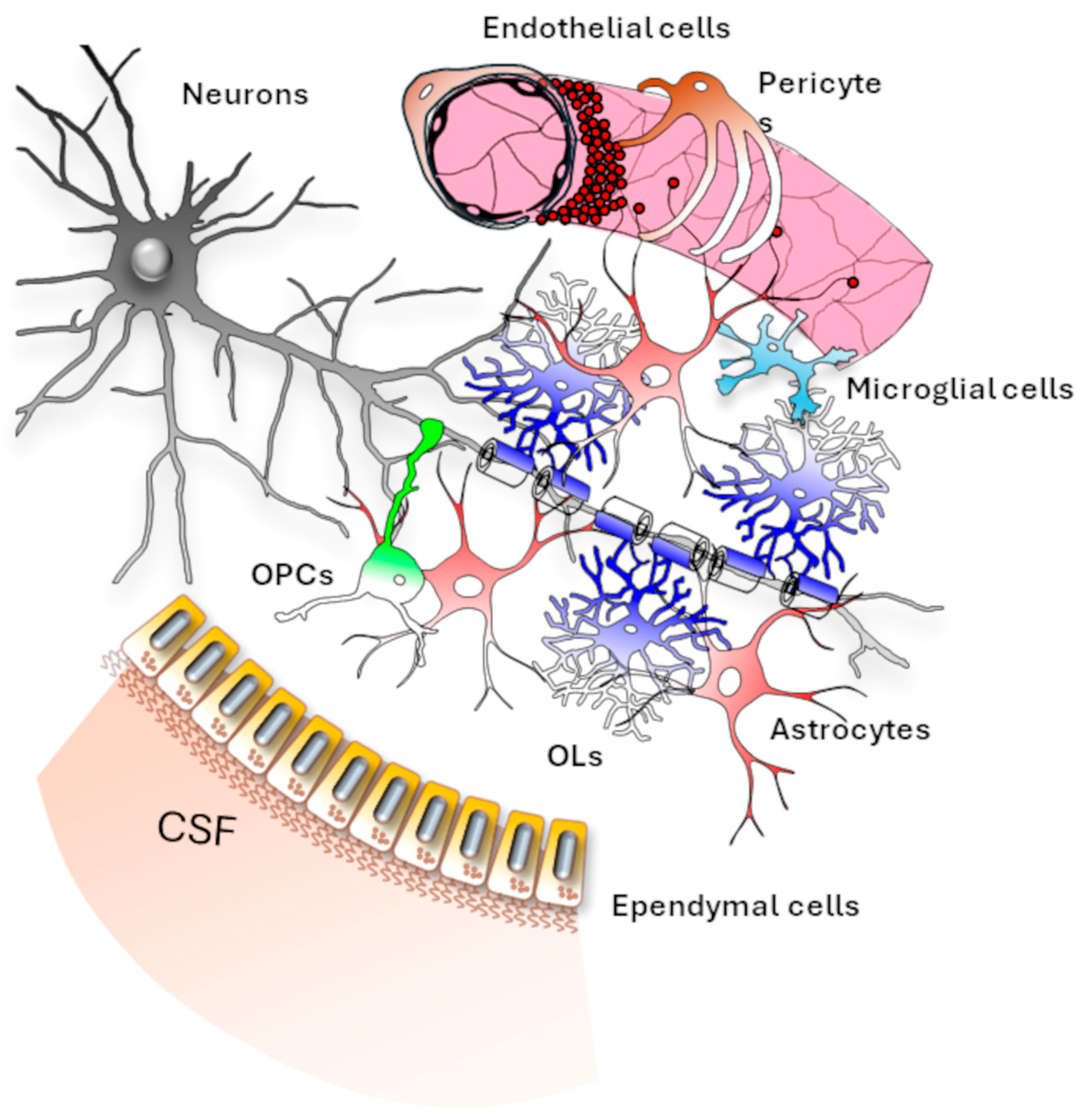
2. Glial Cells
3. Myelin Formation
3.1. The Myelination Process
3.2. Myelin Composition
3.3. Myelination Progression During Development
4. Role of Glial Ion Channels in Myelin Formation and Maintenance
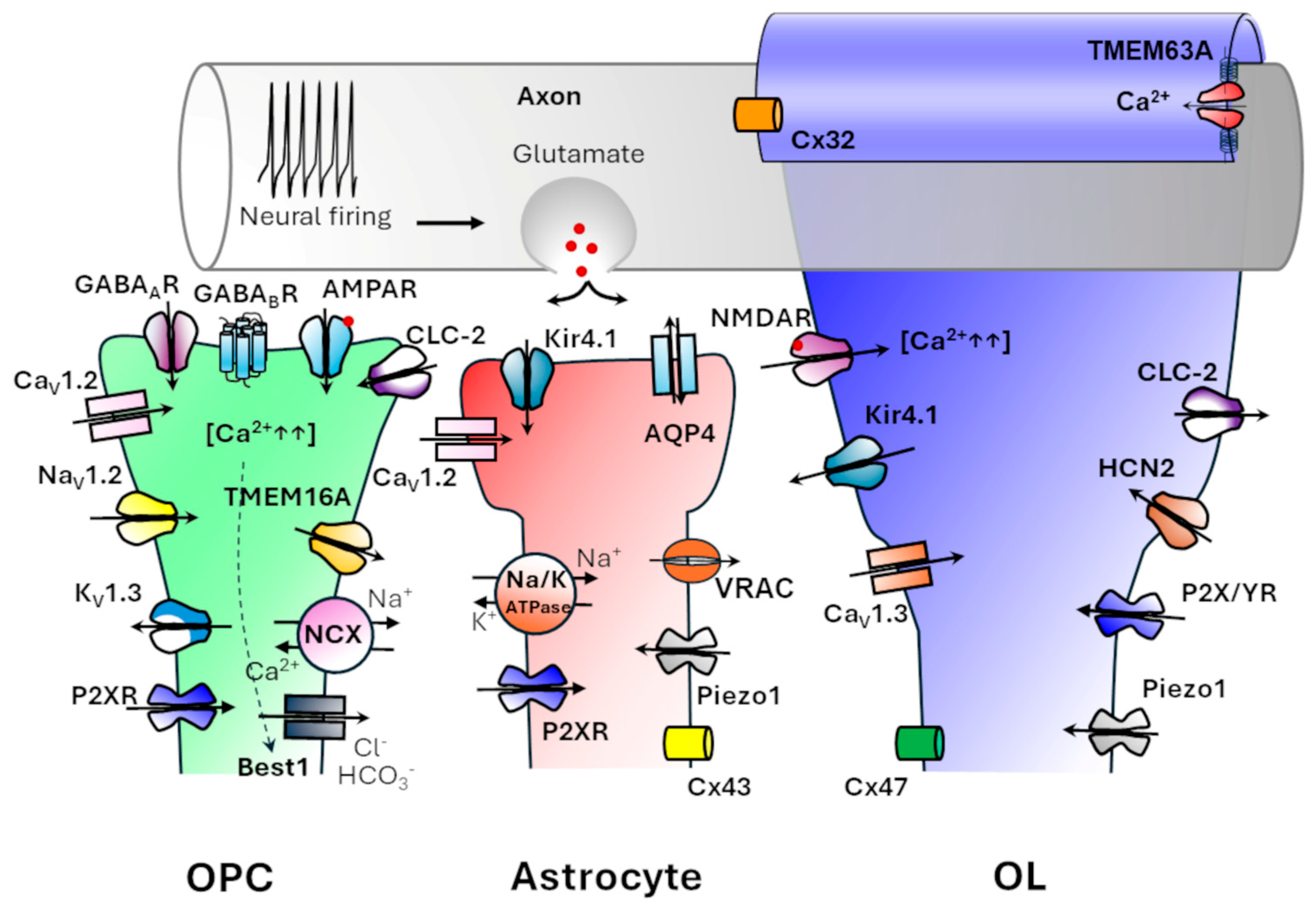
4.1. Oligodendroglial Ion Channels in Myelination: Emerging Role for Oligodendrocyte Progenitor Cells (OPCs)
4.2. Ion Channels in Mature Oligodendrocytes
4.3. Astrocytes and Their Ion Channels in Myelin Formation and Stability
4.3.1. The Role of Astrocyte Ion Channels in Integrating Neural Activity to Regulate OPC Differentiation
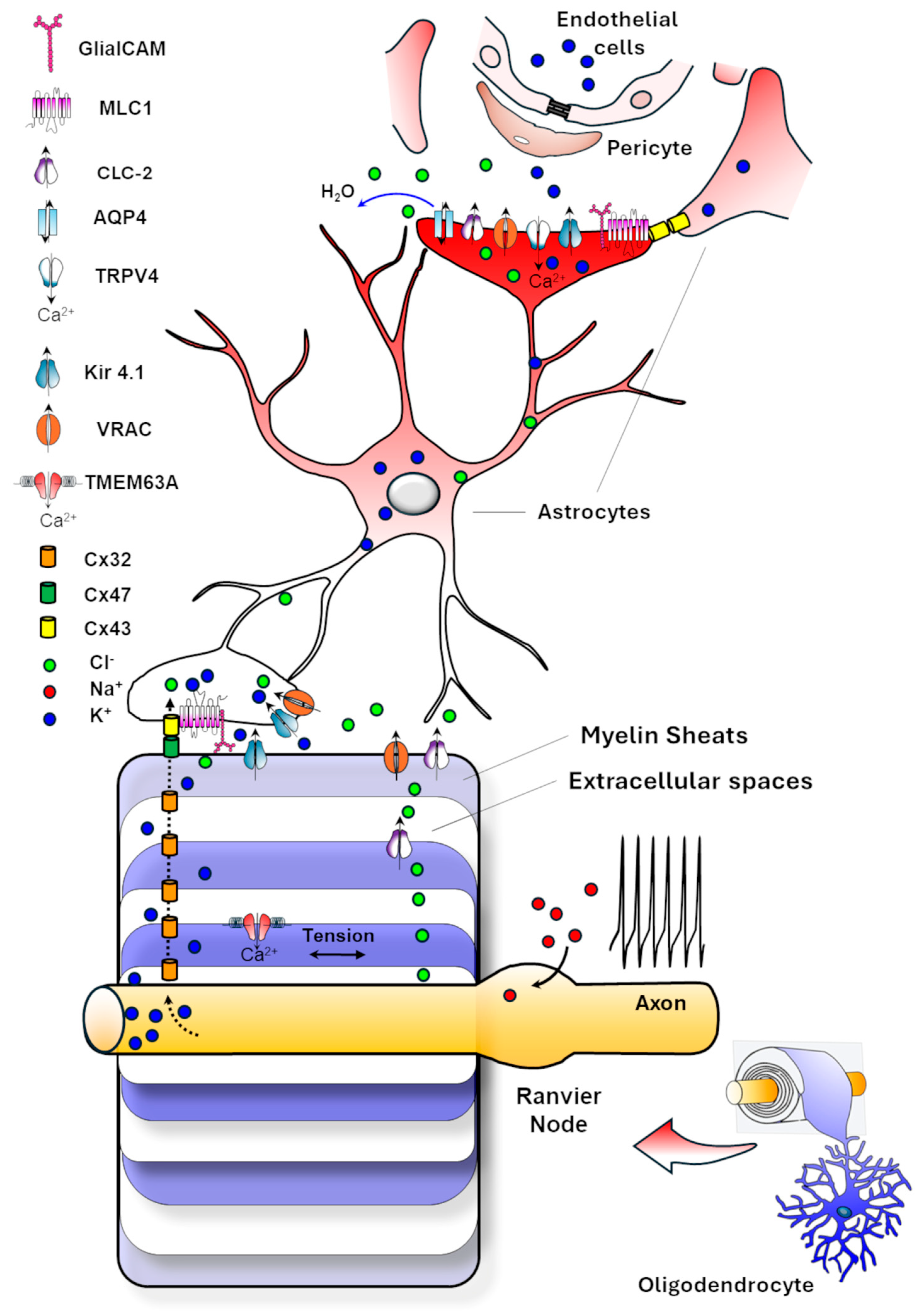
4.3.2. Astrocyte-Mediated Regulation of Ion–Water Homeostasis in Myelination
4.3.3. The Myelination Energy Costs Are Supported by Astrocytes
4.4. Microglia and Myelin
5. Leukodystrophy Classification: Pathological Mechanisms and Glial Cell Contribution
6. Direct Involvement of Glial Ion Channels in LD Pathogenesis
6.1. Mutations in the Mechanosensitive Channel TMEM63A Cause HLD19 Leukodystrophy
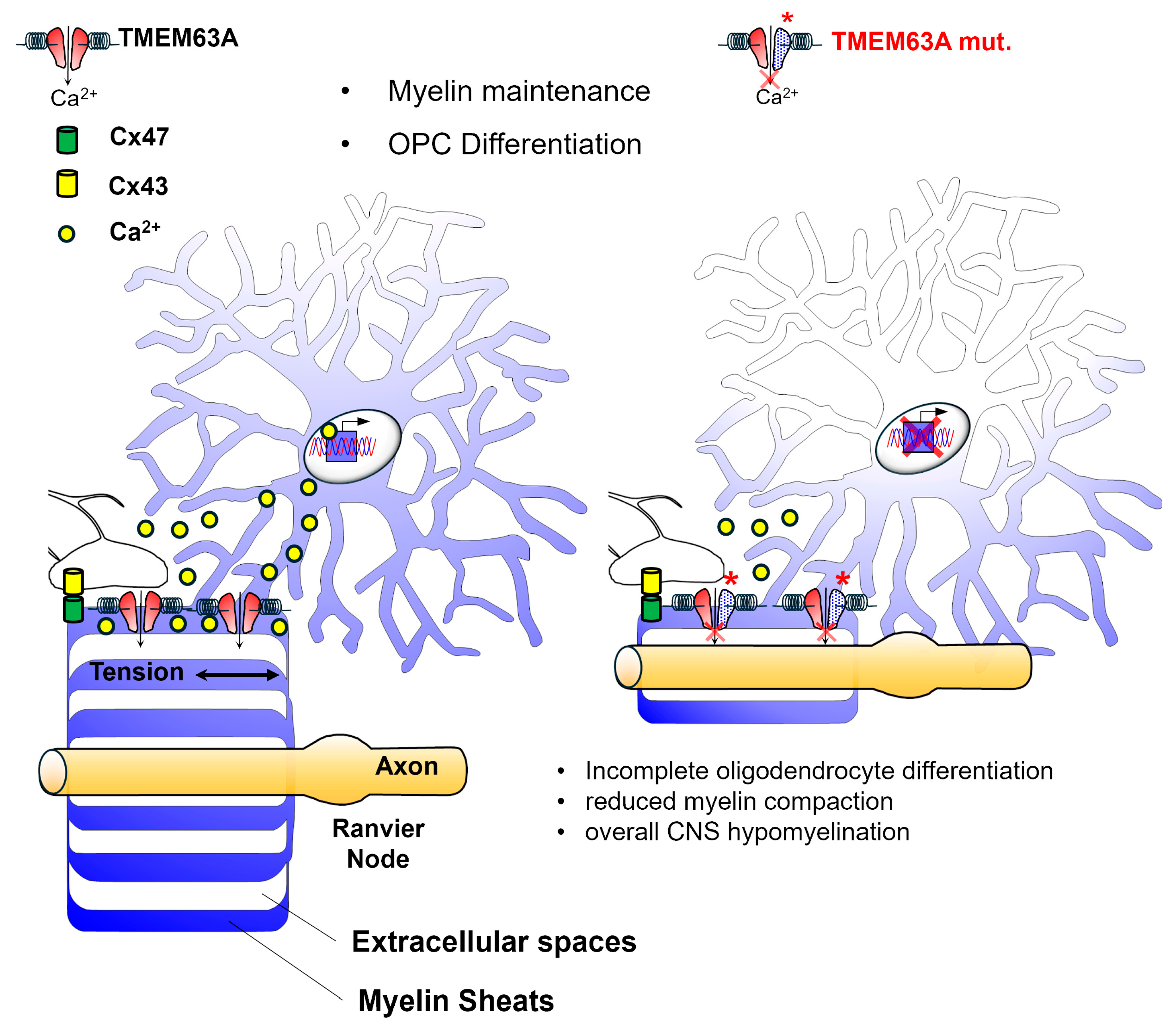
6.1.1 TMEM63A
6.1.2 TMEM63A and LD Pathogenesis
6.2. ClC-2 Mutations Cause a Vacuolating Leukodystrophy
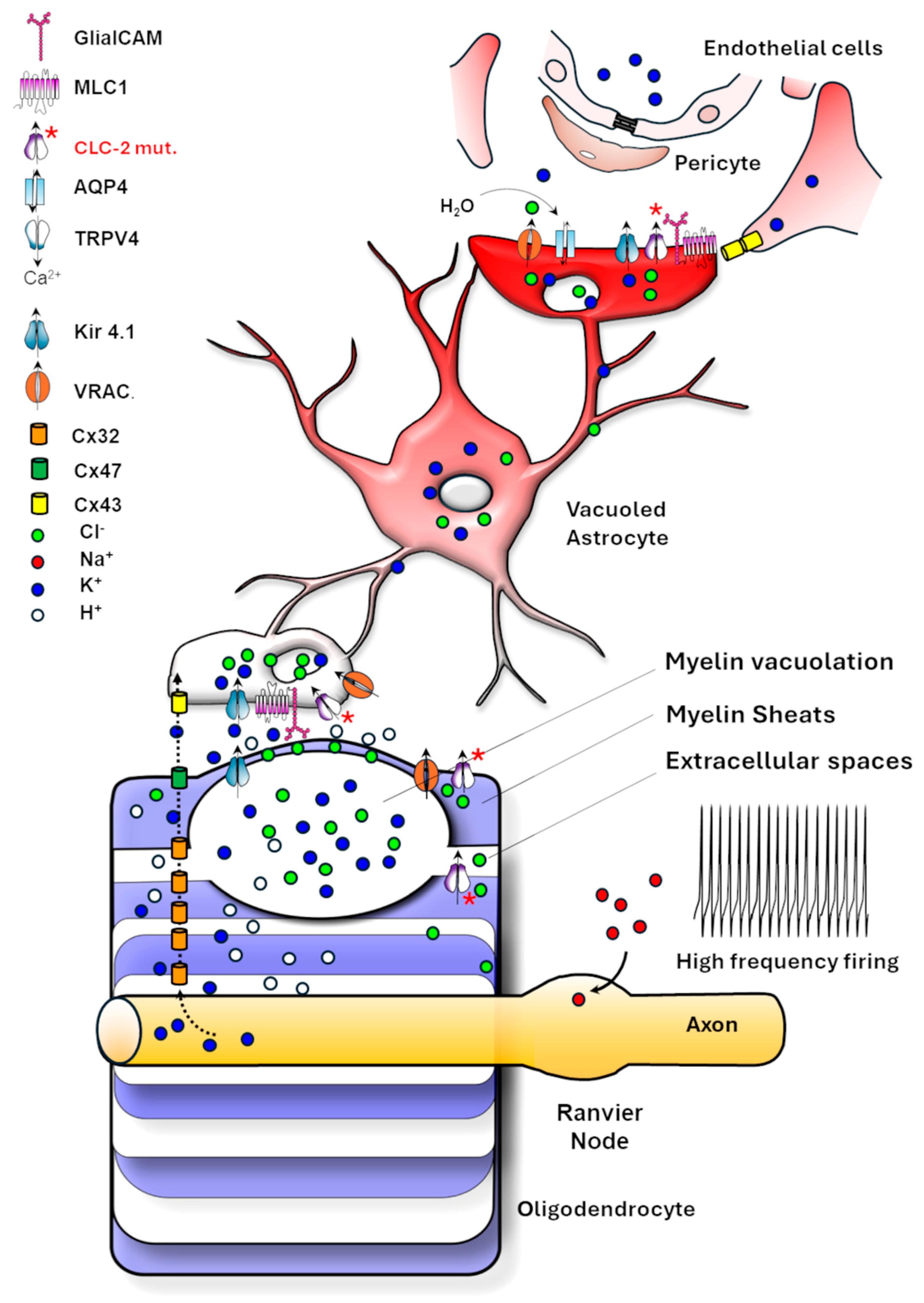
6.2.1. ClC-2
6.2.2. CLC-2 and LD Pathogenesis
7. Indirect Involvement of Ion Channels in LD Pathogenesis
7.1. MLC1 Protein: An Ion Channel Modulator
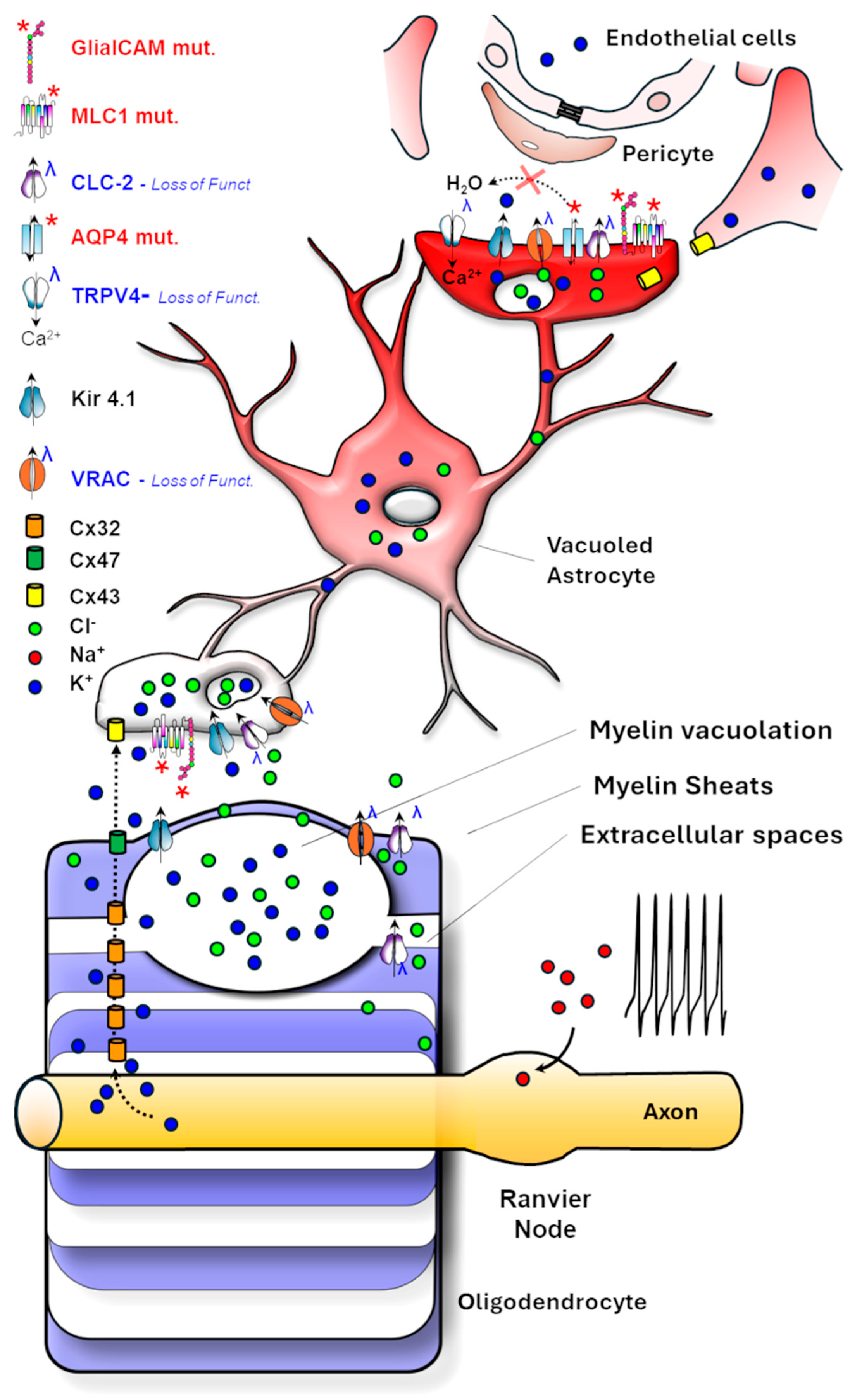
7.2. MLC1 and LD Pathogenesis
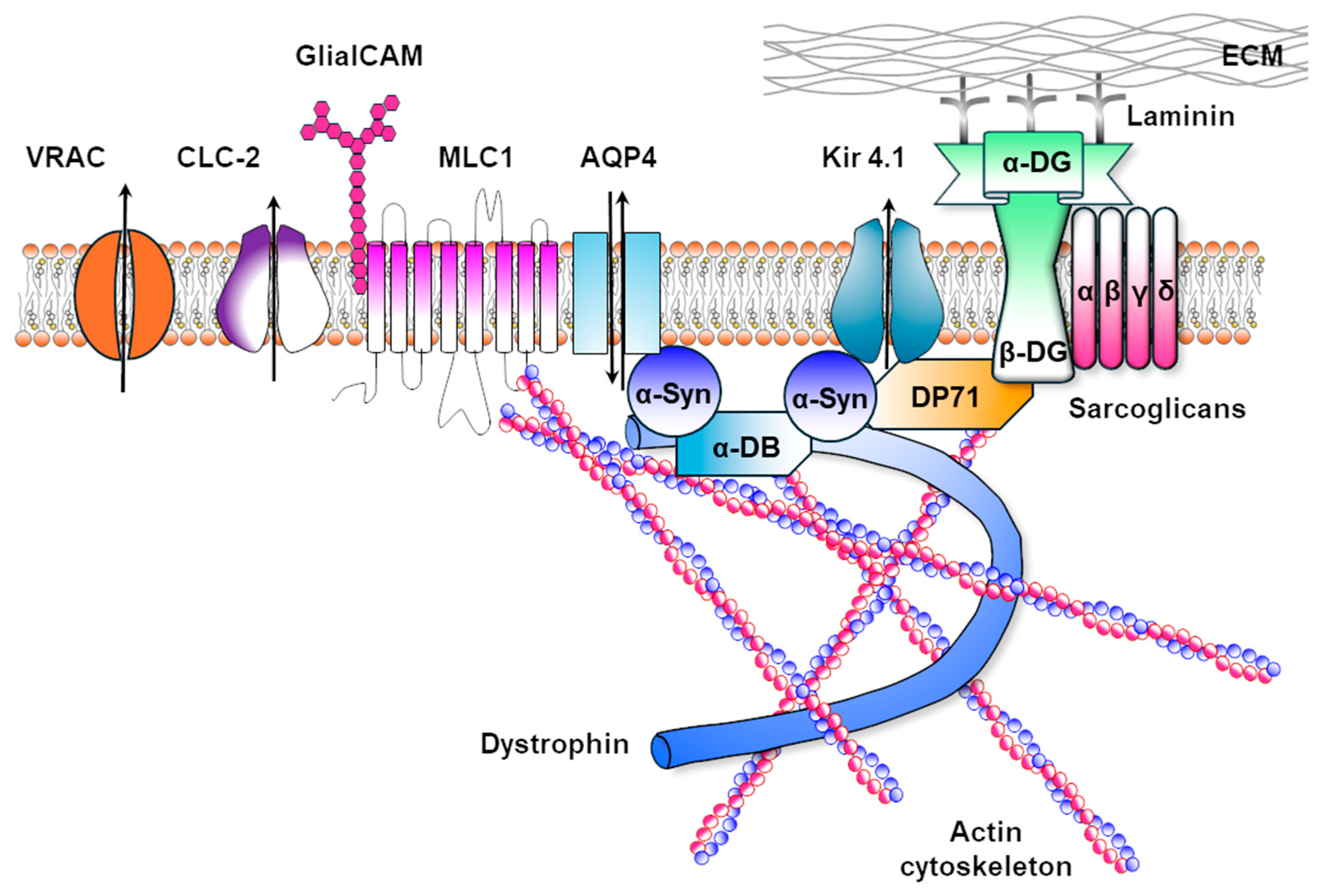
7.3. The MLC1-Associated Protein Complex
8. Conclusions
9. Future Perspectives
Author Contributions
Funding
Institutional Review Board Statement
Informed Consent Statement
Data Availability Statement
Acknowledgments
Conflicts of Interest
Abbreviations
| AMPAR | α-amino-3-hydroxy-5-methyl-4-isoxazolepropionic acid receptor |
| ANO | Anoctamin |
| AQP4 | Aquaporin channel 4 |
| BBB | blood-brain-barrier |
| BEST | Bestrophin |
| CaMKII | Calcium/Calmodulin-dependent protein kinase II |
| Cav | voltage-gated calcium channels |
| ClC-2 | Chloride Channel-2 |
| CNBD | Cyclic nucleotide-binding domain ion channels |
| CNS | central nervous system |
| CREB | cAMP-response element-binding protein transcription factor |
| CSF | cerebrospinal fluid |
| CSF1R | colony stimulating factor 1 receptor |
| Cx | connexin |
| DGC | Dystrophin-Dystroglycan Complex |
| EAAT | Excitatory Amino Acid Transporter |
| EAE | experimental autoimmune encephalomyelitis |
| FGF | fibroblast growth factor |
| GABAA/B R | gamma-aminobutyric acid receptors |
| GLIALCAM | Glial Cell Adhesion Molecule |
| GLUT-1 | Glucose Transporter Type 1 |
| GPRC5B | G protein-coupled receptor, class C, group 5, member B |
| HCN | Hyperpolarization-activated Cyclic Nucleotide-gated |
| HDLS | Hereditary Diffuse Leukoencephalopathy with Spheroids |
| HEK | Human Embryonic Kidney cells |
| HLD19 | hypomyelinating leukodystrophy 19 |
| HSCT | hematopoietic stem cell transplantation |
| Hv | voltage-gated proton channel |
| iNOS | inducible nitric oxide synthase |
| iPSC | inducible pluripotent stem cells |
| KATP | ATP-sensitive potassium channel |
| Kir | inward-rectifier K channels |
| Kv | voltage-gated potassium channel |
| LD | leukodystrophy |
| LIF | leukaemia inhibitor factor |
| MBP | myelin basic protein |
| MCT | Monocarboxylate Transporter |
| MDL | major dense line |
| MLC | Megalencephalic leukodystrophy with subcortical cysts |
| MLC1 | Megalencephalic leukodystrophy with subcortical cysts protein-1 |
| MRI | magnetic resonance imaging |
| Nav | voltage-gated sodium channels |
| NCX | Sodium-Calcium Exchanger |
| NMDA | N-methyl-D-aspartate |
| NVU | neurovascular unit |
| OL | oligodendrocyte |
| OPC | oligodendrocyte progenitors |
| OSCA | Hyperosmolality-gated calcium-permeable channel |
| P2X | purinergic ligand-gated ion channels |
| P2Y | purinergic receptors |
| PDGF | platelet-derived growth factor |
| PKA | protein kinase A |
| PKC | protein Kinase C |
| PLP | proteolipid protein |
| PMD | Pelizaeus-Merzbacher disease |
| PNS | peripheral nervous system |
| RVD | Regulatory Volume Decrease |
| SOX | Sry-related High-mobility group (HMG) box transcription factor |
| SPP1 | osteopontin |
| TMC | two pore cation channels |
| TMEM | Transmembrane Protein |
| TRPA | Transient Receptor Potential Ankyrin channel |
| TRPV4 | transient receptor potential vanilloid channel 4 |
| VGCC | voltage-gated calcium channels |
| VRAC | volume-regulated anion channels |
| WES | whole exome sequencing |
| WGS | whole genome sequencing |
| WM | white matter |
References
- Hol, E.M.; Dykstra, W.; Chevalier, J.; Cuadrado, E.; Bugiani, M.; Aronica, E.; Verkhratsky, A. Neuroglia in Leukodystrophies. In Handbook of Clinical Neurology; Elsevier: Amsterdam, The Netherlands, 2025; Volume 210, pp. 159–175. [Google Scholar] [CrossRef]
- Ceravolo, G.; Zhelcheska, K.; Squadrito, V.; Pellerin, D.; Gitto, E.; Hartley, L.; Houlden, H. Update on Leukodystrophies and Developing Trials. J. Neurol. 2024, 271, 593–605. [Google Scholar] [CrossRef]
- Ashrafi, M.R.; Amanat, M.; Garshasbi, M.; Kameli, R.; Nilipour, Y.; Heidari, M.; Rezaei, Z.; Tavasoli, A.R. An Update on Clinical, Pathological, Diagnostic, and Therapeutic Perspectives of Childhood Leukodystrophies. Expert Rev. Neurother. 2020, 20, 65–84. [Google Scholar] [CrossRef]
- van der Knaap, M.S.; Bugiani, M. Leukodystrophies: A Proposed Classification System Based on Pathological Changes and Pathogenetic Mechanisms. Acta Neuropathol. 2017, 134, 351–382. [Google Scholar] [CrossRef]
- von Jonquieres, G.; Rae, C.D.; Housley, G.D. Emerging Concepts in Vector Development for Glial Gene Therapy: Implications for Leukodystrophies. Front. Cell. Neurosci. 2021, 15, 661857. [Google Scholar] [CrossRef]
- Lin, W.; Zhang, M.; Zheng, S.; Lian, Q. Stem Cell and Gene Therapies for Leukodystrophies. Mol. Ther. Methods Clin. Dev. 2025, 33, 101527. [Google Scholar] [CrossRef]
- Wolf, N.I.; van der Knaap, M.S.; Engelen, M. Treatment of Leukodystrophies: Advances and Challenges. Eur. J. Paediatr. Neurol. 2025, 56, 46–50. [Google Scholar] [CrossRef]
- Jaunmuktane, Z. Neuropathology of White Matter Disorders. In Handbook of Clinical Neurology; Elsevier: Amsterdam, The Netherlands, 2024; Volume 204, pp. 3–20. [Google Scholar] [CrossRef]
- Jorge, M.S.; Bugiani, M. Astroglia in Leukodystrophies. Adv. Exp. Med. Biol. 2019, 1175, 199–225. [Google Scholar] [CrossRef] [PubMed]
- Yan, H.; Helman, G.; Murthy, S.E.; Ji, H.; Crawford, J.; Kubisiak, T.; Bent, S.J.; Xiao, J.; Taft, R.J.; Coombs, A.; et al. Heterozygous Variants in the Mechanosensitive Ion Channel TMEM63A Result in Transient Hypomyelination during Infancy. Am. J. Hum. Genet. 2019, 105, 996–1004. [Google Scholar] [CrossRef] [PubMed]
- Depienne, C.; Bugiani, M.; Dupuits, C.; Galanaud, D.; Touitou, V.; Postma, N.; van Berkel, C.; Polder, E.; Tollard, E.; Darios, F.; et al. Brain White Matter Oedema Due to ClC-2 Chloride Channel Deficiency: An Observational Analytical Study. Lancet Neurol. 2013, 12, 659–668. [Google Scholar] [CrossRef]
- Gaitán-Peñas, H.; Apaja, P.M.; Arnedo, T.; Castellanos, A.; Elorza-Vidal, X.; Soto, D.; Gasull, X.; Lukacs, G.L.; Estévez, R. Leukoencephalopathy-causing CLCN2 Mutations Are Associated with Impaired Cl− Channel Function and Trafficking. J. Physiol. 2017, 595, 6993. [Google Scholar] [CrossRef] [PubMed]
- Niu, J.; Verkhratsky, A.; Butt, A.; Yi, C. Oligodendroglia and Myelin: Supporting the Connectome. In Physiology and Pathophysiology of Oligodendroglia; Spring: Berlin/Heidelberg, Germany, 2025; Volume 43, pp. 1–37. [Google Scholar] [CrossRef]
- Verkhratsky, A.; Semyanov, A. Physiology of Neuroglia of the Central Nervous System. In Handbook of Clinical Neurology; Elsevier: Amsterdam, The Netherlands, 2025; Volume 209, pp. 69–91. [Google Scholar] [CrossRef]
- Verkhratsky, A.; Hol, E.M.; de Witte, L.D.; Aronica, E. General Pathophysiology of Neuroglia. In Handbook of Clinical Neurology; Elsevier: Amsterdam, The Netherlands, 2025; Volume 210, pp. 3–7. [Google Scholar] [CrossRef]
- Serra, R.; Simard, J.M. Adherens, Tight, and Gap Junctions in Ependymal Cells: A Systematic Review of Their Contribution to CSF-Brain Barrier. Front. Neurol. 2023, 14, 1092205. [Google Scholar] [CrossRef]
- Han, S.H.; Cho, J.G.; Park, S.J.; Shin, Y.K.; Hong, Y.B.; Han, J.Y.; Park, H.T.; Park, J.I. Transcription Factors and Coregulators in Schwann Cell Differentiation, Myelination, and Remyelination: Implications for Peripheral Neuropathy. J. Neurosci. Res. 2025, 103, e70053. [Google Scholar] [CrossRef]
- Stadelmann, C.; Timmler, S.; Barrantes-Freer, A.; Simons, M. Myelin in the Central Nervous System: Structure, Function, and Pathology. Physiol. Rev. 2019, 99, 1381–1431. [Google Scholar] [CrossRef]
- Chong, S.Y.C.; Rosenberg, S.S.; Fancy, S.P.J.; Zhao, C.; Shen, Y.A.A.; Hahn, A.T.; McGee, A.W.; Xu, X.; Zheng, B.; Zhang, L.I.; et al. Neurite Outgrowth Inhibitor Nogo-A Establishes Spatial Segregation and Extent of Oligodendrocyte Myelination. Proc. Natl. Acad. Sci. USA 2012, 109, 1299–1304. [Google Scholar] [CrossRef]
- Dumas, L.; Heitz-Marchaland, C.; Fouquet, S.; Suter, U.; Livet, J.; Moreau-Fauvarque, C.; Chédotal, A. Multicolor Analysis of Oligodendrocyte Morphology, Interactions, and Development with Brainbow. Glia 2015, 63, 699–717. [Google Scholar] [CrossRef]
- Simons, M.; Nave, K.A. Oligodendrocytes: Myelination and Axonal Support. Cold Spring Harb. Perspect. Biol. 2015, 8, a020479. [Google Scholar] [CrossRef]
- De Castro, F.; Bribián, A.; Ortega, M.C. Regulation of Oligodendrocyte Precursor Migration during Development, in Adulthood and in Pathology. Cell. Mol. Life Sci. 2013, 70, 4355–4368. [Google Scholar] [CrossRef] [PubMed]
- Dawson, M.R.L.; Polito, A.; Levine, J.M.; Reynolds, R. NG2-Expressing Glial Progenitor Cells: An Abundant and Widespread Population of Cycling Cells in the Adult Rat CNS. Mol. Cell. Neurosci. 2003, 24, 476–488. [Google Scholar] [CrossRef] [PubMed]
- Sturrock, R.R. Myelination of the Mouse Corpus Callosum. Neuropathol. Appl. Neurobiol. 1980, 6, 415–420. [Google Scholar] [CrossRef] [PubMed]
- Salzer, J.L. Schwann Cell Myelination. Cold Spring Harb. Perspect. Biol. 2015, 7, a020529. [Google Scholar] [CrossRef]
- Kister, A.; Kister, I. Overview of Myelin, Major Myelin Lipids, and Myelin-Associated Proteins. Front. Chem. 2023, 10, 1041961. [Google Scholar] [CrossRef]
- Siems, S.B.; Jahn, O.; Hoodless, L.J.; Jung, R.B.; Hesse, D.; Möbius, W.; Czopka, T.; Werner, H.B. Proteome Profile of Myelin in the Zebrafish Brain. Front. Cell Dev. Biol. 2021, 9, 640169. [Google Scholar] [CrossRef]
- Raasakka, A.; Kursula, P.; Raasakka, A.; Kursula, P. Flexible Players within the Sheaths: The Intrinsically Disordered Proteins of Myelin in Health and Disease. Cells 2020, 9, 470. [Google Scholar] [CrossRef]
- Baron, W.; Ozgen, H.; Klunder, B.; de Jonge, J.C.; Nomden, A.; Plat, A.; Trifilieff, E.; de Vries, H.; Hoekstra, D. The Major Myelin-Resident Protein PLP Is Transported to Myelin Membranes via a Transcytotic Mechanism: Involvement of Sulfatide. Mol. Cell. Biol. 2015, 35, 288–302. [Google Scholar] [CrossRef] [PubMed]
- Wolf, N.I.; van Spaendonk, R.M.; Hobson, G.M. PLP1-Related Disorders. In GeneReviews®; University of Washington: Seattle, WA, USA, 2025. [Google Scholar]
- Poitelon, Y.; Kopec, A.M.; Belin, S. Myelin Fat Facts: An Overview of Lipids and Fatty Acid Metabolism. Cells 2020, 9, 812. [Google Scholar] [CrossRef] [PubMed]
- Boggs, J.M. Myelin Basic Protein: A Multifunctional Protein. Cell. Mol. Life Sci. 2006, 63, 1945–1961. [Google Scholar] [CrossRef]
- Liu, B.; Xin, W.; Tan, J.R.; Zhu, R.P.; Li, T.; Wang, D.; Kan, S.S.; Xiong, D.K.; Li, H.H.; Zhang, M.M.; et al. Myelin Sheath Structure and Regeneration in Peripheral Nerve Injury Repair. Proc. Natl. Acad. Sci. USA 2019, 116, 22347–22352. [Google Scholar] [CrossRef]
- Holland, B.A.; Haas, D.K.; Norman, D.; Brant-Zawadzki, M.; Newton, T.H. MRI of Normal Brain Maturation. AJNR Am. J. Neuroradiol. 1986, 7, 201–208. [Google Scholar] [CrossRef]
- Wang, J.; Shen, Y.; Liao, P.; Yang, B.; Jiang, R. Roles of Ion Channels in Oligodendrocyte Precursor Cells: From Physiology to Pathology. Int. J. Mol. Sci. 2025, 26, 7336. [Google Scholar] [CrossRef]
- Emery, B.; Lu, Q.R. Transcriptional and Epigenetic Regulation of Oligodendrocyte Development and Myelination in the Central Nervous System. Cold Spring Harb. Perspect. Biol. 2015, 7, a020461. [Google Scholar] [CrossRef] [PubMed]
- Bercury, K.K.; Macklin, W.B. Dynamics and Mechanisms of CNS Myelination. Dev. Cell 2015, 32, 447–458. [Google Scholar] [CrossRef] [PubMed]
- Cherchi, F.; Swire, M.; Lecca, D. Editorial: Role of Ion Channels and Metabotropic Receptors in Oligodendrogliogenesis: Novel Targets for Demyelinating Pathologies. Front. Cell. Neurosci. 2024, 18, 1517363. [Google Scholar] [CrossRef] [PubMed]
- Neusch, C.; Rozengurt, N.; Jacobs, R.E.; Lester, H.A.; Kofuji, P. Kir4.1 Potassium Channel Subunit Is Crucial for Oligodendrocyte Development and in Vivo Myelination. J. Neurosci. 2001, 21, 5429–5438. [Google Scholar] [CrossRef] [PubMed]
- Liu, J.Y.; Zhou, L.; Shen, Y. Inward Rectifying Kir4.1 Channels Regulate Oligodendrocyte Precursor Cell Differentiation and CNS Myelination in Vivo. Neurosci. Lett. 2023, 807, 137278. [Google Scholar] [CrossRef]
- Gould, E.; Kim, J.H. SCN2A Contributes to Oligodendroglia Excitability and Development in the Mammalian Brain. Cell Rep. 2021, 36, 109653. [Google Scholar] [CrossRef]
- Cheli, V.T.; González, D.A.S.; Lama, T.N.; Spreuer, V.; Handley, V.; Murphy, G.G.; Paez, P.M. Conditional Deletion of the L-Type Calcium Channel Cav1.2 in Oligodendrocyte Progenitor Cells Affects Postnatal Myelination in Mice. J. Neurosci. 2016, 36, 10853–10869. [Google Scholar] [CrossRef]
- Elorza-Vidal, X.; Gaitán-Peñas, H.; Estévez, R. Chloride Channels in Astrocytes: Structure, Roles in Brain Homeostasis and Implications in Disease. Int. J. Mol. Sci. 2019, 20, 1034. [Google Scholar] [CrossRef]
- Hou, X.; Zhang, R.; Wang, J.; Li, Y.; Li, F.; Zhang, Y.; Zheng, X.; Shen, Y.; Wang, Y.; Zhou, L. CLC-2 Is a Positive Modulator of Oligodendrocyte Precursor Cell Differentiation and Myelination. Mol. Med. Rep. 2018, 17, 4515–4523. [Google Scholar] [CrossRef]
- Blanz, J.; Schweizer, M.; Auberson, M.; Maier, H.; Muenscher, A.; Hübner, C.A.; Jentsch, T.J. Leukoencephalopathy upon Disruption of the Chloride Channel ClC-2. J. Neurosci. 2007, 27, 6581–6589. [Google Scholar] [CrossRef]
- Oh, S.J.; Lee, C.J. Distribution and Function of the Bestrophin-1 (Best1) Channel in the Brain. Exp. Neurobiol. 2017, 26, 113. [Google Scholar] [CrossRef]
- Park, H.; Han, K.S.; Oh, S.J.; Jo, S.; Woo, J.; Yoon, B.E.; Lee, C.J. High Glutamate Permeability and Distal Localization of Best1 Channel in CA1 Hippocampal Astrocyte. Mol. Brain 2013, 6, 54. [Google Scholar] [CrossRef]
- Park, H.; Oh, S.J.; Han, K.S.; Woo, D.H.; Park, H.; Mannaioni, G.; Traynelis, S.F.; Lee, C.J. Bestrophin-1 Encodes for the Ca2+-Activated Anion Channel in Hippocampal Astrocytes. J. Neurosci. 2009, 29, 13063–13073. [Google Scholar] [CrossRef]
- Won, W.; Bhalla, M.; Lee, J.H.; Lee, C.J. Astrocytes as Key Regulators of Neural Signaling in Health and Disease. Annu. Rev. Neurosci. 2025, 48, 251–276. [Google Scholar] [CrossRef]
- Milenkovic, A.; Brandl, C.; Milenkovic, V.M.; Jendryke, T.; Sirianant, L.; Wanitchakool, P.; Zimmermann, S.; Reiff, C.M.; Horling, F.; Schrewe, H.; et al. Bestrophin 1 Is Indispensable for Volume Regulation in Human Retinal Pigment Epithelium Cells. Proc. Natl. Acad. Sci. USA 2015, 112, E2630–E2639. [Google Scholar] [CrossRef] [PubMed]
- Hong, G.S.; Lee, S.H.; Lee, B.; Choi, J.H.; Oh, S.J.; Jang, Y.; Hwang, E.M.; Kim, H.; Jung, J.; Kim, I.B.; et al. ANO1/TMEM16A Regulates Process Maturation in Radial Glial Cells in the Developing Brain. Proc. Natl. Acad. Sci. USA 2019, 116, 12494–12499. [Google Scholar] [CrossRef]
- Benarroch, E. What Are the Roles of Oligodendrocyte Precursor Cells in Normal and Pathologic Conditions? Neurology 2023, 101, 958–965. [Google Scholar] [CrossRef] [PubMed]
- Serrano-Regal, M.P.; Bayón-Cordero, L.; Ordaz, R.P.; Garay, E.; Limon, A.; Arellano, R.O.; Matute, C.; Sánchez-Gómez, M.V. Expression and Function of GABA Receptors in Myelinating Cells. Front. Cell. Neurosci. 2020, 14, 565636. [Google Scholar] [CrossRef]
- Arellano, R.O.; Sánchez-Gómez, M.V.; Alberdi, E.; Canedo-Antelo, M.; Chara, J.C.; Palomino, A.; Pérez-Samartín, A.; Matute, C. Axon-to-Glia Interaction Regulates GABAA Receptor Expression in Oligodendrocytes. Mol. Pharmacol. 2016, 89, 63–74. [Google Scholar] [CrossRef] [PubMed]
- Zhang, Y.; Chen, K.; Sloan, S.A.; Bennett, M.L.; Scholze, A.R.; O’Keeffe, S.; Phatnani, H.P.; Guarnieri, P.; Caneda, C.; Ruderisch, N.; et al. An RNA-Sequencing Transcriptome and Splicing Database of Glia, Neurons, and Vascular Cells of the Cerebral Cortex. J. Neurosci. 2014, 34, 11929–11947. [Google Scholar] [CrossRef]
- Afshari, F.S.; Chu, A.K.; Sato-Bigbee, C. Effect of Cyclic AMP on the Expression of Myelin Basic Protein Species and Myelin Proteolipid Protein in Committed Oligodendrocytes: Differential Involvement of the Transcription Factor CREB. J. Neurosci. Res. 2001, 66, 37–45. [Google Scholar] [CrossRef]
- Bowery, N.G.; Bettler, B.; Froestl, W.; Gallagher, J.P.; Marshall, F.; Raiteri, M.; Bonner, T.I.; Enna, S.J. International Union of Pharmacology. XXXIII. Mammalian γ-Aminobutyric Acidb Receptors: Structure and Function. Pharmacol. Rev. 2002, 54, 247–264. [Google Scholar] [CrossRef]
- Bettler, B.; Kaupmann, K.; Mosbacher, J.; Gassmann, M. Molecular Structure and Physiological Functions of GABA(B) Receptors. Physiol. Rev. 2004, 84, 835–867. [Google Scholar] [CrossRef]
- Barati, M.T.; Lukenbill, J.; Wu, R.; Rane, M.J.; Klein, J.B. Cytoskeletal Rearrangement and Src and PI-3K-Dependent Akt Activation Control GABABR-Mediated Chemotaxis. Cell. Signal. 2015, 27, 1178–1185. [Google Scholar] [CrossRef]
- Mitew, S.; Gobius, I.; Fenlon, L.R.; McDougall, S.J.; Hawkes, D.; Xing, Y.L.; Bujalka, H.; Gundlach, A.L.; Richards, L.J.; Kilpatrick, T.J.; et al. Pharmacogenetic Stimulation of Neuronal Activity Increases Myelination in an Axon-Specific Manner. Nat. Commun. 2018, 9, 306. [Google Scholar] [CrossRef]
- Gibson, E.M.; Purger, D.; Mount, C.W.; Goldstein, A.K.; Lin, G.L.; Wood, L.S.; Inema, I.; Miller, S.E.; Bieri, G.; Zuchero, J.B.; et al. Neuronal Activity Promotes Oligodendrogenesis and Adaptive Myelination in the Mammalian Brain. Science 2014, 344, 1252304. [Google Scholar] [CrossRef]
- Bergles, D.E.; Roberts, J.D.B.; Somogyl, P.; Jahr, C.E. Glutamatergic Synapses on Oligodendrocyte Precursor Cells in the Hippocampus. Nature 2000, 405, 187–191. [Google Scholar] [CrossRef]
- Hines, J.H.; Ravanelli, A.M.; Schwindt, R.; Scott, E.K.; Appel, B. Neuronal Activity Biases Axon Selection for Myelination in Vivo. Nat. Neurosci. 2015, 18, 683–689. [Google Scholar] [CrossRef] [PubMed]
- Khelfaoui, H.; Ibaceta-Gonzalez, C.; Angulo, M.C. Functional Myelin in Cognition and Neurodevelopmental Disorders. Cell. Mol. Life Sci. 2024, 81, 181. [Google Scholar] [CrossRef] [PubMed]
- Rinholm, J.E.; Hamilton, N.B.; Kessaris, N.; Richardson, W.D.; Bergersen, L.H.; Attwell, D. Regulation of Oligodendrocyte Development and Myelination by Glucose and Lactate. J. Neurosci. 2011, 31, 538–548. [Google Scholar] [CrossRef] [PubMed]
- Philips, T.; Mironova, Y.A.; Jouroukhin, Y.; Chew, J.; Vidensky, S.; Farah, M.H.; Pletnikov, M.V.; Bergles, D.E.; Morrison, B.M.; Rothstein, J.D. MCT1 Deletion in Oligodendrocyte Lineage Cells Causes Late-Onset Hypomyelination and Axonal Degeneration. Cell Rep. 2021, 34, 108610. [Google Scholar] [CrossRef]
- Tepavčević, V.; Tepavčević, V. Oligodendroglial Energy Metabolism and (Re)Myelination. Life 2021, 11, 238. [Google Scholar] [CrossRef] [PubMed]
- Nwaobi, S.E.; Cuddapah, V.A.; Patterson, K.C.; Randolph, A.C.; Olsen, M.L. The Role of Glial Specific Kir4.1 in Normal and Pathological States of the CNS. Acta Neuropathol. 2016, 132, 1–21. [Google Scholar] [CrossRef]
- Larsen, B.R.; MacAulay, N. Kir4.1-Mediated Spatial Buffering of K(+): Experimental Challenges in Determination of Its Temporal and Quantitative Contribution to K(+) Clearance in the Brain. Channels 2014, 8, 544–550. [Google Scholar] [CrossRef]
- Zhao, N.; Huang, W.; Cãtãlin, B.; Scheller, A.; Kirchhoff, F. L-Type Ca2+ Channels of NG2 Glia Determine Proliferation and NMDA Receptor-Dependent Plasticity. Front. Cell Dev. Biol. 2021, 9, 759477. [Google Scholar] [CrossRef]
- Brown, H.F.; Difrancesco, D.; Noble, S.J. How Does Adrenaline Accelerate the Heart? Nature 1979, 280, 235–236. [Google Scholar] [CrossRef] [PubMed]
- DiFrancesco, D. A New Interpretation of the Pace-Maker Current in Calf Purkinje Fibres. J. Physiol. 1981, 314, 359–376. [Google Scholar] [CrossRef]
- Mishra, P.; Narayanan, R. The Enigmatic HCN Channels: A Cellular Neurophysiology Perspective. Proteins 2023, 93, 72–92. [Google Scholar] [CrossRef]
- Lyman, K.A.; Han, Y.; Robinson, A.P.; Weinberg, S.E.; Fisher, D.W.; Heuermann, R.J.; Lyman, R.E.; Kim, D.K.; Ludwig, A.; Chandel, N.S.; et al. Characterization of Hyperpolarization-Activated Cyclic Nucleotide-Gated Channels in Oligodendrocytes. Front. Cell. Neurosci. 2024, 18, 1321682. [Google Scholar] [CrossRef]
- Swire, M.; Assinck, P.; McNaughton, P.A.; Lyons, D.A.; Ffrench-Constant, C.; Livesey, M.R. Oligodendrocyte HCN2 Channels Regulate Myelin Sheath Length. J. Neurosci. 2021, 41, 7954–7964. [Google Scholar] [CrossRef]
- Zong, X.; Krause, S.; Chen, C.C.; Krüger, J.; Gruner, C.; Cao-Ehlker, X.; Fenske, S.; Wahl-Schott, C.; Biel, M. Regulation of Hyperpolarization-Activated Cyclic Nucleotide-Gated (HCN) Channel Activity by CCMP. J. Biol. Chem. 2012, 287, 26506–26512. [Google Scholar] [CrossRef] [PubMed]
- Zhang, Y.; Yang, X.; Deng, S.; Wang, C.; Hu, J.; Lan, Q. Mechanosensitive Piezo1 Channel: An Emerging Target in Demyelination Disease. Front. Cell. Neurosci. 2025, 19, 1556892. [Google Scholar] [CrossRef] [PubMed]
- Velasco-Estevez, M.; Koch, N.; Klejbor, I.; Caratis, F.; Rutkowska, A. Mechanoreceptor Piezo1 Is Downregulated in Multiple Sclerosis Brain and Is Involved in the Maturation and Migration of Oligodendrocytes in vitro. Front Cell Neurosci. 2022, 16, 914985. [Google Scholar] [CrossRef] [PubMed] [PubMed Central]
- Wan, Y.; Wang, H.; Fan, X.; Bao, J.; Wu, S.; Liu, Q.; Yan, X.; Zhang, J.; Jin, Z.-b.; Xiao, B.; et al. Mechanosensitive Channel Piezo1 Is an Essential Regulator in Cell Cycle Progression of Optic Nerve Head Astrocytes. Glia 2023, 71, 1233–1246. [Google Scholar] [CrossRef]
- Chen, W.; Zhao, H.; Li, Y. Mitochondrial Dynamics in Health and Disease: Mechanisms and Potential Targets. Signal Transduct. Target. Ther. 2023, 8, 333. [Google Scholar] [CrossRef]
- Zheng, W.; Rawson, S.; Shen, Z.; Tamilselvan, E.; Smith, H.E.; Halford, J.; Shen, C.; Murthy, S.E.; Ulbrich, M.H.; Sotomayor, M.; et al. TMEM63 Proteins Function as Monomeric High-Threshold Mechanosensitive Ion Channels. Neuron 2023, 111, 3195–3210.e7. [Google Scholar] [CrossRef]
- Niloy, S.I.; Strege, P.R.; Hannan, E.C.; Cowan, L.M.; Linsenmeier, F.; Friedrich, O.; Farrugia, G.; Beyder, A. Stretch Response of the Mechano-Gated Channel TMEM63A in Membrane Patches and Single Cells. Am. J. Physiol. Cell Physiol. 2024, 326, C622–C631. [Google Scholar] [CrossRef]
- Wei, L.; Mousawi, F.; Li, D.; Roger, S.; Li, J.; Yang, X.; Jiang, L.H. Adenosine Triphosphate Release and P2 Receptor Signaling in PiEzO1 Channel-Dependent Mechanoregulation. Front. Pharmacol. 2019, 10, 1304. [Google Scholar] [CrossRef]
- Zong, B.; Yu, F.; Zhang, X.; Pang, Y.; Zhao, W.; Sun, P.; Li, L. Mechanosensitive Piezo1 Channel in Physiology and Pathophysiology of the Central Nervous System. Ageing Res. Rev. 2023, 90, 102026. [Google Scholar] [CrossRef] [PubMed]
- Shimizu, T.; Osanai, Y.; Tanaka, K.F.; Abe, M.; Natsume, R.; Sakimura, K.; Ikenaka, K. YAP Functions as a Mechanotransducer in Oligodendrocyte Morphogenesis and Maturation. Glia 2017, 65, 360–374. [Google Scholar] [CrossRef] [PubMed]
- Velasco-Estevez, M.; Rolle, S.O.; Mampay, M.; Dev, K.K.; Sheridan, G.K. Piezo1 Regulates Calcium Oscillations and Cytokine Release from Astrocytes. Glia 2020, 68, 145–160. [Google Scholar] [CrossRef]
- Jin, T.; Fei, M.; Luo, S.; Wang, H. Piezo1 as a Potential Player in Intracranial Hemorrhage: From Perspectives on Biomechanics and Hematoma Metabolism. J. Biomed. Res. 2024, 38, 436–447. [Google Scholar] [CrossRef] [PubMed]
- Schlierf, B.; Werner, T.; Glaser, G.; Wegner, M. Expression of Connexin47 in Oligodendrocytes Is Regulated by the Sox10 Transcription Factor. J. Mol. Biol. 2006, 361, 11–21. [Google Scholar] [CrossRef] [PubMed]
- Menichella, D.M.; Goodenough, D.A.; Sirkowski, E.; Scherer, S.S.; Paul, D.L. Connexins Are Critical for Normal Myelination in the CNS. J. Neurosci. 2003, 23, 5963–5973. [Google Scholar] [CrossRef] [PubMed]
- Basu, R.; Das Sarma, J. Connexin 43/47 Channels Are Important for Astrocyte/Oligodendrocyte Cross-Talk in Myelination and Demyelination. J. Biosci. 2018, 43, 1055–1068. [Google Scholar] [CrossRef]
- Orthmann-Murphy, J.L.; Enriquez, A.D.; Abrams, C.K.; Scherer, S.S. Loss-of-Function GJA12/Connexin47 Mutations Cause Pelizaeus-Merzbacher-like Disease. Mol. Cell. Neurosci. 2007, 34, 629–641. [Google Scholar] [CrossRef]
- Scherer, S.S.; Kleopa, K.A. X-Linked Charcot-Marie-Tooth Disease. J. Peripher. Nerv. Syst. 2012, 17, 9–13. [Google Scholar] [CrossRef]
- Tress, O.; Maglione, M.; May, D.; Pivneva, T.; Richter, N.; Seyfarth, J.; Binder, S.; Zlomuzica, A.; Seifert, G.; Theis, M.; et al. Panglial Gap Junctional Communication Is Essential for Maintenance of Myelin in the CNS. J. Neurosci. 2012, 32, 7499–7518. [Google Scholar] [CrossRef]
- Lattke, M.; Guillemot, F. Understanding Astrocyte Differentiation: Clinical Relevance, Technical Challenges, and New Opportunities in the Omics Era. Wires Mech. Dis. 2022, 14, e1557. [Google Scholar] [CrossRef]
- Chandrasekaran, A.; Avci, H.X.; Leist, M.; Kobolák, J.; Dinnyés, A. Astrocyte Differentiation of Human Pluripotent Stem Cells: New Tools for Neurological Disorder Research. Front. Cell. Neurosci. 2016, 10, 215. [Google Scholar] [CrossRef]
- Camargo, N.; Goudriaan, A.; van Deijk, A.L.F.; Otte, W.M.; Brouwers, J.F.; Lodder, H.; Gutmann, D.H.; Nave, K.A.; Dijkhuizen, R.M.; Mansvelder, H.D.; et al. Oligodendroglial Myelination Requires Astrocyte-Derived Lipids. PLoS Biol. 2017, 15, e1002605. [Google Scholar] [CrossRef]
- Ishibashi, T.; Dakin, K.A.; Stevens, B.; Lee, P.R.; Kozlov, S.V.; Stewart, C.L.; Fields, R.D. Astrocytes Promote Myelination in Response to Electrical Impulses. Neuron 2006, 49, 823–832. [Google Scholar] [CrossRef] [PubMed]
- Chi, S.; Cui, Y.; Wang, H.; Jiang, J.; Zhang, T.; Sun, S.; Zhou, Z.; Zhong, Y.; Xiao, B. Astrocytic Piezo1-Mediated Mechanotransduction Determines Adult Neurogenesis and Cognitive Functions. Neuron 2022, 110, 2984–2999.e8. [Google Scholar] [CrossRef]
- Csemer, A.; Sokvári, C.; Maamrah, B.; Szabó, L.; Korpás, K.; Pocsai, K.; Pál, B. Pharmacological Activation of Piezo1 Channels Enhances Astrocyte–Neuron Communication via NMDA Receptors in the Murine Neocortex. Int. J. Mol. Sci. 2024, 25, 3994. [Google Scholar] [CrossRef]
- Orthmann-Murphy, J.L.; Abrams, C.K.; Scherer, S.S. Gap Junctions Couple Astrocytes and Oligodendrocytes. J. Mol. Neurosci. 2008, 35, 101–116. [Google Scholar] [CrossRef]
- Djukic, B.; Casper, K.B.; Philpot, B.D.; Chin, L.S.; McCarthy, K.D. Conditional Knock-Out of Kir4.1 Leads to Glial Membrane Depolarization, Inhibition of Potassium and Glutamate Uptake, and Enhanced Short-Term Synaptic Potentiation. J. Neurosci. 2007, 27, 11354–11365. [Google Scholar] [CrossRef]
- Kofuji, P.; Newman, E.A. Potassium Buffering in the Central Nervous System. Neuroscience 2004, 129, 1043–1054. [Google Scholar] [CrossRef]
- Severino, M.; Lualdi, S.; Fiorillo, C.; Striano, P.; De Toni, T.; Peluso, S.; De Michele, G.; Rossi, A.; Filocamo, M.; Bruno, C. Unusual White Matter Involvement in EAST Syndrome Associated with Novel KCNJ10 Mutations. J. Neurol. 2018, 265, 1419–1425. [Google Scholar] [CrossRef]
- Looser, Z.J.; Faik, Z.; Ravotto, L.; Zanker, H.S.; Jung, R.B.; Werner, H.B.; Ruhwedel, T.; Möbius, W.; Bergles, D.E.; Barros, L.F.; et al. Oligodendrocyte-axon metabolic coupling is mediated by extracellular K+ and maintains axonal health. Nat Neurosci. 2024, 27, 433–448. [Google Scholar] [CrossRef] [PubMed] [PubMed Central]
- Bockenhauer, D.; Feather, S.; Stanescu, H.C.; Bandulik, S.; Zdebik, A.A.; Reichold, M.; Tobin, J.; Lieberer, E.; Sterner, C.; Landoure, G.; et al. Epilepsy, Ataxia, Sensorineural Deafness, Tubulopathy, and KCNJ10 Mutations. N. Engl. J. Med. 2009, 360, 1960–1970. [Google Scholar] [CrossRef] [PubMed]
- Pedersen, S.F.; Okada, Y.; Nilius, B. Biophysics and Physiology of the Volume-Regulated Anion Channel (VRAC)/Volume-Sensitive Outwardly Rectifying Anion Channel (VSOR). Pflug. Arch. 2016, 468, 371–383. [Google Scholar] [CrossRef] [PubMed]
- Connors, N.C.; Adams, M.E.; Froehner, S.C.; Kofuji, P. The Potassium Channel Kir4.1 Associates with the Dystrophin-Glycoprotein Complex via α-Syntrophin in Glia. J. Biol. Chem. 2004, 279, 28387–28392. [Google Scholar] [CrossRef]
- Bastian, C.; Zerimech, S.; Nguyen, H.; Doherty, C.; Franke, C.; Faris, A.; Quinn, J.; Baltan, S. Aging Astrocytes Metabolically Support Aging Axon Function by Proficiently Regulating Astrocyte-Neuron Lactate Shuttle. Exp. Neurol. 2022, 357, 114173. [Google Scholar] [CrossRef]
- Lee, Y.; Morrison, B.M.; Li, Y.; Lengacher, S.; Farah, M.H.; Hoffman, P.N.; Liu, Y.; Tsingalia, A.; Jin, L.; Zhang, P.W.; et al. Oligodendroglia Metabolically Support Axons and Contribute to Neurodegeneration. Nature 2012, 487, 443–448. [Google Scholar] [CrossRef]
- Yan, H.; Rivkees, S.A. Hypoglycemia Influences Oligodendrocyte Development and Myelin Formation. Neuroreport 2006, 17, 55–59. [Google Scholar] [CrossRef]
- Koeda, T.; Suganuma, I.; Kohno, Y.; Takamatsu, T.; Takeshita, K. MR Imaging of Spastic Diplegia. Comparative Study between Preterm and Term Infants. Neuroradiology 1990, 32, 187–190. [Google Scholar] [CrossRef] [PubMed]
- Pang, Y.; Fan, L.W.; Tien, L.T.; Dai, X.; Zheng, B.; Cai, Z.; Lin, R.C.S.; Bhatt, A. Differential Roles of Astrocyte and Microglia in Supporting Oligodendrocyte Development and Myelination in Vitro. Brain Behav. 2013, 3, 503–514. [Google Scholar] [CrossRef] [PubMed]
- Lenz, K.M.; Nelson, L.H. Microglia and Beyond: Innate Immune Cells As Regulators of Brain Development and Behavioral Function. Front. Immunol. 2018, 9, 698. [Google Scholar] [CrossRef] [PubMed]
- Hughes, A.N.; Appel, B. Microglia Phagocytose Myelin Sheaths to Modify Developmental Myelination. Nat. Neurosci. 2020, 23, 1055–1066. [Google Scholar] [CrossRef]
- Santos, E.N.; Douglas Fields, R. Regulation of Myelination by Microglia. Sci. Adv. 2021, 7, eabk1131. [Google Scholar] [CrossRef]
- McNamara, N.B.; Munro, D.A.D.; Bestard-Cuche, N.; Uyeda, A.; Bogie, J.F.J.; Hoffmann, A.; Holloway, R.K.; Molina-Gonzalez, I.; Askew, K.E.; Mitchell, S.; et al. Microglia Regulate Central Nervous System Myelin Growth and Integrity. Nature 2023, 613, 120–129. [Google Scholar] [CrossRef]
- Chai, M.; Su, G.; Gao, J.; Chen, W.; Wu, Q.; Dong, Y.; Wang, H.; Chen, D.; Li, Y.; Gao, X.; et al. Molecular Mechanism of the Protective Effects of M2 Microglia on Neurons: A Review Focused on Exosomes and Secretory Proteins. Neurochem Res. 2022, 47, 3556–3564. [Google Scholar] [CrossRef] [PubMed]
- Ronzano, R.; Roux, T.; Thetiot, M.; Aigrot, M.S.; Richard, L.; Lejeune, F.X.; Mazuir, E.; Vallat, J.M.; Lubetzki, C.; Desmazières, A. Microglia-Neuron Interaction at Nodes of Ranvier Depends on Neuronal Activity through Potassium Release and Contributes to Remyelination. Nat. Commun. 2021, 12, 5219. [Google Scholar] [CrossRef]
- Wu, W.; He, Y.; Chen, Y.; Fu, Y.; He, S.; Liu, K.; Qu, J.Y. Author Correction: In Vivo Imaging in Mouse Spinal Cord Reveals That Microglia Prevent Degeneration of Injured Axons. Nat. Commun. 2024, 15, 10710. [Google Scholar] [CrossRef]
- Hagemeyer, N.; Hanft, K.M.; Akriditou, M.A.; Unger, N.; Park, E.S.; Stanley, E.R.; Staszewski, O.; Dimou, L.; Prinz, M. Microglia Contribute to Normal Myelinogenesis and to Oligodendrocyte Progenitor Maintenance during Adulthood. Acta Neuropathol. 2017, 134, 441–458. [Google Scholar] [CrossRef] [PubMed]
- Pridans, C.; Sauter, K.A.; Baer, K.; Kissel, H.; Hume, D.A. CSF1R Mutations in Hereditary Diffuse Leukoencephalopathy with Spheroids Are Loss of Function. Sci. Rep. 2013, 3, srep03013. [Google Scholar] [CrossRef] [PubMed]
- Rademakers, R.; Baker, M.; Nicholson, A.M.; Rutherford, N.J.; Finch, N.; Soto-Ortolaza, A.; Lash, J.; Wider, C.; Wojtas, A.; Dejesus-Hernandez, M.; et al. Mutations in the Colony Stimulating Factor 1 Receptor (CSF1R) Gene Cause Hereditary Diffuse Leukoencephalopathy with Spheroids. Nat. Genet. 2011, 44, 200–205. [Google Scholar] [CrossRef]
- Oosterhof, N.; Chang, I.J.; Karimiani, E.G.; Kuil, L.E.; Jensen, D.M.; Daza, R.; Young, E.; Astle, L.; van der Linde, H.C.; Shivaram, G.M.; et al. Homozygous Mutations in CSF1R Cause a Pediatric-Onset Leukoencephalopathy and Can Result in Congenital Absence of Microglia. Am. J. Hum. Genet. 2019, 104, 936–947. [Google Scholar] [CrossRef]
- Siddiqui, T.A.; Lively, S.; Schlichter, L.C. Complex Molecular and Functional Outcomes of Single versus Sequential Cytokine Stimulation of Rat Microglia. J. Neuroinflammation 2016, 13, 66. [Google Scholar] [CrossRef] [PubMed]
- Xie, Y.; Hang, L. Mechanical Gated Ion Channel Piezo1: Function, and Role in Macrophage Inflammatory Response. Innate Immun. 2024, 30, 32–39. [Google Scholar] [CrossRef]
- Chaves, G.; Jardin, C.; Derst, C.; Musset, B. Voltage-Gated Proton Channels in the Tree of Life. Biomolecules 2023, 13, 1035. [Google Scholar] [CrossRef] [PubMed] [PubMed Central]
- Yu, Y.; Luo, X.; Li, C.; Ding, F.; Wang, M.; Xie, M.; Yu, Z.; Ransom, B.R.; Wang, W. Microglial Hv1 Proton Channels Promote White Matter Injuries after Chronic Hypoperfusion in Mice. J. Neurochem. 2020, 152, 350–367. [Google Scholar] [CrossRef]
- Chen, M.; Yang, L.L.; Hu, Z.W.; Qin, C.; Zhou, L.Q.; Duan, Y.-l.; Bosco, D.B.; Wu, L.J.; Zhan, K.-B.; Xu, S.B.; et al. Deficiency of Microglial Hv1 Channel Is Associated with Activation of Autophagic Pathway and ROS Production in LPC-Induced Demyelination Mouse Model. J. Neuroinflamm. 2020, 17, 333. [Google Scholar] [CrossRef]
- Bölcskei, K.; Kriszta, G.; Sághy, É.; Payrits, M.; Sipos, É.; Vranesics, A.; Berente, Z.; Ábrahám, H.; Ács, P.; Komoly, S.; et al. Behavioural Alterations and Morphological Changes Are Attenuated by the Lack of TRPA1 Receptors in the Cuprizone-Induced Demyelination Model in Mice. J. Neuroimmunol. 2018, 320, 1–10. [Google Scholar] [CrossRef] [PubMed]
- Tang, Y.; Wu, X.; Li, J.; Li, Y.; Xu, X.; Li, G.; Zhang, P.; Qin, C.; Wu, L.J.; Tang, Z.; et al. The Emerging Role of Microglial Hv1 as a Target for Immunomodulation in Myelin Repair. Aging Dis. 2024, 15, 1176–1203. [Google Scholar] [CrossRef]
- Liu, J.; Tian, D.; Murugan, M.; Eyo, U.B.; Dreyfus, C.F.; Wang, W.; Wu, L.J. Microglial Hv1 Proton Channel Promotes Cuprizone-Induced Demyelination through Oxidative Damage. J. Neurochem. 2015, 135, 347–356. [Google Scholar] [CrossRef]
- Sun, J.-x.; Zhu, K.-y.; Wang, Y.-m.; Wang, D.-j.; Zhang, M.-z.; Sarlus, H.; Benito-Cuesta, I.; Zhao, X.-q.; Zou, Z.-f.; Zhong, Q.-y.; et al. Activation of TRPV1 Receptor Facilitates Myelin Repair Following Demyelination via the Regulation of Microglial Function. Acta Pharmacol. Sin. 2023, 44, 766–779. [Google Scholar] [CrossRef] [PubMed]
- Virgili, N.; Espinosa-Parrilla, J.F.; Mancera, P.; Pastén-Zamorano, A.; Gimeno-Bayon, J.; Rodríguez, M.J.; Mahy, N.; Pugliese, M. Oral Administration of the KATP Channel Opener Diazoxide Ameliorates Disease Progression in a Murine Model of Multiple Sclerosis. J. Neuroinflamm. 2011, 8, 149. [Google Scholar] [CrossRef] [PubMed]
- Virgili, N.; Mancera, P.; Wappenhans, B.; Sorrosal, G.; Biber, K.; Pugliese, M.; Espinosa-Parrilla, J.F. K(ATP) Channel Opener Diazoxide Prevents Neurodegeneration: A New Mechanism of Action via Antioxidative Pathway Activation. PLoS ONE 2013, 8, e75189. [Google Scholar] [CrossRef]
- Nowacki, J.C.; Fields, A.M.; Fu, M.M. Emerging Cellular Themes in Leukodystrophies. Front. Cell Dev. Biol. 2022, 10, 902261. [Google Scholar] [CrossRef]
- Murthy, S.E.; Dubin, A.E.; Whitwam, T.; Jojoa-Cruz, S.; Cahalan, S.M.; Mousavi, S.A.R.; Ward, A.B.; Patapoutian, A. OSCA/TMEM63 Are an Evolutionarily Conserved Family of Mechanically Activated Ion Channels. eLife 2018, 7, e41844. [Google Scholar] [CrossRef]
- Yuan, F.; Yang, H.; Xue, Y.; Kong, D.; Ye, R.; Li, C.; Zhang, J.; Theprungsirikul, L.; Shrift, T.; Krichilsky, B.; et al. OSCA1 Mediates Osmotic-Stress-Evoked Ca2+ Increases Vital for Osmosensing in Arabidopsis. Nature 2014, 514, 367–371. [Google Scholar] [CrossRef] [PubMed]
- Douguet, D.; Honoré, E. Mammalian Mechanoelectrical Transduction: Structure and Function of Force-Gated Ion Channels. Cell 2019, 179, 340–354. [Google Scholar] [CrossRef] [PubMed]
- Jin, P.; Jan, L.Y.; Jan, Y.N. Mechanosensitive Ion Channels: Structural Features Relevant to Mechanotransduction Mechanisms. Annu. Rev. Neurosci. 2020, 43, 207–229. [Google Scholar] [CrossRef] [PubMed]
- Chen, X.; Wang, N.; Liu, J.W.; Zeng, B.; Chen, G.L. TMEM63 Mechanosensitive Ion Channels: Activation Mechanisms, Biological Functions and Human Genetic Disorders. Biochem. Biophys. Res. Commun. 2023, 683, 149111. [Google Scholar] [CrossRef]
- Guo, W.; Chen, L. Force Opens a Monomeric Channel Pore. Neuron 2023, 111, 3135–3137. [Google Scholar] [CrossRef]
- Lowry, A.J.; Liang, P.; Song, M.; Wan, Y.C.S.; Pei, Z.-M.; Yang, H.; Zhang, Y. TMEM16 and OSCA/TMEM63 Proteins Share a Conserved Potential to Permeate Ions and Phospholipids. bioRxiv 2024. [Google Scholar] [CrossRef]
- Zheng, W.; Lowry, A.J.; Smith, H.E.; Xie, J.; Rawson, S.; Wang, C.; Ou, J.; Sotomayor, M.; Fu, T.M.; Yang, H.; et al. Structural and Functional Basis of Mechanosensitive TMEM63 Channelopathies. Neuron 2025, 113, 2474–2489.e5. [Google Scholar] [CrossRef]
- Miyata, Y.; Nishimura, M.; Nagata, A.; Jing, X.; Sultan, C.S.; Kuribayashi, R.; Takahashi, K.; Lee, Y.; Nishizawa, T.; Segawa, K. Membrane Structure-Responsive Lipid Scramblase Activity of the TMEM63/OSCA Family. FEBS Lett. 2025, 599, 656–666. [Google Scholar] [CrossRef]
- Morini, M.A.; Pedroni, V.I.; Morini, M.A.; Pedroni, V.I. Role of Lipid Composition on the Mechanical and Biochemical Vulnerability of Myelin and Its Implications for Demyelinating Disorders. Biophysica 2025, 5, 44. [Google Scholar] [CrossRef]
- Wattenberg, B.W. Intra- and intercellular trafficking in sphingolipid metabolism in myelination. Adv. Biol. Regul. 2019, 71, 97–103. [Google Scholar] [CrossRef] [PubMed] [PubMed Central]
- Lee, D.W.; Banquy, X.; Kristiansen, K.; Kaufman, Y.; Boggs, J.M.; Israelachvili, J.N. Lipid Domains Control Myelin Basic Protein Adsorption and Membrane Interactions between Model Myelin Lipid Bilayers. Proc. Natl. Acad. Sci. USA 2014, 111, E768–E775. [Google Scholar] [CrossRef]
- Yan, H.; Ji, H.; Kubisiak, T.; Wu, Y.; Xiao, J.; Gu, Q.; Yang, Y.; Xie, H.; Ji, T.; Gao, K.; et al. Genetic Analysis of 20 Patients with Hypomyelinating Leukodystrophy by Trio-Based Whole-Exome Sequencing. J. Hum. Genet. 2021, 66, 761–768. [Google Scholar] [CrossRef]
- Tonduti, D.; Mura, E.; Masnada, S.; Bertini, E.; Aiello, C.; Zini, D.; Parmeggiani, L.; Cantalupo, G.; Talenti, G.; Veggiotti, P.; et al. Spinal Cord Involvement and Paroxysmal Events in “Infantile Onset Transient Hypomyelination” Due to TMEM63A Mutation. J. Hum. Genet. 2021, 66, 1035–1037. [Google Scholar] [CrossRef]
- Fukumura, S.; Hiraide, T.; Yamamoto, A.; Tsuchida, K.; Aoto, K.; Nakashima, M.; Saitsu, H. A Novel de Novo TMEM63A Variant in a Patient with Severe Hypomyelination and Global Developmental Delay. Brain Dev. 2022, 44, 178–183. [Google Scholar] [CrossRef]
- Siori, D.; Vlachakis, D.; Makrythanasis, P.; Traeger-Synodinos, J.; Veltra, D.; Kampouraki, A.; Chrousos, G.P. A TMEM63A Nonsense Heterozygous Variant Linked to Infantile Transient Hypomyelinating Leukodystrophy Type 19? Genes 2024, 15, 525. [Google Scholar] [CrossRef]
- Yoneno, S.; Yamamoto, K.; Tabata, K.; Shimizu-Motohashi, Y.; Tomita, A.; Hayashi, T.; Maki, H.; Sato, N.; Inoue, K.; Saitsu, H.; et al. A Novel Heterozygous TMEM63A Variant in a Familial Case with Early Onset Nystagmus, Severe Hypomyelination, and a Favorable Adult Prognosis. J. Hum. Genet. 2024, 69, 607–611. [Google Scholar] [CrossRef] [PubMed]
- Garg, D.; Agarwal, A.; Garg, A.; Srivastava, A.K. Adult-Onset Leukodystrophy Due to TMEM63A Variant Presenting with Rapidly Progressive Dementia with Parkinsonism. Ann. Indian Acad. Neurol. 2024, 27, 105–107. [Google Scholar] [CrossRef] [PubMed]
- Li, K.; Guo, Y.; Wang, Y.; Zhu, R.; Chen, W.; Cheng, T.; Zhang, X.; Jia, Y.; Liu, T.; Zhang, W.; et al. Drosophila TMEM63 and Mouse TMEM63A Are Lysosomal Mechanosensory Ion Channels. Nat. Cell Biol. 2024, 26, 393–403. [Google Scholar] [CrossRef] [PubMed]
- Stauber, T.; Weinert, T.; Jentsch, T.J. Cell Biology and Physiology of CLC Chloride Channels and Transporters. Compr. Physiol. 2012, 2, 1701–1744. [Google Scholar] [CrossRef]
- Göppner, C.; Soria, A.H.; Hoegg-Beiler, M.B.; Jentsch, T.J. Cellular Basis of ClC-2 Cl− Channel–Related Brain and Testis Pathologies. J. Biol. Chem. 2021, 296, 100074. [Google Scholar] [CrossRef]
- Jentsch, T.J.; Pusch, M. CLC Chloride Channels and Transporters: Structure, Function, Physiology, and Disease. Physiol. Rev. 2018, 98, 1493–1590. [Google Scholar] [CrossRef]
- Nóbrega, P.R.; de Paiva, A.R.B.; Souza, K.S.; de Souza, J.L.B.; Lima, P.L.G.S.B.; da Silva, D.J.; Pitombeira, M.S.; Borges, V.K.; Dias, D.A.; Bispo, L.M.; et al. Expanding the Phenotypic Spectrum of CLCN2-Related Leucoencephalopathy and Ataxia. Brain Commun. 2023, 6, fcad273. [Google Scholar] [CrossRef] [PubMed]
- Hoegg-Beiler, M.B.; Sirisi, S.; Orozco, I.J.; Ferrer, I.; Hohensee, S.; Auberson, M.; Gödde, K.; Vilches, C.; De Heredia, M.L.; Nunes, V.; et al. Disrupting MLC1 and GlialCAM and ClC-2 Interactions in Leukodystrophy Entails Glial Chloride Channel Dysfunction. Nat. Commun. 2014, 5, 3475. [Google Scholar] [CrossRef] [PubMed]
- Jeworutzki, E.; López-Hernández, T.; Capdevila-Nortes, X.; Sirisi, S.; Bengtsson, L.; Montolio, M.; Zifarelli, G.; Arnedo, T.; Müller, C.S.; Schulte, U.; et al. GlialCAM, a Protein Defective in a Leukodystrophy, Serves as a ClC-2 Cl—Channel Auxiliary Subunit. Neuron 2012, 73, 951–961. [Google Scholar] [CrossRef]
- Jeworutzki, E.; Lagostena, L.; Elorza-Vidal, X.; López-Hernández, T.; Estévez, R.; Pusch, M. GlialCAM, a CLC-2 Cl− Channel Subunit, Activates the Slow Gate of CLC Chloride Channels. Biophys. J. 2014, 107, 1105–1116. [Google Scholar] [CrossRef]
- Capdevila-Nortes, X.; López-Hernández, T.; Apaja, P.M.; de Heredia, M.L.; Sirisi, S.; Callejo, G.; Arnedo, T.; Nunes, V.; Lukacs, G.L.; Gasull, X.; et al. Insights into MLC Pathogenesis: GlialCAM Is an MLC1 Chaperone Required for Proper Activation of Volume-Regulated Anion Currents. Hum. Mol. Genet. 2013, 22, 4405–4416. [Google Scholar] [CrossRef]
- Dubey, M.; Bugiani, M.; Ridder, M.C.; Postma, N.L.; Brouwers, E.; Polder, E.; Gerbren Jacobs, J.; Baayen, J.C.; Klooster, J.; Kamermans, M.; et al. Mice with Megalencephalic Leukoencephalopathy with Cysts: A Developmental Angle. Ann. Neurol. 2015, 77, 114–131. [Google Scholar] [CrossRef]
- Yang, L.; Lu, Y.; Liu, J.; Zhu, F.; Jiang, Y.; Lu, T.; Zhong, X.; Qiu, W.; Tang, C.; Peng, F. Targeting Astrocytic CLC2(CLCN2) Restores Myelin Regeneration through Inhibition of SPP1/CD44 Signaling Pathway in Leukoencephalopathy. Mol. Psychiatry 2026, 31, 116–136. [Google Scholar] [CrossRef] [PubMed]
- Boor, P.K.I.; De Groot, K.; Mejaski-Bosnjak, V.; Brenner, C.; Van Der Knaap, M.S.; Scheper, G.C.; Pronk, J.C. Megalencephalic Leukoencephalopathy with Subcortical Cysts: An Update and Extended Mutation Analysis of MLC1. Hum. Mutat. 2006, 27, 505–512. [Google Scholar] [CrossRef]
- Brignone, M.S.; Lanciotti, A.; Camerini, S.; De Nuccio, C.; Petrucci, T.C.; Visentinand, S.; Ambrosini, E. MLC1 Protein: A Likely Link between Leukodystrophies and Brain Channelopathies. Front. Cell. Neurosci. 2015, 9, 106. [Google Scholar] [CrossRef]
- Brignone, M.S.; Lanciotti, A.; Michelucci, A.; Mallozzi, C.; Camerini, S.; Catacuzzeno, L.; Sforna, L.; Caramia, M.; D’Adamo, M.C.; Ceccarini, M.; et al. The CaMKII/MLC1 Axis Confers Ca2+-Dependence to Volume-Regulated Anion Channels (VRAC) in Astrocytes. Cells 2022, 11, 2656. [Google Scholar] [CrossRef]
- Brignone, M.S.; Lanciotti, A.; Molinari, P.; Mallozzi, C.; De Nuccio, C.; Caprini, E.S.; Petrucci, T.C.; Visentin, S.; Ambrosini, E. Megalencephalic Leukoencephalopathy with Subcortical Cysts Protein-1: A New Calcium-Sensitive Protein Functionally Activated by Endoplasmic Reticulum Calcium Release and Calmodulin Binding in Astrocytes. Neurobiol. Dis. 2024, 190, 106388. [Google Scholar] [CrossRef]
- Ambrosini, E.; Lanciotti, A.; Brignone, M.S. Calcium-Sensitive Protein MLC1 as a Possible Modulator of the Astrocyte Functional State. Neural Regen. Res. 2025, 20, 2008–2010. [Google Scholar] [CrossRef] [PubMed]
- Leegwater, P.A.J.; Yuan, B.Q.; Van der Steen, J.; Mulders, J.; Könst, A.A.M.; Boor, P.K.I.; Mejaski-Bosnjak, V.; Van der Maarel, S.M.; Frants, R.R.; Oudejans, C.B.M.; et al. Mutations of MLC1 (KIAA0027), Encoding a Putative Membrane Protein, Cause Megalencephalic Leukoencephalopathy with Subcortical Cysts. Am. J. Hum. Genet. 2001, 68, 831–838. [Google Scholar] [CrossRef] [PubMed]
- Topçu, M.; Gartioux, C.; Ribierre, F.; Yalçinkaya, C.; Tokus, E.; Öztekin, N.; Beckmann, J.S.; Ozguc, M.; Seboun, E. Vacuoliting Megalencephalic Leukoencephalopathy with Subcortical Cysts, Mapped to Chromosome 22q(Tel). Am. J. Hum. Genet. 2000, 66, 733–739. [Google Scholar] [CrossRef] [PubMed]
- López-Hernández, T.; Ridder, M.C.; Montolio, M.; Capdevila-Nortes, X.; Polder, E.; Sirisi, S.; Duarri, A.; Schulte, U.; Fakler, B.; Nunes, V.; et al. Mutant GlialCAM Causes Megalencephalic Leukoencephalopathy with Subcortical Cysts, Benign Familial Macrocephaly, and Macrocephaly with Retardation and Autism. Am. J. Hum. Genet. 2011, 88, 422. [Google Scholar] [CrossRef]
- Passchier, E.M.J.; Bisseling, Q.; Helman, G.; van Spaendonk, R.M.L.; Simons, C.; Olsthoorn, R.C.L.; van der Veen, H.; Abbink, T.E.M.; van der Knaap, M.S.; Min, R. Megalencephalic Leukoencephalopathy with Subcortical Cysts: A Variant Update and Review of the Literature. Front. Genet. 2024, 15, 1352947. [Google Scholar] [CrossRef]
- Boor, I.; Nagtegaal, M.; Kamphorst, W.; van der Valk, P.; Pronk, J.C.; van Horssen, J.; Dinopoulos, A.; Bove, K.E.; Pascual-Castroviejo, I.; Muntoni, F.; et al. MLC1 Is Associated with the Dystrophin-Glycoprotein Complex at Astrocytic Endfeet. Acta Neuropathol. 2007, 114, 403–410. [Google Scholar] [CrossRef]
- Ambrosini, E.; Serafini, B.; Lanciotti, A.; Tosini, F.; Scialpi, F.; Psaila, R.; Raggi, C.; Di Girolamo, F.; Petrucci, T.C.; Aloisi, F. Biochemical Characterization of MLC1 Protein in Astrocytes and Its Association with the Dystrophin-Glycoprotein Complex. Mol. Cell. Neurosci. 2008, 37, 480–493. [Google Scholar] [CrossRef]
- Leegwater, P.A.J.; Boor, P.K.I.; Yuan, B.Q.; Van Der Steen, J.; Visser, A.; Könst, A.A.M.; Oudejans, C.B.M.; Schutgens, R.B.H.; Pronk, J.C.; Van Der Knaap, M.S. Identification of Novel Mutations in MLC1 Responsible for Megalencephalic Leukoencephalopathy with Subcortical Cysts. Hum. Genet. 2002, 110, 279–283. [Google Scholar] [CrossRef]
- Brignone, M.S.; Lanciotti, A.; Macioce, P.; Macchia, G.; Gaetani, M.; Aloisi, F.; Petrucci, T.C.; Ambrosini, E. The Beta1 Subunit of the Na,K-ATPase Pump Interacts with Megalencephalic Leucoencephalopathy with Subcortical Cysts Protein 1 (MLC1) in Brain Astrocytes: New Insights into MLC Pathogenesis. Hum. Mol. Genet. 2011, 20, 90–103. [Google Scholar] [CrossRef] [PubMed]
- Lanciotti, A.; Brignone, M.S.; Molinari, P.; Visentin, S.; De Nuccio, C.; Macchia, G.; Aiello, C.; Bertini, E.; Aloisi, F.; Petrucci, T.C.; et al. Megalencephalic Leukoencephalopathy with Subcortical Cysts Protein 1 Functionally Cooperates with the TRPV4 Cation Channel to Activate the Response of Astrocytes to Osmotic Stress: Dysregulation by Pathological Mutations. Hum. Mol. Genet. 2012, 21, 2166–2180. [Google Scholar] [CrossRef] [PubMed]
- Brignone, M.S.; Lanciotti, A.; Visentin, S.; De Nuccio, C.; Molinari, P.; Camerini, S.; Diociaiuti, M.; Petrini, S.; Minnone, G.; Crescenzi, M.; et al. Megalencephalic Leukoencephalopathy with Subcortical Cysts Protein-1 Modulates Endosomal PH and Protein Trafficking in Astrocytes: Relevance to MLC Disease Pathogenesis. Neurobiol. Dis. 2014, 66, 1–18. [Google Scholar] [CrossRef] [PubMed]
- Lanciotti, A.; Brignone, M.S.; De Nuccio, C.; Sposito, S.; Caprini, E.S.; Belfiore, M.; Nicita, F.; Veroni, C.; Meloni, C.; Carrozzo, R.; et al. Astrocytes Differentiated from Patient IPSCs Model the Rare Leukodystrophy MLC and Uncover Disease-Linked Maturation Defects and Kir4.1 Channel Dysfunction. Neurobiol. Dis. 2025, 218, 107218. [Google Scholar] [CrossRef] [PubMed]
- Liu, M.; Jin, S.; Fu, X.; Xie, C.; Chen, Y.; Chang, L.; Fan, Y.; He, D.; Hong, X.; Shen, X.; et al. Activation of Kir4.1 Channels by 2-D08 Promotes Myelin Repair in Multiple Sclerosis. Adv. Sci. 2025, 12, e02032. [Google Scholar] [CrossRef]
- Gopalasingam, G.; Bartlett, C.A.; McGonigle, T.; Majimbi, M.; Warnock, A.; Ford, A.; Gough, A.; Toomey, L.M.; Fitzgerald, M. The Effects of a Combination of Ion Channel Inhibitors on Pathology in a Model of Demyelinating Disease. Mult. Scler. Relat. Disord. 2019, 34, 1–8. [Google Scholar] [CrossRef]
- Hoshi, M.; Koshimizu, E.; Miyatake, S.; Matsumoto, N.; Imamura, A. A Novel Homozygous Mutation of CLCN2 in a Patient with Characteristic Brain MRI Images—A First Case of CLCN2-Related Leukoencephalopathy in Japan. Brain Dev. 2019, 41, 101–105. [Google Scholar] [CrossRef]
- Abreu, V.S.; Tarrio, J.; Pinto, E.; Figueiroa, S.; Alves, J.E. Brain Imaging Findings in CLCN2-Related Leukoencephalopathy. Pediatr. Radiol. 2023, 53, 1027–1032. [Google Scholar] [CrossRef]



| Disease | Mutated Genes | Inheritance | Functional Impact | Cellular Effect | Clinical Phenotype | MRI Features |
|---|---|---|---|---|---|---|
HLD19 | TMEM63A | Autosomal Dominant | TMEM63A mechanosensitive ion channel expressed in OLs. Mutations result in loss of function. | Disrupts OL differentiation and myelin production by impairing Ca2+ influx. | Motor dysfunction, cognitive impairment. Severe hypomyelination, with a favorable prognosis in the infantile forms. Progressive dementia/ Parkinsonism in the adult forms. | Diffuse hypomyelination (T2 hyperintensity) of the deep and subcortical WM and spinal cord with improvements over time [150,151,152,153]. |
| CLCN2 LD | CLCN2 | Autosomal Recessive | ClC-2 chloride channel expressed by astrocytes and OLs. Mutations result in loss of function. | Loss of ionic and water homeostasis in astrocytes and OLs leads to myelin oedema and vacuolization in white matter tracts. | Ataxia, cognitive impairment, visual impairment, male infertility, and headaches. Slow progression. | T2 hyperintensity in long WM tracts, posterior limbs of the internal capsules, midbrain cerebral peduncles, and middle cerebellar peduncles [158,159,160,161,181,182]. |
| MLC | MLC1 (80% of patients) GlialCAM GPRC5B AQP4 | Autosomal Recessive Autosomal Recessive and Dominant Autosomal Dominant Autosomal Recessive | MLC1 ion channel modulator expressed in astrocytes. Mutations cause protein degradation Adhesion molecule MLC1-interactor G-protein coupled receptor Water channel | Impairment of ion/water homeostasis leads to brain oedema and myelin vacuolization, astrocyte swelling associated with maturation defects and Kir4.1 impairment. | Infantile-onset macrocephaly; progressive motor disability, ataxia, spasticity, mild cognitive decline, seizures. Slow progression. | WM oedema (T2 hyperintensity) with subcortical cysts and myelin vacuoles, particularly in the anterior temporal regions [165,170,172,173,180]. |
Disclaimer/Publisher’s Note: The statements, opinions and data contained in all publications are solely those of the individual author(s) and contributor(s) and not of MDPI and/or the editor(s). MDPI and/or the editor(s) disclaim responsibility for any injury to people or property resulting from any ideas, methods, instructions or products referred to in the content. |
© 2025 by the authors. Licensee MDPI, Basel, Switzerland. This article is an open access article distributed under the terms and conditions of the Creative Commons Attribution (CC BY) license (https://creativecommons.org/licenses/by/4.0/).
Share and Cite
Belfiore, M.; Visentin, S.; Ambrosini, E. Glial Ion Channels in Myelin Pathophysiology: Insights from Leukodystrophies. Life 2025, 15, 1922. https://doi.org/10.3390/life15121922
Belfiore M, Visentin S, Ambrosini E. Glial Ion Channels in Myelin Pathophysiology: Insights from Leukodystrophies. Life. 2025; 15(12):1922. https://doi.org/10.3390/life15121922
Chicago/Turabian StyleBelfiore, Marcello, Sergio Visentin, and Elena Ambrosini. 2025. "Glial Ion Channels in Myelin Pathophysiology: Insights from Leukodystrophies" Life 15, no. 12: 1922. https://doi.org/10.3390/life15121922
APA StyleBelfiore, M., Visentin, S., & Ambrosini, E. (2025). Glial Ion Channels in Myelin Pathophysiology: Insights from Leukodystrophies. Life, 15(12), 1922. https://doi.org/10.3390/life15121922