Topic Editors

Centro Tecnológico de la Carne de Galicia, Avda. Galicia N° 4, Parque Tecnolóxico de Galicia, 32900 San Cibrao das Viñas, Ourense, Spain
LAQV/REQUIMTE, Department of Chemical Sciences, Faculty of Pharmacy, University of Porto, Rua Jorge Viterbo Ferreira, 228, 4050-313 Porto, Portugal
Instituto Tecnológico de Tepic, Tepic, Mexico
Dr. Ethel E. Pérez
Planta Piloto de Ingeniería Química (PLAPIQUI), Universidad Nacional del Sur, Consejo Nacional de Investigaciones Científicas y Técnicas (UNS-CONICET), Bahía Blanca 8000, Argentina

Advancing Sustainable Proteins: Alternative Sources, Novel Processing, and Food Applications for Global Challenges

Abstract submission deadline
31 May 2027
Manuscript submission deadline
31 July 2027
Viewed by
5451

Topic Information

Dear Colleagues,

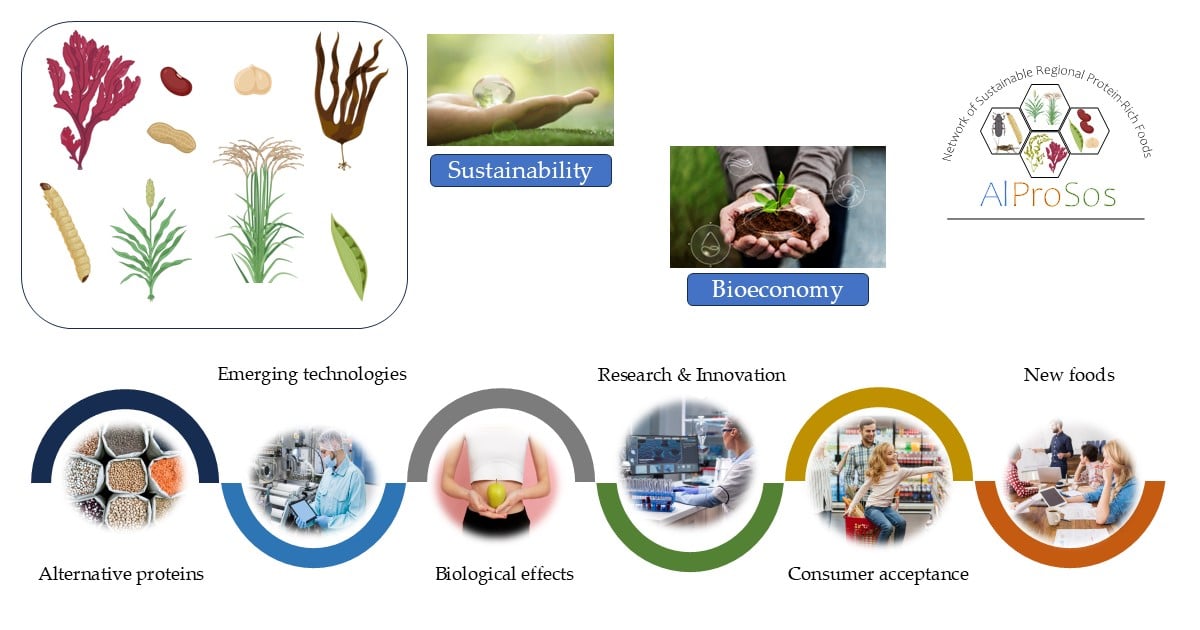
Exploring new protein sources, such as those of plant, fungi, microbial, food co-products, or even insect origin, offers a unique opportunity to diversify the human diet and reduce pressure on natural resources. Research into these alternative proteins holds numerous promises for revolutionizing food production.

Technological innovation is the key to a successful transition towards a sustainable food system. The development of advanced techniques for the extraction, purification, and modification of proteins and the application of biotechnology are essential to maximizing the potential of alternative sources. The comprehensive characterization of these proteins' structural, functional, and nutritional properties is fundamental to ensure their safety and efficacy in human nutrition. Moreover, the modification processes of these proteins enable improvements in their functional properties and the expansion of their application in the food industry.

Research into alternative proteins focuses on production, characterization, and their impact on human health. The study of bioactive peptides released during the digestion of these proteins, with their potential antioxidant, anti-inflammatory, and other properties, opens new avenues for developing functional foods and nutraceuticals.

Thus, this topic, framed in the Alprosos Network (https://www.cyted.org/AlProSos), aims to highlight the most recent knowledge and advances in alternative proteins. Research areas include (but are not limited to) the following:

  • The identification of new proteins from regional and traditional sources;
  • The chemical, nutritional, physicochemical, and techno-functional characterization of proteins;
  • Emerging techniques for the extraction, purification, and functionalization of proteins;
  • Nobel methods and technologies for processing and modifying proteins;
  • The application of new proteins in the formulation and design of new food products;
  • Research into the nutritional, bioactive activity, and health aspects of alternative proteins.

Dr. Rubén Domínguez-Valencia
Dr. Rita Carneiro Alves
Dr. Sonia Sáyago-Ayerdi
Dr. Ethel E. Pérez
Topic Editors

Keywords

  • food proteins
  • functional properties
  • protein digestibility and bioavailability
  • emerging technologies
  • protein purification and functionalization
  • protein extraction
  • sustainable and regional proteins
  • functional foods

Participating Journals

Journal Name Impact Factor CiteScore Launched Year First Decision (median) APC
Antioxidants
antioxidants
6.6 12.4 2012 18.7 Days CHF 2900 Submit
Applied Sciences
applsci
2.5 5.5 2011 16 Days CHF 2400 Submit
Biomolecules
biomolecules
4.8 9.2 2011 17.9 Days CHF 2700 Submit
BioTech
biotech
3.1 4.8 2012 21.6 Days CHF 1800 Submit
Foods
foods
5.1 8.7 2012 15 Days CHF 2900 Submit
Life
life
3.4 6.0 2011 16.6 Days CHF 2600 Submit

Preprints.org is a multidisciplinary platform offering a preprint service designed to facilitate the early sharing of your research. It supports and empowers your research journey from the very beginning.

MDPI Topics is collaborating with Preprints.org and has established a direct connection between MDPI journals and the platform. Authors are encouraged to take advantage of this opportunity by posting their preprints at Preprints.org prior to publication:

  1. Share your research immediately: disseminate your ideas prior to publication and establish priority for your work.
  2. Safeguard your intellectual contribution: Protect your ideas with a time-stamped preprint that serves as proof of your research timeline.
  3. Boost visibility and impact: Increase the reach and influence of your research by making it accessible to a global audience.
  4. Gain early feedback: Receive valuable input and insights from peers before submitting to a journal.
  5. Ensure broad indexing: Web of Science (Preprint Citation Index), Google Scholar, Crossref, SHARE, PrePubMed, Scilit and Europe PMC.

Published Papers (4 papers)

Order results
Result details
Journals
Select all
Export citation of selected articles as:
40 pages, 1938 KB  
Review
Sustainable Emerging Proteins: Allergenic Proteins in Edible Insects, Microalgae, and Microorganisms, and Desensitization Processing Technologies
by Fei Xu, Yan Zhao, Zhaowei Han, Xiaoyue Zhang, Bingyu Chen, Xuchun Zhu and Hongzhi Liu
Foods 2026, 15(1), 69; https://doi.org/10.3390/foods15010069 - 25 Dec 2025
Viewed by 408
Abstract
As the global population continues to expand and demand for protein increases, alternative proteins (e.g., edible insect proteins, microalgae proteins, fungal or bacterial proteins) have emerged as a significant area of research interest due to their high nutritional value and sustainability. However, these [...] Read more.
As the global population continues to expand and demand for protein increases, alternative proteins (e.g., edible insect proteins, microalgae proteins, fungal or bacterial proteins) have emerged as a significant area of research interest due to their high nutritional value and sustainability. However, these novel protein sources may contain allergenic components, such as tropomyosin and arginine kinase in insects, phycocyanin in microalgae, and ribosomal proteins in fungi, which may trigger allergic reactions and cross-reactivity with traditional allergens. In this review, we systematically retrieved published studies from databases including PubMed and Web of Science, employing keywords such as microbial proteins, edible insects, and allergenicity. Articles were screened based on their relevance to allergenic properties and processing effects, with selected studies subjected to thematic analysis. The present paper reviews the allergenic properties of edible Insects, microalgae, and microorganisms’ proteins and their molecular mechanisms, and explores the effects of various processing techniques (e.g., heat treatment, enzymatic hydrolysis, high-pressure treatment, and glycosylation) on the reduction of allergenic activity. It was determined that the impact of processing methodologies is contingent on protein structure, with certain techniques having the potential to augment sensitization through epitope exposure. Furthermore, there are still gaps in the current research on the reduction in allergenicity of microbial and algal allergens, and future research should focus on the in-depth characterization of allergenic protein structures and the development of novel sensitization reduction techniques. This review provides a significant reference point for the safe development and rational application of edible insects, microalgae, and microorganisms proteins, which is of great importance for the development of sustainable food systems. Full article
Show Figures

Graphical abstract

15 pages, 1009 KB  
Article
Assessment of Genotoxicity and Cytotoxicity of Tepary Bean (Phaseolus acutifolius) Seed Protein Extract
by Carmen Valadez-Vega, Lizbeth Ortigoza-Fonseca, Gabriel Betanzos-Cabrera, Raúl Velasco-Azorsa, Víctor Manuel Muñoz-Pérez, José A. Morales-González, Belinda Patricia Velázquez-Morales, Aurea Bernardino-Nicanor, Leopoldo González-Cruz, Diego Estrada-Luna and Olivia Lugo-Magaña
Life 2025, 15(12), 1937; https://doi.org/10.3390/life15121937 - 18 Dec 2025
Viewed by 314
Abstract
Beans are widely consumed worldwide and are a good source of amino acids and micronutrients; however, they contain anti-nutrients, such as lectins, tannins, protein inhibitors, saponins, and phytic acid, among others, which can reduce the food’s quality and cause adverse health effects. In [...] Read more.
Beans are widely consumed worldwide and are a good source of amino acids and micronutrients; however, they contain anti-nutrients, such as lectins, tannins, protein inhibitors, saponins, and phytic acid, among others, which can reduce the food’s quality and cause adverse health effects. In this study, we analyzed the genotoxic and cytotoxic effects of a protein extract from Phaseolus acutifolius (TBE) seeds. The extract contained some antinutritional compounds, with a higher lectin content and an activity of 2701.85 HU. The acute toxicity test in mice showed that the extract was not lethal at the concentrations tested, as it did not cause any mortality. The in vitro cytotoxicity study on small intestinal epithelial cells indicated that the lectin-rich extract was cytotoxic in both assays, with IC50 values of 10.08 µg/mL and 108.91 µg/mL for the free cell and intestinal fragment assays, respectively. In the in vivo study, an erythropoiesis-stimulatory effect was observed, with significant genotoxic damage noted at 48 h, evidenced by 11 micronucleated erythrocytes at 1000 mg/kg TBE. However, no genotoxicity was detected with prolonged treatment times. These results indicate that TBE is cytotoxic within the tested concentration range, and genotoxic damage is influenced by both concentration and exposure time. Full article
Show Figures

Figure 1

35 pages, 7967 KB  
Review
Feasibility of Using Tenebrio molitor Larvae as an Alternative Protein Source
by Rubén Agregán, Noemí Echegaray, Laura Moraga-Babiano, Mirian Pateiro and José M. Lorenzo
Foods 2025, 14(23), 4068; https://doi.org/10.3390/foods14234068 - 27 Nov 2025
Viewed by 1868
Abstract
Mealworm farming is gaining interest as a possible solution to the oversaturated meat supply chain, as an alternative source of protein. This is a more environmentally friendly activity that requires fewer inputs for production compared to meat. This review discusses the feasibility of [...] Read more.
Mealworm farming is gaining interest as a possible solution to the oversaturated meat supply chain, as an alternative source of protein. This is a more environmentally friendly activity that requires fewer inputs for production compared to meat. This review discusses the feasibility of mealworms as an ingredient for the production of novel foods, investigating crucial aspects, such as nutrition, technological capability, food safety, and consumer acceptance, among others. Tenebrio molitor larvae can be nutritionally comparable to meat, as they provide high-quality protein and other essential nutrients. Although the omega-6/omega-3 ratio exceeds the recommended limit (<5), certain strategies during larval breeding, including feeding, and cooking, may significantly reduce this gap. The use of mealworm flour in the food industry can provide apparently healthy, safe matrices with high protein content. However, inclusions above 10% often lead to technological and sensory deficiencies. Further experimentation is required to overcome these issues, which negatively impact consumer acceptance, and to promote social behavioral strategies to attract consumers toward insects. On the other hand, regulatory policies might play a crucial role in supporting this business, which is predicted to grow as technology develops and this activity aligns with a circular economy. Full article
Show Figures

Graphical abstract

15 pages, 1328 KB  
Article
Development of Three Different Anchovy-Based Fast-Food Products (Toast, Burger, and Pizza): Comparative Analysis of Sensory and Proximate Properties
by Fatma Delihasan Sonay, Barış Karslı, Emre Çağlak, Ayşe Kara, Özen Yusuf Öğretmen and Orhan Kobya
Foods 2025, 14(19), 3329; https://doi.org/10.3390/foods14193329 - 25 Sep 2025
Viewed by 1654
Abstract
This study aims to develop nutritionally improved alternative fast-food products by incorporating anchovy (Engraulis encrasicolus), a fish with high nutritional value, into three popular fast-food items (toast, burger, and pizza) frequently consumed by fast-food consumers. Anchovies, due to their rich content [...] Read more.
This study aims to develop nutritionally improved alternative fast-food products by incorporating anchovy (Engraulis encrasicolus), a fish with high nutritional value, into three popular fast-food items (toast, burger, and pizza) frequently consumed by fast-food consumers. Anchovies, due to their rich content of omega-3 fatty acids, high-quality protein, vitamins A and D, and minerals, are a valuable food source for public health. Within the scope of this study, the nutritional compositions (crude protein, crude fat, crude ash, moisture, carbohydrate, energy) and sensory properties of the developed products were determined. According to the results of the analysis, the highest crude protein (18.64%) and crude ash (4.38%) content were found in anchovy-enriched toast, while the highest crude fat content (10.82%) was observed in anchovy burger (p < 0.05). Sensory analyses indicated that the panelists generally accepted all products. Specifically, the anchovy-enriched burger received the highest scores for appearance (90%) and aroma (40%). These findings demonstrate that anchovy-enriched fast-food products are both nutritionally rich and consumer-accepted, nutritionally improved food alternatives. Furthermore, this study identifies significant potential for utilizing aquatic products within the nutritionally enriched, seafood-based product sector. Full article
Show Figures

Figure 1

Back to TopTop