



Next Issue
Volume 18, January
Previous Issue
Volume 17, November
error_outline You can access the new MDPI.com website here. Explore and share your feedback with us.


Diversity, Volume 17, Issue 12 (December 2025) – 65 articles
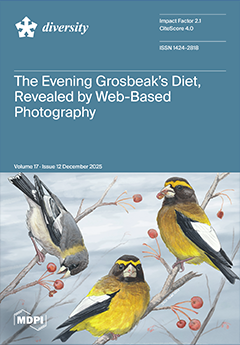
Cover Story (view full-size image): Avian diets can be highly diverse but are often difficult to characterize, especially in small songbirds. Despite its widespread distribution, striking plumage, and nomadic movements in search of tree seeds, the diet of the Evening Grosbeak (Hesperiphona vespertina) has not been systematically characterized across its range. To address this gap, we examined more than 50,000 photographs of Evening Grosbeaks archived in the Macaulay Library. Foraging on natural food items was documented in 1075 images. Identified foods included at least 96 plant species from 25 families, one insect species, and two lichen species. Despite this high observed diversity, richness estimators indicate that additional dietary diversity remains undocumented. To our knowledge, this study represents the first range-wide analysis of a songbird’s diet using photographs from a community-sourced archive. View this paper
  • Issues are regarded as officially published after their release is announced to the table of contents alert mailing list.
  • You may sign up for e-mail alerts to receive table of contents of newly released issues.
  • PDF is the official format for papers published in both, html and pdf forms. To view the papers in pdf format, click on the "PDF Full-text" link, and use the free Adobe Reader to open them.
Order results
Result details
Section
Select all
Export citation of selected articles as:
7 pages, 522 KB  
Communication
A Multidimensional Framework for Understanding Microbial Mutualisms
by Matan Shelomi
Diversity 2025, 17(12), 871; https://doi.org/10.3390/d17120871 - 18 Dec 2025
Viewed by 200
Abstract
Microbial mutualisms are still commonly described as obligate or facultative, but this dichotomy is insufficient to describe the complexity of host–microbe interactions. A multi-dimensional conceptual framework that accounts for asymmetry in dependency and taxonomic membership flexibility is introduced. This framework allows the classification [...] Read more.
Microbial mutualisms are still commonly described as obligate or facultative, but this dichotomy is insufficient to describe the complexity of host–microbe interactions. A multi-dimensional conceptual framework that accounts for asymmetry in dependency and taxonomic membership flexibility is introduced. This framework allows the classification of mutualisms by how they are structured and for whom the interaction is necessary. The dimensions include dependency considered independently for both organisms, and both the global/potential and individual/actual microbiome diversities. Examples are given primarily from the field of insect–microbe interactions, showing how past frameworks cannot fully encompass the diversity of symbioses. This new framework integrates symbiont community complexity and highlights functional redundancy, which is useful for understanding host plasticity, vulnerability, invasiveness, and resilience. Full article
(This article belongs to the Section Microbial Diversity and Culture Collections)
Show Figures

Figure 1

4 pages, 147 KB  
Editorial
Wildlife in Natural and Altered Environments: What Is Special About This Issue?
by Francisco Javier Zamora-Camacho
Diversity 2025, 17(12), 870; https://doi.org/10.3390/d17120870 - 18 Dec 2025
Viewed by 229
Abstract
The interaction between humans and the environment often entails the deterioration of the latter triggered by the actions of the former [...] Full article
(This article belongs to the Special Issue Wildlife in Natural and Altered Environments)
21 pages, 10278 KB  
Article
DNA Barcoding for Managing Blackberry Genetic Resources on Black Sea Coast (Russia)
by Igor Yu. Zhuravlev, Anton V. Korzhuk, Elena S. Tyurina, Nadezhda A. Dobarkina, Elena N. Markova, Evgenija I. Gereeva, Ioanna M. Protasova, Mikhail T. Menkov, Irina V. Rozanova, Lilija Yu. Shipilina, Elena K. Khlestkina and Alexey S. Rozanov
Diversity 2025, 17(12), 869; https://doi.org/10.3390/d17120869 - 18 Dec 2025
Viewed by 342
Abstract
Accurate species identification in blackberries (Rubus spp.) is difficult because of morphological similarity and frequent hybridization. We studied 56 wild accessions from the Sirius Federal Territory (Russia), representing coastal and foothill ecosystems of the Black Sea region. Multilocus DNA barcoding with the [...] Read more.
Accurate species identification in blackberries (Rubus spp.) is difficult because of morphological similarity and frequent hybridization. We studied 56 wild accessions from the Sirius Federal Territory (Russia), representing coastal and foothill ecosystems of the Black Sea region. Multilocus DNA barcoding with the plastid rbcL gene and nuclear ITS1 and ITS2 regions revealed signals of hybridization and hidden diversity. The rbcL marker showed low variation, grouping most accessions into two clusters with several singletons, which limited its use for distinguishing species. In contrast, ITS1 and ITS2 showed higher variation, forming six clusters and eight singletons, and allowed for clear separation of taxa such as Rubus caesius L., R. irritans Focke, and R. amabilis Focke. Accession 3 carried a raspberry (closely to R. corchorifolius L.fil) plastid haplotype, pointing to a hybrid origin. We also found groups of nearby plants with identical mutations, which likely reflect clonal spread with fixed somatic changes or the persistence of recent hybrid lineages. At the same time, accessions collected up to 140 km apart did not form separate clusters, showing weak geographic structuring along the coast. The results demonstrate that multilocus barcoding can reveal not only species boundaries but also evolutionary processes among Rubus such as hybridization, clonal propagation, and early stages of speciation. Full article
(This article belongs to the Special Issue Genetic Diversity, Breeding and Adaption Evolution of Plants)
Show Figures

Graphical abstract

13 pages, 912 KB  
Article
Revisiting the Invasion: A Success Story of Crayfish Species in Piedmont Plain Lakes (NW Italy)
by Angela Boggero, Marco Orlandi, Silvia Zaupa and Lyudmila Kamburska
Diversity 2025, 17(12), 868; https://doi.org/10.3390/d17120868 - 18 Dec 2025
Viewed by 252
Abstract
Crayfish often become invasive when introduced to new waters. From the late 19th to the late 20th century, the commercial import of North American species (e.g., Faxonius limosus, Pacifastacus leniusculus, Procambarus clarkii) into Europe for food, ornamental aquaculture, and restocking [...] Read more.
Crayfish often become invasive when introduced to new waters. From the late 19th to the late 20th century, the commercial import of North American species (e.g., Faxonius limosus, Pacifastacus leniusculus, Procambarus clarkii) into Europe for food, ornamental aquaculture, and restocking native crayfish populations after crayfish plague succeeded due to their adaptability, high reproductive rates, and resilience. Extensive baited-trap monitoring of Piedmont lakes carried in 2025 confirmed the occurrence of two invasive crayfish species (F. limosus, and P. clarkii) in 10 of 17 lakes and recorded P. clarkii for the first time ever in lakes Pistono, San Michele, and Sirio, expanding our knowledge of their distribution in Piedmont freshwaters. Since all detected species are listed as Invasive Alien Species of Union Concern, protecting the ecological integrity of Piedmont’s freshwaters requires coordinated action by member states, regional authorities, policymakers, and water managers to prevent and control their spread and to improve information sharing. Non-native crayfish occurrence is influenced not only by hydrological and habitat connectivity and predator–prey interactions but also by illegal activities that supply the food market. Full article
(This article belongs to the Special Issue Diversity and Biogeography of Crustaceans in Continental Waters)
Show Figures

Figure 1

16 pages, 1773 KB  
Article
Seasonal Dynamics of Phytoplankton Community Structure and Environmental Drivers in the Coastal Waters of the Leizhou Peninsula, China
by Jianming Li, Menghan Gao, Bihong Liu, Yingyi Fan, Junyu Wei, Yulei Zhang, Feng Li, Ning Zhang and Zhangxi Hu
Diversity 2025, 17(12), 867; https://doi.org/10.3390/d17120867 - 17 Dec 2025
Viewed by 373
Abstract
To investigate the seasonal dynamics of phytoplankton community structure and its relationship with environmental factors in the coastal waters of the Leizhou Peninsula, China, surveys were conducted at 21 stations during four seasonal cruises: autumn (August 2022), winter (December 2022), spring (March 2023), [...] Read more.
To investigate the seasonal dynamics of phytoplankton community structure and its relationship with environmental factors in the coastal waters of the Leizhou Peninsula, China, surveys were conducted at 21 stations during four seasonal cruises: autumn (August 2022), winter (December 2022), spring (March 2023), and summer (June 2023). A total of 174 phytoplankton species from 7 phyla were identified. Species richness peaked in summer (93 species, 5 phyla), followed by winter (80 species, 3 phyla), spring (79 species, 5 phyla), and autumn (75 species, 5 phyla). Bacillariophyta dominated throughout the year, with Skeletonema costatum (Greville) Cleve 1878 and Chaetoceros lorenzianus Grunow 1863 being consistently dominant across all seasons. Phytoplankton cell density showed a distinct seasonal pattern, highest in autumn, followed by summer, and lower in spring and winter. Diversity indices (H, J, D) indicated moderately to heavily polluted waters. Redundancy analysis identified salinity, dissolved inorganic nitrogen, chlorophyll a (Chl a), pH, water temperature, chemical oxygen demand, and dissolved silicon as key environmental drivers, with their influence varying seasonally: salinity was strongest in summer, Chl a in winter, and multiple factors jointly shaped the community in spring and autumn. This study provides a comprehensive assessment of phytoplankton biodiversity and clarifies the environmental drivers of their distribution in the coastal waters of the Leizhou Peninsula, China. Full article
(This article belongs to the Special Issue Harmful Algal Blooms: Distribution and Diversity)
Show Figures

Figure 1

12 pages, 1543 KB  
Article
Seed-Carrying Ant Assemblages in a Fragmented Dry Forest Landscape: Richness, Composition, and Ecological Implications
by Rodrigo G. Pol, Mariana Pereyra and Leonardo Galetto
Diversity 2025, 17(12), 866; https://doi.org/10.3390/d17120866 - 17 Dec 2025
Viewed by 239
Abstract
Habitat fragmentation profoundly alters ecological processes such as seed predation and dispersal. Ants play a central role as seed removers and dispersers, yet the effects of fragmentation on seed-carrying ant assemblages in dry tropical forests remain insufficiently studied. In this work, we examined [...] Read more.
Habitat fragmentation profoundly alters ecological processes such as seed predation and dispersal. Ants play a central role as seed removers and dispersers, yet the effects of fragmentation on seed-carrying ant assemblages in dry tropical forests remain insufficiently studied. In this work, we examined the influence of forest fragmentation on seed-carrying ants in the Chaco forests of central Argentina. Ants were sampled across nine forest fragments of varying sizes and two continuous forests within an agroecosystem landscape, and species richness, composition, and occurrence were analyzed. Our results revealed that species richness did not vary significantly with fragment size; however, fragmentation caused pronounced shifts in species composition, with clear distinctions between continuous forests and fragments. Large-bodied specialist harvester ants declined in fragments, whereas small- to medium-sized generalist species from genera such as Pheidole and Solenopsis persisted. These compositional changes suggest that although overall seed removal rates may remain stable, the functional quality of seed dispersal likely diminishes. This study highlights the sensitivity of seed-carrying ant assemblages to habitat fragmentation and underscores the need for further research that integrates behavioral and landscape-scale approaches to better assess impacts on seed removal, dispersal, and forest regeneration in fragmented dry forests. Full article
(This article belongs to the Special Issue Systematics, Evolution and Diversity in Ants)
Show Figures

Figure 1

13 pages, 3127 KB  
Article
COI Gene-Based DNA Barcode Reference Database for Beetles in a Temperate Biodiversity Hotspot: Insights from the Liancheng Nature Reserve, Gansu Province, China
by Kang Chang, Pengcheng Nie, Youssef Dewer, Raul Narciso C. Guedes, Xiaoxiao Chen and Suqin Shang
Diversity 2025, 17(12), 865; https://doi.org/10.3390/d17120865 - 17 Dec 2025
Viewed by 583
Abstract
Beetles (Coleoptera) represent one of the most diverse insect groups and play vital ecological roles, yet their accurate identification is often challenging due to morphological similarities among taxa. DNA barcoding has emerged as a powerful and reliable tool for species-level identification and biodiversity [...] Read more.
Beetles (Coleoptera) represent one of the most diverse insect groups and play vital ecological roles, yet their accurate identification is often challenging due to morphological similarities among taxa. DNA barcoding has emerged as a powerful and reliable tool for species-level identification and biodiversity monitoring. In this study, we established a local DNA barcode reference database for beetles in the Liancheng Nature Reserve, Gansu Province, China. From May to August 2024, beetle specimens were collected and identified using both morphological traits and DNA barcoding. Three species delimitation methods—Automatic Barcode Gap Discovery (ABGD), Assemble Species by Automatic Partitioning (ASAP), and Bayesian Poisson Tree Processes (bPTP)—were employed as complementary analytical tools, and phylogenetic relationships were inferred from cytochrome c oxidase subunit I (COI) sequences. A total of 164 COI sequences (650 bp) were obtained, representing 126 beetle species from 95 genera and 20 families. DNA barcoding successfully resolved morphologically ambiguous taxa, with many sequences reported here for the first time. Phylogenetic analysis revealed that species within the same genus formed cohesive clades before clustering at the family level, confirming the species-level discriminative power of the COI gene. Collectively, these findings demonstrate that COI-based DNA barcoding is a powerful complement to traditional taxonomy. The establishment of this preliminary reference database provides a valuable molecular resource for beetle identification and a practical tool to support biodiversity conservation, resource management, and long-term monitoring in the Liancheng Nature Reserve. Full article
(This article belongs to the Special Issue Arthropod Diversity in Arid and Desert Ecosystems)
Show Figures

Graphical abstract

18 pages, 1692 KB  
Article
Turnover, Uniqueness, and Environmental Filtering Shape Helminth Parasite Metacommunities in Freshwater Fish Pseudoxiphophorus bimaculatus (Cyprinodontiformes: Poeciliidae)
by Ivonne López-del-Monte, Oscar Rico-Chávez, Juan Manuel Caspeta-Mandujano, Edgar Fernando Mendoza-Franco, Norman Mercado-Silva, Jesús Montoya-Mendoza, Miguel Rubio-Godoy, Ismael Guzmán-Valdivieso, Benjamín Quiroz-Martínez and Guillermo Salgado-Maldonado
Diversity 2025, 17(12), 864; https://doi.org/10.3390/d17120864 - 17 Dec 2025
Viewed by 472
Abstract
Understanding the processes that shape parasite community structure across spatial scales is essential for linking ecological theory with host–parasite dynamics. Using a metacommunity framework, we examined the metacommunity of helminth parasites infecting the freshwater fish Pseudoxiphophorus bimaculatus across 11 sites along the La [...] Read more.
Understanding the processes that shape parasite community structure across spatial scales is essential for linking ecological theory with host–parasite dynamics. Using a metacommunity framework, we examined the metacommunity of helminth parasites infecting the freshwater fish Pseudoxiphophorus bimaculatus across 11 sites along the La Antigua River basin (Veracruz, Mexico). We combined β-diversity partitioning, local and species contributions to diversity, elements of metacommunity structure (EMS), and variance partitioning to identify the mechanisms underlying spatial variation in parasite composition. Helminth metacommunity was dominated by a few widespread taxa, with balanced variation in species abundances—indicative of turnover—emerging as the main driver of β-diversity at both host and site levels. Both rare and common species contributed disproportionately to regional diversity. EMS analyses revealed coherent, non-random community structures that varied from nested to quasi-Gleasonian and quasi-Clementsian types among sites and guilds, suggesting that species respond individually to shared environmental gradients. Variance partitioning indicated that environmental filtering, particularly through habitat structure, explained most of the variation in community composition, exceeding the effects of water quality and host size. Overall, our results demonstrate that turnover, species uniqueness, and environmental filtering interact to shape helminth parasite metacommunities in tropical freshwater systems, highlighting the integrative role of environmental heterogeneity and dispersal limitation in parasite community assembly. Full article
(This article belongs to the Section Freshwater Biodiversity)
Show Figures

Figure 1

14 pages, 2776 KB  
Article
DNA Barcode Identification for Gastropod and Bivalve Species in Coastal Bays and Islands of Vietnam
by Nguyen Chi Mai, Pham Thi Hoe, Le Quang Trung, Nguyen Tuong Van, Luu Xuan Hoa, Hoang Dinh Chieu, Do Cong Thung, Bui Minh Tuan, Pham Tran Dinh Nho, Le Quynh Lien and Tran My Linh
Diversity 2025, 17(12), 863; https://doi.org/10.3390/d17120863 - 16 Dec 2025
Viewed by 489
Abstract
Vietnam, a coastal and tropical country, harbors a high diversity of marine mollusks, particularly gastropods and bivalves. However, the taxonomy of these groups is frequently confounded by their morphological similarities and pronounced plasticity. The aim of this study was to assemble the first [...] Read more.
Vietnam, a coastal and tropical country, harbors a high diversity of marine mollusks, particularly gastropods and bivalves. However, the taxonomy of these groups is frequently confounded by their morphological similarities and pronounced plasticity. The aim of this study was to assemble the first comprehensive barcode reference library for marine gastropods and bivalves in Vietnam. The samples were collected from four different marine areas. We identified 31 morphospecies belonging to 28 genera, 24 families, and 11 orders. A total of 49 COI-5P sequences were obtained and categorized into 31 taxa (30 to species levels), 83.67% of which were found to be concordant with morphology-based identifications. The topology of Neighbor-Joining trees also grouped the sequences of the same species into monophyletic clusters, which were congruent with 31 taxa. Twenty eight species were placed in single Barcode Index Numbers (BINS) and three in two BINs. Barcode gaps were found for all species. As a result, the obtained COI-5P barcodes are suitable for species identification of 17 gastropod species and 14 bivalves. All COI-5P barcodes have been deposited in GenBank, BOLD, and the website for the national project “Development of DNA Database for Valuable Marine Invertebrates”. Full article
(This article belongs to the Special Issue Diversity in 2025)
Show Figures

Graphical abstract

17 pages, 9113 KB  
Article
Climate-Driven Habitat Dynamics of Ormosia xylocarpa: The Role of Cold-Quarter Precipitation as a Regeneration Bottleneck Under Future Scenarios
by Wen Lu and Mao Lin
Diversity 2025, 17(12), 862; https://doi.org/10.3390/d17120862 - 16 Dec 2025
Viewed by 266
Abstract
The Maximum Entropy (MaxEnt) model, integrated with ArcGIS (a geographic information system), was employed to project potential species distribution under current conditions and future climate scenarios (SSP1–2.6, SSP2–4.5, SSP5–8.5) for the 2050s, 2070s, and 2090s. Model optimization involved testing 1160 parameter combinations. The [...] Read more.
The Maximum Entropy (MaxEnt) model, integrated with ArcGIS (a geographic information system), was employed to project potential species distribution under current conditions and future climate scenarios (SSP1–2.6, SSP2–4.5, SSP5–8.5) for the 2050s, 2070s, and 2090s. Model optimization involved testing 1160 parameter combinations. The optimized model (FC = LQ, RM = 0.1) exhibited significantly improved predictive performance, with an average AUC of 0.967. Under current conditions, the estimated core suitable habitat spans 35.62 × 10⁴ km2, primarily located in southern China. Future projections indicated a non-linear trajectory: an initial contraction of total suitable area by mid-century, followed by a substantial expansion by the 2090s, particularly under high-emission scenarios. Simultaneously, the distribution centroid shifted northwestward. The primary factors influencing distribution were the annual mean temperature (Bio1, 41.1%) and the precipitation of the coldest quarter (Bio19, 20.0%). These findings establish a critical scientific basis for developing climate-adaptive conservation strategies, including the identification of priority climate refugia in Fujian province, China, and planning for assisted migration to northwestern regions. Full article
(This article belongs to the Section Plant Diversity)
Show Figures

Figure 1

14 pages, 848 KB  
Review
A Secondary Analysis of Invasion Risk in the Context of an Altered Thermal Regime in the Great Lakes
by Elias Hanson, Connor Shelly and Rochelle Sturtevant
Diversity 2025, 17(12), 861; https://doi.org/10.3390/d17120861 - 16 Dec 2025
Viewed by 318
Abstract
Invasive species and changing thermal structure are widely recognized as drivers of change to freshwater ecosystems, yet the interactions of these two drivers have rarely been studied. This study conducted a secondary analysis of a large federal database (GLANSIS) of literature used in [...] Read more.
Invasive species and changing thermal structure are widely recognized as drivers of change to freshwater ecosystems, yet the interactions of these two drivers have rarely been studied. This study conducted a secondary analysis of a large federal database (GLANSIS) of literature used in assessing the current risk of potential nonindigenous species to the Great Lakes (watchlist species) to evaluate how increased water temperatures would impact the risk of establishment posed by these species. Our analysis found that 46% of the current watchlist species would pose a higher potential risk while 7% would pose a lower potential risk. Lake Superior and Lake Huron exhibited significant increases in the number of species likely to find a suitable habitat. Full article
(This article belongs to the Special Issue Climate Change and Invasive Species Impacts on Freshwater Systems)
Show Figures

Figure 1

24 pages, 3892 KB  
Article
Diversity of Brown Macroalgae (Phaeophyceae) Emerging from Deepwater Rhodoliths Collected in the Gulf of Mexico
by Olga Camacho and Suzanne Fredericq
Diversity 2025, 17(12), 860; https://doi.org/10.3390/d17120860 - 15 Dec 2025
Viewed by 385
Abstract
The paper assesses brown seaweed diversity following the catastrophic events of the 2010 Deepwater Horizon (DWH) oil spill in offshore deep bank habitats at 45–90 m depth in the northwestern Gulf of Mexico, and their potential regeneration and recovery in the region. Innovative [...] Read more.
The paper assesses brown seaweed diversity following the catastrophic events of the 2010 Deepwater Horizon (DWH) oil spill in offshore deep bank habitats at 45–90 m depth in the northwestern Gulf of Mexico, and their potential regeneration and recovery in the region. Innovative approaches to expeditionary and exploratory research resulted in the discovery, identification, and classification of brown seaweed diversity associated with rhodoliths (free-living carbonate nodules predominantly accreted by crustose coralline algae). Whereas the rhodoliths collected in situ at our research sites pre-DWH were teeming with brown algae growing on their surface, post-DWH they looked dead, bare, and bleached. These post-DWH impacts appear long-lasting, with little macroalgal growth recovery in the field. However, these apparent “dead” rhodoliths collected post-DWH at banks offshore Louisiana showed macroalgal regeneration starting within three weeks when placed in microcosms in the laboratory, with 19 brown algal species emerging from the bare rhodoliths’ surface. Some taxa corresponded to new records for the GMx (genus Cutleria and Dictyota cymatophila). Padina vickersiae is resurrected from synonymy with P. gymnospora. Reproductive sori evidence is presented for Lobophora declerckii. A detailed nomenclatural list, morphological plates, and phylogenetic/barcoding trees of brown seaweed that emerged from rhodoliths’ surfaces in laboratory microcosms are provided. These findings provide key molecular and morphological insights that reinforce species boundaries and highlight the significance of mesophotic rhodolith beds as previously overlooked reservoirs of cryptic brown algal diversity. Full article
Show Figures

Figure 1

44 pages, 9264 KB  
Article
Molecular Phylogeny of the Deep-Sea Predatory Octacnemidae (Ascidiacea, Tunicata, Chordata), with Seven New Species
by Peter Mandre and Greg W. Rouse
Diversity 2025, 17(12), 859; https://doi.org/10.3390/d17120859 - 15 Dec 2025
Viewed by 523
Abstract
Octacnemid ascidians inhabit the deep-sea and have evolved traits that facilitate the consumption of large prey (macrophagy). The deep ocean is difficult to sample, but with the combined efforts of several research cruises, supplemented by submersibles, a series of octacnemid specimens were acquired [...] Read more.
Octacnemid ascidians inhabit the deep-sea and have evolved traits that facilitate the consumption of large prey (macrophagy). The deep ocean is difficult to sample, but with the combined efforts of several research cruises, supplemented by submersibles, a series of octacnemid specimens were acquired and appropriately subsampled for molecular and morphological analyses. Ascidian molecular phylogenies to date have included only a single species from the family Megalodicopia hians. This study presents the first molecular phylogenetic analyses within Octacnemidae, with 13 species represented, as well as attempts to resolve its position within Phlebobranchia. Previous phylogenies suggested a sister-group relationship between Octacnemidae and Corellidae. Our results further support their close relationship, though they were found to be non-monophyletic. One new genus and seven new species of Octacnemidae are formally described here, supported by molecular and morphological evidence. The new species are from deep sea, off California, Chile, and Western Australia. Full article
(This article belongs to the Special Issue 2025 Feature Papers by Diversity’s Editorial Board Members)
Show Figures

Figure 1

20 pages, 11698 KB  
Article
Four New Records of Ampharetidae (Annelida, Terebellida) from Korea, with Systematic Clarifications and First Descriptions of Methyl Green Staining Patterns (MGSPs)
by Jong Rae Kim, Yu Bin Ham, Sunyoung Kim and Man-Ki Jeong
Diversity 2025, 17(12), 858; https://doi.org/10.3390/d17120858 - 15 Dec 2025
Viewed by 303
Abstract
The systematics of the polychaete family Ampharetidae in Korean waters have been marked by long-standing confusion and potential misidentifications of key species. This study presents a critical systematics re-assessment of Korean ampharetids, based on newly collected material and historical voucher specimens from the [...] Read more.
The systematics of the polychaete family Ampharetidae in Korean waters have been marked by long-standing confusion and potential misidentifications of key species. This study presents a critical systematics re-assessment of Korean ampharetids, based on newly collected material and historical voucher specimens from the National Marine Biodiversity Institute of Korea (MABIK). We used detailed morphological examinations, complemented by scanning electron microscopy (SEM) for the uncini structure and methyl green staining patterns (MGSPs) to reveal cryptic diagnostic characters. We provide the first records of four species from Korea: Amphicteis chinensis, Anobothrus nataliae, Auchenoplax worsfoldi, and Phyllocomus chinensis. Our re-examination of voucher specimens, including provisionally labeled MABIK material, corrects significant historical misidentifications. Notably, specimens previously identified as Ampharete arctica are shown to be Anobothrus nataliae, and historical records of Amphicteis gunneri are identified as a complex of other species, including A. chinensis. Furthermore, the detailed MGSPs for all four species are described for the first time, proving to be a valuable auxiliary diagnostic tool, especially for identifying cryptic structures like the thoracic ridges in A. nataliae. This research demonstrates that ampharetid diversity in Korea is significantly underestimated and establishes that a modern morphological framework, integrating the combined use of MGSP and SEM, is essential for the systematics of the family. Full article
(This article belongs to the Section Marine Diversity)
Show Figures

Figure 1

21 pages, 4522 KB  
Article
Prediction of Suitable Habitats for Tibetan Medicinal Gentiana Plants of Jieji- and Bangjian-Type Gentianas Based on the MaxEnt Model
by Hao Su, Ba Qiang, Shengnan Zhang, Sujuan Wang, Shiyan Wang, Ke Zhang and Ji De
Diversity 2025, 17(12), 857; https://doi.org/10.3390/d17120857 - 15 Dec 2025
Viewed by 289
Abstract
The Gentianaceae family, particularly the genus Gentiana, is predominantly distributed across the Qinghai–Tibet Plateau and its adjacent regions. As a widely used traditional medicinal resource in Tibetan medicine, these plants possess diverse pharmacological activities, including heat-clearing, detoxification, antibacterial, antitumor, and immunomodulatory effects. [...] Read more.
The Gentianaceae family, particularly the genus Gentiana, is predominantly distributed across the Qinghai–Tibet Plateau and its adjacent regions. As a widely used traditional medicinal resource in Tibetan medicine, these plants possess diverse pharmacological activities, including heat-clearing, detoxification, antibacterial, antitumor, and immunomodulatory effects. Based on their medicinal properties and traditional use, Gentiana plants in Tibetan medicine are classified into two major groups: Bangjian-type and Jieji-type plants. In the context of intensifying climate change, understanding the responses of these two Tibetan medicinal plant groups to future climate scenarios is of great significance for the effective conservation and sustainable utilization of Gentiana resources. In this study, distribution data from 355 Bangjian-type Gentiana and 417 Jieji-type Gentiana medicinal plants, along with 12 selected key environmental variables, were used to predict their potential suitable habitats under three climate scenarios—SSP126 (low-carbon), SSP245 (medium-carbon), and SSP585 (high-carbon)—across the present and four future time periods, using the Maximum Entropy (MaxEnt) model. The average AUC values of the Bangjian-type and Jieji-type Gentiana models were 0.925 and 0.924, respectively, indicating high predictive reliability. Under current climatic conditions, the estimated suitable habitat areas for Bangjian-type and Jieji-type Gentiana plants are 208.86 × 10⁴ km2 and 211.70 × 10⁴ km2, respectively. The most suitable regions are primarily located in the Southeastern Qinghai–Tibet Plateau, with distribution centroids in Jiangda County, Chamdo, Xizang, China. Altitude was the most influential environmental factor shaping their distribution, followed by precipitation and temperature. In the future, climate change is expected to reduce the overall habitat of Jieji-type Gentiana, with only moderate expansion projected in Central China under the SSP126 scenario. In contrast, Bangjian-type Gentiana is projected to experience habitat expansion in most climate scenarios, with only minor contractions under SSP585. These findings highlight the potential shifts in the distribution of Gentiana resources under various climate scenarios and provide a scientific basis for developing conservation strategies for Tibetan medicinal plants in the face of climate change. Full article
(This article belongs to the Section Plant Diversity)
Show Figures

Figure 1

13 pages, 2814 KB  
Article
Reproductive Ecology and Early-Life Morphological Development of Krabi Mouth-Brooding Fighting Fish Betta simplex Kottelat, 1994 (Actinopterygii: Osphronemidae)
by Santi Poungcharean, Idsariya Wudtisin, Soranath Sirisuay, Phongchate Pichitkul and Sommai Janekitkarn
Diversity 2025, 17(12), 856; https://doi.org/10.3390/d17120856 - 14 Dec 2025
Viewed by 298
Abstract
The Krabi mouth-brooding fighting fish, Betta simplex Kottelat, 1994, is a critically endangered and endemic fish species in Krabi province, Southern Thailand. Little information is available on its reproductive ecology and early developmental morphology, which are essential for studying its conservation. Generally, B. [...] Read more.
The Krabi mouth-brooding fighting fish, Betta simplex Kottelat, 1994, is a critically endangered and endemic fish species in Krabi province, Southern Thailand. Little information is available on its reproductive ecology and early developmental morphology, which are essential for studying its conservation. Generally, B. simplex is considered an adaptable animal that can tolerate lower alkalinity and higher hardness compared to its natural environment conditions. In this study, wild broodstocks of B. simplex were collected from the reported type localities and bred in captivity under laboratory conditions for size-series collection. Some biological aspects of B. simplex in its natural environmental conditions were determined. We found that its flaring and mating behavior was similar to those of bubble-nesting fighting fish but did not involve bubble-nest building. The fertilized eggs and pre-flexion larvae were nurtured in the mouth cavity of parental males within 11–12 (mode = 11) days after fertilization (DAF). The first-release offspring developed to the post-flexion stage with a body size of 4.39 ± 0.01 mm of standard length (SL; n = 6) and then to the juvenile stage within 30 days after release with 11.72 ± 0.62 mm SL (n = 4). Thus, we propose the following linear regression equation for growth prediction by age (DAF) and body size (SL; mm): age = 0.2425 SL + 1.7036 (r2 = 0.9549). The findings of this study will deepen our knowledge of the reproduction and ontogeny of B. simplex and contribute to its future conservation and management. Full article
(This article belongs to the Special Issue Ecology and Conservation of Endangered Wildlife)
Show Figures

Figure 1

18 pages, 665 KB  
Article
Contaminant Accumulation by Unionid Mussels: An Assemblage Level Assessment of Sequestration Functions Across Watersheds and Spatial Scales
by Jennifer M. Archambault, W. Gregory Cope, Teresa J. Newton, Heidi L. Dunn, Chris B. Eads, Jess W. Jones and W. Robert Cope
Diversity 2025, 17(12), 855; https://doi.org/10.3390/d17120855 - 12 Dec 2025
Viewed by 387
Abstract
Freshwater mussels (Unionida) perform important functions that are integral to keeping streams, rivers, and lakes operating as holistic ecosystems. Some of these functions improve water quality for humans through their filtration activities such as nutrient cycling and feces and pseudofeces production. In this [...] Read more.
Freshwater mussels (Unionida) perform important functions that are integral to keeping streams, rivers, and lakes operating as holistic ecosystems. Some of these functions improve water quality for humans through their filtration activities such as nutrient cycling and feces and pseudofeces production. In this study, we estimated the magnitude of contaminant sequestration by mussel assemblages using data at polluted and relatively unpolluted sites from watersheds in the upper Mississippi River (Minnesota, Wisconsin, Iowa, and Illinois, USA), the Clinch River (Virginia and Tennessee, USA), and the upper Neuse River (North Carolina, USA). Data from these rivers represented a range of (1) spatial scales from wadable streams to large rivers, (2) population sizes from tens of thousands to hundreds of millions of mussels, (3) survey techniques from qualitative to quantitative, and (4) chemical classes from inorganic to organic contaminants. We estimated that mussels in two relatively unpolluted reaches of the upper Mississippi River sequestered 1.42 × 10¹³ µg of total metals, metalloids, and ions (i.e., 14.2 metric tons). Mussels in the relatively unpolluted upper Neuse River sequestered between 22.2 and 53.3 million ng of polycyclic aromatic hydrocarbons (PAHs; i.e., 22.2–53.3 mg). Mussels at a polluted site in the Clinch River (Pendleton Island) sequestered 168 million ng of PAHs, compared to 1.45 billion ng of PAHs sequestered at relatively unpolluted sites. Mussels at unpolluted sites in the Clinch River had a 10 times greater sequestration capacity despite having lower tissue concentrations. The accuracy (precision and bias) associated with estimating assemblage-level contaminant sequestration by mussels varied as a function of survey design, spatial scale, population size, and contaminant type. This preliminary assessment of sequestration of contaminants by mussels outlines a framework for understanding the contributions these organisms make in supporting water quality and highlights the need to protect and conserve mussels and the ecosystem functions and services they provide. Full article
(This article belongs to the Special Issue Advances in Freshwater Mollusk Research)
Show Figures

Figure 1

14 pages, 1920 KB  
Article
The Role of Pavona Coral Growth Strategies in the Maintenance of the Clipperton Atoll Reef
by Ania Ochoa-Serena, José de Jesús Adolfo Tortolero-Langarica, Fabián Alejandro Rodríguez-Zaragoza, Juan Pablo Carricart-Ganivet, Eric Emile G. Clua and Alma Paola Rodríguez-Troncoso
Diversity 2025, 17(12), 854; https://doi.org/10.3390/d17120854 - 12 Dec 2025
Viewed by 602
Abstract
The genus Pavona includes massive to submassive hermatypic corals and represents one of the main reef builders of the coral reefs in the Eastern Tropical Pacific (ETP). However, its development and specific ecological role, particularly on offshore reefs (e.g., oceanic Atolls), remain poorly [...] Read more.
The genus Pavona includes massive to submassive hermatypic corals and represents one of the main reef builders of the coral reefs in the Eastern Tropical Pacific (ETP). However, its development and specific ecological role, particularly on offshore reefs (e.g., oceanic Atolls), remain poorly understood. This study aims to determine the sclerochronological characteristics of the four Pavona species (Pavona duerdeni, Pavona clavus, Pavona maldivensis, and Pavona varians) in Clipperton Atoll, and their contributions to reef maintenance. Using the optical densitometry technique, Pavona annual growth parameters were obtained, showing that skeletal density (1.26 ± 0.23 g cm−3), extension rate (0.94 ± 0.31 cm year−1), and calcification rate (1.17 ± 0.36 g cm−2 year−1) were consistent with previous data from the ETP. However, differences at the species level showed that P. duerdeni, P. varians, and P. maldivensis invested their calcification resources into building denser skeletons, demonstrating the morphological plasticity of the genus, likely driven by local factors, such as strong hydrodynamics and depth, rather than regional conditions (e.g., El Niño-Southern Oscillation events). Pavona’s growth strategies contribute to the preservation potential on a geological timescale of Clipperton Atoll, highlighting their importance as one of the main reef builders at a massive coral-dominated reef. Full article
Show Figures

Figure 1

17 pages, 1732 KB  
Article
Enhancing Endangered Feline Conservation in Asia via a Pose-Guided Deep Learning Framework for Individual Identification
by Weiwei Xiao, Wei Zhang and Haiyan Liu
Diversity 2025, 17(12), 853; https://doi.org/10.3390/d17120853 - 12 Dec 2025
Viewed by 362
Abstract
The re-identification of endangered felines is critical for species conservation and biodiversity assessment. This paper proposes the Pose-Guided Network with the Adaptive L2 Regularization (PGNet-AL2) framework to overcome key challenges in wild feline re-identification, such as extensive pose variations, small sample sizes, and [...] Read more.
The re-identification of endangered felines is critical for species conservation and biodiversity assessment. This paper proposes the Pose-Guided Network with the Adaptive L2 Regularization (PGNet-AL2) framework to overcome key challenges in wild feline re-identification, such as extensive pose variations, small sample sizes, and inconsistent image quality. This framework employs a dual-branch architecture for multi-level feature extraction and incorporates an adaptive L2 regularization mechanism to optimize parameter learning, effectively mitigating overfitting in small-sample scenarios. Applying the proposed method to the Amur Tiger Re-identification in the Wild (ATRW) dataset, we achieve a mean Average Precision (mAP) of 91.3% in single-camera settings, outperforming the baseline PPbM-b (Pose Part-based Model) by 18.5 percentage points. To further evaluate its generalization, we apply it to a more challenging task, snow leopard re-identification, using a dataset of 388 infrared videos obtained from the Wildlife Conservation Society (WCS). Despite the poor quality of infrared videos, our method achieves a mAP of 94.5%. The consistent high performance on both the ATRW and snow leopard datasets collectively demonstrates the method’s strong generalization capability and practical utility. Full article
Show Figures

Graphical abstract

18 pages, 13130 KB  
Article
Pseudoscorpions from Motu Motiro Hiva, a Remote Polynesian Island, with the Description of a New Genus of Chernetidae (Pseudoscorpiones)
by Mark S. Harvey, Matías Portflitt-Toro, J. Judson Wynne, Catalina Romero-Ortiz and Darko D. Cotoras
Diversity 2025, 17(12), 852; https://doi.org/10.3390/d17120852 - 11 Dec 2025
Viewed by 907
Abstract
Pseudoscorpions collected from the remote southeast Pacific Island of Motu Motiro Hiva (also known as Isla Salas y Gómez) yielded two different species. A juvenile specimen of the genus Garypus (Garypidae) was found near the seashore, which represents the most southerly record of [...] Read more.
Pseudoscorpions collected from the remote southeast Pacific Island of Motu Motiro Hiva (also known as Isla Salas y Gómez) yielded two different species. A juvenile specimen of the genus Garypus (Garypidae) was found near the seashore, which represents the most southerly record of Garypus in the Pacific Ocean. Numerous specimens of an unusual chernetid were taken from inside mummified carcasses of seabirds that breed on the island. Although they show morphological similarities to some other American genera such as Americhernes Muchmore, Cordylochernes Beier, and Lustrochernes Beier, the gaping fingers on the male chela and the positions of the trichobothria clearly differentiate them from all other genera. We therefore propose the new genus and species Motuchernes spatiodigitus sp. nov., which is endemic to this small remote and isolated island. Full article
(This article belongs to the Special Issue Arachnida Diversity and Conservation)
Show Figures

Graphical abstract

23 pages, 4511 KB  
Article
Modeling Habitat Suitability for Endemic Anthemis pedunculata subsp. pedunculata and Anthemis pedunculata subsp. atlantica in Mediterranean Region Using MaxEnt and GIS-Based Analysis
by Kaouther Mechergui, Wahbi Jaouadi, Carlos Henrique Souto Azevedo, Khadeijah Yahya Faqeih, Somayah Moshrif Alamri, Eman Rafi Alamery, Maha Abdullah Aldubehi and Philipe Guilherme Corcino Souza
Diversity 2025, 17(12), 851; https://doi.org/10.3390/d17120851 - 11 Dec 2025
Viewed by 569
Abstract
Climate change accelerates biodiversity loss, threatening ecosystems worldwide. Using predictive models, such as the maximum entropy model (Maxent), allows us to identify changes in species distribution and guide conservation strategies. This study aims to model the current and future distribution of Anthemis pedunculata [...] Read more.
Climate change accelerates biodiversity loss, threatening ecosystems worldwide. Using predictive models, such as the maximum entropy model (Maxent), allows us to identify changes in species distribution and guide conservation strategies. This study aims to model the current and future distribution of Anthemis pedunculata subsp. Atlantica and Anthemis pedunculata subsp. pedunculata in Mediterranean regions through MaxEnt modeling with bioclimatic predictors. Using the MaxEnt algorithm, we combine bioclimatic variables and 49 occurrence locations of Anthemis pedunculata subsp. pedunculata and 13 occurrence locations of Anthemis pedunculata subsp. atlantica. The future distribution of the species is projected using MIROC6 model simulations under emission scenario SSP5-8.5 for 2030 and 2050. The current model predicted approximately 99,330,066 ha as a suitable habitat for Anthemis pedunculata subsp. pedunculata. Projections for the future range exhibited a gradual increase in the suitable area in 2030 by 144,365,562 ha and 2050 by 147,335,265 ha. The current model predicted approximately 201,179,880 ha as a suitable habitat for Anthemis pedunculata subsp. atlantica. Projections for the future range exhibited a gradual enhancement of the suitable area in 2030 by 213,898,608 ha and 2050 by 229,357,062. Our results provide further evidence of the negative impact of climate change on these endemic species and emphasize the importance of their conservation. This study provides information that could strengthen the protection of these species and identify potential protection areas. Full article
(This article belongs to the Section Plant Diversity)
Show Figures

Figure 1

14 pages, 1522 KB  
Article
Land-Cover Influences on the Distribution of Alien and Invasive Plants in Korea: Evidence from the 5th National Ecosystem Survey
by Taewoo Yi, Tae Gwan Kim, Seung Se Choi, Sol Park and JunSeok Lee
Diversity 2025, 17(12), 850; https://doi.org/10.3390/d17120850 - 11 Dec 2025
Viewed by 334
Abstract
This study analyzed the relationships between land-cover types and the distribution of alien and invasive plant species using data from the 5th National Ecosystem Survey of Korea (2019–2023). A total of 711,557 plant occurrence records were collected across 780 map sheets, resulting in [...] Read more.
This study analyzed the relationships between land-cover types and the distribution of alien and invasive plant species using data from the 5th National Ecosystem Survey of Korea (2019–2023). A total of 711,557 plant occurrence records were collected across 780 map sheets, resulting in the identification of 3842 vascular plant species, including both alien and invasive taxa. To evaluate spatial patterns and environmental drivers, multiple linear regression and spatial regression models—specifically the Spatial Lag Model (SLM) and Spatial Error Model (SEM)—were applied. The results revealed that alien and invasive species exhibited non-random, spatially clustered distributions influenced by habitat type and disturbance intensity. Alien species were more abundant in agricultural areas and wetlands, whereas forests and grasslands acted as resistant ecosystems. In contrast, invasive species were concentrated in bare lands and urbanized drylands, highlighting the importance of habitat openness and human disturbance in facilitating invasion. Spatial autocorrelation analyses (Moran’s I = 0.0777 for alien species; 0.1933 for invasive species) and the strong spatial dependence in the Spatial Error Model (λ = 0.7405 and 0.6428) confirmed that invasion patterns are shaped by spatial connectivity and environmental continuity. These findings demonstrate that invasion processes in Korea are driven by both anthropogenic disturbance and spatial dependency. Effective management therefore requires habitat-specific, spatially coordinated strategies, emphasizing early detection and rapid control in high-risk areas while reinforcing the ecological buffering capacity of forests to maintain biodiversity and ecosystem stability. Full article
(This article belongs to the Section Biodiversity Loss & Dynamics)
Show Figures

Figure 1

17 pages, 7982 KB  
Article
Diatoms as Bark Epiphytes in the Tropical Lowlands of Panama
by Gerhard Zotz, Jonas Zimmermann, Jessica Y. L. Tay and Nélida Abarca
Diversity 2025, 17(12), 849; https://doi.org/10.3390/d17120849 - 11 Dec 2025
Viewed by 306
Abstract
Diatoms are of major importance in marine and freshwater systems, but their occurrence in terrestrial situations is generally thought to be exceptional. Following up on the accidental discovery of epiphytic diatoms on bark samples in an unrelated study, we investigated their presence in [...] Read more.
Diatoms are of major importance in marine and freshwater systems, but their occurrence in terrestrial situations is generally thought to be exceptional. Following up on the accidental discovery of epiphytic diatoms on bark samples in an unrelated study, we investigated their presence in the tropical lowlands of Panama more systematically using scanning electron and light microscopy. We sampled inundated and aerial bark portions of Annona glabra, a tree that grows along the shore of Lake Gatun, and took bark samples from other tree and liana species at c. 1.5 m height in the forest understory. In total, we found 70 diatom taxa in 28 genera. Species numbers and composition differed among the three microhabitats with the largest numbers on inundated bark portions, but even in the forest understory, we found 12 taxa with densities of up to 900 frustules per mm−2 of bark. Our data set is still quite limited in scale but the results suggest the possibility that hitherto unacknowledged assemblages of epiphytic diatoms may be quite common in wet tropical forests, which clearly warrants further study. Full article
Show Figures

Figure 1

17 pages, 4039 KB  
Article
Characteristics of Microbial Communities in Sediments from Culture Areas of Meretrix meretrix
by Fengbiao Wang, Yue Zhu, Chaozhong Xin, Shuai Han, Haopeng Hu, Longyu Liu, Jinmeng Bao, Xuan Zhang, Lei Li and Mei Jiang
Diversity 2025, 17(12), 848; https://doi.org/10.3390/d17120848 - 10 Dec 2025
Viewed by 270
Abstract
This study examined the sediment microbial communities at 12 stations within the Meretrix meretrix farming area in Rudong, Jiangsu Province, utilising high-throughput sequencing. It elucidates the ecological relationships between the sediment microbial communities and the primary physical and chemical factors influencing the farming [...] Read more.
This study examined the sediment microbial communities at 12 stations within the Meretrix meretrix farming area in Rudong, Jiangsu Province, utilising high-throughput sequencing. It elucidates the ecological relationships between the sediment microbial communities and the primary physical and chemical factors influencing the farming water and sediment. The results indicated that the microbial communities comprised 55 phyla. The Shannon index ranged from a minimum of 8.97 to a maximum of 9.96, while the Simpson index varied from 0.996 to 0.997, indicating a uniform species distribution. β diversity analysis revealed significant spatial diversity among the communities. Dominant bacterial groups included Proteobacteria (25.2–38%) and Desulfobacterota (10.4–14.4%), with Desulfobacterota reaching a peak of 14.4% at tidal creek station S2, reflecting the sulphate reduction process associated with organic pollution input. At the genus level, Woesia (9.15–17.16%), Desulfobacterota, and Subgroup_22 were identified as core functional bacteria. Redundancy analysis indicated that phosphate and nitrate were the primary drivers of community variation, accounting for a cumulative interpretation rate of 43.2%. Spearman correlation analysis confirmed that fine-grained sediments were more likely to store organic matter, significantly promoting the colonisation of AQS1 (p < 0.05) and Cohaesibacter (p < 0.05), while inhibiting Puniceispirillales (p < 0.01). An alkaline environment positively selects for sulphur-cycling bacteria, such as Desulfatiglans (p < 0.05). This study provides technical support for the regulation of sediment environments and the promotion of healthy clam culture practices. Full article
(This article belongs to the Special Issue Aquatic Biodiversity and Habitat Restoration)
Show Figures

Figure 1

20 pages, 2716 KB  
Article
A Flying Fish Across the Tethys: Thoracopterus wushaensis Tintori et al., 2012, from the Pelsa/Vazzoler Fossil-Lagerstätte (Late Ladinian, Middle Triassic) in the Dolomites (Italy)
by Andrea Tintori
Diversity 2025, 17(12), 847; https://doi.org/10.3390/d17120847 - 9 Dec 2025
Viewed by 439
Abstract
For the first time, the same fish species is recorded from Triassic rocks at both ends of the Tethys, namely, Thoracopterus wushaensis Tintori et al., 2012. First described from the southwestern China Xingyi Fauna (late Ladinian, Middle Triassic), it is now also known [...] Read more.
For the first time, the same fish species is recorded from Triassic rocks at both ends of the Tethys, namely, Thoracopterus wushaensis Tintori et al., 2012. First described from the southwestern China Xingyi Fauna (late Ladinian, Middle Triassic), it is now also known from a coeval site in the Dolomites in northern Italy. T. wushaensis is considered a flying fish, owing to its elongated pectoral and pelvic fins, tail with a ventral lobe much larger than the dorsal one, and peculiar enlarged neural spines in the caudal region. Taxonomical problems among Peltopleuriformes are also discussed on the basis of an improved comparison between eastern and western Tethys fish assemblages. This finding bolsters the marine vertebrate similarity between China and Europe during the Middle Triassic. Furthermore, because T. wushaensis from the Pelsa/Vazzoler is part of a very rich assemblage yielding several fishes, and also dozens of invertebrate taxa, it also supports the hypothesis of a global bioevent among marine fauna during the late Ladinian, well before the San Cassiano Fauna or the Carnian Pluvial Episode. Full article
(This article belongs to the Section Phylogeny and Evolution)
Show Figures

Figure 1

29 pages, 8382 KB  
Article
Exploring Edible Underground Storage Organ Plants in Maha Sarakham Province, Thailand: Diversity, Traditional Uses, and Horticultural Importance
by Piyaporn Saensouk, Surapon Saensouk, Areerat Ragsasilp, Sombat Appamaraka, Auemporn Junsongduang, Phiphat Sonthongphithak, Yuefeng Zhang and Tammanoon Jitpromma
Diversity 2025, 17(12), 846; https://doi.org/10.3390/d17120846 - 9 Dec 2025
Viewed by 356
Abstract
Edible underground storage organ (EUO) plants, including tubers, rhizomes, corms, and root tubers, play a crucial role in food security, nutrition, traditional medicine, and local livelihoods, yet many regions of northeastern Thailand, including Maha Sarakham Province, remain underexplored in ethnobotanical research. This study [...] Read more.
Edible underground storage organ (EUO) plants, including tubers, rhizomes, corms, and root tubers, play a crucial role in food security, nutrition, traditional medicine, and local livelihoods, yet many regions of northeastern Thailand, including Maha Sarakham Province, remain underexplored in ethnobotanical research. This study aimed to document the diversity, traditional uses, and economic importance of EUO plants in the province. Field surveys, local market assessments, and ethnobotanical interviews were conducted, and voucher specimens were collected. Quantitative indices, including the Cultural Food Significance Index (CFSI), Fidelity Level (%FL), and economic value (EV), were applied to evaluate the cultural, medicinal, and economic significance of each species. A total of 53 EUO taxa from 22 families were recorded, representing both wild-harvested and cultivated resources. Dioscoreaceae and Zingiberaceae were among the most species-rich families. Among the EUO plants, Allium ascalonicum L. stood out for its cultural significance, Gloriosa superba L. for its medicinal importance, and Smallanthus sonchifolius (Poepp.) H.Rob. for its economic value. Several other EUO plants exhibited high cultural consensus and consistent use patterns, underscoring their integration into local diets, traditional healthcare, and rural economies. The study demonstrates that EUO plants contribute not only to dietary diversity and cultural identity but also to rural economies. These findings highlight the importance of conserving biological and traditional knowledge and promote sustainable cultivation and horticultural development of priority EUO species to strengthen local food system resilience. Full article
(This article belongs to the Section Plant Diversity)
Show Figures

Figure 1

12 pages, 3096 KB  
Article
Population Size and Habitat Suitability of the Endangered Sichuan Sika Deer (Cervus nippon sichuanicus) in a Forested Landscape
by Jia Jia, Yun Fang, Xinhai Li, Zhixin Wen, Duohou Zhang and Yuehua Sun
Diversity 2025, 17(12), 845; https://doi.org/10.3390/d17120845 - 9 Dec 2025
Viewed by 351
Abstract
Accurate estimation of population size and identification of key habitat factors are fundamental for the conservation of endangered species. This study demonstrates the application of advanced methods for estimating wildlife abundance and evaluating habitat associations for the endangered Sichuan sika deer (Cervus [...] Read more.
Accurate estimation of population size and identification of key habitat factors are fundamental for the conservation of endangered species. This study demonstrates the application of advanced methods for estimating wildlife abundance and evaluating habitat associations for the endangered Sichuan sika deer (Cervus nippon sichuanicus) in the Gansu Taohe National Nature Reserve. We deployed a systematic camera trap network across the reserve and estimated population size by integrating camera trap data with a movement simulation method, while employing a Maximum Entropy (MaxEnt) model to analyze the effects of various environmental variables on habitat utilization. Our survey estimated a population of approximately 429 individuals (95% CI: 390–446), corresponding to a density of 0.15 individuals/km2. Habitat suitability modeling revealed that precipitation of the driest month (bio14; 44.5% contribution) and vegetation cover (NDVI; 39.1% contribution) were the predominant factors governing habitat suitability, collectively accounting for over 80% of the model’s prediction, whereas anthropogenic factors like the Human Footprint Index showed negligible independent importance. This study provides the first baseline population estimate for this endangered ungulate in the Taohe Reserve. The current low population density suggests substantial potential for recovery, indicating that future conservation strategies should safeguard key water sources and enhance habitat quality and connectivity. Full article
Show Figures

Figure 1

18 pages, 3165 KB  
Article
Climate-Niche Evolution in Leaf-Warblers (Aves: Phylloscopidae): A Matter of Phylogeny
by Luisa Gräf, Eva Maria Griebeler, Jens Oldeland and Dieter Thomas Tietze
Diversity 2025, 17(12), 844; https://doi.org/10.3390/d17120844 - 6 Dec 2025
Viewed by 322
Abstract
Macroevolutionary studies which focus on the development of traits in a phylogenetic context are increasingly used to explore the evolutionary mechanisms and processes that have led to the diversity in species we see today. This includes the study of the evolution of climatic [...] Read more.
Macroevolutionary studies which focus on the development of traits in a phylogenetic context are increasingly used to explore the evolutionary mechanisms and processes that have led to the diversity in species we see today. This includes the study of the evolution of climatic niches within taxonomic groups. Here, we used the leaf-warbler family (Aves: Phylloscopidae) and two dated phylogenetic trees on this group to assess how phylogenetic trees can affect results on the evolution of climatic niches. Trees applied differ in numbers of extant species and in species’ divergence times. We established ecological niche models from climate and occurrence data for all species represented in these trees and calculated predicted niche occupancies (PNOs) and ancestral niches for each of the two trees. Additionally, we examined the niche overlap and deviations from a Brownian motion model for each tree by assessing the accumulation of disparity through time, the strength of the phylogenetic signal and the best-fitting evolutionary model for different niche dimensions. We found differences in the evolutionary history of PNOs for the two phylogenetic trees. The accumulation of disparity through time, phylogenetic signal and mode of evolution of different climatic variables also differed when using the two trees and even suggested contrary interpretations. Our results indicate that the phylogenetic tree applied could strongly influence the outcome of similar macroevolutionary studies and recommend caution for their interpretation. Full article
(This article belongs to the Section Phylogeny and Evolution)
Show Figures

Figure 1

16 pages, 5421 KB  
Article
Episodic Ponds as Overlooked Temporary Habitats: The Case of Lago Montagna in Sicily
by Dario Salemi, Rosi De Luca, Vincenzo Ilardi, Teresa Napolitano and Angelo Troia
Diversity 2025, 17(12), 843; https://doi.org/10.3390/d17120843 - 6 Dec 2025
Viewed by 578
Abstract
In Sicily, many natural water bodies were reclaimed over the last two centuries for malaria control and agricultural expansion, causing widespread habitat loss. Some of these former ponds (still locally called “lakes”) reappear occasionally after extreme rainfall, temporarily restoring aquatic habitats but remaining [...] Read more.
In Sicily, many natural water bodies were reclaimed over the last two centuries for malaria control and agricultural expansion, causing widespread habitat loss. Some of these former ponds (still locally called “lakes”) reappear occasionally after extreme rainfall, temporarily restoring aquatic habitats but remaining poorly documented. We confirm the occurrence of such episodic ponds in central Sicily (Sommatino–Riesi) and present one of these ponds (Lago Montagna) as a case study. Combining satellite observations with field surveys conducted during a spring 2025 inundation, we document repeated episodes of flooding and a remarkable aquatic flora, including charophytes and other taxa of conservation interest. Episodic inundation events, therefore, act as transient refugia and stepping stones for regional biodiversity within an otherwise dry landscape. Because these systems commonly escape routine monitoring and legal protection, we argue they should be explicitly recognized in regional conservation planning and long-term monitoring programs. Moreover, the integrated remote-sensing approach used here allows the detection of overlooked temporary wetland ecosystems and provides fine-scale hydrological insights often missed by sparse weather station networks or satellite-derived rainfall data. Full article
(This article belongs to the Special Issue Restoring and Conserving Biodiversity: A Global Perspective)
Show Figures

Graphical abstract

19 pages, 3232 KB  
Article
Diversity of Benthic Diatoms and Abiotic Patterns in the Headwaters of the Volga River
by Natalie Ismaiel, Vyacheslav V. Kuzovlev, Sergey I. Shaporenko, Andreas Holzinger and Martin Schletterer
Diversity 2025, 17(12), 842; https://doi.org/10.3390/d17120842 - 5 Dec 2025
Viewed by 350
Abstract
The Volga is the largest river in Europe and its headwaters comprise reference or least disturbed conditions. In the headwaters of the Volga (445 km) upstream of Tver, 27 diatom samples (18 from the Volga and nine from selected tributaries) were collected in [...] Read more.
The Volga is the largest river in Europe and its headwaters comprise reference or least disturbed conditions. In the headwaters of the Volga (445 km) upstream of Tver, 27 diatom samples (18 from the Volga and nine from selected tributaries) were collected in shallow water along the banks from different habitats, wherefrom 270 taxa (244 pennate and 26 centric) were identified. Most benthic taxa were found within Naviculaceae (40 taxa), Fragilariaceae (29 taxa), Bacillariaceae (27 taxa), Achnanthaceae (23 taxa), Gomphonemataceae (19 taxa), Cymbellaceae (17 taxa), and 16 taxa belong to the Amphora-complex. Species richness in the Volga and its tributaries was comparable; the mean value was 46 in the Volga and 50 in the tributaries. Regarding the saprobic index, the source region (reach R1) was characterized by a large proportion of xeno- and oligo-saprobic species, with the proportion of oligo-beta and beta-meso-saprobic species increasing along the continuum. This study provides a first comprehensive checklist of benthic diatoms for the Volga headwaters and analyzes longitudinal changes as well as the interplay between abiotic parameters and the diatom community in the headwaters of the Volga. Full article
(This article belongs to the Special Issue Restoring and Conserving Biodiversity: A Global Perspective)
Show Figures

Figure 1

Previous Issue
Next Issue
Back to TopTop