Abstract
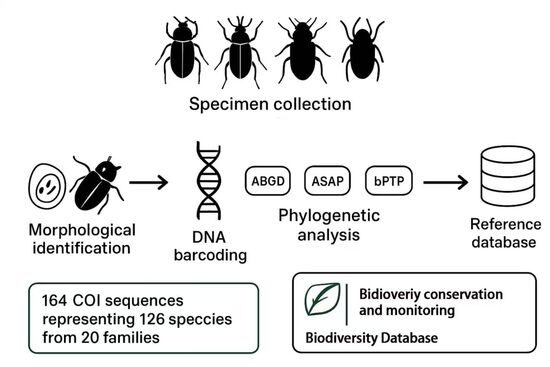
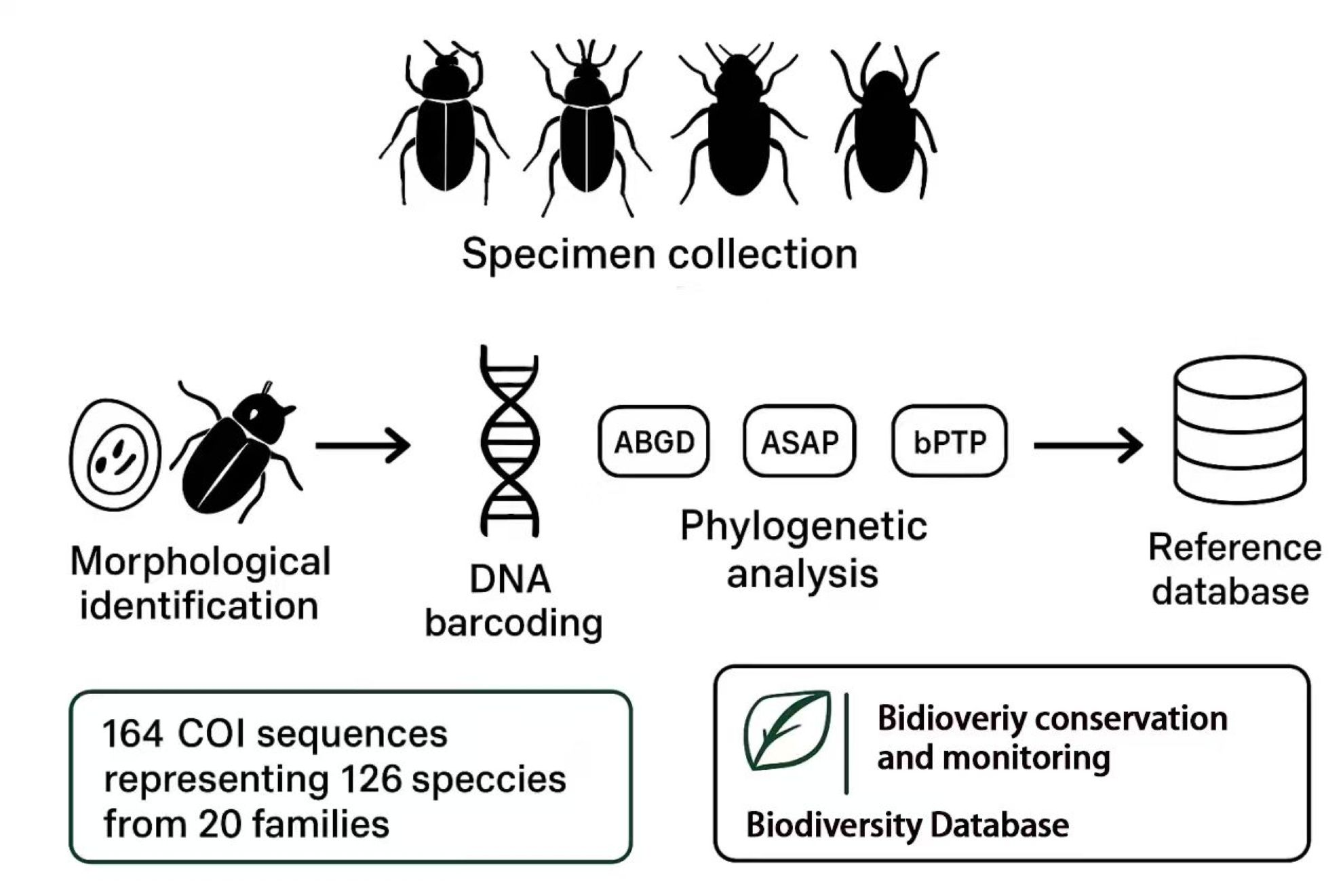
Beetles (Coleoptera) represent one of the most diverse insect groups and play vital ecological roles, yet their accurate identification is often challenging due to morphological similarities among taxa. DNA barcoding has emerged as a powerful and reliable tool for species-level identification and biodiversity monitoring. In this study, we established a local DNA barcode reference database for beetles in the Liancheng Nature Reserve, Gansu Province, China. From May to August 2024, beetle specimens were collected and identified using both morphological traits and DNA barcoding. Three species delimitation methods—Automatic Barcode Gap Discovery (ABGD), Assemble Species by Automatic Partitioning (ASAP), and Bayesian Poisson Tree Processes (bPTP)—were employed as complementary analytical tools, and phylogenetic relationships were inferred from cytochrome c oxidase subunit I (COI) sequences. A total of 164 COI sequences (650 bp) were obtained, representing 126 beetle species from 95 genera and 20 families. DNA barcoding successfully resolved morphologically ambiguous taxa, with many sequences reported here for the first time. Phylogenetic analysis revealed that species within the same genus formed cohesive clades before clustering at the family level, confirming the species-level discriminative power of the COI gene. Collectively, these findings demonstrate that COI-based DNA barcoding is a powerful complement to traditional taxonomy. The establishment of this preliminary reference database provides a valuable molecular resource for beetle identification and a practical tool to support biodiversity conservation, resource management, and long-term monitoring in the Liancheng Nature Reserve.
1. Introduction
One’s “inordinate fondness of beetles” is well justified considering the abundance and diversity of this insect order. Beetles (Coleoptera) represent one of the most diverse and ecologically significant insect orders, with remarkable adaptability that allows them to inhabit nearly all terrestrial and freshwater ecosystems [1]. They exhibit a wide range of feeding strategies, including herbivory, predation, and detritivory, underpinning an extraordinary morphological and ecological diversity.
Beetles contribute essential ecosystem services such as pollination and biological pest control, and the decomposition of organic matter for nutrient recycling. These roles make them indispensable for maintaining ecological balance while also providing substantial economic and ecological benefits [2]. Conversely, several species are notorious as pests of stored-products, agriculture, and forestry [3,4,5,6]. Given their dual ecological and economic importance, accurate taxonomic identification of beetle species is fundamental for their conservation, management, and sustainable utilization [7,8,9]. Their environmental significance extends across diverse biomes and geographic regions worldwide.
The Liancheng Nature Reserve, a forest ecosystem reserve located in the middle and lower reaches of the Datong River—a major tributary of the Yellow River Basin—serves as the focus of this study. It spans 102°26′–102°55′ E and 36°33′–36°48′ N. The Datong River flows for 35 km through the reserve, dividing it into two distinct geomorphological regions: the loess landscapes to the east and the dissected mid-mountain terrain to the west [10]. Numerous gullies extend in a fishbone-like pattern from both riverbanks. The reserve features a significant elevational gradient of 1746 m, an average annual precipitation of 419 mm, an average annual temperature of 7.4 °C, and an annual evaporation capacity of 1542 mm, forming a distinct northern temperate semi-arid climate. It has diverse soil types, mainly including grey cinnamon soil, mountain eluvial soil, mountain chestnut soil, light chestnut soil, mountain steppe soil, mountain meadow soil, and carbonate grey cinnamon soil. Vegetation types show vertical distribution, consisting sequentially of the alpine shrub-meadow zone and the mountain forest-steppe zone.
This heterogeneous terrain and unique geographical position support complex natural conditions and foster high insect biodiversity of notable conservation and scientific value [11]. Despite this, a comprehensive framework for insect identification remains lacking, and knowledge of local beetle fauna is limited. Establishing a DNA barcode reference database for beetles in this region would fill a major knowledge gap, enhance the accuracy of biodiversity assessment, and provide a solid foundation for pest monitoring and conservation planning. In short, the reserve offers an ideal pilot site with significant applied potential.
Traditional beetle identification relies heavily on specialized taxonomic expertise [12]. However, morphological approaches can be limited by cryptic species complexes, developmental variation, sexual dimorphism, or incomplete specimens. DNA barcoding offers a robust complementary method by using standardized genetic markers—typically the mitochondrial cytochrome c oxidase subunit I (COI)—which are sufficiently conserved yet variable enough to discriminate species [13,14]. This molecular approach allows for rapid, accurate, and reproducible identification without requiring specialized taxonomic training, thereby minimizing subjectivity and human error [15,16,17].
In this study, we conducted a comprehensive survey of beetle diversity in the Liancheng Nature Reserve, combining traditional morphological identification with COI-based DNA barcoding. We established a preliminary reference database to provide essential molecular data for future beetle surveys, ecological monitoring, and pest management in the reserve. This work bridges the gap between traditional taxonomy and modern molecular systematics, laying a foundation for evidence-based biodiversity conservation and resource management.
2. Materials and Methods
2.1. Sample Collection and Identification
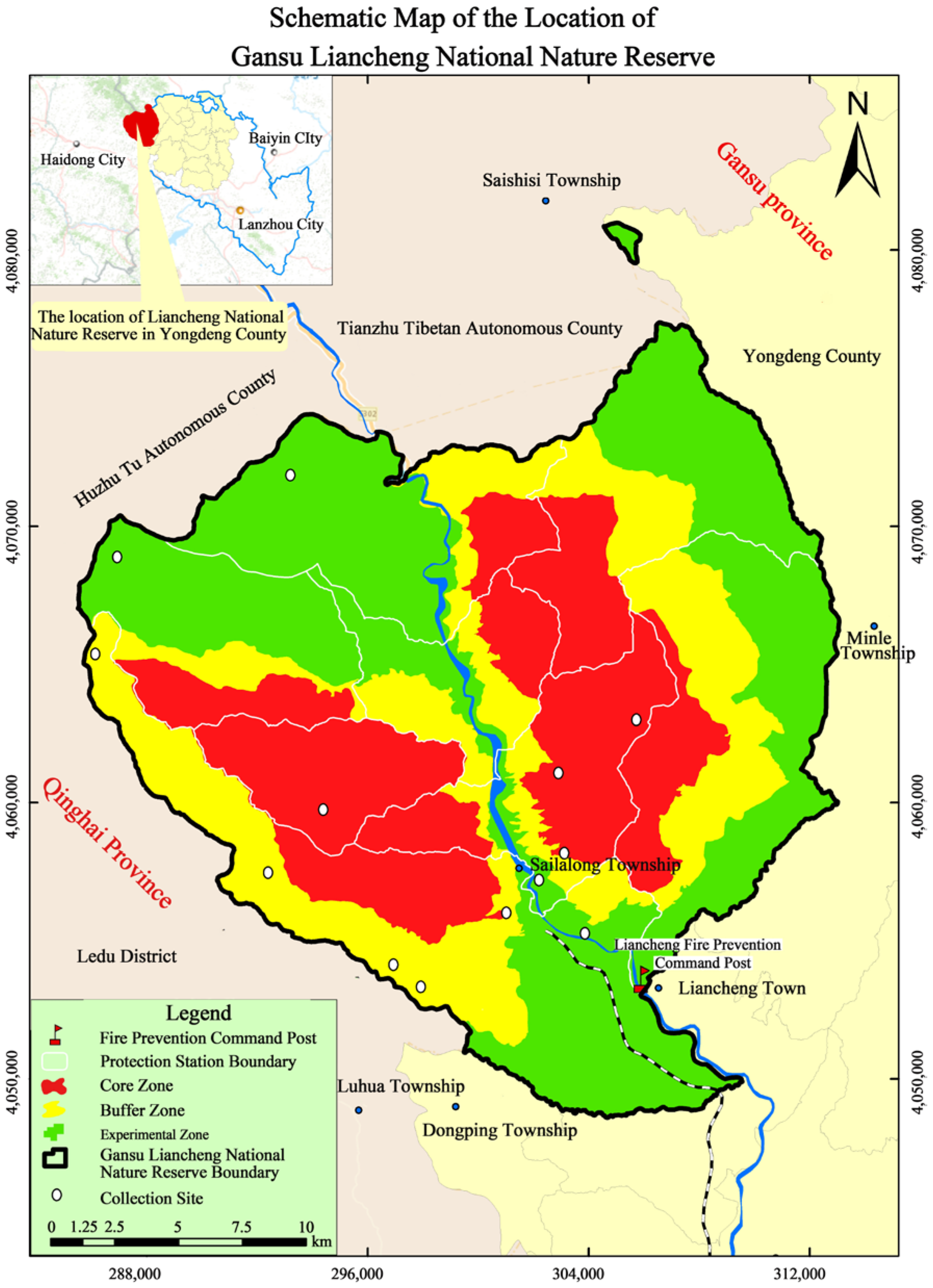
Samples were collected within the Liancheng National Nature Reserve between May and August 2024. To ensure representative coverage, a total of 13 sampling transects were established to account for variations in habitat types, elevation ranges, and levels of human disturbance. A transect map was generated using ArcGIS 10.8 software (Figure 1). The sampling line data information are available in the Supplementary Materials (Table S1). Specimens were obtained using a combination of pitfall traps, shake-out methods, and net capture. All collected samples were preserved in 95% ethanol immediately after collection and transported to the laboratory, where they were stored at −20 °C until DNA extraction [18]. Morphological identification was conducted using standard taxonomic keys and reference works, including Fauna of Beetles in Ningxia, Insect Fauna of the Qinling Mountains, Insects of Helan Mountain in Ningxia, Color Atlas of Liaoning Beetles, Fauna Sinica. Insecta, and Colored Pictorial Handbook of Ladybird Beetles in China [19,20,21,22,23,24,25]. Following identification, each specimen was photographed and cataloged. The specimen photographs data information available in the Supplementary Materials (Figure S1, File S1). All voucher specimens were deposited in the Insect Systematics Laboratory, School of Plant Protection, Gansu Agricultural University (GANU), China.
Figure 1.
Map showing the geographic location of the Gansu Liancheng National Nature Reserve, China. The inset highlights its position within the broader regional context.
2.2. DNA Extraction, Amplification, and Sequencing
Genomic DNA was extracted from approximately 25 mg of muscle tissue (from the thorax or leg) using the Ezup Column Animal Genomic DNA Purification Kit (Bioengineer, Shanghai China). The DNA extraction details are available in the Supplementary Materials (File S2). DNA quality was assessed by 1% agarose gel electrophoresis, and extracts were stored at –20 °C for subsequent use [26].
A fragment of the cytochrome c oxidase subunit I (COI) gene was amplified using the universal primers LCO1490 (5′-GGG TCA ACA AAT CAT AAA GAT ATT GG-3′) and HCO2198 (5′-TAA ACT TCA GGG TGA CCA AAA AAT CA-3′) [27,28]. PCR reactions were performed in a 50 μL volume containing 4 μL of DNA template, 25 μL of PCR mix, 2 μL of each primer, and 17 μL of sterile ddH2O. The thermal cycling program consisted of an initial denaturation at 94 °C for 5 min, followed by 35 cycles of 94 °C for 30 s, 47 °C for 30 s, and 72 °C for 2 min, and a final extension at 72 °C for 10 min. PCR products were then sent to Shanghai Sangon Biotech Co., Ltd. for bidirectional sequencing.
2.3. Data Processing
Raw sequence data were assembled and edited using SeqMan Pro 11.1.0 software [29]. The resulting sequences were compared with public sequences in the NCBI database (https://www.ncbi.nlm.nih.gov/) (accessed on 3 July 2025.) to verify species identity. Sequence characteristics—including nucleotide composition, and the number of conserved sites, variable sites, parsimony-informative sites, and haplotypes—were analyzed using MEGA v.12 [30]. Substitution saturation of COI sequences was assessed using scatterplots generated in DAMBE 7.3.32 [31].
Phylogenetic trees were constructed using both Neighbor-Joining (NJ) and Maximum Likelihood (ML) methods. The NJ tree was generated under the Kimura 2-Parameter (K2P) model in MEGA v.12. The best-fit evolutionary model was determined using PartitionFinder v.2.1.1 [32], and ML analysis was performed in IQ-TREE v.2.0.4 [33,34] under the GTR+G+I model with 1000 ultrafast bootstrap replicates [35].
2.4. Species Delimitation Analyses
Species boundaries were assessed using three molecular delimitation approaches: Automatic Barcode Gap Discovery (ABGD), Assemble Species by Automatic Partitioning (ASAP), and Bayesian Poisson Tree Processes (bPTP). The results were compared with morphological identifications.
ABGD analyses was performed online (http://galaxy.itaxotoolsweb.org/) (accessed on 25 August 2025.) with default parameters, with modifications: a relative gap width (X) of 1.0, the K2P distance metric, and a prior intraspecific divergence (P) range from 0.005 to 0.1 [36]. ASAP analysis was conducted online (http://galaxy.itaxotoolsweb.org/) (accessed on 25 August 2025.)using the K2P distance metrics, and the partition with the lowest ASAP score was selected [37]. The bPTP analysis was performed online (http://species.h-its.org) (accessed on 26 August 2025.)with the following settings: 500,000 MCMC generations, with the first 25% discarded as burn-in [38].
3. Results
3.1. DNA Barcode Datasets
Morphological identification of the 1500 collected beetle specimens yielded 126 species from 95 genera and 20 families, representing approximately 12% of China’s beetle fauna. The number of collected species data Information are available in the Supplementary Materials (Table S2). A subset of 164 specimens was selected for genetic analysis. The basic sequence characteristics are summarized in Table 1. Among the 650-base-pair region analyzed, 87 sites were conserved, 563 were variable, and 521 were parsimony-informative; 42 unique haplotypes were identified. Parsimony-informative sites accounted for 80.15% of the alignment, and no insertions or deletions were detected. The average AT content of the COI sequences was 66.4%, substantially higher than the GC content, indicating a strong AT bias. Conservation varied by codon position, and only eight sites were conserved at the second position, markedly fewer than at the first and third positions.
Table 1.
Summary of COI gene sequence characteristics for beetle species from the Liancheng Nature Reserve, including nucleotide composition and counts of conserved, variable, parsimony-informative, and singleton sites.
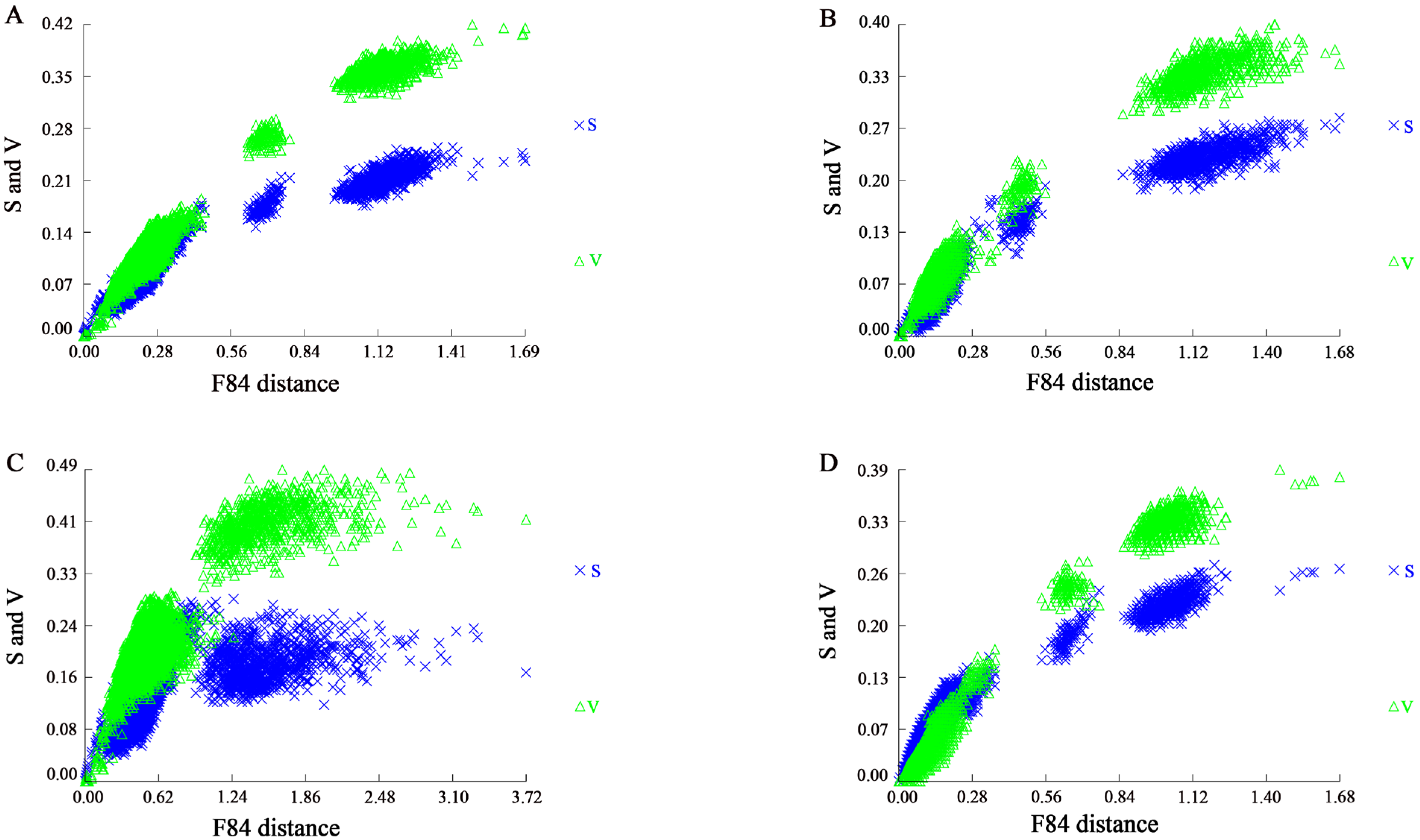
Base substitution saturation analysis (Figure 2A) revealed clear variation among the 164 COI sequences, with transversions (V) outnumbering transitions (S). The ration of transversions to transitions (V/S) increased linearly with genetic distance (Figure 2B–D). This pattern was consistent across all three codon positions, indicating that the COI gene sequences had not reached substitution saturation. Thus, sequence comparisons were unlikely to introduce bias in phylogenetic analyses, and equal weights were assigned to transitions and transversions.
Figure 2.
Substitution saturation analysis for 164 beetle (Coleoptera) COI sequences from the Gansu Liancheng National Nature Reserve. (A) Overall saturation scatterplot for all codon positions combined. (B–D) Saturation scatterplots for the first (B), second (C), and third (D) codon positions, respectively. Transitions are indicated by “S” and transversions by “V”.
3.2. DNA Barcode Analysis
3.2.1. Neighbor-Joining (NJ) Tree
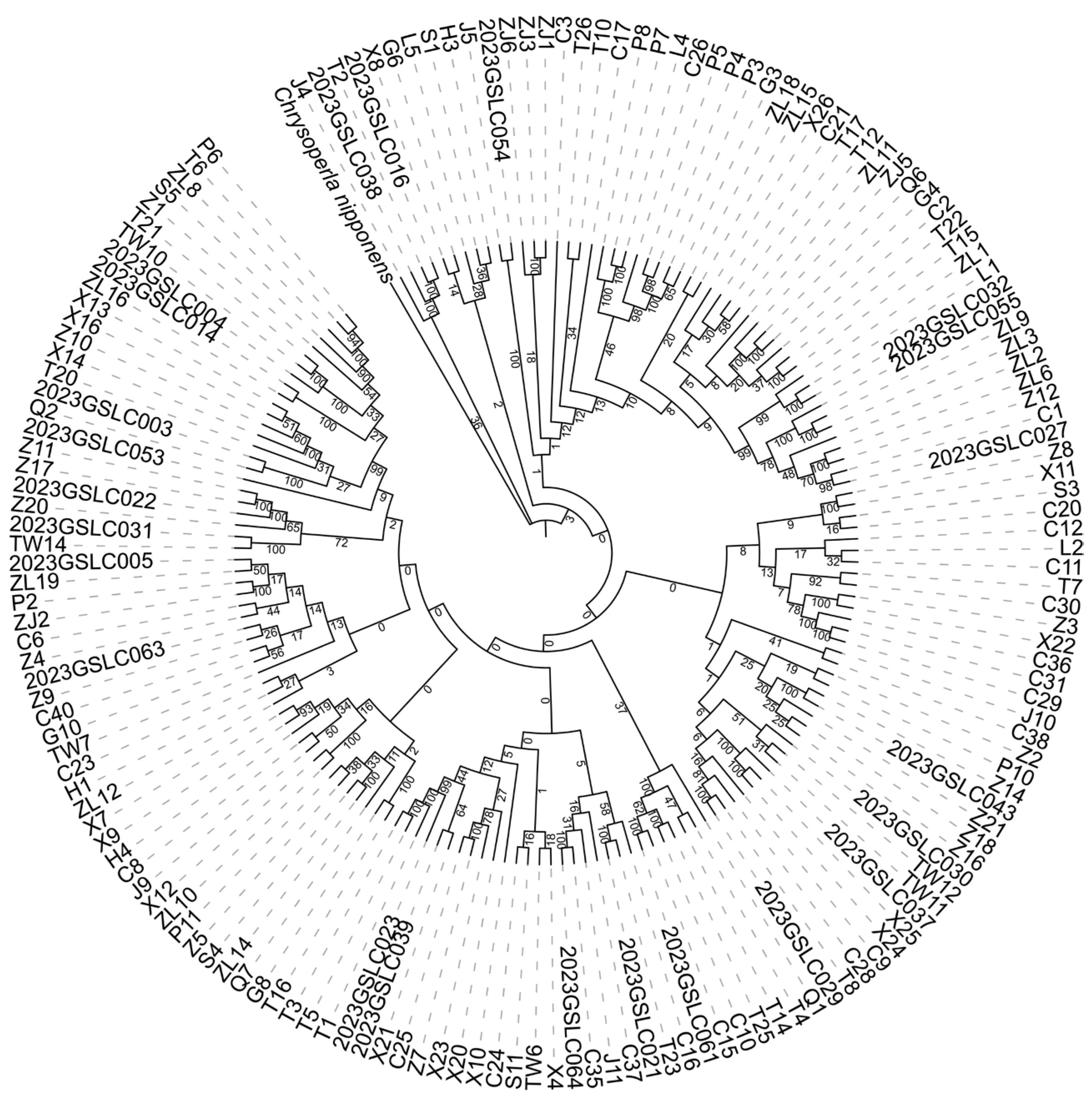
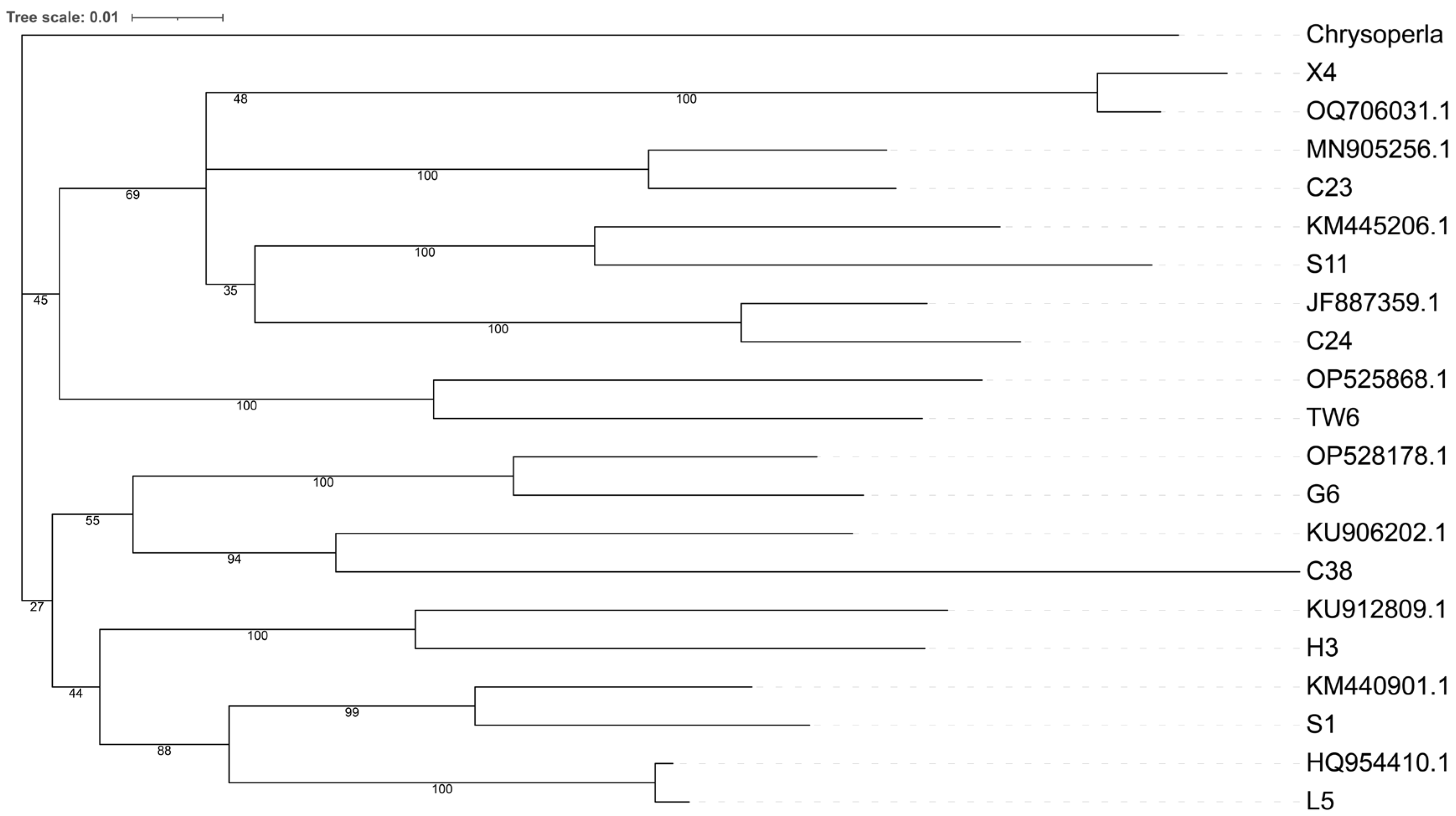
The NJ tree (Figure 3) revealed that beetle specimens generally clustered cohesively at the family level. Several topological anomalies, however, were observed: Specimens X4, C24, and S11 (Cerambycidae) and TW6 (Anthicidae) formed a distinct unexpected clade; specimen C23 (Chrysomelidae) was placed within a different family-level clade; Cordylepherus sp. (H3) grouped within the family Cleridae; and two Staphylinidae species (C38 and G6) did not cluster together.
Figure 3.
Neighbor-Joining (NJ) phylogenetic tree of beetle species from the Liancheng Nature Reserve based on COI sequences. Bootstrap support values from 1000 replicates are indicated at major nodes.
To further examine these discrepancies, we conducted additional phylogenetic analysis using closely related species obtained from NCBI. The neuropteran species Chrysoperla nipponensis (Chrysopidae; GenBank accession NC_015093.1) was included as an outgroup to root the tree and improve topological resolution. Phylogenetic reconstruction with 1000 bootstrap replicates (Figure 4) confirmed that all beetle families, along with the outgroup, formed separate, well-supported clades.
Figure 4.
Phylogenetic tree of sampled beetle species based on COI sequences, including relevant reference sequences from NCBI. The tree was rooted using Chrysoperla nipponensis (Chrysopidae, Neuroptera). Branch nodes show bootstrap support values from 1000 replicates.
3.2.2. Species Delimitation
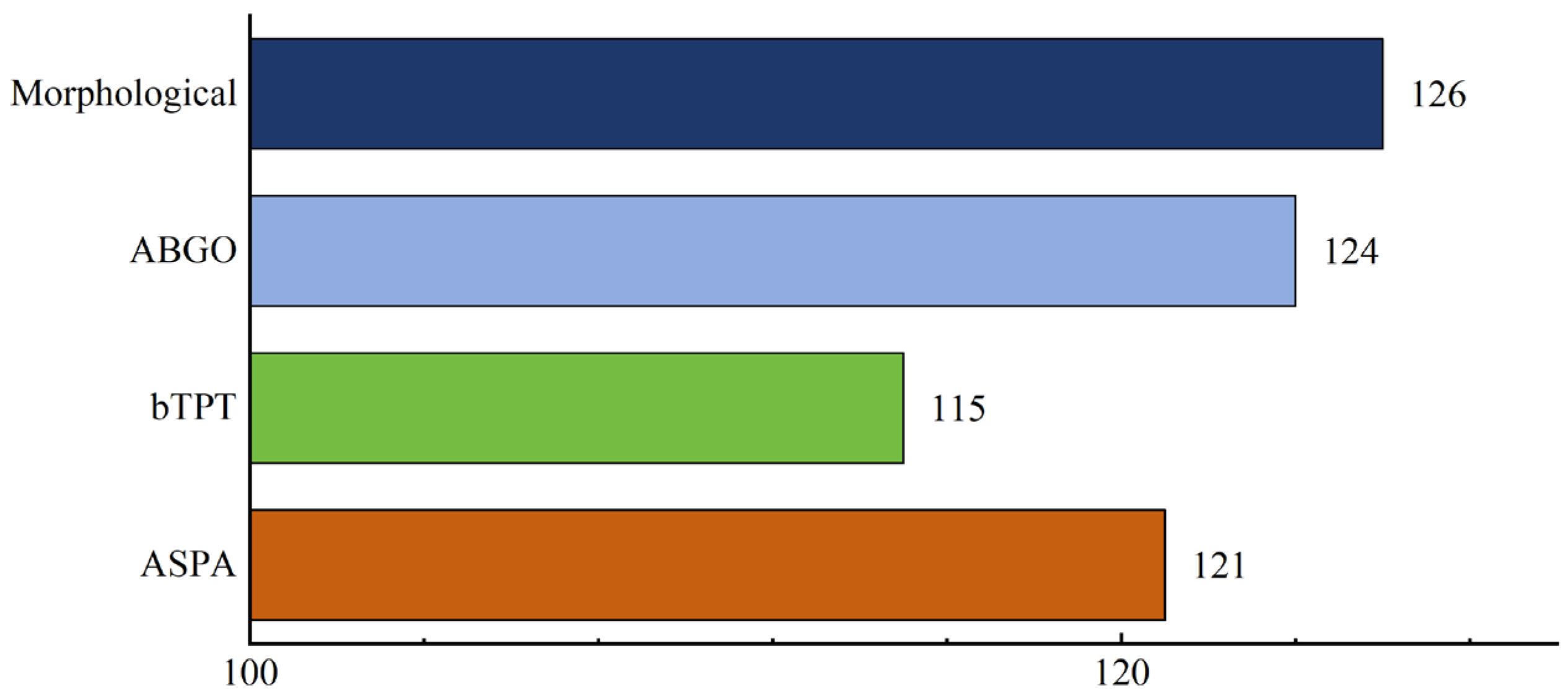
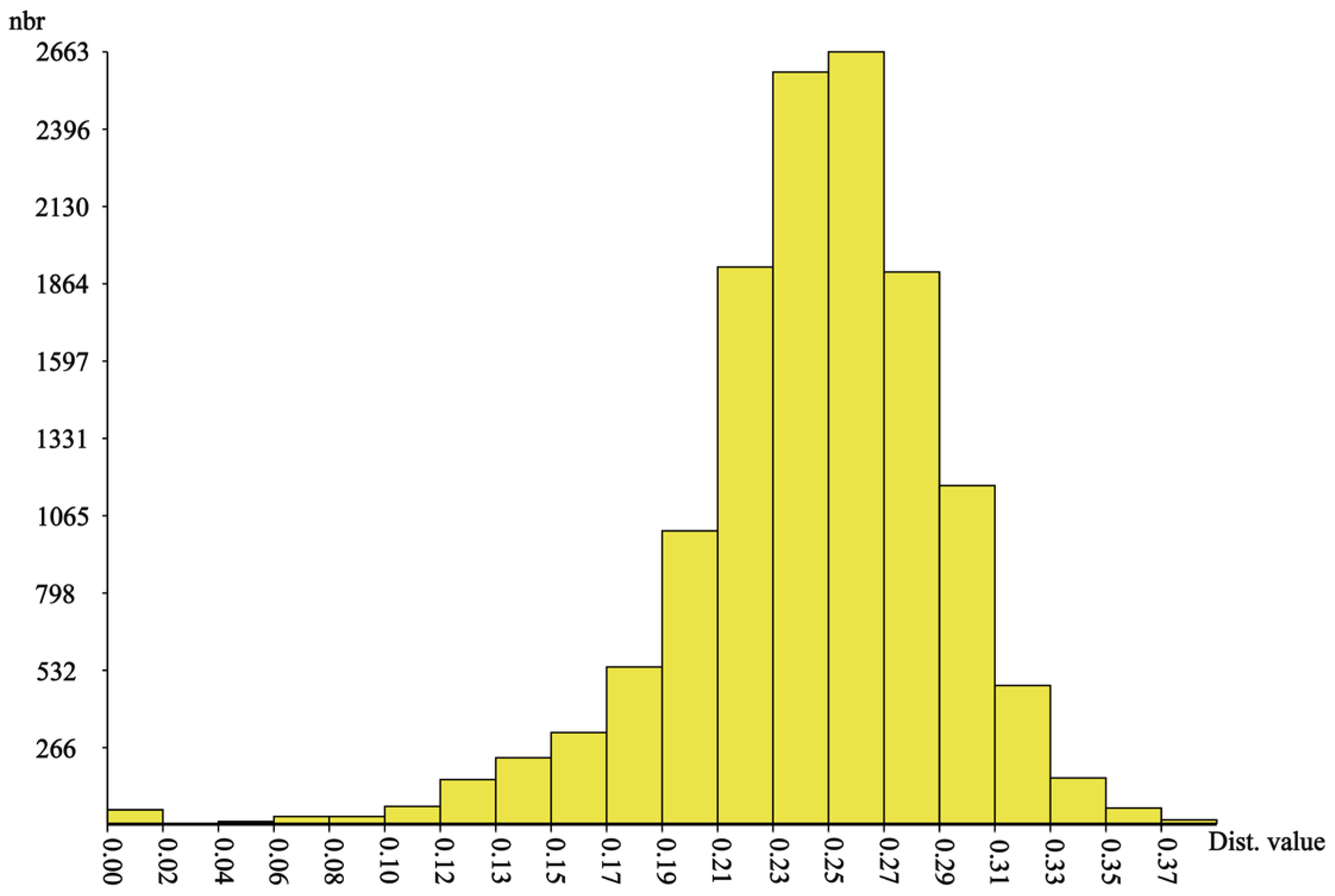
Species delimitation analyses identified 121–126 putative species, depending on the method used. The Bayesian Poisson Tree Processes (bPTP) method yielded the lowest estimate, whereas the Automatic Barcode Gap Discovery (ABGD) identified 124 putative species under a prior maximum intraspecific divergence (P) of 2.0%. The ABGD result was the most congruent with the 126 morphospecies identified. These findings collectively suggest that a genetic distance threshold of approximately 2% is suitable for the primary delineation of beetle species using COI barcoding in this dataset (Figure 5 and Figure 6).
Figure 5.
Comparison of species counts inferred by three molecular delimitation methods (ABGD, ASAP, bPTP) with counts from combined morphological and molecular identification.
Figure 6.
Histogram of pairwise genetic distances (K2P model) for beetle COI sequences, generated from Automatic Barcode Gap Discovery (ABGD) analysis.
3.3. Phylogenetic Analyses
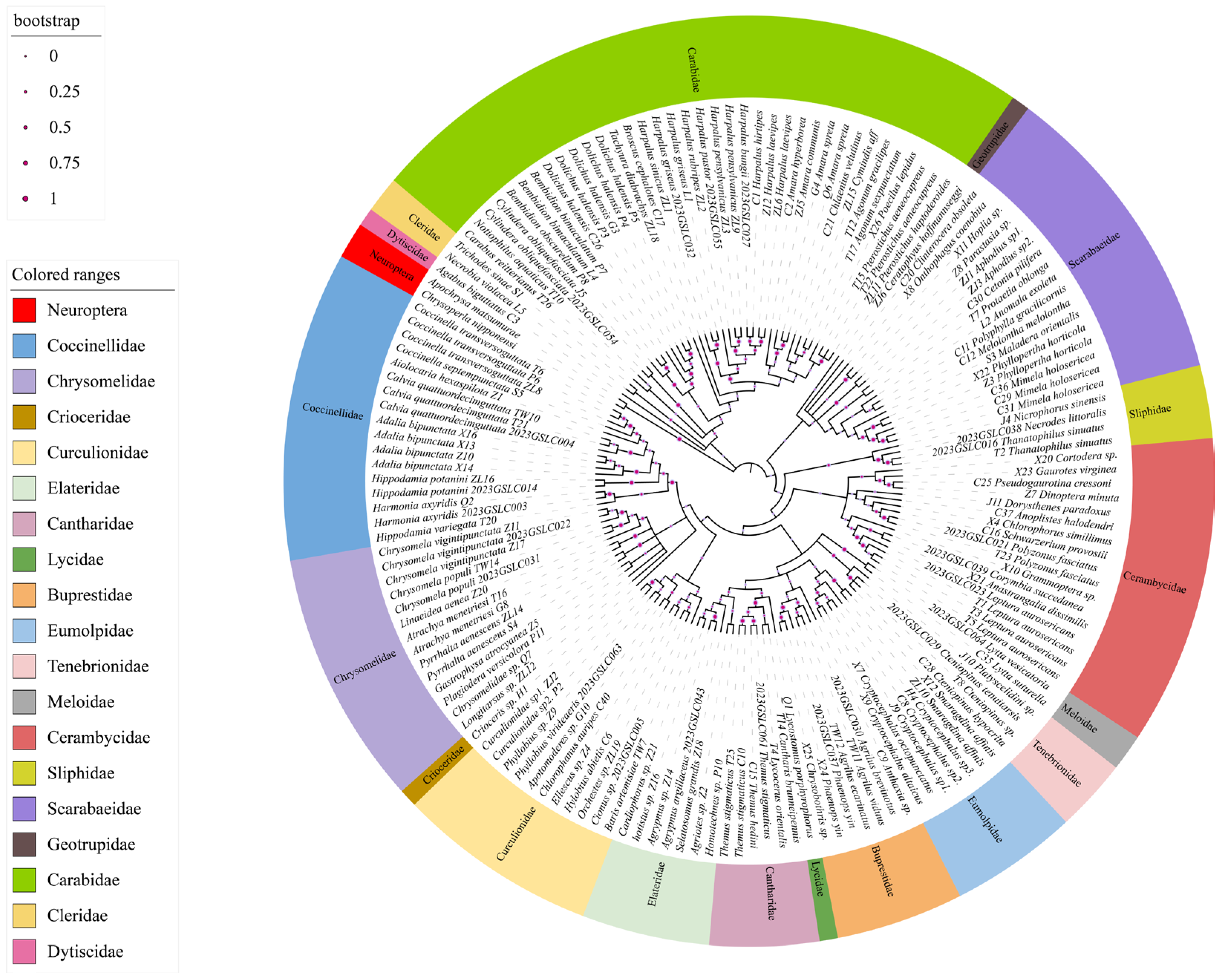
For phylogenetic reconstruction, a dataset of 156 COI sequences from the sampled beetle served as the ingroup, while two Chrysopidae sequences (GenBank accession numbers AP011623.1 and NC_015095.1) were designated as the outgroup.
The resulting phylogenetic tree (Figure 7) revealed well-supported family-level clustering with a few notable exceptions. Chrysomelidae was recovered as a paraphyletic assemblage with respect to Crioceridae and a polyphyletic assemblage with respect to Eumolpidae. Cantharidae and Lycidae formed a sister group relationship. The families Melolonthidae, Cetoniidae, Rutelidae, Copridae, and Aphodiidae were nested within Scarabaeidae, which in turn was sister to Geotrupidae.
Figure 7.
Maximum Likelihood (ML) phylogenetic tree based on COI sequences of beetle species from the Liancheng Nature Reserve. The neuropteran species Chrysoperla nipponensis and Apochrysa matsumurae (Chrysopidae) were used as the outgroup.
At the genus level, most taxa showed strong monophyly and clustered appropriately. The only exception was Chrysobothris sp. (Buprestidae), which clustered within the genus Phaenops.
4. Discussion
Accurate species identification is fundamental to biodiversity research, ecological monitoring, and pest management. Traditionally, species delimitation in Coleoptera has relied heavily on morphological traits, a process that can be unreliable due to its dependency on taxonomic expertise, well-preserved specimens, and inherent subjectivity. Our findings reinforce the necessity of integrating molecular tools with morphological methods. DNA barcoding, in particular, offers speed, accuracy, and reproducibility, making it an indispensable complement to classical taxonomy [39,40,41,42,43].
Previous studies have demonstrated the utility of the cytochrome c oxidase subunit I COI barcode in resolving taxonomic ambiguities across diverse beetle groups, including Curculionidae [44,45,46], Coccinellidae [47], and Tenebrionidae [48]. In the present study, we successfully obtained 164 COI sequences from beetles inhabiting the Liancheng Nature Reserve. The nucleotide sequence data are available in the Supplementary Materials (Sequence S1). These sequences exhibited a pronounced AT bias (66.4%), a characteristic feature of insect mitochondrial genomes [49].
Species delimitation analyses revealed some variation among the three approaches tested. ABGD identified 124 molecular operational taxonomic units (MOTUs), ASAP identified 121, and bPTP produced 115. This variation highlights inherent methodological differences: bPTP can over-splits closely related taxa, whereas ABGD tends to produce more conservative and stable partitions, especially in species-rich assemblages [47,50]. Our results indicate that ABGD provides a more reliable and consistent framework for beetle delimitation in this reserve. The observed discrepancies across methods likely reflect both underlying biological processes, such as ongoing speciation or incomplete lineage sorting, and technical differences arising from predefined genetic thresholds and distinct model assumptions [51,52].
Phylogenetic analyses further clarified beetle systematics in the region. Using the lacewing species Chrysoperla nipponensis and Apochrysa matsumurae (Neuroptera: Chrysopidae) as outgroups, we confirmed that Crioceridae and Eumolpidae represent independent lineages distinct from Chrysomelidae. Similarly, the clustering of Cteniopodini with Platyscelidini supports the current classification of Tenebrionidae. Within Scarabaeoidea, Geotrupidae was resolved as an independent family, consistent with recent taxonomic frameworks. Although the historical classification of several beetle groups has been debated, our phylogenetic results are largely congruent with taxonomic revisions proposed over recent decades [53,54,55,56,57,58].
When compared with similar DNA barcoding initiatives worldwide, our findings highlight both shared challenges and unique contributions. Studies in tropical reserves, such as those in Costa Rica and Malaysia, have likewise reported pronounced AT bias and emphasized the value of DNA barcoding for rapid biodiversity assessment in hyper-diverse ecosystems [59,60]. In agricultural landscapes, DNA barcoding has successfully revealed cryptic pest species and their natural enemies, enhancing biological control programs [61]. By contrast, our work extends these applications to a temperate forest ecosystem characterized by complex elevational gradients, establishing the first molecular reference framework for beetle fauna in the Liancheng Nature Reserve. This comparison underscores the global significance of DNA barcoding as a bridge between conservation biology, ecological research, and applied entomology.
Despite these advances, several limitations warrant consideration. Many species were represented by only a single individual, which reduces the robustness of species-level inferences regarding intraspecific variation. Moreover, our analyses relied on a single mitochondrial marker (COI). Although COI is the standard barcode for animals, exclusive dependence on one locus may constrain phylogenetic resolution, particularly among recently diverged lineages [62,63]. Incorporating additional nuclear markers, such as 28S rDNA or CAD, would enhance resolution and yield a more comprehensive understanding of beetle evolutionary relationships.
Technical constraints also affected the completeness of species identification. Some specimens could not be confidently assigned to species, reflecting inconsistencies between molecular and morphological data. The detailed identification and comparison information available in the Supplementary Materials (Table S3). This may be due to DNA degradation, contamination, primer mismatches, or incomplete representation in public databases and geographical distribution of species. These limitations highlight the importance of continually expanding barcode reference libraries and improving primer universality to maximize amplification success across diverse beetle lineages.
In summary, our findings demonstrate that DNA barcoding is a powerful and reliable tool for assessing beetle diversity in the Liancheng Nature Reserve. However, molecular data alone cannot fully replace morphological taxonomy. Instead, an integrative approach that combines molecular precision with morphological and ecological context offers the most robust path forward for beetle systematics, biodiversity monitoring, and conservation.
Looking ahead, future research should aim to combine multi-locus genomic data with ecological and biogeographic information to deepen our understanding of evolutionary relationships and species boundaries. Such integrative frameworks will not only refine taxonomic resolution but also strengthen biodiversity conservation strategies in temperate ecosystems.
5. Conclusions
This study presents the first comprehensive DNA barcode reference database for beetles in the Liancheng Nature Reserve by integrating morphological examination with COI-based molecular identification. Our findings confirm that DNA barcoding is an effective complement to traditional taxonomy, improving the accuracy of species delimitation and reinforcing existing classification frameworks. The established database provides a valuable molecular resource for future biodiversity assessment, ecological monitoring, and pest management in the reserve.
Future research should expand taxon coverage and incorporate additional genetic markers to enhance the resolution of closely related and cryptic species. This approach aligns with the international paradigm of “integrated taxonomy” and will provide robust scientific support for biodiversity conservation, the sustainable use of biological resources, and ecological security in China’s temperate forest ecosystems. Ultimately, such efforts will help integrate national biodiversity strategies with global conservation goals.
Supplementary Materials
The following supporting information can be downloaded at: https://www.mdpi.com/article/10.3390/d17120865/s1.
Author Contributions
Conceptualization, S.S., X.C. and K.C.; design of the work, S.S., X.C. and Y.D.; methodology, S.S., X.C., Y.D. and K.C.; formal analysis, K.C., P.N., X.C., R.N.C.G. and Y.D.; data curation, K.C. and P.N.; resources, K.C., P.N. and X.C.; writing—original draft preparation, K.C., S.S., and X.C.; writing—review and editing, K.C., R.N.C.G. and Y.D.; funding acquisition, X.C. and S.S. All authors have read and agreed to the published version of the manuscript.
Funding
This work was supported by the Lanzhou Youth Science and Technology Talent Innovation Project: Diversity of beetles and construction of DNA barcode library in Liancheng National Nature Reserve (No.: 2023-QN-57), and the National Key Research and Development Program: Inter Governmental Science and Technology Innovation Program (No. 2022YFE0115200).
Data Availability Statement
The authors confirm that the data supporting the findings of this study are available within the article and its Supplementary Materials.
Conflicts of Interest
The authors declare that the research was conducted in the absence of any commercial or financial relationships that could be construed as a potential conflict of interest.
References
- Cloudsley-Thompson, J.L. The Biology of the Coleoptera. J. Arid Environ. 1982, 5, 193–194. [Google Scholar] [CrossRef]
- Lekoveckaitė, A.; Jimenez, M.F.T.; Trakimas, G.; Ferenca, R.; Podėnienė, V. Tree Species Affect Beetle Diversity on the Common Deciduous Dead Wood in Lithuanian Unmanaged Forests. Forests 2023, 14, 1836. [Google Scholar] [CrossRef]
- Hernandez-Lambraño, R.; Pajaro-Castro, N.; Caballero-Gallardo, K.; Stashenko, E.; Olivero-Verbel, J. Essential Oils from Plants of the Genus Cymbopogon as Natural Insecticides to Control Stored Product Pests. J. Stored Prod. Res. 2015, 62, 81–83. [Google Scholar] [CrossRef]
- Sabier, M.; Wang, J.; Zhang, T.; Jin, J.; Wang, Z.; Shen, B.; Deng, J.; Liu, X.; Zhou, G. The Attractiveness of a Food Based Lure and Its Component Volatiles to the Stored-Grain Pest Oryzaephilus surinamensis (L.). J. Stored Prod. Res. 2022, 98, 102000. [Google Scholar] [CrossRef]
- Corrêa, A.S.; Orlando De Oliveira, L.; Braga, L.S.; Guedes, R.N.C. Distribution of the Related Weevil Species Sitophilus oryzae and S. zeamais in Brazil. Insect Sci. 2013, 20, 763–770. [Google Scholar] [CrossRef]
- MacLeod, A.; Evans, H.F.; Baker, R.H.A. An Analysis of Pest Risk from an Asian Longhorn Beetle (Anoplophora glabripennis) to Hardwood Trees in the European Community. Crop Prot. 2002, 21, 635–645. [Google Scholar] [CrossRef]
- Ottati, S.; Eberle, J.; Rulik, B.; Köhler, F.; Ahrens, D. From DNA Barcodes to Ecology: Meta-analysis of Central European Beetles Reveal Link with Species Ecology but Also to Data Pattern and Gaps. Ecol. Evol. 2022, 12, e9650. [Google Scholar] [CrossRef]
- Schirmel, J.; Gerlach, R. Conservation Value of Traditional Meadow Irrigation for Carabid Beetles. Ecol. Indic. 2022, 144, 109553. [Google Scholar] [CrossRef]
- Rana, A.; Chandel, R.S.; Sharma, K.D.; Chandel, S.S.; Verma, K.S. Phylogenetic Analysis of Melolontha and Polyphylla Beetles (Scarabaeidae: Coleoptera) from North-Western Himalaya, India. Phytoparasitica 2022, 50, 71–82. [Google Scholar] [CrossRef]
- Su, T.; Li, Q.; Wang, X.; Cui, G.; Man, Z.; Li, W.; Zhao, M. The Ecological Roles of Medium and Small Carnivores in the Terrestrial Animal Community in Liancheng National Nature Reserve, China. Animals 2022, 12, 3518. [Google Scholar] [CrossRef]
- Huang, Z.; Peng, Y.; Wang, R.; Cui, G.; Zhang, B.; Lu, N. Exploring the Rapid Assessment Method for Nature Reserve Landscape Protection Effectiveness—A Case Study of Liancheng National Nature Reserve, Gansu, China. Sustainability 2021, 13, 3904. [Google Scholar] [CrossRef]
- Wang, Z.-L.; Wang, T.-Z.; Zhu, H.-F.; Wang, Z.-Y.; Yu, X.-P. DNA Barcoding Evaluation and Implications for Phylogenetic Relationships in Ladybird Beetles (Coleoptera: Coccinellidae). Mitochondrial DNA Part A 2019, 30, 1–8. [Google Scholar] [CrossRef] [PubMed]
- Moritz, C.; Cicero, C. DNA Barcoding: Promise and Pitfalls. PLoS Biol. 2004, 2, e354. [Google Scholar] [CrossRef] [PubMed]
- Swamy, H.M.M.; Ramasamy, A.; Kalleshwaraswamy, C.M.; Adarsh, S.K. Arecanut White Grubs Leucopholis Species (Melolonthinae: Scarabaeidae: Coleoptera) Morphological, Molecular Identification and Phylogenetic Analysis. J. Asia-Pac. Entomol. 2019, 22, 880–888. [Google Scholar] [CrossRef]
- Havemann, N.; Gossner, M.M.; Hendrich, L.; Morinière, J.; Niedringhaus, R.; Schäfer, P.; Raupach, M.J. From Water Striders to Water Bugs: The Molecular Diversity of Aquatic Heteroptera (Gerromorpha, Nepomorpha) of Germany Based on DNA Barcodes. PeerJ 2018, 6, e4577. [Google Scholar] [CrossRef]
- Caesar, R.M.; Sörensson, M.; Cognato, A.I. Integrating DNA Data and Traditional Taxonomy to Streamline Biodiversity Assessment: An Example from Edaphic Beetles in the Klamath Ecoregion, California, USA. Divers. Distrib. 2006, 12, 483–489. [Google Scholar] [CrossRef]
- Thomsen, P.F.; Sigsgaard, E.E. Environmental DNA Metabarcoding of Wild Flowers Reveals Diverse Communities of Terrestrial Arthropods. Ecol. Evol. 2019, 9, 1665–1679. [Google Scholar] [CrossRef]
- Ren, J.; Ren, L.; Zhang, R. Delimiting Species, Revealing Cryptic Diversity, and Population Divergence in Qinghai-Tibet Plateau Weevils through DNA Barcoding. Ecol. Evol. 2024, 14, e11592. [Google Scholar] [CrossRef]
- Wang, X.; Yang, G. Insects of Helan Moun Tain in Ningxia; Ningxia People’s Publishing House: Ningxia, China, 2009. [Google Scholar]
- Ren, G.; Bai, X.; Bai, L. Fauna of Beetles in Ningxia; Electronic Industry Press: Beijing, China, 2019. (In Chinese) [Google Scholar]
- Yang, X.; Zhang, R.Z. Insect Fauna of the Qinling Mountains; World Publishing Xi’an Co.: Xi’an, China, 2017; Volume 7. (In Chinese) [Google Scholar]
- Wang, X.; Fang, H.; Zhang, Z. Color Atlas of Liaoning Beetles; Shenyang Science and Technology Press: Liaoning, China, 2012. (In Chinese) [Google Scholar]
- Yang, X.K. Coleoptera: Chrysomelidae: Chrysomelinae. In Fauna Sinica. Insecta; Science Press: Beijing, China, 2014; Volume 61. (In Chinese) [Google Scholar]
- Ren, G.D. Coleoptera: Tenebrionidae. I. In Fauna Sinica. Insecta; Science Press: Beijing, China, 2016; Volume 63. (In Chinese) [Google Scholar]
- Ren, S.X.; Wang, X.M.; Pang, Z.Q.; Zeng, T. Colored Pictorial Handbook of Ladybird Beetles in China; Science Press: Beijing, China, 2009. (In Chinese) [Google Scholar]
- Asha, G.; Sinu, P.A. DNA Barcode and Phylogenetic Analysis of Dung Beetles (Coleoptera: Scarabaeidae) from the Western Ghats Biodiversity Hotspot, India. Int. J. Trop. Insect Sci. 2021, 41, 1419–1425. [Google Scholar] [CrossRef]
- Vrijenhoek, R. DNA Primers for Amplification of Mitochondrial Cytochrome c Oxidase Subunit I from Diverse Metazoan Invertebrates. Mol. Mar. Biol. Biotechnol. 1994, 3, 294–299. [Google Scholar]
- Albo, J.E.; Marelli, J.-P.; Puig, A.S. Rapid Molecular Identification of Scolytinae (Coleoptera: Curculionidae). Int. J. Mol. Sci. 2019, 20, 5944. [Google Scholar] [CrossRef] [PubMed]
- Burland, T.G. DNASTAR’s Lasergene Sequence Analysis Software. In Bioinformatics Methods and Protocols; Humana Press: Totowa, NJ, USA, 1999; Volume 132, pp. 71–91. ISBN 978-1-59259-192-3. [Google Scholar]
- Kumar, S.; Stecher, G.; Tamura, K. MEGA7: Molecular Evolutionary Genetics Analysis Version 7.0 for Bigger Datasets. Mol. Biol. Evol. 2016, 33, 1870–1874. [Google Scholar] [CrossRef] [PubMed]
- Xia, X. DAMBE: Software Package for Data Analysis in Molecular Biology and Evolution. J. Hered. 2001, 92, 371–373. [Google Scholar] [CrossRef] [PubMed]
- Lanfear, R.; Frandsen, P.B.; Wright, A.M.; Senfeld, T.; Calcott, B. PartitionFinder 2: New Methods for Selecting Partitioned Models of Evolution for Molecular and Morphological Phylogenetic Analyses. Mol. Biol. Evol. 2016, 34, 772–773. [Google Scholar] [CrossRef]
- Nguyen, L.-T.; Schmidt, H.A.; Von Haeseler, A.; Minh, B.Q. IQ-TREE: A Fast and Effective Stochastic Algorithm for Estimating Maximum-Likelihood Phylogenies. Mol. Biol. Evol. 2015, 32, 268–274. [Google Scholar] [CrossRef]
- Ronquist, F.; Teslenko, M.; Van Der Mark, P.; Ayres, D.L.; Darling, A.; Höhna, S.; Larget, B.; Liu, L.; Suchard, M.A.; Huelsenbeck, J.P. MrBayes 3.2: Efficient Bayesian Phylogenetic Inference and Model Choice Across a Large Model Space. Syst. Biol. 2012, 61, 539–542. [Google Scholar] [CrossRef]
- Hoang, D.T.; Chernomor, O.; Von Haeseler, A.; Minh, B.Q.; Vinh, L.S. UFBoot2: Improving the Ultrafast Bootstrap Approximation. Mol. Biol. Evol. 2018, 35, 518–522. [Google Scholar] [CrossRef]
- Solovyeva, E.N.; Dunayev, E.A.; Nazarov, R.A.; Bondarenko, D.A.; Poyarkov, N.A. COI-Barcoding and Species Delimitation Assessment of Toad-Headed Agamas of the Genus Phrynocephalus (Agamidae, Squamata) Reveal Unrecognized Diversity in Central Eurasia. Diversity 2023, 15, 149. [Google Scholar] [CrossRef]
- Puillandre, N.; Brouillet, S.; Achaz, G. ASAP: Assemble Species by Automatic Partitioning. Mol. Ecol. Resour. 2021, 21, 609–620. [Google Scholar] [CrossRef]
- Muñoz-Tobar, S.; Caterino, M. Mountains as Islands: Species Delimitation and Evolutionary History of the Ant-Loving Beetle Genus Panabachia (Coleoptera, Staphylinidae) from the Northern Andes. Insects 2020, 11, 64. [Google Scholar] [CrossRef]
- Dasmahapatra, K.K.; Mallet, J. Taxonomy: DNA Barcodes: Recent Successes and Future Prospects. Heredity 2006, 97, 254–255. [Google Scholar] [CrossRef]
- DeSalle, R.; Goldstein, P. Review and Interpretation of Trends in DNA Barcoding. Front. Ecol. Evol. 2019, 7, 302. [Google Scholar] [CrossRef]
- Oba, Y.; Ôhira, H.; Murase, Y.; Moriyama, A.; Kumazawa, Y. DNA Barcoding of Japanese Click Beetles (Coleoptera, Elateridae). PLoS ONE 2015, 10, e0116612. [Google Scholar] [CrossRef] [PubMed]
- Kress, W.J. Plant DNA Barcodes: Applications Today and in the Future. J. Sytematics Evol. 2017, 55, 291–307. [Google Scholar] [CrossRef]
- Telfer, A.; Young, M.; Quinn, J.; Perez, K.; Sobel, C.; Sones, J.; Levesque-Beaudin, V.; Derbyshire, R.; Fernandez-Triana, J.; Rougerie, R.; et al. Biodiversity Inventories in High Gear: DNA Barcoding Facilitates a Rapid Biotic Survey of a Temperate Nature Reserve. Biodivers. Data J. 2015, 3, e6313. [Google Scholar] [CrossRef] [PubMed]
- Astrin, J.J.; Stüben, P.E.; Misof, B.; Wägele, J.W.; Gimnich, F.; Raupach, M.J.; Ahrens, D. Exploring Diversity in Cryptorhynchine Weevils (Coleoptera) Using Distance-, Character- and Tree-Based Species Delineation. Mol. Phylogenetics Evol. 2012, 63, 1–14. [Google Scholar] [CrossRef]
- Ma, Z.; Ren, J.; Zhang, R. Identifying the Genetic Distance Threshold for Entiminae (Coleoptera: Curculionidae) Species Delimitation via COI Barcodes. Insects 2022, 13, 261. [Google Scholar] [CrossRef]
- Yang, R.-S.; Ni, M.-Y.; Gu, Y.-J.; Xu, J.-S.; Jin, Y.; Zhang, J.-H.; Wang, Y.; Qin, L. Newly Emerging Pest in China, Rhynchaenusmaculosus (Coleoptera: Curculionidae): Morphology and Molecular Identification with DNA Barcoding. Insects 2021, 12, 568. [Google Scholar] [CrossRef]
- Huang, W.; Xie, X.; Huo, L.; Liang, X.; Wang, X.; Chen, X. An Integrative DNA Barcoding Framework of Ladybird Beetles (Coleoptera: Coccinellidae). Sci. Rep. 2020, 10, 10063. [Google Scholar] [CrossRef]
- Li, X.; Bai, X.; Kergoat, G.J.; Pan, Z.; Ren, G. Phylogenetics, Historical Biogeography and Molecular Species Delimitation of Gnaptorina Reitter (Coleoptera: Tenebrionidae: Blaptini). Syst. Entomol. 2021, 46, 239–251. [Google Scholar] [CrossRef]
- Dayrat, B. Towards Integrative Taxonomy: INTEGRATIVE TAXONOMY. Biol. J. Linn. Soc. 2005, 85, 407–415. [Google Scholar] [CrossRef]
- Puillandre, N.; Lambert, A.; Brouillet, S.; Achaz, G. ABGD, Automatic Barcode Gap Discovery for Primary Species Delimitation. Mol. Ecol. 2012, 21, 1864–1877. [Google Scholar] [CrossRef] [PubMed]
- Greenstone, M.H.; Vandenberg, N.J.; Hu, J.H. Barcode Haplotype Variation in North American Agroecosystem Lady Beetles (Coleoptera: Coccinellidae). Mol. Ecol. Resour. 2011, 11, 629–637. [Google Scholar] [CrossRef] [PubMed]
- Yang, Z.; Rannala, B. Bayesian Species Identification under the Multispecies Coalescent Provides Significant Improvements to DNA Barcoding Analyses. Mol. Ecol. 2017, 26, 3028–3036. [Google Scholar] [CrossRef]
- Chen, S. Evolution and Classification of the Chrysomelid Beetles. Acta Entomol. Sin. 1964, 13, 469–483. [Google Scholar]
- Chen, S.H. New Genera of Eumolpidae from Oriental Asia. Sinensia 1940, 11, 207–212. [Google Scholar]
- Reu, W.F., Jr.; Del-Claro, K. Natural History and Biology of Chlamisus Minax Lacordaire (Chrysomelidae: Chlamisinae). Neotrop. Entomol. 2005, 34, 357–362. [Google Scholar] [CrossRef]
- Chen, S. Classification of Leaf Beetles. Acta Entomol. Sin. 1973, 16, 47–56. (In Chinese) [Google Scholar] [CrossRef]
- Lawrence, J.F. Families and Subfamilies of Coleopteran (with Selected Genera, Notes, References and Data on Family-Group Names). Biol. Phylogeny Classif. Coleopt. 1995, 61, 779–1006. [Google Scholar]
- Smith, A.B.T. A Review of the Family-Group Names for the Superfamily Scarabaeoidea (Coleoptera) with Corrections to Nomenclature and a Current Classification. Coleopt. Bull. 2006, 60, 144–204. [Google Scholar] [CrossRef]
- Miga, M.; Awg Abdul Rahman, A.; Parimannan, S.; Rajandas, H.; Sitam, F.T.; Tokiman, L.; Kemalok, J.; Shamsir, M.S.; Mohd Salleh, F. Complete Mitochondrial Genome Data and Phylogenetic Analysis of the Plain Banded Awl, Hasora Vitta (Lepidoptera: Hesperiidae: Coeliadinae) from Malaysia. Mitochondrial DNA Part B 2025, 10, 528–531. [Google Scholar] [CrossRef]
- Echavarria, M.A.Z.; Barrantes, E.A.B.; Helmic, E.E.; Bartlett, C.R.; Bahder, B.W. A New Species of Planthopper in the Genus Cobacella (Hemiptera: Auchenorrhyncha: Derbidae) from Oil Palm (Elaeis Guineensis) in Costa Rica. Zootaxa 2023, 5351, 107–121. [Google Scholar] [CrossRef]
- Rubinoff, D.; Holland, B.S. Between Two Extremes: Mitochondrial DNA Is Neither the Panacea nor the Nemesis of Phylogenetic and Taxonomic Inference. Syst. Biol. 2005, 54, 952–961. [Google Scholar] [CrossRef]
- Song, H.; Buhay, J.E.; Whiting, M.F.; Crandall, K.A. Many Species in One: DNA Barcoding Overestimates the Number of Species When Nuclear Mitochondrial Pseudogenes Are Coamplified. Proc. Natl. Acad. Sci. USA 2008, 105, 13486–13491. [Google Scholar] [CrossRef]
- Ashfaq, M.; Hebert, P.D.N. DNA Barcodes for Bio-Surveillance: Regulated and Economically Important Arthropod Plant Pests. Genome 2016, 59, 933–945. [Google Scholar] [CrossRef]
Disclaimer/Publisher’s Note: The statements, opinions and data contained in all publications are solely those of the individual author(s) and contributor(s) and not of MDPI and/or the editor(s). MDPI and/or the editor(s) disclaim responsibility for any injury to people or property resulting from any ideas, methods, instructions or products referred to in the content. |
© 2025 by the authors. Licensee MDPI, Basel, Switzerland. This article is an open access article distributed under the terms and conditions of the Creative Commons Attribution (CC BY) license (https://creativecommons.org/licenses/by/4.0/).