




Journal Menu
► ▼ Journal Menu-
- Cells Home
- Aims & Scope
- Editorial Board
- Reviewer Board
- Topical Advisory Panel
- Instructions for Authors
- Special Issues
- Topics
- Sections & Collections
- Article Processing Charge
- Indexing & Archiving
- Editor’s Choice Articles
- Most Cited & Viewed
- Journal Statistics
- Journal History
- Journal Awards
- Society Collaborations
- Conferences
- Editorial Office
Journal Browser
► ▼ Journal BrowserNeed Help?
Announcements
23 April 2026
Meet Us at the 2026 Annual Congress of the European Association for Cancer Research, 8–11 June 2026, Budapest, Hungary
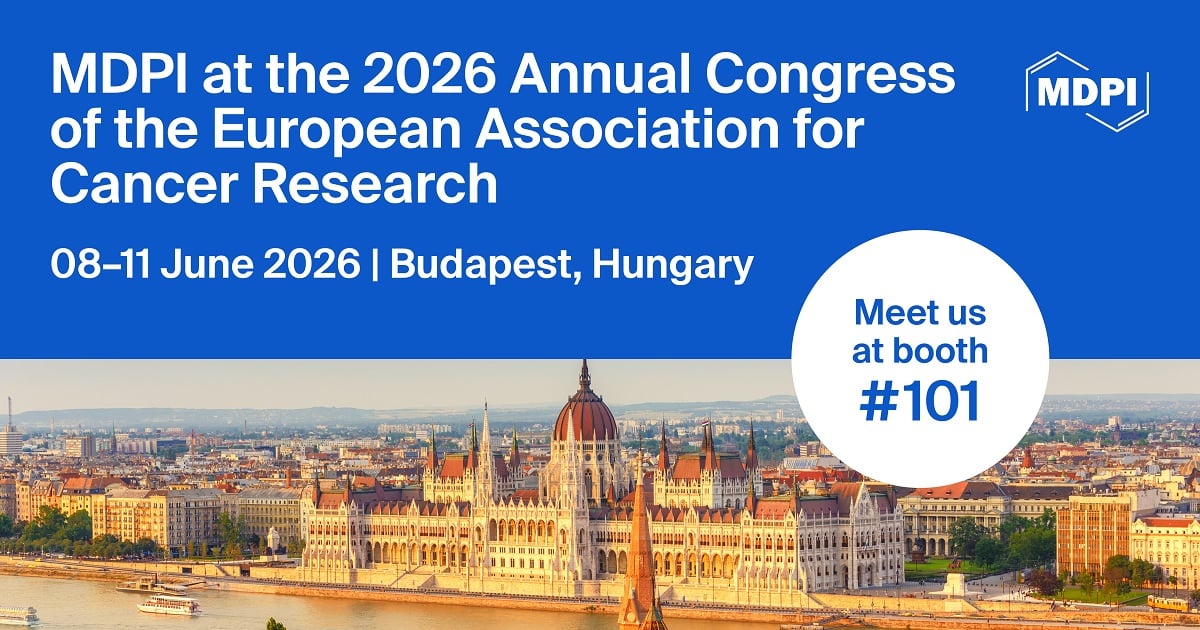
Conference: The 2026 Annual Congress of the European Association for Cancer Research
Date: 8–11 June 2026
Location: Budapest, Hungary
We are pleased to announce that MDPI will participate in the 2026 Annual Congress of the European Association for Cancer Research (EACR 2026), held in Budapest, Hungary, from 8 to 11 June 2026.
The 2026 Annual Congress of the European Association for Cancer Research (EACR 2026) is a four-day congress dedicated to basic, preclinical and translational cancer research across a wide range of topics. The conference will highlight the latest research and bring together the cancer research community to inspire innovation and build knowledge, connections and collaborations.
The following MDPI journals will be represented at the conference:
- Cancers;
- JPM;
- Current Oncology;
- Onco;
- JCM;
- Cells;
- Diseases;
- Epigenomes;
- CIMB;
- Biologics;
- Life;
- Gastrointestinal Disorders;
- Clinics and Practice;
- DNA;
- IJMS;
- Diagnostics.
If you are planning to attend the above conference, please feel free to start an online conversation with us. Our delegates look forward to meeting you in person at booth #101 and answering any questions that you may have. For more information about the conference, please visit the following website: https://2026.eacr.org/.
22 April 2026
Meet Us at the NWO Life 2026, 28–29 May 2026, Egmond aan Zee, the Netherlands

MDPI will be attending NWO Life 2026, which will be held from 28 to 29 May 2026 in Egmond aan Zee, the Netherlands.
NWO Life is an annual scientific conference for life scientists, designed to inspire and connect researchers across disciplines. Attendees can engage with sessions led by world-leading keynote speakers and researchers, while also sharing their own work with a diverse community spanning all career stages.
The conference offers a dynamic platform to explore scientific knowledge beyond one’s immediate field. Over the course of two days, the programme is structured around a range of topics tailored to different research backgrounds, encouraging interdisciplinary learning and the exchange of fresh perspectives.
NWO Life supports researchers at every stage of their careers. Early career scientists gain valuable experience by presenting their research, while established researchers can discover new directions and build collaborations through plenary talks and poster sessions. With ample networking opportunities throughout, the conference fosters meaningful connections within the life sciences community.
The following MDPI journals will be represented at the conference:
- Life;
- Applied Biosciences;
- Organoids;
- MPs;
- JDB;
- Metabolites;
- Cells;
- IJERPH;
- Stresses;
- BioMedInformatics.
If you are planning to attend this conference, please feel free to stop by our booth and start a conversation with us. Our delegates look forward to meeting you in person and answering any questions that you may have. For more information about the conference, please visit the following link: https://nwolife.nl/.
20 April 2026
Cells | Editor’s Choice Articles Published in 2025 in the “Cells of the Cardiovascular System” Section

We invite you to read the Editor’s Choice Articles published in the journal Cells (ISSN: 2073-4409). These papers present the latest insights and findings, and we trust they will infuse fresh inspiration and innovative thinking into your new research endeavors.
1. “Synthetic Small-Molecule Ligands Targeted to Adenosine Receptors: Is There Potential Towards Ischemic Heart Disease?”
by Qi Xu, Yaw Nana Opoku, Kalwant S. Authi and Agostino Cilibrizzi
Cells 2025, 14(15), 1219; https://doi.org/10.3390/cells14151219
Available online: https://www.mdpi.com/2073-4409/14/15/1219
2. “Short- and Long-Term Endothelial Inflammation Have Distinct Effects and Overlap with Signatures of Cellular Senescence”
by Barbora Belakova, José Basílio, Manuel Campos-Medina, Anna F. P. Sommer, Adrianna Gielecińska, Ulrike Resch and Johannes A. Schmid
Cells 2025, 14(11), 806; https://doi.org/10.3390/cells14110806
Available online: https://www.mdpi.com/2073-4409/14/11/806
3. “Platelet-Derived Soluble CD40L and Its Impact on Immune Modulation and Anti-IL6R Antibody Treatment Outcome in Rheumatoid Arthritis”
by Carlos Zamora, Cesar Diaz-Torne, Maria Angels Ortiz, Patricia Moya, Hye Sang Park, Concepció Pitarch, Elisabet Cantó, Ruben Osuna-Gomez, Maria Mulet, Maisa Garcia-Arguinzonis et al.
Cells 2025, 14(9), 625; https://doi.org/10.3390/cells14090625
Available online: https://www.mdpi.com/2073-4409/14/9/625
4. “The Role of Oxidative Stress and Inflammation in the Pathogenesis and Treatment of Vascular Dementia”
by Aseel Y. Altahrawi, Antonisamy William James and Zahoor A. Shah
Cells 2025, 14(8), 609; https://doi.org/10.3390/cells14080609
Available online: https://www.mdpi.com/2073-4409/14/8/609
5. “Zebrafish as a Versatile Model for Cardiovascular Research: Peering into the Heart of the Matter”
by Ramcharan Singh Angom, Meghna Singh, Huzaifa Muhammad, Sai Manasa Varanasi and Debabrata Mukhopadhyay
Cells 2025, 14(7), 531; https://doi.org/10.3390/cells14070531
Available online: https://www.mdpi.com/2073-4409/14/7/531
6. “Blockade of HSP70 Improves Vascular Function in a Mouse Model of Type 2 Diabetes”
by Mendoza Ochoa, Valentina, Amanda Almeida de Oliveira and Kenia Pedrosa Nunes
Cells 2025, 14(6), 424; https://doi.org/10.3390/cells14060424
Available online: https://www.mdpi.com/2073-4409/14/6/424
7. “Metaboloepigenetics: Role in the Regulation of Flow-Mediated Endothelial (Dys)Function and Atherosclerosis”
by Francisco Santos, Hashum Sum, Denise Cheuk Lee Yan and Alison C. Brewer
Cells 2025, 14(5), 378; https://doi.org/10.3390/cells14050378
Available online: https://www.mdpi.com/2073-4409/14/5/378
8. “Pro-Fibrotic Macrophage Subtypes: SPP1+ Macrophages as a Key Player and Therapeutic Target in Cardiac Fibrosis?”
by Moritz Uhlig, Sebastian Billig, Jan Wienhold and David Schumacher
Cells 2025, 14(5), 345; https://doi.org/10.3390/cells14050345
Available online: https://www.mdpi.com/2073-4409/14/5/345
9. “The Link Between Venous and Arterial Thrombosis: Is There a Role for Endothelial Dysfunction?”
by Marco Paolo Donadini, Francesca Calcaterra, Erica Romualdi, Roberta Ciceri, Assunta Cancellara, Corrado Lodigiani, Monica Bacci, Silvia Della Bella, Walter Ageno and Domenico Mavilio
Cells 2025, 14(2), 144; https://doi.org/10.3390/cells14020144
Available online: https://www.mdpi.com/2073-4409/14/2/144
10. “Defined Composition of Culture Media Promotes Rodent Neonatal Cardiomyocyte Maturation and Enables Functional Neuro-Cardiac Co-Culture”
by Giulia Borile, Lolita Dokshokova, Nicola Moro, Antonio Campo, Valentina Prando, Jose L. Sanchez-Alonso, Julia Gorelik, Giuseppe Faggian, Marco Mongillo and Tania Zaglia
Cells 2025, 14(18), 1434; https://doi.org/10.3390/cells14181434
Available online: https://www.mdpi.com/2073-4409/14/18/1434
16 April 2026
Meet Us at the 63rd ERA Congress, 3–6 June 2026, Glasgow, Scotland, UK

MDPI is pleased to announce our participation in the 63rd ERA Congress, which will be held from 3 to 6 June 2026 in Glasgow, Scotland, UK.
The 63rd ERA Congress will revolve around the theme of “Open your mind”. The seven main tracks can be explored via the following link: https://www.era-online.org/events/glasgow-2026/scientific-programme/.
The following MDPI journals will be represented:
- Biomedicines;
- Journal of Clinical Medicine;
- Kidney and Dialysis;
- Cells;
- Anesthesia Research;
- Toxins;
- Diseases;
- Clinics and Practice;
- Diabetology;
- Transplantology;
- Medical Sciences;
- Journal of Molecular Pathology.
If you are attending 63rd ERA Congress, we invite you to visit us at our booth #D.250. Our representatives will be available to discuss publishing opportunities, the benefits of open access, and answer any questions that you may have.
For more information about the conference, please visit its official website at https://www.era-online.org/events/glasgow-2026/.
16 April 2026
MDPI’s Newly Launched Journals in the First Quarter of 2026
Our portfolio of journals available for publishing up-to-date research in immediate open access format has been further expanded. In the first quarter of 2026, nine new journals released their inaugural issues and three transferred journals released their first issue as part of MDPI, covering the subjects of clinical medicine, chemistry, computer science & mathematics, engineering, environment & ecology, and social sciences & psychology.
We extend our gratitude to the Editors-in-Chief, Associate Editors, and Editorial Board Members who will shape the future course of these brand-new journals. Each journal is dedicated to upholding strong editorial standards through a thorough peer review process, ensuring impactful open access scholarship.
Please feel free to browse and discover more about the new journals below.
|
New Journals |
Founding Editor(s)-in-Chief |
Journal Topics (Selected) |
|
|
Prof. Dr. Matt Oehlschlaeger, |
AI-based chemical data analysis, prediction, and discovery; AI-enabled chemical reaction prediction, synthesis planning, and retrosynthesis; AI in bioorganic chemistry and chemical biology; digital twins and simulation of chemical processes; AI-powered chemical education and pedagogy | |
|
|
Prof. Dr. Guang Jia, |
occupational hazards and exposure science; occupational health effects and susceptibility; occupational risk assessment and management; occupational health intervention, promotion, and policy | |
|
|
Prof. Dr. Alessandro Miani, |
environmental exposures and health; the built environment and public health; One Health approach; environmental justice and health equity; environmental policies and interventions | |
|
|
Prof. Dr. Miriam H. A. Bopp, |
neuroimaging technology and tool; multimodal neuroimaging integration and analysis; |
|
|
Prof. Dr. Raul A. Urrutia, |
personalized translational and clinical oncology research that contribute to a deeper understanding of cancer diagnoses, prognoses, prevention, and treatment specifically for individual patients | |
|
|
Prof. Dr. Pierre Boulanger, |
AI in disease detection, diagnosis, prediction, and treatment; medical informatics; AI in genomics and precision medicine; AI in drug discovery and development; |
|
|
Prof. Dr. Zhaokui Wang, |
astrodynamics; spacecraft technology; satellite technology; space transportation; space vehicle design, propulsion, and avionics; space energy, power and propulsion | |
|
|
Prof. Dr. Richard J Hauer, |
park design, planning, and evaluation; park and art; park, industrialization, urbanization, and civilization; park and education; park and smart society; park role in SDGs; park services for humans | |
|
|
Prof. Dr. Stacey L. Connaughton, |
conflict resolution; peacebuilding; peacemaking; mediation, reconciliation, and transitional justice; sustaining peace | |


|
Transferred Journals |
Editor(s)-in-Chief |
Journal Topics (Selected) |
|
|
Prof. Dr. Gianluigi Vendemiale, |
physiology and pathology of aging; biogerontology; epidemiology; clinical geriatrics; pharmacology; geriatric nursing | |
|
|
Prof. Dr. Michele Maffia, |
cellular and developmental biology; physiology, pathophysiology and endocrinology; diagnostic tools, therapies and public health | |
|
|
Dr. Warren S. Joseph, |
foot and ankle medicine; podiatric medicine | |


We would like to thank everyone who has supported the development of open access publishing. If you would like to create a new journal, you are welcome to send an application here or contact the New Journal Committee (newjournal-committee@mdpi.com).
16 April 2026
Cells | Explore Papers and Special Issues on Alzheimer’s Mechanisms

We are delighted to share a collection of papers on Alzheimer’s mechanisms published in Cells (ISSN: 2073-4409). In addition, we would like to highlight several Special Issues related to this topic that are currently open for submission.
1. “Non-Coding RNAs in Neurological and Neuropsychiatric Disorders: Unraveling the Hidden Players in Disease Pathogenesis”
by Mirolyuba Simeonova Ilieva
Cells 2024, 13(12), 1063; https://doi.org/10.3390/cells13121063
Available online: https://www.mdpi.com/2073-4409/13/12/1063
2. “Epigenetic Changes in Alzheimer’s Disease: DNA Methylation and Histone Modification”
by Laura Maria De Plano, Alessandra Saitta, Salvatore Oddo and Antonella Caccamo
Cells 2024, 13(8), 719; https://doi.org/10.3390/cells13080719
Available online: https://www.mdpi.com/2073-4409/13/8/719
3. “From Genetics to Neuroinflammation: The Impact of ApoE4 on Microglial Function in Alzheimer’s Disease”
by Daniela Dias, Camila Cabral Portugal, João Relvas and Renato Socodato
Cells 2024, 14(4), 243; https://doi.org/10.3390/cells14040243
Available online: https://www.mdpi.com/2073-4409/14/4/243
4. “Modulating Neuroinflammation as a Prospective Therapeutic Target in Alzheimer’s Disease”
by Eunshil Lee and Yongmin Chang
Cells 2024, 14(3), 168; https://doi.org/10.3390/cells14030168
Available online: https://www.mdpi.com/2073-4409/14/3/168
5. “Lipidomic Analysis of Plasma Extracellular Vesicles Derived from Alzheimer’s Disease Patients”
by Marios G. Krokidis, Krishna A. Pucha, Maja Mustapic, Themis P. Exarchos, Panagiotis Vlamos and Dimitrios Kapogiannis
Cells 2024, 13(8), 702; https://doi.org/10.3390/cells13080702
Available online: https://www.mdpi.com/2073-4409/13/8/702
6. “Neuroprotective Effects of Metformin Through the Modulation of Neuroinflammation and Oxidative Stress”
by Sarah Reed, Equar Taka, Selina Darling-Reed and Karam F. A. Soliman
Cells 2025, 14(14), 1064; https://doi.org/10.3390/cells14141064
Available online: https://www.mdpi.com/2073-4409/14/14/1064
7. “Neuroprotection of Cholinergic Neurons with a Tau Aggregation Inhibitor and Rivastigmine in an Alzheimer’s-like Tauopathy Mouse Model”
by Maciej Zadrozny, Patrycja Drapich, Anna Gasiorowska-Bien, Wiktor Niewiadomski, Charles R. Harrington, Claude M. Wischik, Gernot Riedel and Grazyna Niewiadomska
Cells 2024, 13(7), 642; https://doi.org/10.3390/cells13070642
Available online: https://www.mdpi.com/2073-4409/13/7/642
8. “Porphyromonas gingivalis-Lipopolysaccharide Induced Caspase-4 Dependent Noncanonical Inflammasome Activation Drives Alzheimer’s Disease Pathologies”
by Ambika Verma, Gohar Azhar, Pankaj Patyal, Xiaomin Zhang and Jeanne Y. Wei
Cells 2025, 14(11), 804; https://doi.org/10.3390/cells14110804
Available online: https://www.mdpi.com/2073-4409/14/11/804
9. “Neuro-Cells Mitigate Amyloid Plaque Formation and Behavioral Deficits in the APPswe/PS1dE9 Model of Alzheimer Disease While Also Reducing IL-6 Production in Human Monocytes”
by Johannes de Munter, Kirill Chaprov, Ekkehard Lang, Kseniia Sitdikova, Erik Ch. Wolters, Evgeniy Svirin, Aliya Kassenova, Andrey Tsoy, Boris W. Kramer, Sholpan Askarova et al.
Cells 2025, 14(15), 1168; https://doi.org/10.3390/cells14151168
Available online: https://www.mdpi.com/2073-4409/14/15/1168
10. “PF-04691502, a PI3K/mTOR Dual Inhibitor, Ameliorates AD-like Pathology in a Mouse Model of AD”
by Marika Lanza, Rossella Basilotta, Antonella Caccamo, Giovanna Casili, Alberto Repici, Salvatore Oddo and Emanuela Esposito
Cells 2025, 14(18), 1474; https://doi.org/10.3390/cells14181474
Available online: https://www.mdpi.com/2073-4409/14/18/1474
Relevant Special Issues:
“Tau-Targeted Treatment of Alzheimer’s Disease”
Guest Editors: Prof. Dr. Amritpal Mudher, Dr. Katerina Papanikolopoulou, Dr. Lovesha Sivanantharajah and Prof. Dr. Efthimios M. C. Skoulakis
Deadline for manuscript submissions: 31 July 2026

“Function of Stress Granules in Normal Cells and in Alzheimer’s Disease”
Guest Editors: Prof. Dr. Paul D. Coleman and Prof. Benjamin Wolozin
Deadline for manuscript submissions: 20 August 2026

“Latest Advances in Molecular and Cellular Mechanisms of Alzheimer’s Disease in Canada”
Guest Editor: Prof. Dr. Jacques P. Tremblay
Deadline for manuscript submissions: 10 October 2026

9 April 2026
Cells Outstanding Reviewer Award—Winners Announced

We are pleased to announce that the Cells 2025 Outstanding Reviewer Award has been awarded to the following recipients, selected by the Editor-in-Chief, Prof. Dr. Cord Brakebusch. Cells’ (ISSN: 2073-4409) Editorial Board and editorial team would also like to acknowledge the time and effort dedicated by all reviewers in evaluating manuscripts submitted to the journal. Their contributions are crucial to maintaining Cells’ reputation for high quality and a quick turnaround.
First prize:
CHF 500, a free voucher for article processing fees valid for one year and an electronic certificate.
Winner:
- Dr. Zhidong Zhou, Duke-NUS Graduate Medical School, Singapore.
Second prize:
A free voucher for article processing fees valid for one year and an electronic certificate.
Winners:
- Dr. Alessio Reggio, Saint Camillus International University of Health Sciences, Italy;
- Dr. Yasuhiro Kosuge, Nihon University, Japan.
Cells Editorial Office
2 April 2026
2026 Tu Youyou Award—Open for Nominations

We are delighted to announce that nominations are now open for the 2026 Tu Youyou Award. Named after Nobel Laureate Tu Youyou, whose discovery of artemisinin has saved millions of lives, this award recognizes researchers whose work advances the fields of natural products chemistry and medicinal chemistry, while also contributing to human health.
Prize
– CHF 100,000;
– A medal;
– A certificate.
The monetary prize will be shared equally should there be multiple recipients.
Who May Be Nominated?
– Scientists with outstanding achievements and contributions in the fields of natural products chemistry and medicinal chemistry.
Nominees must be individuals; team or group nominations are not permitted. Nominations are valid only for the current award cycle.
Who May Submit a Nomination?
– The director of the nominee’s host research institution or recognized scientists within the field.
Self-nominations will not be considered.
Nomination Materials
– A biographical sketch;
– A detailed description of the nominee’s contributions;
– 5–10 representative academic publications;
– A list of academic honors, awards, and funded projects;
– A nomination letter signed by two nominators.
How to Submit?
Submit nominations online via the following link: https://tuyouyouprize.org/nomination
Important Dates
– Nomination Deadline: 31 October 2026
– Winner Announcement: March 2027
For further information, please visit the Tu Youyou Award website (https://tuyouyouprize.org/). For any inquiries, please contact the Tu Youyou Award Team at tuyouyouaward@mdpi.com.
1 April 2026
Cells | Explore Papers and Special Issues on Autophagy

We are delighted to share a collection of papers on autophagy published in our journal Cells (ISSN: 2073-4409). These articles cover a range of critical topics, including the development, cancer, neurodegenerative diseases and other disorders.
In addition, we would like to highlight several Special Issues related to this topic that are currently open for submission.
1. “Effect of the Ketone Body, D-β-Hydroxybutyrate, on Sirtuin2-Mediated Regulation of Mitochondrial Quality Control and the Autophagy–Lysosomal Pathway”
by Juan Carlos Gómora-García, Teresa Montiel, Melanie Hüttenrauch, Ashley Salcido-Gómez, Lizbeth García-Velázquez, Yazmin Ramiro-Cortés, Juan Carlos Gomora, Susana Castro-Obregón and Lourdes Massieu
Cells 2023, 12(3), 486; https://doi.org/10.3390/cells12030486
Available online: https://www.mdpi.com/2073-4409/12/3/486
2. “The Role of Bcl-2 and Beclin-1 Complex in “Switching” between Apoptosis and Autophagy in Human Glioma Cells upon LY294002 and Sorafenib Treatment”
by Adrian Zając, Aleksandra Maciejczyk, Joanna Sumorek-Wiadro, Kamil Filipek, Kamil Deryło, Ewa Langner, Jarosław Pawelec, Magdalena Wasiak, Mateusz Ścibiorski, Wojciech Rzeski et al
Cells 2023, 12(23), 2670; https://doi.org/10.3390/cells12232670
Available online: https://www.mdpi.com/2073-4409/12/23/2670
3. “Inhibition of Autophagy by Berbamine Hydrochloride Mitigates Tumor Immune Escape by Elevating MHC-I in Melanoma Cells”
by Jinhuan Xian, Leilei Gao, Zhenyang Ren, Yanjun Jiang, Junjun Pan, Zheng Ying, Zhenyuan Guo, Qingsong Du, Xu Zhao, He Jin et al.
Cells 2024, 13(18), 1537; https://doi.org/10.3390/cells13181537
Available online: https://www.mdpi.com/2073-4409/13/18/1537
4. “Discovery of Evolutionary Loss of the Ubiquitin-like Autophagy-Related ATG12 System in a Lineage of Apicomplexa”
by Xiaoxia X. Lin, Yun D. Bai, Sichang T. Wang, Akira Nozawa, Tatsuya Sawasaki, Tatsunori Masatani, Kenji Hikosaka, Masahito Asada and Hirokazu Sakamoto
Cells 2025, 14(2), 121; https://doi.org/10.3390/cells14020121
Available online: https://www.mdpi.com/2073-4409/14/2/121
5. “Dopamine Receptor D3 Induces Transient, mTORC1-Dependent Autophagy That Becomes Persistent, AMPK-Mediated, and Neuroprotective in Experimental Models of Huntington’s Disease”
by Diego Luis-Ravelo, Felipe Fumagallo-Reading, Alejandro Febles-Casquero, Jonathan Lopez-Fernandez, Daniel J. Marcellino and Tomas Gonzalez-Hernandez
Cells 2025, 14(9), 652; https://doi.org/10.3390/cells14090652
Available online: https://www.mdpi.com/2073-4409/14/9/652
6. “Autophagy and Breast Cancer: Connected in Growth, Progression, and Therapy”
by Qitong Wu, and Dipali Sharma.
Cells 2023, 12(8), 1156. https://doi.org/10.3390/cells12081156
Available Online: https://www.mdpi.com/2073-4409/12/8/1156
7. “Autophagosome Biogenesis”
by Yan Zhen and Harald Stenmark
Cells 2023, 12(4), 668; https://doi.org/10.3390/cells12040668
Available online: https://www.mdpi.com/2073-4409/12/4/668
8. “Neuronal Autophagy: Regulations and Implications in Health and Disease”
by Caroline Liénard, Alexandre Pintart and Pascale Bomont
Cells 2024, 13(1), 103; https://doi.org/10.3390/cells13010103
Available online: https://www.mdpi.com/2073-4409/13/1/103
9. “Autophagy in Crohn’s Disease: Converging on Dysfunctional Innate Immunity”
by Kibrom M. Alula and Arianne L. Theiss
Cells 2023, 12(13), 1779; https://doi.org/10.3390/cells12131779
Available online: https://www.mdpi.com/2073-4409/12/13/1779
10. “Role of Macroautophagy in Mammalian Male Reproductive Physiology”
by Doaa Kirat, Ahmed Mohamed Alahwany, Ahmed Hamed Arisha, Adel Abdelkhalek and Taku Miyasho
Cells 2023, 12(9), 1322; https://doi.org/10.3390/cells12091322
Available online: https://www.mdpi.com/2073-4409/12/9/1322
11. “Molecular Mechanisms of Autophagy Decline during Aging”
by Shaun H. Y. Lim, Malene Hansen and Caroline Kumsta
Cells 2024, 13(16), 1364; https://doi.org/10.3390/cells13161364
Available online: https://www.mdpi.com/2073-4409/13/16/1364
12. “Autophagy in Tissue Repair and Regeneration”
by Daniel Moreno-Blas, Teresa Adell and Cristina González-Estévez
Cells 2025, 14(4), 282; https://doi.org/10.3390/cells14040282
Available online: https://www.mdpi.com/2073-4409/14/4/282
13. “Mechanistic Insights into Autophagy-Dependent Cell Death (ADCD): A Novel Avenue for Cancer Therapy”
by Md Ataur Rahman, Maroua Jalouli, Mohammed Al-Zharani, Ehsanul Hoque Apu and Abdel Halim Harrath
Cells 2025, 14(14), 1072; https://doi.org/10.3390/cells14141072
Available online: https://www.mdpi.com/2073-4409/14/14/1072
14. “Autophagy and Alzheimer’s Disease: Mechanisms and Impact Beyond the Brain”
by Zaw Myo Hein, Thirupathirao Vishnumukkala, Barani Karikalan, Aisyah Alkatiri, Farida Hussan, Saravanan Jagadeesan, Mohd Amir Kamaruzzaman, Muhammad Danial Che Ramli, Che Mohd Nasril Che Mohd Nassir and Prarthana Kalerammana Gopalakrishna
Cells 2025, 14(12), 911; https://doi.org/10.3390/cells14120911
Available online: https://www.mdpi.com/2073-4409/14/12/911
15. “Iron Metabolism and Muscle Aging: Where Ferritinophagy Meets Mitochondrial Quality Control”
by Rosa Di Lorenzo, Emanuele Marzetti, Helio José Coelho-Junior, Riccardo Calvani, Vito Pesce, Francesco Landi, Christiaan Leeuwenburgh and Anna Picca
Cells 2025, 14(9), 672; https://doi.org/10.3390/cells14090672
Available online: https://www.mdpi.com/2073-4409/14/9/672
Relevant Special Issues:
“Autophagy in Neurological Disorders”
Guest Editors: Dr. Natalia Jimenez-Moreno and Prof. Dr. Ciro Isidoro
Deadline for manuscript submissions: 30 April 2026

“Molecular Mechanisms of Autophagy, Apoptosis and Senescence and Therapeutic Advances in Cancer Progression”
Guest Editors: Dr. Katerina Gioti and Prof. Dr. Apostolos Beloukas
Deadline for manuscript submissions: 30 April 2026

“Autophagy in Stress Responses: From Molecular Mechanisms to Disease Relevance”
Guest Editors: Dr. Katrina F. Cooper and Dr. Kleiton Silva
Deadline for manuscript submissions: 30 May 2026

31 March 2026
MDPI INSIGHTS: The CEO’s Letter #33 - 2025 Annual Report, Preprints.org, IWD, Recapping Viruses 2026 & Romania Salon

Welcome to the MDPI Insights: The CEO's Letter.
In these monthly letters, I will showcase two key aspects of our work at MDPI: our commitment to empowering researchers and our determination to facilitating open scientific exchange.
Opening Thoughts

Scaling Open Access with Integrity: MDPI Annual Report 2025
I am pleased to share the release of MDPI’s 2025 Annual Report, reflecting our continued progress as one of the world’s leading open access publishers. The report highlights not only our growth, but also the continued evolution of our publishing model and our commitment to quality, transparency, and collaboration.
You can explore the full report here: https://mdpi-res.com/data/mdpi_annual_report_2025_0401.pdf?1775045421
Or visit the interactive page: https://www.mdpi.com/annual-report-2025/
A Year of Growth and Responsibility
2025 was a year of significant growth for MDPI. We received over 669,000 manuscript submissions, the highest in our history, while maintaining a rejection rate above 60%, reinforcing our commitment to both scale and quality.
We published 261,576 peer-reviewed open access articles across a portfolio of 500 journals, supported by a global community of more than 68,000 Editorial Board Members and 209,000 reviewers.
Scaling with Integrity
Growth alone is not the objective; how we grow matters.
Our 2025 Annual Report, Scaling Open Access with Integrity, reflects our continued focus on building the systems and processes that support reliable and trustworthy publishing. As submission volumes increase globally, so too does the importance of robust editorial workflows, research integrity frameworks, and the infrastructure required to support them.
In 2025, we continued to invest in:
- Research integrity and quality assurance processes
- Editorial support and reviewer engagement
- Transparency across the publishing workflow
These efforts ensure that scale does not come at the expense of rigor, but rather reinforces it.
Validation Through Indexing and Visibility
As MDPI continues to grow, validation of quality remains essential.
In 2025, the number of MDPI journals indexed in the Web of Science Core Collection increased from 298 to 329, while Scopus coverage reached 355 journals, including 45 new acceptances. Coverage in major biomedical databases (PMC/Medline/PubMed) expanded to 95 journals, and indexing in Ei Compendex increased significantly.
These milestones reflect the strength of our editorial processes and the trust placed in our journals by independent indexing bodies.
Importantly:
- 96% of all MDPI articles are indexed in Web of Science databases
- More than 1.75 million articles are indexed, with an average of 13 citations per article
Recognition through Journal Citation Reports also continues to grow:
- 298 journals received Impact Factors
- 65% ranked in the top half of their categories
- 61 journals achieved top-quartile positions
These developments demonstrate that growth and quality are advancing together, supported by strong editorial oversight and consistent performance across our journal portfolio.
Strengthening Partnerships and Community
Open access is a collaborative endeavor.
In 2025, we expanded our institutional partnerships to more than 1,000 IOAP agreements, helping simplify publishing for researchers and institutions worldwide.
We also hosted 60 in-person conferences and virtual events, bringing together more than 28,000 participants to exchange ideas, share research, and strengthen connections across the global scientific community.
At the heart of everything we do is this community of authors, editors, reviewers, and partners who make open science possible.
Looking Ahead
Open access continues to move toward becoming the standard model for sharing research globally. With that growth comes increased responsibility.
Our focus moving forward is to continue building a publishing ecosystem that is:
- Collaborative, to serve the research community
- Rigorous, to ensure quality
- Transparent, to support trust
- Scalable, to meet global demand
We believe that open access, when combined with strong editorial standards and integrity, is the most effective way to accelerate scientific progress.
Thank you to all the scholarly community who collaborated with us and our MDPI staff for your continued dedication and contributions in making 2025 a successful year.
Impactful Research

Celebrating Ten Years of Preprints.org: Accelerating Open Research
In 2026, MDPI’s preprints server Preprints.org marked its 10th anniversary as a platform dedicated to accelerating the dissemination of research. Since its launch, Preprints.org has grown into a global platform that hosts more than 120,000 preprints contributed by hundreds of thousands of researchers worldwide, generating tens of millions of views and downloads and demonstrating the value of sharing research openly and rapidly.
At MDPI, we are proud to celebrate ten years of Preprints.org supporting the mission of open science. Over the past decade, we have seen how early sharing of research can accelerate collaboration and help ideas move more quickly from discovery to impact.
The Evolution of Preprints
While Preprints.org launched in 2016, the idea behind it has deeper roots. The concept of rapid research dissemination has existed for decades, with early preprint servers showing how open sharing can accelerate scientific progress.
Over the past decade, preprints have become an increasingly important part of scholarly communication. Researchers across disciplines are looking at faster ways to share their discoveries, exchange ideas, and receive feedback from the global scientific community.
Preprints in a Growing Research Ecosystem
The global preprint landscape has expanded significantly over the past decade, with multiple platforms serving different research communities. The figure below (sourced from James Butcher newsletter), based on data from Dimensions (Digital Science), shows the growth of preprint outputs across several major platforms over time.

Among these platforms, arXiv (the pioneering preprint server) has experienced great growth in recent years. At the same time, other platforms have continued to expand their reach across disciplines, capturing increasing global interest in early research sharing.
Preprints.org contributes to this evolving ecosystem by providing a multidisciplinary platform that works in synergy with academic journals, helping researchers bridge the gap between rapid dissemination and the formal publication process.
Celebrating the First Decade
To commemorate this milestone, Preprints.org launched a 10th Anniversary celebration hub highlighting the impact of preprints and the researchers who contribute to them.

One of the central initiatives is the Popular Preprints of the Decade Award, recognizing influential preprints published between 2016 and 2026 across multiple research fields. Through community voting, the award will recognize research that has generated high engagement and visibility within the global research community.
Looking Ahead: The Next Decade of Preprints
As research communication continues to evolve, preprints will continue to play an important role in enabling faster collaboration, improving transparency, and expanding access to knowledge. The next decade may bring further integration between preprint platforms and journals, new tools for discovery and evaluation, and greater global participation in open science.
At MDPI, we remain committed to supporting researchers through platforms that encourage the open exchange of ideas. The success of Preprints.org over the past ten years reflects the engagement and trust of the global research community – authors, readers, reviewers, and collaborators who believe in the value of sharing knowledge openly.
Congratulations to everyone involved in the development and growth of Preprints.org over the past decade!
Inside MDPI

Beyond International Women’s Day: Supporting Women in Research
International Women’s Day (IWD) offers an opportunity to recognize the achievements of women around the world and reflect on how we can continue building a more inclusive future. In research and academia, this conversation carries particular importance, as scientific progress depends on diverse perspectives, and supporting women in science is essential to strengthening the global research ecosystem.
For MDPI, IWD is an opportunity to celebrate the achievements of women in research and highlight the initiatives, conversations, and collaborations that help support researchers across disciplines and career stages.
Highlighting Women in Science Across MDPI
This year, MDPI marked International Women’s Day with a global campaign highlighting research, awards, and perspectives that support women in science. Throughout the week, our teams shared content across MDPI’s social media channels sharing the work of women researchers and encouraging engagement across the academic community.

As part of this initiative, MDPI published several blog articles exploring important themes related to gender equity in research. One article, Give Support, Gain Progress: Retaining Women in Science, discusses the importance of mentorship, institutional support, and inclusive research environments in helping women build sustainable scientific careers.
Another featured article, Bridging the Gap in Women’s Health Research, highlights the ongoing need to address disparities in health research and ensure that women’s health receives the scientific attention and investment it deserves.
These topics capture the notion that supporting women in science benefits not only individual researchers but the entire scientific community. When researchers from diverse backgrounds can contribute their perspectives and ideas, the scope and impact of scientific discovery expand.
Creating Spaces for Dialogue
Beyond online content, MDPI is also supporting conversations about women in research through community engagement.

On 10 March, MDPI UK hosted the “Women in Research” event, bringing together researchers and professionals to share experiences and discuss the opportunities and challenges women face throughout their scientific careers. Events like these are an opportunity for open dialogue, mentorship, and networking to create more inclusive research communities.
Looking Beyond a Single Day
While IWD is an important moment of recognition, progress requires ongoing effort.
Supporting women in research involves many forms of engagement: from mentorship and collaboration to creating inclusive environments in which diverse voices are heard and valued. Publishers, institutions, and researchers all play a role in building this ecosystem.
At MDPI, we remain committed to supporting the global research community and to promoting open access publishing as a foundation for accessible and inclusive knowledge-sharing.
As we reflect on IWD this year, we recognize the many women who contribute to research as authors, reviewers, editors, mentors, and educators; we also recognize the impact they continue to have on the advancement of science. The influence of women in research extends far beyond a single day of recognition, reminding us that supporting them is a commitment that continues throughout the year.
Coming Together for Science

Highlights from Viruses 2026 – New Horizons in Virology (11–13 March)
Through 11–13 March, we successfully delivered the Viruses 2026 – New Horizons in Virology MDPI conference in Barcelona, bringing together an international community of researchers, editors, and partners dedicated to advancing the field of virology.
Conference Highlights
Viruses 2026 in numbers:
- 198 total registrations, with 171 attendees on site
- 233 submissions, with 122 accepted
- 42 short talks, 9 flash talks, and 80 posters
- 13 invited speakers and 1 keynote speaker

The strong level of participation and quality of submissions once again demonstrate the relevance of the Viruses community.
A standout moment was the keynote lecture by Dr. Ho, which also attracted an NBC documentary film crew, highlighting the broader impact of the research being presented.
Scientific Programme
The conference programme covered areas across modern virology, including viral replication, pathogenesis, immunology, and public health. Sessions explored topics on antiviral therapeutics and vaccines, innate immunity, virus–host interactions, and the structure and mechanisms of virus replication.
Together, these discussions highlighted both the fundamental biology of viruses and the translational challenges of addressing emerging infectious diseases, reflecting the breadth and continued importance of virology research in a global context. The programme also included a sponsored workshop on research data management in virology, further emphasizing the importance of data practices in advancing the field.
Thank You
Feedback from participants has been very positive, and I would like to thank the Conference team for the organization and delivery of this year’s event.

Thank you to our Viruses journal team and all colleagues involved behind the scenes in supporting the delivery of the event. As noted by Dr. Eric Freed (EiC of Viruses), the success of this edition gives us strong momentum as we look ahead to the next conference in 2028, with opportunities to further expand participation and engagement.
Closing Thoughts

Recap from MDPI Romania Salon in Cluj-Napoca (24 March)
On 24 March, we had the opportunity to meet with members of the Romanian research community in Cluj-Napoca at our MDPI Romania Salon. The event was a space for presentations, open discussion, and the exchange of perspectives on publishing and the research landscape in Romania.

We welcomed 39 participants, including 27 researchers from institutions across Romania, representing cities such as Cluj-Napoca, Timișoara, and Reșița. Among them were Editorial Board Members, Associate Editors, and Guest Editors, all of whom play an important role in collaborating with MDPI and shaping the quality and direction of academic publishing.
|
|
|
|



A Shared Commitment to Research Excellence
These events reflect MDPI’s commitment to connecting with and supporting researchers by means of transparency, dialogue, and collaboration. During the day, MDPI colleagues shared a series of presentations covering different parts of our publishing ecosystem:
- MDPI’s presence in Romania – Anamaria Vartolomei (Journal Relationship Specialist (JRS), Section Managing Editor (ME))
- MDPI’s performance, growth, and impact in Romania – Stefan Tochev (CEO)
- Academic services, initiatives, and projects supporting researchers – Ioana Preda (JRS, Section ME)
- Best practices and standards in publication ethics – Lavinia Rogojina (Research Integrity Manager)
- Panel session on ethics, AI, and peer review – Lavinia Rogojina, Ioana Preda, Doris Larisa Albu (JRS, Section ME), Cristina Georgiana Spelmezan (JRS, Section ME)
- Closing remarks – Lavinia Dumitrela Cozma (Operations Manager, Section ME)

Feedback from participants was very positive, particularly regarding the quality of discussions, the relevance of the topics, and the opportunity to engage directly with MDPI colleagues. What stood out most was the openness of the discussion. These events are important not only for the purposes of presenting what we do, but also as an opportunity to listen, understand concerns, and continue to build alignment with the research community.
Romania and the Growth of Open Access Publishing
The Romanian research landscape continues to show growth in open access (OA) publishing.
In 2025:
- 72% of all publications in Romania were published as OA
- Of these, 74% were Gold Open Access
Over the past five years, Romania has produced more than 109,000 publications, with approximately 71% available openly, highlighting a sustained shift toward accessibility and knowledge-sharing.
Within this landscape, MDPI continues to play a significant role:

- MDPI is the leading OA publisher in Romania, contributing 42% of all OA publications in 2025
- More than 37,000 articles have been published with MDPI by Romanian institutions since 1996
- This figure includes over 7,500 publications in 2025 alone
- More than 400 Editorial Board Members from Romania collaborate with MDPI across disciplines
These trends show the growth of OA and the strength of collaboration between MDPI and the Romanian research community.
Looking Ahead
As academic publishing continues to evolve, maintaining open and transparent communication with researchers is essential. Events such as our Salons and Summits provide great opportunities to exchange perspectives and to build trust and collaboration.
Thank you to all participants who joined us in Cluj, and to our teams in Romania for delivering a successful event. A special thank-you to Alina-Florina Agafitei (Marketing Specialist) for her care and attention to detail in delivering the Salon.
Chief Executive Officer
MDPI AG
