




Biology, Volume 14, Issue 12 (December 2025) – 170 articles
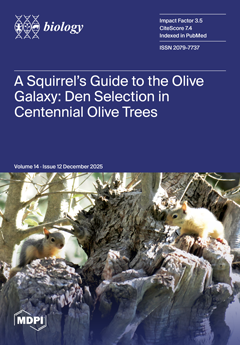
Cover Story (view full-size image):
In traditional Mediterranean olive groves on Lesvos Island, we explored the denning behavior of Persian squirrels (Sciurus anomalus), a species of conservation concern in Greece. Based on detailed structural, physiological, and thermal data from 288 centennial olive trees, we identified that den trees are markedly distinct: taller, older, more productive, and with exceptional microclimatic buffering capacity. Our findings reveal that squirrels select olive trees functioning as self-regulating biophysical units that jointly optimize structural shelter and thermal stability. This highlights the ecological value of High Nature Value olive groves as critical refugia for arboreal mammals and emphasizes the need to maintain structurally and physiologically mature trees within traditional agroecosystems.View this paper
- Issues are regarded as officially published after their release is announced to the table of contents alert mailing list.
- You may sign up for e-mail alerts to receive table of contents of newly released issues.
- PDF is the official format for papers published in both, html and pdf forms. To view the papers in pdf format, click on the "PDF Full-text" link, and use the free Adobe Reader to open them.
Previous Issue
Next Issue
