1. Introduction
Osteoporosis, a bone metabolic disease characterized by low bone mass and microarchitectural deterioration, still constitutes a major element of concern in the health of aging populations worldwide [
1]. Inadequately, many cellular interactions and signaling pathways are involved in this complex pathology [
2]. For instance, osteoblast dysfunction and senescence play an increasingly critical role in bone formation deficits and the increased severity of bone degenerative changes [
3]. Under this condition, the senescence-associated p53/p21 and p16 pathways were reported, which seriously influence the life cycle of osteoblasts [
4]. These pathways may be involved in the limitation of cell proliferation potential and also in the increased release of pro-inflammatory factors as senescence-associated secretory phenotype (SASP), resulting in further imbalance in bone remodeling [
5,
6]. In this respect, the highly hypoxic microenvironment that characterizes bone tissue strongly conditions the fate of cells and their metabolism. Conversely, under hypoxic conditions, HIFs represent the leading players in transcriptional regulation. They indeed balance the metabolic changes that occur within bone metabolism under conditions of oxygen deficiency [
7]. Concomitantly, HIF-1α induces angiogenesis and glycolytic adaptation to hypoxia, while HIF-2α is a crucial regulator of lineage choice and bone resorption in marrow MSCs [
8].
Hypoxia has thus been proposed as the crucial metabolic stress in the pathogenesis of osteoporosis [
9]. In fact, in vitro experiments have shown that osteoblasts have low mitochondrial activity, increased reactive oxygen species (ROS) production, and energy metabolism disorders under chronic hypoxic conditions, which reduce the cells’ potential for differentiation and lead to senescence [
10]. Moreover, in a series of recent studies, poor bone mineralization with increased osteoclastic activation through HIF-1α has been reported in the modeling of postmenopausal osteoporosis induced by estrogen-deficient conditions, suggesting a novel link in the pathogenic triad between hypoxic signaling and altered bone resorption in hormone imbalance [
11,
12]. At the same time, hypoxia signaling seems to regulate bone remodeling in several ways, to which resveratrol has been linked by several antioxidant mechanisms [
13]. This decreases oxidative stress and therefore supports cellular homeostasis and bone remodeling balance while negatively influencing bone resorption [
3]. This supports the view that both hypoxia and oxidative stress emerge in a concerted holdover of the regulatory network for cellular energetic metabolism required in the maintenance of bone homeostasis [
14]. Indeed, recent literature has developed multilayered molecular hypotheses between the bone cell senescent state and the hypoxic-osteogenic microenvironment; nevertheless, some hypotheses, such as the senescence state through the p21 pathway, mitochondrial dysfunction, and ROS metabolism, are not well-developed at the level of the molecular mechanisms that can explain the involvement of hypoxia in osteoporosis [
15]. To address this research gap, recent attention has shifted toward mitochondrial dysfunction and the role of ATP synthase subunits in bone metabolism [
16]. The focus recently shifted toward mitochondrial disorders and, ATP synthase subunit assemblage in the metabolism of bone. Thus, the ATP synthase V1 subunit, contributing to energy production, is also possibly involved in the retention of the intracellular biological function of bone cells through senescence-related molecule expression regulation. A previous study supports the hypothesis that mitochondrial dysfunction affects the ability of oxidative phosphorylation in mesenchymal stem cells, NAD ATP, and consequently, cell differentiation, postulating that metabolic disorders as mechanisms brought about impaired bone tissue homeostasis [
5]. From this line of evidence, the HIF–AMPK axis, which has been literally involved in mitochondria in relation to bone metabolism, indicates that AMPK, which is an energy sensor in the cell and responds to intracellular changes in the ATP/AMP ratio, is thus dependent on the activity of ATP synthase. This, in turn, will modify the signals coming via AMPK and control the destiny of osteoblasts under hypoxic conditions [
17]. V-ATPase complex is distributed on cellular and intracellular membranes and maintains energy metabolism, lysosomal acidification, intracellular pH homeostasis, and signal transduction [
18]. Recent studies have proposed that subunit a3 enhances proton secretion onto the resorptive surface and thus plays a functional role in resorptive activity by osteoclasts [
19]. It has been suggested that abnormal V-ATPase activity disrupts proton pump function in osteoclasts, leading to excessive bone resorption and bone loss [
20]. Moreover, normal V-ATPase activity is essential for metabolic crosstalk between lysosomes and mitochondria [
21]. A blockade of this lysosomal proton pump precedes a loss of mitochondrial membrane potential and leads to an enhanced overproduction of ROS, disrupting energy homeostasis and activating the metabolism in bone cells [
22]. Various subunits of the V-ATPase complex have been considered a variety of metabolic etiologies related to osteoblasts as well as marrow mesenchymal stem cells; therefore, they are interesting drug targets for bone-destructive disease [
23]. Apart from that, scant knowledge exists on the V-ATPase complex complex and hypoxia-related osteoblast senescence and metabolic remodeling at the multi-omics level. Thus, an urgent need exists to synthesize information at the cellular, molecular, and animal levels to study the role of the hypoxic microenvironment in osteoblast senescence metabolism and deepen research on associated molecular targets of prevention and therapy in osteoporosis. In this study, we focus on how hypoxia regulates osteoblast senescence and oxidative stress and identify ATP6V1A as a key downstream mediator of this process. Using transcriptomic, metabolomic, and cellular analyses, we define a hypoxia–ATP6V1A–senescence axis that shapes osteoblast stress responses. The scope of this work is limited to senescence-related and metabolic alterations, and we do not evaluate osteoblast differentiation or osteogenic function. These boundaries clarify that the findings presented here relate to anti-senescence mechanisms rather than to bone formation outcomes.
2. Methods
2.1. Animal Experiments
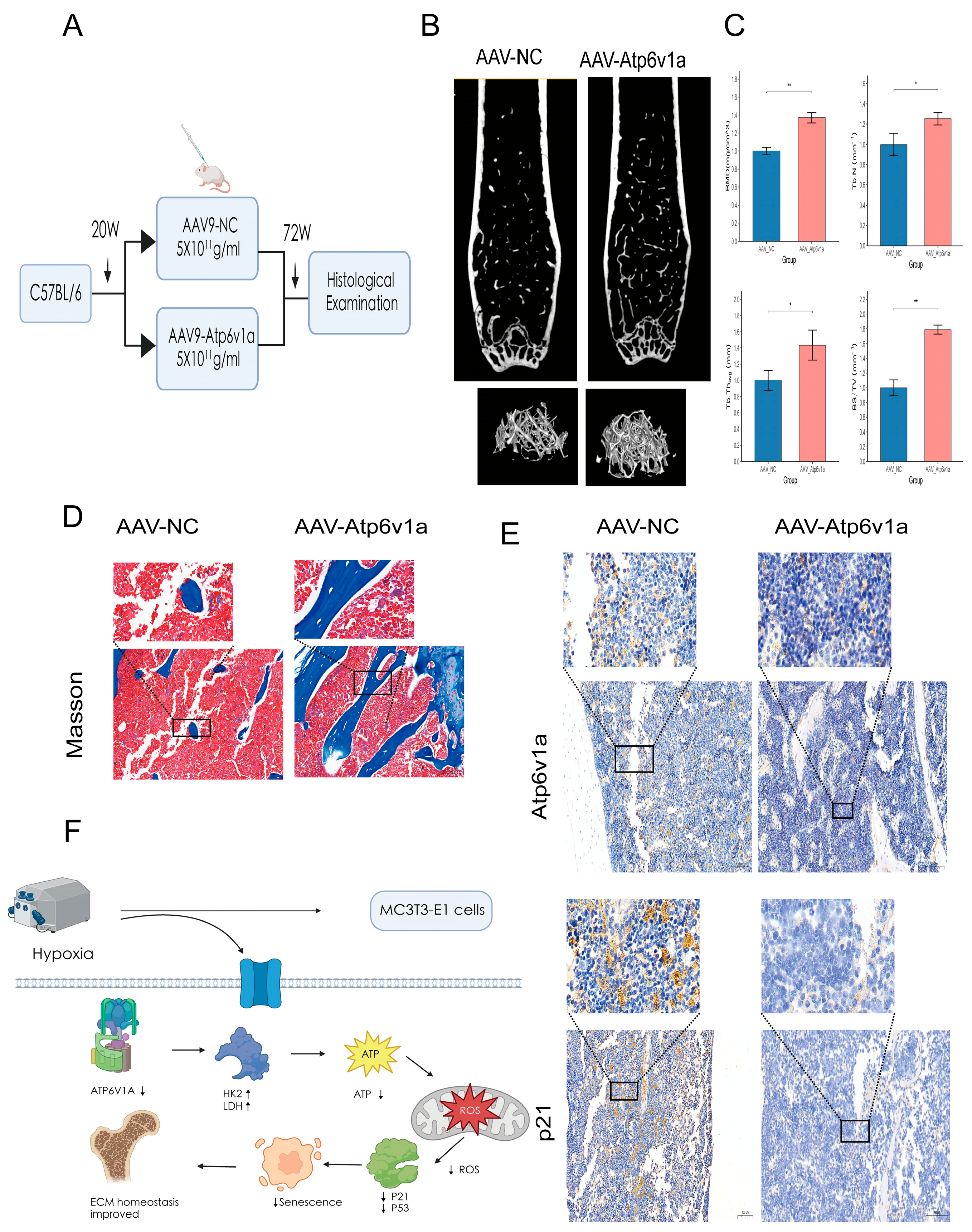
All C57BL/6 female mice (20 weeks) were purchased from Lanzhou Veterinary Research Institute, Chinese Academy of Agricultural Sciences (Lanzhou, China), and were fed in a specific pathogen–free (SPF). The sample size was determined according to the principle of diminishing returns, meaning that increasing the number of animals beyond n = 6 would provide only marginal gains in statistical power while substantially increasing animal use and burden. Therefore, a sample size of six per group was selected to balance statistical reliability and ethical considerations. Afterward, bone tissues were collected after euthanasia for subsequent investigation. Twenty-week-old C57BL/6 mice were given randomly to two groups using a random number table: AAV9-Atp6v1a (n = 6) and AAV9-NC group (n = 6). Animals were raised under a 12 h intermittent light/dark cycle at 22 ± 2 °C with free access to chow and water. Fifty-two weeks after viral injection in vivo, mice from all groups were sacrificed, and serum and bones were collected. All animals/sections were serially and blindly numbered. All operations and interventions were approved by the Animal Ethics Committee of the Second Hospital of Lanzhou University (Approval No. D2023-350).
2.2. Cell Culture and Hypoxia Treatment
MC3T3-E1 cells are fetal mouse-derived osteoblastic cells provided by the Cell Bank of the Peking Union Medical College [
24]. Cultured in α-MEM medium (Gibco, NY, USA) was supplemented with 10% fetal bovine serum (SE OU Biology, Shanghai, China) in a humidified atmosphere and 5% CO
2 at 37 °C. Hypoxia treatment was conducted using a tri-gas incubator under hypoxic conditions consisting of 1% O
2, 5% CO
2 for 24 h. Control (normoxic condition) cells were grown under 21% oxygen. In addition, to directly evaluate the senescence response under oxidative stress, we established an osteoblastic senescence model by treating MC3T3-E1 cells with 200 μM H
2O
2 for 4 h. All in vitro experiments in this study were performed using the MC3T3-E1 pre-osteoblastic cell line (Cell Bank of Peking Union Medical College, Beijing, China).
2.3. Viral and siRNA Transfection
Lentiviral particles directed against the Atp6v1a gene were obtained from (GeneChem, Shanghai, China), and MC3T3-E1 cells were infected with the particles to obtain stable osteoblast cultures after puromycin screening. For phase-in vivo studies, bone-targeted adeno-associated virus (GeneChem, Shanghai, China) was intravenously delivered through the veins using tail injections. Viral titers were 1 × 10¹² vg/mL.
2.4. Transcriptome Sequencing
To analyze the probable molecular mechanism of hypoxic intervention on osteoblasts, total RNA was extracted from MC3T3-E1 cells cultured in normoxia and hypoxia for 24 h by using Trizol method (Accurate Biology, Changsha, China), and its 260/280 ratio was detected for concentration and integrity, respectively. Separate libraries were constructed according to the instructions and used for PE-sequencing by the Illumina NovaSeq 6000 platform. Quality control checks of the original sequencing data used FastQC, version 0.11.9 and adapters and low-quality reads were removed to obtain clean reads. Clean reads were compared with the corresponding genome (mm
10) using Hisat2 version 2.2.1, and transcript quantification was performed by FeatureCounts software version 2.0.1. Differential gene expression analysis was performed by Limma version 3.54.2 [
25], differentially expressed genes were selected for enrichment analysis, including biological processes and pathways, such as Gene Ontology (GO) and Kyoto Encyclopedia of Genes and Genomes (KEGG) [
26].
2.5. Metabolomic Profiling
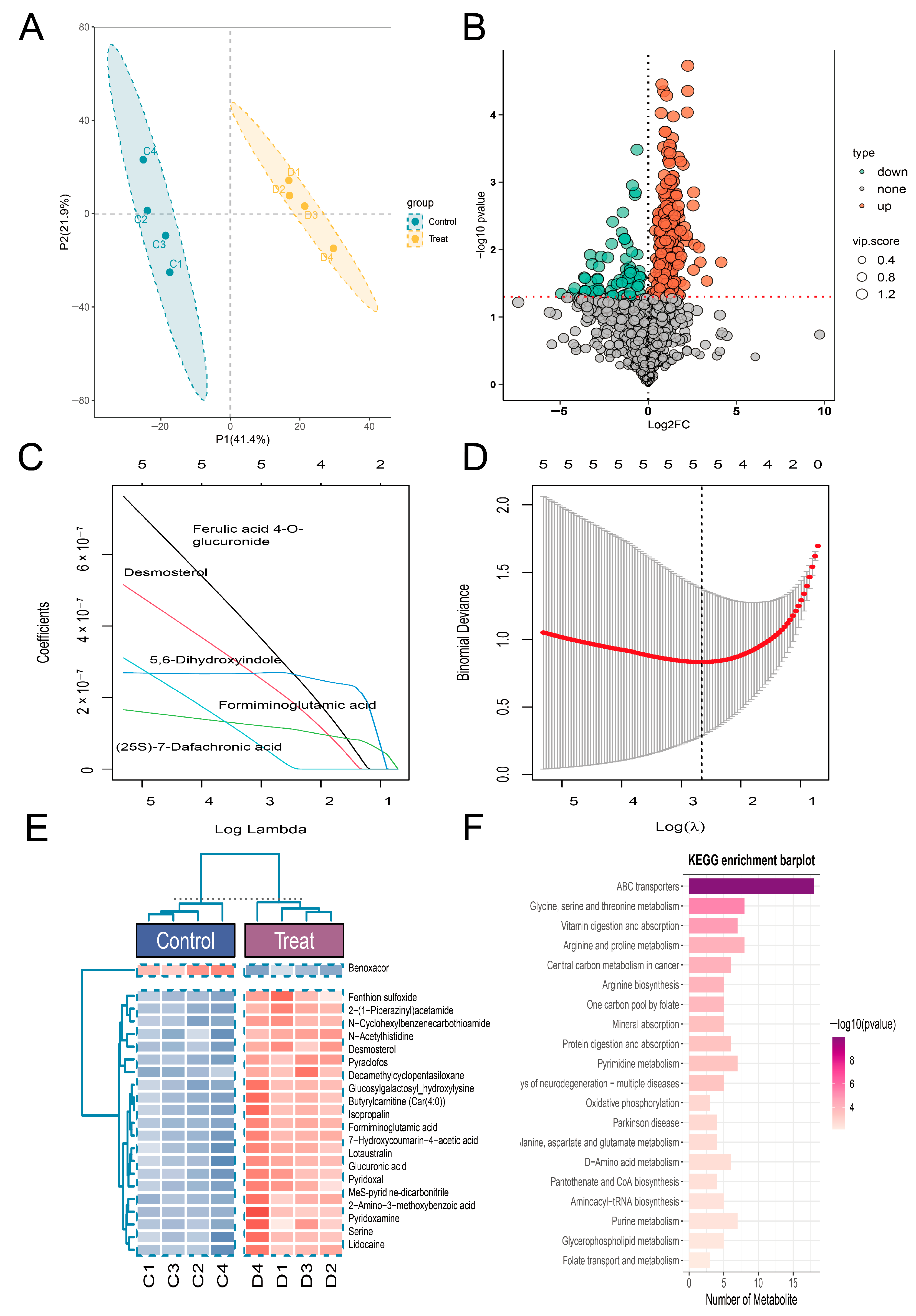
For further investigation of the effect of Atp6v1a silencing on osteoblast metabolism, AAV-shAtp6v1a and AAV-NC samples were prepared and extracted with alcohol/water solution, homogenized, ultrasonically disrupted, centrifuged, and divided into positive and negative ion modes to profile the metabolites using LC-MS/MS (Thermo Scientific Q Exactive, Bremen, Germany). Compound Discoverer 3.1 was used for peak extraction, peak alignment, and peak area normalization. MetaboAnalyst version 5.0 was used for statistical analysis. Metabolites with a VIP score of >1 (obtained from OPLS-DA version 1.30.0) and a two-sided
p-value < 0.05 were considered differential. A predictive model was constructed with a LASSO version 4.1-8 regression analysis method [
27] and selected metabolites were further submitted to the KEGG pathway analysis to assess the diversity of metabolite categories and their associations with Atp6v1a.
2.6. Machine-Learning–Based Feature Selection for Transcriptomic and Metabolomic Datasets
To identify the most informative molecular features associated with hypoxia and Atp6v1a regulation, machine-learning approaches were applied to both the transcriptomic and metabolomic datasets. For transcriptome profiling, two complementary algorithms—Random Forest (RF) and Least Absolute Shrinkage and Selection Operator (LASSO) regression—were implemented to ensure robust feature selection. RF analysis was performed using the “randomForest” package in R with 500 decision trees, and gene importance was ranked according to the MeanDecreaseGini index. In parallel, LASSO regression was conducted with the “glmnet version 4.1-8” package, where 10-fold cross-validation was used to determine the optimal penalty parameter (λ·min). Genes with non-zero coefficients at λ·min were regarded as having strong predictive value under hypoxic conditions. For metabolomic profiling, LASSO regression was applied as the primary selection method because of the high dimensionality and intercorrelation of metabolites. The “glmnet version 4.1-8” package was used with cross-validation, and metabolites retaining non-zero coefficients at the optimal λ were considered candidate discriminative metabolites.
2.7. Measurement of ROS and Mitochondrial Membrane Potential
ROS production was measured using the fluorescent probe DCF-DA. Changes in mitochondrial membrane potential were assayed by JC-1 staining. Briefly, a 1 mL stock solution of JC-1 was diluted in 1 mL complete medium and incubated for 20 min at 37 °C followed by two washes with JC-1 buffer. Cells were then resuspended in 2 mL culture medium, and the changes in J-aggregated fluorescence compared to the monomeric form were observed by fluorescence microscopy (OLYMPUS, Tokyo, Japan).
2.8. SA-β-Gal Staining
According to the instructions of the senescence-associated β-galactosidase kit (Beyotime Biotechnology, Shanghai, China), cells were washed with PBS, fixed for 15 min, stained overnight with freshly prepared SA-β-Gal overnight at 37 °C, and observed under a microscope (EVOS XL Core, MA, USA).
2.9. RNA Extraction and qRT-PCR
Total RNA extraction was performed using Trizol reagent (Accurate Biology, Changsha, China). RNA was then reverse-transcribed by an Evo M-MLV RT PreMix Kit and quantified using the SYBR Green Pro Taq HS kit (Accurate Biology, Changsha, China) in a LightCycler 480 system (Roche, Basel, Swiss) with
GAPDH as an internal control, the sequence of primers for target genes was showed in
Supplementary Table S1.
2.10. Western Blot Analysis
Cells and tissues were lysed in RIPA buffer solution (Beyotime, Sshanghai, China), and protein concentrations were determined using BCA assay reagents (Beyotime, Shanghai, China). Proteins were electrophoretically separated by SDS-PAGE and transferred onto PVDF membranes (Millipore, MA, USA). Membranes were blocked with Protein Free Rapid Blocking Buffer (Epizyme, Shanghai, China) for 1 h at room temperature. Then, the PVDF membranes were incubated with the primary antibody at 4 °C overnight, namely, p53 Antibody (CST-2524T), ATP6V1A Antibody (Abcam-ab199326), p21 Antibody (proteintech-28248-1-AP), β-actin Antibody (proteintech-66009-1-Ig), HK2 (CST-C64G5), and LDH (AAbmart-T55348). The proteins were detected by an ECL kit (Biosharp, Hefei, China).
2.11. Immunofluorescence
The cells were washed three times with PBS and fixed in pre-cooled 4% paraformaldehyde for 30 min. After permeabilization with 0.1% Triton X-100 for 30 min at room temperature, it was blocked with 10% goat serum for 1 h at 37 °C. The cells were subsequently incubated with primary antibody overnight at 4 °C and a fluorochrome-conjugated species-specific secondary antibody for 1 h at 37 °C. After staining with DAPI, the cells were observed under a confocal laser scanning microscope (Carl Zeiss, Oberkochen, Germany).
2.12. Micro-CT and Histological Analysis
Each bone group will be fixed in 4% paraformaldehyde for 48 h, decalcified in 10% EDTA for 3 weeks, dehydrated in alcohol, embedded in paraffin, and cut into 5 μm slices. Scanco Viva CT 8.0 version 5.0 was used to assess BMD and BS/TV. H&E, Masson, and immunohistochemical staining were used to assess micro-architecture, collagen fibers, and senescence-related proteins in bone.
2.13. Statistical Analysis
Measurements from three independent experiments were averaged and expressed as mean ± SD; Student’s
t-test or one-way analysis of variance was used for comparisons between the groups. Statistical significance was set at
p < 0.05. All statistical analyses were performed using R 4.2.10 [
28].
4. Discussion
Osteoporosis is a typical age-related bone metabolic disease, which is presented as low BMD, trabecular microstructure damage, and an increase in fracture cutoff [
29]. In this regard, osteoporosis is rapidly developing as a global public health problem and socio-economic burden with aging [
30]. Osteoblast dysfunction and senescence have widely been discussed as mechanisms underlying osteoporosis development and progression [
31]. Osteoblasts are known to be bone-forming cells that secrete bone matrix proteins and coordinate bone matrix mineralization in bone homeostasis. In the physiology of aging and pathological stress, osteoblast cellular senescence occurs, causing defective proliferation, secretory dysfunction, and cell cycle interference [
32]. The senescence of osteoblasts is related to increased expression of senescence markers p53 and p21, which are activated in response to DNA damage, oxidative stress, and inflammation, and exert a central regulatory role in the maintenance of cellular homeostasis [
33].
The phenotypic changes observed in this study primarily reflect senescence-related alterations. In this regard, mitochondrial dysfunction and oxidative stress may result in osteoblast senescence, as high ROS levels can develop oxidative DNA damage, which causes premature senescence related to mitochondrial dysfunction [
3]. Mild hypoxia is one of the potential inducers responsible for pathological alterations in osteoblast cell function in senility, which would be interesting for hypoxia-related investigation due to a fairly restricted blood supply to the bone. Recently, the HIF-signaling pathway has been suggested to have systemic regulation in bone physiology. The role of HIF in hypoxia-mediated transactivation of VEGF and EPO under low oxygen tension has been causatively linked to the attainment of angiogenesis and bone homeostasis. These solid linkages between hypoxia research in therapeutic interventions targeting osteoblast senescence and bone matrix homeostasis. On the other hand, oxidative stress in osteoblasts may also participate in ferroptosis and apoptosis, thus even aggravating skeletal deterioration. Therefore, Liu et al. developed a phototriggered CO-releasing system for the activation of ferritinophagy in tumor cells metastatic to the bone, which inhibits tumor growth by ferroptosis [
34]. The other study reviewed the oxygen-sensing mechanism of osteocytes under conditions of oxygen deprivation in osteoporosis and pointed out that osteocytes are sensitive to levels of local oxygen tension, upon which metabolic or transcriptional adaptation is reshaped via hypoxia signaling [
35]. Overall, the disease mechanism and treatment of antioxidant balance in bone are under oscillated attention. Further research needs to be performed on balancing ROS levels and exploring selective antioxidant therapies to maintain bone homeostasis.
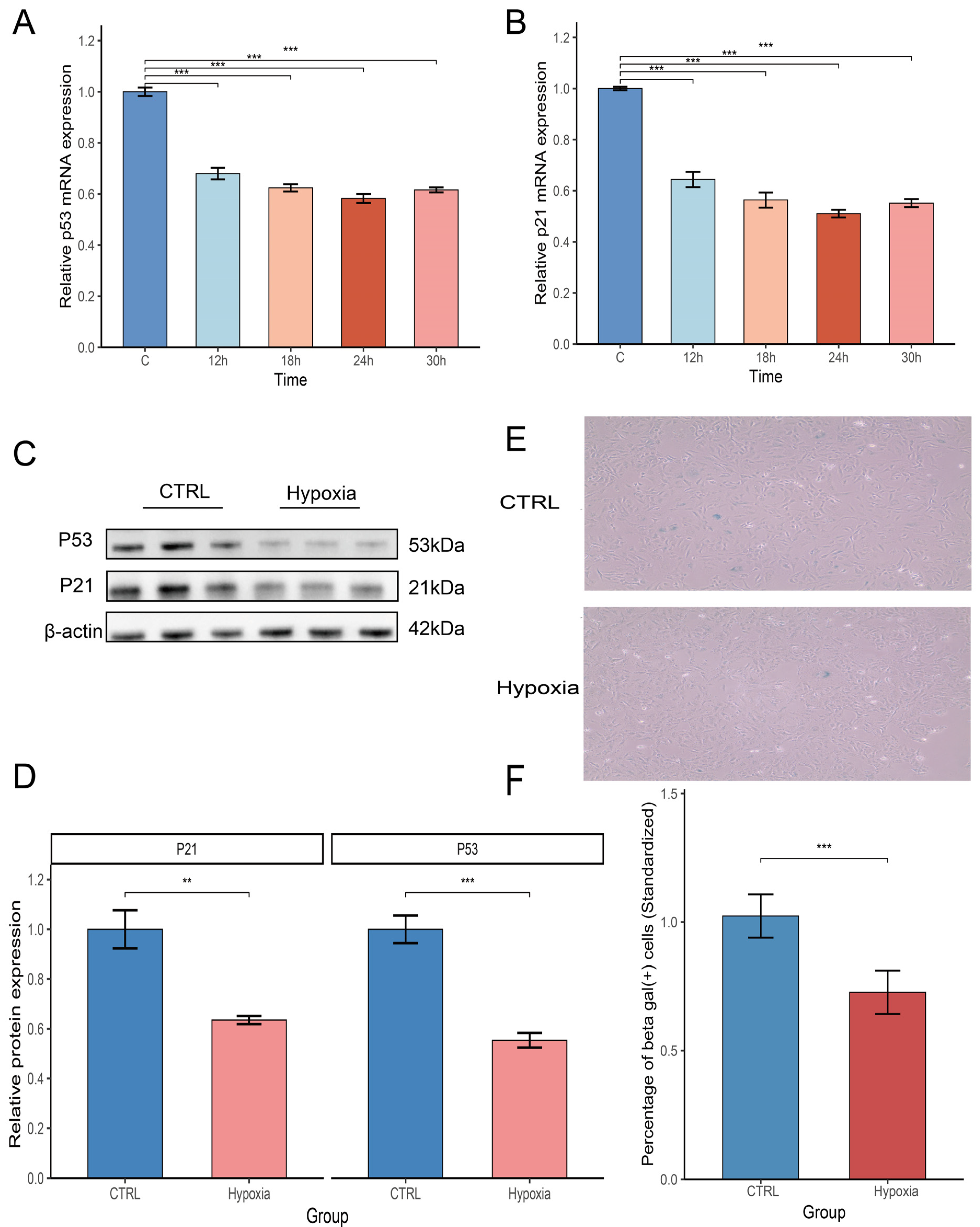
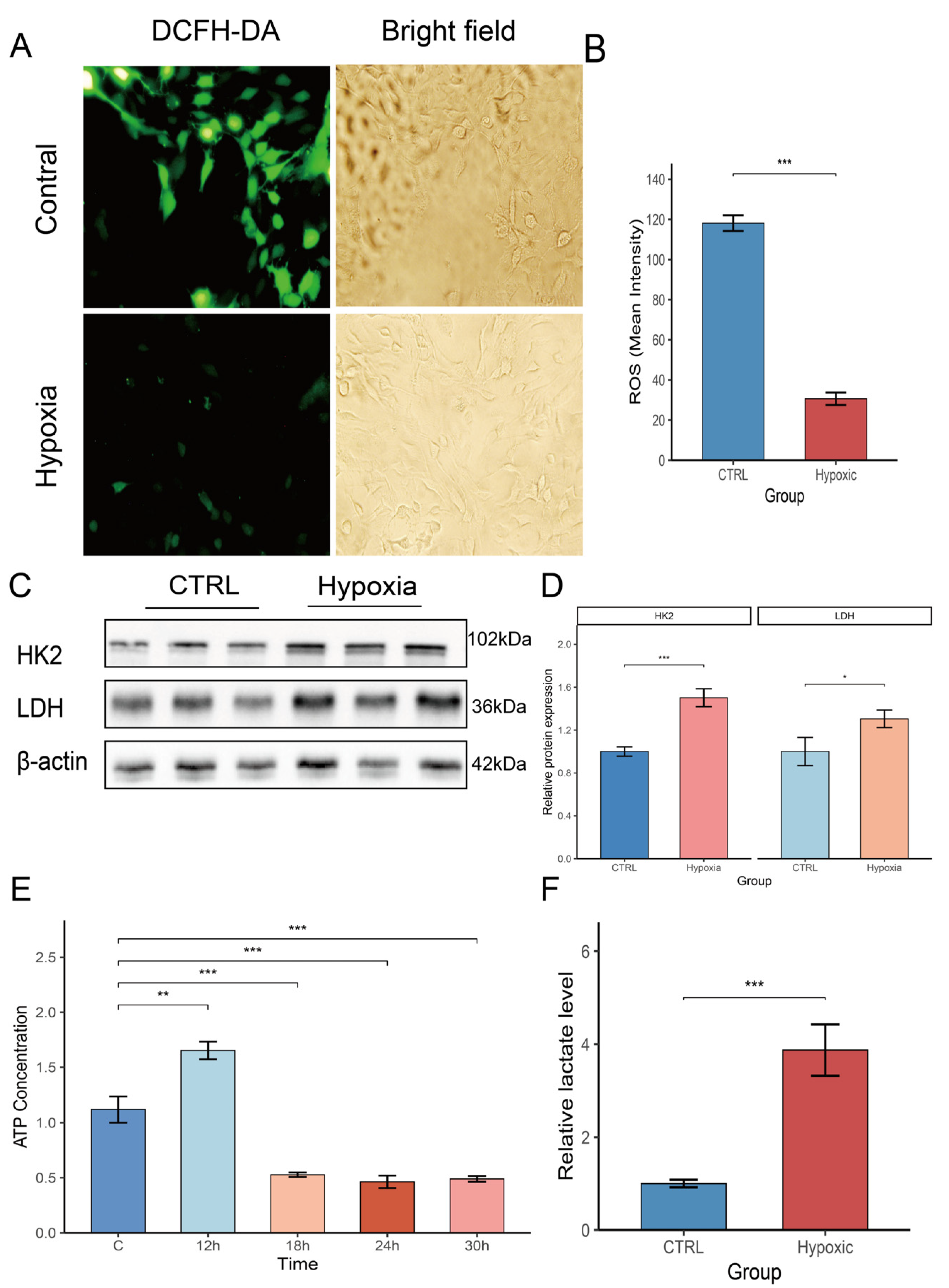
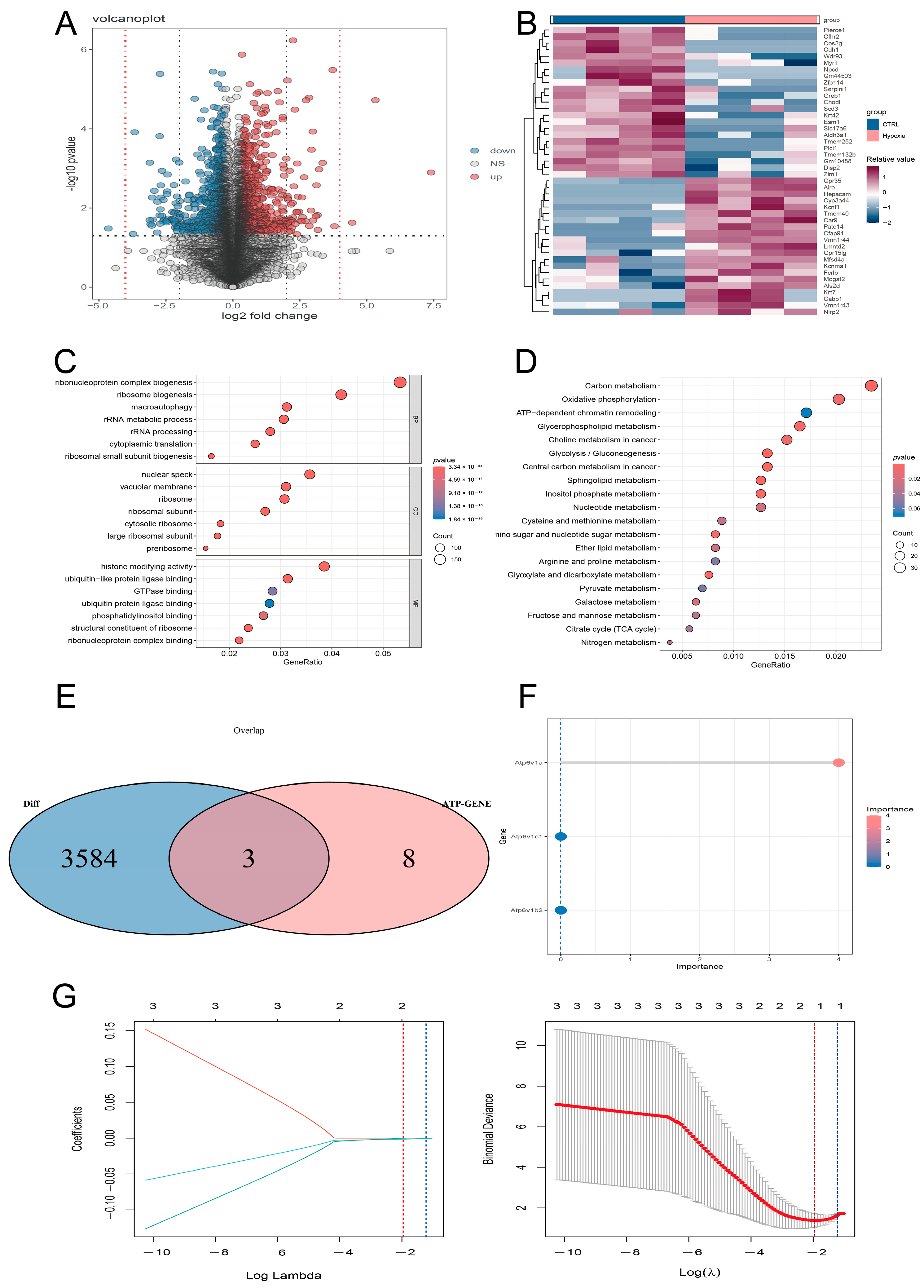
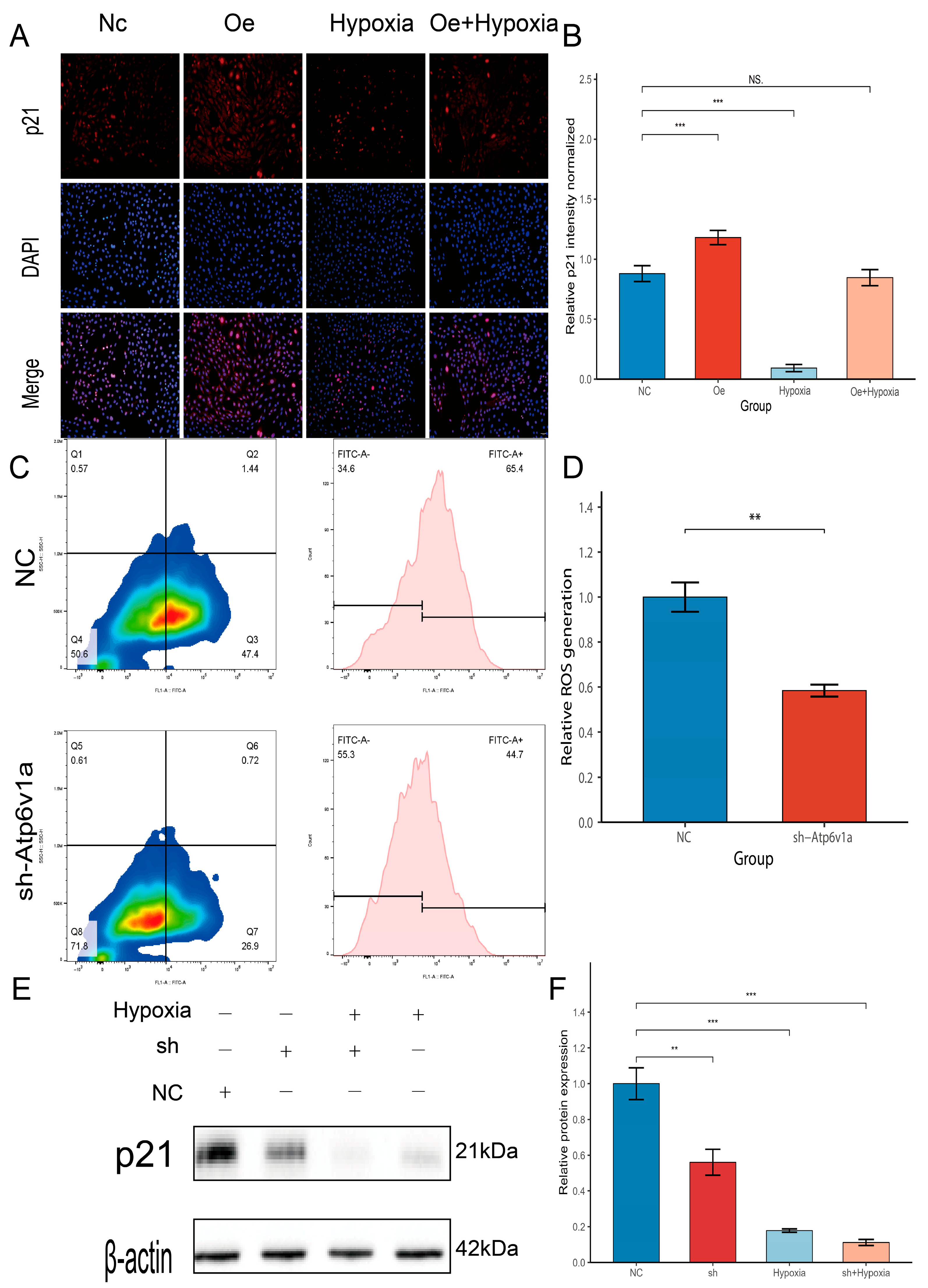
Therefore, a developing axis of “hypoxia-osteoblast senescence-metabolic rewiring” has been formed; hence, much bearing multieffects of hypoxia on osteoblast senescence and metabolic remodeling is systematically evidenced, with highly relevant ATP6V1A high-up to such axis. A moderate hypoxic environment did noticeably reduce the aging phenotype of osteoblasts upon reduced relative mRNA levels and expressed proteins p53, p21, and a much lower number of SA-β-Gal–positive cells, suggesting that under hypoxia, intracellular stress is limited and intracellular homeostasis is regained, indicative of a delay in the aging process of osteoblasts. Compared with normoxia, hypoxia modulated the metabolism of osteoblasts in a differential manner. ROS analysis revealed hypoxia to reduce intracellular ROS levels, cohering with up-regulation of HK2 and LDH, glycolytic enzymes. Moreover, intracellular ATP was found to be decreased, while intracellular lactate increased, suggesting that in hypoxic conditions, the cells switch their metabolism toward glycolysis-altered pathways. Metabolically, this provides cells with ATP compared to normoxia while reducing mitochondrial oxygen consumption through the electron transport chain; thereby, efficient hypoxia limits intracellular ROS production. Supporting this assumption, hypoxia has affected gene expression profiles in several metabolic and cellular homeostasis pathways, most strikingly in carbon metabolism, the TCA cycle, and oxidative phosphorylation.
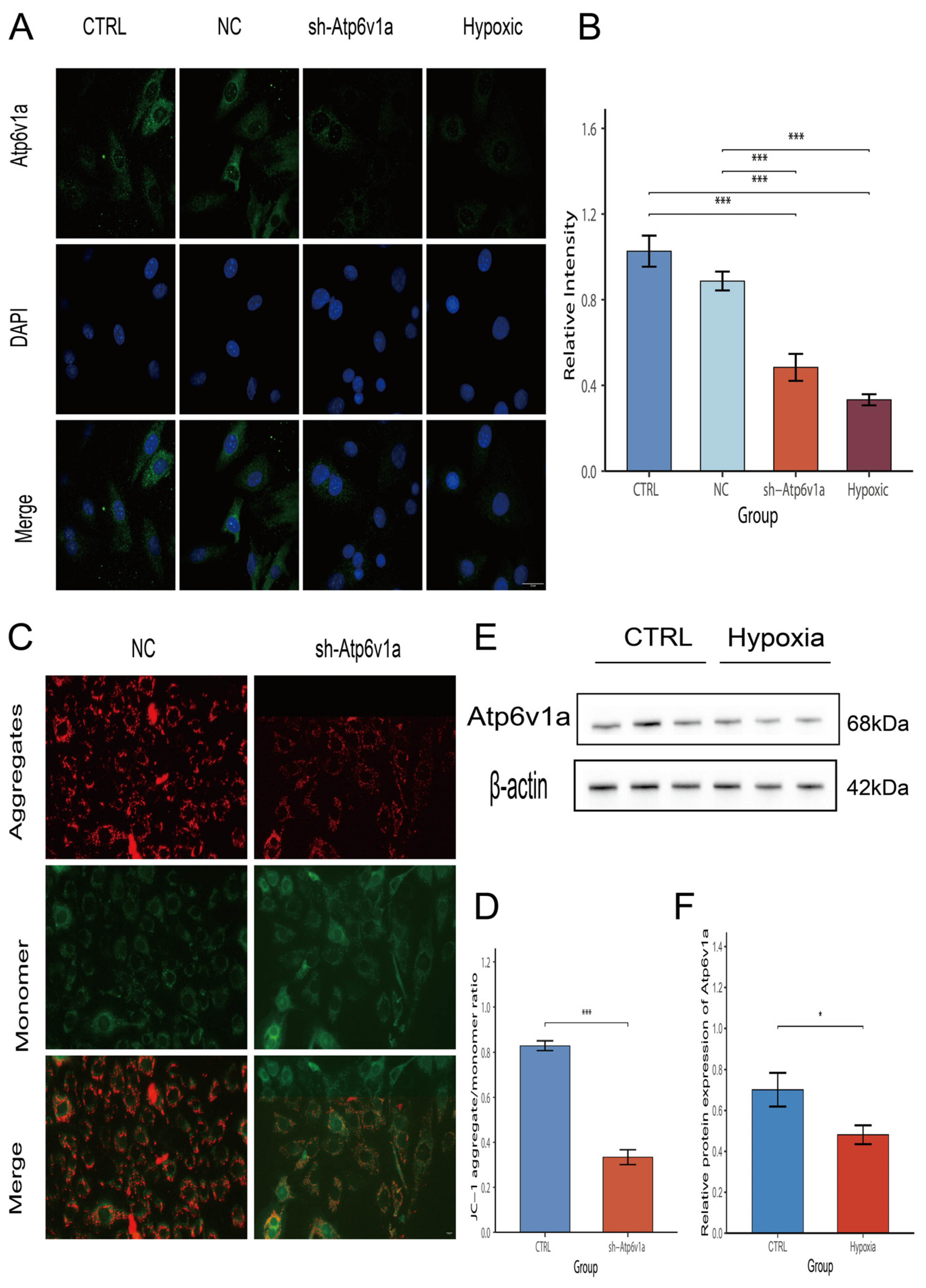
After intersecting DEGs and ATP-V1 subunit genes, using Rand Forest analysis combined with Lasso regression, ATP6V1A was screened out as a highly prioritized hypoxia-related gene. Repressed ATP6V1A, then recognized metabolically rewired and antioxidant-related, was further functionally verified: knockdown of this gene strongly suppressed p21 and ROS levels and reduced the mitochondrial membrane potential measured by JC-1 staining, a decline indicating mitochondrial dysfunction, along with diminished senescence. Further metabolomics profiling posited the above postulates, Isocitric acid, 4-(2′-propenyl)-2-O-glucuronide, desmosterol, and formiminoglutamic acid are unique biomarkers of metabolism modulated by Atp6v1a. This has elucidated Atp6v1a independent regulation of energy and material homeostasis of osteoblasts via amino acids, glycolysis/gluconeogenesis, lipid, and purine metabolism. This was finally supported by in vivo evidence that Micro-CT revealed improved bone microstructural parameters, which are plausibly attributable to reduced cellular senescence and improved ECM maintenance rather than changes in osteogenic differentiation.; immunohistochemistry revealed reduced simultaneous expression of Atp6v1a and downstream senescence protein p21, and Masson and H&E staining identified more organized collagen deposition and denser matrix architecture. Above all, the “hypoxia–ATP6V1A–metabolic reprogramming–anti-aging” pathway was identified and verified, through which decreased ATP synthesis inhibits intracellular ROS generation and mitochondrial oxidative stress, thus retarding osteoblast senescence. While much of the research has focused on hypoxia and inflammation, few authors have highlighted the influence of hypoxia on aging and energy metabolism in osteoblasts. Indeed, for instance, Zhang et al. reported that RORβ deletion promotes endochondral ossification by regulating the HIF-1α/VEGFA signaling pathway [
36]. Yang et al. have reviewed the energy sensing-regulatory function of the V-ATPase in jaw necrosis and periodontal lesions. However, these investigations of acidification of osteoclasts concentrated on the crosstalk between hypoxia and osteoblastogenic metabolic processes [
37]. Qiu et al. also reported that a3 subunit knockout results in AMPK-mTOR-autophagy-dependent subchondral bone osteoarthritis [
38], osteoclast-related processes rather than osteogenic regulation. For the first time, this study identified ATP6V1A as hypoxia-responding in osteoblasts, which is closely related to intracellular ROS levels, mitochondrial membrane potential, and p16 expression. The current study thus provides evidence for a cross-lineage regulatory role of V-ATPase subunits in bone remodeling, from oxidative stress to metabolism and senescence. Previous studies have clearly shown that osteoblasts entering a senescent state undergo intrinsic functional decline, including reduced extracellular matrix (ECM) secretion, impaired collagen production, and diminished mineralization capacity. These alterations disrupt bone matrix homeostasis and ultimately lead to a progressive decrease in bone mass and quality [
39,
40]. These findings indicate that senescence-driven impairment of ECM maintenance itself can influence bone tissue integrity. In our study, we observed a mild upregulation of COL1A1 expression following shATP6V1A treatment, a trend consistent with the denser and more organized collagen fibers observed in Masson staining in vivo. These results suggest that reducing cellular senescence may help restore ECM structural integrity, thereby contributing to improved tissue-level bone homeostasis.
In this study, the observed decrease in mitochondrial membrane potential (ΔΨm) and the reduction in ROS levels following ATP6V1A downregulation indicate a “compensatory and protective” metabolic adaptation. Under conditions of acute hypoxia and energy stress, cells can moderately lower ΔΨm to reduce the burden on the electron transport chain, thereby limiting electron leakage and decreasing oxidative stress. Previous research has shown that such regulated decreases in membrane potential are an important mechanism for maintaining mitochondrial stability during hypoxic adaptation, effectively reducing oxidative pressure while preserving mitochondrial function in adverse environments [
41]. In addition, Schiffer et al. demonstrated that “mild mitochondrial uncoupling” exerts clear tissue-protective effects by lowering membrane potential to reduce ROS production without impairing cellular metabolic capacity [
42]. Taken together, the ΔΨm reduction and ROS decrease observed after ATP6V1A silencing in our study represent a protective metabolic reprogramming under hypoxic and energy-limited conditions, consistent with previously reported mechanisms. In addition, when glycolysis is enhanced, V-ATPase activity tends to increase, whereas inhibition or disassembly of V-ATPase forces the cell to rely more heavily on glycolysis. This indicates that V-ATPase, including its ATP6V1A subunit, is closely coupled with glycolytic flux rather than functioning independently [
43]. Moreover, under hypoxic conditions, cells shift their metabolic strategy from mitochondrial oxidative phosphorylation to a glycolysis-dominant mode to maintain ATP production [
44]. Integrating these findings with our own results, we propose a mechanistic scenario in which ATP6V1A downregulation leads to reduced V-ATPase functionality, resulting in impaired proton pump activity and disrupted maintenance of ion gradients and endosomal–lysosomal acidification, which collectively limit mitochondrial respiration and overall cellular energy metabolism. In response to this energy-restricted state, osteoblasts upregulate glycolytic enzymes such as HK2, LDHA, and PGK, accompanied by increased lactate production, reflecting a compensatory enhancement of glycolysis to sustain cellular energy homeostasis. According to previous studies, acute hypoxia and chronic hypoxia activate fundamentally different cellular programs. Acute hypoxia generally triggers compensatory, adaptive, and protective responses rather than cytotoxic effects. In the early stage of acute hypoxia, HIF-1α is rapidly stabilized and initiates metabolic adaptation, including the up-regulation of key glycolytic enzymes such as HK2 and LDHA. This metabolic switch from mitochondrial oxidative phosphorylation to glycolysis reduces oxygen consumption, limits electron leakage, and suppresses ROS generation [
45]. In addition, hypoxia-activated HIF-1α signaling has been shown to decrease oxidative stress, maintain mitochondrial homeostasis, and prevent oxidative damage within an appropriate range [
46]. Therefore, short-term hypoxia exerts protective effects through metabolic reprogramming and ROS suppression, whereas substantial cellular injury is more characteristic of sustained, chronic hypoxia. The reduced ROS levels and alleviated senescence phenotypes observed in this study are consistent with these well-established acute hypoxic adaptive mechanisms.
The present study has several limitations. First, the conclusions have not yet been directly validated in human bone tissues, and the clinical translational value requires further clarification. Second, while ATP6V1A is identified as a critical regulator of hypoxia-related senescence, its extended signaling interactions and long-term effects on skeletal homeostasis remain important subjects for future study. Third, because osteoblast senescence and osteogenic differentiation represent biologically distinct processes, and senescence alone can impair bone matrix maintenance, this study did not include functional assays of osteogenic differentiation. These experiments, including standard induction and mineralization assays to assess the potential effects of ATP6V1A, will be systematically investigated in future work. In addition, we plan to employ second harmonic generation (SHG) imaging to analyze collagen and bone matrix structural alterations at higher resolution. In addition, we will further verify the role of the AMPK signaling axis and other energy-sensing pathways to more fully clarify the mechanism by which ATP6V1A regulates osteoblast metabolism and aging.



 ,
,