Next Issue
Volume 16, March
Previous Issue
Volume 16, January


Societies, Volume 16, Issue 2 (February 2026) – 37 articles

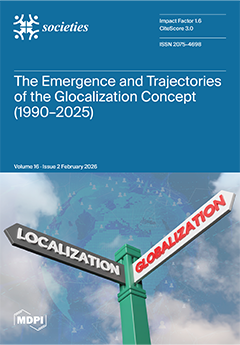
Cover Story (view full-size image): How does a global idea become locally meaningful? This article traces the evolution of glocalization from 1990 to 2025 through a PRISMA-guided review of 2,200 publications from Web of Science and Scopus. Combining bibliometric mapping, lexicometry analysis, and focused qualitative reading, the study reveals four major phases in the concept’s development and a gradual move toward hybridization, governance, identity politics, and digital platform dynamics. The paper presents a roadmap of the trajectory of glocalization’s development, offering practical and theoretical value for scholars working on globalization, culture, and social change. View this paper
  • Issues are regarded as officially published after their release is announced to the table of contents alert mailing list.
  • You may sign up for e-mail alerts to receive table of contents of newly released issues.
  • PDF is the official format for papers published in both, html and pdf forms. To view the papers in pdf format, click on the "PDF Full-text" link, and use the free Adobe Reader to open them.
Order results
Result details
Section
Select all
Export citation of selected articles as:
23 pages, 475 KB  
Article
Governing Market Risk in Organic Agriculture: Institutional Resilience and Collective Action in Rural Indonesia
by Putri Kartika, Rahmadanih, Imam Mujahidin Fahmid and Didi Rukmana
Societies 2026, 16(2), 75; https://doi.org/10.3390/soc16020075 - 22 Feb 2026
Viewed by 598
Abstract
Why do some organic farming systems persist while others collapse despite similar histories of collective action, policy support, and social legitimacy? This study examines how institutional design shapes the resilience of organic rice systems under conditions of market volatility and buyer power. Drawing [...] Read more.
Why do some organic farming systems persist while others collapse despite similar histories of collective action, policy support, and social legitimacy? This study examines how institutional design shapes the resilience of organic rice systems under conditions of market volatility and buyer power. Drawing on a qualitative comparative analysis of two subnational cases in rural Indonesia—Magelang and Tasikmalaya—Magelang experienced only 6–8% reversion to conventional rice (≈4.2 ha lost), while Tasikmalaya saw 32–38% reversion (≈13–17 ha). The study applies and extends the Institutional Analysis and Development (IAD) framework to foreground market risk governance as a central explanatory variable. The findings show that sustainability depends less on collective organisation than on whether producer institutions function as risk-bearing actors. In Magelang, a farmer cooperative governed market relations through internal monopsony and buyer diversification, shifting market risk from individual households to the organisational level. In Tasikmalaya, reliance on an external monopsony concentrated risk outside producer control; when buyer demand weakened, risk was rapidly transferred to farmers, triggering institutional fragmentation and exit from organic production. By distinguishing internal from external monopsony, the study advances an institutional explanation of resilience in market-mediated sustainability transitions and suggests that policies should prioritise institutional capacity for market risk governance over certification or production technologies. Full article
Show Figures

Figure 1

14 pages, 279 KB  
Article
Empowering Teachers for Inclusive and Community-Based Education: Validation of the QVA-I Questionnaire
by Zara Mehrnoosh, Sabrina Fusi, Dario Davì, Lorenzo Campedelli, Giulio Rocco di Torrepadula, Andrea Cicoli, Maria Stefania De Simone and Ettore D’Aleo
Societies 2026, 16(2), 74; https://doi.org/10.3390/soc16020074 - 22 Feb 2026
Viewed by 682
Abstract
This study presents the development, validation, and standardization of the QVA-I, a brief instrument designed to assess teachers’ perceived self-efficacy across four interrelated dimensions: the perceived effectiveness of their educational institution, the ability to design and implement inclusive teaching strategies, the quality [...] Read more.
This study presents the development, validation, and standardization of the QVA-I, a brief instrument designed to assess teachers’ perceived self-efficacy across four interrelated dimensions: the perceived effectiveness of their educational institution, the ability to design and implement inclusive teaching strategies, the quality of classroom relationships (particularly in the context of students with special educational needs), and the perceived relevance and application of their academic and professional training. Rooted in an ecological and community-oriented framework, the QVA-I conceptualizes teachers as active agents of transformation within their institutions and the broader community. A total of 718 teachers from preschool, primary, and lower secondary schools in Italy participated in the study. The psychometric analyses (including EFA and CFA) confirmed the instrument’s structural validity and internal consistency (α = 0.91), supporting a four-factor model aligned with theoretical expectations. The QVA-I offers a reliable and concise tool for research and intervention, particularly in contexts aiming to promote inclusive education, systemic collaboration, and school–community partnerships Full article
(This article belongs to the Section The Social Nature of Health and Well-Being)
32 pages, 1065 KB  
Article
Experts’ Perceptions on Barriers and Incentives to Green Hydrogen Adoption: Evidence from Europe and Beyond
by Elena Ocenic and Mihai Sandu
Societies 2026, 16(2), 73; https://doi.org/10.3390/soc16020073 - 21 Feb 2026
Viewed by 809
Abstract
Green hydrogen receives attention across academia, governments, and practitioners as a technical solution to decarbonize economic sectors, yet its large-scale deployment faces significant barriers and depends on effective policy incentives. There is little research examining how actors perceive barriers and incentives. Understanding such [...] Read more.
Green hydrogen receives attention across academia, governments, and practitioners as a technical solution to decarbonize economic sectors, yet its large-scale deployment faces significant barriers and depends on effective policy incentives. There is little research examining how actors perceive barriers and incentives. Understanding such perspectives is key to designing impactful policies. This study investigates actors’ perceptions of barriers and incentives and how these vary across organizational characteristics, gender, managerial role, and Romanian market exposure. An online survey conducted in 2025 collected responses from diverse stakeholders across the European hydrogen value chain (N = 236). Responses were analyzed using Chi-square, Mann–Whitney U, and Kruskal–Wallis tests, as well as Pearson’s correlations. Results show that “high capital costs”, “regulatory uncertainty”, and “lack of infrastructure” are seen as the most critical barriers, while “financial subsidies”, “regulatory mandates”, and “public policies” are the preferred incentives. Statistically significant differences emerge for “public acceptance” and “limited market demand” across organizational roles and types, and for “public–private partnerships” among respondents with Romanian market contact. By showing that barriers and incentives are not only structural, but also shaped by individual and organizational characteristics, this study highlights conceptually that green hydrogen policies must consider diverse business perspectives to be successful. Full article
(This article belongs to the Special Issue Technology and Social Change in the Digital Age)
Show Figures

Figure 1

32 pages, 415 KB  
Article
Adapting Through Responsible Consumption: Organizational Strategies for Equity and Inclusive Development
by Elizabeth Emperatriz García-Salirrosas, Dany Yudet Millions-Liza and Angel Acevedo-Duque
Societies 2026, 16(2), 72; https://doi.org/10.3390/soc16020072 - 21 Feb 2026
Viewed by 701
Abstract
In Peru, where socioeconomic inequalities remain a critical challenge, responsible consumption has shifted from individual decisions to organizational strategies with the potential to reduce structural disparities. This study adopted an exploratory–descriptive qualitative design to gain an in-depth understanding of organizational initiatives for responsible [...] Read more.
In Peru, where socioeconomic inequalities remain a critical challenge, responsible consumption has shifted from individual decisions to organizational strategies with the potential to reduce structural disparities. This study adopted an exploratory–descriptive qualitative design to gain an in-depth understanding of organizational initiatives for responsible consumption and their contributions to social equity. Using documentary analysis, the READ protocol (Read, Extract, Analyze, Distill) was applied to systematically examine public information from 104 Perú Sustainable-affiliated organizations across 16 economic sectors. The analysis identified six categories of initiatives: eco-efficient management, circular economy, sustainable supply chains, education and awareness, sustainable products, and green financing that are linked to five dimensions of equity: economic inclusion, access to essential services, gender equality, inclusion of vulnerable populations, and capacity building. The circular economy (54.8%) and sustainable supply chains stood out for their greater potential to include vulnerable groups by integrating them into formal value chains. The reported impacts ranged from 100 to over one million beneficiaries, in addition to environmental reductions of 30–50%, although methodological heterogeneity limited comparability. Financial constraints (67.3%), along with cultural resistance and institutional barriers, were identified as the main obstacles. Overall, the findings show that responsible organizational consumption can be an effective mechanism for reducing inequality if designed using systemic and integrated approaches, reinforcing the need for public policies, specialized financial instruments, and regulatory frameworks that enhance its transformative impact in favor of inclusive development in the country. Full article
Show Figures

Figure 1

30 pages, 1221 KB  
Article
Reshaping Digital Social Reality in the AI Era: A Data-Driven Analysis of University Students’ Exposure to Digital Harassment in Emerging Countries
by Mostafa Aboulnour Salem
Societies 2026, 16(2), 71; https://doi.org/10.3390/soc16020071 - 21 Feb 2026
Cited by 1 | Viewed by 812
Abstract
Digital harassment is an increasing challenge in higher education, with implications for students’ psychological well-being, perceived safety, and engagement in digital learning. As artificial intelligence (AI) increasingly mediates communication, visibility, and interaction across educational platforms, students’ exposure to online harm is shaped not [...] Read more.
Digital harassment is an increasing challenge in higher education, with implications for students’ psychological well-being, perceived safety, and engagement in digital learning. As artificial intelligence (AI) increasingly mediates communication, visibility, and interaction across educational platforms, students’ exposure to online harm is shaped not only by individual behaviour but also by algorithmically structured interaction environments. Understanding these conditions is essential for protecting student well-being and supporting sustainable participation in AI-enhanced learning. This study examines university students’ exposure to digital harassment in AI-mediated learning environments using an expanded Unified Theory of Acceptance and Use of Technology (UTAUT) framework. Survey data were collected from 2185 students, including Saudi nationals and international students enrolled in Saudi Arabian universities, representing Saudi Arabia and 32 other developing and emerging countries (33 countries in total). The model analyses associations among technological literacy, cybersecurity awareness, social media engagement intensity, digital identity visibility, AI-mediated interactions, and cultural norms, while also accounting for disciplinary and cultural context differences. The results indicate that AI-mediated interactions are most strongly associated with exposure to digital harassment. Higher social media engagement, more restrictive cultural norms, and greater visibility of digital identity are associated with increased exposure, whereas technological literacy and cybersecurity awareness are associated with lower reported exposure. Furthermore, greater exposure to digital harassment is linked to poorer mental health outcomes and reduced continuity in e-learning participation. Overall, the findings suggest that digital harassment in AI-driven educational settings is a structural sociotechnical issue associated with greater embeddedness in algorithmically mediated learning environments, rather than an isolated behavioural issue. The study highlights the need for responsible AI governance, enhanced digital literacy education, and culturally responsive institutional policies to support inclusive and sustainable higher education. Full article
Show Figures

Figure 1

36 pages, 1445 KB  
Review
What Makes Digital Citizenship Fragile: A Review of the Social Mechanisms Underlying Democratic Participation
by George Asimakopoulos, Hera Antonopoulou, Ioannis Mitropoulos and Constantinos Halkiopoulos
Societies 2026, 16(2), 70; https://doi.org/10.3390/soc16020070 - 19 Feb 2026
Viewed by 981
Abstract
Background: Democratic participation depends on three foundational social mechanisms: communication, interpersonal relationships, and socialization. While these mechanisms are well-understood in physical civic settings, their operation in digital environments remains unclear. For the purposes of this review, “fragility” is defined as a structural property [...] Read more.
Background: Democratic participation depends on three foundational social mechanisms: communication, interpersonal relationships, and socialization. While these mechanisms are well-understood in physical civic settings, their operation in digital environments remains unclear. For the purposes of this review, “fragility” is defined as a structural property of participatory systems, referring primarily to the conditional and variable alignment of these three mechanisms—an alignment that physical environments tend to support by default but that digital environments reproduce only under specific conditions. Methods: This study conducted a targeted high-impact review of twenty-two highly cited Scopus publications (2004–2025) to assess whether communication, interpersonal relationships, and socialization continue to function as core, but not individually sufficient, conditions for democratic engagement online. The review synthesizes findings across three research questions examining each mechanism, using narrative thematic analysis to identify dominant patterns within citation-established scholarship. Results: Across the reviewed corpus, participation strengthens when communication is informationally rich and heterogeneous, when relationships foster trust and bridging social capital, and when socialization environments support civic learning and identity formation. Weak informational content, homogeneous networks, and reduced socialization produce thinner or unstable democratic outcomes. The findings reveal that the three mechanisms operate interdependently: their democratic effects depend on simultaneous alignment rather than individual presence. Conclusions: Digital environments can support meaningful participation only when platform architecture reinforces these core social mechanisms. Strengthening informational diversity, relational openness, and digital socialization is essential for robust platform-mediated democratic engagement. Synthesizing these findings, the study proposes a Conditional Model of Digital Democratic Participation, which argues that digital fragility arises not from the medium itself but when the qualitative conditions required to validate the core social mechanisms fail to align. The Conditional Model differs from existing frameworks by treating communication, relationships, and socialization as interdependent mechanisms whose democratic effects are conditional on their simultaneous presence. Digital participation is not weak—it is conditional. Full article
Show Figures

Figure 1

25 pages, 448 KB  
Article
Jaén—A City Friendly to Seniors?
by Virginia Fuentes Gutiérrez, Yolanda María de la Fuente Robles, Teresa Amezcua Aguilar, Cristina Belén Sampedro-Palacios and David Ruíz-Ortega
Societies 2026, 16(2), 69; https://doi.org/10.3390/soc16020069 - 18 Feb 2026
Viewed by 463
Abstract
To address the needs of an increasingly ageing population, the World Health Organisation (WHO) has established the Age-Friendly Cities and Communities network. This initiative aims to support interested municipalities in promoting active ageing by improving environments and services from a municipal perspective. A [...] Read more.
To address the needs of an increasingly ageing population, the World Health Organisation (WHO) has established the Age-Friendly Cities and Communities network. This initiative aims to support interested municipalities in promoting active ageing by improving environments and services from a municipal perspective. A notable example is the city of Jaén (Spain), a municipality in southern Spain with just over 100,000 inhabitants that is working to join this network. As part of this process, an assessment was carried out to identify the specific needs and demands of older people. The methodology used follows the recommendations of the WHO, using the guidelines of the Vancouver Protocol, which is based on a participatory approach and shared diagnosis. The study involved 132 informants, including older people, service providers, and carers of older people. Based on the Age-Friendly Cities (AFC), this study analyses the needs and demands of older people across its eight domains. While particular attention is given to social relationships and participation, the findings also highlight significant challenges related to the physical and built environment, especially public spaces and transportation. In terms of social relations, older people in Jaén show a strong sense of belonging, valuing the closeness of their social environment, especially their neighbourhood and family members. However, there are differences between districts, as well as some concern that this closeness may weaken in the future. In terms of participation in leisure activities, there is a demand for more attractive and accessible options. With regard to participation in associations or politics, the former is more common, although older people still consider it to be insufficient. Full article
(This article belongs to the Special Issue Challenges for Social Inclusion of Older Adults in Liquid Modernity)
Show Figures

Figure 1

11 pages, 207 KB  
Article
Justice Beyond the Courts: The Role of Knowledge in Securing the Rights of Families with Neurodivergent Children
by Connor B. S. Strobel
Societies 2026, 16(2), 68; https://doi.org/10.3390/soc16020068 - 17 Feb 2026
Viewed by 972
Abstract
Access to justice (A2J) has been a prominent area of sociolegal scholarship, and its findings have significantly informed legal reform efforts. A2J scholarship has focused on disparities in court proceedings and has argued that the navigability of the legal system explains unequal access [...] Read more.
Access to justice (A2J) has been a prominent area of sociolegal scholarship, and its findings have significantly informed legal reform efforts. A2J scholarship has focused on disparities in court proceedings and has argued that the navigability of the legal system explains unequal access to the law more than knowledge of the law itself. However, courts are not the only venue for securing rights, and most rights disputes never reach them. In the United States, neurodivergent children possess legal entitlements and protections that are inconsistently and diffusely administered. This study tests the durability of A2J’s core findings by examining how knowledge disparities affect access to justice beyond the pursuit of remedies. Based on surveys and interviews with parents of neurodivergent children in Arizona, this study examines how knowledge disparities shape families’ ability to secure their rights and entitlements before engaging the courts. Substantive expertise explains rights inequality as families begin to actualize their rights and entitlements, while relational expertise remains significant in legal and non-legal rights contestation. The results add greater dynamism to A2J research, open new lines of inquiry, and demonstrate that reform efforts must look beyond improving remedial pathways to more equitably promote human rights. Full article
(This article belongs to the Special Issue Neurodivergence and Human Rights)
12 pages, 209 KB  
Concept Paper
Autism and Political Careers: Navigating Political Leadership
by Sally Friedman, Kennedy Cox and Richard K. Scotch
Societies 2026, 16(2), 67; https://doi.org/10.3390/soc16020067 - 16 Feb 2026
Viewed by 1781
Abstract
Individuals on the autism spectrum have been stigmatized as not being expected to engage in certain activities, such as interpersonal interaction and communication, which are related to the capacity to exercise leadership and may have implications for their capacity to effectively function in [...] Read more.
Individuals on the autism spectrum have been stigmatized as not being expected to engage in certain activities, such as interpersonal interaction and communication, which are related to the capacity to exercise leadership and may have implications for their capacity to effectively function in political roles. In this paper, we profile four politicians (who happen to be state legislators) with autism who have beaten the odds with electoral success. We examine their routes to office, their range of activities, including how they represent autism, and the intersectionalities (in addition to autism) that impact their lives. Full article
(This article belongs to the Special Issue Neurodivergence and Human Rights)
25 pages, 337 KB  
Article
Acts of Good Neighborliness as Pathways to Social Cohesion in South African Communities
by Nicolette V. Roman, Olaniyi J. Olabiyi, Tolulope V. Balogun, Dominique Caswell, Janine De Lange, Anja Human-Hendricks, Fundiswa T. Khaile and Kezia R. October
Societies 2026, 16(2), 66; https://doi.org/10.3390/soc16020066 - 15 Feb 2026
Viewed by 1151
Abstract
Cohesion among individuals reflects the quality of relationships and interpersonal interaction within a community. Elements such as social connections, trust, and a sense of belonging serve as key indicators of societal cohesion and are often rooted in acts of good neighborliness. Despite this, [...] Read more.
Cohesion among individuals reflects the quality of relationships and interpersonal interaction within a community. Elements such as social connections, trust, and a sense of belonging serve as key indicators of societal cohesion and are often rooted in acts of good neighborliness. Despite this, limited knowledge exists regarding perceptions and behaviors related to good neighborliness within South African society. The present study examines how perceptions and practices of good neighborliness contribute to the development of cohesive communities. Research was conducted in four South African communities: Philippolis, Lambert’s Bay, Caledon, and Grabouw. Utilizing an interpretivist approach, the study adopted a qualitative methodology involving interviews with 25 participants, including family members and community stakeholders. Data were collected through in-depth interviews, and thematic analysis facilitated the identification of recurring patterns and key themes. The principal themes identified were everyday mutual support and practical assistance, moral norms and values of care, social familiarity and community connectedness, trust and good neighborliness, and intergroup relations and cohesion across diversity. The findings demonstrate the crucial role of good neighborliness in advancing social cohesion. For communities and families to thrive, it is vital that members experience safety and cultivate trusting relationships, which often requires openness about their vulnerabilities and needs. Full article
16 pages, 276 KB  
Article
Overtourism in Bali and Lombok: A Governance and Community Perspective on Challenges and Strategies for Sustainable Development
by Rudy Pramono, Juliana Juliana, Meitolo Hulu, Arifin Djakasaputra and Ferry Jie
Societies 2026, 16(2), 65; https://doi.org/10.3390/soc16020065 - 14 Feb 2026
Cited by 1 | Viewed by 3252
Abstract
The rapid expansion of tourism in Bali and Lombok has precipitated a state of overtourism, critically challenging their ecological and socio-cultural carrying capacities. This study, conducted between 2023 and 2024, employs a qualitative case study approach to investigate the manifestations of overtourism and [...] Read more.
The rapid expansion of tourism in Bali and Lombok has precipitated a state of overtourism, critically challenging their ecological and socio-cultural carrying capacities. This study, conducted between 2023 and 2024, employs a qualitative case study approach to investigate the manifestations of overtourism and the efficacy of prevailing mitigation strategies. Data were collected through 32 in-depth interviews, four focus group discussions, and extensive field observations across key destinations in both islands. The findings reveal that overtourism is not merely a function of high visitor numbers but a symptom of systemic governance failure. Key manifestations include acute environmental degradation, the commodification of cultural heritage, and significant economic leakage that marginalizes local communities. These issues are exacerbated by fragmented policy, weak regulatory enforcement, and the exclusion of local voices from tourism planning. The study concludes that technical solutions such as visitor quotas are insufficient without a fundamental governance paradigm shift. Effective mitigation requires an integrated approach centered on strict carrying capacity enforcement, genuine community empowerment through Community-Based Tourism (CBT), and the strategic use of digital tools for visitor dispersion. This research provides an empirically grounded framework that underscores the imperative of a fundamental governance paradigm shift, aligning tourism development in island destinations with the principles of sustainability and equity. Full article
8 pages, 174 KB  
Review
Exploration of Maternal Health Access and Quality of Care Among African American and Latinx Women in the South
by Jasmine Benner, Ashley S. Membreno Lopez, Dominique Hector, Nsimba Mahungu, Seronda A. Robinson, Jonathan Livingston and Christopher L. Edwards
Societies 2026, 16(2), 64; https://doi.org/10.3390/soc16020064 - 14 Feb 2026
Viewed by 881
Abstract
Maternal and child health (MCH) disparities remain a critical public health concern in the United States, with the Southern region experiencing some of the nation’s highest maternal mortality rates. Black and Latinx women are disproportionately affected, reflecting persistent structural and systemic inequities. This [...] Read more.
Maternal and child health (MCH) disparities remain a critical public health concern in the United States, with the Southern region experiencing some of the nation’s highest maternal mortality rates. Black and Latinx women are disproportionately affected, reflecting persistent structural and systemic inequities. This review examines maternal health disparities among Black and Latinx women in the Southern United States and identifies structural, social, and policy-related contributors to these inequities. A narrative review approach was used to synthesize epidemiological data, policy reports, and peer-reviewed literature published between 2000 and 2025, drawing on national surveillance systems such as CDC WONDER and the National Center for Health Statistics, as well as state-level reports and policy analyses relevant to maternal health in Southern states. Across the region, maternal mortality rates frequently exceeded the national average of 23.2 deaths per 100,000 live births, with several states reporting rates above 38 deaths per 100,000. Structural contributors included limited access to maternity care, rural hospital closures, Medicaid non-expansion, chronic disease burden, and experiences of discrimination within healthcare systems, while social determinants such as poverty, housing instability, language barriers, and immigration-related fears further compounded risks for Black and Latinx women. In the post-Roe context, restrictive reproductive health policies intensified existing inequities. Overall, maternal health disparities among Black and Latinx women in the Southern United States are driven by interconnected structural, social, and policy factors, underscoring the need for coordinated policy reforms, expansion of culturally responsive care models, and targeted investment in Southern communities disproportionately affected by maternal mortality. Full article
14 pages, 294 KB  
Article
Psychosocial Correlates of Social Problem-Solving and Empathy Among Youth in Fifteen Muslim Societies
by Ilham Nasser and Mohammed Abu-Nimer
Societies 2026, 16(2), 63; https://doi.org/10.3390/soc16020063 - 13 Feb 2026
Viewed by 490
Abstract
This article is based on a study that surveyed youth in Muslim-majority societies to investigate the competencies that support youths’ problem-solving skills and empathy. More specifically, it aims to examine attitudes towards psychosocial skills, including self-regulation, forgiveness, religiosity/spirituality, collective orientation, social problem solving, [...] Read more.
This article is based on a study that surveyed youth in Muslim-majority societies to investigate the competencies that support youths’ problem-solving skills and empathy. More specifically, it aims to examine attitudes towards psychosocial skills, including self-regulation, forgiveness, religiosity/spirituality, collective orientation, social problem solving, and empathy. The survey focused on youth (N = 15,790) in secondary and higher education (ages 18 and under and 18–24) from 15 Muslim-majority societies. The 2020–2021 survey findings reveal that age, gender, and group differences significantly affect collectivistic orientation, self-regulation, and problem-solving. Additionally, the results support the hypothesis that all variables except forgiveness predict empathy and problem-solving among Muslim youth. By including skills essential to modern life, such as empathy and problem-solving, and by exploring their roles in youth development and social interactions, the study highlights social and cultural attitudes toward these psychosocial, personal, and interpersonal skills, especially among youth in Muslim societies. Full article
Show Figures

Figure 1

16 pages, 288 KB  
Article
Beyond Parental Behavioral Control: The Mediating Role of Child Disclosure in Adolescent Externalizing Problems
by Annis Lai Chu Fung and Han Yu Liu
Societies 2026, 16(2), 62; https://doi.org/10.3390/soc16020062 - 13 Feb 2026
Viewed by 630
Abstract
Externalizing problems are influenced by family dynamics, yet the specific mechanisms linking parental control to distinct externalizing problem behaviors remain unclear. This study examined the effects of parental behavioral control on proactive aggression, reactive aggression, and delinquent behavior, focusing on the mediating role [...] Read more.
Externalizing problems are influenced by family dynamics, yet the specific mechanisms linking parental control to distinct externalizing problem behaviors remain unclear. This study examined the effects of parental behavioral control on proactive aggression, reactive aggression, and delinquent behavior, focusing on the mediating role of child disclosure. Data were collected from 3818 adolescents (aged 10–18) and their parents in Hong Kong. Results revealed that child disclosure served as a robust mediator. For mothers, full mediation was observed across all three outcomes. For fathers, full mediation was found for both subtypes of aggression, whereas partial mediation was observed for delinquent behavior. The indirect pathways were invariant across gender, suggesting the mechanism is universal. Notably, the model significantly predicted reactive aggression through a full mediation model from both mother and father. The study highlights the unique dual-pathway role of fathers—combining structural deterrence for delinquent behavior with relational communication for aggression and supports the efficacy of trust-based interventions for diverse externalizing problems. These findings suggest that effective parenting operates primarily by fostering a disclosure-promoting context rather than mere surveillance. Full article
26 pages, 4090 KB  
Article
Curiosity in Later Life: Identifying Psychosocial Predictors Using Random Forest Modeling
by Shyhnan Liou and Cyleen A. Morgan
Societies 2026, 16(2), 61; https://doi.org/10.3390/soc16020061 - 13 Feb 2026
Viewed by 751
Abstract
Curiosity supports adaptive cognitive and psychological functioning across the lifespan, yet prior research suggests that some dimensions of curiosity decline with age, and little is known about the psychosocial and lifestyle factors that are associated with higher curiosity in later life. This study [...] Read more.
Curiosity supports adaptive cognitive and psychological functioning across the lifespan, yet prior research suggests that some dimensions of curiosity decline with age, and little is known about the psychosocial and lifestyle factors that are associated with higher curiosity in later life. This study investigated age-related differences in joyous exploration (JE) and identified key correlates of high JE among older adults. Data were drawn from the 2018 Ageing as Future study (N = 435; age 19–89). JE levels were compared between younger (<60 years) and older (≥60 years) adults using both linear regression and independent samples t-tests. To identify correlates of high JE in later life, Random Forest (RF) classification models were applied within the ≥60 cohort using stratified train-test splits and repeated cross-validation. Older adults reported significantly less JE than younger adults (p < 0.001, d = 0.52). Across multiple model specifications and sensitivity analysis, high JE in older adults was consistently associated with leisure-time hobbies, engagement in interests outside work, meaning- and purpose-related factors, generativity, select future-oriented beliefs, and social embeddedness. These findings suggest that JE in later life tends to co-exist with emotionally meaningful, socially connected activities and offers valuable insights for geriatric interventions that promote healthy aging. Full article
Show Figures

Figure 1

21 pages, 436 KB  
Article
Released Fraud Offenders: Rehabilitation, Sense of Self-Efficacy, and Integration into the Community in Israel
by Miri Aphek and Daniela Cojocaru
Societies 2026, 16(2), 60; https://doi.org/10.3390/soc16020060 - 12 Feb 2026
Viewed by 704
Abstract
Rehabilitation programs by the Prisoner Rehabilitation Authority and the Israeli Prison Service are key in helping offenders transition from prison to society, aiming to reduce recidivism. Fraud offenders, however, face distinct challenges due to their personal and socio-economic backgrounds, including sophisticated and manipulative [...] Read more.
Rehabilitation programs by the Prisoner Rehabilitation Authority and the Israeli Prison Service are key in helping offenders transition from prison to society, aiming to reduce recidivism. Fraud offenders, however, face distinct challenges due to their personal and socio-economic backgrounds, including sophisticated and manipulative strategies, mechanisms of concealment and denial, as well as coping with a unique social stigma associated with belonging to higher socioeconomic strata. This study examined whether rehabilitation participation affects self-efficacy, sense of community, and belief in successful reintegration. Eighty-six released Israeli fraud offenders (42 program participants, 44 non-participants) completed self-report questionnaires on their sense of community, self-efficacy, and community integration. Group comparisons, correlations, hierarchical regressions, and mediation analysis were conducted. Analyses showed that released offenders who participated in a rehabilitation program reported higher community connectedness, greater self-efficacy, and stronger belief in reintegration capabilities than those who did not. Furthermore, the relationships between these factors were notably stronger in the rehabilitation program participant group. Mediation analysis demonstrated that self-efficacy fully mediated the link between sense of community and belief in successful reintegration. The findings emphasize the importance of combining institutional and community support for released offenders, with efforts to enhance their self-efficacy, thereby improving rehabilitation effectiveness and reducing recidivism risk. The results support the development of targeted rehabilitation policies for fraud offenders that enhance connections between formal programs and community support systems. Full article
Show Figures

Figure 1

30 pages, 625 KB  
Article
AI in Everyday Life: How Algorithmic Systems Shape Social Relations, Opportunity, and Public Trust
by Oluwaseyi B. Ayeni, Isabella Musinguzi-Karamukyo, Oluwakemi T. Onibalusi and Oluwajuwon M. Omigbodun
Societies 2026, 16(2), 59; https://doi.org/10.3390/soc16020059 - 12 Feb 2026
Viewed by 1432
Abstract
Artificial intelligence is often framed as a neutral technical tool that enhances efficiency and consistency in institutional decision-making. This article challenges that framing by showing that automated systems now operate as social and institutional actors that reshape recognition, opportunity, and public trust in [...] Read more.
Artificial intelligence is often framed as a neutral technical tool that enhances efficiency and consistency in institutional decision-making. This article challenges that framing by showing that automated systems now operate as social and institutional actors that reshape recognition, opportunity, and public trust in everyday life. Focusing on employment screening, welfare administration, and digital platforms, the study examines how algorithmic systems mediate social relations and reorganise how individuals are evaluated, classified, and legitimised. Drawing on regulatory and policy materials, platform governance documents, technical disclosures, and composite vignettes synthesised from publicly documented evidence, the article analyses how automated judgement acquires institutional authority. It advances three core contributions. First, it develops a sociological framework explaining how delegated authority, automated classification, and procedural opacity transform institutional power and individual standing. Second, it demonstrates a dual logic of inequality: automated systems both reproduce historical disadvantage through patterned data and generate new forms of exclusion through data abstraction and optimisation practices that detach individuals from familiar legal, social, and moral categories. Third, it shows that automation destabilises procedural justice by eroding relational recognition, producing trust deficits that cannot be resolved through technical fairness or explainability alone. The findings reveal that automated systems do not merely support institutional decisions; they redefine how institutions perceive individuals and how individuals interpret institutional legitimacy. The article concludes by outlining governance reforms aimed at restoring intelligibility, accountability, inclusion, and trust in an era where automated judgement increasingly structures social opportunity and public authority. Full article
(This article belongs to the Special Issue Algorithm Awareness: Opportunities, Challenges and Impacts on Society)
Show Figures

Figure 1

29 pages, 719 KB  
Article
Graduate Employability in Tourism: Recruitment Practices, Skills, and the Role of Digitalisation and AI in Marrakech
by Aomar Ibourk and Sokaina El Alami
Societies 2026, 16(2), 58; https://doi.org/10.3390/soc16020058 - 11 Feb 2026
Cited by 1 | Viewed by 1462
Abstract
This article examines graduate employability challenges in the tourism and hospitality sector of Marrakech, a major tourism destination and strategic regional labour market in Morocco, characterised by strong seasonality, high labour turnover, and persistent education–employment mismatches. Rather than focusing exclusively on technology, the [...] Read more.
This article examines graduate employability challenges in the tourism and hospitality sector of Marrakech, a major tourism destination and strategic regional labour market in Morocco, characterised by strong seasonality, high labour turnover, and persistent education–employment mismatches. Rather than focusing exclusively on technology, the study analyses employability as a multidimensional and context-dependent process, in which digitalisation and artificial intelligence (AI) constitute one influencing factor among others. The research adopts a qualitative, purposive design based on semi-structured interviews conducted between August and October 2025 with 20 stakeholders directly involved in recruitment, training, or early career integration. These include five-star hotel general managers and HR officers, riad managers, travel agencies, recruitment intermediaries, representatives of Morocco’s public employment service (ANAPEC—National Agency for the Promotion of Employment and Skills) and private, regional tourism authorities, academics and young tourism graduates. Interview transcripts were thematically analysed using NVivo to identify recurrent patterns in recruitment practices, skill expectations, and the impact of AI in employability. The results, reflecting stakeholders’ perceptions within this local labour market, show that employability is shaped by six interrelated dimensions: (1) the structure and functioning of the tourism labour market (segmentation, turnover, mobility); (2) partial misalignment between training provision and operational service realities; (3) recruitment standards that prioritise behavioural and relational competences alongside formal qualifications, particularly for frontline positions; (4) language proficiency, especially English and French, as a baseline employability condition; (5) growing expectations regarding digital literacy linked to tourism operations (property management systems, reservation platforms, online reputation management); and (6) the perceived impact of AI-enabled tools (automation of routine tasks, decision-support systems, chatbots), which is seen less as a source of job destruction than as a driver of task reconfiguration and skill upgrading. By situating employer and graduate perceptions within the broader Moroccan employment and training context, the study contributes a place-based understanding of employability in tourism. It highlights the shared responsibility of individuals, employers, and education and training institutions in supporting skill development. The article concludes by discussing policy and practice-oriented levers to strengthen graduate employability, including co-designed curricula, structured internships and mentoring schemes, employer-supported upskilling in tourism-specific digital and AI-related competences, and reinforced labour-market intermediation through ANAPEC and regional governance actors. Full article
(This article belongs to the Special Issue Employment Relations in the Era of Industry 4.0)
Show Figures

Figure 1

42 pages, 2935 KB  
Article
EcoTechnoPolitics: Towards Planetary Thinking Beyond Digital–Green Twin Transitions
by Igor Calzada and Itziar Eizaguirre
Societies 2026, 16(2), 57; https://doi.org/10.3390/soc16020057 - 11 Feb 2026
Viewed by 1209
Abstract
This article advances EcoTechnoPolitics as a transformational conceptual and policy recommendation framework for hybridizing digital–green twin transitions under conditions of planetary polycrises. It responds to growing concerns that dominant policy approaches by supranational institutions—including the EU, UN, OECD, World Bank Group, WEF, and [...] Read more.
This article advances EcoTechnoPolitics as a transformational conceptual and policy recommendation framework for hybridizing digital–green twin transitions under conditions of planetary polycrises. It responds to growing concerns that dominant policy approaches by supranational institutions—including the EU, UN, OECD, World Bank Group, WEF, and G20—remain institutionally siloed, technologically reductionist, and insufficiently attentive to ecological constraints. Moving beyond the prevailing digital–green twin transitions paradigm, the article coins EcoTechnoPolitics around three hypotheses: the need for planetary thinking grounded in (i) anticipatory governance, (ii) hybridization, and (iii) a transformational agenda beyond cosmetic digital–green alignment. The research question asks how EcoTechnoPolitics can enable planetary thinking beyond digital–green twin transitions under ecological and technological constraints. Methodologically, the study triangulates (i) an interdisciplinary literature review with (ii) a place-based analysis of two socially cohesive city-regions—the Basque Country and Portland (Oregon)—and (iii) a macro-level policy analysis of supranational digital and green governance frameworks. The results show that, despite planetary rhetoric around sustainability and digitalization, prevailing policy architectures largely externalize ecological costs and consolidate technological power. Building on this analysis, the discussion formulates transformational policy recommendations. The conclusion argues that governing planetary-scale ecotechnopolitical systems requires embedding ecological responsibility within technological governance. Full article
Show Figures

Figure 1

18 pages, 291 KB  
Article
Always Caring: The Gendered Realities of Spousal Home Care for Older Adults in the Community
by Kelly Glubb-Smith, Molly Crawford and Patricia Hanlen
Societies 2026, 16(2), 56; https://doi.org/10.3390/soc16020056 - 11 Feb 2026
Viewed by 661
Abstract
The choice to age in a familiar home environment within the community without relying on residential services can prolong independence, provided care services are customised to the specific needs of the household. However, this model of care provision frequently conceals the hidden costs [...] Read more.
The choice to age in a familiar home environment within the community without relying on residential services can prolong independence, provided care services are customised to the specific needs of the household. However, this model of care provision frequently conceals the hidden costs for women who are often the spousal carer. The navigation of care needs of a spouse when aged 65 and above often contains challenges linked to accessing quality community care and respite. These challenges are further compounded by the impact of personal health realities that come with ageing. To explore the support needs of older adults choosing to remain in their own homes, qualitative semi-structured interviews took place with 26 individuals aged 65 plus. This article concentrates on a specific subset of research using constructivist grounded theory to examine the caregiving realities of six women and one man. A significant finding was that these predominantly female carers often felt unsupported, fatigued, and time-poor, largely attributable to the scale of care needed. Formal care support was particularly valued when it prioritised relationships over task-oriented care. A key recommendation to enable couples to remain living at home and avoid residential care is that more support for spousal (informal) carers is required. Full article
15 pages, 1014 KB  
Article
Evaluating the Effectiveness of Global Postural Re-Education and Virtual Reality Techniques in Reducing Work-Related Stress
by Susana Rubio-Valdehita, Irene Aliagas, Inmaculada Mateo-Rodriguez, Javier Melús, Oscar Bustos and Coral Oliver
Societies 2026, 16(2), 55; https://doi.org/10.3390/soc16020055 - 11 Feb 2026
Viewed by 817
Abstract
Work-related stress is one of the most important health problems arising from the interaction between workers and the psychosocial conditions of their work environment. One of its most common physical consequences is musculoskeletal pain, especially in the back and neck. This study analyzes [...] Read more.
Work-related stress is one of the most important health problems arising from the interaction between workers and the psychosocial conditions of their work environment. One of its most common physical consequences is musculoskeletal pain, especially in the back and neck. This study analyzes the effectiveness of an intervention program combining Global Postural Re-Education and Virtual Reality techniques to improve psychosocial working conditions and overall mental health. A quasi-experimental design was implemented with four independent groups: virtual reality alone, postural re-education with a hammock-type device, a combination of virtual reality and postural re-education, and rest break with music (placebo). The CarMen-Q questionnaire was used to assess psychosocial work factors, while the GHQ-28 was administered to evaluate general mental health. Forty-four participants completed ten intervention sessions over two consecutive weeks. The results showed a significant overall improvement in perceived work conditions and mental health after participation. The combined VR + RPG condition produced the greatest reduction in emotional demands and performance pressure, whereas the simple rest condition yielded the greatest improvement in psychological well-being. These findings suggest that brief interventions integrating physical and cognitive relaxation components can effectively reduce work-related stress and promote occupational well-being. Full article
(This article belongs to the Section The Social Nature of Health and Well-Being)
Show Figures

Figure 1

17 pages, 664 KB  
Article
Digital Detox Intention Among Indonesian Generation Z: The Role of Eudaimonic Values, Subjective Norms, Perceived Information Overload, and Self-Efficacy
by Sabrina Oktaria Sihombing and Juliana Juliana
Societies 2026, 16(2), 54; https://doi.org/10.3390/soc16020054 - 10 Feb 2026
Cited by 1 | Viewed by 1116
Abstract
Digital detox has emerged as a response to the growing intensity of social media use among young adults. This study examines digital detox intention among Indonesian Generation Z by situating disengagement from social media within social and informational contexts. Drawing on the Theory [...] Read more.
Digital detox has emerged as a response to the growing intensity of social media use among young adults. This study examines digital detox intention among Indonesian Generation Z by situating disengagement from social media within social and informational contexts. Drawing on the Theory of Planned Behavior and the Value–Attitude–Behavior perspective, the study investigates how eudaimonic values, perceived information overload, and subjective norms are associated with intentions to reduce social media use, with self-efficacy conceptualized as a mediating expression of individual agency. A quantitative cross-sectional survey was conducted among Indonesian university students who actively use multiple social media platforms. Data were collected through an online questionnaire and analyzed using Partial Least Squares Structural Equation Modeling. The results show that self-efficacy constitutes the main pathway through which subjective norms influence digital detox intention. Eudaimonic values and perceived information overload are also positively related to digital detox intention, indicating that both value-driven motives and cognitive strain contribute to disengagement. These findings suggest that digital detox reflects a socially embedded practice shaped by the interaction of social expectations and individual agency. The study contributes to discussions on digital practices and generational change by highlighting the social dimensions of intentional disengagement. Full article
(This article belongs to the Section The Social Nature of Health and Well-Being)
Show Figures

Figure 1

21 pages, 322 KB  
Article
From Potential to Practice: Senefficiency as a Sociopolitical Strategy for Activating Older Adults’ Generativity, Inclusion, and Social Recognition
by Teresa Amezcua-Aguilar, Antonia Rodríguez-Martínez, Javier Cortés-Moreno and Liberto Carratalá-Puertas
Societies 2026, 16(2), 53; https://doi.org/10.3390/soc16020053 - 9 Feb 2026
Viewed by 475
Abstract
In the context of “liquid modernity,” older adults’ social inclusion is challenged by weakening support networks. This study examines generativity—the capacity to contribute to future generations—as a vital component of active aging. The aim is to analyze generative interests and opportunities to bridge [...] Read more.
In the context of “liquid modernity,” older adults’ social inclusion is challenged by weakening support networks. This study examines generativity—the capacity to contribute to future generations—as a vital component of active aging. The aim is to analyze generative interests and opportunities to bridge the structural deficit that prevents seniors from being recognized as active social subjects. Adopting a qualitative single-case-study design, research was conducted via focus groups with 17 retired adults (aged 65–75 years) from urban and rural settings in Jaén, Spain. Data collection followed a semi-structured script, and transcripts were systematically processed using ATLAS.ti 23 software for thematic content analysis to ensure methodological rigor. The results indicate a significant interest in mentorship and transmitting “experiential wisdom”. However, systemic barriers such as agism and a lack of adapted institutional channels constitute a “structural lag”. These obstacles hinder the transition of generative desire into concrete social action, often resulting in wasted human and social capital. The study proposes “Senefficiency” (Planned Generative Efficacy) as a strategic model to transform senior potential into active social capital. It advocates for public policies to transition from welfare-based objectives toward creating formal channels for sociopolitical participation, ensuring that older adults’ contributions are recognized within sustainable community development. Full article
(This article belongs to the Special Issue Challenges for Social Inclusion of Older Adults in Liquid Modernity)
47 pages, 1621 KB  
Article
Employment Precarity as an Organizational Determinant of Teacher Burnout and Mental Health: Validation of the Maslach Burnout Inventory-Educators Survey Among Greek Primary Education Teachers
by Evangelia Ntouka, Hera Antonopoulou, Eleni Rekka, Evgenia Gkintoni and Constantinos Halkiopoulos
Societies 2026, 16(2), 52; https://doi.org/10.3390/soc16020052 - 9 Feb 2026
Viewed by 1420
Abstract
Background and Objectives: Professional burnout among primary education teachers (including kindergarten and primary school grades 1–6 educators) threatens educator mental health, wellbeing, and educational quality through emotional exhaustion, depersonalization, and reduced personal accomplishment. Understanding burnout patterns and risk factors is essential for developing [...] Read more.
Background and Objectives: Professional burnout among primary education teachers (including kindergarten and primary school grades 1–6 educators) threatens educator mental health, wellbeing, and educational quality through emotional exhaustion, depersonalization, and reduced personal accomplishment. Understanding burnout patterns and risk factors is essential for developing mental health promotion interventions in educational settings. This study investigated burnout prevalence, demographic correlates, and psychometric properties of the Maslach Burnout Inventory-Educators Survey (MBI-ES) among Greek primary teachers to document burnout levels and identify well-being vulnerabilities during the post-acute pandemic recovery period (September–November 2022). The cross-sectional design, without pre-pandemic baseline data, precludes causal attribution of burnout patterns to pandemic effects. Materials and Methods: A convenience sample of 126 primary education teachers (102 female, 24 male) from Aitoloakarnania, Greece completed the 22-item MBI-ES assessing emotional exhaustion, depersonalization, and personal accomplishment during September–November 2022. Confirmatory factor analysis validated the three-dimensional structure. Independent-samples t-tests examined differences in burnout by employment status (permanent vs. substitute), school type (kindergarten vs. primary school), and demographic characteristics. Results: Confirmatory factor analysis supported the three-factor MBI-ES structure with acceptable model fit (χ2(162) = 8785.41, p < 0.001; CFI = 0.900; TLI = 0.880; RMSEA = 0.080 [0.065, 0.090]; SRMR = 0.080). Teachers reported moderate emotional exhaustion (M = 20.3, SD = 8.9), low depersonalization (M = 4.8, SD = 4.2), and moderate-to-high personal accomplishment (M = 38.2, SD = 6.7). Substitute teachers demonstrated significantly higher emotional exhaustion (M = 23.7, SD = 9.1) compared to permanent teachers (M = 18.4, SD = 8.2), t(124) = −3.36, p = 0.001, d = 0.62, indicating employment precarity as a mental health risk factor. Conclusions: The study validates the MBI-ES for Greek primary education contexts and identifies employment precarity as a significant risk factor for compromised teacher mental health and wellbeing. Findings suggest mental health promotion strategies targeting job security, professional development support, and administrative assistance may enhance psychological well-being and reduce burnout vulnerability, particularly among substitute teachers facing employment uncertainty. Supporting teacher mental health represents a critical investment in both educator wellbeing and educational quality. Full article

Show Figures

Figure 1

14 pages, 403 KB  
Article
Immigration-Related Inequality in Emotional Pain Within the Socially Vulnerable Group of Dual Diagnosis
by Yuri Gimelfarb and Daniela Cojocaru
Societies 2026, 16(2), 51; https://doi.org/10.3390/soc16020051 - 5 Feb 2026
Viewed by 485
Abstract
Emotional (mental) pain can precipitate a suicidal intention in humans. In contemporary society characterized by an increase in international migrations, the potential impact of immigration remains among the controversial and even quite complex topics in the sociology of suicidal behavior. In other respects, [...] Read more.
Emotional (mental) pain can precipitate a suicidal intention in humans. In contemporary society characterized by an increase in international migrations, the potential impact of immigration remains among the controversial and even quite complex topics in the sociology of suicidal behavior. In other respects, our understanding of the potential impact of immigration status on emotional pain in adults with a dual diagnosis of schizophrenic and comorbid substance use disorders remains unclear. This cross-sectional survey aimed to examine the potential impact of immigration status on the experience of emotional pain. All study participants (N = 93) gave written and signed consent before beginning to complete this individual survey. The analysis revealed significant main effects of both immigration and gender on emotional pain intensity, with the native-born and females reporting a higher intensity of emotional pain. However, no significant effects were found for immigration or gender concerning general self-efficacy. Additionally, significant interactions were found between immigration and gender for both emotional pain intensity and general self-efficacy, with native-born females exhibiting higher emotional pain intensity and general self-efficacy compared to non-native-born females. Regarding the unique contribution of general self-efficacy, the analysis showed that it (but not the lifetime patterns of psychoactive substance use) solely and significantly explained participants’ emotional pain intensity, with higher general self-efficacy associated with lower emotional pain. A mediation analysis revealed that general self-efficacy significantly mediated the relationship between immigration and emotional pain among females, but not males, suggesting that general self-efficacy played a key role in explaining how immigration influenced emotional pain for females with a dual diagnosis of schizophrenic and comorbid substance use disorders. This is the first evidence of the potential impact of immigration status on the experience emotional pain among adults with a dual diagnosis. The general self-efficacy played a key role in explaining how immigration status influenced current emotional pain for females, and not for males, with a dual diagnosis of schizophrenic and comorbid substance use disorders. Full article
Show Figures

Figure 1

18 pages, 840 KB  
Article
The Acculturation of Middle-Level School Leadership Staff from Culturally and Linguistically Diverse (CALD) Backgrounds in Australian School Contexts
by Jemila Yakubu Goodman and Venesser Fernandes
Societies 2026, 16(2), 50; https://doi.org/10.3390/soc16020050 - 5 Feb 2026
Viewed by 465
Abstract
In contemporary multicultural societies, understanding how culturally and linguistically diverse (CALD) individuals navigate organisational and educational contexts is crucial for fostering inclusive leadership. This article provides a comprehensive theoretical discussion, encompassing the nature of culture, individual acculturation strategies, acculturation processes, and the interplay [...] Read more.
In contemporary multicultural societies, understanding how culturally and linguistically diverse (CALD) individuals navigate organisational and educational contexts is crucial for fostering inclusive leadership. This article provides a comprehensive theoretical discussion, encompassing the nature of culture, individual acculturation strategies, acculturation processes, and the interplay between organisational culture and leadership acculturation in schools, to illuminate the challenges and opportunities faced by CALD middle-level leaders in school contexts across Australia. Full article
Show Figures

Figure 1

21 pages, 3089 KB  
Article
Museums as Safe Spaces: An Ethnography of Inclusion and Exclusion with Visitors with Down Syndrome
by Elena Tesser and Gabriele Carmelo Rosato
Societies 2026, 16(2), 49; https://doi.org/10.3390/soc16020049 - 5 Feb 2026
Viewed by 1112
Abstract
Museums are cultural spaces that should promote accessibility and inclusion for all. However, accessibility is often interpreted as removing physical barriers, overlooking less visible obstacles—such as cognitive, sensory, and communicative challenges—that can profoundly shape the museum experience for people with intellectual disabilities. This [...] Read more.
Museums are cultural spaces that should promote accessibility and inclusion for all. However, accessibility is often interpreted as removing physical barriers, overlooking less visible obstacles—such as cognitive, sensory, and communicative challenges—that can profoundly shape the museum experience for people with intellectual disabilities. This paper presents an ethnographic case study conducted in the Veneto region of Italy, in collaboration with a group of individuals with Down Syndrome (DS), aiming to explore their lived experiences of a museum visit. Drawing on participant observation and in-depth interviews, the study examines how visitors with DS engage with the museum environment on behavioural and sensory levels. Findings reveal the impact of environmental stimuli, difficulties in navigating abstract or densely layered visual content, and the importance of embodied interaction with objects and spatial cues. Positive experiences emerged from relational engagement, guided facilitation, and the use of multi-sensory supports. The study underscores the need for museums to move beyond compensatory or charity-based models of accessibility, and instead adopt inclusive design principles that value neurodiversity and participatory co-creation. In doing so, this research contributes to the emerging discourse on how museums can become safe spaces for learning, dialogue, and self-expression for people with intellectual disabilities. Full article
Show Figures

Figure 1

28 pages, 648 KB  
Article
The Impact of Rural–Urban Migration Experiences During Compulsory Education on the Human Capital Accumulation of Migrant Children in China: A Life-Course Perspective
by Ruonan Wang, Rongping Ruan, Jinyang Wei and Fengtian Zheng
Societies 2026, 16(2), 48; https://doi.org/10.3390/soc16020048 - 3 Feb 2026
Viewed by 951
Abstract
This study aims to systematically evaluate the dynamic effects of rural–urban migration experiences during compulsory education on human capital accumulation in China from a life-course perspective, with a focus on both the short-term and long-term outcomes for migrant children and the spillover effects [...] Read more.
This study aims to systematically evaluate the dynamic effects of rural–urban migration experiences during compulsory education on human capital accumulation in China from a life-course perspective, with a focus on both the short-term and long-term outcomes for migrant children and the spillover effects on left-behind children. From a life-course perspective, this study examines the nonlinear temporal effects of rural–urban migration experiences during compulsory education on the human capital accumulation of migrant children in China. Using a cohort of rural children recorded in the 2012 wave of the China Family Panel Studies (CFPS) and their follow-up information in the 2020 wave, an endogenous switching model is constructed for empirical analysis. The results show that: (1) Rural–urban migration during compulsory schooling has a negative short-term impact on the human capital accumulation of migrant children, while its long-term effects remain positive. (2) Social integration difficulties, reflected in declines in self-efficacy and social trust, constitute the negative mechanism, although this influence weakens as migration duration increases. In contrast, improvements in public education quality, enhanced family educational processes such as increased parental time investment, and gains in non-cognitive abilities including higher self-educational expectations and better mental health serve as the positive mechanisms. (3) Rural migrant children cause negative spillover effects concerning the human capital accumulation of left-behind children because the outflow of students reduces the educational accessibility of left-behind children through distance effects and lowers the quality of rural primary and secondary schools through scale effects. Full article
Show Figures

Figure 1

23 pages, 812 KB  
Review
From Family Systems to Financial Outcomes: Role of Parental Financial Socialization
by Sheela Sundarasen, Kamilah Kamaludin and Izani Ibrahim
Societies 2026, 16(2), 47; https://doi.org/10.3390/soc16020047 - 31 Jan 2026
Viewed by 2126
Abstract
This article synthesizes the impact of parental financial socialization on an individual’s financial behavior. To better understand the role of parental financial socialization, 219 peer-reviewed articles from the Scopus database were analysed. A combination of bibliometric and thematic analysis was used, resulting in [...] Read more.
This article synthesizes the impact of parental financial socialization on an individual’s financial behavior. To better understand the role of parental financial socialization, 219 peer-reviewed articles from the Scopus database were analysed. A combination of bibliometric and thematic analysis was used, resulting in four major themes: (1) Mechanisms of parental and family financial socialization, (2) Financial outcomes from family financial socialization, (3) Psychological Mediators of Socialization Effects, and (4) Socio-Cultural and Institutional Contexts as Moderators. Findings of this study reveal that parental modeling, communication, psychology, socio-cultural, and institutional context are key mechanisms in the development of financial norms and competencies. The study also confirms the relevance of the Social Learning Theory, Family Systems Theory, Theory of Planned Behavior, Financial Capability Theory, and Life Course Perspective Theory. The contributions of this study include the development of a multi-level model that identifies family, psychological, and institutional determinants of financial behavior and proposes areas for future research in different cross-cultural contexts. From a practical perspective, this study highlights the importance of integrating the factors mentioned above into policy interventions by regulators and all stakeholders. Full article
(This article belongs to the Special Issue Parenting Education: Trends, Perspectives and Case Studies)
Show Figures

Figure 1

11 pages, 261 KB  
Article
Exploring the Link Between Religiosity and COVID-19 Vaccination Attitudes in Romania
by Darie Cristea, Dragoș-Georgian Ilie and Irina Zamfirache
Societies 2026, 16(2), 46; https://doi.org/10.3390/soc16020046 - 30 Jan 2026
Viewed by 616
Abstract
This study investigates the relationship between religiosity and attitudes toward COVID-19 vaccination in Romania using nationally representative survey data from the Barometer of Religious Life (December 2021). Five survey items measuring religious beliefs and practices were used to construct a Religious Practice Index, [...] Read more.
This study investigates the relationship between religiosity and attitudes toward COVID-19 vaccination in Romania using nationally representative survey data from the Barometer of Religious Life (December 2021). Five survey items measuring religious beliefs and practices were used to construct a Religious Practice Index, whose reliability and one-dimensionality were confirmed through Cronbach’s Alpha and factor analysis. Correlation analysis revealed a small but statistically significant negative association between religiosity and vaccination acceptance (r = −0.106, p = 0.001). Binary logistic regression further indicated that higher religiosity, younger age, lower income, and rural residence were significant predictors of reduced vaccination likelihood, while older age, higher income, and urban residence were associated with greater acceptance. Nevertheless, the model explained only 9.3% of the variance and correctly classified 64.4% of cases, suggesting modest predictive power. These findings indicate that religiosity influences vaccination attitudes but does not serve as a dominant predictor, highlighting the importance of other additional factors that were beyond the scope of this analysis and were not measured. Full article
Previous Issue
Next Issue
Back to TopTop