


Abstract
Background: Democratic participation depends on three foundational social mechanisms: communication, interpersonal relationships, and socialization. While these mechanisms are well-understood in physical civic settings, their operation in digital environments remains unclear. For the purposes of this review, “fragility” is defined as a structural property of participatory systems, referring primarily to the conditional and variable alignment of these three mechanisms—an alignment that physical environments tend to support by default but that digital environments reproduce only under specific conditions. Methods: This study conducted a targeted high-impact review of twenty-two highly cited Scopus publications (2004–2025) to assess whether communication, interpersonal relationships, and socialization continue to function as core, but not individually sufficient, conditions for democratic engagement online. The review synthesizes findings across three research questions examining each mechanism, using narrative thematic analysis to identify dominant patterns within citation-established scholarship. Results: Across the reviewed corpus, participation strengthens when communication is informationally rich and heterogeneous, when relationships foster trust and bridging social capital, and when socialization environments support civic learning and identity formation. Weak informational content, homogeneous networks, and reduced socialization produce thinner or unstable democratic outcomes. The findings reveal that the three mechanisms operate interdependently: their democratic effects depend on simultaneous alignment rather than individual presence. Conclusions: Digital environments can support meaningful participation only when platform architecture reinforces these core social mechanisms. Strengthening informational diversity, relational openness, and digital socialization is essential for robust platform-mediated democratic engagement. Synthesizing these findings, the study proposes a Conditional Model of Digital Democratic Participation, which argues that digital fragility arises not from the medium itself but when the qualitative conditions required to validate the core social mechanisms fail to align. The Conditional Model differs from existing frameworks by treating communication, relationships, and socialization as interdependent mechanisms whose democratic effects are conditional on their simultaneous presence. Digital participation is not weak—it is conditional.
1. Introduction
Citizen participation is a core element of democratic life. Traditionally, it is anchored in physical settings such as community meetings, local associations, and face-to-face deliberation. In these settings, communication, interpersonal relationships, and a sense of belonging develop through direct interaction. As civic activity increasingly shifts online, these social mechanisms operate under altered conditions, raising questions about how digital environments shape the foundations of democratic engagement [1,2,3,4,5,6].
Although research on civic involvement is extensive, findings remain mixed regarding whether communication, relationships, and socialization function with comparable strength in digital contexts. This uncertainty suggests that the mechanisms enabling participation may not be equally stable across environments [7,8,9,10,11,12]. The following sections outline the theoretical background, summarize relevant prior work, and present the research questions that guide this review.
1.1. Background and Theoretical Context
Democratic participation is widely understood as a process that relies on several foundational social mechanisms, including public communication, interpersonal relationships, and political socialization [13,14,15,16].
Communication is considered critical within political theory, as it allows the free flow of ideas among citizens, enabling them to present their reasoning, develop their own judgment, and thus form a collective will. Work on deliberative democracy has demonstrated that differing normative models—liberal, republican, and deliberative—all view communicative interaction as essential to the legitimacy of democratic decisions [17]. Studies have examined how media systems affect public communication and how citizens receive political information. These studies demonstrate that both the quality of political communication and its reach significantly impact what citizens can engage with [18,19,20]. Analyses regarding online discourse have found that mediated public spaces are quite different than traditional ones, as digital environments create new social norms, visibility patterns, and ways of interaction [21,22,23,24,25].
More recent scholarships have examined how platform-mediated communication environments reshape these dynamics. Research on social media affordances demonstrates that algorithmic curation, network structure, and content visibility fundamentally alter the conditions under which political communication occurs [26,27]. The emergence of computational propaganda, echo chambers, and filter bubbles has prompted renewed theoretical attention to how digital architecture affects the quality and diversity of political discourse [28]. Habermas himself has recently revisited his earlier work to argue that the structural transformation of the public sphere continues under digital conditions, though in ways that challenge the normative assumptions of deliberative theory [29]. Furthermore, recent work on the design of deliberation-supporting systems illustrates how platform architecture can be oriented toward reproducing the structural conditions that deliberative democracy requires. The Public Online Deliberation System (PODS) represents one such approach, allowing both decision-makers and citizens to propose deliberation themes, support iterative proposal refinement, and generate deliberation analytics that inform collective decision-making [30,31,32,33,34,35,36,37].
Interpersonal connections have been another long-standing aspect of participation. The study of social capital has shown that connections among people (i.e., trust, associative ties, shared values) influence an individual’s likelihood of participating in civic activities. Some earlier research indicated declining levels of connectedness, and some speculated about the effects this would have on engagement [38]. Several later empirical studies used multi-indicator measures of social capital to assess trust and network structures and how they relate to collective civic activity [39,40]. Trust was also studied in relation to other people and institutions; trust in both contexts was treated as part of the larger social environment that influences political behavior [41,42,43,44,45,46,47,48,49,50].
Contemporary research has extended social capital theory to platform-mediated relationships, examining how different forms of online interaction—active versus passive use, strong versus weak tie maintenance—generate bridging and bonding capital with varying implications for civic engagement [51,52,53]. Meta-analytic work synthesizing hundreds of studies confirms that the relationship between social media use and political participation is positive but modest, and contingent on the type of use examined [54,55,56,57,58,59,60].
Political socialization is the third process, referring to the ways people internalize civic norms and develop their political identity. Research provides an understanding of how political identity develops and how it influences orientation toward collective action [61,62], and how civic expectations are learned over time. Political socialization research shows how early-life experiences shape later civic engagement and underscores the importance of belonging, civic education, and the development of political identity for democratic participation [63,64,65,66,67,68,69].
Recent scholarship has documented how civic socialization increasingly occurs in hybrid online–offline environments, with digital platforms serving as sites of political identity formation, peer influence, and civic learning for younger generations [70,71,72,73]. Research on youth digital citizenship emphasizes that participatory cultures online may cultivate civic skills and orientations, though the transfer to formal political engagement remains contested [74,75,76,77,78].
The digital environment affects all three of these mechanisms. The structure of and expectations surrounding online communication change how political dialogue is developed [19,20]. Digital networks also affect patterns of social connections, as they can foster various forms of connection or trust that exist in face-to-face contexts [38,39,40,61,62]. Furthermore, the increasing number of online political interactions means that identities and civic norms are now formed through different pathways [79].
These altered conditions raise a central question: do the foundational mechanisms of democratic participation operate with the same stability in digital environments as they do in physical settings? To address this question, the review adopts a specific conceptualization of participatory fragility.
For the purposes of this review, “fragility” is defined as a structural property of participatory systems rather than an attribute of individual participation acts. Specifically, we distinguish three interrelated dimensions of fragility:
First, outcome fragility refers to participatory outcomes based on narrow or unstable structural conditions—engagement that occurs but lacks durability, depth, or sustained democratic value.
Second, platform-structural fragility concerns the design features of digital environments—algorithmic curation, visibility rules, interaction architectures—that may fail to reproduce the communicative, relational, and socialization conditions typically present in physical civic settings.
Third, mechanism-alignment fragility describes the misalignment among communication, interpersonal relationships, and socialization. In physical environments, these mechanisms tend to co-occur and mutually reinforce each other; in digital environments, they often operate independently or inconsistently.
These three dimensions are interconnected, as illustrated in Figure 1: platform-structural features affect mechanism alignment, which in turn shapes outcome quality. Throughout this review, “fragility” refers primarily to the third dimension—the conditional and variable alignment of core mechanisms—while acknowledging that this misalignment is often produced by platform-structural features and manifests in outcome instability. This integrated definition serves as the analytical basis for the synthesis that follows.
Figure 1.
Conceptual model of the three core social mechanisms as mutually reinforcing conditions for democratic participation.
1.2. Foundations from Previous Work
Prior empirical and conceptual work provides contextual background for the present review but is analytically separate from it. Evidence from our earlier research [80] suggested that communication, interpersonal relationships, and socialization tend to weaken in digitally mediated environments and that these three processes are closely interlinked. However, this empirical study is not part of the analytical corpus and does not serve as evidence for the review’s conclusions; the descriptive patterns from [80] are provided in Appendix A solely as contextual indicators that motivated the research questions. In parallel, our previous systematic review of ICT-enabled democratic practices [13] mapped the broader technological landscape in which contemporary participation occurs, identifying the opportunities and constraints introduced by digital platforms without examining the underlying social mechanisms through which participatory engagement is formed.
This prior work motivates the present study but does not inform its conclusions. The current review develops a synthesis of how communication, relationships, and socialization are theorized and evidenced in high-impact scholarship. All analytical inferences derive exclusively from the 22-study literature corpus. Where the review findings align with [80], this consistency strengthens confidence in the identified mechanisms but does not constitute independent evidence, the evidentiary basis rests solely on the analyzed corpus.
1.3. Research Design
1.3.1. Research Gap
Previous research indicates that communication, interpersonal relationships, and socialization operate interdependently and that their digital manifestations are generally less effective than their physical counterparts. Since all three mechanisms contribute to democratic participation, their potential weakening in digital spaces raises a core question: can digital environments provide the communicational, relational, and socialization conditions necessary for democratic engagement, or do inherent structural limitations impede participation?
This review does not aim to provide an exhaustive mapping of platform-specific forms of political participation—such an approach would require inclusion criteria emphasizing recency over established influence. Instead, the focus is on foundational mechanisms that condition democratic participation across communication environments, regardless of specific technological implementations. The central inquiry is whether these mechanisms, well-established in physical civic settings, continue to function under digital conditions and under what circumstances they do so effectively.
To address this gap, the review employed a targeted high-impact analysis structured around three research questions, each covering one mechanism. This design evaluates whether associations supported by democratic theory are held under digital conditions and situates communication, relationships, and socialization within a single analytical framework for contemporary democratic participation.
1.3.2. Research Questions
This review examines the three mechanisms linked to democratic participation—communication, interpersonal relationships, and socialization—by organizing the analysis around the following research questions:
- RQ1: To what extent does the quality of communication affect citizens’ willingness and capacity to engage in democratic processes?
- RQ2: How do interpersonal relationships influence citizens’ level and depth of engagement in democratic life?
- RQ3: Does socialization—processes of civic learning, identity formation and belonging—predict higher levels of civic and political participation?
These questions guide the structure of the review and the organization of the evidence that follows.
1.3.3. Aim and Contribution
The aim of this work is: (a) to map how high-impact scholarship examines communication, interpersonal relationships, and socialization in relation to democratic participation, and (b) to determine what the most influential studies collectively show about these mechanisms.
The study’s contribution is a synthesis of three themes from the literature that are typically examined separately. By bringing communication, relational, and socialization research under a single analytical framework, the review shows how the findings relate to one another, where the literature is clear, where it is mixed, and how digital environments are currently understood in relation to democratic participation.
2. Materials and Methods
2.1. Search Strategy
This study adopted a targeted high-impact literature review design rather than a standard systematic review. While systematic reviews typically aim for exhaustive coverage, the objective here was to distill the fundamental social mechanisms—communication, relationships, and socialization—that constitute the theoretical core of democratic participation. Selecting scholarship by citation influence identifies the well-established consensus about how these mechanisms operate and their structural vulnerability in digital environments.
Searches were conducted in the Scopus database (Elsevier) using Title, Abstract, and Keywords related to communication, interpersonal relations, socialization, and civic/political participation. Full Boolean search queries are available in Appendix B. The search covered 2004–2025 and included only English-language, peer-reviewed journal articles and conference proceedings. A minimum threshold of 300 citations was applied to isolate scholarship that has significantly influenced theoretical developments.
The time span and citation threshold reflect the review’s focus on identifying enduring participatory mechanisms rather than mapping emerging platform-specific research. Applying an additional recency constraint (e.g., 2012–2025) would yield a larger result set but shift the research question from foundational mechanisms to period-specific manifestations in contemporary platforms—a valuable agenda that falls outside the present scope. The threshold filters out emerging studies whose influence remains uncertain, and foregrounds work that has undergone sustained empirical and conceptual scrutiny, providing a coherent basis for identifying the foundational mechanisms of democratic participation (Figure 2).
Figure 2.
Flow Diagram of the Targeted High-Impact Literature Review Process.
2.2. Eligibility Criteria
Papers were eligible when they examined a direct relationship between (a) communication, (b) interpersonal relationships, or (c) socialization and any form of civic or political participation. Exclusion criteria removed papers unrelated to democratic engagement, studies examining psychological constructs without civic outcomes, institutional or administrative analyses without participatory components, and duplicated records.
2.3. Screening Procedure
The combination of a 300-citation threshold and conceptual alignment yielded a corpus of 22 studies, sufficient to identify dominant mechanisms but insufficient to map niche or emerging work. Eleven studies fell under RQ1, eight under RQ2, and five under RQ3, while two papers contributed to multiple RQs.
2.4. Data Extraction and Synthesis
For each study, data were extracted for the examined mechanism, participation measures, conceptual framing, main findings, and direction of effect. Given the heterogeneity of theoretical models, methods, and operationalizations, synthesis was conducted through narrative thematic analysis rather than quantitative aggregation. The effect frequency in the summary tables and visualizations (Figure 3) represents the count of distinct findings within each direction category across the corpus. Each study may contribute multiple findings if it reports effects on multiple indicators or outcomes. Frequency should be interpreted as the prominence of a pattern within the literature reviewed, and not as a quantitative measure of effect magnitude or as a basis for statistical inference. The review, therefore, maps dominant mechanisms and consistent cross-study patterns rather than providing a statistical summary.
Figure 3.
Heatmap of unified findings across the corpus.
The heatmap in Figure 3 visualizes the distribution of effect directions (Negative, Mixed, Neutral, Positive) across all indicators identified in RQ1–RQ3. Each row represents a distinct mechanism-specific indicator, and each column represents the direction of effect reported in the corresponding studies. Darker cells denote a higher frequency of findings within that direction. This visualization shows that informational and heterogeneous-network indicators cluster strongly toward positive effects, whereas homogeneous networks, negative emotional cues, and poorly designed deliberative contexts exhibit negative or mixed effects. Relational mechanisms under RQ2 show a predominantly positive pattern, whereas socialization mechanisms under RQ3 reveal more balanced distributions with several mixed outcomes.
2.5. Methodological Limitations
This review was developed using a targeted, high-impact research design rather than exhaustive coverage. Several limitations follow from this intentional approach.
First, the exclusive use of the Scopus database means that high-impact research indexed elsewhere may be missing. Second, the 300-citation threshold prioritizes studies that have demonstrably shaped theoretical development but necessarily excludes recent high-quality research whose citation impact has not yet accrued. The rapidly expanding platform-era literature—examining participation on contemporary social media platforms, algorithmic curation effects, and emerging digital civic practices—is not comprehensively covered. Readers interested in contemporary platform-specific findings should consult recent meta-analyses [53] and systematic reviews focused on specific platforms or time periods.
Third, heterogeneity in theoretical models, measures, and definitions across the included studies precluded quantitative synthesis. Findings were therefore synthesized qualitatively through narrative thematic analysis, with emphasis on common mechanisms and consistent patterns.
These limitations do not undermine the review’s purpose. The findings should be interpreted as identifying dominant mechanisms within influential scholarship rather than as comprehensive characterizations of all digital participation or all currently used digital environments. The design prioritizes depth of mechanistic understanding over breadth of empirical coverage.
3. Results
This section synthesizes the findings of the selected studies on the mechanisms that shape democratic participation. It is important to note that the synthesis presented in this section does not aim to generalize across all recent empirical studies of political participation in digital environments. Rather, it is a mechanism-oriented synthesis that identifies how communication, socialization, and relational structures function as preconditions for democratic participation, regardless of specific technological implementations. The validity of the summarization claims rests on the consistency with which these mechanisms recur across influential studies and theoretical traditions, not on the breadth of recent platform-era coverage. The results should therefore be read as identifying structural conditions of participation within dominant scholarship, not as an empirical inventory of how participation currently unfolds across all digital platforms.
Each research question is examined through a structured presentation of indicators, positive effects, limits, and mixed outcomes. The aim is to show how communication, interpersonal relationships, and socialization operate in practice, under which conditions they strengthen engagement, and where their influence weakens or becomes inconsistent. The following sections present these patterns in a comparable format, highlighting both common dynamics and domain-specific differences.
3.1. Overview of the Evidence Base
The corpus of this review contains twenty-two highly cited studies that are grouped under one or more of the three research questions. As shown in this section, their distributions, methodological profiles, and thematic scopes differ noticeably. Table 1 provides an overview of the corpus by research question.
Table 1.
Corpus Overview.
3.1.1. Corpus Distribution Across RQs
Eleven papers addressed communication (RQ1), eight regarded interpersonal relationships (RQ2), and five fell under socialization (RQ3). This imbalance reflects the varying maturity of research across these areas and shapes the evidential landscape from which the subsequent sections draw. Two papers addressed two distinct research questions.
3.1.2. Methods and Indicators Used
The corpus papers employed a broad range of methodological approaches, including large-scale surveys, longitudinal datasets, classroom-based observational studies, and, occasionally, experimental designs. Despite this diversity, most drew on established measurement strategies, such as multi-item indicators of attitudes or behaviors, standardized constructs for civic outcomes, and widely used operationalizations of engagement. Participation was measured in several ways, ranging from organizational involvement to expressive or behavioral forms of political action.
3.1.3. Digital vs. Physical Focus
The corpus included studies that examined different environments. Some examined fully digital settings, others focused on offline institutional or community contexts, and a number operated across both. The varying environmental contexts shaped the interpretive range of the study’s findings: results from physical environments relate to mechanisms observed in online environments, whereas digital studies demonstrate how similar processes occur under different conditions.
3.1.4. General Patterns and Inconsistencies
As shown in the following sections, the most consistent pattern was that the examined mechanisms tend to support democratic engagement when they operate under favorable conditions. Where the environmental conditions are weak, unstructured or provide few opportunities for meaningful interaction, the mechanism effects become uncertain.
3.2. RQ1—Communication
Across the RQ1 corpus, rich communication consistently strengthens democratic participation, whereas low-information, homogeneous, or emotionally distorted communication weakens the mechanisms on which participation relies.
In this context, communication appears to be a primary mechanism shaping both citizens’ willingness and capacity to participate in democratic processes. The studies seem to agree that communication quality—informational depth, discussion breadth, network heterogeneity, and the cognitive or emotional tone of interaction—determines how citizens interpret public affairs and how prepared they feel to act. Communication is therefore not treated simply as exposure to messages, but as a structured environment that provides information, opportunities for reasoning, and cues for mobilization. Across the included papers, we see that high-quality communication supports awareness, efficacy, and informed judgment, whereas lower-quality forms limit these capacities. In this sense, the RQ1 literature examines communication as a formative condition that shapes the cognitive, relational, and affective foundations upon which democratic participation is built.
3.2.1. Communication Indicators Examined in the Included Studies
Across the RQ1 corpus, communication quality is operationalized through five broad categories of indicators that describe how citizens access, exchange, and process political information. The first category captures informational communication, measured by news-oriented social media use, online news consumption, and other forms of substantive political information exposure. These indicators assess whether media use provides civic or public-affairs content rather than general or recreational interaction [81,82,86,89,90]. Table 2 presents the indicators, with references to papers that inform the literature in the RQ1 corpus.
Table 2.
Consolidated indicators and associated studies across RQ1.
A second category concerns interpersonal political discussion, reflected in how often citizens talk about politics, the size and diversity of their discussion networks, and the balance between like-minded and non-like-minded contacts. Measures such as discussion frequency, network heterogeneity, and strong-tie versus weak-tie communication capture the breadth of viewpoints to which individuals are exposed in both online and offline contexts [85,88,90].
A third category focuses on the emotional–cognitive mode of communication, distinguishing between environments that evoke anxiety—promoting openness and reflective processing and those that generate anger or aversion, which narrow reasoning and encourage partisan defensiveness [87].
A fourth category reflects deliberative–institutional communication, including the presence, inclusiveness, and procedural clarity of structured public deliberation and participatory forums. These indicators capture the institutional mechanisms that enable citizens to express opinions and engage with one another in collective decision-making [83].
A fifth category comprises digital analytics indicators that capture the quantity, topics, and sentiment of political communication on social media platforms. The indicators illustrate the communicative dynamics that define the information environment in which decisions regarding participation are drawn [84].
Collectively, these indicators capture communication quality as a multidimensional concept, encompassing informational richness, interpersonal diversity, emotional tone, deliberative openness, and the structural features of digital political communication.
3.2.2. Positive Findings on Communication
The RQ1 corpus indicates that high-quality communication, defined as either information-rich media use or interactive media use within diverse discussion networks, consistently enhances citizens’ willingness and capacity to engage in democratic processes. Corpus studies examining informational communication demonstrate that when individuals rely on digital media for substantive exposure to public affairs, individuals exhibit greater confidence in their ability to participate and are more likely to be engaged in civic activities. News-oriented use of online platforms increases awareness and reduces the barriers to participation, resulting in measurable increases in social capital, civic engagement, and both online and offline political action [81,86,91,96]. In high-risk contexts, access to timely protest-related information and credible cues from peers via social media significantly enhances citizens’ perceived efficacy and enables users to participate in collective action, resulting in higher levels of mobilization [82]. These findings indicate that when communication supplies high-quality information that is relevant to public issues, citizens feel more capable of acting and increase the probability of active citizenship.
The RQ1 corpus revealed a similar pattern for interpersonal communication. Frequent political discussion, larger discussion networks, and exposure to disagreement enhance individuals’ capacity to evaluate political issues and strengthen their readiness to participate. High-quality interpersonal communication, especially in heterogeneous discussion networks, broadens the range of viewpoints citizens encounter, encourages perspective-taking, and increases the perceived legitimacy of democratic processes, all of which support greater participatory effort [89,91]. In the RQ1 corpus context, weak-tie networks refer to looser, low-cost interpersonal connections that expose individuals to a wider range of political information and viewpoints than close, homogeneous strong-tie networks [85,90]. Online environments can provide this exposure by expanding the opportunities for incidental encounters with differing views [88,90]. Therefore, when communication is broad and diverse, as opposed to isolation, it enhances the relational qualities required for effective democratic participation.
Both emotional and dialogic dimensions of communication have a positive influence. The communication environments that display moderate levels of anxiety stimulate citizens to seek out more information and to be more reflective in their thinking, which increases active citizen participation [87]. Anger can create a communication environment where citizens participate politically in reaction, whereas anxiety creates an environment where citizens reflectively engage [87]. Campaign related communication reinforces this mechanism, as communication flows that originate from campaign messaging encourage online information seeking and increase public expression, showing that communication fuels participation [89]. Studies examining the institutional issues of participation demonstrate how public process design effects the quality of communication. In well-designed deliberative procedures that are clear, inclusive, and give citizens opportunities to influence outcomes by speaking their opinion, the communicative environment increases perceived fairness and opportunities for voice. This, in turn, increases the citizens’ sense of competence and makes them more willing to take part in collective decision-making [83].
The positive findings across the corpus demonstrate that rich communication, whether informational, interpersonal, sentimental, or deliberative, increases citizen participation and improves the capacities required for democratic engagement [81,82,83,84,85,86,87,88,89,90,91].
3.2.3. Negative Findings on Communication
Negative findings in the RQ1 corpus are few, but they matter because they show when communication stops supporting democratic engagement. Problems do not arise in informational or diverse communication—those are consistently positive. They emerge when communication is low information, closed within like-minded networks, emotionally distorted, or strategically manipulative.
The first pattern involves non-informational communication. Studies on online news and social networking sites show that only communication that delivers substantive public-affairs information increases people’s willingness and ability to participate. In contrast, general social use of the same platforms does nothing for participation and is sometimes linked to weaker civic orientation [81]. Although this is not a direct negative effect, it clearly shows the contrast: when communication lacks substantive public-affairs content, it does not help democratic engagement and can even make digital exposure less meaningful.
A second group of negative findings concerns the emotional tone of political communication. Moderate anxiety can push people to seek information and think more carefully about political issues. Anger-driven environments limit openness and reduce reflective reasoning, while anxiety promotes information seeking and deliberation [87]. These emotions may still drive political activity, but they weaken reflective, public-oriented engagement and therefore represent low-quality communication from a deliberative perspective.
A third limitation concerns homogeneous discussion networks. When people interact mostly with “safe” like-minded contacts, political reasoning declines, and cognitive development narrows [85]. Participation may continue, but it becomes less reflective and more one-sided. Online platforms can further exacerbate this dynamic through filtering algorithms and users’ own selective behaviors, reducing the likelihood of encountering conflicting viewpoints; however, there is also empirical evidence that suggests that Internet-based interactions can lead to increased incidental exposure to other perspectives [88]. These are not direct drops in participation, but they limit citizens’ capacity to make well-informed, high-quality political decisions.
A final type of negative finding concerns strategic or manipulative political communication. Research into campaign messaging has demonstrated that exposure to negative political advertising decreases information seeking from traditional news sources and temporarily diminishes citizens’ motivation to engage with political content [89]. Online discussion often mitigates this drop in motivation, but the immediate effect is clear: these communication modes weaken informational readiness and undermine participation, even if they stimulate expressive or reactive political behavior.
Overall, the negative findings show that communication weakens democratic capacity not by reducing participation, but by distorting the conditions that make participation meaningful. Low-information communication, hostile emotional climates, like-minded networks, and manipulative messaging all limit citizens’ ability to process information, think reflectively, and make informed political choices. These dynamics mark the lower boundary of communication quality in the RQ1 corpus, specifying when communication stops supporting democratic engagement and instead undermines it [81,85,87,88,89].
3.2.4. Neutral or Mixed Findings on Communication
Neutral and mixed findings appear when communication is present but does not provide enough information, does not stimulate complex thinking, or pushes citizens toward forms of engagement that strengthen one aspect of participation while weakening another. These patterns, without contradicting positive results, show the limits of communication quality and clarify when communication stops meaningfully improving citizens’ willingness or capacity to engage.
Several studies have shown that when communication lacks political or public-affairs content, it does not increase the citizens’ ability or motivation to participate. General social use of digital platforms, when limited to frequent interaction that lacks informational depth, does not strengthen civic engagement or informed action. It is neutral in terms of democratic readiness, even when overall media use is high [81]. This shows that volume alone is meaningless: without essential information, communication neither equips citizens nor encourages them to participate.
A second type of neutral finding concerns interpersonal discussion inside narrow, like-minded networks. Even when people talk about politics often, the lack of diversity in viewpoints stops them from developing skills and attitudes that enable participation. These environments do not reduce engagement, but they also do not generate benefits that appear in broader, more heterogeneous networks. In such networks, communication is evident, but its effect on the quality of political reasoning is limited [85].
There have been mixed results in studies concerning how communication is affected by emotion rather than information. Research into political emotions has found that anxiety may encourage citizens to obtain additional information and think more critically about political issues, whereas both anger and aversion primarily promote one-sided thinking and slight improvement in an individual’s understanding of political issues [87]. These different responses to emotions result in a split effect: one emotional pathway increases the ability to engage reflectively in the political process; the other increases a person’s propensity to act politically but does not improve their ability to reason politically. Within the RQ1 framework, this is a mixed outcome, as communication supports some aspects of participation while weakening others.
Works that examined institutional provisions regarding deliberation also showed mixed effects. Well-designed deliberative settings that are inclusive, clearly structured and supported by competent facilitation, can increase citizens’ sense of competence and strengthen their willingness to participate. When design has failed, the benefits weaken as participation becomes uneven, perceived fairness drops, and the value of deliberation is limited. As a result, the impact of deliberative communication is conditional rather than consistently positive, varying across institutional designs [83].
The neutral and mixed findings show clearly that communication fosters democratic engagement only when it passes a basic threshold of informational depth, diversity of viewpoints, or deliberative quality. When communication remains superficial, happens only among like-minded contacts, or is driven mainly by emotional cues, its effects become weak or inconsistent. In these cases, communication is present, but it does not meaningfully improve citizens’ willingness or capacity to participate [81,83,85,87].
3.2.5. Integrated Answer to RQ1
Across the RQ1 corpus, most studies converged on the finding that communication affects democratic participation only when it provides substantive information, diverse interaction, or conditions that support reflection and reasoning. When these qualities are present, communication reliably increases both citizens’ willingness to participate and their capacity to do so. This is seen in studies on news-oriented media use which foster efficacy, awareness and participatory behavior [81,86,89,91], as well as in work showing that discussion within heterogeneous or weak-tie networks expands exposure to different viewpoints and improves cognitive readiness for engagement [85,88,89,91].
The corpus also shows clear limits. Communication confined to like-minded groups, emotionally hostile environments or strategically manipulative messaging produces narrower, more reactive forms of political activity and weakens the reflective dimension of participation [85,87,88,89]. In these cases, participation may still occur, but it is less informed or deliberate.
The examined literature indicates that communication matters for democratic engagement, but its impact depends on quality rather than quantity. High-quality communication, which is informational, diverse, and cognitively activating, supports democratic participation [81,82,83,85,86,87,88,89,90,91]. Low-quality communication either has no effect or pushes participation toward less motivating forms. In this sense, the RQ1 corpus shows that the democratic value of communication is conditional as it enables effective citizenship only when its informational and relational foundations are strong. These conditional patterns illustrate one dimension of digital fragility: when communication lacks informational depth or heterogeneity, its supportive role weakens and participation becomes dependent on narrow, unstable conditions.
3.3. RQ2—Interpersonal Relationships
The RQ2 studies show that interpersonal relationships support participation when bonding and bridging ties co-exist, while relational environments that are closed, homogeneous, or weakly expressive provide only limited democratic benefits.
Within this literature, interpersonal relationships are examined as an enabler of democratic engagement. These studies treat relationships not as background social conditions but as channels through which participation becomes possible. Bonding and bridging social capital, interpersonal trust, mutuality, and the structure of social networks describe how relational environments shape both the willingness and the capacity to participate. Both in offline communities and social networking platforms, interpersonal ties provide emotional support, exposure to diverse viewpoints, signals of encouragement from others, and opportunities for civic interaction. This literature shows that relationships influence not only citizen participation but also the depth and quality of engagement, because democratic action depends on the relational, cognitive, and motivational resources generated through social connection.
3.3.1. Relationship Indicators Examined in the Included Studies
The RQ2 studies measure interpersonal relationships through four main categories of indicators. The first category concerns social capital, distinguishing between bonding ties, which reflect emotional support, trust, and a sense of belonging, and bridging ties, which provide access to diverse, outward-looking connections and new civic opportunities. Both forms serve as pathways linking relational environments to civic and political engagement [92,93]. Table 3 presents the indicators, with references to the papers that constitute the literature for RQ2.
Table 3.
Consolidated indicators and associated studies across RQ2.
The second category captures relational social media use, including interaction with friends, maintaining interpersonal ties, participation in online groups, and expressive exchanges. These behaviors assess whether digital environments strengthen or extend relationship-based processes that support civic and political participation [81,94,97].
A third category reflects network structure, measured through network size, closeness, multiplexity, and the presence of supportive interpersonal settings. These structural features influence exposure to civic cues, peer encouragement, and the emotional conditions that make participation more likely [94,95,97].
A fourth category includes community-level social capital, measured through neighborhood trust, cohesion, and collective efficiency. These indicators represent how interpersonal relations at the community level affect opportunities for civic engagement [44].
These four categories of indicators demonstrate how interpersonal relationships support democratic participation by providing citizens with social resources, relational support, and structural contexts that will enable and encourage them to engage in democratic processes.
3.3.2. Positive Findings on Interpersonal Relationships
In the RQ2 corpus, interpersonal relationships have a modest but typically positive impact on democratic engagement. The trust and emotional support derived from bonding relationships can increase motivation to participate, while bridging ties can expose individuals to a variety of information sources and civic opportunities, thereby increasing the likelihood of participation [92,93].
These processes that enhance interpersonal relationships are also found in digital environments. When users engage in relational uses of social media, for example, by interacting with friends, maintaining ties, or participating in online groups, they build both bonding and bridging forms of social capital, which in turn increases the probability of the user being civically engaged and politically active [81,94,97]. Similarly, relational communication on social media supports the expression of political views: discussing politics with others, expressing opinions, and signaling to others a shared identity via the Internet are all positively related to levels of political engagement, especially during electoral periods when interpersonal influence is likely to be at its peak [94]. In addition, using social media relationally (i.e., interacting with friends, maintaining ties, or participating in online groups) strengthens bridging social capital, thereby further enhancing the individual’s propensity to engage in civic activity [97]. Large-scale evidence from several studies shows that relational uses of social media are consistently associated with higher levels of civic and political engagement [95].
Finally, in the context of interpersonal relationships beyond digital interaction, interpersonal trust and social cohesion serve as catalysts for participatory behavior. Communities displaying higher levels of interpersonal trust and mutuality exhibit greater civic commitment and cooperation [93]. Neighborhood-level social capital, formed through supportive interpersonal networks, has been associated with greater social mobility and more opportunity structures, which, in turn, are often associated with a more robust civic life [44].
Interpersonal relationships also facilitate mobilization. Relational networks transmit perceptions of injustice, emotional reinforcement, signals of group identity, and a sense of collective efficacy. These inputs reduce barriers to participation in collective action and increase willingness to engage in political activities such as protests [96].
These findings show that interpersonal relationships function as direct enablers of democratic engagement by providing trust, exposure, reinforcement, and structural support that increase the likelihood and depth of participation.
3.3.3. Negative Findings on Interpersonal Relationships
Negative findings indicate the limits of when interpersonal relationships cease to support democratic engagement. Strong bonding ties can become too inward-looking: dense, homogeneous networks reduce exposure to diverse viewpoints and limit opportunities for bridging, creating environments that are socially supportive but politically narrow [92,93]. Participation may still occur, but with lower cognitive diversity and fewer opportunities for deliberation.
Relational social media use shows similar limits. When interaction is focused only on close friends, it does not necessarily lead to political engagement unless it also includes bridging ties, expressive behaviors, or informational exposure [81,97]. This is consistent with evidence that relational use alone yields small effects and is meaningful only when paired with other forms of communication [95].
Supportive relationships also do not guarantee mobilization. Emotional support alone is insufficient for collective action without shared identity, perceived injustice, and a sense of collective efficacy. Ties lacking these elements lead to weak mobilization outcomes [96]. Other relational settings are more predictive of subjective well-being than of political involvement. Interpersonal harmony is associated with subjective well-being more than with political engagement, unless accompanied by trust and civic norms [93].
These findings show that interpersonal relationships contribute to democratic engagement only when they extend beyond closed bonding contexts and encompass bridging, expression, trust, and the motivational elements necessary for civic or political action.
3.3.4. Neutral or Mixed Findings on Interpersonal Relationships
Neutral and mixed findings reveal that not all interpersonal relationships exert uniform or unidirectional effects on democratic engagement. Bonding social capital, while beneficial for emotional well-being and connectedness, does not consistently predict civic or political participation unless accompanied by bridging capital, indicating that strong ties alone are insufficient for broader democratic involvement [92].
Relational social media use shows similarly mixed effects. Passive interpersonal interaction or communication confined to close ties is associated with lower participation, whereas relational use that includes expressive exchange, political discussion, or diversified interactions shows stronger predictive value [94]. Meta-analytic findings corroborate this pattern, showing that relational use contributes to engagement, but less so than expressive or informational uses of social media [95].
The impact of social capital also appears context-dependent. Community-level social capital predicts positive social outcomes, but the strength of these associations varies across socioeconomic environments, suggesting that relational resources may have contingent effects on engagement [44].
Mobilization processes provide further evidence of mixed relational effects. Interpersonal networks facilitate coordination and emotional support, but mobilization requires additional elements such as identity, motivation, and perceived collective efficacy to translate relational connectedness into political action. Without these elements, interpersonal relationships may remain socially meaningful but politically neutral [96].
These neutral and mixed findings emphasize that interpersonal relationships contribute to democratic engagement only when they generate bridging opportunities, expressive pathways, trust-based cooperation, or motivational alignment; in their absence, relational ties may have little or no effect on participatory behavior.
3.3.5. Integrated Answer to RQ2
Interpersonal relationships form an important enabler to democratic engagement because they provide trust, emotional stability, and access to diverse information that participation requires. Bonding ties make people feel supported and provide a sense of belonging; this increases their willingness to participate, while bridging ties allow people to experience a wider variety of viewpoints and civic opportunities and thus increase the resources available to individuals for democratic engagement [92,93].
The mechanisms associated with interpersonal relationships are evident in digital environments as well. Relational social media use generates both bonding and bridging capital and enables civic expression and participation through discussion, groups, and meaningful interpersonal interaction [44,81,94,97]. Larger relational environments, such as communities characterized by trust and interdependence, generate higher levels of cooperation and civic involvement and demonstrate that interpersonal connections are important in both digital and offline contexts [44,93].
Interpersonal networks also influence mobilization. When ties provide shared identity, perceived injustice, and emotional support, they lower barriers to collective action and foster deeper political involvement [96]. At the same time, not all relationships contribute equally: bonding ties without bridging restrict exposure to diverse viewpoints, while purely social interaction over social media has limited participatory value, and supportive ties alone do not guarantee mobilization.
The RQ2 evidence indicates that interpersonal relationships are important because they build the relational and emotional infrastructure that enables citizens to participate meaningfully in democratic processes. Their influence is maximized when emotional support is combined with opportunities to access diverse information and collective experiences, enabling informed engagement.
Within the broader conceptual model, these relational dynamics function as the connective layer that enables communication and socialization to translate into democratic participation. When relational environments lack diversity or openness, the system becomes misaligned, and the participatory gains from communication and early civic learning are diminished.
3.4. RQ3—Socialization
The RQ3 corpus comprises five studies, which is sufficient to identify dominant mechanisms within highly cited scholarship, but it limits the breadth of patterns that can be identified. The findings presented in this section should be interpreted as indicating structural conditions of participation within influential research, rather than as a comprehensive empirical inventory of how socialization currently operates across all digital platforms or all youth populations. The RQ3 evidence indicates that socialization reliably fosters long-term civic engagement, but only when environments provide opportunities for discussion, identity formation, and civic learning; passive or low-structure settings generate weak or inconsistent effects.
In the studies classified under RQ3, socialization is treated as the process by which individuals acquire the skills, orientations, and motivations that subsequently shape civic and political participation. Most high-impact studies on political socialization focus on adolescents and young adults, as socialization is defined as a formative process that operates primarily during early life, and the mechanisms, such as interest, skills, identity, and civic dispositions that are identified in youth settings, are those that later structure adult political engagement. For this reason, the RQ3 evidence is youth-heavy by design but analytically relevant across the life course. Across youth organizations, classroom environments, peer groups, and digital settings, socialization provides early exposure to political ideas, opportunities to practice civic behaviors, and contexts where identities and norms are formed.
These studies treat socialization not as background context but as a mechanism that builds both motivation in terms of political interest, prosocial orientation, and willingness to engage, and capacity as defined by civic skills, efficiency, and knowledge. Whether these experiences occur offline or through digitally mediated interaction, socialization shapes long-term participation trajectories and helps explain why some individuals develop sustained, meaningful engagement while others do not.
3.4.1. Socialization Indicators Examined in the Included Studies
Socialization is measured across four main categories of indicators. The first category reflects civic socialization environments, including participation in youth voluntary associations and the opportunities these provide for civic skill-building, discussion, and early participatory experience. This category also includes classroom climate, particularly the extent to which students encounter an open environment for discussion, critical expression, and voice—conditions shown to strengthen political interest, knowledge, and intentions to participate [98,100]. Table 4 presents the indicators, with references to the papers that constitute the literature for RQ3.
Table 4.
Consolidated indicators and associated studies across RQ3.
A second category captures digital civic socialization, measured through patterns of social media use such as communicative, expressive, informational, and, in contrast, recreational or passive activities. These indicators assess the extent to which digital environments promote civic awareness and participatory expression among adolescents and young adults [99].
A third category involves internal dispositions, such as prosocial motivation, altruism, and the internalization of civic norms. These psychological traits, shaped through social contexts, increase individuals’ readiness to engage in civic and political activities [101].
Finally, a fourth category concerns identity and peer-based cues, including social identity formation, group affiliation, and peer reinforcement in online networks. Exposure to civic cues and group-based political discussion functions as a form of political learning that shapes early civic trajectories [97].
Together, these categories capture how socialization environments—offline, digital, psychological, and identity-based—contribute to the development of civic orientations, skills, and motivations.
3.4.2. Positive Findings on Socialization
Across the RQ3 corpus, socialization has a clear and consistent effect: early and sustained exposure to civic contexts increases democratic engagement. Participation in youth voluntary associations provides opportunities to develop civic skills, engage in discussion, take responsibility, and practice decision-making. These early experiences form habits that persist into adulthood and predict higher levels of political participation, even after controlling for later-life factors [98].
Institutional settings contribute to the same direction. Open classroom climates in which students can speak, discuss, and encounter diverse views strengthen political interest, civic knowledge, and intentions to participate. The influence of such school environments persists despite the effects of family background, suggesting that schools provide unique socialization experiences that shape adolescents’ civic development [100].
Digital environments add new pathways. Communicative, expressive, and informational uses of social media increase young people’s political interest and engagement by exposing them to civic information, peer-generated content, and opportunities for early political expression. Through these mechanisms, adolescents rehearse political behavior and build confidence in their ability to participate [99].
Socialization also operates through internal dispositions. Prosocial motivation, altruism, and social concern, traits that are shaped in childhood and adolescence, predict higher levels of civic and political participation later in life and act as internalized drivers of public-oriented behavior [101].
Finally, socialization within online groups reinforces a sense of group belonging and civic identity. Exposure to civic cues, peer norms, and political discussion in networked environments contributes to political learning and mobilizes participation, especially among younger cohorts who develop political awareness primarily online [97,99].
These findings show that socialization generates the skills, motivations, and behavioral patterns that sustain democratic engagement throughout life.
3.4.3. Negative Findings on Socialization
Negative findings in the RQ3 corpus are few but show clearly when socialization stops producing civic effects. First, not all youth organizations create politically relevant learning. Associations that focus mainly on hierarchy, conformity, or recreation that do not offer opportunities for discussion, shared decision-making, or civic skill-building, such as routine sports practice or recreational activities where adults make all decisions and members simply follow instructions, do not translate into higher adult participation. This indicates that the structure and quality of early experiences matter more than membership itself [98].
Second, school environments that limit discussion or suppress student voice fail to foster political interest or intentions to participate, even when other educational resources are available. Without open debate and exposure to diverse viewpoints, the developmental impact of classroom-based socialization is weakened [100].
Third, digital socialization has clear limits. Recreational or passive social media use shows weak or inconsistent links to political engagement. Only forms of digital use that involve civic content, expression, or information seeking show tangible positive effects on democratic participation [99].
Finally, prosocial or altruistic dispositions alone do not lead to political participation. These traits require social contexts that activate them—through opportunities, cues, or collective goals. Without such triggers, their impact remains minimal [101].
These findings show that socialization promotes democratic engagement only when environments offer chances for discussion, civic cues, participatory roles, and supportive social reinforcement.
3.4.4. Neutral or Mixed Findings on Socialization
Neutral and mixed findings show that socialization does not operate uniformly across all contexts. Participation in youth associations produces variable long-term effects because organizations differ in civic content, leadership opportunities, and exposure to political discussion [98]. Digital patterns display similar variation, indicating that expressive and informational social media use supports engagement, whereas general social media use shows varying associations across country contexts, with weaker effects in some settings and stronger in others [99].
Classroom-based socialization also shows uneven effects. Open classroom climates generally increase political interest and intentions to participate, but the benefits are stronger for students with initially low political interest, indicating a compensatory rather than universal effect [100]. Prosocial dispositions likewise predict participation only when activated by supportive environments, suggesting that personal traits alone are insufficient to generate political engagement [101].
These mixed findings show that socialization contributes to civic and political involvement only under certain structural, cultural, and developmental conditions. Not all forms of socialization carry equal weight, and some require specific environments to translate into participatory outcomes.
3.4.5. Integrated Answer to RQ3
The literature examined under RQ3 shows that socialization is a core mechanism shaping both whether citizens participate and how deeply they engage. Experiences during early civic development, such as participation in youth volunteer organizations, provide opportunities for skills development, dialogue, and group decision-making, thereby fostering long-term patterns of civic engagement [98]. School environments reinforce this pattern: open classroom climates that allow discussion, student voice, and exposure to differing viewpoints reliably increase political interest, civic knowledge, and intentions to participate [100].
Digital environments add to the dynamic of socialization. Communicative, expressive, and informational social media use among youth supports political learning, strengthens civic identity, and encourages participatory expression across online and offline settings [99]. Socialization also operates through internal structures formed in social contexts such as altruism, prosocial concern, and community orientation, which predict higher levels of civic and political participation in later life [101]. Peer-driven prompts for engagement and group affiliation in social media environments similarly contribute to early political awareness and identity formation [97].
The effects of socialization are not automatic. Associations or classrooms that lack civic content or opportunities for deliberation show weak or inconsistent outcomes, and digital socialization generates participatory benefits only when combined with civic or expressive use rather than general or passive engagement. These boundaries confirm that the strength of socialization depends on the quality and structure of the environment in which it occurs.
The selected RQ3 corpus shows that socialization provides the skills, motivations, orientations, and behavioral habits that foster democratic participation. It forms the basis of democratic citizenship, influencing not only whether individuals participate in public life but also the depth and quality of their engagement. Within the interdependent model, socialization provides the depth that sustains the meaningfulness of communication and relationships over time. When civic learning environments weaken, the system loses its ability to sustain participation across contexts, even when communication or relational cues remain present. This conditionality reflects the broader fragility identified in the review: socialization supports participation only when environments provide structured opportunities for civic learning, identity formation, and discussion—conditions that digital settings often reproduce inconsistently.
3.5. Digital vs. Physical: Fragility Across Environments
Within the reviewed high-impact corpus, physical settings generally provide stable structural conditions for the three mechanisms—diverse communication, durable relational environments, and routine opportunities for civic learning. Digital environments, as characterized by the dominant scholarship examined, exhibit greater variability: informational exposure depends on platform design and user behavior; relational cues are often described as thinner or more homogeneous; and opportunities for civic learning appear only under specific forms of active use. While these patterns recur across influential scholarship, they should be interpreted as dominant findings within the citation-based literature rather than as universal characterizations of all digital participation or all digital environments.
3.6. Summary of Findings
To summarize the results, Table 5 presents the findings of the papers comprising the RQ corpus, along with the corresponding indicator and the direction of influence captured.
Table 5.
Unified findings across the corpus.
3.7. Tensions and Contradictions Across the Corpus
While the reviewed studies converge on the importance of communication, relationships, and socialization as mechanisms underlying democratic participation, several tensions and contradictions emerge that warrant acknowledgment.
Operationalization differences represent the first tension. Studies vary substantially in how they measure core constructs. For example, “communication quality” is operationalized as news-oriented media use [81], deliberative forum design [83], message volume and sentiment [84], and discussion heterogeneity [85]. These different operationalizations may explain why effect sizes vary across studies.
Context-dependent effects represent a second area of tension. The RQ3 corpus reveals that socialization effects vary substantially across country contexts. Xenos et al. [99] found that expressive and informational social media use supports youth engagement, but with weaker effects in some national settings than others.
The bonding versus bridging debate constitutes a third tension. The RQ2 literature reveals an unresolved question regarding whether bonding or bridging social capital is more consequential for democratic participation.
Temporal and technological heterogeneity present a fourth challenge. The corpus spanned 2004–2025, a period during which digital platforms underwent substantial transformation. Studies from the 2004–2010 period may not generalize fully to contemporary platform architectures.
These tensions do not undermine the review’s central argument—that communication, relationships, and socialization function as conditional mechanisms—but they qualify the strength and generalizability of specific findings.
4. Discussion
4.1. Overview of the Review’s Contribution
This review examined three mechanisms commonly linked to democratic participation, communication, interpersonal relationships, and socialization, and explored how they operate in digital environments. According to the studies included, these mechanisms remain conceptually strong. The central contribution of the review is to make the interdependence of these mechanisms analytically explicit.
It is important to clarify the evidentiary structure of this paper. The Conditional Model and all substantive conclusions were derived from the synthesis of the 22 highly cited studies comprising the analytical corpus. The authors’ prior empirical work [80] served as motivation for the research questions and as contextual background, but did not function as evidence within the review analysis. The consistency between the review findings and our earlier empirical observations strengthens confidence in the identified mechanisms but does not constitute circular reasoning: the mechanisms identified here emerge from independent, high-impact scholarship rather than from our prior data.
While most studies examine communication, relationships, or socialization in isolation, the synthesis shows that their democratic effects are conditional on their alignment within the same environment. This interdependent perspective clarifies why similar levels of activity or connectivity can yield quite different participatory outcomes across physical and digital settings.
4.2. The Interdependence of Communication, Relationships, and Socialization
The interdependence of these mechanisms in physical spaces occurs naturally. Daily engagement with diverse views, consistent social cues, and everyday opportunities to discuss issues creates an environment in which mechanisms tend to support one another without deliberate design. The environment itself provides the stability and layering needed to maintain the system’s alignment.
However, digital settings create an environment that can more easily disrupt this interdependence, while the mechanisms themselves remain unchanged. Digital fragility, therefore, is less about the technology itself and more about structural misalignment: online environments often fail to synchronize the communicative, relational, and socialization conditions that need to operate together.
The mechanisms remain intact—but their stability becomes much more dependent on the quality and consistency of the surrounding environment.
4.3. Explaining Digital Fragility: A Conditional Model of Participation
Combining findings across the corpus, we developed a Conditional Model of Digital Democratic Participation that explains why digital democratic participation is fragile. The operation of communication, interpersonal relationships, and socialization in digital environments is conditional because each mechanism supports engagement only when the corresponding indicators are met.
Positioning the Conditional Model
The Conditional Model differs from existing integrative approaches to digital participation in three key respects.
First, unlike mobilization-centered frameworks such as the Communication Mediation Model [89] that treat communication as a linear pathway to participation, the Conditional Model treats communication as one of three interdependent mechanisms whose democratic effect is conditional on the simultaneous presence of relational and socialization conditions.
Second, whereas social capital approaches [38,92,93] focus primarily on relational structures as predictors of engagement, the Conditional Model incorporates socialization as a distinct mechanism that provides temporal depth—civic learning, identity formation, and normative development—necessary for sustained engagement.
Third, platform-centric approaches often examine how specific design features affect participation outcomes. The Conditional Model instead identifies the underlying structural conditions—informational heterogeneity, relational openness, civic learning opportunities—that platforms must reproduce regardless of specific features.
What the Conditional Model explains that existing approaches do not is why identical levels of communicative activity, network connectivity, or platform use can yield vastly different participatory outcomes across contexts. By specifying that democratic participation strengthens only when all three mechanisms meet their qualitative conditions simultaneously, the model provides a diagnostic framework for understanding variation in digital civic life that single-mechanism or additive approaches cannot capture.
This conditional nature is responsible for the “fragility” of digital democratic engagement. When the qualitative conditions are not met (for example, due to an echo chamber or a low-trust network), the mechanisms cannot come together, and therefore, fragile participation results. The system promotes robust democratic engagement only when the indicators for each mechanism (e.g., heterogeneous information flows, high-trust networks, and strong socialization environments) are met simultaneously. The Conditional Model (Figure 4) shows that democratic participation strengthens only when all three mechanisms simultaneously meet their qualitative conditions.
Figure 4.
The Conditional Model of Digital Democratic Participation illustrates how democratic participation depends on the simultaneous fulfillment of conditions for communication, relationships, and socialization and that when any of these conditions fail, participation becomes fragile.
4.4. Implications for Digital Citizenship
These insights shape how we should think about democratic engagement today. Firstly, they challenge current platform implementations that ignore this interdependence. Attempts to improve civic participation by only optimizing moderation algorithms (communication) or increasing user connections (relationships) are insufficient. Design must focus on synchronizing these elements rather than optimizing them in isolation.
Secondly, the Internet can support meaningful democratic engagement, but only if it replicates the conditions shown to be successful offline, such as diversity in available information, relational openness, and opportunities for learning and political expression. If these components are absent, participation becomes unstable, not because citizens lack interest, but because the system supporting participation is inconsistent.
Thirdly, to assess digital civic life, we cannot rely on simple quantitative metrics of activity. Activity does not always equate to a well-functioning system. How many messages, how many people are connecting with each other, or how many posts are public on a platform mean little to whether communication, relationships, and socialization remain interdependent so that participation is both durable and meaningful.
4.5. Future Work
Several avenues for future research have emerged from this synthesis that would advance our understanding of the conditions under which digital environments support or undermine democratic participation. Future research should embrace methodological pluralism to capture the complexity of digital citizenship mechanisms, balancing quantitative patterns with a qualitative understanding of context and meaning. The interplay between trust and dialogic communication warrants sustained investigation, as online trust develops through iterative communicative exchanges rather than static platform characteristics—suggesting that trust is not merely a precondition for participation but an emergent property of sustained interaction [102,103,104].
Understanding how cognitive engagement evolves through digital interaction represents a critical avenue. Learning analytics research reveals that deeper engagement emerges from sustained, structured interaction rather than superficial exposure. Applied to civic contexts, this suggests that digital citizenship may require the deliberate design of interaction scaffolds promoting progressively deeper cognitive engagement with democratic content. The transition between face-to-face and online contexts offers natural experiments for understanding how social mechanisms adapt to changing communicative environments; research demonstrates that social interaction and agency transform but do not disappear during shifts to online settings, challenging deterministic accounts of digital impoverishment [105,106,107].
Frameworks for hybrid education demonstrate that engagement patterns during COVID-19 varied substantially based on institutional design choices and social support structures, indicating that the fragility of digital engagement is conditional rather than inevitable. The importance of digital leadership competencies in navigating such transitions is evident from research showing that leadership capacity in digital environments significantly shapes the quality of mediated interactions—findings that generalize to civic contexts where institutional actors must facilitate rather than impede digital participation [108,109,110].
The governance of digital trust has direct implications for democratic participation beyond individual-level mechanisms. Research synthesizing evidence on trust, risk, privacy, and security in e-government adoption identifies privacy concerns and perceptions of security as key determinants of citizen engagement with digital governance platforms. These institutional trust architectures are elaborated in smart city and e-government research, proposing flexible platforms for cross-border municipal services that prioritize both openness and security, thereby addressing the architectural foundations on which digital citizenship must rest. Multi-parameter optimization models for cybercrime and cyber-defense provide frameworks for balancing citizen protection with service accessibility [111,112,113].
Research should also attend to how social-cognitive factors shape participation in digital environments. Studies examining the factors underlying antisocial behavior demonstrate that the same mechanisms that support positive socialization can, when disrupted, produce negative outcomes—thereby illuminating the bidirectional nature of socialization mechanisms central to the Conditional Model. The role of gamification and interactive design in fostering cognitive and social function identifies design principles that maintain engagement and social connection even in fully mediated environments. Privacy and trust considerations extend across domains; principles of transparency, user control, and privacy-by-design apply equally to civic digital platforms where citizens must trust that their participation data will not be exploited [113,114,115,116].
Finally, questions of digital equity and inclusion require sustained attention. Research on digital education in marginalized contexts demonstrates that carefully designed platforms can support socialization and self-development, even among populations traditionally excluded from civic participation. Encrypted educational platforms foster socio-cognitive awareness, and restricted-access e-learning supports reform and equity objectives. These findings suggest that the fragility of digital citizenship may be mitigated through inclusive design that expands participation opportunities for marginalized populations—a direction largely unexplored in the dominant scholarship reviewed here [117,118,119,120,121,122,123].
Taken together, these directions point toward a research agenda that moves beyond simple assessments of whether digital environments help or harm participation, toward a nuanced investigation of the conditions, designs, and institutional arrangements that determine when and how the three mechanisms—communication, interpersonal relationships, and socialization—can function effectively in digitally mediated civic life.
4.6. Limitations
Despite focusing only on high-impact work, the literature still has gaps. Historically, studies have examined communication, relationships, and socialization independently, rather than as an integrated system. The evidence for each research area is uneven. Differences in measurement make comparisons difficult, and cross-sectional data limit our understanding of how these systems evolve over time.
The above limitations do not undermine the review’s contributions. Its value lies in clearly outlining the dominant mechanisms present across influential work and in highlighting the conditions that enable these mechanisms to function together.
Most of the high-impact scholarships included in this review examined established democracies. This aligns with the aim of this review, which is to identify the core mechanisms underlying democratic institutions rather than to provide a global comparative study. As a result, the scope of this review was limited to examining communication, relationships, and socialization mechanisms within comparable democratic institutions. Other political environments involve distinct theoretical assumptions and therefore fall outside the boundaries of this study.
The relatively small number of studies per research question (11 for RQ1, 8 for RQ2, 5 for RQ3) reflects the deliberate focus on citation-established scholarship rather than exhaustive coverage. While this limits the statistical robustness of any quantitative claims, the review’s contribution is conceptual rather than statistical: it identifies mechanisms and conditions rather than estimating effect sizes. Readers should interpret the summarization claims as identifying dominant patterns within influential literature, and not as definitive conclusions about all forms of digital democratic participation.
5. Conclusions
This review examined whether communication, interpersonal relationships, and socialization function as core drivers of democratic participation, and how their operation changes when civic life moves online. Across the twenty-two high-impact studies reviewed, the findings consistently indicate that, although the three mechanisms remain conceptually intact, the conditions that enable them to function as an integrated system vary across environments. These conclusions apply to the dominant patterns identified within highly cited, citation-established scholarship and should be interpreted accordingly rather than as definitive claims about all forms of digital participation.
Within the dominant scholarship examined, when communication provides a genuine exchange of substantive information, when interpersonal relationships provide both support and opportunities for citizens to encounter diverse perspectives, and when socialization occurs within environments that foster discussion, learning, and civic identity development, citizens are more likely to develop strong participatory habits.
Unlike physical settings where these social requirements often co-occur, digital spaces do not provide this alignment by default. However, online spaces can also be environments that reproduce some of these conditions—but not by default. Platform design, algorithmic visibility, and patterns introduce variability that affects the alignment of these three mechanisms. When the proper conditions hold in a digital environment, then digital participation is meaningful. If these conditions are not met, engagement becomes shallow and thin.
The primary contribution of this review is the proposal of the Conditional Model of Digital Democratic Participation. By describing social mechanisms not as automatic processes but as conditional variables that depend on qualitative indicators that shape the structural coherence surrounding them, this model provides a framework for understanding digital fragility. It also shifts the academic focus from debates over whether the Internet is “good” or “bad” for democratic participation to identifying the specific conditions required to support digital citizenship. Thus, understanding digital citizenship requires seeing communication, relationships, and socialization as a system rather than as independent factors.
Therefore, strengthening digital participation requires creating environments that foster informational diversity, relational openness, and opportunities for civic learning. When such environmental conditions exist, digital citizenship will thrive. When they do not exist, the democratic potential of digital society will be weakened. Digital participation is not weak, it is conditional.
Author Contributions
Conceptualization, G.A., H.A., I.M. and C.H.; methodology, G.A., H.A., I.M. and C.H.; software, G.A., H.A., I.M. and C.H.; validation, G.A., H.A., I.M. and C.H.; formal analysis, G.A., H.A., I.M. and C.H.; investigation, G.A., H.A., I.M. and C.H.; resources, G.A., H.A., I.M. and C.H.; data curation, G.A., H.A., I.M. and C.H.; writing—original draft preparation, G.A., H.A., I.M. and C.H.; writing—review and editing, G.A., H.A., I.M. and C.H.; visualization, G.A., H.A., I.M. and C.H.; supervision, G.A.; project administration, H.A., and C.H.; funding acquisition, I.M. All authors have read and agreed to the published version of the manuscript.
Funding
The publication fees of this manuscript have been financed by the Research Council of the University of Patras, Greece.
Data Availability Statement
No new data were created or analyzed in this study.
Conflicts of Interest
The authors declare no conflicts of interest.
Appendix A. Descriptive and Correlational Indicators
This appendix presents descriptive statistics and correlation results from the empirical dataset reported in [80]. These data serve only as contextual background and were not used as analytical inputs in the present high-impact literature review.
Appendix A.1. Dataset Description
The descriptive indicators presented in this appendix derive from the empirical dataset used in [80]. The dataset includes N = 1122 participants and captures user experiences with ICT tools during the COVID-19 period of large-scale remote collaboration in work and education. Participants completed a structured questionnaire that measured:
- Communication effectiveness in digital settings,
- Quality of interpersonal relationships during remote interaction,
- Opportunities for socialization,
- Stress, productivity, and goal achievement,
- And demographic/contextual characteristics of their remote work or study environment.
Appendix A.2. Descriptive Indicators
Appendix A.2. provides the descriptive self-reported indicators from the dataset underlying [80], summarizing participants’ experiences with communication, relationships, socialization, stress, and goal achievement in digitally mediated settings.
Table A1.
Self-reported descriptive indicators from dataset underlying Asimakopoulos et. al. [80].
Appendix A.3. Correlational Indicators
Appendix A.3. presents the correlation coefficients reported in [80], showing how communication effectiveness and reduced socialization relate to relational quality, stress, productivity, and goal achievement in digital environments.
Table A2.
Correlational indicators published in Asimakopoulos et al. [80].
Appendix B. Full Boolean Search Queries
The following Boolean expressions were used to retrieve studies for each research question. All searches were executed in Scopus using the TITLE-ABS-KEY fields, limited to English-language journal articles and conference papers published between 2004 and 2025, and filtered by a minimum citation threshold of 300.
- For RQ1 (communication and democratic engagement), the search expression combined terms relating to communication quality, political discussion, and deliberation with terms referring to civic or political participation. The query was:“(‘communication quality’ OR ‘interpersonal communication’ OR ‘political discussion’ OR ‘deliberation’ OR ‘dialogue quality’ OR ‘public discourse’) AND (‘civic engagement’ OR ‘citizen participation’ OR ‘political participation’ OR ‘democratic processes’ OR ‘democratic engagement’).”
- For RQ2 (interpersonal relationships and participation), the expression linked concepts of interpersonal relations, social ties, bonding, trust, and social capital with indicators of civic or political engagement. The query was:“(‘interpersonal relations’ OR ‘social ties’ OR ‘friendship’ OR ‘bonding’ OR ‘social trust’ OR ‘social capital’) AND (‘civic engagement’ OR ‘political participation’ OR ‘citizen participation’ OR ‘democratic engagement’).”
- For RQ3 (socialization, belonging, and participation), the expression captured studies examining socialization, belonging, community attachment, and identity as predictors of civic or political involvement. The query was:“(‘socialization’ OR ‘sense of belonging’ OR ‘community belonging’ OR ‘community attachment’ OR ‘social identity’ OR ‘civic identity’ OR ‘collective identity’) AND (‘civic participation’ OR ‘political participation’ OR ‘citizen participation’ OR ‘democratic engagement’ OR ‘civic engagement’).”
References
- Hue, T.H.H.; Sun, T.-W. Democratic governance: Examining the influence of citizen participation on local government performance in Vietnam. Int. J. Public Adm. 2022, 45, 451–463. [Google Scholar] [CrossRef] [Scilit]
- Butzlaff, F. Consenting participation? How demands for citizen participation and expert-led decision-making are reconciled in local democracy. Polit. Stud. Rev. 2023, 21, 506–521. [Google Scholar] [CrossRef] [Scilit]
- Cegarra-Navarro, J.G.; Bratianu, C.; Martínez-Martínez, A.; Vătămănescu, E.M.; Dabija, D.C. Creating civic and public engagement by a proper balance between emotional, rational, and spiritual knowledge. J. Knowl. Manag. 2023, 27, 2113–2135. [Google Scholar] [CrossRef] [Scilit]
- Alscher, P.; Ludewig, U.; McElvany, N. Civic education, teaching quality and students’ willingness to participate in political and civic life: Political interest and knowledge as mediators. J. Youth Adolesc. 2022, 51, 2361–2377. [Google Scholar] [CrossRef] [Scilit] [PubMed]
- Osborne, S.P.; Strokosch, K. Participation: Add-on or core component of public service delivery? Aust. J. Public Adm. 2022, 81, 181–200. [Google Scholar] [CrossRef] [Scilit]
- Oleart, A. The political construction of the “citizen turn” in the EU: Disintermediation and depoliticisation in the Conference on the Future of Europe. J. Contemp. Eur. Stud. 2023, 31, 693–708. [Google Scholar] [CrossRef] [Scilit]
- Liu, C.; Zowghi, D. Citizen involvement in digital transformation: A systematic review and a framework. Online Inf. Rev. 2023, 47, 1257–1278. [Google Scholar] [CrossRef] [Scilit]
- Tsouparopoulou, E.; Symeonaki, M.; Parsanoglou, D.; Kazani, A. European youth and digital engagement: Attitudes, skills, and civic participation. J. Appl. Youth Stud. 2025, 8, 219–247. [Google Scholar] [CrossRef] [Scilit]
- Liu, J. Virtual presence, real connections: Exploring the role of parasocial relationships in virtual idol fan community participation. Glob. Media China 2025, 10, 490–511. [Google Scholar] [CrossRef] [Scilit]
- Agus, A.A.; Rizal, A.; Muhajir, M.; Jamalong, A. From awareness to action: Rethinking high school civic education for the digital generation in Indonesia. Cogent Educ. 2025, 12, 2534156. [Google Scholar] [CrossRef] [Scilit]
- Li, F. Beyond the game: How social interaction and emotional gratification drive Chinese sports podcast engagement. PLoS ONE 2025, 20, e0335217. [Google Scholar] [CrossRef] [Scilit]
- Livingstone, S.; Mascheroni, G.; Stoilova, M. The outcomes of gaining digital skills for young people’s lives and wellbeing: A systematic evidence review. New Media Soc. 2023, 25, 1176–1202. [Google Scholar] [CrossRef] [Scilit]
- Asimakopoulos, G.; Antonopoulou, H.; Giotopoulos, K.; Halkiopoulos, C. Impact of information and communication technologies on democratic processes and citizen participation. Societies 2025, 15, 40. [Google Scholar] [CrossRef] [Scilit]
- Bennett, W.L.; Kneuer, M. Communication and democratic erosion: The rise of illiberal public spheres. Eur. J. Commun. 2024, 39, 177–196. [Google Scholar] [CrossRef] [Scilit]
- Bua, A.; Bussu, S. Reclaiming Participatory Governance: Social Movements and the Reinvention of Democratic Innovation; Routledge: London, UK, 2023. [Google Scholar] [CrossRef] [Scilit]
- Alodat, A.M.; Al-Qora’n, L.F.; Abu Hamoud, M. Social media platforms and political participation: A study of Jordanian youth engagement. Soc. Sci. 2023, 12, 402. [Google Scholar] [CrossRef] [Scilit]
- Habermas, J. Three normative models of democracy. Constellations 1994, 1, 1–10. [Google Scholar] [CrossRef] [Scilit]
- Habermas, J. Political communication in media society: Does democracy still enjoy an epistemic dimension? The impact of normative theory on empirical research. Commun. Theory 2006, 16, 411–426. [Google Scholar] [CrossRef] [Scilit]
- Dahlberg, L. The Internet and democratic discourse: Exploring the prospects of online deliberative forums extending the public sphere. Inf. Commun. Soc. 2001, 4, 615–633. [Google Scholar] [CrossRef] [Scilit]
- Stromer-Galley, J. Diversity of political conversation on the Internet: Users’ perspectives. J. Comput.-Mediat. Commun. 2003, 8, e000. [Google Scholar] [CrossRef] [Scilit]
- Wolfsfeld, G. Making Sense of Media and Politics: Five Principles in Political Communication; Routledge: London, UK, 2022. [Google Scholar] [CrossRef] [Scilit]
- Toomey, A.H. Why facts don’t change minds: Insights from cognitive science for the improved communication of conservation research. Biol. Conserv. 2023, 277, 109886. [Google Scholar] [CrossRef] [Scilit]
- Thornhill-Miller, B.; Camarda, A.; Mercier, M.; Burkhardt, J.-M.; Morisseau, T.; Bourgeois-Bougrine, S.; Lubart, T. Creativity, critical thinking, communication, and collaboration: Assessment, certification, and promotion of 21st century skills for the future of work and education. J. Intell. 2023, 11, 54. [Google Scholar] [CrossRef] [Scilit]
- Liu, X.; Xiantong, Z.; Starkey, H. Ideological and political education in Chinese universities: Structures and practices. Asia Pac. J. Educ. 2023, 43, 517–531. [Google Scholar] [CrossRef] [Scilit]
- Brucks, M.S.; Levav, J. Virtual communication curbs creative idea generation. Nature 2022, 605, 108–112. [Google Scholar] [CrossRef] [Scilit] [PubMed]
- Bode, L.; Vraga, E.K. In related news, that was wrong: The correction of misinformation through related stories functionality in social media. J. Commun. 2015, 65, 619–638. [Google Scholar] [CrossRef] [Scilit]
- Boulianne, S. Social media use and participation: A meta-analysis of current research. Inf. Commun. Soc. 2015, 18, 524–538. [Google Scholar] [CrossRef] [Scilit]
- Sunstein, C.R. Republic: Divided Democracy in the Age of Social Media; Princeton University Press: Princeton, NJ, USA, 2017. [Google Scholar]
- Habermas, J. Reflections and hypotheses on a further structural transformation of the political public sphere. Theory Cult. Soc. 2022, 39, 145–171. [Google Scholar] [CrossRef] [Scilit]
- Triantafyllou, V.; Tsakanikas, V.; Asimakopoulos, G.; Christodoulopoulos, J. PODS: Towards a generic, public deliberation system. In Proceedings of the 20th Annual International Conference on Digital Government Research (dg.o ‘19), Dubai, UAE, 18–20 June 2019; ACM: New York, NY, USA, 2019. [Google Scholar] [CrossRef] [Scilit]
- Asimakopoulos, G.; Christodoulopoulos, J.; Gialis, S. Public On-Line Deliberation System (PODS). In Proceedings of the International Conference e-Society 2019, Utrecht, The Netherlands, 11–13 April 2019; IADIS Press: Lisbon, Portugal, 2019. [Google Scholar] [CrossRef] [Scilit]
- Duffy, B.E.; Meisner, C. Platform governance at the margins: Social media creators’ experiences with algorithmic (in)visibility. Media Cult. Soc. 2022, 45, 285–304. [Google Scholar] [CrossRef] [Scilit]
- Hastuti, H.; Maulana, H.F.; Lawelai, H.; Suherman, A. Algorithmic influence and media legitimacy: A systematic review of social media’s impact on news production. Front. Commun. 2025, 10, 1667471. [Google Scholar] [CrossRef] [Scilit]
- Papa, V.; Ioannidis, N. Reviewing the impact of Facebook on civic participation: The mediating role of algorithmic curation and platform affordances. Commun. Rev. 2023, 26, 109–131. [Google Scholar] [CrossRef] [Scilit]
- Gausen, A.; Luk, W.; Guo, C. Using agent-based modelling to evaluate the impact of algorithmic curation on social media. ACM J. Data Inf. Qual. 2022, 14, 22. [Google Scholar] [CrossRef] [Scilit]
- Klinger, U.; Kreiss, D.; Mutsvairo, B. Platforms, Power, and Politics: An Introduction to Political Communication in the Digital Age; Polity Press: Cambridge, UK, 2023. [Google Scholar]
- Billard, T.J. Deciding what’s (sharable) news: Social movement organizations as curating actors in the political information system. Commun. Monogr. 2022, 89, 229–251. [Google Scholar] [CrossRef] [Scilit]
- Putnam, R.D. Bowling alone: America’s declining social capital. J. Democr. 1995, 6, 65–78. [Google Scholar] [CrossRef] [Scilit]
- Paxton, P. Is social capital declining in the United States? A multiple indicator assessment. Am. J. Sociol. 1999, 105, 88–127. [Google Scholar] [CrossRef] [Scilit]
- Newton, K. Trust, social capital, civil society, and democracy. Int. Polit. Sci. Rev. 2001, 22, 201–214. [Google Scholar] [CrossRef] [Scilit]
- Singh, M.K.; Moody, J. Do social capital and networks facilitate community participation? Int. J. Sociol. Soc. Policy 2022, 42, 385–398. [Google Scholar] [CrossRef] [Scilit]
- Lee, Y. Social media capital and civic engagement: Does type of connection matter? Int. Rev. Public Nonprofit Mark. 2022, 19, 71–89. [Google Scholar] [CrossRef] [Scilit]
- Xu, H.; Zhang, C.; Huang, Y. Social trust, social capital, and subjective well-being of rural residents: Micro-empirical evidence based on the Chinese General Social Survey (CGSS). Humanit. Soc. Sci. Commun. 2023, 10, 153. [Google Scholar] [CrossRef] [Scilit]
- Chetty, R.; Jackson, M.O.; Kuchler, T.; Stroebel, J.; Hendren, N.; Fluegge, R.B.; Wernerfelt, N. Social capital I: Measurement and associations with economic mobility. Nature 2022, 608, 108–121. [Google Scholar] [CrossRef] [Scilit]
- Filipovic, J.; Arslanagic-Kalajdzic, M. Social capital theory perspective on the role of academic social networking sites. J. Bus. Res. 2023, 165, 114119. [Google Scholar] [CrossRef] [Scilit]
- Nutakor, J.A.; Zhou, L.; Larnyo, E.; Addai-Danso, S.; Tripura, D. Socioeconomic status and quality of life: An assessment of the mediating effect of social capital. Healthcare 2023, 11, 749. [Google Scholar] [CrossRef] [Scilit]
- Cachón-Rodríguez, G.; Blanco-González, A.; Prado-Román, C.; Del-Castillo-Feito, C. How sustainable human resources management helps in the evaluation and planning of employee loyalty and retention: Can social capital make a difference? Eval. Program Plan. 2022, 95, 102171. [Google Scholar] [CrossRef] [Scilit]
- Zihnioğlu, Ö.; Dalkıran, M. From social capital to social cohesion: Syrian refugees in Turkey and the role of NGOs as intermediaries. J. Ethn. Migr. Stud. 2022, 48, 4011–4028. [Google Scholar] [CrossRef] [Scilit]
- Heidari, E.; Salimi, G.; Mehrvarz, M. The influence of online social networks and online social capital on constructing a new graduate students’ professional identity. Interact. Learn. Environ. 2023, 31, 214–231. [Google Scholar] [CrossRef] [Scilit]
- Wan, Q.; Du, W. Social capital, environmental knowledge, and pro-environmental behavior. Int. J. Environ. Res. Public Health 2022, 19, 1443. [Google Scholar] [CrossRef] [Scilit] [PubMed]
- Ellison, N.B.; Vitak, J. Social network site affordances and their relationship to social capital processes. In The Handbook of the Psychology of Communication Technology; Sundar, S.S., Ed.; Wiley: Hoboken, NJ, USA, 2015; pp. 205–227. [Google Scholar]
- Burke, M.; Kraut, R.E. The relationship between Facebook use and well-being depends on communication type and tie strength. J. Comput.-Mediat. Commun. 2016, 21, 265–281. [Google Scholar] [CrossRef] [Scilit]
- Boulianne, S. Twenty years of digital media effects on civic and political participation. Commun. Res. 2020, 47, 947–966. [Google Scholar] [CrossRef] [Scilit]
- Kipkoech, G. Connections between internet, social media news use, and political participation in Kenya. Soc. Sci. Comput. Rev. 2023, 41, 871–885. [Google Scholar] [CrossRef] [Scilit]
- Oser, J.; Grinson, A.; Boulianne, S.; Halperin, E. How political efficacy relates to online and offline political participation: A multilevel meta-analysis. Polit. Commun. 2022, 39, 607–633. [Google Scholar] [CrossRef] [Scilit]
- Boulianne, S.; Oser, J.; Hoffmann, C.P. Powerless in the digital age? A systematic review and meta-analysis of political efficacy and digital media use. New Media Soc. 2023, 25, 2512–2536. [Google Scholar] [CrossRef] [Scilit]
- Cheng, Z.; Zhang, B.; Gil de Zúñiga, H. Antecedents of political consumerism: Modeling online, social media and WhatsApp news use effects through political expression and political discussion. Int. J. Press/Polit. 2023, 28, 995–1016. [Google Scholar] [CrossRef] [Scilit]
- Smith, K.B. Politics is making us sick: The negative impact of political engagement on public health during the Trump administration. PLoS ONE 2022, 17, e0262022. [Google Scholar] [CrossRef] [Scilit] [PubMed]
- Smith, J.C.; Clemons, J.; Krishnamurthy, A.; Martinez, M.; McLaren, L.; White, I.K. Willing but unable: Reassessing the relationship between racial group consciousness and Black political participation. Am. Polit. Sci. Rev. 2024, 118, 1671–1687. [Google Scholar] [CrossRef] [Scilit]
- Peeters, J.; Opgenhaffen, M.; Kreutz, T.; Van Aelst, P. Understanding the online relationship between politicians and citizens: A study on the user engagement of politicians’ Facebook posts in election and routine periods. J. Inf. Technol. Polit. 2023, 20, 44–59. [Google Scholar] [CrossRef] [Scilit]
- Huddy, L. From social to political identity: A critical examination of social identity theory. Polit. Psychol. 2001, 22, 127–156. [Google Scholar] [CrossRef] [Scilit]
- Hooghe, M. Political socialization and the future of politics. Acta Polit. 2004, 39, 331–341. [Google Scholar] [CrossRef] [Scilit]
- Myoung, E.; Liou, P.-Y. Adolescents’ political socialization at school, citizenship self-efficacy, and expected electoral participation. J. Youth Adolesc. 2022, 51, 1997–2013. [Google Scholar] [CrossRef] [Scilit]
- Borkowska, M.; Luthra, R. Socialization disrupted: The intergenerational transmission of political engagement in immigrant families. Int. Migr. Rev. 2024, 58, 238–265. [Google Scholar] [CrossRef] [Scilit]
- Holecz, V.; Fernández, E.G.G.; Giugni, M. Broadening political participation: The impact of socialising practices on young people’s action repertoires. Politics 2022, 42, 438–454. [Google Scholar] [CrossRef] [Scilit]
- Yu, H.; Wang, F. Understanding the dynamics of ideological and political education: Influences on student political awareness and civic involvement. Curr. Psychol. 2025, 44, 5695–5712. [Google Scholar] [CrossRef] [Scilit]
- Saud, M.; Ida, R.; Mashud, M.; Yousaf, F.N.; Ashfaq, A. Cultural dynamics of digital space: Democracy, civic engagement and youth participation in virtual spheres. Int. J. Intercult. Relat. 2023, 97, 101904. [Google Scholar] [CrossRef] [Scilit]
- Chen, Q.; Khoso, A.R. Evaluating the effects of ideological and political education on civic engagement and social behavior among university students: A case study of Sindh Agriculture University. SAGE Open 2025, 15, 21582440251365400. [Google Scholar] [CrossRef] [Scilit]
- Parreira, C.; Tavana, D.L.; Harb, C. Ethnic political socialization and university elections. Party Polit. 2024, 30, 550–569. [Google Scholar] [CrossRef] [Scilit]
- Kahne, J.; Bowyer, B. The political significance of social media activity and social networks. Polit. Commun. 2018, 35, 470–493. [Google Scholar] [CrossRef] [Scilit]
- Theocharis, Y.; Quintelier, E. Stimulants of online political participation: The role of online political engagement. Media Cult. Soc. 2016, 38, 680–702. [Google Scholar]
- Bennett, W.L.; Wells, C.; Freelon, D. Communicating civic engagement: Contrasting models of citizenship in the youth web sphere. J. Commun. 2011, 61, 835–856. [Google Scholar] [CrossRef] [Scilit]
- Loader, B.D.; Vromen, A.; Xenos, M.A. The networked young citizen: Social media, political participation and civic engagement. Inf. Commun. Soc. 2014, 17, 143–150. [Google Scholar] [CrossRef] [Scilit]
- Schuster, J.; McKenzie, M.; Stahelin, N.; Wescott, S.; Kolleck, N. Hybrid network governance: Methodologies of studying online and offline networking in global climate education policy. J. Educ. Policy 2026, 41, 20–44. [Google Scholar] [CrossRef] [Scilit]
- Sandikci, O.; Saatcioglu, B.; Fischer, E. Creating and maintaining digital third places: Orchestrating interaction ritual chains at a distance. J. Retail. 2025. [Google Scholar] [CrossRef] [Scilit]
- Mojumder, B.; Uddin, M.J.; Dey, K. Perspectives, preparedness and challenges of the abrupt transition of emergency online learning to traditional methods in higher education in Bangladesh. Discov. Educ. 2025, 4, 13. [Google Scholar] [CrossRef] [Scilit]
- Kim, J. Things unchanged: Online and offline practice of an Indian first-year composition curriculum. Front. Educ. 2025, 10, 1514652. [Google Scholar] [CrossRef] [Scilit]
- Yang, J.; Jiang, H.; Dai, M.; Guo, W. Resilience under the chilling effect: How social support and digital media reshape online political participation among Chinese youth. Front. Psychol. 2025, 16, 1634604. [Google Scholar] [CrossRef] [Scilit]
- Rattanasevee, P.; Akarapattananukul, Y.; Chirawut, Y. Direct democracy in the digital age: Opportunities, challenges, and new approaches. Humanit. Soc. Sci. Commun. 2024, 11, 424. [Google Scholar] [CrossRef] [Scilit]
- Asimakopoulos, G.; Antonopoulou, H.; Giannoukou, I.; Golfi, A.; Sataraki, I.; Halkiopoulos, C. Virtual collaboration and e-democracy during the pandemic era: Insights on digital engagement, infrastructure, and social dynamics. Information 2025, 16, 492. [Google Scholar] [CrossRef] [Scilit]
- Gil de Zúñiga, H.; Jung, N.; Valenzuela, S. Social media use for news and individuals’ social capital, civic engagement and political participation. J. Comput.-Mediat. Commun. 2012, 17, 319–336. [Google Scholar] [CrossRef] [Scilit]
- Tufekci, Z.; Wilson, C. Social media and the decision to participate in political protest: Observations from Tahrir Square. J. Commun. 2012, 62, 363–379. [Google Scholar] [CrossRef] [Scilit]
- Roberts, N. Public deliberation in an age of direct citizen participation. Am. Rev. Public Adm. 2004, 34, 315–353. [Google Scholar] [CrossRef] [Scilit]
- Stieglitz, S.; Dang-Xuan, L. Social media and political communication: A social media analytics framework. Soc. Netw. Anal. Min. 2013, 3, 1277–1291. [Google Scholar] [CrossRef] [Scilit]
- Eveland, W.P.; Hively, M.H. Political discussion frequency, network size, and heterogeneity of discussion as predictors of political knowledge and participation. J. Commun. 2009, 59, 205–224. [Google Scholar] [CrossRef] [Scilit]
- Zhang, W.; Johnson, T.J.; Seltzer, T.; Bichard, S.L. The revolution will be networked: The influence of social networking sites on political attitudes and behavior. Soc. Sci. Comput. Rev. 2010, 28, 75–92. [Google Scholar] [CrossRef] [Scilit]
- MacKuen, M.; Wolak, J.; Keele, L.; Marcus, G.E. Civic engagements: Resolute partisanship or reflective deliberation. Am. J. Polit. Sci. 2010, 54, 440–458. [Google Scholar] [CrossRef] [Scilit]
- Brundidge, J. Encountering “difference” in the contemporary public sphere: The contribution of the Internet to the heterogeneity of political discussion networks. J. Commun. 2010, 60, 680–700. [Google Scholar] [CrossRef] [Scilit]
- Shah, D.V.; Cho, J.; Nah, S.; Gotlieb, M.R.; Hwang, H.; Lee, N.-J.; Scholl, R.M.; McLeod, D.M. Campaign ads, online messaging, and participation: Extending the communication mediation model. J. Commun. 2007, 57, 676–703. [Google Scholar] [CrossRef] [Scilit]
- Gil de Zúñiga, H.; Valenzuela, S. The mediating path to a stronger citizenship: Online and offline networks, weak ties, and civic engagement. Commun. Res. 2011, 38, 397–421. [Google Scholar] [CrossRef] [Scilit]
- Gil de Zúñiga, H.; Puig-i-Abril, E.; Rojas, H. Weblogs, traditional sources online and political participation: An assessment of how the Internet is changing the political environment. New Media Soc. 2009, 11, 963–983. [Google Scholar] [CrossRef] [Scilit]
- Valenzuela, S.; Park, N.; Kee, K.F. Is there social capital in a social network site? Facebook use and college students’ life satisfaction, trust, and participation. J. Comput.-Mediat. Commun. 2009, 14, 875–901. [Google Scholar] [CrossRef] [Scilit]
- Helliwell, J.F.; Putnam, R.D. The social context of well-being. Philos. Trans. R. Soc. Lond. B 2004, 359, 1435–1446. [Google Scholar] [CrossRef] [Scilit] [PubMed]
- Vitak, J.; Zube, P.; Smock, A.; Carr, C.T.; Ellison, N.; Lampe, C. It’s complicated: Facebook users’ political participation in the 2008 election. Cyberpsychol. Behav. Soc. Netw. 2011, 14, 107–114. [Google Scholar] [CrossRef] [Scilit]
- Skoric, M.M.; Zhu, Q.; Goh, D.; Pang, N. Social media and citizen engagement: A meta-analytic review. New Media Soc. 2016, 18, 1817–1839. [Google Scholar] [CrossRef] [Scilit]
- Jost, J.T.; Barberá, P.; Bonneau, R.; Langer, M.; Metzger, M.; Nagler, J.; Sterling, J.; Tucker, J.A. How social media facilitates political protest: Information, motivation, and social networks. Polit. Psychol. 2018, 39, 85–118. [Google Scholar] [CrossRef] [Scilit]
- Park, N.; Kee, K.F.; Valenzuela, S. Being immersed in social networking environment: Facebook groups, uses and gratifications, and social outcomes. Cyberpsychol. Behav. 2009, 12, 729–733. [Google Scholar] [CrossRef] [Scilit]
- McFarland, D.A.; Thomas, R.J. Bowling young: How youth voluntary associations influence adult political participation. Am. Sociol. Rev. 2006, 71, 401–425. [Google Scholar] [CrossRef] [Scilit]
- Xenos, M.; Vromen, A.; Loader, B.D. The great equalizer? Patterns of social media use and youth political engagement in three advanced democracies. Inf. Commun. Soc. 2014, 17, 151–167. [Google Scholar] [CrossRef] [Scilit]
- Campbell, D.E. Voice in the classroom: How an open classroom climate fosters political engagement among adolescents. Polit. Behav. 2008, 30, 437–454. [Google Scholar] [CrossRef] [Scilit]
- Fowler, J.H.; Kam, C.D. Beyond the self: Social identity, altruism, and political participation. J. Polit. 2007, 69, 813–827. [Google Scholar] [CrossRef] [Scilit]
- McDowell, E. Mixing methods in audience research practice: A multi-method(ological) discussion. In Routledge Companion to Audiences and the Performing Arts; Routledge: London, UK, 2022; pp. 264–277. [Google Scholar] [CrossRef] [Scilit]
- Tong, S.C.; Chan, F.F.Y. Revisiting trust in the digital era: The interplay of online trust and online dialogic communication from the practitioners’ perspective. J. Commun. Manag. 2022, 26, 289–305. [Google Scholar] [CrossRef] [Scilit]
- Sjølie, E.; Espenes, T.C.; Buø, R. Social interaction and agency in self-organizing student teams during their transition from face-to-face to online learning. Comput. Educ. 2022, 185, 104580. [Google Scholar] [CrossRef] [Scilit]
- Garmpis, A.; Garmpis, S.; Panagiotarou, A.; Antonopoulou, H.; Halkiopoulos, C. Student attitudes and experiences with distance learning during COVID-19: A framework for hybrid education. Societies 2026, 16, 24. [Google Scholar] [CrossRef] [Scilit]
- Stamatiou, Y.; Halkiopoulos, C.; Antonopoulou, H. A generic, flexible smart city platform focused on citizen security and privacy. In Proceedings of the 27th Pan-Hellenic Conference on Progress in Computing and Informatics, Lamia, Greece, 24–26 November 2023; Association for Computing Machinery: New York, NY, USA, 2023; pp. 232–236. [Google Scholar] [CrossRef] [Scilit]
- Stamatiou, Y.C.; Halkiopoulos, C.; Giannoulis, A.; Antonopoulou, H. Utilizing a restricted access e-learning platform for reform, equity, and self-development in correctional facilities. Emerg. Sci. J. 2022, 6, 241–252. [Google Scholar] [CrossRef] [Scilit]
- Antonopoulou, H.; Halkiopoulos, C.; Gkintoni, E.; Katsimpelis, A. Application of gamification tools for identification of neurocognitive and social function in distance learning education. Int. J. Learn. Teach. Educ. Res. 2022, 21, 367–400. [Google Scholar] [CrossRef] [Scilit]
- Guo, L.; Du, J.; Zheng, Q. The evolution of cognitive engagement with interaction levels in online learning environments: Insights from learning analytics and epistemic network analysis. J. Comput. Assist. Learn. 2023, 39, 1742–1756. [Google Scholar] [CrossRef] [Scilit]
- Gupta, P.; Hooda, A.; Jeyaraj, A.; Seddon, J.J.; Dwivedi, Y.K. Trust, risk, privacy and security in e-government use: Insights from a MASEM analysis. Inf. Syst. Front. 2025, 27, 1089–1105. [Google Scholar] [CrossRef] [Scilit]
- Antonopoulou, H.; Matzavinou, P.; Giannoukou, I.; Halkiopoulos, C. Teachers’ digital leadership and competencies in primary education: A cross-sectional behavioral study. Educ. Sci. 2025, 15, 215. [Google Scholar] [CrossRef] [Scilit]
- Halkiopoulos, C.; Papadopoulos, A.; Stamatiou, Y.C.; Theodorakopoulos, L.; Vlachos, V. A digital service for citizens: Multi-parameter optimization model for cost-benefit analysis of cybercrime and cyberdefense. Emerg. Sci. J. 2024, 8, 1320–1344. [Google Scholar] [CrossRef] [Scilit]
- Antonopoulou, H.; Giannoulis, A.; Theodorakopoulos, L.; Halkiopoulos, C. Socio-cognitive awareness of inmates through an encrypted innovative educational platform. Int. J. Learn. Teach. Educ. Res. 2022, 21, 52–75. [Google Scholar] [CrossRef] [Scilit]
- Jiang, H.; Geertman, S.; Witte, P. The contextualization of smart city technologies: An international comparison. J. Urban Manag. 2023, 12, 100–112. [Google Scholar] [CrossRef] [Scilit]
- Petropoulou, A.; Antonopoulou, H.; Vlachou, A.A.; Gkintoni, E.; Halkiopoulos, C. Social–cognitive factors in antisocial behavior and school violence: A cross-sectional analysis of Greek vocational students. Children 2025, 12, 1647. [Google Scholar] [CrossRef] [Scilit]
- Sharma, S.; Kar, A.K.; Gupta, M.P.; Dwivedi, Y.K.; Janssen, M. Digital citizen empowerment: A systematic literature review of theories and development models. Inf. Technol. Dev. 2022, 28, 660–687. [Google Scholar] [CrossRef] [Scilit]
- Stamatiou, Y.; Halkiopoulos, C.; Antonopoulou, H.; Rigou, M. A proposal for an open, secure and flexible platform for smart, cross-border, municipality services. In Proceedings of the 28th Pan-Hellenic Conference on Progress in Computing and Informatics, Patras, Greece, 13–15 December 2024; Association for Computing Machinery: New York, NY, USA, 2024; pp. 118–126. [Google Scholar] [CrossRef] [Scilit]
- Mu, R.; Wang, H. A systematic literature review of open innovation in the public sector: Comparing barriers and governance strategies of digital and non-digital open innovation. Public Manag. Rev. 2022, 24, 1168–1192. [Google Scholar] [CrossRef] [Scilit]
- Stamatiou, Y.C.; Antonopoulou, H.; Halkiopoulos, C. Secure and privacy-preserving applications: Enhancing user experience and trust in the tourism industry. In Innovation and Creativity in Tourism, Business and Social Sciences; Springer: Cham, Switzerland, 2025; pp. 299–320. [Google Scholar] [CrossRef] [Scilit]
- Otto, S.; Bertel, L.B.; Lyngdorf, N.E.R.; Markman, A.O.; Andersen, T.; Ryberg, T. Emerging digital practices supporting student-centered learning environments in higher education: A review of literature and lessons learned from the COVID-19 pandemic. Educ. Inf. Technol. 2024, 29, 1673–1696. [Google Scholar] [CrossRef] [Scilit]
- Zhang, Y.; Dong, C. Sustainable development of digital cultural heritage: A hybrid analysis of crowdsourcing projects using fsQCA and system dynamics. Sustainability 2024, 16, 7577. [Google Scholar] [CrossRef] [Scilit]
- Fabian, K.; Smith, S.; Taylor-Smith, E. Being in two places at the same time: A future for hybrid learning based on student preferences. TechTrends 2024, 68, 475–486. [Google Scholar] [CrossRef] [Scilit]
- Legard, S.; McShane, I.; Ruano, J.M. What explains the degree of e-participation? A comparison of the adoption of digital participation platforms in Oslo, Melbourne and Madrid. Inf. Polity 2023, 28, 299–316. [Google Scholar] [CrossRef] [Scilit]
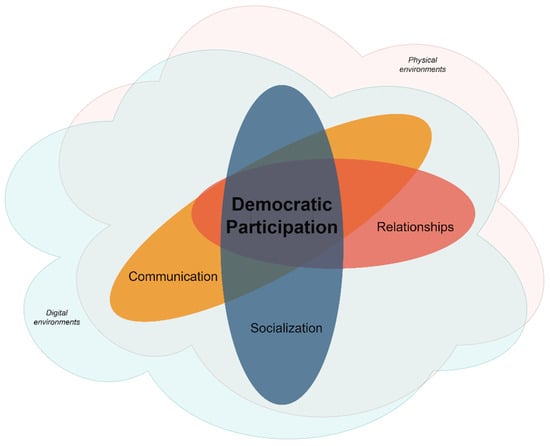
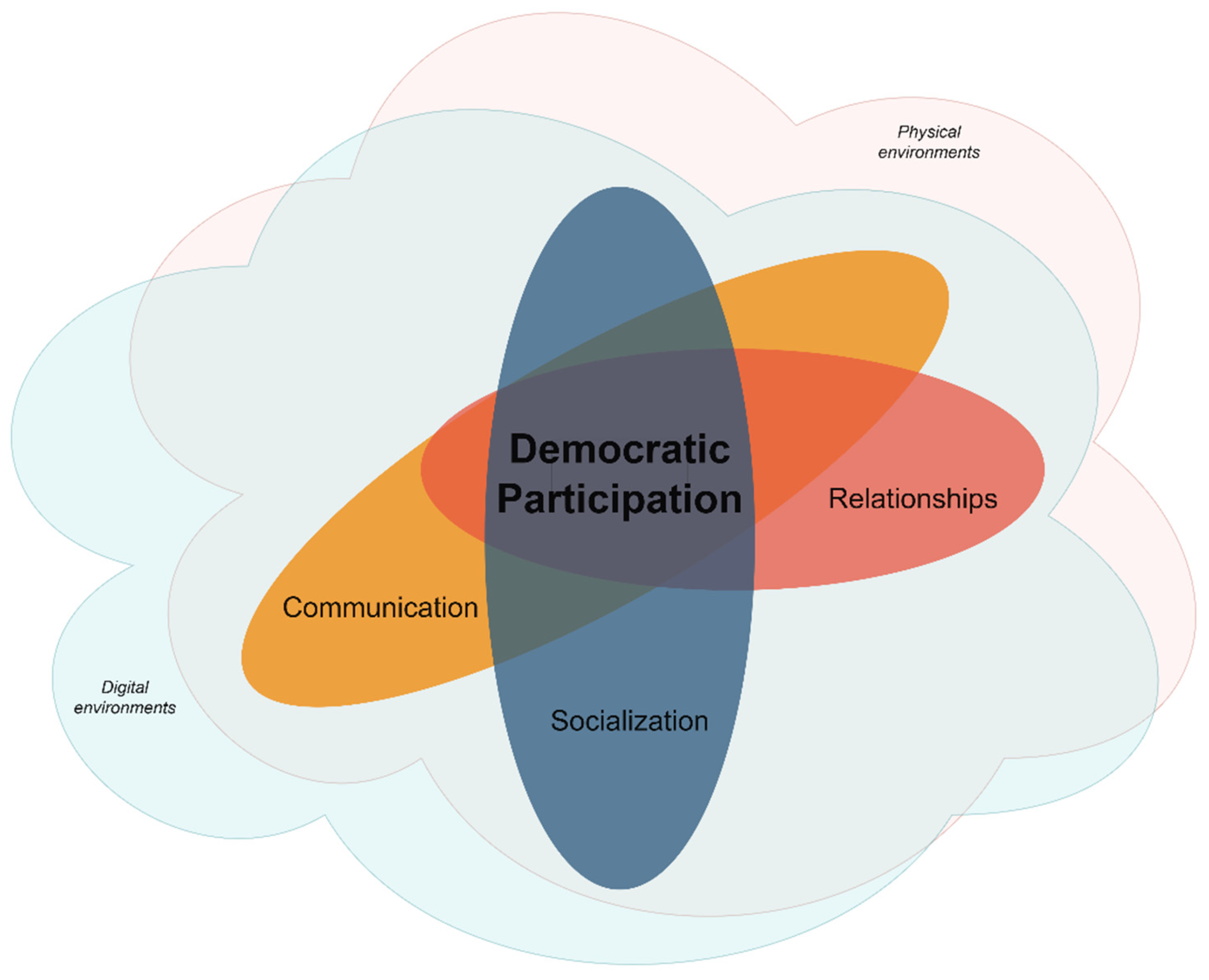
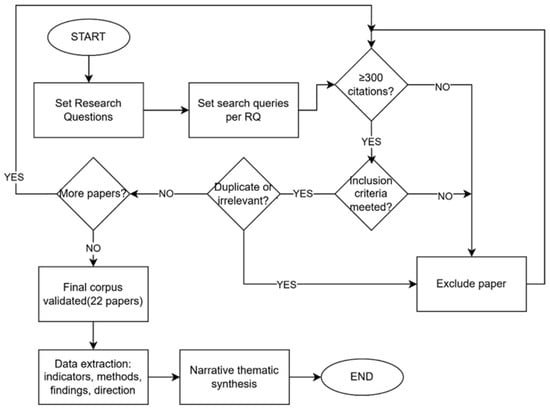
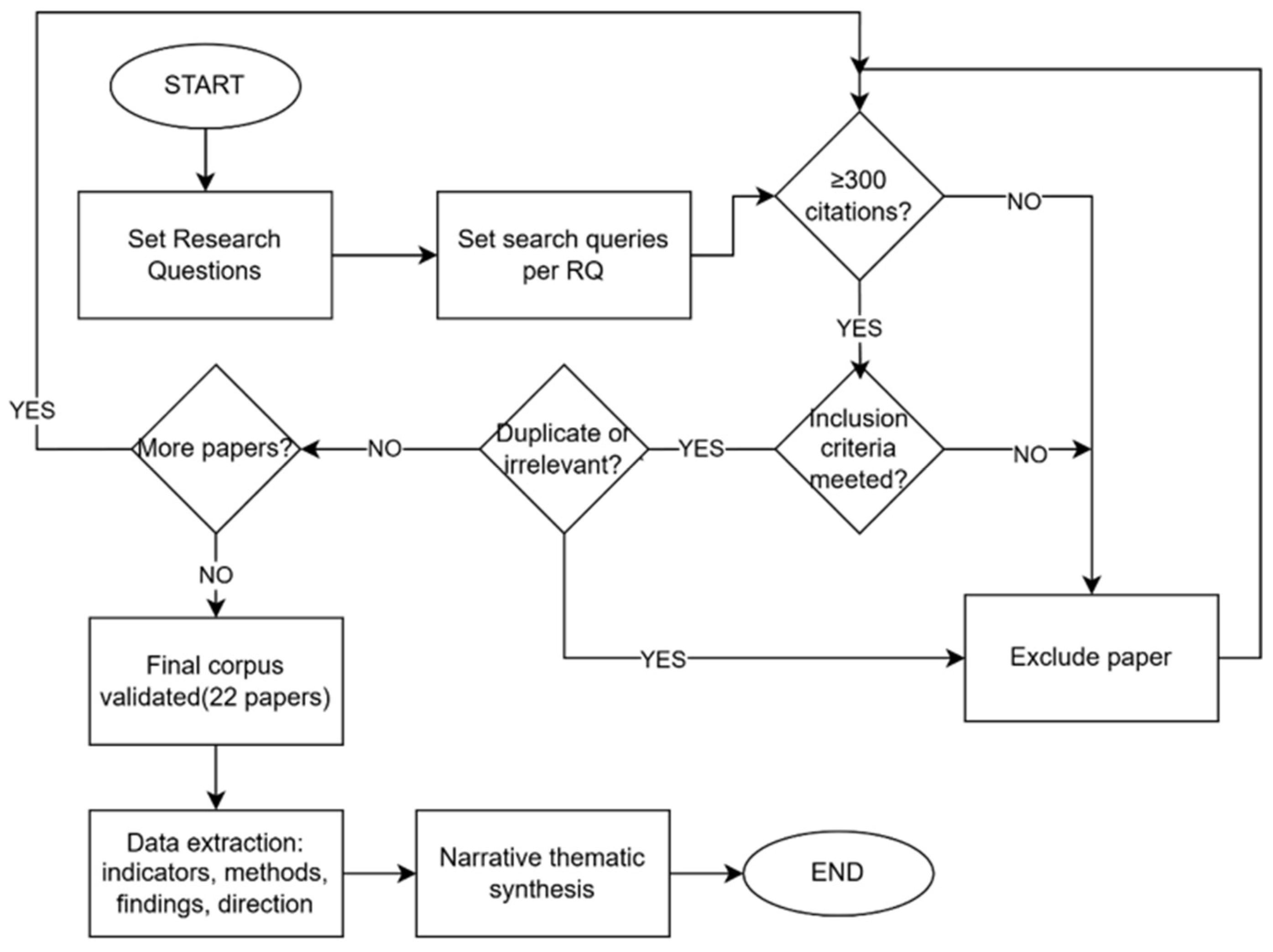
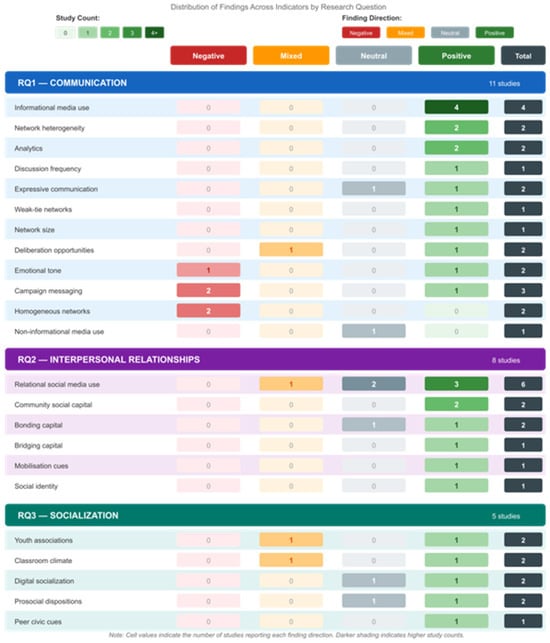
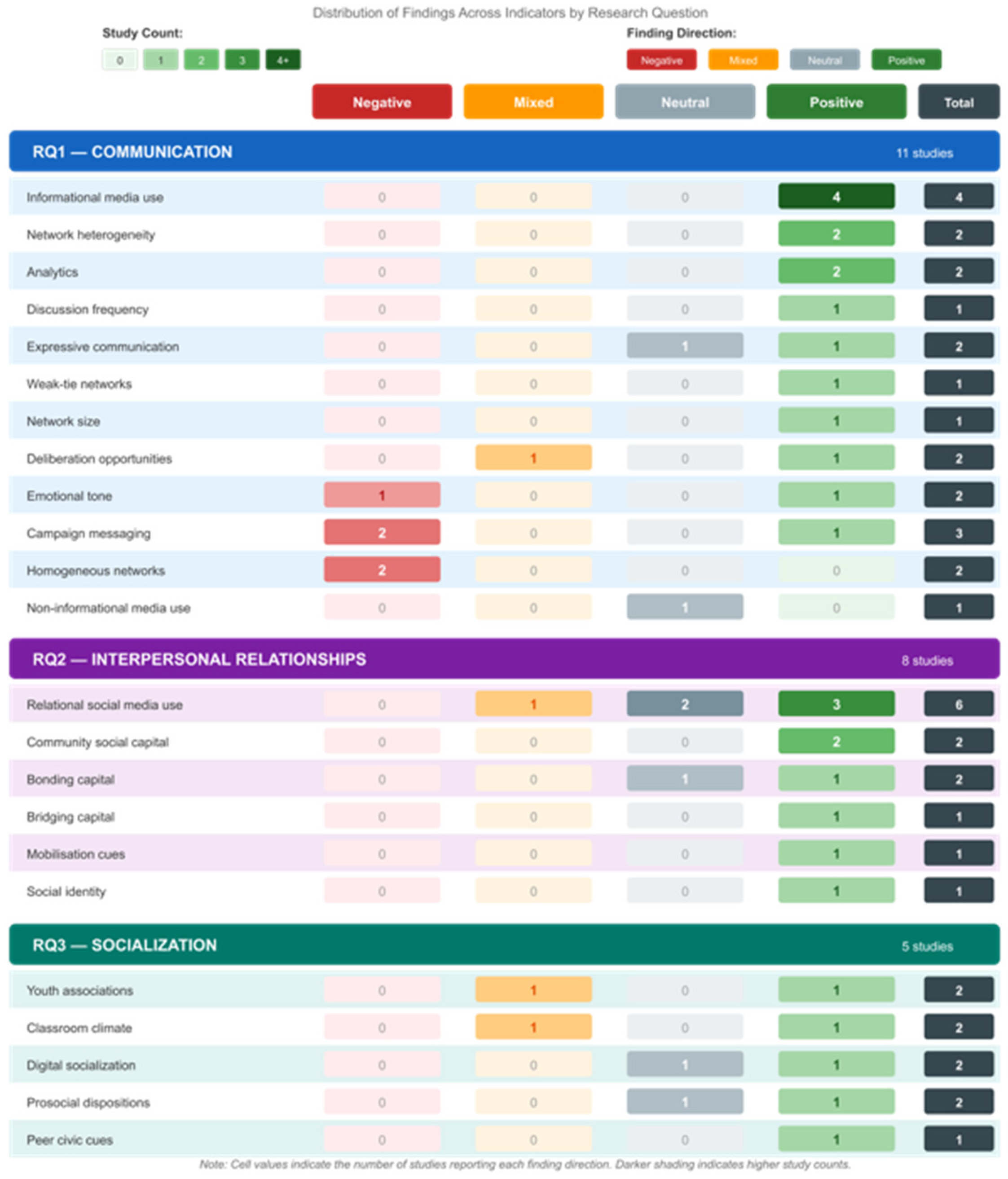
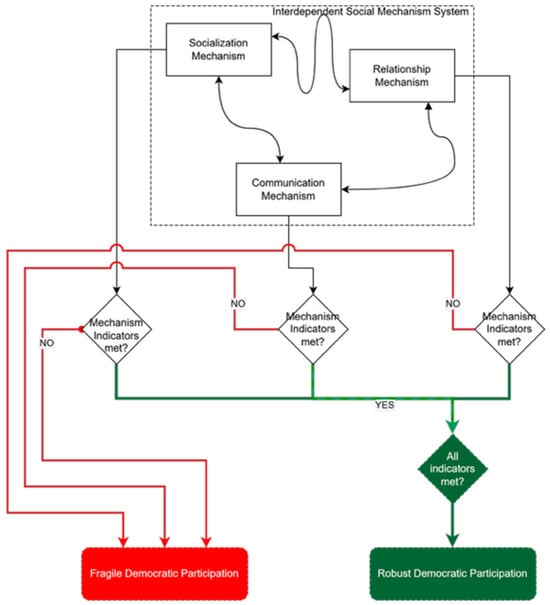
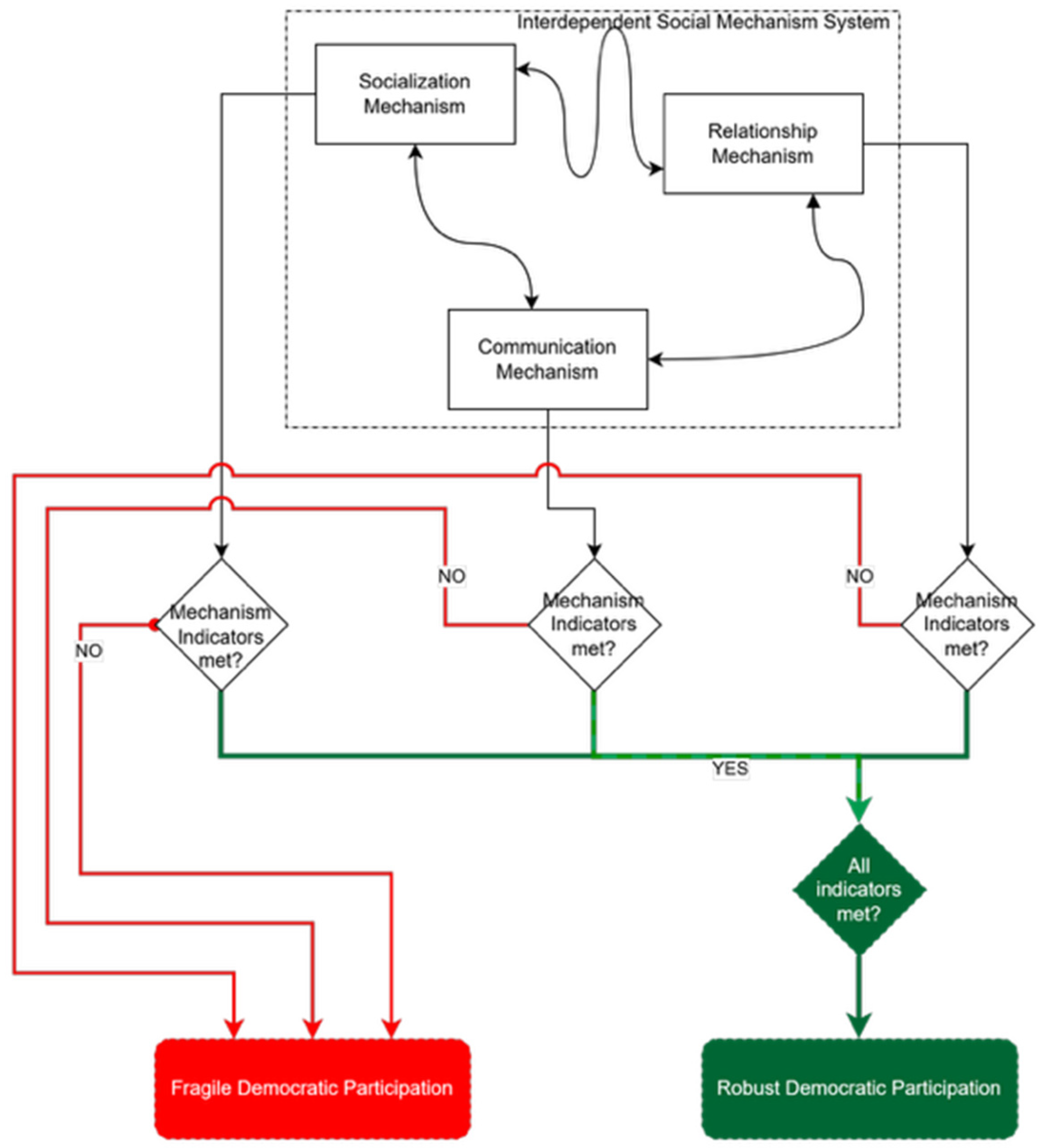

Disclaimer/Publisher’s Note: The statements, opinions and data contained in all publications are solely those of the individual author(s) and contributor(s) and not of MDPI and/or the editor(s). MDPI and/or the editor(s) disclaim responsibility for any injury to people or property resulting from any ideas, methods, instructions or products referred to in the content. |
© 2026 by the authors. Licensee MDPI, Basel, Switzerland. This article is an open access article distributed under the terms and conditions of the Creative Commons Attribution (CC BY) license.