


Abstract
Why do some organic farming systems persist while others collapse despite similar histories of collective action, policy support, and social legitimacy? This study examines how institutional design shapes the resilience of organic rice systems under conditions of market volatility and buyer power. Drawing on a qualitative comparative analysis of two subnational cases in rural Indonesia—Magelang and Tasikmalaya—Magelang experienced only 6–8% reversion to conventional rice (≈4.2 ha lost), while Tasikmalaya saw 32–38% reversion (≈13–17 ha). The study applies and extends the Institutional Analysis and Development (IAD) framework to foreground market risk governance as a central explanatory variable. The findings show that sustainability depends less on collective organisation than on whether producer institutions function as risk-bearing actors. In Magelang, a farmer cooperative governed market relations through internal monopsony and buyer diversification, shifting market risk from individual households to the organisational level. In Tasikmalaya, reliance on an external monopsony concentrated risk outside producer control; when buyer demand weakened, risk was rapidly transferred to farmers, triggering institutional fragmentation and exit from organic production. By distinguishing internal from external monopsony, the study advances an institutional explanation of resilience in market-mediated sustainability transitions and suggests that policies should prioritise institutional capacity for market risk governance over certification or production technologies.
1. Introduction
Organic agriculture is widely promoted as a pathway towards environmentally sustainable and socially inclusive rural development. In contemporary policy discourse, it is framed as a dual strategy: reducing the ecological footprint of farming while improving smallholder livelihoods through access to premium and ethically differentiated markets [1,2]. Governments, development agencies, and private actors increasingly position organic certification as a mechanism for aligning environmental stewardship with income generation, particularly in the Global South. Yet empirical experience across regions reveals a persistent contradiction. Acceptance of organic rice farming in Indonesia remains limited. Recent estimates indicate that less than 1–2% of total rice farmland is cultivated organically, and participation is highly uneven across regions.
Despite certification schemes, public incentives, and growing consumer awareness, many organic farming systems struggle to maintain farmer participation over time. In Indonesia, for example, organic rice clusters that initially expanded later experienced varying degrees of reversion: Magelang retained most of its farmers with only 6–8% returning to conventional rice (≈4.2 ha), while Tasikmalaya saw a much sharper reversal of 32–38% (≈13–17 ha). These contrasting trajectories illustrate how periods of rapid expansion are frequently followed by contraction, de-certification, or partial abandonment, raising fundamental questions about the long-term resilience of market-based sustainability transitions.
A growing body of rural studies and political economy literature suggests that this instability cannot be explained by agronomic or behavioural factors alone. While prior studies have examined organic market participation and certification dynamics [3,4] they have not adequately explained how institutional design shapes exposure to market risk.
Organic farming systems are embedded in markets characterised by price volatility, concentrated buyer power, and high compliance costs. Certification requirements, quality standards, and delayed payments introduce new forms of uncertainty that smallholders are often ill-equipped to absorb individually, particularly in contexts where access to credit, insurance, and working capital remains limited [5,6]. In such settings, sustainability is not simply a matter of adopting environmentally friendly practices; it is contingent upon how economic risk is governed and distributed along value chains. When uncertainty is systematically shifted onto producers, ecological commitment alone is rarely sufficient to sustain participation over time.
Recent debates in rural development have therefore begun to shift analytical attention from questions of market access to questions of market structure. Access to high-value or ethical markets does not automatically translate into stable livelihoods when producers occupy structurally weak positions within buyer-driven chains [3]. Where downstream actors retain discretion over pricing, volumes, quality thresholds, and acceptance criteria, risks are frequently externalised upstream. For smallholder farmers, participation in such markets may increase exposure to uncertainty rather than mitigate it, particularly in niche segments such as organic food, where rejection rates, delayed payments, and fluctuating demand are common [5,7]. These dynamics complicate celebratory narratives that portray sustainability markets as inherently empowering.
Within this context, collective institutions—cooperatives, farmer organisations, and producer groups—are often presented as a solution. These organisations are expected to enhance bargaining power, reduce transaction costs, and facilitate compliance with certification and quality standards. In policy and development practice, collective action is frequently treated as a stabilising force capable of reconciling smallholder vulnerability with market integration. However, accumulating evidence from diverse rural settings indicates that not all collective arrangements deliver resilience. Some organisations stabilise participation and endure beyond project cycles, while others fragment rapidly when market conditions shift or external support is withdrawn [8,9]. This variation points to the need for a more precise understanding of what collective institutions actually do in market-mediated sustainability transitions.
A key limitation of much of the existing literature is its tendency to treat collective organisation as an intrinsic good, while under-theorising the political–economic conditions under which it operates. Studies often emphasise internal group characteristics—such as trust, leadership, and social capital—while paying less attention to how collective organisations are positioned within markets characterised by asymmetric power relations [3,10]. As a result, failures of collective initiatives are frequently attributed to deficits in local capacity or commitment, rather than to institutional designs that expose organisations to unmanageable risk. This analytical gap is particularly consequential in sustainability-oriented markets, where participation requires ongoing compliance under volatile conditions.
This study addresses a central question arising from these debates: why do some organic farming systems persist while others collapse despite similar histories of collective action and policy support? It argues that the answer lies in how institutional arrangements govern market risk. Specifically, the persistence of organic farming depends less on the presence of collective organisation per se than on whether producer institutions are able to function as risk-bearing actors—absorbing and redistributing uncertainty at the organisational level—rather than transmitting volatility directly to individual farmers. Where institutions buffer uncertainty, organic farming can become a viable long-term livelihood strategy; where they fail to do so, exit and reversion to conventional practices become rational responses.
The argument is developed through a qualitative comparative study of organic rice farming in two rural regions of Indonesia: Magelang (Central Java) and Tasikmalaya (West Java). Both regions share long histories of smallholder rice cultivation, state intervention in agriculture, and engagement with organic farming initiatives involving government agencies, non-governmental organisations, and private buyers. Both experienced initial expansion of organic rice cultivation under favourable policy and market conditions. Yet their trajectories diverge sharply. In Magelang, organic rice cultivation has shown relative continuity in land use, organisational stability, and farmer participation, with only around 6–8% of farmers reverting to conventional cultivation, equivalent to approximately 4.2 hectares of previously organic-certified land. In Tasikmalaya, by contrast, organic systems have contracted significantly following disruptions in market access, with reversion reaching 32–38% of registered organic farmers, equivalent to about 13–17 hectares of formerly certified organic land, leading many producers to exit organic production entirely.
To explain this divergence, the study applies the Institutional Analysis and Development (IAD) framework [11], used here as an analytical lens rather than a normative model. While IAD has been widely employed to analyse collective action in common-pool resource management, its application to market-mediated development contexts remains limited. This study extends the framework by foregrounding market risk governance as a critical dimension shaping incentives, behaviour, and outcomes. By tracing how rules-in-use, action arenas, and organisational capacities interact with buyer power and volatility, the analysis highlights institutional mechanisms that generate either positive incentive cycles—reinforcing participation and investment—or negative incentive traps that accelerate institutional breakdown [12,13].
Focusing on Indonesia is analytically significant beyond its empirical relevance. As a major rice-producing country with a long history of state involvement in food systems, Indonesia offers a revealing context in which to examine how sustainability initiatives intersect with entrenched political–economic structures. Moreover, the dynamics observed in Indonesian organic rice mirror challenges faced by smallholders across the Global South, where sustainability markets expand alongside growing buyer concentration and uncertainty. The cases examined here therefore speak not only to Indonesian agriculture, but to broader debates on rural resilience, ethical markets, and sustainability transitions under conditions of volatility [1,2].
The study makes three contributions. Empirically, it provides a detailed account of how organic rice institutions in rural Indonesia navigate procurement uncertainty and buyer concentration. Theoretically, it extends institutional analysis by incorporating market risk as an explicit explanatory variable and by distinguishing internal from external monopsony as contrasting institutional configurations with divergent implications for resilience. Policy-wise, it challenges certification-centred approaches to organic agriculture and underscores the importance of strengthening producer organisations as market intermediaries capable of governing risk, rather than treating them merely as conduits for standard compliance.
This study advances existing debates on organic agriculture and rural sustainability by shifting the analytical focus from adoption and certification to the institutional governance of market risk. While prior studies have documented the challenges of buyer power, certification costs, and collective action in sustainability markets, they have rarely specified the causal mechanisms through which institutional arrangements translate market volatility into either resilience or collapse. By extending the Institutional Analysis and Development (IAD) framework to market-embedded contexts, this study conceptualises risk allocation—rather than coordination alone—as a decisive variable shaping participation and persistence. The distinction developed here between internal and external monopsony offers a novel institutional lens for understanding why similar collective organisations produce divergent outcomes under comparable policy and market conditions. In doing so, the study contributes a mechanism-oriented explanation of sustainability outcomes that moves beyond behavioural, technical, or capacity-deficit accounts, and instead situates organic agriculture within broader political–economic dynamics of uncertainty, power, and institutional design in the Global South [3,5,13].
2. Literature and Analytical Framework
This study is positioned at the intersection of three strands of the literature that have often developed in parallel but are increasingly interdependent in the analysis of contemporary rural change: institutional development, collective action, and market risk governance. Bringing these studies into dialogue is necessary to address a growing blind spot in sustainability-oriented rural development research, namely the tendency to treat markets as neutral arenas and institutions as inherently stabilising, while under-theorising how risk is structured, allocated, and experienced in practice [3,9,14,15].
Within the institutional development literature, institutions are conventionally understood as the “rules of the game” that reduce uncertainty and enable coordinated economic activity [15,16]. This perspective has been highly influential in development policy, underpinning efforts to promote formal rules, standardisation, and regulatory compliance as pathways to improved performance. However, more recent institutional scholarship has criticised this approach for privileging formal design over functional outcomes, and for insufficiently engaging with power relations and distributional consequences [17,18]. Institutions do not merely reduce uncertainty; they also redistribute it, often unevenly, shaping who bears the costs of volatility and failure.
This critique is particularly salient in the context of sustainability standards and certification regimes. Organic agriculture is frequently presented as a case in which “better institutions”—clearer rules, credible certification, and traceable supply chains—should stabilise markets and reward compliance. Yet empirical studies increasingly show that formal compliance can coexist with heightened insecurity when costs are front-loaded onto producers while market rewards remain contingent and unstable [1,5]. From this perspective, the effectiveness of institutions cannot be assessed solely by their formal coherence, but by their capacity to govern economic risk in practice.
The collective action literature offers important insights into how groups overcome coordination problems, manage shared resources, and establish self-governing arrangements [10]. In rural development research, collective organisations such as cooperatives and farmer groups are often framed as vehicles for empowerment, enabling smallholders to pool resources, access markets, and negotiate with external actors. However, recent critiques caution against a tendency to romanticise collective action without adequately specifying the conditions under which it remains viable under market pressure [8,10].
Much of the collective action literature continues to focus on internal group characteristics—trust, norms, leadership, and social capital—while paying less attention to the external market structures within which collective organisations operate. As a result, failures of collective action are frequently attributed to deficits in local capacity or cohesion, rather than to institutional designs that expose groups to asymmetric risk. This limitation becomes acute in market-facing sustainability initiatives, where collective organisations are expected not only to coordinate production but also to absorb shocks generated beyond their control.
The third strand of the literature—market risk governance—addresses this gap by focusing explicitly on how uncertainty and volatility are structured within economic systems. Emerging from political economy, economic sociology, and critical value-chain analysis, this literature emphasises that risk is not simply an exogenous shock but is actively produced and allocated through contracts, standards, buyer strategies, and financial arrangements [7,13]. In agri-food systems, downstream actors often possess the capacity to shift risk upstream through flexible procurement, stringent quality requirements, and unilateral exit options.
Recent studies highlight how increasing buyer concentration and the proliferation of private standards have reshaped rural economies, particularly in high-value and ethical markets [3,19]. While such markets can offer price premiums and new opportunities, they also tend to intensify exposure to rejection risk, delayed payments, and demand volatility. For smallholders, participation may therefore involve trading one form of vulnerability for another, unless institutions exist to mediate these risks collectively.
Organic agriculture exemplifies these tensions. Global organic markets have expanded significantly, with sales exceeding €130 billion by 2023, yet participation at farm level remains uneven and reversible [4]. Evidence of “deconversion” in several regions underscores that sustainability transitions are not linear processes but contested and fragile trajectories shaped by economic incentives as much as by environmental values. These dynamics call for analytical frameworks capable of linking institutional design with market risk and farmer behaviour.
To address this need, the study employs the Institutional Analysis and Development (IAD) framework as an integrative analytical tool. Rather than using IAD normatively to identify “design principles” for successful collective action, the framework is mobilised here as a diagnostic lens for examining how institutional configurations shape incentives and outcomes in market-embedded settings. This approach aligns with recent efforts to repurpose IAD for analysing power, inequality, and failure, rather than success alone [20,21].
A visual analytical framework in Figure 1 below illustrating the extended IAD model—linking action arenas, rules-in-use, market risk governance, internal/external monopsony, and incentive pathways.
Figure 1.
Extended Institutional Analysis and Development (IAD) Framework for Market Risk Governance in organic rice systems.
In Figure 1, shows three elements of IAD are central to the analysis. First, the action arena is conceptualised as the space in which actors—farmers, cooperatives, buyers, regulators, and intermediaries—interact under specific institutional conditions. Importantly, action arenas are not assumed to be neutral or symmetrical; they are structured by unequal bargaining power and differential exposure to risk. In organic value chains, action arenas are shaped by procurement rules, certification requirements, and buyer discretion, all of which influence strategic behaviour.
Second, rules-in-use are treated as lived institutional practices rather than merely formal regulations. Numerous studies demonstrate that discrepancies between formal rules and everyday practice are common in development contexts, particularly where enforcement is uneven or where informal norms coexist with official standards [22]. In organic agriculture, such discrepancies may involve flexible interpretation of certification rules, informal price adjustments, or tolerated payment delays, all of which have implications for risk distribution.
Third, incentives are understood as the behavioural mechanisms linking institutional arrangements to participation. Instead of assuming homogeneous rationality, the analysis recognises that farmers respond to perceived stability, predictability, and downside protection. Where institutions stabilise expectations, compliance and long-term investment become rational strategies. Where institutions transmit volatility, exit and reversion to conventional practices become equally rational responses.
A key analytical innovation of this study is the distinction between internal monopsony and external monopsony as contrasting institutional configurations. In conventional economic analysis, monopsony is typically viewed as a market failure that disadvantages producers. However, recent work on cooperatives and hybrid organisations suggests that the effects of monopsony depend on governance and accountability [23,24]. When procurement power is exercised by producer-controlled organisations, monopsony can function as a mechanism for coordination and risk pooling. When controlled by external buyers, it often facilitates risk transfer and dependency.
By integrating this distinction into the IAD framework, the study moves beyond binary assessments of market power and focuses instead on how institutional location and governance shape outcomes. This approach resonates with calls in rural studies to analyse markets as institutionalised fields, where outcomes reflect negotiated power relations rather than abstract efficiencies [3,13].
Positioned in this way, the study contributes to rural studies in three respects. First, it reframes organic agriculture as an institutional challenge of governing risk rather than a purely technical or behavioural transition. Second, it extends institutional analysis by foregrounding market risk as an explicit explanatory variable in sustainability outcomes. Third, it offers a mechanism-oriented explanation of why collective action succeeds in some contexts and fails in others, without resorting to culturalist or capacity-deficit explanations.
This analytical positioning sets the stage for the empirical analysis that follows. Rather than asking whether organic farming “works”, the study asks under what institutional conditions it becomes a viable and durable livelihood strategy for smallholders operating in volatile and buyer-driven markets.
2.1. Institutional Development Literature
Institutions are conventionally defined as the “rules of the game” that reduce uncertainty, coordinate economic activity, and stabilise expectations among actors [16]. Influenced heavily by North and neo-institutional approaches, this perspective treats institutions as mechanisms for improving transaction efficiency and enabling predictable market exchange. In development policy, such views guide reform agendas promoting regulatory harmonisation, formal rule systems, and administrative standardisation as pathways to better governance [25].
More recent scholarship challenges this formalistic interpretation for neglecting the socio-political processes through which institutions operate [12,21,22]. Focusing solely on formal rule coherence risks obscuring deeper distributional consequences, particularly in settings characterised by unequal power relations and inconsistent enforcement. Institutions not only reduce uncertainty but also redistribute it—determining who absorbs volatility, who benefits from stability, and who becomes exposed when standards change or coordination breaks down [21].
This critique becomes especially relevant in sustainability certification regimes such as organic agriculture. Although certification aims to reinforce accountability and product integrity, empirical studies show that it may simultaneously generate new vulnerabilities for producers [4]. Compliance costs are often incurred upfront, while market rewards depend on unstable demand and discretionary procurement practices. Even fully compliant farmers remain exposed to unpredictable pricing, delayed payments, and shifting quality requirements, demonstrating that stronger formal rules do not automatically translate into secure livelihoods [5,6,26].
Therefore, institutional effectiveness should be evaluated not by design elegance but by the capacity to govern economic risk under real market conditions. This reframing shifts the analytical focus from normative institutional design principles toward functional questions: how rules operate in practice, how they interact with power, and how they shape the distribution of market volatility. This foundation supports the integration of institutional development, collective action, and market risk governance in the present study [11,12].
2.2. Collective Action Literature
Collective action theory explains how smallholders organise to overcome coordination failures, pool resources, and strengthen bargaining power in market-oriented agricultural systems. Foundational contributions from Ostrom and Olson emphasise that collective action emerges when actors recognise shared benefits, credible rules, and incentives for cooperation [11,15]. Farmer groups and cooperatives are thus widely viewed as institutional vehicles that reduce transaction costs, facilitate certification, and improve market negotiation.
However, contemporary evidence across the Global South cautions against assuming that organisational cohesion guarantees sustained performance. Collective organisations are—particularly when they are expected to internalise risks originating from higher levels of the value chain. Under volatile conditions, organisations may struggle to stabilise prices, maintain trust, or enforce commitments, leaving farmers exposed to the uncertainties they sought to mitigate [21]. Recent work on farmer producer organisations (FPOs) similarly shows that even well-structured groups remain vulnerable when market risks are externalised upstream, with organisational performance shaped by procurement volatility and buyer concentration [27,28].
Much of the prior literature overemphasises internal group attributes such as leadership quality, norms, trust, and social capital, while underexamining how organisations are positioned within broader market structures. This internalist bias creates analytical blind spots: organisational failure is often blamed on weak cohesion, even when the root cause lies in buyer concentration, stringent standards, or procurement volatility. In sustainability-oriented markets, where compliance requirements are complex and buyer discretion substantial, these omissions become particularly consequential [29].
Recent studies on farmer producer organisations (FPOs) and hybrid cooperatives highlight that viability depends on stable incentives, enforceable rules, and mechanisms that buffer market risk. Organisations thrive when risk is shared collectively; they struggle when shocks are shifted unilaterally onto farmers. Evidence from large-N FPO studies further demonstrates that resilience improves when institutional mechanisms explicitly buffer price and certification risk, whereas producer groups facing buyer-driven uncertainty exhibit declining participation and weakened compliance [28,29]. Thus, collective action must be understood within its institutional and market environment. This logic underpins the integration of collective action theory with institutional development and market risk governance in this study [23].
2.3. Market Risk Governance Literature
Market risk governance scholarship examines how uncertainty, volatility, and asymmetric exposure to failure are structured within agrifood systems. Rather than viewing risk as external, this literature argues that risk is actively produced through procurement contracts, grading standards, quality-control regimes, and strategic buyer practices [14,30]. Market relations are therefore institutionalised arrangements that distribute gains and losses unevenly.
Political economy and economic sociology contributions show that as value chains become more buyer-driven, downstream actors gain greater capacity to transfer risk upstream. Large buyers retain discretion to impose strict quality requirements, adjust volumes, and terminate relationships unilaterally [19]. These practices heighten income instability for smallholders, especially in certification-based markets such as organic agriculture, where compliance costs are fixed while demand fluctuates [24].
Growing concentration in premium and ethical markets exacerbates these dynamics. Private standards may promise higher returns but also create vulnerabilities: heightened rejection risk, payment delays, and increased dependence on a small number of buyers. For farmers lacking capital buffers, these risks undermine the viability of participation [5].
Despite global organic sales surpassing €130 billion by 2023, participation remains uneven and often reversible, reflecting fragile sustainability transitions shaped by fluctuating incentives [4]. Without mechanisms for risk mediation, smallholders bear compliance costs without assurance of stable rewards.
These insights justify extending the Institutional Analysis and Development (IAD) framework to incorporate market risk governance and distinguish between internal and external monopsony. By foregrounding risk allocation mechanisms, the model offers a robust foundation for analysing the divergent outcomes observed in the empirical cases [20].
3. Material & Methods
This study adopts a qualitative comparative case study design to examine how institutional configurations shape market risk governance and the resilience of organic farming systems. A qualitative approach is particularly appropriate because the research question concerns the mechanisms through which institutions mediate uncertainty and influence farmer behaviour, rather than the estimation of average treatment effects. Comparative institutional analysis has long been recognised as a powerful strategy for explaining divergent outcomes across settings that share broad structural characteristics but differ in organisational design and political–economic dynamics [31,32].
The comparative logic employed in this study follows a most-similar subnational systems design. By selecting cases located within the same national policy regime, commodity system, and agrarian context, the analysis controls for macro-level factors such as national agricultural policy, trade exposure, and cultural norms surrounding rice production. This design allows attention to be focused on institutional variation at the meso level, where rules, organisational practices, and market relations differ in ways that are consequential for risk distribution [33,34].
The two cases—Magelang Regency in Central Java and Tasikmalaya Regency in West Java—were selected because they share a number of salient characteristics relevant to organic agriculture in Indonesia. Both regions are dominated by smallholder rice farming, both have experienced sustained state involvement in agricultural development, and both became early sites of organic rice promotion involving government agencies, non-governmental organisations, and private buyers. In addition, both regions experienced initial expansion of organic rice cultivation followed by growing market pressures related to certification costs, buyer concentration, and price volatility [1,5].
Despite these similarities, the two cases display sharply contrasting trajectories. In Magelang, organic rice cultivation has shown relative continuity in land use, organisational stability, and farmer participation beyond donor and project cycles. In Tasikmalaya, by contrast, organic rice systems have undergone significant contraction following disruptions in market access, with many farmers reverting to conventional production. This divergence renders the cases analytically productive for identifying how institutional arrangements mediate exposure to market risk and shape resilience under uncertainty [12].
Importantly, the comparison does not focus on differences in agronomic performance, yield levels, or technical efficiency. Such factors are treated as background conditions rather than primary explanatory variables. Instead, the analytical emphasis is placed on institutional design, including procurement arrangements, certification governance, buyer relations, and internal organisational rules. This focus reflects a broader shift in rural development research that recognises sustainability outcomes as being shaped less by technical feasibility than by institutional and political–economic conditions governing markets [3,8].
3.1. Data Collection
Primary data were collected through a combination of in-depth semi-structured interviews, partial participant observation, and document analysis conducted between March and August 2024. This multi-method approach was adopted to capture both formal institutional arrangements and the informal practices through which market risk is experienced and negotiated. Triangulating multiple sources is widely regarded as essential for enhancing credibility in qualitative institutional research, particularly where power relations and informal rules play a central role [21,35].
Table 1 below summarises the respondent categories, total number of interviews, and the type of information collected in Magelang and Tasikmalaya.
Table 1.
Respondent Categories, Sample Size, and Information Collected.
Semi-structured interviews constituted the core data source. Interviews were conducted with a purposive sample of actors occupying different positions within the organic rice value chain. These included smallholder farmers (both current and former organic producers), leaders of cooperatives and farmer groups, local agricultural extension officers, district and provincial government officials, private buyers and off-takers, certification facilitators, representatives of non-governmental organisations, and academic observers. This diversity of respondents enabled the analysis to capture how risk perceptions and incentives varied across institutional locations rather than assuming a homogeneous “farmer” perspective [36].
Interviews followed a flexible guide covering themes such as procurement arrangements, price formation, contract enforcement, certification costs, payment delays, and responses to market fluctuations. At the same time, respondents were encouraged to narrate their own experiences of uncertainty, trust, and institutional performance. This approach aligns with interpretive traditions in rural studies that emphasise actors’ situated knowledge and reflexive reasoning under conditions of uncertainty [26,37]. Interviews typically lasted between 60 and 120 min and were conducted in Indonesian. Key excerpts were translated into English during the analysis stage, with attention to preserving meaning rather than literal phrasing.
Partial participant observation complemented interview data by providing insight into everyday institutional practices that are often under-articulated in formal accounts. Observations included attendance at cooperative meetings, certification-related activities, harvesting and aggregation processes, and interactions between farmers and buyers. These observations were particularly valuable for identifying discrepancies between formal rules and rules-in-use, a core concern in institutional analysis [22]. Detailed field notes were recorded and systematically integrated into the analytical process.
Secondary data were drawn from policy documents, programme reports, cooperative records, certification guidelines, and official statistics related to organic agriculture in Indonesia. These materials were used to reconstruct institutional histories, verify timelines, and situate actors’ accounts within broader policy and market developments. The combination of primary and secondary sources enabled triangulation and reduced the risk of over-reliance on any single narrative [1,25].
3.2. Analytical Strategy
Data analysis followed an iterative and abductive logic, moving back and forth between empirical material and theoretical concepts. Rather than coding data solely according to predefined categories, the analysis allowed patterns related to risk distribution, institutional buffering, and incentive alignment to emerge inductively before being interpreted through the Institutional Analysis and Development (IAD) framework. Such an approach is consistent with contemporary qualitative methodologies that emphasise theory-building through engagement with empirical anomalies [32,38].
The first analytical step involved mapping exogenous conditions in each case, including bio-physical constraints, policy environment, and market context. These factors were not treated as deterministic explanations but as structural boundaries within which institutional arrangements operated. Particular attention was paid to how exogenous volatility—such as shifts in buyer demand or changes in procurement strategies—entered local action arenas and altered incentive structures [6,13].
The second step focused on reconstructing action arenas, identifying key actors, their positions, and patterns of interaction. Analysis examined how procurement was organised, how prices were negotiated, how certification decisions were made, and how conflicts were resolved. Mapping these arenas made visible the asymmetries of power and information that shaped exposure to risk, especially the role of buyer dominance and organisational capacity in mediating uncertainty [3,19].
The third step analysed rules-in-use, distinguishing between formal regulations and informal practices. This included examining how certification rules were interpreted, how payment delays were normalised or contested, and how organisational sanctions were enforced. Identifying gaps between formal and informal rules was critical for understanding why some institutions stabilised expectations while others amplified uncertainty [10,29].
Finally, institutional outcomes were assessed across three dimensions: continuity of organic land use, income and price stability, and organisational persistence. Outcomes were conceptualised as dynamic and reversible rather than fixed end states. The analysis traced how changes in market risk governance produced either positive incentive cycles—reinforcing participation and compliance—or negative incentive traps that encouraged exit from organic farming [8,12].
Throughout the analysis, the objective was analytical generalisation rather than statistical inference. By linking observed outcomes to identifiable institutional mechanisms, the study contributes to theory-building on rural institutions and market risk governance, offering insights transferable to other sustainability-oriented value chains facing similar conditions of volatility and buyer power [3,39].
3.3. Data Analysis and Validity
Data analysis followed a structured qualitative process combining iterative coding, thematic categorisation, and cross-case synthesis. Interview transcripts, field notes, and organisational documents were coded inductively to identify recurring patterns related to procurement arrangements, certification governance, risk distribution, and institutional behaviour. Coding proceeded through three stages—open, axial, and integrative—allowing categories to be refined and linked to the study’s analytical framework [40]. Cross-case comparison was then applied to trace divergences and convergences between Magelang and Tasikmalaya, following standard procedures for comparative institutional analysis [41].
Validity was strengthened through triangulation of multiple sources—interviews, organisational archives, certification documents, and secondary policy materials—to minimise reliance on single-informant narratives [42]. Credibility was enhanced through pattern matching across respondent groups and temporal cross-checks against certification cycles and procurement records. To reduce interpretive bias, preliminary findings were repeatedly tested against disconfirming evidence, and coding decisions were reviewed through peer debriefing processes, consistent with qualitative reliability protocols [43]. These strategies provide a transparent basis for evaluating the robustness of the findings despite the interpretive nature of the research design.
4. Comparative Results: Institutional Design and Trajectories of Organic Rice Resilience
This section presents the comparative findings of the study by tracing how differences in institutional design shape the governance of market risk and, ultimately, the resilience of organic rice systems. Rather than treating outcomes as static end points, the analysis focuses on processes and trajectories, showing how institutional arrangements mediate exogenous constraints, structure action arenas, and generate cumulative incentive dynamics over time [8,12].
4.1. Exogenous Conditions and Structural Constraints
Both Magelang and Tasikmalaya are embedded in Indonesia’s broader political economy of rice, characterised by strong state involvement, price sensitivity, and the cultural centrality of paddy farming. At this macro level, the two cases share exposure to national agricultural policies, food security narratives, and fluctuating rice markets. These shared conditions provide an important baseline, ensuring that observed differences cannot be attributed simply to national policy divergence or commodity-specific dynamics [1,25].
At the meso level, however, exogenous conditions differ in ways that interact with institutional arrangements. Magelang benefits from relatively stable technical irrigation systems, which reduce production risk and enable more predictable cropping cycles. This stability does not eliminate uncertainty, but it narrows the range of downside scenarios faced by farmers and organisations. Moreover, the prevalence of locally recognised aromatic rice varieties provides partial product differentiation, allowing organic rice to avoid direct price competition with mass-produced conventional rice. These attributes expand the institutional “room for manoeuvre” in governing market relations [5,26].
In Tasikmalaya, organic rice production is more heavily dependent on rain-fed systems, exposing farmers to higher seasonal variability and compounding production risk. Varietal differentiation is more limited, positioning organic rice closer to conventional alternatives in local markets. When market premiums weaken, this lack of differentiation amplifies vulnerability. These findings echo broader rural studies showing that biophysical exposure becomes economically consequential when institutions lack mechanisms to buffer volatility [6,13].
Community attributes further differentiate the two cases. In Magelang, farmer organisations underwent a gradual institutional transformation from loosely organised groups into a legally registered cooperative with explicit economic functions. This transformation enabled asset accumulation, access to formal finance, and the development of internal governance routines. Importantly, organisational consolidation occurred incrementally, allowing trust and managerial capacity to co-evolve with market engagement. Such layering processes are increasingly recognised as critical to institutional sustainability [10,12].
In Tasikmalaya, organic farming emerged from a strong grassroots movement with high normative commitment to ecological principles. However, organisational forms remained closer to federations of farmer groups (gapoktan) with limited consolidation of economic decision-making authority. While social cohesion was initially strong, organisational capacity to manage market relations and financial risk remained weak. This divergence highlights a key empirical insight: social legitimacy and normative commitment are insufficient substitutes for economic institutionalisation under market pressure [5,8].
Policy support also shaped these structural conditions unevenly. Both regions benefited from government programmes promoting organic agriculture through training, certification facilitation, and limited infrastructure investment. In Magelang, such interventions were leveraged by the cooperative as seed capital for building internal economic mechanisms. In Tasikmalaya, support remained largely project-bound and time-limited. When external funding cycles ended, the absence of internally generated buffers became increasingly consequential. This pattern reinforces critiques of projectized rural development that emphasise sustainability without institutional embedding [1,9].
4.2. Action Arenas and Institutionalised Market Relations
The most consequential divergence between the two cases emerges in the configuration of action arenas, particularly those governing procurement and market access. In Magelang, the cooperative occupies a central coordinating position, purchasing members’ output and acting as the primary interface with downstream buyers. This arrangement constitutes an internal monopsony, through which production is aggregated, quality is standardised, and market engagement is managed collectively. Rather than eliminating market risk, this structure reorganises where and how risk is absorbed [13,23].
Through internal procurement, the cooperative reduced uncertainty at the farm level by guaranteeing offtake within a bounded price range. In Magelang, reversion levels remained low, with approximately 6–8% of farmers (≈4.2 ha) returning to conventional practices, indicating relatively high organisational stability.
Farmers were not insulated from all volatility, but they were shielded from abrupt income shocks associated with rejected produce or sudden loss of buyers. This stabilisation of expectations proved more important for sustained participation than the maximisation of short-term price premiums, a finding consistent with livelihood studies emphasising predictability over peak returns [8,26].
Crucially, the cooperative in Magelang pursued buyer diversification as a deliberate risk governance strategy. By maintaining relationships with multiple business-to-business buyers—ranging from organic retailers to processors and institutional consumers—it reduced dependence on any single outlet. When demand from one buyer declined, volumes could be reallocated to others, albeit sometimes at lower margins. This capacity to re-route output mitigated the impact of market fluctuations and preserved organisational continuity [3,5].
In Tasikmalaya, reversion to conventional farming reached approximately 32–38% of registered organic farmers, equivalent to about 13–17 hectares of previously certified organic land.
By contrast, the action arena was dominated for an extended period by reliance on a single external buyer in Tasikmalaya. This external monopsony simplified coordination and facilitated entry into organic markets, but it also entrenched dependency. Pricing, quality thresholds, and delivery schedules were largely determined downstream, limiting the ability of farmer organisations to negotiate or adapt. As long as the buyer remained engaged, risks appeared manageable; once procurement ceased, however, vulnerabilities were rapidly exposed [7,19].
The withdrawal of the dominant buyer in Tasikmalaya triggered a cascading institutional crisis. Without alternative outlets, farmer groups were unable to absorb unsold output or cover certification costs. Attempts to shift toward local markets proved insufficient due to lower volumes and weaker price premiums. This episode illustrates how external monopsony can mask systemic risk, which becomes visible only when market conditions change [3,13].
These contrasting action arenas shaped farmer behaviour in predictable but institutionally mediated ways. In Magelang, stable procurement arrangements encouraged compliance with cooperative rules and sustained investment in organic practices, even when returns were modest. In Tasikmalaya, the collapse of market access eroded trust in collective arrangements, prompting farmers to revert to conventional production offering faster liquidity and lower compliance costs. These responses should be understood as rational adaptations to institutional failure rather than resistance to sustainability norms [8,10].
4.3. Risk Distribution and Organisational Capacity
A central finding of the comparative analysis concerns how risk is distributed across actors. In Magelang, market risk was partially internalised at the organisational level. The cooperative absorbed delays in payment, managed rejected batches, and cross-subsidised certification costs through diversified revenue streams. While this did not eliminate financial strain, it prevented immediate transmission of losses to individual households. Such buffering capacity is increasingly recognised as a defining feature of resilient rural institutions [13,23].
Organisational capacity was critical to this outcome. The cooperative developed managerial routines, financial controls, and decision-making procedures that enabled collective risk management. Over time, these routines became institutionalised, reinforcing confidence among members and external partners alike. This process illustrates how institutional resilience emerges cumulatively, rather than as a one-off design feature [10,12].
In Tasikmalaya, by contrast, organisational capacity to manage risk remained limited. Certification costs, payment delays, and market losses were borne directly by farmers. When revenues declined, organisations lacked working capital to buffer shocks or renegotiate terms. Risk was therefore externalised to the household level, where coping strategies included exit from organic production. This pattern exemplifies what recent institutional scholarship describes as negative incentive traps, where institutions amplify rather than mitigate exposure to uncertainty [5,8].
Importantly, these outcomes cannot be attributed to differences in farmer knowledge or ecological commitment. In both regions, farmers possessed long experience with organic practices and expressed strong normative support for sustainability. The decisive factor was whether institutions were able to translate these commitments into economically viable arrangements under market volatility. This finding challenges explanations that locate failure primarily in local capacity deficits or cultural resistance [3,9].
4.4. Institutional Outcomes: Resilience Versus Fragility
The cumulative effects of these institutional differences are reflected in contrasting outcomes. In Magelang, organic rice cultivation demonstrated relative continuity over time. Certified land area stabilised, cooperative membership remained intact, and organisational functions persisted beyond the conclusion of external support. While profitability fluctuated, the system avoided abrupt collapse. This outcome aligns with a definition of resilience as the capacity to absorb shocks without systemic breakdown [2,8].
In Tasikmalaya, institutional fragility manifested in rapid contraction. Certified land area declined sharply, farmer groups dissolved or became inactive, and certification lapsed. Rather than serving as buffers, collective organisations became sites of frustration as members pursued individual coping strategies. This trajectory illustrates how sustainability initiatives can unravel when institutional design fails to mediate market risk [5,6].
4.5. Summary of Comparative Findings
Taken together, the comparative results demonstrate that the resilience of organic rice systems hinges on institutional design rather than organisational form alone. In Magelang, internal monopsony and buyer diversification created a positive incentive cycle in which predictable market access reinforced trust, compliance, and long-term investment. In Tasikmalaya, reliance on an external monopsony generated structural vulnerability, culminating in institutional fragmentation when market conditions shifted.
These findings underscore a broader implication for rural studies: market integration is neither inherently empowering nor inherently destabilising. Its effects depend on the institutional architectures through which producers engage with markets and on how risk is allocated within those architectures. Where institutions mediate markets credibly, sustainability transitions can stabilise; where they transmit volatility, even well-supported collective initiatives may unravel [3,8].
5. Discussions: Institutions, Market Risk Governance, and Rural Resilience
5.1. From Collective Action to Market Risk Governance
The comparative findings challenge a persistent assumption in the rural development literature: that the presence of collective organisation is sufficient to stabilise smallholder participation in high-value agricultural markets. Both Magelang and Tasikmalaya exhibit long histories of collective action, strong normative commitment to organic principles, and sustained policy engagement. Yet only one system demonstrated resilience over time. This divergence suggests that collective action alone is an incomplete explanatory category unless it is analytically linked to how economic risk is governed [5,8].
Mainstream accounts of rural collective action often emphasise coordination benefits such as economies of scale, reduced transaction costs, and improved market access. These accounts implicitly assume that markets reward coordination symmetrically and that collective entry mitigates individual exposure to uncertainty. However, contemporary agri-food markets—particularly organic and ethical segments—are characterised by concentrated buyer power, stringent standards, and asymmetric control over prices and volumes. Under such conditions, collective action that does not explicitly address risk allocation may inadvertently expose producers to new vulnerabilities [3,6].
The cases analysed here demonstrate that the decisive function of rural institutions lies not merely in coordinating production, but in governing uncertainty. In Magelang, the cooperative did not simply aggregate output; it reorganised the locus of risk. By acting as an internal monopsony and negotiating with multiple buyers, the cooperative absorbed market volatility at the organisational level. This arrangement stabilised farmer expectations and sustained participation even when margins fluctuated. In Tasikmalaya, by contrast, collective structures failed to mediate market exposure, leaving farmers individually responsible for shocks originating downstream. The result was a rapid erosion of trust and participation once buyer relations deteriorated [8,13].
Institutions that fail to absorb market volatility shift the burden of uncertainty onto individual households, weakening long-term commitment to sustainability practices. In contexts where market shocks are recurrent and procurement arrangements are unstable, farmers face heightened exposure to income fluctuations, liquidity pressures, and unpredictable rejection risks. These household-level vulnerabilities directly influence decisions to continue, scale down, or abandon organic farming, making institutional buffering capacity a critical determinant of long-term sustainability outcomes.
Intra-household dynamics also played a critical role. Women’s substantial labour inputs—often exceeding those of male household members—were not matched by proportional control over marketing or certification decisions. This asymmetry magnified the impact of income shocks on women’s workloads, reducing household tolerance for prolonged uncertainty and accelerating reversion in Tasikmalaya. These patterns demonstrate that institutional resilience must be analysed not only at the organisational level but also through the lived experiences of households embedded within market-based sustainability regimes.
On the producer side, several behavioural and structural constraints further weakened resilience in Tasikmalaya, including liquidity limitations during certification cycles, sensitivity to income uncertainty, declining tolerance for repeated rejection risk, and the organisational burden of coordinating production without stable procurement guarantees.
This distinction points to a conceptual shift: from viewing collective action as an end in itself to understanding it as a means of risk governance. Institutions matter not because they exist, but because of what they do when markets fail to behave predictably. Where institutions redistribute risk downward, collective arrangements become fragile; where they absorb and manage risk, they become sources of resilience. This insight resonates with recent calls in rural studies to move beyond participation narratives and interrogate the political economy of coordination [9,10,39].
Table 2 outlines differences in governance routines, procurement control, risk-buffering functions, managerial coordination, and enforcement of collective rules. This comparison shows that Magelang’s producer organisation possesses stronger internal governance and diversified market linkages, while Tasikmalaya’s organisation is structurally weaker due to dependence on a single buyer. These distinctions directly shape the observed differences in market risk exposure and resilience outcomes across cases.
Table 2.
Comparative Institutional Capacity of Producer Organisations in Magelang and Tasikmalaya.
This table summarises the key institutional capacity differences between Magelang and Tasikmalaya. It highlights variations in governance routines, procurement systems, market linkages, risk-buffering mechanisms, organisational cohesion, and certification management. These differences explain why Magelang achieved higher institutional resilience, while Tasikmalaya experienced higher reversion rates and organisational fragility.
5.2. Extending the IAD Framework: Market Risk as an Explicit Variable
The findings also contribute to institutional theory by extending the Institutional Analysis and Development (IAD) framework into market-embedded development contexts. Classical applications of IAD focus on how rules, community attributes, and biophysical conditions shape incentives and outcomes in collective action problems, particularly in common-pool resource management. Market risk is typically treated as an external or background condition. This study argues that such treatment is no longer adequate in contexts where livelihoods are increasingly mediated by volatile and concentrated markets [11,13].
In Magelang, institutional arrangements generated a positive incentive cycle. Predictable procurement reduced income volatility, encouraging compliance with cooperative rules. Compliance strengthened trust and reduced monitoring costs, enabling further investment in certification and market diversification. Over time, this cycle produced path dependence, locking the system into a relatively stable trajectory even after external support diminished. This dynamic aligns with institutional theories emphasising gradual change, layering, and feedback effects rather than equilibrium outcomes [12,44].
Tasikmalaya illustrates the opposite dynamic: a negative incentive trap. Dependence on a single external buyer masked underlying vulnerability. When market access collapsed, uncertainty increased sharply, undermining trust in collective arrangements. Farmers rationally exited the system, reducing volumes and further weakening organisational capacity. This downward spiral exemplifies how institutions can amplify rather than dampen shocks when risk is poorly governed. Within an IAD lens, the outcome reflects not rule failure per se, but a misalignment between risk exposure and institutional capacity [5,17].
By foregrounding risk distribution, the study reframes IAD outcomes as contingent on who bears uncertainty. Institutions that concentrate risk at the household level generate incentives for exit; those that pool risk at higher organisational levels create conditions for persistence. This extension is particularly relevant for rural economies increasingly exposed to global price volatility, climate shocks, and financialised agri-food chains [2,25].
5.3. Internal Versus External Monopsony: Reinterpreting Market Power
A further theoretical contribution lies in distinguishing between internal and external monopsony. In economic theory, monopsony is typically framed as a distortion that disadvantages producers. However, this normative stance obscures important institutional variation. The Magelang case demonstrates that internal monopsony—when exercised by a producer-owned, accountable organisation—can function as a collective risk management tool rather than a mechanism of exploitation [13,23].
Internal monopsony enabled the cooperative to consolidate bargaining power, manage quality collectively, and redistribute returns and losses across members. While not eliminating inequality or conflict, this structure created space for collective decision-making over surplus use and risk exposure. In this sense, internal monopsony aligns with long-standing cooperative principles while adapting them to contemporary market conditions [9,24].
External monopsony, by contrast, centralised power downstream and removed risk from buyer balance sheets. In Tasikmalaya, reliance on a single buyer initially facilitated market entry but ultimately entrenched dependency. When the buyer exited, producers were left exposed without institutional buffers. This pattern reinforces critiques of development strategies that prioritise value-chain integration without addressing power asymmetries and risk governance [6,19].
The implication is not that monopsony should be embraced uncritically, but that its effects depend on institutional ownership, accountability, and governance. This nuanced reading advances rural studies debates on market power by moving beyond binary categories of “good” and “bad” market structures [3,13].
5.4. Sustainability, Resilience, and the Political Economy of Rural Development
The discussion also speaks to broader debates on sustainability transitions. Much policy discourse treats sustainability as a technical challenge addressed through standards, certification, and behavioural change. The findings here suggest that sustainability is equally an institutional and political–economic problem. Without mechanisms to stabilise incomes and manage uncertainty, ecological commitments are difficult to sustain in practice [5,8,28].
In contexts of heightened global uncertainty—marked by climate volatility, geopolitical disruptions, and food price shocks—market risk governance becomes a central determinant of rural resilience. Institutions that fail to absorb risk transforming sustainability initiatives into temporary experiments rather than enduring systems. This insight aligns with the recent rural resilience literature emphasising adaptive capacity and institutional flexibility over static notions of robustness [1,2].
Moreover, the cases underscore that resilience is not evenly distributed. Institutional arrangements can protect some actors while exposing others. In Magelang, risk pooling benefited cooperative members but required sustained organisational effort and governance capacity. In Tasikmalaya, the absence of such arrangements left individual households vulnerable. These dynamics highlight the inherently political nature of institutional design and the distributional consequences of development interventions [9,39].
5.5. Implications for Rural Development Theory
Taken together, the discussion yields three implications for rural development theory. First, collective action should be analysed in relation to market structures and risk governance rather than treated as an intrinsic good. The presence of cooperatives or farmer organisations alone does not guarantee resilience when market power and uncertainty remain externalised onto producers. Second, institutional frameworks such as the Institutional Analysis and Development (IAD) approach must explicitly incorporate uncertainty and volatility to remain analytically relevant in market-mediated contexts. Treating market risk as an exogenous background condition obscures its central role in shaping incentives, participation, and institutional sustainability. Third, sustainability transitions should be understood as contingent political–economic processes in which incentives, power, and risk are actively aligned—or misaligned—through institutional design.
Beyond these implications, the findings invite a reconsideration of how rural resilience is conceptualised in sustainability-oriented development research. While much of the resilience literature emphasises adaptability, diversification, and learning at the household or community level, the cases analysed here demonstrate that adaptability is fundamentally conditioned by institutional architectures that structure exposure to market risk. Farmers’ capacity to adapt depends not only on knowledge or attitudes, but on whether institutions provide credible buffers against volatility. Where such buffers exist, adaptation can occur without jeopardising livelihood security; where they do not, adaptation frequently takes the form of exit rather than transformation [8,13,30].
This perspective suggests that resilience is less an inherent attribute of rural communities than an emergent property of political–economic arrangements. Institutions mediate not only access to resources, but also the temporal distribution of risk, shaping whether uncertainty is experienced as manageable fluctuation or as existential threat. In market-mediated sustainability transitions, delayed payments, volatile demand, and uncertain certification returns disproportionately affect actors with limited liquidity and narrow margins for error. When institutions fail to smooth these temporal mismatches, even environmentally committed farmers face strong incentives to disengage [2,5].
The analysis therefore underscores the need to bring market risk governance more explicitly into theories of rural development and sustainability transitions. Rather than treating markets as neutral transmission mechanisms, future research should examine how institutional configurations actively produce, concentrate, or redistribute uncertainty. Such an approach aligns with recent debates in rural development studies that call for closer integration between institutional analysis and political–economic approaches, particularly in the Global South where exposure to volatility is structurally uneven [3,9]. By linking institutional design to lived experiences of market risk, this study reframes rural resilience as a contested and institutionally mediated process.
6. Conclusions and Policy Implications
This study addressed a deceptively simple yet theoretically consequential question: why do some organic farming systems persist while others collapse despite comparable histories of collective action, policy support, and social legitimacy? Drawing on a comparative analysis of organic rice systems in Magelang and Tasikmalaya, Indonesia, the findings demonstrate that persistence is not determined by agronomic practices, certification status, or participation levels alone. Rather, it hinges on how institutional arrangements govern market risk—specifically, on whether uncertainty is absorbed and redistributed at the organisational level or transmitted directly to individual farmers. By situating organic agriculture within market-mediated systems characterised by volatility and asymmetric power, the analysis reframes rural resilience as an emergent outcome of political–economic arrangements that align incentives, authority, and risk. In this sense, the sustainability of sustainability initiatives depends less on technical compliance than on institutional designs capable of buffering uncertainty and sustaining participation over time [5,8].
The central empirical finding of this study is that institutional resilience depends on whether producer organisations function as risk-bearing institutions. In Magelang, a farmer cooperative governed market relations through internal monopsony and buyer diversification, relocating market risk from individual households to the organisational level. This configuration stabilised incentives, sustained farmer participation, and enabled the organic rice system to persist beyond the lifespan of external projects. In Tasikmalaya, by contrast, reliance on an external monopsony concentrated risk downstream. When buyer demand weakened, uncertainty was rapidly transferred to farmers, triggering institutional fragmentation and widespread exit from organic production. These divergent trajectories underscore that collective organisation alone does not guarantee resilience; what matters is how that organisation is designed to mediate markets and absorb shocks [3,13].
By foregrounding market risk governance, the study makes a theoretical contribution to institutional analysis. The Institutional Analysis and Development (IAD) framework has been widely used to explain collective action outcomes in common-pool resource management, with emphasis on rules, community attributes, and biophysical conditions. This study extends IAD by demonstrating that in market-embedded development contexts, risk allocation must be treated as an explicit analytical variable. Outcomes are shaped not only by how rules are crafted or enforced, but by who bears uncertainty when markets fluctuate. Institutions that transmit risk to the least capable actors generate incentives for exit, while those that pool risk at higher organisational levels create conditions for persistence [11,12,17].
This extension is particularly salient in the context of contemporary agri-food systems. Since 2022, global food markets have been characterised by heightened volatility driven by climate shocks, geopolitical conflict, and financial speculation. Under these conditions, sustainability initiatives that ignore market risk governance risk becoming short-lived experiments rather than durable transformations [1,2]. The findings suggest that resilience should be understood not as the absence of shocks, but as the institutional capacity to absorb and redistribute them without systemic collapse [8].
The distinction between internal and external monopsony further refines debates on market power in rural development. Monopsony is often treated normatively as a structure that disadvantages producers. However, this study shows that internal monopsony, when governed by accountable producer organisations, can serve as a collective risk management mechanism rather than an exploitative arrangement. By contrast, external monopsony entrenches dependency and masks systemic vulnerability until disruption occurs. This distinction challenges binary assessments of market structures and calls for more nuanced institutional analysis within value-chain research [3,13,23].
Beyond theory, the study offers several policy-relevant insights. First, it calls into question policy approaches that prioritise certification, standards compliance, and market access without addressing the underlying governance of risk. Certification may facilitate entry into organic markets, but without institutional mechanisms to stabilise demand and manage volatility, it can exacerbate exposure to uncertainty. Policy frameworks that equate sustainability with certification risk overlooking the economic conditions required for farmer retention [5,6].
Second, the findings suggest that farmer organisations should be treated as strategic development actors, not merely as programme implementers. Strengthening cooperatives requires more than training in agronomic practices; it demands investment in managerial capacity, financial infrastructure, and organisational autonomy. Access to working capital, credit lines, and flexible financing mechanisms is essential if cooperatives are to buffer payment delays, manage rejected produce, and diversify buyers. Such support should be understood as long-term institutional investment rather than short-term subsidy [9,25].
Third, policy design must explicitly account for market structure and buyer power. Initiatives that promote integration into high-value or global markets should be accompanied by safeguards that reduce dependence on single buyers. This may include support for collective marketing, public procurement schemes with guaranteed volumes, or regulatory frameworks that enhance transparency and accountability in buyer–supplier relations. Without such measures, market integration risks reproducing vulnerability rather than alleviating it [1,19].
The implications extend beyond organic agriculture. Many sustainability-oriented rural development programmes—ranging from fair trade to climate-smart agriculture—operate through market-based mechanisms that expose producers to volatility. The findings here suggest that their success hinges on institutional arrangements capable of governing risk collectively. Where such arrangements are absent, sustainability objectives may conflict with livelihood security, leading to rational exit by farmers despite normative commitment [7,8].
The study also acknowledges limitations. The analysis focuses on two subnational cases, and while the comparative design supports analytical generalisation, it does not permit statistical inference. Future research could examine whether similar dynamics operate in other commodities, regions, or institutional contexts. Quantitative approaches could complement qualitative insights by measuring the distributional effects of risk governance on household welfare. Longitudinal studies would further illuminate how institutional capacities evolve over time under sustained market pressure [31,35].
Despite these limitations, the study advances a clear argument: the sustainability of organic agriculture in the Global South is inseparable from the governance of market risk. Ecological practices, social norms, and policy support are necessary but insufficient conditions for persistence. Without institutions that mediate markets and redistribute uncertainty, sustainability initiatives remain fragile. The future of rural sustainability therefore depends less on persuading farmers to adopt new practices than on designing institutions capable of aligning incentives, power, and risk in increasingly volatile agri-food systems [2,9].
In conclusion, this study calls for a reorientation of rural development thinking. Rather than asking whether farmers are willing to participate in sustainable markets, policymakers and scholars should ask whether institutions are capable of making such participation economically viable over time. Only by addressing this institutional challenge can organic agriculture—and rural sustainability more broadly—move from episodic success to enduring transformation.
Author Contributions
Conceptualization: All authors; Methodology: P.K., R. and I.M.F.; Formal analysis: P.K., I.M.F. and D.R.; Investigation: P.K.; Data curation: P.K. and I.M.F.; Writing—original draft preparation: P.K.; Writing—review and editing: I.M.F., R. and D.R.; Supervision: I.M.F., R. and D.R.; Validation: R., I.M.F. and D.R.; Visualisation: P.K.; Project administration: P.K. All authors have read and agreed to the published version of the manuscript.
Funding
This research received no external funding.
Institutional Review Board Statement
Not applicable. This study does not involve human subjects, clinical trials, interviews, surveys, or the collection of personal data. The research is based on qualitative institutional analysis, document review, and comparative interpretation of publicly available policy, organisational, and secondary sources, conducted in accordance with ethical standards for social science research.
Informed Consent Statement
Not applicable.
Data Availability Statement
The data used in this study are derived from publicly available policy documents, organisational records, and secondary institutional sources relevant to organic agriculture and rural development. No proprietary, confidential, or personally identifiable data were generated or analysed. All materials supporting the findings of this study are cited within the article.
Acknowledgments
During the preparation of this manuscript, the authors used generative AI tools solely to assist with language refinement, formatting, and editorial consistency. All conceptual framing, theoretical development, empirical interpretation, and analytical arguments were developed independently by the authors. The authors take full responsibility for the integrity, originality, and accuracy of the content presented in this article.
Conflicts of Interest
The authors declare no conflict of interest.
Abbreviations
The following abbreviations are used in this manuscript:
| IAD | Institutional Analysis and Development |
| NGO | Non-Governmental Organisation |
| IPES-Food | International Panel of Experts on Sustainable Food Systems |
| FiBL | Research Institute of Organic Agriculture |
| IFOAM | International Federation of Organic Agriculture Movements |
| FPOs | Farmer Producer Organisations |
References
- FAO. The State of Food and Agriculture 2023: Leveraging Food Systems for Inclusive Rural Transformation; Food and Agriculture Organization of the United Nations: Rome, Italy, 2023. [Google Scholar]
- UNDP. Human Development Report 2023/2024: Breaking the Gridlock; United Nations Development Programme: New York, NY, USA, 2024. [Google Scholar]
- IPES-Food. Who’s Tipping the Scales? The Growing Concentration of Power in Food Systems; International Panel of Experts on Sustainable Food Systems: Brussels, Belgium, 2023. [Google Scholar]
- Clapp, J. Food, 3rd ed.; Polity Press: Cambridge, UK, 2025. [Google Scholar]
- Ponte, S. Business, Power and Sustainability in Global Value Chains; Zed Books: London, UK, 2024. [Google Scholar]
- Clapp, J.; Isakson, S.R. Risky returns: The implications of financialization in the food system. Dev. Change 2018, 49, 437–460. [Google Scholar] [CrossRef] [Scilit]
- Scoones, I.; Stirling, A.; Abrol, D.; Atela, J.; Charli-Joseph, L.; Eakin, H.; Ely, A.; Olsson, P.; Pereira, L.; Priya, R.; et al. Transformations to sustainability: Combining structural, systemic and enabling approaches. Curr. Opin. Environ. Sustain. 2020, 42, 65–75. [Google Scholar] [CrossRef] [Scilit]
- Chang, H.-J. Edible Economics: A Hungry Economist Explains the World; Polity Press: Cambridge, UK, 2024. [Google Scholar]
- Cleaver, F. Development Through Bricolage: Rethinking Institutions for Natural Resource Management; Routledge: London, UK, 2012. [Google Scholar]
- Ostrom, E. Understanding Institutional Diversity; Princeton University Press: Princeton, NJ, USA, 2005. [Google Scholar]
- Mahoney, J.; Thelen, K. Explaining Institutional Change: Ambiguity, Agency, and Power; Cambridge University Press: Cambridge, UK, 2010. [Google Scholar]
- Beckert, J. Inherited Wealth and the Future of Capitalism; Harvard University Press: Cambridge, MA, USA, 2023. [Google Scholar]
- North, D.C. Institutions, Institutional Change and Economic Performance; Cambridge University Press: Cambridge, UK, 1990. [Google Scholar]
- Greif, A.; Mokyr, J. Cognitive rules, institutions, and economic growth: Douglass North and beyond. J. Inst. Econ. 2017, 13, 25–52. [Google Scholar] [CrossRef] [Scilit]
- Khan, M.H. Political Settlements and the Governance of Growth; SOAS Working Paper Series; SOAS Research Online: London, UK, 2010; Available online: https://eprints.soas.ac.uk/9968/ (accessed on 20 November 2025).
- Chang, H.-J. Kicking Away the Ladder: Development Strategy in Historical Perspective; Anthem Press: London, UK, 2002. [Google Scholar]
- Ponte, S.; Sturgeon, T. Explaining governance in global value chains. Rev. Int. Political Econ. 2014, 21, 195–223. [Google Scholar] [CrossRef] [Scilit]
- McGinnis, M.D.; Ostrom, E. Social–ecological system framework: Initial changes and continuing challenges. Ecol. Soc. 2014, 19, 30. [Google Scholar] [CrossRef] [Scilit]
- FiBL; IFOAM. The World of Organic Agriculture: Statistics and Emerging Trends 2024; Research Institute of Organic Agriculture (FiBL) and IFOAM–Organics International: Frick, Switzerland, 2024; Available online: https://www.organic-world.net/yearbook/yearbook-2024.html (accessed on 5 December 2025).
- Cleaver, F.; de Koning, J. Furthering critical institutionalism. Int. J. Commons 2015, 9, 1–18. [Google Scholar] [CrossRef]
- Helmke, G.; Levitsky, S. Informal institutions and comparative politics: A research agenda. Perspect. Politics 2004, 2, 725–740. [Google Scholar] [CrossRef] [Scilit]
- Birchall, J. People-Centred Businesses: Co-Operatives, Mutuals and the Idea of Membership; Palgrave Macmillan: London, UK, 2011. [Google Scholar]
- Bair, J. Global commodity chains. In Frontiers of Commodity Chain Research; Stanford University Press: Stanford, CA, USA, 2009. [Google Scholar]
- George, A.L.; Bennett, A. Case Studies and Theory Development in the Social Sciences; MIT Press: Cambridge, MA, USA, 2005. [Google Scholar]
- Mahoney, J. The Logic of Social Science; Princeton University Press: Princeton, NJ, USA, 2012. [Google Scholar]
- Gerring, J. Case Study Research: Principles and Practices; Cambridge University Press: Cambridge, UK, 2007. [Google Scholar]
- Snyder, R. Scaling down: The subnational comparative method. Stud. Comp. Int. Dev. 2001, 36, 93–110. [Google Scholar] [CrossRef] [Scilit]
- Denzin, N.K. Triangulation 2.0. J. Mix. Methods Res. 2012, 6, 80–88. [Google Scholar] [CrossRef] [Scilit]
- Yin, R.K. Case Study Research and Applications, 6th ed.; Sage: Thousand Oaks, CA, USA, 2018. [Google Scholar]
- Patton, M.Q. Qualitative Research and Evaluation Methods, 4th ed.; Sage: Thousand Oaks, CA, USA, 2015. [Google Scholar]
- Emerson, K.; Nabatchi, T.; Balogh, S. An Integrative Framework for Collaborative Governance. J. Public Adm. Res. Theory 2011, 22, 1–29. [Google Scholar] [CrossRef] [Scilit]
- Scoones, I. Sustainable Livelihoods and Rural Development; Practical Action Publishing: West Midlands, UK, 2015. [Google Scholar]
- World Bank. Transforming Food Systems for People, Planet, and Prosperity; World Bank: Washington, DC, USA, 2023. [Google Scholar]
- Timmermans, S.; Tavory, I. Theory construction in qualitative research: From grounded theory to abductive analysis. Sociol. Theory 2012, 30, 167–186. [Google Scholar] [CrossRef] [Scilit]
- Beck, U. Risk Society: Towards a New Modernity; Sage: Thousand Oaks, CA, USA, 1992. [Google Scholar]
- Giddens, A. Risk and responsibility. Mod. Law Rev. 1999, 62, 1–10. Available online: http://www.jstor.org/stable/1097071 (accessed on 5 December 2025). [CrossRef] [Scilit]
- IPES-Food. From Uniformity to Diversity: A Paradigm Shift from Industrial Agriculture to Diversified Agroecological Systems; International Panel of Experts on Sustainable Food Systems: Brussels, Belgium, 2016. [Google Scholar]
- Olson, M. The Logic of Collective Action: Public Goods and the Theory of Groups; Harvard University Press: Cambridge, MA, USA, 1965. [Google Scholar]
- Li, T.M. Land’s End: Capitalist Relations on an Indigenous Frontier; Duke University Press: Durham, NC, USA, 2014. [Google Scholar]
- Rani, C.R.; Reddy, A.A.; Mohan, G. From formation to transformation of farmer producer organisations: Drivers for success. Econ. Political Wkly. 2023, 58, 15–20. [Google Scholar]
- Reddy, A.A.; Melts, I.; Mohan, G.; Rani, C.R.; Pawar, V.; Singh, V.; Choubey, M.; Vashishtha, T. Economic impact of organic agriculture: Evidence from a Pan-India survey. Sustainability 2022, 14, 15057. [Google Scholar] [CrossRef] [Scilit]
- Strauss, A.; Corbin, J. Basics of Qualitative Research: Techniques and Procedures for Developing Grounded Theory, 2nd ed.; SAGE Publications: Thousand Oaks, CA, USA, 1998. [Google Scholar]
- Guest, G.; MacQueen, K.M.; Namey, E.E. Applied Thematic Analysis; SAGE Publications: Thousand Oaks, CA, USA, 2012. [Google Scholar]
- Ragin, C.C. The Comparative Method: Moving Beyond Qualitative and Quantitative Strategies, 2nd ed.; University of California Press: Oakland, CA, USA, 2014. [Google Scholar]
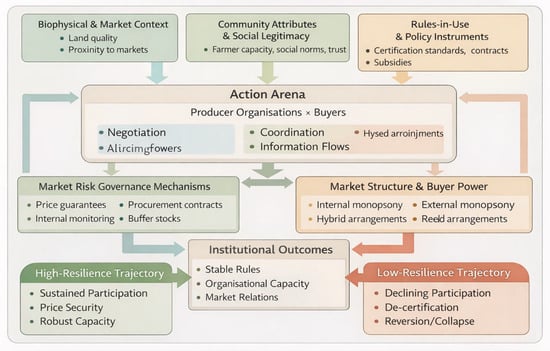
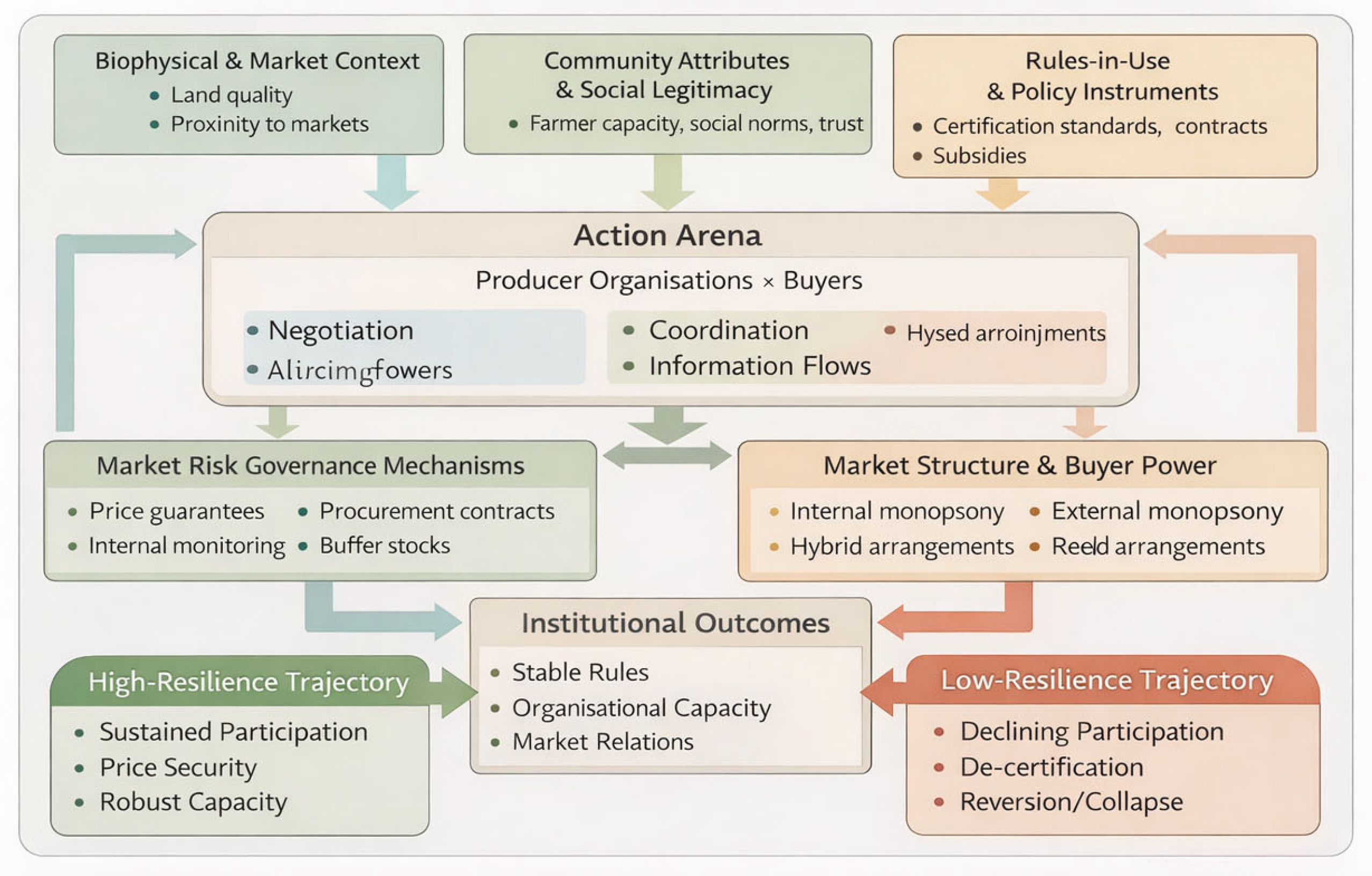

Disclaimer/Publisher’s Note: The statements, opinions and data contained in all publications are solely those of the individual author(s) and contributor(s) and not of MDPI and/or the editor(s). MDPI and/or the editor(s) disclaim responsibility for any injury to people or property resulting from any ideas, methods, instructions or products referred to in the content. |
© 2026 by the authors. Licensee MDPI, Basel, Switzerland. This article is an open access article distributed under the terms and conditions of the Creative Commons Attribution (CC BY) license.