




Next Issue
Volume 16, January-2
Previous Issue
Volume 15, December-2


Diagnostics, Volume 16, Issue 1 (January-1 2026) – 173 articles
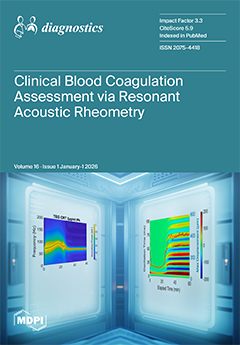
Cover Story (view full-size image): This study provides the first clinical report of resonant acoustic rheometry (RAR), a novel, non-contact ultrasound technique for monitoring whole-blood coagulation and fibrinolysis. By sensitively detecting frequency and amplitude shifts in resonant surface waves of whole-blood samples housed in standard 96-well microplates, RAR provides real-time viscoelastic data. This high-throughput method offers a cost-effective alternative to traditional assays such as thromboelastography (TEG). In a retrospective analysis of three critically ill, severely hemorrhaging patients, RAR successfully identified all four hemostatic phases—initiation, amplification, propagation, and termination—correlating closely with paired TEG results. These findings demonstrate RAR’s potential for rapid, scalable bedside profiling to guide personalized transfusion therapy. View this paper
  • Issues are regarded as officially published after their release is announced to the table of contents alert mailing list.
  • You may sign up for e-mail alerts to receive table of contents of newly released issues.
  • PDF is the official format for papers published in both, html and pdf forms. To view the papers in pdf format, click on the "PDF Full-text" link, and use the free Adobe Reader to open them.
Order results
Result details
Section
Select all
Export citation of selected articles as:
14 pages, 767 KB  
Article
Sequential Versus Non-Sequential Polymyxin B Hemoperfusion in Severe Sepsis and Septic Shock: A Real-World Cohort Analysis of Survival in an Asian ICU
by Wei-Hung Chang, Ting-Yu Hu and Li-Kuo Kuo
Diagnostics 2026, 16(1), 173; https://doi.org/10.3390/diagnostics16010173 - 5 Jan 2026
Cited by 1 | Viewed by 513
Abstract
Background: Severe sepsis and septic shock remain major causes of ICU mortality despite advances in critical care. Polymyxin B hemoperfusion (PMX-HP) is widely used in Asia for refractory endotoxemia, yet the optimal session strategy remains unclear. Methods: We retrospectively analyzed adult ICU patients [...] Read more.
Background: Severe sepsis and septic shock remain major causes of ICU mortality despite advances in critical care. Polymyxin B hemoperfusion (PMX-HP) is widely used in Asia for refractory endotoxemia, yet the optimal session strategy remains unclear. Methods: We retrospectively analyzed adult ICU patients with severe sepsis or septic shock treated with PMX-HP between 2013 and 2019 in a tertiary center in Taiwan. Patients were divided into sequential (≥2 sessions within 24 h) and non-sequential groups. The primary outcome was 28-day mortality; secondary outcomes included ICU and hospital mortality, length of stay, organ support, and vasoactive-inotropic score (VIS) changes. Results: Among 64 patients, 33 (51.6%) received sequential therapy. The 28-day mortality was 46.9%, with no difference between groups after adjustment for baseline severity. Patients receiving sequential PMX-HP had longer hospital stays and more frequent CRRT use, likely reflecting greater underlying disease severity rather than a causal effect of treatment sequencing. Conclusions: Multivariate analysis identified higher APACHE II score, positive VIS change, and CRRT requirement as independent predictors of mortality. Sequential therapy itself was not associated with improved outcomes. Prognosis in PMX-HP-treated patients is determined mainly by underlying severity and hemodynamic instability, underscoring the need for patient selection and biomarker-guided strategies rather than routine sequential use. Full article
(This article belongs to the Section Clinical Diagnosis and Prognosis)
Show Figures

Figure 1

19 pages, 314 KB  
Article
Assessment of Anxiety and Depression Symptoms Among Medical Students and Their Association with Religiosity: A Cross-Sectional Study
by Stipe Vidović, Zenon Pogorelić, Marija Olujić, Ana Pešikan, Ena Kolak, Ivana Groznica, Marija Jelić Vuković, Dubravka Biuk, Marija Heffer and Dunja Degmečić
Diagnostics 2026, 16(1), 172; https://doi.org/10.3390/diagnostics16010172 - 5 Jan 2026
Cited by 1 | Viewed by 683
Abstract
Background: Depression and anxiety are highly prevalent among medical students and may adversely affect academic functioning and professional development. Early identification of these symptoms and their associated factors is therefore essential. Religiosity has been suggested as a potential modifier of mental health outcomes, [...] Read more.
Background: Depression and anxiety are highly prevalent among medical students and may adversely affect academic functioning and professional development. Early identification of these symptoms and their associated factors is therefore essential. Religiosity has been suggested as a potential modifier of mental health outcomes, although existing evidence remains inconsistent. This study aimed to assess symptoms of depression and anxiety, levels of religiosity, and their associations among medical students. Methods: This cross-sectional study was conducted among medical students at the University of Osijek, Croatia, from 29 September to 5 October 2025. Anxiety symptoms were assessed using the Generalized Anxiety Disorder-7 (GAD-7) scale, depressive symptoms using the Patient Health Questionnaire-9 (PHQ-9), and religiosity using the Duke University Religion Index (DUREL). Results: A total of 260 students (197 females, 63 males) completed the survey. At least mild depressive and anxiety symptoms were reported by 54.2% and 58.1%, respectively; 9.2% had moderately severe or severe depression, and 25% reported moderate to severe anxiety. Suicidal or self-harm ideation in the past two weeks occurred in 12.8%. Female students had higher median depression (p = 0.01) and anxiety scores (p = 0.005) than male students; however, these differences did not remain statistically significant after Bonferroni correction. Religiosity was not associated with PHQ-9 or GAD-7 scores after correction; however, categorical analyses indicated that students with moderate to high religiosity more frequently reported moderate to severe depressive symptoms (p = 0.037). Conclusions: The high prevalence of depression, anxiety, and suicidal ideation underscores the need for continuous mental health screening, early identification of risk factors, and implementation of preventive programs among the student population, particularly medical students as future healthcare professionals. Full article
(This article belongs to the Special Issue Advances in Mental Health Diagnosis and Screening, 2nd Edition)
17 pages, 297 KB  
Article
Ejection Fraction-Related Differences in Left Ventricular and Atrial Strain Indices Among Pediatric Fontan Circulation with Systemic Left Ventricle Morphology
by Carmen Corina Șuteu, Amalia Fagarasan, Nicola Suteu, Andreea Cerghit-Paler, Liliana Gozar, Cristina Oana Mărginean, Maria Oana Săsăran and Mihaela Iancu
Diagnostics 2026, 16(1), 171; https://doi.org/10.3390/diagnostics16010171 - 5 Jan 2026
Viewed by 403
Abstract
Background: Ventricular function assessments in Fontan patients remain challenging. Ejection fraction (EF) lacks sensitivity for early dysfunction, and the roles of strain and advanced imaging in systemic left ventricle (LV) physiology are not fully defined. We aimed to compare (i) LV and [...] Read more.
Background: Ventricular function assessments in Fontan patients remain challenging. Ejection fraction (EF) lacks sensitivity for early dysfunction, and the roles of strain and advanced imaging in systemic left ventricle (LV) physiology are not fully defined. We aimed to compare (i) LV and atrial strain indices between pediatric Fontan patients with preserved EF (P-LVEF) versus reduced EF (R-LVEF) and (ii) echocardiographic global longitudinal strain, segmental longitudinal strain indices, and conventional 2D and 3D echocardiographic parameters through cardiac morphology. Methods: Pediatric patients with Fontan circulation and systemic LV morphology underwent clinical, hemodynamic, and multimodality echocardiographic evaluation, including 2D/3D parameters, global and segmental LV strain, and left atrial strain. Outcomes were analyzed according to EF status and congenital morphology. Significant results from multiple comparisons were followed by post hoc analysis, where appropriate. Results: Patients with a reduced EF exhibited a worse clinical status, a higher pulmonary vascular resistance index, and greater systemic congestion compared with those with a preserved EF. Conventional 2D indices showed no significant differences between the two studied groups except for LV end-systolic volume (ESV) (p = 0.0315) and LV end-systolic longitudinal diameter (ESL) (p = 0.0024), which showed higher values in the R-LVEF group. Although the relative frequency of impaired deformation was higher in Fontan patients with an unbalanced atrioventricular canal compared with the Fontan patients with a tricuspid atresia + pulmonary stenosis + ventricular septal defect, the difference did not reach statistical significance (p = 0.1365). Most segmental longitudinal strain values were not significantly different across patients with different cardiac morphology, except for the basal anterior segment and apical inferoseptal segment (p < 0.05). Conclusions: In pediatric Fontan patients with systemic LV morphology, a reduced EF was associated with a worse clinical and hemodynamic status. Conventional echocardiographic indices showed a limited ability to differentiate between the compared groups. Although no statistically significant differences were detected between pediatric Fontan patients with preserved EF and reduced EF, LV and atrial strain indices provided complementary information on ventricular–atrial interactions and myocardial deformation. These findings are exploratory and warrant confirmation in larger, prospective studies. Full article
(This article belongs to the Special Issue Advances in Pediatric Cardiology: Diagnosis and Management)
12 pages, 829 KB  
Article
Utility of High-Frequency Ultrasound in Preoperative Evaluation of the Thickness of Cutaneous Melanoma
by Yang Zhao, Feiyue Yang, Danhua Li, Qiao Wang, Lehang Guo, Weiwei Ren, Dandan Shan and Chuan Qin
Diagnostics 2026, 16(1), 170; https://doi.org/10.3390/diagnostics16010170 - 5 Jan 2026
Viewed by 316
Abstract
Introduction: The Breslow thickness of cutaneous melanoma (CM) is related to the surgical approach and is usually measured using a preoperative biopsy. However, tumor thickness is often underestimated by partial biopsies. Objectives: To identify whether high-frequency ultrasound (HFUS) can improve the [...] Read more.
Introduction: The Breslow thickness of cutaneous melanoma (CM) is related to the surgical approach and is usually measured using a preoperative biopsy. However, tumor thickness is often underestimated by partial biopsies. Objectives: To identify whether high-frequency ultrasound (HFUS) can improve the accuracy of preoperative detection of Breslow thickness. Methods: Partial biopsies and HFUS measurements of Breslow thickness were analyzed in 17 patients with CM. Postoperative histopathologic examination is considered the gold standard. In different thicknesses, HFUS and partial biopsy were compared with postoperative pathology and their effects on tumor T staging and surgical margins. Results: The mean (±SD) Breslow thicknesses measured using HFUS, partial biopsy, and postoperative histopathology were 3.5 ± 2.2 mm, 1.8 ± 1.1 mm, and 3.2 ± 2.1 mm, respectively. The correlation coefficients were 0.76 (partial biopsy and postoperative histopathology) and 0.96 (HFUS and postoperative histopathology), respectively (all p < 0.01). Partial biopsy underestimated the Breslow thickness, and with a gradual increase in CM thickness, the underestimation became increasingly obvious. Partial biopsy led to an underestimation of T staging of the tumor in 8 (8/17 [47.1%]) patients, 4 (4/8 [50.0%]) of whom may have had insufficient surgical peripheral margins. Conversely, HFUS exhibited a significant downward trend of underestimation (0/17 [0%], p = 0.003). However, only 2 (2/17 [11.8%]) patients had slight overestimation for T staging (p = 0.485), and none of the overestimations changed the surgical margins. Conclusions: HFUS can provide an accurate preoperative assessment of Breslow thickness, and correlates better with postoperative histopathology. Full article
(This article belongs to the Special Issue Advanced Imaging in the Diagnosis and Management of Skin Diseases)
Show Figures

Figure 1

9 pages, 413 KB  
Article
Publicly Available Large Language Models for Trichoscopy: A Head-to-Head Comparison with Dermatologists
by Basil Signer, Ali Mokhtari, Simone Cazzaniga, Flurin Brand, Gemma Caro, Pierre A. de Viragh, Kristine Heidemeyer, Aref Hosseini, Matilde Iorizzo, Alexandra Junge, Zora Martignoni, Pascal Edouard Reygagne, Bianca Maria Piraccini, Michela Starace, Antonia Reimer-Taschenbrecker, Charlotte Vogel, Dominik Obrist and Seyed Morteza Seyed Jafari
Diagnostics 2026, 16(1), 169; https://doi.org/10.3390/diagnostics16010169 - 5 Jan 2026
Viewed by 747
Abstract
Background/Objectives: Trichoscopy is an important diagnostic tool for hair and scalp disorders, but it requires significant expertise. Publicly available large language models (LLMs) are becoming more popular among both physicians and patients, yet their usefulness in trichology is unknown. We aimed to evaluate [...] Read more.
Background/Objectives: Trichoscopy is an important diagnostic tool for hair and scalp disorders, but it requires significant expertise. Publicly available large language models (LLMs) are becoming more popular among both physicians and patients, yet their usefulness in trichology is unknown. We aimed to evaluate the diagnostic accuracy of four publicly available LLMs when interpreting trichoscopic images, as well as to compare their performance with that of dermatology residents, board-certified dermatologists, and trichology experts. Method: In this prospective comparative study, a preprocessed set of trichoscopic images was assessed in an online image-based survey. To reduced recognition bias from public image repositories, all images were structurally transformed while preserving diagnostic features. Fifteen dermatologists (five residents, four board-certified dermatologists, six trichology experts) provided a suspected diagnosis (SD), and up to three the differential diagnoses (DD). Four LLMs (ChatGPT-4o, Claude Sonnet 4, Gemini 2.5 Flash, and Grok-3) evaluated the images under the same conditions. Results: The overall diagnostic accuracy among 15 dermatologists was 58.1% (95% CI, 53.0–63.0) for SD and 68.3% (95% CI, 63.4–72.8) for SD + DD. Experts significantly outperformed residents and board-certified dermatologists. AI models achieved an accuracy of 18.2% (95% CI, 11.8–26.9) for SD and 44.4% (95% CI, 35.0–54.3) for SD + DD. Gemini 2.5 Flash performed best, with an accuracy of 62.5% for SD + DD. Agreement among dermatologists increased with experience (AC1 up to 0.65 for experts), while agreement among AI models was moderate to good (AC1 up to 0.70). Agreement between AI models and dermatologists was only slight to fair (AC1 = 0.06 for SD and 0.21 for SD + DD). All human-AI differences were statistically significant (p < 0.001). Conclusions: In trichology, publicly available LLMs currently underperform compared to human experts, especially in providing a single correct diagnosis. These models require further development and specialized training before they can reliably assist with trichological diagnoses in routine care. Full article
(This article belongs to the Special Issue AI in Dermatology)
Show Figures

Figure 1

5 pages, 1592 KB  
Interesting Images
Papillary Fibroelastoma of the Aortic Root Causing Intermittent Coronary Ostial Obstruction: The Diagnostic Power of 3D Transesophageal Echocardiography
by Tina Bečić, Ružica Perković-Avelini and Damir Fabijanić
Diagnostics 2026, 16(1), 168; https://doi.org/10.3390/diagnostics16010168 - 5 Jan 2026
Viewed by 297
Abstract
We describe a patient with recurrent, brief episodes of chest discomfort caused by a highly mobile papillary fibroelastoma originating from the aortic wall and intermittently encroaching on the right coronary artery ostium. Initial 2D and 3D transthoracic and 2D transesophageal echocardiography identified a [...] Read more.
We describe a patient with recurrent, brief episodes of chest discomfort caused by a highly mobile papillary fibroelastoma originating from the aortic wall and intermittently encroaching on the right coronary artery ostium. Initial 2D and 3D transthoracic and 2D transesophageal echocardiography identified a highly mobile mass in the ascending aorta above the aortic valve; the exact site of attachment and its relationship to the coronary ostia could not be clearly defined. Three-dimensional transesophageal echocardiography enabled precise anatomical reconstruction of the lesion and surrounding structures, clearly demonstrating its pedicle and proximity to the right coronary ostium. This imaging modality clarified the pathophysiological mechanism of symptoms and facilitated optimal surgical planning without the need for additional complex imaging techniques. Full article
(This article belongs to the Special Issue Latest Advances and Prospects in Cardiovascular Imaging)
Show Figures

Figure 1

14 pages, 405 KB  
Article
Diagnostic Value and Metabolic Association of Serum Clusterin in Women with Polycystic Ovary Syndrome
by Dilara Sarıkaya Kurt, Recep Taha Ağaoğlu, Mehmet Ferdi Kıncı, Tuğçe Sırma, Ahmet Kurt, Ramazan Erda Pay, İsmail Burak Gültekin, Hüseyin Levent Keskin and Sezin Ertürk Aksakal
Diagnostics 2026, 16(1), 167; https://doi.org/10.3390/diagnostics16010167 - 5 Jan 2026
Viewed by 455
Abstract
Background: Polycystic ovary syndrome (PCOS) is a common endocrine and metabolic disorder characterized by hyperandrogenism, ovulatory dysfunction, and an increased prevalence of metabolic syndrome. Clusterin (CLU), a chaperone protein induced by cellular stress and known to play roles in inflammation, oxidative stress, and [...] Read more.
Background: Polycystic ovary syndrome (PCOS) is a common endocrine and metabolic disorder characterized by hyperandrogenism, ovulatory dysfunction, and an increased prevalence of metabolic syndrome. Clusterin (CLU), a chaperone protein induced by cellular stress and known to play roles in inflammation, oxidative stress, and lipid metabolism, may be associated with the metabolic abnormalities observed in patients with PCOS. The purpose of this current study is to investigate serum CLU levels and their link with endocrine, biochemical, and metabolic parameters, such as metabolic syndrome, among women with PCOS. Methods: This cross-sectional study included 40 women aged 18–30 with PCOS diagnosed according to the Rotterdam criteria and 40 age- and BMI-matched healthy controls. Demographic data, Ferriman–Gallwey scores, hormonal and metabolic parameters (including TSH, prolactin, 17-OH progesterone, total testosterone, insulin, AMH, HOMA-IR, and serum CLU levels), and ultrasonographic ovarian morphology were assessed. Statistical analyses, including ROC and logistic regression, were performed. Results: Women with PCOS had higher follicle counts, Ferriman–Gallwey scores, LH/FSH ratios, fasting insulin levels, HOMA-IR, triglycerides, and systolic blood pressure than controls, whereas menstrual cycle frequency and HDL levels were lower (all p < 0.05). Serum CLU concentrations were markedly higher in the PCOS cohort. In the PCOS population, CLU showed positive relationships with the Ferriman–Gallwey score, fasting glucose, fasting insulin, HOMA-IR, and triglycerides, and a negative correlation with HDL. CLU levels were significantly higher in women with metabolic syndrome in the PCOS cohort compared to those without. In logistic regression analysis, CLU, AMH, and the LH/FSH ratio emerged as independent predictors of PCOS. Furthermore, CLU remained an independent predictor of metabolic syndrome in the PCOS cohort. In ROC analysis, CLU demonstrated strong diagnostic efficacy in detecting both PCOS (AUC = 0.834) and metabolic syndrome in patients with PCOS (AUC = 0.804). Conclusions: Our results show that serum CLU is higher in women with PCOS and is associated with the clinical and metabolic features peculiar to patients with PCOS. CLU was found to distinguish between patients with PCOS and healthy women and demonstrated a strong association with the presence of metabolic syndrome within the PCOS group. Overall, these findings suggest that CLU may be a valuable auxiliary biomarker for detecting women with PCOS at risk for metabolic disturbances. Full article
(This article belongs to the Section Clinical Diagnosis and Prognosis)
Show Figures

Figure 1

16 pages, 5709 KB  
Article
Impact of Proximal Conjoint Tendon Injury on Return to Play in the BF–ST Complex: A Prospective MRI-Based Study
by Makoto Wada, Takumi Okunuki, Takeshi Sugimoto, Yasuhito Tanaka and Tsukasa Kumai
Diagnostics 2026, 16(1), 166; https://doi.org/10.3390/diagnostics16010166 - 5 Jan 2026
Viewed by 766
Abstract
Background/Objectives: Proximal hamstring injuries involving the biceps femoris–semitendinosus (BF–ST) conjoint tendon (CT) often exhibit delayed healing, yet the prognostic significance of CT involvement and intratendinous injury morphology has not been fully clarified. This study aimed to determine whether full-layer CT injury, particularly bilateral [...] Read more.
Background/Objectives: Proximal hamstring injuries involving the biceps femoris–semitendinosus (BF–ST) conjoint tendon (CT) often exhibit delayed healing, yet the prognostic significance of CT involvement and intratendinous injury morphology has not been fully clarified. This study aimed to determine whether full-layer CT injury, particularly bilateral involvement in Zone C, prolongs return-to-play (RTP) in competitive rugby athletes. Methods: This prospective study evaluated 41 university rugby players with acute BF–ST complex injuries using clinical examination, ultrasonography, and MRI. Injuries were classified by Type (I: full-layer CT; II: BFLH-only; III: ST-only), Zone (A–E), and Grade (0–3). RTP was defined as unrestricted return to team training or match play. Group differences were analyzed using ANOVA or non-parametric tests with appropriate post hoc corrections. Results: Type I injuries required significantly longer RTP (11.4 ± 4.8 weeks) than Type II (5.3 ± 2.4 weeks) and Type III (4.0 ± 1.7 weeks), confirming the strong impact of CT involvement on prognosis. In Zone C, bilateral full-layer CT involvement was associated with an approximately twofold longer RTP duration compared with unilateral BFLH-side injuries, indicating that intratendinous tissue disruption influences recovery. These findings highlight the importance of early MRI-based assessment to identify clinically relevant tendon involvement patterns. Conclusions: Full-layer CT injuries, particularly bilateral intratendinous patterns in Zone C, markedly prolong RTP compared with isolated BFLH or ST injuries. An MRI-based classification incorporating injury type, zone, and extent of CT involvement provides clinically valuable prognostic information and may enhance RTP decision-making. Full article
(This article belongs to the Special Issue Clinical Diagnosis and Management in Orthopaedics and Traumatology)
Show Figures

Figure 1

12 pages, 2243 KB  
Article
Contrast-Enhanced Harmonic Endoscopic Ultrasonography for Diagnosing Gastric Subepithelial Tumors
by Moon Won Lee, Dong Chan Joo, Gwang Ha Kim, Bong Eun Lee and Hye Kyung Jeon
Diagnostics 2026, 16(1), 165; https://doi.org/10.3390/diagnostics16010165 - 5 Jan 2026
Viewed by 466
Abstract
Background/Objectives: Contrast-enhanced harmonic endoscopic ultrasonography (CH-EUS) is a promising tool for differentiating gastric subepithelial tumors (SETs). However, most published studies have mainly included gastrointestinal stromal tumors (GIST) and leiomyomas in the gastrointestinal tract, not limited to gastric SETs. This study evaluated the diagnostic [...] Read more.
Background/Objectives: Contrast-enhanced harmonic endoscopic ultrasonography (CH-EUS) is a promising tool for differentiating gastric subepithelial tumors (SETs). However, most published studies have mainly included gastrointestinal stromal tumors (GIST) and leiomyomas in the gastrointestinal tract, not limited to gastric SETs. This study evaluated the diagnostic performance of CH-EUS in gastric SETs encountered in clinical practice. Methods: We retrospectively analyzed 68 patients who underwent CH-EUS for gastric SETs between March 2021 and July 2025 at our institution. Gastric SETs were classified into benign (n = 27: ectopic pancreas, leiomyoma, schwannoma, glomus tumor, plexiform fibromyxoma, desmoid tumor, solitary fibrous tumor, and abscess) and GIST groups (n = 41). CH-EUS features, including arterial enhancement, irregular vessels, and diffuse enhancement, were assessed. Histopathological confirmation was obtained through EUS-guided fine-needle biopsy or endoscopic/surgical resection. Results: The GIST group showed significantly higher rates of arterial enhancement (95.1% vs. 74.1%, p = 0.024), irregular vessels (51.2% vs. 22.2%, p = 0.017), and diffuse enhancement (87.8% vs. 66.7%, p = 0.035) than the benign SETs. The diagnostic performance of arterial enhancement showed a sensitivity of 95.1% and specificity of 25.9%, while irregular vessels demonstrated a sensitivity of 51.2% and specificity of 77.8%, and diffuse enhancement showed a sensitivity of 87.8% and specificity of 33.3%. When combining ≥2 CH-EUS features, the sensitivity and specificity were 92.7% and 33.3%, respectively, with an overall accuracy of 69.1%. The presence of all three features yielded a specificity of 81.5% but a lower sensitivity (46.3%). Conclusions: CH-EUS exhibited a high sensitivity but low specificity in differentiating GISTs from various benign gastric SETs when using a combination of at least two CE-EUS features, including arterial enhancement, irregular vessels, and diffuse enhancement. Full article
(This article belongs to the Special Issue New Advances in Gastrointestinal Endoscopy)
Show Figures

Figure 1

5 pages, 4669 KB  
Interesting Images
Immunohistochemical Characterization of the Immune Response in Chronic Endometritis Caused by Chlamydia trachomatis
by Ivett Miranda-Maldonado, Yareth Gopar-Cuevas, Salomón Álvarez-Cuevas, Guadalupe Gallegos-Avila, Jesús Ancer-Rodríguez, Marta Ortega-Martínez and Gilberto Jaramillo-Rangel
Diagnostics 2026, 16(1), 164; https://doi.org/10.3390/diagnostics16010164 - 5 Jan 2026
Viewed by 452
Abstract
In 2020, 128.5 million new chlamydia infections were reported worldwide in adults aged 15–49 years. Notably, the prevalence of Chlamydia trachomatis infection in pregnant women varies between 2% and 35%, correlating with increased risks of low birth weight, preterm birth, and neonatal death. [...] Read more.
In 2020, 128.5 million new chlamydia infections were reported worldwide in adults aged 15–49 years. Notably, the prevalence of Chlamydia trachomatis infection in pregnant women varies between 2% and 35%, correlating with increased risks of low birth weight, preterm birth, and neonatal death. C. trachomatis is a leading preventable cause of miscarriage. Recurrent first-trimester pregnancy loss can be induced by asymptomatic chlamydia infection through the immune response. In this study, we performed immunohistochemical characterization of the immune response in endometrial tissue biopsies from women diagnosed with chronic endometritis caused by C. trachomatis. Hematoxylin and eosin staining was used for histological evaluation of endometrial biopsies, and immunohistochemical detection was performed for the following markers: CD138, CD45, CD3, CD4, CD8, CD20, CD56, and CD68. As a result, we observed the presence of edematous tissue with hemorrhage; we also observed a heightened inflammatory response with the presence of plasma cells, CD4 and CD8 T lymphocytes, B lymphocytes, NK cells, and macrophages. The findings described here can help better understand the disease and its histopathological diagnosis. Full article
(This article belongs to the Collection Interesting Images)
Show Figures

Figure 1

10 pages, 1778 KB  
Case Report
NF1 with Multiple Cardiac Structural Abnormalities Leading to Cerebral Infarction
by Jingwei Ye, Yiyi Jiang, Hanmin Wang and Dan Wang
Diagnostics 2026, 16(1), 163; https://doi.org/10.3390/diagnostics16010163 - 4 Jan 2026
Viewed by 451
Abstract
Background/Objectives: Neurofibromatosis type 1 (NF1) is an autosomal dominant disorder driven by mutations in the NF1 gene, whose pathogenesis centers on the loss of neurofibromin function and subsequent hyperactivation of the RAS/MAPK pathway. Notably, to the best of our knowledge and following [...] Read more.
Background/Objectives: Neurofibromatosis type 1 (NF1) is an autosomal dominant disorder driven by mutations in the NF1 gene, whose pathogenesis centers on the loss of neurofibromin function and subsequent hyperactivation of the RAS/MAPK pathway. Notably, to the best of our knowledge and following a systematic literature search conducted by our research team, no cases of NF1 complicated by severe cardiac structural abnormalities that ultimately lead to cerebral infarction have been reported to date. Thus, it is of paramount importance to avoid missed diagnosis by performing comprehensive cardiac-related examinations in patients with NF1. Case Presentation: A 20-year-old male patient diagnosed with NF1 presented with right-sided limb weakness and was initially identified with cerebral infarction. To clarify the underlying etiology, a comprehensive clinical evaluation was performed, including cardiac imaging assessments (to characterize cardiac structural changes) and whole-exome sequencing (to identify the presence of procoagulant gene mutations). Comprehensive evaluation revealed a spectrum of cardiac structural abnormalities in the patient: aortic valve prolapse with severe regurgitation, non-infective vegetations on the aortic valve leaflets, mild-to-moderate mitral regurgitation, left ventricular hypertrophy and dilation, and left atrial dilation. Whole-exome sequencing detected exclusively a pathogenic variant in the NF1 gene, with no other pathogenic/likely pathogenic variants or thrombophilia-associated polymorphisms being found. Laboratory investigations ruled out infectious etiologies, supporting the notion that NF1-mediated cardiac structural and developmental anomalies are the primary driver of cardiac vegetation formation, given the absence of other identified contributing factors; embolization of one such vegetation ultimately led to both splenic and cerebral infarction. Conclusions: This case emphasizes the necessity of implementing early and proactive cardiac evaluations in patients with NF1. Additionally, for NF1 individuals—particularly those presenting with suggestive vascular or cardiac symptoms—a comprehensive multifactorial assessment of thrombotic risk is critical. Collectively, maintaining clinical vigilance for cardiac abnormalities in NF1 patients and avoiding diagnostic oversight is essential to reduce life-threatening risks. Full article
(This article belongs to the Section Pathology and Molecular Diagnostics)
Show Figures

Figure 1

13 pages, 1860 KB  
Article
Sinus Tarsi Morphometry Is Correlated with Flatfoot Severity on Weight-Bearing CT
by Bingshu Chen, Xing Gao, Ying Xu, Tianyuan Zhao, Siyao Yang, Yuan Liu, Bin Jiang, Xihan Zhou, Xiaoqiang Chen, Wencui Li and Jiawei Guo
Diagnostics 2026, 16(1), 162; https://doi.org/10.3390/diagnostics16010162 - 4 Jan 2026
Viewed by 392
Abstract
Background: Flexible flatfoot is a common musculoskeletal disorder in adolescents, which is characterized by a collapsed longitudinal arch. A common surgery like subtalar arthroereisis depends on the implant in sinus tarsi. Optimal match between them can potentially avoid postoperative pain and obtain improved [...] Read more.
Background: Flexible flatfoot is a common musculoskeletal disorder in adolescents, which is characterized by a collapsed longitudinal arch. A common surgery like subtalar arthroereisis depends on the implant in sinus tarsi. Optimal match between them can potentially avoid postoperative pain and obtain improved prognosis. Investigations into anatomical morphology of sinus tarsi by weight-bearing CT (WBCT) may unveil the pathogenesis and facilitate the treatment of flexible flatfoot. Methods: This retrospective study included 28 control cases and 42 flatfoot cases. The sinus tarsi length (STL), the sinus tarsi width (STW), the angle between its long axis and the horizontal line (ST-H angle), the sinus tarsi angle (ST angle), and the tibial width were measured. We also calculated two ratios (STL/tibia width and STW/tibia width) to standardize individual differences. Data analysis was conducted via mean/median comparisons and subsequent linear regression. Results: The STL and the STL/tibia width were significantly greater in the flatfoot group (25.73 ± 3.50 vs. 23.09 ± 3.77 mm, p = 0.004; 0.90 ± 0.15 vs. 0.81 ± 0.14, p = 0.009). The ST angle was significantly smaller in the flatfoot group by an average of 4.63° (13.20° vs. 17.83°, p < 0.001). Linear regression revealed that female gender and smaller ST angle were significantly correlated with higher Meary angle, while smaller ST angle and greater STL/tibia width were significantly correlated with lower Pitch angle (p = 0.002, p = 0.007; p = 0.003, p = 0.004). No statistical predictive effects were observed for the other variables. Conclusions: The ST angle and STL/tibia width may serve as auxiliary parameters for implant selection in subtalar arthroereisis to improve sizing match within the sinus tarsi. Full article
(This article belongs to the Section Medical Imaging and Theranostics)
Show Figures

Figure 1

40 pages, 3598 KB  
Systematic Review
Challenges in the Classification of Cardiac Arrhythmias and Ischemia Using End-to-End Deep Learning and the Electrocardiogram: A Systematic Review
by Edgard Oporto, David Mauricio, Nelson Maculan and Giuliana Uribe
Diagnostics 2026, 16(1), 161; https://doi.org/10.3390/diagnostics16010161 - 4 Jan 2026
Viewed by 753
Abstract
Background: Cardiac arrhythmias and ischemia are increasingly problematic worldwide because of their frequency, as well as the economic burden they confer. Methods: This research presents a systematic literature review (SLR), based on the PRISMA 2020 statement, that looks into the difficulties [...] Read more.
Background: Cardiac arrhythmias and ischemia are increasingly problematic worldwide because of their frequency, as well as the economic burden they confer. Methods: This research presents a systematic literature review (SLR), based on the PRISMA 2020 statement, that looks into the difficulties in their classification using end-to-end deep learning (DL) techniques and the electrocardiogram (ECG) from 2019 to 2025. A total of 121 relevant studies were identified from Scopus, Web of Science, and IEEE Xplore, and an inventory was created, categorized into six facets that researchers apply in DL studies: preprocessing, DL architectures, databases, evaluation metrics, pathologies, and explainability techniques. Results: Fifty-three challenges were reported, divided between end-to-end DL techniques (15), databases (18), pathologies (9), preprocessing (2), explainability (8), and evaluation metrics (1). Some of the complications identified were the complexity of pathological manifestations in the ECG signal, the large number of classes, the use of multiple leads, comorbidity, and the presence of different factors that change the expected patterns. Crucially, this SLR identified 18 new issues: four related to preprocessing, three related to end-to-end DL, one to databases, one to pathologies, four to metrics, and five to explainability. Particularly notable are the limitations of current metrics for assessing explainability and model decision confidence. Conclusions: This study clarifies all these limitations and provides a structured inventory and discussion of them, which can be useful to researchers, clinicians, and developers in enhancing existing techniques and designing new ECG-based end-to-end DL strategies, leading to more robust, generalizable, and reliable solutions. Full article
(This article belongs to the Section Machine Learning and Artificial Intelligence in Diagnostics)
Show Figures

Figure 1

14 pages, 2277 KB  
Article
The Role of Aurora Kinase A in HBV-Associated Hepatocellular Carcinomas: A Molecular and Immunohistochemical Study
by Mustafa Huz, Nese Karadag Soylu, Ahmet Koc, Zeynep Kucukakcali, Nefsun Danis and Onural Ozhan
Diagnostics 2026, 16(1), 160; https://doi.org/10.3390/diagnostics16010160 - 4 Jan 2026
Viewed by 473
Abstract
Objectives: Although Aurora kinase A (AURKA) expression has been investigated in many cancer types, studies focusing on its role in hepatitis B virus-associated hepatocellular carcinoma (HBV-HCC) are limited. In this study, we examined the activity of AURKA and its substrates (PLK1, P53, and [...] Read more.
Objectives: Although Aurora kinase A (AURKA) expression has been investigated in many cancer types, studies focusing on its role in hepatitis B virus-associated hepatocellular carcinoma (HBV-HCC) are limited. In this study, we examined the activity of AURKA and its substrates (PLK1, P53, and BRCA1) in HBV-HCC and cryptogenic hepatocellular carcinoma (Cr-HCC) cases. Methods: The study groups consisted of HBV-HCC, Cr-HCC, and healthy liver tissue cases. AURKA copy number variation (CNV) was analyzed using molecular methods. AURKA expression was evaluated by molecular and immunohistochemical (IHC) methods. AURKA substrates P53Ser315, PLK1Thr210, and BRCA1 were also analyzed by IHC. Results: There was no increase in AURKA gene copy number among the groups (2−∆∆Ct < 2). AURKA level was significantly increased in both test groups (p < 0.001). At the protein level, AURKA was significantly higher in both cancer groups compared to the control group (p < 0.001). Phospho-P53Ser315 levels were significantly higher in both HBV-HCC and Cr-HCC groups compared to the control group (p = 0.002 and p < 0.001, respectively). Cr-HCC cases also showed significantly higher levels compared to HBV-HCC (p = 0.025). For phospho-PLK1Thr210, Cr-HCC cases showed statistically higher expression compared to both the control group and HBV-HCC cases (p = 0.001). Full article
(This article belongs to the Special Issue Hepatocellular Carcinoma: Diagnosis and Management)
Show Figures

Figure 1

41 pages, 2644 KB  
Article
Anatomy-Guided Hybrid CNN–ViT Model with Neuro-Symbolic Reasoning for Early Diagnosis of Thoracic Diseases Multilabel
by Naif Almughamisi, Gibrael Abosamra, Adnan Albar and Mostafa Saleh
Diagnostics 2026, 16(1), 159; https://doi.org/10.3390/diagnostics16010159 - 4 Jan 2026
Viewed by 552
Abstract
Background/Objectives: The clinical adoption of AI in radiology requires models that balance high accuracy with interpretable, anatomically plausible reasoning. This study presents an integrated diagnostic framework that addresses this need by unifying a hybrid deep-learning architecture with explicit anatomical guidance and neuro-symbolic [...] Read more.
Background/Objectives: The clinical adoption of AI in radiology requires models that balance high accuracy with interpretable, anatomically plausible reasoning. This study presents an integrated diagnostic framework that addresses this need by unifying a hybrid deep-learning architecture with explicit anatomical guidance and neuro-symbolic inference. Methods: The proposed system employs a dual-path model: an enhanced EfficientNetV2 backbone extracts hierarchical local features, whereas a refined Vision Transformer captures global contextual dependencies across the thoracic cavity. These representations are fused and critically disciplined through auxiliary segmentation supervision using CheXmask. This anchors the learned features to lung and cardiac anatomy, reducing reliance on spurious artifacts. This anatomical basis is fundamental to the interpretability pipeline. It confines Gradient-weighted Class Activation Mapping (Grad-CAM) visual explanations to clinically valid regions. Then, a novel neuro-symbolic reasoning layer is introduced. Using a fuzzy logic engine and radiological ontology, this module translates anatomically aligned neural activations into structured, human-readable diagnostic statements that explicitly articulate the model’s clinical rationale. Results: Evaluated on the NIH ChestX-ray14 dataset, the framework achieved a macro-AUROC of 0.9056 and a macro-accuracy of 93.9% across 14 pathologies, with outstanding performance on emphysema (0.9694), hernia (0.9711), and cardiomegaly (0.9589). The model’s generalizability was confirmed through external validation on the CheXpert dataset, yielding a macro-AUROC of 0.85. Conclusions: This study demonstrates a cohesive path toward clinically transparent and trustworthy AI by seamlessly integrating data-driven learning with anatomical knowledge and symbolic reasoning. Full article
(This article belongs to the Special Issue Artificial Intelligence for Health and Medicine)
Show Figures

Figure 1

13 pages, 1930 KB  
Article
Systemic Sclerosis-Associated ILD: Insights and Limitations of ScleroID
by Cristina Niță and Laura Groșeanu
Diagnostics 2026, 16(1), 158; https://doi.org/10.3390/diagnostics16010158 - 4 Jan 2026
Viewed by 759
Abstract
Background/Objective: Pulmonary involvement in systemic sclerosis (SSc) is typically assessed using pulmonary function tests (PFTs), high-resolution CT (HRCT), and composite indices. Patient-reported outcomes (PRO), including ScleroID, provide insight into quality of life, but their relationship with clinical measures and role in overall disease [...] Read more.
Background/Objective: Pulmonary involvement in systemic sclerosis (SSc) is typically assessed using pulmonary function tests (PFTs), high-resolution CT (HRCT), and composite indices. Patient-reported outcomes (PRO), including ScleroID, provide insight into quality of life, but their relationship with clinical measures and role in overall disease assessment remain unclear. To assess the correlation between ScleroID scores and both lung involvement and disease activity/damage in a cohort of SSc-ILD patients from a large tertiary care center. Methods: Disease activity [European Scleroderma Study Group Activity Index (EScSG-AI), Scleroderma Clinical Trials Consortium Activity Index (SCTC-AI)], disease severity [Medsger severity scale (MSS)], and PRO measure ScleroID were assessed for associations with the extent and severity of SSc-ILD. Results: In 82 patients with SSc-ILD (mean age 56.0 ± 10.8 years; median disease duration 4.2 ± 4.7 years), higher fibrosis extent (>20%) was associated with worse lung function, greater exercise limitation, and higher ScleroID scores, particularly in fatigue, social life, and body mobility domains (all p ≤ 0.03). Patients with >20% fibrosis also had worse NYHA class and Borg scores during 6-MWD (p < 0.001). Cross-sectional correlations showed that ScleroID total and individual domains were negatively associated with FVC% and 6-MWD, and positively with ILD extent on HRCT. Fatigue, social impact, and mobility domains correlated most strongly with disease activity and severity scores, especially in patients with > 20% fibrosis (r = 0.384–0.635, all p ≤ 0.016), whereas breathlessness showed minimal associations (r < 0.2). Conclusions: In SSc-ILD, greater lung fibrosis and functional impairment are associated with worse patient-reported quality of life, particularly in fatigue, mobility, and social domains. ScleroID scores reflect both physiological severity and disease burden highlighting its value as a multidimensional outcome measure in patients with more advanced disease. Full article
Show Figures

Figure 1

11 pages, 1076 KB  
Article
Live-Cell-Based Assay Outperforms Fixed Assay in MOGAD Diagnosis: A Retrospective Validation Against the 2023 International Criteria
by Anna Zhou, Weihua Zhang, Ji Zhou, Changhong Ren, Ke Zhan, Wenhan Li, Hui Xiong and Xiaotun Ren
Diagnostics 2026, 16(1), 157; https://doi.org/10.3390/diagnostics16010157 - 4 Jan 2026
Viewed by 623
Abstract
Background and Objective: Myelin oligodendrocyte glycoprotein (MOG) antibody-associated disease (MOGAD) is a significant component of demyelinating diseases in pediatric populations. Recently, diagnostic criteria for MOGAD were established. This study aims to evaluate and compare the diagnostic efficacy of the fixed-cell-based assay (Fixed-CBA) [...] Read more.
Background and Objective: Myelin oligodendrocyte glycoprotein (MOG) antibody-associated disease (MOGAD) is a significant component of demyelinating diseases in pediatric populations. Recently, diagnostic criteria for MOGAD were established. This study aims to evaluate and compare the diagnostic efficacy of the fixed-cell-based assay (Fixed-CBA) and the live cell-based assay (Live-CBA) in patients who meet the 2023 clinical diagnostic criteria for MOGAD. Methods: This retrospective study included patients suspected of having MOGAD who were enrolled between June 2023 and June 2024. Patients were selected based on the “core clinical demyelinating events” outlined in the 2023 proposed criteria of the International MOGAD Panel. Patients with multiple sclerosis (MS), neuromyelitis optica spectrum disorders (NMOSD) with aquaporin-4 antibody-positive (AQP4-Abs-positive), and non-central nervous system (non-CNS) inflammatory diseases were chosen as controls. Serum samples were simultaneously tested for MOG-Abs using Fixed-CBA and Live-CBA. Results: A total of 86 patients were enrolled in the study: 52 in the suspected MOGAD group and 34 in the control group. Out of these patients studied, 16 presented with optic neuritis (ON), 5 with myelitis, 8 with acute disseminated encephalomyelitis (ADEM), and 7 with cortical encephalitis. Sixteen patients could not be classified by clinical phenotype. The highest MOG-Ab positivity rate was among patients with cortical encephalitis [85.7% (Live-CBA)/71.4% (Fixed-CBA)]. Both assays identified 22 positive samples, with Fixed-CBA and Live-CBA sensitivities at 44.2% and 55.8%, respectively, and a specificity of 97%. Of the patients suspected of having MOGAD, 19 cases were confirmed using the Fixed-CBA, while 28 cases were confirmed using the Live-CBA. This resulted in an upgrade in diagnostic classification for nine cases. This led to a diagnostic reclassification in nine cases. Conclusions: Both the Fixed-CBA and Live-CBA were associated with higher sensitivity for patients selected based on the 2023 MOGAD clinical diagnostic criteria. The Live-CBA exhibited an 11.6% increase in sensitivity, contributing to a 17.3% (9/52) enhancement in clinical diagnostic accuracy. Full article
(This article belongs to the Section Clinical Diagnosis and Prognosis)
Show Figures

Figure 1

10 pages, 4287 KB  
Case Report
Ultrasound-Guided Dextrose Hydrodissection for Mixed Sensory–Motor Wartenberg’s Syndrome Following a Healed Scaphoid Fracture: A Case Report
by Yonghyun Yoon, King Hei Stanley Lam, Jeimylo C. de Castro, Jihyo Hwang, Jaeyoung Lee, Teinny Suryadi, Anwar Suhaimi, Chun-Wei Kang, Jaeik Choi and Seungbeom Kim
Diagnostics 2026, 16(1), 156; https://doi.org/10.3390/diagnostics16010156 - 4 Jan 2026
Viewed by 1005
Abstract
Background and Clinical Significance: Wartenberg’s syndrome (cheiralgia paresthetica) is classically described as a pure sensory neuropathy of the superficial branch of the radial nerve (SBRN). However, in rare circumstances, dynamic mechanical irritation around the radial styloid may produce an atypical clinical phenotype [...] Read more.
Background and Clinical Significance: Wartenberg’s syndrome (cheiralgia paresthetica) is classically described as a pure sensory neuropathy of the superficial branch of the radial nerve (SBRN). However, in rare circumstances, dynamic mechanical irritation around the radial styloid may produce an atypical clinical phenotype with concurrent motor impairment, broadening the clinical significance of recognizing motion-related compression mechanisms. Case Presentation: A 35-year-old woman presented with persistent dorsoradial wrist pain and numbness, accompanied by progressive weakness of thumb extension, five years after a conservatively treated nondisplaced scaphoid fracture. Neurological examination demonstrated sensory loss in the SBRN distribution and Medical Research Council (MRC) grade 3/5 strength of the extensor pollicis longus (EPL). Nerve conduction studies revealed a markedly prolonged EPL motor latency (4.5 ms; normal ≤ 2.5 ms) with preserved sensory conduction. High-resolution ultrasound showed focal enlargement of the SBRN (cross-sectional area 0.13 cm2) and, critically, dynamic snapping of the nerve over the radial styloid that reproduced the patient’s symptoms. The patient underwent ten weekly sessions of ultrasound-guided hydrodissection with 5% dextrose. After treatment, the pain Visual Analog Scale improved from 8/10 to 0/10 and EPL strength recovered to MRC 5/5. Follow-up nerve conduction studies demonstrated normalization of EPL motor latency (2.1 ms), and repeat ultrasound confirmed resolution of SBRN enlargement and snapping. Conclusions: This case expands the phenotype of Wartenberg’s syndrome to include mixed sensory–motor involvement associated with dynamic SBRN snapping at the radial styloid. Dynamic ultrasound was pivotal for identifying the motion-dependent mechanism, and ultrasound-guided 5% dextrose hydrodissection achieved complete sensory and motor recovery as a minimally invasive and effective treatment option. Full article
(This article belongs to the Special Issue Advanced Ultrasound Techniques in Diagnosis)
Show Figures

Figure 1

19 pages, 272 KB  
Review
Milestone to Ensure Safety and Efficacy of Companion Diagnostic (CDx) That Support Treatment Decisions in Cancer Patients
by Sulim Kang and Sungmin Kim
Diagnostics 2026, 16(1), 155; https://doi.org/10.3390/diagnostics16010155 - 4 Jan 2026
Viewed by 972
Abstract
As demand for biomarker-based companion diagnostics (CDx) tests in clinical oncology of precision medicine increases, a clear understanding of the regulatory framework (especially analytical and clinical performance) is imperative to ensure the safety and efficacy of CDx in enhancing patient quality of life [...] Read more.
As demand for biomarker-based companion diagnostics (CDx) tests in clinical oncology of precision medicine increases, a clear understanding of the regulatory framework (especially analytical and clinical performance) is imperative to ensure the safety and efficacy of CDx in enhancing patient quality of life and aiding in treatment decisions. This study analyzes the regulatory policies and approval reports in major countries and identifies regulatory checklists for the pre- and post-marketing analytical and clinical performance to ensure safety and efficacy of CDx. It categorizes the pre-marketing analysis into four commonly used techniques, IHC, FISH, PCR, and NGS, reflecting the diversity of CDx types. All analyses are grounded in the latest regulations and guidelines. The developed checklists were subjected to feasibility assessment by industry experts. Our analysis revealed that there are differences in the pre- and post-marketing regulatory frameworks for CDx, reflecting unique characteristics of each country. In particular, differences were observed in the safety and efficacy assessment methods applied to the platform based on technological principle. Evidence-based checklists are established, which support manufacturers in implementing efficient practices and creating systematic regulatory strategies. Furthermore, these checklists facilitate global market access, activate R&D, enhance clinical implementation, and improve licensing practices. Full article
(This article belongs to the Section Pathology and Molecular Diagnostics)
23 pages, 1405 KB  
Article
A Pilot Study of Klebsiella pneumoniae in Community-Acquired Pneumonia: Comparative Insights from Culture and Targeted Next-Generation Sequencing
by Vyacheslav Beloussov, Vitaliy Strochkov, Nurlan Sandybayev, Alyona Lavrinenko and Maxim Solomadin
Diagnostics 2026, 16(1), 154; https://doi.org/10.3390/diagnostics16010154 - 4 Jan 2026
Viewed by 698
Abstract
Background/Objectives: Klebsiella pneumoniae is a major Gram-negative pathogen associated with community-acquired pneumonia (CAP) and a critical contributor to antimicrobial resistance (AMR). Culture-based diagnostics remain the clinical standard but may underestimate microbial diversity and resistance gene profiles. This pilot study compared pathogen detection [...] Read more.
Background/Objectives: Klebsiella pneumoniae is a major Gram-negative pathogen associated with community-acquired pneumonia (CAP) and a critical contributor to antimicrobial resistance (AMR). Culture-based diagnostics remain the clinical standard but may underestimate microbial diversity and resistance gene profiles. This pilot study compared pathogen detection and antimicrobial resistance gene (ARG) repertoires in matched K. pneumoniae pure cultures and primary sputum samples using targeted next-generation sequencing (tNGS). Methods: We analyzed 153 sputum samples from patients with CAP. Among 48 culture-positive cases, 22 (14% overall; 54% culture-positive) yielded K. pneumoniae. MALDI-TOF MS, phenotypic drug susceptibility testing, and tNGS were conducted on both culture isolates and matched sputum specimens. Microbial composition, ARG diversity, and method concordance were evaluated, with focused analysis of discordant and fatal cases. Results: K. pneumoniae was detected in 14.4% of all CAP cases and accounted for 54.2% of culture-positive samples. Identification rates differed across methods: 35% by MALDI-TOF MS, 45% by culture tNGS, and 29% by sputum tNGS. Sputum tNGS revealed substantially higher microbial diversity than cultures (3.04 vs. 1.42 species per sample) and detected more than sixfold unique ARGs (38 vs. 7), including clinically relevant determinants that were absent from culture isolates. Concordance was high between MALDI-TOF MS and culture tNGS (κ = 0.712), but low between sputum and culture tNGS (κ = 0.279). Among twelve K. pneumoniae isolates included in AMR analysis, all showed resistance to β-lactams, and two-thirds exhibited MDR/XDR phenotypes. Genotypic screening identified seven ARGs, but major ESBL and carbapenemase genes were not detected, suggesting the presence of alternative resistance mechanisms. Overall, sputum tNGS provided additional etiological and resistome information not captured by cultivation and complemented classical diagnostics in CAP involving K. pneumoniae. Conclusions: Culture-based diagnostics and tNGS provide complementary insights into the detection and resistance profiling of K. pneumoniae in CAP, with sputum tNGS revealing broader microbial and resistome information than pure cultures, while classical methods remain essential for species confirmation and phenotypic AST. An integrated diagnostic approach combining both methodologies may improve pathogen detection, guide antimicrobial therapy, and enhance AMR surveillance in K. pneumoniae-associated CAP. Full article
Show Figures

Figure 1

22 pages, 5740 KB  
Article
Integrated Cross-Platform Analysis Reveals Candidate Variants and Linkage Disequilibrium-Defined Loci Associated with Osteoporosis in Korean Postmenopausal Women
by Su Kang Kim, Seoung-Jin Hong, Seung Il Song, Jeong Keun Lee, Gyutae Kim, Byung-Joon Choi, Suyun Seon, Seung Jun Kim, Ju Yeon Ban and Sang Wook Kang
Diagnostics 2026, 16(1), 153; https://doi.org/10.3390/diagnostics16010153 - 3 Jan 2026
Viewed by 600
Abstract
Background: Osteoporosis is highly prevalent in postmenopausal women, yet genome-wide association studies often miss disease-relevant variants because of incomplete single nucleotide polymorphism (SNP) coverage and platform-specific limitations. We aimed to identify genetic contributors to osteoporosis risk by integrating two exome-based genotyping platforms with [...] Read more.
Background: Osteoporosis is highly prevalent in postmenopausal women, yet genome-wide association studies often miss disease-relevant variants because of incomplete single nucleotide polymorphism (SNP) coverage and platform-specific limitations. We aimed to identify genetic contributors to osteoporosis risk by integrating two exome-based genotyping platforms with multilayer analytic approaches. Methods: We analyzed extreme osteoporosis phenotypes in Korean postmenopausal women from the Korean Genome and Epidemiology Study (KoGES) Ansan–Anseong cohorts using the Illumina Infinium HumanExome BeadChip and the Affymetrix Axiom Exome Array. After standard quality control, single-SNP logistic regression, cross-platform overlap analysis, and three machine-learning models were applied. Predicted functional impact was evaluated using multiple in silico algorithms and conservation scores. Finally, datasets from both platforms were merged, and cross-platform linkage disequilibrium (LD) blocks were defined to identify loci containing SNPs with p < 1 × 10⁻⁴. Results: No overlapped SNP reached genome-wide significance, but rs2076212 in PNPLA3 achieved suggestive significance (p < 1 × 10⁻⁵) only on the Illumina array. Cross-platform analysis identified 111 overlapping SNPs in 70 genes. Integrated machine-learning, in silico, and conservation evidence prioritized ARMS2, CCDC92, NQO1, ZNF510, PTPRB, and DYNC2H1 as candidate genes. LD-block analysis revealed 10 blocks with at least one SNP at p < 1 × 10⁻⁴, including four chromosome 12 loci (NAV2, BICD1, CCDC92, ZNF664) that became apparent only when LD patterns were evaluated jointly across platforms. Conclusions: Combining dual exome arrays with LD-block analysis, machine learning, and functional prediction improved sensitivity for detecting low bone mineral density-related loci and highlighted CCDC92, DYNC2H1, NQO1, and related genes as biologically plausible candidates for future validation. Full article
(This article belongs to the Special Issue Current Diagnosis and Management of Metabolic Bone Diseases)
Show Figures

Figure 1

18 pages, 1537 KB  
Article
Endothelial Activation and Stress Index (EASIX) Predicts In-Hospital Mortality in Acute Decompensated Heart Failure with Reduced Ejection Fraction
by Bülent Özlek, Veysel Ozan Tanık, Alperen Taş, Süleyman Barutçu, Buse Çuvalcıoğlu, Çağatay Tunca, Kürşat Akbuğa, Yusuf Bozkurt Şahin and Murat Akdoğan
Diagnostics 2026, 16(1), 152; https://doi.org/10.3390/diagnostics16010152 - 2 Jan 2026
Viewed by 559
Abstract
Background: Early risk stratification in acute decompensated heart failure with reduced ejection fraction (ADHF-rEF) remains challenging. The Endothelial Activation and Stress Index (EASIX)—a composite of lactate dehydrogenase, creatinine, and platelet count—reflects endothelial dysfunction, a pathophysiological contributor to early deterioration in ADHF-rEF. This study [...] Read more.
Background: Early risk stratification in acute decompensated heart failure with reduced ejection fraction (ADHF-rEF) remains challenging. The Endothelial Activation and Stress Index (EASIX)—a composite of lactate dehydrogenase, creatinine, and platelet count—reflects endothelial dysfunction, a pathophysiological contributor to early deterioration in ADHF-rEF. This study evaluated the prognostic utility of admission-based EASIX for in-hospital mortality. Methods: In this retrospective single-center cohort, 850 consecutive patients hospitalized with ADHF-rEF between January 2022 and June 2025 were analyzed. EASIX was calculated from first-day laboratory values. Logistic regression, ROC analysis, restricted cubic splines, and Kaplan–Meier survival methods were used to assess the association between EASIX and in-hospital mortality, and to evaluate its incremental value beyond established clinical and laboratory predictors. Results: In-hospital mortality was 12.4%. Higher EASIX values were significantly associated with mortality in both univariable and multivariable models (adjusted OR 1.273; p < 0.001). EASIX demonstrated moderate discriminative performance among evaluated biomarkers (AUC 0.751) and showed a clear dose–response risk gradient, with mortality rising from 1.4% in the lowest tertile to 26.2% in the highest. Incorporating EASIX into clinical and laboratory prediction models yielded substantial continuous net reclassification improvement (0.59 and 0.38, respectively). Survival curves diverged early and remained distinctly separated across EASIX strata. Conclusions: Admission EASIX is an independent predictor of in-hospital mortality in ADHF-rEF and provides complementary prognostic information beyond conventional models. This is the first study to demonstrate the prognostic value of EASIX in the ADHF-rEF setting, supporting its potential utility as an accessible endothelial stress biomarker for early risk stratification. Full article
Show Figures

Figure 1

13 pages, 766 KB  
Article
Development of a Prognostic Nomogram in Epithelial Ovarian Cancer Based on KELIM: A Retrospective Study at TuDu Hospital, Vietnam
by Hoang T. Pham, Tuan M. Vo, Le N. N. Phan and Hien T. Nguyen
Diagnostics 2026, 16(1), 151; https://doi.org/10.3390/diagnostics16010151 - 2 Jan 2026
Viewed by 479
Abstract
Background/Objectives: Epithelial ovarian cancer (EOC) constitutes the predominant form of ovarian malignancies. The primary goal of this study was to determine predictors of patient survival and construct a nomogram for survival prediction in individuals diagnosed with epithelial ovarian cancer. Methods: A retrospective cohort [...] Read more.
Background/Objectives: Epithelial ovarian cancer (EOC) constitutes the predominant form of ovarian malignancies. The primary goal of this study was to determine predictors of patient survival and construct a nomogram for survival prediction in individuals diagnosed with epithelial ovarian cancer. Methods: A retrospective cohort analysis was performed, including 418 patients who received treatment for epithelial ovarian cancer at Tu Du Hospital from January 2015 to December 2019. The median follow-up time was 77.1 months (range: 5.7–121.6 months). Survival analyses were conducted using the log-rank test and Cox proportional hazard regression analysis. A nomogram was developed, incorporating KELIM and other statistically significant variables. Results: The median follow-up time was 77.1 months. The observed cumulative mortality rates were 1.4% (95% confidence interval [CI]: 0.7–3.2), 10.4% (95% CI: 7.8–13.8), and 16.5% (95% CI: 13.2–20.6) at 1, 3, and 5 years, respectively. Factors demonstrating a significant correlation with survival included KELIM < 1 (HR = 1.78 [95% CI: 1.16–2.72]), pre-treatment CA-125 levels ≥ 35 U/mL (HR = 2.47 [95% CI: 1.10–5.55]), FIGO stages III-IV (HR = 2.40 [95% CI: 1.36–4.21]), and the presence of residual tumor tissue following surgical intervention (HR = 3.14 [95% CI: 1.75–5.65]). Conclusions: Prognosis is significantly influenced by KELIM, pre-treatment CA-125, tumor stage, and residual tumor post-surgery. The nomogram developed here offers a tool to assist in personalized prognostic assessments of Vietnamese EOC patients. Full article
(This article belongs to the Special Issue Diagnostic Progress in Gynecologic Oncology)
Show Figures

Figure 1

13 pages, 909 KB  
Review
Single-Use Flexible Bronchoscopy: Advances in Technology and Applications
by Siti Amanina Azman and Marcus Peter Kennedy
Diagnostics 2026, 16(1), 150; https://doi.org/10.3390/diagnostics16010150 - 2 Jan 2026
Viewed by 714
Abstract
With advances in scope and imaging technology, the use of single-use flexible bronchoscopy (SUFB) has broadened beyond intensive care units and operating rooms to bronchoscopy units, with an expanding body of literature suggesting adequate and comparable procedure outcomes, including airway inspection, bronchoalveolar lavage, [...] Read more.
With advances in scope and imaging technology, the use of single-use flexible bronchoscopy (SUFB) has broadened beyond intensive care units and operating rooms to bronchoscopy units, with an expanding body of literature suggesting adequate and comparable procedure outcomes, including airway inspection, bronchoalveolar lavage, endobronchial brushing and endobronchial biopsy, in comparison to standard reusable flexible bronchoscopy (RFB). Advantages such as mobility, ease of use and lack of requirement for cleaning staff during the COVID-19 pandemic led to a global increase in usage, with many companies developing SUFB as part of their bronchoscopy portfolio. In parallel, there has been more attention and initiatives to minimise the risk of infection transmission related to bronchoscopy. RFB requires maximum adherence to manufacturer-recommended cleaning protocols. However, evidence of transmissible organisms after cleaning is reported in healthcare settings of all types. After initial benchtop, retrospective and single-arm studies, comparative bronchoscopy studies are identifying that SUFB are as versatile and non-inferior to RFB. However, cost-effectiveness and sustainability factors have to be included in deciding the use of SUFB in routine practice. Full article
(This article belongs to the Special Issue Advances in Interventional Pulmonology)
Show Figures

Figure 1

15 pages, 911 KB  
Article
Predictors of Impaired Reperfusion in ST-Elevation Myocardial Infarction Treated with Primary PCI: Preliminary Results from COMA.NET Project
by Maciej Południewski, Emil Julian Dąbrowski, Piotr Pogorzelski, Michał Łuczaj, Julia Kobylińska, Joanna Kruszyńska, Marcin Kożuch and Sławomir Dobrzycki
Diagnostics 2026, 16(1), 149; https://doi.org/10.3390/diagnostics16010149 - 2 Jan 2026
Cited by 1 | Viewed by 488
Abstract
Background: The no-reflow phenomenon remains a frequent and clinically significant complication in patients with ST-segment elevation myocardial infarction (STEMI) despite advances in primary percutaneous coronary intervention (pPCI). Its determinants are multifactorial and not fully established. This study aimed to identify independent predictors of [...] Read more.
Background: The no-reflow phenomenon remains a frequent and clinically significant complication in patients with ST-segment elevation myocardial infarction (STEMI) despite advances in primary percutaneous coronary intervention (pPCI). Its determinants are multifactorial and not fully established. This study aimed to identify independent predictors of impaired reperfusion after pPCI. Methods: In this prospective study, 100 consecutive STEMI patients treated with successful pPCI in a high-volume tertiary center were analyzed. Impaired reperfusion was defined as ST-segment resolution < 50% or final TIMI flow < 3. Clinical characteristics, laboratory findings, including platelet reactivity, and detailed angiographic and procedural parameters were collected. Independent predictors were evaluated using multivariable logistic regression. Thirty-day and twelve-month mortality were assessed with Kaplan–Meier analysis. Results: Impaired reperfusion occurred in 39% of patients. Compared with the normal reperfusion group, patients with noreflow were older, had lower left ventricular ejection fraction, eGFR, longer ischemia times, and more often presented with anterior STEMI. Platelet reactivity did not differ between groups. Four variables independently predicted impaired reperfusion: longer pain-to-balloon time (OR 1.05 per 10 min, 95% CI 1.02–1.07; p < 0.001), anterior myocardial infarction (OR 5.05, 95% CI 1.14–22.38; p = 0.03), use of predilatation (OR 7.66, 95% CI 1.78–32.9; p = 0.006), and higher Killip–Kimball class (OR 7.69, 95% CI 1.88–31.38; p = 0.004). Impaired reperfusion was associated with significantly higher mortality at 30 days (1.6% vs. 10%; p < 0.001) and 12 months (3.2% vs. 25.6%; p < 0.001). Conclusions: In this prospective STEMI cohort, impaired reperfusion was frequent and strongly associated with adverse short- and long-term outcomes. Ischemia duration, infarct location, hemodynamic status, and procedural strategy were key determinants of noreflow, while platelet reactivity showed no significant association. Full article
Show Figures

Figure 1

13 pages, 788 KB  
Review
The Incremental Role of Stress Echocardiography in Valvular Heart Disease: A Narrative Review
by Adriana Correra, Alfredo Mauriello, Carmen Del Giudice, Celeste Fonderico, Matilde Di Peppo, Vincenzo Russo, Antonello D’Andrea, Giovanni Esposito and Natale Daniele Brunetti
Diagnostics 2026, 16(1), 148; https://doi.org/10.3390/diagnostics16010148 - 2 Jan 2026
Viewed by 649
Abstract
Background/Objectives: The diagnosis and risk stratification of valvular heart disease have traditionally relied on resting echocardiography. However, in a significant portion of patients, resting findings do not fully reflect the hemodynamic severity of the condition, particularly in asymptomatic individuals with severe valvular disease [...] Read more.
Background/Objectives: The diagnosis and risk stratification of valvular heart disease have traditionally relied on resting echocardiography. However, in a significant portion of patients, resting findings do not fully reflect the hemodynamic severity of the condition, particularly in asymptomatic individuals with severe valvular disease or those with nonspecific symptoms. In this context, stress echocardiography emerges as a vital imaging modality, providing a dynamic assessment of valvular, ventricular, and pulmonary function under hemodynamic load (from physical exercise or pharmacological agents). Methods: We conducted a comprehensive synthesis and critical evaluation of the current landscape, recent advancements, and future directions regarding the application of stress echocardiography in valvular heart disease. Results: This comprehensive review explores the incremental role of stress echocardiography in valvular heart disease, analyzing the evolution of its clinical applications, from low-flow, low-gradient aortic stenosis to the evaluation of contractile reserve and exercise-induced pulmonary hypertension in mitral stenosis and regurgitation. We discuss standardized protocols, key parameters to monitor, and the diagnostic and prognostic outcomes from major clinical trials and current guidelines. Attention is given to stress echocardiography’s ability to unmask the true severity of the disease and to identify patients at high risk for adverse events, thereby guiding crucial clinical decisions, such as the optimal timing for surgical or transcatheter intervention. Conclusions: The review evaluates the limitations of modality and outlines future research directions, including its integration with new technologies like 3D echocardiography and speckle tracking techniques, to further optimize the role of stress echocardiography as a decision-making tool in the multidisciplinary management of valvular heart disease. Full article
(This article belongs to the Special Issue Recent Advances in Echocardiography, 2nd Edition)
Show Figures

Figure 1

24 pages, 766 KB  
Systematic Review
Artificial Intelligence-Based Automated Analysis for Pleural Effusion Detection on Thoracic Ultrasound: A Systematic Review
by Guido Marchi, Luciano Gabbrielli, Marco Gherardi, Massimiliano Serradori, Francesco Baglivo, Salvatore Claudio Fanni, Jacopo Cefalo, Carmine Salerni, Giacomo Guglielmi, Francesco Pistelli, Laura Carrozzi and Michele Mondoni
Diagnostics 2026, 16(1), 147; https://doi.org/10.3390/diagnostics16010147 - 2 Jan 2026
Viewed by 904
Abstract
Background: Pleural effusion (PE) is a common condition where accurate detection is essential for management. Thoracic ultrasound (TUS) is the first-line modality owing to safety, portability, and high sensitivity, but accuracy is operator-dependent. Artificial intelligence (AI)-based automated analysis has been explored as [...] Read more.
Background: Pleural effusion (PE) is a common condition where accurate detection is essential for management. Thoracic ultrasound (TUS) is the first-line modality owing to safety, portability, and high sensitivity, but accuracy is operator-dependent. Artificial intelligence (AI)-based automated analysis has been explored as an adjunct, with early evidence suggesting potential to reduce variability and standardise interpretation. This review evaluates the diagnostic accuracy of AI-assisted TUS for PE detection. Methods: This review was registered with PROSPERO (CRD420251128416) and followed PRISMA guidelines. MEDLINE, Scopus, Google Scholar, IEEE Xplore, Cochrane CENTRAL, and ClinicalTrials.gov were searched through 20 August 2025 for studies assessing AI-based TUS analysis for PE. Eligible studies required recognised reference standards (expert interpretation or chest CT). Risk of bias was assessed with QUADAS-2, and certainty with GRADE. Owing to heterogeneity, structured narrative synthesis was performed instead of meta-analysis. Results: Five studies (7565 patients) published between 2021–2025 were included. All used convolutional neural networks with varied architectures (ResNet, EfficientNet, U-net). Sensitivity ranged 70.6–100%, specificity 67–100%, and AUC 0.77–0.99. Performance was reduced for small, trace, or complex effusions and in critically ill patients. External validation showed attenuation compared with internal testing. All studies had high risk of bias in patient selection and index test conduct, reflecting retrospective designs and inadequate dataset separation. Conclusions: AI-assisted TUS shows promising diagnostic performance for PE detection in curated datasets; however, evidence is inconsistent and limited by key methodological weaknesses. Overall certainty is low-to-moderate, constrained by retrospective designs, limited dataset separation, and scarce external validation. Current evidence is insufficient to support routine clinical use. Robust prospective multicentre studies with rigorous independent validation and evaluation of clinically meaningful outcomes are essential before clinical implementation can be considered. Full article
(This article belongs to the Special Issue Diagnostic Imaging of Pulmonary Diseases)
Show Figures

Figure 1

22 pages, 1494 KB  
Article
Leveraging Large-Scale Public Data for Artificial Intelligence-Driven Chest X-Ray Analysis and Diagnosis
by Farzeen Khalid Khan, Waleed Bin Tahir, Mu Sook Lee, Jin Young Kim, Shi Sub Byon, Sun-Woo Pi and Byoung-Dai Lee
Diagnostics 2026, 16(1), 146; https://doi.org/10.3390/diagnostics16010146 - 1 Jan 2026
Viewed by 584
Abstract
Background: Chest X-ray (CXR) imaging is crucial for diagnosing thoracic abnormalities; however, the rising demand burdens radiologists, particularly in resource-limited settings. Method: We used large-scale, diverse public CXR datasets with noisy labels to train general-purpose deep learning models (ResNet, DenseNet, EfficientNet, [...] Read more.
Background: Chest X-ray (CXR) imaging is crucial for diagnosing thoracic abnormalities; however, the rising demand burdens radiologists, particularly in resource-limited settings. Method: We used large-scale, diverse public CXR datasets with noisy labels to train general-purpose deep learning models (ResNet, DenseNet, EfficientNet, and DLAD-10) for multi-label classification of thoracic conditions. Uncertainty quantification was incorporated to assess model reliability. Performance was evaluated on both internal and external validation sets, with analyses of data scale, diversity, and fine-tuning effects. Result: EfficientNet achieved the highest overall area under the receiver operating characteristic curve (0.8944) with improved sensitivity and F1-score. Moreover, as training data volume increased—particularly using multi-source datasets—both diagnostic performance and generalizability were enhanced. Although larger datasets reduced predictive uncertainty, conditions such as tuberculosis remained challenging due to limited high-quality samples. Conclusions: General-purpose deep learning models can achieve robust CXR diagnostic performance when trained on large-scale, diverse public datasets despite noisy labels. However, further targeted strategies are needed for underrepresented conditions. Full article
(This article belongs to the Special Issue Machine-Learning-Based Disease Diagnosis and Prediction)
Show Figures

Figure 1

27 pages, 1331 KB  
Study Protocol
Application of Telemedicine and Artificial Intelligence in Outpatient Cardiology Care: TeleAI-CVD Study (Design)
by Stefan Toth, Marianna Barbierik Vachalcova, Kamil Barbierik, Adriana Jarolimkova, Pavol Fulop, Mariana Dvoroznakova, Dominik Pella and Tibor Poruban
Diagnostics 2026, 16(1), 145; https://doi.org/10.3390/diagnostics16010145 - 1 Jan 2026
Viewed by 780
Abstract
Background/Objectives: Cardiovascular (CV) diseases remain the leading cause of morbidity and mortality across Europe. Despite substantial progress in prevention, diagnostics, and therapeutics, outpatient cardiology care continues to face systemic challenges, including limited consultation time, workforce constraints, and incomplete clinical information at the point [...] Read more.
Background/Objectives: Cardiovascular (CV) diseases remain the leading cause of morbidity and mortality across Europe. Despite substantial progress in prevention, diagnostics, and therapeutics, outpatient cardiology care continues to face systemic challenges, including limited consultation time, workforce constraints, and incomplete clinical information at the point of care. The primary objective of this study is threefold. First, to evaluate whether AI-enhanced telemedicine improves clinical control of hypertension, dyslipidemia, and heart failure compared to standard ambulatory care. Second, to assess the impact on physician workflow efficiency and documentation burden through AI-assisted clinical documentation. Third, to determine patient satisfaction and safety profiles of integrated telemedicine–AI systems. Clinical control will be measured by a composite endpoint of disease-specific targets assessed at the 12-month follow-up visit. Methods: The TeleAI-CVD Concept Study aims to evaluate the integration of telemedicine and artificial intelligence (AI) to enhance the efficiency, quality, and individualization of cardiovascular disease management in the ambulatory setting. Within this framework, AI-driven tools will be employed to collect structured clinical histories and current symptomatology from patients prior to outpatient visits using digital questionnaires and conversational interfaces. Results: Obtained data, combined with telemonitoring metrics, laboratory parameters, and existing clinical records, will be synthesized to support clinical decision-making. Conclusions: This approach is expected to streamline consultations, increase diagnostic accuracy, and enable personalized, data-driven care through continuous evaluation of patient trajectories. The anticipated outcomes of the TeleAI-CVD study include the development of optimized, AI-assisted management protocols for cardiology patients, a reduction in unnecessary in-person visits through effective telemedicine-based follow-up, and accelerated attainment of therapeutic targets. Ultimately, this concept seeks to redefine the paradigm of outpatient cardiovascular care by embedding advanced digital technologies within routine clinical workflows. Full article
Show Figures

Figure 1

21 pages, 2615 KB  
Article
Evaluating the Impact of Demographic Factors on Subject-Independent EEG-Based Emotion Recognition Approaches
by Nathan Douglas, Maximilien Oosterhuis and Camilo E. Valderrama
Diagnostics 2026, 16(1), 144; https://doi.org/10.3390/diagnostics16010144 - 1 Jan 2026
Viewed by 471
Abstract
Background: Emotion recognition using electroencephalography (EEG) offers a non-invasive means of measuring brain responses to affective stimuli. However, since EEG signals can vary significantly between subjects, developing a deep learning model capable of accurately predicting emotions is challenging. Methods: To address [...] Read more.
Background: Emotion recognition using electroencephalography (EEG) offers a non-invasive means of measuring brain responses to affective stimuli. However, since EEG signals can vary significantly between subjects, developing a deep learning model capable of accurately predicting emotions is challenging. Methods: To address that challenge, this study proposes a deep learning approach that fuses EEG features with demographic information, specifically age, sex, and nationality, using an attention-based mechanism that learns to weigh each modality during classification. The method was evaluated using three benchmark datasets: SEED, SEED-FRA, and SEED-GER, which include EEG recordings of 31 subjects of different demographic backgrounds. Results: We compared a baseline model trained solely on the EEG-derived features against an extended model that fused the subjects’ EEG and demographic information. Including demographic information improved the performance, achieving 80.2%, 80.5%, and 88.8% for negative, neutral, and positive classes. The attention weights also revealed different contributions of EEG and demographic inputs, suggesting that the model learns to adapt based on subjects’ demographic information. Conclusions: These findings support integrating demographic data to enhance the performance and fairness of subject-independent EEG-based emotion recognition models. Full article
(This article belongs to the Special Issue 3rd Edition: AI/ML-Based Medical Image Processing and Analysis)
Show Figures

Figure 1

Previous Issue
Back to TopTop
