Skip to Content

Nutrients

Nutrients is an international, peer-reviewed, open access journal of human nutrition published semimonthly online by MDPI. The Asia Pacific Nutrigenomics Nutrigenetics Organisation (APNNO), Italian Society for Pediatric Gastroenterology, Hepatology and Nutrition (SIGENP), Nutrition Society of New Zealand (NSNZ), Ocular Wellness & Nutrition Society (OWNS) and others are affiliated with Nutrients and their members receive discounts on article processing charges.

Get Alerted

Add your email address to receive forthcoming issues of this journal.

All Articles (39,536)

  • Article
  • Open Access

Background: In Australia, the National Health and Medical Research Council provides Nutrient Reference Values (NRVs) and the Australian Dietary Guidelines (ADG) to support public understanding of dietary fat intake and its role in cardiovascular as well as overall health. However, little is known about how effectively these recommendations reach and influence the public. This study examined self-reported awareness and beliefs related to dietary fats, with a particular focus on adherence to NRVs and ADG. Methods: A cross-sectional online survey was conducted using Qualtrics among Australian adults aged 18–45 years. Data were analysed using Stata. A total of 132 participants were included in the analysis. Results: The respondents were largely females (89%), 71% had a Bachelor’s degree or higher level of education, 90% had some form of employment and 93% were non-smokers. More than half the respondents reported being unaware of Australian dietary fat recommendations. Only 7% agreed that they followed these recommendations, while 37% reported the guidelines were difficult to access and 24% expressed uncertainty about their accessibility. Although most participants considered saturated fats as detrimental and omega-3 polyunsaturated fats as beneficial for health, awareness and adherence to national dietary fat recommendations remained low. Social media was the most frequently reported source of nutrition information (20%), exceeding healthcare professionals (14%). Conclusions: Overall, this survey demonstrates low self-reported awareness and adherence to national dietary fat recommendations and a greater reliance on social media than health professionals for sourcing nutrition information in our study sample. Strategies to improve the accessibility, visibility and communication of dietary fat recommendations may enhance public understanding and may support dietary behaviours beneficial for good overall and cardiovascular health.

Nutrients

30 September 2026
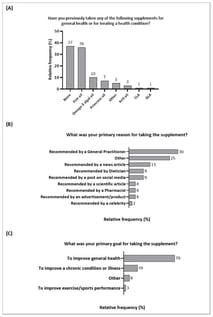
Use of supplements containing dietary fats and oils amongst Australian adults aged 18–45 years. (A) Supplements previously used by the participants; (B) Primary reason for taking the supplement (C) Primary goal for taking the supplement.
  • Perspective
  • Open Access

Ultra-processed foods (UPFs) have become a growing part of everyday diets worldwide and have been linked to obesity, non-communicable diseases, and adverse mental health outcomes. Yet their role in deepening nutritional and health inequalities across socioeconomic groups and different stages of life is still not fully addressed in policy discussions. Drawing on recent population-based studies, longitudinal surveys, and mechanistic evidence, this perspective examines how UPF consumption intersects with food insecurity, psychosocial distress, and neurodevelopmental health from pregnancy through adulthood. Evidence from the United States shows that adults experiencing food insecurity obtain a larger share of their daily energy from UPFs. At the same time, surveys from low- and middle-income countries (LMICs) show that many infants and young children are already consuming sugar-sweetened beverages. Other observational studies have linked higher UPF intake with addictive-like eating behaviours and symptoms of depression, anxiety, and stress, although these studies cannot yet prove causality. In many LMICs, ongoing dietary transitions are also contributing to a rapid increase in overweight and obesity among socioeconomically disadvantaged groups, even while childhood stunting declines only slowly. Together, these findings suggest that UPF exposure is not only a dietary issue, but also a marker of wider social and nutritional vulnerability across the life-course. Breaking this cycle will require coordinated policy action, including stronger restrictions on unhealthy food marketing, front-of-package warning labels, better regulation of foods marketed to infants and young children, reforms to food-assistance programmes, and fiscal measures that make minimally processed foods more affordable and accessible.

Nutrients

30 September 2026

The unequal distribution of UPF consumption across the life-course. UPF intake by food security status and SNAP participation. Data from NHANES 2007–2016 (n = 9190). (a) Adjusted mean percentage of energy from UPFs across four levels of household food security, showing a dose–response increase. (b) Interaction plot: among income-eligible non-participants and income-ineligible non-participants, worsening food security is associated with higher UPF consumption; among SNAP participants, the gradient is flattened, and overall intake is high. Source: Leung et al. [1]. (c) Shifting burden of overweight/obesity by wealth in LMICs. Bars show the annualised change in the gap between the poorest and richest wealth quintiles in overweight/obesity prevalence among women aged 15–49 years. Positive (green) values indicate that overweight/obesity is rising faster among the poorest quintile, the emerging pattern in much of Latin America, East Asia, and the Middle East; negative (red) values indicate the richest quintile is still gaining faster, as remains the case across most of South Asia and sub-Saharan Africa. Source: Popkin and Laar [3]. (d) Early exposure to UPFs: percentage of children aged 6–23 months who consumed a sweet beverage the day before the survey, for a representative spread of LMICs from the most recent available DHS; the Ghana value (31.6%, navy outline) is from the 2022 Ghana DHS. Source: Popkin and Laar [3].
  • Article
  • Open Access

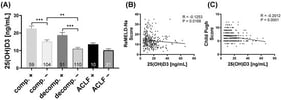
Background/Objectives: Vitamin D regulates both the adaptive and the innate immune system, while having anti-inflammatory, immunomodulatory and anti-fibrotic properties. In clinical studies, 25(OH)D3 deficiency was associated with systemic inflammation, but it is unclear whether these associations are causal. In this study, we aimed to investigate the impact of Vitamin D receptor (VDR) polymorphisms (SNPs)—as surrogates for functional relationships—on 25(OH)D3 status and systemic inflammation in decompensated liver cirrhosis. Methods: Patients with compensated and decompensated cirrhosis with or without ACLF were enrolled prospectively from a monocentric cohort study (N = 355). Pyrosequencing was performed for genotyping SNPs (rs7968585, rs731236 (TaqI), rs7975232 (ApaI), rs2239179 and rs2228570 (FokI)). VDR-SNPs were analysed for their association with 25(OH)D3 concentrations and markers of systemic inflammation. Results: Severe 25(OH)D3 deficiency was frequent in decompensated cirrhosis. 25(OH)D3 supplementation was associated with significantly higher circulating 25(OH)D3 in compensated and decompensated liver cirrhosis, whereas in ACLF, 25(OH)D3 levels did not differ significantly between supplemented and unsupplemented patients. An inverse correlation of 25(OH)D3 and IL-6 levels was identified (R = −0.2286, 95% CI −0.328 to −0.124, p < 0.0001). In exploratory analyses among the analyzed VDR-SNPs, the GG-variant of rs2239179 was associated with lower 25(OH)D3 levels (β = 0.705, 95% CI 0.498-0.998, p = 0.049). Moreover, the functionally important VDR-SNP rs2228570 TC-variant showed a nominal independent association with higher IL-6 levels (ß = 1.685, 95% CI 1.102–2.576, p = 0.016) after adjustment. Conclusions: These exploratory findings suggest that VDR genetics may partially contribute to 25(OH)D3 status and systemic inflammation in liver cirrhosis and ACLF and warrant further replication in independent cohorts.

Nutrients

30 September 2026

(A) Bar charts showing mean 25(OH)D3 concentrations of compensated (comp.), decompensated (decomp.) and ACLF patients with (+) and without (−) 25(OH)D3 supplementation. Associations of 25(OH)D3 levels and ReMELD-Na Score (B) as well as Child Pugh Score (C) were assessed using Spearman’s rank correlation. Corresponding correlation coefficients (R) and p-values are presented in the figure. Data are presented as mean with SEM. Statistical significance was determined by one-way ANOVA or Kruskal–Wallis test, as appropriate. ** p ≤ 0.01, *** p ≤ 0.001.
  • Article
  • Open Access

Background/Objectives: Large language model (LLM) pipelines increasingly convert free-text meal descriptions into nutrient values, yet reference-standard validation is rarely feasible in production. We asked whether the controls such pipelines conventionally pass suffice and built a reference-standard-free battery any pipeline can run on its output. Methods: We audited 13,073 meals logged by 513 adults through a WhatsApp conversational agent in rural Colombia (9 February 2026 to 6 August 2026). The pipeline is a two-stage cascade of commercial LLMs from different providers: a vision model renders photographs as text, while a text model maps these to nutrients. Six pre-specified tests were applied, including test–retest ICC(1,1) over recurring strings, stratified by modality because 48.3% of records carried a photograph. Results: The pipeline passed every conventional control (Atwater-reconstructed energy r = 0.9951; median relative error 0.0000) but failed reproducibility. Across 191 recurring strings (944 meals), energy ICC point estimates were 0.7061 (95% CI 0.5419–0.8217) text only and 0.5258 (0.3778–0.6513) with photographs; none reached 0.75. Modality is a design control, not an established effect, and the coefficient depends on which inputs recur, so it is not intrinsic. Under the strictest identity available—byte-identical text, no photograph—ICC was 0.6944. Intermediate-text inspection exposed a failure invisible at the output: 1.44% of photograph-accompanied records carried a vision-stage artefact string versus 0.01% of text-only records (ICC 0.0911). Conclusions: Internal consistency does not validate an LLM-assisted nutrition pipeline. This design measures instability under recurring inputs without isolating its cause. Prospective test–retest reproducibility is a cheap, necessary acceptance criterion, and in a cascade, the intermediate representation must also be inspected.

Nutrients

30 September 2026

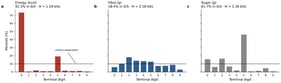
Terminal-digit distribution of engine-returned values (exact zeros excluded). The dashed line marks the uniform expectation of 10% per digit. (a) Energy (kcal): values are strongly concentrated on terminal digits 0 and 5 (92.3% in {0,5}; entropy H = 1.29 bits). (b) Fibre (g), an internal negative control: the distribution is near-uniform and compatible with a composition-table lookup (18.4% in {0,5}; H = 3.18 bits). (c) Sugar (g), exact zeros excluded (80.0% of sugar records are exactly zero): values concentrate on {0,5} (61.7%; H = 2.36 bits); including the exact zeros inflates the {0,5} share from 61.72% to 92.34%.

Featured Articles of Last Quarter

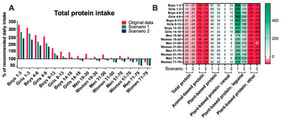
(A) Percentage of estimated total protein intake across different age groups based on the original dietary data and two dietary scenarios, compared to the World Health Organization (WHO) recommendation levels for age groups under 71 years and ESPEN recommended intake levels for age groups above 71 years and (B) changes in the percentage of protein intake for the two dietary scenarios. Average protein intake is shown for the original dataset as well as for scenario 1 (nutritionally conscious) and scenario 2 (nutritionally unconscious) dietary shifts. Data is presented as average per group.
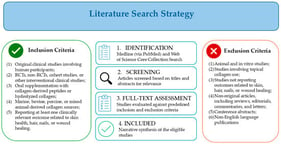
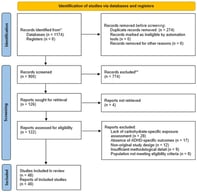
PRISMA flowchart showing studies identification, screening, and inclusion process. * Records were identified through database searching in PubMed, Scopus, and Web of Science; no registers were searched. ** Records were excluded during title and abstract screening because they did not meet the predefined eligibility criteria.

Highly Accessed Articles

News & Conferences

Latest Issues

Open for Submission

Journal Sections

Nutrition in the Liver Damage
Reprint

Nutrition in the Liver Damage

Editors: Aldona Wierzbicka-Rucinska, Zuzanna Goluch
Hot Topics in Nutrition and Obesity
Reprint

Hot Topics in Nutrition and Obesity

Editors: Javier Gómez-Ambrosi, Victoria Catalán
XFacebookLinkedIn
Nutrients - ISSN 2072-6643