Review

Dietary Collagen Supplementation as a Strategy for Skin Health: A Narrative Review of Clinical Effects on Skin, Hair, Nails, and Wound Healing


by
Angelika Biełach-Bazyluk
1,*,
Marta Jurga
1,
Iwona Flisiak
1 and
Edyta Zbroch
2
1
Department of Dermatology and Venereology, Medical University of Bialystok, 15-540 Bialystok, Poland
2
Department of Hypertensiology, Gastroenterology and Internal Medicine, Medical University of Bialystok, 15-540 Bialystok, Poland
*
Author to whom correspondence should be addressed.
Nutrients 2026, 18(13), 2141; https://doi.org/10.3390/nu18132141
Submission received: 4 June 2026 / Revised: 27 June 2026 / Accepted: 30 June 2026 / Published: 2 July 2026

Abstract

Collagen is a key structural protein of the skin, essential for maintaining its mechanical strength, elasticity, and hydration. Oral collagen supplementation, particularly in the form of collagen peptides, has recently gained significant interest as a nutritional strategy to support skin health and overall wellbeing. However, the evidence regarding its effectiveness in supporting skin health and improving hair, nail, and wound-healing outcomes remains heterogeneous. The aim of this review is to summarize and critically evaluate the current human evidence on oral collagen supplementation and its potential role in supporting skin health, hair and nail quality, and wound healing. A targeted literature search was conducted using PubMed and Web of Science to identify clinical trials and relevant studies assessing the effects of collagen supplementation on skin aging parameters, including elasticity, wrinkles, hydration, and barrier function, as well as hair loss, nail disorders, and wound healing. Collagen-derived peptide supplementation has been associated with improvements in skin hydration, elasticity, wrinkle appearance, and dermal extracellular matrix organization, while also supporting hair thickness and strength, modestly enhancing nail growth, and promoting wound healing. Benefits are most consistent with low-molecular-weight hydroxyproline-rich peptides, with peptide characteristics appearing more important than collagen source. Evidence is limited by short study durations, heterogeneous designs, multi-ingredient formulations, and industry funding, which reduce confidence in the magnitude and consistency of the reported effects. Nevertheless, high-quality, long-term, independently funded trials with standardized outcomes are still required to confirm these findings.

1. Introduction

Beauty from within is a holistic, consumer-driven wellness and beauty trend characterized by the integration of nutrition-based interventions aimed at delaying skin aging and enhancing overall wellbeing. The trend has emerged from a growing preference for preventive strategies over corrective solutions in managing aging, alongside an increasing awareness of the role of diet and supplementation in influencing key biological processes such as oxidative stress and inflammation [1,2]. These processes are believed to play a significant role in the aging of both the skin and internal organs, suggesting that targeted nutritional interventions may help slow their progression. The rapid expansion of the nutraceutical market is reflected in the increasing use of nutricosmetics, defined as dietary supplements intended to improve skin appearance, particularly collagen-based products, whose popularity has risen significantly in recent years alongside a growing number of clinical studies investigating their effects on skin aging [3].
Collagen comprises a group of structural proteins and represents one of the most abundant protein families in the human body. To date, 28 types of collagen have been identified [4]. Among them, type I collagen is the most abundant and is primarily found in skin, bones, and tendons, while type II is predominant in cartilage and type III is commonly associated with extensible tissues such as skin and blood vessels [5]. The unique triple-helix structure of collagen provides high tensile strength and serves as the main structural component of the dermis, contributing to mechanical support, skin firmness, and elasticity [6]. Moreover, collagen plays a key role in wound healing and the formation of new extracellular matrix. It is not a passive component of the extracellular matrix but an active molecule that influences cell adhesion, migration, proliferation, and differentiation through interactions with specific cellular receptors [6]. In addition to the skin, collagen is a major structural component of bones, cartilage, ligaments, and tendons [5].
As age-related decrease in collagen content is considered a key hallmark of aging, many attempts have been made to slow its progression [7]. Due to its large molecular size, collagen is generally unable to penetrate the skin when applied topically, which limits the effectiveness of collagen-containing creams and lotions [8]. Gelatin, a common home-prepared product used for skin health, is a partially hydrolyzed form of collagen with a relatively high molecular weight and low solubility, which restricts its absorption and efficacy [9]. These limitations have driven increasing interest in nutraceutical approaches aimed at modulating skin biology from within, particularly collagen-based dietary supplements, which are proposed to influence dermal structure and function through systemic mechanisms.
Collagen-derived peptides, which are short chains of amino acids (typically 2–20) derived from collagen hydrolysis, have attracted considerable attention due to their high bioavailability and their potential to modulate biological processes [9]. In particular, experimental studies suggest that they may modulate cell signaling pathways, stimulate collagen synthesis, and regulate inflammation and extracellular matrix remodeling [10,11]. In dermatological cell culture models, collagen-derived peptides have been shown to stimulate dermal fibroblast proliferation and upregulate the expression of extracellular matrix components, including collagen, elastin, and hyaluronic acid, while modulating inflammatory signaling pathways [12,13,14].
In recent years, numerous studies have reported that supplementation with collagen-derived peptides in humans may exert anti-aging effects on the skin [15,16], be associated with improvements in the condition of hair and nails [17,18], and support wound healing processes [11,19]. However, several issues remain unresolved, including questions regarding their bioavailability [20], the source of collagen (animal versus marine) [21], and the reliability of existing studies, which are often limited by small sample sizes [22]. Furthermore, potential conflicts of interest related to industry funding, as well as regulatory challenges within the dietary supplement market, raise concerns about the reproducibility of these findings and their translation into consistent clinical outcomes [23,24].
The purpose of this review is to summarize current evidence, highlight existing knowledge gaps, and propose future research directions on collagen supplementation as an approach to support skin and systemic wellbeing. We conducted a targeted literature search in MEDLINE (via PubMed) and the Web of Science Core Collection. In PubMed, Medical Subject Headings (MeSH) were applied, whereas in Web of Science, equivalent keyword searches were performed using the Topic (TS) field, which encompasses titles, abstracts, and keywords. The search strategy combined terms related to collagen supplementation, oral administration, and skin, hair, nails, and wound healing outcomes. Studies were included if they met the following criteria: (1) original clinical studies involving human participants; (2) randomized controlled trials, non-randomized controlled trials, cohort studies, or other interventional clinical studies; (3) oral supplementation with collagen-derived peptides or hydrolyzed collagen; (4) marine, bovine, porcine, or mixed animal-derived collagen sources; (5) reporting at least one clinically relevant outcome related to skin health, hair, nails, or wound-healing. Exclusion criteria comprised: (1) animal and in vitro studies; (2) studies involving topical collagen use; (3) studies not reporting skin, hair, nail, or wound-related outcomes; (4) non-original articles including reviews, editorials, commentaries, and letters; (5) conference abstracts; and (6) non-English language publications. Articles identified through the literature search were initially screened based on their titles and abstracts to assess their relevance to the objectives of this review. Studies considered potentially eligible were subsequently retrieved in full text and evaluated against the predefined inclusion and exclusion criteria. The final set of studies was synthesized narratively according to outcome domains, encompassing effects on skin structure, elasticity, hydration, wrinkle formation, photoaging-related outcomes, hair and nail quality, and wound healing, which are discussed in detail in the following sections. A schematic overview of the literature search strategy and study selection process is presented in Figure 1.

2. Pathophysiology of Skin Aging

The skin, as the external covering of the body, is the most accessible and observable indicator of age-related changes. According to current understanding, aging is characterized by a progressive decline in organ function, along with declining fertility and heightened vulnerability to disease, resulting from genetically determined, endogenous biological processes (intrinsic aging) and further influenced by environmental and lifestyle-related factors (extrinsic aging) [25].
Skin aging affects all layers of the skin and involves structural and functional alterations that correlate with clinical manifestations. In intrinsic aging, the epidermis typically becomes thinner, whereas photoaging may lead to epidermal thickening, particularly of the stratum corneum [26]. It is estimated that epidermal thickness decreases by approximately 6.4% per decade on average, accompanied by a corresponding reduction in the number of epidermal cells [27].
Age-related changes in the epidermis include reduced cellular turnover, impaired immune function, and alterations in pigmentation, contributing to a rougher skin surface and uneven skin appearance [28,29,30].
Decreased synthesis of the key structural components of the dermo-epidermal junction, including collagen types IV and VII, results in effacement of rete ridges and decreased surface area of contact between the epidermis and dermis [31]. Consequently, these changes increase skin fragility and may impair tissue homeostasis, contributing to greater vulnerability to age-related damage [32].
The dermis is the principal cutaneous compartment in which age-associated structural and molecular alterations occur [33]. Fibroblast senescence is a major driver of skin aging, resulting from both intrinsic aging associated with telomere shortening and extrinsic aging driven by increased oxidative stress and DNA damage [33,34]. Senescent fibroblasts exhibit reduced synthesis of collagen types I and III, elastin, and hyaluronic acid, leading to extracellular matrix disorganization, loss of dermal integrity, and the development of wrinkles, laxity, and reduced skin elasticity [28,32,33,35]. In addition, these cells acquire a senescence-associated secretory phenotype (SASP), characterized by increased production of pro-inflammatory mediators and matrix metalloproteinases, thereby promoting extracellular matrix degradation and chronic low-grade inflammation (inflammaging) [33,34,36,37].
Concurrently, age-related alterations in subcutaneous adipose tissue further contribute to loss of volume and structural support, exacerbating visible signs of skin aging [33,38].
Taken together, these multi-layered structural and functional alterations highlight the central role of extracellular matrix degradation, cellular senescence, and chronic inflammation in skin aging, thereby providing a strong rationale for interventions aimed at restoring dermal homeostasis, including collagen-derived peptides.

3. Collagen-Derived Peptides: Bioavailability and Mechanisms Relevant to Skin Biology

Dietary proteins and peptides are predominantly hydrolyzed into amino acids during digestion and subsequent metabolic processing in the circulation. However, accumulating evidence indicates that, following oral ingestion of collagen hydrolysate, a range of low-molecular-weight peptide species—particularly dipeptides and tripeptides—can evade complete proteolytic degradation and appear in the systemic circulation in intact forms [9,39]. Moreover, an animal in vivo model confirmed that low-molecular peptides may be efficiently transferred to the skin [39]. Dipeptides and tripeptides represent the most easily absorbed form of collagen-derived peptides, exhibiting higher intestinal uptake than larger peptide fragments present in collagen hydrolysates [9]. Among collagen-derived peptides, particular attention has been given to those containing 4-hydroxyproline (4Hyp) or 3-hydroxyproline (3Hyp), as the presence of these residues is thought to enhance resistance to proteolytic degradation, facilitate intestinal absorption, and thereby contribute to their increased biological activity [40,41].
Collagen-derived di- and tripeptides act as nutraceuticals, exhibiting anti-inflammatory, antioxidative, and immunomodulatory activities, in addition to modulating extracellular matrix turnover across multiple tissues [10,12,42]. Their anti-inflammatory effects are mediated through inhibition of the master regulator of inflammation, NF-κB, leading to decreased expression of pro-inflammatory mediators, including inducible nitric oxide synthase, cyclooxygenase-2 (COX-2), and the cytokines TNF-α, IL-1β, and IL-6 [10]. Collagen-derived peptides may enhance antioxidant defenses by upregulating key antioxidant enzymes and exert additional cytoprotective effects by attenuating lipid peroxidation and protecting cellular membranes [43].
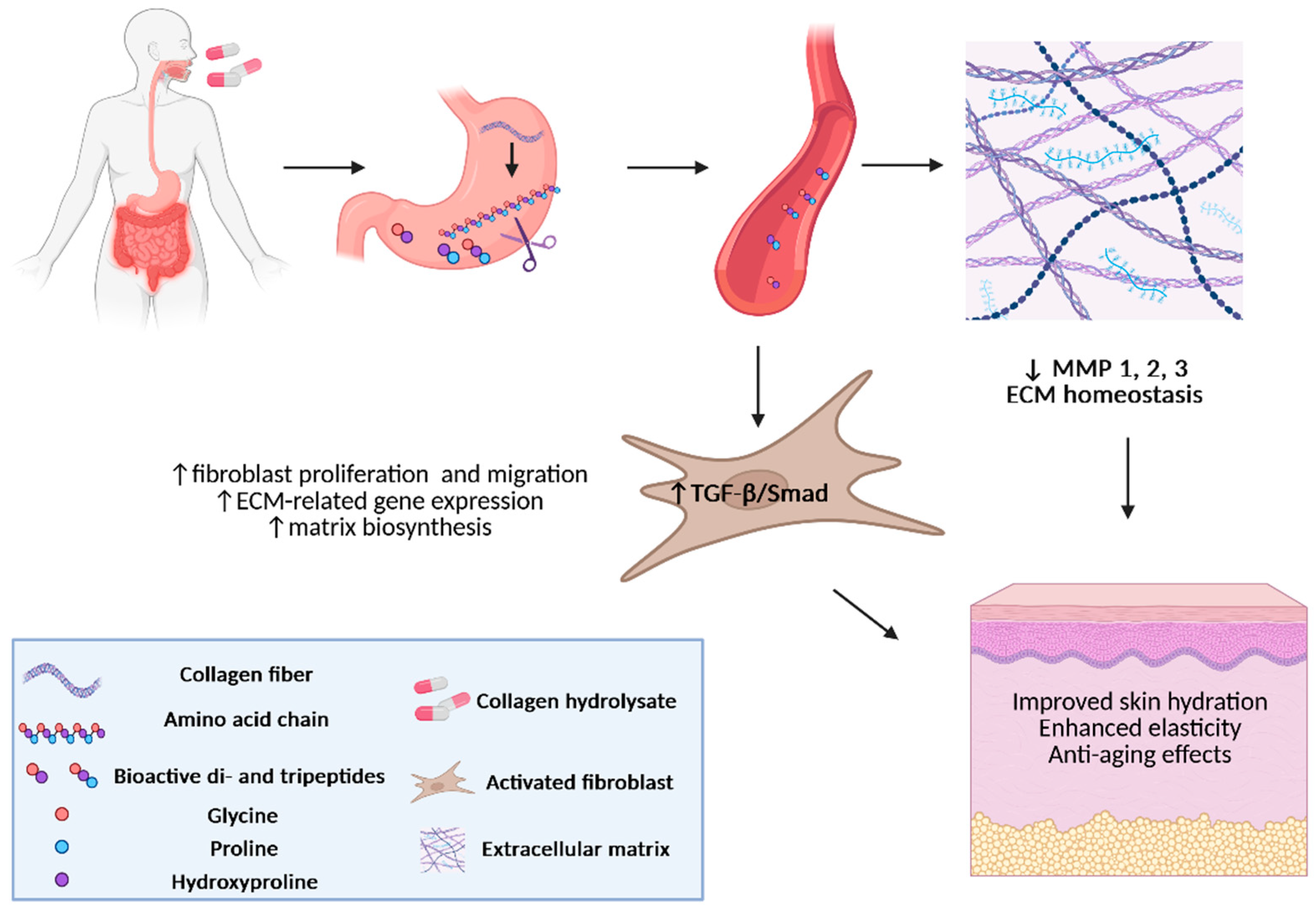
A growing body of evidence highlights that collagen-derived peptides stimulate fibroblast proliferation and migration, activate the TGF-β/Smad pathway, and modulate MMP activity, thereby promoting extracellular matrix remodeling [11,12,13,14,19,44]. In particular, experimental studies suggest that they may increase the synthesis of collagen, elastin, hyaluronic acid, and versican through upregulation of related genes and suppression of MMP expression, including MMP-1, MMP-2, MMP-3, and MMP-12 [12,13,19,44,45,46,47,48]. Furthermore, they have been reported to modulate macrophage responses toward an anti-inflammatory M2-phenotype and may improve skin hydration [13,42,43,46]. Figure 2 summarizes the current understanding of the bioavailability of collagen-derived peptides and their proposed mechanisms of action relevant to skin biology.
Taken together, these mechanistic insights support the concept that orally administered collagen peptides may exert systemic biological activity extending beyond simple nutritional supplementation and may provide dermatological benefits.

4. Clinical Effects of Oral Collagen-Derived Peptides on Skin Aging

4.1. Overview of Clinical Evidence and Study Heterogeneity

In the following section, we discuss the current clinical evidence regarding collagen-derived peptide supplementation and skin health in humans. The available studies are highly heterogeneous with respect to peptide source, molecular weight distribution, and whether interventions consist of single-component collagen supplements or multicomponent nutraceutical formulations, which complicates direct cross-study comparisons.
Although clinical studies utilize collagen peptides derived from marine, bovine, porcine, and, less commonly, alternative sources, current evidence does not consistently demonstrate source-specific differences in clinical efficacy when matched for molecular weight and peptide composition. This observation is supported by a recent meta-analysis, which did not identify significant differences in outcomes according to collagen source [49]. Instead, bioactivity appears to be primarily influenced by peptide size distribution and hydroxyproline content. Clinical evidence suggests that specific peptide sequences, particularly prolylhydroxyproline (Pro-Hyp) and hydroxyprolylglycine (Hyp-Gly), are linked to more pronounced improvements in facial skin moisture, elasticity, wrinkle depth, and surface roughness [50]. In line with this, ultra-low-molecular-weight peptides (<1000 Da) have been associated with relatively rapid improvements in crow’s feet wrinkles in women [51].
Marine-derived collagen peptides are more extensively represented in clinical research compared with bovine or porcine sources. Consequently, they may appear to demonstrate more consistent clinical benefits; however, this likely reflects differences in study numbers and product availability rather than true source-dependent differences.
Nevertheless, pharmacokinetic data suggest that marine-derived collagen peptides, particularly those obtained from fish scales, may exhibit greater systemic exposure following oral ingestion compared with porcine skin-derived collagen hydrolysates, indicating potential differences in absorption and/or bioavailability between sources [20]. However, the clinical relevance of these pharmacokinetic differences remains unclear.
Beyond differences related to collagen source, novel delivery strategies have also been investigated to improve peptide bioavailability. One study evaluated oral disintegrating collagen films designed to enhance bioavailability through direct absorption across the oral mucosa while potentially bypassing gastrointestinal degradation [52]. It suggested that oral disintegrating collagen films may improve skin aging parameters, while ex vivo data indicate potentially higher mucosal absorption compared with conventional tablets. However, the clinical evidence remains preliminary due to the small, single-arm study design without a placebo-controlled comparison.
Overall, this heterogeneity should be considered when interpreting comparisons across studies.

4.2. Effects on Skin Hydration, Elasticity, and Wrinkle Formation

One notable example of a single-component intervention is the randomized, triple-blind, placebo-controlled study conducted by Evans et al. [53], which evaluated the effects of fish-derived hydrolyzed collagen peptides in women aged 45–60 years. After 12 weeks of supplementation, significant improvements in wrinkle reduction and skin elasticity were observed compared with placebo. Importantly, skin outcomes were assessed using objective instrumental methods, strengthening the reliability of the findings. However, improvements reported in subjective self-assessment measures were more pronounced than those observed with objective instrumental evaluations, and the potential risk of bias associated with industry funding should also be considered.
Similarly, the randomized clinical trial by Paula-Vieira et al. demonstrated that supplementation with single-ingredient bioactive collagen peptides for 12 weeks improved skin elasticity, hydration, and wrinkle parameters in middle-aged women, with stronger wrinkle reduction observed at the 10 g/day dose compared with 2.5 g/day [54]. A notable strength of the study compared with earlier collagen peptide trials was the inclusion of mechanistic biomarkers such as TGF-β and Klotho, suggesting potential immunomodulatory and regenerative effects beyond cosmetic outcomes.
The potential superiority of low-molecular-weight collagen peptides (<500 kDa) was demonstrated in several randomized, double-blind clinical trials [55,56,57,58,59]. These studies reported statistically significant improvements not only compared with placebo groups, but also when compared with conventional collagen hydrolysates used as comparators [55]. Participants receiving preparations enriched in hydroxyproline-containing low-molecular-weight collagen peptides achieved greater improvements in skin elasticity and dermal collagen content, as assessed using objective instrumental methods. Furthermore, enhanced intestinal absorption and bioavailability of preparations enriched with hydroxyproline-containing (X-Hyp) and hydroxyproline-glycine-containing (X-Hyp-Gly) peptide sequences were additionally supported by in vitro findings [55].
While most studies investigating marine-derived collagen utilize fish scales as the primary source, evidence also exists supporting the efficacy of fish cartilage-derived supplementation, which contains glycosaminoglycans and peptides, approximately 95% of which consist of low-molecular-weight fractions [60]. In a randomized, double-blind, placebo-controlled trial, it was demonstrated that improvements in overall skin structural quality were reported, suggesting that benefits may be achieved even at relatively lower supplementation doses.
Several studies additionally evaluated skin hydration using biophysical parameters, including transepidermal water loss (TEWL), as an indicator of epidermal barrier function. Notably, one randomized, double-blind, placebo-controlled trial incorporated adjustment for environmental confounders known to substantially influence skin hydration parameters, including ambient humidity, temperature, and ultraviolet exposure [61]. After adjustment for these climatic variables, supplementation with low-molecular-weight collagen tripeptides remained associated with a significant reduction in TEWL, suggesting beneficial effects on epidermal barrier function independent of seasonal environmental variation. Consistent with these findings, another study reported increased seasonal TEWL in the placebo group, whereas TEWL levels remained stable in the treatment group [62]. Improved TEWL following collagen peptide administration is suggested to result from raised levels of natural moisturizing factor in the stratum corneum [57,61,63].
Another noteworthy methodological approach was reported in a study that implemented a standardized skincare regimen prior to and throughout the intervention period, allowing the investigators to minimize variability related to cosmetic use [64]. Skin-related outcomes were assessed using standardized instrumental and dermatologist-evaluated methods, demonstrating significantly improved dermis density, skin hydration, elasticity, and wrinkle appearance over 84 days of supplementation. Similar to marine collagen peptides, bovine-derived products were shown to maintain skin improvements after a four-week washout period [65].
Data are also available for less commonly studied sources of collagen peptides. For instance, a randomized double-blind clinical trial enrolling 128 middle-aged women with signs of aging demonstrated statistically significant and instrumentally measured clinical improvement in skin elasticity, facial erythema and wrinkles after 12-week supplementation with hydrolyzed sternal chicken cartilage [66,67]. However, unlike several previous studies, this trial did not confirm significant reductions in TEWL [61,63,66].

4.3. Effects on Dermal Structure and Extracellular Matrix Remodeling

A randomized, triple-blind, placebo-controlled trial documented increased skin density and improved dermal structure, including higher collagen fiber content, following supplementation with a multi-ingredient collagen peptide dermonutrient over the study period, as assessed using confocal laser scanning microscopy [68]. These findings are further supported by a randomized placebo-controlled trial by Demir-Dora et al. [69], which reported improvements in skin elasticity, hydration, and dermal appearance after supplementation with hydrolyzed collagen peptides; however, the short follow-up period and female-only study population limit the broader generalizability of the results.
Mechanistic and ex vivo studies further suggest that some of the beneficial effects of bioactive collagen peptides may be mediated through stimulation of human dermal fibroblast proliferation, increasing the synthesis of procollagen type I, hyaluronic acid, and elastin, as well as modulating extracellular matrix turnover through decreased expression of MMP-1, MMP-3, MMP-12, and the release of TGF-β [14,46,48,70]. Furthermore, a pilot study indicated that collagen peptide intake increased plasma levels of insulin-like growth factor 1 (IGF-1) [62].
Additional evidence from a study investigating a multi-ingredient nutraceutical demonstrated increased serum fibronectin levels, reduced neutrophil elastase 2 activity associated with extracellular matrix degradation, and decreased levels of carbonylated proteins, a marker of oxidative damage [71]. Nonetheless, the interpretation of the findings is limited by several risk-of-bias concerns, including non-randomized or inadequately described study designs, potential industry involvement, use of multi-component formulations, and indirect biomarker interpretation [71].

4.4. Broader Dermatological Effects of Collagen Peptides

An emerging study by Lee et al. [72] suggested that improved skin texture is not solely attributable to wrinkle reduction; low-molecular-weight collagen peptides also significantly decreased sebum secretion and improved the appearance and measurable characteristics of facial pores. Most studies evaluate skin outcomes after 8–12 weeks of supplementation. However, clinical evidence from a small randomized trial suggests that even relatively short-term supplementation (4 weeks) with marine-derived collagen peptides may improve biomechanical skin properties associated with photoaging, particularly skin elasticity in sun-exposed areas [73].
Importantly, some studies suggest that certain favorable effects may persist after discontinuation of treatment, although the documented washout periods are relatively short [72,74]. In addition, one randomized controlled study incorporating paired pre- and post-intervention skin biopsies in a subgroup of participants reported histological improvement in solar elastosis following supplementation with a multi-ingredient collagen-based formulation [75].
Beyond hydration, low-molecular-weight collagen peptides have been hypothesized to influence broader skin biology, including elasticity biomechanics, inflammatory tone, and pigmentation-related pathways [76]. Although several reports have documented beneficial effects of collagen supplementation in photoaged populations, the clinical presentation of intrinsic aging and photoaging often overlaps, and the observed outcomes do not appear to differ substantially from those reported in other study cohorts [77].
Unlike many previous collagen studies focused exclusively on wrinkle reduction in older adults, Perin et al. additionally examined skin texture irregularities, redness, pigmentation homogeneity, acne-associated inflammation, and UV-induced erythema responses in younger women [78]. Supplementation with low-molecular-weight fish collagen peptides combined with L-cystine improved skin smoothness, reduced redness associated with acne lesions, and increased resistance to UV-induced erythema. However, the observed benefits cannot be attributed exclusively to collagen peptides, as L-cystine likely contributed substantially through its antioxidant, redox-regulating, and anti-inflammatory properties. In line with this, collagen peptide supplementation has also been associated with reductions in skin redness and pigmentation in a study including both male and female participants [79].

4.5. Effects of Collagen Peptides on Skin at Non-Facial Sites

Data on the impact of collagen supplementation on the skin beyond the face and neck are scarce and conflicting. For instance, low-molecular-weight marine collagen peptide supplementation significantly improved skin elasticity and reduced cellulite severity compared with placebo, with effects confirmed using objective instrumental assessment methods [80]. In contrast, collagen-derived peptides did not appear to improve photoaged skin at non-facial sites, as reported by Guadanhim et al. [81]. The study included postmenopausal women presenting with cutaneous atrophy, senile purpura, and stellate pseudoscars on the forearms, who were divided into subgroups receiving oral collagen, topical hydrolyzed collagen 2.5% serum or a combination of both interventions. The intervention lasted 6 months, and outcomes were evaluated using objective methods, including skin biopsies, cutometry, and ultrasound examination. Despite high rates of perceived improvement reported by participants, including enhanced skin hydration, smoothness, and wrinkle appearance, these subjective benefits were not supported by objective instrumental assessments, which failed to demonstrate significant measurable changes between the treatment groups [81].
Contrary, Nomoto and Iizaka reported significant improvements in stratum corneum hydration and skin elasticity following administration of an oral nutrition supplement containing 10 g of collagen peptides in hospitalized older adults [82]. Taken together, the available evidence regarding non-facial skin sites remains limited and somewhat inconsistent, precluding firm conclusions regarding the generalizability of these findings across different anatomical regions.

4.6. Multi-Ingredient Formulations and Combination Effects

The most common additional ingredients of nutraceuticals containing collagen peptides are antioxidants, including vitamins C and E, zinc, and selenium [83]. Overall, multi-ingredient formulations have been associated with outcomes generally consistent with those observed for pure collagen peptide supplementation in terms of skin elasticity, hydration, overall skin health, and anti-aging effects. However, the specific added value of antioxidants has not been clearly demonstrated [83]. Some authors have suggested that antioxidant-containing formulations may provide additional photoprotective effects and protection against environmentally induced skin damage [84]. Nevertheless, evidence supporting the antioxidant-related effects of such formulations remains inconclusive, as some studies failed to demonstrate improvements in key oxidative stress and glutathione-related biomarkers despite supplementation [85].
Subsequently, a randomized, double-blind, placebo-controlled trial evaluated both dermatological and musculoskeletal outcomes in adults presenting with visible signs of skin aging and osteoarthritis-related joint discomfort [75]. Participants received a multi-component oral formulation containing marine collagen peptides combined with antioxidants, vitamins, minerals, glucosamine, and chondroitin sulfate. Supplementation was associated with improvements in dermal histology, including enhanced collagen fiber organization and reduced solar elastosis, alongside reductions in joint discomfort, improved joint mobility, and enhanced self-perceived wellbeing. A notable strength of the study was the inclusion of histological skin biopsy assessment before and after intervention; however, these effects were observed with a combined formulation, suggesting potential synergistic effects rather than the isolated action of collagen alone.
The addition of hyaluronic acid to collagen peptide formulations has not consistently demonstrated additional clinical benefit over collagen peptides alone [86]. Nonetheless, another study described notable improvements in wrinkles, fine lines, skin elasticity, firmness, tone, texture, radiance, and overall skin quality following three months of oral supplementation with collagen peptides, hyaluronic acid, and micronutrients, with benefits confirmed by both expert assessment and participant self-reports [87]. However, these promising effects should be interpreted with caution due to the absence of a control group and lack of dietary monitoring.
Similarly, supplementation combining collagen peptides with coenzyme Q10 was associated with increased dermal density and improved wrinkle parameters and skin smoothness compared with placebo, while no significant effects were observed for skin hydration, transepidermal water loss, dermal thickness, or viscoelasticity [88].
Several botanical extracts, including djulis, were assessed for their efficacy and safety in combination with collagen peptides [89]. Overall, while the study reported comparable efficacy of the collagen–djulis formulation in improving key skin outcomes such as hydration, brightness, texture, and wrinkle appearance compared with similar interventions, its findings should be interpreted with consideration of limitations, including the modest sample size and reliance on indirect assessment methods for certain skin and collagen-related endpoints [89].
In contrast, collagen formulas enriched in methylsulphonylmethane, which is a naturally occurring organosulfur compound, were associated with favorable changes in certain structural skin parameters, including thickness and roughness [90]. However, methylsulphonylmethane alone does not consistently show strong anti-aging effects and most evidence of benefit comes from combination formulations or small trials [91].
One of the most notable studies evaluated the effects of marine-derived collagen peptides, administered alone or with calcium and vitamin D, on skin parameters, hair loss, and bone turnover in postmenopausal women [92]. The study was distinguished by a relatively long supplementation period of six months. Eighty participants were randomized into four groups: (1) calcium + vitamin D3 + collagen peptides, (2) collagen peptides alone, (3) calcium + vitamin D3, and (4) placebo. Improved skin hydration was observed in both collagen-supplemented groups, with greater improvement in the group additionally receiving calcium and vitamin D3 (23% vs. 5%). No significant changes in TEWL were detected, while skin elasticity improved similarly in both collagen groups. Interestingly, reduced hair shedding was reported across all active intervention arms. No significant effects on bone turnover biomarkers were observed, possibly due to low baseline bone turnover and the relatively short duration for detecting skeletal changes. The study is noteworthy for its double-blind design, absence of industry funding, and objective instrumental outcome assessment.

4.7. Safety Outcomes, Methodological Limitations and Risk of Bias

Across clinical studies, oral collagen-derived peptide supplementation appears to be well tolerated, with a very low incidence of adverse events reported. Safety outcomes have generally been comparable to placebo across different peptide sources, doses, and formulations, suggesting a favorable safety profile independent of product type.
Nevertheless, the evaluation of collagen safety extends beyond clinical tolerability and includes source-specific regulatory and quality considerations. Historically, concerns have been raised regarding the potential transmission of animal-derived pathogens, particularly bovine spongiform encephalopathy (BSE) associated with bovine-derived materials [93]. However, current manufacturing practices, regulatory oversight, and stringent requirements for raw material selection, traceability, and processing have substantially reduced these risks. In the European Union, collagen intended for human consumption must comply with specific hygiene and safety requirements regarding animal origin, processing conditions, and production controls [94].
Recent risk assessments indicate that collagen and gelatine produced according to current regulatory standards pose an extremely low risk of BSE transmission, supporting the effectiveness of existing control measures and manufacturing procedures [93]. Consequently, the safety of bovine- and porcine-derived collagen currently depends largely on compliance with stringent sourcing, traceability, and manufacturing requirements rather than on the animal origin itself. Nevertheless, marine-derived collagen has gained increasing attention due to consumer preferences, sustainability considerations, and its avoidance of concerns associated with terrestrial animal sources, including religious restrictions and historical concerns related to prion diseases [95].
From a safety perspective, marine collagen also requires appropriate quality control, particularly regarding potential allergenicity in individuals with fish or seafood allergies and the possible presence of environmental contaminants, including heavy metals [96]. Although collagen hydrolysis is generally considered to reduce allergenic potential through partial disruption of IgE-binding epitopes, the risk of allergic reactions cannot be considered negligible. Indeed, cases of severe allergic reactions, including anaphylaxis, following the ingestion of marine collagen hydrolysates have been reported in the literature [97]. Therefore, individuals with a history of fish allergy should use marine collagen-derived peptide supplements with caution, as residual IgE-reactive epitopes may persist despite extensive hydrolysis. However, studies indicate that effective purification processes and regulatory monitoring can minimize these risks, and commercially available collagen products must comply with applicable safety standards [96]. Overall, current evidence does not suggest major differences in safety profiles among approved collagen sources when appropriate quality control measures are applied, suggesting that product safety is determined primarily by raw material quality, traceability, purification procedures, and regulatory compliance rather than by collagen source alone.
Despite the generally favorable safety findings, the interpretation of both efficacy and safety outcomes is affected by several methodological limitations of the available clinical evidence. Several studies investigating collagen supplementation are limited by methodological weaknesses, including the absence of placebo controls, open-label designs, and small sample sizes [98]. Even though some studies enrolled a relatively large number of participants, conclusions are limited due to subgroup fragmentation, the absence of placebo control and blinding, concurrent cosmetic procedures, and reliance on subjective outcome measures [99]. An additional limitation observed in some studies is the use of branded commercial formulations, which raises concerns regarding potential sponsor-related bias and limits the generalizability of the results [99,100,101]. Furthermore, variability in outcome assessment methods and potential publication bias toward positive findings may further influence the interpretation of the results.

5. Clinical Effects of Oral Collagen-Derived Peptides on Hair and Nails

5.1. Biological Rationale for Collagen Peptides in Hair and Nail Health and Disease

Hair and nails are composed primarily of keratin rather than collagen, in contrast to the skin. While the relationship between collagen supplementation and hair or nail health may not be immediately obvious, several indirect mechanisms may help explain these effects. Collagen-derived peptides may affect the dermis and cellular processes involved in hair follicle and nail function [64,102]. Some peptides have also been shown to influence fibroblast activity and extracellular matrix remodeling [64]. In addition, amino acids derived from collagen may serve as substrates for keratin synthesis, potentially contributing to hair and nail structure. Experimental studies also indicate that collagen peptides may influence dermal papilla cell function and hair growth-related signaling pathways such as Wnt/β-catenin, although these effects are mainly demonstrated in preclinical models [103]. As a result, collagen supplementation has gained attention as a potential approach to support hair and nail health.

5.2. Clinical Evidence in Hair Disorders and Hair Quality

A prospective, comparative, randomized, blind study by Addor et al. also suggested a potential role of nutritional support in improving hair condition, particularly in women with telogen effluvium [98]. Two oral supplements were compared over 90 and 180 days. Both groups showed improvements in parameters related to hair loss, volume, density, shine, strength, and overall hair quality. However, the formulation containing a broader combination of nutrients showed earlier effects, with significant improvements already visible after 90 days. By 180 days, both groups had improved, although the same formulation continued to show slightly better results. Digital trichoscopy also revealed a significant increase in mean hair density in the group receiving the broader nutrient formulation. These observations support the idea that nutritional factors may contribute to idiopathic telogen effluvium and that supplementation may potentially support hair recovery. A key limitation of the study is the absence of a placebo-controlled group, as both groups received active supplementation, which limits the ability to attribute observed effects to the intervention itself.
Gwon et al. conducted a randomized, double-blind, placebo-controlled trial to assess the effects of low-molecular-weight collagen peptides on hair health in adults with damaged hair [17]. Compared to placebo, the supplemented group showed improvements in several objective and subjective parameters, including hair shine, strength, thickness, and density. Improvements were seen not only in measured hair parameters but also in hair shaft structure, confirmed by scanning electron microscopy (SEM) evaluation of surface integrity. The findings point to a beneficial effect of low-molecular-weight collagen peptides on overall hair quality and strength, although the study involved individuals with damaged hair rather than patients with clinical hair loss [17].
In line with this, in a randomized, placebo-controlled study involving 114 women over 24 weeks, low-molecular-weight collagen peptides (LMWCPs) were evaluated for their broader effects on skin and hair parameters. Women taking 1000 mg daily showed improvements in hair thickness compared to the placebo group. A larger proportion of participants in the collagen group also showed measurable hair thickening during the study period. Overall, these findings suggest that low-molecular-weight collagen peptides may be associated with changes in hair health parameters, although the contribution of enhanced absorption and bioavailability requires further confirmation [80].
Milani et al. explored whether collagen-based supplementation could benefit individuals with hair loss conditions such as androgenetic alopecia or telogen effluvium [102]. In this 12-week randomized controlled trial involving 83 participants with androgenetic alopecia/female androgenetic alopecia (AGA/FAGA) or chronic telogen effluvium (TE), those who received a supplement containing hydrolyzed collagen, amino acids, iron, and selenium alongside standard treatment showed greater improvements in hair growth parameters compared to those receiving treatment alone. The findings suggest that collagen-based supplementation may provide additional benefits when combined with standard therapies; however, the specific contribution of collagen peptides remains uncertain and requires further investigation.
The main clinical studies evaluating oral collagen supplementation for hair and nail health are summarized in Table 1.

5.3. Clinical Evidence for Nail Health

Evidence regarding the effects of collagen supplementation on nail health remains limited and is considerably less well established compared with the more extensively studied outcomes related to skin and hair. So far, one study has examined the effects of collagen supplementation on brittle nails, reporting improvements in nail growth and reduced brittleness [18]. In a 24-week study involving 25 women, daily supplementation with 2.5 g of bioactive collagen peptides was associated with an approximately 12% increase in nail growth and a 42% reduction in the frequency of broken nails. In addition, 64% of participants reported an overall improvement in nail condition, and this percentage increased to 88% four weeks after supplementation ended, suggesting that some benefits may persist beyond the supplementation period, although this finding requires confirmation in larger controlled studies. Overall, the findings suggest that collagen peptides may have a potential role in supporting nail growth and strength, although larger controlled studies are still needed [18].
Similar nail-related effects have also been reported in studies primarily investigating skin aging. In a double-blind, placebo-controlled trial involving 85 East Asian women aged 43–65, daily supplementation with 5 g of collagen peptides for 12 weeks led to visible improvements in nail appearance, including reduced yellowness and improved brightness [64].

5.4. Summary, Limitations and Strength of Evidence

Overall, the available clinical evidence suggests potential beneficial effects of collagen peptide supplementation on certain aspects of hair quality, including thickness, strength, and structural integrity; however, the number of well-controlled clinical studies remains limited, and findings are based on relatively small and heterogeneous study populations. Evidence regarding nail health is even more scarce, with only a few controlled trials reporting modest improvements in nail growth and brittleness, and the overall certainty of the evidence is constrained by short study durations, variability in study design, and the frequent absence of long-term follow-up data.

6. Clinical Effects of Oral Collagen-Derived Peptides on Wound Healing

6.1. Biological Rationale for Collagen in Wound Healing

Wound healing is a highly coordinated, multistep biological process consisting of four overlapping phases: hemostasis, inflammation, proliferation, and tissue remodeling. Proper wound healing depends on interactions between many factors, such as inflammatory cells, fibroblasts, growth factors, and extracellular matrix components. Initially, vascular constriction and platelet aggregation help limit bleeding and form a temporary barrier at the site of injury. The inflammatory phase is associated with the removal of cellular debris and bacteria, as well as the release of cytokines and growth factors that regulate further repair mechanisms. Increased vascular permeability and migration of inflammatory cells into the wound area also occur at this stage [104,105].
Beyond the classical inflammatory response, recent studies highlight the role of specialized pro-resolving mediators (SPMs), bioactive lipid mediators derived from polyunsaturated fatty acids (PUFAs), including lipoxins, resolvins, protectins, neuroprotectins, and maresins. Rather than simply suppressing inflammation, these mediators actively promote the resolution phase of inflammation, facilitating the transition from inflammatory processes to tissue repair and regeneration [106,107].
During the proliferative phase, fibroblasts synthesize collagen and other extracellular matrix components that contribute to granulation tissue formation and tissue repair. Re-epithelialization and neovascularization also take place during this stage. Finally, the remodeling phase involves collagen reorganization and scar maturation, leading to increased tissue strength over time [104,105].
Collagen plays a central role throughout the wound healing process by providing structural support for newly formed tissue and facilitating cell migration, angiogenesis, and wound contraction [108,109]. As healing continues, collagen fibers gradually reorganize and contribute to the maturation of the repaired tissue [108].
Experimental studies further suggest that collagen-derived peptides may stimulate fibroblast proliferation, collagen synthesis, elastin production, and cell migration, thereby supporting tissue repair processes. For example, a human collagen type I alpha-2-derived peptide increased collagen type I synthesis and accelerated wound closure in cultured human dermal fibroblasts in vitro [109].
Taken together, these findings have contributed to growing interest in oral collagen supplementation as a potential supportive strategy for wound healing and tissue repair.

6.2. Clinical Evidence in Chronic and Acute Wounds

Emerging clinical evidence further suggests that collagen-derived peptide supplementation may be associated with improved wound healing outcomes in selected patient populations. One of the key studies supporting the role of oral collagen supplementation in wound healing was a randomized controlled trial conducted by Lee et al. The trial evaluated the effects of a fortified collagen protein hydrolysate administered three times daily on Pressure Ulcer Scale for Healing (PUSH) scores, a validated tool used to assess pressure ulcer healing over time, in patients with stage II–IV pressure ulcers. Participants were randomized to receive either standard care plus collagen supplementation or standard care plus placebo. After 8 weeks, the supplementation group showed greater improvement in PUSH scores compared with the placebo group, suggesting a potential beneficial effect of collagen supplementation on pressure ulcer healing. Nevertheless, the study had several limitations, including the relatively small sample size, short intervention period, and the inclusion of only long-term care residents [110].
Additional evidence was provided by a later double-blind, multi-centric, placebo-controlled randomized trial conducted in patients with stage II–III pressure ulcers. In this study, two collagen hydrolysate formulations were compared with placebo over a 16-week period. The formulation containing higher levels of the bioactive dipeptides Pro-Hyp and Hyp-Gly significantly improved PUSH scores and Pressure Sore Status Tool (PSST) scores, another validated measure of pressure ulcer healing, as well as wound area compared with placebo, whereas the formulation with lower dipeptide content showed improvement mainly in PUSH scores. These results suggest that differences in peptide composition may affect wound-healing outcomes [111].
Another area of research has explored the potential role of collagen-derived peptides in burn wound healing. For example, in a randomized clinical trial involving patients with burns covering 20–45% of total body surface area, supplementation with 40 g/day of collagen hydrolysate, either alone or combined with omega-3 fatty acids, was associated with faster wound healing compared with placebo [112]. Both collagen-treated groups showed shorter times to achieve 95% wound healing and complete wound closure, as well as improved Vancouver Scar Scale scores. However, no significant differences were observed between the collagen-only and collagen plus omega-3 groups, suggesting no clear additional benefit of omega-3 co-supplementation within the study period [112].
Similar findings were reported in a randomized double-blind pilot clinical trial conducted in men with burns covering 20–30% of total body surface area, which evaluated the effects of a hydrolyzed collagen-based supplement administered for 4 weeks. Patients receiving collagen supplementation showed faster wound healing and higher serum pre-albumin concentrations compared with the control group. Hospital stay also tended to be shorter in the collagen group, although the difference did not reach statistical significance. The study was limited by the relatively small sample size and the inclusion of only male participants [113].
More limited evidence comes from a study by Choi et al. [108], which investigated the effects of oral collagen tripeptide on wound healing and skin recovery using both in vitro models and a small clinical pilot study. In vitro experiments demonstrated enhanced cell migration and accelerated wound closure following collagen treatment, although no clear dose–response relationship was identified. In contrast, collagen supplementation did not significantly increase collagen gel contraction compared with controls. The clinical pilot study included eight healthy women undergoing fractional photothermolysis, of whom four received oral collagen supplementation. Post-laser erythema appears to resolve more rapidly in the supplementation group, which also showed greater recovery of skin hydration and improved post-treatment skin elasticity compared with controls. Nevertheless, interpretation of these findings is limited by the small sample size, short study duration, and the fact that the intervention was evaluated in a dermatological procedure model rather than in patients with clinical wounds [108]. The key clinical studies evaluating oral collagen supplementation and related nutritional interventions in wound healing are summarized in Table 2.

6.3. Indirect Nutritional Support of Wound Healing

In addition to direct collagen supplementation, several studies have investigated nutritional interventions that may indirectly support wound healing by modulating processes involved in collagen synthesis and extracellular matrix formation. In elderly individuals, oral arginine supplementation was associated with enhanced wound healing by increasing collagen deposition and total protein content in healing tissue [114]. Arginine supplementation was also associated with improved lymphocyte activity and increased IGF-1 levels [114].
Similarly, a randomized controlled trial investigated perioperative multinutrient supplementation in men undergoing inguinal hernia repair. The intervention, containing arginine, glutamine, vitamin C, and zinc, increased wound-fluid concentrations of type I procollagen propeptide during early wound healing, suggesting enhanced collagen synthesis. However, no significant reduction in epidermal healing time was observed. Importantly, the study did not directly evaluate oral collagen supplementation, and therefore its findings cannot be directly extrapolated to collagen peptide supplementation [115].

6.4. Summary, Limitations and Strength of Evidence

To sum up, clinical evidence suggests that oral collagen-derived peptide supplementation may support wound healing outcomes in selected patient populations, particularly in pressure ulcers and burn injuries. Reported benefits include improvements in validated wound-healing scores and accelerated wound closure in some studies. However, the current evidence base remains limited by small sample sizes, heterogeneity in peptide formulations and dosing regimens, variability in study populations, and frequent inclusion of adjunct nutritional components. Consequently, while mechanistic and early clinical findings are promising, definitive conclusions regarding the magnitude and specificity of the effects of oral collagen supplementation on wound healing cannot yet be established.

7. Conclusions

The growing interest in collagen-derived peptides reflects a broader shift toward preventive and nutrition-based approaches to healthy aging. Experimental evidence suggests that orally administered collagen peptides may influence multiple biological pathways involved in skin aging, including extracellular matrix remodeling, fibroblast activity, oxidative stress, and low-grade inflammation, thereby providing a mechanistic basis for their proposed dermatological benefits.
Overall, current clinical evidence suggests that oral collagen-derived peptide supplementation may be associated with favorable changes in several parameters related to skin aging, particularly skin hydration, elasticity, wrinkle appearance, and dermal extracellular matrix organization. Furthermore, it may have potential benefits for hair parameters, including increased thickness, strength, and structural integrity, as well as for nails, for which modest improvements in growth and reduced brittleness have been reported in limited studies. In addition, preliminary evidence suggests possible positive effects on wound healing, with studies reporting improved healing scores and shorter time to wound closure in selected conditions, such as pressure ulcers and burn injuries.
The most consistent benefits have been reported for low-molecular-weight hydroxyproline-rich peptides across different collagen sources. Collagen source appears to be a secondary determinant of efficacy compared with peptide molecular characteristics.
Despite the growing body of evidence supporting the beneficial effects of collagen-derived peptides on skin aging, hair and nail health, and wound healing, several important knowledge gaps remain. Specifically, substantial heterogeneity in peptide composition and molecular weight, dosing regimens, study populations, outcome assessment methods, and the frequent use of multi-component formulations limit definitive conclusions regarding the magnitude and specificity of these effects. Most available clinical trials evaluate relatively short intervention periods, typically ranging from 8 to 12 weeks. Consequently, the long-term efficacy and durability of benefits after supplementation discontinuation remain insufficiently investigated.
Moreover, outcome measures vary considerably across studies, ranging from subjective assessments to instrumental evaluations, reducing comparability between trials and complicating quantitative interpretation of the available evidence. This is particularly evident in hair and nail studies, where outcomes are often based on heterogeneous subjective scoring systems and non-standardized assessments. In contrast, wound healing studies more frequently employ validated scales; however, the evidence base remains limited, with small sample sizes, predominantly pilot or early-phase designs, and considerable variability in wound types, including pressure ulcers, burns, and other chronic or acute lesions. Several studies assessing hair, nails, and wounds are limited by methodological weaknesses, including lack of placebo control or incomplete blinding, insufficient reporting of randomization and allocation procedures.
Another important limitation is the predominance of studies on skin aging involving healthy middle-aged women. In contrast, studies on hair, nails, and wound healing exhibit considerable heterogeneity in both clinical indications and outcome assessment tools, limiting cross-study comparability.
In addition, many studies evaluate multi-ingredient formulations, making it difficult to determine the specific effects attributable to collagen peptides alone. Furthermore, a substantial proportion of these studies are industry-funded and assess proprietary commercial products, which may raise concerns regarding the reliability and generalizability of the findings, as well as the potential for bias.
Consequently, there is a need for large-scale, independently funded randomized controlled trials directly comparing pure collagen peptides with formulations containing additional vitamins and antioxidant compounds, incorporating longer follow-up periods and standardized, objective outcome assessment methods. In the context of skin aging studies, greater age and sex diversity among participants would also improve the applicability of the results to broader populations.
Taken together, current evidence suggests that collagen-derived peptides may represent a promising supportive strategy for skin health and wound healing, although high-quality, long-term clinical confirmation is still required.

Author Contributions

Conceptualization, A.B.-B. and E.Z.; methodology, A.B.-B.; resources, A.B.-B., M.J. and I.F.; data curation, A.B.-B. and M.J.; writing—original draft preparation, A.B.-B. and M.J.; writing—review and editing, E.Z. and I.F.; visualization, A.B.-B. and M.J.; supervision, I.F.; project administration, E.Z.; funding acquisition, E.Z. All authors have read and agreed to the published version of the manuscript.

Funding

This research was funded by the Publication Fund of the Medical University of Bialystok and by a scientific subsidy of the Medical University of Bialystok (Project No. B.SUB.26.381).

Institutional Review Board Statement

Not applicable.

Informed Consent Statement

Not applicable.

Data Availability Statement

No new data were created or analyzed in this study. Data sharing is not applicable to this article.

Acknowledgments

The authors would like to acknowledge O. Jakubowicz-Zalewska for creating the graphical illustration using BioRender.com.

Conflicts of Interest

The authors declare no conflicts of interest.

Abbreviations

3Hyp3-hydroxyproline
4Hyp4-hydroxyproline
AGAandrogenetic alopecia
BSEbovine spongiform encephalopathy
CH-acollagen hydrolysate with low levels of prolylhydroxyproline (Pro-Hyp) and hydroxyprolylglycine (Hyp-Gly)
CH-bcollagen hydrolysate with high levels of Pro-Hyp and Hyp-Gly
CICPtype I collagen propeptide
COX-2cyclooxygenase-2
ECMextracellular matrix
FAGAfemale androgenetic alopecia
FGF-21fibroblast growth factor-21
GLYglycine-containing dipeptide (Hydroxyprolylglycine, Hyp-Gly)
HRhazard ratio
Hyp-Glyhydroxyprolylglycine
IGF-1insulin-like growth factor-1
ILinterleukin
IL-1βinterleukin-1 beta
IL-6interleukin-6
IL-8interleukin-8
LMWCPlow-molecular-weight collagen peptide
MeSHMedical Subject Headings
MMPmatrix metalloproteinase
NF-κBnuclear factor kappa B
PRO-C3type III procollagen propeptide
PRO-C5type V procollagen propeptide
Pro-Hypprolylhydroxyproline
PSSTPressure Sore Status Tool
PTFEpolytetrafluoroethylene
PUFAspolyunsaturated fatty acids
PUSHPressure Ulcer Scale for Healing
RCTrandomized controlled trial
SASPsenescence-associated secretory phenotype
SEMscanning electron microscopy
SPMsspecialized pro-resolving mediators
TBSAtotal body surface area
TEtelogen effluvium
TEWLtransepidermal water loss
TGF-βtransforming growth factor beta
TGF-β/Smadtransforming growth factor-β/Small Mothers Against Decapentaplegic signaling pathway
TNF-αtumor necrosis factor alpha
TSTopic field
VSSVancouver Scar Scale
Wnt/β-cateninWingless/Integrated beta-catenin signaling pathway

References

  1. Ng, J.Y.; Yan Ng, X.M.G.; Wong, Q.Y.A.; Chew, F.T. Dietary Interventions in Skin Ageing: A Systematic Review and Meta-Analysis. J. Physiol. Anthropol. 2025, 44, 26. [Google Scholar] [CrossRef] [Scilit] [PubMed]
  2. Martemucci, G.; Portincasa, P.; Di Ciaula, A.; Mariano, M.; Centonze, V.; D’Alessandro, A.G. Oxidative Stress, Aging, Antioxidant Supplementation and Their Impact on Human Health: An Overview. Mech. Ageing Dev. 2022, 206, 111707. [Google Scholar] [CrossRef] [Scilit] [PubMed]
  3. de Miranda, R.B.; Weimer, P.; Rossi, R.C. Effects of Hydrolyzed Collagen Supplementation on Skin Aging: A Systematic Review and Meta-Analysis. Int. J. Dermatol. 2021, 60, 1449–1461. [Google Scholar] [CrossRef] [Scilit] [PubMed]
  4. Shoulders, M.D.; Raines, R.T. Collagen Structure and Stability. Annu. Rev. Biochem. 2009, 78, 929–958. [Google Scholar] [CrossRef] [Scilit] [PubMed]
  5. Wang, H. A Review of the Effects of Collagen Treatment in Clinical Studies. Polymers 2021, 13, 3868. [Google Scholar] [CrossRef] [Scilit] [PubMed]
  6. Zhou, C.J.; Guo, Y. Mini Review on Collagens in Normal Skin and Pathological Scars: Current Understanding and Future Perspective. Front. Med. 2024, 11, 1449597. [Google Scholar] [CrossRef] [Scilit] [PubMed]
  7. Varani, J.; Dame, M.K.; Rittie, L.; Fligiel, S.E.G.; Kang, S.; Fisher, G.J.; Voorhees, J.J. Decreased Collagen Production in Chronologically Aged Skin: Roles of Age-Dependent Alteration in Fibroblast Function and Defective Mechanical Stimulation. Am. J. Pathol. 2006, 168, 1861–1868. [Google Scholar] [CrossRef] [Scilit] [PubMed]
  8. Lubart, R.; Yariv, I.; Fixler, D.; Lipovsky, A. A Novel Facial Cream Based on Skin-Penetrable Fibrillar Collagen Microparticles. J. Clin. Aesthet. Dermatol. 2022, 15, 59–64. [Google Scholar] [PubMed]
  9. Iwai, K.; Hasegawa, T.; Taguchi, Y.; Morimatsu, F.; Sato, K.; Nakamura, Y.; Higashi, A.; Kido, Y.; Nakabo, Y.; Ohtsuki, K. Identification of Food-Derived Collagen Peptides in Human Blood after Oral Ingestion of Gelatin Hydrolysates. J. Agric. Food Chem. 2005, 53, 6531–6536. [Google Scholar] [CrossRef] [Scilit] [PubMed]
  10. Xin, X.-Y.; Zhou, J.; Liu, G.-G.; Zhang, M.-Y.; Li, X.-Z.; Wang, Y. Anti-Inflammatory Activity of Collagen Peptide in Vitro and Its Effect on Improving Ulcerative Colitis. npj Sci. Food 2025, 9, 1. [Google Scholar] [CrossRef] [Scilit] [PubMed]
  11. Sato, K.; Asai, T.T.; Jimi, S. Collagen-Derived Di-Peptide, Prolylhydroxyproline (Pro-Hyp): A New Low Molecular Weight Growth-Initiating Factor for Specific Fibroblasts Associated with Wound Healing. Front. Cell Dev. Biol. 2020, 8, 548975. [Google Scholar] [CrossRef] [Scilit] [PubMed]
  12. Dierckx, S.; Patrizi, M.; Merino, M.; González, S.; Mullor, J.L.; Nergiz-Unal, R. Collagen Peptides Affect Collagen Synthesis and the Expression of Collagen, Elastin, and Versican Genes in Cultured Human Dermal Fibroblasts. Front. Med. 2024, 11, 1397517. [Google Scholar] [CrossRef] [Scilit] [PubMed]
  13. Ohara, H.; Ichikawa, S.; Matsumoto, H.; Akiyama, M.; Fujimoto, N.; Kobayashi, T.; Tajima, S. Collagen-derived Dipeptide, Proline-hydroxyproline, Stimulates Cell Proliferation and Hyaluronic Acid Synthesis in Cultured Human Dermal Fibroblasts. J. Dermatol. 2010, 37, 330–338. [Google Scholar] [CrossRef] [Scilit] [PubMed]
  14. Zague, V.; do Amaral, J.B.; Rezende-Teixeira, P.; de Oliveira Nier, E.L.; Lauand, C.; Machado-Santelli, G. Collagen Peptides Modulate the Metabolism of Extracellular Matrix by Human Dermal Fibroblasts Derived from Sun-Protected and Sun-Exposed Body Sites. Cell Biol. Int. 2018, 42, 95–104. [Google Scholar] [CrossRef] [Scilit] [PubMed]
  15. Zhang, X.; Zhuang, H.; Wu, S.; Mao, C.; Dai, Y.; Yan, H. Marine Bioactive Peptides: Anti-Photoaging Mechanisms and Potential Skin Protective Effects. Curr. Issues Mol. Biol. 2024, 46, 990–1009. [Google Scholar] [CrossRef] [Scilit] [PubMed]
  16. Proksch, E.; Segger, D.; Degwert, J.; Schunck, M.; Zague, V.; Oesser, S. Oral Supplementation of Specific Collagen Peptides Has Beneficial Effects on Human Skin Physiology: A Double-Blind, Placebo-Controlled Study. Skin Pharmacol. Physiol. 2014, 27, 47–55. [Google Scholar] [CrossRef] [Scilit] [PubMed]
  17. Gwon, Y.-R.; Kim, A.; Seo, M.H.; Lee, J.-H.; Shin, J.H.; Lee, H.K.; Park, B.C.; Seok, J.; Kim, B.J.; Kim, J.; et al. Low-Molecular-Weight Collagen Peptides Improve Hair Health in Adults with Damaged Hair: A Randomized, Double-Blind, Placebo-Controlled Trial. Int. J. Pept. Res. Ther. 2026, 32, 22. [Google Scholar] [CrossRef] [Scilit]
  18. Hexsel, D.; Zague, V.; Schunck, M.; Siega, C.; Camozzato, F.; Oesser, S. Oral Supplementation with Specific Bioactive Collagen Peptides Improves Nail Growth and Reduces Symptoms of Brittle Nails. J. Cosmet. Dermatol. 2017, 16, 520–526. [Google Scholar] [CrossRef] [Scilit] [PubMed]
  19. Felician, F.F.; Yu, R.-H.; Li, M.-Z.; Li, C.-J.; Chen, H.-Q.; Jiang, Y.; Tang, T.; Qi, W.-Y.; Xu, H.-M. The Wound Healing Potential of Collagen Peptides Derived from the Jellyfish Rhopilema Esculentum. Chin. J. Traumatol. 2019, 22, 12–20. [Google Scholar] [CrossRef] [Scilit] [PubMed]
  20. Zhou, Y.; Jiang, Y.; Zhang, Y.; Yokoyama, W.; Wu, J.; Chang, S.K.C.; Hong, H.; Luo, Y.; Li, B.; Tan, Y. Unveiling a New Chapter for Collagen Peptides: Comprehensive Insights into Oral Bioavailability and the Enhancement via Encapsulation Systems. Trends Food Sci. Technol. 2025, 156, 104849. [Google Scholar] [CrossRef] [Scilit]
  21. Wosicka-Frąckowiak, H.; Poniedziałek, K.; Woźny, S.; Kuprianowicz, M.; Nyga, M.; Jadach, B.; Milanowski, B. Collagen and Its Derivatives Serving Biomedical Purposes: A Review. Polymers 2024, 16, 2668. [Google Scholar] [CrossRef] [Scilit] [PubMed]
  22. Choi, F.D.; Sung, C.T.; Juhasz, M.L.W.; Mesinkovsk, N.A. Oral Collagen Supplementation: A Systematic Review of Dermatological Applications. J. Drugs Dermatol. 2019, 18, 9–16. [Google Scholar] [CrossRef] [Scilit] [PubMed]
  23. Lundh, A.; Lexchin, J.; Mintzes, B.; Schroll, J.B.; Bero, L. Industry Sponsorship and Research Outcome: Systematic Review with Meta-Analysis. Intensive Care Med. 2018, 44, 1603–1612. [Google Scholar] [CrossRef] [Scilit] [PubMed]
  24. Dwyer, J.T.; Coates, P.M.; Smith, M.J. Dietary Supplements: Regulatory Challenges and Research Resources. Nutrients 2018, 10, 41. [Google Scholar] [CrossRef] [Scilit] [PubMed]
  25. Rodríguez-Rodero, S.; Fernández-Morera, J.L.; Menéndez-Torre, E.; Calvanese, V.; Fernández, A.F.; Fraga, M.F. Aging Genetics and Aging. Aging Dis. 2011, 2, 186–195. [Google Scholar] [PubMed]
  26. Zargaran, D.; Zoller, F.; Zargaran, A.; Weyrich, T.; Mosahebi, A. Facial Skin Ageing: Key Concepts and Overview of Processes. Int. J. Cosmet. Sci. 2022, 44, 414–420. [Google Scholar] [CrossRef] [Scilit] [PubMed]
  27. Branchet, M.C.; Boisnic, S.; Frances, C.; Robert, A.M. Skin Thickness Changes in Normal Aging Skin. Gerontology 1990, 36, 28–35. [Google Scholar] [CrossRef] [Scilit] [PubMed]
  28. Farage, M.A.; Miller, K.W.; Elsner, P.; Maibach, H.I. Characteristics of the Aging Skin. Adv. Wound Care 2013, 2, 5–10. [Google Scholar] [CrossRef] [Scilit] [PubMed]
  29. Sunderkötter, C.; Kalden, H.; Luger, T.A. Aging and the Skin Immune System. Arch. Dermatol. 1997, 133, 1256–1262. [Google Scholar] [CrossRef] [Scilit] [PubMed]
  30. Park, Y.J.; Kim, J.C.; Kim, Y.; Kim, Y.H.; Park, S.S.; Muther, C.; Tessier, A.; Lee, G.; Gendronneau, G.; Forestier, S.; et al. Senescent Melanocytes Driven by Glycolytic Changes Are Characterized by Melanosome Transport Dysfunction. Theranostics 2023, 13, 3914–3924. [Google Scholar] [CrossRef] [Scilit] [PubMed]
  31. Roig-Rosello, E.; Rousselle, P. The Human Epidermal Basement Membrane: A Shaped and Cell Instructive Platform That Aging Slowly Alters. Biomolecules 2020, 10, 1607. [Google Scholar] [CrossRef] [Scilit] [PubMed]
  32. Südel, K.M.; Venzke, K.; Mielke, H.; Breitenbach, U.; Mundt, C.; Jaspers, S.; Koop, U.; Sauermann, K.; Knußmann-Hartig, E.; Moll, I.; et al. Novel Aspects of Intrinsic and Extrinsic Aging of Human Skin: Beneficial Effects of Soy Extract. Photochem. Photobiol. 2005, 81, 581–587. [Google Scholar] [CrossRef] [Scilit]
  33. Shin, S.H.; Lee, Y.H.; Rho, N.-K.; Park, K.Y. Skin Aging from Mechanisms to Interventions: Focusing on Dermal Aging. Front. Physiol. 2023, 14, 1195272. [Google Scholar] [CrossRef] [Scilit] [PubMed]
  34. Zheng, J.; Wang, S.; Sun, J.; Lv, J. Dermal Fibroblast Senescence: The Central Hub of Skin Aging—From Intrinsic Dysfunction to Microenvironmental Remodeling. Int. J. Mol. Sci. 2026, 27, 1653. [Google Scholar] [CrossRef] [Scilit] [PubMed]
  35. He, T.; Fisher, G.J.; Kim, A.J.; Quan, T. Age-Related Changes in Dermal Collagen Physical Properties in Human Skin. PLoS ONE 2023, 18, e0292791. [Google Scholar] [CrossRef] [Scilit] [PubMed]
  36. Ressler, S.; Bartkova, J.; Niederegger, H.; Bartek, J.; Scharffetter-Kochanek, K.; Jansen-Dürr, P.; Wlaschek, M. P16INK4A Is a Robust in Vivo Biomarker of Cellular Aging in Human Skin. Aging Cell 2006, 5, 379–389. [Google Scholar] [CrossRef] [Scilit] [PubMed]
  37. Zhang, J.; Yu, H.; Man, M.; Hu, L. Aging in the Dermis: Fibroblast Senescence and Its Significance. Aging Cell 2024, 23, e14054. [Google Scholar] [CrossRef] [Scilit] [PubMed]
  38. Kruglikov, I.L.; Scherer, P.E. Skin Aging: Are Adipocytes the next Target? Aging 2016, 8, 1457–1469. [Google Scholar] [CrossRef] [Scilit] [PubMed]
  39. Yazaki, M.; Ito, Y.; Yamada, M.; Goulas, S.; Teramoto, S.; Nakaya, M.-A.; Ohno, S.; Yamaguchi, K. Oral Ingestion of Collagen Hydrolysate Leads to the Transportation of Highly Concentrated Gly-Pro-Hyp and Its Hydrolyzed Form of Pro-Hyp into the Bloodstream and Skin. J. Agric. Food Chem. 2017, 65, 2315–2322. [Google Scholar] [CrossRef] [Scilit] [PubMed]
  40. Taga, Y.; Iwasaki, Y.; Tometsuka, C.; Funato, N.; Shigemura, Y.; Kusubata, M.; Mizuno, K. Identification of a Highly Stable Bioactive 3-Hydroxyproline-Containing Tripeptide in Human Blood after Collagen Hydrolysate Ingestion. npj Sci. Food 2022, 6, 29. [Google Scholar] [CrossRef] [Scilit] [PubMed]
  41. Taga, Y.; Hayashida, O.; Ashour, A.; Amen, Y.; Kusubata, M.; Ogawa-Goto, K.; Shimizu, K.; Hattori, S. Characterization of Angiotensin-Converting Enzyme Inhibitory Activity of X-Hyp-Gly-Type Tripeptides: Importance of Collagen-Specific Prolyl Hydroxylation. J. Agric. Food Chem. 2018, 66, 8737–8743. [Google Scholar] [CrossRef] [Scilit] [PubMed]
  42. Tominaga, T.; Huang, J.; Wang, S.; Noguchi, M.; Tong, Y.; Asano-Oritani, M.; Suzuki, K. Collagen-Derived Dipeptides and Amino Acids Have Immunomodulatory Effects in M1-Differentiated RAW264.7 Cells and PBMC. Int. J. Mol. Sci. 2023, 24, 6925. [Google Scholar] [CrossRef] [Scilit] [PubMed]
  43. Ding, J.-F.; Li, Y.-Y.; Xu, J.-J.; Su, X.-R.; Gao, X.; Yue, F.-P. Study on Effect of Jellyfish Collagen Hydrolysate on Anti-Fatigue and Anti-Oxidation. Food Hydrocoll. 2011, 25, 1350–1353. [Google Scholar] [CrossRef] [Scilit]
  44. Liu, Z.; Li, Y.; Song, H.; He, J.; Li, G.; Zheng, Y.; Li, B. Collagen Peptides Promote Photoaging Skin Cell Repair by Activating the TGF-β/Smad Pathway and Depressing Collagen Degradation. Food Funct. 2019, 10, 6121–6134. [Google Scholar] [CrossRef] [Scilit] [PubMed]
  45. Edgar, S.; Hopley, B.; Genovese, L.; Sibilla, S.; Laight, D.; Shute, J. Effects of Collagen-Derived Bioactive Peptides and Natural Antioxidant Compounds on Proliferation and Matrix Protein Synthesis by Cultured Normal Human Dermal Fibroblasts. Sci. Rep. 2018, 8, 10474. [Google Scholar] [CrossRef] [Scilit] [PubMed]
  46. Wauquier, F.; Boutin-Wittrant, L.; Bouvret, E.; Le Faouder, J.; Roux, V.; Macian, N.; Pickering, G.; Wittrant, Y. Benefits of Circulating Human Metabolites from Fish Cartilage Hydrolysate on Primary Human Dermal Fibroblasts, an Ex Vivo Clinical Investigation for Skin Health Applications. Nutrients 2022, 14, 5027. [Google Scholar] [CrossRef] [Scilit] [PubMed]
  47. Zague, V.; de Freitas, V.; Rosa, M.D.C.; de Castro, G.A.; Jaeger, R.G.; Machado-Santelli, G.M. Collagen Hydrolysate Intake Increases Skin Collagen Expression and Suppresses Matrix Metalloproteinase 2 Activity. J. Med. Food 2011, 14, 618–624. [Google Scholar] [CrossRef] [Scilit] [PubMed]
  48. Yoon, H.-S.; Cho, H.H.; Cho, S.; Lee, S.-R.; Shin, M.-H.; Chung, J.H. Supplementating with Dietary Astaxanthin Combined with Collagen Hydrolysate Improves Facial Elasticity and Decreases Matrix Metalloproteinase-1 and -12 Expression: A Comparative Study with Placebo. J. Med. Food 2014, 17, 810–816. [Google Scholar] [CrossRef] [Scilit] [PubMed]
  49. Pu, S.-Y.; Huang, Y.-L.; Pu, C.-M.; Kang, Y.-N.; Hoang, K.D.; Chen, K.-H.; Chen, C. Effects of Oral Collagen for Skin Anti-Aging: A Systematic Review and Meta-Analysis. Nutrients 2023, 15, 2080. [Google Scholar] [CrossRef] [Scilit] [PubMed]
  50. Inoue, N.; Sugihara, F.; Wang, X. Ingestion of Bioactive Collagen Hydrolysates Enhance Facial Skin Moisture and Elasticity and Reduce Facial Ageing Signs in a Randomised Double-Blind Placebo-Controlled Clinical Study. J. Sci. Food Agric. 2016, 96, 4077–4081. [Google Scholar] [CrossRef] [Scilit] [PubMed]
  51. Carrillo-Norte, J.A.; García-Mir, B.; Quintana, L.; Buracchio, B.; Guerrero-Bonmatty, R. Anti-Aging Effects of Low-Molecular-Weight Collagen Peptide Supplementation on Facial Wrinkles and Skin Hydration: Outcomes from a Six-Week Randomized, Double-Blind, Placebo-Controlled Trial. Cosmetics 2024, 11, 137. [Google Scholar] [CrossRef] [Scilit]
  52. Lee, Y.I.; Lee, S.G.; Kim, E.; Jung, I.; Suk, J.; Kim, J.; Lee, J.H. Anti-Aging Effect of an Oral Disintegrating Collagen Film: A Prospective, Single-Arm Study. Int. J. Dermatol. 2022, 61, 54–61. [Google Scholar] [CrossRef] [Scilit] [PubMed]
  53. Evans, M.; Lewis, E.D.; Zakaria, N.; Pelipyagina, T.; Guthrie, N. A Randomized, Triple-Blind, Placebo-Controlled, Parallel Study to Evaluate the Efficacy of a Freshwater Marine Collagen on Skin Wrinkles and Elasticity. J. Cosmet. Dermatol. 2021, 20, 825–834. [Google Scholar] [CrossRef] [Scilit] [PubMed]
  54. Paula-Vieira, R.H.R.; Dias, S.R.; Silva-Reis, A.; Moura-Maia, M.S.; Ramos-Gomes, N.V.; Jesus-Silva, K.; Oliveira-Leal, Y.R.; Castro-Pimentel, L.T.; Carvalho, W.S.F.; Melo, F.; et al. Immune-Modulatory Effects of Bioactive Collagen Peptides Improve Skin Health in Middle-Aged Women. Dermatol. Ther. 2026, 16, 1385–1397. [Google Scholar] [CrossRef] [Scilit] [PubMed]
  55. Chen, L.; Lv, Y.; Xu, F.; Zhong, F. The Effect of Oral Supplements Containing Collagen Peptides Rich in X-Hyp or X-Hyp-Gly Compared with Normal Collagen Hydrolysates on Skin Elasticity and Collagen Holes: A Randomised Double-Blind Clinical Study. Food Funct. 2023, 14, 10628–10638. [Google Scholar] [CrossRef] [Scilit] [PubMed]
  56. Kim, D.-U.; Chung, H.-C.; Choi, J.; Sakai, Y.; Lee, B.-Y. Oral Intake of Low-Molecular-Weight Collagen Peptide Improves Hydration, Elasticity, and Wrinkling in Human Skin: A Randomized, Double-Blind, Placebo-Controlled Study. Nutrients 2018, 10, 826. [Google Scholar] [CrossRef] [Scilit] [PubMed]
  57. Kim, J.; Lee, S.G.; Lee, J.; Choi, S.; Suk, J.; Lee, J.H.; Yang, J.H.; Yang, J.S.; Kim, J. Oral Supplementation of Low-Molecular-Weight Collagen Peptides Reduces Skin Wrinkles and Improves Biophysical Properties of Skin: A Randomized, Double-Blinded, Placebo-Controlled Study. J. Med. Food 2022, 25, 1146–1154. [Google Scholar] [CrossRef] [Scilit] [PubMed]
  58. Koizumi, S.; Inoue, N.; Shimizu, M.; Kwon, C.J.; Kim, H.Y.; Park, K.S. Effects of Dietary Supplementation with Fish Scales-Derived Collagen Peptides on Skin Parameters and Condition: A Randomized, Placebo-Controlled, Double-Blind Study. Int. J. Pept. Res. Ther. 2018, 24, 397–402. [Google Scholar] [CrossRef] [Scilit]
  59. Lee, M.; Kim, E.; Ahn, H.; Son, S.; Lee, H. Oral Intake of Collagen Peptide NS Improves Hydration, Elasticity, Desquamation, and Wrinkling in Human Skin: A Randomized, Double-Blinded, Placebo-Controlled Study. Food Funct. 2023, 14, 3196–3207. [Google Scholar] [CrossRef] [Scilit] [PubMed]
  60. Maia Campos, P.M.B.G.; Franco, R.S.B.; Kakuda, L.; Cadioli, G.F.; Costa, G.M.D.; Bouvret, E. Oral Supplementation with Hydrolyzed Fish Cartilage Improves the Morphological and Structural Characteristics of the Skin: A Double-Blind, Placebo-Controlled Clinical Study. Molecules 2021, 26, 4880. [Google Scholar] [CrossRef] [Scilit] [PubMed]
  61. Tak, Y.J.; Shin, D.K.; Kim, A.H.; Kim, J.I.; Lee, Y.L.; Ko, H.-C.; Kim, Y.-W.; Lee, S.Y. Effect of Collagen Tripeptide and Adjusting for Climate Change on Skin Hydration in Middle-Aged Women: A Randomized, Double-Blind, Placebo-Controlled Trial. Front. Med. 2021, 7, 608903. [Google Scholar] [CrossRef] [Scilit] [PubMed]
  62. Ito, N.; Seki, S.; Ueda, F. Effects of Composite Supplement Containing Collagen Peptide and Ornithine on Skin Conditions and Plasma IGF-1 Levels—A Randomized, Double-Blind, Placebo-Controlled Trial. Mar. Drugs 2018, 16, 482. [Google Scholar] [CrossRef] [Scilit] [PubMed]
  63. Miyanaga, M.; Uchiyama, T.; Motoyama, A.; Ochiai, N.; Ueda, O.; Ogo, M. Oral Supplementation of Collagen Peptides Improves Skin Hydration by Increasing the Natural Moisturizing Factor Content in the Stratum Corneum: A Randomized, Double-Blind, Placebo-Controlled Clinical Trial. Skin Pharmacol. Physiol. 2021, 34, 115–127. [Google Scholar] [CrossRef] [Scilit] [PubMed]
  64. Vleminckx, S.; Virgilio, N.; Asserin, J.; Prawitt, J.; Silva, C.I.F. Influence of Collagen Peptide Supplementation on Visible Signs of Skin and Nail Health and -Aging in an East Asian Population: A Double Blind, Randomized, Placebo-Controlled Trial. J. Cosmet. Dermatol. 2024, 23, 3645–3653. [Google Scholar] [CrossRef] [Scilit] [PubMed]
  65. Wang, Y.; Zhu, W.; Luo, W.; Ma, Y.; Zhou, Y. The Sustained Effects of Bioactive Collagen Peptides on Skin Health: A Randomized, Double-Blind, Placebo-Controlled Clinical Study. J. Cosmet. Dermatol. 2025, 24, e70565. [Google Scholar] [CrossRef] [Scilit] [PubMed]
  66. Schwartz, S.R.; Hammon, K.A.; Gafner, A.; Dahl, A.; Guttman, N.; Fong, M.; Schauss, A.G. Novel Hydrolyzed Chicken Sternal Cartilage Extract Improves Facial Epidermis and Connective Tissue in Healthy Adult Females: A Randomized, Double-Blind, Placebo-Controlled Trial. Altern. Ther. Health Med. 2019, 25, 12–29. [Google Scholar] [PubMed]
  67. Schwartz, S.R.; Park, J. Ingestion of BioCell Collagen®, a Novel Hydrolyzed Chicken Sternal Cartilage Extract; Enhanced Blood Microcirculation and Reduced Facial Aging Signs. Clin. Interv. Aging 2012, 7, 267–273. [Google Scholar] [CrossRef] [Scilit] [PubMed]
  68. Laing, S.; Bielfeldt, S.; Ehrenberg, C.; Wilhelm, K.-P. A Dermonutrient Containing Special Collagen Peptides Improves Skin Structure and Function: A Randomized, Placebo-Controlled, Triple-Blind Trial Using Confocal Laser Scanning Microscopy on the Cosmetic Effects and Tolerance of a Drinkable Collagen Supplement. J. Med. Food 2020, 23, 147–152. [Google Scholar] [CrossRef] [Scilit] [PubMed]
  69. Demir-Dora, D.; Ozsoy, U.; Yildirim, Y.; Yilmaz, O.; Aytac, P.; Yilmaz, B.; Kurtoglu, E.D.; Akman, A.; Tezman, S.; Inaloz, H.S.; et al. The Efficacy and Safety of CollaSel Pro® Hydrolyzed Collagen Peptide Supplementation without Addons in Improving Skin Health in Adult Females: A Double Blind, Randomized, Placebo-Controlled Clinical Study Using Biophysical and Skin Imaging Techniques. J. Clin. Med. 2024, 13, 5370. [Google Scholar] [CrossRef] [Scilit] [PubMed]
  70. Proksch, E.; Zdzieblik, D.; Oesser, S. The Oral Intake of Specific Bovine-Derived Bioactive Collagen Peptides Has a Stimulatory Effect on Dermal Matrix Synthesis and Improves Various Clinical Skin Parameters. Cosmetics 2025, 12, 79. [Google Scholar] [CrossRef] [Scilit]
  71. Di Cerbo, A.; Laurino, C.; Palmieri, B.; Iannitti, T. A Dietary Supplement Improves Facial Photoaging and Skin Sebum, Hydration and Tonicity Modulating Serum Fibronectin, Neutrophil Elastase 2, Hyaluronic Acid and Carbonylated Proteins. J. Photochem. Photobiol. B-Biol. 2015, 144, 94–103. [Google Scholar] [CrossRef] [Scilit] [PubMed]
  72. Lee, E.; Ahn, D.K.; Kim, J.H.; Lee, S.; Kim, H.J.; Lee, H.K.; Shin, J.H. Skin Anti-Aging and Moisturizing Effects of Low-Molecular-Weight Collagen Peptide Supplementation in Healthy Adults: A Randomized, Double-Blind, Placebo-Controlled Clinical Trial. J. Microbiol. Biotechnol. 2025, 35, e2507008. [Google Scholar] [CrossRef] [Scilit] [PubMed]
  73. Sangsuwan, W.; Asawanonda, P. Four-Weeks Daily Intake of Oral Collagen Hydrolysate Results in Improved Skin Elasticity, Especially in Sun-Exposed Areas: A Randomized, Double-Blind, Placebo-Controlled Trial. J. Dermatol. Treat. 2021, 32, 991–996. [Google Scholar] [CrossRef] [Scilit] [PubMed]
  74. Morakul, B.; Teeranachaideekul, V.; Wongrakpanich, A.; Leanpolchareanchai, J. The Evidence from in Vitro Primary Fibroblasts and a Randomized, Double-Blind, Placebo-Controlled Clinical Trial of Tuna Collagen Peptides Intake on Skin Health. J. Cosmet. Dermatol. 2024, 23, 4255–4267. [Google Scholar] [CrossRef] [Scilit] [PubMed]
  75. Czajka, A.; Kania, E.M.; Genovese, L.; Corbo, A.; Merone, G.; Luci, C.; Sibilla, S. Daily Oral Supplementation with Collagen Peptides Combined with Vitamins and Other Bioactive Compounds Improves Skin Elasticity and Has a Beneficial Effect on Joint and General Wellbeing. Nutr. Res. 2018, 57, 97–108. [Google Scholar] [CrossRef] [Scilit] [PubMed]
  76. Seong, S.; Lee, Y.I.; Lee, J.; Choi, S.; Kim, I.A.; Suk, J.; Jung, I.; Baeg, C.; Kim, J.; Oh, D.; et al. Low-Molecular-Weight Collagen Peptides Supplement Promotes a Healthy Skin: A Randomized, Double-Blinded, Placebo-Controlled Study. J. Cosmet. Dermatol. 2024, 23, 554–562. [Google Scholar] [CrossRef] [Scilit] [PubMed]
  77. Lee, J.S.; Yoon, Y.C.; Kim, J.M.; Kim, Y.-H.; Kang, Y.-H.; Shin, Y.C. Liquid Collagen from Freshwater Fish Skin Ameliorates Hydration, Roughness and Elasticity in Photo-Aged Skin: A Randomized, Controlled, Clinical Study. Nutr. Res. Pract. 2024, 18, 357–371. [Google Scholar] [CrossRef] [Scilit] [PubMed]
  78. Perin, F.; Bruno-Bonnet, C.; Soulard, J.-P.; Rahabi, M.; Duperray, J.; Suntipraron, K.; Chalothorn, K. Effects of Oral Fish Collagen and L-Cystine on Skin Ageing in Mature Women and Skin Imperfections in Young Women: Findings from Two Randomised, Three-Arm, Double-Blind, Placebo-Controlled Studies. Cosmetics 2025, 12, 188. [Google Scholar] [CrossRef] [Scilit]
  79. Himeno, A.; Tsujikami, M.; Koizumi, S.; Watanabe, T.; Igase, M. Effect of Reducing Pigmentation by Collagen Peptide Intake: A Randomized, Double-Blind, Placebo-Controlled Study. Dermatol. Ther. 2022, 12, 1577–1587. [Google Scholar] [CrossRef] [Scilit] [PubMed]
  80. Hwang, S.; Won, J.; Kim, S.; Kang, W.; Park, M. Low-Molecular-Weight Collagen Peptide Supplementation Improves Cellulite Severity, Skin Elasticity, and Hair Shaft Diameter: A Clinical Study with Pharmacokinetic Evaluation. J. Med. Food 2026, 29, 187–195. [Google Scholar] [CrossRef] [Scilit] [PubMed]
  81. Guadanhim, L.R.S.; Miot, H.A.; Soares, J.L.M.; Silva, S.A.M.; Leonardi, G.R.; Lopes, R.D.; Bagatin, E. Efficacy and Safety of Topical or Oral Hydrolyzed Collagen in Women with Dermatoporosis: A Randomized, Double-Blind, Factorial Design Study. Dermatol. Ther. 2023, 13, 523–534. [Google Scholar] [CrossRef] [Scilit] [PubMed]
  82. Nomoto, T.; Iizaka, S. Effect of an Oral Nutrition Supplement Containing Collagen Peptides on Stratum Corneum Hydration and Skin Elasticity in Hospitalized Older Adults: A Multicenter Open-Label Randomized Controlled Study. Adv. Skin Wound Care 2020, 33, 186–191. [Google Scholar] [CrossRef] [Scilit] [PubMed]
  83. Motwani, M.S.; Khan, K.; Pai, A.; Joshi, R. Efficacy of a Collagen Hydrolysate and Antioxidants-Containing Nutraceutical on Metrics of Skin Health in Indian Women. J. Cosmet. Dermatol. 2020, 19, 3371–3382. [Google Scholar] [CrossRef] [Scilit] [PubMed]
  84. Genovese, L.; Corbo, A.; Sibilla, S. An Insight into the Changes in Skin Texture and Properties Following Dietary Intervention with a Nutricosmeceutical Containing a Blend of Collagen Bioactive Peptides and Antioxidants. Skin Pharmacol. Physiol. 2017, 30, 146–158. [Google Scholar] [CrossRef] [Scilit] [PubMed]
  85. De Luca, C.; Mikhal’chik, E.V.; Suprun, M.V.; Papacharalambous, M.; Truhanov, A.I.; Korkina, L.G. Skin Antiageing and Systemic Redox Effects of Supplementation with Marine Collagen Peptides and Plant-Derived Antioxidants: A Single-Blind Case-Control Clinical Study. Oxidative Med. Cell. Longev. 2016, 2016, 4389410. [Google Scholar] [CrossRef] [Scilit] [PubMed]
  86. Žmitek, K.; Žmitek, J.; Hristov, H.; Rogl Butina, M.; Keršmanc, P.; Pogačnik, T. The Effects of Dietary Supplementation with Collagen and Vitamin C and Their Combination with Hyaluronic Acid on Skin Density, Texture and Other Parameters: A Randomised, Double-Blind, Placebo-Controlled Trial. Nutrients 2024, 16, 1908. [Google Scholar] [CrossRef] [Scilit] [PubMed]
  87. Gibson, R.; Krug, L.; Ramsey, D.L.; Safaei, A.; Aspley, S. Beneficial Effects of Multi-Micronutrient Supplementation with Collagen Peptides on Global Wrinkles, Skin Elasticity and Appearance in Healthy Female Subjects. Dermatol. Ther. 2024, 14, 1599–1614. [Google Scholar] [CrossRef] [Scilit] [PubMed]
  88. Zmitek, K.; Zmitek, J.; Butina, M.R.; Pogacnik, T. Effects of a Combination of Water-Soluble Coenzyme Q10 and Collagen on Skin Parameters and Condition: Results of a Randomised, Placebo-Controlled, Double-Blind Study. Nutrients 2020, 12, 618. [Google Scholar] [CrossRef] [Scilit] [PubMed]
  89. Lin, P.; Alexander, R.A.; Liang, C.-H.; Liu, C.; Lin, Y.-H.; Lin, Y.-H.; Chan, L.-P.; Kuan, C.-M. Collagen Formula with Djulis for Improvement of Skin Hydration, Brightness, Texture, Crow’s Feet, and Collagen Content: A Double-Blind, Randomized, Placebo-Controlled Trial. J. Cosmet. Dermatol. 2021, 20, 188–194. [Google Scholar] [CrossRef] [Scilit] [PubMed]
  90. Pogacnik, T.; Zmitek, J.; Hristov, H.; Kersmanc, P.; Butina, M.R.; Zmitek, K. The Effect of a 12-Week Dietary Intake of Food Supplements Containing Collagen and MSM on Dermis Density and Other Skin Parameters: A Double-Blind, Placebo-Controlled, Randomised Four-Way Study Comparing the Efficacy of Three Test Products. J. Funct. Foods 2023, 110, 105838. [Google Scholar] [CrossRef] [Scilit]
  91. Butawan, M.; Benjamin, R.L.; Bloomer, R.J. Methylsulfonylmethane: Applications and Safety of a Novel Dietary Supplement. Nutrients 2017, 9, 290. [Google Scholar] [CrossRef] [Scilit] [PubMed]
  92. Duangjai, A.; Srivilai, J.; Nangola, S.; Amornlerdpison, D. Calcium and Vitamin D Supplementation with and Without Collagen on Bone Density and Skin Elasticity in Menopausal Women—A Randomized Controlled Study. Clin. Pract. 2025, 15, 168. [Google Scholar] [CrossRef] [Scilit] [PubMed]
  93. EFSA Panel on Biological Hazards (BIOHAZ); Koutsoumanis, K.; Allende, A.; Bolton, D.; Bover-Cid, S.; Chemaly, M.; De Cesare, A.; Herman, L.; Hilbert, F.; Lindqvist, R.; et al. BSE Risk Posed by Ruminant Collagen and Gelatine Derived from Bones. EFSA J. 2024, 22, e8883. [Google Scholar] [CrossRef] [Scilit] [PubMed]
  94. European Parliament and Council of the European Union. Regulation (EC) No 853/2004 of the European Parliament and of the Council of 29 April 2004 Laying Down Specific Hygiene Rules for Food of Animal Origin. Off. J. Eur. Union. 2004, L139, 55–205. [Google Scholar]
  95. Bartoletti, E.; Cavallini, M.; Klinger, M.E.A.; Lim, T.S.; Llorca Pérez, V.M.; Raichi, M. Hydrolyzed Marine Collagen: Emerging Evidence of Benefits via the Oral Route—Review and Insights for Medical Aesthetics Practitioners. Clin. Cosmet. Investig. Dermatol. 2025, 18, 3339–3356. [Google Scholar] [CrossRef] [Scilit] [PubMed]
  96. Cammilleri, G.; Tortorici, M.; Pantano, L.; Galluzzo, F.G.; Pulvirenti, A.; Buscemi, M.D.; Lo Dico, G.M.; Macaluso, A.; Calabrese, V.; Jacob, U.M.; et al. Toxic Metals and Metalloids in Collagen Supplements of Fish and Jellyfish Origin: Risk Assessment for Daily Intake. Open Med. 2025, 20, 20251141. [Google Scholar] [CrossRef] [Scilit] [PubMed]
  97. Fujimoto, W.; Fukuda, M.; Yokooji, T.; Yamamoto, T.; Tanaka, A.; Matsuo, H. Anaphylaxis Provoked by Ingestion of Hydrolyzed Fish Collagen Probably Induced by Epicutaneous Sensitization. Allergol. Int. 2016, 65, 474–476. [Google Scholar] [CrossRef] [Scilit] [PubMed]
  98. Addor, F.A.S.; Vieira, J.C.; Abreu, C. Improvement of Dermal Parameters in Aged Skin after Oral Use of a Nutrient Supplement. Clin. Cosmet. Investig. Dermatol. 2018, 11, 195–201. [Google Scholar] [CrossRef] [Scilit] [PubMed]
  99. Borumand, M.; Sibilla, S. Daily Consumption of the Collagen Supplement Pure Gold Collagen® Reduces Visible Signs of Aging. Clin. Interv. Aging 2014, 9, 1747–1758. [Google Scholar] [CrossRef] [Scilit] [PubMed]
  100. Asserin, J.; Lati, E.; Shioya, T.; Prawitt, J. The Effect of Oral Collagen Peptide Supplementation on Skin Moisture and the Dermal Collagen Network: Evidence from an Ex Vivo Model and Randomized, Placebo-Controlled Clinical Trials. J. Cosmet. Dermatol. 2015, 14, 291–301. [Google Scholar] [CrossRef] [Scilit] [PubMed]
  101. Bolke, L.; Schlippe, G.; Gerß, J.; Voss, W. A Collagen Supplement Improves Skin Hydration, Elasticity, Roughness, and Density: Results of a Randomized, Placebo-Controlled, Blind Study. Nutrients 2019, 11, 2494. [Google Scholar] [CrossRef] [Scilit] [PubMed]
  102. Milani, M.; Colombo, F.; GFM-O-Trial Investigators Group. Efficacy and Tolerability of an Oral Supplement Containing Amino Acids, Iron, Selenium, and Marine Hydrolyzed Collagen in Subjects with Hair Loss (Androgenetic Alopecia, AGA or FAGA or Telogen Effluvium). A Prospective, Randomized, 3-Month, Controlled, Assessor-Blinded Study. Skin Res. Technol. 2023, 29, e13381. [Google Scholar] [CrossRef] [Scilit] [PubMed]
  103. Kim, Y.; Lee, J.O.; Lee, J.M.; Lee, M.-H.; Kim, H.-M.; Chung, H.-C.; Kim, D.-U.; Lee, J.-H.; Kim, B.J. Low Molecular Weight Collagen Peptide (LMWCP) Promotes Hair Growth by Activating the Wnt/GSK-3β/β-Catenin Signaling Pathway. J. Microbiol. Biotechnol. 2024, 34, 17–28. [Google Scholar] [CrossRef] [Scilit] [PubMed]
  104. Wang, P.-H.; Huang, B.-S.; Horng, H.-C.; Yeh, C.-C.; Chen, Y.-J. Wound Healing. J. Chin. Med. Assoc. 2018, 81, 94–101. [Google Scholar] [CrossRef] [Scilit] [PubMed]
  105. Wallace, H.A.; Basehore, B.M.; Zito, P.M. Wound Healing Phases. In StatPearls; StatPearls Publishing: Treasure Island, FL, USA, 2026. [Google Scholar]
  106. Serhan, C.N.; Petasis, N.A. Resolvins and Protectins in Inflammation Resolution. Chem. Rev. 2011, 111, 5922–5943. [Google Scholar] [CrossRef] [Scilit] [PubMed]
  107. Gronert, K.; Maheshwari, N.; Khan, N.; Hassan, I.R.; Dunn, M.; Laniado Schwartzman, M. A Role for the Mouse 12/15-Lipoxygenase Pathway in Promoting Epithelial Wound Healing and Host Defense. J. Biol. Chem. 2005, 280, 15267–15278. [Google Scholar] [CrossRef] [Scilit] [PubMed]
  108. Choi, S.Y.; Ko, E.J.; Lee, Y.H.; Kim, B.G.; Shin, H.J.; Seo, D.B.; Lee, S.J.; Kim, B.J.; Kim, M.N. Effects of Collagen Tripeptide Supplement on Skin Properties: A Prospective, Randomized, Controlled Study. J. Cosmet. Laser Ther. 2014, 16, 132–137. [Google Scholar] [CrossRef] [Scilit] [PubMed]
  109. Hwang, S.J.; Ha, G.-H.; Seo, W.-Y.; Kim, C.K.; Kim, K.; Lee, S.B. Human Collagen Alpha-2 Type I Stimulates Collagen Synthesis, Wound Healing, and Elastin Production in Normal Human Dermal Fibroblasts (HDFs). BMB Rep. 2020, 53, 539–544. [Google Scholar] [CrossRef] [Scilit] [PubMed]
  110. Lee, S.K.; Posthauer, M.E.; Dorner, B.; Redovian, V.; Maloney, M.J. Pressure Ulcer Healing with a Concentrated, Fortified, Collagen Protein Hydrolysate Supplement: A Randomized Controlled Trial. Adv. Skin Wound Care 2006, 19, 92–96. [Google Scholar] [CrossRef] [Scilit] [PubMed]
  111. Sugihara, F.; Inoue, N.; Venkateswarathirukumara, S. Ingestion of Bioactive Collagen Hydrolysates Enhanced Pressure Ulcer Healing in a Randomized Double-Blind Placebo-Controlled Clinical Study. Sci. Rep. 2018, 8, 11403. [Google Scholar] [CrossRef] [Scilit] [PubMed]
  112. Alipoor, E.; Jazayeri, S.; Dahmardehei, M.; Salehi, S.; Yaseri, M.; Emami, M.R.; Rezayat, S.M.; Hosseinzadeh-Attar, M.J. Effect of a Collagen-Enriched Beverage with or without Omega-3 Fatty Acids on Wound Healing, Metabolic Biomarkers, and Adipokines in Patients with Major Burns. Clin. Nutr. 2023, 42, 298–308. [Google Scholar] [CrossRef] [Scilit] [PubMed]
  113. Bagheri Miyab, K.; Alipoor, E.; Vaghardoost, R.; Saberi Isfeedvajani, M.; Yaseri, M.; Djafarian, K.; Hosseinzadeh-Attar, M.J. The Effect of a Hydrolyzed Collagen-Based Supplement on Wound Healing in Patients with Burn: A Randomized Double-Blind Pilot Clinical Trial. Burns 2020, 46, 156–163. [Google Scholar] [CrossRef] [Scilit] [PubMed]
  114. Kirk, S.; Hurson, M.; Regan, M.; Holt, D.; Wasserkrug, H.; Barbul, A.; Daly, J.; Flye, M. Arginine stimulates wound-healing and immune function in elderly human-beings. Surgery 1993, 114, 155–160. [Google Scholar] [PubMed]
  115. Kjaer, M.; Frederiksen, A.K.S.; Nissen, N.I.; Willumsen, N.; van Hall, G.; Jorgensen, L.N.; Andersen, J.R.; Ågren, M.S. Multinutrient Supplementation Increases Collagen Synthesis during Early Wound Repair in a Randomized Controlled Trial in Patients with Inguinal Hernia. J. Nutr. 2020, 150, 792–799. [Google Scholar] [CrossRef] [Scilit] [PubMed]
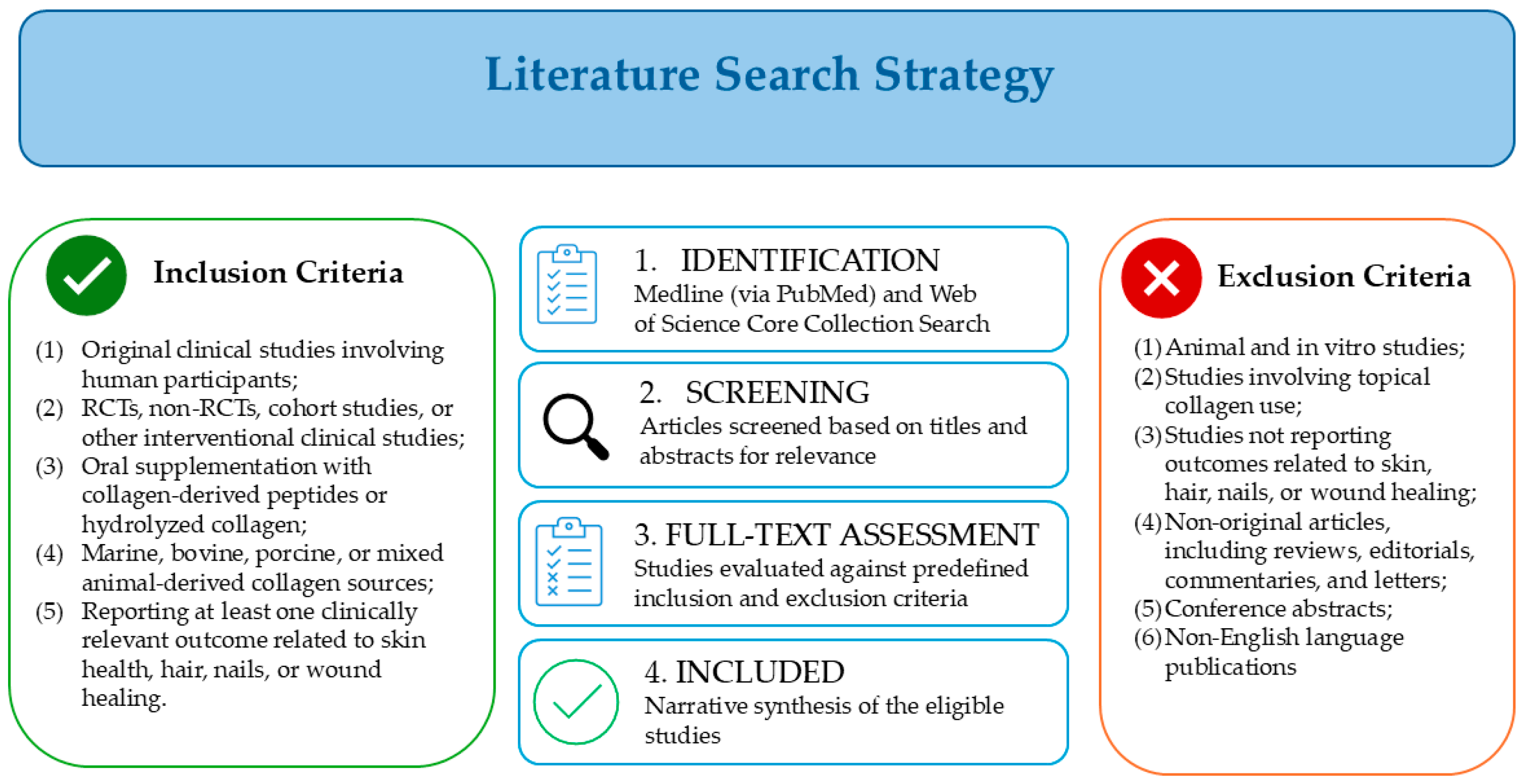
Figure 1. Overview of the literature search and study selection process. Abbreviations: RCTs—randomized controlled clinical trials; non-RCTs—non-randomized controlled clinical trials.
Nutrients 18 02141 g001
Figure 2. Overview of collagen peptide bioavailability and their role in fibroblast activation and extracellular matrix remodeling. Oral administration of collagen hydrolysates generates bioactive di- and tripeptides that resist complete proteolytic degradation and appear in intact form in systemic circulation. These peptides accumulate in dermal tissue, where they modulate extracellular matrix remodeling through activation of the TGF-β/Smad pathway, stimulation of fibroblast activity, enhancement of collagen and hyaluronic acid synthesis, and inhibition of matrix metalloproteinases, ultimately contributing to improved skin structure and function. Abbreviations: ECM—extracellular matrix, MMP—matrix metalloproteinase, TGF-β/Smad—transforming growth factor-β/Small Mothers Against Decapentaplegic signaling pathway. Own work based on [9,11,12,13,14,39,44,45,46,47,48]. Created in Biorender. Olivia Jakubowicz-Zalewska. (2026) (https://biorender.com/wp8pqzf, accessed on 29 June 2026).
Nutrients 18 02141 g002
Table 1. Summary of clinical studies evaluating collagen supplementation for hair and nail health.
AuthorYearPopulation/ModelInterventionComparatorMain FindingsLimitations
Evidence on hair outcomes
Addor et al. [98]2018Women with telogen effluviumTwo oral nutritional supplements Active comparator (no placebo)Hair loss decreased, with improvements in density and overall hair quality observed over the 6-month period.Multiple ingredients; no placebo
Gwon et al. [17]2026Adults with damaged hairLow-molecular-weight collagen peptidesPlaceboHair density, strength, shine, and structure improved over timeFindings limited to individuals with damaged hair
Hwang et al. [80]2026Women with cellulite1000 mg low-molecular-weight collagen peptides dailyPlaceboHair thickness increased after 24 weeks of supplementationHair thickness assessed as a secondary outcome
Milani et al. [102]2023Patients with hair loss (AGA, FAGA, or TE)Hydrolyzed fish collagen + amino acids, iron, selenium + standard treatmentStandard treatment aloneBetter outcomes when the supplement was added to standard treatmentAdjunctive supplementation; effect of collagen alone cannot be isolated
Evidence on nail outcomes
Hexsel et al. [18]2017Women with brittle nails2.5 g bioactive collagen peptides dailyNo control groupNails grew faster and were less prone to breakingSmall uncontrolled study
Vleminckx et al. [64]2024Healthy women5 g collagen peptides dailyPlaceboReduced nail yellowness after supplementationNail parameters were evaluated together with skin outcomes
Abbreviations AGA—androgenetic alopecia; FAGA—female androgenetic alopecia; TE—telogen effluvium.
Table 2. Key clinical studies evaluating oral collagen supplementation and related nutritional interventions in wound healing.
StudyYearWound TypePopulationDesign/InterventionComparatorDurationMain OutcomesMain Findings
Alipoor et al. [112]2023Major burnsn = 66 burn patients (20–45% TBSA)RCT; Beverage containing 40 g/day collagen or 40 g/day collagen + 3 g/day omega-3 fatty acidPlacebo beverage4 weeksWound healing rate, Vancouver scar scale (VSS), hospital stay, metabolic biomarkers (FGF-21, adiponectin, TGF-β1)Both collagen groups showed faster healing and better VSS than placebo; no clear additional wound benefit from omega-3
Bagheri et al. [113]2020Burn woundsn = 31 men with burns (20–30% TBSA)RCT; Collagen-based supplement (1000 kcal) + standard careIsocaloric placebo + standard care4 weeksSerum pre-albumin, rate of wound healing, length of hospital stay, and anthropometriesCollagen supplementation significantly increased pre-albumin levels, accelerated wound healing (HR 3.7), and clinically reduced hospital stay compared with placebo
Choi et al. [108]2014Skin recovery after fractional photothermolysisn = 8 healthy womenPilot RCT; 3 g/day oral collagen peptideControl group4 weeksErythema index, TEWL, skin hydration, skin elasticityFaster post-laser erythema resolution, faster recovery of skin hydration, and improved post-treatment skin elasticity compared with controls.
Kirk et al. [114]1993Experimental model: subcutaneous catheter-induced wound and split-thickness skin woundn = 30 healthy adults aged >65 yearsProspective randomized trial; Supplements of 30 g of arginine aspartate daily (17 g of free arginine)Placebo syrup14 daysCollagen deposition, total protein content, rate of wound epithelializationIncreased collagen deposition and protein content; no difference in epithelialization time
Kjaer et al. [115]2020Early surgical wound repairn = 21 men undergoing inguinal hernia repairRCT; 14 g L-arginine, 14 g L-glutamine, 1250 mg vitamin C, and 55 mg zinc daily + high-quality protein (1.5 g protein/kg)High-quality protein (1.5 g protein/kg)28 daysBiomarkers of collagen synthesis: CICP, PRO-C3, and PRO-C5 in the sera and in the wound fluids, epidermal healing timeIncreased early collagen synthesis biomarkers; no significant effect on epidermal healing time
Lee et al. [110]2006Pressure ulcersn = 89 residents with stage II–IV pressure ulcersRCT; Concentrated fortified collagen protein hydrolysate supplement + standard care, 3 times dailyPlacebo + standard care 3 times daily8 weeksPressure Ulcer Scale for Healing (PUSH)Improved PUSH scores and approximately twice the rate of pressure ulcer healing compared with placebo
Sugihara et al. [111]2018Pressure ulcersn = 120 adults with stage II–III pressure ulcersRCT; Standard care plus one of two types of collagen hydrolysate CH-a, which contained low levels of Pro-Hyp and Hyp-Gly, and CH-b, containing high levels of Pro-Hyp and Hyp-GlyPlacebo16 weeksPUSH, Pressure Sore Status Tool (PSST), wound areaCH-b improved PUSH, PSST, and wound area versus placebo; CH-a improved PUSH only
Abbreviations CH-a, collagen hydrolysate a; CH-b, collagen hydrolysate b; CICP, type I collagen propeptide; FGF-21, fibroblast growth factor-21; HR, hazard ratio; Hyp-Gly, hydroxyprolylglycine; PRO-C3, type III procollagen propeptide; PRO-C5, type V procollagen propeptide; Pro-Hyp, prolylhydroxyproline; PSST, Pressure Sore Status Tool; PUSH, Pressure Ulcer Scale for Healing; RCT, randomized controlled trial; TBSA, total body surface area; TEWL, transepidermal water loss; TGF-β1, transforming growth factor beta-1; VSS, Vancouver Scar Scale.
Disclaimer/Publisher’s Note: The statements, opinions and data contained in all publications are solely those of the individual author(s) and contributor(s) and not of MDPI and/or the editor(s). MDPI and/or the editor(s) disclaim responsibility for any injury to people or property resulting from any ideas, methods, instructions or products referred to in the content.