




Journal Menu
► ▼ Journal Menu-
- Materials Home
- Aims & Scope
- Editorial Board
- Reviewer Board
- Topical Advisory Panel
- Instructions for Authors
- Special Issues
- Topics
- Sections & Collections
- Article Processing Charge
- Indexing & Archiving
- Editor’s Choice Articles
- Most Cited & Viewed
- Journal Statistics
- Journal History
- Journal Awards
- Society Collaborations
- Conferences
- Editorial Office
Journal Browser
► ▼ Journal BrowserNeed Help?
Announcements
16 November 2021
Topical Advisory Panel Established to Support Editorial Board
Academic editors play a crucial role in leading our journals and ensuring that each article undergoes a robust and timely peer-review. With the launch of Topics this year and addition of Topic Editors to our family of academic editors, we decided it would be a good time to restructure our academic boards, thus providing more clarity and support for each role. MDPI is pleased to announce the launch of a new position—Topical Advisory Panel Member, that will replace the previous position of Topics Board Member. The Topical Advisory Panel will be comprised of early career researchers eager to gain experience in editorial work.
The main responsibility of the new members of the Topical Advisory Panel is to regularly provide support to Guest Editors, Topic Editors, and Section Board Members. The responsibilities of the Topical Advisory Panel are available here: https://www.mdpi.com/editors.
Each year, the members’ performances are evaluated, and outstanding members are promoted to the Editorial Board by the Editor-in-Chief.
To qualify as a Topical Advisory Panel Member, applicants must:
- Have expertise and experience in the field related to the journal;
- Have received a Ph.D. in the last 10 years, approximately;
- Have at least 6-8 published papers in the last 5 years as first author or corresponding author;
- Currently hold an independent research position in academia or a government institute.
If you are interested in this role, please contact the editorial office by email.
We look forward to hearing from you soon.
25 October 2021
Open Access Week 2021 | It Matters How We Open Knowledge: Building Structural Equity, 25–31 October
Founded in 1996, MDPI was one of the first fully Open Access publisher. Over 25 years MDPI has grown to become the largest Open Access publisher globally, publishing over 160,000 articles across more than 350 journals in 2020. At the core, MDPI was founded in response to a pressing need of fast publication and inclusion. The scholar was set at the centre of the publication process for the first time. Acting as a service provider, rather than a product provider, MDPI exists to help scientists achive their objective to disseminate research results. At MDPI, we believe scientists deserve a better service from the publishing world.
The International Open Access Week (Open Access Week), founded by the SPARC (the Scholarly Publishing and Academic Resources Coalition) Alliance and student partners in 2008, has been successfully running for 13 years. As an advocate and pioneer of open access publishing, MDPI actively responds to the call of International Open Access Week. This year’s theme of “It Matters How We Open Knowledge: Building Structural Equity” highlights the Recommendation’s call for equitable participation from all authors and readers.
For the last 25 years, MDPI has been committed to disseminating open research. Here is a video showing MDPI’s Commitment to Equity, Inclusion and Diversity for More than 25 Years.
International Open Access Week is an important opportunity to catalyze new conversations, create connections across and between communities that can facilitate this co-design, and advance progress in the building of more equitable foundations for opening knowledge—discussions and actions that need to be continued, year in and year out. MDPI has always aimed to provide professional and efficient publishing services to scholars around the world.
Our mission is to make scientific research accessible to everyone; this year, we interview and hold discussions with open science ambassadors on how to build an equal and inclusive environment for open science. Academic editors help us collaborate with more institutions to advocate for open access ideas.
Besides this, our scientific community is a key driver of our success and MDPI’s remarkable growth. Despite the pandemic, we have prepared online conferences and workshops to gather scholars from different communities.
The Basel Sustainable Publishing online forum provides an equal opportunity for stakeholders and researchers from multi-cultural environments to exchange ideas and eliminate barriers to participation.

Conference date: 25 October 2021, online
Conference website: https://bspf2021.sciforum.net/
Main topics: MDPI discusses the current dilemma of open access science from various perspectives such as governments, libraries, and publishers, and related measures on how to change the status quo of discrimination from a global perspective.
We aim to support equality, inclusion, diversity, and accessibility in scholarly communications. We collaborate with universities and key laboratories and have scholarly communications with researchers, teachers, and students on open access workshops.

- 25 October 2021
Energies journal and Institute of Mechanics, Chinese Academy of Sciences
- 28 October 2021
Machines journal and State Key Laboratory of Traction Power, Southwest Jiaotong University
- 29 October 2021
Processes journal and Beijing Institute of Technology
- 29 October 2021
Coatings journal and Wuhan University of Technology
MDPI is committed to providing open access and high-quality publishing services for scholars and promoting rapid dissemination of academic achievements. We hope to promote the practices and policies of open access publishing and diversify the dissemination of academic achievements.
22 October 2021
Materials | Top 10 Downloaded Articles in 2020
1. “Multifunctional Polymer Composites Produced by Melt-Blown Technique to Use in Filtering Respiratory Protective Devices”
Agnieszka Brochocka et al.
Materials 2020, 13(3), 712; 10.3390/ma13030712
Available online: https://www.mdpi.com/1996-1944/13/3/712
2. “Brief History of Early Lithium-Battery Development”
Mogalahalli V. Reddy et al.
Materials 2020, 13(8), 1884; 10.3390/ma13081884
Available online: https://www.mdpi.com/1996-1944/13/8/1884
3. “Progress and Status of Hydrometallurgical and Direct Recycling of Li-Ion Batteries and Beyond”
François Larouche et al.
Materials 2020, 13(3), 801; 10.3390/ma13030801
Available online: https://www.mdpi.com/1996-1944/13/3/801
4. “Face Masks and Respirators in the Fight Against the COVID-19 Pandemic: A Review of Current Materials, Advances and Future Perspectives”
Kris O’Dowd et al.
Materials 2020, 13(15), 3363; 10.3390/ma13153363
Available online: https://www.mdpi.com/1996-1944/13/15/3363
5. “Using Deep Learning to Detect Defects in Manufacturing: A Comprehensive Survey and Current Challenges”
Jing Yang et al.
Materials 2020, 13(24), 5755; 10.3390/ma13245755
Available online: https://www.mdpi.com/1996-1944/13/24/5755
6. “Review of Application and Innovation of Geotextiles in Geotechnical Engineering”
Hao Wu et al.
Materials 2020, 13(7), 1774; 10.3390/ma13071774
Available online: https://www.mdpi.com/1996-1944/13/7/1774
7. “Effect of Fibre Material and Fibre Roughness on the Pullout Behaviour of Metallic Micro Fibres Embedded in UHPC”
Niels Wiemer et al.
Materials 2020, 13(14), 3128; 10.3390/ma13143128
Available online: https://www.mdpi.com/1996-1944/13/14/3128
8. “Melt-Spun Fibers for Textile Applications”
Rudolf Hufenus et al.
Materials 2020, 13(19), 4298; 10.3390/ma13194298
Available online: https://www.mdpi.com/1996-1944/13/19/4298
9. “Devulcanization Technologies for Recycling of Tire-Derived Rubber: A Review”
Erich Markl and Maximilian Lackner
Materials 2020, 13(5), 1246; 10.3390/ma13051246
Available online: https://www.mdpi.com/1996-1944/13/5/1246
10. “The Critical Raw Materials in Cutting Tools for Machining Applications: A Review”
Antonella Rizzo et al.
Materials 2020, 13(6), 1377; 10.3390/ma13061377
Available online: https://www.mdpi.com/1996-1944/13/6/1377
22 October 2021
Materials | Top 10 Downloaded Articles in 2019
1. “Hydrogen Storage for Mobility: A Review”
Etienne Rivard et al.
Materials 2019, 12(12), 1973; 10.3390/ma12121973
Available online: https://www.mdpi.com/1996-1944/12/12/1973
2. “Johnson Cook Material and Failure Model Parameters Estimation of AISI-1045 Medium Carbon Steel for Metal Forming Applications”
Mohanraj Murugesan and Dong Won Jung
Materials 2019, 12(4), 609; 10.3390/ma12040609
Available online: https://www.mdpi.com/1996-1944/12/4/609
3. “Deformation of Single Crystals, Polycrystalline Materials, and Thin Films: A Review”
Guijun Yang and Soo-Jin Park
Materials 2019, 12(12), 2003; 10.3390/ma12122003
Available online: https://www.mdpi.com/1996-1944/12/12/2003
4. “Traditional’ Sol-Gel Chemistry as a Powerful Tool for the Preparation of Supported Metal and Metal Oxide Catalysts”
Serena Esposito
Materials 2019, 12(4), 668; 10.3390/ma12040668
Available online: https://www.mdpi.com/1996-1944/12/4/668
5. “Methanol Synthesis from CO2: A Review of the Latest Developments in Heterogeneous Catalysis”
R. Guil-López et al.
Materials 2019, 12(23), 3902; 10.3390/ma12233902
Available online: https://www.mdpi.com/1996-1944/12/23/3902
6. “Materials for the Spine: Anatomy, Problems, and Solutions”
Brody A. Frost et al.
Materials 2019, 12(2), 253; 10.3390/ma12020253
Available online: https://www.mdpi.com/1996-1944/12/2/253
7. “10-MDP Based Dental Adhesives: Adhesive Interface Characterization and Adhesive Stability—A Systematic Review”
Eunice Carrilho et al.
Materials 2019, 12(5), 790; 10.3390/ma12050790
Available online: https://www.mdpi.com/1996-1944/12/5/790
8. “Methods of Gold and Silver Nanoparticles Preparation”
Petr Slepička et al.
Materials 2020, 13(1), 1; 10.3390/ma13010001
Available online: https://www.mdpi.com/1996-1944/13/1/1
9. “Effect of Temperature on Material Properties of Carbon Fiber Reinforced Polymer (CFRP) Tendons: Experiments and Model Assessment”
Fei Zhou et al.
Materials 2019, 12(7), 1025; 10.3390/ma12071025
Available online: https://www.mdpi.com/1996-1944/12/7/1025
10. “Butanol Synthesis Routes for Biofuel Production: Trends and Perspectives”
Beata Kolesinska et al.
Materials 2019, 12(3), 350; 10.3390/ma12030350
Available online: https://www.mdpi.com/1996-1944/12/3/350
24 September 2021
Meet Us at the 21st Chinese Zeolite Conference (21 CZC) in Qingdao, China, 27–30 September 2021

MDPI will be attending the 21st Chinese Zeolite Conference (21 CZC), hosted by the Chinese Zeolite Association and China University of Petroleum, which will be held from 27 to 30 September 2021 in Qingdao, China. The conference will be held at the International Conference Center of China Railway Qingdao World Expo City. More than 1500 delegates are expected to attend.
The theme of this conference is “Porous Materials and Future Energy”. The conference aims to show the latest progress in the field of zeolite and porous material in China and discuss the responsibilities, opportunities, and challenges in zeolite and related porous functional material chemistry in the new era of energy reform and sustainable development. We also aim to further promote the development and achievements of zeolite science and technology.
The main topics of the conference include: the synthesis, modification, and characterization of porous zeolite materials; host-guest chemistry and functional materials; adsorption, separation, and diffusion performances; porous material catalysis and chemical processes; theoretical calculations and simulations of porous material properties, structures, and applications.
The following MDPI journals will be represented:
- Molecules;
- Separations;
- Energies;
- Crystals;
- Materials;
- Membranes;
- Inorganics;
- Sustainability;
- Sustainable Chemistry;
- Symmetry;
- Reactions.
If you are also attending this conference, please feel free to stop by our booth (#B20). Our delegates look forward to meeting you in person to answer any questions you may have. For more information about the conference, please visit https://www.chemsoc.org.cn/meeting/21czc/.
23 September 2021
2020 MDPI Top Reviewer Award—Winners Announced

Rigorous peer-review is the cornerstone of high-quality academic publishing. Over 369,916 scholars served as reviewers for MDPI journals in 2020. We are extremely appreciative of all those who made a contribution to the editorial process in this capacity. At the beginning of every year, journal editorial offices publish a list of all reviewers’ names to express our gratitude. In addition, this year, the MDPI Top Reviewer Award was announced, to recognize the very best reviewers for their expertise and dedication, and their high-quality, and timely review reports. We are pleased to announce the following winners of the 2020 MDPI Top Reviewer Award:
- Adriana Burlea-Schiopoiu;
- Alban Kuriqi;
- Álvaro González-Vila;
- Alessandro Alaimo;
- Alexey Beskopylny;
- Alexander Yu Churyumov;
- Alberto Fernández-Isabel;
- Andrea Mastinu;
- Antonios N. Papadopoulos;
- Anton Rassõlkin;
- Antonio Humberto Hamad Minervino;
- Arkadiusz Matwijczuk;
- Artur Słomka;
- Baojie He;
- Bartłomiej Potaniec;
- Bojan Đurin;
- Camilo Arturo Rodriguez Diaz;
- Carmelo Maria Musarella;
- Chiachung Chen;
- Chiman Kwan;
- Cristian Busu;
- Danil Pimenov;
- Dan-Cristian Dabija;
- Delfín Ortega-Sánchez;
- Demetrio Antonio Zema;
- Denis Butusov;
- Elena Lucchi;
- Gaurab Dutta;
- Livia Anastasiu;
- M. R. Safaei.
For more information about how to become a reviewer of MDPI journals, please see: www.mdpi.com/reviewers.
22 September 2021
MDPI Joins SDG Publishers Compact
UN's 17 Sustainable Development Goals (SDGs) are the blueprint to achieve a better and more sustainable future for all. In 2020 the SDG Publishers Compact was launched, aimed to inspire publishers and accelerate progress to achieve the 17 goals by 2030. Members of the programme are committed to support the publication of materials that will promote and inspire actions towards SDGs.
MDPI is an eager advocate of SDGs and has already been supporting the programme by creating Special Issues and publishing a series of books on SDGs prior to joining the Compact in 2021. MDPI's Sustainability Foundation initiated the World Sustainability Awards in 2016. We fully support UN's goals to promote sustainable actions that make the world a better place for all and, as part of its commitment, we will focus our actions on SDG10: Reduced Inequalities whilst promoting all 17 SDGs. For more details, please visit the programme’s website: https://www.un.org/sustainabledevelopment/sdg-publishers-compact/.
Joining this initiative was a unanimous decision. MDPI has in its core values the dissemination of science for all, breaking the wall between research access and under-represented members of the scientific community and the general population. To support this initiative further and continue to support under-represented scientists, MDPI will take a series of actions that will be announced once ready.
The first action MDPI takes is to nominate Dr. Liliane Auwerter as the coordinator of the programme. Dr. Auwerter studied Environmental Process Technology (UTFPR, Brazil), obtained her MSc degree in Water and Environmental Engineering (University of Surrey, UK) and in 2020 completed her PhD in self-healing low-friction materials for water transport (Imperial College London, UK), always focusing on diverse scientific projects that would potentially bring sustainability to industrial processes. As a student in Brazil, she engaged in volunteering activities focused on environmental education and took part in the Millennial Development Goals meetings held at the university.
For more information, please contact:
Dr. Liliane Auwerter
Scientific Officer
liliane.auwerter@mdpi.com
14 September 2021
Materials 4th Webinar | Functional Nanomaterials for Fuel Cell Electrochemistry, 21 September 2021

Fuel cells represent a unique electrochemical energy technology for a sustainable future. To render the technology viable in practical applications, a critical first step is to develop effective catalysts at both the cathode and anode, to reduce the energy barriers of the electron–transfer reactions involved, and ultimately enhance the current density and power output. Within this context, the understanding of the catalyst structures and the unraveling of the electron–transfer mechanisms play an indispensable role in advancing fuel cell electrocatalysis. This entails a multidisciplinary effort, from materials chemistry in the design and engineering of electrode catalysts to spectroscopic assessments of the electron–transfer kinetics, and to theoretical investigations of the catalytic active sites and reaction energetics.
It is therefore a great pleasure and honor to welcome three world-leading experts to join us at the webinar, who have made seminal contributions in the area of functional nanomaterials and fuel cell electrocatalysis. They will showcase recent progress in their laboratories in tackling the varied hurdles of fuel cell electrocatalysis and highlight significant issues for future research.
Date: 21/09/2021 Tuesday (US time) | 22/09/2021 Wednesday (CEST)
Time: 5:00pm PDT | 2:00am CEST | 8:00pm EDT
Webinar ID: 828 6890 4633
Webinar Website: https://materials-4.sciforum.net/
Register for free here:

Program
The webinar will last a maximum of 2 hours and 10 minutes.
|
Speaker/Presentation |
Time in CEST/CET |
|
Prof. Dr. Shaowei Chen Chair Introduction |
2:00-2:05 am |
|
“Novel Materials and Operando Methods for Fuel Cell Technologies” |
2:05-2:35 am |
|
Q&A Session |
2:35-2:45 am |
|
“Intermetallic Nanoparticles: Their Synthesis and Enhanced Electrocatalysis” |
2:45-3:15 am |
|
Q&A Session |
3:15-3:25 am |
|
“Fuel Cells: Present and Future” |
3:25-3:55 am |
|
Q&A Session |
3:55-4:05 am |
|
Prof. Dr. Shaowei Chen Closing of Webinar |
4:05-4:10 am |
Chair
|
Prof. Dr. Shaowei Chen Department of Chemistry and Biochemistry, University of California Santa Cruz |
Prof. Dr. Shaowei Chen finished his undergraduate studies in China in 1991, with a B.Sc. degree in Chemistry from the University of Science and Technology of China, and then went to Cornell University, receiving his M.Sc. and Ph.D. degrees in 1993 and 1996, respectively. Following a postdoctoral post at the University of North Carolina at Chapel Hill, he started his independent career at Southern Illinois University in 1998. In summer 2004, he moved to the University of California in Santa Cruz. He is currently a Professor of Chemistry and the Faculty Director of the UCSC COSMOS program. Prof Dr. Shaowei Chen’s research is focused on functional nanomaterials and their applications in electrochemical energy technologies and antimicrobials. Thus far, he has published 376 articles, with an h-index of 79. |
Speakers
|
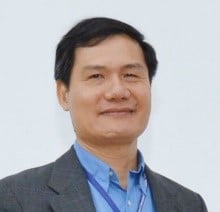
Prof. Héctor D. Abruña Department of Chemistry and Chemical Biology, Cornell University (USA) |
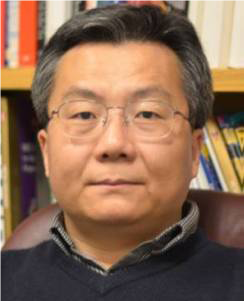
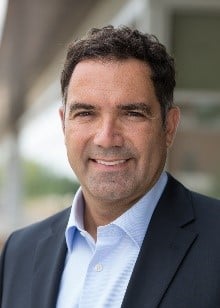
Prof. Hector D. Abruña, Émile M. Chamot Professor of Chemistry, is the director of the Center for Alkaline Based Energy Solutions (CABES) and the Energy Materials Center at Cornell (emc2). He completed his graduate studies with Royce W. Murray and Thomas J. Meyer at the University of North Carolina at Chapel Hill in 1980 and was a postdoctoral research associate with Allen J. Bard at the University of Texas in Austin from 1980 to 1981. After a brief stay at the University of Puerto Rico, he joined Cornell in 1983. He was Chair of the Department of Chemistry and Chemical Biology from 2004 to 2008. Prof. Abruña has been the recipient of numerous awards, including a Presidential Young Investigator Award, A. P. Sloan Fellowship, J. S. Guggenheim Fellowship, and J. W. Fulbright Senior Fellow. He is the recipient of the Electrochemistry Award for the American Chemical Society (2008), and the C. N. Reilley Award in Electrochemistry, 2007. He was elected Fellow of the American Association for the Advancement of Science in 2007, member of the American Academy of Arts and Sciences in 2007, and Fellow of the International Society of Electrochemistry in 2008. He received the D. C. Grahame Award from the Electrochemical Society in 2009, the Faraday Medal from the Royal Society in 2011, the Brian Conway Prize from the International Society of Electrochemistry in 2013, and he was named Fellow of Electrochemical Society in 2013. In 2017, he was the recipient of the Gold Medal of the International Society of Electrochemistry. He was elected member of the National Academy of Sciences (2018) and was awarded the A. J. Bard Award of the Electrochemical Society (2019), the Frumkin Medal of the International Society of Electrochemistry (2019), and the American Chemical Society Award in Analytical Chemistry (2021). Prof. Abruña is the co-author of over 525 publications (h-index = 93) and has given over 650 invited lectures worldwide. He considers his 56 Ph.D. students and 75 post-doctoral associates his most important professional achievement. |
|
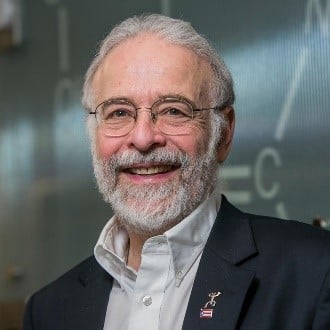
Prof. Shouheng Sun Department of Chemistry, Brown University (USA) |
Prof. Shouheng Sun received his B.Sc. from Sichuan University (China), M.Sc. from Nanjing University (China), and Ph.D. from Brown University (USA). He joined the IBM T. J. Watson Research Center (Yorktown Heights, New York, USA), first as a postdoctoral fellow (1996–1998), and then as a research staff member (1998–2004). In 2005, he returned to Brown University as a tenured Associate Professor and was promoted to Full Professor in 2007. He is now the Vernon K. Krieble Professor of Chemistry and Professor of Engineering. He serves as an Associate Editor of the Royal Society of Chemistry Journals Nanoscale and Nanoscale Advances, and is a Fellow of the Royal Society of Chemistry. His main research interests are in chemical synthesis and self-assembly of nanoparticles for catalytic, magnetic, and biomedical applications (h-index 131). |
|
Prof. Vojislav Stamenkovic Department of Chemical and Biomolecular Engineering and Department of Chemistry, University of California Irvine (USA) |
Prof. Vojislav Stamenkovic is a Professor at the University California, Irvine, Department of Chemical and Biomolecular Engineering and Department of Chemistry, and Staff Scientist, Technical Leader and Principal Investigator at the US Department of Energy’s Argonne National Laboratory in Argonne, Illinois. He earned his Ph.D. degree in physical chemistry from the University of Belgrade in 2001, after spending three years as a visiting scientist at the University of California at Berkeley. From 2002 to 2005, he was a postdoctoral and staff scientist within the Materials Sciences Division at the Lawrence Berkeley National Laboratory, and from 2006, he was a staff scientist in the Materials Science Division of Argonne National Laboratory, where he has conducted multidisciplinary research related to materials for electrochemical systems. Prof. Stamenkovic is an expert in the design and synthesis of functional materials for electrochemical applications, primarily in the fields of polymer electrolyte membrane fuel cells, electrolyzers, and batteries. His research interests include materials for energy conversion and storage, electrocatalysis, and spectroelectrochemistry, as well as functional biomaterials. In 2004, Prof. Stamenkovic received a Recognition Award from Lawrence Berkeley National Laboratory for the implementation of fundamental science into nanoscale applications. In 2012, he was awarded the Distinguished Performance Award from the University of Chicago, and in 2014, he received a prestigious US DOE Hydrogen and Fuel Cells Award in recognition of his outstanding contributions to catalysts R&D. He has published over 130 articles and book chapters, for which he has received over 17,000 citations with an h-index of 55. He has authored over 200 presentations and has been an invited plenary and keynote speaker more than 100 times at major conferences, symposia, and seminars. His work has been published in high impact journals, such as Science, Nature Materials, and Angewandte Chemie, and is often featured in the headlines of Lawrence Berkeley National Laboratory and Argonne National Laboratory. |
For any questions about the webinar, please send an email to materials.webinar@mdpi.com.
3 August 2021
Announcement on Japanese Consumption Tax (JCT)
This serves to announce to our valued authors based in Japan that value-added tax, or consumption tax will now be imposed on article processing fees and other service fees for all papers submitted, or resubmitted (assigned new paper IDs), effective from 15 August 2021. The change is in accordance with the Japanese "Act for Partial Revision of the Income Tax Act and Other Acts" (Act No. 9 of 2015), which includes a revision of consumption taxation on cross-border supplies of services such as digital content distribution.
For additional information from the National Tax Agency please see here ("Cross-border supplies of electronic services").
Contact: Setsuko Nishihara, MDPI Tokyo
21 July 2021
Materials Receives Updated Impact Factor of 3.623
We are pleased to inform you that, with the support of our authors, editors, and reviewers, Materials received an increased Journal Impact Factor of 3.623 and a 5-Year Impact Factor of 3.920. This was released in the recent Journal Citation Reports®. And Materials has been approved for coverage within three new categories of the Journal Citation Reports (JCR): “Metallurgy and Metallurgical Engineering”, “Physics, Applied”, and “Physics, Condensed Matter”.
Materials has achieved three consecutive years of growth in its Impact Factor. We are grateful to all the scholars who have witnessed the journal’s growth with us.
In the rank ordered by Journal Impact Factor, Materials now ranks 17/80 Q1 in “Metallurgy and Metallurgical Engineering”, 79/162 Q2 in “Chemistry, Physical,” 152/335 Q2 in “Materials Science, Multidisciplinary”, 51/160 Q2 in “Physics, Applied”, and 27/69 Q2 in “Physics, Condensed Matter”.
Thank you for your continuous support of Materials!
