Skip to Content
  • 3.4
    Impact Factor
  • 6.1
    CiteScore
  • 18 days
    Submission to First Decision
  • 3 days
    Acceptance to Publication

Horticulturae

Horticulturae is an international, peer-reviewed, open access journal on all areas and aspects of temperate to tropical horticulture, published monthly online by MDPI. The Spanish Society of Horticultural Sciences (SECH) and The Greek Society for Horticultural Science (GSHS) are affiliated with Horticulturae and their members receive discounts on the article processing charges.

Get Alerted

Add your email address to receive forthcoming issues of this journal.

All Articles (7,696)

  • Article
  • Open Access

The effects of shading with pearl- and red-colored nets on the essential oil content, yield per hectare, chemical composition, and antioxidant potential of rosemary (Rosmarinus officinalis L.) were evaluated in comparison with plants grown under non-shaded conditions. Pearl (1.69%) and red shade nets (1.73%) significantly reduced essential oil content compared to the control (2.50%). The number of individual compounds identified in rosemary essential oil (REO) varied slightly among the shading treatments, ranging from 35 to 36 constituents. The most abundant components were eucalyptol/1,8-cineole (31.5–32.5%), α-pinene (12.9–21.1%), camphor (13.4–18.4%) and borneol (4.6–5.9%). The content of the undesirable REO component, such as camphor, was the lower in plants covered with shading nets (13.4–13.7%) than in non-shading plants (18.4%). Ferric reducing antioxidant power assays (FRAP) ranged from 0.651 mg Fe2+/g in plant cover by pearl nets and 1.509 mg Fe2+/g in red nets to 1.905 mg Fe2+/g from non-shading, control plants. The DPPH (2,2-diphenyl-1-picrylhydrazyl radical-scavenging assay), expressed as EC50 (half maximal effective concentration—the lowest EC50 value, corresponding to the highest activity), ranged from 0.819 mg/mL in non-shaded plants to 1.722 mg/mL in red and 16.456 mg/mL in plant cover by pearl nets. Shading modified EO composition, mainly by increasing the relative content of α-pinene and decreasing that of camphor, but it reduced antioxidant activity, as indicated by lower FRAP values and higher DPPH EC50 values, particularly under pearl nets. Both shade nets reduced EO content compared with the unshaded control; however, owing to higher dry leaf biomass, the estimated EO yield per hectare under pearl nets was similar to or slightly higher than that of the control. These results suggest that reduced light availability lowers EO accumulation per unit of plant mass in rosemary, a species adapted to high-light environments.

Horticulturae

15 October 2026

Daily maximum and minimum air temperatures from May to August 2025. [Data source: meteorological station, Aleksinac].
  • Article
  • Open Access

Jinggang honey pomelo (Citrus maxima (Burm.) Merr.), a regional cultivar group from Jiangxi Province, China, remains insufficiently characterized. This study evaluated morphological, peel-color, structural, edible, and physicochemical traits of ‘Jinlan’, ‘Jinsha’, and ‘Taoxi’ at immature (July) and commercial maturity (October–November) stages. The cultivars showed distinct developmental trajectories. At maturity, ‘Jinsha’ had the strongest late-stage growth (~186% fruit-weight increase; 9.0-fold flesh-weight gain) and high juice yield and edible rate. ‘Taoxi’ produced large fruits with the highest soluble solids content and titratable acidity, but retained substantial seed loads (69.15 ± 7.73 seeds per fruit). ‘Jinlan’ showed moderate enlargement but the highest mature-stage vitamin C content and retention. Peel-color development was cultivar-specific, with total color change following ‘Jinsha’ > ‘Taoxi’ > ‘Jinlan’. Within the local commercial harvest window, both soluble solids and titratable acidity increased, but the proportional increase in TA exceeded that of SSC, so the sugar–acid ratio declined in all three cultivars. Integrated principal component analysis (PCA) of 17 quantitative traits explained 82.51% of total variance in the first three components, confirming multidimensional quality differentiation jointly shaped by developmental stage and cultivar. These findings characterize cultivar-specific quality profiles, inform targeted market positioning, and provide a basis for future studies on harvest optimization and quality grading of Jinggang honey pomelo.

Horticulturae

15 October 2026

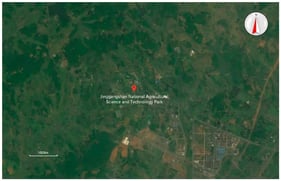
Geographic location of the Jinggang honey pomelo sampling orchard in Jinggangshan National Agricultural Science and Technology Park, Jizhou District, Ji’an City, Jiangxi Province, China. The red marker indicates the sampling site. Basemap source: © tiantianditu.com (accessed date 1 September 2026). Scale bar = 1000 m; north is at the top.
  • Article
  • Open Access

Effects of Calcium and Gibberellic Acid on the Quality and Shelf Life of ‘Gefner’ Atemoya Grown in a Semiarid Region

  • Lucilândia de Sousa Bezerra,
  • Alison Rocha de Aragão and
  • Patrícia Lígia Dantas de Morais
  • + 6 authors

Atemoya is a climacteric and highly perishable fruit prone to cracking during ripening—a factor that limits its shelf life and marketability. Thus, this study aimed to evaluate the effect of gibberellic acid and calcium on reducing cracking and preserving atemoyas grown under semi-arid conditions and stored under refrigeration. Calcium and gibberellic acid applications were performed at 7, 27, 47, 67, and 87 days, with fruit harvest occurring 121 days after pollination. A completely randomized design (CRD) was used in a 4 × 6 factorial scheme (Control, Calcium, Gibberellic Acid, and Calcium + Gibberellic Acid [Ca + GA3]) with six cold storage periods (0, 3, 6, 9, 12, and 15 days) and five replicates. Fruits were subjected to the following evaluations: appearance, mass, fresh mass loss, cracking index, pulp firmness, pH, titratable acidity, soluble solids, vitamin C, chlorophyll, electrolyte leakage, total sugars, starch, DPPH, polyphenols, peroxidase and polyphenoloxidase enzyme activity, and mineral quantification. The results demonstrated that Ca and Ca+GA3 treatments favored a reduction in cracking and increased bioactive compounds—such as phenols, vitamin C, and chlorophyll—contributing to delayed senescence through reduced electrolyte leakage. Furthermore, the refrigerated fruits remained suitable for consumption for up to twelve days, regardless of the treatment.

Horticulturae

15 October 2026

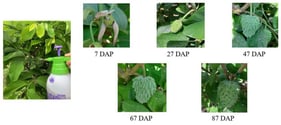
Applications of calcium (Ca) and gibberellic acid (GA3) at 7, 27, 47, 67, and 87 days after pollination (DAP).
  • Article
  • Open Access

Tea (Camellia sinensis (L.) O. Kuntze) quality is shaped by soil, but comparisons among Jeju soil types are lacking. ‘Sangmok’ cuttings were grown for 33 months in three Jeju soils under identical greenhouse conditions—black volcanic ash soil (B-VAS), very dark-brown volcanic ash soil (VDB-VAS), and dark-brown non-volcanic ash soil (DB-NVAS)—and compared for survival, growth, and leaf amino acid and catechin profiles. Volcanic ash soils had more organic matter and nitrogen but less phosphorus and micronutrients than DB-NVAS. Survival (88.9%, 50.0%, and 55.6%; not statistically significant) and height increase (410.9%, 302.2%, and 116.1%) in B-VAS, VDB-VAS, and DB-NVAS were numerically greatest in B-VAS. The final DB-NVAS height-increase value reflects a single surviving plant and should be interpreted with caution. Total amino acids and theanine were 2.6- to 3.6-fold higher in volcanic ash soils than in DB-NVAS, whereas epigallocatechin (EGC) and epicatechin (EC) were higher in DB-NVAS, giving catechin quality index (CQI) values of 3.83, 3.13, and 2.20 and amino acid/catechin (A/C) ratios of 0.31, 0.28, and 0.10. In this pilot planting, survival was numerically highest in B-VAS, and the volcanic ash soils showed greater growth and higher amino acid levels in the pooled shoot samples, whereas the non-volcanic ash soil showed higher catechin accumulation despite weaker growth; these soil-type-level patterns are testable hypotheses for soil-type-informed ‘Sangmok’ cultivation that require confirmation in replicated trials.

Horticulturae

15 October 2026

Change in relative plant height (%, individual plant height as a percentage of the soil-type baseline mean height at transplanting) of the tea cultivar ‘Sangmok’ grown in three soil types on Jeju Island, from transplanting (August 2022) to December 2024. Error bars indicate SD; the number of plants contributing at each survey date (No. at risk) is shown beneath the plot for each soil type (B-VAS, n = 4–5; VDB-VAS, n = 5; DB-NVAS, n = 1–5, decreasing over time as plants died). SD is not shown for the final two DB-NVAS time points, at which only one plant remained.

Highly Accessed Articles

News & Conferences

Latest Issues

Open for Submission

Journal Sections

Nutritional and Phytochemical Composition of Plants
Reprint

Nutritional and Phytochemical Composition of Plants

Editors: Vassilis Athanasiadis, Stavros I. Lalas
Phytochemicals of Natural Products
Reprint

Phytochemicals of Natural Products

Analysis and Biological Activities: 2nd Edition
Editors: Dasha Mihaylova, Aneta Popova
XFacebookLinkedIn
Horticulturae - ISSN 2311-7524