


Journal Menu
► ▼ Journal Menu-
- Beverages Home
- Aims & Scope
- Editorial Board
- Reviewer Board
- Topical Advisory Panel
- Instructions for Authors
- Special Issues
- Topics
- Sections & Collections
- Article Processing Charge
- Indexing & Archiving
- Editor’s Choice Articles
- Most Cited & Viewed
- Journal Statistics
- Journal History
- Journal Awards
- Editorial Office
Journal Browser
► ▼ Journal BrowserNeed Help?
Announcements
15 June 2026
Beverages Receives an Increased CiteScore of 4.7

We are pleased to share that Beverages (ISSN: 2306-5710) has received an increased CiteScore of 4.7 The CiteScore ranks the journal 150 out of 420 titles (Q2) in the “Food Science” category.
CiteScore provides transparent metrics that enable well-informed publishing strategies, library collection development, and the benchmarking of journal performance. It is now a standard citation metric alongside SNIP and SJR that gives an up-to-date view of a journal’s impact.
The 2025 CiteScore provides an assessment of the scientific influence of journals in the 2022 to 2025 period.
This achievement reflects the collective efforts of our authors, reviewers, and editors. Together we will continue to track the progress of Beverages and its growing impact in hepatology.
You can find more statistics on our website.
Thank you to everyone who has contributed to the journal.
8 June 2026
Beverages Exceptional Reviewers List 2026

We are thrilled to share the updated Exceptional Reviewers List 2026. This program was established to recognize and honor scholars who have consistently delivered exceptional review reports to our journal. Committed to fostering rigorous research and promoting knowledge exchange, Beverages (ISSN: 2306-5710) acknowledges the vital role our reviewers play in maintaining the quality and integrity of the articles we publish. According to surveys conducted in 2025, 93% of our authors rated the peer review process as good or excellent, reflecting the strength and effectiveness of our reviewer community.
We would like to express our sincere appreciation to all the reviewers who have generously volunteered their time and expertise to assist in Beverages’ peer-review process. Their dedication and attention to detail in evaluating manuscripts, offering valuable feedback, and contributing to academic rigor are truly commendable.
The Exceptional Reviewers List was introduced in January 2026. Each quarter we will be selecting a group of outstanding reviewers and introduce them here.
Q1
Name: Dr. Niina Kelanne
Affiliation: Food Sciences, Department of Life Technologies, University of Turku, Turun Yliopisto, FI-20014 Turku, Finland
Name: Dr. Ulphard Thoden Van Velzen
Affiliation: Wageningen Food & Biobased Research, Wageningen University & Research, Bornse Weilanden 9, 6708 WG Wageningen, the Netherlands
Name: Dr. Manuela Lageiro
Affiliation: INIAV, National Institute of Agricultural and Veterinary Research, IP, 2780-157 Oeiras, Portugal
8 June 2026
Beverages | Papers on Functional and Sustainable Beer Development Published in 2024–2025
As all articles published in Beverages (ISSN: 2306-5710) are open access, the full text of all papers is completely free and unlimited to readers. The following articles highlight recent advances in functional, specialty, and sustainable beer development. We invite you to explore the beer-related papers published in Beverages in 2024 and 2025, listed below:
1. “Beer with Probiotics: Benefits and Challenges of Their Incorporation”
by Diana Santos, Luisa Barreiros, Ângelo Jesus Ana Luísa Silva, João Paulo Martins, Ana Isabel Oliveira and Cláudia Pinho
Beverages 2024, 10(4), 109; https://doi.org/10.3390/beverages10040109
Full text available online: https://www.mdpi.com/2306-5710/10/4/109

2. “Innovative Craft Beers Added with Purple Grape Pomace: Exploring Technological, Sensory, and Bioactive Characteristics”
by Barbara Ribeiro Teixeira Luz, Cristiane Nunes da Silva, Guilherme de Freitas de Lima Hercos, Bernardo Dias Ribeiro, Mariana Buranelo Egea and Ailton Cesar Lemes
Beverages 2024, 10(3), 80; https://doi.org/10.3390/beverages10030080
Full text available online: https://www.mdpi.com/2306-5710/10/3/80

3. “Kefir Probiotic-Enriched Non-Alcoholic Beers: Microbial, Genetic, and Sensory-Chemical Assessment”
by Alessandra Souza Marques do Nascimento, Raquel Nunes Almeida da Silva, Pedro Paulo Lordelo Guimarães Tavares, Adriana Silva Borges, Marina Passos Soares Cardoso, Ana Katerine de Carvalho Lima Lobato, Rogéria Comastri de Castro Almeida and Karina Teixeira Magalhães-Guedes
Beverages 2025, 11(3), 75; https://doi.org/10.3390/beverages11030075
Full text available online: https://www.mdpi.com/2306-5710/11/3/75

4. “Influence of Ethanol Concentration on the Extraction of Cannabinoid and Volatile Compounds for Dry-Hemped Beer”
by Santiago Cárdenas-Pinto, Jacob E. Gazaleh, Drew Budner, Shea Keene, Leena R. Dhoble, Abhisheak Sharma, Brian Pearson, Zhen Jia, Boce Zhang and Katherine A. Thompson-Witrick
Beverages 2024, 10(3), 65; https://doi.org/10.3390/beverages10030065
Full text available online: https://www.mdpi.com/2306-5710/10/3/65
5. “Exploring Alternative Potentialities of Portuguese and Spanish Craft Beers: Antioxidant and Photoprotective Activities”
by Maria João Pereira, Diana Santos, Agostinho Cruz, Ângelo Jesus, João P. Martins, Fernando Moreira, Marlene Santos, Cláudia Pinho and Ana Isabel Oliveira
Beverages 2025, 11(1), 11; https://doi.org/10.3390/beverages11010011
Full text available online: https://www.mdpi.com/2306-5710/11/1/11
6. “Cacao Mucilage Valorisation to Produce Craft Beers: A Case Study Towards the Sustainability of the Cocoa Industry in Los Ríos Province”
by José Villarroel-Bastidas, Jonathan Steven Párraga-Maquilón, Cinthya Elizabeth Zapata-Zambrano, María de Guide Córdoba, Alicia Rodríguez, Alejandro Hernández and Josué Briones-Bitar
Beverages 2025, 11(3), 57; https://doi.org/10.3390/beverages11030057
Full text available online: https://www.mdpi.com/2306-5710/11/3/57

7. “Optimization of Ale-Type Craft Beer Through the Addition of Cañihua Malt (Chenopodium pallidicaule) and Aguaymanto Juice (Physalis peruviana) Using a D-Optimal Experimental Design”
by Luz Maria Paucar-Menacho, Rebeca Salvador-Reyes, Wilson Daniel Simpalo-Lopez, Alicia Lavado-Cruz, Anggie Verona-Ruiz, Jordy Campos-Rodriguez, Katherine Acosta-Coral, Williams Esteward Castillo-Martinez, William López-Rodriguez and Soledad Quezada-Berrú
Beverages 2025, 11(1), 4; https://doi.org/10.3390/beverages11010004
Full text available online: https://www.mdpi.com/2306-5710/11/1/4

8. “Pomegranate Juice Effect on Physicochemical and Nutraceutical Characteristics of a Craft Fruit Beer”
by Aldair A. Meza-Santiago, Maria Guadalupe Hernandez-Herrera, Erick A. Zuñiga-Estrada and Patricia Lopez-Perea
Beverages 2024, 10(4), 125; https://doi.org/10.3390/beverages10040125
Full text available online: https://www.mdpi.com/2306-5710/10/4/125

9. “Functional Non-Alcoholic Beer Fermented with Potential Probiotic Yeasts”
by Peter Vaštík, Ján Brunner, Rudolf Jung, Tatiana Klempová, Katarína Furdíková, Daniela Šmogrovičová and Pavel Dostálek
Beverages 2025, 11(5), 140; https://doi.org/10.3390/beverages11050140
Full text available online: https://www.mdpi.com/2306-5710/11/5/140

by Carlos Martin-Lobera, Carlos A. Blanco and Isabel Caballero
Beverages 2025, 11(5), 149; https://doi.org/10.3390/beverages11050149
Full text available online: https://www.mdpi.com/2306-5710/11/5/149

8 June 2026
Beverages | Papers on Brewing Technology and Fermentation Innovation Published in 2024–2025
As all articles published in Beverages (ISSN: 2306-5710) are open access, the full text of all papers is completely free and unlimited to readers. The following articles highlight recent advances in beer research, focusing on brewing technology and fermentation innovation. We invite you to explore the beer-related papers published in Beverages in 2024 and 2025, listed below:
1. “Unmalted Cereals, Oenological Yeasts, and In-Bottle Sugar Addition as Synergic Strategies to Enhance the Quality of Craft Beers”
by Antonietta Baiano, Anna Fiore, Barbara la Gatta, Vittorio Capozzi, Nicola De Simone, Carmela Gerardi and Francesco Grieco
Beverages 2024, 10(1), 8; https://doi.org/10.3390/beverages10010008
Full text available online: https://www.mdpi.com/2306-5710/10/1/8

2. “Continuous Primary Beer Fermentation with Yeast Immobilized in Alginate–Chitosan Microcapsules with a Liquid Core”
by Vesela Shopska, Mina Dzhivoderova-Zarcheva and Georgi Kostov
Beverages 2024, 10(3), 87; https://doi.org/10.3390/beverages10030087
Full text available online: https://www.mdpi.com/2306-5710/10/3/87

3. “Brewing Beer in Microgravity: The Effect on Rate, Yeast, and Volatile Compounds”
by Pedro Fernandez Mendoza, Katherine A. Thompson-Witrick, Skylar R. Moreno, Santiago Cárdenas-Pinto, Zhen Jia, Lincoln Zotarelli, Boce Zhang and Andrew J. MacIntosh
Beverages 2024, 10(2), 47; https://doi.org/10.3390/beverages10020047
Full text available online: https://www.mdpi.com/2306-5710/10/2/47

4. “The Effects of Pasteurization and Beer Type on the Functional Compounds and Flavor Substances in Beer”
by Jiahui Ding, Xiaoping Hou, Jianghua Li, Xinrui Zhao and Shumin Hu
Beverages 2025, 11(3), 63; https://doi.org/10.3390/beverages11030063
Full text available online: https://www.mdpi.com/2306-5710/11/3/63
5. “Alternative Yeast Strains in Beer Production: Impacts on Quality and Nutritional Value”
by Loránd Alexa, Hajnalka Csoma, Diána Ungai, Béla Kovács, Nikolett Czipa, Ida Miklós, Zoltán Kállai, László Attila Papp and Szonja Takács
Beverages 2025, 11(5), 142; https://doi.org/10.3390/beverages11050142
Full text available online: https://www.mdpi.com/2306-5710/11/5/142

6. “Non-Conventional Yeasts for Beer Production—Primary Screening of Strains”
by Polina Zapryanova, Yordanka Gaytanska, Vesela Shopska, Rositsa Denkova-Kostova and Georgi Kostov
Beverages 2025, 11(4), 114; https://doi.org/10.3390/beverages11040114
Full text available online: https://www.mdpi.com/2306-5710/11/4/114
by Justyna Nasiłowska, Barbara Sokołowska, Marzena Woszczyk, Joanna Bucka-Kolendo and Adrian Wojtczak
Beverages 2024, 10(3), 83; https://doi.org/10.3390/beverages10030083
Full text available online: https://www.mdpi.com/2306-5710/10/3/83
8 June 2026
Beverages | Papers on Beer Quality, Safety and Consumer Perspectives Published in 2024–2025
As all articles published in Beverages (ISSN: 2306-5710) are open access, the full text of all papers is completely free and unlimited to readers. The following articles highlight recent advances in beer quality, safety, and consumer research. We invite you to explore the beer-related papers published in Beverages in 2024 and 2025, listed below:
1. “Craft Beer in Food Science: A Review and Conceptual Framework”
by Laura Gobbi, Marino Stanković, Marco Ruggeri and Marco Savastano
Beverages 2024, 10(3), 91; https://doi.org/10.3390/beverages10030091
Full text available online: https://www.mdpi.com/2306-5710/10/3/91

2. “Application of Life Cycle Assessment in Beer Production: Systematic Review”
by Fabrizio D’Ascenzo, Giuliana Vinci, Lucia Maddaloni, Marco Ruggeri and Marco Savastano
Beverages 2024, 10(3), 86; https://doi.org/10.3390/beverages10030086
Full text available online: https://www.mdpi.com/2306-5710/10/3/86

3. “Occurrence and Exposure Assessment of Mycotoxins from Beers Commercially Traded in Brazil”
by Gilmara F. C. Penha, Carlos H. Corassin, Roice E. Rosim and Carlos A. F. Oliveira
Beverages 2025, 11(3), 82; https://doi.org/10.3390/beverages11030082
Full text available online: https://www.mdpi.com/2306-5710/11/3/82

4. “A Rapid Method to Predict Beer Shelf Life Using an MS-Based e-Nose”
by Ana Carolina de Lima, Laura Aceña, Montserrat Mestres and Ricard Boqué
Beverages 2024, 10(1), 11; https://doi.org/10.3390/beverages10010011
Full text available online: https://www.mdpi.com/2306-5710/10/1/11
5. “Cash Rules Everything around Me: Investigating Craft Beer Drinkers Purchase Decisions during Inflationary Period”
by Scott Taylor, Jr. and D. Christopher Taylor
Beverages 2024, 10(2), 37; https://doi.org/10.3390/beverages10020037
Full text available online: https://www.mdpi.com/2306-5710/10/2/37
6. “Physicochemical Kinetics and Determination of Methyl and Ethyl Alcohols in Own-Manufactured Craft Beer and Comparison with Commercial Mexican Craft Beers”
by César Iván Godínez-Hernández, Teresa de Jesús Rodríguez-Cardona, Juan Antonio Rendón-Huerta, Braulio Cervantes-Paz and Christian Michel-Cuello
Beverages 2025, 11(1), 28; https://doi.org/10.3390/beverages11010028
Full text available online: https://www.mdpi.com/2306-5710/11/1/28
7. “Characterization of Commercial Non-Alcoholic Beers in Two Locations, Finland and China”
by Niina Kelanne, Yuxuan Zhu, Tuomas Rysä, Baoru Yang, Baoqing Zhu and Oskar Laaksonen
Beverages 2025, 11(2), 47; https://doi.org/10.3390/beverages11020047
Full text available online: https://www.mdpi.com/2306-5710/11/2/47

8. “A Bibliometric Review of Willingness to Pay for and Consume Sustainably Produced Beers”
by Iris Salgado-Valverde, María Pache-Durán, Elena Muñoz-Muñoz and Carlos Díaz-Caro
Beverages 2025, 11(5), 151; https://doi.org/10.3390/beverages11050151
Full text available online: https://www.mdpi.com/2306-5710/11/5/151

9. “Italian Consumers: Craft Beer or No Craft Beer, That Is the Question”
by Agata Nicolosi, Donatella Di Gregorio, Valentina Rosa Laganà and Claudio Marcianò
Beverages 2025, 11(6), 157; https://doi.org/10.3390/beverages11060157
Full text available online: https://www.mdpi.com/2306-5710/11/6/157

4 June 2026
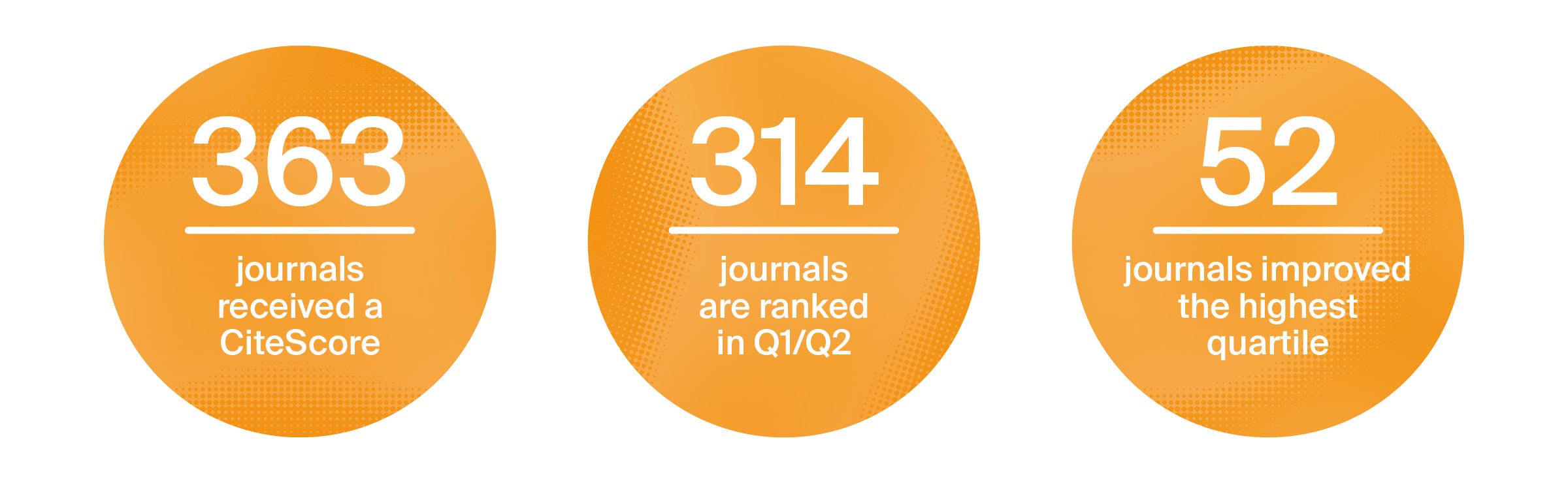
Open Access, Broadly Recognized: 363 MDPI Journals Receive CiteScores for 2025
The 2025 CiteScore metrics have been officially released by Scopus, and the results confirm what has become a consistent pattern for MDPI's journal portfolio: broad recognition across disciplines, steady improvement across the majority of ranked titles, and a growing presence at the top of subject category rankings.
CiteScore, published annually by Elsevier's Scopus database, measures the average citations received by articles published in a journal over a four-year window. As a complement to the Journal Impact Factor, which uses a two-year window based on the Web of Science database, CiteScore provides an alternative, long-term perspective on citation performance.
The 365 MDPI journals in Scopus (as of May 2026) are indexed across a wide range of subject categories, ensuring that open access research remains highly discoverable to a global readership through one of the most widely used platforms in academic publishing.
Data Summary (2025 CiteScores)
- New Additions: 41 MDPI journals received a CiteScore for the first time.
- Trending Upward: 234 of 322 previously ranked journals (73%) saw an increase in their CiteScore compared to last year.
- High Visibility: 314 journals (86%) rank in Q1 or Q2 in at least one subject category.
- Elite Performance: 42 journals rank in the top 10% of their subject categories.
Portfolio Performance
Among the 322 journals that held a CiteScore in 2024, 234 saw an increase this year. Quartile improvements outnumbered declines across the portfolio, with 52 journals moving to a higher quartile and only 20 seeing a decline. Furthermore, no previously ranked journals were removed. The 42 journals now ranked in the top 10% of their subject categories are drawn from a strong foundation of 178 journals holding a Q1 position.
With the large majority of our indexed portfolio ranked in the top half of research fields, researchers can confidently choose MDPI to meet funder mandates for high-quality, fully compliant Open Access publishing.
Exceptional Achievements for Foods and Life
Notably, both Foods and Life achieved a 99th percentile ranking in their respective subject categories for the 2025 CiteScores. This outstanding placement positions them as leading journals in their fields and highlights the high visibility and global impact of the open access research they publish.
Journal Metrics and Beyond
Journal-level metrics describe outlets, not individual articles. An increasing number of funders and institutions—including signatories of DORA and the Coalition for Advancing Research Assessment—now explicitly encourage evaluation at the article level rather than by the journal in which research appears. MDPI supports this direction: we report CiteScore alongside the Journal Impact Factor, Journal Citation Indicator, and article-level usage data because no single number captures the full reach and contribution of published research.
Thank You
These results reflect the sustained effort of thousands of editors-in-chief, editorial board members, reviewers, and authors across every field MDPI serves. The metrics are the outcome; the work is yours.
1 June 2026
MDPI INSIGHTS: The CEO’s Letter #35 – 30 Years of Open Science, Open Access Policies, Spain Summit, MMCS 2026 & Antibiotics 2026

Welcome to the MDPI Insights: The CEO's Letter.
In these monthly letters, I will showcase two key aspects of our work at MDPI: our commitment to empowering researchers and our determination to facilitating open scientific exchange.
Opening Thoughts

30 Years of Open Science, Built Together
This month, we officially launched MDPI’s 30th Anniversary campaign and dedicated anniversary website, marking an important milestone in our journey as an open access publisher. What began in 1996 with a single journal and the simple belief that scientific knowledge should be shared openly and freely has grown into a global publishing organization supporting more than 500 journals, 68,000 Editorial Board Members, and millions of researchers worldwide.
The anniversary page, entitled 30 Years of Open Science, Built Together, reflects on the people, milestones, and partnerships that have shaped MDPI over the past three decades. It includes a retrospective of our development, key moments in the evolution of open access, landmark research articles, journal anniversaries, an interview with the CEO, and perspectives from colleagues and partners who have contributed to our success.

Looking back, one of the most striking aspects of our journey is not simply our growth, but the broader transformation of scholarly publishing itself.
Open access has moved from a niche concept to a widely adopted publishing model, helping make research more accessible, discoverable, and impactful for researchers, institutions, policymakers, and society.
MDPI has been part of this transition and continues to invest in the people, technology, partnerships, and research integrity infrastructure needed to support high-quality open science at scale.
While anniversaries naturally encourage reflection, they are also an opportunity to look ahead. The challenges facing scholarly publishing today, including research integrity, artificial intelligence, accessibility, and global participation in science, will require continued collaboration across the research ecosystem. As we celebrate 30 years of publishing, our focus remains on supporting researchers, strengthening trust in open science, and helping shape the future of scholarly communication together.
I encourage you to visit the anniversary page, explore the milestones, and take a moment to reflect on the role each of us has played in contributing to MDPI’s story.
Thank you for being part of this journey.
Impactful Research

Highlights from MMCS 2026 in Beijing (14-17 May)
From 14–17 May, MDPI hosted The 5th Molecules Medicinal Chemistry Symposium (MMCS 2026) in Beijing, China, bringing together academia and industry to explore advances in chemical biology, medicinal chemistry, and drug discovery.
The conference hosted more than 230 attendees from 37 countries and regions, alongside 257 submissions and 145 accepted abstracts. With a significant increase in attendance – up by 100 participants compared with the previous edition – the popularity of MMCS continues to grow in terms of its international profile and scientific relevance within this rapidly evolving field.

The scientific program covered seven themes:
- Chemical Biology for Drug Discovery
- Medicinal Chemistry Research Progress
- Natural Products in Drug Discovery
- AI-enabled Drug Discovery
- GPCR & Ion Channel Targeted Drug Development
- Innovative Proximity-Based Drug Modalities
- Biocatalysis for Natural Product & Drug Synthesis
The event featured three plenary speakers, 14 keynote speakers, 35 selected oral presentations, and 98 poster presentations, creating opportunities for open scientific exchange and collaboration. Conference Chair Prof. Dr. Diego Muñoz-Torrero described this edition as one of the most successful MMCS events to date.
|
|
|


Thanks to our Sponsors
MMCS 2026 secured sponsorship support from 12 industrial partners, 11 of which set up on-site exhibition booths. Covering biopharmaceutical R&D, life science supplies, pharmaceutical experimental instruments, and industrial service sectors, exhibitors were able to connect their businesses directly with attendees and make connections at the conference.

30th Anniversary Celebration of Molecules
During the conference, we also celebrated the 30th anniversary of Molecules, one of MDPI’s flagship journals. The celebration brought together Section Editors-in-Chief, Editorial Board Members, MDPI leadership, and editorial colleagues to reflect on the journal’s development, achievements, and continued future growth.

Events such as MMCS 2026 highlight the important role conferences play in creating scientific exchange and collaboration, and in connecting our research communities in person.
They also reflect the continued development of MDPI’s conference portfolio and our commitment to supporting academic engagement beyond publishing alone. Thanks to everyone involved in organizing and contributing to the success of this event.
Inside MDPI

Open Access Policies Continue to Accelerate Globally
One of the clearest indicators of the continued momentum behind open access is the growing number of national and institutional policies supporting, and increasingly requiring, open dissemination of research.
Around the world, governments, funding agencies, and universities are building their open access mandates, with increasing focus on transparency, rights retention, and public accessibility of publicly funded research. While these policies vary across regions, the broader direction is clear: expectations around openness and compliance continue to accelerate.
For researchers, navigating these evolving requirements can be complex and time-consuming. Supporting the research community therefore means not only publishing high-quality open access content but also helping stakeholders better understand changing requirements and emerging opportunities. At MDPI, we see this as an important part of our role within scholarly communication.
“Expectations around openness and compliance continue to accelerate”
Through the MDPI Blog, our Content team continues to publish monthly articles overviewing different countries’ relationships with open access, exploring their histories, policies, opportunities, and statistics. All this information is centralized into an article which contains brief summaries of each country, with links to all the full articles, and is updated monthly.
Recent Policy Developments
South Africa
In 2026, South Africa’s Department of Science and Innovation introduced the South African Open Science Policy. The policy states that: “Open access shall be required for publications arising from publicly funded research, and desirable for research from all sources of funding.”
The policy envisions a coordinated and broad approach to open science that will sustainably and ethically drive socio-economic development by increasing the practice of open science through policy, training, incentivization, and infrastructure.
Canada
In Canada, the Tri-Agency OA Policy on Publications was revised, removing the 12-month embargo for research that must be deposited in a repository with an open license and with author rights retained.
The Agencies argue that “societal advancement is made possible through widespread and barrier-free access to cutting-edge research and knowledge.”
Chile
Chile is a collaborative and engaged member of the global open access movement.
The National Research and Development Agency (Agencia Nacional de Investigación y Desarrollo, or ANID) is Chile’s main funding agency for R&D. It mandates that all beneficiaries must deposit the final version of their published scientific output, with an embargo period of up to 12 months, into a repository.
ANID also supports the InES Open Science funding program, which allows universities to request funding for capacity and infrastructure building. Further, Chile is an active participant in various international initiatives, such as Redalyc, SciELO, and Red de Repositorios Latinoamericanos.
Openness Beyond Research
At MDPI, openness remains one of our core values, ensuring that research outputs are freely accessible to anyone. This commitment also extends to sharing knowledge about the scholarly publishing landscape itself, which we practice on the MDPI Blog through various topics, including open access, recent advances in science, and opportunities for researchers.
As the open access landscape continues to evolve, helping researchers, institutions, editors, and partners navigate these changes will remain an important priority for us.

Thank You
I would like to thank Jack McKenna (Senior Content Specialist, MDPI) from our Content team for his ongoing work on the MDPI Blog series covering global open access policy developments. Initiatives such as this help make complex policy discussions more accessible and useful to the wider research community.
Coming Together for Science

Reflections from the MDPI Spain Summit 2026 in Valencia (21 May)

On 21 May, we hosted the MDPI Spain Summit 2026 in Valencia.
The Summit brought together 30 Editorial Board Members and MDPI colleagues for a discussions on the future of publishing, research integrity, peer review, artificial intelligence, and the evolving research landscape in Spain.
We hosted participants from leading Spanish institutions and spoke on the importance of Spain as a major contributor to global open access (OA) research. In 2025 alone, Spain ranked among the leading countries worldwide for OA publishing, with more than 85% of publications made openly accessible. MDPI also continues to play a significant role within the Spanish research ecosystem.
MDPI in Spain
Spain remains one of MDPI's most important academic markets and a leading contributor to OA research globally. Ever since our Barcelona office opened in 2016 (Happy 10th Anniversary!), MDPI Spain has been actively supporting researchers, institutions, societies, and academic partners across the country. Today, the office plays an important role in creating engagement with the Spanish scholarly community through editorial support, partnerships, conferences, training initiatives, and outreach activities.
A cluster of high-level indicators highlight both the strength of the local research ecosystem and MDPI’s role within it:
- 43,218 total publications in Spain in 2025, of which 35,728 (83%) were open access (49% Gold OA).
- 211,200+ total publications (2021–2025), with 84% published open access.
- 13,444 MDPI publications from Spanish institutions in 2025, representing 14% of all open access publications in Spain.
- More than115,100 MDPI publications from Spanish institutions since 1996.
- More than 4,500 Editorial Board Members from Spain, including more than 150 Chief Editors and 57 Associate Editors.
- 42 institutional partners participating in MDPI’s Institutional Open Access Program (IOAP).
- Spain ranks second globally for MDPI society affiliations, with 26 affiliated society agreements currently in place.
Program Overview
What made this summit special was the openness of the discussions around the research landscape in Spain and the role MDPI plays within the market. General topics of the presentations included:
- MDPI Introduction – Stefan Tochev (CEO).
- Engagement with the Academic Community – Dr. Marta Colomer (External Affairs Lead).
- Latest Developments in the Editorial Process – Dr. Jordi Martinez (Deputy Managing Editor).
- Research integrity and Publication Ethics – Slavomir Nikodijevic (Research Integrity Specialist).
- A 360 View of Academic Publishing – Prof. Dr. Luis Angel Ruiz Fernandez (EBM of Remote Sensing).
|
|
|
|
|
|
|
|


Panel Discussion
We also hosted a panel discussion moderated by Marta, entitled “The Future of Academic Publishing” with Prof. Luis Ruiz, Prof. Marta Feliz (EBM of the journal Catalysts), Dr. Enric Sayas (Product Owner, AI & Technology Innovation), and myself. The discussion looked at the evolving role of editors, the future of peer review, and the growing importance of maintaining trust, ethics, and research integrity in an era increasingly influenced by artificial intelligence.
|
|
|
|


Themes from the Summit
Several themes emerged throughout the discussions, reflecting broader conversations taking place across publishing:
- The academic community values efficient publishing workflows, but expectations around scientific quality and editorial rigor continue to rise.
- Reviewer fatigue and long-term sustainability of peer review remain major challenges across the industry.
- AI is rapidly changing scholarly communication and requires transparent and responsible governance.
- Reputation and trust continue to depend on long-term engagement, transparency, and quality-focused decision-making.
“Maintaining an open dialogue with researchers, editors, reviewers, and institutions remains a priority for MDPI”
It was constructive to see the willingness of participants to engage directly and candidly with us. These conversations provide insights that help inform how we continue to develop our editorial processes, engagement activities, and support for the research community. While certain discussions included concerns, there was also recognition that open dialogue between publishers and the research community is essential if we want to improve scholarly communication together.
|
|
|
|


Events such as this are increasingly important for MDPI. They allow us to present our perspective, to listen to the experiences, expectations, and concerns of editors, reviewers, and researchers, and to address these accordingly.
Thank You
Thank you to our Barcelona Office and all colleagues involved in organizing the summit, as well as all participants for contributing to these thoughtful and constructive discussions.
|
|
|
|
|
|
|
|


As publishing continues to evolve, maintaining an open dialogue with researchers, editors, reviewers, and institutions remains an important priority for MDPI. Events such as the Spain Summit play an important role in helping us to build relationships, foster trust, and better understand the needs of our community.
Closing Thoughts

Highlights from Antibiotics 2026 in Barcelona (11–14 May)
This week, MDPI hosted the Antibiotics 2026 — Advances in Antimicrobial Action and Resistance conference in Barcelona, bringing together academics and industry experts to discuss one of the most important scientific and public health challenges of our time: antimicrobial resistance.
The conference welcomed 145 attendees from 42 different countries and territories, alongside 265 submissions and 127 accepted abstracts, showing the international reach of the event and the strong scientific interest in this rapidly evolving field.

Scientific Exchange on a Global Challenge
Antimicrobial resistance continues to be a global concern, creating collaboration across disciplines, institutions, and regions. The conference program focused on a range of topics including:
- Antimicrobial resistance mechanisms
- One Health approaches to antimicrobial stewardship
- Discovery of novel antimicrobial agents
- Innovation in clinical strategies and treatment approaches
- Ethnopharmacology and emerging therapies
Through keynote plenaries, invited lectures, oral presentations, and poster sessions, the conference created a platform for dialogue and scientific exchange.
|
|
|


International Participation and Collaboration
One of the highlights of the event was the diversity of participation across both geography and expertise. Researchers and speakers from Europe, North America, Asia, Africa, Australia, and Latin America took part in discussions throughout the conference, highlighting the global nature of both the challenge and the scientific response.
The scientific program included:
- 2 keynote speakers
- 10 invited speakers
- 36 selected talks
- 78 posters
The conference brought together perspectives from academia, healthcare, and industry, helping facilitate interdisciplinary collaboration around future approaches to antimicrobial research and resistance management.
|
|
|
|


The Role of Conferences in Scholarly Communication
Conferences are an important platform for collaboration, scientific exchange, and community-building. Events such as Antibiotics 2026 show the value of bringing researchers together in person to discuss emerging challenges, share new findings, and strengthen international networks across disciplines and regions.

Thank You
I would like to thank the conference chairs, speakers, participants, sponsors, and the entire MDPI conference team for their work in making this event a success. The engagement and positive feedback from attendees highlight the importance of our events in addressing some of the most pressing scientific challenges facing society today.

Chief Executive Officer
MDPI AG
27 May 2026
Meet Us at the 2026 KoSFoST International Symposium and Annual Meeting, 1–3 July 2026, Daejeon, Republic of Korea

Conference: 2026 KoSFoST International Symposium and Annual Meeting
Date: 1–3 July 2026
Location: Daejeon, Republic of Korea
The Korean Society of Food Science and Technology (KoSFoST), founded in 1968, is one of the leading academic societies in Korea dedicated to advancing food science and technology through research, academic exchange, and industry collaboration.
KoSFoST will hold its International Conference and Annual General Meeting from 1 to 3 July 2026 at the Daejeon Convention Center under the theme “Food Science as a Translational Hub: Bridging Bioresources, Biotechnology, and Human Health”.
MDPI will be attending the conference as an exhibitor and warmly invites researchers to visit our booth to discuss their latest research and publishing opportunities with us.
The following open access journals will be represented at the conference:
- Fermentation;
- Foods;
- Microorganisms;
- Applied Sciences;
- Beverages;
- Molecules;
- Nutraceuticals;
- Processes.
We look forward to welcoming participants to the MDPI booth and discussing the latest research and publishing opportunities together. For more information about the conference, please visit the official website below: 2026 International Symposium and Annual Meeting.
20 May 2026
Beverages | Papers Published in 2024–2025 Related to Coffee (II)
As all articles published in Beverages (ISSN: 2306-5710) are open access, the full text of all papers is entirely free and unlimited to readers. The following articles highlight recent advances in coffee research, including coffee processing, quality attributes, sensory evaluation, metabolomic analysis, and health-related properties, among other topics. We invite you to explore the coffee-related papers published in Beverages, listed below:
1. “Design and Production of an Instant Coffee Product Based on Greek Coffee Oil: Study of the Effect of Storage Conditions on Product Aroma and Quality”
by Efimia Dermesonlouoglou, Vassiliki Palaioxari-Kampisiouli, Dimitrios Tsimogiannis and Petros Taoukis
Beverages 2025, 11(3), 88; https://doi.org/10.3390/beverages11030088
Full text available online: https://www.mdpi.com/2306-5710/11/3/88
2. “The Impact of Brewing Methods on the Quality of a Cup of Coffee”
by Alessandro Genovese, Nicola Caporaso and Antonietta Baiano
Beverages 2025, 11(5), 125; https://doi.org/10.3390/beverages11050125
Full text available online: https://www.mdpi.com/2306-5710/11/5/125
3. “Estimation of the Shelf Life of Specialty Coffee in Different Types of Packaging Through Accelerated Testing”
by Frank Fernandez-Rosillo, Lenin Quiñones-Huatangari, Eliana Milagros Cabrejos-Barrios, Margarita Abarca López, Yeselli Liliana Córdova Flores and Segundo G. Chavez
Beverages 2025, 11(6), 154; https://doi.org/10.3390/beverages11060154
Full text available online: https://www.mdpi.com/2306-5710/11/6/154
4. “The Changes of Kahweol and Cafestol of Arabica Coffee from Bean to Consumption: A Systematic Literature Review”
by A. Ita Juwita, Didah Nur Faridah, Dian Herawati, Nuri Andarwulan, Renata Kazimierczak and Dominika Średnicka-Tober
Beverages 2025, 11(4), 105; https://doi.org/10.3390/beverages11040105
Full text available online: https://www.mdpi.com/2306-5710/11/4/105
5. “Physicochemical Properties and Antioxidant Profile of a Fermented Dairy Beverage Enriched with Coffee By-Products”
by Maria Alexandraki, Ioannis Maisoglou, Michalis Koureas, Vasiliki Kossyva, Anastasia Tzereme, Ermioni Meleti, Mariastela Vrontaki, Vasileios Manouras, Lamprini Dimitriou, Eleni Malissiova et al.
Beverages 2025, 11(4), 121; https://doi.org/10.3390/beverages11040121
Full text available online: https://www.mdpi.com/2306-5710/11/4/121
6. “Design of a Coffee Alternative by Brewing Roasted Seeds from Baobab (Adansonia digitata)”
by Ruth T. Ngadze, Melania Casertano and Arnau Vilas-Franquesa
Beverages 2025, 11(6), 155; https://doi.org/10.3390/beverages11060155
Full text available online: https://www.mdpi.com/2306-5710/11/6/155
7. “Batch-Scale Simulation of Heat and Mass Transfer of Coffee Roasting in Spouted Bed Roasters”
by Mark Al-Shemmeri, Peter J. Fryer, Robert Farr and Estefania Lopez-Quiroga
Beverages 2025, 11(6), 162; https://doi.org/10.3390/beverages11060162
Full text available online: https://www.mdpi.com/2306-5710/11/6/162
20 May 2026
Beverages | Papers Published in 2024–2025 Related to Coffee (I)
As all articles published in Beverages (ISSN: 2306-5710) are open access, the full text of all papers is completely free and unlimited to readers. The following articles highlight recent advances in coffee research, including coffee processing, quality attributes, sensory evaluation, metabolomic analysis, and health-related properties, among other topics. We invite you to explore the coffee-related papers published in Beverages, listed below:
1. “Barista-Quality Plant-Based Milk for Coffee: A Comprehensive Review of Sensory and Physicochemical Characteristics”
by Akansha Gupta, Russell Keast, Djin Gie Liem, Snehal R. Jadhav, Dipendra Kumar Mahato and Shirani Gamlath
Beverages 2025, 11(1), 24; https://doi.org/10.3390/beverages11010024
Full text available online: https://www.mdpi.com/2306-5710/11/1/24
2. “Caffeine and Polyphenolic Compound Recovery Optimization from Spent Coffee Grounds Utilizing Pressurized Liquid Extraction”
by Athanasios Christoforidis, Martha Mantiniotou, Vassilis Athanasiadis and Stavros I. Lalas
Beverages 2025, 11(3), 74; https://doi.org/10.3390/beverages11030074
Full text available online: https://www.mdpi.com/2306-5710/11/3/74
3. “Validation of N-Methylpyridinium as a Feasible Biomarker for Roasted Coffee Intake”
by Beate Brandl, Coline Czech, Susanne I. Wudy, Anja Beusch, Hans Hauner, Thomas Skurk and Roman Lang
Beverages 2024, 10(1), 12; https://doi.org/10.3390/beverages10010012
Full text available online: https://www.mdpi.com/2306-5710/10/1/12
4. “Enhancement of Coffee Quality Attributes by Combining Processing Methods and Varieties”
by Emiliano Teran
Beverages 2024, 10(1), 10; https://doi.org/10.3390/beverages10010010
Full text available online: https://www.mdpi.com/2306-5710/10/1/10
5. “Coffee: Lighting Its Complex Ground Truth and Percolating Its Molecular Brew”
by Róża Paterek, Sive Geoghegan, Bernadette S. Creaven and Aoife Power
Beverages 2024, 10(4), 119; https://doi.org/10.3390/beverages10040119
Full text available online: https://www.mdpi.com/2306-5710/10/4/119
6. “Chemometric Validation of a High-Performance Liquid Chromatography Method to Detect Ochratoxin A in Green Coffee”
by Andrea Mancusi, Serenella Seccia, Alessandra Izzi, Daniele Coppola, Mario Tessieri and Antonello Santini and Irene Dini
Beverages 2025, 11(2), 32; https://doi.org/10.3390/beverages11020032
Full text available online: https://www.mdpi.com/2306-5710/11/2/32
7. “Sensory Characterization and Acceptance of Amazonian Robustas Coffee Brews by Consumers Using a Home-Use Test”
by Thayna Viencz, Claudimara da Silva Portela, Rodrigo Barros Rocha, Enrique Anastácio Alves, André Rostand Ramalho, Rafael Carlos Eloy Dias and Marta de Toledo Benassi
Beverages 2024, 10(3), 57; https://doi.org/10.3390/beverages10030057
Full text available online: https://www.mdpi.com/2306-5710/10/3/57
8. “Untargeted Metabolomic Analysis Using High-Resolution Orbitrap Mass Spectrometry for the Comparison of Volatile and Non-Volatile Compounds in Hot and Cold Brew Coffee”
by Seongeung Lee, Eunmee Han, Jisun Kang, Seohee Kwon, Minkyung Sung, Minkyoung Kim, Hyeokjun Cho and Gyeonghweon Lee
Beverages 2025, 11(1), 10; https://doi.org/10.3390/beverages11010010
Full text available online: https://www.mdpi.com/2306-5710/11/1/10
9. “In Vitro Screening of Potential Role of Green and Roasted Coffee Extracts in Type 2 Diabetes Management”
by Lorena G. Calvo, Vinicius de Monte Vidal, Victoria Díaz-Tomé, Francisco J. Otero Espinar and Trinidad de Miguel
Beverages 2025, 11(3), 56; https://doi.org/10.3390/beverages11030056
Full text available online: https://www.mdpi.com/2306-5710/11/3/56
10. “Comparative Analysis of Chemical Composition and Antioxidant Activity in Conventional, Civet, and Elephant Coffees: Is There a Definitive Authentication Marker of Elephant Coffee?”
by Jan Hájíček, Gökçe Hoca, Matúš Várady, Petr Maršík, Adéla Fraňková and Jan Tauchen
Beverages 2025, 11(3), 79; https://doi.org/10.3390/beverages11030079
Full text available online: https://www.mdpi.com/2306-5710/11/3/79
