



Diabetology, Volume 6, Issue 12 (December 2025) – 20 articles
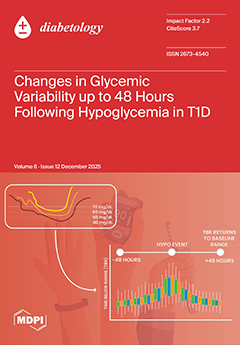
Cover Story (view full-size image):
Even with advanced diabetes technologies such as automated insulin delivery (AID), hypoglycemia in Type 1 diabetes remains influenced by exercise and other real-world factors. Previous research has explored the relationship between glycemic variability (GV) and hypoglycemia, but typically over short time windows, leaving limited understanding of how GV evolves over longer periods before and after hypoglycemic events. Using data from the T1DEXI dataset, this study analyzes CGM data over a 96-hour window (−48 to +48 hours) surrounding hypoglycemia to characterize GV and time below range. We compare AID and non-AID users and assesses potential related factors, including exercise, hypoglycemia duration and severity, and gender. Our findings indicate that GV and time below range can remain disrupted for up to 48 hours following hypoglycemia in both AID and non-AID users. View this paper
- Issues are regarded as officially published after their release is announced to the table of contents alert mailing list.
- You may sign up for e-mail alerts to receive table of contents of newly released issues.
- PDF is the official format for papers published in both, html and pdf forms. To view the papers in pdf format, click on the "PDF Full-text" link, and use the free Adobe Reader to open them.
Previous Issue
Next Issue
