
Article

Management of Type 2 and Post-Transplant Diabetes in Kidney Transplant Recipients: A Single-Center Clinical Experience with GLP-1 Receptor Agonists and SGLT-2 Inhibitors

1
Doctoral Program in Medicine, Faculty of Medicine of the University of Porto, 4200-319 Porto, Portugal
2
Department of Endocrinology and Metabolism, Beneficencia Portuguesa Hospital, Sao Paulo 01323-001, Brazil
3
Nephrology and Renal Transplant Service, Santo Antonio University Hospital Centre, 4050-342 Porto, Portugal
4
Division of Endocrinology, Centro Universitario FMABC, Santo Andre 09060-870, Brazil
*
Author to whom correspondence should be addressed.
Diabetology 2025, 6(12), 158; https://doi.org/10.3390/diabetology6120158

Submission received: 6 September 2025 / Revised: 14 November 2025 / Accepted: 26 November 2025 / Published: 5 December 2025

Abstract

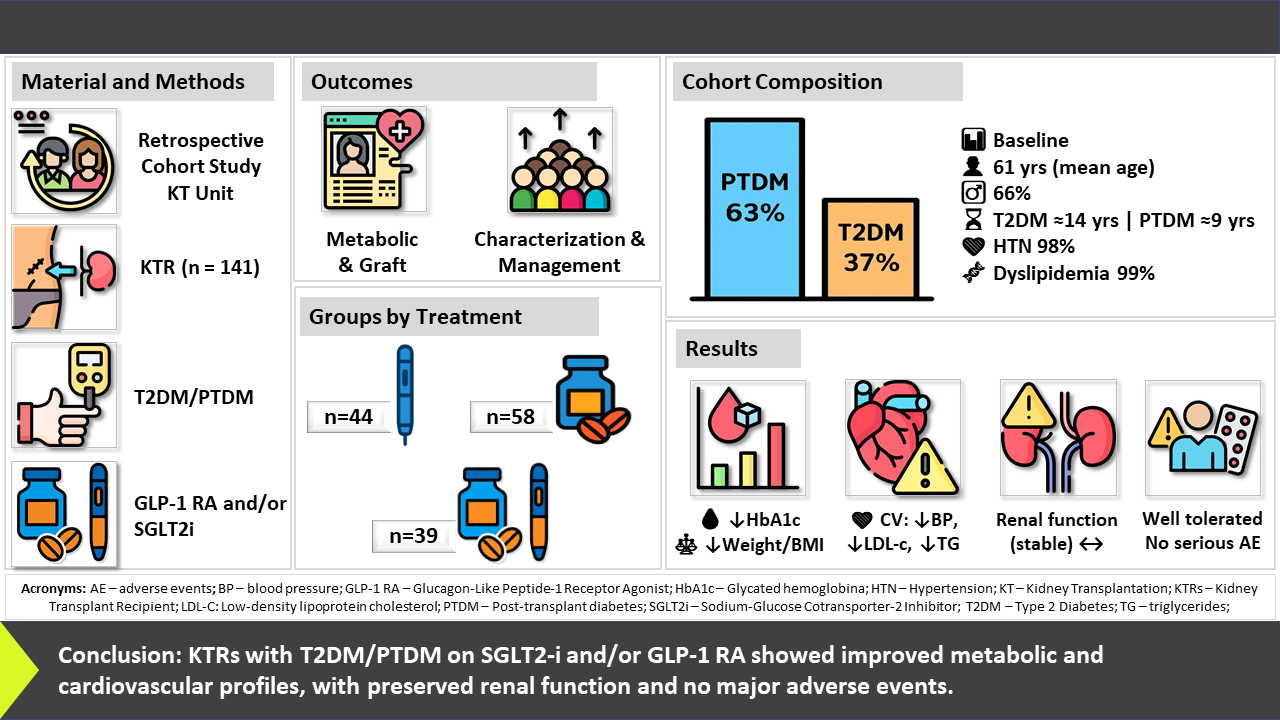
Objective: The aim was to characterize the real-world use of GLP-1 receptor agonists (GLP-1 RAs) and/or SGLT2 inhibitors in kidney transplant recipients (KTRs) with diabetes and to compare the clinical management, safety, and effectiveness between patients with type 2 diabetes mellitus (T2DM) and post-transplant diabetes mellitus (PTDM). Methods: This retrospective longitudinal cohort study included 141 adult KTRs (T2DM: 52; PTDM: 89) who initiated GLP-1 RA and/or SGLT2 inhibitor (SGLT2i) therapy between August 2013 and April 2024. Metabolic control, medication use, and safety outcomes were assessed from baseline to end follow-up, with a mean treatment exposure of 2.4 years. Results: Overall, 69% were treated with an SGLT2i and 59% with a GLP-1 RA; because the groups were not mutually exclusive, 28% received both agents. Treatment was associated with significant reductions in body weight (−3.38 kg; p < 0.001) and BMI (−1.28 kg/m2; p < 0.001) in both subgroups. HbA1c showed a non-significant overall decline (−0.31%; p = 0.21), with a greater reduction in the T2DM subgroup (−0.50%; p < 0.01). Significant improvements were also observed in lipid profile and blood pressure. Renal allograft function remained stable in both groups. The overall safety profile of the therapies was favorable, with mild urinary tract infections (18%) and manageable nausea (6%) reported in the entire cohort. No episodes of acute rejection or severe hypoglycemia occurred during the study period. Conclusions: In real-world practice, GLP-1 RAs and SGLT2is were associated with improved cardiometabolic parameters and stable renal function in KTRs, with a manageable safety profile. Similar effectiveness and safety across T2DM and PTDM support the use of these agents throughout the spectrum of diabetes in transplant recipients.

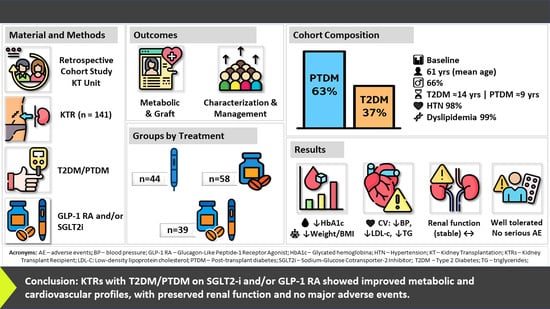
Graphical Abstract

1. Introduction

Kidney transplantation (KT) is widely regarded as the most effective renal replacement therapy for end-stage renal disease (ESRD), offering significant advantages over dialysis—including lower cardiovascular risk, reduced all-cause mortality, improved quality of life, greater life expectancy, and superior cost-effectiveness [1,2,3,4,5]. Since the first successful kidney transplant, the transplant community has systematically evaluated outcomes through rigorous global monitoring, informing clinical guidelines and practice and yielding notable gains in short-term graft survival largely attributable to advances in surgical technique and refinements in immunosuppressive regimens [4,5]. As these early outcomes have improved, attention has shifted to long-term complications driven by chronic immunosuppression and metabolic injury [6,7]. Among these, post-transplant diabetes mellitus (PTDM) is common and clinically consequential, adversely affecting graft function and patient survival [8,9,10]. PTDM reflects the convergence of peri-transplant factors (immunosuppressive therapy, surgical stress, hypomagnesemia, viral infections) with pre-transplant risks (older age, adiposity, male sex, genetic predisposition), many of which overlap with type 2 diabetes mellitus (T2DM), suggesting shared pathophysiology [11,12,13].
Over the past decade, two therapeutic classes have redefined diabetes care beyond glucose lowering: glucagon-like peptide-1 receptor agonists (GLP-1 RAs) and sodium–glucose cotransporter-2 (SGLT2) inhibitors. In large outcome trials, these agents have been associated with reductions in major cardiovascular events, heart-failure hospitalization, and chronic kidney disease progression, with benefits that extend beyond glycemic control [14,15,16,17,18,19,20]. Mechanistically, GLP-1 RAs promote weight loss and improve cardiometabolic risk through effects on appetite, gastric emptying, and insulin–glucagon dynamics, while SGLT2is provide hemodynamic and renal benefits via natriuresis, restoration of tubuloglomerular feedback, and attenuation of glomerular hyperfiltration—complementary profiles that are particularly attractive for cardio-renal risk reduction.
Despite this rationale, translation to the transplant setting has been cautious. Kidney transplant recipients (KTRs)—especially those with PTDM—have been systematically excluded from most pivotal randomized trials, leaving clinicians reliant on limited real-world evidence. Moreover, the transplant milieu introduces concerns not prominent in native CKD or general T2DM populations: heightened susceptibility to genitourinary infections in immunocompromised hosts, potential perturbations of volume status and electrolytes, drug–drug interactions within calcineurin-based regimens, and the background risks of acute rejection, chronic allograft injury, and drug nephrotoxicity. These features complicate direct extrapolation from non-transplant trials and underscore the need for pragmatic data specific to KTRs.
Despite the promise of GLP-1 RAs and SGLT2is in cardiometabolic and renal protection, the evidence base in KTRs with diabetes remains limited, and direct extrapolation from non-transplant populations is imperfect given the heightened cardiovascular risk and transplant-specific vulnerabilities (immunosuppression, infection susceptibility, and drug–drug interactions). A deeper understanding of the long-term safety, effectiveness, and patterns of use of these agents in this setting is therefore needed to inform practice and refine post-transplant management.

2. Objectives

To characterize the real-world use of GLP-1 RAs and/or SGLT2is in kidney transplant recipients (KTRs) with diabetes and to compare the clinical management, safety, and effectiveness between patients with T2DM and PTDM.

3. Material and Methods

3.1. Ethical Considerations

The study protocol was approved by the Institutional Review Board of the Department of Education, Training and Research (DEFI)—Clinical Research Service (Reference No. 2022.264 [209-DEFI/224-CE]) on 19 April 2023. Owing to the retrospective, non-interventional design and the exclusive use of fully anonymized clinical data, the requirement for individual informed consent was formally waived by the Ethics Committee on 15 June 2023. The waiver was justified by the impracticability of contacting a large, high-risk cohort, including patients who might have been deceased at the time of analysis. All data handling followed institutional anonymization protocols to safeguard confidentiality, and the study was conducted in accordance with the principles of the Declaration of Helsinki and applicable local regulations.

3.2. Study Design

This was a single-center, retrospective longitudinal cohort study. The primary analysis was a within-person (paired) comparison of outcomes before and after the initiation of GLP-1 RAs and/or SGLT2is. The study period spanned from August 2013 to April 2024. The index date for each patient was defined as the date of initiation of GLP-1 RA and/or SGLT2i therapy. Data collection concluded in April 2024, which served as the study’s endpoint. The final follow-up date for each patient corresponded to their most recent clinical encounter on or before this cutoff date.

3.3. Study Participants

This study screened all adult KTRs who initiated treatment with GLP-1 RAs and/or SGLT2is at the Kidney Transplant Unit of a university hospital during the study period. Eligible participants were aged ≥18 years at the time of transplantation and had a confirmed diagnosis of diabetes, classified as either T2DM or PTDM. All included patients were required to be actively receiving a GLP-1 RA and/or SGLT2i at their most recent follow-up visit.
Exclusion criteria comprised: (1) multi-organ transplantation, (2) incomplete medical records, and (3) discontinuation of both GLP-1 RA and SGLT2i therapies before the final follow-up. Notably, a history of macrovascular events—such as myocardial infarction or stroke—was not considered an exclusion criterion. This decision was informed by the recognized differences in diabetes-related complication profiles between T2DM and PTDM, where T2DM patients often present with a higher burden of microvascular and macrovascular disease due to longer pre-transplant exposure. To maintain real-world applicability and reflect clinical practice in a high-risk population, these patients were retained in the cohort. Their baseline prevalence was systematically recorded, and pre-specified sensitivity analyses excluding participants with prior macrovascular events were conducted to assess the robustness of the primary findings.
The final cohort was analyzed overall and stratified by diabetes type (T2DM vs. PTDM).

3.4. Clinical and Demographic Variables

Clinical and demographic data were collected from institutional records. Baseline characteristics included age, sex, race/ethnicity, dialysis history, donor type (living or deceased), and serologic status for cytomegalovirus (CMV) and hepatitis C virus (HCV). Transplant-specific variables comprised primary cause of end-stage kidney disease, time since transplantation, and the maintenance immunosuppressive regimen. Metabolic and cardiovascular variables included diabetes type (T2DM or PTDM) and duration, office blood pressure, use of antihypertensive and lipid-lowering agents, and a detailed history of antidiabetic therapies. Laboratory and anthropometric measures—weight, body mass index (BMI), serum creatinine, estimated glomerular filtration rate (eGFR), serum urea, lipid profile (total cholesterol, LDL-c, HDL-c, triglycerides), serum uric acid, urinary protein-to-creatinine ratio (uPCR), urinary albumin-to-creatinine ratio (uACR), fasting plasma glucose (FPG), glycated hemoglobin (HbA1c), and standard electrolytes—were collected at two time points: initiation of GLP-1 RA and/or SGLT2i therapy (baseline) and the most recent follow-up visit (April 2024).

3.5. Definitions

Diabetes. T2DM and PTDM were diagnosed according to American Diabetes Association (ADA) criteria [21]: ≥1 of the following—FPG ≥ 126 mg/dL; 2 h plasma glucose ≥ 200 mg/dL during a 75 g oral glucose tolerance test; HbA1c ≥ 6.5%; or random plasma glucose ≥ 200 mg/dL with classic hyperglycemic symptoms. PTDM applied the same ADA criteria but required that they be met ≥3 months post-transplant, in the absence of acute infection, unstable graft function, or recent changes in immunosuppression, consistent with international consensus recommendations [22].
Other clinical conditions. Hypertension and dyslipidemia were classified per KDIGO guidelines [23]. Targets were BP < 130/80 mmHg and LDL-c < 55 mg/dL (or ≥50% reduction from baseline), reflecting very high cardiovascular risk. Anemia was defined as hemoglobin < 11 g/dL or use of recombinant human erythropoietin.

3.6. Metabolic Targets for Diabetes Mellitus Control

Glycemic targets for both T2DM and PTDM followed ADA recommendations: HbA1c < 7.0%, pre-/fasting capillary glucose 80–130 mg/dL, and peak postprandial capillary glucose < 180 mg/dL. Targets were individualized based on comorbidities, hypoglycemia risk, and transplant-specific considerations, balancing metabolic control with patient safety.

3.7. Outcome Measures

Primary outcomes were prespecified changes from baseline to the most recent follow-up in metabolic control (HbA1c, FPG, lipid profile, blood pressure, body weight, and BMI) and in transplant-specific renal indicators, primarily graft function assessed by eGFR and serum creatinine. Secondary outcomes included use of antidiabetic, lipid-lowering, and antihypertensive medications; incidence of diabetes-related microvascular and macrovascular complications; and overall patient survival.

3.8. Statistical Analysis

Data management was performed using Microsoft Excel (version 2108), and statistical analyses were conducted with SAS software (version 9.4; SAS Institute Inc., Cary, NC, USA). Demographic and clinical characteristics were summarized using descriptive statistics. Categorical variables were reported as absolute frequencies and percentages, and continuous variables as mean ± standard deviation or median with interquartile range (IQR), based on their distribution.
Between-group comparisons (T2DM vs. PTDM) for baseline characteristics were performed using Chi-square or Fisher’s exact tests for categorical variables and Student’s t-test or Mann–Whitney U test for continuous variables. Longitudinal changes in metabolic parameters (ΔHbA1c, ΔeGFR, Δweight) were analyzed using paired t-tests or Wilcoxon signed-rank test. Mean differences (MD) with 95% confidence intervals were calculated for continuous outcomes.
To strengthen causal inference and adjust for potential confounders as suggested in peer review, we performed supplementary analyses using linear mixed-effects models (LMMs) for key continuous outcomes (ΔHbA1c, ΔeGFR, and Δbody weight). These models adjusted for baseline values, diabetes type (T2DM vs. PTDM), age, sex, time since transplantation, and baseline eGFR. The results of these models were consistent with the primary paired analyses and are presented in detail in the Appendix A (Appendix A.1).
A two-sided p-value < 0.05 was considered statistically significant.

4. Results

4.1. Sample Composition

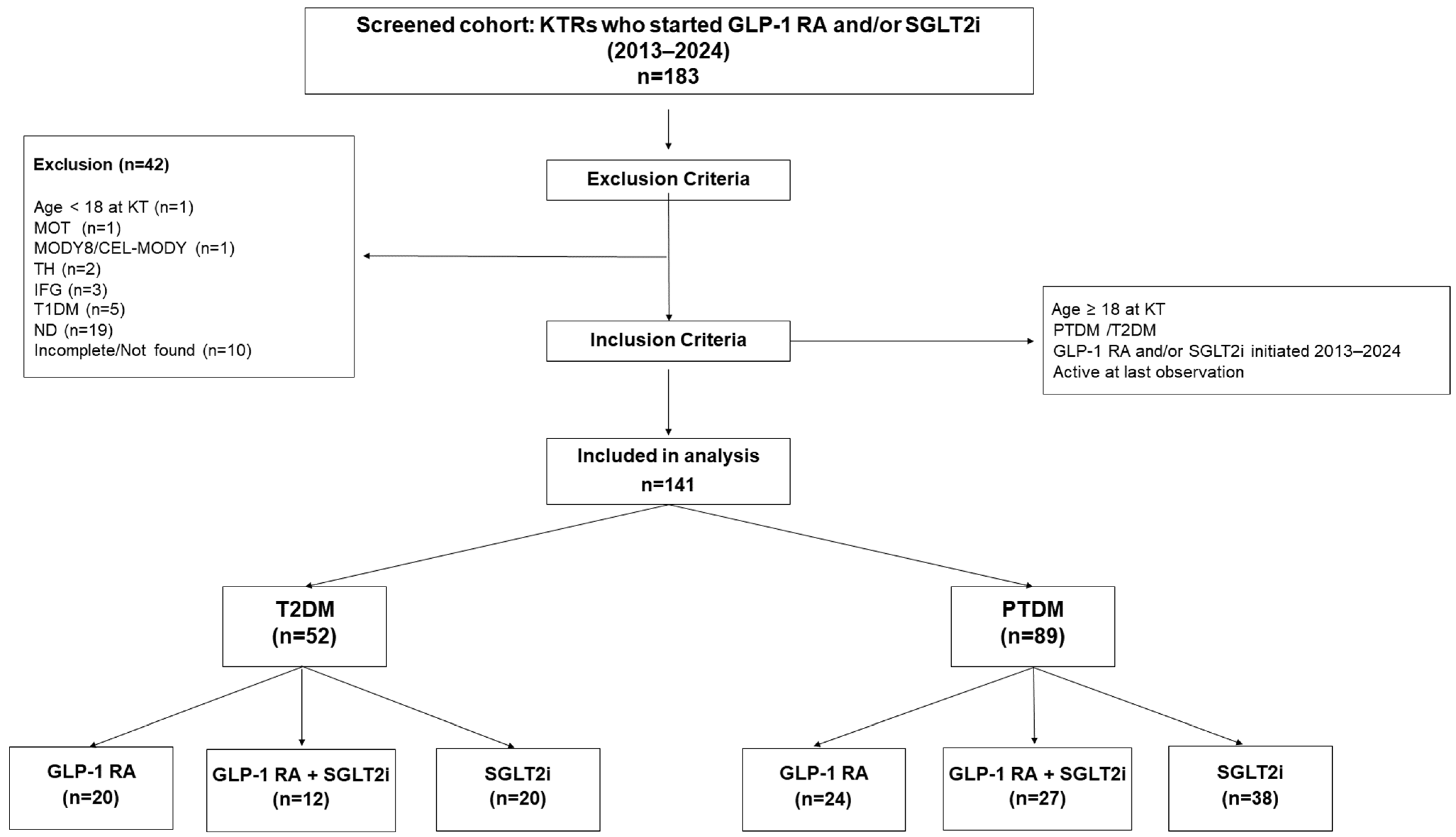
This study screened 183 KTRs who initiated treatment with GLP-1 RAs and/or SGLT2is between August 2013 and April 2024 (a 10.8-year window). After applying the exclusion criteria, 42 patients were excluded, primarily due to incomplete medical records. The final analytic cohort comprised 141 KTRs, stratified into two groups: 52 (36.9%) with pre-existing T2DM and 89 (63.1%) with PTDM. The participant selection flow is detailed in Figure 1.

4.2. Baseline Patient Characteristics

The final cohort comprised 141 KTRs with a mean age of 61.20 ± 10.69 years (range: 25–81), predominantly male (66%) and Caucasian (99%). Most grafts were from deceased donors (81%). Cardiometabolic comorbidities were highly prevalent, with hypertension in 98.5% and dyslipidemia in 99%; obesity was documented in 11%.
Comparative analysis between the T2DM (n = 52) and PTDM (n = 89) subgroups showed several distinctions. T2DM patients were significantly older (63.4 vs. 60.0 years, p < 0.05) and had a longer diabetes duration (13.8 vs. 9.3 years, p < 0.001). The mean time from transplantation to study inclusion was shorter in the T2DM group (6.1 vs. 9.7 years, p < 0.001). A family history of diabetes was more common in T2DM (67% vs. 54%, p = 0.14), and cytomegalovirus (CMV) seropositivity was higher in T2DM (79% vs. 57%, p < 0.01). The prevalence of hypertension, dyslipidemia, and obesity did not differ significantly between groups.
Immunosuppression was predominantly triple therapy. Corticosteroids (94%), tacrolimus (84%), and mycophenolate mofetil (89%) were the most frequently used agents. Use of cyclosporine (13% overall) and mTOR inhibitors (23% overall) did not differ significantly between T2DM and PTDM groups. The most common regimen was prednisone, tacrolimus, and mycophenolate mofetil.
In terms of glucose-lowering therapy patterns, SGLT2 inhibitors were used by 41.1% of the overall cohort, with comparable prevalence between T2DM (38.5%) and PTDM (42.7%) patients (p = 0.612). GLP-1 receptor agonists were used by 31.2% of patients, showing a non-significant trend toward higher use in T2DM (38.5%) versus PTDM (27.0%, p = 0.154). Combination therapy with both drug classes was employed by 27.7% of patients, with no significant difference between groups (T2DM 23.1% vs. PTDM 30.3%, p = 0.358). The median treatment duration was approximately 1.6–2.1 years across all therapeutic strategies, with most initiations occurring in 2022, reflecting recent incorporation of these cardiorenal protective agents into clinical practice. No statistically significant differences in treatment duration were observed between T2DM and PTDM patients for SGLT2 inhibitors (p = 0.536), GLP-1 receptor agonists (p = 0.623), or combination therapy (p = 0.714).
Comprehensive baseline characteristics are presented in Table 1.

4.3. Cardiometabolic and Kidney Function Parameters

Glycemic control exhibited distinct patterns between subgroups. In the T2DM group, HbA1c decreased significantly from 7.60% to 7.10% (p < 0.01), whereas the reduction in the PTDM group (7.22% to 7.01%) was not statistically significant. Conversely, FPG increased significantly in the PTDM subgroup (112.62 to 125.01 mg/dL, p = 0.03) but remained stable in the T2DM group, suggesting differences in short-term glucose variability.
The lipid profile improved uniformly across the cohort. Significant reductions were observed in total cholesterol (p = 0.02) and LDL-c in the overall population and within both subgroups. Triglycerides also decreased, reaching significance in the T2DM group (p = 0.02), while HDL-c levels remained stable.
Anthropometric and hemodynamic parameters also improved. Body weight and BMI decreased significantly in the total cohort (p < 0.001) and in both subgroups. Blood pressure control improved, with a significant reduction in systolic blood pressure observed in both the T2DM and PTDM groups (p < 0.01).
Renal allograft function remained stable throughout follow-up. Serum creatinine, urea, and eGFR showed no significant changes in either diabetic subgroup.
Longitudinal changes in cardiometabolic and renal parameters for the entire cohort are summarized in Table 2, with detailed trajectories for the T2DM and PTDM subgroups provided in Appendix A.1.

4.4. Pharmacologic Therapies

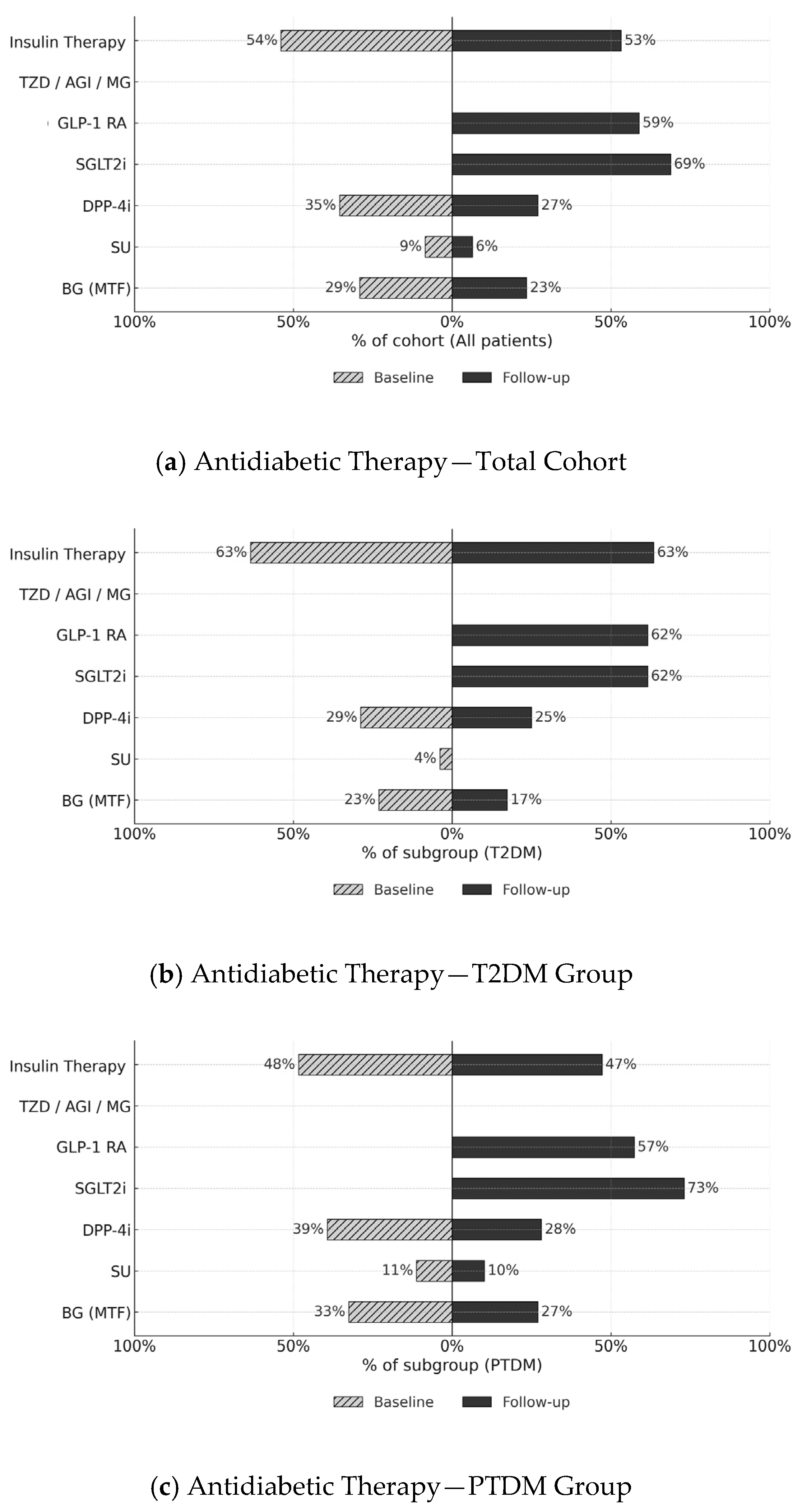
At baseline, 30% of the cohort (43/141) were on insulin monotherapy. Among the remaining 98 patients, all used oral antidiabetic agents, predominantly dipeptidyl peptidase-4 inhibitors (DPP-4i, 35% [49/141]) and metformin (29% [41/141]). After the introduction of GLP-1 RAs and/or SGLT2is, prescribing patterns shifted: 69% (98/141) received an SGLT2i and 59% (83/141) a GLP-1 RA; these categories overlapped, with 28% (39/141) treated with both. Conventional oral agents declined, whereas insulin use remained essentially unchanged (76/141 to 75/141), indicating therapy intensification rather than replacement. These changes are shown in Figure 2.
Beyond glucose-lowering therapy, cardioprotective regimens were universal. All patients received lipid-lowering treatment, mainly statins—atorvastatin in 60% (85/141) and rosuvastatin in 25% (35/141)—with ezetimibe co-prescribed in 42% (59/141). Most required combination antihypertensive therapy (82%, 116/141), with beta-blockers (79%, 111/141) and calcium-channel blockers (72%, 101/141) most frequently used. Patterns were similar across the T2DM and PTDM subgroups.

4.5. Diabetes-Related Complications

The analysis revealed a significantly higher burden of pre-existing diabetes-related complications in the T2DM subgroup compared to the PTDM group, consistent with their longer duration of diabetes prior to transplantation.
Microvascular complications were substantially more prevalent among T2DM patients. Diabetic retinopathy affected 56% (29/52) of the T2DM group versus 21% (19/89) of the PTDM group, while neuropathy was present in 31% (16/52) versus 10% (9/89), respectively. A notable co-occurrence of both retinopathy and neuropathy was observed in 21% (11/52) of T2DM patients, compared to only 3% (3/89) in the PTDM group. A particularly notable finding was the complete absence of diabetic foot complications in the PTDM group (0/89) compared to their presence in 19% (10/52) of T2DM patients (p < 0.001).
Although macrovascular complications showed consistently higher prevalence in the T2DM subgroup, these differences did not reach statistical significance. Ischemic heart disease was documented in 23% (12/52) of T2DM versus 15% (13/89) of PTDM patients (p = 0.262), heart failure in 33% (17/52) versus 26% (23/89, p = 0.443), myocardial infarction in 13% (7/52) versus 8% (7/89, p = 0.387), and stroke in 17% (9/52) versus 10% (9/89, p = 0.303), as assessed by Fisher’s exact test.
Collectively, these findings underscore a distinct complication profile between groups, with the T2DM cohort exhibiting more advanced microvascular damage and a consistent, though non-significant, trend toward higher macrovascular disease burden—patterns likely reflecting the cumulative impact of diabetes duration prior to transplantation.

4.6. Adverse Effects

The safety profile of SGLT2is and GLP-1 RAs in this transplant cohort was manageable, with no reported cases of urosepsis, severe hypoglycemia, or mortality.
Urinary tract infections (UTIs) were the most common adverse event associated with SGLT2is, occurring in 18% (26/141) of the cohort, with a similar incidence between the T2DM (12/52) and PTDM (14/89) groups. The vast majority of UTIs were asymptomatic (13/26) or mild (12/26), with only a single moderate case leading to drug discontinuation. One genital infection was documented, which resolved without treatment interruption.
For GLP-1 RAs, nausea was the predominant adverse event, affecting 6% (9/141) of patients. Most episodes were mild to moderate and transient, though treatment was discontinued in 7 cases due to concerns about potential drug–drug interactions with concomitant therapies.
Hypoglycemia was documented in 9% (12/141) of patients, with events evenly distributed between subgroups. All episodes were either asymptomatic (7/12) or mild (5/12), with no severe cases reported.

5. Discussion

This real-world study demonstrates that GLP-1 RAs and SGLT2is provide a safe and effective therapeutic strategy for KTRs with diabetes. The cornerstone finding was the preservation of allograft function, evidenced by stable eGFR and serum creatinine levels throughout the mean active treatment period of 2.4 years. This renal safety aligns with the growing transplant-specific evidence, beginning with the placebo-controlled findings of Halden et al. [24] and further reinforced by the larger real-world experience of Fructuoso et al. [25], collectively supporting the renal safety of these agents in single-kidney physiology [26,27,28].
However, translating the robust renoprotection of SGLT2is from the chronic kidney disease (CKD) population to KTRs requires careful consideration of a distinct clinical landscape. While in native CKD the primary threat is a slow, progressive decline in function, the transplanted kidney faces the added perils of acute rejection, drug toxicity, and chronic allograft injury. The stable renal function we and others observed [24,25] is therefore particularly significant; it suggests that in a setting of heightened vulnerability, SGLT2is do not introduce additional harm and may indeed help mitigate the metabolic drivers of chronic graft damage, offering a protective effect that is contextually different from—yet complementary to—their established role in non-transplanted CKD.
Beyond this foundational renal safety, our cohort demonstrated substantial metabolic benefits. The significant weight loss observed corroborates the findings of Vigara et al. [29] and Mallik et al. [30] in transplant cohorts, underscoring a potent effect in a population prone to corticosteroid-induced weight gain. This was complemented by significant improvements in lipid profile and blood pressure, creating a synergistic cardiometabolic benefit. Glycemic control showed a consistent trend toward HbA1c improvement, though the distinct FPG profile in PTDM patients hints at a unique pathophysiology requiring further study.
The safety profile was manageable and reassuring. Urinary tract infection rates associated with SGLT2i were low and generally mild, aligning with Fructuoso et al. [25] and contrasting with higher rates reported by Lemke et al. [31]. Gastrointestinal intolerance to GLP-1 RAs, while the most common adverse effect, infrequently led to discontinuation, an experience shared across several smaller cohorts [32,33,34]. Critically, the distinct complication profiles of our subgroups—with the T2DM group bearing a significantly higher burden of microvascular disease, consistent with González et al. [35]—powerfully illustrate the cumulative toll of diabetes and underscore the imperative for early, effective intervention in all KTRs with diabetes.
This stability aligns with a growing body of evidence from transplant-specific cohorts. Our findings are consistent with the controlled setting of Halden et al. [24], who observed no significant eGFR decline with empagliflozin compared to placebo, and are further reinforced by the larger real-world experience of Fructuoso et al. [25], who reported preserved renal function alongside reduced proteinuria.
However, a direct translation of the renoprotective benefits of SGLT2is from the chronic kidney disease (CKD) population to KTRs requires navigating a fundamentally distinct clinical paradigm. In the general CKD population, the threat is a slow, progressive decline in function, and SGLT2is have proven highly effective in attenuating this trajectory. In the transplant recipient, the kidney allograft exists in a state of heightened vulnerability, facing unique insults such as acute and chronic rejection, calcineurin inhibitor nephrotoxicity, and recurrent disease. The stable renal function we observed, therefore, carries a different yet equally critical implication: in this complex setting, SGLT2i therapy does not introduce harm and may help mitigate metabolic drivers of graft injury, offering a form of protection that is contextual and complementary to their established role in native CKD.
This foundational renal safety enables the pursuit of substantial metabolic benefits, which were clearly demonstrated in our cohort.
Building on this reassuring safety profile in the complex transplant setting, we observed substantial metabolic benefits that extend the therapeutic value of these agents. The most prominent finding was a clinically meaningful reduction in body weight—particularly relevant in a population prone to corticosteroid-induced weight gain. This consistent weight loss corroborates the findings of Vigara et al. [29] and Mallik et al. [30] in transplant cohorts and is especially notable given the high utilization of SGLT2is, a class with a more modest weight effect, thereby underscoring the significant contribution of GLP-1 RAs to this aggregate outcome. The weight-lowering effect of SGLT2i in KTRs, albeit milder, has also been consistently reported by Halden et al. [24] and Fructuoso et al. [25], confirming the reproducibility of this benefit across different transplant populations.
These anthropometric improvements were accompanied by parallel enhancements in key cardiovascular risk parameters. The significant improvement in the lipid profile aligns with the observations of Attallah et al. [27], who also reported favorable lipid changes with SGLT2i use in KTRs. Furthermore, the blood-pressure reduction we observed is consistent with the established hemodynamic effects of SGLT2is and adds to the findings of Schwaiger et al. [36], who documented similar improvements in transplant recipients. This combination of effects—weight loss, improved lipid metabolism, and better blood-pressure control—likely acts synergistically to reduce global cardiovascular risk in this vulnerable population, offering a benefit that transcends glycemic control alone.
In the glycemic domain, however, our results reveal a critical nuance that aligns with a broader discussion in the literature. While HbA1c showed a consistent trend toward improvement in both subgroups, the magnitude of this effect places our findings between the modest 0.2% reduction reported by Halden et al. [24] with empagliflozin and the more pronounced 1.3% decrease observed by Mallik et al. [30] with GLP-1 RAs. The significant rise in FPG observed specifically in the PTDM subgroup introduces complexity, suggesting distinct pathophysiological mechanisms that may necessitate more tailored management strategies compared with pre-existing T2DM.
Despite these significant metabolic benefits, ultimate adoption of any therapy in transplant recipients hinges on its safety profile. In this regard, our findings are highly reassuring. The incidence of urinary tract infections (UTIs) associated with SGLT2is was manageable, occurring in 18% of our cohort. This rate is consistent with the 14% reported by Fructuoso et al. [25] and aligns with the low incidence described by AlKindi et al. [26], yet remains lower than the 25% observed by Lemke et al. [31]. The vast majority of events were asymptomatic or mild, a finding echoed by Rajasekeran et al. [37], who reported no UTIs in their smaller cohort. Genital infections were rare, with a single case mirroring isolated instances reported by Fructuoso et al. [25] and Schwaiger et al. [36]. Critically, no cases of urosepsis or euglycemic ketoacidosis were observed, reinforcing the overall safety of this drug class in an immunocompromised population.
The safety profile for GLP-1 RAs was similarly favorable. Gastrointestinal events, predominantly nausea, were the most common reason for adjustment but led to discontinuation in only a small subset of patients. This experience of manageable gastrointestinal intolerance is shared by other real-world studies in KTRs, including Kukla et al. [32] and Liou et al. [34], and contrasts with the higher discontinuation rates often reported in the general population [38]. Furthermore, the absence of severe hypoglycemia in our cohort—consistent with Halden et al. [24]—and the lack of any documented episodes of acute rejection or pancreatitis provide a solid foundation for secure use of GLP-1 RAs in this setting.

Strengths and Limitations

These real-world findings provide timely, practical insights for a high-risk population systematically excluded from major clinical trials, offering a crucial clinical bridge until prospective data become available.
It is important to acknowledge the study’s inherent limitations. Its observational, retrospective design precludes causal inference and is susceptible to unmeasured confounding. The absence of randomization, control groups, and blinding, along with the lack of dose–response analyses, must be considered. Furthermore, the reasons for prescribing these agents were not solely diabetes-related—some were likely initiated for cardiovascular indications—which may have influenced treatment persistence and outcomes.
Notwithstanding these limitations, the study possesses considerable strengths that bolster the validity of its observations. Our decision to include patients with prevalent macrovascular disease—despite its potential influence on outcomes—was intentional, aimed at reflecting real-world clinical practice where SGLT2is and GLP-1 RA are increasingly used in high-risk patients with established cardiovascular disease. This approach, combined with the inclusion of a heterogeneous cohort encompassing both pre-existing and post-transplant diabetes, enhances the generalizability of the findings. Furthermore, the extended duration of the study, providing over a decade of longitudinal follow-up, along with a substantial mean treatment duration of 2.4 years, offers robust long-term data rarely available in this field.
By demonstrating both metabolic efficacy and a manageable safety profile, this study provides a compelling rationale for the safe integration of GLP-1 RAs and SGLT2is into the long-term management of KTRs with diabetes, thereby addressing a significant evidence gap.

6. Conclusions

This real-world cohort study shows that SGLT2is and GLP-1 RAs are associated with a favorable safety profile and potential cardiometabolic benefits in KTRs with diabetes. The findings support the feasibility of integrating these agents into post-transplant clinical practice. Prospective, controlled trials are warranted to confirm these observations and to definitively establish their role in improving long-term graft and patient survival.

Author Contributions

Conceptualization, R.E.T.N., L.S.M. and J.R.S.; methodology, R.E.T.N., L.S.M. and J.R.S.; software, R.E.T.N.; validation, L.S.M. and J.R.S.; formal analysis, R.E.T.N.; investigation, R.E.T.N., J.C.F., I.F. and A.C.; data curation, R.E.T.N., J.C.F., I.F. and A.C.; writing—original draft preparation, R.E.T.N.; review, validation, and editing of the final manuscript, R.E.T.N., L.S.M. and J.R.S.; supervision, L.S.M. and J.R.S. All authors have read and agreed to the published version of the manuscript.

Funding

This research did not receive any specific grant from funding agencies in the public, commercial, or not-for-profit sectors.

Institutional Review Board Statement

The study protocol was approved by the Ethics Committee of the ULS of Santo Antonio ICBAS (Reference No. 2022.264 [209-DEFI/224-CE], 19 April 2023). We also confirm that the study was conducted in accordance with the ethical standards of the institutional and national research committees and with the 2013 revision of the Declaration of Helsinki.

Informed Consent Statement

As this study utilized anonymized retrospective data, the requirement for informed consent was waived by the ethics committee.

Data Availability Statement

The data presented in this study are available on request from the corresponding author. The data are not publicly available due to privacy and ethical restrictions.

Conflicts of Interest

The authors declare no competing interests. No funding sources influenced the study’s design, execution, data collection, analysis, interpretation, or the preparation and approval of the manuscript.

Appendix A

Appendix A.1

Longitudinal Trajectories of Cardiometabolic and Renal Parameters Appendix A.1. Longitudinal Trajectories of Cardiometabolic and Renal Parameters.
Cardiometabolic and Renal ParametersDiabetes Mellitus
All Patients (n = 141)T2DM (n = 52)PTDM (n = 89)
BaselineFollow-Upp *BaselineFollow-Upp *BaselineFollow-Upp *
Glucose Metabolism and Lipid Profile
Hb, g/dL13.15 ± 1.8113.45 ± 1.770.6513.29 ± 1.9313.61 ± 1.690.0613.07 ± 1.7413.36 ± 1.810.02
FPG, mg/dL (mean ± SD)122.22 ± 35.78129.77 ± 36.640.68139.77 ± 43.93138.21 ± 44.520.46112.62 ± 26.03125.01 ± 30.60 0.03
Hb A1c, % (mean ± SD)7.35 ± 1.207.04 ± 0.900.217.60 ± 1.207.10 ± 0.86<0.017.22 ± 1.187.01 ± 0.93 0.60
TC, mg/dL (mean ± SD)175.87 ± 41.40161.05 ± 40.410.02176.47 ± 43.38158.16 ± 39.24<0.01175.53 ± 40.49162.46 ± 41.14<0.01
HDL-c, mg/dL (mean ± SD)49.10 ± 13.0449.55 ± 12.200.17 49.82 ± 12.4248.10 ± 10.950.1348.69 ± 13.4250.33 ± 12.840.07
LDL-c, mg/dL (mean ± SD)89.68 ± 36.3879.46 ± 33.33<0.00194.04 ± 34.7776.32 ± 29.68<0.00187.23 ± 37.2280.92 ± 35.000.02
TG, mg/dL (mean ± SD)187.32 ± 99.86175.09 ± 131.600.07186.71 ± 92.98166.08 ± 71.170.02187.67 ± 104.03179.72 ± 153.960.45
Anthropometric Measurement
Weight, kg (mean ± SD)75.36 ± 14.2271.98 ± 12.81<0.00177.89 ± 12.7074.66 ± 10.730.7073.95 ± 14.8970.48 ± 13.670.03
BMI, kg/m2 (mean ± SD)27.65 ± 4.6326.37 ± 4.00<0.00128.34 ± 4.1427.14 ± 3.63<0.00127.27 ± 4.8625.95 ± 4.15<0.001
Blood pressure status
SBP, mmHg (mean ± SD)143.97 ± 17.69137.85 ± 12.95<0.001145.34 ± 18.43139.06 ± 12.12<0.01143.21 ± 17.31137.18 ± 13.40<0.01
DBP, mmHg (mean ± SD)76.06 ± 14.6574.37 ± 10.02<0.00175.68 ± 11.5974.66 ± 9.390.5876.27 ± 16.1674.21 ± 10.410.08
Renal function parameters
Creatinine, mg/dL (mean ± SD)1.55 ± 0.551.58 ± 0.880.581.47 ± 0.491.61 ± 1.220.261.59 ± 0.581.57 ± 0.600.68
Urea, mg/dL (mean ± SD)70.92 ± 27.8169.45 ± 29.520.5563.87 ± 24.2266.24 ± 29.870.4774.94 ± 29.0371.19 ± 29.340.14
eGFR, ml/min (mean ± SD)53.60 ± 21.7154.38 ± 21.910.5355.15 ± 23.7053.57 ± 23.090.4252.74 ± 20.6154.81 ± 21.370.11
* Significant p-values (p < 0.05) are highlighted in bold. Abbreviations: Hb, Hemoglobin; FPG, Fasting Plasma Glucose; Hb A1c, Glycated Hemoglobin; TC, Total Cholesterol; HDL-c, High-Density Lipoprotein Cholesterol; LDL-c, Low-Density Lipoprotein Cholesterol; TG, Triglycerides; BMI, Body Mass Index; SBP, Systolic Blood Pressure; DBP, Diastolic Blood Pressure; eGFR, Estimated Glomerular Filtration Rate.

Appendix A.2

Use of Concomitant Cardio-Metabolic Medications.
Pharmacological Treatment DistributionDiabetes Mellitus
All Patients (n = 141)T2DM (n = 52)PTDM (n = 89)
BaselineFollow-UpBaselineFollow-UpBaselineFollow-Up
Antidiabetic Therapy *
BG (MTF), n (%)41/141 (29%)33/141(23%) 12/52 (23%)9/52 (17%)29/89 (33%)24/89 (27%)
SU, n (%)12/141 (9%)9/141 (6%) 2/52 (4%)0/52 (0%)10/89 (11%)9/89 (10%)
DPP-4i, n (%)50/141 (35%)38/141 (27%) 15/52 (29%)13/52 (25%)35/89 (39%)25/89 (28%)
SGLT-2i **, n (%)------97/141 (69%)------32/52 (62%)------65/89 (73%)
GLP-1 RA **, n (%)------83/141 (59%)------32/52 (62%)------51/89 (57%)
TZD/AGI/MG, n (%)NRNRNRNRNRNR
Insulin Therapy ***, n (%)76/141 (54%)75/141 (53%)33/52 (63%)33/52 (63%)43/89 (48%)42/89 (47%)
Lipid-Lowering Agents
Statins
Atorvastatin (ATV)84/141 (60%)84/141 (60%)33/52 (63%)33/52 (63%)51/89 (57%)51/89 (57%)
Rosuvastatin (RSV)35/141 (25%)35/141 (25%)13/52 (25%)13/52 (25%)22/89 (25%)22/89 (25%)
Simvastatin (SV)22/141 (15%)22/141 (15%)6/52 (12%)6/52 (12%)16/89 (18%)16/89 (18%)
Pravastatin (PV)NRNRNRNRNRNR
Lovastatin (LV)NRNRNRNRNRNR
Fluvastatin (FV)NRNRNRNRNRNR
Pitavastatin (PTV)NRNRNRNRNRNR
Ezetimibe added to statin therapy58/141 (41%)58/141 (41%)21/52 (40%)21/52 (40%)37/89 (41%)37/89 (41%)
Antihypertensive Agents ****
ACEi, n (%)82/141 (58%)82/141 (58%)28/52 (54%)28/52 (54%)54/89 (61%)54/89 (61%)
ARB, n (%)28/141 (20%)28/141 (20%)8/52 (15%)8/52 (15%)20/89 (22%)20/89 (22%)
CCB, n (%)102/141 (72%)102/141 (72%)37/52 (71%)37/52 (71%)65/89 (73%)65/89 (73%)
BB, n (%)111/141 (79%)111/141 (79%)45/52 (87%)45/52 (87%)66/89 (74%)66/89 (74%)
Diuretics, n (%)55/141 (39%)55/141 (39%)24/52 (46%)24/52 (46%)31/89 (35%)31/89 (35%)
CAA, n (%)23/141 (16%)23/141 (16%)12/52 (23%)12/52 (23%)11/89 (12%)11/89 (12%)
* The classes of oral antidiabetic agents are not mutually exclusive and are often used in combination to achieve optimal glycemic control. ** SGLT2-i and GLP-1 RA were excluded from baseline analysis, as the study focuses on their introduction during treatment. *** Insulin can be used alone or combined with other antidiabetic drugs, tailored to the patient’s needs and glycemic control goals. **** The classes of antihypertensive agents are not mutually exclusive and are often used in combination to achieve optimal blood pressure control. NR: Not Reported. Abbreviations: ACEi: Angiotensin-Converting Enzyme Inhibitors; AGI: Alpha-Glucosidase Inhibitors; ARB: Angiotensin II Receptor Blockers; BB: Beta-Blockers; BG: Biguanides; CAA: Central Acting Agents; CCB: Calcium Channel Blockers; DPP-4i: Dipeptidyl Peptidase-4 Inhibitors; GLP-1 RA: Glucagon-Like Peptide-1 Receptor Agonists; MG: Meglitinides; SGLT-2i: Sodium-Glucose Cotransporter-2 Inhibitors; STAT: Statins (HMG-CoA Reductase Inhibitors); SU: Sulfonylureas; TZD: Thiazolidinediones.

References

  1. Tonelli, M.; Wiebe, N.; Knoll, G.; Bello, A.; Browne, S.; Jadhav, D.; Klarenbach, S.; Gill, J. Systematic review: Kidney transplantation compared with dialysis in clinically relevant outcomes. Am. J. Transplant. 2011, 11, 2093–2109. [Google Scholar] [CrossRef]
  2. Cameron, J.I.; Whiteside, C.; Katz, J.; Devins, G.M. Differences in quality of life across renal replacement therapies: A meta-analytic comparison. Am. J. Kidney Dis. 2000, 35, 629–637. [Google Scholar] [CrossRef]
  3. McGill, R.L.; Ko, T.Y. Transplantation and the primary care physician. Adv. Chronic Kidney Dis. 2011, 18, 433–438. [Google Scholar] [CrossRef] [PubMed]
  4. Wolfe, R.A.; Ashby, V.B.; Milford, E.L.; Ojo, A.O.; Ettenger, R.E.; Agodoa, L.Y.C.; Held, P.J.; Port, F.K. Comparison of mortality in all patients on dialysis, patients on dialysis awaiting transplantation, and recipients of a first cadaveric transplant. N. Engl. J. Med. 1999, 341, 1725–1730. [Google Scholar] [CrossRef] [PubMed]
  5. Meier-Kriesche, H.-U.; Schold, J.D.; Kaplan, B. Long-term renal allograft survival: Have we made significant progress or is it time to rethink our analytic and therapeutic strategies? Am. J. Transplant. 2004, 4, 1289–1295. [Google Scholar] [CrossRef]
  6. Agrawal, A.; Ison, M.G.; Danziger-Isakov, L. Long-Term Infectious Complications of Kidney Transplantation. Clin. J. Am. Soc. Nephrol. 2022, 17, 286–295. [Google Scholar] [CrossRef]
  7. Khan, M.A.; Hanna, A.; Sridhara, S.; Chaudhari, H.; Me, H.M.; Attieh, R.M.; Abu Jawdeh, B.G. Maintenance Immunosuppression in Kidney Transplantation: A Review of the Current Status and Future Directions. J. Clin. Med. 2025, 14, 1821. [Google Scholar] [CrossRef]
  8. Kanbay, M.; Siriopol, D.; Guldan, M.; Ozbek, L.; Topcu, A.U.; Siriopol, I.; Tuttle, K. Prognostic impact of post-transplant diabetes mellitus in kidney allograft recipients: A meta-analysis. Nephrol. Dial. Transplant. 2024, 40, 554–576. [Google Scholar] [CrossRef]
  9. Malik, R.F.; Jia, Y.; Mansour, S.G.; Reese, P.P.; Hall, I.E.; Alasfar, S.; Doshi, M.D.; Akalin, E.; Bromberg, J.S.; Harhay, M.N.; et al. Post-transplant Diabetes Mellitus in Kidney Transplant Recipients: A Multicenter Study. Kidney360 2021, 2, 1296–1307. [Google Scholar] [CrossRef]
  10. Jeon, J.Y.; Han-Bit, S.; Park, B.H.; Lee, N.; Kim, H.J.; Kim, D.J.; Lee, K.-W.; Han, S.J. Impact of Post-Transplant Diabetes Mellitus on Survival and Cardiovascular Events in Kidney Transplant Recipients. Endocrinol. Metab. 2023, 38, 139–145. [Google Scholar] [CrossRef] [PubMed]
  11. Rossi, M.R.; Mazzali, M.; de Sousa, M.V. Post-transplant diabetes mellitus: Risk factors and outcomes in a 5-year follow-up. Front. Clin. Diabetes Health 2024, 5, 1336896. [Google Scholar] [CrossRef]
  12. Shivaswamy, V.; Boerner, B.; Larsen, J. Post-Transplant Diabetes Mellitus: Causes, Treatment, and Impact on Outcomes. Endocr. Rev. 2015, 37, 37–61. [Google Scholar] [CrossRef]
  13. Kang, E.; Lee, J.; Kang, D.H.; Park, J.; Park, S.; Kim, Y.C.; Kim, D.K.; Joo, K.W.; Park, M.; Lim, Y.; et al. Clinical outcomes of posttransplantation diabetes mellitus in kidney transplantation recipients: A nationwide population-based cohort study in Korea. Sci. Rep. 2022, 12, 21632. [Google Scholar] [CrossRef] [PubMed]
  14. Zinman, B.; Wanner, C.; Lachin, J.M.; Fitchett, D.; Bluhmki, E.; Hantel, S.; Mattheus, M.; Devins, T.; Johansen, O.E.; Woerle, H.J.; et al. Empagliflozin, Cardiovascular Outcomes, and Mortality in Type 2 Diabetes. N. Engl. J. Med. 2015, 373, 2117–2128. [Google Scholar] [CrossRef]
  15. The EMPA-KIDNEY Collaborative Group; Herrington, W.G.; Staplin, N.; Wanner, C.; Green, J.B.; Hauske, S.J.; Emberson, J.R.; Preiss, D.; Judge, P.; Mayne, K.J.; et al. Empagliflozin in Patients with Chronic Kidney Disease. N. Engl. J. Med. 2023, 388, 117–127. [Google Scholar] [CrossRef]
  16. Wiviott, S.D.; Raz, I.; Bonaca, M.P.; Mosenzon, O.; Kato, E.T.; Cahn, A.; Silverman, M.G.; Zelniker, T.A.; Kuder, J.F.; Murphy, S.A.; et al. Dapagliflozin and Cardiovascular Outcomes in Type 2 Diabetes. N. Engl. J. Med. 2019, 380, 347–357. [Google Scholar] [CrossRef] [PubMed]
  17. Heerspink, H.J.L.; Stefánsson, B.V.; Correa-Rotter, R.; Chertow, G.M.; Greene, T.; Hou, F.-F.; Mann, J.F.E.; McMurray, J.J.V.; Lindberg, M.; Rossing, P.; et al. Dapagliflozin in Patients with Chronic Kidney Disease. N. Engl. J. Med. 2020, 383, 1436–1446. [Google Scholar] [CrossRef]
  18. Marso, S.P.; Daniels, G.H.; Brown-Frandsen, K.; Kristensen, P.; Mann, J.F.E.; Nauck, M.A.; Nissen, S.E.; Pocock, S.; Poulter, N.R.; Ravn, L.S.; et al. Liraglutide and Cardiovascular Outcomes in Type 2 Diabetes. N. Engl. J. Med. 2016, 375, 311–322. [Google Scholar] [CrossRef] [PubMed]
  19. Marso, S.P.; Bain, S.C.; Consoli, A.; Eliaschewitz, F.G.; Jódar, E.; Leiter, L.A.; Lingvay, I.; Rosenstock, J.; Seufert, J.; Warren, M.L.; et al. Semaglutide and Cardiovascular Outcomes in Patients with Type 2 Diabetes. N. Engl. J. Med. 2016, 375, 1834–1844. [Google Scholar] [CrossRef]
  20. Gerstein, H.C.; Colhoun, H.M.; Dagenais, G.R.; Diaz, R.; Lakshmanan, M.; Pais, P.; Probstfield, J.; Riesmeyer, J.S.; Riddle, M.C.; Rydén, L.; et al. Dulaglutide and cardiovascular outcomes in type 2 diabetes (REWIND): A double-blind, randomised placebo-controlled trial. Lancet 2019, 394, 121–130. [Google Scholar] [CrossRef]
  21. American Diabetes Association Professional Practice Committee; ElSayed, N.A.; Aleppo, G.; Bannuru, R.R.; Bruemmer, D.; Collins, B.S.; Ekhlaspour, L.; Gaglia, J.L.; Hilliard, M.E.; Johnson, E.L.; et al. 2. Diagnosis and classification of diabetes: Standards of care in diabetes—2024. Diabetes Care 2024, 47 (Suppl. 1), S20–S42. [Google Scholar] [CrossRef]
  22. Sharif, A.; Chakkera, H.; de Vries, A.P.J.; Eller, K.; Guthoff, M.; Haller, M.C.; Hornum, M.; Nordheim, E.; Kautzky-Willer, A.; Krebs, M.; et al. International consensus on post-transplantation diabetes mellitus. Nephrol. Dial. Transplant. 2024, 39, 531–549. [Google Scholar] [CrossRef]
  23. Stevens, P.E.; Ahmed, S.B.; Carrero, J.J.; Foster, B.; Francis, A.; Hall, R.K.; Herrington, W.G.; Hill, G.; Inker, L.A.; Kazancıoğlu, R.; et al. KDIGO 2024 Clinical Practice Guideline for the Evaluation and Management of Chronic Kidney Disease. Kidney Int. 2024, 105, S117–S314. [Google Scholar] [CrossRef]
  24. Halden, T.A.S.; Kvitne, K.E.; Midtvedt, K.; Rajakumar, L.; Robertsen, I.; Brox, J.; Bollerslev, J.; Hartmann, A.; Åsberg, A.; Jenssen, T. Efficacy and Safety of Empagliflozin in Renal Transplant Recipients with Posttransplant Diabetes Mellitus. Diabetes Care 2019, 42, 1067–1074. [Google Scholar] [CrossRef]
  25. Fructuoso, A.I.S.; Raba, A.B.; Deras, E.B.; Sánchez, L.A.V.; Cecilio, R.V.S.; Esteve, A.F.; Vega, L.C.; Martínez, E.G.; Garcia, M.E.G.; Coronado, P.S.; et al. Sodium-glucose cotransporter-2 inhibitor therapy in kidney transplant patients with type 2 or post-transplant diabetes: An observational multicentre study. Clin. Kidney J. 2023, 16, 1022–1034. [Google Scholar] [CrossRef]
  26. AlKindi, F.; Al-Omary, H.L.; Hussain, Q.; Al Hakim, M.; Chaaban, A.; Boobes, Y. Outcomes of SGLT2 Inhibitors Use in Diabetic Renal Transplant Patients. Transplant Proc. 2020, 52, 175–178. [Google Scholar] [CrossRef] [PubMed]
  27. Attallah, N.; Yassine, L. Use of Empagliflozin in Recipients of Kidney Transplant: A Report of 8 Cases. Transplant Proc. 2019, 51, 3275–3280. [Google Scholar] [CrossRef] [PubMed]
  28. Mahling, M.; Schork, A.; Nadalin, S.; Fritsche, A.; Heyne, N.; Guthoff, M. Sodium-Glucose Cotransporter 2 (SGLT2) Inhibition in Kidney Transplant Recipients with Diabetes Mellitus. Kidney Blood Press. Res. 2019, 44, 984–992. [Google Scholar] [CrossRef] [PubMed]
  29. Vigara, L.A.; Villanego, F.; Orellana, C.; Naranjo, J.; Torrado, J.; Garcia, T.; Mazuecos, A. Effectiveness and safety of glucagon-like peptide-1 receptor agonist in a cohort of kidney transplant recipients. Clin. Transplant. 2022, 36, e14633. [Google Scholar] [CrossRef]
  30. Mallik, R.; Ali, O.; Casabar, M.; Mukuba, D.; Byrne, C.; McCafferty, K.; Yaqoob, M.M.; Chowdhury, T.A. Glucagon-like peptide-1 receptor analogues in renal transplant recipients with diabetes: Medium term follow of patients from a single UK centre. Diabet. Med. 2023, 40, e15057. [Google Scholar] [CrossRef]
  31. Lemke, A.; Brokmeier, H.M.; Leung, S.B.; Mara, K.C.; Mour, G.K.; Wadei, H.M.; Hill, J.M.; Stegall, M.; Kudva, Y.C.; Shah, P.; et al. Sodium-glucose cotransporter 2 inhibitors for treatment of diabetes mellitus after kidney transplantation. Clin. Transplant. 2022, 36, e14718. [Google Scholar] [CrossRef] [PubMed]
  32. Kukla, A.; Hill, J.D.; Merzkani, M.; Bentall, A.; Lorenz, E.C.; Park, W.D.B.; D’cOsta, M.; Kudva, Y.C.; Stegall, M.D.; Shah, P. The Use of GLP1R Agonists for the Treatment of Type 2 Diabetes in Kidney Transplant Recipients. Transplant. Direct 2020, 6, e524. [Google Scholar] [CrossRef] [PubMed]
  33. Kim, H.S.; Lee, J.; Jung, C.H.; Park, J.-Y.; Lee, W.J. Dulaglutide as an Effective Replacement for Prandial Insulin in Kidney Transplant Recipients with Type 2 Diabetes Mellitus: A Retrospective Review. Diabetes Metab. J. 2021, 45, 948–953. [Google Scholar] [CrossRef]
  34. Liou, J.-H.; Liu, Y.-M.; Chen, C.-H. Management of Diabetes Mellitus with Glucagonlike Peptide-1 Agonist Liraglutide in Renal Transplant Recipients: A Retrospective Study. Transplant. Proc. 2018, 50, 2502–2505. [Google Scholar] [CrossRef]
  35. González, A.Y.; Kanter, J.; Sancho, A.; Gavela, E.; Solá, E.; Ávila, A.; Pallardó, L.M. Institutional Experience with New Antidiabetic Drugs in Kidney Transplant. Transplant. Proc. 2021, 53, 2678–2680. [Google Scholar] [CrossRef] [PubMed]
  36. Schwaiger, E.; Burghart, L.; Signorini, L.; Ristl, R.; Kopecky, C.; Tura, A.; Pacini, G.; Wrba, T.; Antlanger, M.; Schmaldienst, S.; et al. Empagliflozin in posttransplantation diabetes mellitus: A prospective, interventional pilot study on glucose metabolism, fluid volume, and patient safety. Am. J. Transplant. 2018, 19, 907–919. [Google Scholar] [CrossRef]
  37. Rajasekeran, H.; Kim, S.J.; Cardella, C.J.; Schiff, J.; Cattral, M.; Cherney, D.Z.; Singh, S.K. Use of Canagliflozin in Kidney Transplant Recipients for the Treatment of Type 2 Diabetes: A Case Series. Diabetes Care 2017, 40, e75–e76. [Google Scholar] [CrossRef]
  38. Thomsen, R.W.; Mailhac, A.; Løhde, J.B.; Pottegård, A. Real-world evidence on the utilization, clinical and comparative effectiveness, and adverse effects of newer GLP-1RA-based weight-loss therapies. Diabetes Obes. Metab. 2025, 27 (Suppl. 2), 66–88. [Google Scholar] [CrossRef]
Figure 1. Flowchart of Patient Selection in the Study Cohort. Abbreviations: GLP-1 RA: GLP-1 Receptor Agonists; IFG: Impaired Fasting Glucose; KT: Kidney Transplantation; MODY8/CEL-MODY: [Maturity-Onset Diabetes of the Young type 8 caused by mutations in the carboxyl ester lipase (CEL) gene]. MOT: Multiple Organ Transplant; ND: Nondiabetics; PTDM: Post-Transplant Diabetes Mellitus; SGLT2-i: Sodium-Glucose Co-Transporter 2 Inhibitors; T1DM: Type 1 Diabetes Mellitus; T2DM: Type 2 Diabetes Mellitus; TH: Transient Hyperglycemia.
Diabetology 06 00158 g001
Figure 2. Evolution of Antidiabetic Therapy Following GLP-1 RA and/or SGLT2i Initiation. The classes of oral antidiabetic agents are not mutually exclusive and are often used in combination to achieve optimal glycemic control. Abbreviations: BG: Biguanides; DPP-4i: Dipeptidyl Peptidase-4 Inhibitors; GLP-1 RA: Glucagon-Like Peptide-1 Receptor Agonists; MTF: Metformin; SGLT2i: Sodium-Glucose Cotransporter-2 Inhibitors; SU: Sulfonylureas. Note: SGLT2-i and GLP-1 RA were excluded from baseline analysis, as the study focuses on their introduction during treatment.
Diabetology 06 00158 g002
Table 1. Baseline Characteristics of the Study Cohort (Overall and by Diabetes Type).
Diabetes Mellitus
ParametersTotal Cohort
(n = 141)
T2DM Group
(n = 52)
PTDM Group
(n = 89)
p-Value *
Clinical Profile
Recipient male gender, n (%)93 (66%)36 (69%)57 (64%)0.530
Age, years (mean ± SD)61.20 ± 10.6963.43 ± 9.9659.95 ± 10.920.056
Duration of DM, years (mean ± SD)10.94 ± 10.44 13.77 ± 14.509.29 ± 6.640.039
Time since KT until study inclusion, years10.8 ± 6.26.12 ± 4.899.67 ± 6.28<0.001
Family history of diabetes, n (%)83 (59%)35 (67%)48 (54%)0.140
Renal replacement therapy **
Hemodialysis, n (%)112 (80%)44 (85%)68 (76%)0.350
Peritoneal dialysis, n (%)20 (14%)6 (12%)14 (16%)0.440
None, n (%)9 (6%)2 (4%)7 (8%)0.320
Viral Serostatus
Hepatitis C positive, n (%)5 (4%)3 (6%)2 (2%)0.280
CMV antibody positive recipient, n (%)92 (65%)41 (79%)51 (57%)<0.010
Primary kidney disease
Diabetic kidney disease (DKD), n (%)28 (20%)28 (54%)NR---
Glomerular disease, n (%)30 (21%)6 (12%)24 (27%)0.05
Polycystic disease, n (%)20 (14%)2 (4%)18 (20%)<0.010
Tubulointerstitial disease, n (%)12 (9%)3 (6%)9 (10%)0.420
Other causes, n (%)14 (10%)3 (6%)11 (12%)0.250
Unknown, n (%) 37 (26%)10 (18%)27 (31%)0.720
Transplantation information
Deceased donor, n (%)114 (81%)45 (87%)69 (78%)0.190
Graft number
First, n (%)116 (82%)43 (83%)73 (82%)0.860
Second, n (%)21 (15%)7 (13%)14 (16%)0.970
More than two, n (%) 4 (3%)2 (4%)2 (2%)0.730
Immunosuppressive Therapy
Prednisone (PDN)132 (94%)48 (92%)84 (94%)0.260
Mycophenolate Mofetil (MMF)125 (89%)48 (92%)77 (87%)0.730
Azathioprine (AZA)9 (6%)1 (2%)8 (9%)0.990
Tacrolimus (TAC)119 (84%)44 (85%)75 (84%)0.300
Cyclosporine (CsA)19 (13%)6 (12%)13 (15%)0.300
mTOR Inhibitors (mTORi)33 (23%)14 (27%)19 (21%)0.250
Treatment Exposure
SGLT2 inhibitor use, n (%)58 (41.13%)20 (38.46%)38 (42.69%)0.612
SGLT2i treatment duration, years 0.412
(mean ± SD)1.97 ± 2.361.73 ± 0.891.94 ± 1.37
median [IQR]1.59 [1.07–2.18]1.76 [1.24–2.18]1.59 [1.07–2.18]
SGLT2i initiation year2022 [2018–2023]2022 [2019–2023]2022 [2018–2023]
SGLT2i person-time, years114.255.4120.3
GLP-1 RA use, n (%)44 (31.20%)20 (38.46%)24 (26.96%)0.154
GLP-1 RA treatment duration, years 0.487
(mean ± SD)2.12 ± 1.351.97 ± 0.892.21 ± 1.53
median [IQR]1.85 [1.18–2.80]1.93 [1.35–2.55]1.85 [1.18–2.80]
GLP-1 RA initiation year2022 [2013–2023]2022 [2019–2023]2022 [2013–2023]
GLP-1 RA person-time, years93.339.453.04
Combination Therapy
Concurrent use, n (%)39 (27.65%)12 (23.07%)27 (30.33%)0.358
Combination therapy duration, years 0.589
(mean ± SD)1.95 ± 0.992.08 ± 1.071.90 ± 0.96
median [IQR]1.85 [1.18–2.55]1.93 [1.35–2.55]1.76 [1.18–2.55]
Combination initiation year2022 [2019–2023]2022 [2019–2023]2022 [2019–2023]
Combination therapy person-time, years76.0524.9651.3
Note: * Statistically significant p-values are highlighted in bold. ** The dialysis modalities are not mutually exclusive. Abbreviations: CMV: Cytomegalovirus; CsA: Cyclosporine A; DM: Diabetes Mellitus; MMF: Mycophenolate Mofetil; mTORi: Mammalian Target of Rapamycin Inhibitor; PDN: Prednisone; SD: Standard Deviation; TAC: Tacrolimus.
Table 2. Changes in Cardiometabolic and Renal Allograft Function Parameters After Initiation of GLP-1 RA and/or SGLT2 Inhibitor Therapy.
Diabetes Mellitus
Total Cohort (n = 141)
ParametersBaselineFollow-Upp-Value *
Glucose Metabolism and Lipid Profile
Hb, g/dL 13.15 ± 1.8113.45 ± 1.770.65
FPG, mg/dL (mean ± SD) 122.22 ± 35.78129.77 ± 36.640.68
Hb A1c, % (mean ± SD)7.35 ± 1.207.04 ± 0.900.21
TC, mg/dL (mean ± SD) 175.87 ± 41.40161.05 ± 40.410.02
HDL-c, mg/dL (mean ± SD) 49.10 ± 13.0449.55 ± 12.200.17
LDL-c, mg/dL(mean ± SD) 89.68 ± 36.3879.46 ± 33.33<0.001
TG, mg/dL (mean ± SD)187.32 ± 99.86175.09 ± 131.600.07
Anthropometric Measurement
Weight, kg (mean ± SD)75.36 ± 14.2271.98 ± 12.81<0.001
BMI, kg/m2 (mean ± SD)27.65 ± 4.6326.37 ± 4.00<0.001
Blood pressure status
SBP, mmHg (mean ± SD) 143.97 ± 17.69137.85 ± 12.95<0.001
DBP, mmHg (mean ± SD)76.06 ± 14.6574.37 ± 10.02<0.001
Renal function parameters
Creatinine, mg/dL (mean ± SD)1.55 ± 0.551.58 ± 0.880.58
Urea, mg/dL (mean ± SD)70.92 ± 27.8169.45 ± 29.520.55
eGFR, ml/min (mean ± SD)53.60 ± 21.7154.38 ± 21.910.53
* Significant p-values (p < 0.05) are highlighted in bold. Abbreviations: Hb, Hemoglobin; FPG, Fasting Plasma Glucose; Hb A1c, Glycated Hemoglobin; TC, Total Cholesterol; HDL-c, High-Density Lipoprotein Cholesterol; LDL-c, Low-Density Lipoprotein Cholesterol; TG, Triglycerides; BMI, Body Mass Index; SBP, Systolic Blood Pressure; DBP, Diastolic Blood Pressure; eGFR, Estimated Glomerular Filtration Rate.
Disclaimer/Publisher’s Note: The statements, opinions and data contained in all publications are solely those of the individual author(s) and contributor(s) and not of MDPI and/or the editor(s). MDPI and/or the editor(s) disclaim responsibility for any injury to people or property resulting from any ideas, methods, instructions or products referred to in the content.