


Abstract
Background: Metabolic syndrome (MetS) comprises a cluster of metabolic abnormalities that increase the risk of type 2 diabetes mellitus (T2DM) and cardiometabolic morbidity. Although widely recognized, evidence on its documentation and follow-up in primary care is limited. This study aimed to evaluate the extent of MetS documentation in electronic medical records (EMRs), examine follow-up patterns and metabolic changes over time, and assess the incidence and predictors of new-onset T2DM according to baseline MetS severity. Methods: A retrospective cohort study was conducted on 8170 adults aged 30–50 years, insured by Clalit Health Services in Southern Israel, who met ATP III criteria for MetS in 2008 and were followed through 2015. MetS severity was classified as mild (three components), moderate (four), or severe (five). Changes in metabolic indices were assessed longitudinally, and predictors of T2DM were analyzed using Kaplan–Meier survival and multivariable Cox regression models. Results: Although all participants met the diagnostic criteria, only 1.6% had a recorded MetS diagnosis. Over the eight years of follow-up, 26% developed T2DM, with incidence increasing from 21% among those with mild MetS to 49% among those with severe MetS (p < 0.0001). Fasting plasma glucose rose significantly (median +13 mg/dL, p < 0.001), BMI remained stable, and modest improvements were observed in blood pressure and lipid levels. Elevated fasting glucose (HR 2.13, p < 0.001), higher BMI (HR 1.33, p = 0.010), and lower HDL (HR 1.26, p = 0.045) independently predicted diabetes onset. Conclusions: MetS remains markedly under-documented and insufficiently integrated into primary care follow-up. Despite regular clinical follow-up, improvements in metabolic indices were limited. These findings highlight the need for structured strategies to enhance MetS recognition and long-term management within routine practice.
1. Introduction
Metabolic syndrome (MetS) is a major public health challenge characterized by central obesity, hypertension, dyslipidemia, and hyperglycemia, many of which are linked to insulin resistance, which can lead to type 2 diabetes mellitus (T2DM) [1]. The global prevalence of MetS ranges from 22% to 34%—depending on diagnostic criteria—and continues to rise worldwide, underscoring the need for early identification and prevention [2,3,4]. MetS is increasingly observed among young and middle-aged adults, in whom timely intervention may alter disease trajectories [5].
MetS has been firmly established as a strong predictor of both T2DM and cardiovascular morbidity [1,2,3,4,5,6,7,8,9,10,11,12]. However, debate persists regarding whether MetS itself provides greater predictive value than its individual components, particularly impaired fasting glucose (IFG) [6,13,14]. For example, the Framingham Offspring Study found that participants with MetS, including IFG had a relative risk (RR) of 11.0 for T2DM, compared with 5.0 among those without IFG [6]. These findings highlight the heterogeneous contribution of individual components to overall metabolic risk.
Recent studies have emphasized the use of continuous MetS severity scores (cMetS-S) to quantify risk more precisely. Longitudinal cohorts demonstrate that higher cMetS-S trajectories and persistent MetS status strongly predict future T2DM [8,9,10]. Nevertheless, in EMR-based population studies, the component-count method (3–5 criteria) remains the most practical approach. Despite frequent monitoring, MetS is rarely documented in primary care, and prior cohorts revealed worsening fasting glucose and sharp increases in T2DM incidence with higher component counts [12]. Because individual traits vary in prognostic weight, refined scoring and follow-up strategies are needed.
Lifestyle modification remains the cornerstone of MetS management; this includes weight reduction, increased physical activity, and smoking cessation [13,14,15,16,17]. However, its long-term effectiveness in real-world primary care remains uncertain and warrants further study.
The southern region of Israel (the Negev) provides a relevant setting for studying MetS and its associated risk of diabetes. This region shows higher rates of obesity and diabetes than national averages, particularly among the Bedouin population [18,19]. Clalit Health Services’ EMR data, covering most regional residents, enable robust population-based analyses to identify modifiable risk patterns and guide targeted prevention [18,19,20]. Understanding how MetS is documented and managed in a community with marked health disparities is essential for designing effective, equitable prevention strategies.
Focusing on adults aged 30–50 years offers a critical window for early risk modification before progression to overt disease. This life stage often marks the transition from subclinical metabolic abnormalities to overt diabetes, making it particularly suitable for preventive interventions within primary care. Despite extensive international literature, data from Israeli primary care remain limited. Gaps persist regarding MetS documentation, follow-up intensity, and the relative impact of individual components on diabetes onset.
Accordingly, this study aimed to assess MetS documentation in routine care, examine longitudinal changes in metabolic indices, and determine the incidence of T2DM by baseline MetS severity while exploring the relative contribution of each component to future diabetes risk.
2. Methods
2.1. Study Design and Population
This retrospective cohort study included patients aged 30–50 years in 2008 who met criteria for metabolic syndrome (MetS) within Clalit Health Services (CHS) in Southern Israel. This age range was selected to target younger adults, in whom early manifestations of MetS are more amenable to the prevention of T2DM, and to minimize confounding from comorbidities and age-related metabolic changes.
2.2. Definition of Metabolic Syndrome
MetS is defined using multiple criteria. For this study, we adopted the Adult Treatment Panel (ATP) III definition, which requires the presence of at least three out of the following five criteria:
- Central abdominal obesity, defined as a waist circumference > 102 cm in males or >88 cm in females.
- Blood pressure ≥130/≥85 mmHg or ongoing antihypertensive treatment.
- Fasting plasma glucose (FPG) ≥ 100 mg/dL or treatment for diabetes mellitus.
- Triglyceride levels ≥ 150 mg/dL.
- Low high-density lipoprotein cholesterol (HDL-c), defined as <40 mg/dL in males or <50 mg/dL in females.
An alternative definition by the World Health Organization (WHO, 1999) includes body mass index (BMI) > 30 kg/m2 instead of abdominal obesity. Given that waist circumference (WC) is not routinely measured in Israel, we employed the ATP III definition with BMI ≥ 30 kg/m2 in lieu of WC, consistent with the alternative WHO definition [21]. BMI is routinely available in the EMR and is widely used as a pragmatic surrogate when WC data are not available.
2.3. Inclusion and Exclusion Criteria
Eligible participants were individuals aged 30–50 years in 2008 who met at least three of the five MetS criteria and did not have T2DM at baseline. Absence of T2DM was determined based on their electronic medical records (EMRs), defined as no recorded diagnosis and no documented FPG measurement > 125 mg/dL.
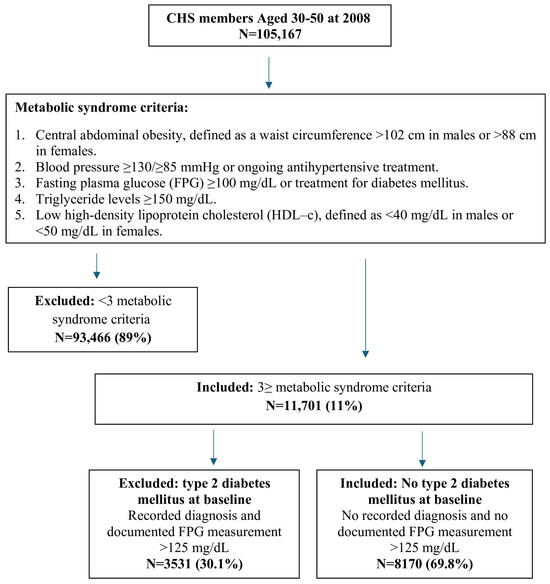
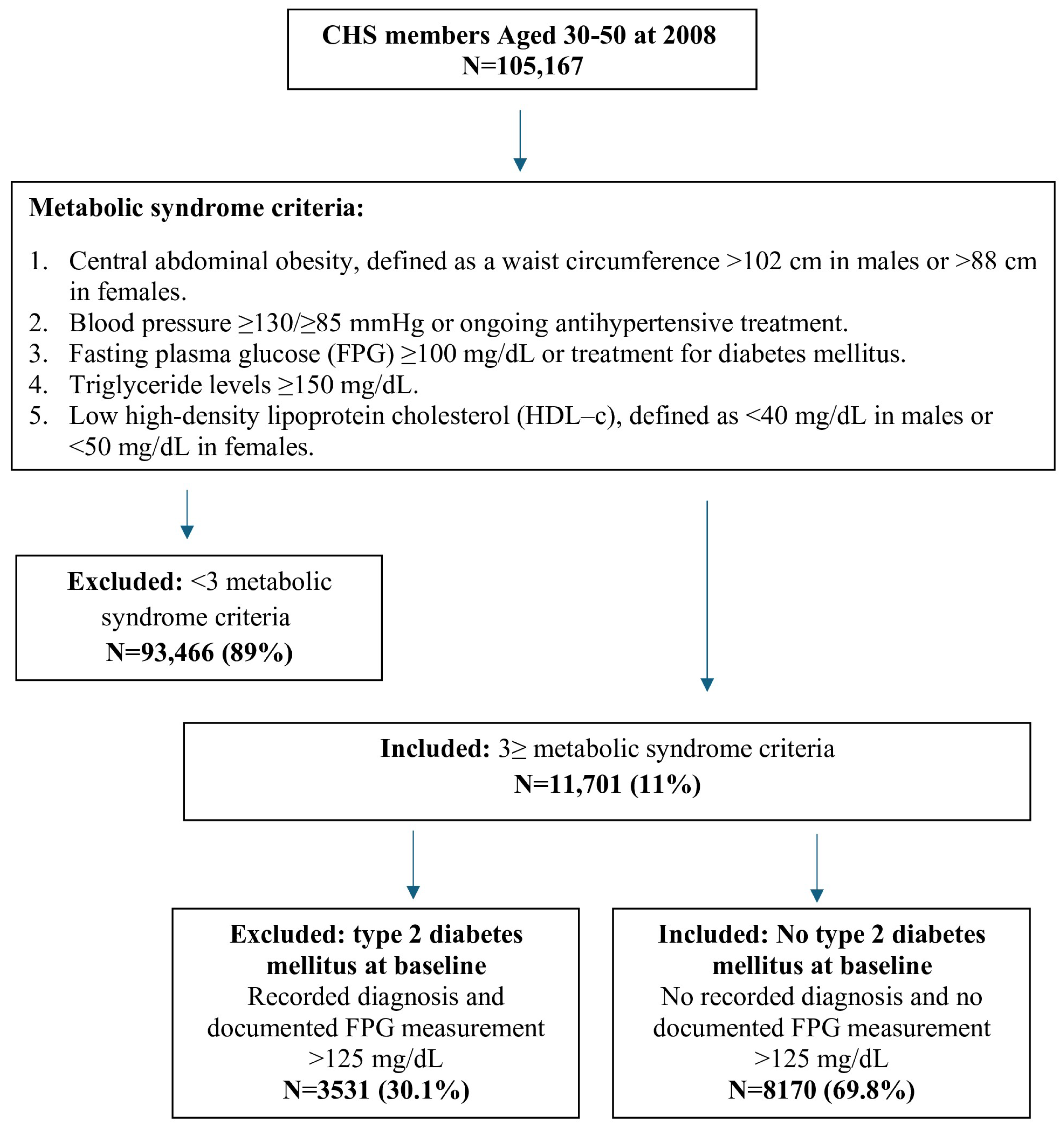
The dataset provided for analysis included only individuals who remained alive and continuously enrolled in Clalit Health Services throughout the study period. The process of participant selection, including inclusion and exclusion criteria, is illustrated in Figure 1.
Figure 1.
Study flow chart.
2.4. Data Collection
Longitudinal data were extracted from CHS EMRs for the years 2008 to 2015. Variables included demographic characteristics, plasma lipid levels (triglycerides, HDL-c, and low-density lipoprotein cholesterol [LDL-c]), BMI, glycated hemoglobin (HbA1c), smoking status, frequency of primary care physician (PCP) visits (≥3 min), referrals to a dietitian, and consultations with diabetes and cardiology specialists.
Laboratory test results were standardized and automatically uploaded into the EMR, with LDL-c levels measured directly. BMI was automatically calculated based on weight and height measurements obtained in clinical settings by physicians or nurses. The study outcomes included changes in MetS indices and HbA1c over time and incidence of new-onset T2DM.
2.5. Ethical Considerations
This study was approved by the CHS Institutional Ethics Committee (approval number 0227-15-COM1) and was exempt from requiring informed consent. Patients or the public were not involved in the design, conduct, reporting, or dissemination of this research.
2.6. Data Analysis
Participants were categorized into three groups based on the number of MetS criteria met: mild (3/5 criteria), moderate (4/5 criteria), and severe (5/5 criteria) MetS. This classification has been previously applied in prior epidemiological studies as a simple and reproducible framework to examine the dose–response relationship between the number of MetS components and cardiometabolic outcomes [8,9,10].
2.7. Outcome Measures
1. Changes in Metabolic Indices: A comparative analysis was conducted to evaluate changes in metabolic parameters between 2008 and 2015. The first recorded measurement in 2008 was compared to the last recorded value in 2015. It is important to note that the initial 2008 measurement was not necessarily the highest recorded value that year or the one that met inclusion criteria.
2. New-Onset T2DM: Additional analyses were performed to examine the incidence of newly diagnosed T2DM over the study period. Incident T2DM was defined as a physician-recorded diagnosis of type 2 diabetes in the electronic medical records (EMRs) among individuals without diabetes at baseline. This definition was selected to ensure high diagnostic specificity and to minimize potential misclassification related to transient laboratory findings.
2.8. Statistical Methods
Continuous variables were reported as mean ± standard deviation (SD) for normally distributed data and as median with interquartile range (IQR) for non-normally distributed data. Normality was assessed using the Shapiro–Wilk test. Categorical variables were presented as counts and percentages.
Comparisons of normally distributed continuous variables were conducted using paired t-tests, while non-normally distributed variables were analyzed using the Wilcoxon Signed-Rank Test. Categorical variables were compared using the chi-square test.
Missing values were assessed using descriptive statistics. The proportion of missing data was minimal (<2% across all variables). Analyses were conducted using listwise deletion, such that participants with missing values for a given variable were excluded from analyses involving that variable.
Time-to-diagnosis of type 2 diabetes mellitus (T2DM) was analyzed using Cox proportional hazards regression models, with results expressed as hazard ratios (HRs) and 95% confidence intervals (CIs). Covariates included individual components of the metabolic syndrome—blood pressure, fasting plasma glucose (FPG), high-density lipoprotein cholesterol (HDL-c), triglycerides, and body mass index (BMI)—as well as gender and age. The proportional hazards assumption was verified using Schoenfeld residuals and by visual inspection of log-minus-log survival plots. No significant violations of the proportionality assumption were detected. Kaplan–Meier survival curves were generated to illustrate cumulative incidence, and log-rank tests were used to compare survival distributions between groups. A p-value < 0.05 was considered statistically significant for all analyses.
3. Results
In 2008, the electronic medical records (EMRs) of 105,167 patients enrolled in Clalit Health Services (CHS) in the Southern District of Israel, aged 30–50 years, were reviewed. Among them, 11,701 patients (11%) met at least three criteria for metabolic syndrome (MetS), and 8170 of these patients did not have T2DM at baseline, forming the study cohort. The prevalence of MetS was found to be 34.7% among individuals aged 30–39 years and 65.3% among those aged 40–50 years. The mean age at study entry was 41.9 ± 6.2 years, with 53.5% of the cohort being female (Table 1).
Table 1.
Metabolic syndrome criteria of the study population in 2008.
Men had significantly higher levels of triglycerides (224.98 ± 110.63 vs. 181.59 ± 87.58 mg/dL), fasting plasma glucose (92.68 ± 15.19 vs. 91.82 ± 14.47 mg/dL), systolic blood pressure (129.42 ± 15.77 vs. 125.92 ± 16.58 mmHg), and diastolic blood pressure (80.96 ± 21.18 vs. 78.36 ± 13.95 mmHg), while women had higher BMI (33.24 ± 6.07 vs. 30.92 ± 5.21 kg/m2) and HDL cholesterol (45.03 ± 10.04 vs. 41.49 ± 9.78 mg/dL) (Table 2). Among the patients who met the diagnostic criteria for MetS, only 128 (1.6%) had a MetS diagnosis in their medical records.
Table 2.
Change in metabolic syndrome criteria from 2008 to 2015 in the total study cohort.
3.1. Changes in MetS Indices over Eight Years
Changes in MetS indices over the eight-year follow-up period (2008–2015) are presented in Table 2 (with changes by gender and MetS severity shown in Table A1). Fasting plasma glucose increased significantly (median +13 mg/dL, IQR: 0–26; p < 0.001), progressing from normal to prediabetic ranges in the mild and moderate MetS groups, and from prediabetic to diabetic levels in the severe group. Each patient underwent a median of 10 tests (IQR: 6–15) during follow-up. BMI increased modestly in the low-risk group (+0.33 kg/m2 IQR: −9.59–1.95, p < 0.001), remained stable in the moderate-risk group, and decreased significantly in the high-risk group (−0.38 kg/m2, IQR: −3.08–1.28, p < 0.001). Significant improvements were also observed in blood pressure, triglyceride levels, and HDL cholesterol, while HbA1c levels remained stable with no statistically significant changes. Sex-stratified analyses further showed that women experienced a modest increase in BMI, whereas men demonstrated greater declines in triglyceride and LDL cholesterol levels. In addition, men had higher baseline fasting glucose and blood pressure, while women consistently exhibited higher HDL-c levels throughout the follow-up. These observations underscore distinct metabolic patterns between sexes during the study period. Additional metabolic parameters, including sex-stratified data, are presented in Table A1.
3.2. Healthcare Utilization
During the eight-year follow-up, patients had a median of 96 general practitioner (GP) visits (IQR 59–144). Women visited more frequently than men (median 111, IQR 73–162 compared with 80, IQR 47–123; p < 0.001). The frequency of visits also increased with MetS severity: 92 (IQR 57–139) in the low-risk group, 104 (IQR 63–156) in the moderate-risk group, and 104 (IQR 63–156) in the high-risk group (p < 0.001) (Table A2). Only 14.3% of patients were referred for dietitian consultations, with referrals more common among women than men (16.5% vs. 11.9%, p < 0.0001) and among patients with severe MetS compared to those with moderate or mild MetS (19% vs. 17.2% and 13%, p < 0.0001). A total of 4.2% of patients consulted a diabetes specialist, with no significant gender difference. However, the proportion of patients consulting a diabetes specialist increased with MetS severity (3.4%, 5.6%, and 8.8% for mild, moderate, and severe MetS, respectively, p < 0.001). These measures were included to describe healthcare utilization patterns and were not analyzed as direct predictors of diabetes outcomes.
3.3. Incidence of New-Onset T2DM
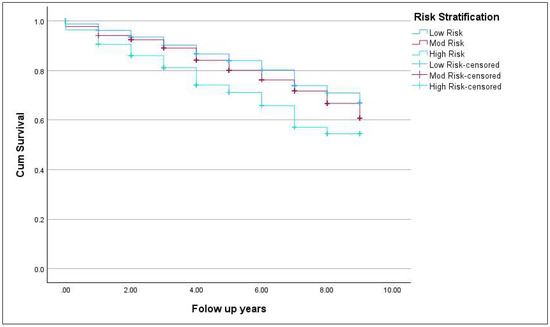
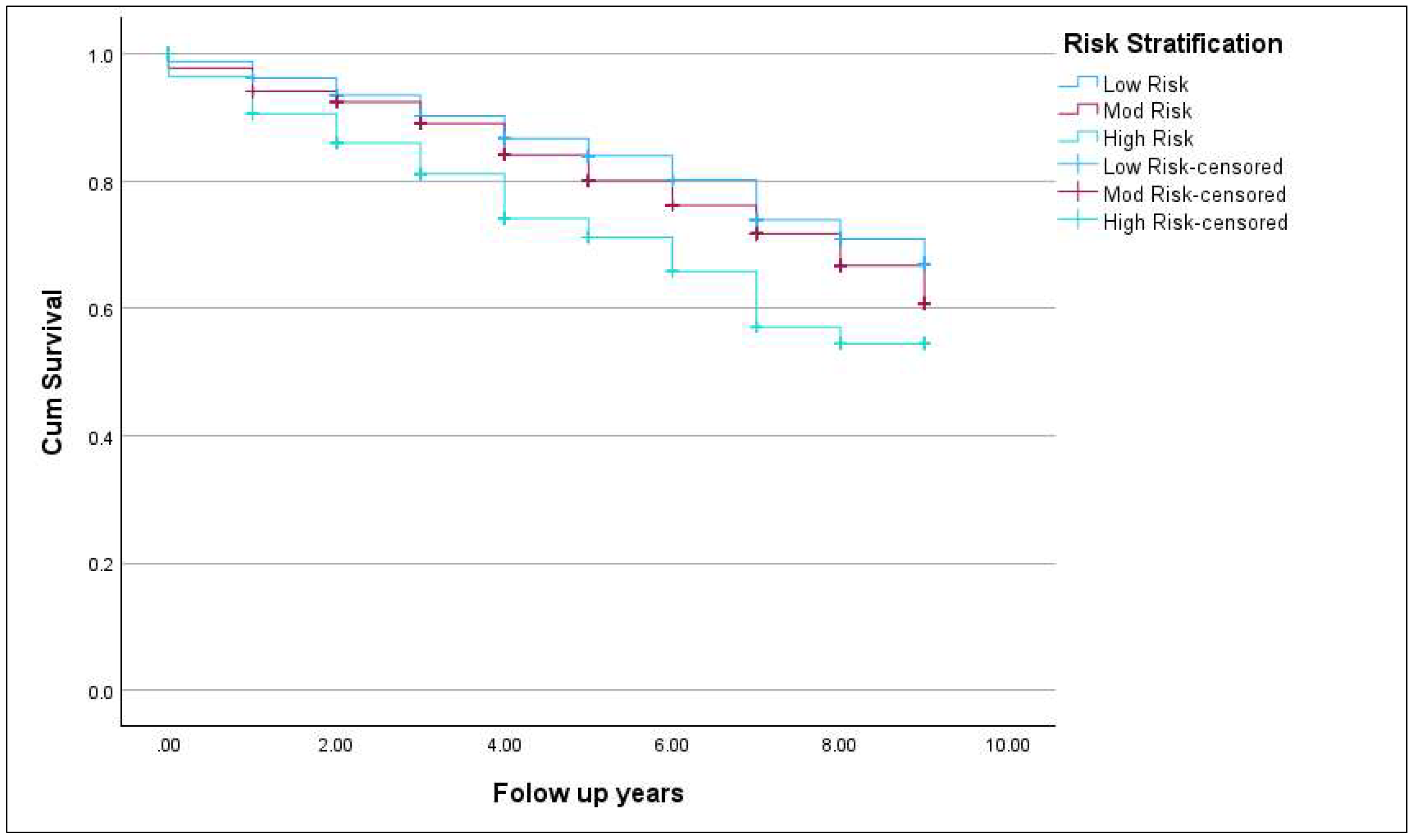
A total of 2093 patients (26%) developed new-onset T2DM during the study period (Table 3). Among patients with severe MetS at baseline, 49% developed T2DM by the end of the study, compared to 21% and 34% among patients with mild and moderate MetS, respectively. The time-to-T2DM diagnosis is presented in Figure 2. Kaplan–Meier survival analysis revealed significant differences in the cumulative incidence of T2DM across risk strata (log-rank χ2 = 16.64, df = 2, p < 0.001). Mean diabetes-free survival time was longest in the low-risk group (7.74 years, 95% CI 7.59–7.89) and shortest in the high-risk group (6.77 years, 95% CI 6.24–7.29), with the moderate-risk group showing intermediate survival (7.52 years, 95% CI 7.30–7.74).
Table 3.
Incidence of Type 2 Diabetes Mellitus among the study population.
Figure 2.
Kaplan–Meier curves for cumulative incidence of type 2 diabetes mellitus (T2DM) by metabolic syndrome (MetS) severity; Abbreviations: MetS, metabolic syndrome; T2DM, type 2 diabetes mellitus.
3.4. Risk Factors for New-Onset T2DM
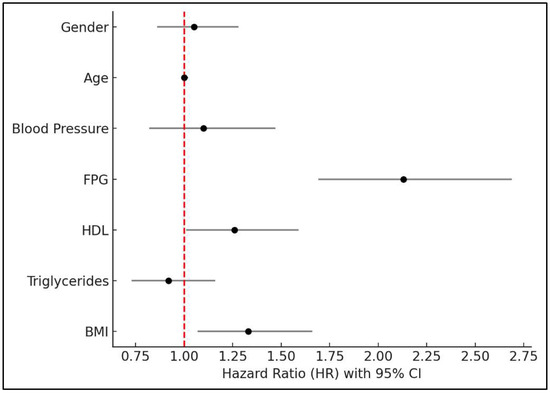
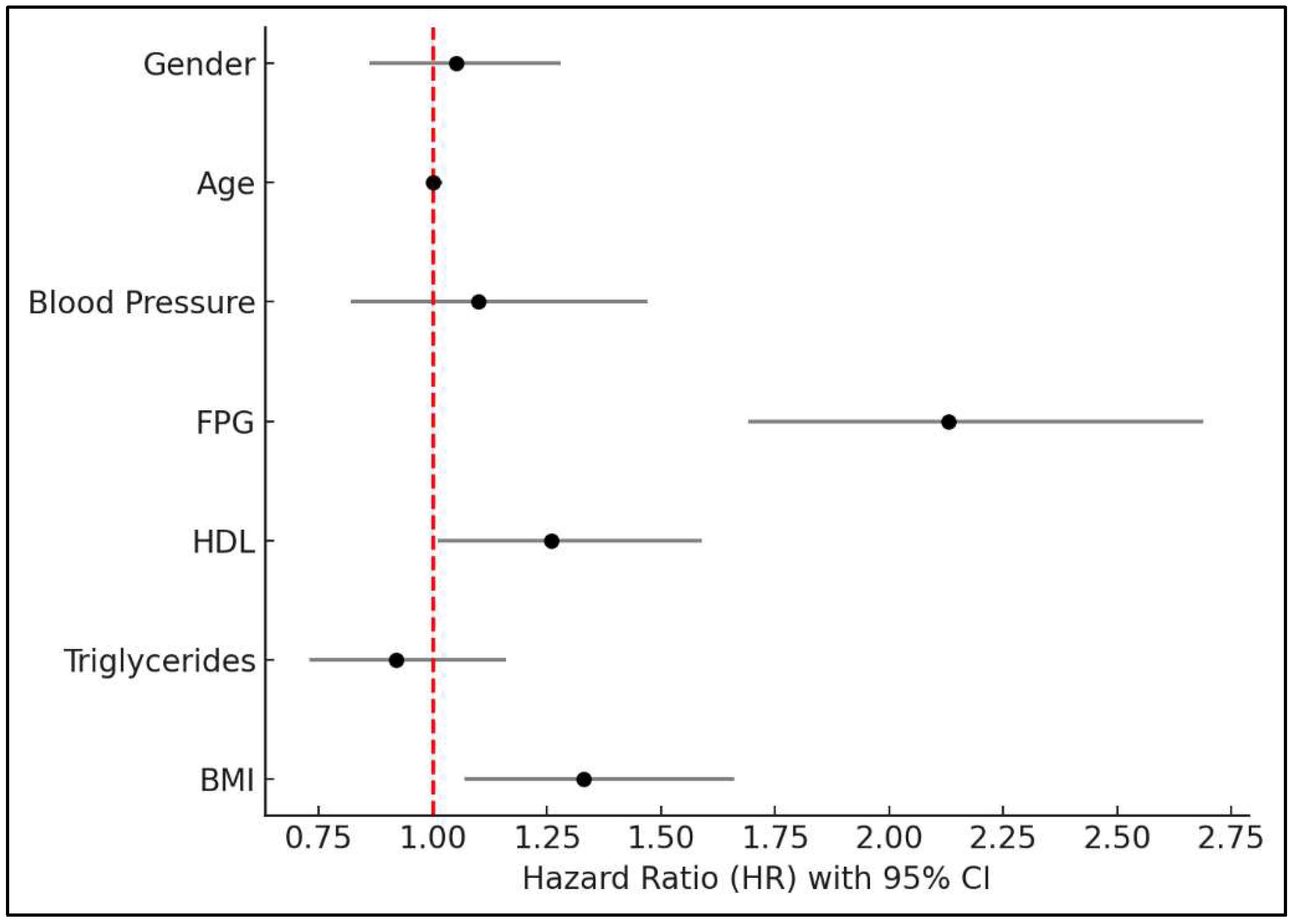
In the multivariate Cox regression analysis (Figure 3), higher BMI (HR = 1.33, 95% CI 1.07–1.66, p = 0.010), lower HDL (HR = 1.26, 95% CI 1.01–1.59, p = 0.045), and elevated fasting plasma glucose (HR = 2.13, 95% CI 1.69–2.69, p < 0.001) were independently associated with an increased risk of developing T2DM. Triglycerides, blood pressure, age, and gender were not significantly associated with incident T2DM.
Figure 3.
Forest plot of hazard ratios (HRs) for new-onset T2DM according to MetS components gender and age. Abbreviations: HR, Hazard ratio; CI, confidence interval 95%; BMI, body mass index; FPG, Fasting Plasma Glucose; HDL, high-density lipoprotein cholesterol; p-values < 0.05 were considered statistically significant.
4. Discussion
Our findings confirm that MetS is highly prevalent among young and middle-aged adults in Southern Israel, yet its documentation in EMRs was exceedingly rare (1.6%). This gap likely reflects under-coding and limited clinical attention to MetS as a unified diagnosis, suggesting potential gaps in preventive identification and management. Strengthening physician awareness, incorporating automated EMR prompts, and integrating MetS indicators into routine dashboards may improve recognition and follow-up at the primary care level. Over the eight-year follow-up period, fasting plasma glucose levels increased significantly in individuals with MetS, whereas other metabolic indices exhibited modest improvements, such as a decline in LDL cholesterol likely reflecting statin use. The large cohort size and repeated measurements likely explain why small effect sizes nonetheless yielded highly significant p-values, underscoring the need to interpret clinical rather than purely statistical significance. These changes may represent treatment effects, regression to the mean, or measurement variability, and their overall clinical significance appears limited.
A key finding of this study is the substantial progression from MetS to T2DM, with over a quarter (26%) of the cohort developing diabetes, and the highest incidence observed among those classified as severe MetS at baseline. These results highlight the persistence of high diabetes incidence despite ongoing medical care, emphasizing the need to strengthen preventive approaches. Kaplan–Meier analysis demonstrated distinct trajectories of diabetes onset by MetS severity, reinforcing the role of MetS as a progressive condition with significant long-term implications.
Moreover, our study provides insights into the differential contributions of MetS components to diabetes risk. FPG and BMI emerged as the most influential predictors of new-onset T2DM, suggesting that a weighted scoring system may improve risk stratification [22].
HbA1c levels remained stable over the follow-up period, with no statistically significant change. This apparent stability, despite rising fasting plasma glucose levels, may reflect selective testing, sample size limitations, or differences in the temporal sensitivity and measurement frequency of the two glycemic markers. Future research should therefore explore modified MetS scoring models incorporating differential weighting of risk factors. Despite frequent primary care encounters, referrals to dietitians were rare, indicating possible underutilization of early lifestyle interventions. This finding likely reflects both patient- and system-level barriers, including limited access to allied health services and competing clinical demands. Embedding structured nutritional counseling within chronic care programs and incentivizing preventive referrals may help promote earlier intervention in routine practice. Pharmacological interventions, such as GLP-1 receptor agonists, may have a role in selected high-risk patients [23,24,25], but these should remain adjuncts to lifestyle modification rather than the main strategy for MetS management.
A public health approach is therefore essential to address the growing burden of MetS, with greater attention to upstream determinants such as socioeconomic disparities, food environments, and opportunities for physical activity. MetS disproportionately affects disadvantaged populations, particularly in Southern Israel, where high rates of obesity and diabetes have been documented. Sex-specific patterns further emphasize the need for tailored approaches: men exhibited higher fasting glucose, triglycerides, and blood pressure, whereas women had higher BMI and HDL cholesterol. During follow-up, women showed a modest increase in BMI, while men experienced greater declines in triglycerides and LDL cholesterol. These sex-specific patterns likely reflect differences in adiposity distribution, hormonal milieu, and regional cultural or behavioral factors, such as dietary habits and healthcare-seeking patterns. Addressing these differences through sex-responsive prevention and culturally adapted lifestyle programs could enhance the effectiveness of interventions in Southern Israel. While this study focused on the Southern Israeli population, its findings are consistent with international evidence showing rising MetS prevalence and suboptimal documentation in primary care settings. Broader comparisons across national cohorts may further clarify the generalizability of these trends. Primary prevention and health promotion strategies including education, early identification of at-risk individuals, dietary interventions, and community-based programs remain key priorities for reducing the prevalence and the long-term impact of MetS.
4.1. Strengths and Limitations
The primary strengths of this study include its large cohort (n = 8170), the use of comprehensive, longitudinal EMR data over an extended eight-year follow-up period, and the availability of detailed metabolic measurements. This robust dataset allowed for an in-depth analysis of MetS progression, healthcare utilization, and the impact of individual MetS components on diabetes risk.
The study was conducted using the database of the largest health maintenance organization (HMO) in Israel, specifically in the southern region—a population with higher rates of diabetes and obesity compared to the national average. Preventing the progression of diabetes in this population could potentially reduce cardiovascular morbidity and mortality.
However, several limitations should be acknowledged. First, restricting the cohort to adults aged 30–50 years improves internal validity but limits generalizability to older populations. Second, conducting the study in Southern Israel, with its unique demographic and cultural characteristics, may reduce applicability to other populations and healthcare systems. Third, reliance on computerized EMR data introduces potential misclassification due to incomplete or inconsistent data entry, and BMI ≥ 30 was used as a surrogate for waist circumference. While this approach was necessary given the lack of WC data, it may not accurately capture central adiposity and could lead to the misclassification of metabolic risk. Fourth, behavioral and sociodemographic factors—such as diet, physical activity, smoking intensity, socioeconomic status, and ethnicity—were unavailable, leaving possible residual confounding. Fifth, treatment-related data were incomplete: patients receiving antihypertensive or antihyperglycemic medications were classified as meeting the respective criteria, but information on other pharmacological treatments was lacking, limiting the ability to adjust for treatment effects. Sixth, referral data for dietary consultations were available only from 2010 onward, limiting assessment of earlier interventions. Seventh, individuals without continuous follow-up or who died before baseline were excluded rather than right-censored, which may have introduced selection bias and influenced incidence estimates. Eighth, changes in metabolic indices were assessed only between the first and last recorded measurements. The absence of intermediate values may not fully reflect longitudinal dynamics. Finally, the unusually high number of GP visits likely reflects the partial inclusion of administrative encounters. Restricting the analysis to visits lasting at least three minutes helped to mitigate this issue; however, some longer non-clinical encounters may still have been included. A discrepancy was also noted between initial blood pressure measurements and subsequent averages, likely reflecting a single abnormal value at baseline; however, other metabolic indices did not demonstrate similar inconsistencies, lending credibility to the overall findings.
4.2. Conclusions
This large retrospective cohort study shows that MetS represents an early stage of disease progression, with metabolic abnormalities often preceding overt T2DM by several years. Over eight years of follow-up, fasting plasma glucose levels worsened despite modest improvements in other metabolic indices, suggesting limited effectiveness of current primary care approaches in mitigating glycemic deterioration. Sex-specific patterns—higher fasting glucose and blood pressure in men, and higher BMI and HDL cholesterol in women—indicate that prevention strategies should be tailored by sex and context. Despite frequent healthcare encounters, MetS was rarely documented, and referrals for lifestyle counseling were infrequent, pointing to possible missed opportunities for earlier preventive action. Strengthening physician awareness, integrating EMR-based prompts, and embedding team-based nutritional and lifestyle programs may help address these gaps. Overall, these findings underscore the importance of systematic identification, documentation, and proactive management of MetS in everyday clinical practice.
Author Contributions
Conceptualization, T.T. and R.S.; Data curation, T.T. and T.F.; Formal analysis, T.T., Y.P., T.F. and R.S.; Investigation, T.T., R.K. and R.S.; Methodology, T.T., Y.P., T.F. and R.S.; Resources, T.T.; Software, T.F.; Supervision, T.F.; Validation, T.T. and T.F.; Visualization, T.F.; Writing—original draft, T.T. and T.F.; Writing—review and editing, T.T., Y.P., T.F., R.K. and R.S. All authors have read and agreed to the published version of the manuscript.
Funding
This research received no external funding.
Institutional Review Board Statement
The study was conducted in accordance with the Declaration of Helsinki and was approved by the Clalit Health Services Institutional Ethics Committee (Approval #0227-15-COM1 on 8 September 2016). It was exempt from requiring informed consent.
Informed Consent Statement
Patient consent was waived due to the study being a retrospective study using computerized records.
Data Availability Statement
The original contributions presented in this study are included in the article. Further inquiries can be directed to the corresponding author.
Acknowledgments
Simon Vulfsons, Director of the Institute for Pain, Rambam Medical Center, Haifa, Israel. Gil Marcus, Department of Cardiology, Assaf Harofeh Medical Center, Zerifin, Israel.
Conflicts of Interest
The authors declare no conflicts of interest.
Abbreviations
| MetS | Metabolic Syndrome |
| FPG | Fasting plasma glucose |
| T2DM | Type 2 Diabetes Mellitus |
| CHS | Clalit Health Services |
| IFG | Impaired fasting glucose |
| RR | Relative risk |
| cMetS-S | Continuous MetS severity scores |
| ATP | Adult Treatment Panel |
| HDL-c | High-density lipoprotein cholesterol |
| WHO | World Health Organization |
| BMI | Body mass index |
| EMR | Electronic medical records |
| LDL-c | Low-density lipoprotein cholesterol |
| HbA1c | Glycated hemoglobin |
| PCP | Primary care physician |
| SD | Standard deviation |
| IQR | Interquartile range |
| ANOVA | Analysis of variance |
| GP | General practitioner |
| GLP-1 | Glucagon-like Peptide-1 |
| HMO | Health maintenance organization |
Appendix A
Table A1.
Changes in metabolic indices, from 2008 to 2015, stratified by gender and metabolic syndrome (MetS) severity.
Table A2.
Healthcare utilization by gender and metabolic syndrome (MetS) severity.
References
- Lindsay, R.S.; Howard, B.V. Cardiovascular risk associated with the metabolic syndrome. Curr. Diabetes Rep. 2004, 4, 63–68. [Google Scholar] [CrossRef] [Scilit] [PubMed]
- Ford, E.S.; Giles, W.H.; Dietz, W.H. Prevalence of the metabolic syndrome among US adults: Findings from the third National Health and Nutrition Examination Survey. JAMA 2002, 287, 356–359. [Google Scholar] [CrossRef] [Scilit] [PubMed]
- Athyros, V.G.; Ganotakis, E.S.; Elisaf, M.; Mikhailidis, D.P. The prevalence of the metabolic syndrome using the National Cholesterol Educational Program and International Diabetes Federation definitions. Curr. Med. Res. Opin. 2005, 21, 1157–1159. [Google Scholar] [CrossRef] [Scilit] [PubMed]
- Ford, E.S.; Giles, W.H.; Mokdad, A.H. Increasing prevalence of the metabolic syndrome among U.S. Adults. Diabetes Care 2004, 27, 2444–2449. [Google Scholar] [CrossRef] [Scilit] [PubMed]
- Aguilar, M.; Bhuket, T.; Torres, S.; Liu, B.; Wong, R.J. Prevalence of the metabolic syndrome in the United States, 2003–2012. JAMA 2015, 313, 1973–1974. [Google Scholar] [CrossRef] [Scilit] [PubMed]
- Ford, E.S.; Li, C.; Sattar, N. Metabolic syndrome and incident diabetes: Current state of the evidence. Diabetes Care 2008, 31, 1898–1904. [Google Scholar] [CrossRef] [Scilit] [PubMed] [PubMed Central]
- Amouzegar, A.; Honarvar, M.; Masoumi, S.; Khalili, D.; Azizi, F.; Mehran, L. Trajectory patterns of metabolic syndrome severity score and risk of type 2 diabetes. J. Transl. Med. 2023, 21, 750. [Google Scholar] [CrossRef] [Scilit] [PubMed] [PubMed Central]
- Hadaegh, F.; Abdi, A.; Kohansal, K.; Hadaegh, P.; Azizi, F.; Tohidi, M. Gender differences in the impact of 3-year status changes of metabolic syndrome and its components on incident type 2 diabetes mellitus: A decade of follow-up in the Tehran Lipid and Glucose Study. Front. Endocrinol. 2023, 14, 1164771. [Google Scholar] [CrossRef] [Scilit] [PubMed] [PubMed Central]
- Amouzegar, A.; Honarvar, M.; Masoumi, S.; Agahi, S.; Azizi, F.; Mehran, L. Independent association of metabolic syndrome severity score and risk of diabetes: Findings from 18 years of follow-up in the Tehran Lipid and Glucose Study. BMJ Open 2024, 14, e078701. [Google Scholar] [CrossRef] [Scilit] [PubMed] [PubMed Central]
- Aidarbekova, D.; Sadykova, K.; Saruarov, Y.; Nurdinov, N.; Zhunissova, M.; Babayeva, K.; Nemetova, D.; Turmanbayeva, A.; Bekenova, A.; Nuskabayeva, G.; et al. Longitudinal Assessment of Metabolic Syndrome. J. Clin. Med. 2025, 14, 747. [Google Scholar] [CrossRef] [Scilit] [PubMed] [PubMed Central]
- National Cholesterol Education Program (NCEP) Expert Panel on Detection, Evaluation, and Treatment of High Blood Cholesterol in Adults (Adult Treatment Panel III). Third Report of the National Cholesterol Education Program (NCEP) Expert Panel on Detection, Evaluation, and Treatment of High Blood Cholesterol in Adults (Adult Treatment Panel III) final report. Circulation 2002, 106, 3143–3421. [Google Scholar] [CrossRef] [Scilit] [PubMed]
- Wilson, P.W.; D’Agostino, R.B.; Parise, H.; Sullivan, L.; Meigs, J.B. Metabolic syndrome as a precursor of cardiovascular disease and type 2 diabetes mellitus. Circulation 2005, 112, 3066–3072. [Google Scholar] [CrossRef] [Scilit] [PubMed]
- Wannamethee, S.G.; Shaper, A.G.; Lennon, L.; Morris, R.W. Metabolic syndrome vs Framingham Risk Score for prediction of coronary heart disease, stroke, and type 2 diabetes mellitus. Arch. Intern. Med. 2005, 165, 2644–2650. [Google Scholar] [CrossRef] [Scilit] [PubMed]
- Rosenzweig, J.L.; Ferrannini, E.; Grundy, S.M.; Haffner, S.M.; Heine, R.J.; Horton, E.S.; Kawamori, R.; Endocrine Society. Primary prevention of cardiovascular disease and type 2 diabetes in patients at metabolic risk: An endocrine society clinical practice guideline. J. Clin. Endocrinol. Metab. 2008, 93, 3671–3689, Erratum in J. Clin. Endocrinol. Metab. 2021, 106, e2847. https://doi.org/10.1210/clinem/dgab310. [Google Scholar] [CrossRef] [Scilit] [PubMed]
- Grundy, S.M.; Hansen, B.; Smith, S.C., Jr.; Cleeman, J.I.; Kahn, R.A.; American Heart Association; National Heart, Lung, and Blood Institute; American Diabetes Association. Clinical management of metabolic syndrome: Report of the American Heart Association/National Heart, Lung, and Blood Institute/American Diabetes Association conference on scientific issues related to management. Circulation 2004, 109, 551–556. [Google Scholar] [CrossRef] [Scilit] [PubMed]
- Magkos, F.; Yannakoulia, M.; Chan, J.L.; Mantzoros, C.S. Management of the metabolic syndrome and type 2 diabetes through lifestyle modification. Annu. Rev. Nutr. 2009, 29, 223–256. [Google Scholar] [CrossRef] [Scilit] [PubMed] [PubMed Central]
- Guzmán, A.; Navarro, E.; Obando, L.; Pacheco, J.; Quirós, K.; Vásquez, L.; Castro, M.; Ramírez, F. Effectiveness of interventions for the reversal of a metabolic s yndrome diagnosis: An update of a meta-analysis of mixed treatment comparison studies. Biomedica 2019, 39, 647–662, (In English, Spanish). [Google Scholar] [CrossRef] [Scilit] [PubMed] [PubMed Central]
- Cohen, A.D.; Gefen, K.; Ozer, A.; Bagola, N.; Milrad, V.; Cohen, L.; Abu-Hammad, T.; Abu-Rabia, Y.; Hazanov, I.; Vardy, D.A. Diabetes control in the Bedouin population in southern Israel. Med. Sci. Monit. 2005, 11, CR376–CR380. [Google Scholar] [PubMed]
- Treister-Goltzman, Y.; Peleg, R. Adolescent Obesity and Type Two Diabetes in Young Adults in the Minority Muslim Bedouin Population in Southern Israel. J. Community Health 2023, 48, 420–429. [Google Scholar] [CrossRef] [Scilit] [PubMed]
- Amkraut, J.; Zaina, A.; Abu-Rabia, Y. Diabetes in the Bedouin population in the Israeli Negev—An update 2017. Diabetes Res. Clin. Pract. 2018, 140, 55–60. [Google Scholar] [CrossRef] [Scilit] [PubMed]
- Gurka, M.J.; Filipp, S.L.; Musani, S.K.; Sims, M.; DeBoer, M.D. Use of BMI as the marker of adiposity in a metabolic syndrome severity score: Derivation and validation in predicting long-term disease outcomes. Metabolism 2018, 83, 68–74. [Google Scholar] [CrossRef] [Scilit] [PubMed] [PubMed Central]
- Sattar, N.; McConnachie, A.; Shaper, A.G.; Blauw, G.J.; Buckley, B.M.; de Craen, A.J.; Ford, I.; Forouhi, N.G.; Freeman, D.J.; Jukema, J.W.; et al. Can metabolic syndrome usefully predict cardiovascular disease and diabetes? Outcome data from two prospective studies. Lancet 2008, 371, 1927–1935. [Google Scholar] [CrossRef] [Scilit] [PubMed]
- Nauck, M.A.; Meier, J.J. The incretin effect in healthy individuals and those with type 2 diabetes: Physiology, pathophysiology, and response to therapeutic interventions. Lancet Diabetes Endocrinol. 2016, 4, 525–536. [Google Scholar] [CrossRef] [Scilit] [PubMed]
- Salamah, H.M.; Marey, A.; Abugdida, M.; Abualkhair, K.A.; Elshenawy, S.; Elhassan, W.A.F.; Naguib, M.M.; Malnev, D.; Durrani, J.; Bailey, R.; et al. Efficacy and safety of glucagon-like peptide-1 receptor agonists on prediabetes: A systematic review and meta-analysis of randomized controlled trials. Diabetol. Metab. Syndr. 2024, 16, 129. [Google Scholar] [CrossRef] [Scilit] [PubMed] [PubMed Central]
- Yanto, T.A.; Vatvani, A.D.; Hariyanto, T.I.; Suastika, K. Glucagon-like peptide-1 receptor agonist and new-onset diabetes in overweight/obese individuals with prediabetes: A systematic review and meta-analysis of randomized trials. Diabetes Metab. Syndr. 2024, 18, 103069. [Google Scholar] [CrossRef] [Scilit] [PubMed]

Disclaimer/Publisher’s Note: The statements, opinions and data contained in all publications are solely those of the individual author(s) and contributor(s) and not of MDPI and/or the editor(s). MDPI and/or the editor(s) disclaim responsibility for any injury to people or property resulting from any ideas, methods, instructions or products referred to in the content. |
© 2025 by the authors. Licensee MDPI, Basel, Switzerland. This article is an open access article distributed under the terms and conditions of the Creative Commons Attribution (CC BY) license (https://creativecommons.org/licenses/by/4.0/).