
Article

Impact of Type 2 Diabetes Mellitus on Age at Death in the Hemodialysis Population: An Analysis of Data from the Korean National Health Insurance and Statistical Information Service, 2006 to 2018

1
Divison of Endocrinology, Department of Internal Medicine, National Health Insurance Service Ilsan Hospital, Goyang 10444, Republic of Korea
2
Research and Analysis Team, National Health Insurance Service Ilsan Hospital, Goyang 10444, Republic of Korea
3
Division of Nephrology, Department of Internal Medicine, National Health Insurance Service Ilsan Hospital, Goyang 10444, Republic of Korea
4
Division of Endocrinology and Metabolism, Department of Internal Medicine, Severance Hospital, Yonsei University College of Medicine, Seoul 03722, Republic of Korea
*
Author to whom correspondence should be addressed.
Ji Hong You and Kang Ju Son equally contributed to this study.
Diabetology 2025, 6(12), 145; https://doi.org/10.3390/diabetology6120145
Submission received: 31 July 2025 / Revised: 13 October 2025 / Accepted: 3 November 2025 / Published: 1 December 2025

Abstract

Background/Objectives: Diabetic nephropathy is the leading cause of end-stage kidney disease (ESKD) worldwide. ESKD individuals with type 2 diabetes are known to have poor prognosis of survival. We aimed to investigate whether the recent mortality trends of ESKD individuals treated with hemodialysis with or without type 2 diabetes have changed in South Korea. Methods: We used a cohort of 3,394,502 deceased people from the Korean National Health Insurance Service claims database from 2006 to 2018. We requested the National Statistical Information Service database to link the records about their cause of death. We collected a total of 79,792 deaths among individuals with ESKD receiving hemodialysis, including 31,907 with type 2 diabetes and 47,885 without type 2 diabetes. Results: The mean age at death significantly increased over the study period among individuals with ESKD receiving hemodialysis, both with and without type 2 diabetes (p < 0.001). However, the mean age at death was consistently lower in those with type 2 diabetes compared to those without diabetes in both men and women. Type 2 diabetes was significantly associated with younger age at death in individuals undergoing hemodialysis (β = −0.012, p < 0.0001). The age-standardized mortality rate remained higher in those with type 2 diabetes throughout the study period. Conclusions: This nationwide study revealed that Korean individuals with type 2 diabetes undergoing hemodialysis had a consistently lower age at death and higher age-standardized mortality than those without type 2 diabetes. Although the mean age at death increased in both groups, individuals undergoing hemodialysis with type 2 diabetes continued to show poorer survival outcomes. These findings highlight the need for targeted clinical approaches to improve survival in this high-risk population.

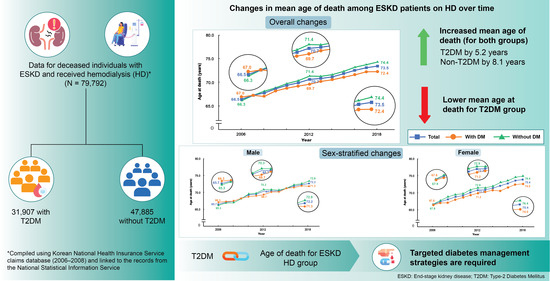
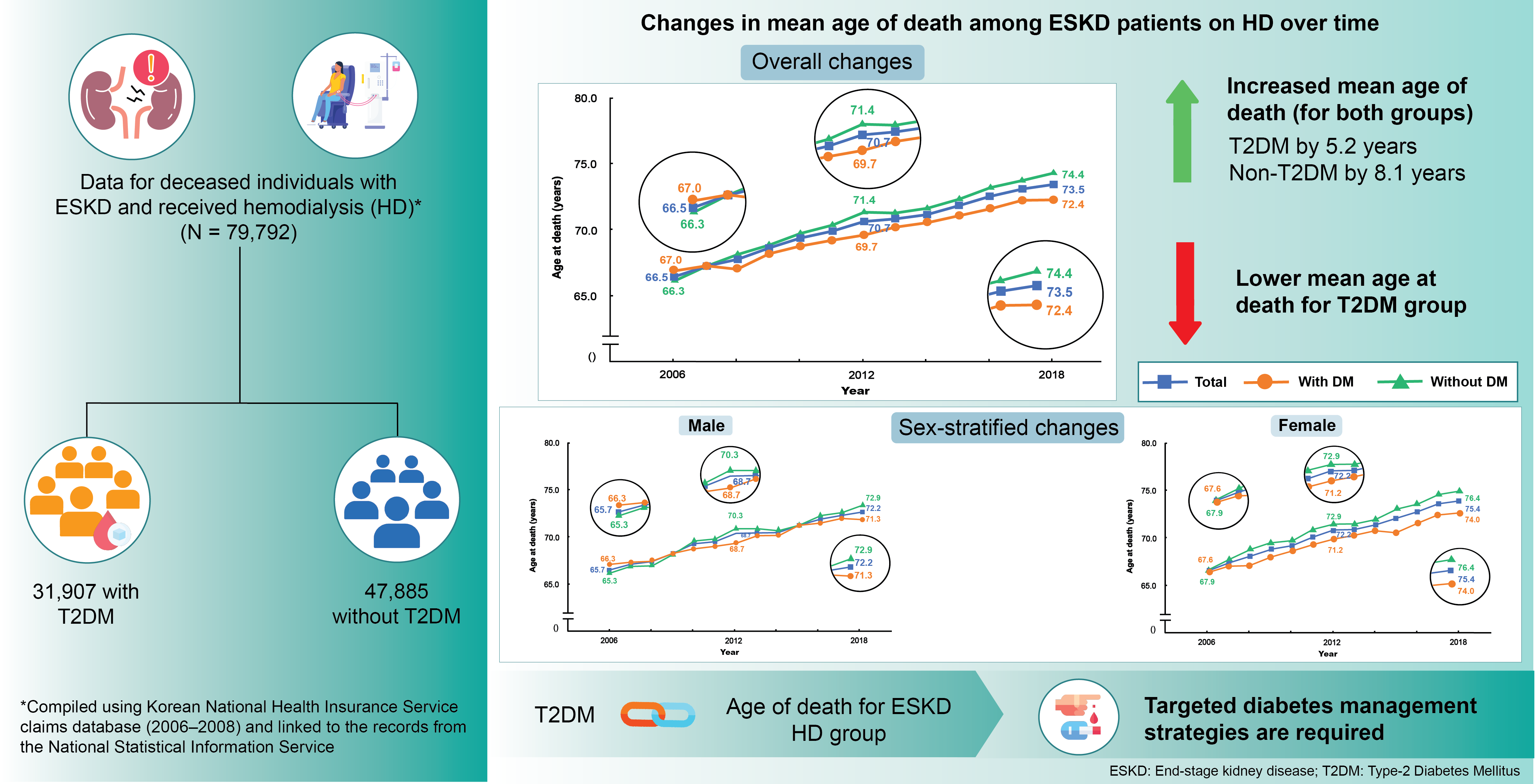
Graphical Abstract

1. Introduction

End-stage kidney disease (ESKD), the most advanced form of chronic kidney disease, is clinically diagnosed when the glomerular filtration rate falls below 15 mL/min/1.73 m2. In South Korea, the prevalence of ESKD increased steadily and was 157.1 per 100,000 in 2015 [1]. This level of kidney dysfunction usually necessitates renal replacement therapy such as dialysis and kidney transplantation. ESKD is most commonly caused by diabetes mellitus (DM), hypertension, and glomerular diseases. Among these, DM is the most common global cause of ESKD [2]. In South Korea, this also continues to be the leading cause of ESKD, accounting for nearly half of all cases [3].
Diabetic kidney disease (DKD), one of microvascular complication of DM, is the main cause of chronic kidney disease and ESKD. It is characterized by an increase in urinary albumin excretion, a decline in glomerular filtration rate, or both. This complication globally occurs in 20% to 40% of individuals with both type 1 and type 2 diabetes [4]. The prevalence of DKD was reported to be 25.4%, and the incidence of diabetes-related ESKD has shown a rising trend in South Korea [5].
Individuals with ESKD exhibit significantly higher mortality rates and reduced life expectancy compared to those without the condition [3,6]. Among individuals with ESKD, those with DM globally have lower survival rates than those without DM [7]. DKD is a significant risk factor of atherosclerotic cardiovascular diseases and elevates the risk for morbidity and mortality [8]. Although the impact of DM on mortality among individuals undergoing hemodialysis has been reported, there are few studies on differences in age at death between individuals with and without DM, especially in the context of type 2 diabetes.
Therefore, we investigated the trends in age at death and impacts of type 2 diabetes on age at death among individuals undergoing HD with type 2 diabetes compared to those without type 2 diabetes using data from the National Health Insurance database maintained by the National Health Insurance Service (NHIS), as well as mortality records and statistics from the National Statistical Information Service (NSIS).

2. Materials and Methods

2.1. Data Source

This nationwide cohort study used insurance claims data from the NHIS that is the single compulsory insurer in the public health insurance sector. The NHIS provides various insurance-related services and offers claims data after de-identification in South Korea [9,10]. The claims case data included sex, the date of birth, region of residence, and date of hospital visit. Deceased individuals of the Korean insured population were chosen from 1 January 2006 to 31 December 2018 in this study. We selected 3,394,502 deceased individuals in the claims data, and requested the NSIS to their age and cause of death. This study was reviewed and approved by the Institutional Review Board of the National Health Insurance Service Ilsan Hospital (NHIMC 2022-09-007). All individuals of this study provided written informed consent to participate in the NHIS.

2.2. Definition and Death Certificates

We utilized each person’s medical records for 2 years prior to their date of death. Individuals under 30 years of age who died from accidental or unintentional injuries were excluded in this study. We extracted all individuals undergoing hemodialysis from data of the NHIS between 2004 and 2018, as defined by the following criteria: the International Classification of Diseases, Tenth Revision, Clinical Modification (ICD-10-CM) code N08 and Benefit Extension Policy application codes with the V001. The Benefit Extension Policy was implemented to alleviate the financial burden of medical expenses for individuals with rare and intractable diseases that entail high healthcare costs, including cancer and ESKD requiring renal replacement therapy in South Korea. Type 2 diabetes and other comorbidities were defined as being present if the same criteria as we reported were met [9]. We used the ICD-10 code for type 2 diabetes (E11–E14) in the principal and additional diagnoses. Cancer was considered to have been diagnosed when individuals had ICD-10 code (C00–C97) and had been registered for the Exempted Calculation of Health Insurance with V codes in the NHIS. The control population was defined as individuals undergoing hemodialysis without a prior history of type 2 diabetes. To obtain the age and cause of death, we matched death records collected by the NSIS with disease-specific codes and then extracted the five causes of death: cancer (C00–C97), type 2 diabetes (E11–E14), cerebrovascular disease (I60–I69), cardiovascular disease (I20–I25), and pneumonia (C00–C97).

2.3. Statistical Analysis

Descriptive statistics were expressed as number and frequency (percentage). We used the chi-square test to analyze numerical and frequency data. Continuous variables were expressed as mean ± standard deviation, and categorical variables were expressed as numbers and percentages. Individuals undergoing hemodialysis were classified into groups with or without type 2 diabetes. Multivariable linear regression analysis was performed to confirm changes in trends, with the year as the explanatory variable and the age-standardized mortality rate as the dependent variable. A p < 0.05 of two-tailed test was considered to indicate statistical significance. All analyses were conducted using SAS version 9.4 (SAS Institute, Cary, NC, USA). We used real-world data, the total number of deaths in South Korea during the study period.

2.4. Availability of Data and Materials

Data can be accessed at National Health Insurance Data Sharing Service website (http://nhiss.nhis.or.kr/bd/ab/bdaba021eng.do; accessed on 1 January 2022) of the NHIS. The details to gain access to the NHIS date were described in our study [9].

3. Results

3.1. Study Population

This study flowchart is shown in Figure 1. Of the 3,394,502 deaths recorded by the NHIS in South Korea between 2006 and 2018, we linked the cause of death using data from the NSIS. We excluded 385,421 individuals whose deaths were due to accidents or unintentional injuries, and an additional 32,430 individuals who died before the age of 30. Among the 2,976,651 deceased individuals aged 30 years or older, a total of 93,487 were identified as having ESKD and had received renal replacement therapy, including hemodialysis, peritoneal dialysis, or kidney transplantation. The final study population included 79,792 individuals with ESKD undergoing hemodialysis. These individuals were stratified based on type 2 diabetes status, comprising 47,885 without type 2 diabetes and 31,907 with type 2 diabetes.
Table 1 presents the baseline characteristics of the study population. The mean age at death was 70.2 ± 10.5 years in individuals undergoing hemodialysis with type 2 diabetes and 71.1 ± 12.4 years in those without type 2 diabetes. The proportions of age group at death are shown in Table 1. The prevalence of hypertension was significantly higher among individuals undergoing hemodialysis with type 2 diabetes (93.3% vs. 74.5%, p < 0.0001). The mean duration from initiation of hemodialysis to death was substantially shorter in the those with type 2 diabetes (2.09 ± 3.1 vs. 3.74 ± 3.5 years, p < 0.0001). Age at hemodialysis initiation was 67.2 ± 11.1 years in those with type 2 diabetes and 67.4 ± 13.1 years in those without type 2 diabetes. Regarding cause of death, diabetes (37.4%) and malignancy (8.6%) were among those with type 2 diabetes.

3.2. Changes in the Mean Age of Death in the Study Population

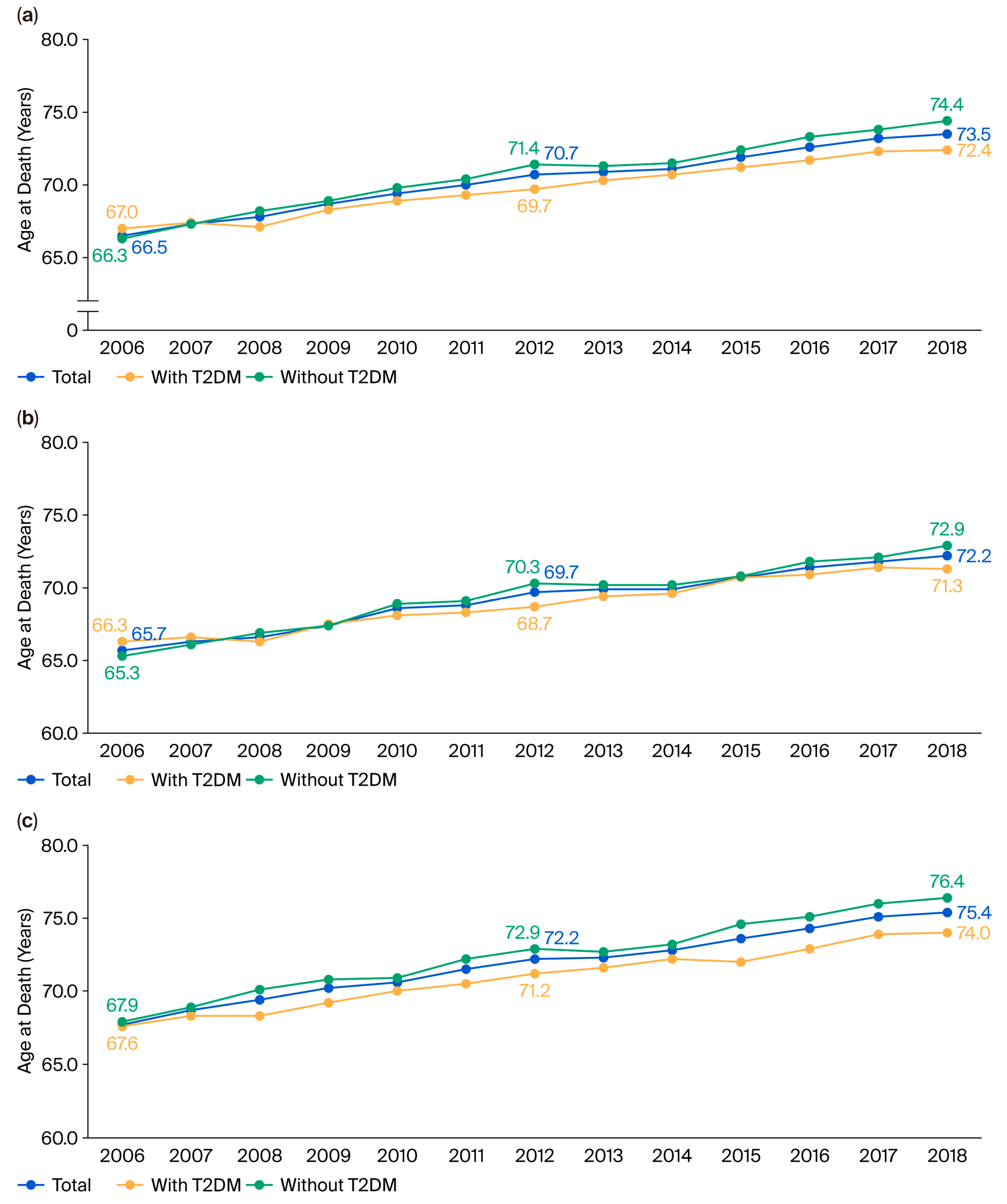
The graphs indicated changes in the mean age of death among the study population (Figure 2). The mean age of death significantly increased in both individuals undergoing hemodialysis with and without type 2 diabetes during study period (p < 0.001) (Figure 2a). Sex-stratified analysis revealed that this trend persisted in both male and female subgroups (Figure 2b,c). The mean age at death showed a lower trend in individuals undergoing hemodialysis with type 2 diabetes than without type 2 diabetes, and this pattern was consistent across both men and women.

3.3. Factors That Contributed to Age at Death in the Study Population

As shown in Table 2, type 2 diabetes (β = −0.012, p < 0.0001) was significantly associated with younger age at death in individuals undergoing hemodialysis. Female sex was modestly associated with older age at death (β = 0.007, p = 0.0275), whereas hypertension (β = −0.047, p < 0.0001) was associated with younger age at death. Both age at HD initiation (β = 0.998, p < 0.0001) and duration of HD treatment (β = 0.985, p < 0.0001) demonstrated strong positive associations with age at death.

3.4. Age-Standardized Mortality Rate in the Study Population

Table 3 presents the age-standardized mortality rates in individuals undergoing hemodialysis with and without type 2 diabetes from 2006 to 2018, stratified by cause of death. Age-standardized mortality rate in those with type 2 diabetes was higher than those without type 2 diabetes during the study period. The overall mortality rate showed a decreasing trend from 25.4 deaths per 100,000 population in 2006 to 19.5 deaths per 100,000 population in 2018, and this pattern was similar in both those with and without type 2 diabetes. Cancer ranked as the second leading cause of death in both those with and without type 2 diabetes. The proportion of cardiovascular and cerebrovascular disease showed no substantial change in either group during the study period. Age-standardized mortality rate due to pneumonia showed an increasing trend in both groups.

4. Discussion

This nationwide, insurance claims data-based study investigated the impact of type 2 diabetes on age at death in Korean individuals undergoing hemodialysis. We observed a significant increase in the mean age of death in the ESKD HD population with diabetes (by 5.2 years) and without diabetes (by 8.1 years) from 2006 to 2018. This trend was consistent in both men and women with ESKD-HD. However, the increase in age at death was smaller in individuals with diabetes than those without. Our findings indicate that, although the mean age at death significantly increased over time in those with and without type 2 diabetes, those with type 2 diabetes consistently exhibited a lower mean age at death. Type 2 diabetes was identified as a major contributing factor to the significantly lower age at death among individuals undergoing hemodialysis. Moreover, the age-standardized mortality rate remained consistently higher in those with type 2 diabetes than those without.
Type 2 diabetes represents one of the leading causes of end-stage kidney disease worldwide [11]. Diabetic kidney disease, a major microvascular complication of type 2 diabetes, is characterized by hyperglycemia-induced renal damage and may ultimately progress to ESKD. In the report of the United States Renal Data System, 45.9% ESKD patients accompanied with a primary diagnosis of DM at initiation of renal replacement treatment in 2004 [12]. According to data from Korean end-stage renal disease registry, diabetic nephropathy accounted for 48% of newly diagnosed individuals with ESKD in 2014, reflecting its dominant contribution to the disease burden [13]. The Korean nationwide study reported a rise in newly diagnosed diabetes, suggesting that both the number and disease burden of individuals undergoing hemodialysis with type 2 diabetes are likely to increase [14].
As the number of individuals with diabetes continues to rise, the number of patients with end-stage kidney disease (ESKD) undergoing hemodialysis (HD) due to diabetes is also expected to increase. In this study, the increase in age at death was smaller in patients with diabetes than in those without, and individuals who initiated HD at a younger age tended to have a lower age at death. In our analysis, the relationship between the age at dialysis initiation and the time to death showed a similar impact on overall mortality, consistent with previous findings by Bozorgmehri et al. [15], who reported that early initiation of HD was associated with higher mortality in patients with ESKD. As the onset age of diabetes has been decreasing [14], optimizing glycemic control is essential to prevent the progression of diabetic nephropathy. In this regard, our study on the age and causes of death among ESKD patients receiving HD is particularly noteworthy.
ESKD continues to be characterized by high mortality, with mortality notably increasing immediately after the initiation of hemodialysis [16,17]. It is well established that the leading causes of death among individuals with ESKD are kidney-related disease, diabetes-related disease, cardiovascular disease, malignancy, and pneumonia [1]. DM is the major cause of death in individuals with ESKD because it markedly increases the risk of cardiovascular calcification [18]. DM also was associated with an increased risk of early mortality in individuals with ESKD [19,20]. Accordingly, optimal management of DM is essential to reduce the incidence of ESKD attributable to DM.
The age-standardized mortality rate had a decreasing trend in individuals undergoing hemodialysis with type 2 diabetes in our study. The age-adjust mortality rates attributable to DM and ESKD showed a sustained decline over the period from 1999 to 2020 in the United States [21]. Such a trend may be attributable to the introduction of various antidiabetic agents applicable to individuals with ESKD. Several DPP-4 inhibitors can be administered to individuals with ESKD, and they have been available in Korea since the early 2010s. The degree of glycemic control has been reported to influence mortality in individuals undergoing hemodialysis [22], and various antidiabetic agents may contribute to improved glycemic management in this population.
Our study showed that the causes of death in the individuals undergoing hemodialysis had changed during the study period. Deaths from pneumonia increased among individuals undergoing hemodialysis with and without type 2 diabetes, consistent with previous reports showing infection as a major cause of death and hospitalization in this population [23,24]. Individuals undergoing hemodialysis are at an increased risk of infection, as uremia impairs immune function and makes them more susceptible to infectious agents [25]. Type 2 diabetes also increases susceptibility to infection [26]. Individuals with type 2 diabetes undergoing hemodialysis should receive particular attention to infection prevention and management. Cancer accounted for the major cause of deaths in our cohort. This finding is consistent with previous studies linking ESKD with an increased cancer burden due to uremic toxins [27,28], highlighting the need for routine cancer screening in this high-risk group.
The strength of our study lies in being the first Korean nationwide investigation of age and causes of death in individuals undergoing hemodialysis with or without type 2 diabetes. We also examined trends in age at death according to type 2 diabetes status among hemodialysis patients, an analysis that has been rarely reported to date. Based on our results, as a younger age at initiation of hemodialysis is associated with a lower age at death, it is important to manage the underlying conditions leading to dialysis, particularly diabetes. Effective control of type 2 diabetes may not only delay the onset of ESKD but also improve survival outcomes among individuals undergoing hemodialysis.
This study has several limitations. First, we retrospectively analyzed data from the NHIS and NSIS databases; thus, further prospective studies are required to clarify the impact of diabetes on age at death among individuals undergoing hemodialysis. Second, we were unable to analyze the underlying causes of EKSD, such as diabetic nephropathy, hypertension, and chronic glomerulonephritis, which limited our ability to assess the effect of diabetic nephropathy in this population. Third, there were limitations related to definitional disparities in the inclusion criteria of the NHIS database and in the endpoint records of the NSIS database. Consequently, type 2 diabetes was occasionally included as a cause of death in individuals without type 2 diabetes. Lastly, clinical data for the study population were not available, preventing assessment of glycemic control or other comorbidities. In conclusion, this nationwide study demonstrates that type 2 diabetes is associated with a consistently lower age at death and higher age-standardized mortality among Korean individuals undergoing hemodialysis. Although the mean age at death increased over time in both those with and without type 2 diabetes, those with the condition remained at a disadvantage, highlighting the persistent impact of type 2 diabetes on survival in this population. These results emphasize the need for targeted clinical strategies to improve outcomes in individuals undergoing hemodialysis with type 2 diabetes.

Author Contributions

J.H.Y., K.J.S., B.-W.L. and S.O.S. conceptualized, designed and researched the data, wrote the manuscript, and provided approval for the final version. K.J.S. and S.O.S. mined, analyzed and interpreted the data. J.H.Y., K.J.S., K.S.P., S.O.S. and B.-W.L. contributed to the discussion and reviewed/edited the manuscript and provided approval for the final version. J.H.Y., K.J.S. and S.O.S. are the guarantors of this work, as such, had full access to all the data in the study and take responsibility for the integrity of the data and the accuracy of the data analysis. All authors have read and agreed to the published version of the manuscript.

Funding

This work was supported by the National Health Insurance Ilsan Hospital grant (NHIMC-2021-20-010).

Institutional Review Board Statement

This study was conducted in accordance with the Declaration of Helsinki and was approved by the Institutional Review Board of National Health Insurance Service Ilsan Hospital (Institutional review board No: NHIMC-2022-09-007) on 9 September 2022.

Informed Consent Statement

The authors affirm that human research participants provided informed consent for publication of de-identified data.

Data Availability Statement

This study used Korean National Health Insurance Service (NHIS) for providing access to their data (database on NHIS-2022-1-604), made by NHIS. Data analyzed during the current study are available from the corresponding author on reasonable request.

Conflicts of Interest

The authors declare no conflicts of interest.

References

  1. Lee, M.J.; Ha, K.H.; Kim, D.J.; Park, I. Trends in the Incidence, Prevalence, and Mortality of End-Stage Kidney Disease in South Korea. Diabetes Metab. J. 2020, 44, 933–937. [Google Scholar] [CrossRef] [PubMed]
  2. Forst, T.; Mathieu, C.; Giorgino, F.; Wheeler, D.C.; Papanas, N.; Schmieder, R.E.; Halabi, A.; Schnell, O.; Streckbein, M.; Tuttle, K.R. New strategies to improve clinical outcomes for diabetic kidney disease. BMC Med. 2022, 20, 337. [Google Scholar] [CrossRef] [PubMed]
  3. Kim, K.M.; Jeong, S.A.; Ban, T.H.; Hong, Y.A.; Hwang, S.D.; Choi, S.R.; Lee, H.; Kim, J.H.; Kim, S.H.; Kim, T.H.; et al. Status and trends in epidemiologic characteristics of diabetic end-stage renal disease: An analysis of the 2021 Korean Renal Data System. Kidney Res. Clin. Pract. 2024, 43, 20–32. [Google Scholar] [CrossRef]
  4. Gheith, O.; Farouk, N.; Nampoory, N.; Halim, M.A.; Al-Otaibi, T. Diabetic kidney disease: World wide difference of prevalence and risk factors. J. Nephropharmacol. 2016, 5, 49–56. [Google Scholar] [CrossRef]
  5. Kim, N.H.; Seo, M.H.; Jung, J.H.; Han, K.D.; Kim, M.K.; Kim, N.H. 2023 Diabetic Kidney Disease Fact Sheet in Korea. Diabetes Metab. J. 2024, 48, 463–472. [Google Scholar] [CrossRef]
  6. Park, H.C.; Kim, D.H.; Cho, A.; Kim, B.Y.; Lee, M.; Kim, G.O.; Kim, J.; Lee, Y.K. Remaining life expectancy of Korean hemodialysis patients: How much longer can they live? Kidney Res. Clin. Pract. 2024, 43, 671–679. [Google Scholar] [CrossRef]
  7. Ghaderian, S.B.; Hayati, F.; Shayanpour, S.; Beladi Mousavi, S.S. Diabetes and end-stage renal disease; a review article on new concepts. J. Renal. Inj. Prev. 2015, 4, 28–33. [Google Scholar] [CrossRef]
  8. Cao, B.; Guo, Z.; Li, D.T.; Zhao, L.Y.; Wang, Z.; Gao, Y.B.; Wang, Y.X. The association between stress-induced hyperglycemia ratio and cardiovascular events as well as all-cause mortality in patients with chronic kidney disease and diabetic nephropathy. Cardiovasc. Diabetol. 2025, 24, 55. [Google Scholar] [CrossRef]
  9. Han, E.; Song, S.O.; Kim, H.S.; Son, K.J.; Jee, S.H.; Cha, B.S.; Lee, B.W. Improvement in Age at Mortality and Changes in Causes of Death in the Population with Diabetes: An Analysis of Data from the Korean National Health Insurance and Statistical Information Service, 2006 to 2018. Endocrinol. Metab. 2022, 37, 466–474. [Google Scholar] [CrossRef]
  10. Kim, H.K.; Song, S.O.; Noh, J.; Jeong, I.K.; Lee, B.W. Data Configuration and Publication Trends for the Korean National Health Insurance and Health Insurance Review & Assessment Database. Diabetes Metab. J. 2020, 44, 671–678. [Google Scholar] [CrossRef] [PubMed]
  11. Koye, D.N.; Magliano, D.J.; Nelson, R.G.; Pavkov, M.E. The Global Epidemiology of Diabetes and Kidney Disease. Adv. Chronic Kidney Dis. 2018, 25, 121–132. [Google Scholar] [CrossRef] [PubMed]
  12. Foley, R.N.; Collins, A.J. End-stage renal disease in the United States: An update from the United States Renal Data System. J. Am. Soc. Nephrol. 2007, 18, 2644–2648. [Google Scholar] [CrossRef] [PubMed]
  13. Jin, D.C.; Yun, S.R.; Lee, S.W.; Han, S.W.; Kim, W.; Park, J.; Kim, Y.K. Lessons from 30 years’ data of Korean end-stage renal disease registry, 1985–2015. Kidney Res. Clin. Pract. 2015, 34, 132–139. [Google Scholar] [CrossRef]
  14. Song, S.O.; Lee, Y.H.; Kim, D.W.; Song, Y.D.; Nam, J.Y.; Park, K.H.; Kim, D.J.; Park, S.W.; Lee, H.C.; Lee, B.W. Trends in Diabetes Incidence in the Last Decade Based on Korean National Health Insurance Claims Data. Endocrinol. Metab. 2016, 31, 292–299. [Google Scholar] [CrossRef]
  15. Bozorgmehri, S.; Aboud, H.; Chamarthi, G.; Liu, I.C.; Tezcan, O.B.; Shukla, A.M.; Kazory, A.; Rupam, R.; Segal, M.S.; Bihorac, A.; et al. Association of early initiation of dialysis with all-cause and cardiovascular mortality: A propensity score weighted analysis of the United States Renal Data System. Hemodial. Int. 2021, 25, 188–197. [Google Scholar] [CrossRef]
  16. Bhandari, S.K.; Zhou, H.; Shaw, S.F.; Shi, J.; Tilluckdharry, N.S.; Rhee, C.M.; Jacobsen, S.J.; Sim, J.J. Causes of Death in End-Stage Kidney Disease: Comparison between the United States Renal Data System and a Large Integrated Health Care System. Am. J. Nephrol. 2022, 53, 32–40. [Google Scholar] [CrossRef]
  17. Robinson, B.M.; Zhang, J.; Morgenstern, H.; Bradbury, B.D.; Ng, L.J.; McCullough, K.P.; Gillespie, B.W.; Hakim, R.; Rayner, H.; Fort, J.; et al. Worldwide, mortality risk is high soon after initiation of hemodialysis. Kidney Int. 2014, 85, 158–165. [Google Scholar] [CrossRef]
  18. Li, Q.; Li, P.; Xu, Z.; Lu, Z.; Yang, C.; Ning, J. Association of diabetes with cardiovascular calcification and all-cause mortality in end-stage renal disease in the early stages of hemodialysis: A retrospective cohort study. Cardiovasc. Diabetol. 2024, 23, 259. [Google Scholar] [CrossRef]
  19. Couchoud, C.; Labeeuw, M.; Moranne, O.; Allot, V.; Esnault, V.; Frimat, L.; Stengel, B. A clinical score to predict 6-month prognosis in elderly patients starting dialysis for end-stage renal disease. Nephrol. Dial. Transplant. 2009, 24, 1553–1561. [Google Scholar] [CrossRef]
  20. Tsakiris, D.; Jones, E.H.; Briggs, J.D.; Elinder, C.G.; Mehls, O.; Mendel, S.; Piccoli, G.; Rigden, S.P.; Pintos dos Santos, J.; Simpson, K.; et al. Deaths within 90 days from starting renal replacement therapy in the ERA-EDTA Registry between 1990 and 1992. Nephrol. Dial. Transplant. 1999, 14, 2343–2350. [Google Scholar] [CrossRef]
  21. Rashid, A.M.; Jamil, A.; Khan, Z.; Shakoor, M.; Kamal, U.H.; Khan, I.I.; Akram, A.; Shahabi, M.; Yamani, N.; Ali, S.; et al. Trends in mortality related to kidney failure and diabetes mellitus in the United States: A 1999–2020 analysis. J. Nephrol. 2024, 37, 1833–1841. [Google Scholar] [CrossRef] [PubMed]
  22. Kim, D.K.; Ko, G.J.; Choi, Y.J.; Jeong, K.H.; Moon, J.Y.; Lee, S.H.; Hwang, H.S. Glycated hemoglobin levels and risk of all-cause and cause-specific mortality in hemodialysis patients with diabetes. Diabetes Res. Clin. Pract. 2022, 190, 110016. [Google Scholar] [CrossRef] [PubMed]
  23. Collins, A.J.; Foley, R.N.; Gilbertson, D.T.; Chen, S.C. The state of chronic kidney disease, ESRD, and morbidity and mortality in the first year of dialysis. Clin. J. Am. Soc. Nephrol. 2009, 4 (Suppl. S1), S5–S11. [Google Scholar] [CrossRef] [PubMed]
  24. Collins, A.J.; Foley, R.N.; Gilbertson, D.T.; Chen, S.C. United States Renal Data System public health surveillance of chronic kidney disease and end-stage renal disease. Kidney Int. Suppl. 2015, 5, 2–7. [Google Scholar] [CrossRef]
  25. Eleftheriadis, T.; Liakopoulos, V.; Leivaditis, K.; Antoniadi, G.; Stefanidis, I. Infections in hemodialysis: A concise review—Part 1: Bacteremia and respiratory infections. Hippokratia 2011, 15, 12–17. [Google Scholar]
  26. de Lourdes Ochoa-González, F.; González-Curiel, I.E.; Cervantes-Villagrana, A.R.; Fernández-Ruiz, J.C.; Castañeda-Delgado, J.E. Innate Immunity Alterations in Type 2 Diabetes Mellitus: Understanding Infection Susceptibility. Curr. Mol. Med. 2021, 21, 318–331. [Google Scholar] [CrossRef]
  27. Fischereder, M. Cancer in patients on dialysis and after renal transplantation. Nephrol. Dial. Transplant. 2008, 23, 2457–2460. [Google Scholar] [CrossRef]
  28. Stewart, J.H.; Vajdic, C.M.; van Leeuwen, M.T.; Amin, J.; Webster, A.C.; Chapman, J.R.; McDonald, S.P.; Grulich, A.E.; McCredie, M.R. The pattern of excess cancer in dialysis and transplantation. Nephrol. Dial. Transplant. 2009, 24, 3225–3231. [Google Scholar] [CrossRef]
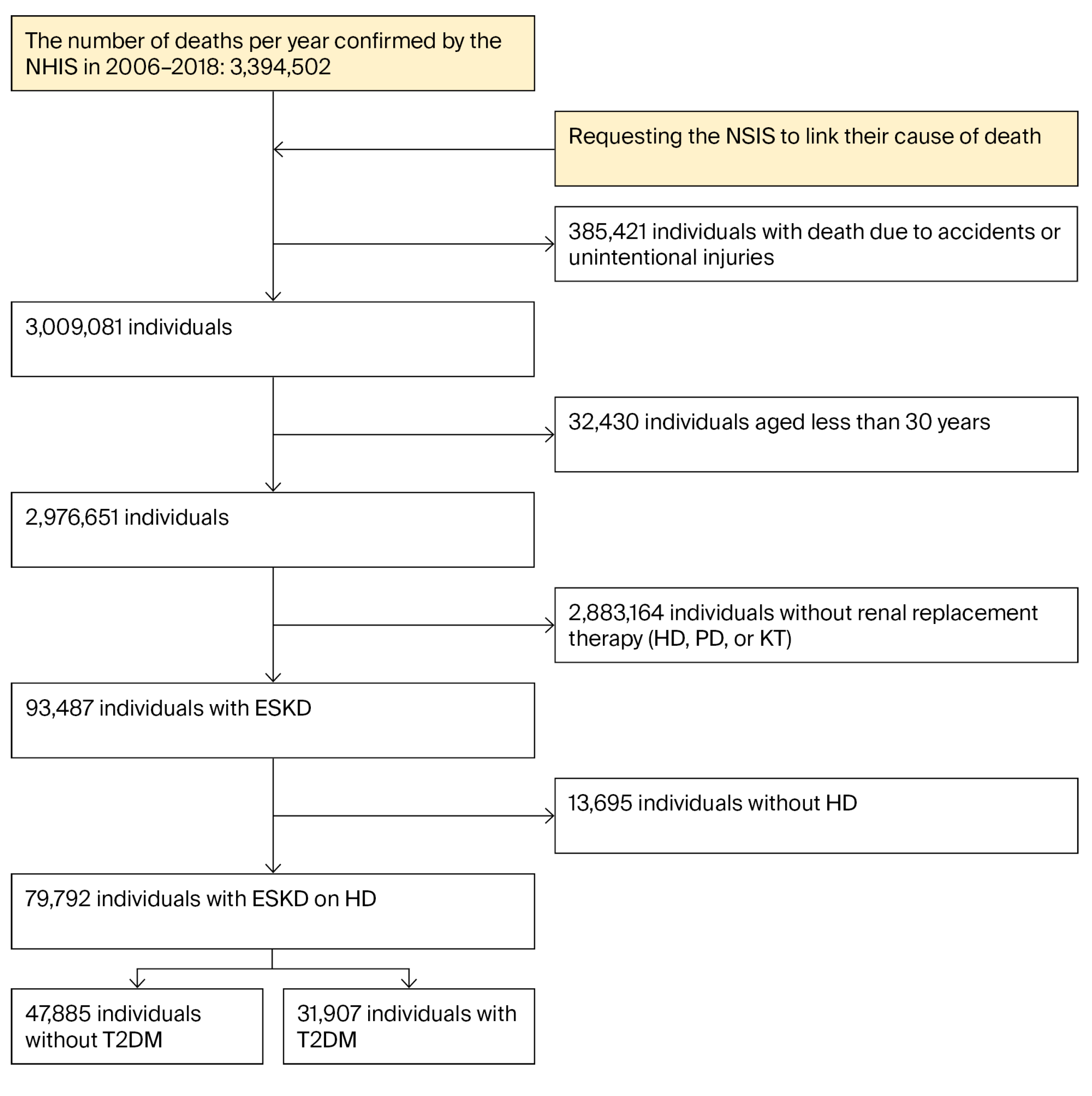
Figure 1. Study flowchart.
Diabetology 06 00145 g001
Figure 2. Changes in age of death among ESRD HD individuals with or without diabetes: (a) Overall; (b) Men; (c) Women.
Diabetology 06 00145 g002
Table 1. General characteristics of the study population.
Individuals Without T2DM
(n = 47,885)
Individuals with T2DM
(n = 31,907)
p
Age at death, years 71.1 ± 12.470.2 ± 10.5<0.0001
Age groups at death, n (%), years <0.001
 30–39656 (1.4)173 (0.5)
 40–492326 (4.9)981 (3.1)
 50–595756 (12.0)3996 (12.5)
 60–699821 (20.5)8573 (26.9)
 70–7916,209 (33.9)12,161 (38.1)
 ≥8013,117 (27.4)6023 (18.9)
Sex, males, n (%)27,350 (57.1)18,953 (59.4)<0.0001
Hypertension, n (%)35,680 (74.5)29,752 (93.3)<0.0001
Years from HD to death 3.74 ± 3.52.09 ± 3.1<0.0001
Age at HD, years 67.4 ± 13.167.2 ± 11.10.032
Cause of death <0.0001
 Malignancy, n (%)5564 (11.6)2757 (8.6)
 Cerebrovascular disease, n (%)2688 (5.6)1471 (4.6)
 Heart disease, n (%)2562 (5.4)1753 (5.5)
 Diabetes, n (%)6381 (13.3)11,939 (37.4)
 Pneumonia, n (%)952 (2.0)414 (1.3)
 Others, n (%)28,682 (59.9)12,884 (40.4)
Data are mean ± SD. HD: hemodialysis; T2DM: type 2 diabetes. p-value < 0.05 is considered statistically significant.
Table 2. Factors that contributed to Age at Death in the study population.
ParameterβStandard Errorp
Females0.0070.0030.0275
Diabetes−0.0120.003<0.0001
HTN−0.0470.004<0.0001
Age at HD initiation for ESKD0.9980.000<0.0001
Duration in years from HD initiation to death0.9850.000<0.0001
Generalized linear model results for the variables significantly associated with age at death. ESKD: end-stage kidney disease; HD: hemodialysis; HTN, hypertension.
Table 3. Age-standardized Mortality Rate in study population.
DiabetesCancerCardiovascular DiseaseCerebrovascular DiseasePneumonia
OverallWith
Diabetes
Without DiabetesOverallWith
Diabetes
Without DiabetesOverallWith
Diabetes
Without DiabetesOverallWith
Diabetes
Without DiabetesOverallWith
Diabetes
Without Diabetes
200625.446.614.710.97.312.65.15.35.05.54.75.80.90.41.1
200723.943.112.110.16.312.55.65.75.56.05.16.50.90.51.1
200821.837.911.9.06.210.85.15.64.95.74.96.21.30.51.8
200922.439.212.011.17.813.15.15.54.85.64.66.21.00.81.2
201023.40.012.711.18.113.14.94.65.15.34.26.1.31.21.3
201128.347.016.09.67.910.74.53.95.04.73.45.61.01.11.0
201227.644.016.710.69.411.34.84.84.84.43.45.11.00.71.2
201326.42.716.210.99.311.94.75.04.64.34.14.41.41.21.5
201423.737.614.710.79.111.75.65.95.55.65.45.81.51.31.6
201521.934.114.210.99.312.06.06.05.95.14.85.32.22.12.2
201620.31.711.510.49.810.95.75.65.75.75.65.83.33.63.1
201718.829.211.010.39.411.06.67.46.15.24.65.64.14.04.2
201819.530.311.110.19.210.75.65.35.85.14.95.35.25.45.0
Disclaimer/Publisher’s Note: The statements, opinions and data contained in all publications are solely those of the individual author(s) and contributor(s) and not of MDPI and/or the editor(s). MDPI and/or the editor(s) disclaim responsibility for any injury to people or property resulting from any ideas, methods, instructions or products referred to in the content.