
Article

Glycemic Variability Before and After Hypoglycemia Across Different Timeframes in Type 1 Diabetes with and Without Automated Insulin Delivery

1
CeADAR–Ireland’s Centre for AI, University College Dublin, D04 V2N9 Dublin, Ireland
2
OpenAPS, Seattle, WA 98101, USA
*
Author to whom correspondence should be addressed.
Diabetology 2025, 6(12), 156; https://doi.org/10.3390/diabetology6120156
Submission received: 25 September 2025 / Revised: 6 November 2025 / Accepted: 25 November 2025 / Published: 4 December 2025

Abstract

Background: Managing Type 1 diabetes (T1D) aims to optimize glucose within the target range while minimizing hyperglycemia and hypoglycemia, yet exercise complicates glycemic outcomes. Despite advances, evidence is limited on how exercise relates to glycemic variability (GV) and hypoglycemia in automated insulin delivery (AID) and non-AID users, including evidence on GV’s temporal course before and after hypoglycemia, especially following long episodes. Objective: We aimed to characterize −48 to +48 h CGM trajectories around hypoglycemia, compare commercial AID and non-AID users, and assess modifiers (exercise, episode duration/severity, gender). Methods: This study analyzes the Type 1 Diabetes and Exercise Initiative (T1DEXI) dataset, assessing GV, hypoglycemia, gender, and exercise interactions in AID (n = 222) and non-AID (n = 276) users. The study examined patterns of glycemic metrics, including time below range (TBR) and glycemic variability surrounding hypoglycemia events, focusing on the 48 h before and after these events. We further assessed the impact of different hypoglycemia levels (41–50 mg/dL, 51–60 mg/dL, and 61–70 mg/dL) on post-event glucose stability. Results: Glycemic variability increased before and after hypoglycemia for up to 48 h in both AID and non-AID users, with statistically significant differences in GV metrics. TBR elevation persisted across all groups, peaking around hypoglycemic episodes. Notably, females using AID achieved significantly improved glucose stability compared to non-AID females, which is a larger within-group difference than that observed in males. Individual-level AID analyses revealed that long-duration hypoglycemia episodes (>40 min) resulted in prolonged TBR elevation, suggesting a slower recovery period despite AID intervention. Conclusions: GV trends may aid in predicting hypoglycemia over extended time periods. Integrating GV patterns into AID systems could improve glucose stability and mitigate hypoglycemia cycles, especially with the possible evaluation of hypoglycemia duration. Future research should explore hormonal influences (e.g., menstrual cycle effects) and inter-individual variability for optimized individual diabetes management.

1. Introduction

The management of type 1 diabetes has increasingly focused on maintaining glucose levels within a target range, commonly assessed through time in range (TIR), time above range (TAR), and time below range (TBR). Hypoglycemia, or low blood glucose levels, can arise from various situations, including mistimed insulin administration, excessive insulin dosing, increased physical activity, reduced meal absorption, or heightened insulin sensitivity [1]. Among these, physical activity and exercise present significant challenges in managing glucose levels due to their complex and unpredictable impact on glycemic outcomes [2]. Consequently, datasets capturing exercise-related glucose and insulin dosing data have become a focal point of research. One such dataset is the Type 1 Diabetes and Exercise Initiative (T1DEXI) dataset, which provides comprehensive continuous glucose monitoring (CGM) data across a diverse cohort of individuals with Type 1 diabetes, including a variety of insulin delivery methods, demographic factors, and exercise routines [3].
The T1DEXI dataset has previously been characterized extensively in the literature [3], including the relationship between daily step count and glucose metrics [4] and the risk of hypoglycemia during and after exercise in individuals with impaired awareness of hypoglycemia [5]. Other notable studies include predicting hypoglycemia risk around exercise [6], an analysis of diet and glycemic outcomes [7], and applying machine learning techniques to classify unstructured exercise activities [8]. Further studies [9,10,11,12,13] have contributed to our understanding of glucose variability (GV) and hypoglycemia in the context of exercise, diet, and other factors from T1DEXI.
Despite the significant progress made in characterizing glycemic outcomes, critical gaps remain in understanding the interplay between exercise and glycemic variability (GV) among users of automated insulin delivery (AID) and non-AID systems (including pump and multiple daily injections (MDI)). Additionally, the role of hypoglycemia in influencing GV has not been comprehensively examined across the population and individual levels in the T1DEXI dataset, although we have evaluated this in other large diabetes datasets of open-source AID users [14]. Addressing these gaps, this study leverages the T1DEXI dataset to perform both population-level and subgroup analyses, focusing on key metrics such as TIR, TBR, TAR, standard deviation (SD), mean glucose levels, coefficient of variation (CV), and the J-Index. We hypothesize that understanding the progression of glycemic variability related to periods of hypoglycemia will provide actionable insights for optimizing diabetes management technologies, including the efficacy of both AID and non-AID technologies. To this end, our study makes two primary contributions: (1) a comprehensive comparison of glycemic variability and hypoglycemia patterns between AID and non-AID users in the T1DEXI dataset, accounting for demographic factors and exercise types, and (2) a detailed analysis of glycemic variability progression related to hypoglycemia at both population and individual levels for commercial AID and non-AID systems.

2. Materials and Methods

2.1. Study Population

The T1DEXI dataset, derived from a real-world study on at-home exercise, includes adults with Type 1 diabetes (n = 497) who were randomly assigned to complete structured exercise sessions over four weeks [3]. Table A1 shows a summary of demographic distribution and device characteristics of participants in the T1DEXI dataset used for this analysis. Previous research on T1DEXI thoroughly characterized CGM data, structured exercise reports, demographic information, and raw insulin dosage data from insulin delivery devices [3,4].

2.2. Data Preparation and Categorization

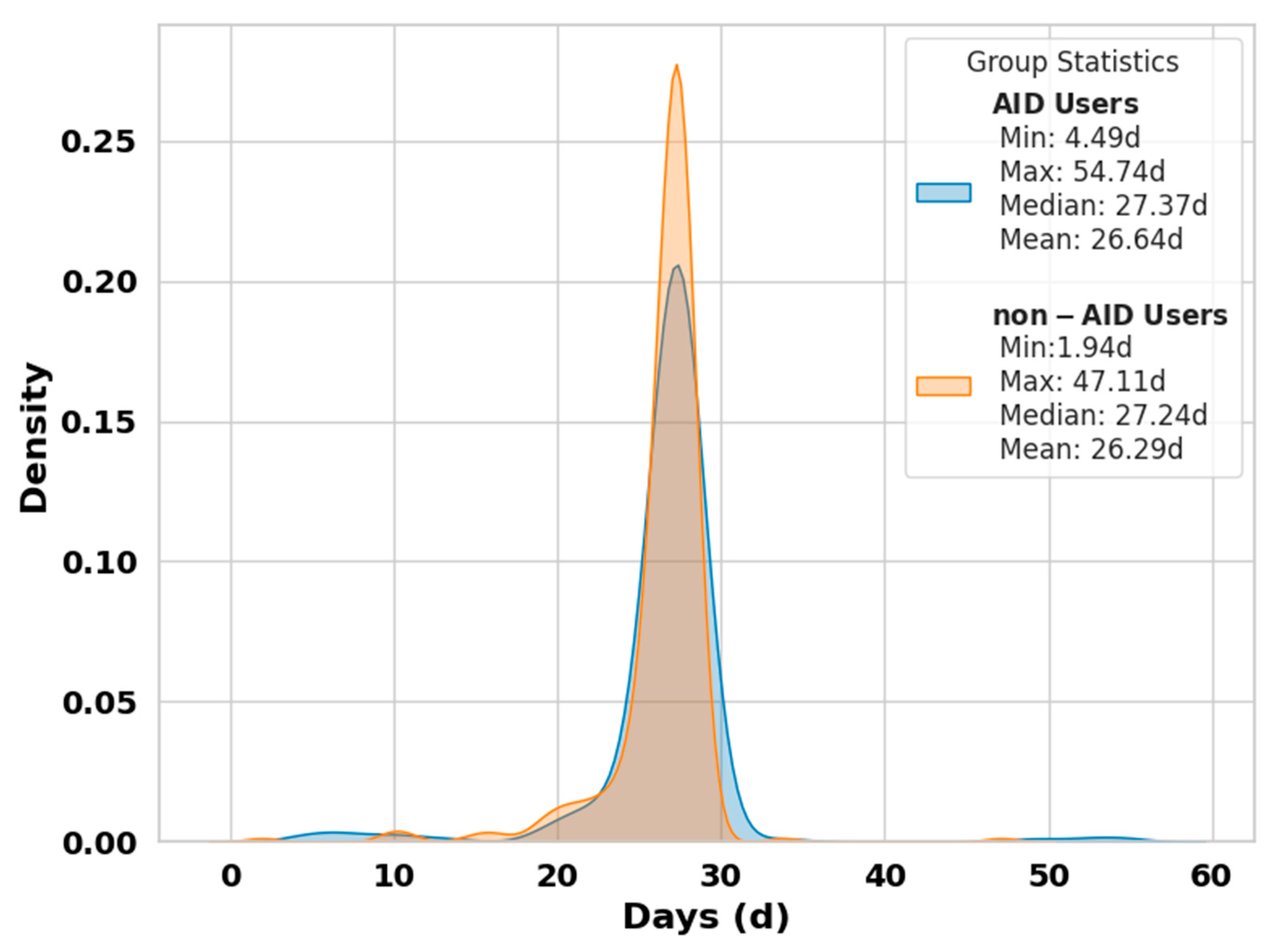
For each participant, the T1DEXI dataset includes labels indicating the type of insulin pump or dosing technique used, including existing labels for AID or non-AID therapies. To ensure the accuracy of the existing labels, raw insulin dosing data were cross-checked for expected automated insulin adjustments (e.g., increased basal rate changes, temporary basal rates, or small boluses) to confirm that AID-labelled devices were used in automated rather than manual mode. Non-AID includes individuals using open-loop systems (including those with low glucose suspend features but without the ability to increase insulin for hyperglycemia), insulin pumps without automated insulin delivery functionality, or multiple daily injections (MDI). Figure A1 illustrates the total days of glucose data available across AID (n = 222) and non-AID (n = 276) categories. Based on these classifications, each subgroup was analyzed independently.

2.3. Glucose Analysis Metrics and Statistical Tests

Descriptive statistics were calculated, including mean, minimum, maximum, and quartiles, as well as standard deviation (SD). Additional glycemic outcome metrics calculated include TIR (70–180 mg/dL), TBR (<70 mg/dL), and TAR (>180 mg/dL). We employed the J-index, Low Blood Glucose Index (LBGI), High Blood Glucose Index (HBGI), and Coefficient of Variation (CV) to assess glycemic variability at different timeframes.
To perform a comparative analysis of glycemic variability between AID and non-AID users, we performed a variety of statistical tests, including the Shapiro–Wilk (SW) test to test for normality in the data distributions. Additionally, the Z-test, Kolmogorov–Smirnov (KS) test and Mann–Whitney U (WMU) test were applied to compare the glucose data distributions among subgroups, including male vs. female and AID vs. non-AID users.

2.4. Experimental Workflow for Population-Level Analysis of Glycemic Variability Related to Hypoglycemia

For population-level analysis, we adopted the experimental workflow from our previously published work [14] for assessing hypoglycemia through a lens of glycemic variability [15] and applied it to AID and non-AID users in the T1DEXI dataset.
Hypoglycemia levels are categorized into three distinct ranges: 41–50 mg/dL, 51–60 mg/dL, and 61–70 mg/dL. (Previous work [14] compared these ranges to “Level 1” (<70 mg/dL but >54 mg/dL) and “Level 2” (between 40 and <54 mg/dL) categories of hypoglycemia [16] and found no significant differences in categorization.) We define a hypoglycemic event as individual instances where sensor glucose levels drop below or within the specified range. Continuous sequences of hypoglycemic events are termed hypoglycemic episodes.
For each hypoglycemic episode among AID and non-AID users, we compute GV-related metrics before and after the episode, at intervals of ±3, ±6, ±12, ±24, and ±48 h, to evaluate the impact of varying hypoglycemia levels on GV across different timeframes.
Data are organized into tables (Appendix Table A2, Table A3, Table A4 and Table A5) to provide a comprehensive overview of glucose analysis metrics, including TBR, TIR, TAR, SD, HBGI, and LBGI across various time intervals surrounding hypoglycemic episodes. To quantify these metrics, several aforementioned statistical measures are calculated.

2.5. Experimental Workflow for Individual-Level Analysis of Glycemic Variability Related to Hypoglycemia

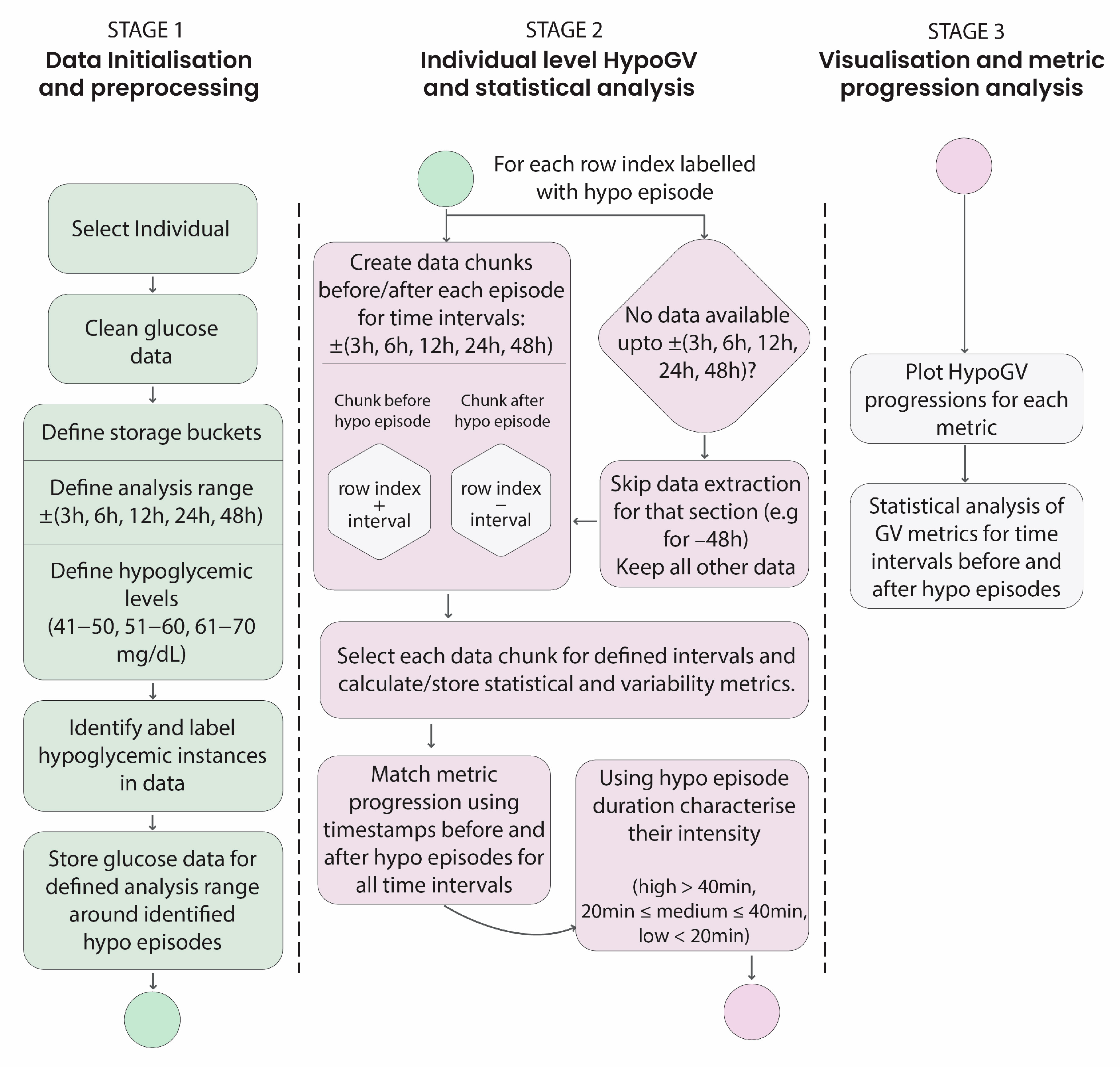
A structured, three-staged experimental workflow has been developed (adopted from a previous population-level workflow [14]) to examine the effects of hypoglycemia on GV at the individual level [Figure 1].
  • Stage 1—Data Initialization: Glucose data is cleaned by removing null values, readings outside 39–400 mg/dL, and including data without any gaps greater than 20 min in CGM data. Hypoglycemia is categorized into three ranges (41–50, 51–60, and 61–70 mg/dL). Time intervals around hypoglycemic events (±3 h to ±48 h) were established for analysis. Exercise types and durations for each individual in the dataset were also extracted to filter and analyze any differences between exercise-related and non-exercise-related hypoglycemic episodes.
  • Stage 2—Statistical Analysis: For each hypoglycemic episode, data was extracted across defined time intervals. Glucose variability metrics were calculated, and episodes were classified by duration (short: <20 min, medium: 20–40 min, long: >40 min).
  • Stage 3—Visualization: Glucose variability metrics are plotted over time relative to hypoglycemic episodes, and statistical analyses are performed on pre- and post-hypoglycemia intervals for all individuals.
Due to LBGI’s direct correlation with TBR at lower numerical scales [17], we focused on TBR progression plots within this work.

3. Results

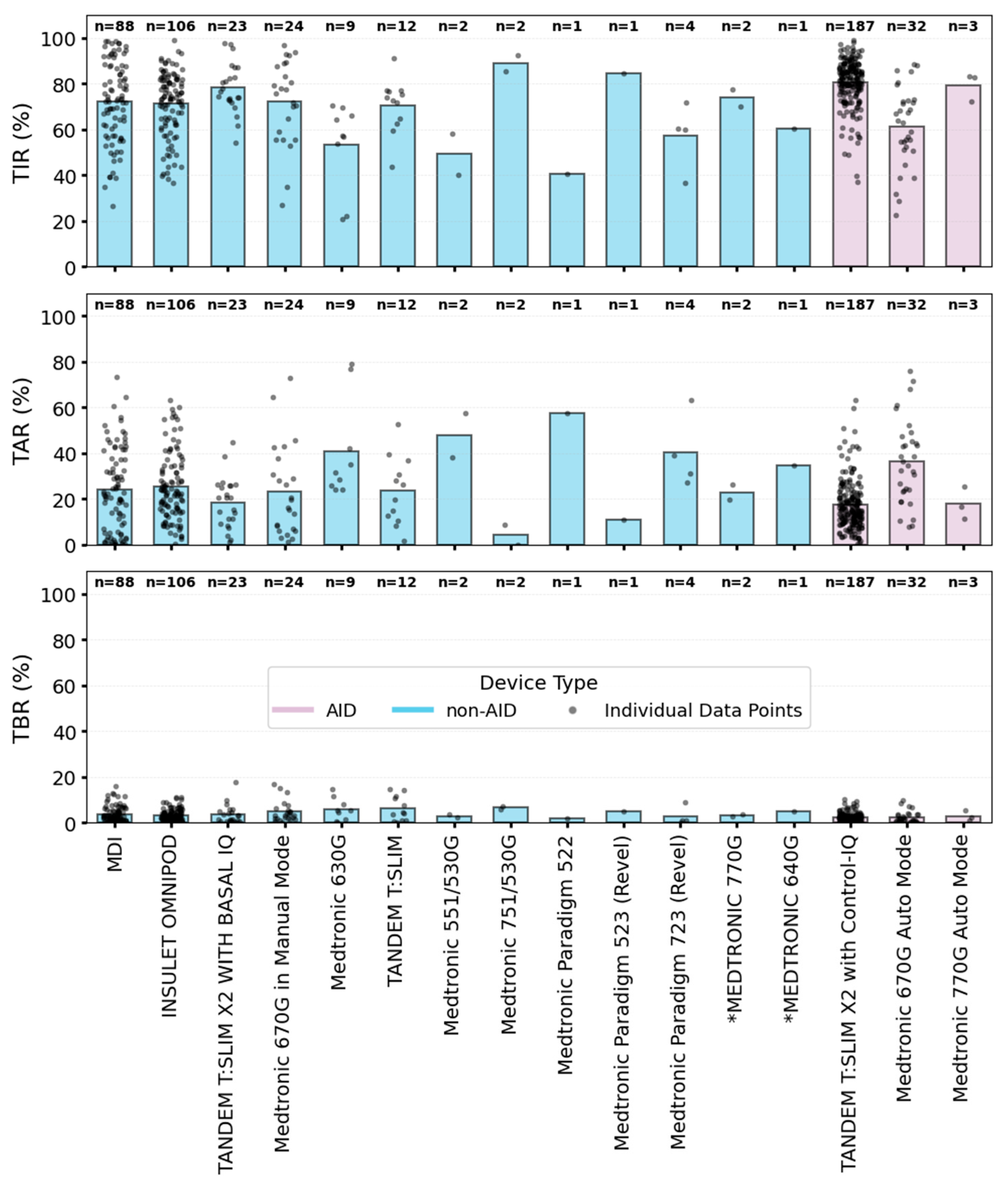
We observe significant differences in glycemic outcomes between individuals using AID systems and those relying on non-AID systems, including glycemic variability. AID users consistently demonstrate better glucose outcomes, as evaluated by higher TIR, lower TAR, and reduced TBR. These advantages are reflected across multiple scenarios, including various exercise types. Although mean glucose levels are similar between AID and non-AID users (AID: 143.24 mg/dL, non-AID: 144.81 mg/dL) (p > 0.004), AID users display significantly lower glucose variability, as shown by the reduced standard deviation (p < 0.001). Additionally, AID users exhibit less time spent with higher glucose levels, with significant improvements at the 75% quantile (p ≤ 0.002). Figure 2 shows the distribution of glucose analysis metrics across AID and non-AID categories, broken out by device/therapy type. Non-AID users show greater variability and suboptimal glycemic outcomes in tighter ranges, despite similar mean glucose outcomes in this dataset.
Glucose data for both AID and non-AID users in the T1DEXI dataset exhibit non-normal distributions (p < 0.001) across all variability metrics (Table A4). For AID data, TIR is negatively skewed, indicating an inclination of the mean towards the left, while other metrics show positive skewness, suggesting values below the mean. Non-AID data follow a similar pattern, indicating comparable distribution characteristics across both groups.
Statistical tests confirm that AID users achieve relatively higher TIR and lower TAR and TBR than non-AID users (p < 0.001), although the KS and MWU tests highlight distinct TIR distribution patterns (Table A5).
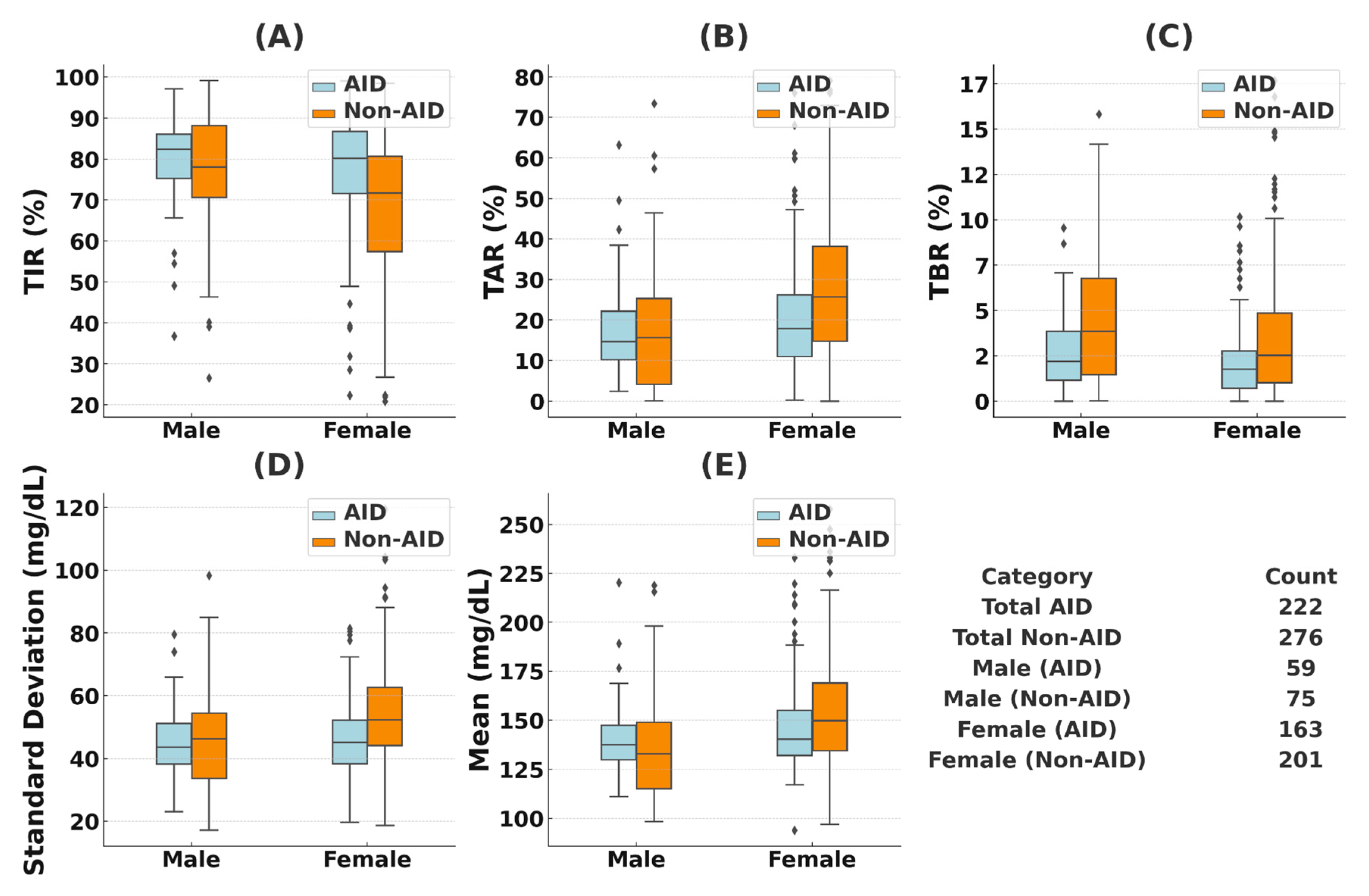
Figure A2 and Figure A3 show that, while AID outcomes are similar between genders, non-AID males tend to have higher TIR and lower TAR compared to non-AID females, indicating more optimal glycemic outcomes. AID users of both genders overall achieve higher TIR and lower TAR and TBR than non-AID users, with male AID users demonstrating the best outcomes in TIR and TAR and female AID users showing the best results in TBR. Gender-based comparisons (Table 1) indicate that the difference in metrics (TIR, TBR, TAR, SD) between AID and non-AID users was more pronounced among females than males, with females on AID systems demonstrating larger improvements.
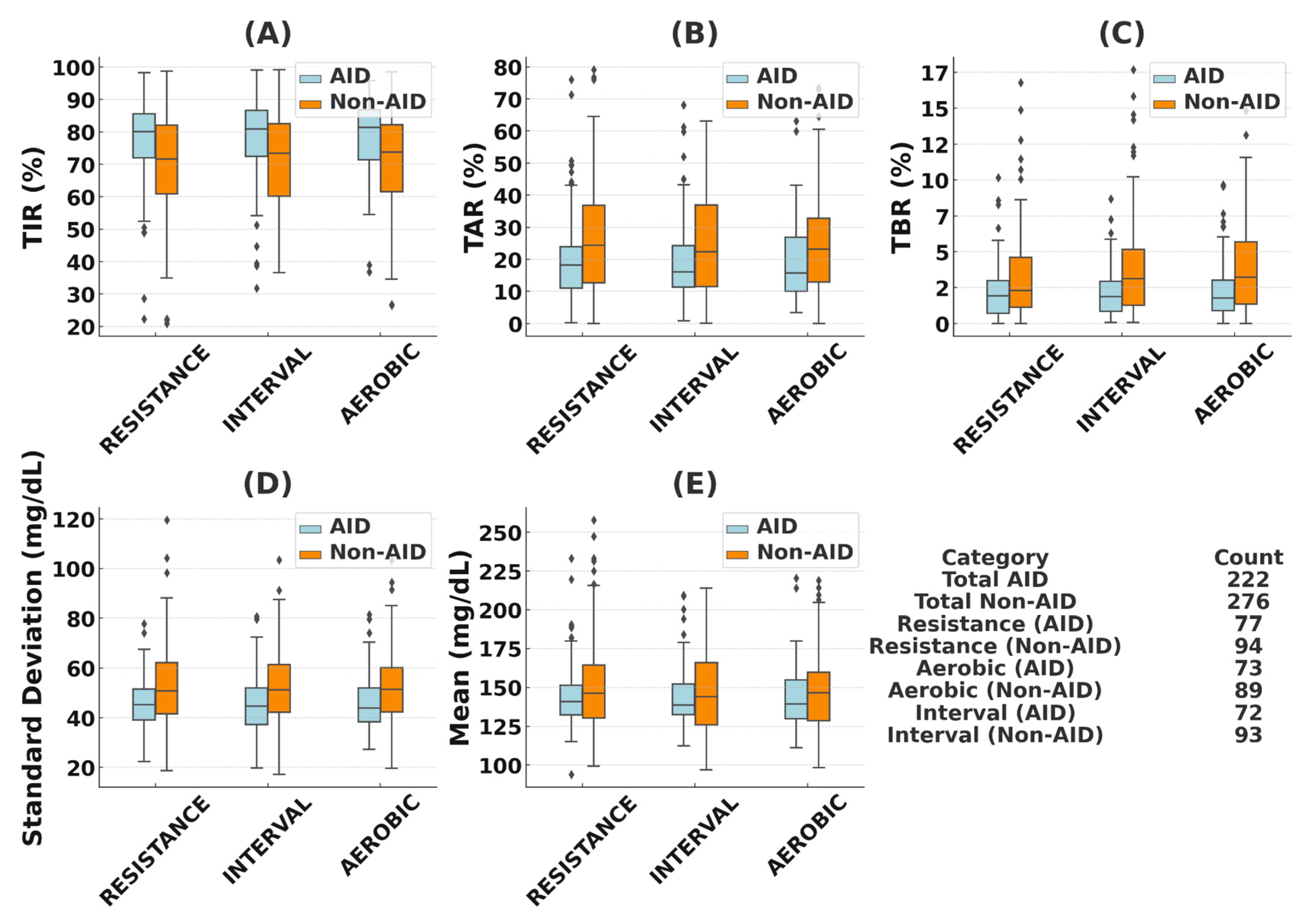
Across different exercise types, AID users in T1DEXI achieved more optimal glucose outcomes than non-AID users. In aerobic exercises, AID users achieve a median TIR of 75%, compared to 55% for non-AID users. Among non-AID users, during resistance exercise, TIR varies widely, with an interquartile range (IQR) ranging from 40% to 65%, indicating greater variability in glucose outcomes during these activities. AID users also exhibit lower TAR and TBR, with a median TAR of 12% in interval exercises (compared to 30% for non-AID users) and a median TBR of 3% in aerobic exercises (compared to 10% for non-AID users). Additionally, AID users have lower glucose variability, with an average SD of 43 mg/dL across exercise categories versus 53 mg/dL for non-AID users.

3.1. Population-Level Analysis of Glycemic Variability Related to Hypoglycemia

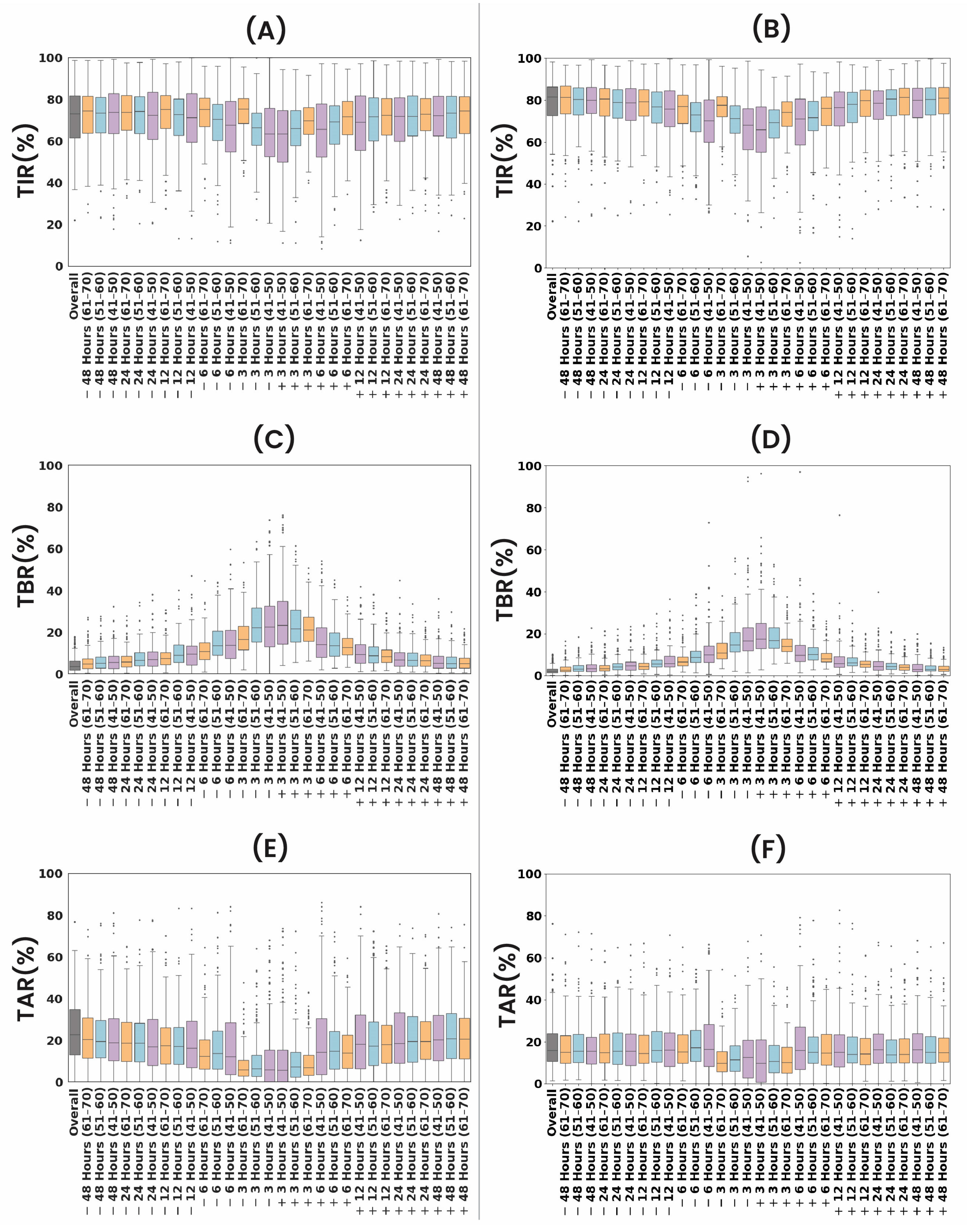
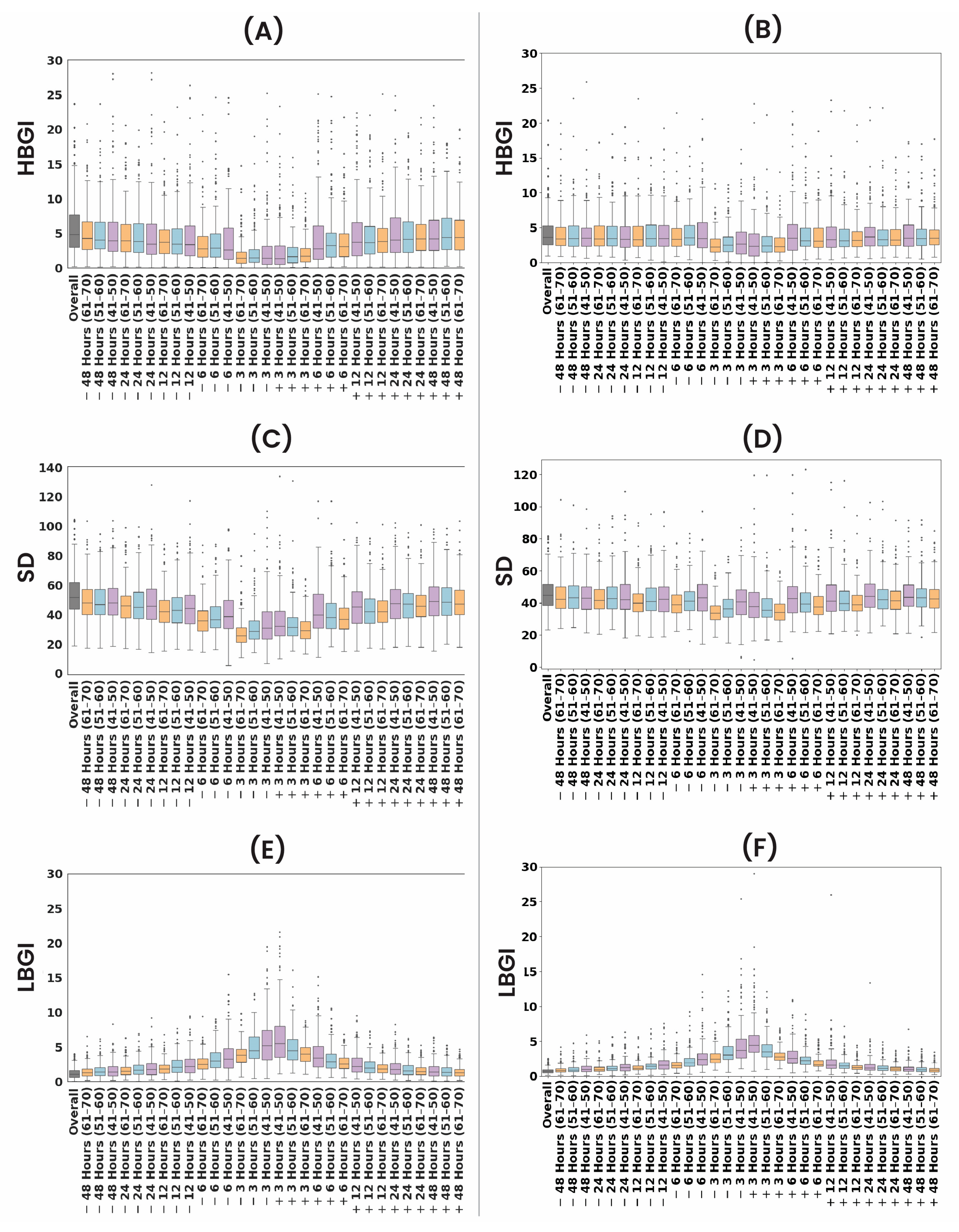
Overall, the patterns related to hypoglycemic and glycemic variability observed at the population level in commercial AID systems resemble those in open-source AID systems [14], with GV metrics showing significant fluctuations as hypoglycemia severity increases (from blood glucose level 70 mg/dL to 40 mg/dL). Figure 3 illustrates that Time Below Range (TBR) rises leading up to a hypoglycemic episode, then gradually decreases and stabilizes around 48 h post-episode, and that these progression patterns remain consistent, irrespective of whether the exercise preceded the hypoglycemia or not. Time in Range (TIR) slightly declines before hypoglycemia but returns to stable levels afterwards, while Time Above Range (TAR) shows no specific progression. In Figure A4, Low Blood Glucose Index (LBGI) and High Blood Glucose Index (HBGI) mirror the TBR and TAR patterns, respectively. GV metrics across different hypoglycemia levels do not follow a normal distribution, with statistically significant differences observed across various intervals for both AID and non-AID users (Appendix Table A2, Table A3, Table A4 and Table A5).
Significant differences (p < 0.001) in TIR, TBR, TAR, HBGI, LBGI, and SD exist between AID and non-AID users for most time intervals (Table A2 and Table A3). For TIR, AID users generally maintain higher levels, with similar distributions to non-AID users at a few instances, including −6 h (61–70) (p = 0.227), −6 h (41–50) (p = 0.170), and −3 h (41–50) (p = 0.171). TBR shows that AID users spend less time below the target range, reducing subsequent hypoglycemia risk. For TAR, several intervals, such as −12 h (61–70) (p = 0.288) and −12 h (51–60) (p = 0.720), show exceptions in distributions, while most other intervals indicate AID users spend less time above range.
For clinical context, we interpreted trajectories relative to each population and individual’s pre-episode (−48 h) baseline across standard CGM metrics (TIR 70–180 mg/dL, TBR < 70 mg/dL, TAR > 180 mg/dL). The 0–24 h post-episode window shows higher TBR and lower TIR than baseline, with convergence toward baseline by ~48 h. Long-duration episodes (>40 min) display slower convergence, as reflected in the individual-level plots in the following section.

3.2. Individual-Level Analysis of Glycemic Variability Related to Hypoglycemia

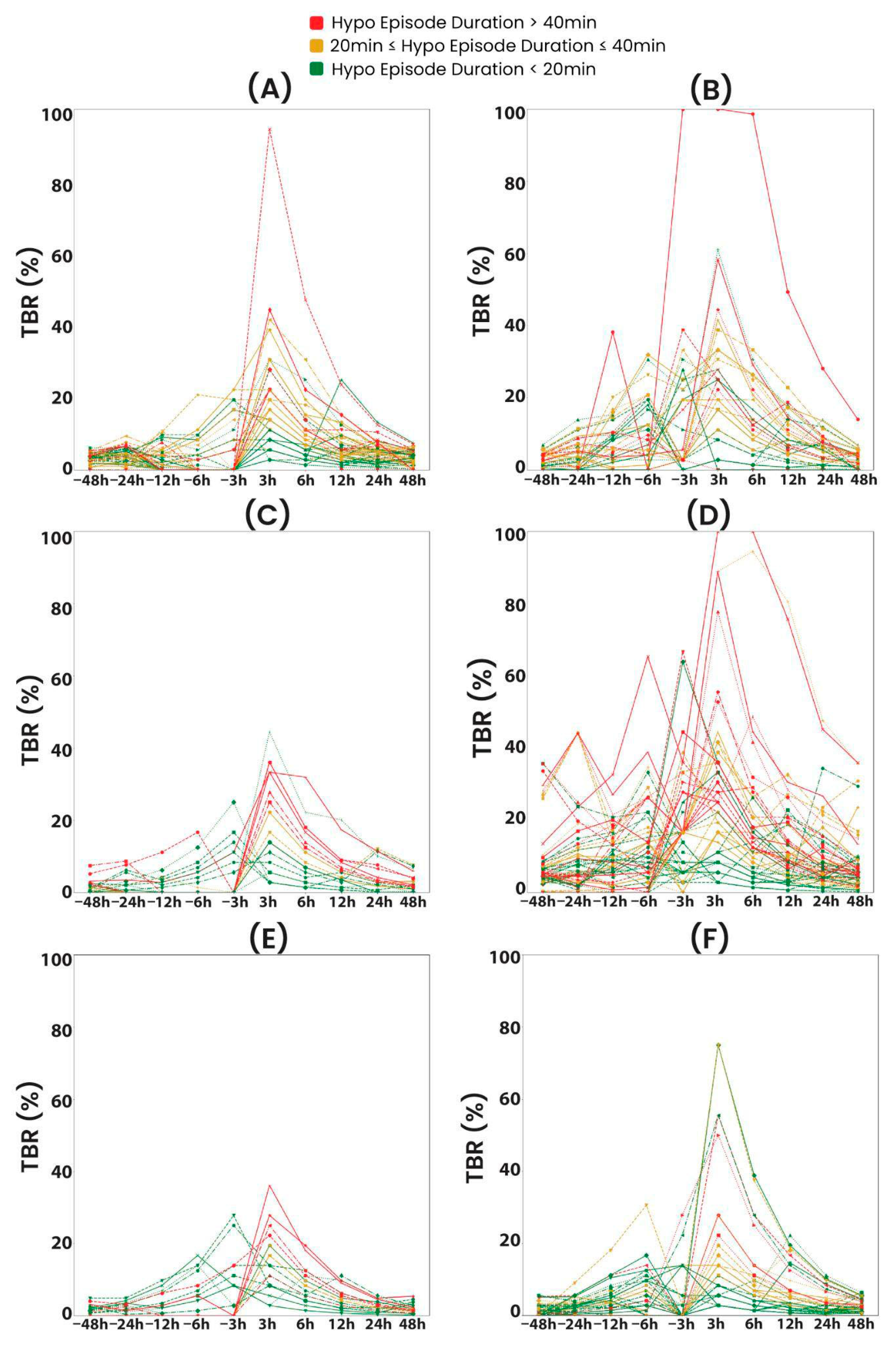
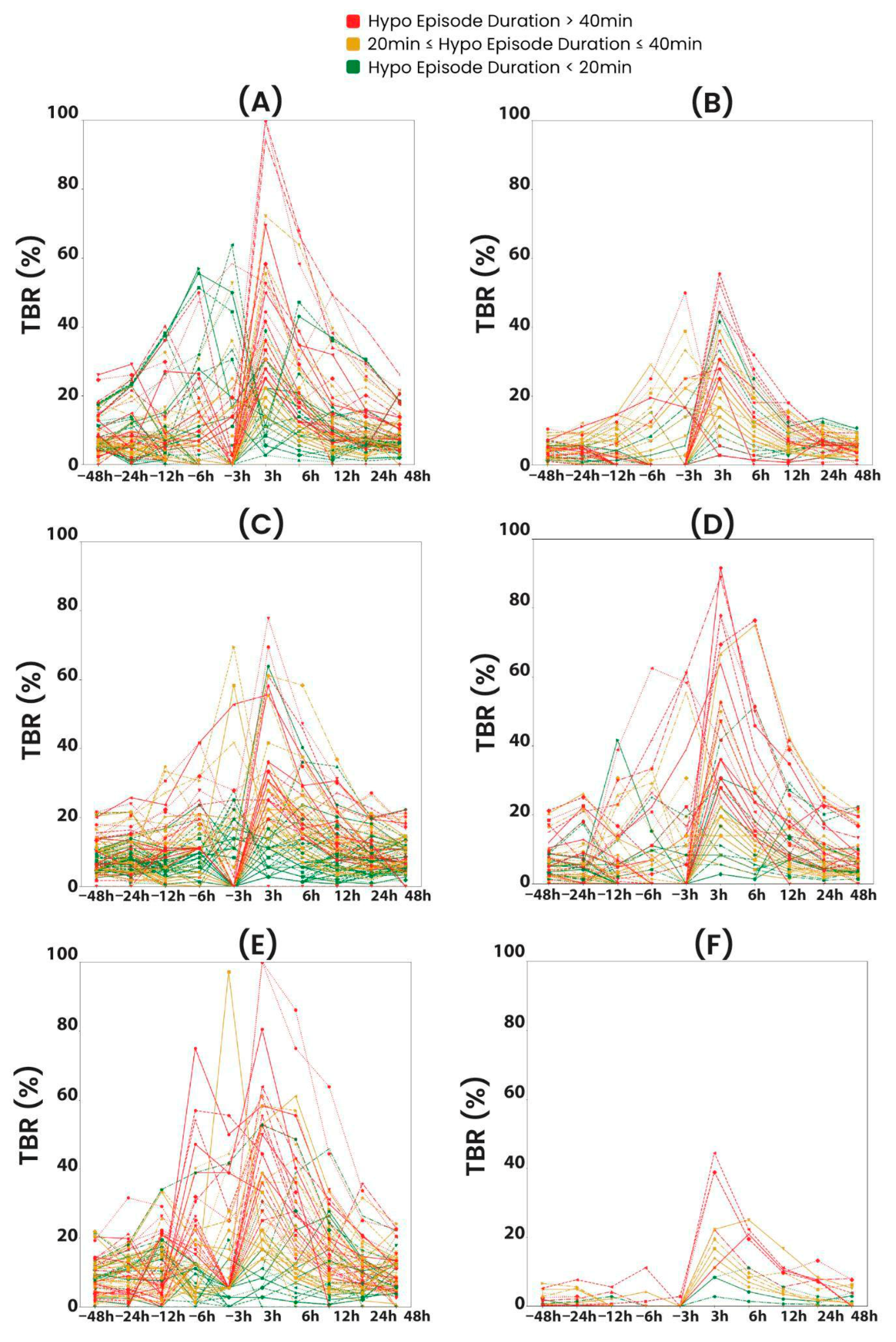
The TBR progression for six AID users (Figure 4) and six non-AID users (Figure A5) from −48 to +48 h around each hypoglycemic episode is visualized. Each line represents progression across one episode, classified by severity based on time duration: short-time duration (<20 min) is represented with green, medium-time duration (20–40 min) with yellow, and long-time duration (>40 min) with red. The dominant trends observed in TBR progression among all users show a rising trend as hypoglycemic episodes approach and remain elevated up to 48 h post-episode before stabilizing. Individuals with frequent episodes generally show higher rates of TBR, especially following long-duration episodes (>40 min), indicating more prolonged recovery.
These figures illustrate that short and medium-duration episodes generally resolve more quickly compared to long-duration events, and although AID systems provide some stabilization, prolonged TBR remains an issue following long-duration episodes of hypoglycemia for all people with diabetes. This highlights the difficulty in achieving glucose stability following long-duration hypoglycemic episodes in both AID and non-AID users. Taken together, these trajectories indicate that hypoglycemic episodes are followed by sustained elevations in TBR and reductions in TIR beyond the immediate post-event window, with a return toward the pre-episode (−48 h) baseline typically evident by ~48 h. Long-duration episodes (>40 min) are associated with slower recovery, consistent across AID and non-AID users.

4. Discussion

This study aimed to assess pre- and post-exercise glycemic variability among people with type 1 diabetes using a variety of insulin therapy strategies, such as AID and non-AID (including MDI and standalone insulin pumps), especially as it relates to instances of hypoglycemia, using the T1DEXI dataset. Analysis of glycemic variability showed that both AID and non-AID users experienced disturbances in GV leading to instances of hypoglycemia, and these patterns persisted regardless of exercise involvement. These disturbances were more pronounced in non-AID users, but AID users still experienced this disruption prior to and following hypoglycemia, with more severe hypoglycemic episodes (41–50 mg/dL) leading to prolonged glucose instability compared to milder episodes (61–70 mg/dL). This trend was observed in both AID and non-AID users, though the magnitude of glucose disturbance was significantly greater in non-AID users, suggesting that while AID systems mitigate some of the glycemic burdens, they do not entirely prevent prolonged glucose instability following severe hypoglycemia. These findings confirm that glycemic variability evaluation of timeseries data of CGM may be beneficial in both developing additional strategies to reduce subsequent hypoglycemia as well as iterating on diabetes technology to further dampen patterns of hypoglycemia for people with type 1 diabetes. In this context, ‘prolonged glucose instability’ refers to the persistence of elevated variability/TBR after an episode, whereas ‘glucose recovery’ reflects the observed return of TBR/TIR toward the individual’s pre-episode baseline by ~48 h. Even when mean glucose is similar between groups, these sustained deviations are clinically relevant because they extend the period during which recommended CGM targets are harder to meet.
While glycemic variability is often studied, it is only recently being increasingly used with time series data for CGM and often looked at a broad time period such as 14 days or 30 days [18]. Previous analyses with T1DEXI have focused on timeframes up to 24 h; however, these analyses were conducted in relation to exercise sessions [11] rather than hypoglycemia. In this work, we observed utility in looking at specific time windows before and after an instance of hypoglycemia, as we observed that disturbances in GV usually normalize within 48 h following hypoglycemia, though this stabilization period varied depending on the severity and duration of the hypoglycemic episode. Long-duration hypoglycemia events (>40 min) resulted in significantly prolonged TBR elevation, suggesting that sustained low glucose exposure may contribute to slower metabolic recovery, possibly due to increased counter-regulatory hormonal responses or delayed glycogen replenishment. This was true for both AID and non-AID users who exhibited similar patterns with different amplitudes and did not vary significantly by exercise type, nor whether the hypoglycemia was related to exercise or not.
At the cohort level, automated insulin delivery (AID) was associated with higher time in range (TIR) and lower time above/below range (TAR/TBR) compared with non-AID in both sexes. The magnitude of the AID–non-AID separation appeared larger among females than males in this dataset (Table 1), consistent with observations in other cohorts (e.g., open-source AID users [19]). In females, AID versus non-AID was associated with higher TIR (12.2% difference), lower TBR (41.69% difference), lower TAR (25.07% difference), and lower SD (15.69% difference), whereas the corresponding differences among males were 3.18%, 40.86%, 3.19%, and 2.51%, respectively. These are overall CGM outcomes; we did not evaluate gender differences in hypoglycemia-anchored trajectories or perform baseline-adjusted gender-by-therapy models. Accordingly, we interpret the larger AID–non-AID separation observed among females as descriptive and hypothesis-generating, rather than evidence of a hypoglycemia-specific gender effect. Hormonal fluctuations across the menstrual cycle could contribute; this difference could be partially influenced by hormonal fluctuations related to the menstrual cycle, as previous research suggests that estrogenic and progesterone variations impact insulin sensitivity and glycemic variability [20]. However, cycle data were unavailable in this dataset, so we cannot assess this directly, and future studies should test cycle-aware adjustment hypotheses.
Although the users studied here in AID and non-AID groups are independent cohorts, this suggests that AID is likely to help female users in T1D management more, compared to males using the same, and further studies of gender aspects of the T1DEXI and other AID-related datasets are warranted. Additionally, gender-based differences in hypoglycemia recovery post-exercise should be explored further, as previous work suggests that females may experience prolonged post-exercise insulin sensitivity compared to males, potentially contributing to greater post-hypoglycemia glucose instability in non-AID females. This analysis is currently without regard to the menstrual cycle, which is known to affect some individuals more than others, so there are even possibly larger gains for sub-groups of females with T1D to benefit from AID use compared to other therapy modalities. This suggests a need for a future meta-analysis across studies and datasets to better understand gender dynamics in glycemic outcomes and perhaps evaluate the menstrual cycle as it relates to glycemic outcomes. It may also be determined in the future that it is inter-individual variability, rather than gender differences, that makes the largest difference in outcomes, but this can only be evaluated in the future when more detailed datasets emerge that include user interaction data, such as adjusting targets and profile changes, as well as full insight into insulin delivery decisions.
These findings further build on previous research, including a previous study with similar methods evaluating patterns of GV related to hypoglycemia in n = 122 open-source AID users [19]. The patterns observed in population-based data for glycemic variability disturbances before and after hypoglycemia persist in both datasets, which shows that this finding is not limited to certain brands or types of AID systems, whether open source or commercial, and points to an opportunity to fold this into AID systems or other diabetes technologies as an additional factor for reducing recurring hypoglycemic, particularly by incorporating GV trend monitoring as a predictive variable within automated insulin delivery algorithms. Future iterations of AID systems could integrate rolling 48 h GV trend analysis to pre-emptively adjust insulin dosing in users with persistent GV fluctuations preceding hypoglycemia, potentially reducing the frequency of recurring low glucose events.
While the previous study evaluated population-level outcomes in OS-AID users, exercise data was not available as it is in the T1DEXI dataset, so we encourage replication in other datasets in the future that also have the exercise data available, to assess whether the finding that exercise type did not change the glucose variability patterns persists and is a scalable observation to the entire population of people with T1D.

Limitations

For this study, we did not analyze user actions such as strategies for eating carbs prior to exercise, or the timing of such, as well as the influence of correction or rescue carbohydrate intake relative to all instances of hypoglycemia present in the dataset. This is in part because the T1-DEXI dataset does not contain consistent carb entries across the entire time period of data collection, so it would be challenging to separate rescue carbs or pre-exercise carbs from meal carbs, any of which may or may not be recorded consistently in the dataset. It would be beneficial to evaluate user action along with insulin delivery data and CGM data to understand the interaction between humans and diabetes devices to determine what interventions may be most beneficial for reducing hypoglycemia. There may need to be subsequent data labelling adjustments in research datasets and/or in commercial insulin delivery devices to better distinguish system-driven or user-driven insulin dosing. The gender-related analyses should also be replicated with future datasets that include menstrual cycle-related data to help identify whether intra-individual or menstrual cycle timing and gender play larger roles in the variable outcomes.

5. Conclusions

Mirroring previous research, both broadly as well as specific to the T1DEXI dataset, we found that AID users experience improved glycemic variability outcomes compared to non-AID users, and, more specifically, that both AID and non-AID users experience similar patterns of glycemic variability disturbances preceding and following instances of hypoglycemia up to 48 h later. This suggests that additional studies with glycemic variability for specific periods, such as before and after exercise or hypoglycemia, may provide pointers to future improvements for AID systems or other diabetes technology to further reduce the occurrences of hypoglycemia, especially in relation to exercise. This is a key area of opportunity for further advancements in AID systems and other diabetes technologies, such as using glycemic variability as a factor in algorithmic or human decision-making to optimize outcomes and minimize the risk of hypoglycemia during or after exercise.

Author Contributions

Conceptualization, A.Z., A.A.S., D.M.L. and A.S.; methodology, A.Z., A.A.S., D.M.L. and A.S.; software, A.Z., A.A.S., D.M.L. and A.S.; validation, A.Z., A.A.S., D.M.L. and A.S.; formal analysis, A.Z., A.A.S., D.M.L. and A.S.; investigation, D.M.L. and A.S.; resources, D.M.L. and A.S.; data curation, A.Z., A.A.S., D.M.L. and A.S.; writing—original draft preparation, A.Z., D.M.L. and A.S.; writing—review and editing, A.Z., A.A.S., D.M.L. and A.S.; visualization, A.Z., A.A.S., D.M.L. and A.S.; supervision, D.M.L. and A.S.; project administration, A.S.; funding acquisition, D.M.L. and A.S. All authors have read and agreed to the published version of the manuscript.

Funding

This work was performed under a grant from The Leona M. and Harry B. Helmsley Charitable Trust (Grant #: 2407-07175).

Institutional Review Board Statement

Ethics approval was granted by UCD’s Human Research Ethics Committee–Sciences (HREC-LS) with reference number LS-LRSD-23-264-Shahid which meets the criteria for a low-risk study involving secondary data. Approval date: 20 November 2023.

Informed Consent Statement

Not applicable.

Data Availability Statement

All programming scripts and tools developed for the analysis in this paper are made public and online, with each source cited within the paper. Data accessed for this paper is part of the T1DEXI dataset.

Conflicts of Interest

The authors declare no conflicts of interest. The funders had no role in the design of the study; in the collection, analyses, or interpretation of data; in the writing of the manuscript; or in the decision to publish the results.

Appendix A

Rationale for multiple tests. We report KS, MWU, and Z-based results to cover complementary assumptions and sensitivities: KS tests for distribution-wide differences (location, variance, and tail behaviour); MWU is most sensitive to location shifts; Z-based comparisons address large-sample/parametric contrasts of summary measures. Conclusions are based on the concordance of these tests and the observed distributional summaries/figures, rather than any single p-value.
Figure A1. Density plot of glucose data collection days for AID and non-AID users in T1DEXI. Both groups exhibit similar data distributions, with median values around 27 days. AID user data has a slightly broader range (4.49 to 54.74 days) compared to non-AID users (1.94 to 47.11 days), though mean values remain close (26.64 days for AID, 26.29 days for non-AID).
Diabetology 06 00156 g0a1
Figure A2. Gender-wise comparison of TIR (A), TAR (B), TBR (C), SD (D), and Mean Glucose (E) for AID and non-AID users. Across both AID and non-AID groups, females exhibit slightly higher TIR and lower TAR compared to males, suggesting better glycemic outcomes. AID users, irrespective of gender, achieve higher TIR and lower TAR and TBR than non-AID users. Additionally, females tend to have lower TBR and SD than males in both AID and non-AID groups, with female AID users achieving the best overall outcomes.
Diabetology 06 00156 g0a2
Figure A3. Activity-wise comparison of TIR, TAR, TBR, SD, and Mean Glucose for AID and non-AID users across different exercise types: Resistance, Interval, and Aerobic. AID users generally achieve higher TIR and lower TAR and TBR across all exercise types compared to non-AID users. Panel (A) shows that AID users attain higher TIR, particularly during interval and aerobic exercises. Panels (B,C) illustrate that TAR and TBR are lower for AID users across all exercise types, with non-AID users displaying greater variability. Panels (D,E) demonstrate that AID users sustain lower SD and mean glucose levels, especially during aerobic exercises. Overall, aerobic exercises yield the highest TIR and lowest TAR for both AID and non-AID users.
Diabetology 06 00156 g0a3
Figure A4. Population-level comparison of High Blood Glucose Index (HBGI), Standard Deviation (SD), and Low Blood Glucose Index (LBGI) for AID (Panels A,C,E) and non-AID (Panels B,D,F) users across various time intervals before and after a hypoglycemic episode. Panels (A,B) display the distribution of HBGI, showing generally lower values for AID users across time intervals, with non-AID users having higher and more variable HBGI. Panels (C,D) compare SD, indicating more stable glucose outcomes in AID users, with lower overall variability compared to non-AID users, particularly around hypoglycemic episodes. Panels (E,F) show LBGI distribution, where AID users exhibit lower LBGI, especially during and after hypoglycemic episodes, whereas non-AID users have higher LBGI and greater variability in the same periods.
Diabetology 06 00156 g0a4
Figure A5. TBR progression for six non-AID users in T1DEXI, segmented by insulin delivery method: (A,B) INSULET OMNIPOD, (C,D) TANDEM T:SLIM X2 BASAL IQ, and (E,F) MDI (Multiple Daily Injections). Long-duration episodes (red) result in higher post-episode TBR, with MDI users showing the highest variability. OMNIPOD and Tandem BASAL IQ users exhibit more consistent but elevated TBR for longer durations.
Diabetology 06 00156 g0a5
Table A1. Demographic and device characteristics of participants in the T1DEXI dataset used for analysis, categorized as individuals using automated insulin delivery (AID) systems and those using non-AID systems.
Variable NameAIDNon-AIDTotal
N222275497
Median Age in years (IQR)34 (25–49)32 (25–44)33 (25–46)
Sex, n (%)
Female163 (73.4)200 (72.7)363 (73.0)
Male59 (26.6)75 (27.3)134 (27.0)
Race, n (%)
American Indian/Alaskan Native2 (0.9)0 (0.0)2 (0.4)
Asian3 (1.4)7 (2.5)10 (2.0)
Black/African American3 (1.4)7 (2.5)10 (2.0)
Multiple2 (0.9)6 (2.2)8 (1.6)
Not reported4 (1.8)7 (2.5)11 (2.2)
Unknown1 (0.5)1 (0.4)2 (0.4)
White207 (93.2)247 (89.8)454 (91.3)
Ethnicity, n (%)
Do not wish to answer6 (2.7)7 (2.5)13 (2.6)
Don’t know2 (0.9)0 (0.0)2 (0.4)
Hispanic or Latino5 (2.3)9 (3.3)14 (2.8)
Not Hispanic or Latino209 (94.1)259 (94.2)468 (94.2)
Country, n (%)
USA222 (100.0)275 (100.0)497 (100.0)
Device name, n (%)
Insulet Omnipod Dash1 (0.4)1 (0.2)
Insulet Omnipod Insulin Management System105 (38.2)105 (21.1)
Medtronic 551 (530 G)2 (0.7)2 (0.4)
Medtronic 630 G9 (3.3)9 (1.8)
Medtronic 640 G1 (0.4)1 (0.2)
Medtronic 670 G3 (1.1)3 (0.6)
Medtronic 670 G in Auto Mode32 (14.4)32 (6.4)
Medtronic 670 G in Manual Mode21 (7.6)21 (4.2)
Medtronic 751 (530 G)2 (0.7)2 (0.4)
Medtronic 770 G2 (0.7)2 (0.4)
Medtronic 770 G in Auto Mode3 (1.4)3 (0.6)
Medtronic Paradigm 5221 (0.4)1 (0.2)
Medtronic Paradigm 523 (Revel)1 (0.4)1 (0.2)
Medtronic Paradigm 723 (Revel)4 (1.5)4 (0.8)
Multiple Daily Injections88 (32.0)88 (17.7)
Tandem t:slim5 (1.8)5 (1.0)
Tandem t:slim X27 (2.5)7 (1.4)
Tandem t:slim X2 with Basal IQ23 (8.4)23 (4.6)
Tandem t:slim X2 with Control IQ187 (84.2)187 (37.6)
Exercise type, n (%)
Aerobic73 (32.9)89 (32.4)162 (32.6)
Interval72 (32.4)93 (33.8)165 (33.2)
Resistance77 (34.7)93 (33.8)170 (34.2)
Table A2. Population level comparison of glucose analysis metrics distributions between AID and non-AID users across Time in Range (TIR), Time Below Range (TBR), and Time Above Range (TAR) using Z-test and Kolmogorov–Smirnov (KS) test for various time intervals surrounding hypoglycemic episodes. The KS-test generally aligns with the Z-test findings, confirming significant distribution differences in most intervals across the three metrics.
Time IntervalZ-Test (TIR)KS-Test (TIR)Z-Test (TBR)KS-Test (TBR)Z-Test (TAR)KS-Test (TAR)
Overall<0.001<0.001<0.001<0.001<0.001<0.001
−48 h (61–70)<0.001<0.001<0.001<0.0010.001<0.001
−48 h (51–60)<0.001<0.001<0.001<0.0010.0030.009
−48 h (41–50)<0.001<0.001<0.001<0.0010.0030.002
−24 h (61–70)<0.001<0.001<0.001<0.0010.0260.014
−24 h (51–60)<0.001<0.001<0.001<0.0010.0810.165
−24 h (41–50)<0.001<0.001<0.001<0.0010.050.082
−12 h (61–70)<0.001<0.001<0.001<0.0010.2880.09
−12 h (51–60)0.0020.007<0.001<0.0010.720.139
−12 h (41–50)0.0020.006<0.001<0.0010.2480.139
−6 h (61–70)0.2270.233<0.001<0.0010.0080.007
−6 h (51–60)0.0270.033<0.001<0.0010.1190.003
−6 h (41–50)0.170.271<0.001<0.0010.3660.027
−3 h (61–70)0.0220.1<0.001<0.001<0.001<0.001
−3 h (51–60)<0.001<0.001<0.001<0.0010.002<0.001
−3 h (41–50)0.1710.035<0.001<0.0010.028<0.001
+3 h (61–70)0.0250.151<0.001<0.0010.3140.007
+3 h (51–60)0.0310.072<0.001<0.0010.020.001
+3 h (41–50)<0.0010.002<0.001<0.001<0.0010.001
+6 h (61–70)0.0040.046<0.001<0.0010.6850.217
+6 h (51–60)0.003<0.001<0.001<0.0010.8930.048
+6 h (41–50)<0.001<0.001<0.001<0.0010.7930.102
+12 h (61–70)<0.001<0.001<0.001<0.0010.0160.005
+12 h (51–60)<0.001<0.001<0.001<0.0010.0160.037
+12 h (41–50)<0.001<0.001<0.001<0.0010.0070.009
+24 h (61–70)<0.001<0.001<0.001<0.0010.0070.003
+24 h (51–60)<0.001<0.001<0.001<0.001<0.001<0.001
+24 h (41–50)<0.001<0.001<0.001<0.001<0.001<0.001
+48 h (61–70)<0.001<0.001<0.001<0.0010.0010.006
+48 h (51–60)<0.001<0.001<0.001<0.001<0.001<0.001
+48 h (41–50)<0.001<0.001<0.001<0.001<0.001<0.001
Table A3. Population level comparison of glucose variability metrics distributions between AID and non-AID users across High Blood Glucose Index (HBGI), Low Blood Glucose Index (LBGI), and Standard Deviation (SD) using Z-test and Kolmogorov–Smirnov (KS) test for various time intervals surrounding hypoglycemic episodes. The KS-test results align closely with the Z-test findings, confirming significant distribution differences in most intervals for HBGI, LBGI, and SD.
Time IntervalZ-Test (HBGI)KS-Test (HBGI)Z-Test (LBGI)KS-Test (LBGI)Z-Test (SD)KS-Test (SD)
Overall<0.001<0.001<0.001<0.001<0.001<0.001
−48 h (61–70)0.0090.001<0.001<0.001<0.001<0.001
−48 h (51–60)0.0170.02<0.001<0.0010.0010.006
−48 h (41–50)0.0070.01<0.001<0.001<0.001<0.001
−24 h (61–70)0.0640.061<0.001<0.0010.0120.004
−24 h (51–60)0.1270.429<0.001<0.0010.0430.098
−24 h (41–50)0.0420.096<0.001<0.0010.0250.012
−12 h (61–70)0.470.204<0.001<0.0010.1870.096
−12 h (51–60)0.6130.153<0.001<0.0010.4510.336
−12 h (41–50)0.2060.074<0.001<0.0010.2780.324
−6 h (61–70)0.043<0.001<0.001<0.001<0.001<0.001
−6 h (51–60)0.32<0.001<0.001<0.0010.008<0.001
−6 h (41–50)0.5570.003<0.001<0.0010.0510.012
−3 h (61–70)<0.001<0.001<0.001<0.001<0.001<0.001
−3 h (51–60)0.013<0.001<0.001<0.001<0.001<0.001
−3 h (41–50)0.092<0.001<0.001<0.001<0.001<0.001
+3 h (61–70)0.444<0.0010.001<0.0010.03<0.001
+3 h (51–60)0.083<0.001<0.001<0.0010.001<0.001
+3 h (41–50)0.003<0.001<0.001<0.001<0.001<0.001
+6 h (61–70)0.9040.092<0.001<0.0010.5380.327
+6 h (51–60)0.9070.058<0.001<0.0010.2640.01
+6 h (41–50)0.9940.059<0.001<0.0010.4210.038
+12 h (61–70)0.0750.021<0.001<0.0010.1110.01
+12 h (51–60)0.0420.042<0.001<0.0010.1870.032
+12 h (41–50)0.0170.016<0.001<0.0010.0370.003
+24 h (61–70)0.0180.011<0.001<0.0010.0840.023
+24 h (51–60)0.003<0.001<0.001<0.0010.009<0.001
+24 h (41–50)0.001<0.001<0.001<0.0010.001<0.001
+48 h (61–70)0.0020.017<0.001<0.0010.0020.001
+48 h (51–60)<0.001<0.001<0.001<0.001<0.001<0.001
+48 h (41–50)<0.001<0.001<0.001<0.001<0.001<0.001
Table A4. Shapiro–Wilk (SW) test results and skewness scores across various metrics for AID and non-AID data. The table presents the Shapiro–Wilk test results and skewness scores for various metrics related to glucose variability, comparing AID and non-AID users. Both datasets show non-normal distributions (p < 0.001) across all metrics. For Time in Range (TIR), the skewness score is more negative in AID data (−1.32) compared to non-AID (−0.64), suggesting a heavier tail on the lower end in AID users. The skewness score for Time Above Range (TAR) is higher for AID users (1.39) than for non-AID users (0.72), indicating a stronger skew towards higher values in AID users. For Time Below Range (TBR), both groups exhibit positive skewness, but AID users show a higher skewness score (1.67) compared to non-AID users (1.48), implying a stronger skew towards low blood glucose levels in AID users. Across the mean, standard deviation, and percentiles (25%, 50%, and 75%), both groups exhibit similar trends of positive skewness, with AID data tending to have slightly higher skewness for certain metrics.
MetricAID Data (SW W)AID Data (SW p-Value)AID Data (Skewness)Non-AID Data (SW W)Non-AID Data (SW p-Value)Non-AID Data (Skewness)
TIR0.90<0.001−1.320.97<0.001−0.64
TAR0.89<0.0011.390.95<0.0010.72
TBR0.85<0.0011.670.86<0.0011.48
Mean0.90<0.0011.300.96<0.0010.85
SD0.97<0.0010.660.97<0.0010.70
25%0.90<0.0011.460.93<0.0011.22
50%0.88<0.0011.450.94<0.0011.05
75%0.90<0.0011.300.94<0.0011.07
Table A5. Z-test, Kolmogorov–Smirnov (KS) test, and Mann–Whitney U (MWU) test results were conducted for TIR, TAR, TBR, Mean, SD, and percentiles (25%, 50%, 75%) to compare AID and non-AID users. For TIR, TAR, TBR, and SD, all three tests show statistically significant differences (p < 0.001), indicating clear variability between the groups in these metrics. The 75th percentile also shows consistent significance across tests (Z-test: p = 0.001, KS-test: p < 0.001, MWU-test: p = 0.002). The 25th percentile results are mixed but mostly significant (Z-test: p = 0.030, KS-test: p < 0.001, MWU-test: p = 0.003). For the mean, only the KS-test shows significance (p = 0.004), while the Z-test (p = 0.117) and MWU-test (p = 0.123) do not. The 50th percentile results are borderline: KS-test is significant (p = 0.002), but Z-test (p = 0.053) and MWU-test (p = 0.086) do not reach significance.
TestStatisticp-Value
Z-test−4.80<0.001
TIRKS-test0.27<0.001
MWU-test22,648.00<0.001
Z-test3.49<0.001
TARKS-test0.22<0.001
MWU-test35,917.00<0.001
Z-test6.30<0.001
TBRKS-test0.26<0.001
MWU-test38,361.00<0.001
Z-test1.570.117
MeanKS-test0.160.004
MWU-test32,978.000.123
Z-test4.84<0.001
SDKS-test0.23<0.001
MWU-test37,953.00<0.001
Z-test−2.180.030
25%KS-test0.24<0.001
MWU-test25,787.500.003
Z-test1.940.053
50%KS-test0.170.002
MWU-test33,261.000.086
Z-test3.210.001
75%KS-test0.21<0.001
MWU-test35,489.000.002

References

  1. Nakhleh, A.; Shehadeh, N. Hypoglycemia in diabetes: An update on pathophysiology, treatment, and prevention. World J. Diabetes 2021, 12, 2036–2049. [Google Scholar] [CrossRef] [PubMed]
  2. Fitzpatrick, R.; Davison, G.; Wilson, J.J.; McMahon, G.; McClean, C. Exercise, type 1 diabetes mellitus and blood glucose: The implications of exercise timing. Front. Endocrinol. 2022, 13, 1021800. [Google Scholar] [CrossRef] [PubMed]
  3. Riddell, M.C.; Li, Z.; Gal, R.L.; Haller, M.J.; Kaiserman, K.; Agarwal, S.; Pooni, R.; Clinton, P.; Calhoun, P.; Rickels, M.R.; et al. Examining the Acute Glycemic Effects of Different Types of Structured Exercise Sessions in Type 1 Diabetes in a Real-World Setting: The Type 1 Diabetes and Exercise Initiative (T1DEXI). Diabetes Care 2023, 46, 704–713. [Google Scholar] [CrossRef] [PubMed]
  4. Turner, L.V.; Marak, M.C.; Gal, R.L.; Haller, M.J.; Kaiserman, K.; Agarwal, S.; Pooni, R.; Calhoun, P.; Rickels, M.R.; Riddell, M.C.; et al. Associations between daily step count classifications and continuous glucose monitoring metrics in adults with type 1 diabetes: Analysis of the Type 1 Diabetes Exercise Initiative (T1DEXI) cohort. Diabetologia 2024, 67, 1009–1022. [Google Scholar] [CrossRef] [PubMed]
  5. Jo Kamimoto, J.L.; Li, Z.; Gal, R.L.; Castle, J.R.; Doyle, F.J., III; Jacobs, P.G.; Martin, C.K.; Beck, R.; Calhoun, P.; Riddell, M.; et al. 573-P: Impact of Impaired Awareness of Hypoglycemia on Glucose Changes During and After Exercise in Type 1 Diabetes—Results from the T1DEXI Study Cohort. Diabetes 2023, 72, 573-P. [Google Scholar] [CrossRef]
  6. Bergford, S.; Riddell, M.C.; Jacobs, P.G.; Mosquera-Lopez, C.; Clinton, P.; Calhoun, P.; Rickels, M.R.; Doyle, F.J., III; Haller, M.J.; Kaiserman, K.; et al. The Type 1 Diabetes and EXercise Initiative: Predicting Hypoglycemia Risk During Exercise for Participants with Type 1 Diabetes Using Repeated Measures Random Forest. Diabetes Technol. Ther. 2023, 25, 602–611. [Google Scholar] [CrossRef] [PubMed]
  7. Gillingham, M.B.; Marak, M.C.; Riddell, M.C.; Haller, M.J.; Kaiserman, K.; Agarwal, S.; Pooni, R.; Calhoun, P.; Rickels, M.R.; Clinton, P.; et al. The Association Between Diet Quality and Glycemic Outcomes Among People with Type 1 Diabetes. Curr. Dev. Nutr. 2024, 8, 102146. [Google Scholar] [CrossRef] [PubMed]
  8. Fushimi, E.; Aiello, E.M.; Cho, S.; Riddell, M.C.; Gal, R.L.; Martin, C.K.; Patton, S.R.; Rickels, M.R.; Doyle, F.J., III. Online Classification of Unstructured Free-Living Exercise Sessions in People with Type 1 Diabetes. Diabetes Technol. Ther. 2024, 26, 709–719. [Google Scholar] [CrossRef] [PubMed]
  9. Morrison, D.; Vogrin, S.; Zaharieva, D.P. Assessment of Glycemia Risk Index and Standard Continuous Glucose Monitoring Metrics in a Real-World Setting of Exercise in Adults With Type 1 Diabetes: A Post-Hoc Analysis of the Type 1 Diabetes and Exercise Initiative. J. Diabetes Sci. Technol. 2024, 18, 787–794. [Google Scholar] [CrossRef] [PubMed]
  10. Li, P.; Lyu, T.; Alkhuzam, K.; Spector, E.; Donahoo, W.T.; Bost, S.; Wu, Y.; Hogan, W.R.; Prosperi, M.; Schatz, D.A.; et al. The role of health system penetration rate in estimating the prevalence of type 1 diabetes in children and adolescents using electronic health records. J. Am. Med. Inform. Assoc. 2023, 31, 165–173. [Google Scholar] [CrossRef] [PubMed]
  11. Li, Z.; Calhoun, P.; Rickels, M.R.; Gal, R.L.; Beck, R.W.; Jacobs, P.G.; Clements, M.A.; Patton, S.R.; Castle, J.R.; Martin, C.K.; et al. Factors Affecting Reproducibility of Change in Glucose During Exercise: Results From the Type 1 Diabetes and EXercise Initiative. J. Diabetes Sci. Technol. 2025, 19, 958–970. [Google Scholar] [CrossRef] [PubMed]
  12. Li, Z.; Yardley, J.E.; Zaharieva, D.P.; Riddell, M.C.; Gal, R.L.; Calhoun, P. Changing Glucose Levels During the Menstrual Cycle as Observed in Adults in the Type 1 Diabetes Exercise Initiative Study. Can. J. Diabetes 2024, 48, 446–451. [Google Scholar] [CrossRef] [PubMed]
  13. Mosquera-Lopez, C.; Ramsey, K.L.; Roquemen-Echeverri, V.; Jacobs, P.G. Modeling risk of hypoglycemia during and following physical activity in people with type 1 diabetes using explainable mixed-effects machine learning. Comput. Biol. Med. 2023, 155, 106670. [Google Scholar] [CrossRef] [PubMed]
  14. Shahid, A.; Lewis, D.M. Impact of Hypoglycemia on Glucose Variability over Time for Individuals with Open-Source Automated Insulin Delivery Systems. Diabetology 2024, 5, 514–536. [Google Scholar] [CrossRef]
  15. Scripts for Glycemic Variability and Hypoglycemia. 23 February 2024. Available online: https://github.com/danamlewis/OpenHumansDataTools/tree/master/bin/GV-Hypoglycemia (accessed on 29 April 2025).
  16. Elsayed, N.A.; Aleppo, G.; Aroda, V.R.; Bannuru, R.R.; Brown, F.M.; Bruemmer, D.; Collins, B.S.; Hilliard, M.E.; Isaacs, D.; Johnson, E.L.; et al. 6. Glycemic Targets: Standards of Care in Diabetes—2023. Diabetes Care 2023, 46, S97–S110. [Google Scholar] [CrossRef] [PubMed]
  17. Rodbard, D. Metrics to Evaluate Quality of Glycemic Control: Comparison of Time in Target, Hypoglycemic, and Hyperglycemic Ranges with “Risk Indices”. Diabetes Technol. Ther. 2018, 20, 325–334. [Google Scholar] [CrossRef] [PubMed]
  18. Battelino, T.; Danne, T.; Bergenstal, R.M.; Amiel, S.A.; Beck, R.W.; Biester, T.; Bosi, E.; Buckingham, B.A.; Cefalu, W.T.; Close, K.L.; et al. Clinical Targets for Continuous Glucose Monitoring Data Interpretation: Recommendations From the International Consensus on Time in Range. Diabetes Care 2019, 42, 1593–1603. [Google Scholar] [CrossRef] [PubMed]
  19. Shahid, A.; Lewis, D.M. Large-Scale Data Analysis for Glucose Variability Outcomes with Open-Source Automated Insulin Delivery Systems. Nutrients 2022, 14, 1906. [Google Scholar] [CrossRef] [PubMed]
  20. De Paoli, M.; Zakharia, A.; Werstuck, G.H. The Role of Estrogen in Insulin Resistance. Am. J. Pathol. 2021, 191, 1490–1498. [Google Scholar] [CrossRef] [PubMed]
Figure 1. Three-staged individual-level analysis workflow, detailing data initialization and preprocessing, statistical analysis across defined time intervals around hypoglycemic episodes, and visualization of glucose variability progression before and after hypoglycemia.
Diabetology 06 00156 g001
Figure 2. Boxplots of Time in Range (TIR), Time Above Range (TAR), and Time Below Range (TBR) for various insulin pump types among AID and non-AID users. The number of users per device type is displayed above each boxplot. AID users generally achieve higher TIR and lower TAR and TBR across most devices. * Analysis of data shows these users did not appear to use AID during the study period and are thus classified as non-AID.
Diabetology 06 00156 g002
Figure 3. Population-level comparison of Time in Range (TIR), Time Below Range (TBR), and Time Above Range (TAR) for AID (left column) and non-AID (right column) users, across various time intervals before and after a hypoglycemic episode. Panels (A,B) display the distribution of TIR across time, showing a decline before hypoglycemia and recovery afterwards, with AID users maintaining higher TIR percentages overall. Panels (C,D) depict the distribution of TBR, which spikes around the hypoglycemic episode, particularly in non-AID users, where TBR remains elevated for longer periods post-episode. Panels (E,F) show TAR distributions, with AID users exhibiting generally lower TAR both before and after hypoglycemic episodes, while non-AID users show higher TAR and greater variability across all time intervals.
Diabetology 06 00156 g003
Figure 4. TBR progression for six AID users in T1DEXI, segmented by insulin pump type: (A,B) TANDEM T:SLIM X2 WITH CONTROL IQ, (C,D) MEDTRONIC 670 G, and (E,F) MEDTRONIC 770 G. Long-duration episodes (red) are associated with higher pre- and post-episode TBR values, suggesting prolonged recovery. Medtronic users exhibit greater TBR variability, particularly for long-duration episodes, while Tandem users show more consistent TBR recovery across episode durations.
Diabetology 06 00156 g004
Table 1. Average values for Mean (mg/dL), SD (mg/dL), TIR (%), TBR (%), and TAR (%) for Males and Females from AID and non-AID groups.
SexGroupMean
(mg/dL)
SD
(mg/dL)
TIR
(%)
TAR
(%)
TBR
(%)
FAID146.0345.9377.2520.682.07
Fnon-AID153.3254.4868.8527.603.55
MAID140.4645.0479.9217.322.75
Mnon-AID136.3046.2077.4617.894.65
Disclaimer/Publisher’s Note: The statements, opinions and data contained in all publications are solely those of the individual author(s) and contributor(s) and not of MDPI and/or the editor(s). MDPI and/or the editor(s) disclaim responsibility for any injury to people or property resulting from any ideas, methods, instructions or products referred to in the content.