
Article

Perinatal Outcomes of Type 1 and Type 2 Diabetes in Pregnancy: A 10-Year Single-Centre Cohort Study

1
Department of Diabetes and Endocrinology, Western Health, St Albans, VIC 3021, Australia
2
Department of Medicine, University of Melbourne, Parkville, VIC 3010, Australia
3
Department of Obstetrics and Gynaecology, Western Health, St Albans, VIC 3021, Australia
4
Maternal Fetal Medicine, Women’s and Children’s Division, Western Health, St Albans, VIC 3021, Australia
5
Department of Obstetrics, Gynaecology and Newborn Health, University of Melbourne, Parkville, VIC 3010, Australia
*
Author to whom correspondence should be addressed.
Diabetology 2025, 6(12), 151; https://doi.org/10.3390/diabetology6120151
Submission received: 22 September 2025 / Revised: 9 November 2025 / Accepted: 24 November 2025 / Published: 1 December 2025

Abstract

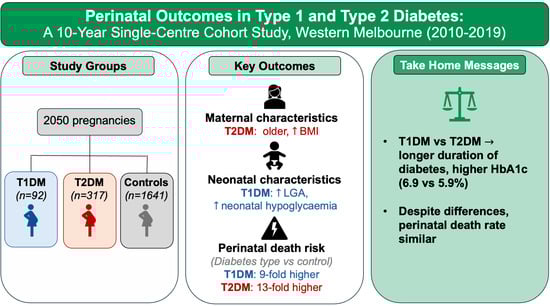
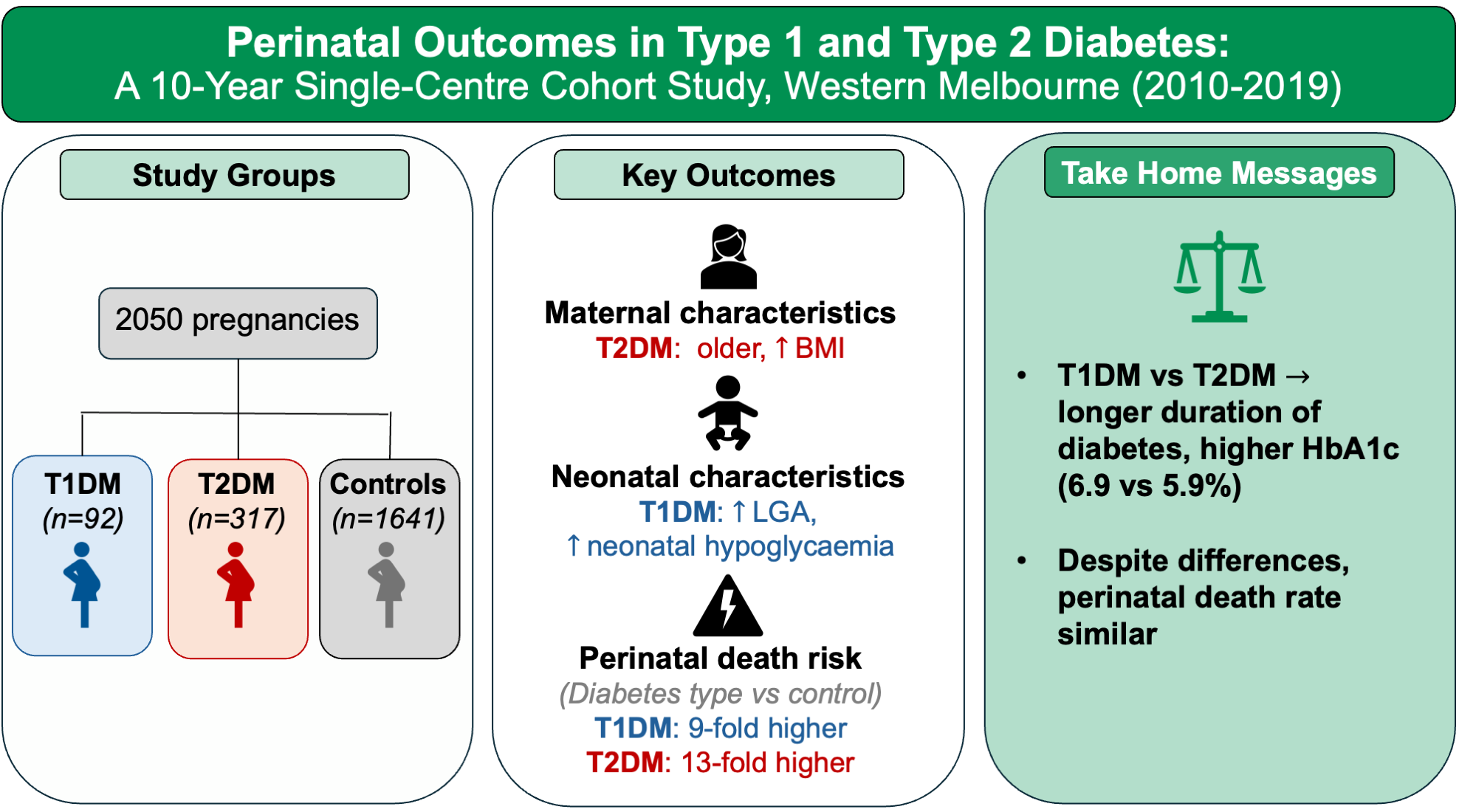
Background/Objectives: Previous studies have examined perinatal outcomes in women with type 1 (T1DM) or type 2 diabetes (T2DM) in pregnancy compared with the general population, but few have directly assessed the impact of T1DM and T2DM on pregnancy outcomes both against each other and the general population. The aim of this study is to compare the perinatal outcomes between women with pre-existing T1DM and T2DM in pregnancy and women without diabetes in pregnancy. Methods: This is a retrospective single-centre cohort study from January 2010 through December 2019, including 2050 singleton pregnancies with T2DM (n = 317), T1DM (n = 92) and controls (n = 1641). Results: Women with T2DM were older (T2DM vs. T1DM, 33.4 vs. 29.7 yrs, p < 0.001), had higher BMI (35.4 vs. 26.8 kg/m2, p < 0.001), and were more likely multiparous (75.4 vs. 55.4%, p < 0.001). T1DM was associated with poorer glycaemic control throughout pregnancy. Infants of mothers with T1DM had increased rates of large for gestational age (45.0 vs. 26.1%, p = 0.005) and neonatal hypoglycaemia (38.0 vs. 20.8%, p < 0.001). The risk of perinatal death was nine-fold higher for T1DM (OR 9.27, p = 0.01) and 13-fold for T2DM (OR 13.5, p < 0.001) compared to controls, with no significant difference between diabetes types. Conclusions: Women with pre-existing diabetes had poorer perinatal outcomes compared to women without diabetes. Women with T2DM compared to T1DM had a similar risk of perinatal death, despite better glycaemic control and shorter duration of diabetes.

Graphical Abstract

1. Introduction

Amongst women in Australia of childbearing age (18–44 years), the prevalence of type 2 diabetes mellitus (T2DM) is around 0.8% [1]. The rates of women with pre-existing T2DM during pregnancy, defined as T2DM whose onset precedes conception (whether diagnosed prior to or in the early stages of pregnancy), are increasing over time. This shift relates in part to risk factors, including maternal obesity and older maternal age, which have also been demonstrated in multiple countries, including Canada, the UK and Australia [2,3,4,5]. In comparison, the prevalence of type 1 diabetes mellitus (T1DM) within the same age group has remained relatively stable at 0.45% [6], comparable to rates reported in countries such as Sweden (0.42%) [7]. This has resulted in a shift over the last two decades whereby T2DM is now the predominant form of pre-existing diabetes in pregnancy [5].
In the State of Victoria, Australia, the annual number of pregnancies in women with pre-existing diabetes (both T1DM and T2DM) nearly doubled between 1999 and 2008 [5]. This trend is particularly prominent in areas with higher rates of obesity, socioeconomic disadvantage, and cultural diversity. The area of Victoria serviced by Western Health, the centre involved in this study, has a population with high rates of many of these risk factors, and accordingly, rates of T2DM in pregnancy that are higher than the national average [6,8].
Pre-existing diabetes is a well-established risk factor for several adverse pregnancy outcomes, with women facing significantly higher risks compared to the general population [9,10]. Neonatal complications such as perinatal death, large for gestational age (LGA) infants, foetal growth restriction, congenital anomalies, prematurity, neonatal hypoglycaemia, and an increased need for neonatal intensive care following delivery are markedly more common for babies born to women with pre-existing diabetes. Maternal complications, including higher incidence of pre-eclampsia, preterm birth, miscarriage, shoulder dystocia, and an increased requirement for caesarean section (CS) or labour induction, also occur more frequently in these women. Studies comparing T1DM to the general population consistently report poorer outcomes, particularly for LGA infants and perinatal mortality [11]. Similarly, women with pre-existing T2DM also face significantly higher rates of adverse outcomes compared to women without diabetes, as demonstrated by Abell et al. [12], which highlighted increased rates of neonatal hypoglycaemia, LGA, and perinatal death. However, direct comparisons between women with pre-existing T1DM and T2DM have yielded mixed findings. Earlier systematic reviews suggested similar or even slightly better perinatal outcomes for women with T2DM compared to T1DM [13]. In contrast, Murphy et al. demonstrated similar, if not worse, perinatal outcomes among women with T2DM, despite better glycaemic control during pregnancy [14]. Conversely, Yu et al. [15] found more favourable outcomes in women with T2DM compared to T1DM. These conflicting results highlight the complex interplay of factors such as longer duration of diabetes in T1DM and higher burden of comorbidities in T2DM, which may influence perinatal outcomes and contribute to these observed differences.
The aim of this study was to compare the maternal characteristics, glycaemic control, and maternal and neonatal outcomes in pregnant women with pre-existing T2DM and T1DM to women without diabetes.

2. Materials and Methods

We performed a retrospective audit of women with pre-existing diabetes (T1DM and T2DM) and without diabetes (control group) who had singleton births of greater than 20 weeks’ gestation, whose antenatal care was provided at Western Health between 2010 and 2019. Women with gestational diabetes mellitus were excluded. For each index case of type 1 or type 2 diabetes, the control group comprised the two consecutive women who delivered immediately before and after that case. Ethical approval was obtained prior to study commencement (Western Centre for Health Research Education, QA2019.36_57348). Data were extracted from a local obstetrics outcomes database, the Birthing Outcomes System (BOS). BOS is an integrated pregnancy, birthing and neonatal record used by the majority of Victorian maternity hospitals and supported by the Management Consultants and Technology Services (MCATS) group. BOS is the primary data source for the Victorian Perinatal Data Collection and supports the Hospital-Acquired Infection Surveillance Programme (VICNISS), Infant Hearing Screening Programme (VIHSP) and Women’s and Children’s Healthcare Australasia (WHA) data collections [16].
Maternal variables included diabetes type, maternal age, country of birth, maternal body mass index (BMI) (from first measured weight and height in pregnancy), parity, duration of diabetes, previous caesarean sections, timing, and value of earliest recorded antenatal HbA1c and third-trimester HbA1c. Maternal outcomes included mode of birth and hypertensive disorders of pregnancy (documented diagnosis of either gestational hypertension or pre-eclampsia). Neonatal outcomes included gestational age at birth, birthweight, admission to neonatal nursery (transfer to either special care nursery and/or neonatal intensive care unit), neonatal hypoglycaemia (any recorded blood glucose < 2.6 mmol/L), neonatal jaundice requiring phototherapy, respiratory morbidity (defined as need for respiratory support including oxygen therapy, continuous positive airway pressure or mechanical ventilation), birth trauma, shoulder dystocia, congenital anomaly, stillbirth (foetal death at ≥20 weeks’ gestation) and perinatal death (stillbirth or neonatal death within the first 28 days of life).
Primary outcomes considered were rates of LGA infants (birth weight greater than 90th centile for gestational age), neonatal hypoglycaemia, primary CS (CS to women without a previous history of CS) and stillbirth or perinatal death.
Statistical analysis was performed using Stata version 12 (Stata Corporation, College Station, TX, USA). Differences in maternal and neonatal characteristics by maternal diabetes status were assessed. Matching was not performed for maternal age or perinatal outcomes, as these variables were adjusted in the multivariable variable analysis. Categorical variables were analysed using Pearson’s X2 test. Continuous variables were analysed using two-unpaired sample t-tests for normally distributed data and the Wilcoxon rank sum test for non-normally distributed data. Baseline comparisons were descriptive and unadjusted. A forward stepwise multivariable logistic regression model was developed to determine if maternal factors were significant predictors of each primary outcome, adjusting for potential confounders including BMI, glycaemic control, diabetes type, and maternal age where relevant. Variables were selected for inclusion in the models if they demonstrated an association on bivariate analysis (p < 0.05).

3. Results

A total of 2050 pregnancies were included in this study between the years 2010 and 2019, with 317 pregnancies associated with T2DM, 92 with T1DM and 1641 without any form of diabetes.

3.1. Maternal Characteristics

Women with T2DM compared to T1DM were significantly older (33.4 vs. 29.7 years, p < 0.001), had a higher BMI (34.5 vs. 26.8 kg/m2, p < 0.001) and were more likely to be multiparous (Table 1). Those with T2DM were older than those without diabetes in the control group (33.4 vs. 29.5 years, p < 0.001). There was no significant difference in age between those with T1DM and the control group (29.7 vs. 29.5 years, p = 0.95).
Those with T2DM had a greater average BMI compared to both T1DM (34.5 vs. 26.8 kg/m2, p < 0.001) and the control group (34.5 vs. 25.3 kg/m2, p < 0.001). Again, there was no significant difference between those with T1DM and controls (26.8 vs. 25.3 kg/m2, p = 0.17).
77.2% of women with T1DM were of a Caucasian background compared to 47% of those with T2DM and 40.3% in the control group. 20.8% of the control group were born in Southeast Asia compared to 15.8% with T2DM and 11.9% with T1DM.
Women with T1DM had a significantly longer duration of diabetes prior to pregnancy than those with T2DM (11.7 vs. 3.2 years, p < 0.001). Women with T2DM had lower first-trimester HbA1c levels compared to those with T1DM (49 vs. 62 mmol/L (6.6 vs. 7.8%), p < 0.001). Those with T2DM maintained lower HbA1c throughout their pregnancy to their third trimester (T2DM vs. T1DM, 41 vs. 52 mmol/L (5.9 vs. 6.9%), p < 0.001).
Regarding mode of birth, the control group had a higher proportion of vaginal births compared to those with T2DM (56.7 vs. 33.1%, p < 0.001). Assisted birth by forceps/vacuum was comparable across all groups. Women with T1DM had a significantly higher rate of planned CS prior to labour onset (elective CS) compared to those with T2DM (40.2 vs. 33.8%, p < 0.05). Elective CS rate was lower in the control group compared to T1DM (14.9 vs. 40.2%, p < 0.001) and T2DM (14.9 vs. 33.8%, p < 0.001). Emergency CS rate was similar between the groups with diabetes (T1DM vs. T2DM, 29.3 vs. 28.3%, p < 0.05). The rate of primary CS was also comparable amongst both diabetic groups (T1DM vs. T2DM, 29.2 vs. 28.9%, p < 0.94), and significantly higher than the control group for both T1DM (29.2 vs. 17.2%, p < 0.001) and T2DM (28.9 vs. 17.2%, p < 0.001).
There were similar rates between mothers with T2DM and T1DM of gestational hypertension (9.5 vs. 8%, p = 0.82) and pre-eclampsia (4.7 vs. 6.5%, p = 0.49). The control group compared to both diabetic groups were far less likely to have their pregnancy complicated by either gestational hypertension (control vs. T2DM, 2.3 vs. 9.5%, p < 0.001; control vs. T1DM, 2.3 vs. 8.7%, p = 0.008) or pre-eclampsia (control vs. T2DM, 1.5 vs. 4.7%, p < 0.001; control vs. T1DM, 1.5 vs. 6.5%, p < 0.001).

3.2. Neonatal Characteristics

Babies born to women with T1DM had poorer outcomes compared to babies born to women with T2DM for all outcomes apart from neonatal death (Table 2). They were born at an earlier gestation (T1DM vs. T2DM, 37.0 vs. 37.6 weeks, p < 0.001), more likely to be born LGA (45.0 vs. 26.1%, p = 0.005), require admission to the neonatal nursery (19.6% vs. 11.7%, p = 0.03), experience neonatal hypoglycaemia (38.0 vs. 20.8%, p < 0.001), jaundice requiring phototherapy (25.0% vs. 12.3%, p = 0.15) and respiratory morbidity (17.4 vs. 11.7%, p < 0.001).
The rate of birth trauma was comparable among women with T1DM and T2DM (25.0 vs. 22.1%, p = 0.55) and controls (T2DM vs. control, 22.1 vs. 21.9%, p = 0.95; T1DM vs. control, 25.0 vs. 21.9%, p = 0.49). Similarly, the rate of shoulder dystocia did not differ significantly across all three groups.
The rate of congenital anomaly was similar between diabetic groups but significantly higher compared to controls (T1DM vs. control, 10.9 vs. 4.5%, p = 0.005; T2DM vs. control, 11.0 vs. 4.5%, p < 0.001). Rate of perinatal death (T1DM vs. T2DM, 2.2 vs. 4.1%, p = 0.39) and stillbirth (2.1 vs. 2.8%, p = 0.90) were similar between T1DM and T2DM. However, both diabetic groups had significantly higher rates of perinatal death (T1DM vs. control 2.2 vs. 0.5%, p = 0.04; T2DM vs. control, 4.1 vs. 0.5%, p < 0.001) and stillbirth (T1DM vs. control, 2.1 vs. 0.2%, p = 0.002; T2DM vs. control, 2.8 vs. 0.2%, p < 0.001) compared to controls.

3.3. Multivariate Analysis

T1DM and T2DM were significant contributors to the outcomes of LGA, neonatal hypoglycaemia, primary CS, and perinatal death after adjusting for covariates (Figure 1).
Babies born to women with T1DM were more than five times as likely to be LGA compared to those born to women without diabetes (T1DM vs. control, adjusted odds ratio (aOR) 5.08 (95% CI 2.93, 8.81), p < 0.001). Babies born to women with T2DM were more than twice as likely to be LGA (T2DM vs. control, aOR 2.56 (95% CI 1.74, 3.76), p < 0.001). There was no statistically significant difference between diabetes types and the odds of LGA (aOR 1.74 (95% CI 0.90, 3.36), p = 0.09).
The likelihood of neonatal hypoglycaemia was significantly higher in babies born to women with T1DM compared to those born to women without diabetes (aOR 26.4 (95% CI 14.5, 47.9), p < 0.001). For women with T2DM, the risk of neonatal hypoglycaemia was over eight times greater than for those without diabetes (aOR 8.05 (95% CI 4.89, 13.3), p < 0.001). There was no significant difference between diabetes types.
The likelihood of primary CS was significantly increased for women with either T1DM or T2DM. Women with T1DM were almost twice as likely to have primary SC compared to the control group (aOR 1.98 (95% CI 1.17, 3.36), p = 0.01). The risk for those with T2DM was similar (adjusted OR 1.88 (95% CI 1.38, 2.56, p < 0.001).
Perinatal death was strongly associated with maternal pre-existing diabetes, irrespective of type. The risk of perinatal death was nine times higher in women with T1DM (adjusted OR 9.27 (95% CI 1.67, 51.50), p = 0.01), and 13 times higher in those with T2DM (adjusted OR 13.5 (95% CI 3.98, 45.79), p < 0.001) compared to women without diabetes. The difference between T1DM and T2DM was, however, not significant.
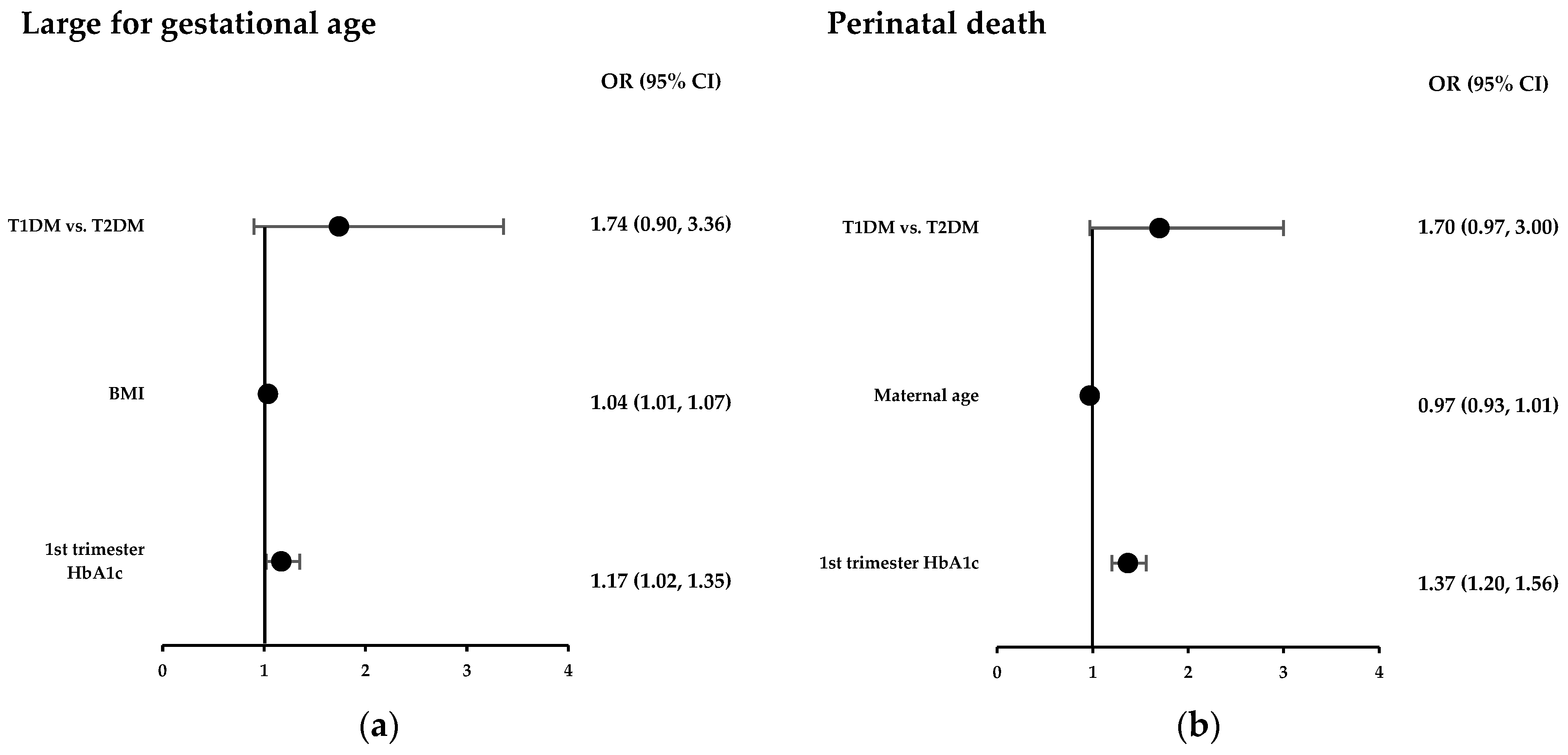
Maternal BMI was not an independent risk factor for LGA, primary CS, or perinatal death for women with and without diabetes. In only women with diabetes, maternal BMI was a significant contributor to the rate of LGA (adjusted OR 1.04 (95% CI 1.01, 1.07), p = 0.006).
Amongst women with diabetes only, first-trimester HbA1c was a predictor of LGA (adjusted OR 1.17 (95% CI 1.02, 1.35), p = 0.03) and neonatal hypoglycaemia (adjusted OR 1.37 (95% CI 1.20, 1.56), p < 0.001) (Figure 2).

4. Discussion

This retrospective cohort study demonstrated notable differences between women with pre-existing T1DM and T2DM compared to women without diabetes, highlighting potential areas for targeted intervention and care. Women with T2DM possessed several high-risk characteristics, including being older, multiparous, and having a higher BMI, yet still experienced better neonatal outcomes than those with T1DM. Compared to women without diabetes, women with pre-existing diabetes have overall poorer obstetric and neonatal outcomes, including a significantly increased risk of LGA, neonatal hypoglycaemia, primary CS and a significantly increased risk of perinatal death.
These findings align with a large prospective national study by Murphy et al., which demonstrated persistently elevated rates of adverse outcomes, including LGA and preterm birth, among women with T1DM and T2DM, despite overall improvements in care [17]. The study also highlighted significant clinic-to-clinic variation in outcomes, underscoring the need for consistent, high-quality antenatal care for women with pre-existing diabetes.
Consistent with existing literature, women with pre-existing T2DM were significantly older, more likely to be multiparous, and had higher BMI compared to those with T1DM [18,19]. The difference in age reflects the general epidemiological trend in which T2DM is often diagnosed later in life compared with T1DM and is strongly associated with increased BMI [20]. As reported in prior studies, maternal T1DM was associated with a significantly higher rate of LGA compared to T2DM [21,22], likely due to longer duration of diabetes prior to pregnancy and higher average glycaemic levels, both in early pregnancy and throughout. First-trimester HbA1c, a predictor of foetal growth [23], was significantly higher in women with T1DM and independently associated with both LGA and neonatal hypoglycaemia in our analysis.
Notably, neonates born to women with T1DM were more likely to require neonatal nursery admission and experienced higher rates of neonatal hypoglycaemia, jaundice requiring phototherapy and respiratory morbidity. This is in contrast with prior studies which have reported comparable neonatal outcomes between women with T1DM and T2DM in pregnancy [13,21,22,24]. Additional factors beyond HbA1c and mean glycaemic control, such as glycaemic variability, longer disease duration, or unmeasured maternal comorbidities, may also play a role.
Both T1DM and T2DM were associated with significantly higher rates of primary CS compared to women without pre-existing diabetes. However, the overall primary CS rate among women with diabetes was similar to the Australian national average for all women (27%) [25]. This is somewhat unexpected, given that diabetes in pregnancy is typically associated with increased likelihood of operative delivery [26]. One possible explanation is that our cohort includes a higher proportion of multiparous women, particularly in the T2DM group. Of note, the national average for nulliparous women is 40% [25].
In our cohort, the prevalence of pre-eclampsia was comparable between women with T1DM and T2DM. Among controls, the prevalence was 1.5%, lower than the national average of 2.7% in Australia [25] and the global estimate of 4.6% [27]. Comparable prevalence of pre-eclampsia between diabetes types may reflect the older age and higher BMI observed among women with T2DM, both established risk factors for pre-eclampsia, despite their shorter duration of diabetes and lower average HbA1c [28]. The lower prevalence observed among controls in turn likely reflects their younger age, lower BMI, and overall lower vascular risk profile.
Interestingly, there were no significant differences in rates of perinatal mortality, stillbirth, and congenital malformations between both diabetic groups, despite the differences in the other neonatal adverse outcomes and glycaemic control. Although the absolute number of events was low, these grave outcomes were markedly more common among women with either T1DM or T2DM compared to those without diabetes. This aligns with a recent systematic review by Balsells et al. [13], which reported higher perinatal death rates among women with T2DM (but comparable rates of neonatal death) compared to women with T1DM. T2DM similarly emerged as an independent risk factor for perinatal death compared to T1DM in a large study by Murphy et al. [14], along with a third-trimester HbA1c of 48 mmol/L (6.5%) or higher. Overall, our study supports existing literature [29], that pre-existing diabetes, irrespective of type, is a risk factor for perinatal death, highlighting the need to investigate why women with T2DM have similar risk of perinatal death to women with T1DM despite having better glycaemic control and fewer neonatal complications.
The strength of this study includes the comprehensive dataset with detailed demographic, glycaemic and perinatal data from a culturally diverse population with a high burden of chronic diseases. The comparison to the control group, matched for birth time, underlines the impact pre-existing diabetes has on perinatal outcomes when compared to the general pregnant population and reflects real-world antenatal outcomes from a population with high metabolic risk. Outcomes were adjusted for several covariates, including maternal BMI, glycaemic control, and diabetes type.
Study limitations include the retrospective nature of the data, reliant on medical records used for clinical purposes. Although efforts were made to control for confounding variables, unmeasured factors such as gestational weight gain and pre-conception HbA1c may influence the observed outcomes. Additionally, this study reflects antenatal care delivered between 2010 and 2019. Since then, use of continuous glucose monitoring and insulin pump therapy, particularly among women with T1DM, has become more widespread. While more recent data would be valuable, exclusion of the COVID-19 pandemic period avoids the confounding effects of significant changes to antenatal care delivery during that time.
In conclusion, this study contributes valuable insights into the distinct maternal characteristics and outcomes associated with pre-existing diabetes in pregnancy, regardless of type. These women face significantly higher rates of adverse pregnancy outcomes compared to the general population without diabetes. Despite differences in glycaemic control and duration of diabetes, women with T2DM in our study had similar rates of perinatal death to those with T1DM. These findings support the need for preconception care, close surveillance, and further research to clarify risk factors for perinatal morbidity and mortality in T2DM pregnancies, particularly in ethnically and socioeconomically diverse populations.

Author Contributions

Conceptualization and Methodology, I.-L.L., P.S.H., J.M.S., G.T. and R.F.; Formal analysis, I.-L.L.; Data curation, J.L. (Jean Lu), R.E. and J.L. (Jing Luo); Writing—original draft preparation, Paul Lawton; Writing—review and editing, P.L., J.L. (Jean Lu), R.E., J.L. (Jing Luo), R.F., D.K., P.S.H., J.M.S., G.T., C.J.Y. and I.-L.L.; Supervision, I.-L.L. All authors have read and agreed to the published version of the manuscript.

Funding

This research received no external funding.

Institutional Review Board Statement

The study was conducted in accordance with the Declaration of Helsinki and approved by the Ethics Committee of The Western Centre for Health Research Education, QA2019.36_57348 on 21 September 2019.

Informed Consent Statement

This study was a retrospective cohort analysis conducted using de-identified medical records. Patient consent was not necessary due to the retrospective study design and the use of de-identified data, as approved by the institutional Human Research Ethics Committee.

Data Availability Statement

The original contributions presented in this study are included in the article. Further inquiries can be directed to the corresponding author(s).

Conflicts of Interest

The authors declare no conflicts of interest.

Abbreviations

The following abbreviations are used in this manuscript:
T1DMType 1 diabetes mellitus
T2DMType 2 diabetes mellitus
LGALarge for gestational age
CSCaesarean section
OROdds ratio
aORAdjusted odds ratio
BOSBirthing Outcomes System
CIConfidence interval

References

  1. Australian Institute of Health and Welfare. Indicators for the Australian National Diabetes Strategy 2016–2020: Data Update; AIHW: Canberra, Australia, 2020. [Google Scholar]
  2. Hunt, K.J.; Schuller, K.L. The increasing prevalence of diabetes in pregnancy. Obstet. Gynecol. Clin. N. Am. 2007, 34, 173–199. [Google Scholar] [CrossRef] [PubMed]
  3. Feig, D.S.; Hwee, J.; Shah, B.R.; Booth, G.L.; Bierman, A.S.; Lipscombe, L.L. Trends in incidence of diabetes in pregnancy and serious perinatal outcomes: A large, population-based study in Ontario, Canada, 1996–2010. Diabetes Care 2014, 37, 1590–1596. [Google Scholar] [CrossRef] [PubMed]
  4. Bell, R.; Bailey, K.; Cresswell, T.; Hawthorne, G.; Critchley, J.; Lewis-Barned, N. Trends in prevalence and outcomes of pregnancy in women with pre-existing type I and type II diabetes. BJOG 2008, 115, 445–452. [Google Scholar] [CrossRef] [PubMed]
  5. Abouzeid, M.; Versace, V.L.; Janus, E.D.; Davey, M.A.; Philpot, B.; Oats, J.; Dunbar, J.A. A population-based observational study of diabetes during pregnancy in Victoria, Australia, 1999–2008. BMJ Open 2014, 4, e005394. [Google Scholar] [CrossRef]
  6. Scheme, N.D.S. Diabetes Australia: Diabetes Map. 2021. Available online: https://map.ndss.com.au (accessed on 4 August 2025).
  7. Wändell, P.E.; Carlsson, A.C. Time trends and gender differences in incidence and prevalence of type 1 diabetes in Sweden. Curr. Diabetes Rev. 2013, 9, 342–349. [Google Scholar] [CrossRef]
  8. Deitch, J.; Yates, C.J.; Hamblin, P.S.; Kevat, D.; Shahid, I.; Teale, G.; Lee, I. Prevalence of gestational diabetes mellitus, maternal obesity and associated perinatal outcomes over 10 years in an Australian tertiary maternity provider. Diabetes Res. Clin. Pract. 2023, 203, 110793. [Google Scholar] [CrossRef]
  9. McCarthy, E.A.; Williamson, R.; Shub, A. Pregnancy outcomes for women with pre-pregnancy diabetes mellitus in Australian populations, rural and metropolitan: A review. Aust. N. Z. J. Obstet. Gynaecol. 2019, 59, 183–194. [Google Scholar] [CrossRef]
  10. McElduff, A.; Ross, G.P.; Lagström, J.A.; Champion, B.; Flack, J.R.; Lau, S.M.; Moses, R.G.; Seneratne, S.; McLean, M.; Cheung, N.W. Pregestational diabetes and pregnancy: An Australian experience. Diabetes Care 2005, 28, 1260–1261. [Google Scholar] [CrossRef]
  11. Abell, S.K.; Boyle, J.A.; de Courten, B.; Knight, M.; Ranasinha, S.; Regan, J.; Soldatos, G.; Wallace, E.M.; Zoungas, S.; Teede, H.J. Contemporary type 1 diabetes pregnancy outcomes: Impact of obesity and glycaemic control. Med. J. Aust. 2016, 205, 162–167. [Google Scholar] [CrossRef]
  12. Abell, S.K.; Boyle, J.A.; de Courten, B.; Soldatos, G.; Wallace, E.M.; Zoungas, S.; Teede, H.J. Impact of type 2 diabetes, obesity and glycaemic control on pregnancy outcomes. Aust. N. Z. J. Obstet. Gynaecol. 2017, 57, 308–314. [Google Scholar] [CrossRef]
  13. Balsells, M.; García-Patterson, A.; Gich, I.; Corcoy, R. Maternal and fetal outcome in women with type 2 versus type 1 diabetes mellitus: A systematic review and metaanalysis. J. Clin. Endocrinol. Metab. 2009, 94, 4284–4291. [Google Scholar] [CrossRef] [PubMed]
  14. Murphy, H.R.; Howgate, C.; O’Keefe, J.; Myers, J.; Morgan, M.; Coleman, M.A.; Jolly, M.; Valabhji, J.; Scott, E.M.; Knighton, P.; et al. Characteristics and outcomes of pregnant women with type 1 or type 2 diabetes: A 5-year national population-based cohort study. Lancet Diabetes Endocrinol. 2021, 9, 153–164. [Google Scholar] [CrossRef]
  15. Yu, L.; Zeng, X.L.; Cheng, M.L.; Yang, G.Z.; Wang, B.; Xiao, Z.W.; Luo, X.; Zhang, B.F.; Xiao, D.W.; Zhang, S.; et al. Quantitative assessment of the effect of pre-gestational diabetes and risk of adverse maternal, perinatal and neonatal outcomes. Oncotarget 2017, 8, 61048–61056. [Google Scholar] [CrossRef]
  16. Safer Care Victoria. Maternity Dashboard User Handbook; Safer Care Victoria: Melbourne, Australia, 2019; p. 3. [Google Scholar]
  17. Murphy, H.R.; Bell, R.; Cartwright, C.; Curnow, P.; Maresh, M.; Morgan, M.; Sylvester, C.; Young, B.; Lewis-Barned, N. Improved pregnancy outcomes in women with type 1 and type 2 diabetes but substantial clinic-to-clinic variations: A prospective nationwide study. Diabetologia 2017, 60, 1668–1677. [Google Scholar] [CrossRef] [PubMed]
  18. Ali, D.S.; Davern, R.; Rutter, E.; Coveney, C.; Devine, H.; Walsh, J.M.; Higgins, M.; Hatunic, M. Pre-Gestational Diabetes and Pregnancy Outcomes. Diabetes Ther. 2020, 11, 2873–2885. [Google Scholar] [CrossRef] [PubMed]
  19. Murphy, H.R.; Steel, S.A.; Roland, J.M.; Morris, D.; Ball, V.; Campbell, P.J.; Temple, R.C. Obstetric and perinatal outcomes in pregnancies complicated by Type 1 and Type 2 diabetes: Influences of glycaemic control, obesity and social disadvantage. Diabet. Med. 2011, 28, 1060–1067. [Google Scholar] [CrossRef]
  20. American College of Obstetricians and Gynecologists (ACOG) Practice Bulletin No. 201: Pregestational Diabetes Mellitus. Obstet. Gynecol. 2018, 132, e228–e248. [Google Scholar] [CrossRef]
  21. Hillman, N.; Herranz, L.; Vaquero, P.M.; Villarroel, A.; Fernandez, A.; Pallardo, L.F. Is Pregnancy Outcome Worse in Type 2 Than in Type 1 Diabetic Women? Diabetes Care 2006, 29, 2557–2558. [Google Scholar] [CrossRef]
  22. Seah, J.-m.; Kam, N.M.; Wong, L.; Tanner, C.; Shub, A.; Houlihan, C.; Ekinci, E.I. Risk factors for pregnancy outcomes in Type 1 and Type 2 diabetes. Intern. Med. J. 2021, 51, 78–86. [Google Scholar] [CrossRef]
  23. Lemaitre, M.; Ternynck, C.; Bourry, J.; Baudoux, F.; Subtil, D.; Vambergue, A. Association Between HbA1c Levels on Adverse Pregnancy Outcomes During Pregnancy in Patients With Type 1 Diabetes. J. Clin. Endocrinol. Metab. 2022, 107, e1117–e1125. [Google Scholar] [CrossRef]
  24. Clausen, T.D.; Mathiesen, E.; Ekbom, P.; Hellmuth, E.; Mandrup-Poulsen, T.; Damm, P. Poor Pregnancy Outcome in Women With Type 2 Diabetes. Diabetes Care 2005, 28, 323–328. [Google Scholar] [CrossRef] [PubMed]
  25. Australian Institute of Health and Welfare. Australia’s Mothers and Babies. 2025. Available online: https://www.aihw.gov.au/reports/mothers-babies/australias-mothers-babies (accessed on 4 August 2025).
  26. Cundy, T.; Morgan, J.; O’Beirne, C.; Gamble, G.; Budden, A.; Ivanova, V.; Wallace, M. Obstetric interventions for women with type 1 or type 2 diabetes. Int. J. Gynecol. Obstet. 2013, 123, 50–53. [Google Scholar] [CrossRef] [PubMed]
  27. Abalos, E.; Cuesta, C.; Grosso, A.L.; Chou, D.; Say, L. Global and regional estimates of preeclampsia and eclampsia: A systematic review. Eur. J. Obstet. Gynecol. Reprod. Biol. 2013, 170, 1–7. [Google Scholar] [CrossRef] [PubMed]
  28. Rana, S.; Lemoine, E.; Granger, J.P.; Karumanchi, S.A. Preeclampsia. Circ. Res. 2019, 124, 1094–1112. [Google Scholar] [CrossRef]
  29. Macintosh, M.C.; Fleming, K.M.; Bailey, J.A.; Doyle, P.; Modder, J.; Acolet, D.; Golightly, S.; Miller, A. Perinatal mortality and congenital anomalies in babies of women with type 1 or type 2 diabetes in England, Wales, and Northern Ireland: Population based study. BMJ 2006, 333, 177. [Google Scholar] [CrossRef]
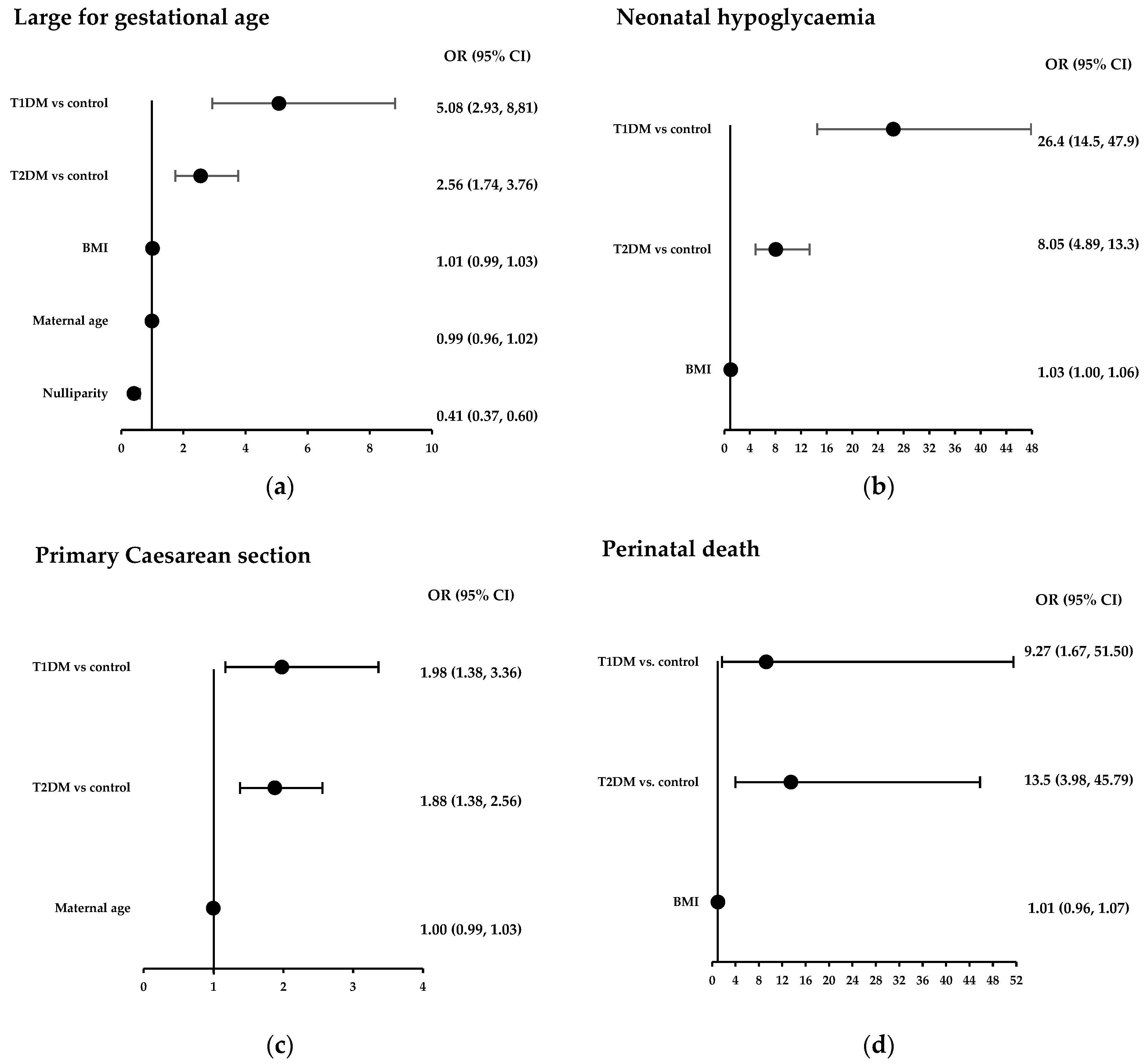
Figure 1. Forest plots demonstrating risks of adverse perinatal outcomes for all patients (including control group) according to various risk factors per multivariable analysis: (a) Large for gestational age; (b) Neonatal hypoglycaemia; (c) Primary Caesarean section; and (d) Perinatal death.
Diabetology 06 00151 g001
Figure 2. Forest plots demonstrating risks of adverse perinatal outcomes for patients with diabetes only, according to various risk factors per multivariable analysis: (a) Large for gestational age; and (b) Perinatal death.
Diabetology 06 00151 g002
Table 1. Maternal characteristics and outcomes.
CharacteristicControlsT2DMT1DMp-Value *
Age (years)n = 1641 n = 317 n = 92
29.5 (6.5)33.4 (5.1)29.7 (5.8)* <0.001
0.95
<0.001
Country of birth (%)
Caucasian661 (40.3)149 (47)71 (77.2)<0.001
Southeast Asia342 (20.8)50 (15.8)11 (11.9)
South Asia293 (17.8)34 (10.7)1 (1.1)
Africa106 (6.5)26 (8.2)3 (3.3)
Pacific Islands82 (5.0)43 (13.6)4 (4.4)
Others157 (9.6)13 (4.1)2 (2.1)
BMI (kg/m2)n = 1319 n = 269 n = 72
25.3 (22.0, 31.0)34.5 (29.6, 40.4)26.8 (22.9, 31.6)* <0.001
0.17
<0.001
Parity (%)
0650 (39.6)78 (24.6)41 (44.6)* <0.001
>1991 (60.4)239 (75.4)51 (55.4) 0.35
<0.001
Duration of diabetes (years)-n = 303n = 87
3.2 (3.5)11.7 (7.9) <0.001
HbA1c (First in pregnancy)
mmol/L
%
-n = 304n = 86
49 (41, 61)
6.6 (5.9, 7.7)
61 (50, 78)
7.75 (6.7, 9.3)
<0.001
HbA1C (3rd trimester)
mmol/L
%
-n = 295n = 89
41 (36, 51)
5.9 (5.4, 6.8)
52 (44, 62)
6.9 (6.2, 7.8)
<0.001
Mode of Delivery (%)n = 1618n = 317n = 92
Vaginal delivery918 (56.7)105 (33.1)19 (20.7)* <0.001
Forceps/Vacuum190 (11.7)15 (10.8)9 (9.8) <0.001
Elective caesarean section241 (14.9)107 (33.8)37 (40.2) 0.05
Emergency caesarean section269 (16.6)90 (28.3)27 (29.3)
Primary caesarean section (%)234 (17.2)78 (28.9)21 (29.2)* <0.001
0.009
0.94
Gestational hypertension (%)37 (2.3)30 (9.5)8 (8.7)* <0.001
<0.001
0.35
Pre-eclampsia (%)24 (1.5)15 (4.7)6 (6.5)* <0.001
<0.001
0.49
Values are reported as n (%) mean (SD) or median (IQR). p-values: * T2DM vs. control, T1DM vs. control, T1DM vs. T2DM.
Table 2. Neonatal characteristics and outcomes.
CharacteristicControlsT2DMT1DMp-Value *
Sex (male)n = 1641n = 317n = 92
811 (49.4%)166 (52.4%)41 (44.6%)0.99
Gestation at birth (weeks)39.2 (38.4, 40)37.6 (37.0, 38.2)37.0 (36.1, 37.6)* <0.001
< 0.001
<0.001
Birth weight (g)3302.5 (560)3291 (873)3390 (747)* 0.42
0.02
0.207
Birth weight z-score−0.1 (−0.8, 0.5)0.6 (−0.4, 1.8)1.2 (0.29, 1.9)* <0.001
<0.001
0.007
Large for gestational age (%)137 (8.4%)77 (24.3%)33 (35.9%)* <0.001
<0.001
0.03
SCN admission (%)58 (3.5%)37 (11.7%)18 (19.6%)* <0.001
<0.001
0.05
Neonatal hypoglycaemia (%)40 (2.4%)66 (20.8%)35 (38.0)* <0.001
<0.001
0.003
Jaundice with phototherapy (%)83 (5.1%)39 (12.3%)23 (25.0%)* <0.001
<0.001
0.15
Respiratory morbidity (%)74 (4.5%)37 (11.7%)16 (17.4%)* <0.001
<0.001
0.001
Birth trauma (%)360 (21.9%)70 (22.1%)23 (25.0%)* 0.95
0.49
0.56
Shoulder dystocia (%)28 (1.7%)9 (2.8%)0 (0%)* 0.18
0.21
0.10
Congenital anomaly (%)73 (4.5%)35 (11.0%)10 (10.9%)* <0.001
0.005
0.96
Perinatal death (%)8 (0.5%)13 (4.1%)2 (2.2%)* <0.001
0.04
0.39
Stillbirth (%)3 (0.2%)9 (2.8%)2 (2.1%)* <0.001
0.002
0.73
Values are reported as n (%) mean (SD) or median (IQR); p-values: * T2DM vs. control, T1DM vs. control, T1DM vs. T2DM.
Disclaimer/Publisher’s Note: The statements, opinions and data contained in all publications are solely those of the individual author(s) and contributor(s) and not of MDPI and/or the editor(s). MDPI and/or the editor(s) disclaim responsibility for any injury to people or property resulting from any ideas, methods, instructions or products referred to in the content.