


Abstract
Background/Objectives: Type 2 diabetes (T2DM) is a leading cause of vision loss. Functional measurements (color vision and contrast sensitivity) are sensitive to early changes in eyes even before retinopathy is present. This study evaluates a novel color perimetry device as an indicator of diabetic eye disease. Methods: 40 (age-matched) subjects were divided into three groups by HbA1c or previous diagnosis (control ≤ 5.6%, prediabetes 5.7–6.4%, and diabetes ≥ 6.5%). Additional health metrics gathered included BMI, body fat %, total cholesterol, HDL/LDL levels, blood glucose, and blood pressure. Novel color perimetry which measures chromatic thresholds at four locations, three degrees from the fovea, for five colors (achromatic, red, green, blue, and yellow) was completed. Mars contrast and L’Anthony D15 color testing were also completed. Lens photos excluded those with cataracts. Results: There were differences between the groups for HbA1c (p < 0.001), BMI (p = 0.046), body fat % (p = 0.020), and color perimetry for the yellow condition only (p = 0.013). The achromatic condition was highly associated with Mars contrast sensitivity (p < 0.001). HbA1c was associated with both parvocellular (average of red and green) (p = 0.014) and koniocellular (average of blue and yellow) color perimetry performance (p = 0.022). Conclusions: HbA1c is associated with color perimetry across both retinal pathways. The yellow condition in particular holds promise as a biomarker for the presence of functional changes in diabetes prior to the onset of retinopathy. Other health metrics did not influence chromatic thresholds. More research needs to be conducted to evaluate color perimetry in these patient groups to understand these relationships.
1. Introduction
Diabetic retinopathy (DR) is a microvascular complication of diabetes (DM) and is the leading cause of vision loss in working-aged adults [1,2,3]. The condition involves progressive retinal vascular damage, including microaneurysms, hemorrhages, ischemia, and, if advanced enough, neovascularization and macular edema. While DR is thought of as a microvascular complication of DM, in some cases retinal neurodegeneration may precede visible vascular changes in the retina [1,2,4,5,6]. Patients with early-stage retinopathy lack noticeable changes in their visual acuity, which increases the problem as it is often left untreated. Early diagnostic techniques which can simply and accurately detect potential neurodegeneration and loss of visual function are needed to help save sight.
In DM, both color vision and contrast sensitivity are frequently decreased, even before the onset of clinically apparent retinopathy [7,8,9,10,11,12,13]. These changes are associated with both retinal neurodegeneration and microvascular dysfunction, and their severity increases with longer disease duration and worse metabolic control [7,8,10,12,13,14,15]. This makes color vision a candidate test for the diagnosis of early diabetic eye disease. In studies of diabetes, color vision and contrast sensitivity are usually measured in the central part of the retina, the fovea, where cone cells are most densely packed and vision is sharpest [7,8,9]. Tests commonly include color arrangement tasks, color plates, and contrast sensitivity charts [7,8,9,10]. However, changes in the retina in DM occur across the entire tissue, meaning much of the retina is untested. Research consistently shows that blue-yellow (B/Y) vision (derived from the koniocellular pathway) is affected earlier and more severely than red-green (R/G) vision (derived from the parvocellular pathway) [7,8,9,11,12]. One of the reasons for this lies in the fact that the retina contains far fewer blue-sensitive (S) cones than red-sensitive (L) or green-sensitive (M) cones, so even small losses lead to noticeable functional deficits [9,15]. Additionally, the neural pathways carrying B/Y signals appear to be more vulnerable to the metabolic and vascular changes caused by diabetes [11,13,14]. In contrast, R/G pathways have more cones and redundancy, making them less sensitive to early damage [9,11,12,15]. Contrast sensitivity is also reduced in diabetic patients, likely due to early microvascular damage, retinal neural dysfunction, and impaired photoreceptor signaling, which together degrade the retina’s ability to detect differences in luminance and fine detail [10,14,15,16,17,18]. This explains why early diabetic changes often manifest as subtle B/Y vision and contrast deficits [7,8,9,11,12,18].
Measuring color vision and contrast sensitivity outside the very center of the retina, in areas just around the fovea or further out in the periphery, could be more sensitive for tracking early changes in diabetic retinopathy [6,11,13,14,15]. Early diabetic damage, including small blood vessel changes and neural dysfunction, often appears first in these non-foveal regions [13,14]. B/Y vision, dependent on the much less numerous S cones, is especially affected in these areas as S-cone concentration peaks just outside of the fovea [9,11,15,19]. Even in their most concentrated areas, the S-cones account for only a small percentage of retinal cones and their density remains low overall. Testing outside the fovea could therefore reveal more subtle vision changes earlier than standard foveal tests, potentially making it a useful approach for monitoring the progression of diabetic eye disease.
With a novel color perimetry device created at the University of Houston College of Optometry, we investigate whether the device could serve to be useful in detecting differences in functional color vision, both in the koniocellular and parvocellular color pathways in DM. Our previous work finds the perimeter to be repeatable over time in participants with stable health and without glucose dysfunction [20]. For this current study, we particularly examined these differences in individuals without DM and individuals with prediabetes (PreDM) and type 2 diabetes (T2DM), before clinical changes from DM are evident. Here, we evaluate differences in color perimetry and compare them with overall health indices in these subject groups. This study is the first step in evaluating the perimeter as a test for ocular diabetic health. This pilot evaluation is necessary before comparing the perimeter to other functional and structural tests in future work.
2. Materials and Methods
A total of 40 subjects between the ages of 30–60 years old were recruited without restriction on race or sex. This was more than a sufficient size for an alpha level of 0.05 and a beta level of 0.2 according to power calculations. They all consented in writing, and the study followed the tenets of the declaration of Helsinki. Of the total number of subjects, 15 were controls (HbA1c of 5.6% or below), 10 had PreDM (HbA1c 5.7–6.4%), and 15 had T2DM (HbA1c of 6.5% or above or diagnosed by a physician). The three groups were age-matched. Exclusion criteria included subjects with a history of ocular disease not related to DM or eye surgery other than cataract surgery, those with cataracts greater than a grade 2 on the lens opacities classification system III (LOCS III scale), individuals with a history of color deficiency, individuals with type 1 diabetes (T1DM), and anyone with a pacemaker. Subjects self-reported demographic information, medical and ocular history, diabetic status, and current medications with their associated condition. Demographic information gathered included race, age, and sex.
Visual acuity was gathered using an Early Treatment Diabetic Retinopathy Study (ETDRS) chart, and individuals with best corrected visual acuities worse than 20/30 were excluded from the study. Participants completed a L’Anthony D15 color test and a Mars contrast sensitivity (CS) test. The eye was examined in a slit lamp to confirm media clarity and angle estimation. Color perimetry (described in detail below) was completed undilated on the right eye only.
After perimetry, the subject’s right eye was administered one drop of 1% tropicamide and one drop of 2.5% phenylephrine. Posterior-segment health was determined by fundus photography with a Topcon TRC-NW400 Non-Mydriatic Retinal Camera (Oakland, NJ, USA). Lenses were photographed while the subjects were dilated and were graded using LOCS III.
Each subject’s finger of choice was pricked with a standard commercial diabetes lancing device and <1.0 mL of blood was collected. The blood samples from all subjects were used to quantify blood HbA1c (using a Siemens DCA HbA1c analyzer point of care device, Washington DC USA), blood glucose, total cholesterol, triglycerides, HDL, and LDL levels (using an Alere Cholestech Waltham MA USA). HbA1c (≤5.6% control, 5.7–6.4% PreDM, and ≥6.5% DM) and previous-doctor diagnosis for diabetic subjects was used to classify subjects as a control, PreDM, or T2DM, respectively. The participants were not required to have fasted.
Each subject was asked to clean the bottom of their feet before stepping onto a Tanita Body Composition Analyzer (Arlington Heights IL USA) with their height in cm and biological sex inputted before starting the measurement. BMI (body mass index) and body fat % were obtained from the body composition analyzer and recorded. One subject in the T2DM group declined this procedure. Blood pressure was taken with an Omron HEM 7120 (Hoffman Estates, IL, USA) fully automatic digital blood pressure monitor.
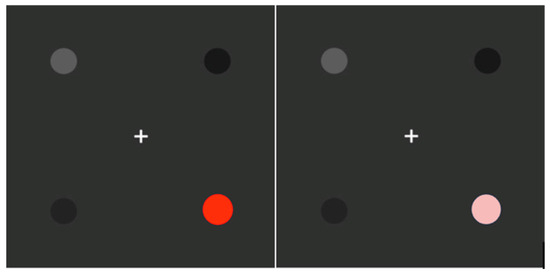
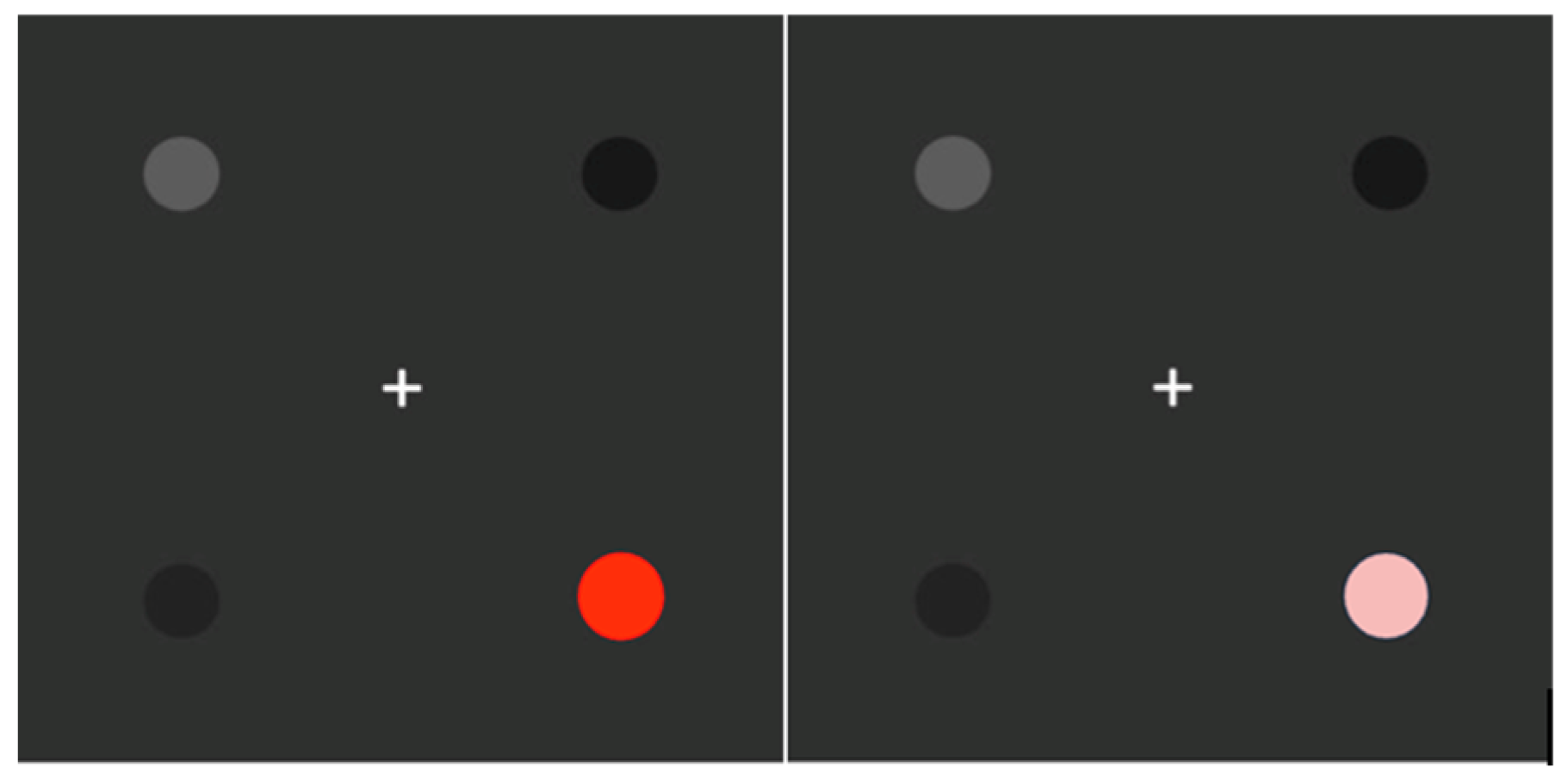
Subjects performed color perimetry testing as described in a previous publication [20]. Briefly, local chromatic thresholds were obtained using custom computer software that assessed 4 visual field locations 3 degrees from the fovea: superior temporal, superior nasal, inferior nasal, and inferior temporal. For 5 separate chromatic conditions (achromatic, red, green, blue, and yellow), circular spots (diameter = 0.5 degrees) were shown using interleaved staircases to determine the minimum chromatic contrast needed to identify the target location (see Figure 1). The order of chromatic conditions was randomized for each subject. Subjects were asked to press one of four buttons corresponding to each target location when they saw a stimulus flash in that corresponding location. Non-target locations included luminance noise to reduce non-chromatic cues for detection. The chromatic thresholds for the four locations for a given color were then averaged to produce one chromatic threshold for each subject. Thus, each subject completed the study with five separate chromatic thresholds, one for each chromatic condition. To normalize measures across conditions, these chromatic thresholds were converted to log cone contrast units for analysis [21].
Figure 1.
Perimetry testing from the subject’s point of view. On the left is an example of a high chromatic contrast target, with the right being an example of a low chromatic contrast target.
Single-factor ANOVAs (with 2 df) were used to evaluate differences in performance between the control, PreDM, and T2DM groups. Regression analyses were used to evaluate correlations between each health biomarker and color perimetry threshold values, as well as color perimetry threshold values, standard clinical color vision, and contrast sensitivity tests. A p-value < 0.05 was considered statistically significant and corrections for multiple comparisons was included as necessary.
3. Results
3.1. Systemic Health Biomarkers
Subject information for the health markers is shown in Table 1. There were differences between groups in HbA1c and random blood glucose level as expected. There were also group differences in BMI and body fat, but not in other metrics measured.
Table 1.
Systemic Health Biomarkers of the Subjects.
3.2. Color Perimetry and Other Ocular Tests
Table 2 outlines the color perimetry thresholds for the subject groups. The average color perimetry results were not different between groups for any color except for yellow.
Table 2.
Chromatic Thresholds for the Subjects.
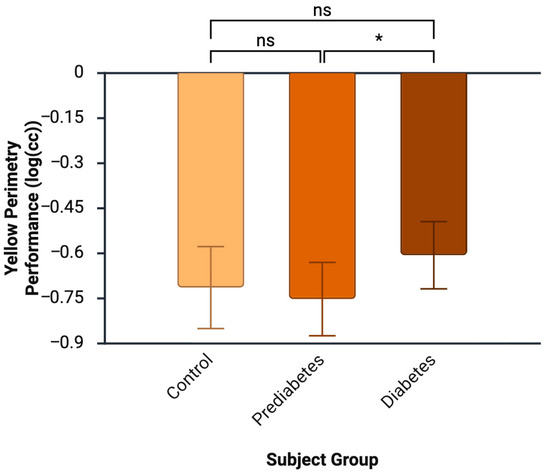
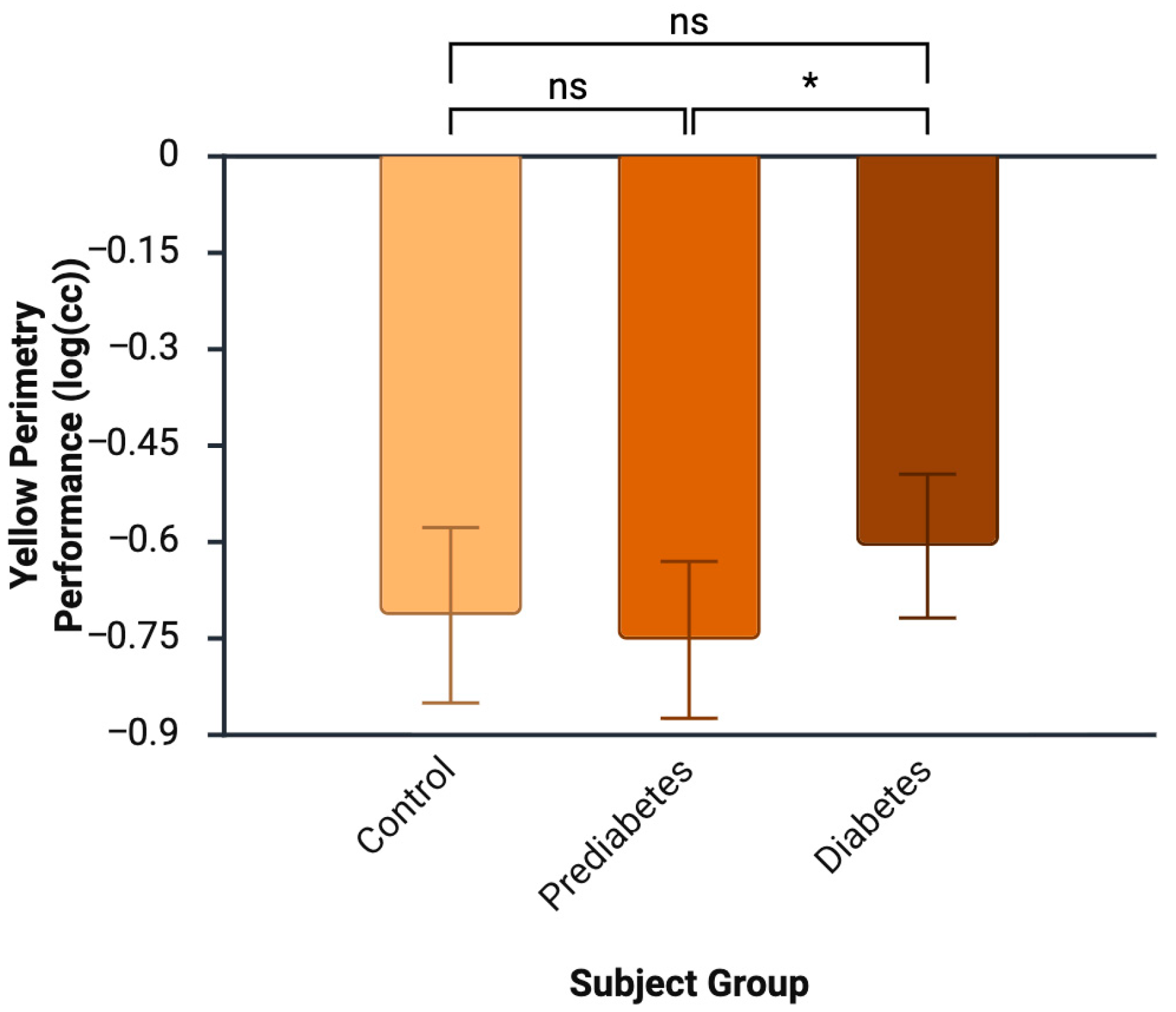
Figure 2 further highlights the differences between groups for the yellow chromatic condition. There was a significant difference in performance on the yellow chromatic conditions overall (p = 0.013). This was due to the highly significant difference in performance between the PreDM and T2DM groups (p = 0.018). The control and PreDM groups showed very similar performance (p = 0.732). The control and T2DM differed in performance as well, but it did not quite reach significance (p = 0.058).
Figure 2.
Average yellow chromatic condition performance with error bars between groups (N = 15 Control, N = 10 Prediabetes, and N = 15 Diabetes). The * indicates a significance difference between groups. ns indicates there is no significant difference.
Table 3 outlines the other ocular testing for the subject groups. There were no differences in the other eye metrics between groups.
Table 3.
Other Ocular Testing.
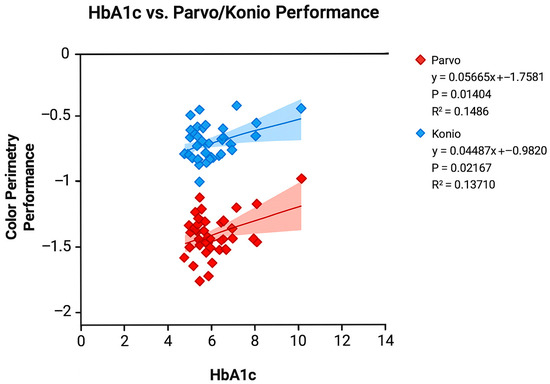
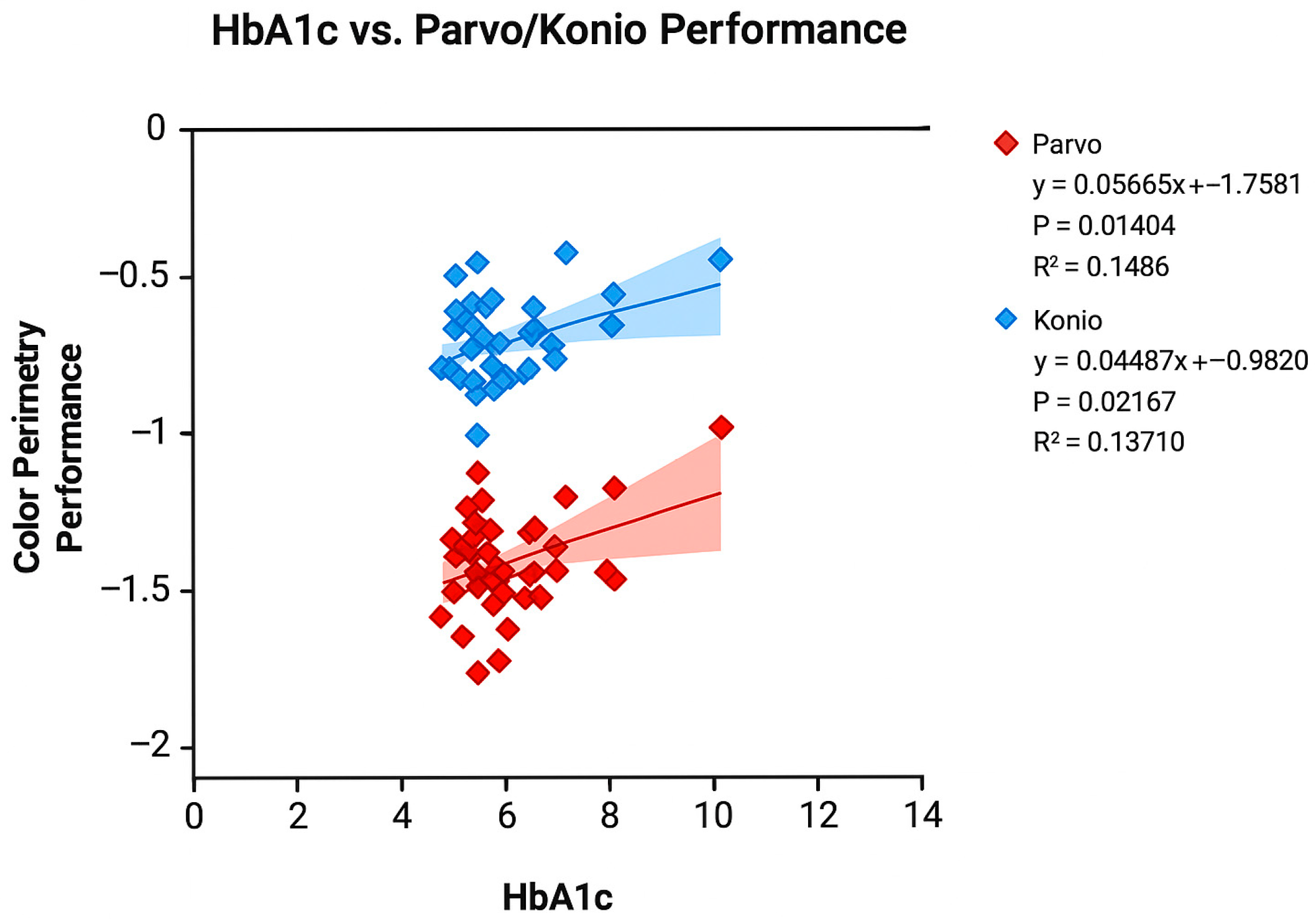
HbA1c was highly correlated with both parvocellular (average of red and green chromatic conditions) (p = 0.014) and koniocellular (average of blue and yellow chromatic conditions) (p = 0.022) performance on the novel color perimeter with a direct relationship as shown in Figure 3. Higher HbA1c typically resulted in higher thresholds, or worse performance, on color perimetry testing.
Figure 3.
HbA1c vs. perimetry performance in the parvocellular and koniocellular pathways (N = 40).
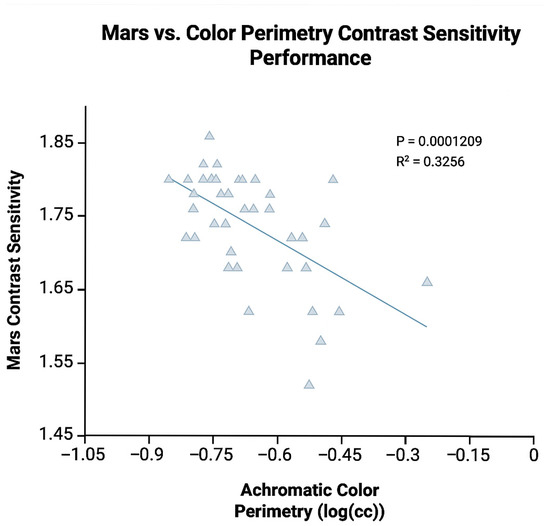
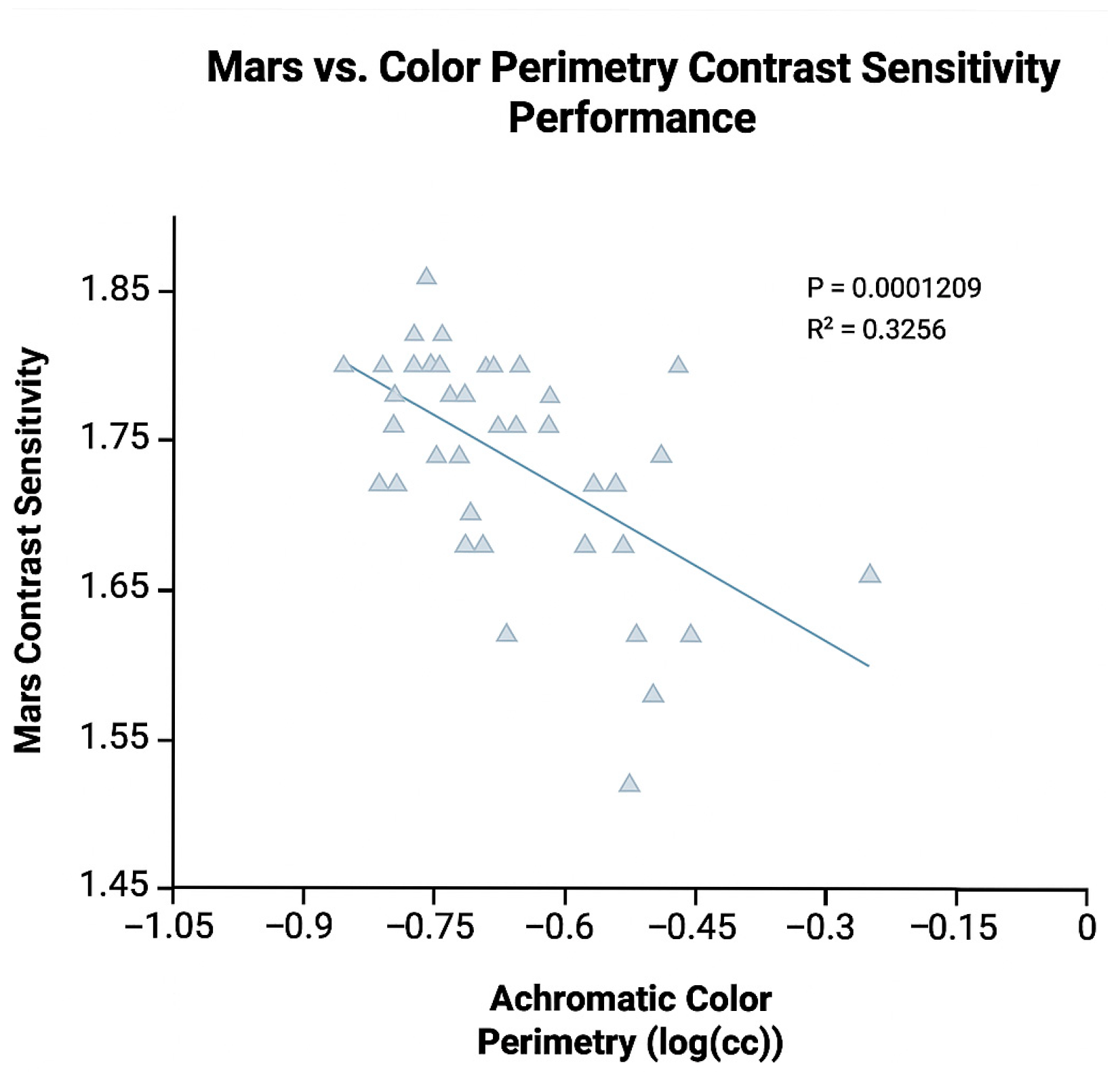
The Mars contrast sensitivity test and the achromatic perimetry condition showed a strong (p < 0.001) direct association, highlighted in Figure 4. Better performance on the Mars CS test typically meant better performance on the achromatic color condition on the color perimeter (a lower threshold) and vice versa. Both tests measure contrast sensitivity, so here we find that the contrast in the fovea, as measured by the Mars CS test, is directly correlated with the contrast sensitivity outside the foveal area, as measured by the color perimeter.
Figure 4.
Mars contrast sensitivity test performance vs. achromatic color perimetry performance (N = 40).
Other associations between individual perimetry conditions across groups and health data (blood glucose, total cholesterol, triglycerides, HDL, LDL, BMI, body fat, and systolic/diastolic BP) were not consistent. We noted a potential relationship between blue color perimetry and BMI (p = 0.034), indicating there may be koniocellular pathway changes related to overall health in these patient groups however after corrections for multiple comparisons this is not significant. However, there were no other trends present between color perimetry and health indices other than HbA1c.
4. Discussion
When examining differences between the three subject groups (control, PreDM, and T2DM), several health and performance variables demonstrated significant differences. As expected, HbA1c, blood glucose, BMI, and body fat % differed significantly, as well as the yellow chromatic perimetry performance. These findings align with the well-documented trajectory of worsening glycemic control and body composition measures across the spectrum from normal metabolism to PreDM and DM.
The differences in age between groups was not significant, showing that the groups were successfully age-matched. This is important to control for changes in overall perimetry and lens changes that occur with age [22]. There were no differences in LOCS III scores between these groups, meaning the differences noted were not solely lens or media-related changes but represent other changes in the koniocellular pathway not related to media.
Among the chromatic conditions, the yellow stimulus was the only one to reveal significant between-group differences (Table 2 and Figure 2). This highlights the known preferential effects of DM progression on the koniocellular system. While yellow was the only chromatic condition to show significant differences between groups, HbA1c showed strong associations with both parvocellular (averaged red/green performance) and koniocellular (averaged blue/yellow performance) pathways (Figure 3). This finding highlights the potential utility of the novel color perimetry in capturing subtle functional changes associated with systemic metabolic dysregulation. Fewer studies have found prominent differences in R/G color loss, compared to many that have found B/Y color loss, in DM patients with no retinopathy or very early DR [7,8,9,11]. To the best of our knowledge, our study is the first to find a direct correlation between parvocellular color loss and HbA1c, although other work has found relationship between color and glycemic control [9,23,24]. One potential explanation lies in the fact that the retinal locations we measured are averaged across multiple areas of the retina, not just in one location in the fovea. This indicates a larger area of neuroretinal tissue may be affected by blood glucose control [4,5,6] and not just the fovea This is especially important as our T2DM group in our study had very few noticeable vascular changes. Only one subject had mild retinopathy. Only a few microaneurysms were noted for this subject. This indicates that both parvocellular and koniocellular cells are altered by blood glucose control early in the DM process [4,5,6]. More work is needed to determine where in the pathway the changes are located.
When examining broader systemic health data beyond HbA1c, including point glucose, lipids, BMI, body fat percentage, and blood pressure, only one of the tested relationships reached significance (BMI and blue chromatic performance). This suggests that while the color perimetry device is sensitive to HbA1c-related functional changes, its relationship with other systemic health markers may be more limited or may require larger sample sizes to detect.
Similarly, no group-level differences were identified for total cholesterol, triglycerides, HDL/LDL levels, or blood pressure. A likely explanation for the lack of lipid and blood pressure-related differences lies in the clinical management of the T2DM group, as many subjects were undergoing pharmacological treatment for co-morbid dyslipidemia and hypertension, reducing them to normal or near normal levels. This was especially evident with the T2DM group having lower average total cholesterol, LDL, and blood pressure values compared to the control and PreDM groups, who were not prescribed such therapies. Additionally, no significant differences between groups were observed in Mars contrast sensitivity, L’Anthony D-15 performance, or in achromatic, red, green, and blue chromatic perimetry conditions.
With respect to contrast-related measures, the results demonstrated a strong correlation between Mars CS scores and achromatic performance on the color perimeter (Figure 4). This was expected as both tests measure contrast, although in different locations. It is logical that if contrast is reduced in one part of the retina due to diabetes, it could be reduced in other parts as well. Although there were no between-group differences, this strong association suggests that the achromatic condition of the device is functioning as intended; specifically, it is highly associated with Mars CS which measures CS at the fovea. This provides further support for the use of the novel device in assessing fundamental visual function. We have also noted in related work that the achromatic stimulus correlates well with traditional perimetry for age and location related changes [25]. However no similar clinical comparison exists for the colored stimuli.
This study did have some important limitations to note. First the sample size of preDM subjects limits the conclusions that can be drawn about this group. PreDM is a highly variable condition and almost none of the subjects knew they had preDM before reporting to the study. These subjects may be different from a group of diagnosed preDM subjects. A follow up study which is both longitudinal in nature and includes a larger preDM group would be helpful to further understand these relationships. A larger sample might also give us the ability to evaluate race and ethnicity differences across colors, as well as the impact of various medications and co-morbidities that could not be evaluated here. Second, some of the subjects were not fasting for their lipid testing which may make the results of those tests less accurate and less generalizable. We may have found stronger relationships with fasted data. Third, the perimetry data gathered does not clearly delineate between groups. There is overlap in the values. Merely knowing the perimeter value is not enough, at this time, to elucidate the diabetes status in a subject. A larger sample with more DM subjects with retinopathy may help further delineate these groups and values. In this same follow-up, it may also be useful to test both eyes as retinopathy can vary between eyes. Due to logistical constraints and instrument setup, only one eye was tested in this study but comparisons between eyes could be useful going forward.
Taken together, these results hold promise that the novel color perimetry device could be a potential tool for monitoring early functional changes in individuals at risk for or living with diabetes. The ability to detect functional deficits prior to the onset of clinically evident structural pathological changes could prove invaluable in improving early diagnosis and intervention in diabetic eye disease. This aligns with the current OCT biomarker literature demonstrating neuroretinal thinning and inner-layer disorganization as precursors to microvascular pathology [26,27,28,29,30,31]. However, further studies which create a normative data base with expanded perimetry testing locations and comparisons to other functional and structural tests are already underway and necessary to confirm these preliminary findings and to establish the clinical viability of this approach.
Author Contributions
Conceptualization, L.B., D.R.C. and W.W.H.; methodology D.R.C. and W.W.H.; software, C.S.W. and D.R.C.; validation B.O.-A., L.B., C.S.W., D.R.C. and W.W.H.; formal analysis, L.B. and W.W.H.; investigation, L.B., B.O.-A., C.S.W. and J.D.S.; resources D.R.C. and W.W.H.; data curation L.B., B.O.-A., J.D.S. and C.S.W.; writing—original draft preparation, L.B.; writing—review and editing, W.W.H., B.O.-A., C.S.W., D.R.C. and J.D.S.; visualization, L.B., W.W.H. and D.R.C.; supervision, J.D.S., D.R.C. and W.W.H.; project administration, W.W.H.; funding acquisition, D.R.C. and W.W.H. All authors have read and agreed to the published version of the manuscript.
Funding
This research was funded by the National Eye Institute, grant number R21EY033958, to WWH and DRC; National Eye Institute grant T35EY007088 to LB, and grant P30EY007551.
Institutional Review Board Statement
The study was conducted in accordance with the Declaration of Helsinki, and approved by the Institutional Review Board of The University of Houston (UH IRB number 00003654) on 6 March 2022.
Informed Consent Statement
Informed consent was obtained from all subjects involved in the study.
Data Availability Statement
Data can be shared on reasonable written request.
Acknowledgments
The authors thank Julia Benoit for her help in preparation and funding acquisition. Rachana Kafle, Trey Carter, and Shelley Ho for their assistance with data and pilot work. We also thank Laura Frishman for her support during the T35 program and Kaitlyn Saponzik for her overall support of this project.
Conflicts of Interest
The authors declare no conflicts of interest.
Abbreviations
The following abbreviations are used in this manuscript:
| T2DM | Type 2 Diabetes |
| HbA1c | Hemoglobin A1c |
| BMI | Body Mass Index |
| HDL | High-Density Lipoprotein |
| LDL | Low-Density Lipoprotein |
| DR | Diabetic Retinopathy |
| DM | Diabetes |
| PreDM | Prediabetes |
| LOCS | Lens Opacities Classification System |
| ETDRS | Early Treatment Diabetic Retinopathy Study |
| CS | Contrast Sensitivity |
| ANOVA | Analysis of Variance |
References
- Klein, B.E. Overview of epidemiologic studies of diabetic retinopathy. Ophthalmic Epidemiol. 2007, 14, 179–183. [Google Scholar] [CrossRef] [Scilit]
- Wong, T.Y.; Cheung, C.M.; Larsen, M.; Sharma, S.; Simó, R. Diabetic retinopathy. Nat. Rev. Dis. Primers. 2016, 2, 16012. [Google Scholar] [CrossRef] [Scilit]
- Fu, S.; Zhang, L.; Xu, J.; Liu, X.; Zhu, X. Association between abdominal obesity and diabetic retinopathy in patients with diabetes mellitus: A systematic review and meta-analysis. PLoS ONE 2023, 18, e0279734. [Google Scholar] [CrossRef] [Scilit]
- Simó, R.; Simó-Servat, O.; Bogdanov, P.; Hernández, C. Diabetic Retinopathy: Role of Neurodegeneration and Therapeutic Perspectives. Asia Pac. J. Ophthalmol. 2022, 11, 160–167. [Google Scholar] [CrossRef] [Scilit] [PubMed]
- Hernández, C.; Dal Monte, M.; Simó, R.; Casini, G. Neuroprotection as a Therapeutic Target for Diabetic Retinopathy. J. Diabetes Res. 2016, 2016, 9508541. [Google Scholar] [CrossRef] [Scilit]
- Vanguilder, H.D.; Gardner, T.W.; Barber, A. Neuroglial Dysfunction in Diabetic Retinopathy. In Diabetic Retinopathy; Springer: Berlin/Heidelberg, Germany, 2008; pp. 283–301. [Google Scholar] [CrossRef] [Scilit]
- Gella, L.; Raman, R.; Kulothungan, V.; Pal, S.S.; Ganesan, S.; Sharma, T. Impairment of Colour Vision in Diabetes with No Retinopathy: Sankara Nethralaya Diabetic Retinopathy Epidemiology and Molecular Genetics Study (SNDREAMS-II, Report 3). PLoS ONE 2015, 10, e0129391. [Google Scholar] [CrossRef] [Scilit]
- Gella, L.; Raman, R.; Kulothungan, V.; Pal, S.S.; Ganesan, S.; Srinivasan, S.; Sharma, T. Color vision abnormalities in type II diabetes: Sankara Nethralaya Diabetic Retinopathy Epidemiology and Molecular Genetics Study II report no 2. Indian J. Ophthalmol. 2017, 65, 989–994. [Google Scholar] [CrossRef] [Scilit] [PubMed]
- Feitosa-Santana, C.; Paramei, G.V.; Nishi, M.; Gualtieri, M.; Costa, M.F.; Ventura, D.F. Color vision impairment in type 2 diabetes assessed by the D-15d test and the Cambridge Colour Test. Ophthalmic Physiol. Opt. 2010, 30, 717–723. [Google Scholar] [CrossRef] [Scilit] [PubMed]
- Gella, L.; Raman, R.; Pal, S.S.; Ganesan, S.; Sharma, T. Contrast sensitivity and its determinants in people with diabetes: SN-DREAMS-II, Report No 6. Eye 2017, 31, 460–466. [Google Scholar] [CrossRef] [Scilit]
- Ismail, G.M.; Whitaker, D. Early detection of changes in visual function in diabetes mellitus. Ophthalmic Physiol. Opt. 1998, 18, 3–12. [Google Scholar] [CrossRef] [Scilit]
- North, R.V.; Farrell, U.; Banford, D.; Jones, C.; Gregory, J.W.; Butler, G.; Owens, D.R. Visual function in young IDDM patients over 8 years of age. A 4-year longitudinal study. Diabetes Care 1997, 20, 1724–1730. [Google Scholar] [CrossRef] [Scilit]
- Ewing, F.M.; Deary, I.J.; Strachan, M.W.; Frier, B.M. Seeing beyond retinopathy in diabetes: Electrophysiological and psychophysical abnormalities and alterations in vision. Endocr. Rev. 1998, 19, 462–476. [Google Scholar] [CrossRef]
- Chen, H.; Wang, M.; Xia, L.; Dong, J.; Xu, G.; Wang, Z.; Feng, L.; Zhou, Y. New Evidence of Central Nervous System Damage in Diabetes: Impairment of Fine Visual Discrimination. Diabetes 2022, 71, 1772–1784. [Google Scholar] [CrossRef] [Scilit]
- Vaughan, M.; Tay, N.; Kalitzeos, A.; Kane, T.; Singh, N.; Zheng, A.; Dixit, M.; Pal, B.; Rajendram, R.; Balaskas, K.; et al. Changes in Waveguiding Cone Photoreceptors and Color Vision in Patients With Diabetes Mellitus. Investig. Ophthalmol. Vis. Sci. 2024, 65, 28. [Google Scholar] [CrossRef] [Scilit]
- Tsai, L.T.; Chen, C.C.; Hou, C.H.; Liao, K.M. Achromatic and chromatic contrast discrimination in patients with type 2 diabetes. Sci. Rep. 2023, 13, 7420. [Google Scholar] [CrossRef] [Scilit]
- Tang, V.T.S.; Symons, R.C.A.; Fourlanos, S.; Guest, D.; McKendrick, A.M. Contrast Increment and Decrement Processing in Individuals With and Without Diabetes. Investig. Ophthalmol. Vis. Sci. 2023, 64, 26. [Google Scholar] [CrossRef] [Scilit] [PubMed]
- Pramanik, S.; Chowdhury, S.; Ganguly, U.; Banerjee, A.; Bhattacharya, B.; Mondal, L.K. Visual contrast sensitivity could be an early marker of diabetic retinopathy. Heliyon 2020, 6, e05336. [Google Scholar] [CrossRef] [Scilit]
- Kolb, H.; Nelson, R.F.; Ahnelt, P.K.; Ortuno-Lizaran, I.; Cuenca, N. The Architecture of the Human Fovea; University of Utah Health Sciences Center: Salt Lake City, UT, USA, 1995; p. 13. [Google Scholar]
- Owusu-Afriyie, B.; Wu, C.S.; Burhans, L.; Coates, D.R.; Harrison, W.W. Repeatability of a novel chromatic perimeter in a cohort of people with and without glucose dysfunction. Optom. Vis. Sci. 2025, 102, 578–585. [Google Scholar] [CrossRef] [Scilit] [PubMed]
- Cole, G.R.; Hine, T. Computation of cone contrasts for color vision research. Behav. Res. Methods Instrum. Comput. 1992, 24, 22–27. [Google Scholar] [CrossRef] [Scilit]
- Ao, M.; Li, X.; Qiu, W.; Hou, Z.; Su, J.; Wang, W. The impact of age-related cataracts on colour perception, postoperative recovery and related spectra derived from test of hue perception. BMC Ophthalmol. 2019, 19, 56. [Google Scholar] [CrossRef] [Scilit]
- Greenstein, V.C.; Shapiro, A.; Hood, D.C.; Zaidi, Q. Chromatic and luminance sensitivity in diabetes and glaucoma. J. Opt. Soc. Am. A Opt. Image Sci. Vis. 1993, 10, 1785–1791. [Google Scholar] [CrossRef] [Scilit] [PubMed]
- Hardy, K.J.; Lipton, J.; Scase, M.O.; Foster, D.H.; Scarpello, J.H. Detection of colour vision abnormalities in uncomplicated type 1 diabetic patients with angiographically normal retinas. Br. J. Ophthalmol. 1992, 76, 461–464. [Google Scholar] [CrossRef] [Scilit]
- Wu, C.S.; Owusu-Afriyie, B.; Benoit, J.; Harrison, W.W.; Coates, D.R. Consistency in the hill of vision regardless of chromaticity and diabetes status. Investig. Ophthalmol. Vis. Sci. 2025, 66, 532. [Google Scholar]
- Nanji, K.; Grad, J.; Hatamnejad, A.; El-Sayes, A.; Mihalache, A.; Gemae, M.; Huang, R.; Philips, M.; Kaiser, P.K.; Munk, M.R.; et al. Baseline OCT Biomarkers Associated with Visual Acuity in Diabetic Macular Edema: A Systematic Review and Meta-analysis. Ophthalmology 2025, 25, S0161-6420. [Google Scholar] [CrossRef] [Scilit]
- Chondrozoumakis, G.; Chatzimichail, E.; Habra, O.; Vounotrypidis, E.; Papanas, N.; Gatzioufas, Z.; Panos, G.D. Retinal Biomarkers in Diabetic Retinopathy: From Early Detection to Personalized Treatment. J. Clin. Med. 2025, 14, 1343. [Google Scholar] [CrossRef] [Scilit]
- Haque, Z.; Dadzie, A.K.; Abtahi, M.; Ebrahimi, B.; Adejumo, T.; Taeyoon, S.; Lim, J.I.; Yao, X. Quantitative optical coherence tomography angiography biomarkers of the choriocapillaris for objective detection of early diabetic retinopathy. Taiwan J. Ophthalmol. 2025, 15, 428–434. [Google Scholar] [CrossRef] [Scilit]
- Tripathi, A.; Gaur, S.; Agarwal, R.; Singh, N.; Singh, A.; Parveen, S.; Singh, N.; Rima, N. Disorganization of retinal inner layers as an optical coherence tomography biomarker in diabetic retinopathy: A review. Indian J. Ophthalmol. 2025, 73, 1245–1250. [Google Scholar] [CrossRef] [Scilit] [PubMed]
- Ruiz-Medrano, J.; Udaondo Mirete, P.; Fernández-Jiménez, M.; Asencio-Duran, M.; Ignacio Fernández-Vigo, J.; Medina-Baena, M.; Flores-Moreno, I.; Pareja-Esteban, J.; Touhami, S.; Giocanti-Aurégan, A.; et al. Biomarkers of risk of switching to dexamethasone implant for the treatment of diabetic macular oedema in real clinical practice: A multicentric study. Br. J. Ophthalmol. 2025, 109, 1155–1160. [Google Scholar] [CrossRef] [Scilit] [PubMed]
- Gao, M.; Guo, Y.; Hormel, T.T.; Wang, J.; White, E.; Park, D.; Hwang, T.S.; Bailey, S.T.; Jia, Y. Nonperfused Retinal Capillaries-A New Method Developed on OCT and OCTA. Investig. Ophthalmol. Vis. Sci. 2025, 66, 22. [Google Scholar] [CrossRef] [Scilit]

Disclaimer/Publisher’s Note: The statements, opinions and data contained in all publications are solely those of the individual author(s) and contributor(s) and not of MDPI and/or the editor(s). MDPI and/or the editor(s) disclaim responsibility for any injury to people or property resulting from any ideas, methods, instructions or products referred to in the content. |
© 2025 by the authors. Licensee MDPI, Basel, Switzerland. This article is an open access article distributed under the terms and conditions of the Creative Commons Attribution (CC BY) license (https://creativecommons.org/licenses/by/4.0/).