



Next Issue
Volume 15, February
Previous Issue
Volume 14, December


Actuators, Volume 15, Issue 1 (January 2026) – 68 articles
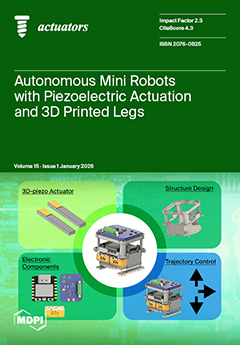
Cover Story (view full-size image): This study presents an innovative approach to autonomous locomotion in insect-scale robots by integrating piezoelectric actuators with 3D-printed resonators and onboard power electronics. The research demonstrates the successful implementation of trajectory control directly on the robot’s microcontroller, overcoming the limitations of the external processing commonly used in microrobotics. By applying standing waves (SWs), the system generates vibration modes that enable stable linear motion and precise rotations. This fusion of smart materials, additive manufacturing, and autonomous control paves the way for a new generation of wireless microrobots for inspection and bioengineering applications. View this paper
  • Issues are regarded as officially published after their release is announced to the table of contents alert mailing list.
  • You may sign up for e-mail alerts to receive table of contents of newly released issues.
  • PDF is the official format for papers published in both, html and pdf forms. To view the papers in pdf format, click on the "PDF Full-text" link, and use the free Adobe Reader to open them.
Order results
Result details
Section
Select all
Export citation of selected articles as:
43 pages, 5239 KB  
Article
Integrating Vehicle Slip and Yaw in Overarching Multi-Tiered Vehicle Steering Control to Balance Path Following Accuracy, Gracefulness, and Safety
by Ming Xin and Mark A. Minor
Actuators 2026, 15(1), 68; https://doi.org/10.3390/act15010068 - 22 Jan 2026
Viewed by 122
Abstract
Balancing path-following accuracy and error convergence with graceful motion in steering control is challenging due to the competing nature of these requirements, especially across a range of operating speeds and conditions. This paper demonstrates that an integrated, multi-tiered steering controller considering slip in [...] Read more.
Balancing path-following accuracy and error convergence with graceful motion in steering control is challenging due to the competing nature of these requirements, especially across a range of operating speeds and conditions. This paper demonstrates that an integrated, multi-tiered steering controller considering slip in kinematic control, dynamic control, and steering actuator rate commands achieves accurate and graceful path following. Kinematic and dynamic models are adapted to include slip. A path-following kinematic controller is then derived using a continuous, time-varying, and speed-based variable-structure controller (VSC) to balance safe and graceful motion with robust error convergence. Yaw rate commands from the kinematic controller are nested in a backstepping slip–yaw dynamic tracking controller to generate steering rate commands. A high-gain observer (HGO) estimates the sideslip and yaw rate, which are used in sensor-based output feedback control. Stability analysis of the output feedback controller is provided, and peaking is resolved. The work focuses on lateral control alone so that the steering controller can be combined with other speed controllers. Field results demonstrate gracefulness and accuracy along complex paths in variable terrain, in different weather conditions, and with perturbations. Full article
(This article belongs to the Special Issue Feature Papers in Actuators for Surface Vehicles)
Show Figures

Figure 1

31 pages, 12725 KB  
Article
Development of Virtual Reference-Based Preview Semi-Active Suspension System
by SeonHo Jeong and Yonghwan Jeong
Actuators 2026, 15(1), 67; https://doi.org/10.3390/act15010067 - 22 Jan 2026
Viewed by 81
Abstract
This paper presents a virtual reference-based preview semi-active suspension system using a Magneto-Rheological (MR) damper to improve ride comfort when traversing bumps. The algorithm is designed to track the virtual reference profile of the vehicle’s corner by introducing a Model Predictive Control (MPC) [...] Read more.
This paper presents a virtual reference-based preview semi-active suspension system using a Magneto-Rheological (MR) damper to improve ride comfort when traversing bumps. The algorithm is designed to track the virtual reference profile of the vehicle’s corner by introducing a Model Predictive Control (MPC) method while considering the passivity of the MR damper. The proposed MPC is formulated to rely solely on estimable variables from an Inertial Measurement Unit (IMU) and vertical accelerometer. To support implementation on an Electronic Control Unit (ECU), the suspension state estimator employs a simple band-limited filtering structure. The proposed method is evaluated in simulation and achieves performance comparable to a controller that has accurate prior knowledge of the road profile. In addition, simulation results demonstrate that the proposed approach exhibits low sensitivity to sensor noise and bump perception uncertainty, making it well suited for real-world vehicle applications. Full article
(This article belongs to the Special Issue Feature Papers in Actuators for Surface Vehicles)
Show Figures

Figure 1

12 pages, 2753 KB  
Article
Thermo-Structural and Dynamic Performance Analysis of a 42CrMo4 Steel Ball Screw Assembly
by Osama Ali, Atif Niaz, Osama Salem, Anisha Karki, Ai Ting, Dong Won Jung and Ji Hyun Jeong
Actuators 2026, 15(1), 66; https://doi.org/10.3390/act15010066 - 21 Jan 2026
Viewed by 149
Abstract
This study presents a comprehensive thermo-structural and modal analysis of a ball screw assembly. Thermal analysis revealed a maximum temperature of 29.1 °C at the ball nut, corresponding to a total rise of 7.1 °C above ambient. The resulting thermal deformation reached 77.81 [...] Read more.
This study presents a comprehensive thermo-structural and modal analysis of a ball screw assembly. Thermal analysis revealed a maximum temperature of 29.1 °C at the ball nut, corresponding to a total rise of 7.1 °C above ambient. The resulting thermal deformation reached 77.81 μm, while the von Mises stress peaked at 53.9 MPa, both within acceptable limits. Modal simulation of 360 modes showed a sharp increase in frequency with mode number and larger deformation patterns at the higher modes. The first two modes dominate the effective mass with the first 8 modes capturing over 90% of the cumulative effective mass. Overall, the results demonstrate stable thermal performance, limited deformation, low stress, and controlled vibrations, confirming the modeling approach and the suitability of 42CrMo4 steel for high-precision ball screw assemblies. Full article
(This article belongs to the Section Precision Actuators)
Show Figures

Figure 1

13 pages, 2721 KB  
Article
Analysis of Interrupting Energy Variations in MCCBs Under Repetitive Fault Conditions in Accelerator Environments
by Young-Maan Cho, Houng-Kun Joung and Kun-A Lee
Actuators 2026, 15(1), 65; https://doi.org/10.3390/act15010065 - 19 Jan 2026
Viewed by 208
Abstract
This study quantitatively analyzed the effects of repetitive fault currents occurring in an accelerator environment on the breaking performance of molded-case circuit breakers (MCCBs). To this purpose, four MCCB samples are subjected to one, two, and three repeated fault tests. The interrupting process [...] Read more.
This study quantitatively analyzed the effects of repetitive fault currents occurring in an accelerator environment on the breaking performance of molded-case circuit breakers (MCCBs). To this purpose, four MCCB samples are subjected to one, two, and three repeated fault tests. The interrupting process is divided into the arc stretch and moving (t1–t2) section and the absorption in the splitter plate (t2–t3) section, and the energy and time are analyzed. The experimental results show that the total energy consumption increased by an average of 1.8–1.9 times in the second and third tests compared to the first test, and the interruption time is also extended by 1.6–2.0 times. In particular, the energy increase rate in the t2–t3 section is the highest, at an average of 220%, indicating that the splitter plate is thermally saturated and significantly affected by hot gas due to repeated breaking. These results imply that the thermal and electrical performances of MCCBs deteriorates in a repetitive fault environment, with the interrupting speed delayed and internal energy loss increased. This study suggests the possibility of energy-based condition diagnosis using the energy consumption ratio of each section. Furthermore, the ratios can be used as basic data for evaluating the reliability of circuit breakers under repetitive failure conditions and building predictive maintenance models. Full article
Show Figures

Figure 1

22 pages, 5431 KB  
Article
Active Fault-Tolerant Method for Navigation Sensor Faults Based on Frobenius Norm–KPCA–SVM–BiLSTM
by Zexia Huang, Bei Xu, Guoyang Ye, Pu Yang and Chunli Shao
Actuators 2026, 15(1), 64; https://doi.org/10.3390/act15010064 - 19 Jan 2026
Viewed by 142
Abstract
Aiming to address the safety and stability issues caused by typical faults of Unmanned Aerial Vehicle (UAV) navigation sensors, a novel fault-tolerant method is proposed, which can capture the temporal dependencies of fault feature evolution, and complete the classification, prediction, and data reconstruction [...] Read more.
Aiming to address the safety and stability issues caused by typical faults of Unmanned Aerial Vehicle (UAV) navigation sensors, a novel fault-tolerant method is proposed, which can capture the temporal dependencies of fault feature evolution, and complete the classification, prediction, and data reconstruction of fault data. In this fault-tolerant method, the feature extraction module adopts the FNKPCA method—integrating the Frobenius Norm (F-norm) with Kernel Principal Component Analysis (KPCA)—to optimize the kernel function’s ability to capture signal features, and enhance the system reliability. By combining FNKPCA with Support Vector Machine (SVM) and Bidirectional Long Short-Term Memory (BiLSTM), an active fault-tolerant processing method, namely FNKPCA–SVM–BiLSTM, is obtained. This study conducts comparative experiments on public datasets, and verifies the effectiveness of the proposed method under different fault states. The proposed approach has the following advantages: (1) It achieves a detection accuracy of 98.64% for sensor faults, with an average false alarm rate of only 0.15% and an average missed detection rate of 1.16%, demonstrating excellent detection performance. (2) Compared with the Long Short-Term Memory (LSTM)-based method, the proposed fault-tolerant method can reduce the RMSE metrics of Global Positioning System (GPS), Inertial Measurement Unit (IMU), and Ultra-Wide-Band (UWB) sensors by 77.80%, 14.30%, and 75.00%, respectively, exhibiting a significant fault-tolerant effect. Full article
(This article belongs to the Section Actuators for Manufacturing Systems)
Show Figures

Figure 1

22 pages, 4516 KB  
Article
Adaptive Compensation Algorithm for Slow Response of TBM Hydraulic Cylinders Using a Parallel Auxiliary Pump
by Shaochen Yang, Dong Han, Lijie Jiang, Lianhui Jia, Zhe Zheng, Xianzhong Tan, Huayong Yang and Dongming Hu
Actuators 2026, 15(1), 63; https://doi.org/10.3390/act15010063 - 17 Jan 2026
Viewed by 208
Abstract
Hydraulic thrust cylinders in hard-rock tunnel boring machines (TBMs) often exhibit slow response and sluggish acceleration during start-up, which degrades early-stage tracking performance and limits overall operational accuracy. Most existing studies primarily enhance start-up behavior through advanced control algorithms, yet the achievable improvement [...] Read more.
Hydraulic thrust cylinders in hard-rock tunnel boring machines (TBMs) often exhibit slow response and sluggish acceleration during start-up, which degrades early-stage tracking performance and limits overall operational accuracy. Most existing studies primarily enhance start-up behavior through advanced control algorithms, yet the achievable improvement is ultimately constrained by the system’s flow–pressure capacity. Meanwhile, reported system-level optimization approaches are either difficult to implement under practical TBM operating conditions or fail to consistently deliver high-accuracy tracking. To address these limitations, this paper proposes a “dual-pump–single-cylinder” control framework for the TBM thrust system, where a large-displacement pump serves as the main supply and a parallel small-displacement pump provides auxiliary flow compensation to mitigate the start-up flow deficit. Building on this architecture, an adaptive compensation algorithm is developed for the auxiliary pump, with its output updated online according to the system’s dynamic states, including displacement error and velocity-related error components. Comparative simulations and test-bench experiments show that, compared with a single-pump scheme, the proposed method notably accelerates cylinder start-up while effectively suppressing overshoot and oscillations, thereby improving both transient smoothness and tracking accuracy. This study provides a feasible and engineering-oriented solution for achieving “rapid and smooth start-up” of TBM hydraulic cylinders. Full article
(This article belongs to the Section Control Systems)
Show Figures

Figure 1

18 pages, 5332 KB  
Article
Research on Active Interference Technology Based on Piezoelectric Flexible Structure
by Chaoyan Wang, Xiaodong Zhou, Chao Zhang, Hongli Ji and Jinhao Qiu
Actuators 2026, 15(1), 62; https://doi.org/10.3390/act15010062 - 16 Jan 2026
Viewed by 198
Abstract
To address the issue of voice leakage during the rapid deployment of meeting rooms, a piezoelectric flexible interference structure (PFIS) for active sound masking is developed in this paper. The PFIS uses rubber as the base, allowing it to bend or fold, offering [...] Read more.
To address the issue of voice leakage during the rapid deployment of meeting rooms, a piezoelectric flexible interference structure (PFIS) for active sound masking is developed in this paper. The PFIS uses rubber as the base, allowing it to bend or fold, offering good flexibility. The PFIS generates vibration through direct contact with the target object, without the need for adhesives or installation, fulfilling the need for rapid deployment. The experiment studied the driving of PFIS under three types of interference signals, analyzing the interference performance of PFIS by combining the vibration response of the surface of the table. The results show that the vibration response generated by PFIS on the surface of the table is significantly greater than when only a human voice is present. When a 3.5 kg weight is added to the surface of PFIS, its vibration performance increases by 5.6 times. Furthermore, increasing the voltage enhances the vibration interference effect of the PFIS across the entire frequency range; after adding weight, the vibration interference performance of the PFIS is significantly improved for frequencies above 2500 Hz. It has been verified that PFIS has strong vibration interference performance, effectively masking the vibrations of objects under human voice, providing a new technical solution for information security protection in sensitive areas. Full article
Show Figures

Figure 1

20 pages, 4847 KB  
Article
Numerical and Experimental Analysis of Composite Hydraulic Cylinder Components
by Michał Stosiak, Marek Lubecki and Mykola Karpenko
Actuators 2026, 15(1), 61; https://doi.org/10.3390/act15010061 - 16 Jan 2026
Viewed by 134
Abstract
Due to a number of advantages, such as the high power-to-weight ratio of the system, the possibility of easy control and the freedom of arrangement of the system components on the machine, hydrostatic drive is one of the most popular methods of machine [...] Read more.
Due to a number of advantages, such as the high power-to-weight ratio of the system, the possibility of easy control and the freedom of arrangement of the system components on the machine, hydrostatic drive is one of the most popular methods of machine drive. The actuators in such a system are hydraulic cylinders that convert fluid pressure energy into mechanical energy for reciprocating motion. One disadvantage of conventional actuators is their weight, so research is being conducted to make them as light as possible. Directions for this research include the use of modern engineering materials such as composites and plastics. This paper presents the possibility of using new lightweight yet strong materials for the design of a hydraulic cylinder. The base of the hydraulic cylinder were designed and subjected to FEM numerical analyses. The base was made of PET. In addition, a composite cylinder made of wound carbon fibre was subjected to numerical analyses and experimental validation. The numerical calculations were verified in experimental studies. To improve the reliability of the numerical calculations, the material parameters of the composite materials were determined experimentally instead of being taken from the manufacturer’s data sheets. The composite cylinder achieved a weight reduction of approximately 94.4% compared to a steel cylinder (95.5 g vs. 1704 g). Under an internal pressure of 20 MPa, the composite cylinder exhibited markedly higher circumferential strain (4329 μm/m) than the steel cylinder (339.6 μm/m), and axial strain was also greater (−1237 μm/m vs. −96.4 μm/m). Full article
(This article belongs to the Special Issue Advances in Fluid Power Systems and Actuators)
Show Figures

Figure 1

16 pages, 2464 KB  
Article
A Novel Optimization Method for Shape Adjustment of a Large-Scale Planar Phased Array Antenna with Inherent Cables
by Jiyang Zhou, Xiang Liu and Guoping Cai
Actuators 2026, 15(1), 60; https://doi.org/10.3390/act15010060 - 16 Jan 2026
Viewed by 143
Abstract
Large-scale frames are increasingly used in engineering structures, particularly in aerospace structures. Among them, planar phased array satellite antennas used for global observations and target tracking have received much attention. Considering that structural deformation will degrade the coherence of antennas, a frame with [...] Read more.
Large-scale frames are increasingly used in engineering structures, particularly in aerospace structures. Among them, planar phased array satellite antennas used for global observations and target tracking have received much attention. Considering that structural deformation will degrade the coherence of antennas, a frame with inherent diagonal cables that serves to control the antennas’ static configuration is thoroughly studied. These inherent cables of planar phased arrays are pre-tensioned to preserve the structural integrity and increase the stiffness of the antenna. However, they are also used as actuators in our research; in this way, additional control devices are not needed. As a result, the antenna’s mass will decrease, and its reliability will increase. For high observation accuracy, the antennas tend to be very large. Accordingly, there is a significant deformation of space antennas when they are loaded. For this reason, a nonlinear finite element method is used to consider the structures’ geometrical nonlinearity. In order to achieve shape adjustment, the difference between active and passive cables must be carefully investigated. Furthermore, for the nonlinear structure in this paper, the active cables will deform in tandem with the structure as a whole so that the direction of the active cables’ control forces will also change during the entire control process. This paper elaborates on this problem and proposes a nonlinear optimization method considering this characteristic of the cables. Simulations of a simplified 2-bay and 18-bay satellite antenna are performed to validate the proposed method. Results of the numerical simulation demonstrate that the proposed method can successfully adjust the large-scale antenna’s static shape and achieve high precision. Full article
(This article belongs to the Special Issue Dynamics and Control of Aerospace Systems—2nd Edition)
Show Figures

Figure 1

25 pages, 7202 KB  
Article
Optimal Design of a Coaxial Magnetic Gear Considering Thermal Demagnetization and Structural Robustness for Torque Density Enhancement
by Tae-Kyu Ji and Soo-Whang Baek
Actuators 2026, 15(1), 59; https://doi.org/10.3390/act15010059 - 16 Jan 2026
Viewed by 290
Abstract
This study presents an optimal design combined with comprehensive multiphysics validation to enhance the torque density of a coaxial magnetic gear (CMG) incorporating an overhang structure. Four high non-integer gear-ratio CMG configurations exceeding 1:10 were designed using different pole-pair combinations, and three-dimensional finite [...] Read more.
This study presents an optimal design combined with comprehensive multiphysics validation to enhance the torque density of a coaxial magnetic gear (CMG) incorporating an overhang structure. Four high non-integer gear-ratio CMG configurations exceeding 1:10 were designed using different pole-pair combinations, and three-dimensional finite element method (3D FEM) was employed to accurately capture axial leakage flux and overhang-induced three-dimensional effects. Eight key geometric design variables were selected within non-saturating limits, and 150 sampling points were generated using an Optimal Latin Hypercube Design (OLHD). Multiple surrogate models were constructed and evaluated using the root-mean-square error (RMSE), and the Kriging model was selected for multi-objective optimization using a genetic algorithm. The optimized CMG with a 1:10.66 gear ratio achieved a 130.76% increase in average torque (65.75 Nm) and a 162.51% improvement in torque density (117.14 Nm/L) compared with the initial design. Harmonic analysis revealed a strengthened fundamental component and a reduction in total harmonic distortion, indicating improved waveform quality. To ensure the feasibility of the optimized design, comprehensive multiphysics analyses—including electromagnetic–thermal coupled simulation, high-temperature demagnetization analysis, and structural stress evaluation—were conducted. The results confirm that the proposed CMG design maintains adequate thermal stability, magnetic integrity, and mechanical robustness under rated operating conditions. These findings demonstrate that the proposed optimal design approach provides a reliable and effective means of enhancing the torque density of high gear-ratio CMGs, offering practical design guidance for electric mobility, robotics, and renewable energy applications. Full article
Show Figures

Figure 1

19 pages, 10479 KB  
Article
Design and Investigation of Powertrain with In-Wheel Motor for Permanent Magnet Electrodynamic Suspension Maglev Car
by Zhentao Ding, Jingguo Bi, Siyi Wu, Chong Lv, Maoru Chi and Zigang Deng
Actuators 2026, 15(1), 58; https://doi.org/10.3390/act15010058 - 16 Jan 2026
Viewed by 196
Abstract
A new type of transportation vehicle, the maglev car, is gaining attention in the automotive and maglev industries due to its potential to meet personalized urban mobility and future travel needs. To optimize the chassis layout of maglev cars, this paper proposes a [...] Read more.
A new type of transportation vehicle, the maglev car, is gaining attention in the automotive and maglev industries due to its potential to meet personalized urban mobility and future travel needs. To optimize the chassis layout of maglev cars, this paper proposes a compact powertrain integrating electrodynamic suspension with in-wheel motor technology, in which a permanent magnet electrodynamic in-wheel motor (PMEIM) enables integrated propulsion and levitation. First, the PMEIM external magnetic field distribution is characterized by analytical and finite element (FEM) approaches, revealing the magnetic field distortion of the contactless powertrain. Subsequently, the steady-state electromagnetic force is modeled and the operating states of the PMEIM powertrain are calculated and determined. Next, the PMEIM electromagnetic design is conducted, and its electromagnetic structure rationality is verified through magnetic circuit and parametric analysis. Finally, an equivalent prototype is constructed, and the non-contact electromagnetic forces of the PMEIM are measured in bench testing. Results indicate that the PMEIM powertrain performs propulsion and levitation functions, demonstrating 14.2 N propulsion force and 45.8 N levitation force under the rated condition, with a levitation–weight ratio of 2.52, which hold promise as a compact and flexible drivetrain solution for maglev cars. Full article
(This article belongs to the Section Actuators for Surface Vehicles)
Show Figures

Figure 1

22 pages, 4205 KB  
Article
A Two-Phase Switching Adaptive Sliding Mode Control Achieving Smooth Start-Up and Precise Tracking for TBM Hydraulic Cylinders
by Shaochen Yang, Dong Han, Lijie Jiang, Lianhui Jia, Zhe Zheng, Xianzhong Tan, Huayong Yang and Dongming Hu
Actuators 2026, 15(1), 57; https://doi.org/10.3390/act15010057 - 16 Jan 2026
Viewed by 193
Abstract
Tunnel boring machine (TBM) hydraulic cylinders operate under pronounced start–stop shocks and load uncertainties, making it difficult to simultaneously achieve smooth start-up and high-precision tracking. This paper proposes a two-phase switching adaptive sliding mode control (ASMC) strategy for TBM hydraulic actuation. Phase I [...] Read more.
Tunnel boring machine (TBM) hydraulic cylinders operate under pronounced start–stop shocks and load uncertainties, making it difficult to simultaneously achieve smooth start-up and high-precision tracking. This paper proposes a two-phase switching adaptive sliding mode control (ASMC) strategy for TBM hydraulic actuation. Phase I targets a soft start by introducing smooth gating and a ramped start-up mechanism into the sliding surface and equivalent control, thereby suppressing pressure spikes and displacement overshoot induced by oil compressibility and load transients. Phase II targets precise tracking, combining adaptive laws with a forgetting factor design to maintain robustness while reducing chattering and steady-state error. We construct a state-space model that incorporates oil compressibility, internal/external leakage, and pump/valve dynamics, and provide a Lyapunov-based stability analysis proving bounded stability and error convergence under external disturbances. Comparative simulations under representative TBM conditions show that, relative to conventional PID Controller and single ASMC Controller, the proposed method markedly reduces start-up pressure/velocity peaks, overshoot, and settling time, while preserving tracking accuracy and robustness over wide load variations. The results indicate that the strategy can achieve the unity of smooth start and high-precision trajectory of TBM hydraulic cylinder without additional sensing configuration, offering a practical path for high-performance control of TBM hydraulic actuators in complex operating environments. Full article
(This article belongs to the Section Control Systems)
Show Figures

Figure 1

24 pages, 5517 KB  
Article
Volumetric Efficiency Prediction of External Gear Pumps Using a Leakage Model Based on Dynamic Clearances
by HyunWoo Yang, Ho Sung Jang and Sangwon Ji
Actuators 2026, 15(1), 56; https://doi.org/10.3390/act15010056 - 15 Jan 2026
Viewed by 162
Abstract
External gear pumps are widely used in industrial hydraulic systems, but their volumetric efficiency can deteriorate significantly because of internal leakage, especially under high-pressure operating conditions. Conventional lumped parameter models typically assume fixed clearances and therefore cannot accurately capture the leakage behavior associated [...] Read more.
External gear pumps are widely used in industrial hydraulic systems, but their volumetric efficiency can deteriorate significantly because of internal leakage, especially under high-pressure operating conditions. Conventional lumped parameter models typically assume fixed clearances and therefore cannot accurately capture the leakage behavior associated with pressure-induced deformation and wear. In this study, a dynamic clearance model for an external gear pump is developed and experimentally validated. Radial and axial clearances are measured in situ using eddy-current gap sensors over a range of operating conditions, and empirical correlation equations are identified as functions of pressure and rotational speed. These correlations are embedded into a tooth-space-volume-based lumped parameter model so that the leakage flow is updated at each time step according to the instantaneous dynamic clearances. The proposed model is validated against experimental measurements of volumetric efficiency obtained from a dedicated test bench. At 800 rev/min, the average prediction error of volumetric efficiency is reduced to 1.98% with the proposed dynamic clearance model, compared with 9.43% for a nominal static-clearance model and 3.35% for a model considering only static wear. These results demonstrate that explicitly accounting for dynamic clearance variations significantly improves the predictive accuracy of volumetric efficiency, and the proposed model can be used as a design tool for optimizing leakage paths and enhancing the energy efficiency of external gear pumps. Full article
Show Figures

Figure 1

30 pages, 7752 KB  
Article
An Innovative Three-Dimensional Mathematical–Physical Model for Describing Load-Carrying Characteristic of Hydraulic Supports
by Xiang Yuan, Boyi Yu, Jinghao Zhu, Xinhao Zhou and Yifan Xie
Actuators 2026, 15(1), 55; https://doi.org/10.3390/act15010055 - 15 Jan 2026
Viewed by 214
Abstract
Reliable posture and loading characteristics detection of hydraulic supports is one of the indispensable factors to realizing the intelligentization of fully mechanized coal mining faces. Due to the complexity and dynamic nature of mining process, achieving real-time and accurate detection of the hydraulic [...] Read more.
Reliable posture and loading characteristics detection of hydraulic supports is one of the indispensable factors to realizing the intelligentization of fully mechanized coal mining faces. Due to the complexity and dynamic nature of mining process, achieving real-time and accurate detection of the hydraulic support posture and load presents an exceptionally challenging task. Therefore, an interactive algorithm for evaluating the load-carrying characteristic of hydraulic support by considering the three-dimensional space driving theory and dynamic theory was developed and experimentally verified based on a self-designed experimental platform. The paper aimed to establish a three-dimensional spatial dynamic and kinematics model for shield support, evaluating its loading performance in challenging working conditions. Initially, a three-dimensional kinematics model was developed to describe the bearing capacity of powered support in various postures based on the three-dimensional drive space theory. A dynamic model was suggested to investigate the effects of multiple factors on the position of hydraulic support drive units on their load-carrying capability in various demanding working situations. The results indicate that increasing the length of the drive units can significantly improve the bearing performance of shield support. The proposed mathematical technique offers a novel method for modifying the coupling of surrounding rock with hydraulic supports and supplying coal mining with real-time assistance. Full article
(This article belongs to the Special Issue Actuator-Based Control Strategies for Marine Vehicles)
Show Figures

Figure 1

22 pages, 7265 KB  
Article
Dynamic Modeling of Multi-Stroke Radial Piston Motor with CFD-Informed Leakage Characterization
by Manhui Woo and Sangwon Ji
Actuators 2026, 15(1), 54; https://doi.org/10.3390/act15010054 - 13 Jan 2026
Viewed by 198
Abstract
Radial piston motors are expected to expand their applications in hydraulic drive systems due to their high torque density and mechanical robustness. However, its volumetric efficiency can be significantly affected by the multi-stroke operating characteristics and leakage occurring in the micro-clearances of the [...] Read more.
Radial piston motors are expected to expand their applications in hydraulic drive systems due to their high torque density and mechanical robustness. However, its volumetric efficiency can be significantly affected by the multi-stroke operating characteristics and leakage occurring in the micro-clearances of the valve plate. In this study, a detailed modeling procedure for a multi-stroke radial piston motor is proposed using the 1D system simulation software Amesim. In particular, the dynamic interaction between the ports and pistons inside the motor is formulated using mathematical function-based expressions, enabling a more precise representation of the driving behavior and torque generation process. Furthermore, to characterize the leakage flow occurring in the micro-clearance between the fluid distributor and cylinder housing, the commercial CFD software Simerics MP+ was employed to analyze the three-dimensional flow characteristics within the leakage gap. Based on these CFD results, a leakage-path function was constructed and implemented in the Amesim model. As a result, the developed model exhibited strong agreement with reference data from an actual motor in terms of overall operating performance, including volumetric and mechanical efficiencies while consistently reproducing the leakage behavior observed in the CFD analysis. The simulation approach presented in this study demonstrates the capability to reliably capture complex fluid–mechanical interactions at the system level, and it can serve as an effective tool for performance prediction and optimal design of hydraulic motors. Full article
Show Figures

Figure 1

17 pages, 9299 KB  
Article
Research and Realization of an OCT-Guided Robotic System for Subretinal Injections
by Yunyao Li, Sujian Wu and Guohua Shi
Actuators 2026, 15(1), 53; https://doi.org/10.3390/act15010053 - 13 Jan 2026
Viewed by 298
Abstract
For retinal degenerative diseases, advanced therapies such as gene therapy and retinal stem cell therapy have emerged as promising treatments, which are often delivered through subretinal injection. However, clinical subretinal injection remains challenging due to the extremely high precision requirements, lack of depth [...] Read more.
For retinal degenerative diseases, advanced therapies such as gene therapy and retinal stem cell therapy have emerged as promising treatments, which are often delivered through subretinal injection. However, clinical subretinal injection remains challenging due to the extremely high precision requirements, lack of depth information, and the physiological limitations of manual operation, often leading to complications such as hypotony and globe atrophy. To address these challenges, this study proposes a novel ophthalmic surgical robotic system designed for high-precision subretinal injections. The robotic system incorporate a remote center of motion mechanism for its mechanical structure and employs a master–slave control system to achieve motion scaling. A microscope-integrated optical coherence tomography device is applied to provide real-time microscopic imaging and depth information. The design and performance of the proposed system are validated through simulations and experiments. Precision tests demonstrate that the system achieves an overall positioning accuracy of less than 30 μm, with injection positioning accuracy under 20 μm. Subretinal injection experiments conducted on artificial eye models further validate the clinical feasibility of the robotic system. Full article
Show Figures

Figure 1

29 pages, 4242 KB  
Article
Electro-Actuated Customizable Stacked Fin Ray Gripper for Adaptive Object Handling
by Ratchatin Chancharoen, Kantawatchr Chaiprabha, Worathris Chungsangsatiporn, Pimolkan Piankitrungreang, Supatpromrungsee Saetia, Tanarawin Viravan and Gridsada Phanomchoeng
Actuators 2026, 15(1), 52; https://doi.org/10.3390/act15010052 - 13 Jan 2026
Viewed by 207
Abstract
Soft robotic grippers provide compliant and adaptive manipulation, but most existing designs address actuation speed, adaptability, modularity, or sensing individually rather than in combination. This paper presents an electro-actuated customizable stacked Fin Ray gripper that integrates these capabilities within a single design. The [...] Read more.
Soft robotic grippers provide compliant and adaptive manipulation, but most existing designs address actuation speed, adaptability, modularity, or sensing individually rather than in combination. This paper presents an electro-actuated customizable stacked Fin Ray gripper that integrates these capabilities within a single design. The gripper employs a compact solenoid for fast grasping, multiple vertically stacked Fin Ray segments for improved 3D conformity, and interchangeable silicone or TPU fins that can be tuned for task-specific stiffness and geometry. In addition, a light-guided, vision-based sensing approach is introduced to capture deformation without embedded sensors. Experimental studies—including free-fall object capture and optical shape sensing—demonstrate rapid solenoid-driven actuation, adaptive grasping behavior, and clear visual detectability of fin deformation. Complementary simulations using Cosserat-rod modeling and bond-graph analysis characterize the deformation mechanics and force response. Overall, the proposed gripper provides a practical soft-robotic solution that combines speed, adaptability, modular construction, and straightforward sensing for diverse object-handling scenarios. Full article
(This article belongs to the Special Issue Soft Actuators and Robotics—2nd Edition)
Show Figures

Figure 1

26 pages, 6868 KB  
Article
A Novel Human–Machine Shared Control Strategy with Adaptive Authority Allocation Considering Scenario Complexity and Driver Workload
by Lijie Liu, Anning Ni, Linjie Gao, Yutong Zhu and Yi Zhang
Actuators 2026, 15(1), 51; https://doi.org/10.3390/act15010051 - 13 Jan 2026
Viewed by 172
Abstract
Human–machine shared control has been widely adopted to enhance driving performance and facilitate smooth transitions between manual and fully autonomous driving. However, existing authority allocation strategies often neglect real-time assessment of scenario complexity and driver workload. To address this gap, we leverage non-invasive [...] Read more.
Human–machine shared control has been widely adopted to enhance driving performance and facilitate smooth transitions between manual and fully autonomous driving. However, existing authority allocation strategies often neglect real-time assessment of scenario complexity and driver workload. To address this gap, we leverage non-invasive eye-tracking devices and the 3D virtual driving simulator Car Learning to Act (CARLA) to collect multimodal data—including physiological measures and vehicle dynamics—for the real-time classification of scenario complexity and cognitive workload. Feature importance is quantified using the SHAP (SHapley Additive exPlanations) values derived from Random Forest classifiers, enabling robust feature selection. Building upon a Hidden Markov Model (HMM) for workload inference and a Model Predictive Control (MPC) framework, we propose a novel human–machine shared control architecture with adaptive authority allocation. Human-in-the-loop validation experiments under both high- and low-workload conditions demonstrate that the proposed strategy significantly improves driving safety, stability, and overall performance. Notably, under high-workload scenarios, it achieves substantially greater reductions in Time to Collision (TTC) and Time to Lane Crossing (TLC) compared to low-workload conditions. Moreover, the adaptive approach yields lower controller load than alternative authority allocation methods, thereby minimizing human–machine conflict. Full article
(This article belongs to the Section Actuators for Surface Vehicles)
Show Figures

Figure 1

32 pages, 7548 KB  
Article
Research on the Flow and Heat Transfer Characteristics of a Molten Salt Globe Valve Based on an Electromagnetic Induction Heating System
by Shuxun Li, Xiaoya Wen, Bohao Zhang, Lingxia Yang, Yuhao Tian and Xiaoqi Meng
Actuators 2026, 15(1), 50; https://doi.org/10.3390/act15010050 - 13 Jan 2026
Viewed by 137
Abstract
To promote the transition to a cleaner energy structure and support the achievement of the “carbon peak and carbon neutrality” goals, concentrated solar power (CSP) technology has attracted increasing attention. The molten salt globe valve, as a key control component in CSP systems, [...] Read more.
To promote the transition to a cleaner energy structure and support the achievement of the “carbon peak and carbon neutrality” goals, concentrated solar power (CSP) technology has attracted increasing attention. The molten salt globe valve, as a key control component in CSP systems, faces significant challenges related to low-temperature salt crystallization and thermal stress control. This study proposes an active electromagnetic induction heating method based on a triangular double-helix cross-section coil to address issues such as molten salt blockage in the seal bellows and excessive thermal stress during heating. First, electromagnetic simulation comparisons show that the ohmic loss of the proposed coil is approximately 3.5 times and 1.8 times higher than that of conventional circular and rectangular coils, respectively, demonstrating superior heating uniformity and energy efficiency. Second, transient electromagnetic-thermal-fluid-structure multiphysics coupling analysis reveals that during heating, the temperature in the bellows seal region stabilizes above 543.15 K, exceeding the solidification point of the molten salt, while the whole valve reaches thermal stability within about 1000 s, effectively preventing local solidification. Finally, thermal stress analysis indicates that under a preheating condition of 473.15 K, the transient thermal shock stress on the valve body and bellows is reduced by 266.84% and 253.91%, respectively, compared with the non-preheating case, with peak stresses remaining below the allowable stress limit of the material, thereby significantly extending the service life of the valve. This research provides an effective solution for ensuring reliable operation of molten salt valves and improving the overall performance of CSP systems. Full article
(This article belongs to the Section Control Systems)
Show Figures

Figure 1

21 pages, 12901 KB  
Article
Coordinated Trajectory Tracking and Self-Balancing Control for Unmanned Bicycle Robot Against Disturbances
by Jinghao Liu, Chengcheng Dong, Xiaoying Lu, Qiaobin Liu and Lu Yang
Actuators 2026, 15(1), 49; https://doi.org/10.3390/act15010049 - 13 Jan 2026
Viewed by 154
Abstract
Trajectory tracking and self-balancing capacity is crucial for an unmanned bicycle robot (UBR) applied in off-road trails and narrow space. However, self-balancing is hard to be guaranteed once the steering angle manipulates for the tracking task, both of which are closely linked to [...] Read more.
Trajectory tracking and self-balancing capacity is crucial for an unmanned bicycle robot (UBR) applied in off-road trails and narrow space. However, self-balancing is hard to be guaranteed once the steering angle manipulates for the tracking task, both of which are closely linked to the steering angle, especially for the UBR without auxiliary mechanism. In this paper, we introduce a double closed-loop framework in which the outer loop controller plans the desired speed and heading angle to track the reference trajectory, and the inner loop controller track the desired signals obtained from the outer loop to maintain balance. To be specific, a saturated velocity planner is developed to realize fast convergence of tracking error considering the kinematic constraints in the outer loop. A fuzzy sliding model controller (FSMC) is designed to attenuate the chattering effect via adapting its control gain in the inner loop, and a radial basis function neural network (RBFNN) approximator is also integrated into the framework to enhance the adaptability and robustness against bounded disturbances. The feasibility and effectiveness of the proposed control framework and approaches are validated based on the Matlab and Gazebo environment. In particular, the UBR can follow the testing route with lateral deviation less than 0.5 m in the presence of lateral winds and physical parameter measurement error, and comparative simulation results highlighted the superiority of the proposed control scheme. Full article
(This article belongs to the Section Control Systems)
Show Figures

Figure 1

23 pages, 5066 KB  
Article
Machine Learning-Assisted Output Optimization of Non-Resonant Motors
by Mengxin Sun, Pengfei Yu, Zhenwei Cao, Muzhi Zhu, Songfei Su and Lukai Zheng
Actuators 2026, 15(1), 48; https://doi.org/10.3390/act15010048 - 12 Jan 2026
Viewed by 154
Abstract
The precision drive industry has seen rapid growth, leading to an increased demand for actuators that are both highly accurate and responsive. Among these, non-resonant piezoelectric motors are particularly noteworthy. These motors are extensively employed in applications such as high-precision manufacturing, precision drug [...] Read more.
The precision drive industry has seen rapid growth, leading to an increased demand for actuators that are both highly accurate and responsive. Among these, non-resonant piezoelectric motors are particularly noteworthy. These motors are extensively employed in applications such as high-precision manufacturing, precision drug delivery, and cellular puncture, owing to their adaptable drive control and resistance to external disturbances. Given the specific requirements of these applications, it is crucial to quickly determine the relationship between the motor input parameters and output characteristics—a challenging endeavor. In this research, we examine a typical non-resonant piezoelectric motor using multiple sets of experimental data. A machine learning algorithm is employed to swiftly establish the correlation between electromechanical input parameters and output trajectory characteristics. Data are analyzed using a random forest model to understand the underlying influence mechanisms. Based on this analysis, predictions and recommendations are made to achieve optimal operating conditions for the motor. This study demonstrates that machine learning serves as an effective tool for predicting piezoelectric motor performance, facilitating rapid assessment of motor output capabilities. Full article
Show Figures

Figure 1

23 pages, 5112 KB  
Article
Trajectory Tracking of a Mobile Robot in Underground Roadways Based on Hierarchical Model Predictive Control
by Chuanwei Wang, Zhihao Liu, Siya Sun, Zhenwu Wang, Kexiang Ma, Qinghua Mao, Xusheng Xue, Xi Chen, Kai Zhao and Tao Hu
Actuators 2026, 15(1), 47; https://doi.org/10.3390/act15010047 - 12 Jan 2026
Viewed by 167
Abstract
Mobile robots conducting inspection tasks in coal-mine roadways and operating in complex underground environments are often subjected to demanding conditions such as low adhesion, uneven friction distribution, and localized slippery surfaces. These challenges are significant, predisposing the robots to trajectory deviation and posture [...] Read more.
Mobile robots conducting inspection tasks in coal-mine roadways and operating in complex underground environments are often subjected to demanding conditions such as low adhesion, uneven friction distribution, and localized slippery surfaces. These challenges are significant, predisposing the robots to trajectory deviation and posture instability, thereby presenting substantial obstacles to high-precision tracking control. The primary innovation of this study lies in proposing a hierarchical model predictive control (HMPC) strategy, which addresses the challenges through synergistic, kinematic and dynamic optimization. The core contribution is the construction of dual-layer optimization architecture. The upper-layer kinematic MPC generates the desired linear and angular velocities as reference commands. The lower-layer MPC is designed based on a dynamic model that incorporates ground adhesion characteristics, enabling the online computation of optimal driving forces (FL, FR) for the left and right tracks that simultaneously satisfy tracking performance requirements and practical actuation constraints. Simulation results demonstrate that the proposed hierarchical framework significantly outperforms conventional kinematic MPC in terms of steady-state accuracy, response speed, and trajectory smoothness. Experimental validation further confirms that, in environments with low adhesion and localized slippery conditions representative of actual roadways, the proposed method effectively coordinates geometric accuracy with dynamic feasibility. It not only markedly reduces longitudinal and lateral tracking errors but also ensures excellent dynamic stability and reasonable driving force distribution, providing key technical support for reliable operation in complex underground environments. Full article
(This article belongs to the Special Issue Motion Planning, Trajectory Prediction, and Control for Robotics)
Show Figures

Figure 1

32 pages, 7891 KB  
Article
A Double-Integral Global Fast Terminal Sliding Mode Control with TD-LESO for Chattering Suppression and Precision Tracking of Fast Steering Mirrors
by Xiaopeng Jia, Qingshan Chen, Lishuang Liu and Runqiu Xia
Actuators 2026, 15(1), 46; https://doi.org/10.3390/act15010046 - 10 Jan 2026
Viewed by 262
Abstract
This paper describes a composite control approach that improves the accuracy and dynamic performance of the control of a voice-coil-driven, two-dimensional fast steering mirror (FSM). Strong nonlinearity, perturbation of parameters, unmodeled dynamics and external disturbances typically compromise the performance of the FSM. The [...] Read more.
This paper describes a composite control approach that improves the accuracy and dynamic performance of the control of a voice-coil-driven, two-dimensional fast steering mirror (FSM). Strong nonlinearity, perturbation of parameters, unmodeled dynamics and external disturbances typically compromise the performance of the FSM. The proposed controller combines a tracking differentiator (TD), linear extended state observer (LESO), and a double-integral global fast terminal-sliding mode control (DIGFTSMC). The TD corrects the reference command signal, and the LESO approximates and counteracts system disturbances. The sliding surface is then equipped with the double-integral operators and an improved adaptive reaching law (IARL) to enhance tracking accuracy, response speed and robustness. Prior to physical experiments, systematic numerical simulations were conducted for five control algorithms across four typical test scenarios, verifying the proposed controller’s feasibility and preliminary performance advantages. It is found through experimentation that the proposed controller lowers the time esterified by the step response adjustment by 81.0% and 48.4% more than the PID controller and the DIGFTSMC approach with no IARL, respectively, and the proposed controller enhances error control when tracking sinuoidal signals and multisinusoidal signals. Simulation results consistently align with experimental trends, confirming the proposed controller’s superior convergence speed, tracking precision, and disturbance rejection capability. Furthermore, it cuts the angular movement swing by an average of over 44% through dismissing needless vibration interruptions as compared to other sliding mode control techniques. Experimental results demonstrate that the proposed composite control approach significantly enhances the disturbance rejection, control accuracy, and dynamic tracking performance of the voice-coil-driven FSM system. Full article
(This article belongs to the Special Issue New Control Schemes for Actuators—3rd Edition)
Show Figures

Figure 1

19 pages, 4142 KB  
Article
Selective Multi-Source Transfer Learning and Ensemble Learning for Piezoelectric Actuator Feedforward Control
by Yaqian Hu, Herong Jin, Xiangcheng Chu and Ran Cao
Actuators 2026, 15(1), 45; https://doi.org/10.3390/act15010045 - 8 Jan 2026
Viewed by 225
Abstract
Transfer learning enables the leveraging of knowledge acquired from other piezoelectric actuators (PEAs) to facilitate the positioning control of a target PEA. However, blind knowledge transfer from datasets irrelevant to the target PEA often leads to degraded displacement control performance. To address this [...] Read more.
Transfer learning enables the leveraging of knowledge acquired from other piezoelectric actuators (PEAs) to facilitate the positioning control of a target PEA. However, blind knowledge transfer from datasets irrelevant to the target PEA often leads to degraded displacement control performance. To address this challenge, this study proposes a transfer learning method, termed selective multi-source ensemble transfer learning (SMETL). The SMETL adopts a multi-source transfer learning framework integrated with Proxy A-distance (PAD)-based multi-source domain selection and a greedy ensemble transfer learning strategy. Only when the performance on the target domain validation is improved, fine-tuned GRU-CNN feedforward control models are screened into the ensemble. The outputs of the retained ensemble models are averaged to generate the final prediction. Comparative experiment results demonstrate that SMETL achieves superior control performance across all evaluation metrics. This confirms SMETL’s capability to effectively leverage multi-source domain knowledge and mitigate the risk of introducing irrelevant data. Full article
(This article belongs to the Section Actuator Materials)
Show Figures

Figure 1

27 pages, 6437 KB  
Article
The Study of Multi-Objective Adaptive Fault-Tolerant Control for In-Wheel Motor Drive Electric Vehicles Under Demagnetization Faults
by Qiang Wang, Ze Ren, Changhui Cui and Gege Jiang
Actuators 2026, 15(1), 44; https://doi.org/10.3390/act15010044 - 8 Jan 2026
Viewed by 222
Abstract
Partial demagnetization of multiple in-wheel motors changes torque distribution characteristics and can reduce vehicle stability, which poses a challenge for in-wheel motor drive electric vehicles (IWMDEVs) to maintain a balance between safety and efficiency. To address this issue, a hierarchical multi-objective adaptive fault-tolerant [...] Read more.
Partial demagnetization of multiple in-wheel motors changes torque distribution characteristics and can reduce vehicle stability, which poses a challenge for in-wheel motor drive electric vehicles (IWMDEVs) to maintain a balance between safety and efficiency. To address this issue, a hierarchical multi-objective adaptive fault-tolerant control (FTC) strategy based on wheel terminal torque compensation is developed. In the upper layer, a nonlinear model predictive controller (NMPC) generates the desired total driving force and corrective yaw moment according to vehicle dynamics and driving conditions. The lower layer employs a quadratic programming (QP) scheme to allocate the wheel torques under actuator and tire constraints. Two adaptive coefficients—the stability–efficiency weighting factor and the current compensation factor—are updated through a randomized ensembled double Q-learning (REDQ) algorithm, enabling the controller to adaptively balance yaw stability preservation and energy optimization under different fault scenarios. The proposed method is implemented and verified in a CarSim–Simulink–Python co-simulation environment. The simulation results show that the controller effectively improves yaw and lateral stability while reducing energy consumption, validating the feasibility and effectiveness of the proposed strategy. This approach offers a promising solution to achieve reliable and energy-efficient control of IWMDEVs. Full article
Show Figures

Figure 1

26 pages, 5386 KB  
Article
Path Planning for Robotic Arm Obstacle Avoidance Based on the Improved African Vulture Optimization Algorithm
by Caiping Liang, Hao Yuan, Xian Zhang, Yansong Zhang and Wenxu Niu
Actuators 2026, 15(1), 43; https://doi.org/10.3390/act15010043 - 8 Jan 2026
Viewed by 210
Abstract
To address the problems of low success rate, excessively long obstacle avoidance paths, and a large number of invalid nodes in path planning for robotic arms in complex environments, this paper proposes an obstacle avoidance path planning method based on the Cauchy Chaotic [...] Read more.
To address the problems of low success rate, excessively long obstacle avoidance paths, and a large number of invalid nodes in path planning for robotic arms in complex environments, this paper proposes an obstacle avoidance path planning method based on the Cauchy Chaotic African Vulture Optimization Algorithm (CC-AVOA). By introducing a Cauchy perturbation term, the algorithm retains a certain degree of randomness in the later stages of the search, which helps to escape local optima. Furthermore, the introduction of a logical chaotic mapping increases the diversity of the initial vulture population, thereby improving the overall search efficiency of the algorithm. This paper compares the performance of the CC-AVOA algorithm with the standard African Vulture Optimization Algorithm (AVOA), the Rapid Exploratory Random Tree (RRT) algorithm, and the A* algorithm through simulation experiments in MATLAB R2024a under two-dimensional, three-dimensional, and robotic arm space environments. The results show that the CC-AVOA algorithm can generate paths with fewer nodes and shorter paths. Finally, the CC-AVOA algorithm is validated on both the RoboGuide industrial simulation platform and a physical FANUC robotic arm. The planned trajectories can be accurately executed without collisions, further confirming the feasibility and reliability of the proposed method in real industrial scenarios. Full article
(This article belongs to the Section Actuators for Robotics)
Show Figures

Figure 1

18 pages, 3673 KB  
Article
Design and Preliminary Evaluation of an Electrically Actuated Exoskeleton Glove for Hand Rehabilitation in Early-Stage Osteoarthritis
by Dana Fraij, Dima Abdul-Ghani, Batoul Dakroub and Hussein A. Abdullah
Actuators 2026, 15(1), 42; https://doi.org/10.3390/act15010042 - 7 Jan 2026
Viewed by 343
Abstract
Osteoarthritis (OA) is a progressive musculoskeletal disorder that affects not only older adults but also younger populations, often leading to chronic pain, joint stiffness, functional impairment, and a decline in quality of life. Non-invasive physical rehabilitation plays a critical role in slowing disease [...] Read more.
Osteoarthritis (OA) is a progressive musculoskeletal disorder that affects not only older adults but also younger populations, often leading to chronic pain, joint stiffness, functional impairment, and a decline in quality of life. Non-invasive physical rehabilitation plays a critical role in slowing disease progression, alleviating symptoms, and maintaining joint mobility. However, rehabilitation tools such as compression gloves and manual exercise aids are typically passive and provide minimal real-time feedback to patients or clinicians. Others, such as exoskeletons and soft-actuated devices, can be costly or complex to use. This study presents the design and development of an electrically actuated glove integrated with force and flex sensors, intended to assist individuals diagnosed with Stage 2 OA in performing guided finger exercises. The system integrates a digital front-end application that offers real-time feedback and data visualization, enabling more personalized and trackable therapy sessions for both patients and healthcare providers. Preliminary results from an initial human trial with healthy participants demonstrate that the glove enables naturalistic movement without imposing excessive restriction or augmentation of motion. These findings support the glove’s potential in preserving hand coordination and dexterity, key objectives in early-stage OA intervention, and suggest its suitability for integration into home-based or clinical rehabilitation protocols. Full article
(This article belongs to the Section Actuators for Robotics)
Show Figures

Figure 1

28 pages, 4702 KB  
Article
Reliability Evaluation Method for Aeroengine Turbine Rotor Assemblies Considering Interaction of Multiple Failure Modes
by Xudong Han, Zhefu Yang, Weifeng Zhang, Xueqi Chen, Yanhong Ma and Jie Hong
Actuators 2026, 15(1), 41; https://doi.org/10.3390/act15010041 - 7 Jan 2026
Viewed by 293
Abstract
In complex mechanical systems involving multiple parts and contact interfaces, failure modes are not only statistically correlated but may also interact through underlying physical mechanisms. These interactions, often neglected in current reliability analysis, can lead to significant deviations in failure predictions, especially in [...] Read more.
In complex mechanical systems involving multiple parts and contact interfaces, failure modes are not only statistically correlated but may also interact through underlying physical mechanisms. These interactions, often neglected in current reliability analysis, can lead to significant deviations in failure predictions, especially in rotor systems and actuators. Taking aeroengine turbine rotor assemblies as an example, multiple failure modes, such as wear, fatigue and slip at contact interfaces, affect key mechanical property parameters including assembly preload, cylindrical interference fit and cooling performance. These variations lead to evolving stress/strain and temperature fields with increasing load cycles, thereby inducing physical interactions among different failure modes. This study systematically analyzes the interaction mechanisms among multiple failure modes within a turbine rotor assembly. A mechanics model is established to quantify these interactions and their effects on failure evolution. Furthermore, a time-dependent reliability evaluation method is proposed based on Monte Carlo simulation and the Probability Network Evaluation Technique. A case study illustrates that both continuous-type and trigger-type interactions significantly affect the failure probabilities of wear and low-cycle fatigue. The results emphasize the necessity of accounting for interaction of multi-failure modes to improve the accuracy of failure prediction and enhance the design reliability of turbine rotor assemblies. Full article
(This article belongs to the Section Actuators for Manufacturing Systems)
Show Figures

Figure 1

14 pages, 3427 KB  
Article
A SiC-MOSFET Bidirectional Switch Solution for Direct Matrix Converter Topologies
by Hernán Lezcano, Rodrigo Romero, Sergio Nuñez, Bruno Sanabria, Fabian Palacios-Pereira, Edgar Maqueda, Sergio Toledo, Julio Pacher, David Caballero, Raúl Gregor and Marco Rivera
Actuators 2026, 15(1), 40; https://doi.org/10.3390/act15010040 - 6 Jan 2026
Viewed by 327
Abstract
Bidirectional switches are highly required power electronics units for the design of power converters, especially for direct matrix converters. This article presents the design and implementation of a compact bidirectional switch based on SiC-MOSFET technology, aimed at high-efficiency, high-density power electronics applications. The [...] Read more.
Bidirectional switches are highly required power electronics units for the design of power converters, especially for direct matrix converters. This article presents the design and implementation of a compact bidirectional switch based on SiC-MOSFET technology, aimed at high-efficiency, high-density power electronics applications. The proposed architecture employs surface-mount components, optimizing both the occupied area and electrical performance. The selected switching device is the IMBG120R053M2H from Infineon, a SiC-MOSFET known for its low on-resistance, high reverse-voltage blocking capability, and excellent switching speed. To drive the power devices, the UCC21521 gate driver integrates two independent isolated outputs in a single package, enabling precise control and reduced electromagnetic interference (EMI). The developed design supports bidirectional current conduction and voltage blocking, offering a robust and scalable solution for next-generation power converters. Design criteria, simulation results, and experimental validations are discussed. Full article
(This article belongs to the Special Issue Power Electronics and Actuators—Second Edition)
Show Figures

Figure 1

24 pages, 3285 KB  
Article
Research on Motion Control of Hydraulic Manipulator Based on Prescribed Performance and Reinforcement Learning
by Yuhe Li and Xiaowen Qi
Actuators 2026, 15(1), 39; https://doi.org/10.3390/act15010039 - 6 Jan 2026
Viewed by 215
Abstract
Achieving high-precision motion control for hydraulic manipulators presents a challenging task. Addressing the issue of low motion control accuracy caused by the strong electromechanical-hydraulic coupling characteristics of hydraulic manipulator systems, this paper innovatively introduces an RBF neural network and an Actor–Critic reinforcement learning [...] Read more.
Achieving high-precision motion control for hydraulic manipulators presents a challenging task. Addressing the issue of low motion control accuracy caused by the strong electromechanical-hydraulic coupling characteristics of hydraulic manipulator systems, this paper innovatively introduces an RBF neural network and an Actor–Critic reinforcement learning architecture within a performance-based control framework designed using the inverse method. This approach enables dual compensation for both internal uncertainties and external disturbances within the manipulator, thereby enhancing the system’s control performance. First, within the control architecture, the performance function ensures system transient performance while employing an RBF neural network to estimate and compensate for internal unmodeled errors caused by mechanical coupling and hydraulic parameter uncertainties. Stability proofs are used to derive the network weight update rate. Second, a disturbance compensator is designed based on reinforcement learning. Deployed into the controller through offline training and online adaptation, it compensates for external system disturbances, further improving control accuracy. Finally, comparative and ablation experiments conducted on a hydraulic manipulator testbed demonstrate the effectiveness of the disturbance compensator. Compared to PID control, the proposed approach achieves a 60–65% improvement in control accuracy. Full article
(This article belongs to the Section Control Systems)
Show Figures

Figure 1

Previous Issue
Next Issue
Back to TopTop
