1. Introduction
As robotic systems move toward greater autonomy and human collaboration, the need for grippers capable of safely handling a wide variety of objects has grown significantly. Conventional rigid grippers, while strong and precise, lack the compliance necessary for fragile or irregularly shaped items. This shift has accelerated research into soft robotic grippers that offer a new paradigm of compliant manipulation. Soft robotic grippers, characterized by their use of low-elastic-modulus materials and flexible structures, have revolutionized robotic manipulation through their ability to undergo large, reversible deformations without compromising structural integrity. These grippers rely on the inherent flexibility and adaptability of their materials to conform to object geometries during grasping, offering high adaptability, conformability, and durability [
1,
2,
3,
4,
5,
6]. In contrast to rigid robotic hands with low compliance and limited ability to operate in unstructured environments [
4,
7], soft grippers can naturally conform to delicate objects without causing damage [
4,
7]. Their compliance enables them to grasp a wide variety of objects with minimal control effort or sensing requirements [
3], while also enhancing operational safety in dynamic environments and collaborative human–robot contexts [
3,
4]. The inherent limitations of rigid grippers—including mechanical complexity, higher cost [
4], low dexterity, and inability to adapt to fragile or deformable items [
4,
8]—have fueled the rapid adoption of soft grippers in various industrial domains [
4,
7]. They now play a critical role in automation and production systems [
4,
9], particularly in applications involving delicate products such as fruits and vegetables [
4,
7,
10,
11,
12,
13], as well as logistics, packaging [
4,
9], and biomedical fields including prosthetics, surgical tools, and human–machine interfaces [
3,
9,
10,
13,
14].
The Fin Ray effect, inspired by the morphology of fish fins, enables passive adaptive deformation wherein the structure bends toward the applied force, rather than away from it, allowing grippers to conform naturally to complex object geometries without active sensing [
15,
16,
17]. This mechanism, typically realized through a combination of rigid ribs and flexible connectors, grants Fin Ray grippers a high degree of compliance and shape conformability [
4,
7,
17]. Early implementations, such as the Festo Fin Gripper and the Festo Adaptive Gripper DHDG, utilized passive designs that required no embedded sensing or active control, instead relying entirely on geometry and material flexibility [
17,
18].
Over time, various actuation approaches have extended the versatility of Fin Ray-inspired grippers. Motor–tendon systems, such as those in the TIHRA gripper, improved energy efficiency and range of motion [
17]. Pneumatic-driven Fin Ray grippers, common in food applications, allow for hygienic and compliant grasping, albeit with slower response times [
12,
13]. More recently, electro-actuated stacked Fin Ray grippers have been introduced to enhance response speed and modularity, using coaxial solenoids to drive rapid deformation in layered fins [
19]. Additionally, hybrid designs incorporating mechanical metamaterials, tactile sensors, and layered architectures further improve in-hand manipulation and force feedback capabilities [
3,
20].
The Fin Ray concept offers several advantages: simplicity of fabrication, with many designs being 3D printed as monolithic structures [
4]; passive shape adaptation, which reduces control complexity and minimizes the risk of damaging delicate objects [
3]; and customizability, such as tuning rib angles, infill density, and spacing to balance compliance and force output [
15]. However, passive Fin Ray grippers may suffer from limitations in payload strength, response time, and lack of precision manipulation, particularly in fluid-actuated variants or those without embedded sensors [
4,
10,
21].
Despite these trade-offs, the Fin Ray architecture remains a foundational component in modern soft gripper design, forming the basis for continued innovation in modularity, sensing integration, and high-speed actuation strategies [
3,
19,
22]. Despite these advances, most existing Fin Ray gripper studies focus on either actuation mechanisms or compliant deformation behavior in isolation, with limited attention to integrated system-level designs that combine stacked architectures, modular fingers, and deformation sensing. This gap motivates the system-level approach adopted in this study.
Actuation remains one of the most critical challenges in soft gripper design, especially when speed, adaptability, and compactness are required for dynamic applications. Pneumatic actuation is widely used due to its high compliance, safety for delicate handling, and low material cost. However, it suffers from slow response times, bulky infrastructure due to the need for compressors and valves, and nonlinear control characteristics, limiting its responsiveness and portability in fast-paced environments [
3,
4,
7,
23] Motor-based actuation, including tendon-driven designs, offers fast response and high precision, often allowing for variable stiffness and compact fingertip modules. Nonetheless, it introduces rigidity, increases system complexity, and suffers from tendon fatigue over time, limiting long-term reliability [
4,
12,
21]. Meanwhile, solenoid and smart material-based actuation, though less common, are gaining attention due to their high-speed response, low energy consumption, and compact size. Notably, the fast actuation of solenoid-driven Fin Ray grippers makes them well-suited for dynamic and time-sensitive grasping applications [
10,
19]. However, these systems face technical challenges such as limited load capacity, high voltage requirements, and material robustness, especially in hydrogel or magnetically responsive designs [
24]. In summary, each actuation method presents trade-offs, and the demand for high-speed, lightweight, and robust soft grippers in dynamic environments continues to push innovation toward novel actuation paradigms.
In industrial settings, robotic grippers are increasingly required to handle a wide range of objects that differ in shape, size, stiffness, and fragility. Conventional grippers with fixed structures often lack the flexibility needed for such variability, leading to limitations in adaptability, safety, and grasping performance [
4,
7,
8]. These fixed-design systems generally support only a limited range of objects and are unsuitable for environments that demand rapid configuration changes or variable stiffness [
12,
25]. To address this, researchers have proposed modular and customizable grippers that allow for the reconfiguration of finger count, replacement of components, and adaptation of stiffness to suit specific manipulation tasks [
3,
8,
19,
20,
21,
26,
27]. These modular designs enable flexible transition between grasping modes—such as wrapping, suction, or precision pinch—by simply swapping modules, thus enhancing task versatility [
8,
28]. Moreover, the integration of tunable stiffness mechanisms—through jamming structures, shape memory alloys, or multi-material fabrication—permits the gripper to adapt its compliance in real-time, improving interaction with both rigid and deformable objects [
5,
12,
29]. Materials like TPU and silicone, often used with 3D printing, further support this customizability by enabling lightweight, monolithic construction with adjustable flexibility [
3,
15,
30]. Altogether, these innovations mark a shift toward reconfigurable grippers that can be tailored for diverse applications, offering scalable and task-specific performance.
Sensing is critical for enabling soft robotic grippers to achieve intelligent, adaptive manipulation, particularly in unstructured environments. Traditional methods include embedding strain sensors, pressure sensors, and even optical fibers into soft actuators to capture deformation and contact information [
4,
7,
9,
20,
31]. However, such embedded systems often introduce undesired stiffness, increase fabrication complexity, and limit the compliance that soft robots are designed to exploit [
7,
9]. These limitations have spurred interest in non-contact or external sensing strategies, particularly vision-based and light-based approaches that allow the system to observe deformation and interaction without compromising softness [
9,
20]. Notably, while several soft grippers now integrate camera-based tactile sensors or optical fibers, their application to Fin Ray-based grippers remains rare. For example, the TacFR-Gripper incorporates camera-based tactile sensing (e.g., GelSight) to capture high-resolution contact geometry, but future developments are needed to extend such capabilities to broader Fin Ray designs [
20]. Emerging techniques also explore photothermally responsive materials and electroluminescent layers, offering new modalities of light-triggered actuation and visual deformation feedback [
8,
24]. These advancements suggest a promising direction for achieving embedded proprioception without mechanical intrusion, addressing the current sensing gaps in Fin Ray and other compliant gripper structures [
32].
Despite notable advances in actuation, adaptability, sensing, and modularity, most soft gripper designs still treat these capabilities in isolation. This fragmented development restricts their effectiveness in fast, unstructured, and variable environments. While prior research has achieved progress—such as faster actuation using pneumatic or electroactive systems—these approaches often lack the compactness and precision of solenoid-based solutions. Fin Ray-inspired grippers, although highly adaptive for 3D object handling, are usually fabricated as monolithic structures with little opportunity for modularity or replacement. Similarly, customizable fingers with tunable stiffness exist, but they are rarely combined with Fin Ray architectures. In terms of sensing, strain and pressure sensors have been explored, yet vision-based or light-diffusion sensing integrated within soft structures—particularly in stacked Fin Ray configurations—remains largely unexplored.
To address these gaps, this work introduces an Electro-Actuated Stacked Fin Ray Gripper that unifies high-speed actuation, adaptive grasping, modular customization, and proprioceptive sensing within a single design. The gripper employs a coaxial solenoid actuator for rapid response, a vertically stacked Fin Ray structure for enhanced 3D conformity, and modular fins that can be substituted to meet task-specific requirements. In addition, an internal light-diffusion mechanism provides vision-based feedback of fin deformation without requiring embedded electronics.
The main contributions of this work are as follows:
High-speed actuation using a coaxial solenoid for fast and reliable grasping.
Stacked Fin Ray structure that enables conformal and adaptive grasping of diverse 3D objects, including fragile and irregular shapes.
Customizable and interchangeable fins that allow fine-tuning of stiffness, geometry, and material properties for different applications.
Vision-based light-diffusion sensing for real-time deformation estimation, providing proprioceptive feedback without compromising compliance.
Together, these contributions present a comprehensive framework that integrates speed, adaptability, modularity, and sensing—offering a practical solution for versatile and intelligent soft robotic manipulation.
This article extends an earlier conference publication [
19], which reported an initial single-layer Fin Ray prototype as a feasibility study. This work introduces several new elements, including (i) a vertically stacked Fin Ray architecture to enhance deformation capability, (ii) a comprehensive kinematic and structural analysis of the stacked configuration, (iii) modular and substitutable fin modules fabricated from different materials, (iv) quantitative benchmarking using normalized grasping speed and free-fall object capture, and (v) systematic experiments on vision-based Glow Fin sensing under varied conditions. These extensions collectively form an integrated system-level study and establish a substantially more complete and validated framework beyond the scope of the conference version.
The remainder of this paper is organized as follows.
Section 2 reviews existing works in soft gripper technologies, focusing on actuation mechanisms, structural adaptability, modularity, and integrated sensing.
Section 3 details the design and working principles of the proposed Electro-Actuated Stacked Fin Ray Gripper.
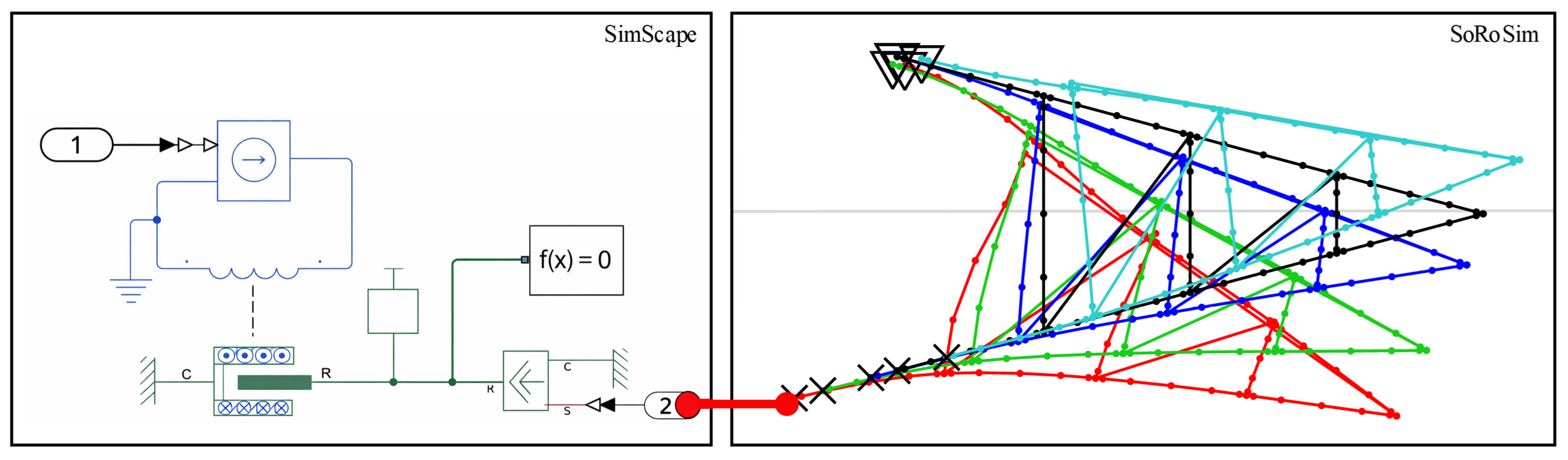
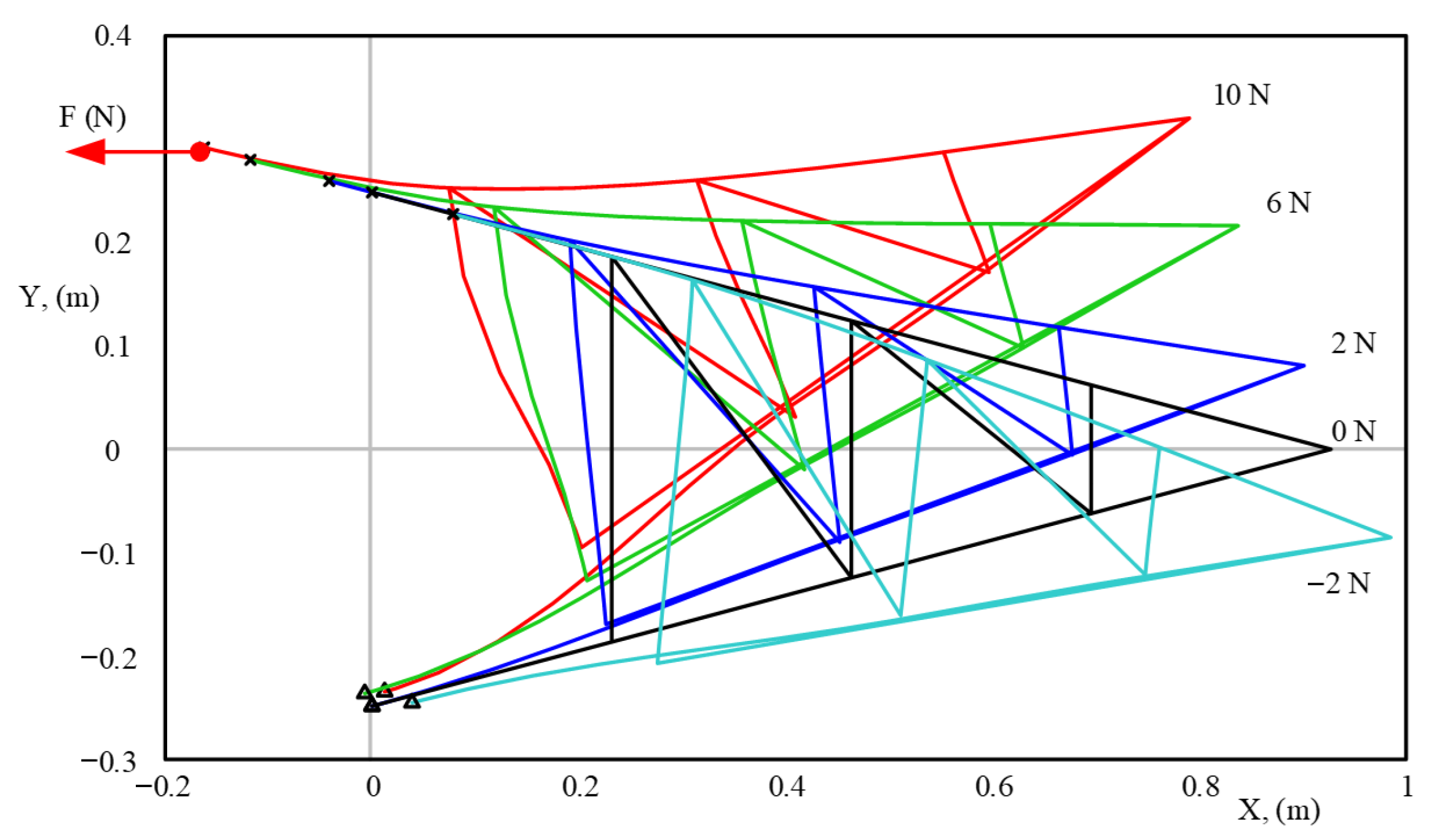
Section 4 presents the modeling and simulation results, highlighting dynamic deformation and force response.
Section 5 outlines the experimental validation across static and dynamic grasping tasks.
Section 6 discusses the performance and key insights with respect to the four primary contributions. Finally,
Section 7 concludes the study and suggests future research directions.
3. Design Motivation and Conventional Gripper Technologies
3.1. Conceptual Design
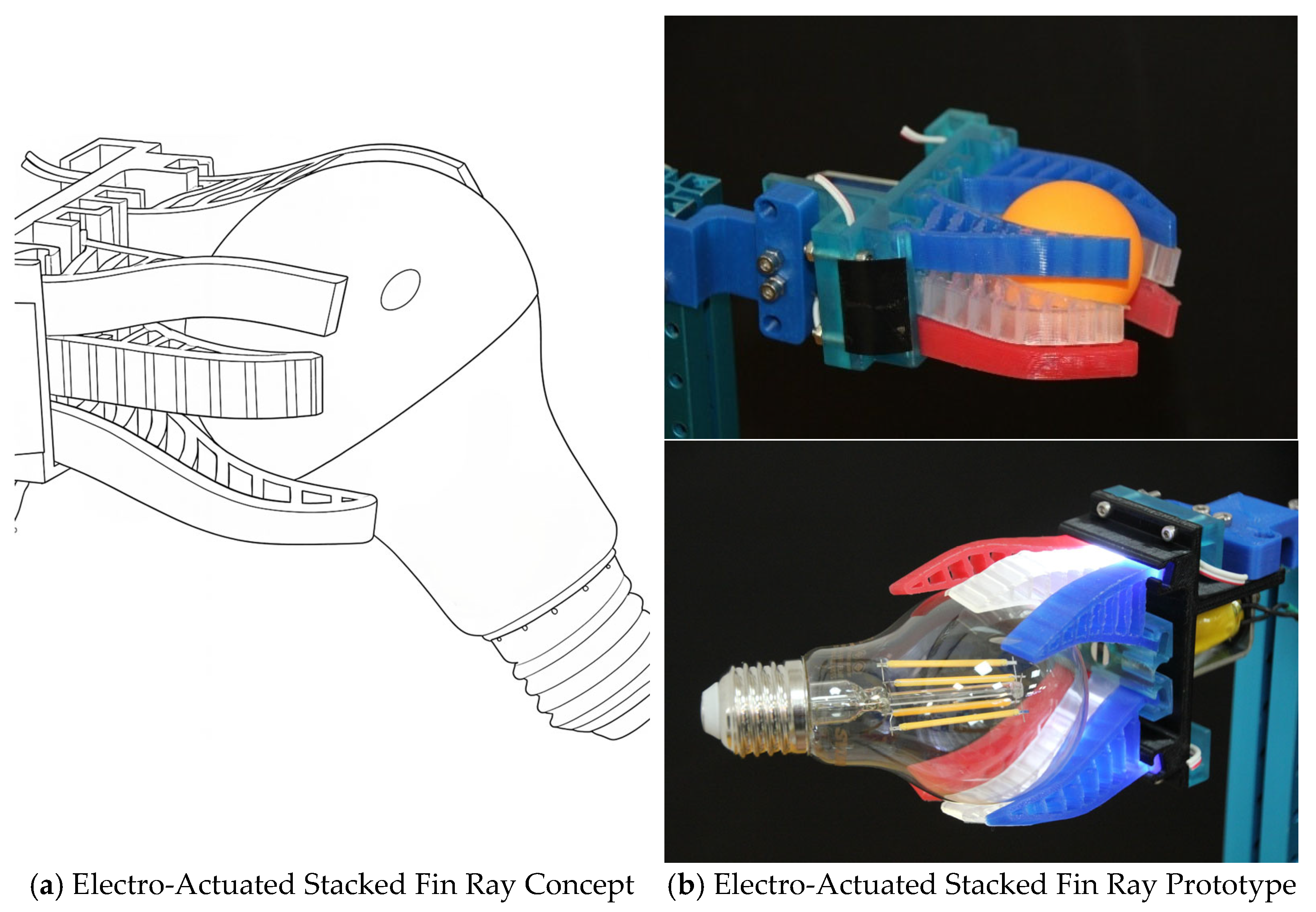
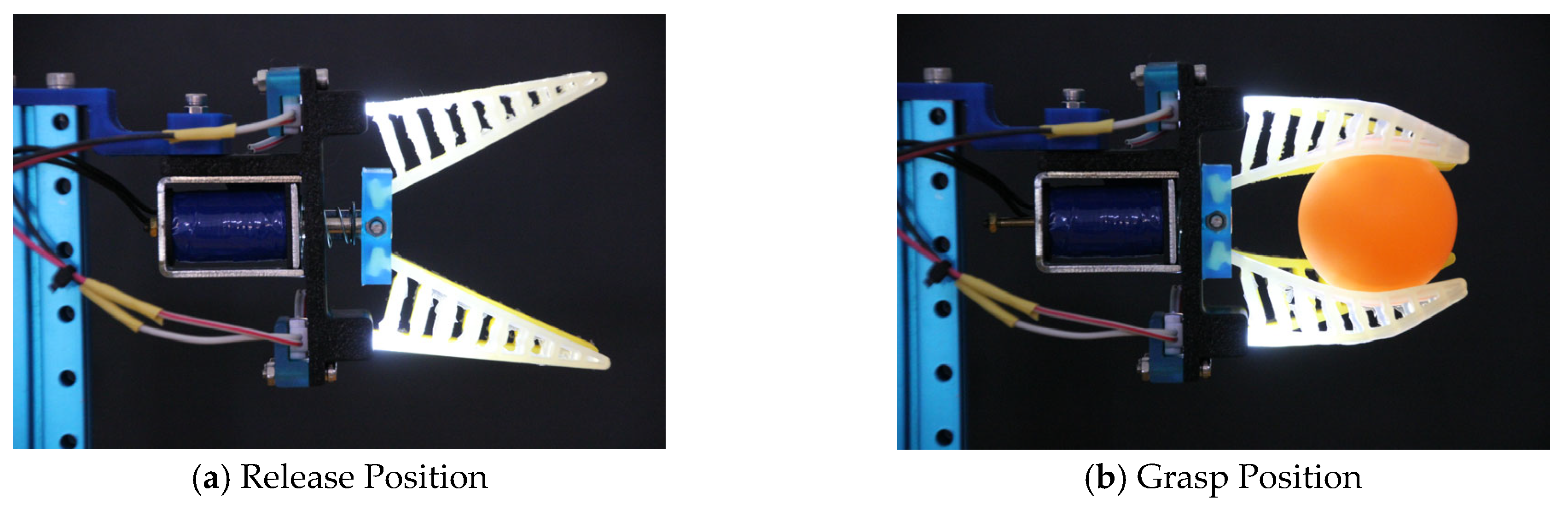
The Electro-Actuated Stacked Fin Ray Gripper is designed to address the challenges of manipulating objects with complex, delicate, or irregular geometries by combining soft materials, modularity, and rapid electromechanical actuation. At the core of the design are independently deformable stacked fins, which serve as the primary contact interface between the gripper and the object. These fins are fabricated using two different methods—silicone casting and TPU 3D printing—allowing for a wide range of mechanical properties, geometries, and sizes. The overall concept and physical prototype are illustrated in
Figure 2, which highlights the stacked configuration and compact form factor that enables adaptive grasping without sacrificing responsiveness. The use of soft elastomeric materials enables the fins to conform passively to object surfaces, providing gentle yet secure contact without requiring active sensing or joint-based compliance mechanisms.
Each side of the gripper incorporates three Fin Ray segments arranged in a vertical stack and rigidly connected to a common actuator, allowing them to move in a synchronized, coaxial manner. This vertical stacking enables synchronized deformation while maintaining a narrow profile. The modular nature of the design also allows users to swap or customize fins based on specific task requirements, promoting reconfigurability without redesigning the entire system.
Actuation is achieved through a single solenoid, which drives a central plunger connected directly to the palm pad of the gripper. When electrical current is supplied to the solenoid, the plunger moves downward, initiating a grasping motion as all three Fin Rays flex inward simultaneously. Releasing the current causes the plunger to retract, returning the fins to their neutral position. This approach eliminates the need for complex mechanical joints or springs, relying instead on the material’s own elastic recovery properties to restore the original shape after deformation.
By adjusting the current supplied to the solenoid, the force applied during grasping can be finely tuned, enabling responsive and precise manipulation of various object types. The overall design emphasizes simplicity and speed while maintaining high adaptability. Its minimal mechanical complexity, combined with the versatility of soft, interchangeable fins, makes it well-suited for real-time applications such as food logistics, fragile object handling, and rapid pick-and-place tasks. The conceptual design showcases a balance between softness, speed, and modular control—offering a practical solution for soft robotic manipulation in dynamic environments.
In summary, the Electro-Actuated Stacked Fin Ray Gripper demonstrates that combining soft, modular structures with direct electromechanical actuation can achieve a balance between adaptability, speed, and simplicity. By leveraging the passive compliance of elastomeric fins and a single solenoid for coordinated motion, the design minimizes mechanical complexity while enabling precise and responsive grasping. This approach highlights the potential of integrating soft robotics principles with rapid actuation to address challenges in manipulating delicate, irregular, or dynamically positioned objects.
3.2. Kinematics Diagram
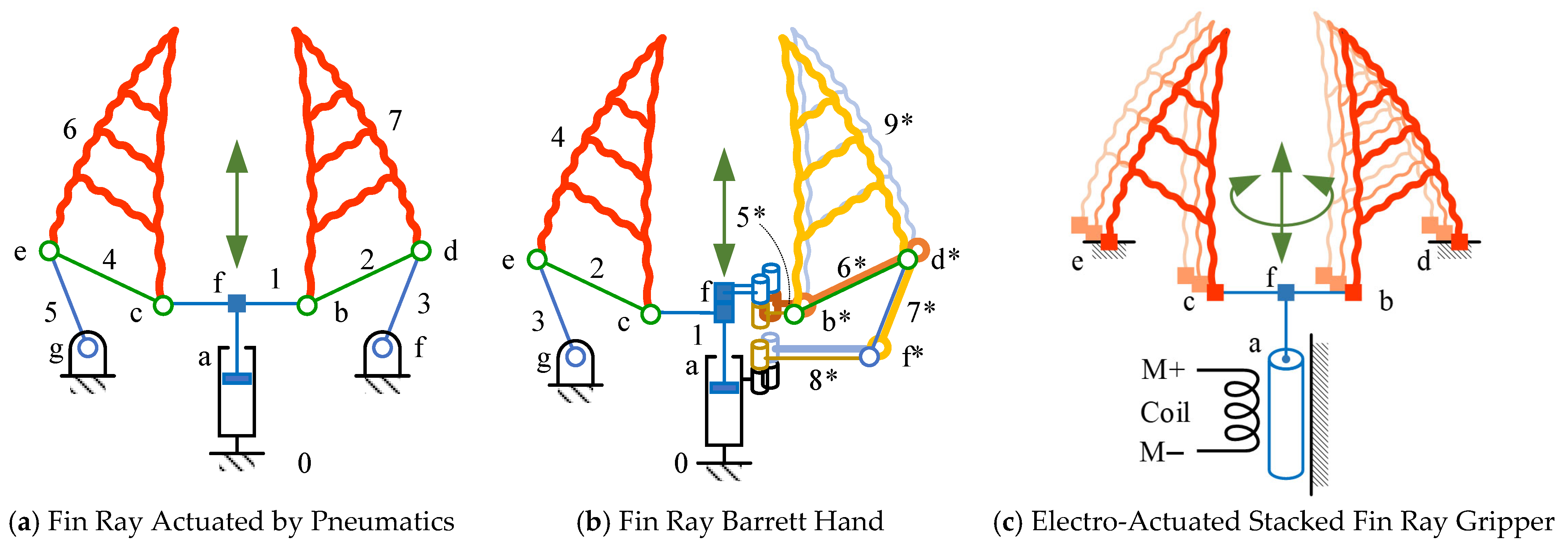
The evolution of Fin Ray gripper configurations is illustrated in
Figure 3, which compares three representative kinematic layouts: (a) a pneumatically actuated Fin Ray, (b) a Barrett Hand-style model with independently actuated fins, and (c) the proposed Electro-Actuated Stacked Fin Ray Gripper. These variants highlight the diverse structural adaptations developed for different manipulation needs.
The classic two-fin configuration (
Figure 3a) is compact and simple, relying on flexible, ribbed fins that deform passively to perform parallel or pinch-type grasps. This structure is effective for cylindrical or planar objects and enables fast deployment in constrained environments. However, its linear grasping geometry limits surface coverage when interacting with irregular or spherical shapes.
The Barrett Hand-inspired model (
Figure 3b) improves adaptability by mounting each fin on an independently rotatable joint. This setup supports both enveloping and precision grasps but introduces mechanical complexity, larger size, and greater control overhead.
The proposed Electro-Actuated Stacked Fin Ray Gripper design (
Figure 3c) vertically layers multiple deformable fins actuated in unison. It retains the narrow profile of the two-finger layout while enhancing vertical object coverage and conformability. This configuration is particularly suitable for manipulating objects with variable height or curvature, offering increased contact area without requiring additional lateral expansion.
In addition to structure, actuation mechanisms significantly influence gripper performance. Pneumatic systems are widely used due to their smooth and compliant motion, but they require bulky external equipment and introduce latency from valve control and air compressibility. Motor-driven systems, using servo or stepper motors, allow high precision and reconfigurability but add mechanical bulk and control complexity.
Solenoid actuation, as employed in the proposed design, offers a balance between simplicity and speed [
39]. It enables rapid actuation through direct plunger movement, eliminates the need for mechanical gearing, and is compact enough for space-constrained applications.
These advantages make it ideal for time-sensitive tasks that benefit from soft contact yet demand fast response.
To better characterize the structural complexity of each gripper configuration, the degrees of freedom (DOF) can be calculated using the general Gruebler-Kutzbach equation for planar and spatial mechanisms:
where
is the number of links (including the base),
is the number of full joints, and
is the number of half joints. This equation provides a way to quantify how many independent motions a mechanism can perform in 2D and 3D space.
Comparative Kinematic Analysis of Fin Ray Gripper Variants
To evaluate the mechanical complexity and actuation characteristics of different Fin Ray gripper architectures, a comparative degree of freedom (DOF) analysis was conducted for three configurations:
- (a)
Traditional Fin Ray Gripper,
- (b)
Fin Ray Barrett Hand Gripper, and
- (c)
Electro-Actuated Stacked Fin Ray Gripper.
The analysis applies classical rigid-body kinematics in both planar and spatial domains to determine the available DOFs, shedding light on actuation requirements and structural flexibility.
- (a)
Traditional Fin Ray Gripper
In this configuration, the gripper comprises
n fingers, each with two rigid links and three compliant joints. Including the base and actuator, the total number of links,
, and joints,
and
, are:
Using the Gruebler–Kutzbach formula for planar motion:
In spatial motion (3D), assuming the actuator is a cylindrical joint (4 constraints), and all other joints are revolute (5 constraints each), the total constraint count is:
This confirms that compliant deformation is necessary to overcome over constraint in 3D.
- (b)
Fin Ray Barrett Hand Gripper
This configuration augments each finger with a base rotation joint (knuckle) and additional rigid segments. For
fingers:
This gripper is increasingly overconstrained as n increases and relies on under actuation or compliance.
- (c)
Electro-Actuated Stacked Fin Ray Gripper
The proposed gripper is minimal in structure, comprising only two links connected by one cylindrical joint:
This configuration achieves spatial adaptability with minimal mechanical complexity.
In brief, when analyzed under planar motion as shown in
Table 1, all three gripper architectures—the Traditional Fin Ray Gripper, Fin Ray Barrett Hand Gripper, and the Electro-Actuated Stacked Fin Ray Gripper —demonstrate the expected degree of freedom behavior, with a single effective DOF enabling coordinated actuation. However, when extended to three-dimensional space as shown in
Table 1, both the Traditional Fin Ray and Fin Ray Barrett Hand grippers exhibit increasing kinematic over constraint due to the accumulation of revolute joints and rigid links. This internal constraint limits the dynamic responsiveness of the system and may restrict actuation speed or require deformation-based compensation. In contrast, the Electro-Actuated Stacked Fin Ray Gripper is structurally underconstrained in 3D, relying on the passive compliance of its flexible fins to maintain positional stability. This design advantage enables both faster actuation and greater spatial adaptability, making it a promising solution for responsive and dexterous manipulation in unstructured environments.
3.3. Substitutable Fins
A key innovation in the proposed gripper system is its modular fin architecture, which enables rapid customization of the gripper’s mechanical interface to suit a wide range of objects and tasks. Each fin module is designed to be easily replaceable, allowing users to modify the gripper’s grasping characteristics by changing the geometry, size, material, or stiffness of individual fins without altering the core actuation mechanism. This modularity enhances the gripper’s adaptability for specific applications, such as handling soft agricultural produce, fragile glassware, or rigid mechanical parts.
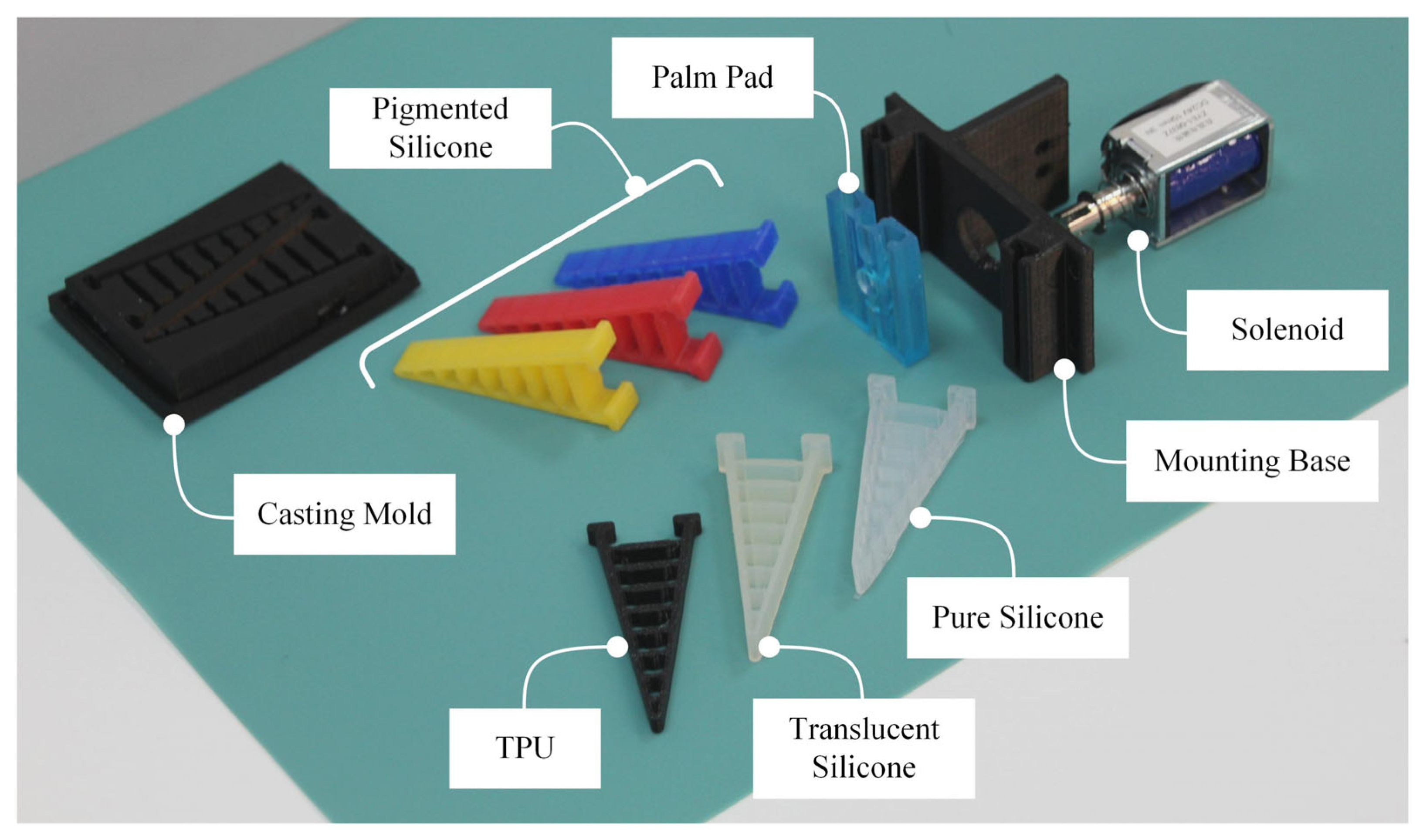
The fins can be fabricated in various heights, cross-sectional profiles, and rib geometries, allowing for both symmetric and asymmetric configurations. This structural flexibility allows fine control over how the gripper conforms to target objects, particularly in cases requiring precision alignment or distributed contact. To tailor the mechanical response, the fins are produced using two distinct fabrication techniques: soft silicone casting and thermoplastic polyurethane (TPU) 3D printing. Silicone fins, fabricated via two-component molding, offer high elasticity and smooth deformation, making them ideal for gentle and compliant interaction with delicate objects. In contrast, TPU fins produced via fused deposition modeling (FDM) allow for rapid prototyping and material tuning, offering a slightly stiffer and more durable option suitable for tasks requiring repeated cycling or higher structural integrity.
By selecting appropriate materials and fabrication methods, the mechanical properties of each fin—such as stiffness, damping, and surface texture—can be tuned to meet specific functional requirements. For instance, softer silicone fins are preferred for grasping fragile items like eggs or sushi, while stiffer TPU fins are more suitable for handling textured or heavier objects such as tools or packaging materials. This hybrid material strategy, combined with the gripper’s stacked and replaceable design, offers a scalable and application-specific approach to end-effector customization. It empowers researchers and practitioners to adapt the gripper quickly and cost-effectively for diverse robotic manipulation scenarios, from laboratory automation to logistics and human–robot interaction. In addition to material versatility, each fin is designed to be manually removable and replaceable without the use of additional tools. The gripper body incorporates dedicated slots that geometrically match the base of the fins. Owing to the inherent compliance of the fin materials, the fins can be pressed into the slots and securely seated through elastic deformation, ensuring reliable attachment during operation. Moreover, the simplicity of the press-fit mechanism presents a clear pathway toward future automation of fin replacement.
3.3.1. Fabrication with 2-Part Silicone Casting
The silicone fins used in the Electro-Actuated Stacked Fin Ray Gripper are primarily fabricated through a two-part molding process, which enables the creation of soft, compliant structures with precisely defined geometries. This method offers a reliable and reproducible approach to manufacturing the flexible elements critical for adaptive grasping. The process begins with the preparation of the base material, typically Ecoflex or a similar platinum-cured silicone elastomer. Two reactive components—a vinyl-terminated oligomer (Part A) and a hydride-functional polymer (Part B)—are mixed in a 1:1 ratio by volume. A platinum-based catalyst is introduced to initiate the hydrosilylation reaction, enabling crosslinking between the polymer chains. The resulting compound forms a homogeneous and stable mixture with a Shore hardness of approximately 40, providing a balance between softness and shape retention.
To ensure uniformity in material properties, the silicone mixture is agitated thoroughly after mixing. This step promotes consistent intermolecular bonding and helps eliminate trapped air bubbles that could compromise structural integrity. The prepared silicone is then carefully poured into a custom mold, which is fabricated using stereolithography (SLA) 3D printing. SLA printing is chosen for its high precision and smooth surface finish, allowing the resulting fin geometry to replicate the mold with minimal post-processing.
Once the mold is filled, the silicone is left to cure at room temperature or under gentle heating, depending on the curing time and manufacturer specifications. After curing, the molded fin is demolded and subjected to visual inspection and minor trimming if needed. The resulting component exhibits the flexible, elastic behavior characteristic of soft robotic structures. These fins are then integrated into the gripper assembly, forming the compliant elements that enable passive deformation and shape adaptation during object contact.
This molding technique offers a high degree of design freedom, allowing for easy modification of fin geometry, thickness, and embedded features—such as cavities for LEDs or grooves for reinforcement. Moreover, the fabrication process is accessible and digitally replicable, making it well-suited for research laboratories, educational platforms, and rapid prototyping workflows. By combining soft material properties with precise shaping via SLA molds, the two-part casting approach ensures that the fins deliver the level of conformity and durability necessary for robust and gentle manipulation in unstructured environments.
3.3.2. Fabrication with TPU 3D Printing
Thermoplastic Polyurethane (TPU) is a highly flexible, durable, and impact-resistant polymer commonly used in 3D printing applications that require mechanical resilience and elasticity. In this work, TPU is employed to fabricate substitutable fins for the soft gripper using fused deposition modeling (FDM), allowing rapid prototyping and mechanical customization.
TPU possesses rubber-like flexibility while maintaining structural integrity under cyclic deformation, making it ideal for fin structures subjected to repeated bending during grasping tasks. The fins were printed using a standard FDM 3D printer equipped with a direct drive extruder to ensure reliable filament feeding. Various geometric profiles, thicknesses, and heights were explored to evaluate their effects on conformation behavior and gripping force distribution.
Various combinations of silicone-cast and TPU-printed fins can be integrated into the gripper to meet diverse application needs.
Figure 4 shows the overall assembly with interchangeable Fin Ray segments and solenoid actuation; The fins shown have a length of 55 mm, a width of 23 mm, and a thickness of 2 mm.
5. Experiment Evaluation and Results
To comprehensively evaluate the performance and practical utility of the proposed Electro-Actuated Stacked Fin Ray gripper, a series of targeted experiments were conducted, each focusing on a key functional dimension. While the gripper’s design emphasizes modularity, adaptability, and soft compliance, its effectiveness in real-world applications depends on critical performance metrics such as actuation speed, grasp reliability, and sensing capability. Accordingly, four core experiments were performed. First, the specifications of each gripper were measured and compared. Second, a response time benchmark assessed the actuation latency in comparison with conventional pneumatic soft grippers, underscoring the system’s suitability for high-speed operation. Third, a free-fall capture test simulated a dynamic and unpredictable environment, challenging the gripper to intercept a falling object in real time. Fourth, a “Glow Fin” experiment investigated vision-based proprioception by analyzing light-guided deformation patterns during grasping. Collectively, these experiments validate the gripper’s responsiveness, adaptability, and intelligent sensing capability, offering a holistic assessment of its readiness for deployment in high-speed, delicate manipulation tasks.
5.1. Comparison of Gripper Specifications
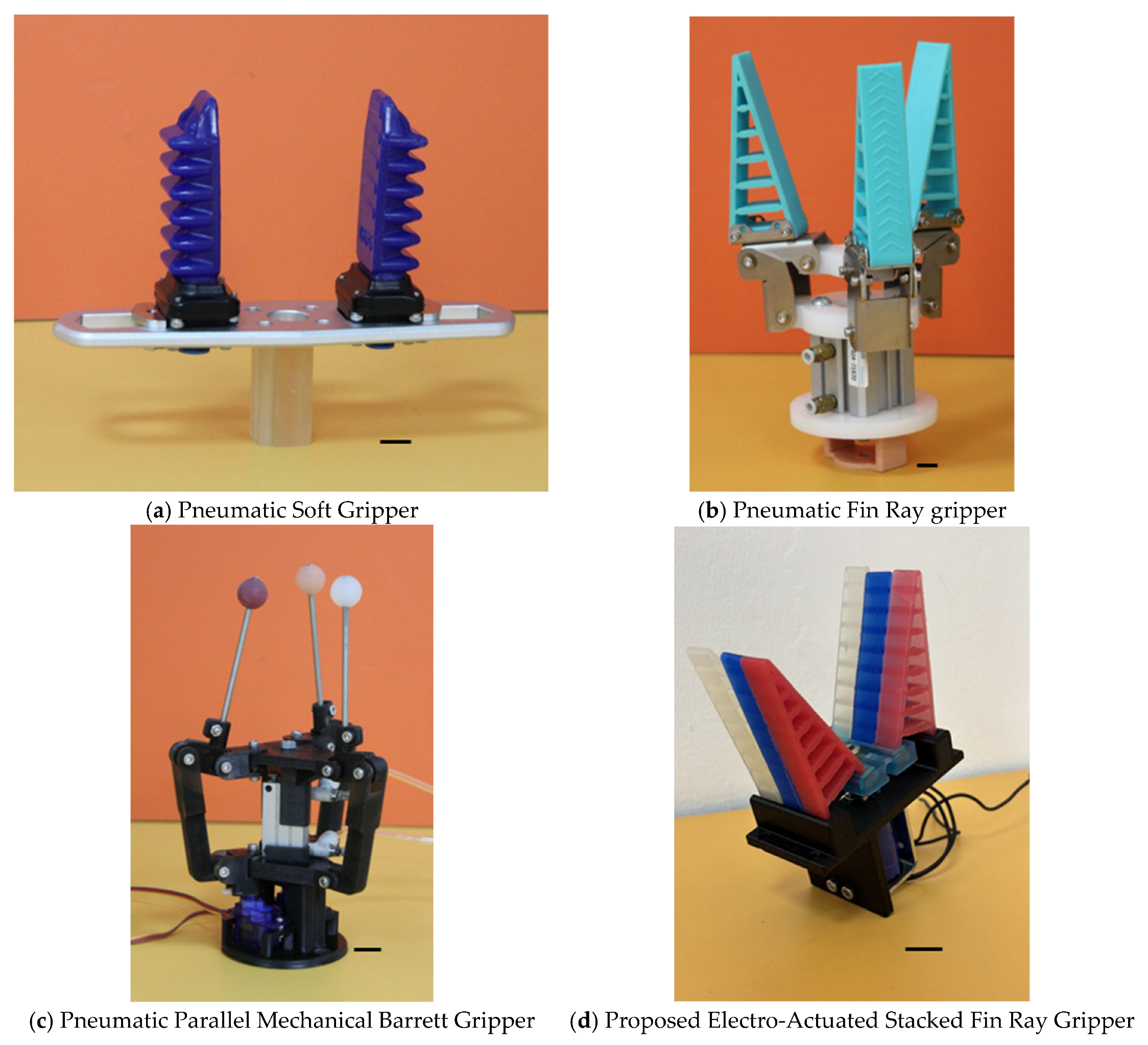
This section presents a comparison of the grippers based on key physical specifications, including mass and opening width. These parameters provide valuable insight into the sizing and weight of each design, helping to reveal the trade-offs between lightweight construction and gripping capability. The comparison in
Table 2 is intended as a system-level overview of representative soft grippers in their typical configurations, rather than a fully normalized actuator-level benchmark.
In
Table 2, the Electro-Actuated Stacked Fin Ray Gripper is the lightest at 0.166 g, followed closely by the Pneumatic Soft Gripper at 0.200 g. The Parallel Mechanical Barrett Gripper has a slightly higher mass of 0.227 g, while the Pneumatic Fin Ray Gripper is the heaviest at 0.513 g. The Electro-Actuated Stacked Fin Ray Gripper has a compact overall size of 115 × 80 × 40 mm. These results indicate that electrically actuated designs can achieve lower weight, which may be advantageous in applications where payload and energy efficiency are critical. Conversely, pneumatic mechanisms tend to increase overall mass, particularly in designs with more structural reinforcement.
With respect to opening width, the Parallel Mechanical Barrett Gripper offers the widest span at 150 mm, followed by the Pneumatic Fin Ray Gripper at 140 mm. The Electro-Actuated Stacked Fin Ray Gripper provides a moderate width of 70 mm, while the Pneumatic Soft Gripper has the narrowest opening at 64 mm. This suggests that pneumatic and parallel mechanical systems are better suited for grasping larger objects, whereas the electro-actuated design favors compactness and precision over range.
In summary, although the Electro-Actuated Stacked Fin Ray Gripper provides a smaller opening width, its low mass demonstrates the advantage of solenoid actuation, which eliminates the need for heavy structural components and makes it a lightweight, efficient alternative.
To enable a fair comparison of actuation performance across grippers with different opening widths, the grasping time was normalized into an average grasping speed (mm/s) by dividing the maximum opening width by the measured grasping time. We humbly assume a uniform closing motion during actuation, acknowledging that this representation is a simplified metric that does not capture transient dynamics, nonlinear deformation, or contact interactions. Nevertheless, it provides a consistent and intuitive indicator for comparing the overall actuation responsiveness among different gripper designs. The reported grasping speed comparison is presented as a normalized benchmark to enable relative performance comparison across different configurations under controlled experimental conditions, rather than as an absolute system-level performance metric.
This normalization highlights the effective actuation rate regardless of absolute aperture size. The results reveal that although the Pneumatic Soft Gripper shows a short closing time, the Electro-Actuated Stackcaed Fin Ray Gripper achieves one of the highest normalized speeds, confirming the advantage of its solenoid-driven actuation in fast-paced tasks.
5.2. Response Time
The response time benchmark underscores the advantages of the proposed Electro-Actuated Stacked Fin Ray Gripper in scenarios where rapid and adaptive grasping is essential. Unlike pneumatic grippers, which rely on air pressure modulation and valve actuation, the solenoid-based mechanism employed in this design allows for direct, immediate displacement of the gripper structure upon signal input. This eliminates latency typically introduced by fluid dynamics, enabling the gripper to respond within a few tens of milliseconds. While pneumatic soft grippers and Fin Ray variants offer excellent compliance and adaptability, their actuation speed is fundamentally constrained by air compressibility, valve response times, and tubing dynamics—factors that limit their application in high-speed tasks.
To evaluate performance under fair and consistent conditions, the response time of the proposed gripper was benchmarked against three commonly used gripper types: a Pneumatic Soft Gripper, a Pneumatic Fin Ray Gripper, and a Pneumatic Mechanical Barrett Gripper. Given the differing actuation mechanisms—solenoid for the proposed design and pneumatic for the others—a direct comparison based solely on actuation time would be inherently biased.
To address this, input effort was normalized using the maximum usable input for each gripper, as listed in
Table 2.
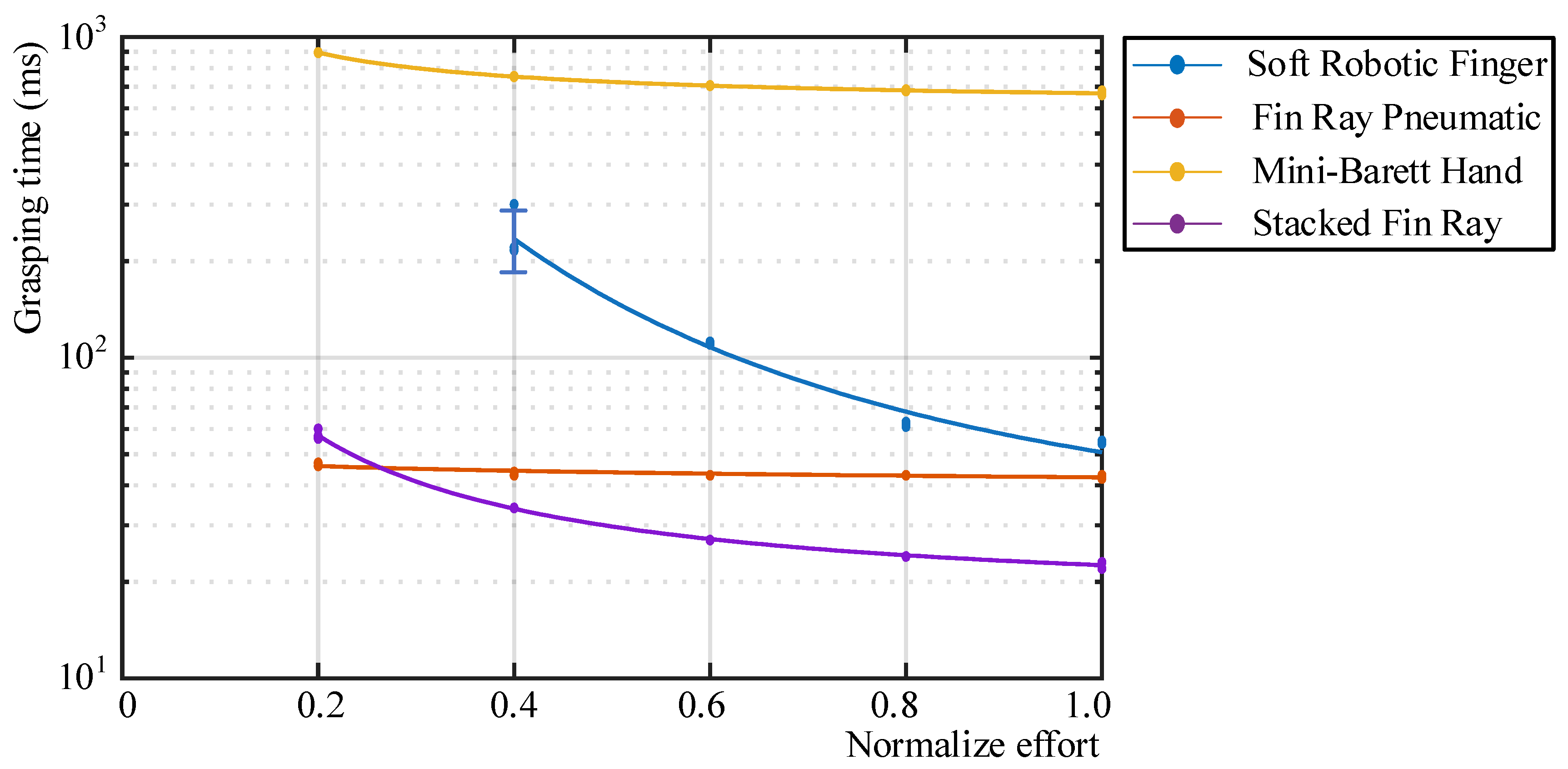
For the response time measurement, all grippers were mounted on the same test rig to ensure consistent positioning and boundary conditions. Each gripper was actuated using its respective control system: the solenoid for the Electro-Actuated Stacked Fin Ray Gripper, and pneumatic solenoid valves for the other three grippers. The input signal was synchronized and recorded using a high-speed data acquisition system at 1 kHz. For pneumatic actuation, the pressure was regulated using a Pneumatic Regulator (ITV2030-212CS, SMC) and supplied to the solenoid actuator (SY3120-5LZD-C4) via a 4 mm diameter pneumatic tube with a length of 500 mm. Normalized effort levels of 0.4, 0.6, 0.8, and 1.0 were tested for all grippers, with an additional level of 0.2 evaluated for the Electro-Actuated Stacked Fin Ray Gripper. The Pneumatic Mechanical Barrett Gripper was excluded from testing at 0.4 due to instability at low pressure. For each level, five grasping trials were conducted, and the average response time was recorded. The results are shown in
Figure 7.
The results reveal a clear inverse relationship between normalized effort and response time: higher effort consistently leads to faster actuation across all grippers. Among them, the Electro-Actuated Stacked Fin Ray Gripper achieved the shortest response time at every tested level. This is attributed to the solenoid’s direct-drive mechanism, which bypasses delays from air compressibility and valve switching. The Pneumatic Soft Gripper followed in performance, then the Pneumatic Fin Ray Gripper. The slowest response was observed in the Pneumatic Mechanical Barrett Gripper, primarily due to internal friction, pressure propagation delay, and structural complexity.
In contrast to pneumatic systems, the Electro-Actuated Stacked Fin Ray Gripper demonstrates a significant performance advantage, especially in dynamic environments where objects may be moving or falling unpredictably. The gripper’s rapid response is particularly relevant for applications involving real-time interaction, such as robotic catching, high-speed pick-and-place operations, or human–robot collaboration requiring reflexive motion. Importantly, this enhancement in speed does not compromise the gripper’s softness or adaptability; the Fin Ray structure maintains its ability to conform passively to diverse object geometries while the solenoid ensures swift motion execution.
The integration of this actuation method thus presents a compelling alternative to conventional pneumatic systems, striking a balance between mechanical compliance and rapid control response. These findings validate the proposed gripper’s potential for deployment in advanced robotic platforms where soft handling must be combined with temporal precision. The benchmark also provides quantitative support for the gripper’s performance in subsequent dynamic experiments—such as free-fall object capture—demonstrating its readiness for demanding robotic manipulation tasks.
5.3. Grasping Free-Fall Ping Pong: Evaluating Reaction Speed and Reliability
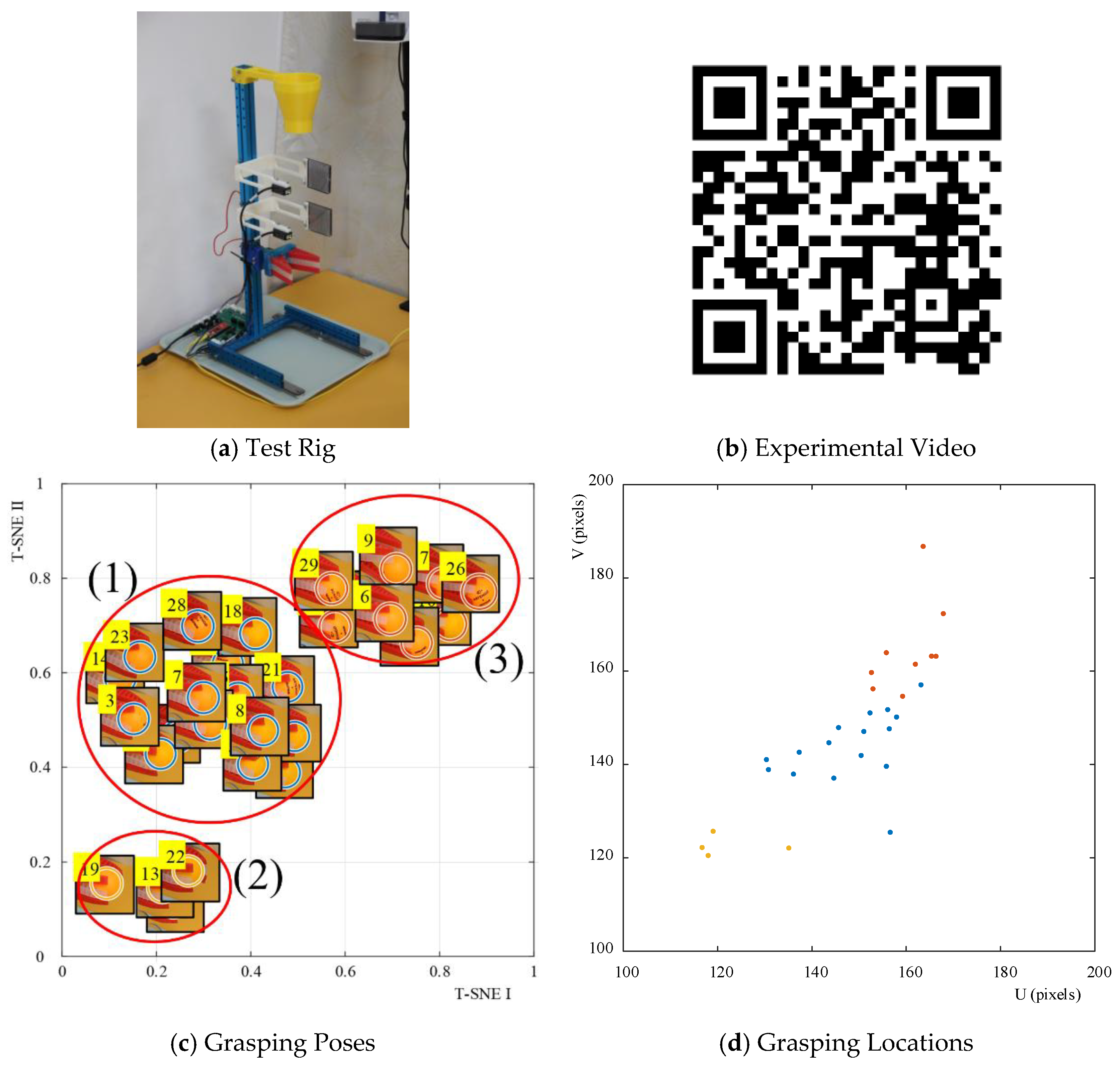
To evaluate the dynamic grasping capability of the proposed electro-actuated stacked Fin Ray gripper, a free-fall capture experiment was conducted using a standard 40 mm ping pong ball. The objective was to assess the gripper’s ability to respond rapidly and reliably to a high-speed, unstructured event where the object descends with minimal warning. The specimen, a standard spherical object, was deliberately selected to demonstrate grasping on a three-dimensional curved surface. This task is particularly challenging because the gripper adopts a parallel configuration that is conventionally optimized for cylindrical objects. In this setup, the ping pong ball was dropped vertically from a known height, reaching an estimated velocity of approximately 14.71 m/s at the moment of interception. Given the effective capture range of the gripper, this corresponds to an available reaction time of less than 5 milliseconds—highlighting the challenge posed by this experiment. The experiment setup is shown in
Figure 8a and a demonstration video is accessible via the QR code (
Figure 8b) link provided.
A total of 30 trials were conducted, with the gripper triggered by a fall-detection signal linked to the solenoid actuator. Out of the 30 trials, 29 resulted in successful captures, yielding a high success rate of 96.7%. This outcome demonstrates the exceptional responsiveness and reliability of the solenoid-actuated design, especially considering the short actuation window and lack of any pre-positioning cues. The single failed grasp was attributed to a rare off-axis trajectory of the falling ball, rather than a delay or malfunction in the gripper mechanism.
To analyze the grasping behavior in greater detail, each trial was recorded using a high-speed video camera. From each video, frames corresponding to the moment of contact and the steady-state hold were extracted. These frames were cropped and processed to focus exclusively on the gripper-object interaction. To classify the nature of each successful grasp, the images were converted into feature vectors and analyzed using a combination of t-distributed Stochastic Neighbor Embedding (t-SNE) for dimensionality reduction and k-means clustering for unsupervised pattern discovery. This approach revealed three distinct modes of successful grasps: (1) secure grasp with symmetrical closure and high stability, (2) partial grasp with the ball positioned closer to the lower fin, and (3) partial grasp with the ball biased toward the upper fin. This result is shown in
Figure 8c. Each of these modes reflected subtle differences in the way the gripper conformed to the object mid-flight, suggesting natural adaptability in the fin response under variable impact conditions.
To further quantify object consistency across these trials, a Hough Circle Transform was applied to detect the ball in the steady-state images and extract its centroid. The results showed that while there was some variation in ball position across all successful grasps, the vertical (v-axis) scatter was particularly low in the secure grasp mode. This suggests that the symmetrical geometry and compliant behavior of the stacked Fin Ray structure promote self-centering along the vertical direction. In contrast, the horizontal (u-axis) variation was slightly greater, likely due to differences in lateral friction and fin compliance during contact. The mapping of grasping locations is shown in
Figure 8d.
Overall, the free-fall capture test validates the gripper’s capacity to handle dynamic and unpredictable objects with both speed and adaptability. The combination of high success rate, consistent grasp postures, and data-driven behavior classification underscores the gripper’s potential for real-time manipulation tasks in unstructured environments—such as object interception, fast pick-and-place, or reactive grasping in human–robot interaction scenarios.
5.4. Glow Fin: Light-Guided Shape Sensing for Real-Time Grasp Feedback
This study proposes a light-guided sensing approach that enables proprioceptive feedback in soft robotic systems without relying on embedded electronics. The method exploits the optical properties of translucent silicone fins that are equipped with internal light sources, such as high-intensity LEDs or optical fibers, positioned at the fin base or sidewalls. Once illuminated, the silicone material diffuses light through internal scattering, transforming the fin into a glowing structure. When the fin deforms during grasping, the internal geometry changes and produces visible variations in the light distribution, including intensity gradients, shadowing, and asymmetry in the glow pattern, as shown in
Figure 9a,b. These visual cues can be captured by an external RGB camera and used to infer the fin’s deformation in real time.
The glowing deformation pattern provides an unobtrusive and reliable means to estimate the shape of the fin and the state of contact with objects. Since the mechanism is based purely on material properties combined with external imaging, it avoids the drawbacks of embedded strain or flex sensors, such as added stiffness, fragility, and higher fabrication complexity. At the same time, the captured images can be processed by common machine vision techniques, including contour detection, brightness analysis, or neural-network–based classification. Because the illumination originates within the fin itself, the sensing works consistently under ambient lighting conditions rather than being restricted to dark environments.
There are several possible methods for detecting the position and motion of a Fin Ray gripper. Tools such as the Tracker Video Analysis and Modeling Tool [
42] and VISOR SensoPart [
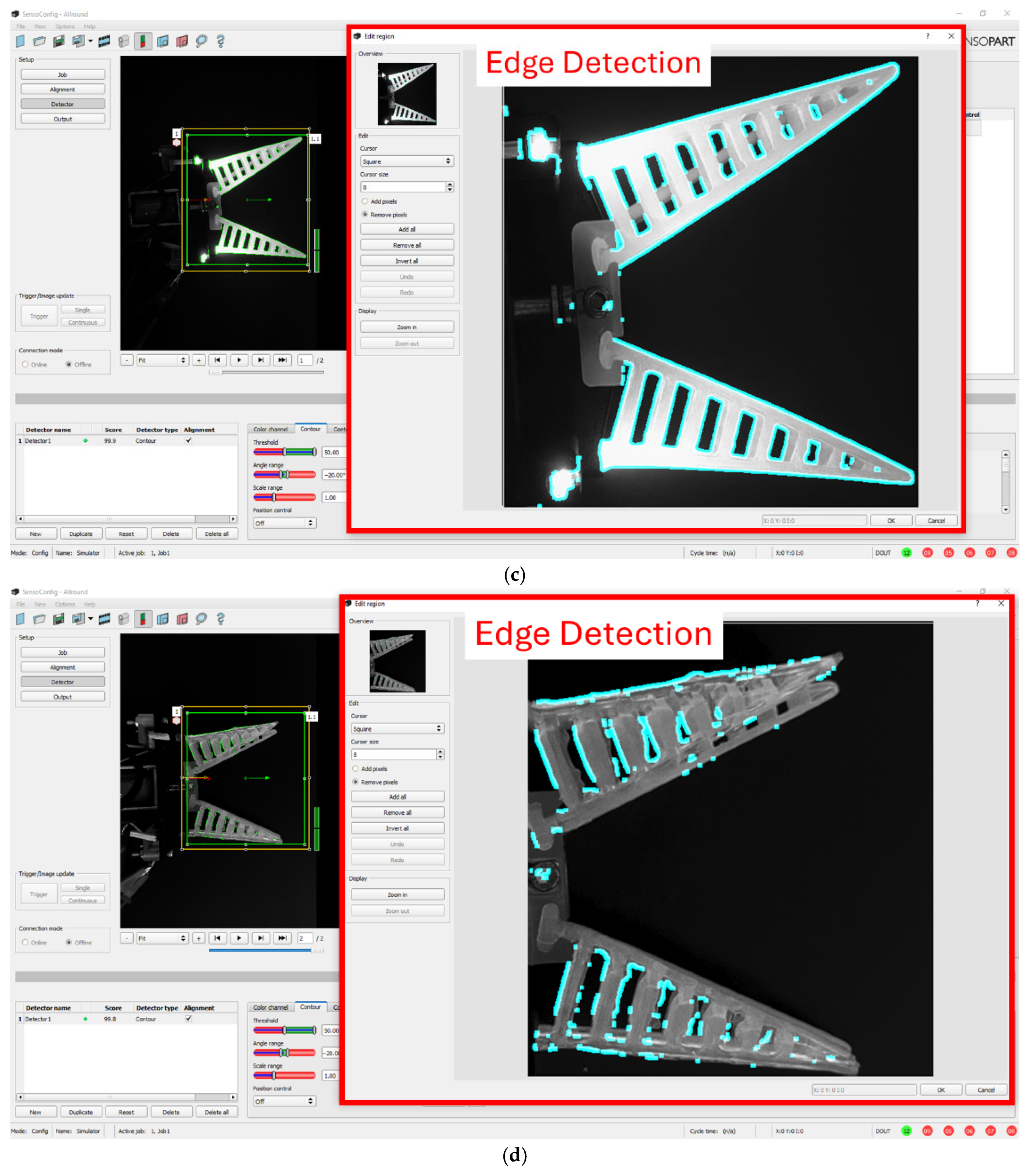
43] are widely used for vision-based tracking and measurement. In this study, VISOR SensoPart was employed to evaluate the edge detection capability of the Glow Fin design.
Figure 9c,d show the detection results for both the Glow Fin Ray Gripper and a conventional Fin Ray Gripper. The Glow Fin Ray Gripper produced clear and complete outlines, whereas the conventional gripper showed weak and incomplete edges. This demonstrates that the Glow Fin configuration provides more reliable input for quantitative measurements such as displacement or velocity estimation.
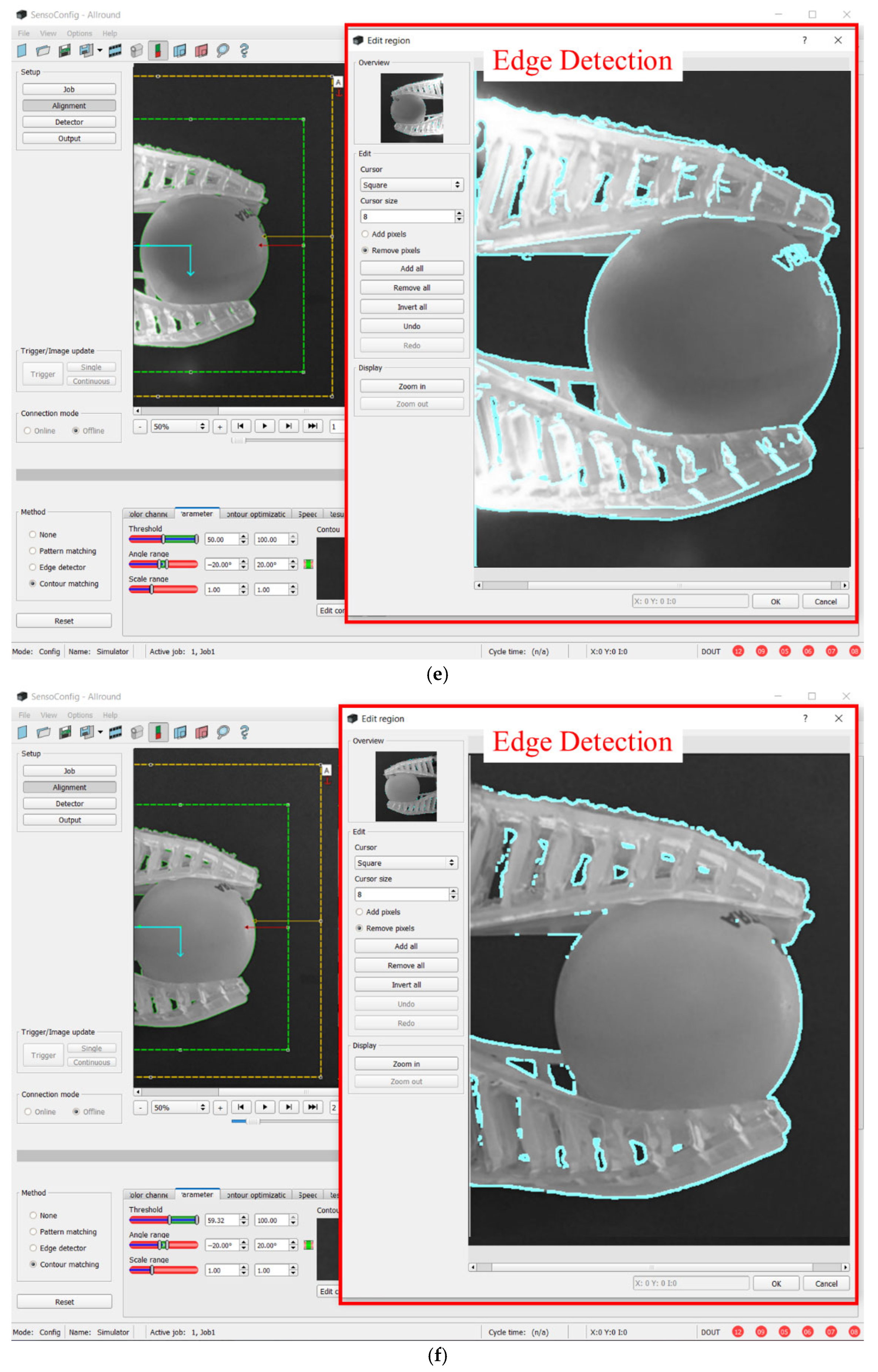
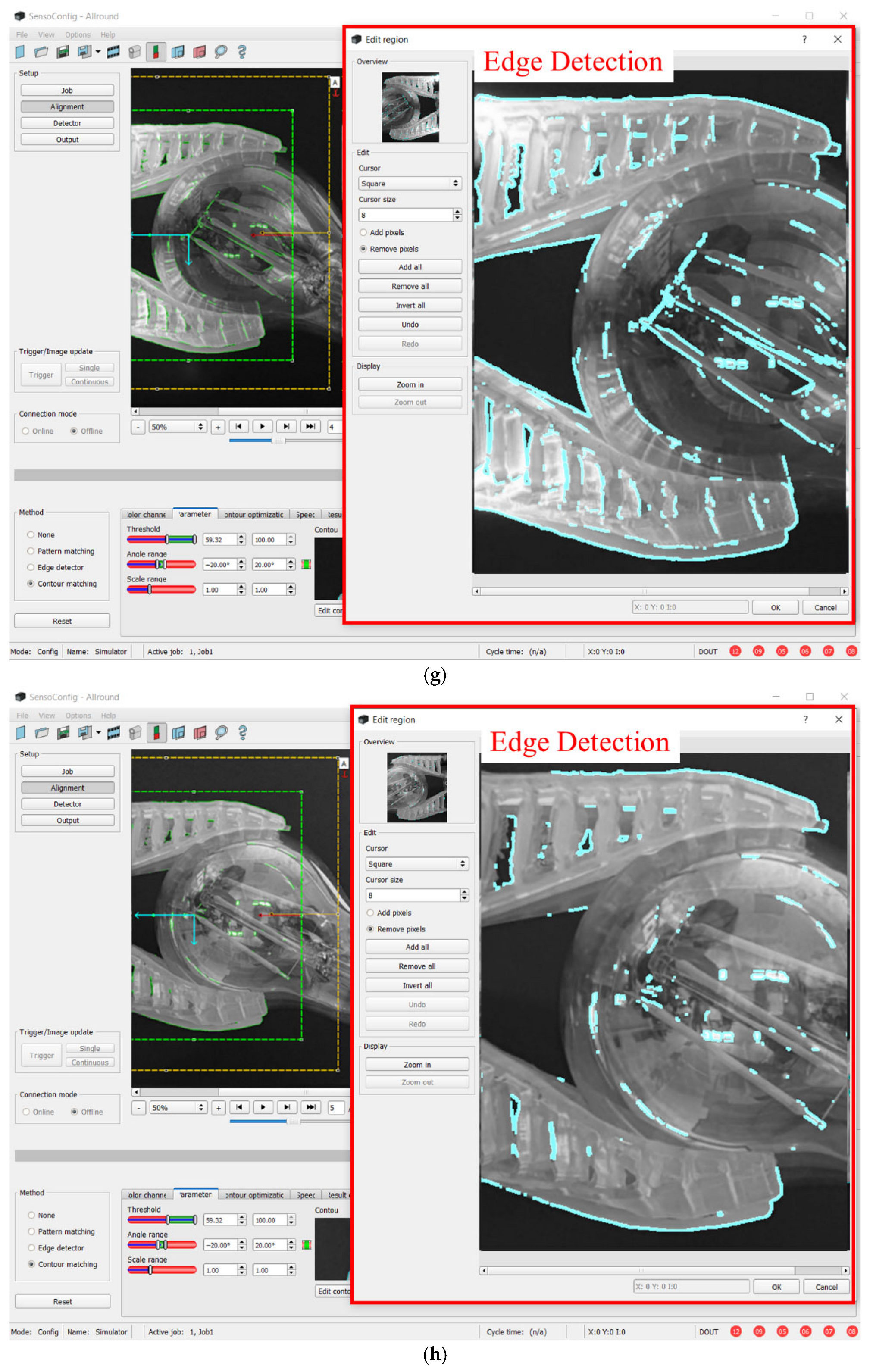
To further examine performance under object interaction, additional experiments were carried out while grasping a ball and a light bulb.
Figure 9e–h present the corresponding detection results. Even during contact, the Glow Fin Ray Gripper maintained strong edge contrast and clear contours, while the conventional gripper failed to provide consistent detection under the same ambient lighting conditions. The internal illumination of the Glow Fin acts as an integrated lighting source, improving boundary visibility in a way similar to ring lights or coaxial lights, yet without requiring any external illumination equipment.
In summary, the Glow Fin offers a lightweight and cost-effective strategy for proprioceptive sensing in soft robotics. It enables the gripper to sense its own deformation and to provide reliable visual feedback even when interacting with objects. By combining improved visibility, compatibility with ambient environments, and minimal impact on compliance, the Glow Fin represents a practical sensing solution that supports adaptive and real-time grasping in unstructured environments.
While the proposed system demonstrates effective grasping performance and deformation sensing capabilities, several limitations should be acknowledged. The vision-based Glow Fin sensing relies on controlled lighting conditions and camera placement, and its robustness under varying illumination has not yet been systematically evaluated. In addition, the experimental validation was conducted using a limited set of object shapes and materials, which may not fully represent the diversity encountered in real-world manipulation tasks. Therefore, the reported results should be interpreted within the scope of the current experimental setup, and future work will focus on improving sensing robustness under diverse lighting conditions and expanding object diversity.
While the external camera primarily captures the illuminated surface within its field of view, the translucent silicone material and internal light scattering are expected to cause global changes in glow distribution when fins deform. This implies that deformation of fins located on the opposite side or in the middle may also influence the observed pattern. However, a systematic evaluation of multi-sided sensing has not yet been performed and will be considered as part of future work.
6. Discussion
The proposed Electro-Actuated Stacked Fin Ray Gripper introduces a unified soft robotic design that synergistically integrates high-speed actuation, adaptive geometry, modular customization, and proprioceptive sensing. The experimental and simulation results robustly validate these contributions across four key dimensions.
Firstly, the solenoid-driven actuation mechanism demonstrates significantly faster response times compared to conventional pneumatic systems. With direct electromagnetic actuation eliminating the delays associated with air compressibility and valve switching, the gripper consistently achieved sub-25 ms closure times. This capability was critical in high-speed dynamic tasks, as evidenced by the 96.7% success rate in the free-fall object interception experiment. The responsiveness positions the gripper as a compelling solution for applications such as robotic catching or real-time human–robot collaboration. The inclusion of normalized grasping speed in
Table 2 further supports this observation. By accounting for differences in opening width, the comparison demonstrates that the proposed gripper maintains a competitive or superior actuation rate relative to pneumatic counterparts. This reinforces the suitability of the solenoid actuation for rapid and dynamic manipulation scenarios.
Secondly, the stacked Fin Ray architecture enhances the gripper’s ability to conform to complex 3D object geometries. Unlike traditional planar or parallel mechanisms, the vertical stacking of multiple soft fins significantly increases the contact area and enables distributed compliance along the object’s height. This allows the gripper to securely grasp spherical, elongated, or irregular items while maintaining a narrow structural profile. Simulation data confirmed that the layered fins deform in a coordinated and reversible manner under varying force conditions, providing both adaptability and passive return behavior without requiring springs.
Thirdly, the modular design with substitutable fins offers an unprecedented level of customization. By enabling the user to replace individual fin segments with varying materials, geometries, and stiffness levels, the gripper can be rapidly reconfigured for specific object handling scenarios. For example, soft silicone fins provide gentle interaction for delicate items, whereas stiffer TPU fins offer durability and higher grasp force for rigid or heavy objects.
As summarized in
Table 3, different fin prototypes demonstrate how variations in material and appearance support distinct functional roles, ranging from vision-assisted grasping to strength-oriented manipulation. Beyond material selection, the modular architecture allows structural characteristics—such as fin thickness, length, internal compliance, and stacking configuration—to be adapted without redesigning the entire gripper. This capability enables task-specific tuning of contact area, deformation mode, and load distribution at the end-effector level.
When higher grasping strength is required, stiffer fin materials can be employed to improve force transmission, at the cost of increased actuation effort and slower response. This introduces a trade-off between fin stiffness, deformation behavior, energy consumption, and actuator capability, which can be optimized through different modular fin configurations without redesigning the gripper. For specialized functions, such as transparent fins for light-guided vision or biocompatible fins, material and manufacturing options are more limited due to optical and process constraints. Nevertheless, these limitations are confined to the fin modules, preserving overall system flexibility.
This modularity not only improves task versatility but also promotes sustainability and ease of maintenance, as damaged components can be replaced without redesigning the entire system.
Finally, the integration of a light-guided, vision-based sensing mechanism—termed “Glow Fin”—demonstrates a novel approach to real-time proprioception in soft robotics. This passive sensing strategy leverages internal light diffusion within translucent silicone fins to infer shape deformation during grasping. Without requiring embedded electronics or compromising material compliance, the system delivers spatially resolved feedback that can be processed using simple image analysis techniques. This lightweight sensing method opens new possibilities for closed-loop grasp control in low-cost or mechanically constrained environments.
In sum, the Electro-Actuated Stacked Fin Ray Gripper addresses multiple longstanding limitations in soft gripper design by fusing fast actuation, spatial adaptability, reconfigurable structure, and embedded sensing into a cohesive and manufacturable platform. This integration lays the foundation for broader deployment in dynamic manipulation tasks across industrial, agricultural, and collaborative robotic domains.
Despite its demonstrated advantages, the Electro-Actuated Stacked Fin Ray Gripper has several limitations that warrant further investigation. The current design is optimized for small to medium objects, and scaling to larger payloads may require stronger actuators or reinforced fin structures, potentially compromising compliance or speed. While modularity allows customization, the systematic development and evaluation of fin-ray variants with different geometries, materials, and stiffnesses remain limited. Durability of soft components under repeated deformation and exposure to harsh environments is another concern.
Future work will focus on developing and evaluating a range of fin-ray variants tailored for specific applications, optimizing geometry, material properties, and stiffness to balance adaptability, payload capacity, and durability. Further research will also aim to enhance sensing robustness, scaling strategies, and integration with dynamic manipulation tasks in real-world environments.





 ,
,