Article

Dynamic Modeling of Multi-Stroke Radial Piston Motor with CFD-Informed Leakage Characterization

by
Manhui Woo
1 and
Sangwon Ji
2,*
1
Department of Mechanical System Engineering, Graduate School of Pukyong National University, 45, Yongso-ro, Nam-gu, Busan 48513, Republic of Korea
2
Department of Mechanical System Engineering, Pukyong National University, 45, Yongso-ro, Nam-gu, Busan 48513, Republic of Korea
*
Author to whom correspondence should be addressed.
Actuators 2026, 15(1), 54; https://doi.org/10.3390/act15010054
Submission received: 9 December 2025 / Revised: 9 January 2026 / Accepted: 10 January 2026 / Published: 13 January 2026

Abstract

Radial piston motors are expected to expand their applications in hydraulic drive systems due to their high torque density and mechanical robustness. However, its volumetric efficiency can be significantly affected by the multi-stroke operating characteristics and leakage occurring in the micro-clearances of the valve plate. In this study, a detailed modeling procedure for a multi-stroke radial piston motor is proposed using the 1D system simulation software Amesim. In particular, the dynamic interaction between the ports and pistons inside the motor is formulated using mathematical function-based expressions, enabling a more precise representation of the driving behavior and torque generation process. Furthermore, to characterize the leakage flow occurring in the micro-clearance between the fluid distributor and cylinder housing, the commercial CFD software Simerics MP+ was employed to analyze the three-dimensional flow characteristics within the leakage gap. Based on these CFD results, a leakage-path function was constructed and implemented in the Amesim model. As a result, the developed model exhibited strong agreement with reference data from an actual motor in terms of overall operating performance, including volumetric and mechanical efficiencies while consistently reproducing the leakage behavior observed in the CFD analysis. The simulation approach presented in this study demonstrates the capability to reliably capture complex fluid–mechanical interactions at the system level, and it can serve as an effective tool for performance prediction and optimal design of hydraulic motors.

1. Introduction

Radial piston motors constitute a key class of low-speed, high-torque (LSHT) drive technologies, and their technological evolution and industrial significance have been well documented in the literature [1]. In addition, numerous system-level studies have investigated their dynamic behavior and performance characteristics within hydrostatic drive systems [2,3,4]. Furthermore, structural design studies considering actual operating conditions have also been reported for applications in construction and mining machinery [5].
In particular, the multi-stroke mechanism consists of multiple pistons arranged circumferentially, where the roller at the end of each piston continuously reciprocates in contact with the cam ring. The number of strokes per revolution for each piston corresponds to the number of lobes on the cam ring, resulting in a relatively large displacement per unit volume. In addition, since each piston operates with a certain phase difference, individual strokes overlap with one another, enhancing output continuity and reducing torque pulsation [6,7,8]. Despite these structural advantages, internal flow characteristics and leakage phenomena can inevitably influence the volumetric efficiency [9,10,11]. Therefore, accurate simulation modeling of radial piston motors is essential for performance prediction and optimization during the design stage.
Previous studies on radial piston motors have primarily focused on experimental performance measurements, simplified numerical modeling, or analyses under limited operating conditions. For example, some studies have experimentally evaluated the influence of specific leakage paths on volumetric efficiency [9], while others have analyzed the effect of leakage with a focus on efficiency characteristics under varying pressure conditions [11]. In addition, system-level dynamic behavior has been investigated using one-dimensional (1D) models [12], and CFD-based analyses of internal flow phenomena in radial piston motors have also been reported [13]. However, experimental approaches are often costly and time-consuming, while simplified models fail to sufficiently capture the actual operating characteristics of the structure and the leakage flow occurring within micro-clearances [14,15,16,17,18]. In particular, the leakage that occurs between the fluid distributor and the cylinder housing has a significant impact on the overall efficiency, yet it is difficult to accurately account for this effect within conventional 1D modeling environments [9,12,19,20,21].
Computational fluid dynamics (CFD) has been widely employed as a reliable tool for accurately analyzing localized flow phenomena; however, it requires substantial computational resources, making it inefficient for long-term analyses of entire drive systems, and partial experimental validation is necessary to adequately represent actual system behavior [22]. In contrast, one-dimensional (1D) simulation can rapidly reproduce the dynamic behavior of the overall system but has limitations in directly representing detailed micro-scale flows. These two analysis methods therefore possess complementary characteristics, and studies integrating them have been actively conducted in various hydraulic machinery applications [23,24,25,26,27]. Nevertheless, the application of a coupled CFD–1D approach to the performance analysis of radial piston motors remains limited [13,28].
In this study, a modeling procedure for a multi-stroke radial piston motor is presented based on the commercial 1D simulation software Amesim. The leakage flow characteristics occurring between the distributor and the cylinder housing were analyzed through CFD simulation, and the results were incorporated into the model as an equivalent leakage-path function. This approach enables precise consideration of the micro-clearance leakage phenomena that are often neglected in conventional 1D models while maintaining the capability to rapidly predict system-level efficiency characteristics.
From a broader engineering systems perspective, the modeling strategy adopted in this study addresses a general challenge in hydraulic system simulation: incorporating physically meaningful leakage behavior into computationally efficient system level models. In many hydraulic machines, including radial piston motors and axial piston motors used in transport and industrial applications, micro clearance flows strongly influence efficiency and performance margins, yet cannot be directly resolved within conventional 1D simulations. The present approach illustrates how localized flow information can be abstracted into equivalent representations suitable for system level modeling, providing a transferable framework for enhancing dynamic simulations of hydraulic machinery beyond the specific multi stroke radial piston motor considered in this study.

2. Geometry and Specifications of Radial Piston Motor

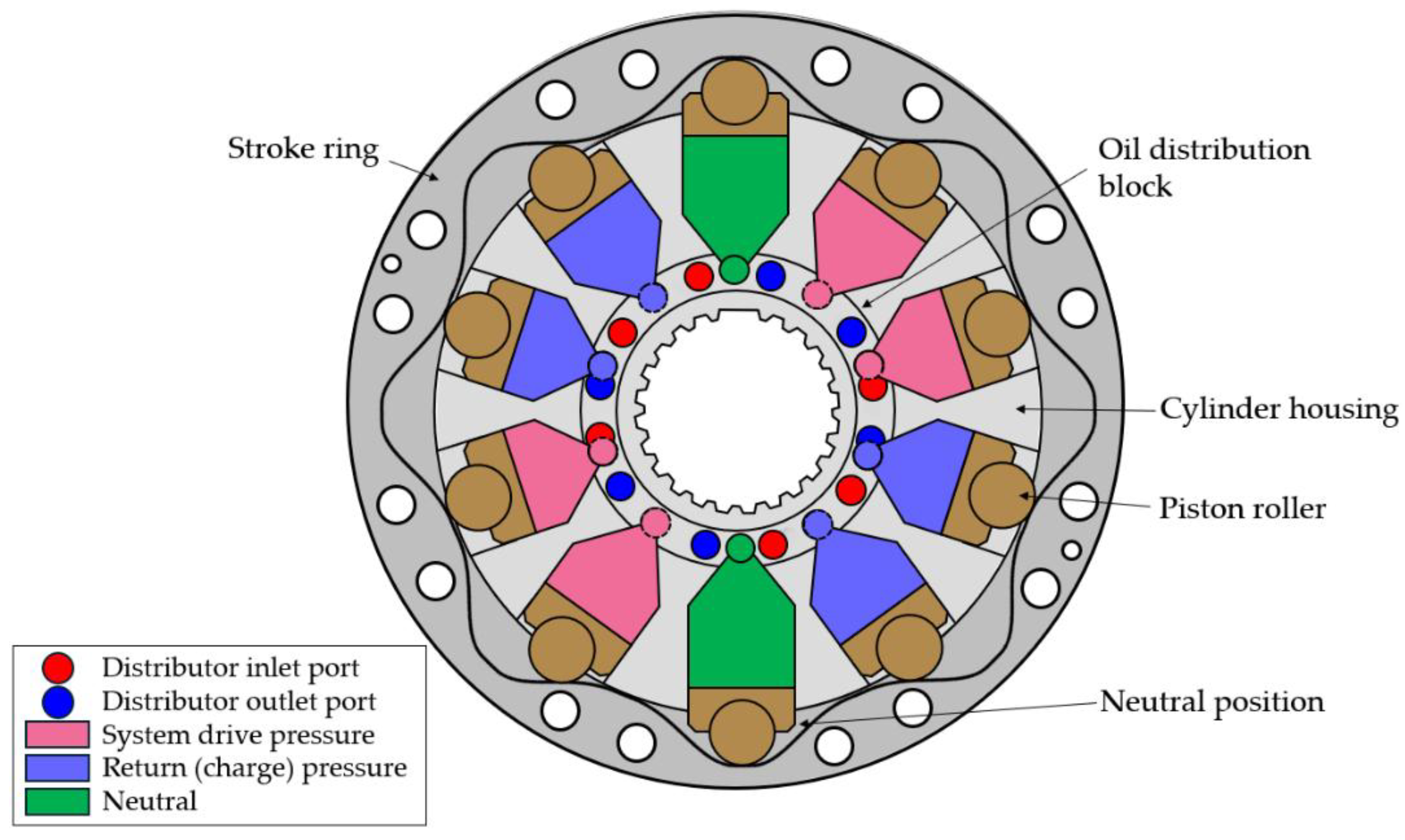
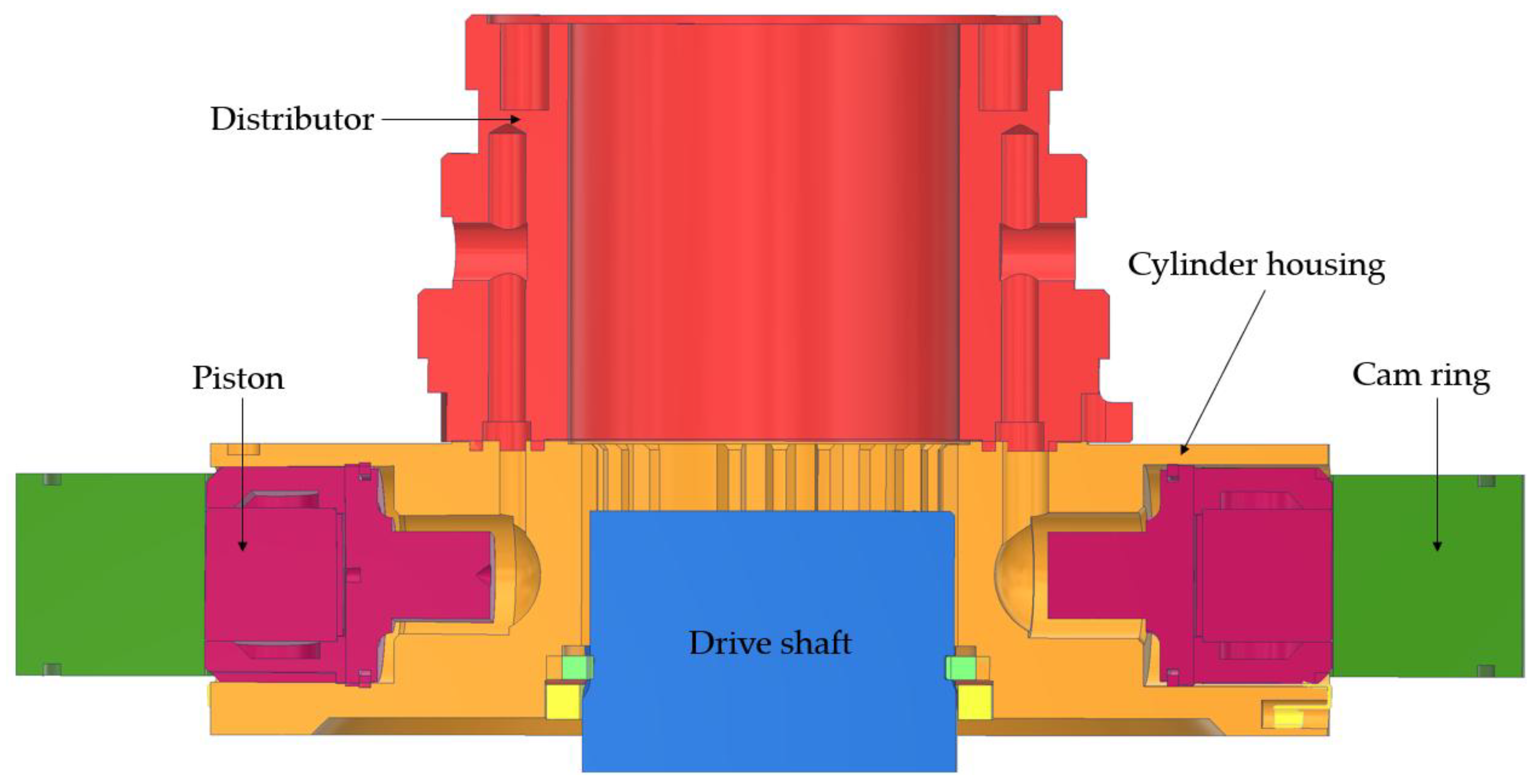
In this study, a radial piston motor with a displacement of 1248 cc/rev was selected as the analysis target. The cross-sectional and longitudinal views of the motor are shown in Figure 1 and Figure 2, respectively, and the main specifications are listed in Table 1. As illustrated in Figure 1, ten pistons are evenly arranged in the circumferential direction, and the cam ring consists of eight lobes. Figure 2 shows that the working fluid is supplied to each piston through the fluid distributor, and as the pistons reciprocate radially, the piston rollers roll along the cam ring, thereby generating rotational torque.
Ten pistons are arranged at equal intervals along the circumference so each pair of opposing pistons has a phase difference of 180°. Since the number of lobes is even (eight), each opposing piston pair performs identical strokes during rotation. In addition, each piston completes eight strokes per revolution of the motor, and the phase difference between adjacent pistons, k is calculated as 9° according to Equation (1).
k = 360 ° m N L N P ,
Here, N L denotes the number of lobes, N P the number of pistons, and m represents the greatest common divisor of N L and N p .

3. Mathematical Modeling

This section describes the mathematical modeling procedure applied to analyze the behavior of the radial piston motor. The main topics include the governing equations, piston–cam kinematic relationships, torque calculation, leakage flow model, and efficiency definitions. These models serve as the theoretical basis for implementing the simulation in the Amesim environment.

3.1. Governing Equations

The flow inside the motor is assumed to be an incompressible viscous fluid, and the governing equations are defined by the continuity and momentum equations. In the Amesim model, these equations are solved by the built-in solver; therefore, their detailed formulations are omitted here, and only the leakage flow, torque, and efficiency equations implemented in this study are presented. Meanwhile, in the Simerics MP+ analysis conducted to verify the local leakage behavior, the flow field was calculated by solving the continuity and momentum equations under the same assumptions.

3.1.1. Continuity Equation

For an arbitrary control volume Ω ( t ) and its boundary surface σ , the following equation holds:
t Ω ( t ) ρ d Ω + σ ρ V n d σ = Ω ( t ) S m d Ω ,
Here, ρ denotes the fluid density, V the velocity vector, n the normal vector to the boundary surface and S m the mass source term.

3.1.2. Momentum Equation

Similar to Section 3.1.1, for an arbitrary control volume Ω ( t ) and its boundary surface σ , the following equation holds:
t Ω ( t ) ρ V d Ω + σ ( V n ) V d σ = σ ( τ ¯ n ) d σ σ p n d σ + Ω ( t ) ρ B f d Ω + Ω ( t ) F d Ω ,
Here, τ denotes the shear stress, p the fluid pressure, B f the body force, F the external force, respectively. In Equations (2) and (3), the Green-Gauss theorem is applied to convert the volume integrals into surface integrals.

3.2. Kinematics and Torque Analysis of Sinusoidal Cam Mechanism

In this section, the piston motion is analyzed with respect to a sinusoidal cam ring profile. The radial variation in the cam ring is defined as a function of the rotation angle, causing the piston displacement to vary periodically. First, the piston displacement is expressed as a function of the rotation angle, from which the velocity and acceleration are derived. Then, the force F   acting on the piston is multiplied by the moment arm to calculate the torque generated by a single piston. The total motor torque is obtained by summing the torques produced by all pistons [29,30]. The main geometric parameters used in this study are listed in Table 2.
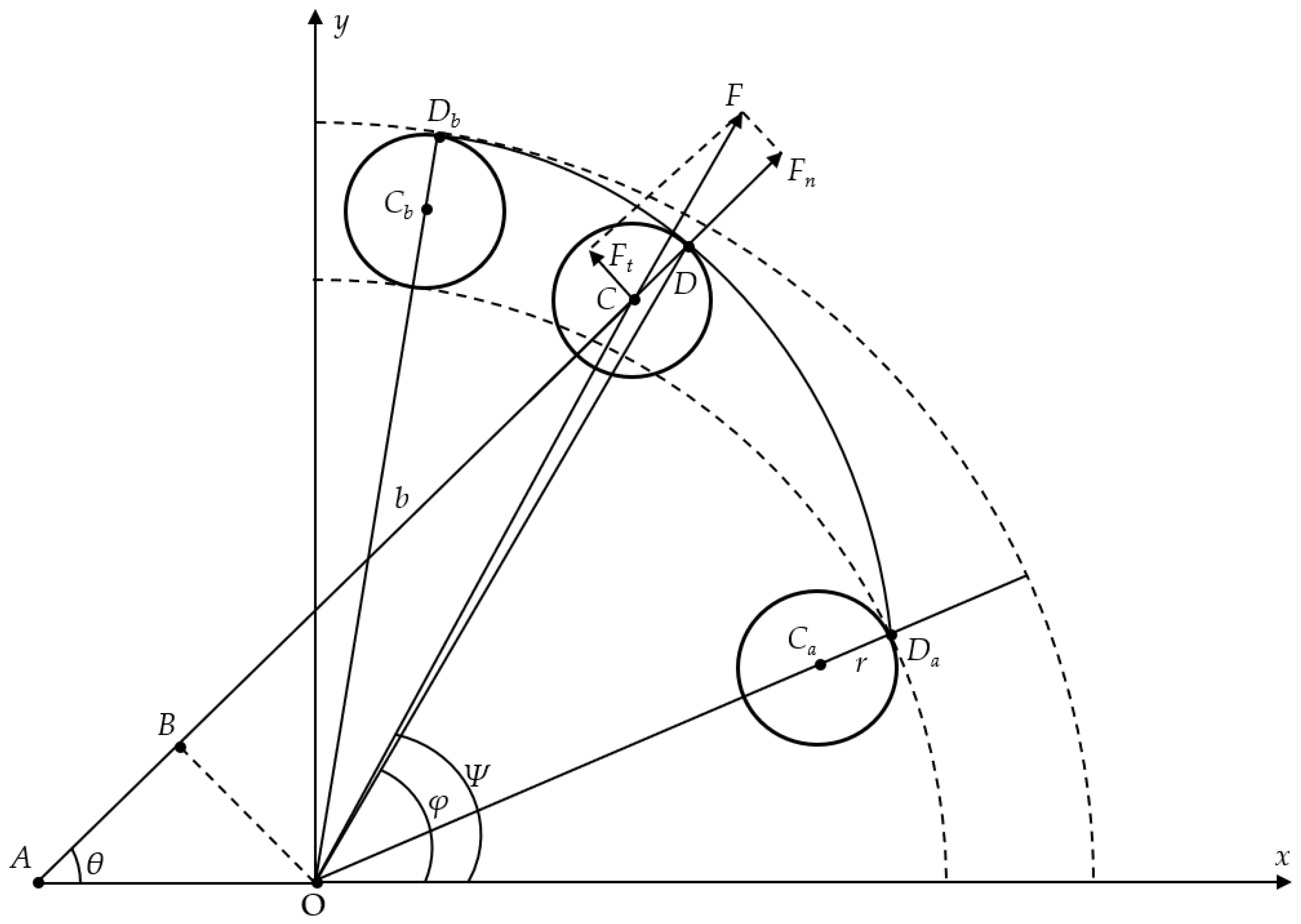
Figure 3 illustrates a piston roller rotating along the sinusoidal cam ring. Here, point C represents the center of the piston roller, and point D denotes the contact point between the cam ring and the roller. The angle ψ is defined between O C ¯ and the x-axis, while φ represents the angle between the O D ¯ and the x-axis. Point A is the intersection of the extension of C D ¯ with the x-axis, and point B is the foot of the perpendicular drawn from the origin to A D ¯ . The variable b denotes the length of B C ¯ . The displacement of the roller can be expressed as follows:
O D a ¯ = d min ,   O D b ¯ = d max ,   c = d max d min ,
Here, d m i n denotes the distance from the origin to the bottom dead center, d m a x the distance from the origin to the top dead center, and c the stroke length of the piston.
The displacement of the roller as a function of the rotation angle can be expressed as follows:
O D ¯ = ρ ( φ ) = d min + c 2 1 cos π ( φ φ a ) ( φ b φ a ) , ( φ a φ φ b ) ,
By differentiating Equation (5), the velocity of the piston roller can be expressed as a function of the rotation angle.
ρ ( φ ) = π c 2 ( φ b φ a ) sin π ( φ φ a ) ( φ b φ a ) ,
Let ϵ denote the angle between the tangent at point D and the O D ¯ ; then it can be expressed as Equation (7).
ϵ = tan 1 ρ ( φ ) ρ ( φ ) ,
The angle between A D ¯ and O D ¯ is π 2 ϵ , The angle φ , defined as the exterior of Δ O A D , is given by Equation (8), and the angle θ is given by Equation (9).
φ = θ + π 2 ϵ ,
θ = φ + ϵ π 2 = φ + tan 1 ρ ( φ ) ρ ( φ ) π 2 ,
If r is defined as the radius of the roller, B D ¯ can be expressed as follows:
B D ¯ = b + r = O D ¯ cos π 2 ϵ = ρ ( φ ) sin ϵ = ρ ( φ ) sin tan 1 ρ ( φ ) ρ ( φ ) = [ ρ ( φ ) ] 2 ρ 2 ( φ ) + ρ 2 ( φ ) ,
Let the coordinates of the roller center can be [ x C , y C ] ; then the coordinates are given as follows:
x C = O D ¯ cos φ r cos θ , y C = O D ¯ sin φ r sin θ ,
x C = ρ ( φ ) cos φ r cos φ + tan 1 ρ ( φ ) ρ ( φ ) π 2 y C = ρ ( φ ) sin φ r sin φ + tan 1 ρ ( φ ) ρ ( φ ) π 2 ,
By the trigonometric addition theorem,
x C = ρ ( φ ) cos φ r ρ 2 ( φ ) + ρ 2 ( φ ) [ ρ ( φ ) sin φ + ρ ( φ ) cos φ ] y C = ρ ( φ ) sin φ + r ρ 2 ( φ ) + ρ 2 ( φ ) [ ρ ( φ ) cos φ ρ ( φ ) sin φ ] ,
As a result, the angle ψ is given as follows:
ψ = tan 1 y C x C ,
Therefore, the torque generated by a single piston can be expressed as follows:
T ( φ ) = F t b = F sin ( ψ θ ) ρ 2 ( φ ) ρ 2 ( φ ) + ρ 2 ( φ ) r ,

3.3. Port Opening Area Modeling

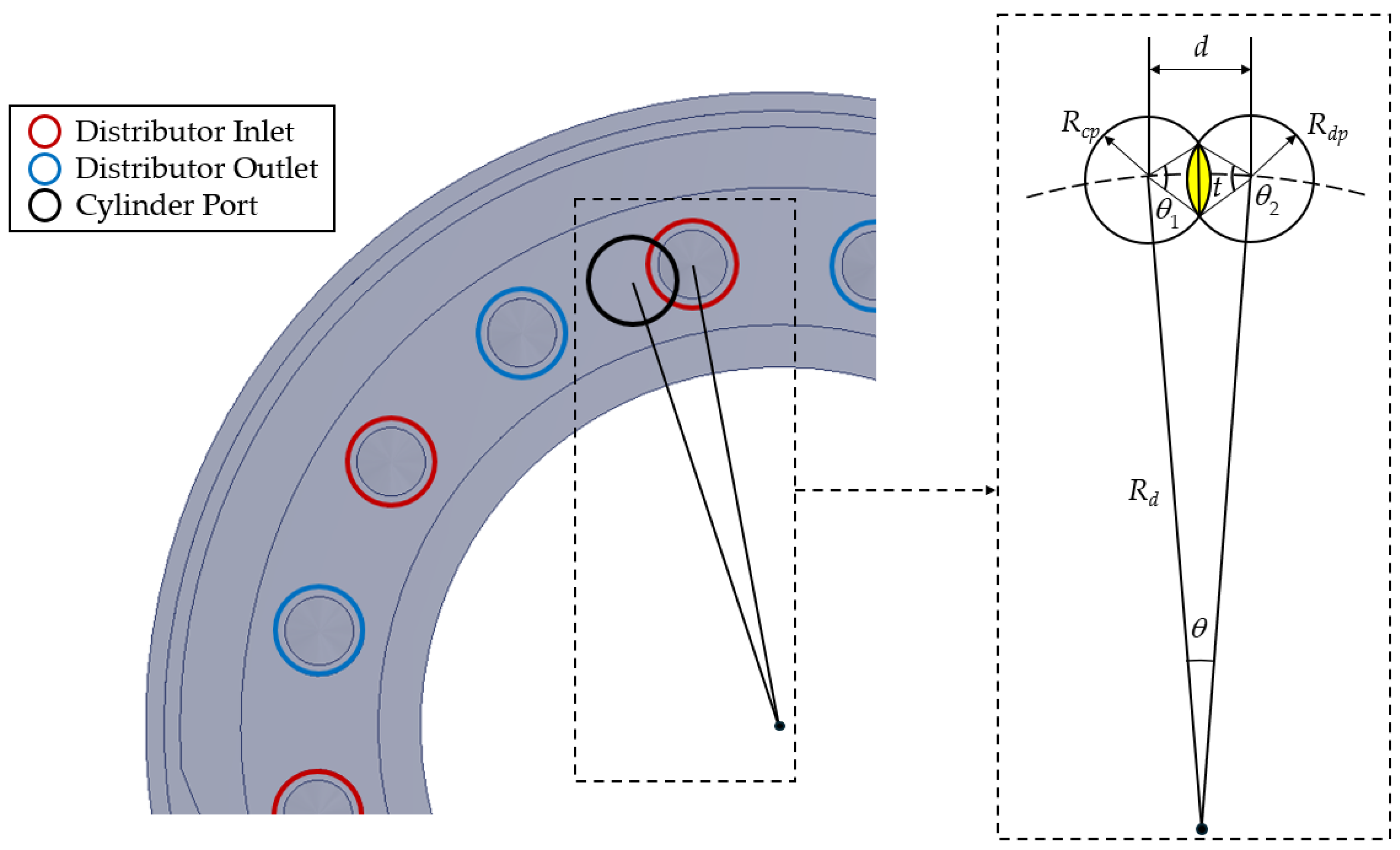
In the motor used in this study, the opening area for hydraulic fluid supply and discharge is formed as the ports of the rotating cylinder housing align with those of the stationary fluid distributor. A schematic diagram of this process is shown in Figure 4, where the generated opening area is highlighted in yellow.
From Figure 4, the following relationship can be derived:
R c p cos θ 1 2 + R d p cos θ 2 2 = d ,
2 R c p sin θ 1 2 = 2 R d p sin θ 2 2 = t ,
Here, R c p denotes the radius of the cylinder port, R d p the radius of the distributor port, and d the distance between the two ports. t represents the length of the overlap area, while θ 1 and θ 2 are the overlap angles of each port.
The angles θ 1 and θ 2 can be expressed using the cosine law as follows:
cos θ 1 2 = d 2 ( R d p 2 R c p 2 ) 2 R c p d , cos θ 2 2 = d 2 ( R c p 2 R d p 2 ) 2 R d p d ,
Also, d can be expressed as follows:
d = 2 R d 2 2 R d 2 cos θ = R d 2 ( 1 cos θ ) ,
Here, R d denotes the radius of the distributor, θ the rotating angle of cylinder housing.
In the model used in this study, the radius of the distributor port and cylinder port is same; therefore, the following relation holds:
R c p = R d p = R p ,
θ 1 = θ 2 = θ p = 2 cos 1 d 2 2 R p d = 2 cos 1 R d 2 ( 1 cos θ ) 2 R p ,
Here, since the overlap angle between the two ports, θ p , lies within the range of 0 ° θ p 180 ° , the rotational angle range of the cylinder housing in which the opening area is formed can be calculated as follows:
0 ° 2 cos 1 R d 2 ( 1 cos θ ) 2 R p 180 ° ,
0 R d 2 ( 1 cos θ ) 2 R p 1 2 ( 1 cos θ ) 2 R p R d ,
Here, because 2 ( 1 cos θ ) = 4 sin 2 ( θ / 2 ) ,
sin ( θ / 2 ) R p R d ,
0 ° θ 2 sin 1 R p R d ,
holds, and since R p = 4.25 10 3 m , R d = 44.5 10 3 m , the range of θ in which the opening area is formed can be calculated as follows:
0 ° θ 10.96 ° ,
Therefore, expressing the opening area S shown in Figure 4 as θ , it can be written as follows:
S = 1 2 R c p 2 ( θ 1 sin θ 1 ) + R d p 2 ( θ 2 sin θ 2 ) = R p 2 ( θ p sin θ p ) = R p 2 2 cos 1 R d 2 ( 1 cos θ ) 2 R p sin 2 cos 1 R d 2 ( 1 cos θ ) 2 R p ,

3.4. Leakage Flow Modeling

Leakage inside the motor can be classified into two main paths; the clearance between the piston and the cylinder, and the clearance between the distributor and the cylinder housing.
  • Leakage between piston and cylinder housing
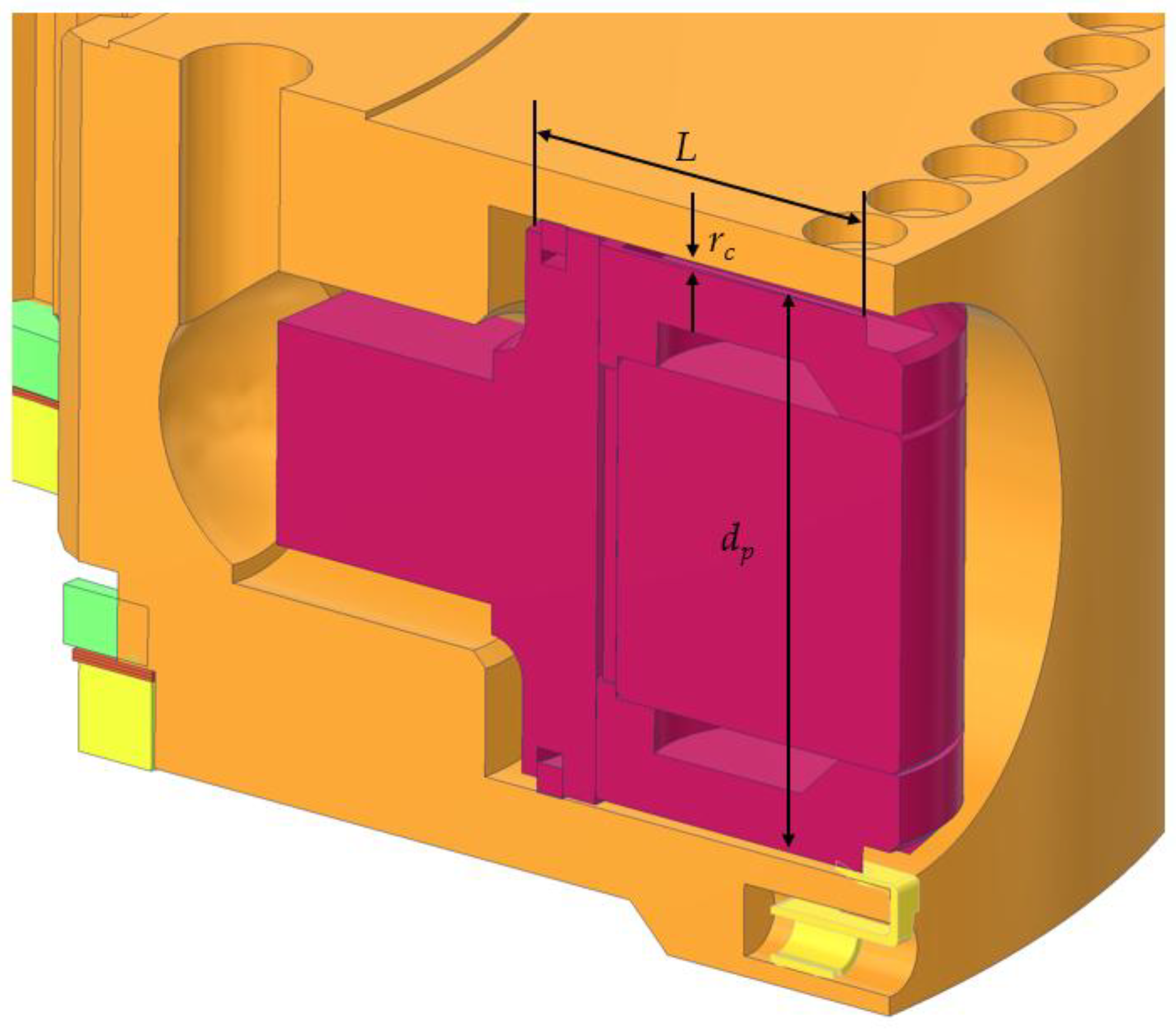
The leakage flow through the piston-cylinder housing clearance is illustrated in Figure 5. Since this clearance has a cylindrical geometry, the flow through it can be approximated as an annular clearance flow. The leakage is assumed to be laminar and can be expressed as follows [31].
Q = Δ P 12 μ L r c 3 π d p ,
Here, Δ P denotes the pressure difference between two points, r c the clearance length, μ the dynamic viscosity, L the contact length, d p the piston diameter.
2.
Leakage between distributor and cylinder housing
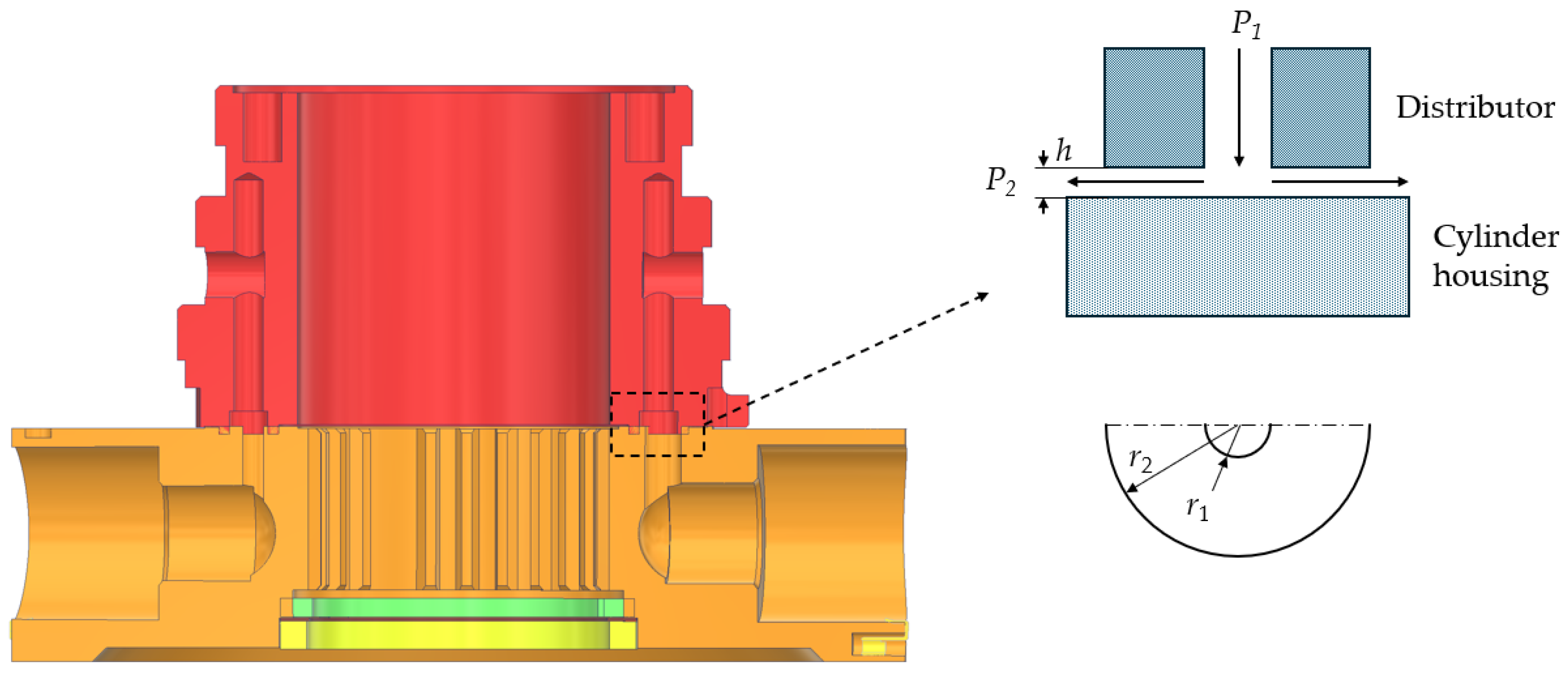
When working fluid is supplied to the cylinder through the distributor, a pressure-induced fluid film is formed between the distributor and the cylinder housing, resulting in leakage, as shown in Figure 6. This leakage can be analyzed using a hydrostatic bearing model, and the leakage flow rate generated at each port can be expressed as follows [32].
Q = π h 3 Δ P 6 μ ln ( r 2 / r 1 ) ,
Here, h denotes the clearance length, and the fluid expands in the opposite direction from r 1 (the inlet boundary) to r 2 . However, since multiple ports exist in the distributor, it is difficult to individually calculate the leakage flow from each port. Therefore, in this study, the total leakage flow through the entire clearance was obtained from CFD analysis, and the equivalent outer radius r 2 was determined inversely so that Equation (29) reproduced the same flow rate. Physically, the equivalent outer radius r 2 represents an effective radial extent of the distributor-cylinder housing interface over which the leakage flow develops, capturing the combined contribution of multiple ports and the complex clearance geometry.

4. Simulation Model

Based on the methodology described above, an Amesim model of the multi-stroke radial piston motor was developed, and an additional CFD model was implemented to precisely analyze the micro-scale leakage flow occurring between the cylinder housing and the distributor. The CFD analysis results were then incorporated into the Amesim model parameters to ensure accurate reflection of the leakage characteristics.

4.1. One-Dimensional Simulation in Amesim

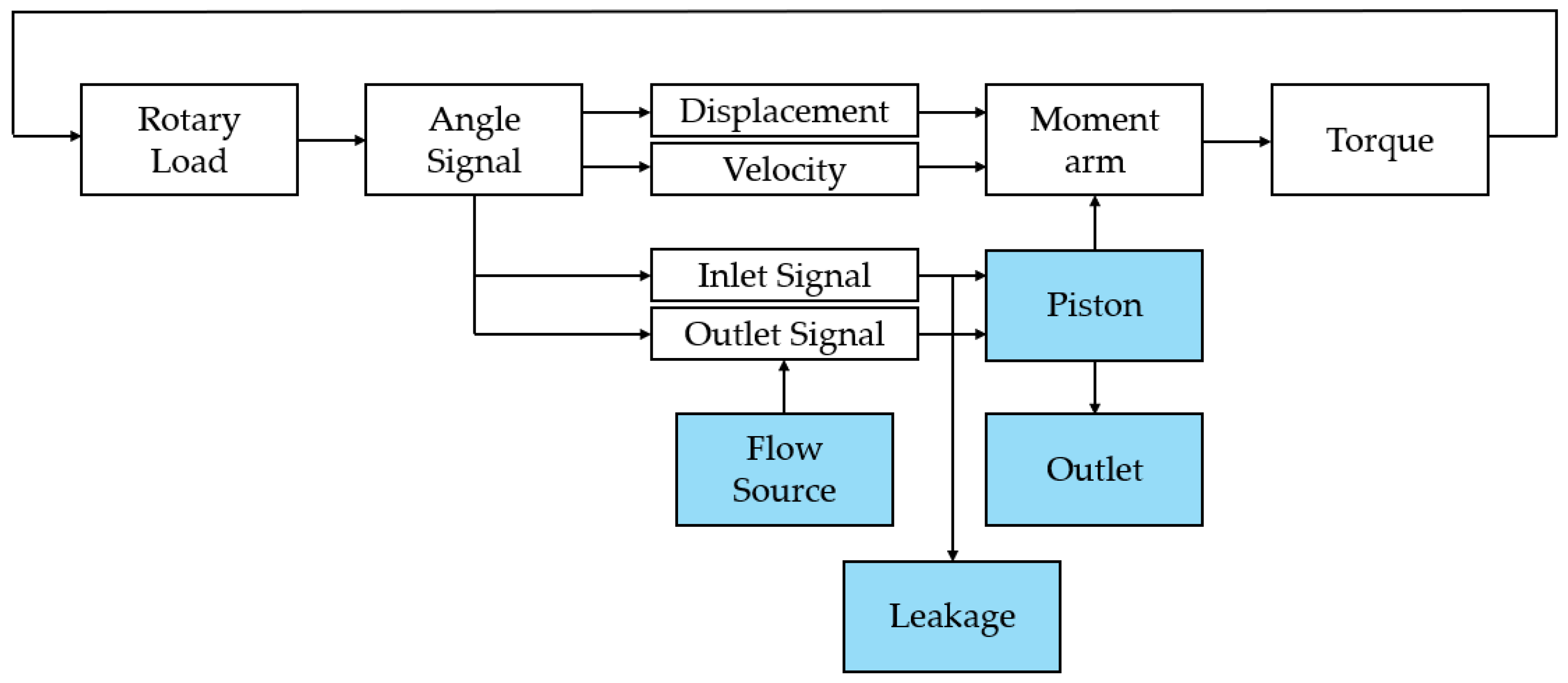
Figure 7 presents a schematic diagram of the signal and flow interactions in the multi-stroke radial piston motor Amesim simulation model developed in this study. Based on the rotational angle signal obtained from the rotary load, the piston displacement and velocity are calculated, from which the moment arm required for torque calculation is derived. Simultaneously, the rotational angle signal is transferred to the inlet/outlet port area generation block, which connects to the inlet and outlet ports of each piston chamber. Each piston is driven by the supplied flow, and the force generated in the piston is used for torque calculation and subsequently transmitted back to the rotary load. In addition, leakage flow is generated from both the inlet/outlet ports and the pistons.
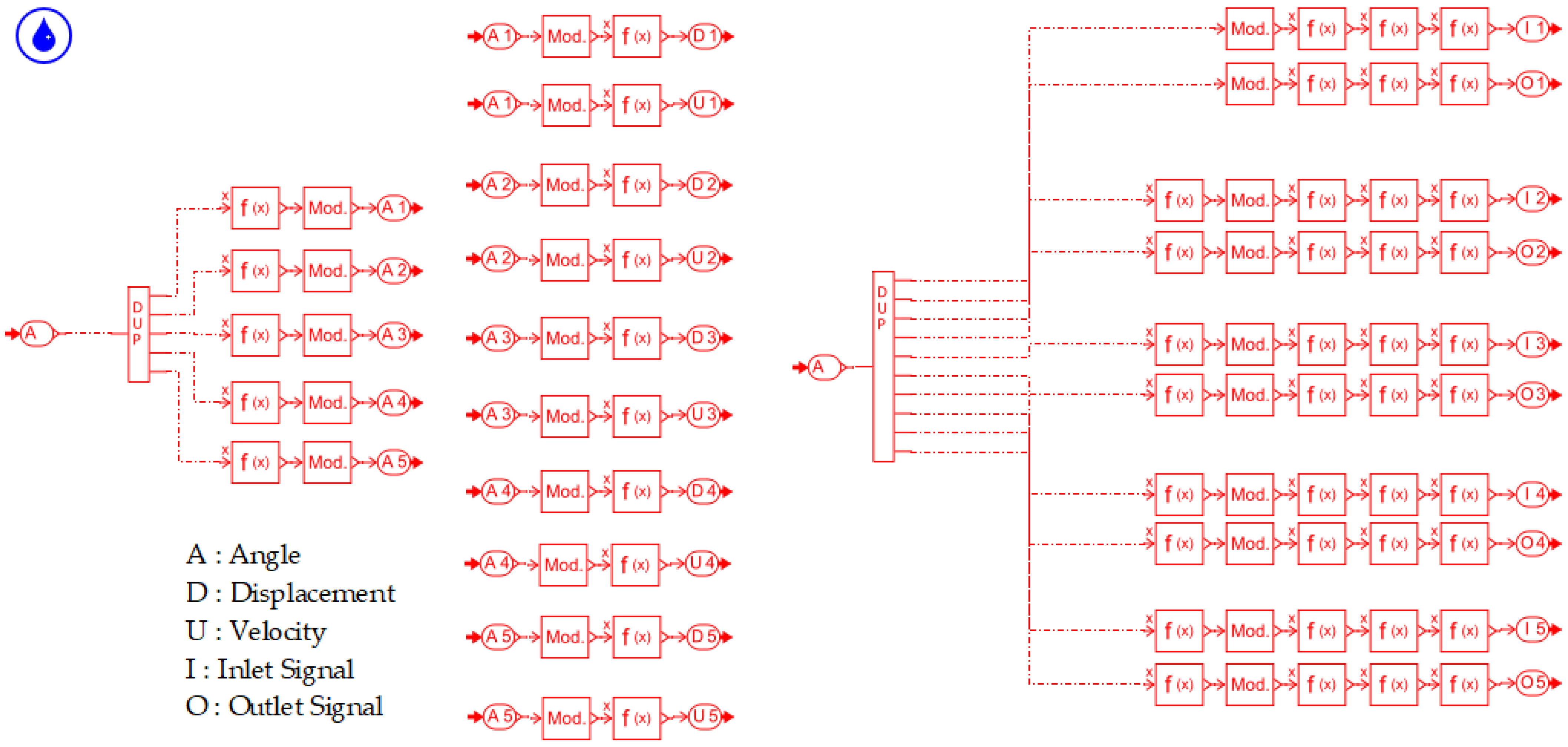
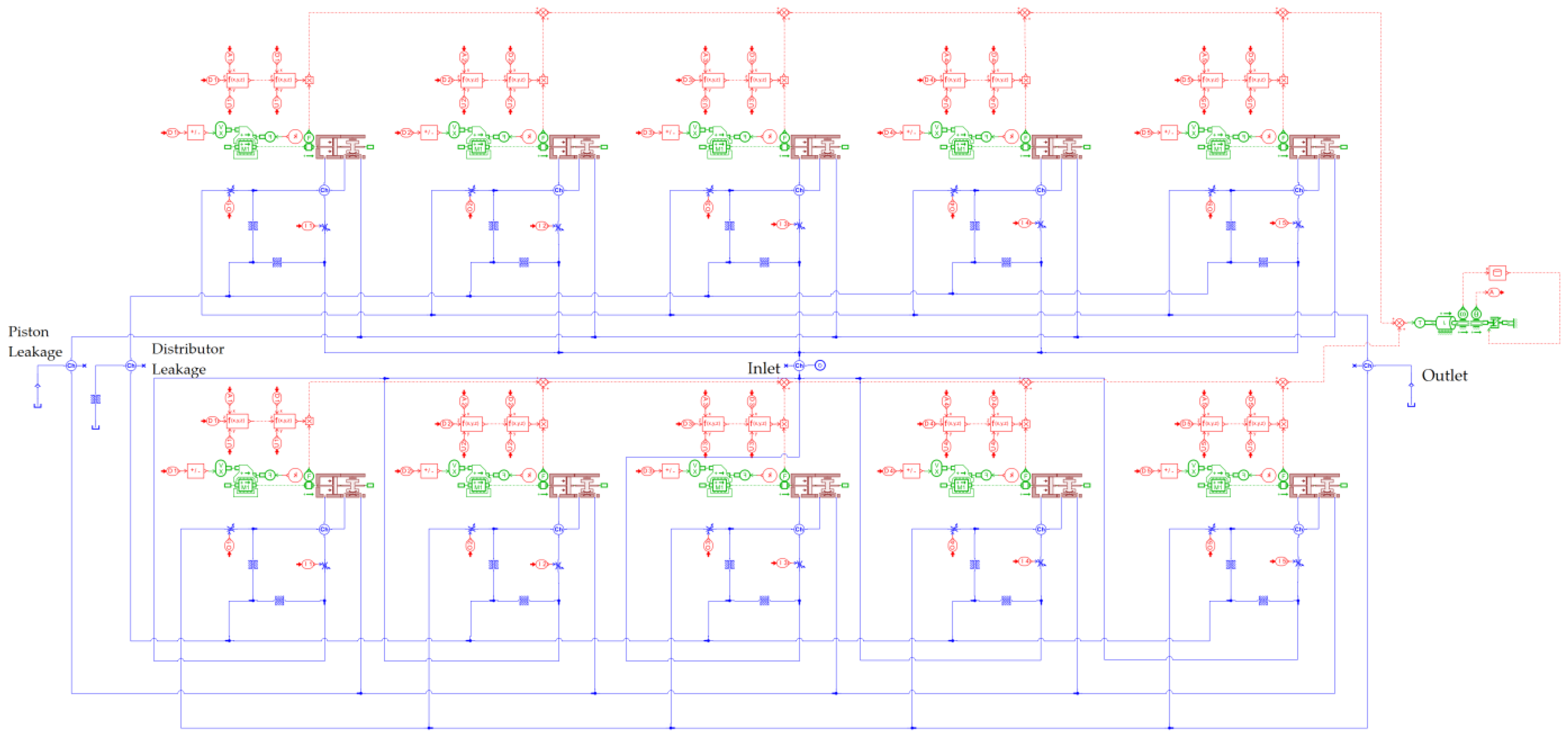
In this model, ISO VG 46 hydraulic oil was used as the working fluid, and the operating temperature was assumed to be 323 K. Figure 8 shows the implementation of the mathematical model of the multi-stroke radial piston motor presented in Section 3 using functional blocks in Amesim, while Figure 9 illustrates the hydraulic circuit that represents the piston motion and torque generation based on the signals generated in Figure 8. On the left side of Figure 8, the input rotational angle is used to generate phase-shifted signals with a 9° phase difference between each piston. In the central part, the displacement and velocity of each piston roller are calculated based on the phase-shifted signals, and on the right side, the effective opening areas of the inlet and outlet ports for each piston are computed according to the corresponding rotational angle.
In Figure 9, ten pistons are arranged, and the inlet/outlet port area signals generated from Figure 8 supply flow to each piston, causing reciprocating motion. To represent the geometric limitation of the piston stroke according to the cam lobe profile, end-stop components are placed on the left side of the model. The torque is calculated by multiplying the force generated by each piston by its corresponding moment arm, and the resulting torque is transmitted to the rotary load on the right side of Figure 9, where the rotational angle is output. In addition, the circuit includes leakage paths between the fluid distributor and the cylinder housing, as well as internal leakage within the pistons. In particular, the leakage between the distributor and the cylinder housing is defined by Equation (29) and implemented as a user-defined submodel in Amesim, enabling consideration of the leakage flow that occurs under actual operating conditions.

4.2. CFD Simulation in Simerics MP+

To precisely describe the leakage between the fluid distributor and the cylinder housing, a CFD analysis was performed using Simerics MP+ by modeling the local clearance region. The flow characteristics obtained from this analysis were then incorporated into the leakage-path function of the Amesim model.
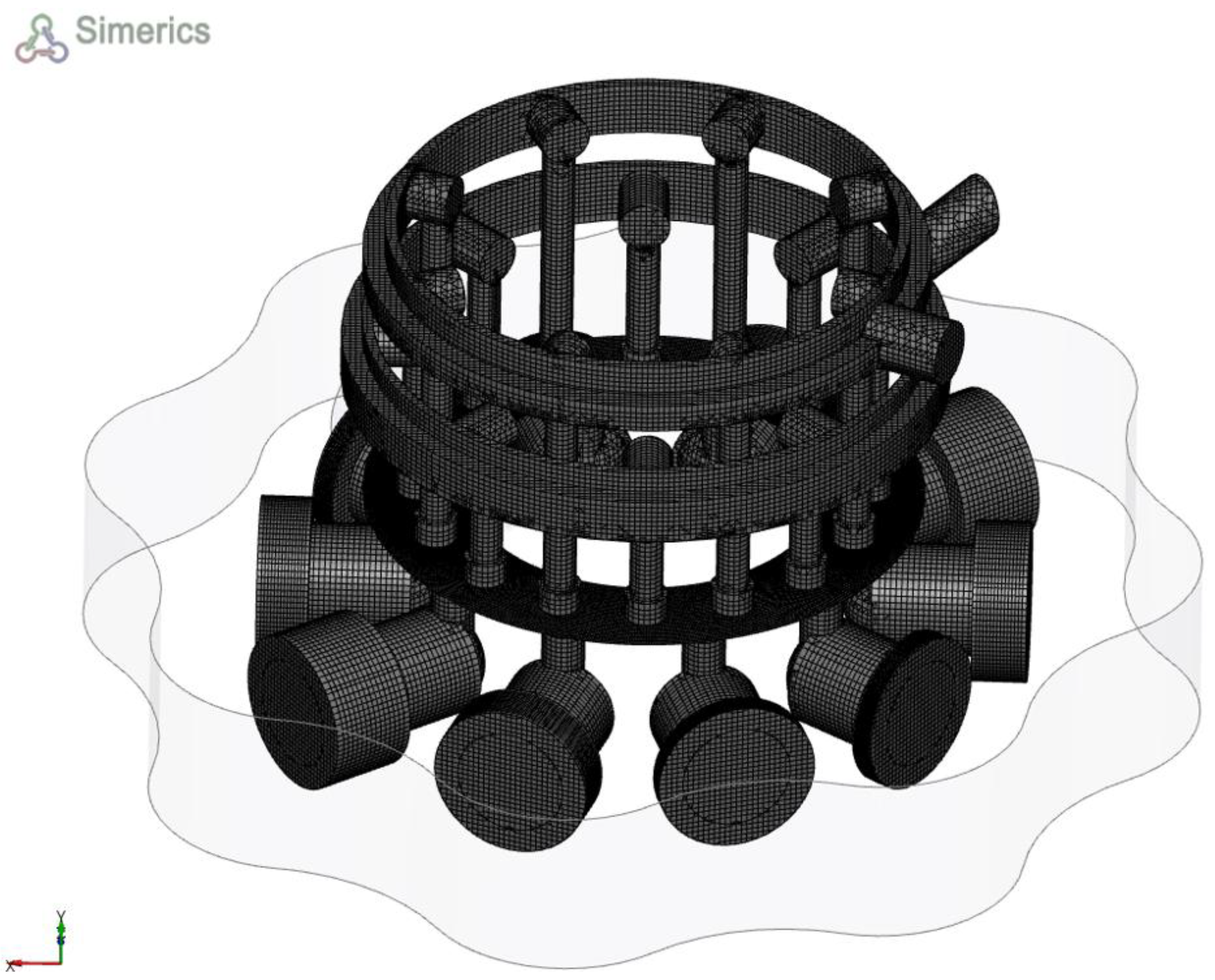
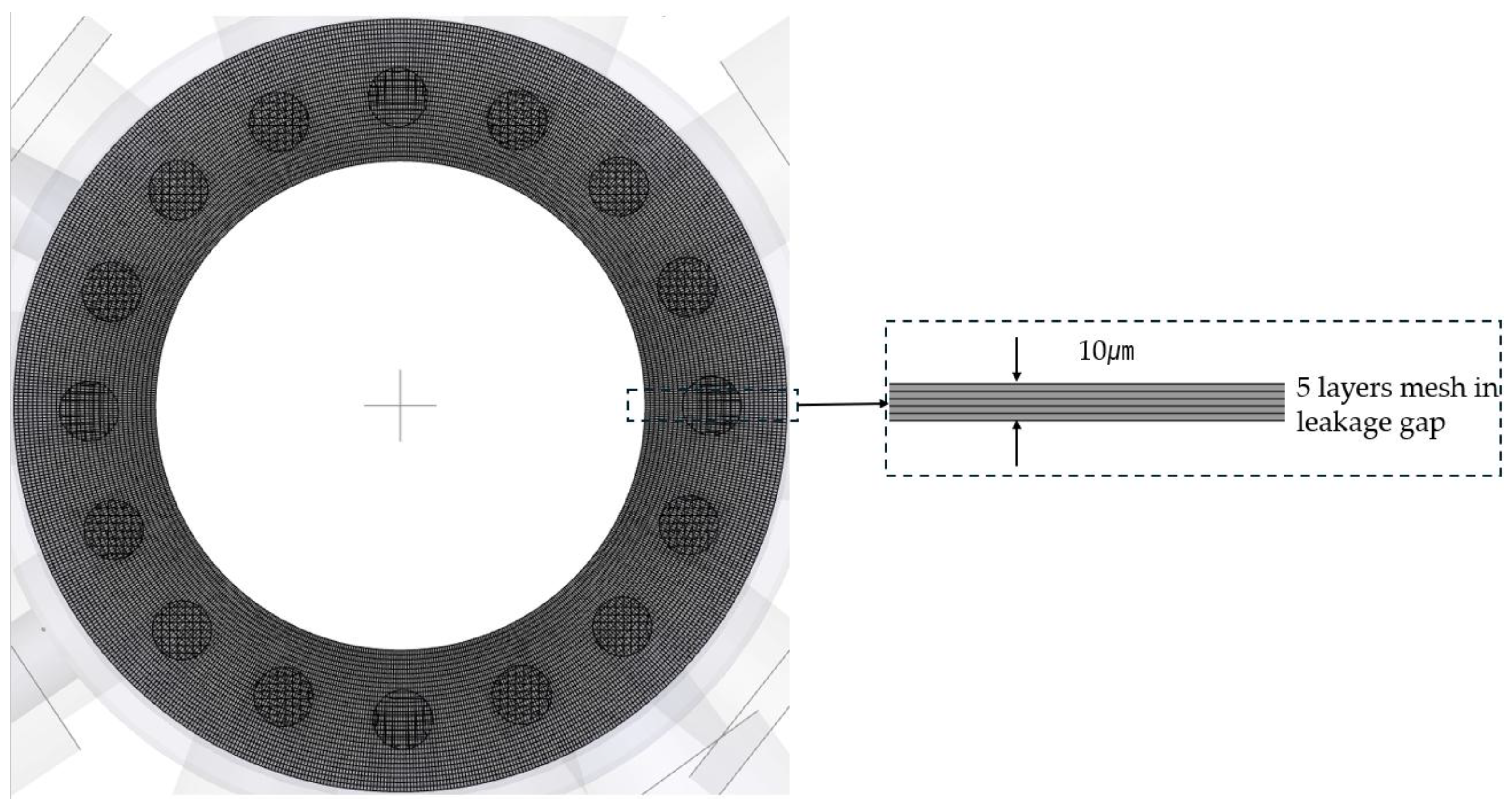
Figure 10 shows the computational mesh generated from the extracted flow domain of the target motor. To analyze the leakage flow occurring between the distributor and the cylinder housing, a separate mesh representing a 10 µm clearance was generated, as shown in Figure 11, where a five-layer mesh structure was applied across the leakage gap. The mesh type is adaptive cartesian mesh, consisting of a total of 296,372 cells and 390,863 nodes. The working fluid used for the analysis is ISO VG 46 hydraulic oil, and its physical properties and boundary conditions are summarized in Table 3 and Table 4, respectively.
In addition, the working fluid was modeled as a homogeneous gas-liquid mixture by prescribing a constant gas mass fraction of 9 × 10 5 , as listed in Table 3. This value represents a trace level of entrained gas typically assumed in open-circuit hydraulic systems and allows weak compressibility effects in low-pressure regions to be considered during transient operation.
Although Table 3 lists reference oil properties, the dynamic viscosity was treated as pressure-dependent in the CFD simulations. The pressure-viscosity relationship was modeled using the Barus equation:
μ = μ 0 exp ( α P ) ,
where μ 0 is the reference dynamic viscosity at ambient pressure and α is the pressure-viscosity coefficient. The reference viscosity was set to μ 0 = 0.02407 Pa s , corresponding to ISO VG 46 hydraulic oil at 323 K . The coefficient α = 1.9 10 8   Pa 1 was derived from the pressure-viscosity data provided in Amesim.
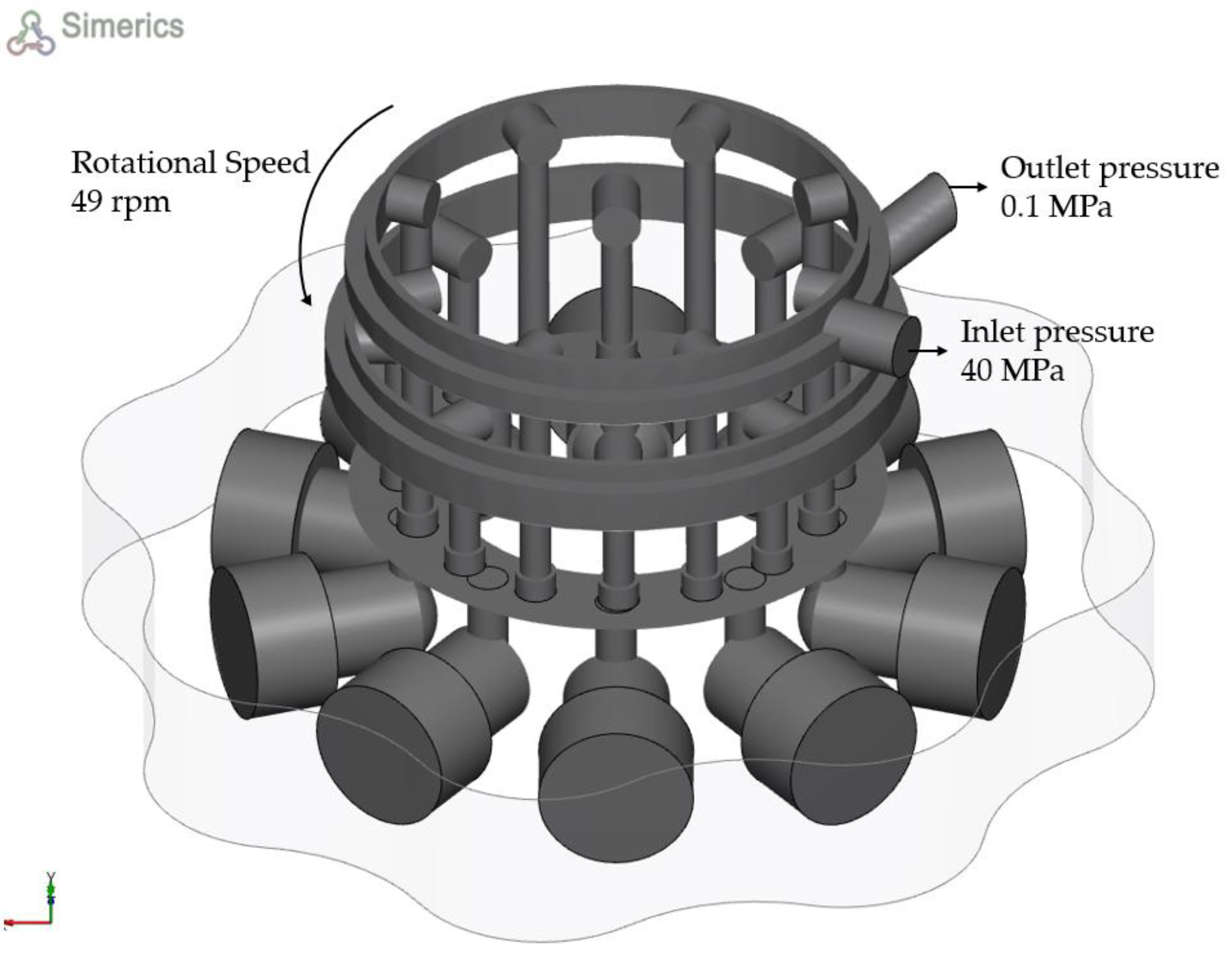
The inlet pressure of 40 MPa was selected to represent the rated operating condition of the target radial piston motor based on the manufacturer’s catalog specifications. This pressure corresponds to a typical high-torque, low-speed operating condition during continuous operation, making it suitable for evaluating internal leakage behavior and transient flow characteristics. The applied boundary conditions are illustrated in Figure 12.
The simulation was conducted under transient conditions, with a sampling time of 0.0001 s and a total simulation time of 2 s. This transient approach allows the time-varying pressure field induced by the rotational motion and port opening/closing process to be captured. In addition, a mesh independence test was performed to verify the reliability of the analysis results with respect to mesh size. For this purpose, three models with different numbers of cells were simulated under identical boundary conditions. The leakage flow rate and outlet flow rate were selected as representative variables of the simulation results, and the outcomes for each model are summarized in Table 5.
As shown in Table 5, the relative error decreases to within 0.01% after Case 2. Therefore, Case 2 was selected as the final mesh configuration.

5. Simulation Results

The three-dimensional CFD results obtained using Simerics MP+ are presented. These results are used to analyze the leakage-flow characteristics occurring in the clearance between the distributor and the cylinder housing, and subsequently to provide input values for the one-dimensional system model based on Amesim. The Amesim simulation results are then presented to analyze the overall motor behavior. The time histories of piston motion and output torque are examined, and the impact of leakage flow on performance metrics is evaluated.
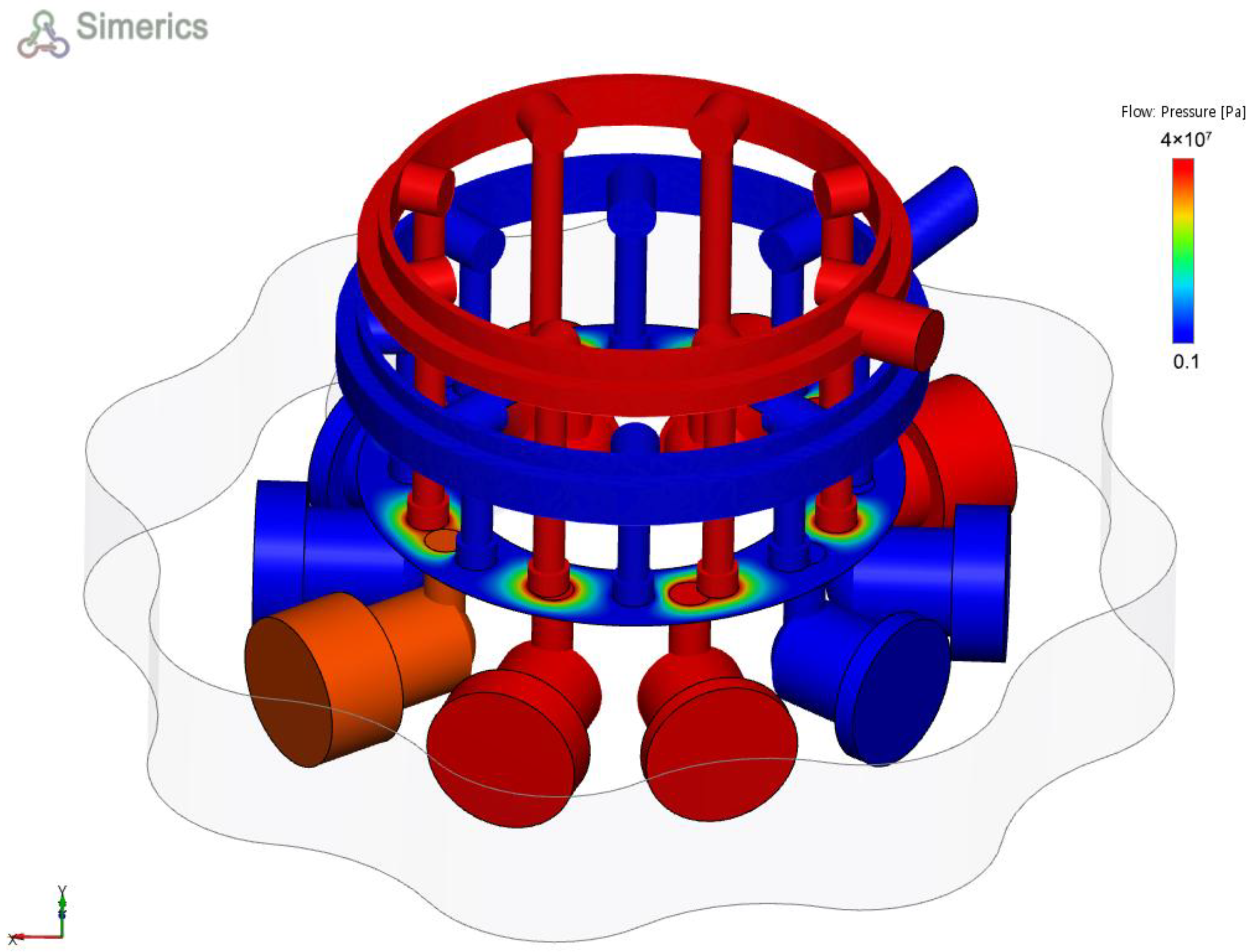
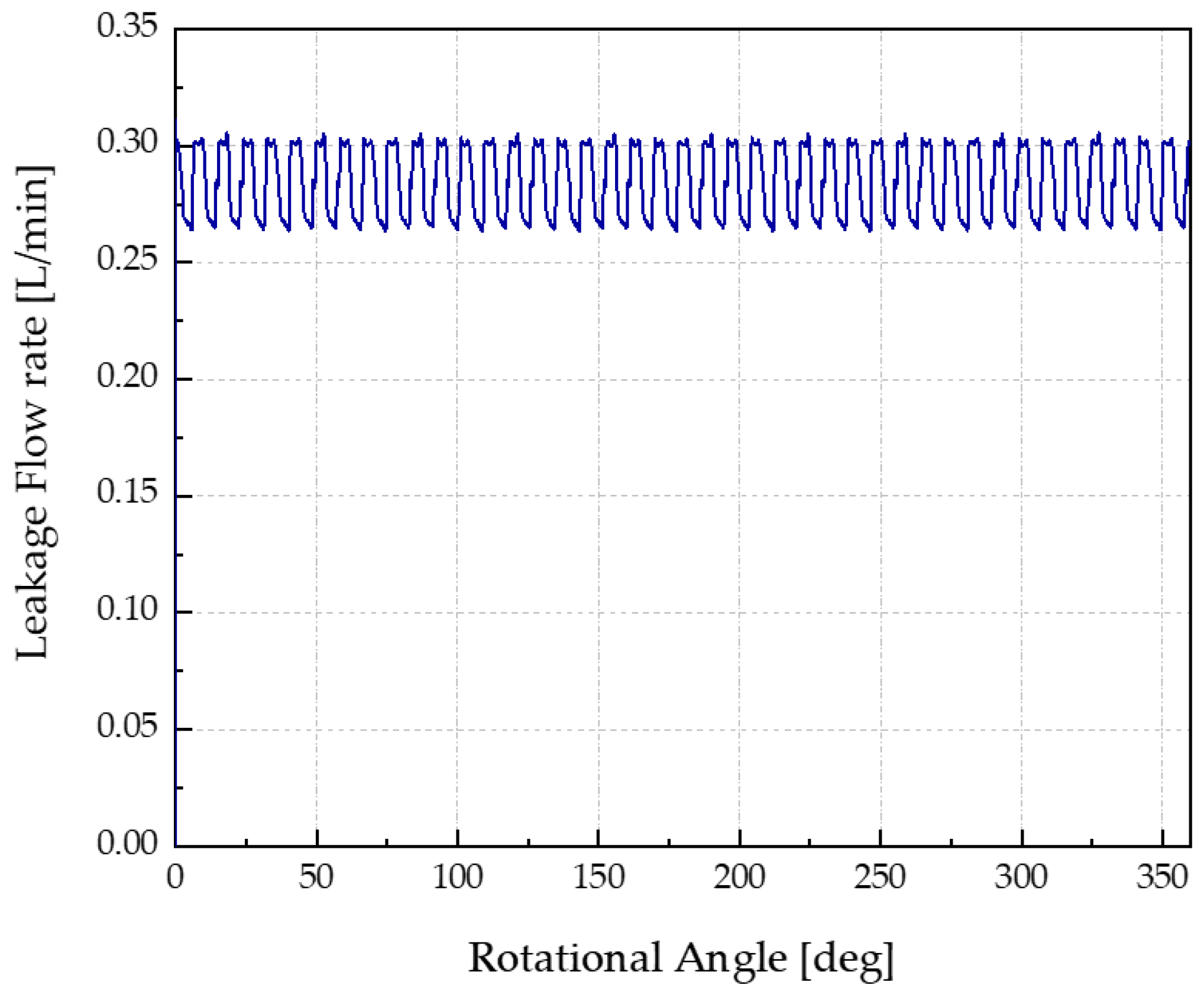
Figure 13 shows the pressure distribution of the motor obtained from the CFD analysis, and Figure 14 presents the leakage flow occurring in the clearance between the distributor and the cylinder housing derived from the CFD results. The calculated average leakage flow rate was approximately 0.27 L/min.
To achieve this, the parameter r 2   in Equation (29) was treated as an effective lumped parameter and iteratively adjusted until the leakage flow rate predicted by the Amesim model agreed with the CFD-derived average leakage value of approximately 0.27 L/min. Based on this procedure, r 2   was determined to be 10 mm, and the final Amesim model was constructed accordingly.
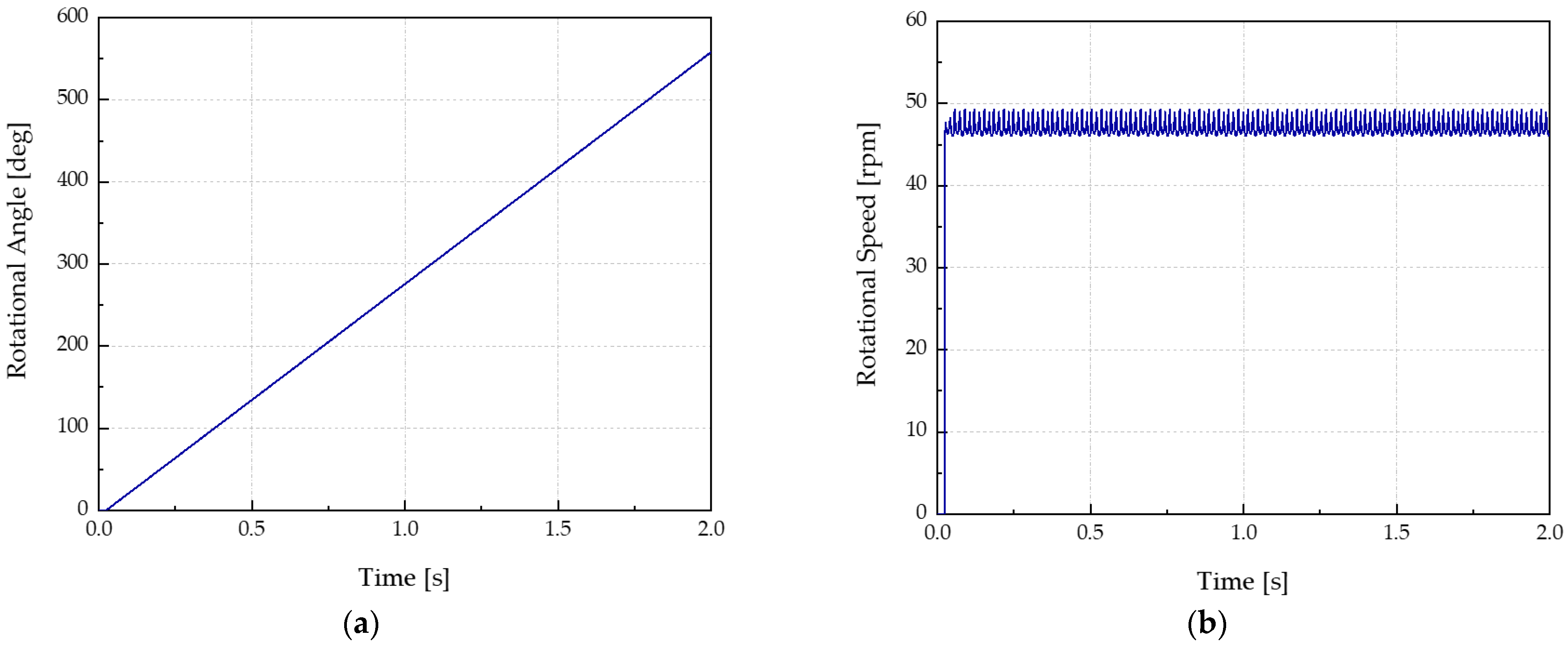
From the one-dimensional simulation results, the angular displacement and rotational speed of the motor over time are shown in Figure 15a and Figure 15b, respectively. The motor required approximately 1.3 s to complete one full revolution of 360°, resulting in an average rotational speed of about 47 rpm.
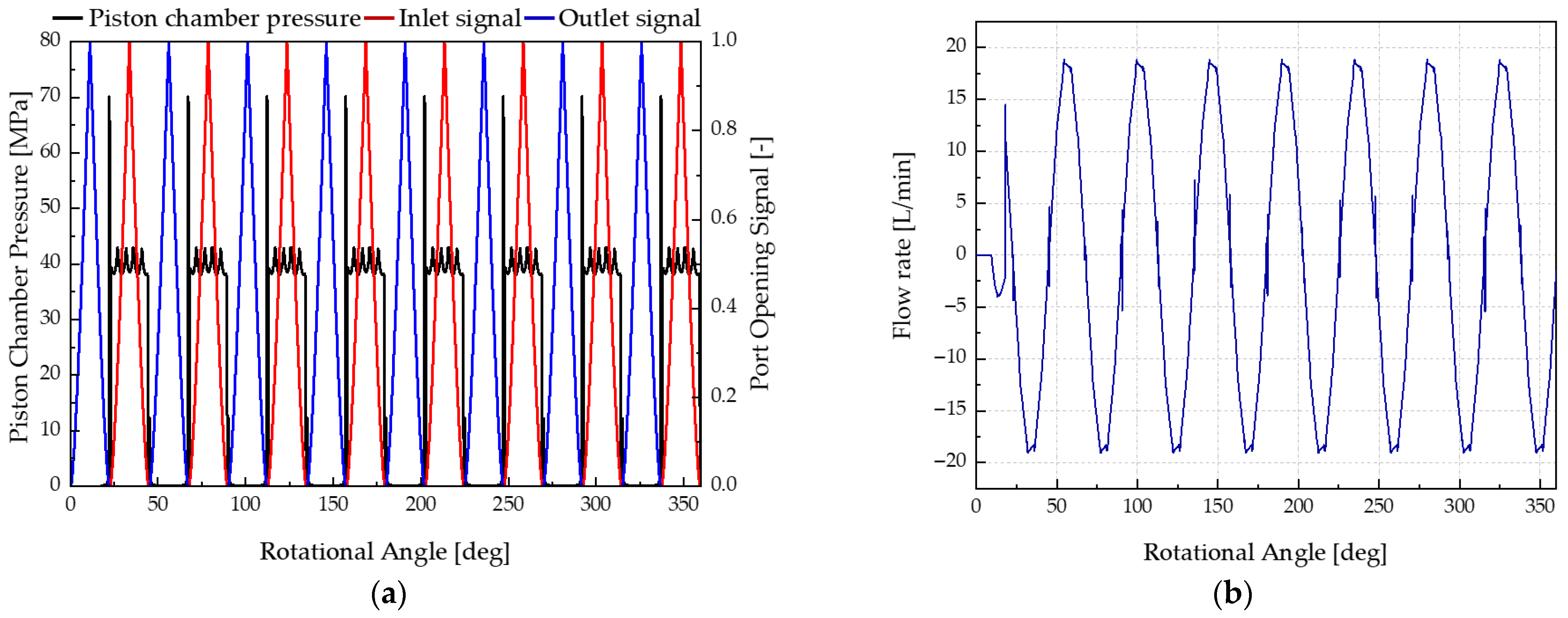
Figure 16 shows the piston chamber pressure with the inlet and outlet port opening signals (a) and the corresponding piston flow rate (b) as functions of the rotational angle, as described in Section 3.3. As observed in the figure, the port opening signals are consistently synchronized with the piston motion: during the upward stroke, the inlet port opens to allow for flow into the chamber, whereas during the downward stroke, the outlet port opens to discharge the flow.
According to Equation (26), each port opening signal is active over an angular interval of 10.96°. Since the distributor consists of 8 inlet ports and 8 outlet ports, the angular pitch associated with one complete filling and discharge sequence is 22.5°. Subtracting the two effective opening intervals from this pitch results in an angular range of approximately 0.58°, during which the piston chamber is temporarily isolated from both the inlet and outlet ports.
During this isolated phase, particularly near the bottom dead center where the curvature of the cam ring reduces the volumetric change rate, a pronounced pressure rise occurs in the trapped chamber. As shown in Figure 16a, while the average chamber pressure is approximately 40 MPa, a local pressure spike reaching about 70 MPa is observed near the bottom dead center. Such transient pressure amplification can contribute to pressure fluctuation and may influence the torque characteristics.
This behavior could potentially be mitigated through geometric modifications, such as introducing a flat angle on the cam ring profile or adding notches to the port geometry to smooth the pressure transition. However, a detailed investigation of such design optimizations is beyond the scope of the present study.
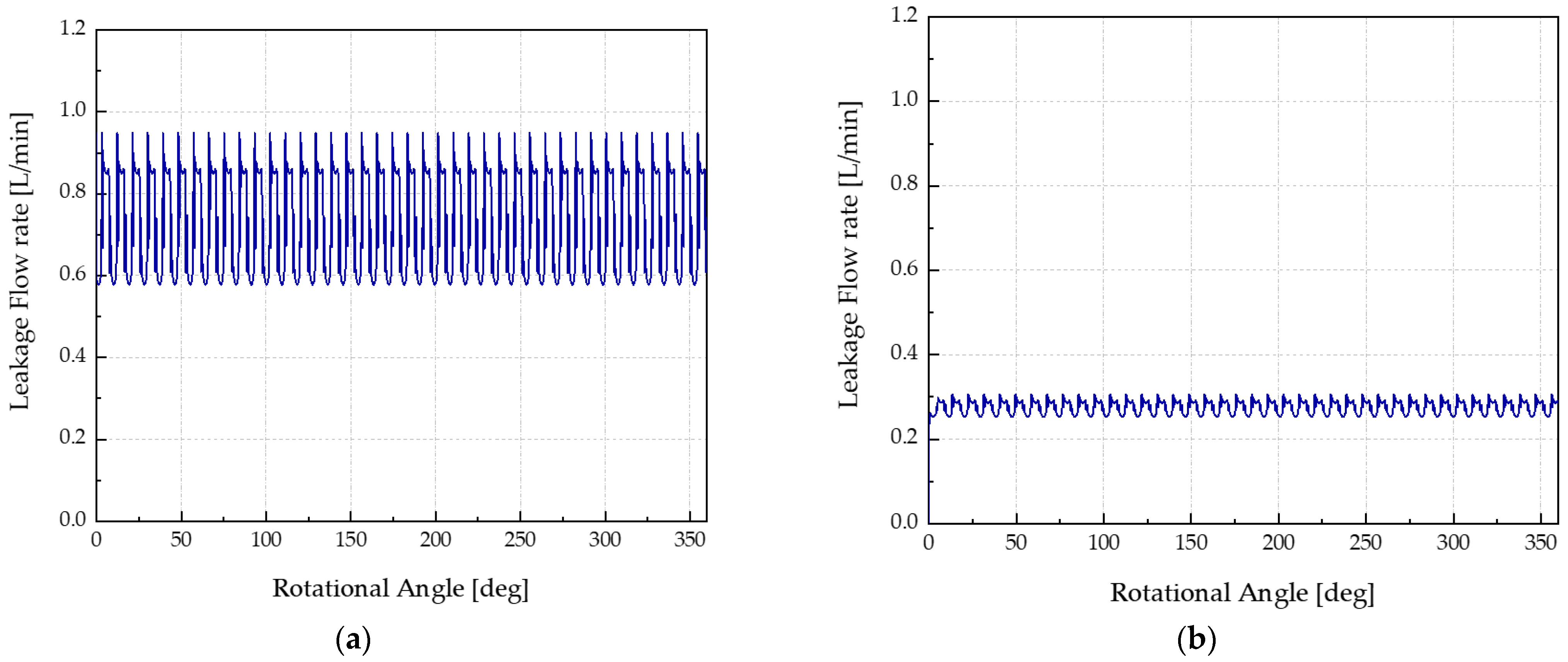
Figure 17 presents (a) the leakage occurring between the piston and the cylinder housing, and (b) the leakage between the distributor and the cylinder housing calculated in Amesim using the r 2   value obtained from the CFD results. The analysis revealed that the leakage rate between the piston and the cylinder housing was approximately 0.73 L/min, while the leakage between the distributor and the cylinder housing was about 0.27 L/min, reflecting the different geometric configurations and flow characteristics associated with two leakage paths. In particular, the distributor–cylinder housing leakage showed good agreement with the CFD results, indicating that the equivalent outer radius r 2 derived from the CFD analysis was appropriately incorporated into the Amesim system model. This consistency supports the validity of the proposed leakage modeling approach in representing micro-gap flow effects at the system simulation level.
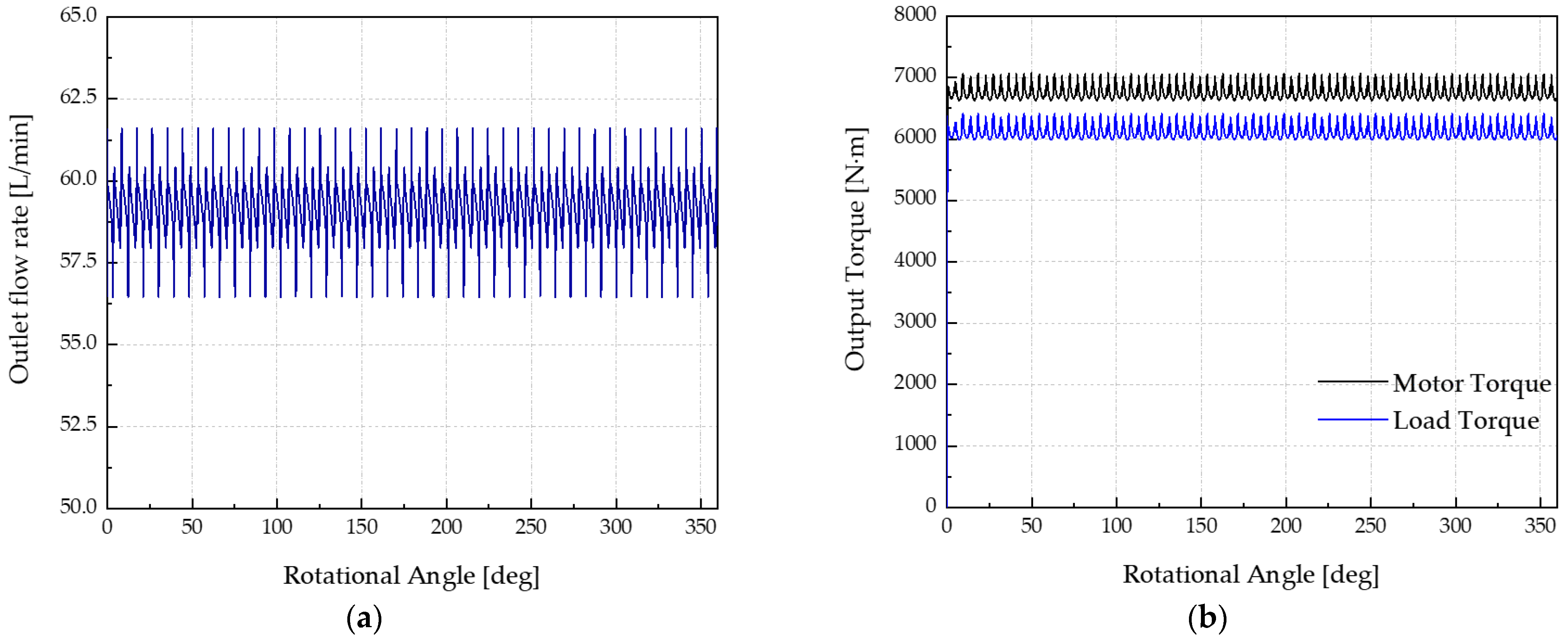
Figure 18 shows the outlet flow rate (a) and torque results (b) during one full revolution of the motor. As shown in (a), the average outlet flow rate was approximately 59.1 L/min, while in (b), the torque generated by the pistons was about 6756 N·m, and the actual load torque considering friction was approximately 6109 N·m. At this point, the volumetric efficiency of the motor was calculated to be about 96%, and the mechanical efficiency about 90%, which exhibited a similar trend to the experimental values reported in the manufacturer’s catalog.
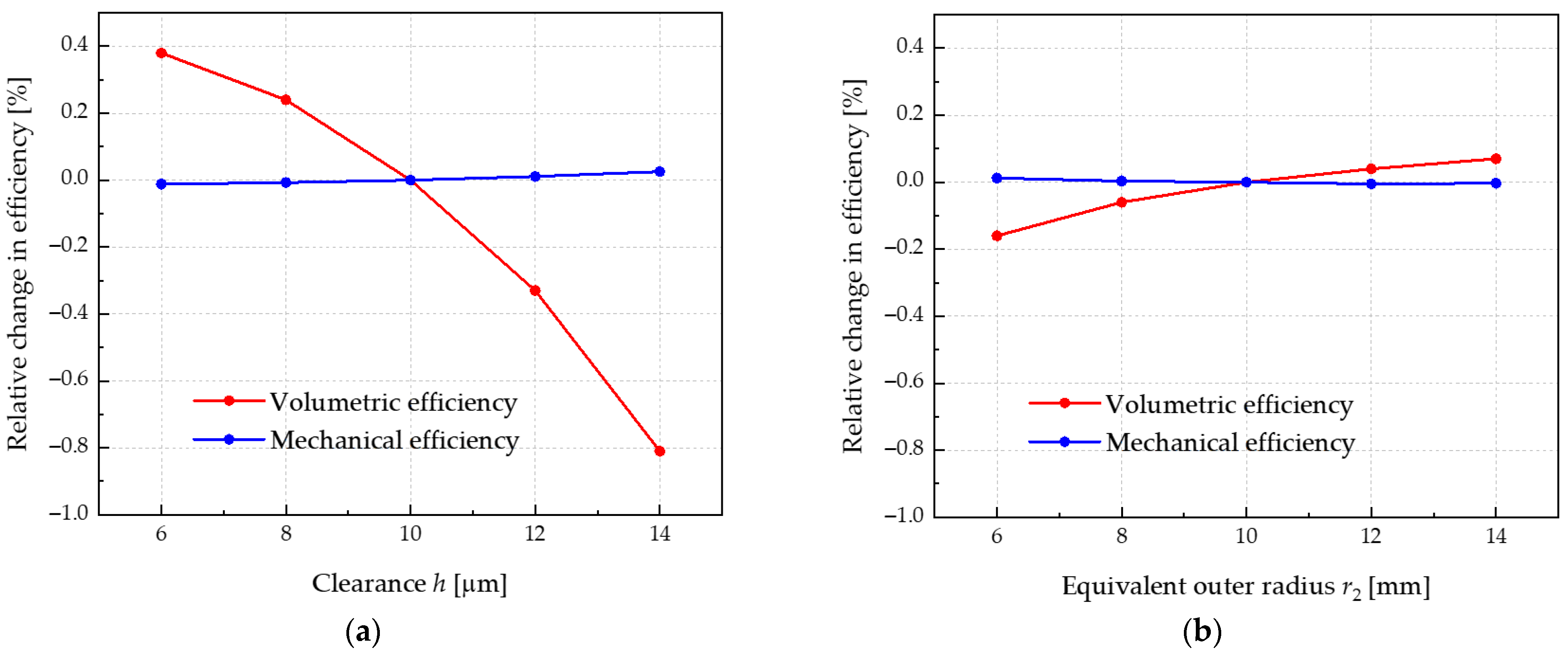
Before comparing the simulated results with the manufacturer’s catalog data, a sensitivity analysis was conducted to examine the influence of leakage-related parameters on the predicted efficiency and torque characteristics. The clearance height h   and the equivalent outer radius r 2 , introduced through the CFD-informed leakage formulation, were independently varied within ±20% of their reference values.
As shown in Figure 19a, volumetric efficiency exhibits a strong sensitivity to the clearance height h , decreasing monotonically as the clearance increases. In contrast, the mechanical efficiency remains nearly unchanged over the range considered.
A similar tendency is observed for variations in the equivalent outer radius r 2 , as shown in Figure 19b. Increasing r 2 leads to an increase in volumetric efficiency; however, the magnitude of this effect is considerably smaller than that associated with variations in the clearance height h . The mechanical efficiency again shows only marginal variation across the range examined. An increase in leakage results in a reduction in volumetric efficiency, while a slight increase in the calculated mechanical efficiency can be observed. However, the magnitude of this change remains limited, and the overall efficiency behavior is predominantly governed by volumetric losses.
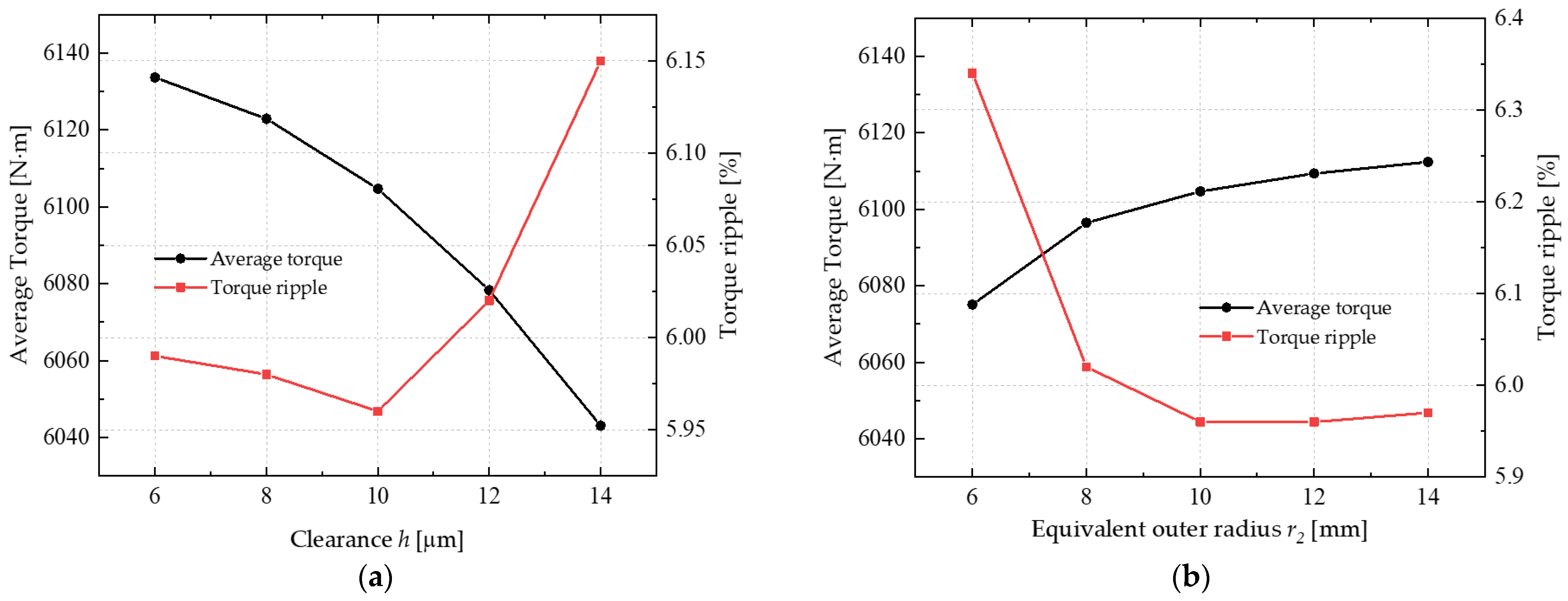
Figure 20 compares the sensitivity of the average torque and torque ripple to variations in the clearance height h and the equivalent outer radius r 2 , with respect to the nominal values. For the clearance variation, the average torque changes within approximately −1.0% to 0.5%, while the torque ripple varies by about 0.2pp. In contrast, variations in the equivalent outer radius lead to a smaller change in the average torque, within approximately ±0.5%, whereas the torque ripple exhibits a larger variation of up to about 0.4pp. This comparison indicates that the mean torque level is more sensitive to the clearance magnitude, whereas torque ripple is more influenced by changes in the leakage distribution represented by r 2 .
Overall, the sensitivity analysis indicates that leakage parameters exert a noticeable influence on volumetric losses and the mean torque level, with the clearance h showing a more pronounced effect on these averaged performance metrics than the equivalent outer radius r 2 . In contrast, torque ripple exhibits a relatively higher sensitivity to variations in r 2 ; however, the magnitude of this variation remains limited and can be regarded as minor when viewed from a system-level perspective. These results suggest that the developed system model maintains stable dynamic behavior under reasonable variations in the CFD-informed leakage parameters.
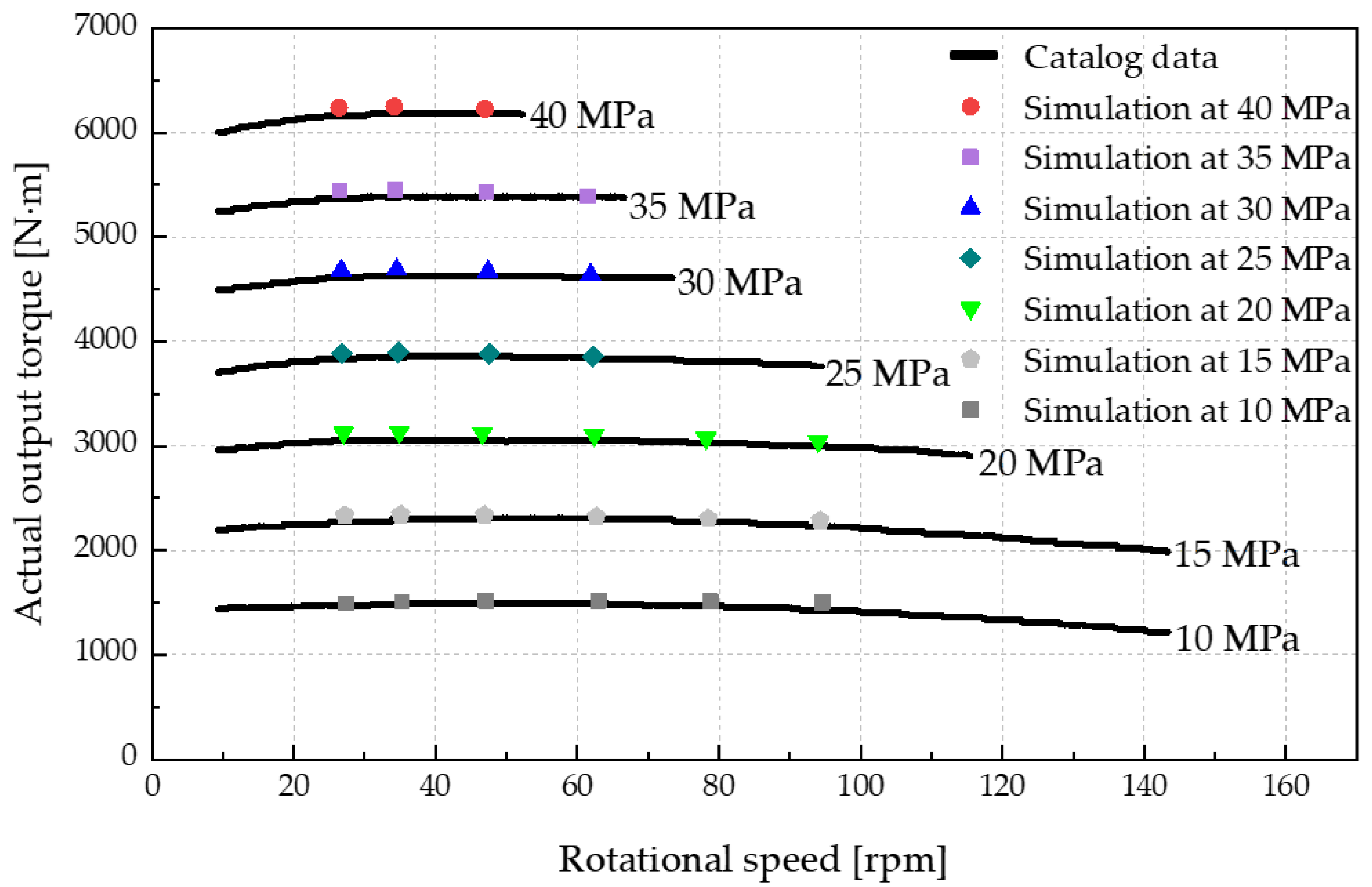
To further validate the developed system model, the simulated output torque was compared with the torque data provided in the manufacturer’s catalog over a wide range of operating conditions. The comparison was conducted at multiple pressure levels, while the rotational speed was varied by applying different flow rates, allowing the torque to be evaluated at discrete operating points for each pressure condition.
Figure 21 presents the comparison between the simulated torque and the catalog torque as a function of rotational speed for each pressure level. The results show that the simulated torque follows the overall trend of the catalog data with good agreement in magnitude across the considered operating range. The maximum, minimum, and average torque errors were 5.3%, 0.1% and 1.6%, respectively, providing a quantitative assessment of the accuracy of the developed model.

6. Conclusions

In this study, a simulation approach combining a one-dimensional (1D) system model and three-dimensional (3D) flow analysis was proposed to evaluate the performance of a multi-stroke radial piston motor with ten pistons and eight lobes. Conventional 1D models have limitations in accurately representing the leakage characteristics that occur in the micro-clearance between the distributor and the cylinder housing. To overcome this limitation, localized clearance flow was precisely analyzed using Simerics MP+, and the results were incorporated into the Amesim system model as input parameters, enabling performance prediction under conditions close to actual operation.
For the CFD analysis, a mesh independence test was conducted to select an optimal mesh configuration that balances accuracy and computational efficiency, thereby ensuring the stability and reliability of the CFD results. The CFD analysis showed that the average leakage flow rate in the distributor–cylinder housing clearance was approximately 0.27 L/min, and this result was used to calibrate the Amesim leakage model by setting r 2 = 10   mm. According to the Amesim simulation results, the leakage between the piston and the cylinder housing was approximately 0.73 L/min, and the inlet/outlet port signals were found to be in phase with the piston flow rate, indicating consistent dynamic behavior within the model.
During one full revolution of the motor, the average outlet flow rate was approximately 59.1 L/min. The torque generated by the pistons was 6756 Nm, while the load torque considering friction was 6109 Nm. Given an input flow rate of 61.5 L/min, the volumetric efficiency was calculated to be about 96%, and the mechanical efficiency about 90%. When compared with the manufacturer’s catalog data at the corresponding operating condition, the predicted torque characteristics showed good agreement, and the calculated efficiencies were within a reasonable range of the catalog values, supporting the validity of the proposed CFD-informed 1D model.
Furthermore, through the complementary integration of CFD analysis and Amesim simulation, it was confirmed that the proposed approach enables quantitative evaluation of the effect of leakage flow on motor performance. These findings demonstrate that the methodology can serve not only as a tool for performance prediction but also as a useful means to assess how design parameter variations influence volumetric and mechanical efficiencies during the design stage.
In addition, the simulation results revealed that short isolated chamber phases induced by the port timing can lead to localized pressure amplification near the dead points. Although the average chamber pressure remains around 40 MPa, a local pressure spike reaching approximately 70 MPa was observed near the bottom dead center. While detailed mitigation strategies for this phenomenon are beyond the scope of the present study, this observation highlights the importance of port geometry and cam ring profile in controlling pressure fluctuation and torque characteristics.
The sensitivity analysis further indicated that leakage-related parameters have a discernible but limited influence on individual performance metrics. In particular, the clearance height primarily affects the mean torque level, whereas the equivalent outer radius r 2 has a relatively stronger influence on torque ripple. Nevertheless, the overall variations remain limited at the system level, suggesting that the proposed CFD-informed modeling approach provides stable and robust performance predictions under reasonable uncertainties in leakage-related parameters.
In future work, based on the detailed Amesim model developed in this study, the influence of the flattening angle applied to the cam ring on the torque characteristics of the radial piston motor will be quantitatively analyzed. The flattening angle is a design parameter that improves motor performance by introducing a flat section near the top and bottom dead points while maintaining the same piston stroke length. Through this analysis, the pressure distribution inside each piston and the torque waveform variation during the stroke will be compared for different flattening angle conditions, and the optimal flattening angle that minimizes torque pulsation will be identified.
Finally, this study presents a CFD-informed modeling approach applied to a radial piston motor, a system for which such applications have been relatively rare. The proposed methodology demonstrates potential for extension to performance prediction and design optimization of other hydraulic drive systems.


Author Contributions

Conceptualization, Software, Writing—original draft preparation, M.W.; Validation, Writing—review and editing, Funding acquisition, S.J. All authors have read and agreed to the published version of the manuscript.

Funding

This work was supported by the Manufacturing-based Production System Program (No. 20018662) funded by the Ministry of Trade, Industry and Energy (MOTIE, Republic of Korea).

Institutional Review Board Statement

Not applicable.

Informed Consent Statement

Not applicable.

Data Availability Statement

The original contributions presented in this study are included in the article. Further inquiries can be directed to the corresponding author.

Conflicts of Interest

The authors declare no conflicts of interest.

References

  1. Smith, J. Low-Speed, High-Torque Radial Piston Hydraulic Motors; the New Generation; SAE Institute: New York, NY, USA, 1985; ISSN 0148-7191. [Google Scholar]
  2. Giavarini, F. Analysis and Simulation of a Radial Piston Hydraulic Motor. Master’s Thesis, Politecnico di Torino, Torino, Italy, 2022. [Google Scholar]
  3. Darnet, J.; Bideaux, É. State-of-the-art of variable displacement technologies for radial piston hydraulic machines. In Proceedings of the BATH/ASME 2022 Symposium on Fluid Power and Motion Control, Bath, UK, 14–16 September 2022; pp. 1–11. [Google Scholar]
  4. Dasgupta, K.; Mandal, S.; Pan, S. Dynamic analysis of a low speed high torque hydrostatic drive using steady-state characteristics. Mech. Mach. Theory 2012, 52, 1–17. [Google Scholar] [CrossRef]
  5. Cheng, L.F.; Chen, X.Y.; Wei, G.Q. Cylinder Fatigue Design of Low-Speed, High-Torque Radial Piston Motor. Coatings 2022, 12, 1192. [Google Scholar] [CrossRef]
  6. Li, W.; Guo, R.; Wang, G.; Zhao, J.; Zhang, Q.; Yu, L.; Zhang, Q. Multi-action internal curve piston pump with energy recovery function for desalination system. Desalination Water Treat. 2023, 307, 1–7. [Google Scholar] [CrossRef]
  7. Mandal, S.; Dasgupta, K.; Pan, S.; Chattopadhyay, A. Theoretical and experimental studies on the steady-state performance of low-speed high-torque hydrostatic drives. Part 1: Modelling. Proc. Inst. Mech. Eng. Part C J. Mech. Eng. Sci. 2009, 223, 2663–2674. [Google Scholar] [CrossRef]
  8. Abe, K.; Imai, M.; Kometani, E. The Performance of Ball-Piston Multi-Stroke Type Low Speed High Torque Motor: Report No. 1, Experimental Study on Performance of Spherical Surface of Piston. Bull. JSME 1979, 22, 700–706. [Google Scholar] [CrossRef]
  9. Li, C.J.; Jiang, T.; Liu, C.Y.; Xu, H.R.; Shi, G.S. Investigation of the leakage in the flow distribution pair of radial piston hydraulic motors through CFD analysis and experiments. Flow Meas. Instrum. 2024, 96, 102555. [Google Scholar] [CrossRef]
  10. Eriksson, J. Efficiency of Radial Piston Hydraulic Motors. Master’s Thesis, Umea University, Umea, Sweden, 2023. [Google Scholar]
  11. Agarwal, P.; Vacca, A.; Wang, K.; Kim, K.S.; Kim, T. An analysis of lubricating gap flow in radial piston machines. SAE Int. J. Commer. Veh. 2014, 7, 524–534. [Google Scholar] [CrossRef]
  12. Fan, Y.; Qiu, L.; Li, L.; Yuan, L.; Shao, Y. Modeling and simulation analysis of radial piston motor with inner curve based on AMESim. In Proceedings of the International Conference on Mechanical Design and Simulation (MDS 2022), Wuhan, China, 18–20 March 2022; pp. 1372–1377. [Google Scholar]
  13. Ma, W.; Yang, G.L.; Cao, W.B.; Bai, G.X.; Cao, C.C.; Song, S.P. Study on the leakage mechanism of the valve plate pair of internal curve hydraulic motor. Adv. Mech. Eng. 2025, 17, 16878132251346850. [Google Scholar] [CrossRef]
  14. Chao, Q.; Xu, Z.; Shao, Y.C.; Tao, J.F.; Liu, C.L.; Ding, S. Hybrid model-driven and data-driven approach for the health assessment of axial piston pumps. Int. J. Hydromechatronics 2023, 6, 76–92. [Google Scholar] [CrossRef]
  15. Ceschini, L.; Marconi, A.; Martini, C.; Morri, A. Tribological behavior of components for radial piston hydraulic motors: Bench tests, failure analysis and laboratory dry sliding tests. Wear 2013, 305, 238–247. [Google Scholar] [CrossRef]
  16. Ion-Guta, I.; Ion-Guta, D.; Dumitrescu, C. Mathematical modeling and numerical simulation of radial piston pump. Acad. J. Manuf. Eng. 2012, 10, 66. [Google Scholar]
  17. Catania, A.E.; Ferrari, A. Experimental analysis, modeling, and control of volumetric radial-piston pumps. J. Fluids Eng. 2011, 133, 081103. [Google Scholar] [CrossRef]
  18. Chappie, P. Modelling of a radial-piston hydraulic motor. Proc. Inst. Mech. Eng. Part I J. Syst. Control. Eng. 1992, 206, 171–180. [Google Scholar] [CrossRef]
  19. Ma, H.Q.; Liu, W.; Wu, D.W.; Shan, H.M.; Xia, S.Q.; Xia, Y.M. Modeling and analysis of the leakage performance of the spherical valve plate pair in axial piston pumps. Eng. Sci. Technol.-Int. J.-Jestech 2023, 45, 101498. [Google Scholar] [CrossRef]
  20. Kumar, L.; Mandal, N.P. Analysis of pressure at transition zone of valve plate of radial piston pump. Eng. Res. Express 2022, 4, 035024. [Google Scholar] [CrossRef]
  21. Manring, N.D. Valve-plate design for an axial piston pump operating at low displacements. J. Mech. Des. 2003, 125, 200–205. [Google Scholar] [CrossRef]
  22. Karpenko, M.; Bogdevičius, M. Investigation of hydrodynamic processes in the system–“pipeline-fittings”. In Proceedings of the International Conference TRANSBALTICA: Transportation Science and Technology, Vilnius, Lithuania, 2–3 May 2019; pp. 331–340. [Google Scholar]
  23. Zhang, P.C.; Cheng, Y.G.; Xue, S.; Hu, Z.A.; Tang, M.J.; Chen, X.W. 1D-3D coupled simulation method of hydraulic transients in ultra-long hydraulic systems based on OpenFOAM. Eng. Appl. Comput. Fluid Mech. 2023, 17, 2229889. [Google Scholar] [CrossRef]
  24. Plua, F.; Hidalgo, V.; López-Jiménez, P.A.; Pérez-Sánchez, M. Analysis of Applicability of CFD Numerical Studies Applied to Problem When Pump Working as Turbine. Water 2021, 13, 2134. [Google Scholar] [CrossRef]
  25. Deininger, M.; Iben, U.; Munz, C.D. Coupling of three- and one-dimensional hydraulic flow simulations. Comput. Fluids 2019, 190, 128–138. [Google Scholar] [CrossRef]
  26. Wang, C.; Nilsson, H.; Yang, J.D.; Petit, O. 1D-3D coupling for hydraulic system transient simulations. Comput. Phys. Commun. 2017, 210, 1–9. [Google Scholar] [CrossRef]
  27. Martins, N.M.C.; Brunone, B.; Meniconi, S.; Ramos, H.M.; Covas, D.I.C. CFD and 1D Approaches for the Unsteady Friction Analysis of Low Reynolds Number Turbulent Flows. J. Hydraul. Eng. 2017, 143, 04017050. [Google Scholar] [CrossRef]
  28. Liu, Y.; Gu, L.C.; Yang, B.; Wang, S.H.; Yuan, H.B. A new evaluation method on hydraulic system using the instantaneous speed fluctuation of hydraulic motor. Proc. Inst. Mech. Eng. Part C–J. Mech. Eng. Sci. 2018, 232, 2674–2684. [Google Scholar] [CrossRef]
  29. Ursu-Fischer, N.; Ursu, M.; Chima, M.T. Available online: https://www.proquest.com/scholarly-journals/study-average-torque-hydraulic-motor-with-radial/docview/203841716/se-2?accountid=13358 (accessed on 8 December 2025).
  30. Jo, Y.; Ji, S. A basic study on the torque characteristics of multi-stroke radial piston motor by cam profile. J. Power Syst. Eng. Учредители Korean Soc. Power Syst. Eng. 2024, 28, 5–13. [Google Scholar] [CrossRef]
  31. Blackburn, J.F.; Technology, M.I.o.; Reethof, G.; Shearer, J.L.; Coakley, J.L.; Ezekiel, F.D.; Frazier, R.H.; Hoffman, T.E.; Hrones, J.A.; Lee, S.Y. Fluid Power Control; Wiley: Hoboken, NJ, USA, 1960. [Google Scholar]
  32. Konami, S.; Nishiumi, T. Hydraulic Control Systems: Theory and Practice; World Scientific Publishing Company: Singapore, 2016. [Google Scholar]
Figure 1. Cross section of multi-stroke radial piston motor.
Actuators 15 00054 g001
Figure 2. Axial section of multi-stroke radial piston motor.
Actuators 15 00054 g002
Figure 3. Sinusoidal cam ring and piston roller.
Actuators 15 00054 g003
Figure 4. Schematic of overlapping area between distributor and cylinder ports.
Actuators 15 00054 g004
Figure 5. Leakage between piston and cylinder housing.
Actuators 15 00054 g005
Figure 6. Leakage between distributor and cylinder housing.
Actuators 15 00054 g006
Figure 7. Schematic of signal and flow interactions in Amesim model.
Actuators 15 00054 g007
Figure 8. Signal flow of multi-stroke radial piston motor in Amesim.
Actuators 15 00054 g008
Figure 9. Hydraulic circuit configuration of the Amesim model.
Actuators 15 00054 g009
Figure 10. Mesh geometry of extracted flow domain used in the CFD analysis.
Actuators 15 00054 g010
Figure 11. Mesh geometry of leakage area between distributor and cylinder housing.
Actuators 15 00054 g011
Figure 12. Boundary conditions applied in the CFD model of the multi-stroke radial piston motor.
Actuators 15 00054 g012
Figure 13. Pressure distribution in multi-stroke radial piston motor in Simerics MP+.
Actuators 15 00054 g013
Figure 14. Leakage flow in distributor-cylinder housing clearance in Simerics MP+.
Actuators 15 00054 g014
Figure 15. Amesim simulation results of rotational motion variables: (a) rotational angle and (b) rotational speed.
Actuators 15 00054 g015
Figure 16. Amesim simulation results of piston chamber variables: (a) piston chamber pressure with port opening signal and (b) piston flow rate.
Actuators 15 00054 g016
Figure 17. Amesim simulation results of leakage flow variables: (a) leakage between piston and cylinder housing and (b) leakage between distributor and cylinder housing.
Actuators 15 00054 g017
Figure 18. Amesim simulation results of output performance variables: (a) outlet flow rate and (b) output torque.
Actuators 15 00054 g018
Figure 19. Sensitivity of volumetric and mechanical efficiencies to leakage related parameters: (a) clearance height h and (b) equivalent outer radius r 2 .
Actuators 15 00054 g019
Figure 20. Sensitivity of average torque and torque ripple to leakage related parameters: (a) clearance height h and (b) equivalent outer radius r 2 .
Actuators 15 00054 g020
Figure 21. Comparison of simulated output torque and manufacturer’s catalog data under various pressure conditions.
Actuators 15 00054 g021
Table 1. Motor Specifications.
ParameterValueUnit
Motor displacement1248cc/rev
Working pressure40MPa
Max power41kW
Moment of inertia0.054 kg m 2
Max rotating speed170rpm
Table 2. Geometric Parameters of the Motor.
ParameterSymbolValueUnit
Number of lobes N L 8-
Number of pistons N P 10-
Maximum piston displacement d m a x 111.3 mm
Minimum piston displacement d m i n 97.8 mm
Roller radius r 5.75 mm
Port radius R p 4.25 mm
Distributor radius R d 44.5 mm
Table 3. Oil properties in CFD.
ParameterValueUnit
Dynamic viscosityPressure-dependent Pa s
Density 850 kg / m 3
Gas mass fraction 9 × 10 5 dimensionless
Operation temperature323K
Table 4. Boundary conditions in CFD.
ParameterValueUnit
Inlet Pressure40MPa
Outlet Pressure0.1MPa
Rotational Speed49rpm
Table 5. Mesh independence test.
ParameterCase 1Case 2Case 3Case 4
Number of cells101,205296,372729,588988,673
Number of nodes146,057390,863888,7451,304,286
Leakage flow rate [L/min]0.28610.28440.28440.2843
Volumetric efficiency [%]96.497.397.397.3
Disclaimer/Publisher’s Note: The statements, opinions and data contained in all publications are solely those of the individual author(s) and contributor(s) and not of MDPI and/or the editor(s). MDPI and/or the editor(s) disclaim responsibility for any injury to people or property resulting from any ideas, methods, instructions or products referred to in the content.