1. Introduction
External gear pumps are widely used in industrial hydraulic systems because of their simple structure, ease of manufacture, and high durability [
1,
2]. Despite these advantages, positive displacement gear pumps inherently exhibit a discrepancy between the theoretical and actual delivered flow due to the meshing characteristics of the gears. This discrepancy is mainly governed by internal leakage, friction losses, pressure fluctuations, and geometric eccentricity [
3,
4,
5,
6,
7].
Involute gear profiles, despite such structural imperfections, offer high design freedom and low sensitivity of the meshing point to shaft eccentricity. However, the trapped volume formed in the two-point contact region of the gears induces local pressure peaks and reduces volumetric efficiency [
4,
5,
8,
9]. To alleviate this problem, relief grooves are typically machined on the sides of the bearing blocks, which help to relax pressure peaks but inevitably introduce additional leakage losses [
9,
10,
11].
At the initial stage of pump operation, stress concentrations occur at the circular contact region between the gears and the housing. Therefore, a running-in process is required to expand the sealing area. Under excessively high pressure differences, however, abnormal wear can occur, so running-in should be carried out under limited pressure conditions. In other words, running-in is not merely a process of wearing down the contact surfaces but a process of forming a stable sealing region [
1,
2,
5,
12,
13].
Manufacturing tolerances and geometric eccentricity of the pump directly affect the lubrication state and load distribution of the bearings. When the tolerances are large, the oil-film thickness decreases, which reduces the bearing support stiffness and increases vibration. Conversely, when the tolerances are excessively small, the propagation path of pressure waves becomes restricted and the pressure fluctuations in the discharge region are amplified [
1,
4,
14,
15,
16]. In addition, under extremely high-pressure operating conditions, elastic deformation of the pump body and bearing components may occur, leading to an increase in internal gap sizes. Such deformation-induced gap enlargement can result in increased internal leakage and a consequent reduction in volumetric efficiency [
17]. Therefore, when designing the clearances between the housing and gears and the bearing geometry, not only the mechanical stiffness of the structure but also the fluid compliance of the working fluid must be taken into account [
1,
4,
15,
18].
To analyze such coupled fluid and mechanical phenomena, previous studies have adopted geometric approaches to predict the volumetric efficiency and theoretical flow rate of external gear pumps. Early works simplified the gear tooth profile into a wedge-shaped geometry and used energy methods, but discrepancies remained between the predicted and instantaneous flow rates under actual operating conditions [
3,
6,
19]. As a result, hybrid modeling approaches that combine hydrodynamic theory with numerical simulations have been actively investigated. Geometric analyses of continuous-contact gear pumps have shown that introducing helical gears can partially reduce flow ripple, although it cannot be completely eliminated in practice [
20]. Numerical simulation studies have also analyzed the correlation between theoretical flow models and experimental results, and they have verified the validity of the models under practical operating conditions [
21,
22].
In external gear pumps, the pressure field propagates in the circumferential direction, and the resulting hydrodynamic and contact forces are transmitted to the shaft in an asymmetric manner [
14,
16,
23]. This asymmetric pressure distribution is a key factor that directly influences the oil-film thickness on the side plates and the load distribution in the bearings. On this basis, lumped parameter models that integrate flow generation and leakage have been proposed. In these models, volume change, viscous losses, fluid compressibility, and internal leakage are treated within a unified system. Such models provide a framework for quantitatively predicting the actual delivered flow rate under varying operating conditions such as temperature, pressure, and rotational speed [
24,
25].
Subsequent studies further improved the reliability of numerical models by experimentally validating leakage models and incorporating viscous losses and pressure gradients into the analysis [
7,
9]. In eccentricity estimation models that couple internal leakage with bearing elasticity, the minute motion of the bearings was identified as a factor that directly affects the minimum film thickness and vibration response [
14,
15]. By extending the pressure distribution model in radial grooves to a nonlinear formulation, researchers evaluated the dynamic load-carrying capacity and stiffness variations in the bearing [
16]. To investigate the effect of wear on volumetric efficiency and leakage characteristics, Novak et al. [
13] conducted long-term endurance tests using real wear particles and artificial test dust, and they quantitatively established the correlation between wear coefficients and internal leakage. This study clarified the differences in wear behavior between accelerated test conditions and actual industrial environments and analyzed the mechanisms of volumetric efficiency degradation. In a gap-sensor-based dynamic experiment on piston pumps, the micro-displacement between the cylinder block and the valve plate was measured in a non-contact manner using eddy-current displacement sensors, and the dynamic displacement and vibration responses under varying pressure conditions were analyzed [
26]. This work experimentally demonstrated the coupled behavior between oil-film thickness and pressure response (fluid–structure interaction) and supports the validity of the gap-sensor-based measurement approach adopted in the present study. More recently, Torrent et al. [
27] proposed a dynamic model for the journal bearing and bush of an external gear pump and experimentally measured the oil-film thickness between the gear and the bearing using a laser displacement sensor. They identified the correlation between bearing eccentricity and lubrication state and quantitatively evaluated the pressure response of the oil film and the load-equilibrium behavior.
Recent studies have further investigated the influence of internal clearance characteristics on leakage behavior and efficiency performance in hydraulic pumps. Mitov et al. analyzed the effect of radial gap size on the flow rate and volumetric efficiency of an external gear pump through combined numerical and experimental approaches, confirming that clearance dimensions play a critical role in pump performance under different operating conditions [
28]. In addition, recent studies on clearance seals in rotating machinery have emphasized the importance of clearance geometry and operating condition-dependent effects on leakage and dynamic behavior, highlighting the broader relevance of clearance-related phenomena in pump and seal systems [
29].
Although previous studies have experimentally investigated oil-film behavior, wear characteristics, and fluid–structure interaction, real-time verification of how internal leakage flow and pressure distribution change under actual operating conditions where eccentricity and wear coexist remains limited. Therefore, in this study, dynamic clearances that vary with pressure and rotational speed are measured using gap sensors, and a lumped parameter model that incorporates these dynamic clearances is constructed. The simulation results are then compared with experimental data. By analyzing the correlations among pressure distribution, leakage flow, and bearing load variation under realistic operating conditions, a high-fidelity leakage model that reflects experimentally based dynamic clearance variations is developed. The proposed approach provides a quantitative basis for accurately predicting volumetric efficiency and energy losses in hydraulic pumps and for the design of high-efficiency pumps.
The simulation model proposed in this study enables the implementation of pressure- and rotational speed-dependent dynamic internal clearances within a one-dimensional simulation framework, without relying on computationally expensive three-dimensional CFD analyses. Therefore, the proposed approach is expected to be of particular interest to designers and simulation engineers working on external gear pumps and electro hydraulic systems. It can be effectively applied to early-stage performance evaluation, leakage analysis, and design optimization, while improving modeling accuracy and reducing computational cost in industrial pump and system-level simulations.
The main contribution of this study lies in the experimental measurement and modeling of pressure- and speed-dependent dynamic clearances in an external gear pump. Unlike conventional approaches that assume fixed clearances or empirical leakage coefficients, the proposed method directly incorporates experimentally measured radial and axial clearances into a one-dimensional simulation model. By establishing empirical correlations for the dynamic clearance variations and integrating them into the leakage model, the proposed framework enables more accurate prediction of volumetric efficiency degradation under high-pressure operating conditions.
2. Dynamic Clearance-Based Fluid Modeling Framework
In this section, the leakage flow and theoretical flow rate of the external gear pump are modeled by considering the control volume that is formed after the running-in process and the pressure propagation inside this volume. During running-in, surface deformation occurs between the gear flanks and the housing, and a thin oil film is formed. As a result, the actual fluid domain deviates from the initial design geometry. Therefore, a combined approach that couples a control-volume-based geometric analysis with a pressure distribution model is adopted in order to achieve accurate flow prediction.
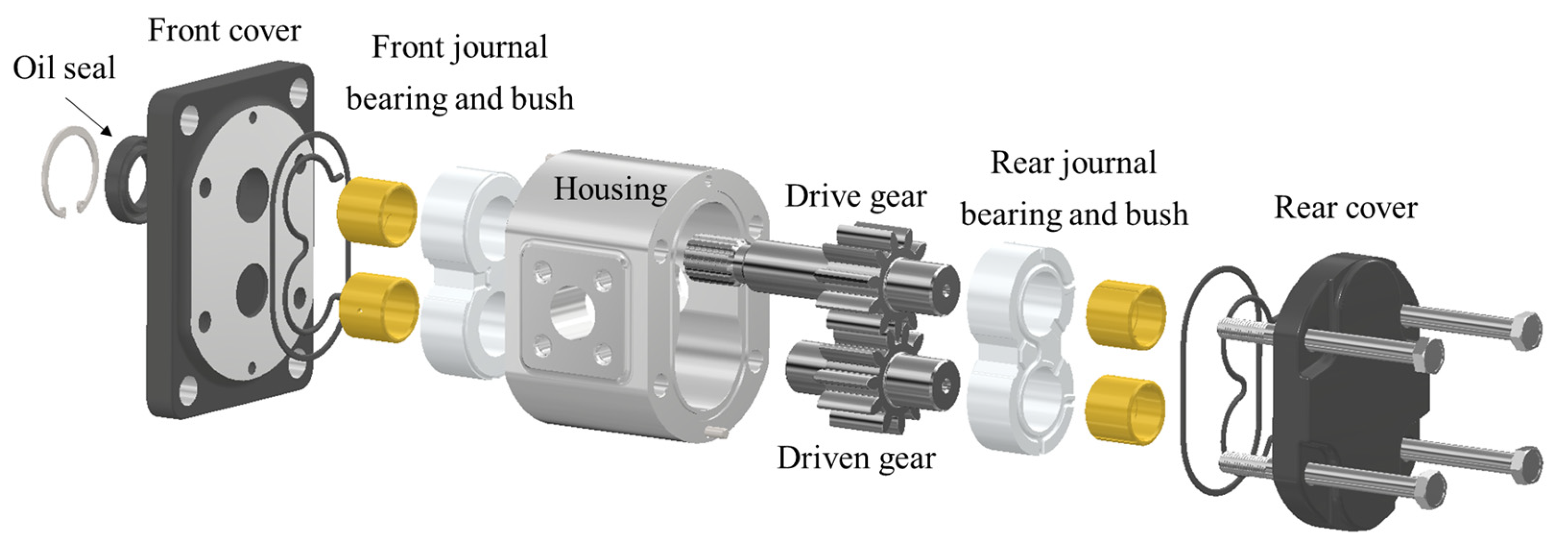
Figure 1 shows an exploded view of the target external gear pump and its main components.
2.1. Definition of Fluid Domain
After the running-in process, slight wear and surface deformation between the gear flanks and the housing walls modify the fluid-occupied region inside the pump compared with the initial state. The fluid behavior in the pump can therefore be defined in terms of the rate of change in the control volume and the leakage flow rate,
where
is the net discharge flow rate delivered by the pump to the external hydraulic circuit,
is the theoretical flow rate associated with the rate of change in the control volume, and
is the leakage flow rate through the axial, radial, and tip clearances. The flow inside the control volume can be written as
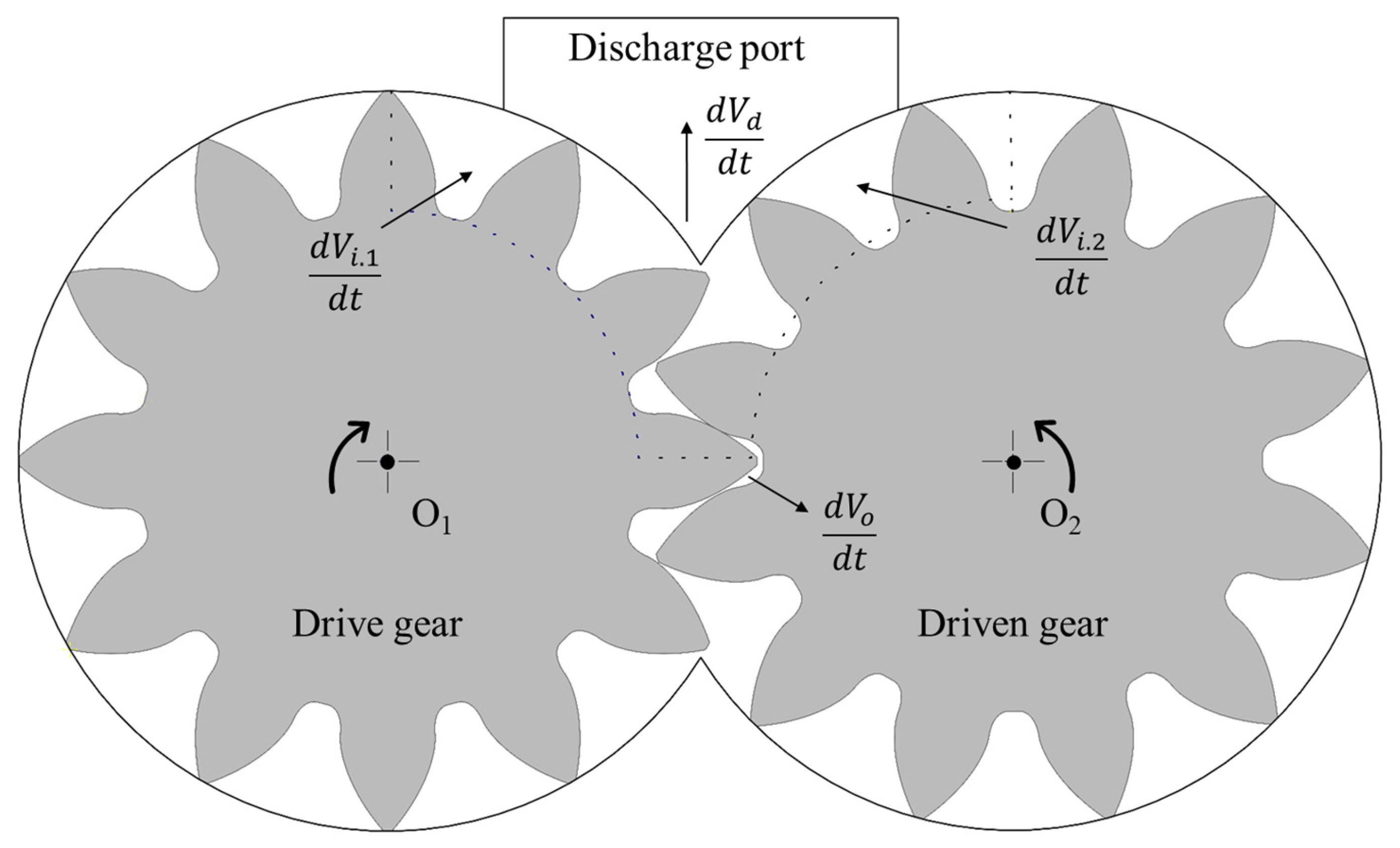
The first and second terms on the right-hand side represent the inflow and outflow volume-change rates in the tooth spaces of the driving gear and the driven gear, respectively. In other words, the instantaneous rate of volume change inside the control volume, dVd/dt, provides the physical basis for defining the theoretical flow rate of the pump. Here, denotes the total control volume of the pump (displacement volume), and are the volumes of the tooth spaces of the driving and driven gears, and is the volume of the meshing region (trapped volume).
Figure 2 illustrates the geometric definition of the control volume and the associated volume changes. The control volume includes the volume changes in the tooth spaces of both gears as well as the discharge volume change in the meshing region.
The actual fluid domain formed after running-in depends on the geometry of the leakage paths and the variations in oil-film thickness, and the control-volume boundary is therefore dynamic. In this study, the control volume defined in
Figure 2 is used as the reference domain, and the average oil-film thickness is incorporated when defining both the leakage-path model and the theoretical flow model. The rate of change in this control volume is used as a key physical quantity that quantitatively describes the flow-generation mechanism of the pump.
2.2. Theoretical Flow Rate Equation
The displacement of the control volume varies with the gear rotational angle
, and the theoretical flow rate can be expressed as
The volume-change rates of the individual tooth spaces are given by Equations (4) and (5),
Here, and are the addendum radii of the driving and driven gears, respectively, and and are their dedendum radii. Here, is the gear width. and denote the angular positions, measured from the inlet-port centerline, at which each tooth space communicates with the ports. The time derivative corresponds to the angular velocity of the gears.
By summing the volume-change rates of the two tooth spaces and the meshing region, the overall rate of change in the control volume is obtained as
Equations (3)–(6) are based on the volumetric variation in external gear pumps reported in [
3]. The instantaneous theoretical flow rate as a function of gear rotational angle
is then defined as
This expression is useful for analyzing the theoretical flow rate and pulsation pattern of the pump, and it is employed in the comparative analysis with the leakage model and the experimental flow rate data.
2.3. Pressure Propagation and Leakage-Path Modeling
The control volume includes the small clearances between the gear flanks and the housing and the thin clearances between the gear side faces and the bearing blocks (side plates). These clearances form the main internal leakage paths that connect the high-pressure discharge region to the low-pressure suction region of the pump. To model this leakage flow, it is assumed that viscous resistance dominates the flow behavior, and the widely used flow model between parallel plates is adopted.
In this model, the clearance is much smaller than the length of the leakage path, and the flow is assumed to be laminar. Under these conditions, the leakage flow driven by the pressure gradient
between the two plates can be approximated by Poiseuille flow, which is expressed as
where
is the leakage flow rate,
is the pressure difference between the inlet and outlet of the leakage path,
is the clearance,
is the dynamic viscosity of the working fluid, and
is the length of the leakage path. In the simulation model presented in
Section 3, the various leakage paths shown in
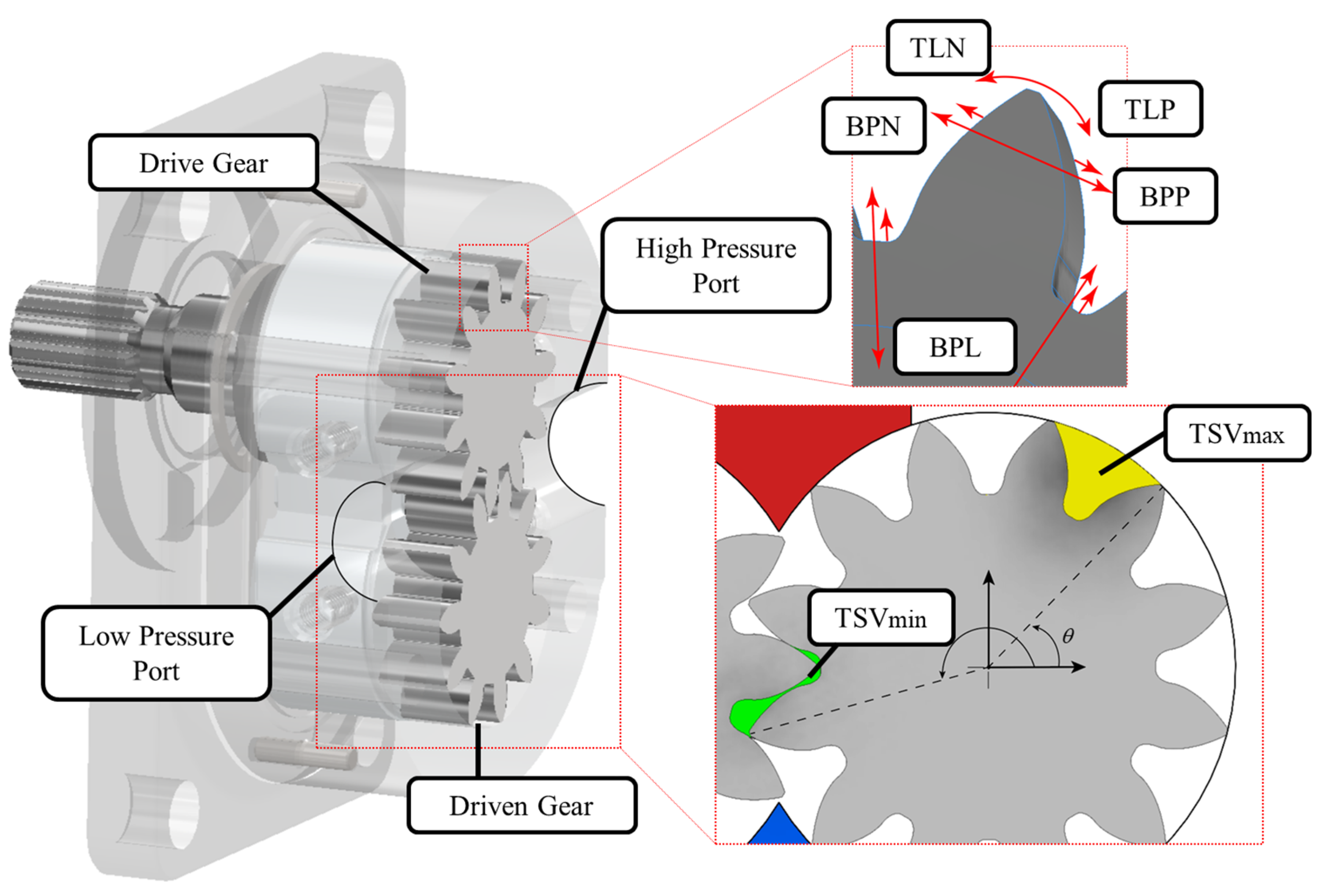
Figure 3 and listed in
Table 1 (TLN, TLP, BPN, BPP, BPL, and others) are modeled as variable orifices based on this laminar parallel-plate relation.
2.4. Trapped Volume Modeling
In the meshing region of an external gear pump, a trapped volume is formed where the fluid is temporarily confined between two pairs of meshing gear teeth. This volume is isolated from both the inlet and outlet chambers and undergoes periodic volume variation as the gears rotate.
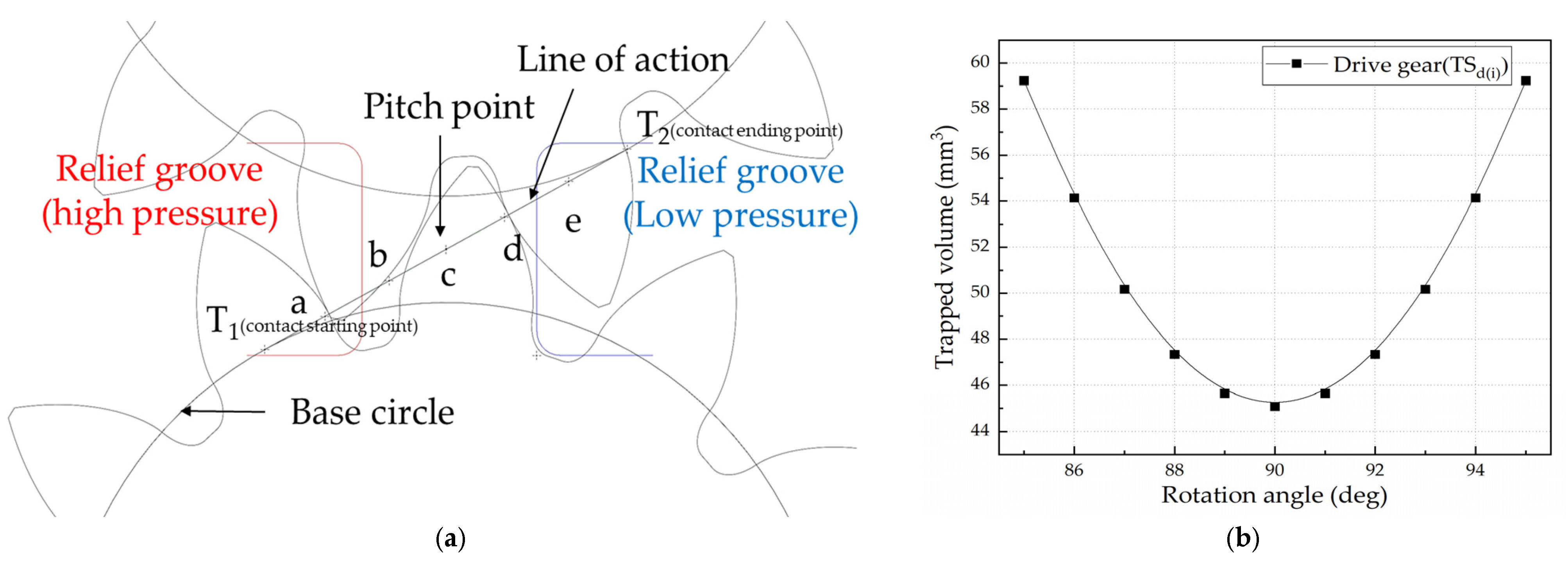
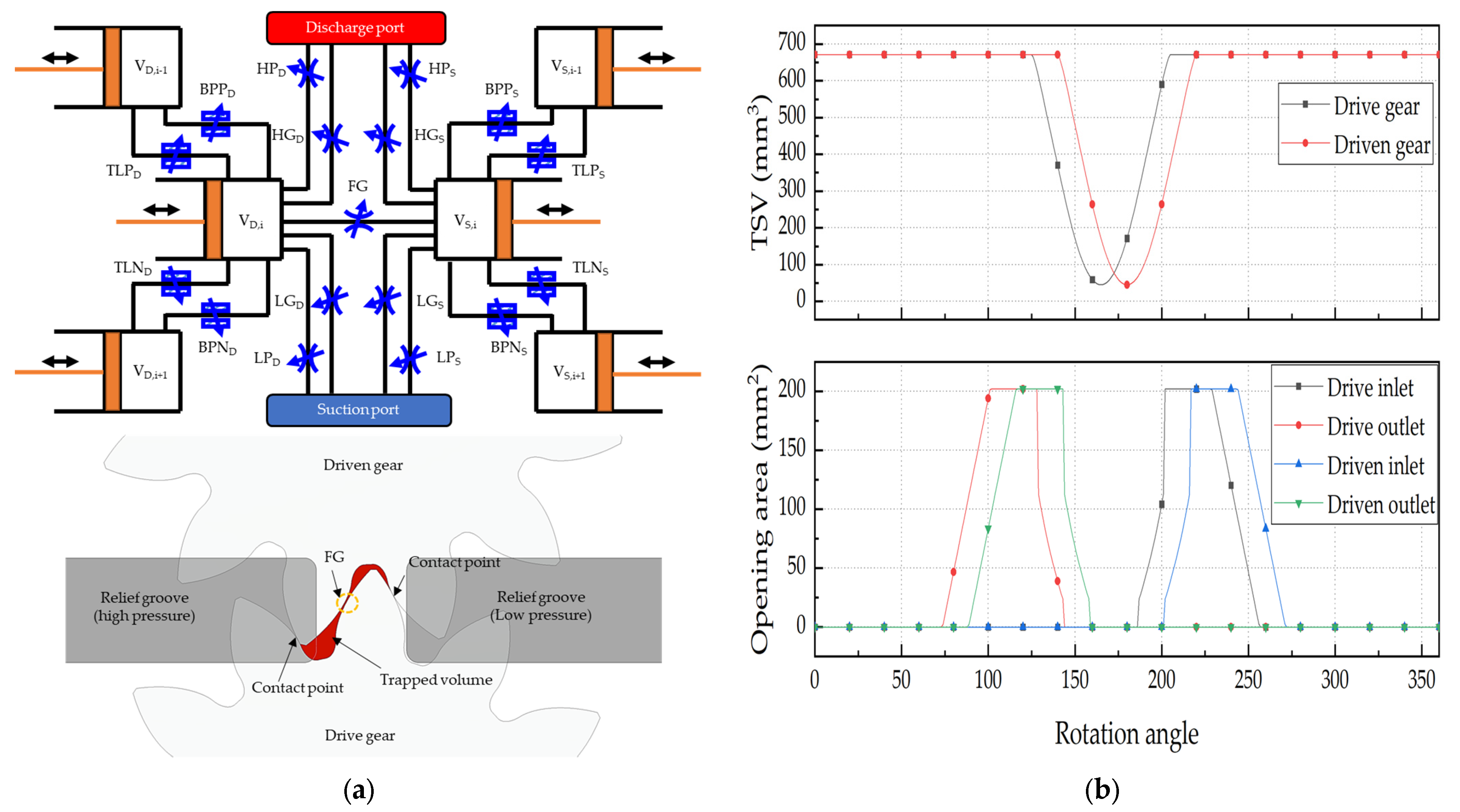
Figure 4 schematically illustrates the trapped volume and its connection to the inlet and outlet ports via the relief groove.
Figure 4a shows the sequential connection of the trapped volume to the inlet and outlet sides as the rotational angle changes, while
Figure 4b presents the corresponding variation in the trapped area. These schematics are provided to support the subsequent modeling of trapped volume behavior.
At the beginning of the rotation, the trapped volume is connected to the inlet region, and the pressure remains low. As the meshing progresses, the connection to the inlet is cut off, and the trapped volume opens toward the outlet side. The volume then decreases, and the pressure rises. When a relief groove is present, the connection area increases gradually, which mitigates the pressure peak.
Figure 4a in particular shows, with respect to the line of action of the gear tooth profiles, which of the inlet or outlet chambers is connected to the trapped volume at each stage. The contact path from the starting point T
1 to the end point T
2 along the line of action is divided into segments a–e, and the connection state between the trapped volume and the external flow paths differs in each segment. In segments a–b, two-point contact with the inlet side is maintained and the pressure remains low. In segments b–c–d, when the contact point is around the pitch point, the trapped volume becomes completely isolated, its volume reaches a minimum, and the pressure rises sharply. In segments d–e, the trapped volume reconnects to the outlet side. If a relief groove is present, the connection area increases gradually in this region and the pressure peak is reduced.
The pressure inside the trapped volume is given by
where
is the pressure inside the trapped volume,
is the trapped volume as a function of the rotational angle
, and
is the bulk modulus of the working fluid, which determines how sensitively a reduction in volume is converted into a pressure increase. This equation assumes that the fluid inside the trapped volume is perfectly sealed without leakage so that the volume reduction caused by gear rotation directly leads to a pressure rise.
The rate of change in the trapped volume is determined by the motion of the contact point along the line of action between the two meshing gear tooth profiles and can be written in a geometric form as
where
is the effective cross-sectional area that varies with the rotational angle and
is the mean radius of the contact point on the tooth profiles.
By integrating Equation (10), the trapped volume as a function of rotational angle is obtained as
where
is the initial trapped volume. If a relief groove is not provided, the regions where
produce a rapid increase in pressure.
3. Numerical Simulation Model
In this section, the control-volume-based flow equations defined in
Section 2 are implemented numerically by constructing a tooth-space-volume (TSV)-based lumped parameter model. Each TSV represents a single gear tooth space, and the transient pressure and flow in each TSV are calculated through its connections with ports and leakage paths. The numerical simulations are carried out in the Amesim environment and are designed based on a lumped parameter approach.
Each tooth space of the driving and driven gears is defined as an independent control volume. The connections between each TSV and the inlet port (LP), outlet port (HP), high-pressure and low-pressure relief grooves, and adjacent TSVs are represented as equivalent orifices whose opening areas vary with the gear rotational angle. These relationships are illustrated in
Figure 5.
Figure 5a shows a schematic representation of the connection paths between TSVs, ports, and leakage paths, and
Figure 5b shows the equivalent flow-passage areas as functions of the rotational angle for a single TSV during one revolution. In this figure,
denotes the equivalent orifice area between a TSV and the connected port or adjacent TSV as a function of the rotational angle
. The opening area of each connection is determined geometrically by the relative position between the gear tooth profiles along the line of action and the relief grooves on the bearing blocks. As the gear rotates, the TSV experiences a sequence in which its connection to the inlet port is closed and its connection to the outlet port is opened. The gradual variation in the connection area in the meshing region reflects the shape of the relief groove, which is designed to mitigate excessive pressure spikes. In this study, these opening areas are accurately extracted from a three-dimensional CAD model and implemented as lookup tables in Amesim so that the instantaneous flow between TSVs and ports can be calculated.
The mass conservation in each TSV is expressed by Equation (12).
Here, is the instantaneous volume of the i-th tooth space (TSV) and is the flow rate between adjacent control volumes. Both and the equivalent orifice area vary with the gear rotational angle, and these geometric quantities are extracted from the three-dimensional CAD model and provided to Amesim in tabulated form. The instantaneous flows are then computed in the simulation from , the local pressure difference, and the fluid properties.
Figure 5 shows the configuration of the TSV connections and the variation in the equivalent flow areas with rotational angle, and
Table 1 summarizes the definitions of the TSV connection paths and the governing flow equations. In
Table 1, P (TLP, BPP) denotes connections with the previous TSV in the direction of rotation, and N (TLN, BPN) denotes connections with the following TSV. As the gear rotates, the opening areas of the ports and grooves change periodically and act as the main control parameters for the flow rates between TSVs. In Amesim, these relationships are defined in table form and are updated according to the instantaneous pressure conditions.
Definition of Simulation Cases
To evaluate the accuracy of the proposed simulation model, its predictions are compared with the experimental results (EXP) in
Section 5. For this purpose, three different simulation cases are defined according to how the leakage clearances are treated.
- (1)
NTD (Non-Track-Depth) model—baseline model
The NTD model represents the most basic approach. In this model, the nominal clearances specified in the pump design drawings are used directly as the leakage clearances. The radial and axial clearances are assumed to be constant values that do not change with operating conditions such as pressure or rotational speed. This corresponds to the fixed-clearance assumption commonly adopted in many previous studies and serves as the baseline case in this work.
- (2)
TD (Track-Depth) model—static wear model
The TD model is a static model that incorporates the effects of running-in operation and wear, as described in
Section 1. Previous experimental work has measured the track depth generated on the housing inner surface after the running-in process and reported that the depth varies non-uniformly from a minimum of 1.6 µm to a maximum of 70.3 µm across the tooth surface [
30]. In the present study, the TD model reflects this static wear by defining the radial clearance distribution based on the measured track depth, following the same approach. In addition, the axial clearance between the gear side faces and the bearing blocks is assigned static values that decrease from 3 µm to 1 µm as the inlet–outlet pressure difference increases so that the reduction in axial clearance under higher pressure is represented. However, this model still treats the clearances as fixed for each pressure condition and does not account for the fact that the clearances change dynamically with operating conditions such as pressure and rotational speed.
- (3)
TDwithFX (Dynamic model with experimental correlations)
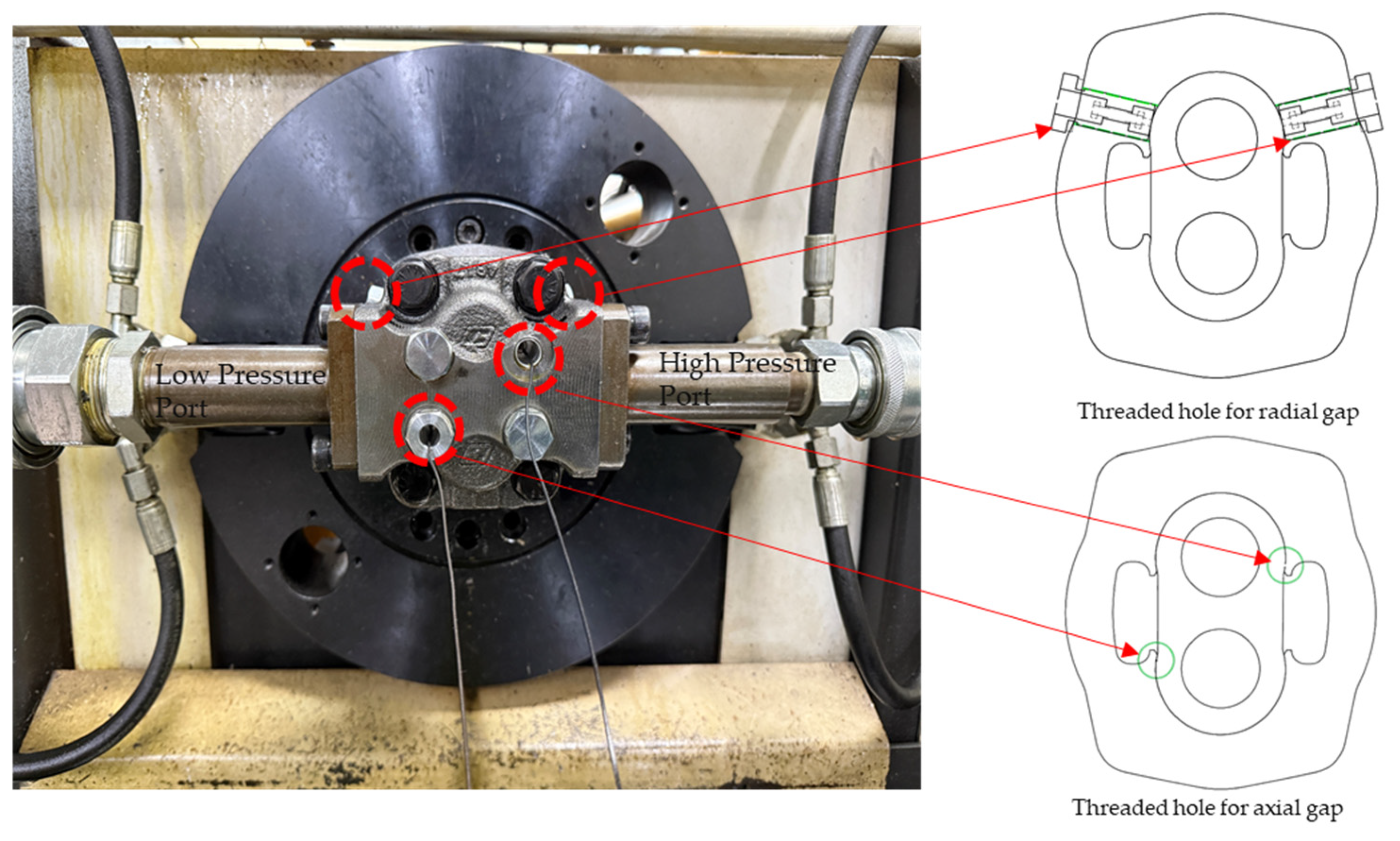
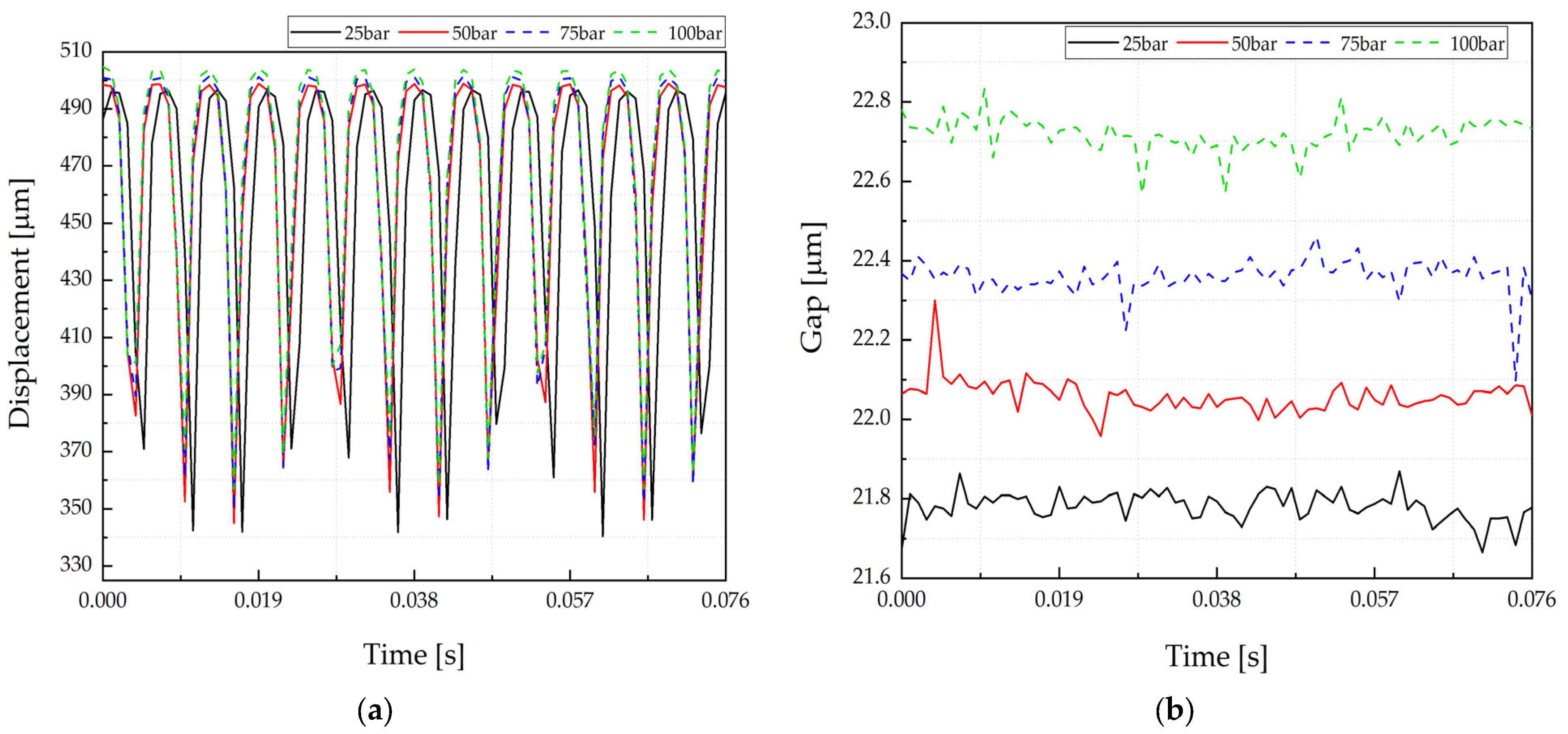
The TDwithFX model is a dynamic model based on experimental correlations. The key idea is to take the experimentally derived dynamic clearance correlations from
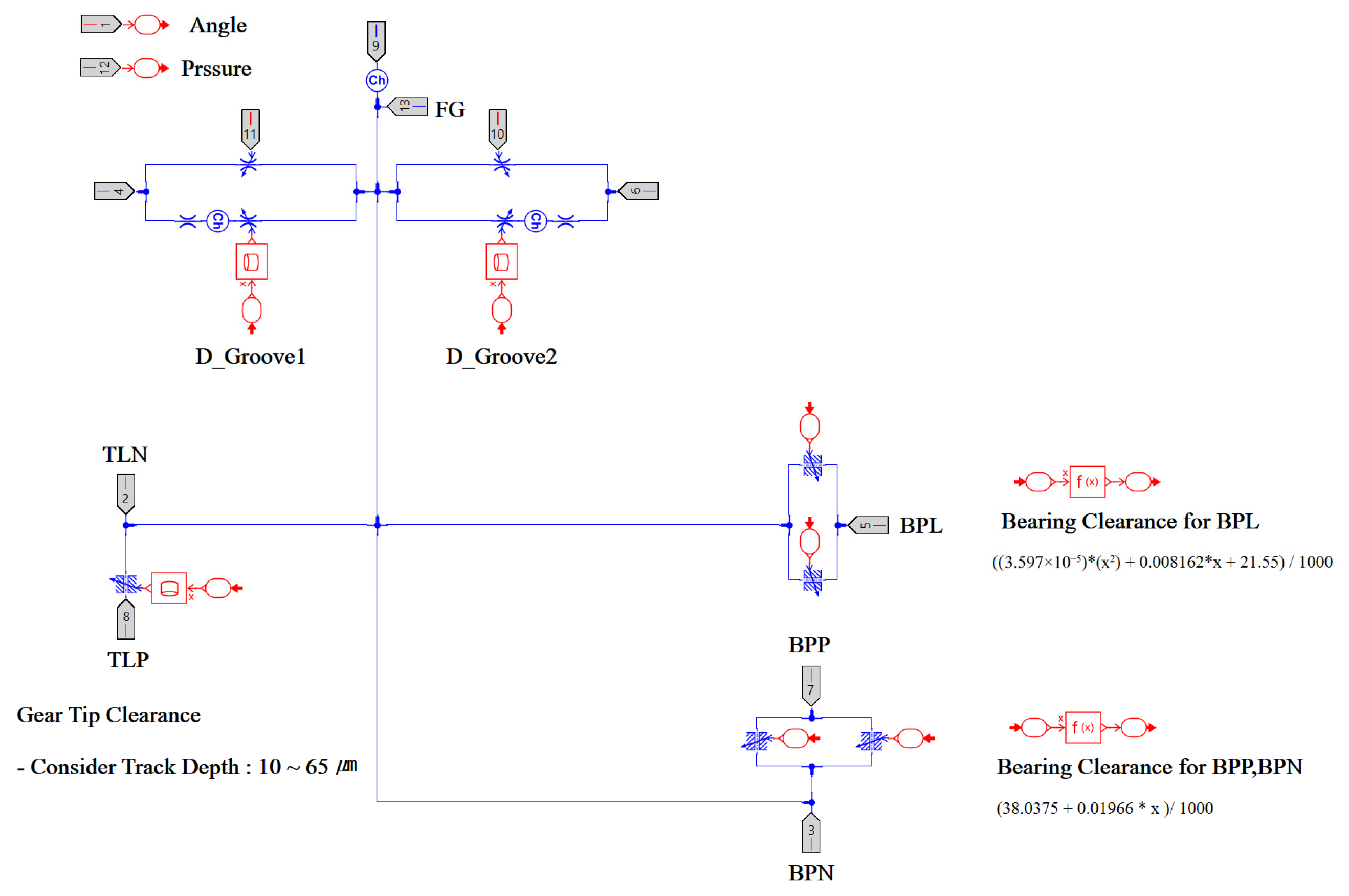
Section 4 and embed them directly into the Amesim supercomponent shown in
Figure 6. In other words, in the leakage model of
Section 2.3, the clearance
used in the laminar parallel-plate relation in Equation (8) is no longer treated as a constant. Instead, the radial and axial dynamic clearances are calculated in real time from the current pressure and rotational speed using the correlation equations obtained from the gap-sensor experiments. The leakage flow is then updated at each time step according to these instantaneous dynamic clearances. In this way, the TDwithFX model reflects both the static wear distribution and the additional dynamic variation in the clearances under actual operating conditions.
Table 2 provides a concise comparison of the leakage gap models considered in this study.
Figure 6 illustrates the structure of the correlation-based leakage supercomponent in Amesim. The final simulation model constructed in Amesim is shown in
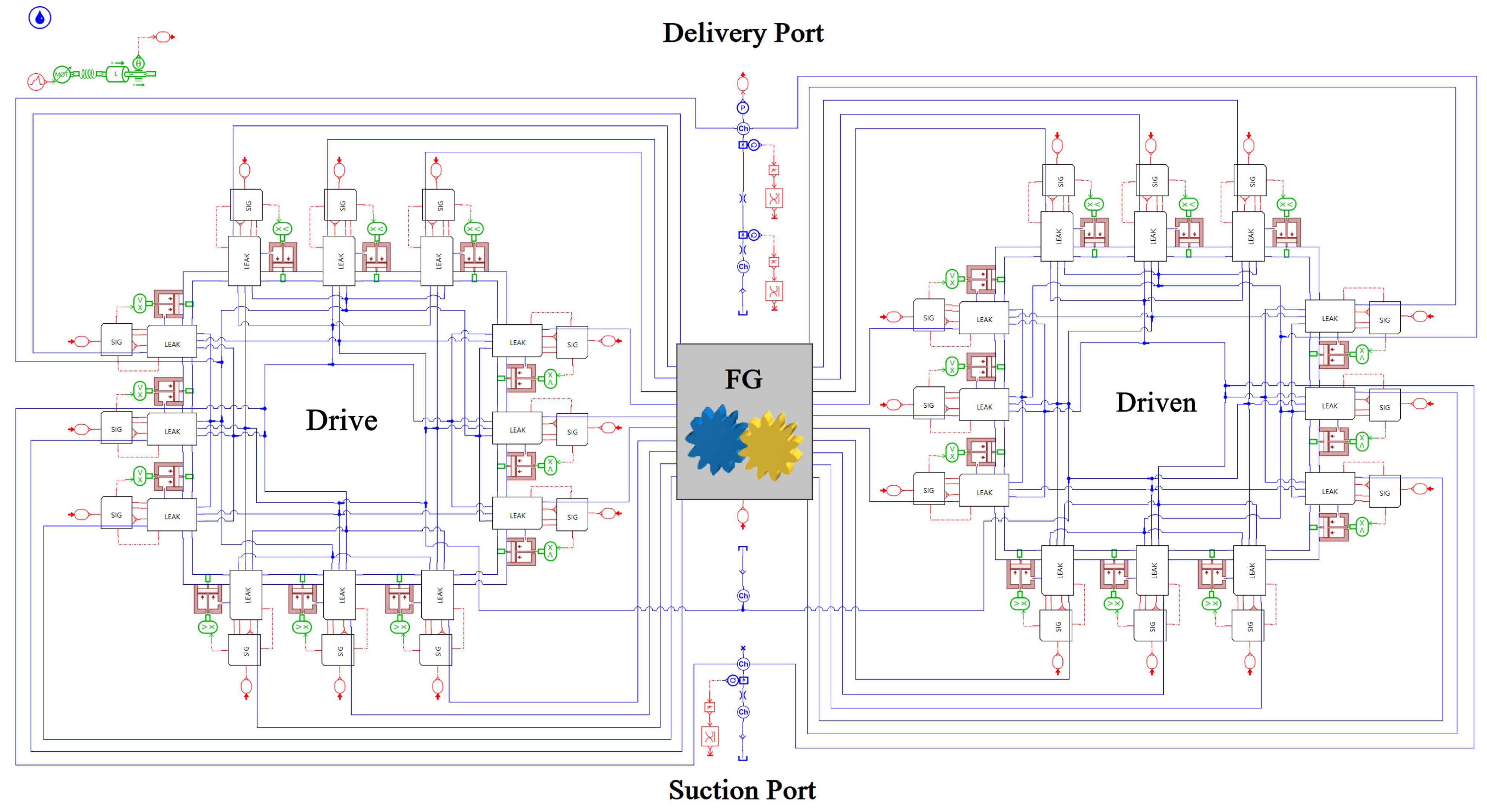
Figure 7. The model consists of the external gear pump module based on the TSV representation, the correlation-based leakage supercomponent that calculates the dynamic clearances and leakage flows, the driving motor and external hydraulic circuit, and the sensors that measure pressure and flow. The model calculates the pressure ripple, average volumetric efficiency, and instantaneous flow waveforms under the specified operating conditions. The validity of the simulation model is assessed by comparing these simulation results with the experimental measurements presented in
Section 5.
5. Results and Discussion
5.1. Simulation Results
In this section, the predictive accuracy of the three simulation models NTD, TD, and TDwithFX defined in
Section 3 is evaluated using the experimental data obtained in
Section 4. The primary evaluation metric is the volumetric efficiency, and the simulations were carried out at rotational speeds between 600 and 800 rev/min and discharge pressures between 25 and 250 bar.
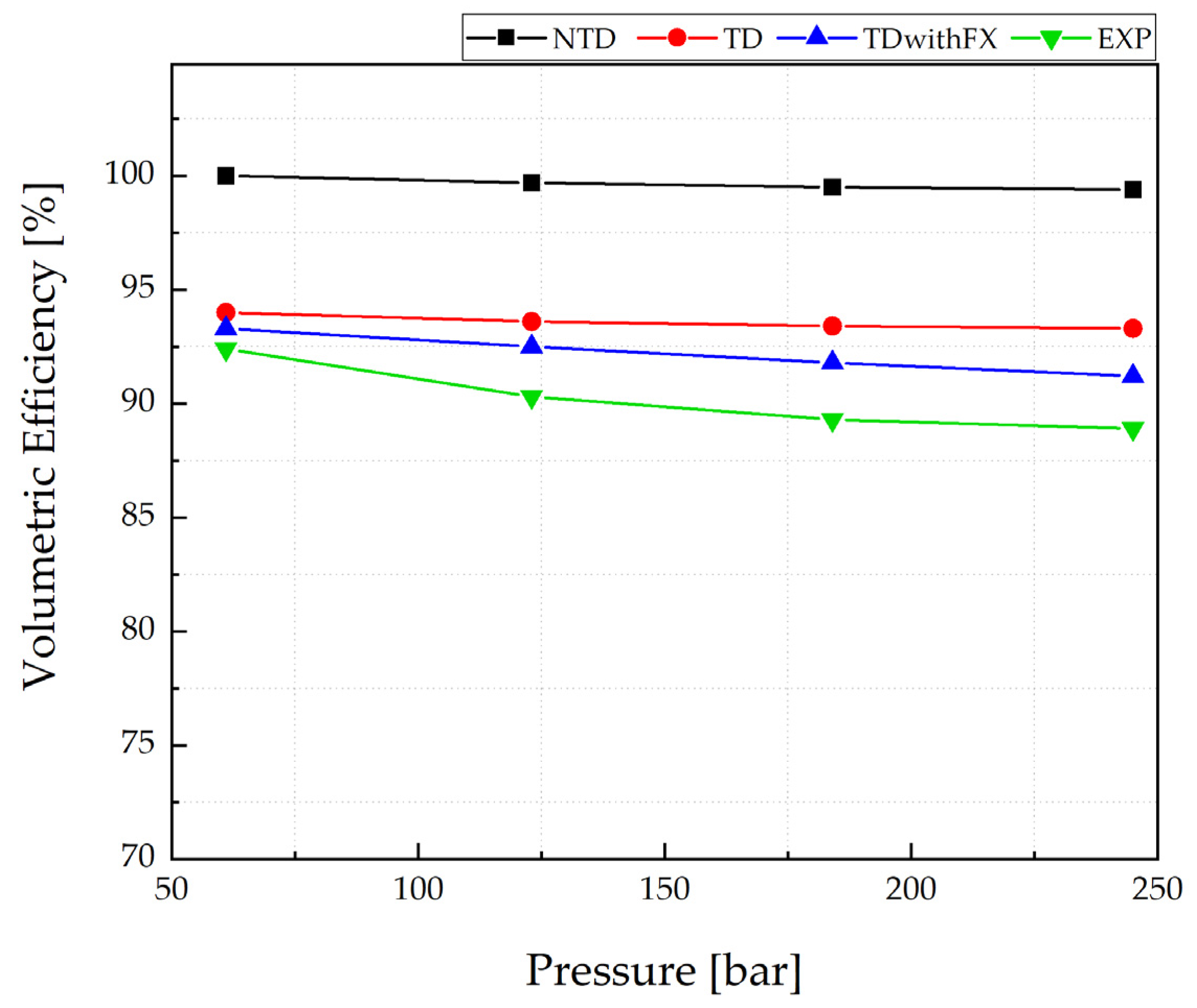
Figure 11 shows the volumetric efficiency as a function of discharge pressure at 800 rev/min for the three simulation models NTD, TD, and TDwithFX and for the experiment EXP. All three models show a decreasing trend of volumetric efficiency with increasing pressure. However, the NTD curve starts from a higher efficiency level and remains clearly separated from the experimental data over the entire pressure range. In contrast, the TD and TDwithFX models are relatively close to the experimental values in the low-pressure region, and the TDwithFX curve in particular maintains a slope that is very similar to that of the experiment up to 245 bar.
In the experiment, the volumetric efficiency also decreases as the pressure increases and drops to slightly below 90% at 245 bar, indicating that efficiency deterioration in the high-pressure region is relatively strong. The TDwithFX model reproduces this faster decrease in volumetric efficiency with increasing pressure more clearly than the NTD and TD models. While the NTD and TD models show only a gentle decline in volumetric efficiency, the TDwithFX curve exhibits a similar downward slope to the experimental data over the entire pressure range. This suggests that incorporating the pressure-dependent dynamic variations in the radial and axial clearances into the model is essential to capture the characteristic efficiency drop observed in the high-pressure region.
Despite this improvement, noticeable discrepancies between the simulation results and the experimental data remain, particularly in the high-pressure region. These differences are mainly attributed to the inherent limitations of the one-dimensional simulation approach adopted in this study. While the proposed model can capture the average leakage behavior and pressure-dependent trends in volumetric efficiency based on measured internal clearances, it cannot fully represent complex three-dimensional flow phenomena. Such phenomena include local vortex formation, flow separation, and self-priming effects associated with three-dimensional geometry.
5.2. Experimental Validation
In this subsection, the three simulation models NTD, TD, and TDwithFX introduced in
Section 3 are quantitatively validated against the experimental results. The validation is based on the volumetric efficiency measured at 800 rev/min at four discharge pressures of 61, 123, 184, and 245 bar, and the prediction error is evaluated using the difference between the experimental and simulated volumetric efficiencies. The errors for each model and pressure condition are summarized in
Table 5. For each operating condition, the pump was allowed to reach a steady-state condition, and approximately 3 s of stabilized measurement data were extracted and analyzed. The values reported in
Table 5 therefore represent steady-state operating behavior rather than instantaneous measurements.
The NTD model, which uses nominal fixed clearances, shows the largest discrepancies from the experimental data. Over the entire pressure range, the NTD model consistently overestimates the volumetric efficiency, and the magnitude of this overestimation increases as the pressure rises. As a result, the NTD model exhibits an average prediction error of 9.43%, indicating that a fixed-clearance assumption based solely on design tolerances is insufficient to reproduce the actual leakage behavior of the pump under realistic operating conditions.
The TD model, which incorporates the static wear distribution after running-in, reduces the prediction error compared with the NTD model. By reflecting the measured track depth on the housing inner surface and the pressure-dependent reduction in the axial clearance, the TD model captures part of the efficiency degradation due to wear and deformation. Consequently, its average prediction error is reduced to 3.35%. Nevertheless, noticeable errors remain, particularly at higher pressures, because the clearances are still treated as static values for each operating condition and their dynamic variation with pressure and rotational speed is not fully represented.
The TDwithFX model proposed in this study achieves the highest agreement with the experimental results. By directly embedding the experimentally derived dynamic clearance correlation equations into the leakage model, the radial and axial clearances are updated in real time according to the instantaneous pressure and rotational speed. This approach enables the model to reproduce the pressure-dependent increase in internal leakage more accurately. As a result, the TDwithFX model shows an average prediction error of 1.98%, which is the smallest among the three models, and maintains low errors at all four pressure levels. These results demonstrate that the dynamic clearance model based on gap-sensor measurements significantly improves the predictive accuracy of volumetric efficiency compared with models that consider only nominal clearances or static wear. Therefore, the TDwithFX model can be regarded as a reliable analysis tool for evaluating the energy efficiency of external gear pumps and for supporting the design of their leakage paths.
5.3. Flow and Pressure Pulsation Analysis
As discussed in
Section 3, the proposed simulation model can predict not only the mean volumetric efficiency but also the flow- and pressure-ripple characteristics.
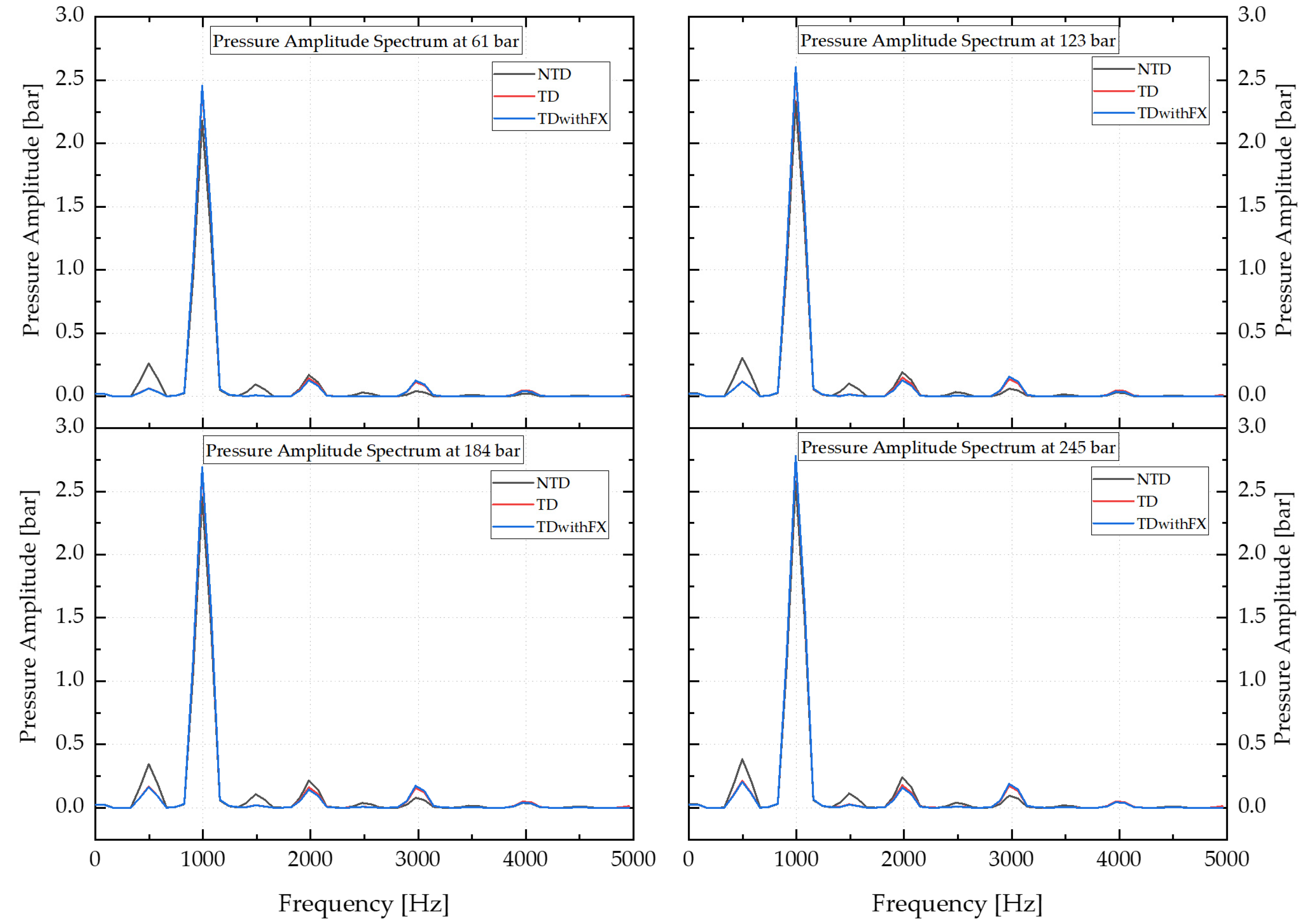
Figure 12 and
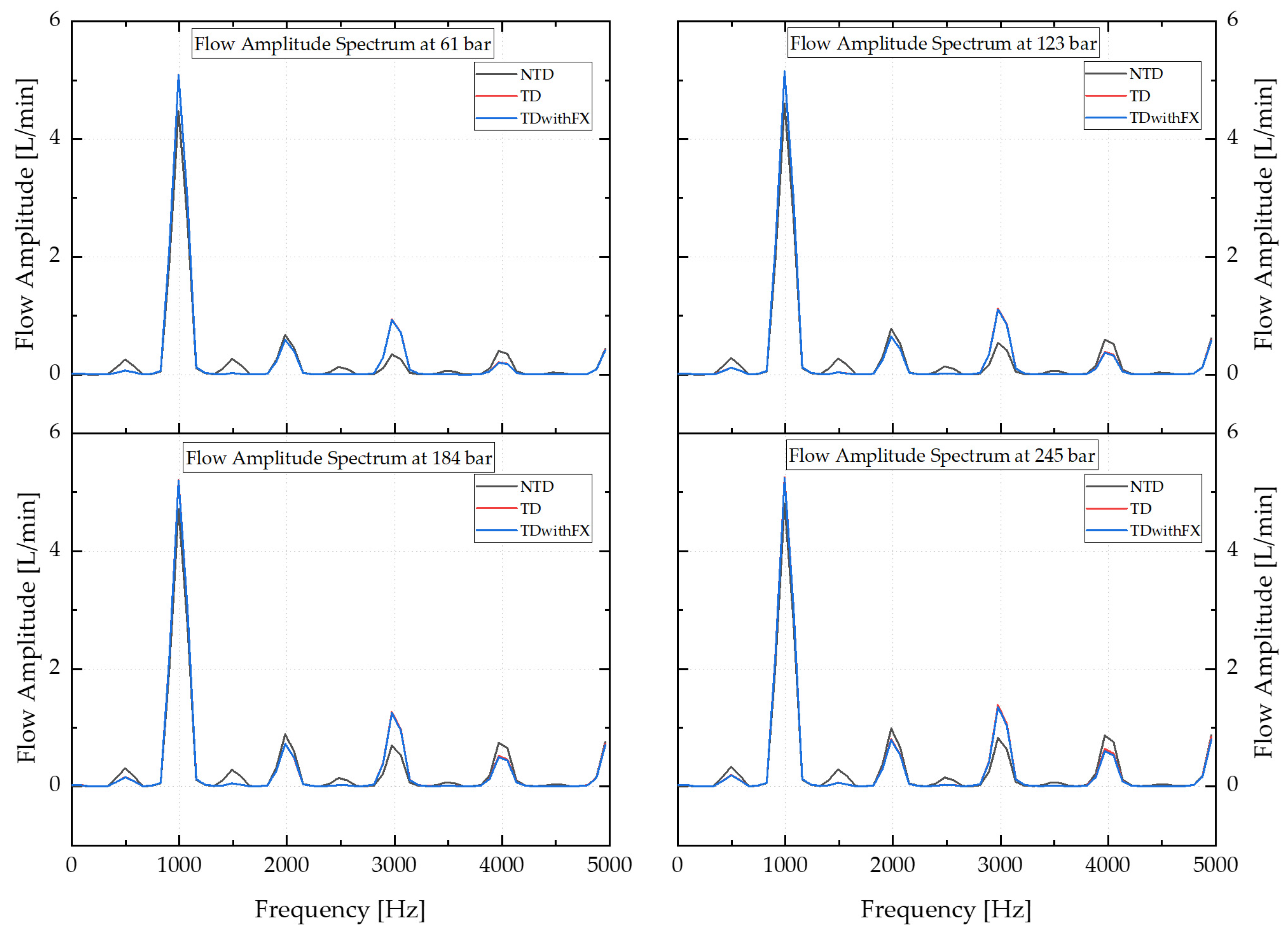
Figure 13 present the frequency spectra of the outlet flow rate and outlet pressure, respectively, at a rotational speed of 2500 rev/min and discharge pressures of 61, 123, 184, and 245 bar. The external gear pump used in this study has z = 12 teeth per gear; therefore, the gear-meshing frequency is
which yields
Hz at
n = 2500 rev/min. In external gear pumps, the dominant delivery ripple is often observed at
because both gears contribute to periodic discharge events.
From the results shown in
Figure 12 and
Figure 13, the most dominant peak appears at approximately 1000 Hz, which corresponds to the fundamental delivery-ripple frequency
for
z = 12 at
n = 2500 rev/min. This peak reflects a kinematic pulsation associated with the periodic opening/closing of displacement chambers and porting events. A secondary component around 500 Hz corresponds to the gear-meshing frequency
. At
, all three models (NTD, TD, and TDwithFX) predict similar amplitude levels. However, distinct differences between the models are observed in the harmonic components. In the pressure spectra shown in
Figure 13, the NTD model tends to predict higher amplitudes than the TD and TDwithFX models at frequencies around 500, 1500, and 2000 Hz. A similar tendency is observed in the flow spectra of
Figure 12, particularly near 500 and 2000 Hz. In these frequency ranges, the TD and TDwithFX models, which account for track-depth and dynamic clearance variations, reproduce additional damping of secondary pulsation components, suggesting that leakage paths act as a dissipative element for high-frequency pressure and flow fluctuations.
These results imply that the TDwithFX model may be closer to the actual physical behavior of the pump not only in terms of the mean volumetric efficiency but also with respect to its dynamic characteristics. Nevertheless, only the volumetric efficiency has been experimentally validated in the present study, and no direct measurements of the flow and pressure pulsations are available for comparison at this stage. A more rigorous validation of the pulsation predictions will require dedicated experiments to acquire high-resolution time-series data of the outlet flow rate and pressure, which is planned as future work.
5.4. Discussion on Leakage-Path Design
The results presented in this chapter provide three important insights into the design of leakage paths in external gear pumps.
First, it is necessary to consider variations in the dynamic clearance as a key factor governing internal leakage. The validation results in
Section 5.2 showed that the prediction accuracy of volumetric efficiency is significantly improved when the experimentally derived dynamic radial and axial clearances are incorporated into the leakage model. The experimental correlations revealed that the radial clearance tends to decrease as the discharge pressure and rotational speed increase, whereas the axial clearance increases nonlinearly with pressure. This behavior can be interpreted as the combined effect of hydrodynamic forces that push the gears toward the housing and the elastic deformation of the mechanical structure under high-pressure loading. Therefore, when designing the clearances between the gears, housing, and bearing blocks, it is important to not only specify nominal tolerances but also account for the pressure-dependent dynamic behavior of these clearances, because it directly affects the leakage flow and volumetric efficiency.
Second, the study confirms the effectiveness of using a high-fidelity simulation model to predict design variables related to leakage paths. One of the main engineering contributions of this work is the construction of a TSV-based lumped parameter model that incorporates experimentally derived dynamic clearance correlations. This model enables designers to evaluate in advance how changes in geometric parameters, such as radial and axial clearances, bearing geometry, and relief groove configuration, influence volumetric efficiency and pulsation characteristics over a wide range of operating conditions. In other words, the proposed model supports a shift from a prototype-based, empirically driven design process to a prediction-based design process and demonstrates its potential as a reliable analysis tool for optimizing leakage paths in external gear pumps.
Third, the developed model can serve as a basis for the design of bidirectional external gear pumps. In bidirectional pumps, as mentioned in
Section 1, the configuration of the relief grooves and unloading grooves must be carefully designed so that the pump can operate stably when the flow direction is reversed. The dynamic clearance-based leakage model proposed in this study can be extended to analyze how different groove geometries and clearance distributions affect pressure peaks and pulsations during flow reversal. By using the model to quantitatively evaluate the influence of design changes on volumetric efficiency and transient pressure peaks, it is expected that the design of relief grooves and leakage paths for bidirectional external gear pumps can be optimized to reduce pressure spikes and improve overall energy efficiency.
6. Conclusions
This study developed and experimentally validated the TDwithFX model, a dynamic clearance-based lumped parameter model for predicting the volumetric efficiency and energy loss of external gear pumps. The model incorporates pressure- and speed-dependent variations in radial and axial clearances caused by gear eccentricity and wear during operation, and it was implemented in an Amesim environment. Compared with the conventional static-clearance model, the proposed model reduced the average prediction error of volumetric efficiency from 9.43% to 1.98%, demonstrating that dynamic clearance variations must be considered for reliable performance prediction under high-pressure operating conditions. The main conclusions of this study are summarized as follows.
- (1)
Experimental measurement and quantification of real-time dynamic clearances
Microscopic radial and axial clearances inside the pump were successfully measured in real time using eddy-current gap sensors under various discharge pressures and rotational speeds. The measured data were processed using regression analysis to derive empirical correlation equations representing the pressure- and speed-dependent behavior of the internal clearances, which can be directly applied in system-level simulation models.
- (2)
Validation of the dynamic clearance-based TDwithFX model
The experimentally derived clearance correlations were integrated into a lumped parameter framework to construct the TDwithFX model and make comparisons with the NTD and TD models. Among the three models, TDwithFX showed the closest agreement with the experimental volumetric efficiency over the entire pressure range, particularly under high-pressure conditions, with prediction errors reduced to approximately 2.3–2.5%.
- (3)
Design analysis framework and future extensions
The results confirm that dynamic clearance behavior has a significant impact on leakage growth and energy efficiency in external gear pumps. The TDwithFX model provides a practical analysis tool for the design of high-efficiency pumps by enabling quantitative evaluation of leakage behavior without extensive prototype testing. Future work will focus on expanding the experimental database to include additional operating conditions, temperature effects, and dynamic measurements of outlet flow and pressure in order to further improve the prediction of efficiency degradation and pulsation characteristics.