


Abstract
To address the issue of voice leakage during the rapid deployment of meeting rooms, a piezoelectric flexible interference structure (PFIS) for active sound masking is developed in this paper. The PFIS uses rubber as the base, allowing it to bend or fold, offering good flexibility. The PFIS generates vibration through direct contact with the target object, without the need for adhesives or installation, fulfilling the need for rapid deployment. The experiment studied the driving of PFIS under three types of interference signals, analyzing the interference performance of PFIS by combining the vibration response of the surface of the table. The results show that the vibration response generated by PFIS on the surface of the table is significantly greater than when only a human voice is present. When a 3.5 kg weight is added to the surface of PFIS, its vibration performance increases by 5.6 times. Furthermore, increasing the voltage enhances the vibration interference effect of the PFIS across the entire frequency range; after adding weight, the vibration interference performance of the PFIS is significantly improved for frequencies above 2500 Hz. It has been verified that PFIS has strong vibration interference performance, effectively masking the vibrations of objects under human voice, providing a new technical solution for information security protection in sensitive areas.
1. Introduction
As a primary medium for the existence, transmission, and expression of information, sound serves as an important tool for social interaction and the exchange of ideas in various scenarios. Voice data contains a significant amount of sensitive information. The development of effective security measures for protecting this sensitive sound information, particularly in critical scenarios involving national security and commercial confidentiality, constitutes a persistent challenge [1,2]. Preventing voice data leakage remains a critical and unsolved problem.
Acoustic eavesdropping is a surveillance technique that acquires sound by directly capturing it or by obtaining vibration information [3]. According to the differences in the types of devices used, acoustic eavesdropping technology that captures the vibration information of objects can be classified into the following three categories: acoustic eavesdropping based on accelerometers or piezoelectric sensors, acoustic eavesdropping based on optical sensors, and acoustic eavesdropping based on radio frequency [4]. The first type of technology uses sensors to capture the slight vibrations of objects caused by sound, converting mechanical vibration signals into analyzable electrical signals to restore voice information. It has the characteristics of being non-contact and capable of remote monitoring [5]. The second type of technology uses optical devices to capture the optical changes caused by the vibrations on the surface of objects induced by sound. The results obtained using this method are more accurate and suitable for long-distance acoustic eavesdropping [6]. The third type of technology uses the reflection characteristics of radio waves to obtain the vibration information of objects, offering advantages such as strong penetration and long detection range [7]. In conclusion, the fundamental principle of these three types of technologies is to capture the minute vibrations generated by the target object under the influence of the sound field, and then restore the captured vibration signals into sound after amplification and filtering.
For example, a laser eavesdropper is a typical application of acoustic eavesdropping technology. Its working principle is as follows: a laser beam is emitted to the target object (such as window glass or the surface of the table). Vibrations cause changes in the phase or intensity of the reflected light. The receiver analyzes these changes in the reflected light to obtain the vibration signals of the target object under the influence of sound waves. The sound is then restored through decoding, thus achieving the purpose of eavesdropping [8]. Xu et al. developed a laser eavesdropping technology that can listen remotely. By installing a miniature signal amplifier inside the laser cavity, it is possible to capture the faint vibration signals of target objects from over 200 m away, thereby enabling the restoration and recognition of sound [9]. In addition, the effective distance for recognizing and restoring speech information can be extended to the kilometer range, making it an advanced eavesdropping method with strong concealment, ease of operation, and difficulty in being detected [10,11]. Therefore, preventing the vibration generated by the target object under the influence of the sound field from being detected has become an urgent problem that needs to be solved.
With the widespread application and continuous development of laser eavesdropping technology, corresponding interference methods have also gradually developed. Depending on operational scenarios and implementation mechanisms, interference technologies can be divided into two main categories: active and passive. Passive interference technology is mainly implemented through the following methods: increasing the thickness of objects such as walls and glass, changing the material properties of objects, and optimizing the structure of objects. For example, using materials with absorption and scattering properties to cover an object can effectively reduce the reflected light signal received by the laser eavesdropping equipment [12]. Zeng et al. studied the effects of glass thickness, size, and number of layers on glass vibration. The results showed that when the size and thickness are the same, hollow double-layer glass can effectively reduce glass vibration compared to single-layer glass [13]. However, the above methods require modifications to the structure of the building or object, or require time and resources to implement, making them unsuitable for scenarios that require rapid deployment or portable facilities. Active interference technology mainly includes sound masking technology. Sound masking technology is based on the auditory masking effect of the human ear, which refers to the phenomenon where the presence of one sound raises the auditory threshold of another sound, making it harder to hear [14,15]. By applying air sound masking or vibration sound masking to structures like doors, windows, and pipes, thereby improving the confidentiality performance of the facilities and spaces [16]. For example, Kim et al. studied a sound masking actuator. By analyzing the impact of the vibration interference generated by the exciter on the clarity of the restored sound, the results showed that the vibration interference produced by this exciter can effectively prevent the restoration of sound [17]. By installing sound masking speakers on the ceiling or beneath the floor, noise with a masking effect can be generated within a certain area. This method effectively interferes with the acquisition of the target object’s vibration signals, thereby achieving the effect of protecting privacy [18]. Active interference technology is a method that can take effect quickly, but directly using speakers for sound masking can affect indoor comfort. In addition, existing technologies that utilize vibration and anti-acoustic methods for eavesdropping are difficult to meet the requirements for rapid deployment. Therefore, sound masking structures with the characteristics of portability and the ability to achieve rapid deployment have become the key focus of current research.
Among the various methods using vibration interference for anti-acoustic eavesdropping, conventional exciters often struggle to achieve high-frequency excitation, and the size of electromagnetic actuators is usually too large [19]. However, as a type of smart material, piezoelectric materials have been widely used in fields such as precision driving and vibration control due to their lightweight, wide frequency response, and ease of integration [20,21,22]. In recent years, researchers have begun to explore the integration of piezoelectric materials into flexible substrates to construct lightweight, deformable, and low-power active vibration control devices, providing a new technological pathway for anti-acoustic eavesdropping [23,24]. For example, Wang et al. designed a PVDF piezoelectric film that is lightweight and has good mechanical flexibility, addressing the fragility of piezoelectric ceramic sheets, and it has been successfully applied in the field of hydrophones [25]. However, such piezoelectric film actuators have low output force and perform poorly when used for active vibration interference. Additionally, many studies have designed acoustic eavesdropping systems that respond to sound pressure changes using the piezoelectric effect of piezoelectric materials, and this system can effectively recover indoor human voices [26,27]. However, there are a few cases of using piezoelectric materials for anti-vibration acoustic eavesdropping. Therefore, the major contribution of this paper lies in the design of a piezoelectric flexible interference structure (PFIS), providing a novel and practical technical solution for active interference technology against anti-vibration acoustic eavesdropping. Compared to the traditional approach of directly adhering piezoelectric elements to the structure, this paper enhances the contact pressure of the PFIS by adding weight to achieve effective vibration transmission while also enabling rapid deployment and recovery. In addition, this paper experimentally studied the vibration interference capability of PFIS on a wooden board under three different sound signals compared to a human voice, and analyzed the recognizability of the speech content obtained from the vibration information of the wooden board.
2. Design and Principle of the PFIS
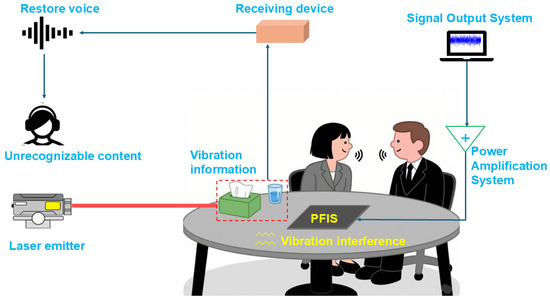
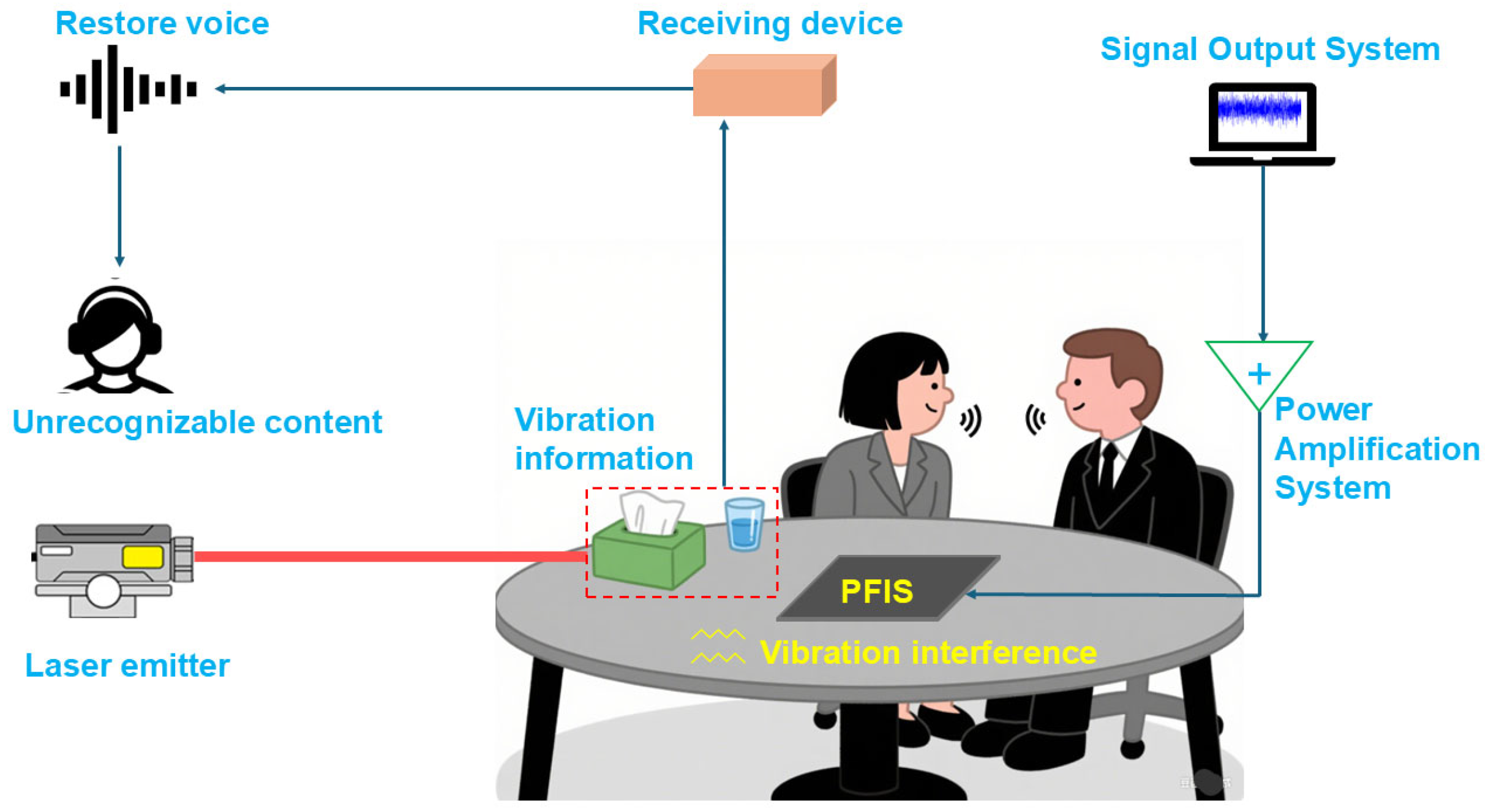
Typically, in some rapidly deployed temporary meeting venues, information security measures are often ignored. The PFIS in this paper features excellent flexibility and lightweight characteristics, providing information security protection measures in rapidly deployed facilities. The PFIS consists of a signal output system, a power amplification system, and a piezoelectric actuator structure. The working principle of using PFIS for active vibration interference to achieve anti-laser eavesdropping is shown in Figure 1. Firstly, the signal output system generates interference signals with different sounds. Then, the interference signals are amplified by the power amplification system and output as the corresponding driving voltage. Next, the piezoelectric actuator structure generates vibration interference on target objects such as the tabletop. Finally, the vibration generated by PFIS masks the vibrations caused by a human voice on the target object, making the voice content restored from the vibrations unrecognizable.
Figure 1.
The working principle of using PFIS for active vibration interference to achieve anti-laser eavesdropping.
The active vibration generated by the PFIS comes from its four piezoelectric ceramic plates. When a driving voltage is applied, the ceramic plates produce strain in the thickness direction due to the inverse piezoelectric effect, thereby exciting vibrations. The main excitation mode of the piezoelectric ceramic plates is the thickness vibration mode. To describe its electromechanical response process, we use a linear piezoelectric constitutive equation for simplified analysis. For vibrations in the thickness direction, the constitutive relationship can be expressed as
where is the strain in the thickness direction, is the stress in the thickness direction, is the electric field strength in the thickness direction, and is the electric displacement. is the short-circuit elastic compliance constant, is the piezoelectric strain constant, and is the free dielectric constant.
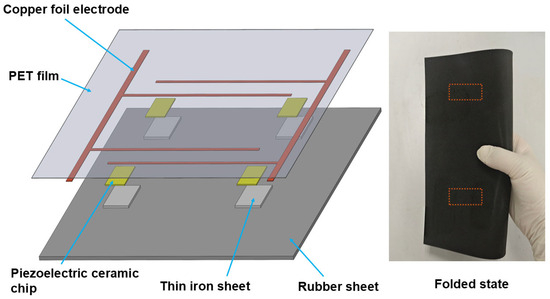
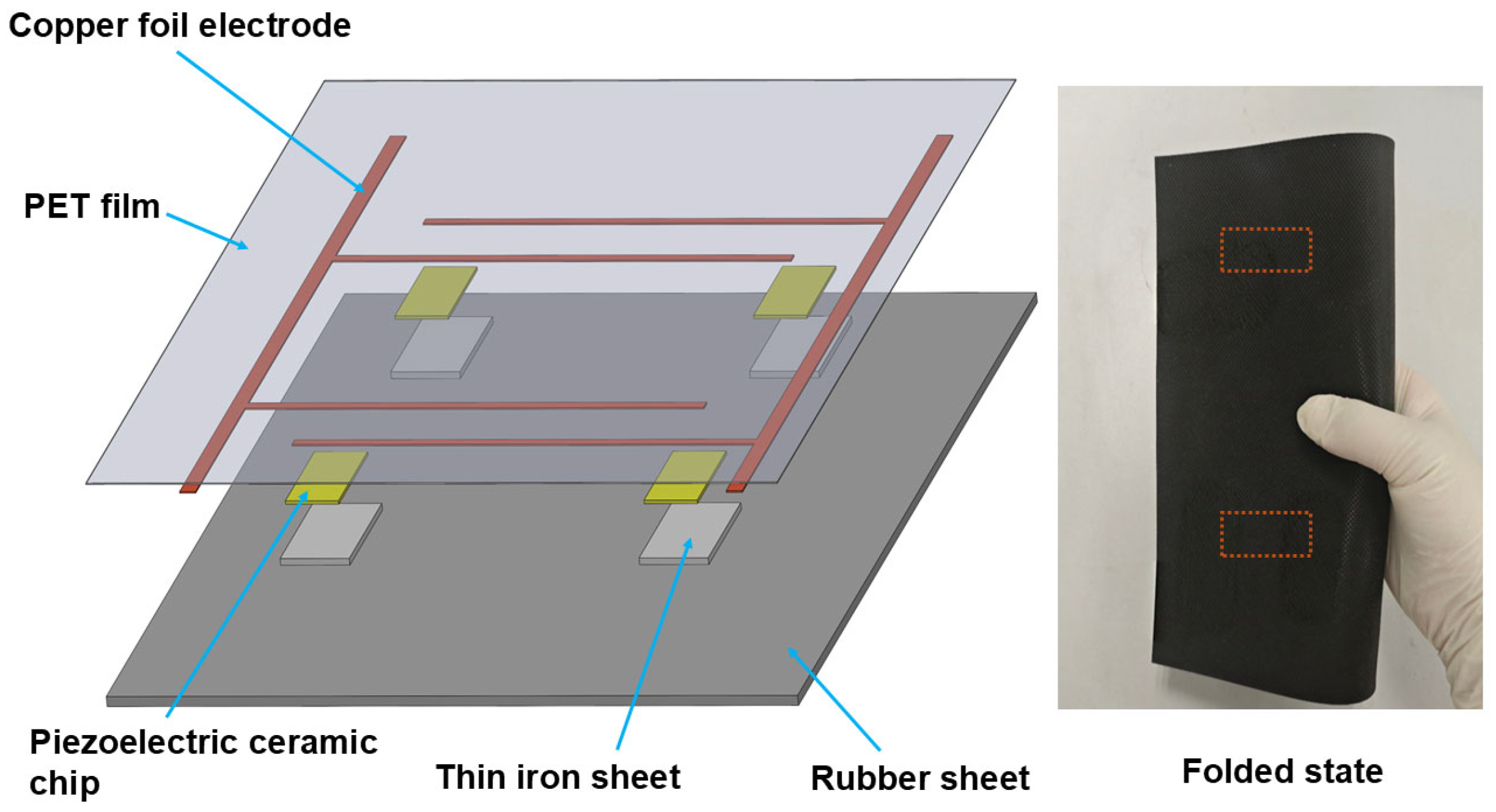
The composition of the piezoelectric actuator structure designed in this paper and its schematic in the folded state are shown in Figure 2. It is composed of a rectangular rubber plate, a thin iron sheet, a piezoelectric ceramic sheet, a copper foil electrode, and a PET film, arranged from bottom to top. Table 1 shows the geometric parameters of each component of the PFIS. PFIS has a rubber at the bottom, which provides certain flexibility. It can be folded or bent during transportation, serving a portable function. The thin iron sheet compensates for the deficiencies of the piezoelectric ceramic in terms of strength and brittleness, significantly enhancing its resistance to damage when folded or bent. The PET film serves as the encapsulation layer, covering the surface of the piezoelectric actuator structure, further enhancing the overall structure’s applicability and durability. The PFIS is directly placed on the floor or in the pipeline during use, without being adhered to the structure. This method facilitates quick deployment and retrieval, increasing the possibility of reuse. Additionally, a layer of PET protective film is added over the piezoelectric chip and copper foil electrode to protect the key components inside, thereby preventing damage to these components during dragging and movement, which enhances the durability of the structure. After multiple uses and folding, the PFIS can also maintain its good working performance by replacing the rubber base and the PET protective film. The type of piezoelectric ceramic used in the PFIS is PZT-5, with a free dielectric constant and a piezoelectric strain constant . Its supplier is Harbin Core Tomorrow Technology Co., Ltd. in Harbin, China, and the overall capacitance of the PFIS made from this piezoelectric ceramic is 264 nF.
Figure 2.
The composition of the piezoelectric actuator structure and its folded state.
Table 1.
The geometric parameters of each component of the PFIS.
3. Vibration Response Performance of PFIS
3.1. Experimental Setup
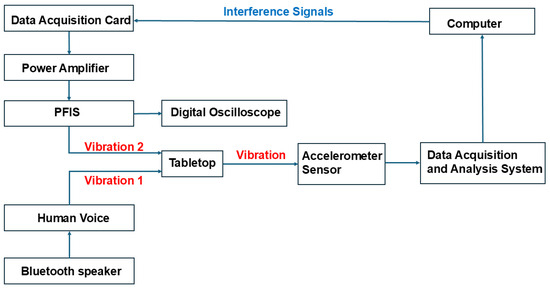
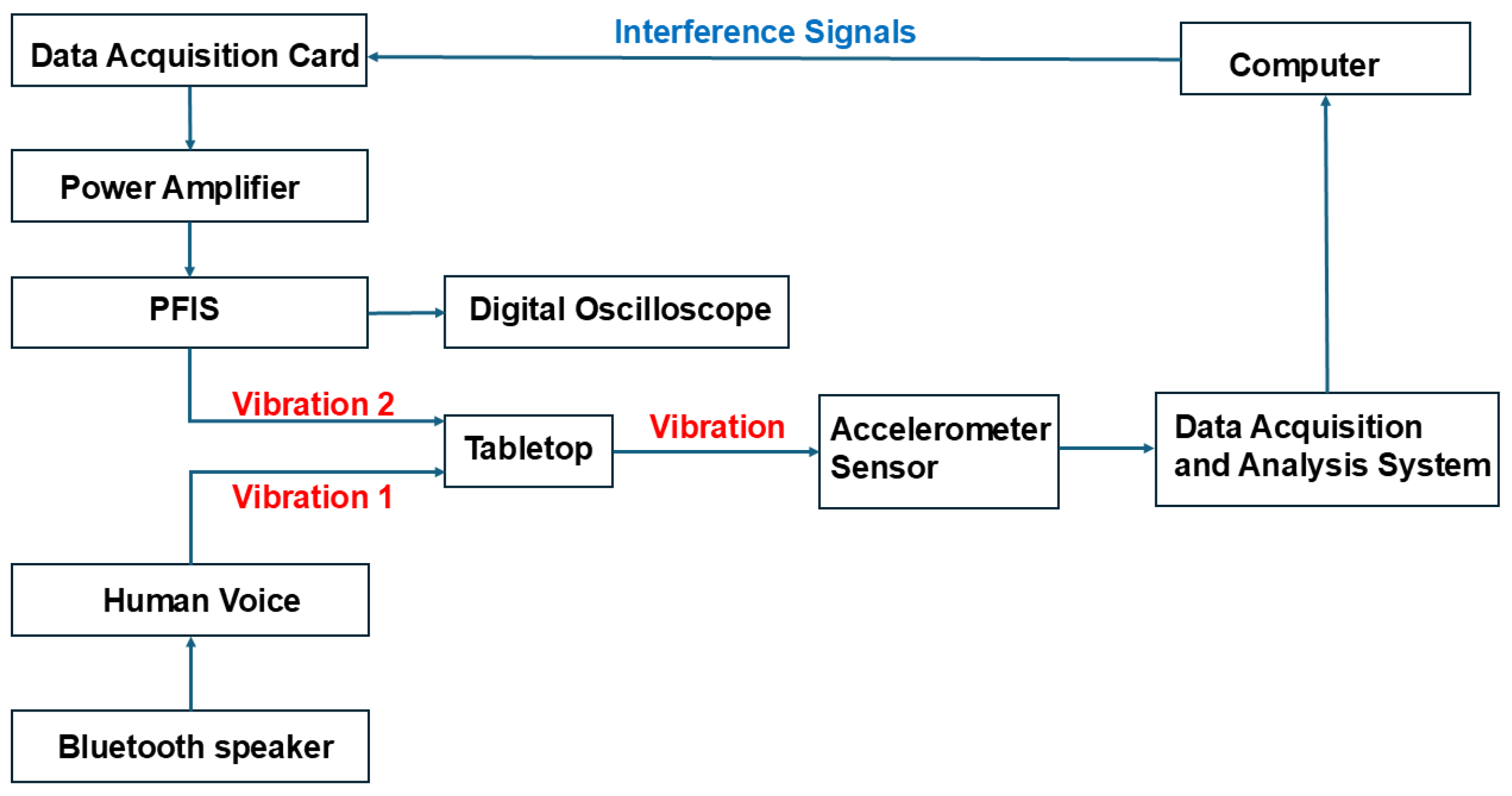
In this section, the vibration response performance of PFIS was studied through experiments. The experimental platform mainly consists of the interference structure, interference target, and data acquisition system. First, different sound signals are input into the (NI USB-6434) data acquisition card, which then outputs different interference signals. Then, the interference signal is amplified by the (HVP-300D) power amplifier and outputs the corresponding driving voltage to the piezoelectric actuator structure, causing it to generate varying degrees of vibration interference on the target object under different interference signals. It is worth noting that the PFIS is in contact with the tabletop, and the driver mainly operates in the thickness mode for vibration interference. There is a layer of PET film between the piezoelectric element and the tabletop, but its thickness is only 0.05 mm, which has a minimal impact on the transmission of driving force in the vertical direction. During the experiment, the peak-to-peak value of the driving voltage is measured using the TBS2000B digital oscilloscope and its manufacturer is Tektronix, Inc. in Beaverton, OR, USA, with the surface of the table acting as the target object for vibration interference. The vibration response generated by the surface of the table is measured using the (PCB-352A56) accelerometer sensor, and its manufacturer is PCB Piezotronics, Inc. in New York, NY, USA. The (DH5902N) data acquisition and analysis system, with a sampling frequency set to 20 KHz.
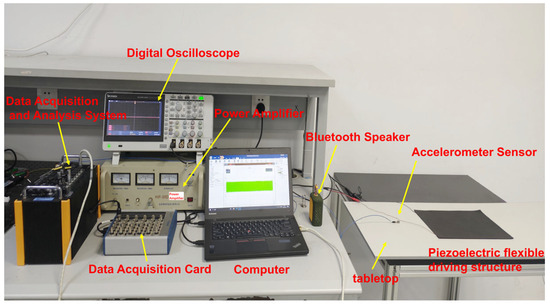
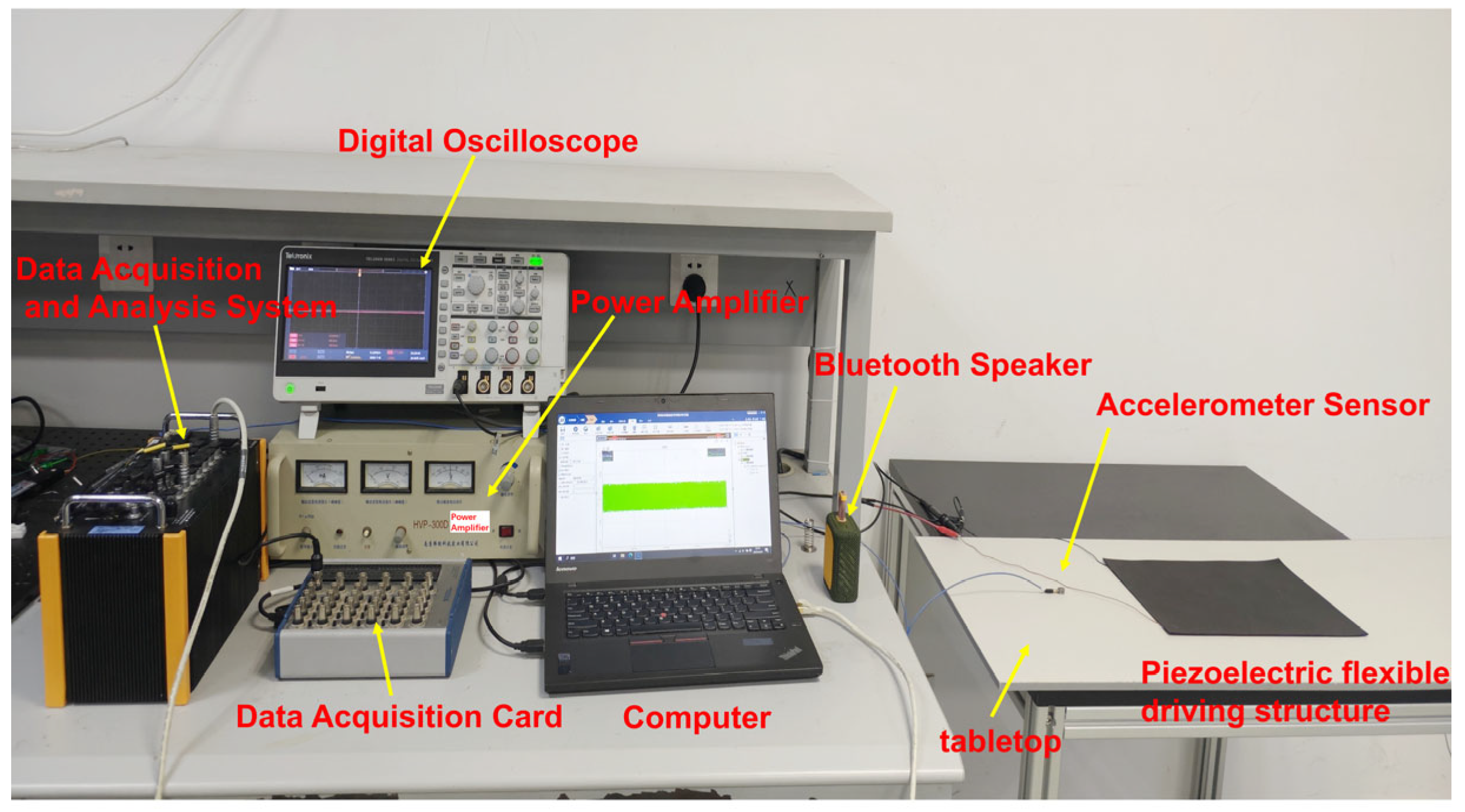
During the entire experiment, the acceleration sensor is placed 10 cm away from the piezoelectric actuator structure. The Bluetooth speaker is positioned 30 cm away from the accelerometer. And the Bluetooth speaker plays a 10 s audio clip of a female speech while operating, with the human voice audio at approximately 65 dB, which is similar to the volume of a normal conversation. It is important to note that the Bluetooth speaker does not make contact with the surface of the table used for testing vibration response, to avoid interference from the speaker’s own vibrations affecting the vibration measurements on the surface of the table. The schematic diagram of the vibration response experimental platform and the layout of the accelerometer and Bluetooth speaker are shown in Figure 3. The schematic diagram of the PFIS interference experiment principle is shown in Figure 4.
Figure 3.
Schematic layout of the experimental platform.
Figure 4.
Schematic diagram of the PFIS interference experiment principle.
3.2. Vibration Response Analysis Under Non-Interference Conditions
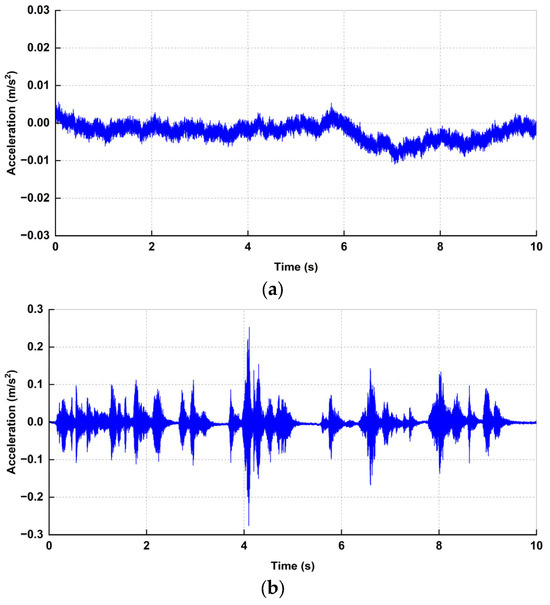
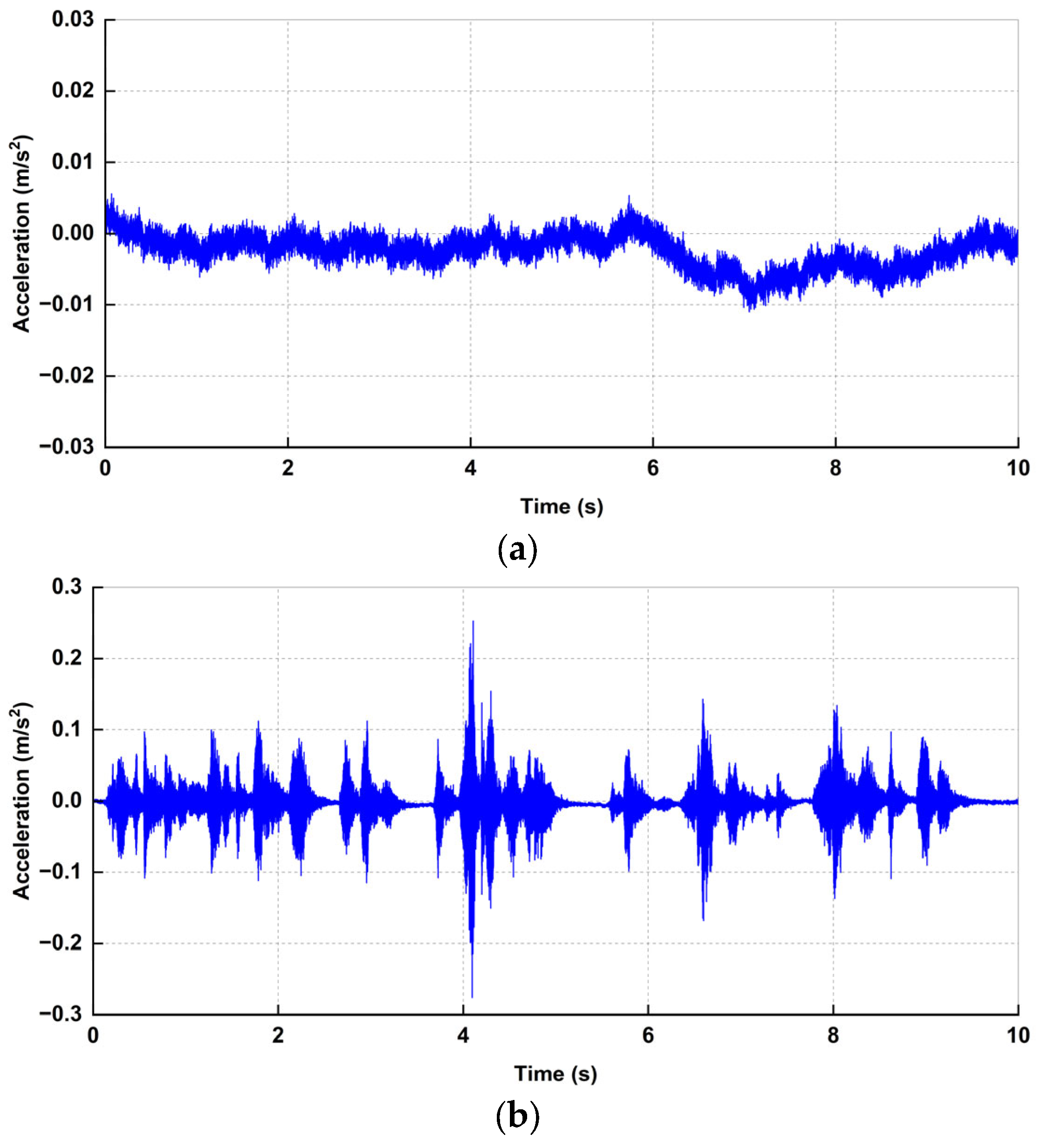
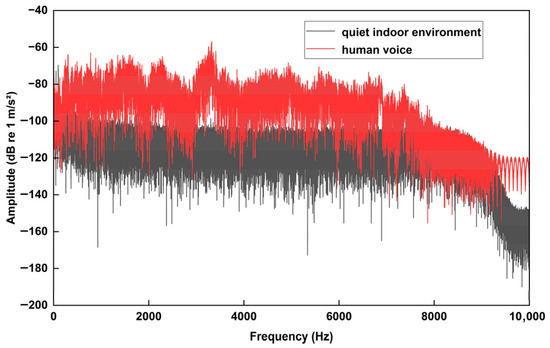
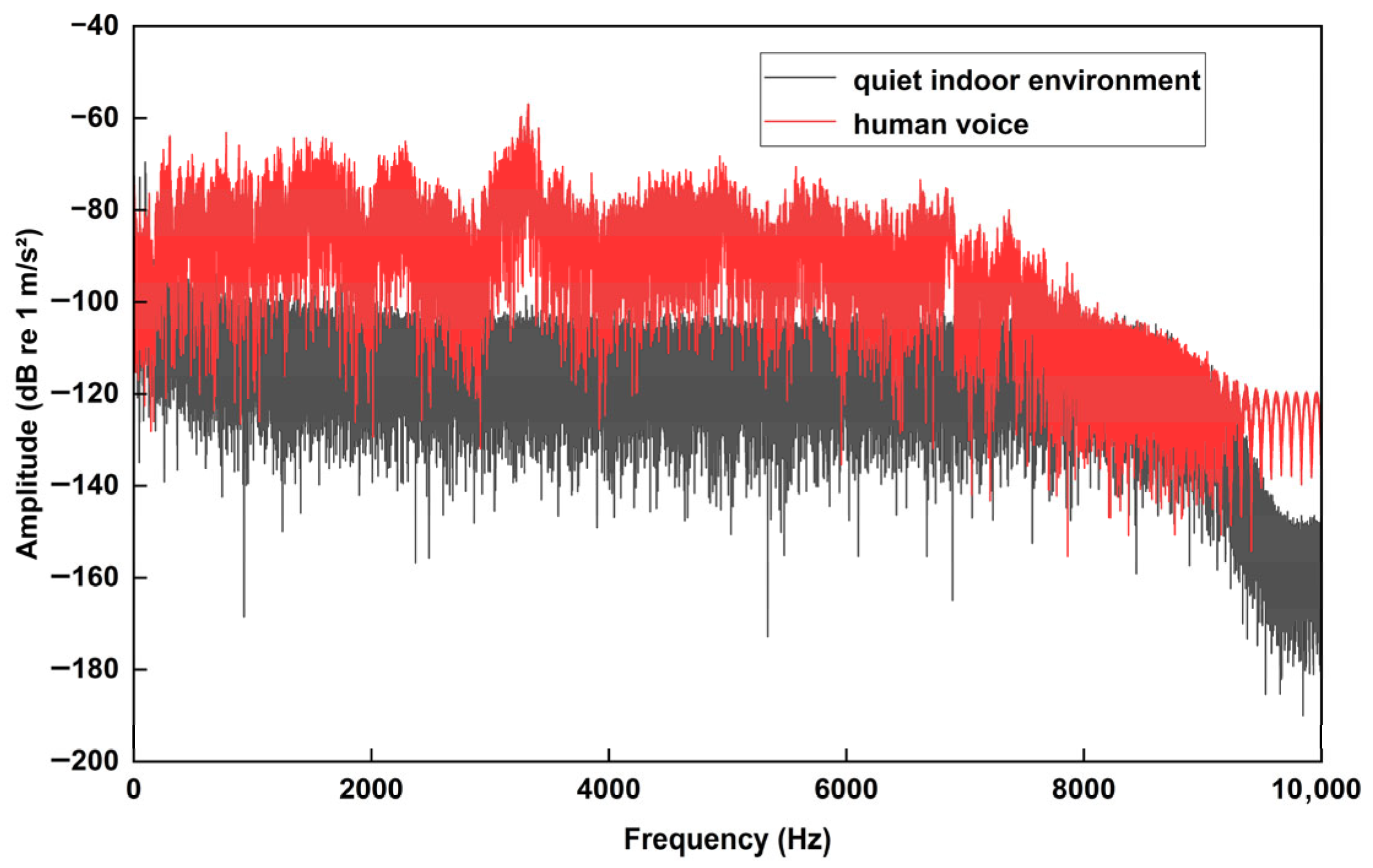
To eliminate the influence of the experimental environment on the vibration response of the surface of the table, the acceleration response magnitude of the surface of the table was measured in a quiet laboratory environment without any interference. Similarly, when the Bluetooth speaker is turned on and audio is played, the acceleration response of the surface of the table is measured. The acceleration response on the surface of the table under two conditions is shown in Figure 5, and the acceleration response spectra are shown in Figure 6.
Figure 5.
Acceleration response of the surface of the table: (a) in a quiet, indoor environment and (b) in a human-voice environment.
Figure 6.
Frequency spectrum comparison of the acceleration response of the surface of the table. The amplitude is presented in decibels (dB) relative to a reference value of 1 m/s2.
In this paper, the root mean square (RMS) is used to calculate the average vibration response, while the maximum vibration response is obtained from the point with the largest absolute value in the data samples. The formulas for calculating the average and maximum vibration responses are as follows:
where represents the average vibration response, represents the maximum vibration response, and is the value of the sample. It can be observed that under quiet indoor conditions, the average vibration response of the surface of the table is 0.0033 m/s2, with a maximum value of 0.0110 m/s2. In the presence of a human voice, the average vibration response of the surface of the table is 0.0172 m/s2, with a maximum value of 0.2759 m/s2. This indicates that the indoor environment has little impact on the results when measuring the vibration response of the surface of the table during the experiment, and this influence can be ignored.
3.3. Analysis of the Impact of Driving Voltage on Vibration Response
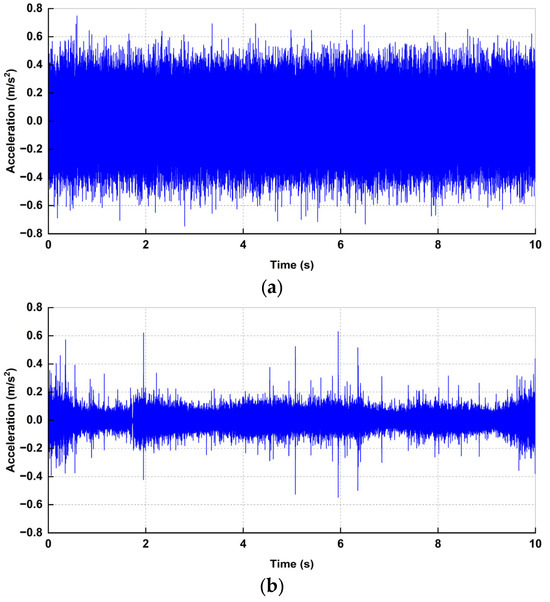
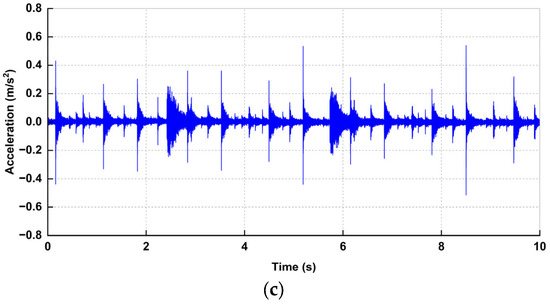
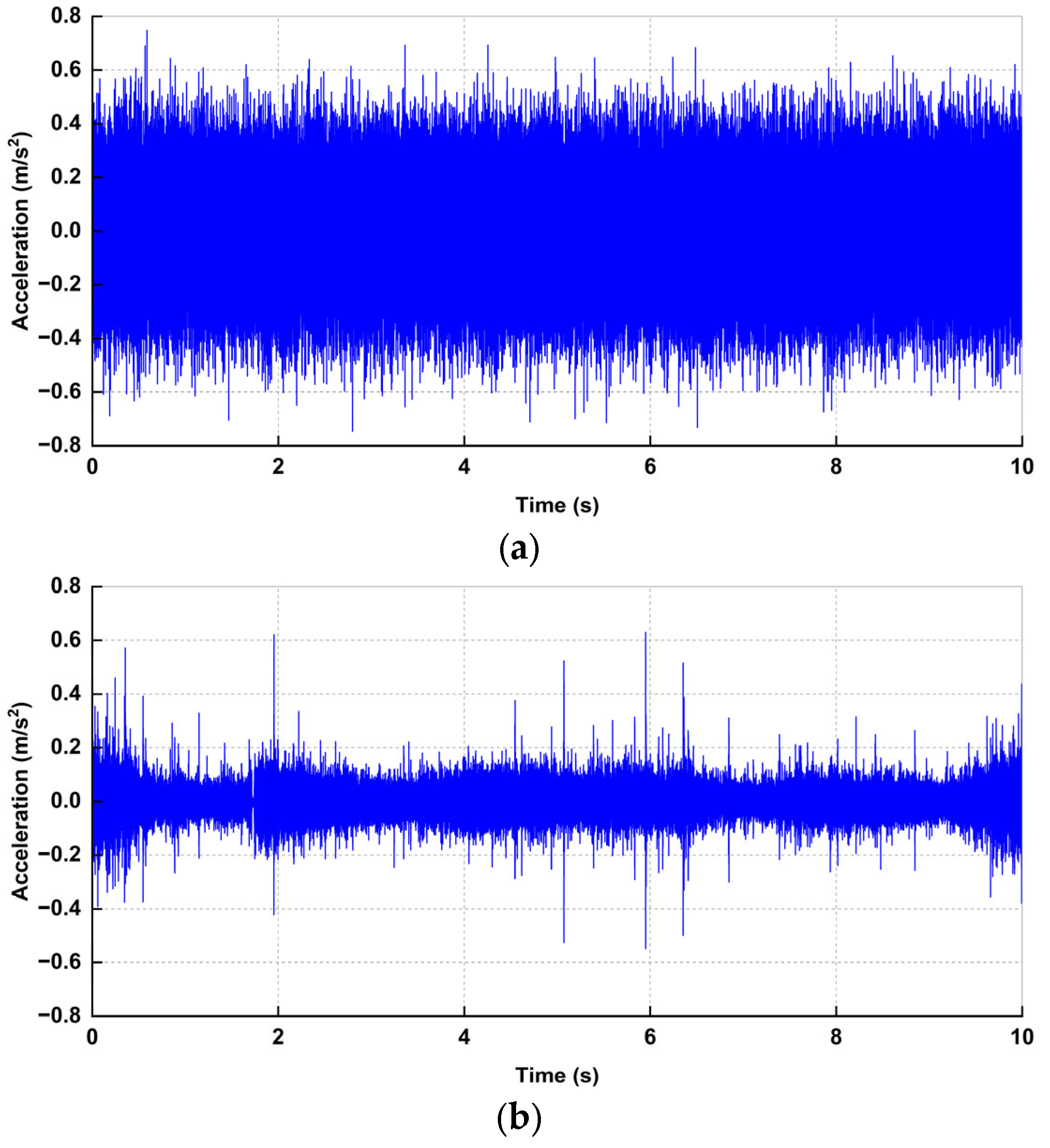
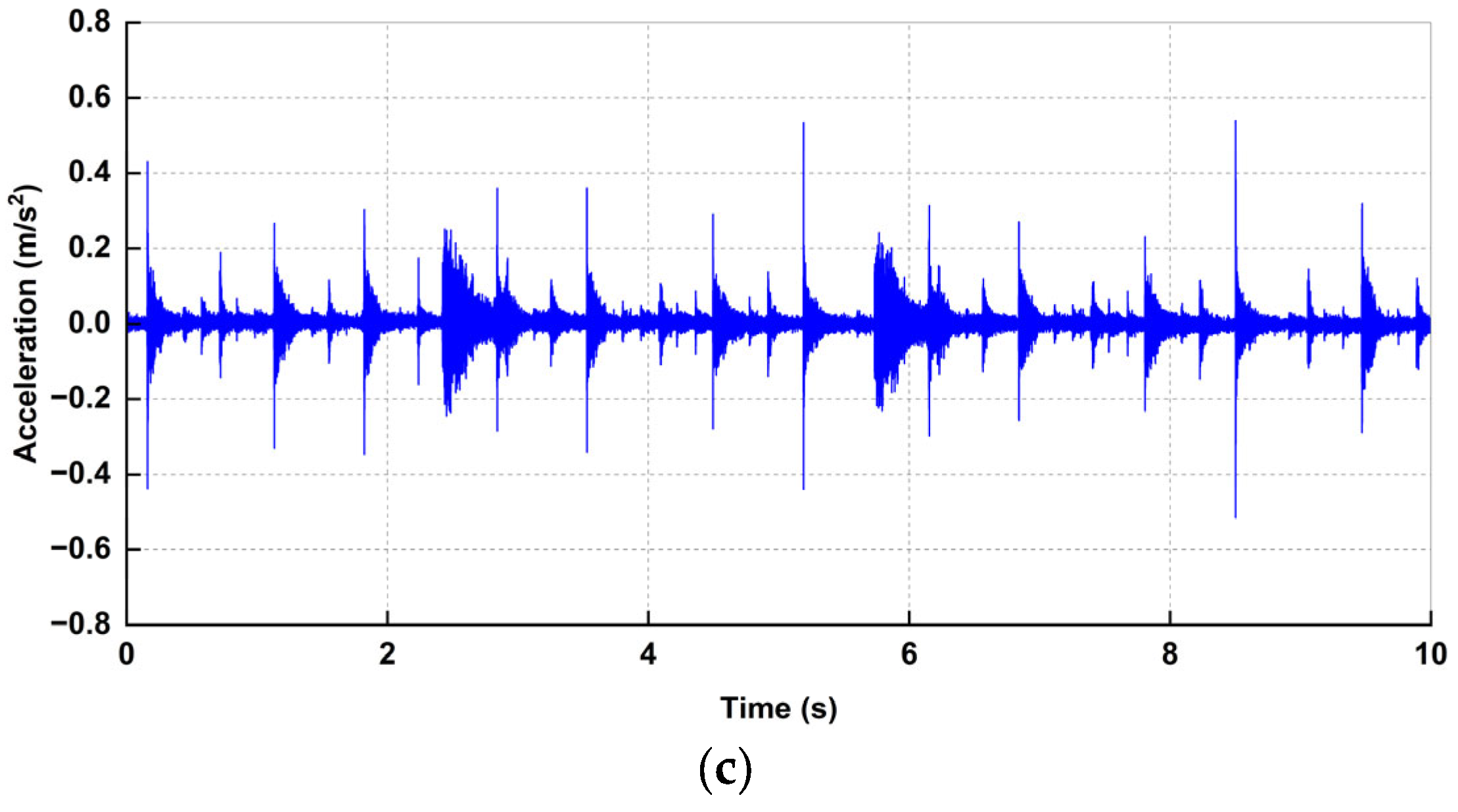
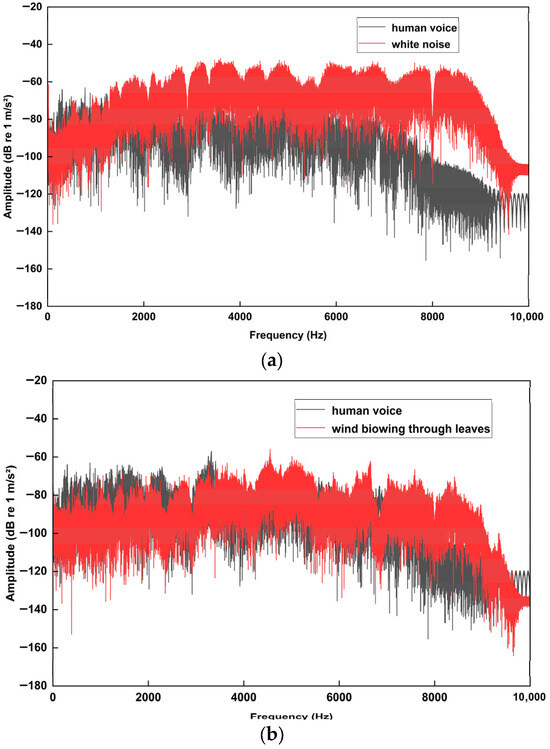
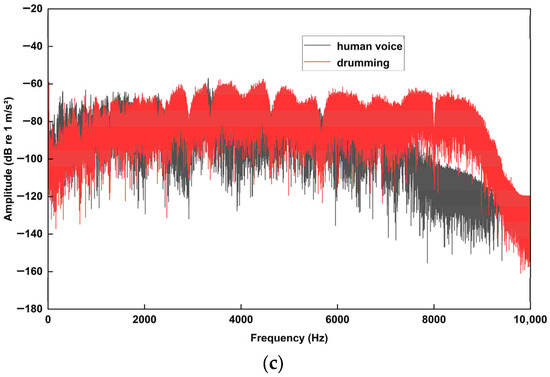
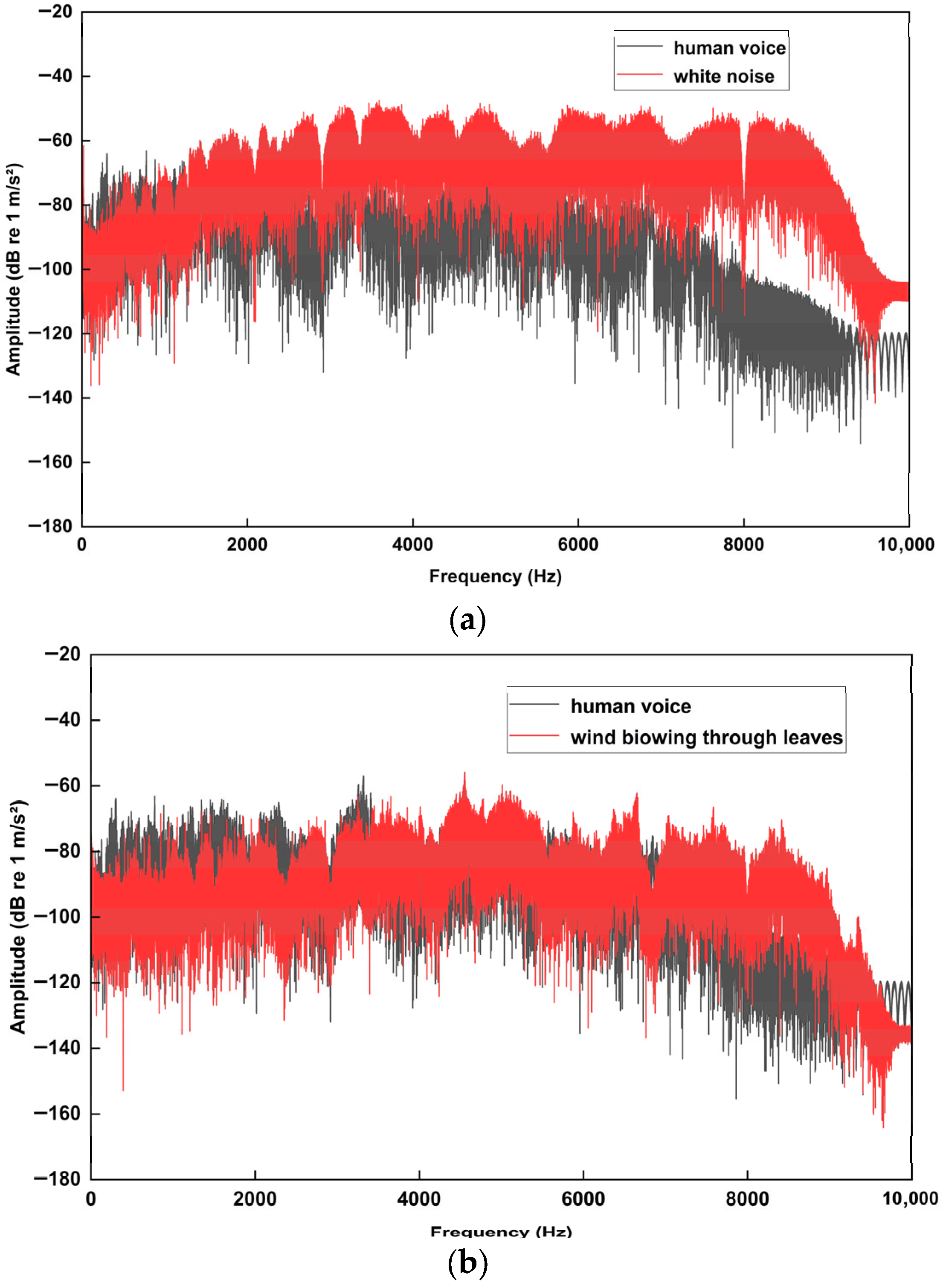
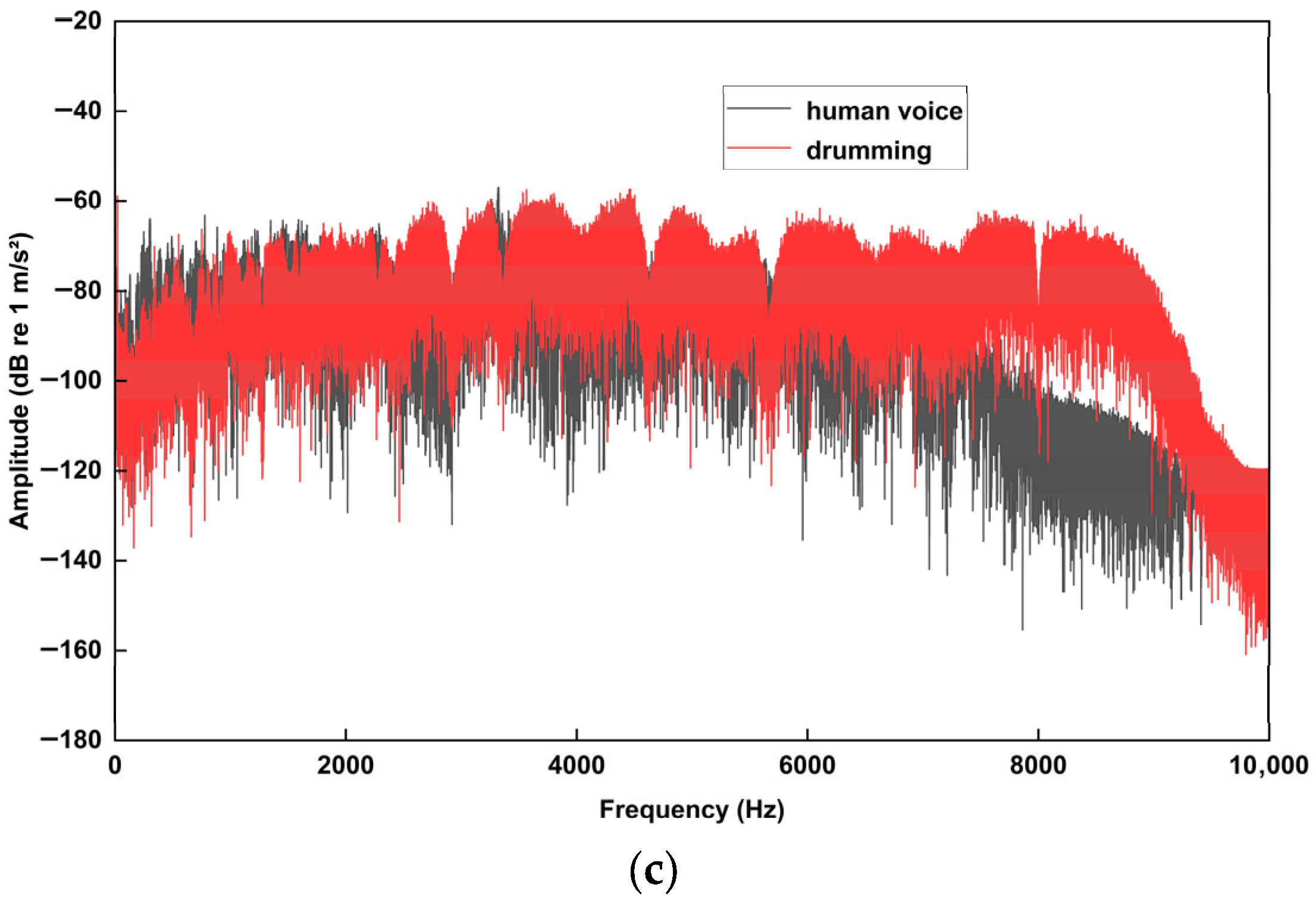
Generally, sound sources used for sound masking interference include noise, natural sounds, and music, amongst others. When PFIS is interfering with the surface of the table through vibration, the piezoelectric ceramic sheet will have a corresponding sound radiation effect, and the human ear has different comfort levels for different sounds. Therefore, this paper selects three types of interference signals: white noise, the sound of wind blowing through leaves, and drumming. Here, we set each interference signal to output the same peak-to-peak voltage over the same time period to analyze the relationship between the vibrations generated by PFIS on the tabletop compared to the vibrations caused by human voices on the tabletop. First, under different interference signals, adjust the power amplifier to ensure that the peak-to-peak voltage across the piezoelectric actuator structure is 5 V. Then, the vibration acceleration of the surface of the table is measured under each interference signal. Figure 7 illustrates the vibration response of the surface of the table caused by each interference signal when the peak-to-peak voltage is 5 V. Figure 8 shows the variation in PFIS power with frequency under different interference signals, and the amplitude is presented in decibels (dB) relative to a reference value of 1 m/s2.
Figure 7.
The vibration response of the surface of the table caused by each interference signal when the peak-to-peak voltage is 5 V: (a) white noise; (b) wind blowing through leaves; and (c) drumming.
Figure 8.
The frequency spectrum comparison of acceleration response under different interference signals when the peak-to-peak voltage is 5 V: (a) white noise; (b) wind blowing through leaves; and (c) drumming.
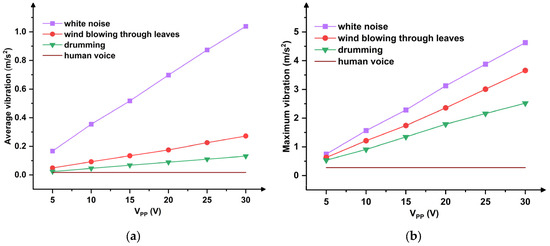
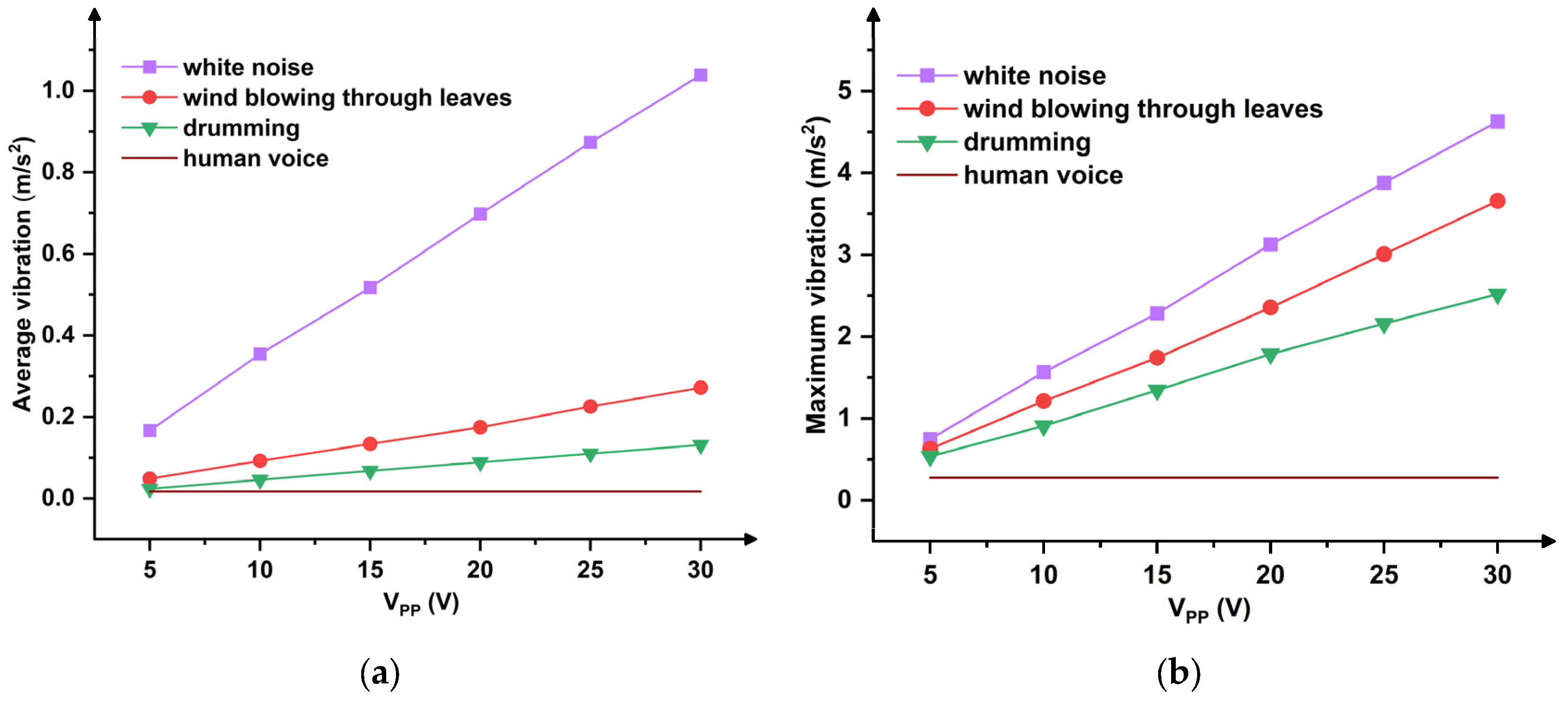
When the interference signals are white noise, wind blowing through leaves, and drumming, the average vibration responses of the table surface are 0.1668 m/s2, 0.0468 m/s2, and 0.0240 m/s2, respectively. The maximum vibration responses are 0.7479 m/s2, 0.6299 m/s2, and 0.5380 m/s2, respectively. The results showed that under different interference signals, the vibration response on the surface of the table is significantly greater than when only a human voice is present. It is worth noting that although the interference power of noise signals is significantly higher than that of natural sounds and music, natural sounds and music typically have a smaller impact on indoor comfort. Similarly, when the peak-to-peak voltage values are 10 V, 15 V, 20 V, 25 V, and 30 V, the vibration acceleration on the surface of the table caused by the PFIS is measured under each interference signal. Figure 9 shows the variation curves of the average and maximum vibration acceleration on the surface of the table under different driving voltages and interference signals.
Figure 9.
The variation curve of the vibration response of PFIS on the surface of the table under different driving voltages and interference signals: (a) The average vibration response variation curve; (b) The maximum vibration response variation curve.
From Figure 9, the results showed that as the voltage increases in a linear proportion, the vibration response generated on the surface of the table by the PFIS also increases in a linear proportion. Furthermore, under the conditions where white noise, the sound of wind blowing through leaves, and the sound of drumming serve as interference signals. When the peak-to-peak voltage increases by 5 V, the increases in the average vibration responses on the surface of the table are 0.1742 m/s2, 0.0445 m/s2, and 0.0215 m/s2, respectively. The increases in the maximum vibration response are 0.7756 m/s2, 0.6040 m/s2, and 0.4030 m/s2, respectively. It can be observed that when white noise is used as the interference signal, the average vibration response generated on the surface of the table by the PFIS is much greater than the other two signals. Because, compared to the other two signals, when white noise is used as the interference signal, the vibration response amplitude generated by PFIS is larger and more stable.
3.4. Analysis of the Effect of Added Weight on Vibration Response
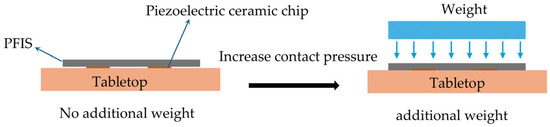
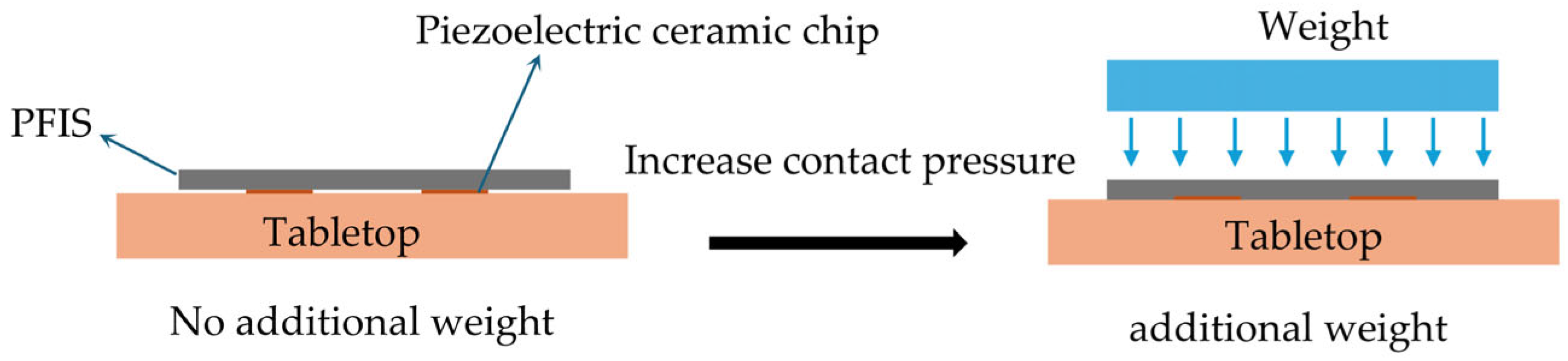
In this section, the peak-to-peak voltage is maintained at 10 V. First, different weights are added to the surface of the PFIS. Then, under different interference signals, the vibration response generated on the surface of the table by the PFIS is analyzed. The schematic of the process of adding weight to the surface of the PFISis shown in Figure 10. To achieve the goal of rapid deployment and recovery, the PFIS is not directly glued to the tabletop, but instead transmits vibrations through contact. When no additional weight is applied, the contact interface exhibits lower contact pressure, and the rubber pad of PFIS does not make complete contact with the tabletop, which leads to lower efficiency in vibration energy transfer. After adding weight, the contact pressure significantly increases, and the contact area between the rubber pad and the tabletop enlarges, resulting in a tighter fit between the piezoelectric ceramic sheet and the tabletop, thereby improving the vibration transmission efficiency between PFIS and the surface of the table.
Figure 10.
Schematic of additional weight.
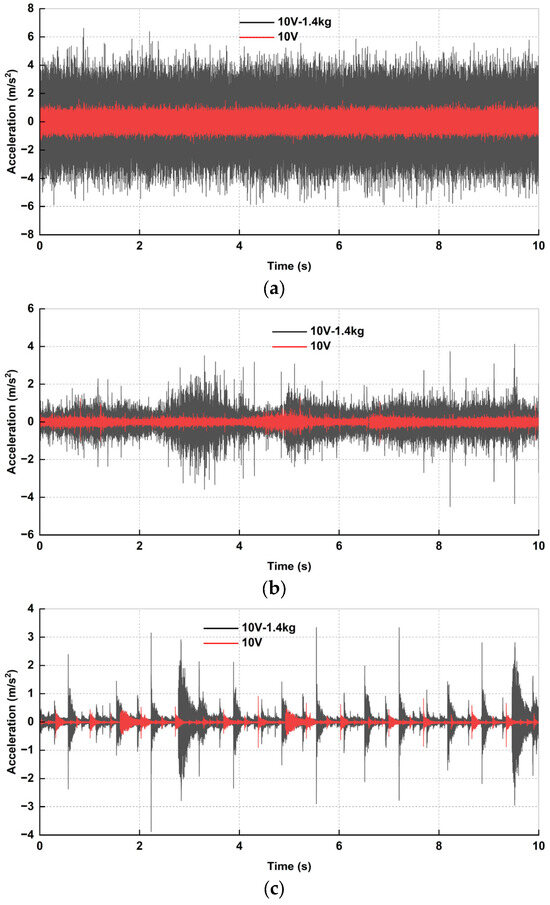
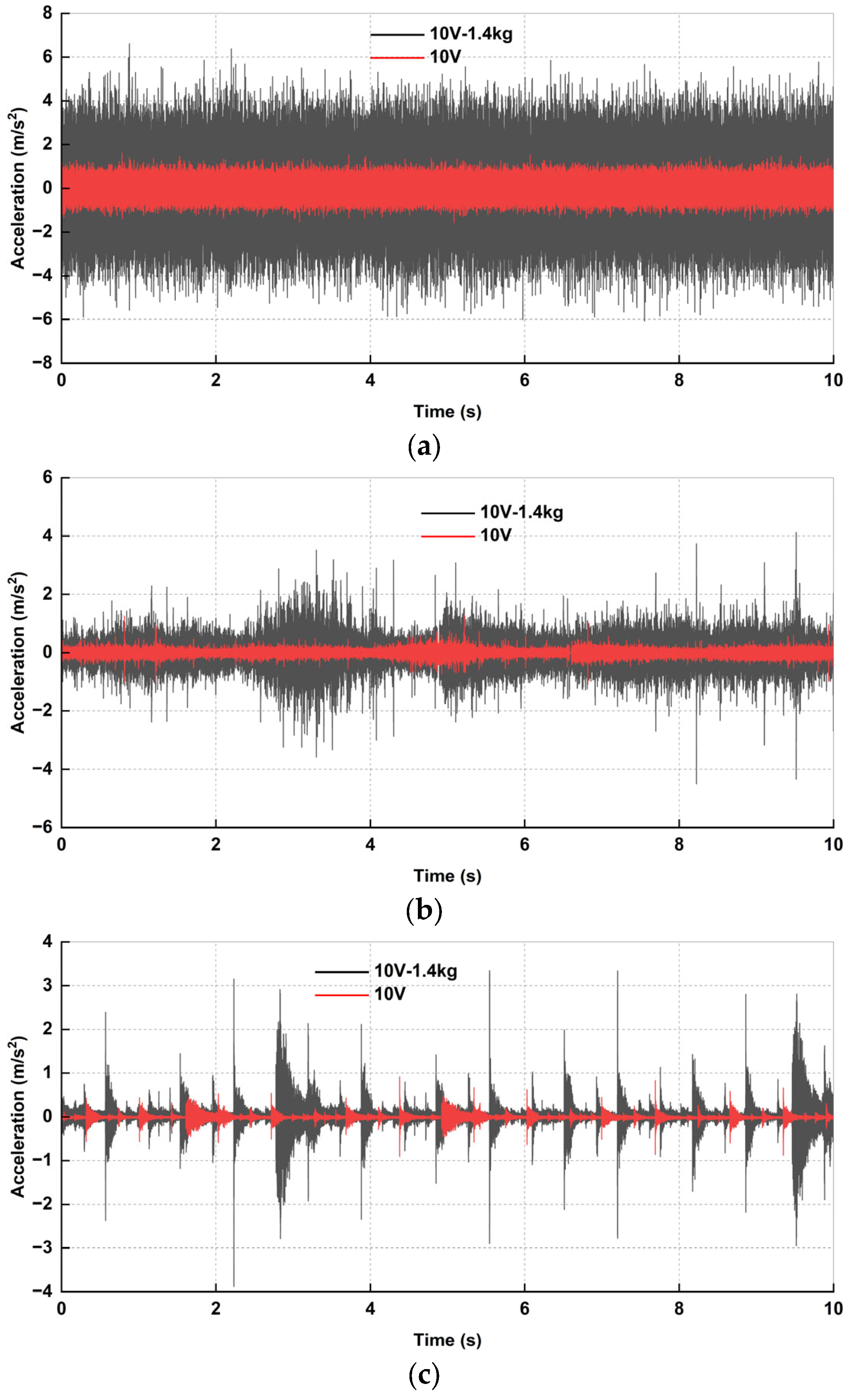
For example, a weight of 1.4 kg is added to the surface of the piezoelectric actuator structure, and the vibration acceleration on the surface of the table is measured under different interference signals. Figure 11 shows a comparison of the vibration response of the surface of the tablet with and without the addition of a 1.4 kg weight on the surface of the PFISunder different interference signals. The results showed that when the voltage is kept constant, the vibration response of the surface of the table with the addition of a 1.4 kg weight is significantly greater than that in the case without additional weight.
Figure 11.
When the peak-to-peak voltage is 10 V, the vibration response on the surface of the table caused by each interference signal is compared with and without a 1.4 kg weight placed on the surface of the piezoelectric actuator structure: (a) white noise; (b) wind blowing through leaves; and (c) drumming.
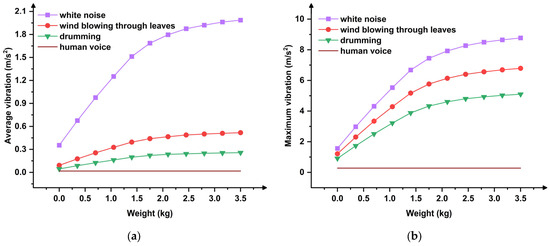
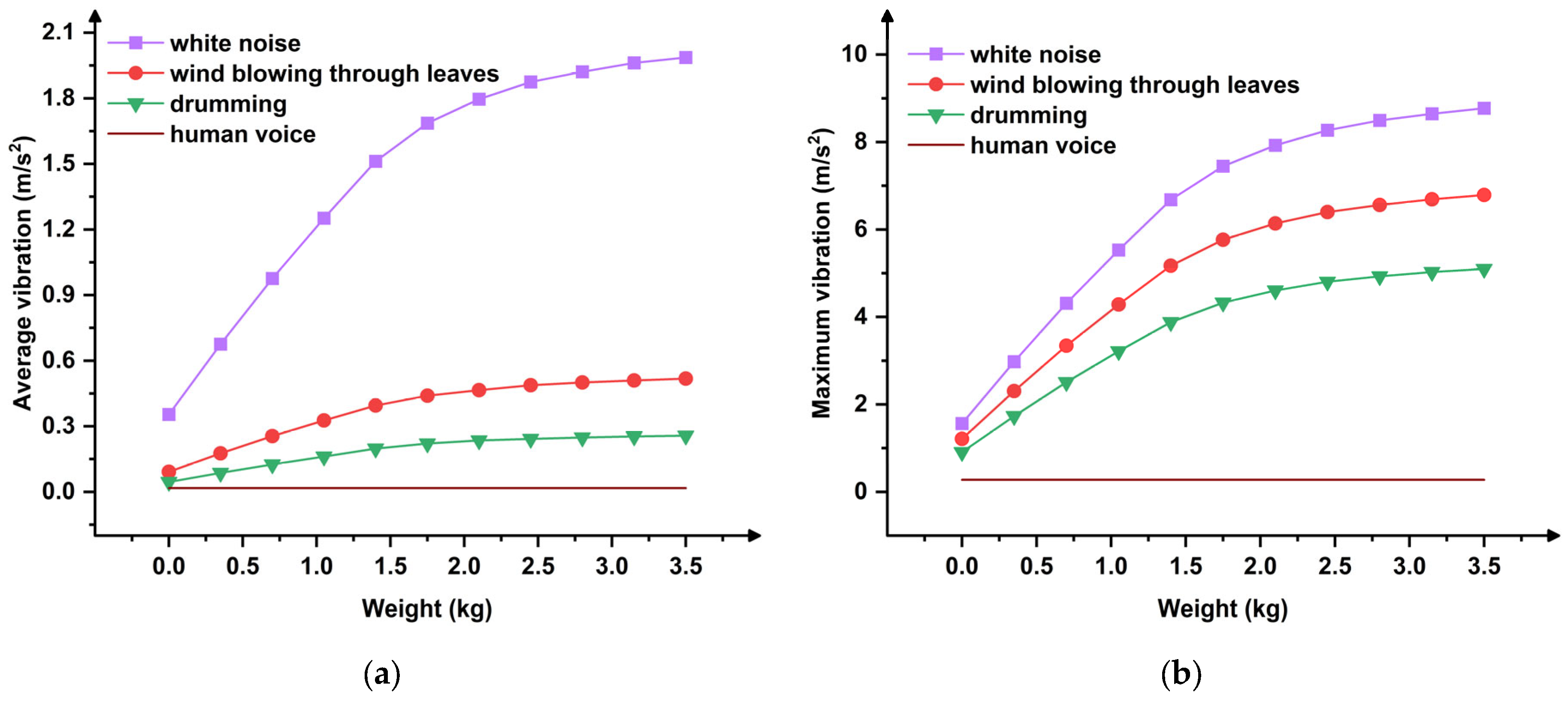
Similarly, under the condition that other experimental parameters remain unchanged, additional weights of 0.35 kg, 0.7 kg, 1.05 kg, 1.75 kg, 2.1 kg, 2.45 kg, 2.8 kg, 3.15 kg, and 3.5 kg were added to the surface of the PFIS. Measure the vibration acceleration on the surface of the table generated by the PFIS under different interference signals. Figure 12 shows the variation curves of the average and maximum values of the vibration response generated by the PFIS on the surface of the table under different added weights and interference signals.
Figure 12.
When the peak-to-peak voltage is 10 V, the change in vibration response on the surface of the table caused by the interference structure under the application of different weights: (a) average vibration response change curve and (b) maximum vibration response change curve.
According to Figure 12, the following conclusions can be drawn. As the weight on the surface of the PFIS gradually increases, the vibration response generated by the PFIS on the surface of the table also gradually increases. For example, when the added weight is 3.5 kg, the average vibration responses of the surface of the table under the interference signals of white noise, wind blowing through leaves, and drum sounds are 1.9896 m/s2, 0.5185 m/s2, and 0.2574 m/s2, respectively. The maximum vibration responses are 8.7741 m/s2, 6.7894 m/s2, and 5.1001 m/s2, respectively. However, when there is no additional weight, the average vibration responses of the surface of the table under the interference signals of white noise, wind blowing through leaves, and drumming sounds are 0.3542 m/s2, 0.0922 m/s2, and 0.0457 m/s2, respectively. The maximum vibration responses are 1.5653 m/s2, 1.2123 m/s2, and 0.9097 m/s2, respectively. It can be concluded that when the additional weight is 3.5 kg, the vibration response performance of the PFIS is improved by approximately 5.6 times. Furthermore, it is worth noting that before the weight reaches 1 kg, the vibration response of the surface of the table changes in a nearly linear relationship with the weight. However, after 1 kg, as the weight increases, the rate of increase in the vibration response of the surface of the table gradually diminishes until it stabilizes. This is because as the weight begins to gradually increase, the contact pressure between PFIS and the surface of the table will gradually increase, and the contact interface will become tighter, thereby improving the vibration transmission efficiency between the two. When the additional mass reaches a certain level, the contact pressure between the PFIS and the table surface becomes sufficiently large, at which point the vibration transmission efficiency gradually stabilizes. At this point, adding more weight does not significantly enhance the interference performance.
4. Performance Analysis of Vibration Interference
The signal-to-noise ratio (SNR) is an important parameter for measuring signal quality, representing the ratio of the power of the useful signal to the power of the noise signal [28]. SNR has wide applications in signal processing fields such as communication, audio processing, and video processing. SNR is defined as the ratio of signal power to noise power, typically expressed in decibels (dB). Its formula is
where represents the signal power, which is the signal data measured in an environment without noise. represents the noise power, which is the signal data measured in the presence of noise. If the signal and noise sampling values are and , respectively, the signal and noise power can be calculated using the following formulas:
By analyzing the vibration interference generated by the PFIS on the surface of the table, the sound masking performance of the PFIS is explored. First, with no interference, the Bluetooth speaker is turned on to play human voices. The vibration acceleration of the surface of the table caused by the human voice at this moment is measured and recorded as the reference signal. Then, sound signals with different driving voltages are applied under the conditions of 3.5 kg of additional weight and no additional weight. The vibration acceleration of the surface of the table caused by the PFIS at this moment is measured and recorded as the interference signal. In this experiment, the calculated SNR ≤ 0 indicates that the power of the interference signal exceeds the power of the reference signal, indicating that the generated vibration interference is effective. Moreover, the smaller the SNR, the stronger the vibration interference effect.
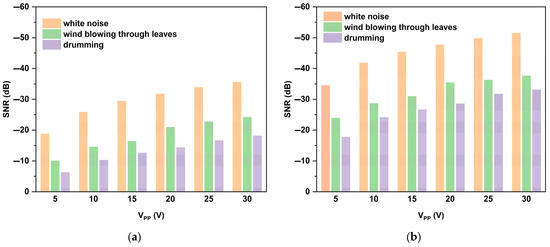
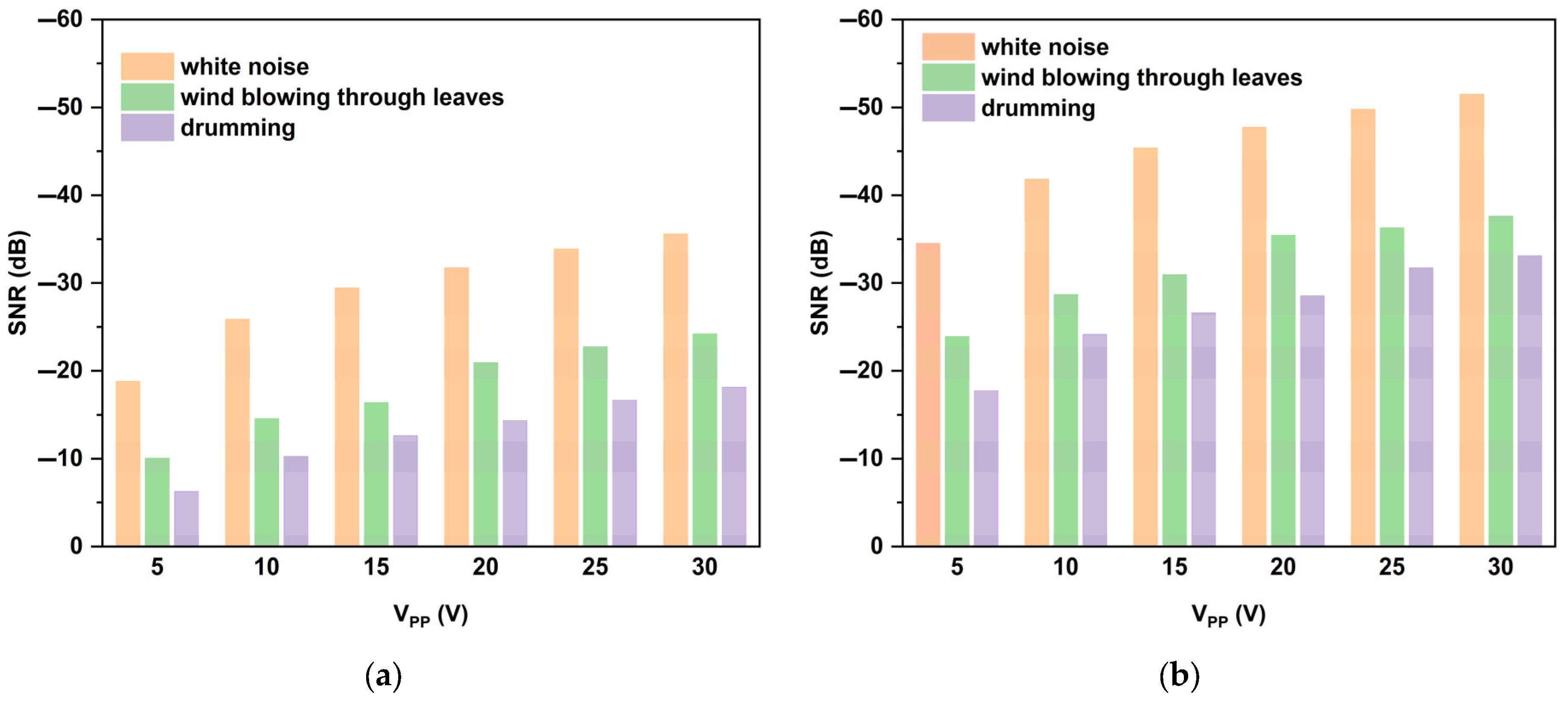
Under two conditions, without additional weight and with an additional weight of 3.5 kg, the SNR for different interference and reference signals at various voltages is calculated based on the experimentally measured data. Figure 13 shows the SNR with different interference and reference signals applied under different voltages, both with and without an additional weight of 3.5 kg.
Figure 13.
The SNR of different interference and reference signals applied under different voltages: (a) Without additional weight, (b) With an additional weight of 3.5 kg.
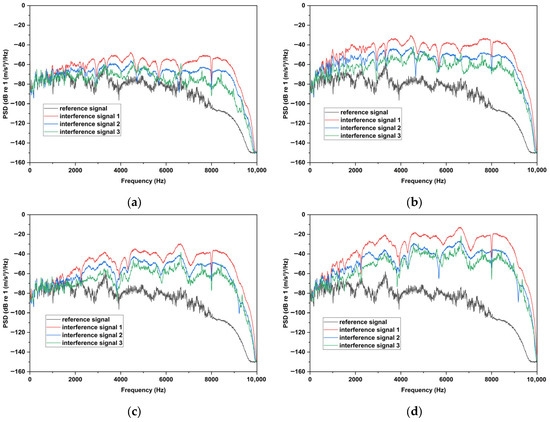
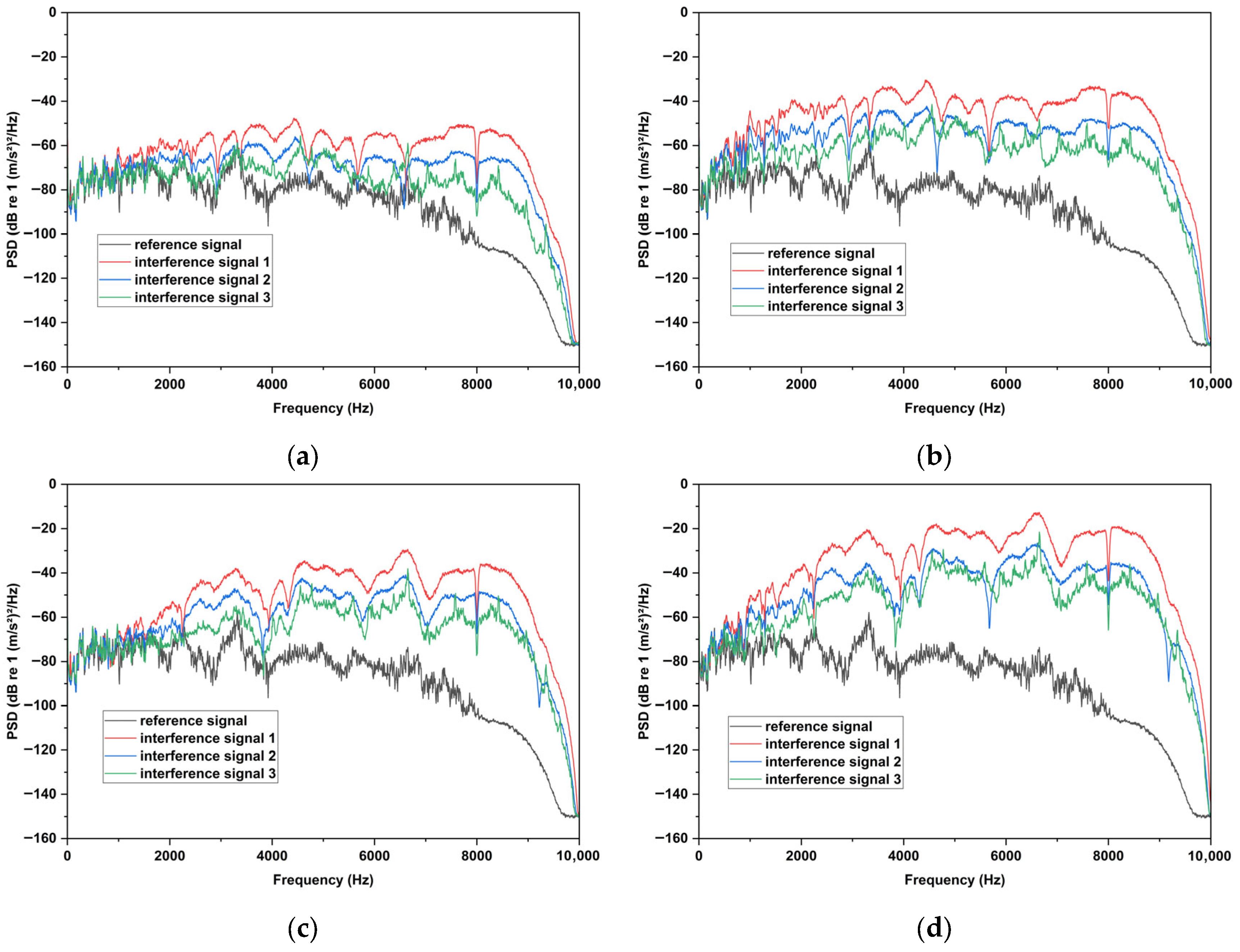
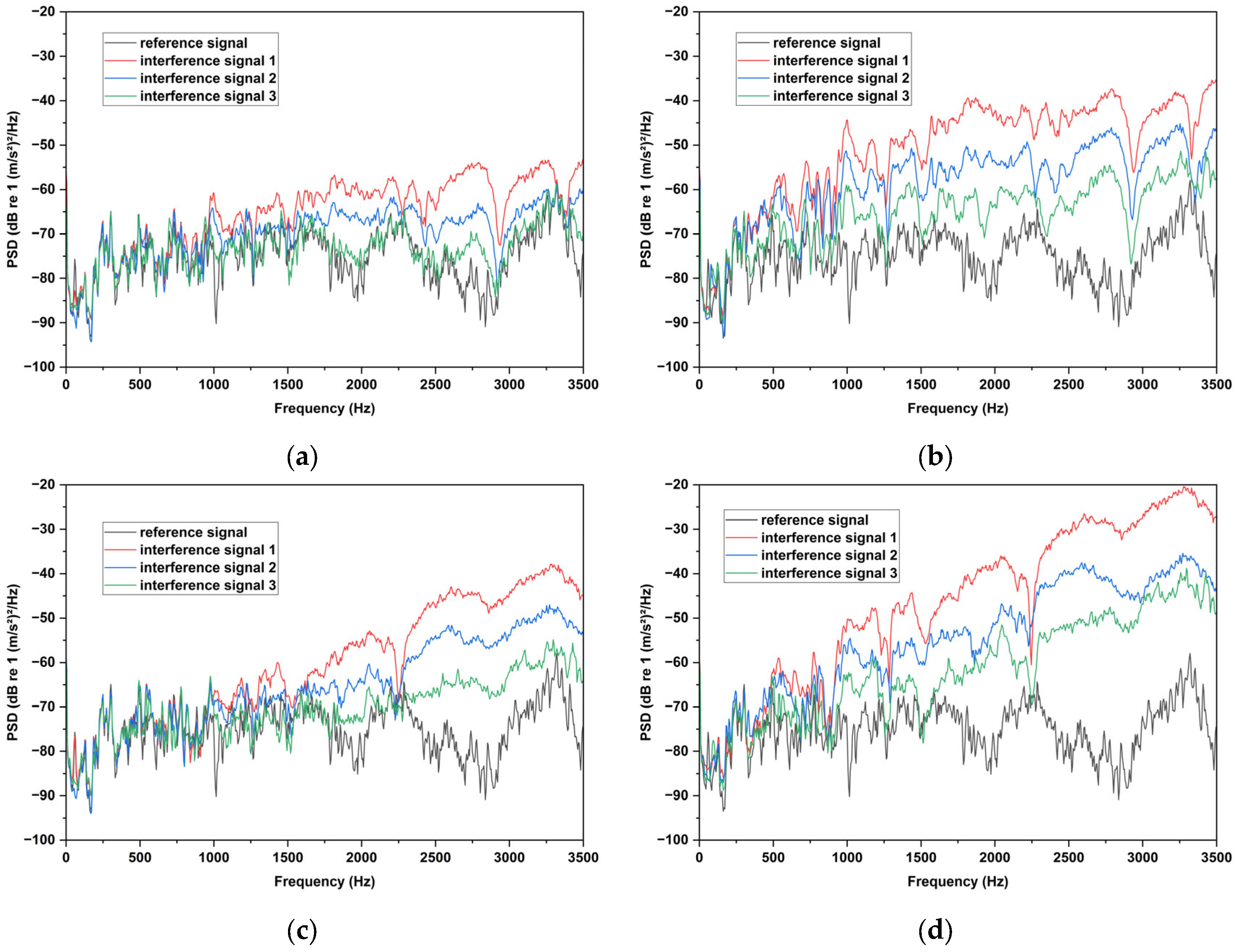
The results showed that under different experimental conditions, the noise power of each interference signal exceeds the power of the reference signal, indicating that the vibration interference of the PFIS plays a role in sound masking. However, the SNR cannot reveal the impact of the driving voltage and added weight on vibration interference performance across different frequency ranges. To explore the relationship between noise and signal in terms of frequency, the Welch method is used to estimate the power spectral density (PSD) of the interference signal and the reference signal. For example, in the case of no additional weight and with an additional weight of 3.5 kg, the PSD comparison of different interference signals and reference signals is obtained under the peak-to-peak voltage of 5 V and 30 V, as shown in Figure 14. Here, the white noise, the sound of wind blowing through leaves, and the sound of drumming are referred to as interference signal 1, interference signal 2, and interference signal 3, respectively. The PSD is computed using Welch’s method and is expressed in decibels (dB) relative to 1 (m/s2)2/Hz.
Figure 14.
Comparison of PSD of different interference signals and reference signals under different experimental conditions: (a) voltage peak-to-peak value of 5 V; (b) voltage peak-to-peak value of 30 V; (c) voltage peak-to-peak value of 5 V with an additional weight of 3.5 kg; and (d) voltage peak-to-peak value of 30 V with an additional weight of 3.5 kg.
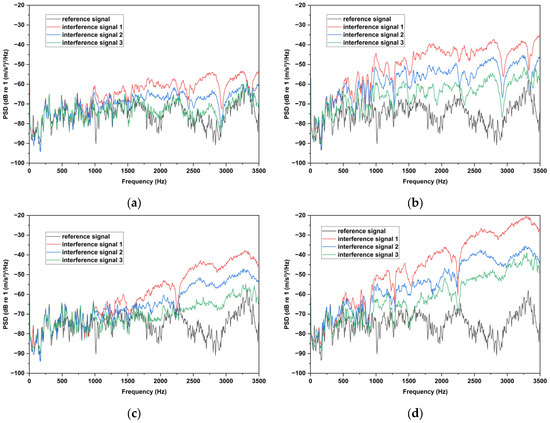
It can be seen from Figure 14 that, after the frequency exceeds 2500 Hz, both increasing the voltage and adding weight to the surface of the piezoelectric actuator structure can significantly improve the vibration interference performance of PFIS. However, when the frequency is below 2500 Hz, the discrepancy in power between the interference signal noise and the reference signal power is not significant. In some frequency ranges, the PSD of the reference signal is even greater than that of the interference signal. In order to better study the vibration interference performance in the low-frequency stage, Figure 15 analyzes the comparison of the PSD of the reference signal and the interference signal in the frequency range of 0–3500 Hz. The results showed that when the voltage increases, the vibration interference performance of the PFIS under the interference signal can be significantly improved in the low-frequency range. When the frequency is below 2500 Hz, the added weight does not significantly improve the vibration interference performance of the PFIS. However, after 2500 Hz, the added weight can significantly enhance the vibration interference performance of the PFIS. In conclusion, increasing the driving voltage can improve the vibration interference performance of the PFIS across the entire frequency range. After adding the weight, the vibration interference performance of the PFIS can be significantly improved when the frequency is greater than 2500 Hz.
Figure 15.
Comparison of the PSD of different interference signals and reference signals in the 0–3500 Hz range under different experimental conditions: (a) voltage peak-to-peak value of 5 V; (b) voltage peak-to-peak value of 30 V; (c) voltage peak-to-peak value of 5 V with an additional weight of 3.5 kg; and (d) voltage peak-to-peak value of 30 V with an additional weight of 3.5 kg.
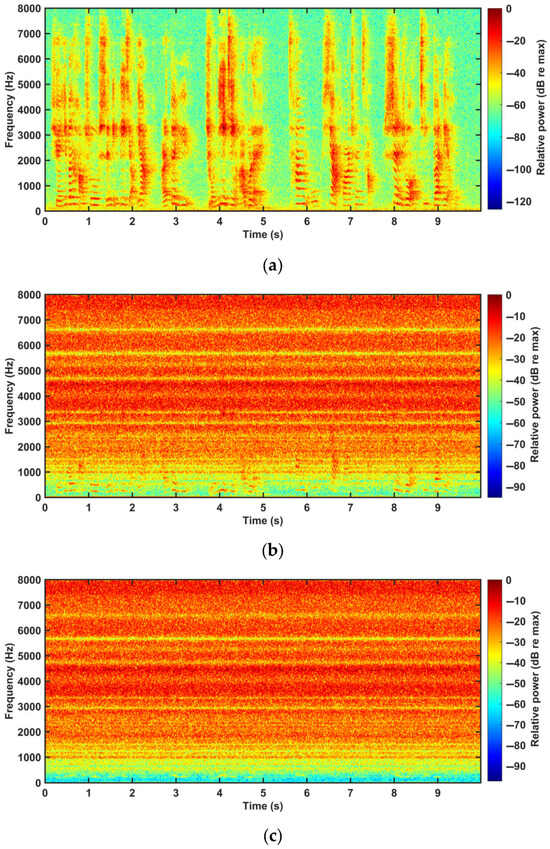
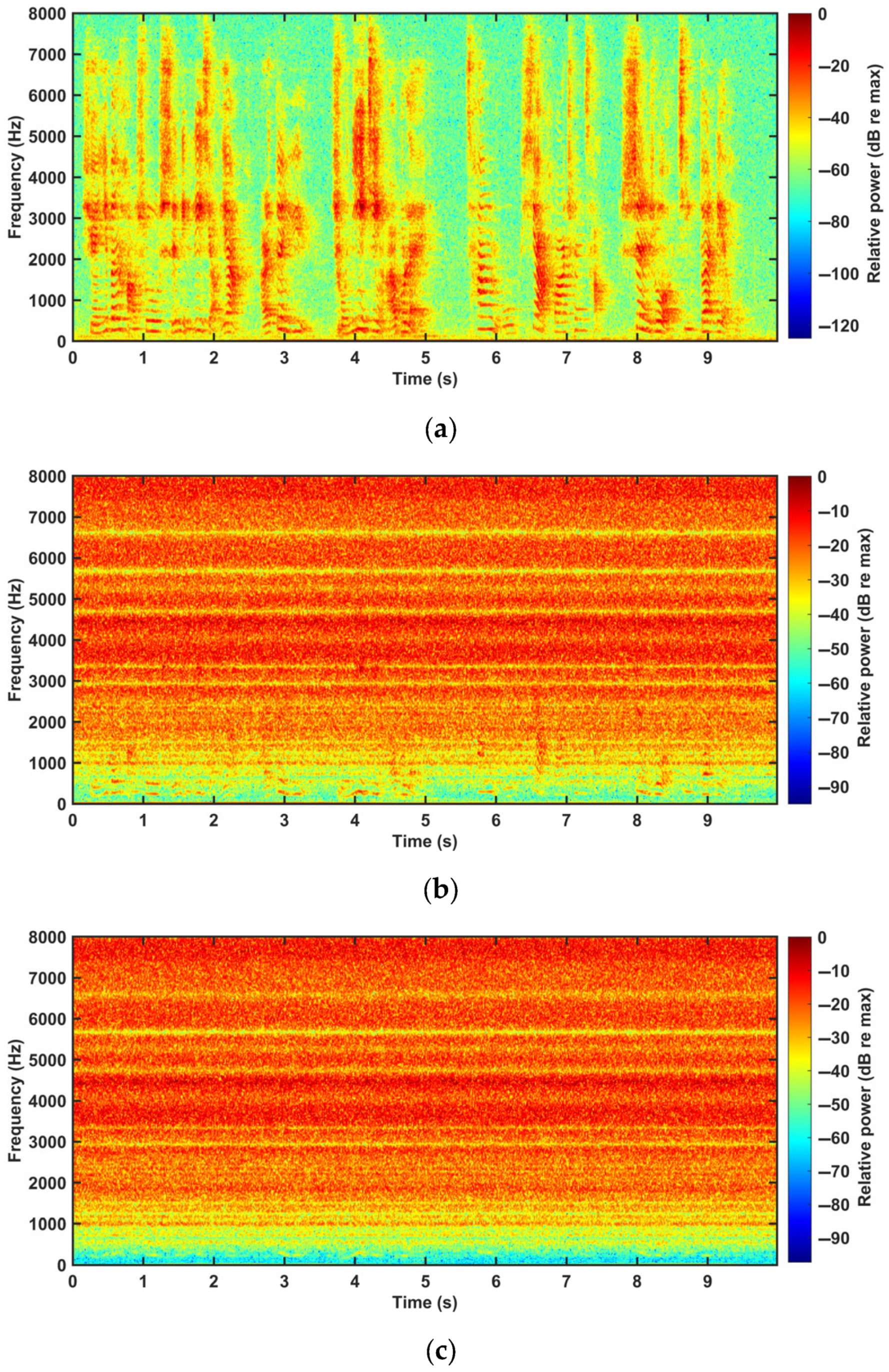
Next, analyze the masking effect of PFIS on vibration restoration sounds from the perspective of the speech spectrum. First, in the previous experiment, the Bluetooth speaker was set to loop a 10 s audio of a person speaking. Measure the 20 s vibration data on the surface of the table under the condition of human voice. Then, decode the measured vibration information to restore it to audio. Finally, use Adobe Audition to edit the audio, obtaining a 10 s human voice audio with the timeline aligned. The processed audio has a frequency of 16,000 Hz and is output in mono. Similarly, the Bluetooth speaker continues to play the human voice. Under the conditions of peak-to-peak voltage of 5 V and 30 V, the PFIS uses white noise signals to induce vibration interference on the surface of the table. Then, the 10 s interference audio with time axis alignment is obtained. Finally, the speech spectrograms for the three cases are shown in Figure 16. From the analysis of the speech spectrogram, it can be observed that in the case where only human voice is present, the voiceprint of the human sound can be clearly seen in the restored speech spectrogram, and the speech content is fully discernible. Under the condition of a 5 V peak-to-peak voltage with white noise signal interference, it can be seen that most of the voiceprint of the human sound is masked. However, within the frequency range of 0–2500 Hz, some of the voiceprint still remains. Under the conditions of a peak-to-peak voltage of 30 V with white noise signal interference, the voiceprint of the human voice is almost completely covered. This is consistent with the results obtained using the PSD method for analysis. When the driving voltage increases, it can improve the vibration interference performance of the interference structure across the entire frequency range, including at lower frequencies. However, when the frequency is below 2500 Hz, the addition of weight does not significantly improve the vibration interference performance of the PFIS. According to the conclusion, below 2500 Hz, the vibration interference performance of the PFIS is limited. To address this issue, subsequent optimization of the interference can be achieved by altering the amplitude of the interference signal below 2500 Hz or by adjusting the amplitude of the interference signal at different frequencies.
Figure 16.
The speech spectrogram is obtained from the vibration of the surface of the table under different experimental conditions, and the relative power is presented in decibels (dB) for maximum power reference: (a) only human voice; (b) human voice + peak-to-peak voltage of 5 V + white noise signal interference; and (c) human voice + peak-to-peak voltage of 30 V + white noise signal interference.
5. Summary
This paper designs a piezoelectric flexible interference structure (PFIS) for active sound masking. Results show that increasing the peak-to-peak voltage by 5 V enhances the vibration response of the panel under different interference signals. Adding weight to the PFIS surface produces a near-linear increase in vibration response up to 1 kg, beyond which the growth rate gradually decreases and stabilizes. Analysis of signal-to-noise ratio (SNR) confirms that the PFIS effectively interferes with the vibration response of the panel. Furthermore, increasing voltage improves interference performance over the entire frequency range, while added weight significantly enhances performance above 2500 Hz. Finally, speech spectrum analysis verifies that the PFIS successfully masks vibration-induced sound when white noise is used as the interference signal. However, this study still has some shortcomings. For example, additional weight has a certain impact on the portability of the actual transportation process. Therefore, it may be considered to integrate inflatable airbags into PFIS, which can replace the additional weight by changing the air pressure to alter pressure. In addition, PFIS has good mechanical flexibility and can be applied to relatively flat surface structures for vibration interference. This article successfully demonstrates vibration interference on a tabletop. This article selects wooden boards as the interference object based on current practical application scenarios and verifies that this makes it impossible to recognize human voice content from the speech reconstructed from the vibrations of the wooden board. However, when the mechanical surface characteristics of the interference object change, such as different interface roughness, this will affect the vibration interference performance of the PFIS. These issues need to be further researched and resolved in the future.
Author Contributions
Conceptualization, C.W., C.Z. and H.J.; methodology, C.W., X.Z. and C.Z.; software, C.W. and X.Z.; validation, C.W., X.Z. and C.Z.; formal analysis, C.W.; investigation, C.W.; resources, J.Q.; data curation, C.W. and X.Z.; writing—original draft preparation, C.W. and X.Z.; writing—review and editing, C.W., C.Z. and H.J.; visualization, C.W.; supervision, C.Z.; project administration, H.J.; funding acquisition, H.J. and J.Q. All authors have read and agreed to the published version of the manuscript.
Funding
This study was co-supported by the National Natural Science Foundation of China (No. U2436204 and 52235003), the Fundamental Research Funds for the Central Universities (No. NE2024002 and NP2024112), and the CRRC Research Fund (2024CYB271).
Data Availability Statement
The data that support the findings of this study are available from the corresponding author upon reasonable request.
Conflicts of Interest
The authors declare no conflicts of interest.
References
- Pham, M.; Li, Z.; Whitehill, J. Toward better speaker embeddings: Automated collection of speech samples from unknown distinct speakers. In Proceedings of the ICASSP 2020—2020 IEEE International Conference on Acoustics, Speech and Signal Processing (ICASSP), Barcelona, Spain, 4–8 May 2020; pp. 7089–7093. [Google Scholar]
- Wang, Q.; Dai, H.-N.; Li, X.; Wang, H.; Xiao, H. On modeling eavesdropping attacks in underwater acoustic sensor networks. Sensors 2016, 16, 721. [Google Scholar] [CrossRef] [Scilit]
- Bijsterveld, K. Eavesdropping by the eye: Detecting sound events and the culture of acoustic intelligence. Sound Stud. 2023, 9, 233–252. [Google Scholar] [CrossRef] [Scilit]
- Chen, Y.; Li, W.; Cheng, X.; Hu, P. A survey of acoustic eavesdropping attacks: Principle, methods, and progress. High-Confid. Comput. 2024, 4, 100241. [Google Scholar] [CrossRef] [Scilit]
- Bolton, C.; Long, Y.; Han, J.; Hester, J.; Fu, K. Characterizing and Mitigating Touchtone Eavesdropping in Smartphone Motion Sensors. In Proceedings of the 26th International Symposium on Research in Attacks, Intrusions and Defenses, Hong Kong, China, 16–18 October 2023; pp. 164–178. [Google Scholar]
- Chen, Z.; Zhang, C.-C.; Shi, B.; Xie, T.; Wei, G.; Guo, J.-Y. Eavesdropping on wastewater pollution: Detecting discharge events from river outfalls via fiber-optic distributed acoustic sensing. Water Res. 2024, 250. [Google Scholar] [CrossRef] [Scilit]
- Ozturk, M.Z.; Wu, C.; Wang, B.; Liu, K. Radiomic: Sound sensing via mmwave signals. arXiv 2021, arXiv:2108.03164. [Google Scholar]
- Yufa, Z.; Li, S. Investigation of laser active reconnaissance system performance based on its parameters. Optik 2019, 194, 163079. [Google Scholar] [CrossRef] [Scilit]
- Xu, Z.; Li, J.; Zhang, S.; Tan, Y.; Zhang, X.; Lin, X.; Wan, X.; Zhuang, S. Remote eavesdropping at 200 meters distance based on laser feedback interferometry with single-photon sensitivity. Opt. Lasers Eng. 2021, 141, 106562. [Google Scholar] [CrossRef] [Scilit]
- Lv, T.; Han, X.; Wu, S.; Li, Y. The effect of speckles noise on the Laser Doppler Vibrometry for remote speech detection. Opt. Commun. 2019, 440, 117–125. [Google Scholar] [CrossRef] [Scilit]
- Zheng, T.-X.; Wang, H.-M.; Deng, H. Improving anti-eavesdropping ability without eavesdropper’s CSI: A practical secure transmission design perspective. IEEE Wirel. Commun. Lett. 2018, 7, 946–949. [Google Scholar] [CrossRef] [Scilit]
- Zhou, D.; Zhang, J.; Li, L.; Tan, C.; Zhang, Z.; Sun, Y.; Zhou, L.; Dai, N.; Chu, J.; Hao, J. Subwavelength broadband light-harvesting metacoating for infrared camouflage and anti-counterfeiting empowered by inverse design. Mater. Today Phys. 2025, 50, 101614. [Google Scholar] [CrossRef] [Scilit]
- Zeng, Y.; Pan, P.; Cao, Y.; Ai, H. Test and analysis of window vibration for anti-laser-eavesdropping. Appl. Acoust. 2021, 176, 107871. [Google Scholar] [CrossRef] [Scilit]
- Yasmin, S.; Irsik, V.C.; Johnsrude, I.S.; Herrmann, B. The effects of speech masking on neural tracking of acoustic and semantic features of natural speech. Neuropsychologia 2023, 186, 108584. [Google Scholar] [CrossRef] [Scilit]
- Hui, C.J.; Ikuta, M.; Obata, M.; Hioka, Y.; Arai, T. Spatially target adaptive speech masking–A pilot study on masking effect and annoyance. Appl. Acoust. 2021, 182, 108214. [Google Scholar] [CrossRef] [Scilit]
- Valentina, L.; Arifianto, D.; Azmi, F.; Fajar, B.; Nadiroh, A. The effect of reverberation time on sound masking method to improve speech privacy in open-plan offices. J. Phys. Conf. Ser. 2021, 1896, 012005. [Google Scholar] [CrossRef] [Scilit]
- Kim, S.-H.; Lee, H.-W.; Kim, H.-D. Speech Intelligibility Analysis on the Laser Detected Sound of the Glass Windows. J. Acoust. Soc. Korea 2009, 28, 127–134. [Google Scholar]
- Renz, T.; Leistner, P.; Liebl, A. Effects of the location of sound masking loudspeakers on cognitive performance in open-plan offices: Local sound masking is as efficient as conventional sound masking. Appl. Acoust. 2018, 139, 24–33. [Google Scholar] [CrossRef] [Scilit]
- Wei, W.; Li, Q.; Xu, F.; Zhang, X.; Jin, J.; Jin, J.; Sun, F. Research on an Electromagnetic Actuator for Vibration Suppression and Energy Regeneration. Actuators 2020, 9, 42. [Google Scholar] [CrossRef] [Scilit]
- Li, H.; Tong, Y.; Li, C. Modeling and Control of a Linear Piezoelectric Actuator. Actuators 2024, 13, 55. [Google Scholar] [CrossRef] [Scilit]
- Hong, D.; Moon, H.; Kim, B. Bidirectional Multi-Spectral Vibration Control: Insights from Automotive Engine Mounting Systems in Two-Dimensional Structures with a Damaged Vertical Active Element. Actuators 2024, 13, 171. [Google Scholar] [CrossRef] [Scilit]
- Lin, Y.; An, D.; Lin, Z.; Chen, X.; Huang, W. Progress in high-performance stick-slip piezoelectric actuators: A review. Int. J. Smart Nano Mater. 2024, 15, 652–696. [Google Scholar] [CrossRef] [Scilit]
- Sinn, T.; Barrett, R. Design, Manufacturing and Test of a High Lift Secondary Flight Control Surface with Shape Memory Alloy Post-Buckled Precompressed Actuators. Actuators 2015, 4, 156–171. [Google Scholar] [CrossRef] [Scilit]
- Guo, Z.; Zhao, P.; Zhang, W.; Tian, Y.; Hu, G. Design and Simulation of a Single Piezoelectric-Driven Rotary Actuator with Double-Layer Flexible Mechanism. Actuators 2023, 12, 231. [Google Scholar] [CrossRef] [Scilit]
- Wang, S.; Wang, Y.; Wang, Z.; Wu, Z.; Xin, Y.; Zhou, X. A brief review on hydrophone based on PVDF piezoelectric film. Ferroelectrics 2023, 603, 150–156. [Google Scholar] [CrossRef] [Scilit]
- Wang, C.; Lin, F.; Liu, T.; Liu, Z.; Shen, Y.; Ba, Z.; Lu, L.; Xu, W.; Ren, K. mmphone: Acoustic eavesdropping on loudspeakers via mmwave-characterized piezoelectric effect. In Proceedings of the IEEE INFOCOM 2022-IEEE Conference on Computer Communications, London, UK, 2–5 May 2022; pp. 820–829. [Google Scholar]
- Hu, P.; Ma, Y.; Santhalingam, P.S.; Pathak, P.H.; Cheng, X. Milliear: Millimeter-wave acoustic eavesdropping with unconstrained vocabulary. In Proceedings of the IEEE INFOCOM 2022-IEEE Conference on Computer Communications, London, UK, 2–5 May 2022; pp. 11–20. [Google Scholar]
- Sun, X.; Yang, Y.; Chen, C.; Tian, M.; Du, S.; Wang, Z. A Multi-Branch Convolution and Dynamic Weighting Method for Bearing Fault Diagnosis Based on Acoustic–Vibration Information Fusion. Actuators 2025, 14, 17. [Google Scholar] [CrossRef] [Scilit]

Disclaimer/Publisher’s Note: The statements, opinions and data contained in all publications are solely those of the individual author(s) and contributor(s) and not of MDPI and/or the editor(s). MDPI and/or the editor(s) disclaim responsibility for any injury to people or property resulting from any ideas, methods, instructions or products referred to in the content. |
© 2026 by the authors. Licensee MDPI, Basel, Switzerland. This article is an open access article distributed under the terms and conditions of the Creative Commons Attribution (CC BY) license.