Article

Machine Learning-Assisted Output Optimization of Non-Resonant Motors

School of Mechanical Engineering, Nanjing Institute of Technology, Nanjing 211167, China
*
Author to whom correspondence should be addressed.
Actuators 2026, 15(1), 48; https://doi.org/10.3390/act15010048
Submission received: 26 November 2025 / Revised: 8 January 2026 / Accepted: 9 January 2026 / Published: 12 January 2026

Abstract

The precision drive industry has seen rapid growth, leading to an increased demand for actuators that are both highly accurate and responsive. Among these, non-resonant piezoelectric motors are particularly noteworthy. These motors are extensively employed in applications such as high-precision manufacturing, precision drug delivery, and cellular puncture, owing to their adaptable drive control and resistance to external disturbances. Given the specific requirements of these applications, it is crucial to quickly determine the relationship between the motor input parameters and output characteristics—a challenging endeavor. In this research, we examine a typical non-resonant piezoelectric motor using multiple sets of experimental data. A machine learning algorithm is employed to swiftly establish the correlation between electromechanical input parameters and output trajectory characteristics. Data are analyzed using a random forest model to understand the underlying influence mechanisms. Based on this analysis, predictions and recommendations are made to achieve optimal operating conditions for the motor. This study demonstrates that machine learning serves as an effective tool for predicting piezoelectric motor performance, facilitating rapid assessment of motor output capabilities.

1. Introduction

Piezoelectric actuators are widely employed in medical, biotechnology, precision manufacturing, and robotics applications due to their high precision, fast response, and inherent self-locking property during power-off conditions [1,2,3]. Extensive global research has focused on piezoelectric driving methods, particularly diverse vibration and actuation modes, resulting in significant advances in driving principles, structural design, and application developments [4,5]. Based on the driving mechanism, large-stroke piezoelectric actuator technologies can be categorized into resonant and non-resonant types. Ultrasonic actuators operating in resonant coupling mode face performance limitations [6,7], as they require precise structural design and manufacturing accuracy of the stator. Moreover, the inherent instability of resonance causes performance to vary sharply with frequency, imposing stringent requirements on the frequency stability of control systems and associated electronic drivers.
Inertial and inchworm piezoelectric actuators represent two primary non-resonant configurations capable of achieving large strokes. These actuators operate effectively at low frequencies, deliver high output forces, and exhibit robustness to environmental disturbances [8,9,10,11]. Current research on non-resonant piezoelectric actuators emphasizes refining theoretical models, developing novel structures, and advancing practical implementations [12,13]. For instance, Sun Wuxiang et al. developed an inertial actuator featuring dual-thickness flexible mechanisms at both ends, which demonstrated distinct stepping behaviors and improved output stability by analyzing subtle differences between forward and backward velocities [9]. Qiu Cancheng’s team introduced an enhanced double-layer stick-slip actuator incorporating a triangular flexible driving structure. By applying a novel cooperative compensation method and optimizing dual-signal initial intervals, they minimized backstroke and increased speed, with experiments confirming a notable improvement in step length [14]. Furthermore, Li Jianping and colleagues proposed a bionic piezoelectric actuator inspired by L-shaped bending locomotion. They constructed an equivalent circuit model integrating stacked piezoelectric actuators with compliant hinges and linked it to the transfer function from the piezoelectric element to the mechanical system. Incorporating the LuGre friction model enabled accurate simulation of stepping behavior and reliable prediction of dynamic performance [15].
Non-resonant piezoelectric actuators offer design flexibility, and their principle-based models can predict output performance within certain operational ranges. However, the exact transition region—where performance shifts abruptly from static to dynamic or nonlinear to linear—remains difficult to define theoretically and must be identified through iterative experimental validation.
Accurate prediction and analysis of non-resonant piezoelectric actuator output performance are critical for real-world applications. Performance is influenced by multiple input parameters, including structural configuration, electrical inputs, and assembly conditions. Among these, the impact of electrical signals is especially pronounced and has drawn considerable academic interest. Wang Jiru, Huang Hu, and their collaborators optimized both the geometry of flexible components and input signal waveforms for stick-slip actuators in inertial motors. Using a genetic algorithm, they determined optimal stiffness and mass parameters for the mechanism and refined the rising edge of sawtooth waveforms by minimizing frictional energy loss, with comparative tests validating the effectiveness of the optimization [16]. Gao Jingwen and co-workers investigated contact dynamics and operational performance in stick-slip actuators, proposing a multi-loop feedback closed-loop control system that generates a comprehensive driving characteristic surface, enabling stable operation under challenging conditions where conventional actuators fail [17].
Due to nonlinear effects such as creep and hysteresis arising from friction-based force transmission and resonant operation, model-based control strategies are often impractical. In contrast, data-driven approaches present a viable alternative [18,19]. Makarem, S., Delibas, B., and Koc, B. employed data-driven techniques to iteratively tune proportional-integral-derivative (PID) controller parameters, comparing single-source and dual-source dual-frequency (DSDF) driving schemes using equipment from Physik Instrumente GmbH. Four optimization methods were evaluated: grid search, Luus-Jaakola algorithm, genetic algorithm, and a hybrid method combining grid search with Luus-Jaakola elements. Results showed that the hybrid method achieved rapid and consistent convergence, outperforming the slower genetic algorithm, which yielded suboptimal outcomes. Grid search further confirmed the DSDF method’s robustness, low parameter sensitivity, and significantly reduced integral position error compared to single-source driving [20].
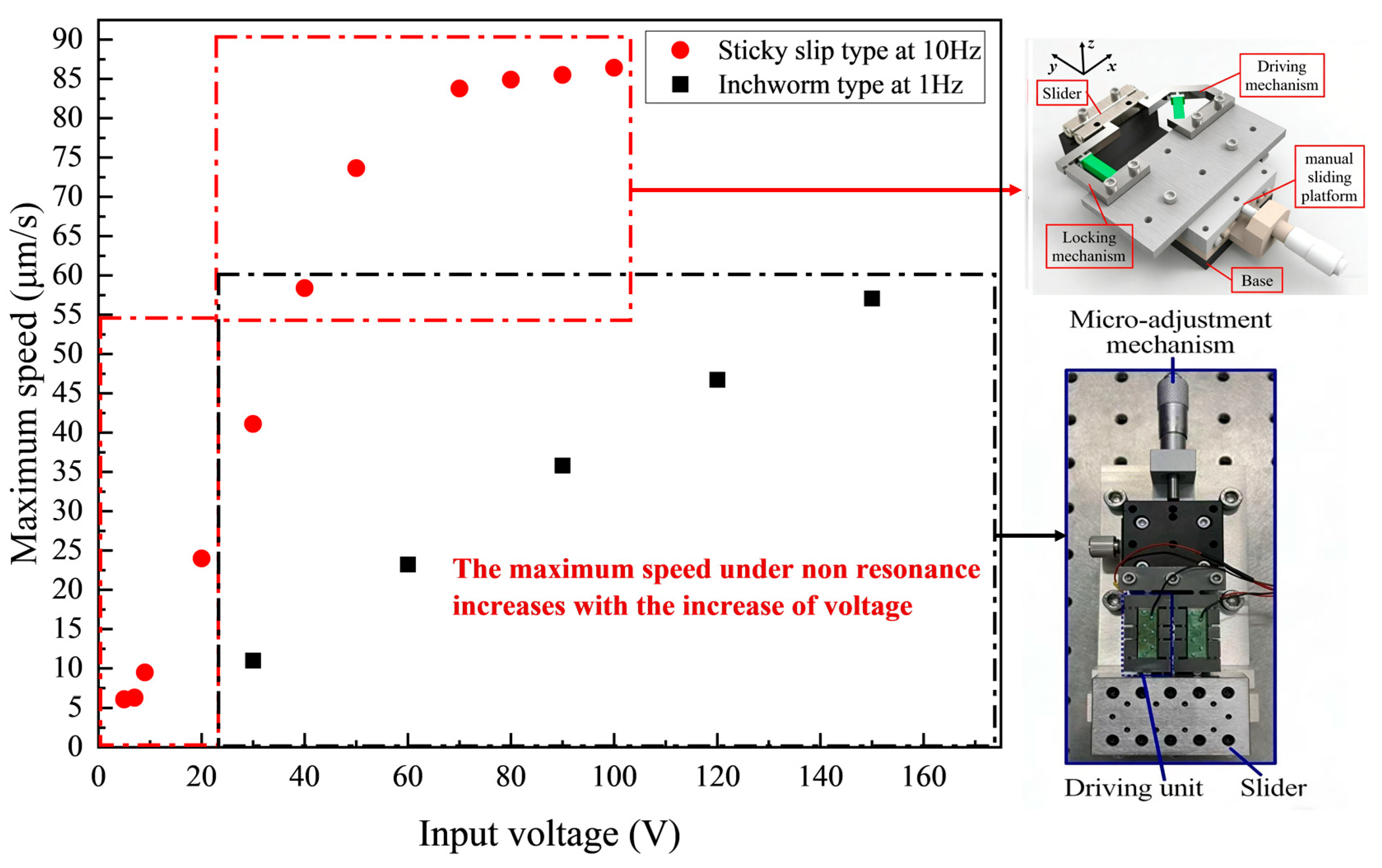
As illustrated in Figure 1, the maximum speed under non-resonance conditions increases monotonically with input voltage amplitude.
While the influence of electrical signal waveform on output performance has been partially studied, a systematic and comprehensive analysis remains lacking. Given the volume of test data generated in practical applications, more efficient and accurate analytical tools are essential. Machine learning, as a data-driven analytical and predictive modeling technique, has emerged as an ideal solution for analyzing piezoelectric actuator performance. Compared to traditional numerical methods, machine learning enables rapid processing of new datasets through pre-trained models, offering superior speed and efficiency—particularly when handling large-scale data [21,22].
Although still limited, some studies have applied machine learning to piezoelectric devices. Lei Chang combined machine learning with mathematical simulations to model nonlinear guided waves in a piezoelectric-integrated sandwich nanostructures, examining the effects of patch area, length scale, applied voltage, nonlocality, geometric parameters, and power-law exponents on nonlinear phase velocity [23]. Amelie Bender developed an interpretable machine learning-based diagnostic framework for piezoelectric bending actuators operating near resonance, enabling transparent fault detection and facilitating condition-based maintenance [24]. These efforts provide valuable theoretical foundations for applying machine learning to analyze the output performance of non-resonant piezoelectric actuators.
This study employs a random forest (RF) model to analyze the output performance of a representative non-resonant piezoelectric actuator. First, the structural composition and operational principle are introduced, key input parameters are summarized, and experimental tests are conducted under both continuous stepping and single-step operation modes. The RF model is then trained on a large dataset to assess the sensitivity of each input parameter. Subsequently, focusing on input voltage as the dominant variable, numerical analyses are performed to evaluate output speed linearity and determine the minimum driving voltage required for motor operation across various application scenarios, thereby reducing reliance on extensive empirical testing.

2. Prototype and Principle of a Non-Resonant Piezoelectric Actuator

2.1. Basic Structure

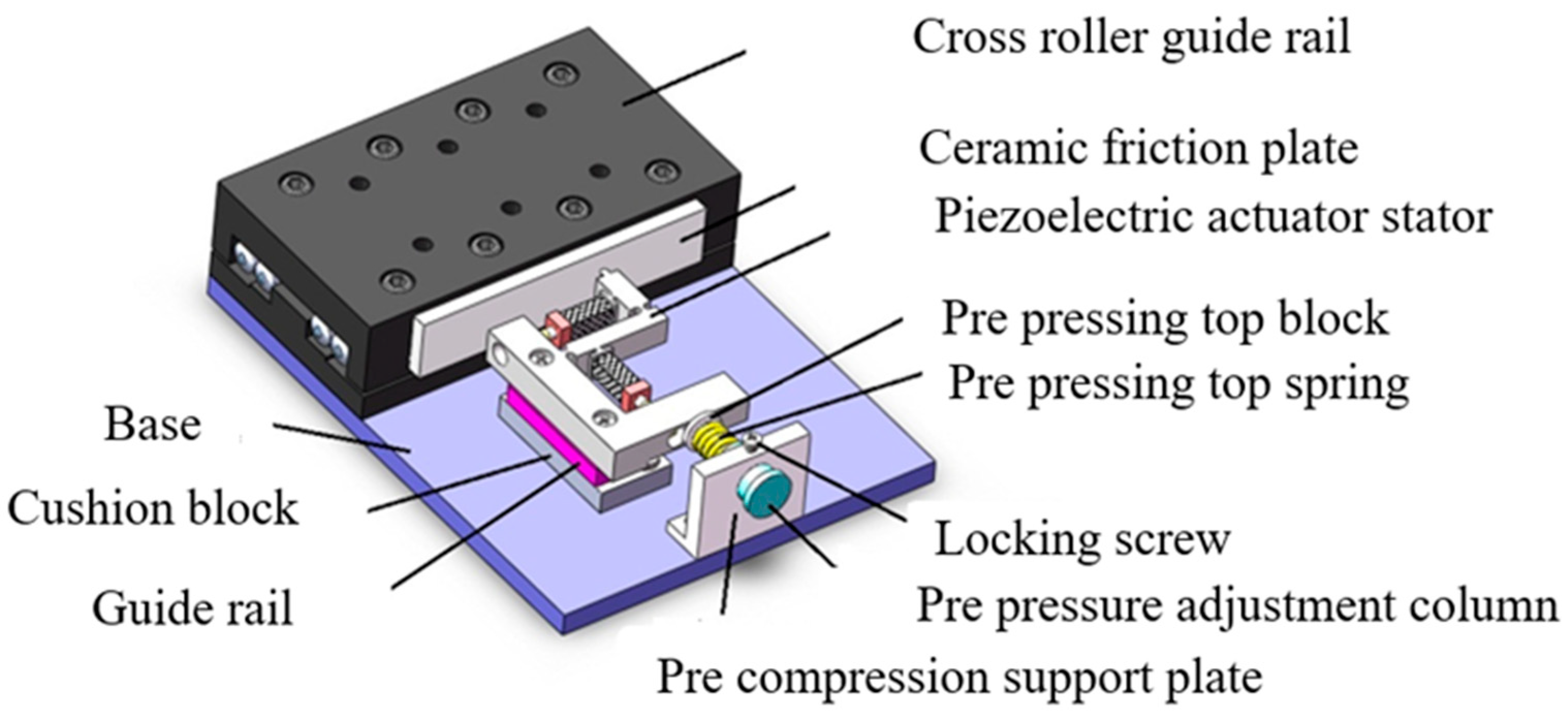
To simplify the model and facilitate understanding and exploration of the unit action mechanism, research on non-resonant piezoelectric actuators often begins with a single foot configuration. Figure 2 illustrates a typical non-resonant piezoelectric actuator prototype, comprising a stator structure with stacked piezoelectric ceramics, an adjustment pad guide structure, a pre-pressure regulator, and a cross-roller guide structure. The stator structure includes two orthogonally arranged stacked piezoelectric ceramics, which can be coordinated to produce both transverse and longitudinal vibrations at the top of the driving foot of the stator. This results in a closed elliptical or rectangular trajectory, utilizing friction to drive the guideway for precise linear motion. A preload force of 60 N was selected for this study. Excessive preload would increase frictional force, leading to deviations from intended operational behavior and introducing measurement inaccuracies. On the other hand, insufficient preload may result in inadequate clamping, causing instability and excessive vibration in the piezoelectric actuator, thereby compromising experimental integrity. Based on Hooke’s Law, the corresponding spring displacement under 60 N is calculated as 3.52 mm, which remains within the elastic limit of the material, ensuring reversible deformation and structural reliability.

2.2. Principle of Operation

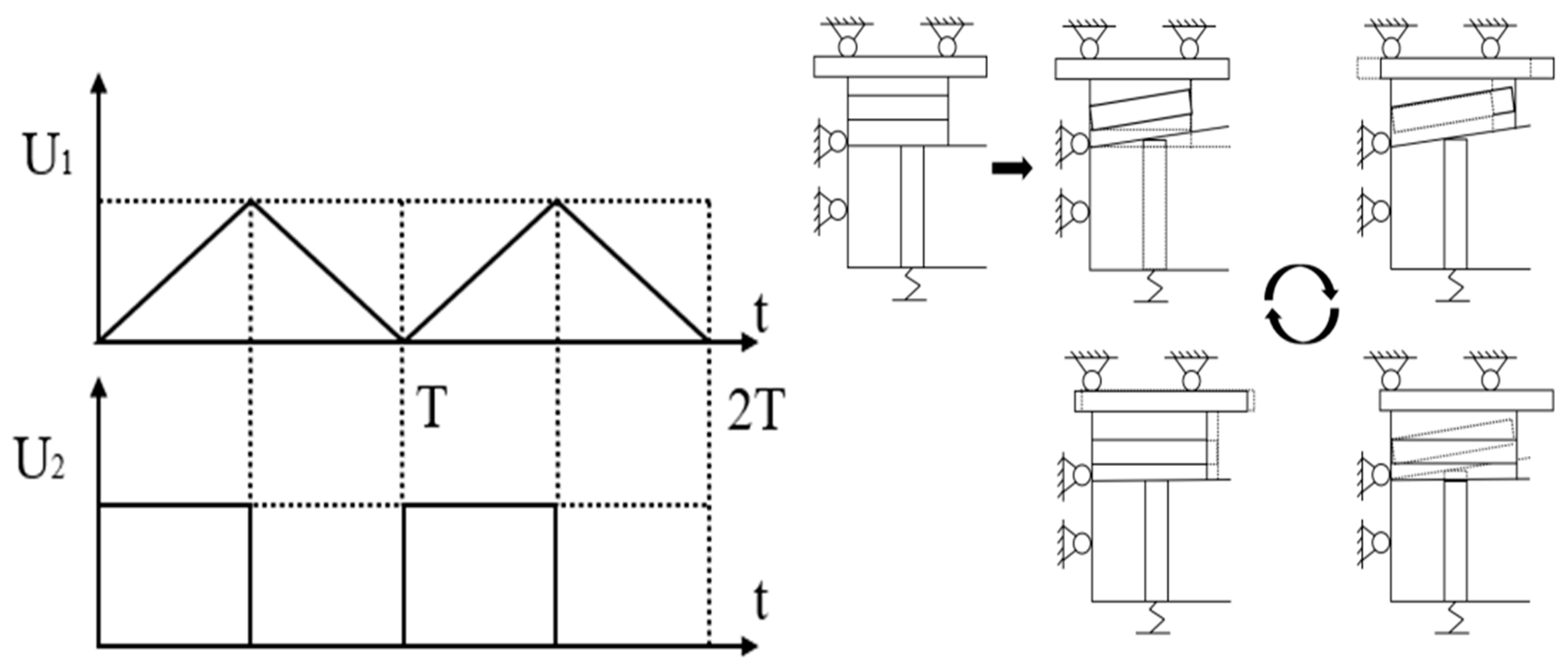
The operating principle of a typical non-resonant piezoelectric linear motor is shown in Figure 3.
In the first stage, the voltage applied to stacked piezoelectric ceramic 1 increases abruptly from 0 to U, causing rapid elongation that pushes the driving foot against the guideway;
In the second stage (from t = 0 to t = T/2), stacked piezoelectric ceramic 2 extends slightly due to the rising edge of the triangular wave signal, moving the actuator by a small distance δ through friction;
In the third stage (t = T/2), the voltage on stacked piezoelectric ceramic 1 drops, returning it to its original length and separating the driving foot from the guide;
In the fourth stage (from t = T/2 to t = T), the driving foot enters the return phase, driven by stacked piezoelectric ceramic 2.
Repeating this cycle generates continuous linear motion, with each cycle producing a displacement of δ.

2.3. Electromechanical Input Parameters

To understand the relationship between electromechanical input parameters and motor output performance, the following four variables were initially considered:
1
Input voltage of the stacked piezoelectric ceramics
2
Frequency of the operating condition
3
Direction of guideway motion
4
Sampling period
  • Referring to Figure 3, the two stacked piezoelectric ceramics are arranged in longitudinal and transverse rows, respectively. This arrangement increases the input voltage to the longitudinally stacked piezoelectric ceramics along the longitudinal direction of the mechanism. Conversely, the transverse stacked piezoelectric ceramics influence the motion of the guideway, and subsequent motion characterization studies are also conducted on the loaded guideway. Therefore, transverse voltage is selected as a parameter for the study.
  • For the operating frequency, since the focus is on a non-resonant piezoelectric linear motor, the resonance frequency obtained from modal analysis is 4776 Hz, while the input frequencies used in this experiment are only 1 Hz and 10 Hz—significantly lower than the resonance frequency. Thus, the input frequency has a negligible impact on the experiment, though frequency is still used as a training feature to assess its influence.
  • Due to the structural asymmetry of the non-resonant piezoelectric linear motor, the hysteresis effect of the piezoelectric ceramics [25,26,27], and the quality variations in the guideway friction surfaces, two motion directions of the guideway are set up, with guideway motion direction used as a study parameter.
  • Data collected with different sampling periods may impact the final results; therefore, the sampling period is included as a parameter to explore whether its size has a significant effect.
To investigate the relationship between input parameters and output characteristics and to identify the influence mechanism among the data [28,29], this experiment collects and trains guideway displacement data under various input voltages, frequencies, guideway orientations, and sampling periods. The aim is to identify the input parameters required to initiate guideway motion and those necessary for achieving linear displacement. Once these parameter sets are determined, subsequent guidance can be provided for motor design under different operating conditions, enabling predictions and recommendations for the optimal operating state of the motor.

3. Experiments

This section validates the performance of the piezoelectric linear actuator and the precision positioning linear stage design through experimental testing, primarily focusing on continuous action mode and step action mode experiments. In continuous action mode, a continuous driving voltage signal is applied to quickly move the precision positioning rotary platform to the predetermined working position. In contrast, the step action mode involves applying pulse voltage signals after the platform reaches the desired position to achieve finer position adjustments. Compared to continuous operation mode, step operation mode reduces inertia effects and significantly enhances positioning accuracy.
(1)
Experimental system
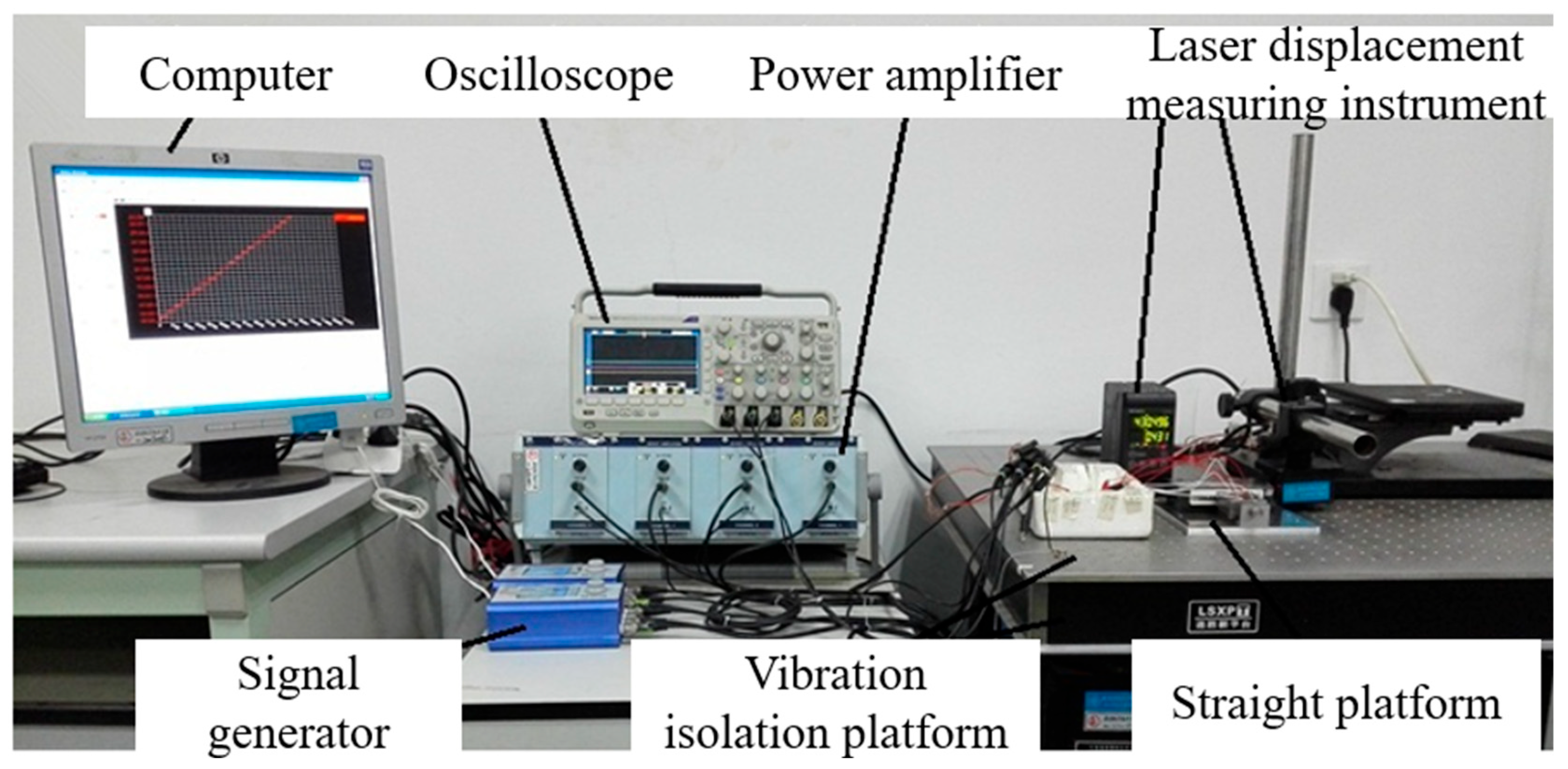
Figure 4 illustrates the experimental system for the precision positioning linear platform [30,31], which mainly consists of an air-float vibration isolation platform (ZDT10-08) (Shenzhen Nisdon Automation Technology Co., Ltd., Shenzhen, China), a dual-channel DDS signal generator (MHS-2300A) (Shenzhen Feiyi Technology Co., Ltd., Shenzhen, China), a power amplifier (XE500-A4) (Beijing Haower Technology Development Co., Ltd., Beijing, China), an oscilloscope (Tektronix DPO2014) (Tektronix (China) Co., Ltd., Shanghai, China), and a laser displacement measurement instrument (KEYENCE LK-HD500) (KEYENCE (CHINA) Co., Ltd., Shanghai, China). The product attributes are listed in Table 1. The MHS-2300A dual-channel DDS signal generator generates synchronized square- and triangular-wave signals, which are amplified 20-fold by the power amplifier to drive the piezoelectric linear actuator (Siglent Technologies Co., Ltd., Shenzhen, China). The oscilloscope monitors (Shenzhen Huike Pneumatic Precision Machinery Co., Ltd., Shenzhen, China) the waveform of the driving signal, the air-float vibration isolation platform minimizes external vibration interference, and the laser displacement measuring instrument accurately detects the micro-displacement of the precision positioning linear platform. The piezoelectric actuators (Siglent Technologies Co., Ltd., Shenzhen, China) utilized in this study are NAC2013-H14 compact multilayer ceramic stacks supplied by CoreMorrow Technology Co., Ltd., Harbin, China.
(2)
Continuous operation mode experiment
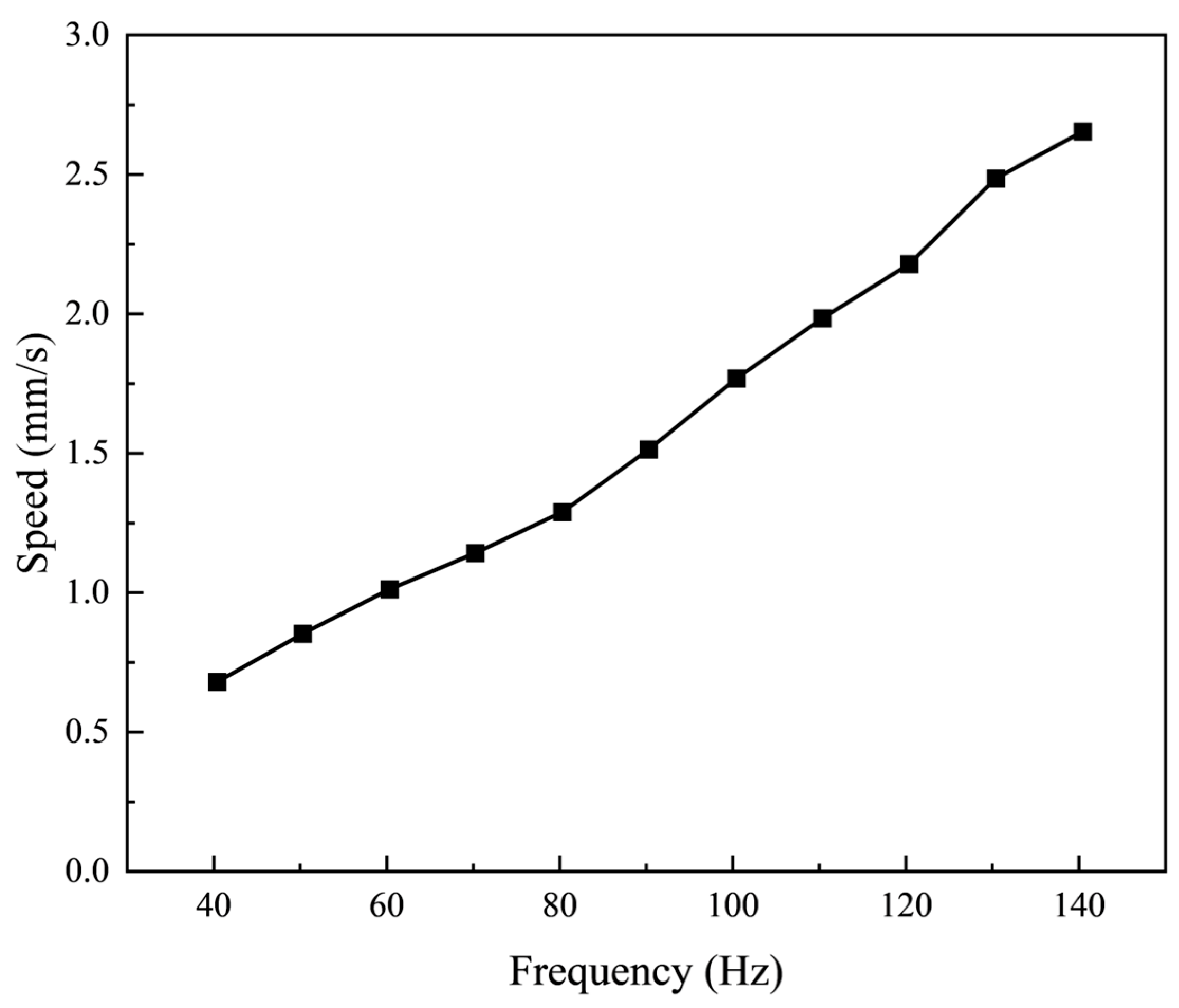
Figure 5 illustrates the speed-frequency relationship in continuous operation mode for the precision positioning linear stage. The piezoelectric actuator is powered by a square-triangle wave signal with a peak-to-peak voltage of 100 V and a frequency range of 40 to 140 Hz. As the driving voltage frequency increases, the speed of the precision positioning linear stage linearly rises from 0.673 mm/s to 2.646 mm/s.
(3)
Experiment of stepping action mode
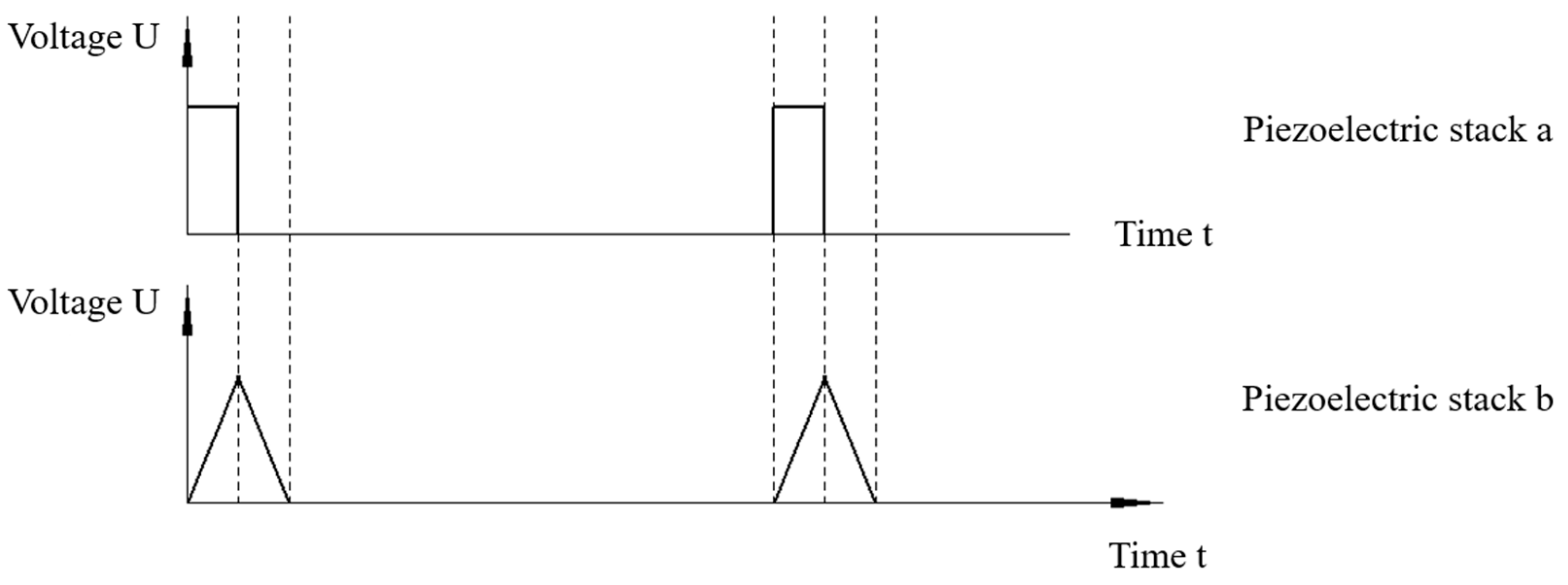
The pulse signal waveform applied in the step-action mode is shown in Figure 6. The platform resolution can be determined by setting a long interval segment following each driving waveform. Platform resolution refers to the minimum stable step size observed in the experiment.
While state-of-the-art piezoelectric motors can achieve a resolution of approximately 20 nm, this performance is typically attained only in cleanroom environments where external disturbances—such as ambient vibrations and airborne particles—are minimized. In contrast, this paper focuses on developing a high-resolution motor suitable for practical, non-ideal operating conditions. The proposed motor achieves a distinct step resolution of 0.6 μm, with the potential for finer stepping through voltage reduction. However, each step exhibits notable signal noise, necessitating post-processing filtering to achieve precise positioning. From a structural design perspective, further improvements in positioning accuracy may be achieved by incorporating horizontal elastic elements to accelerate stator retraction. However, this enhancement requires further research and experimental verification.
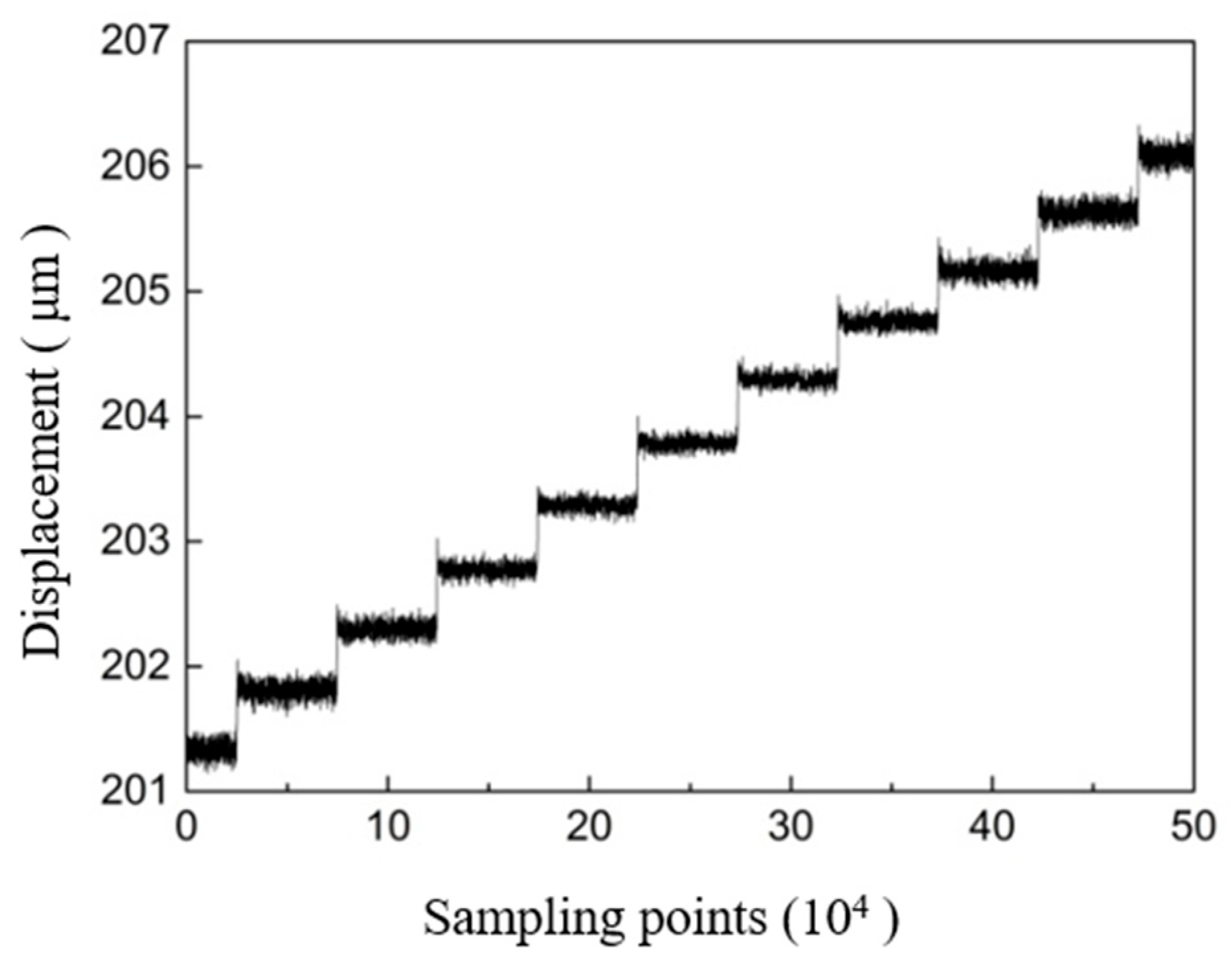
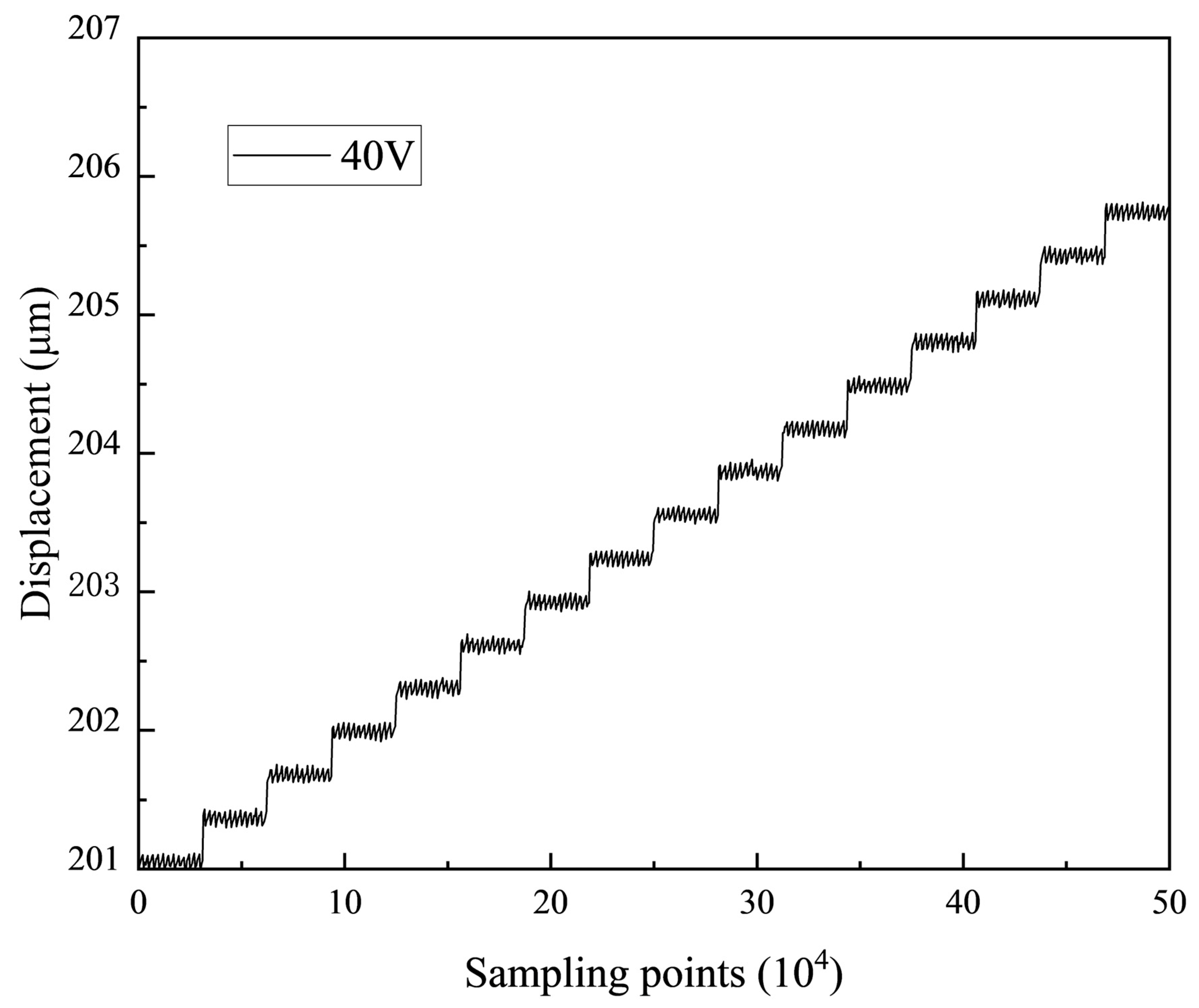
Figure 7 presents the output of the precision positioning linear stage when the pulse voltage peak is 40 V and the frequency is 1 Hz. The cumulative displacement over 5 steps reaches 3 μm, indicating an average displacement of approximately 0.6 μm. When the driving pulse voltage peak is below 40 V, the linear stage fails to maintain stable stepping. Consequently, the resolution of the precision linear stage driven by a single piezo actuator is determined to be 0.6 μm.

3.1. Data Acquisition

As shown in Table 2, the displacement data of motor vibration are collected with voltage, frequency, period, and direction as the feature set. Each displacement dataset contains 10,000 values, with a total of 16 datasets obtained, serving as the original dataset for subsequent machine learning analysis.

3.2. Random Forest Algorithm

Machine learning focuses on extracting hidden patterns and rules from large datasets, supporting both classification and regression tasks. The primary goal of machine learning is not only to develop models that fit the training data but also to ensure these models can accurately predict outcomes in new, unseen scenarios using the extracted rules or mathematical representations. Among the various algorithms available in machine learning, this paper employs the Random Forest algorithm [32,33,34].
Random Forest is a widely used ensemble learning method for both classification and regression tasks. This algorithm operates by constructing multiple decision trees and combining their predictions to produce a final result [35,36].
Decision trees form the foundational components of Random Forests. Each decision tree splits based on input features until a predetermined stopping criterion is reached, such as a maximum tree depth or a minimum sample count in the leaf nodes. The splitting process of each decision tree aims to minimize criteria such as information gain or mean squared error (MSE). Specifically, for classification tasks, information gain is used to evaluate the effectiveness of node splits, enhancing the tree’s accuracy in classifying data.
G a i n S , A = E n t r o p y S v V a l u e s ( A ) S v S E n t r o p y ( S v )
where E n t r o p y S represents the entropy of the set S , and S v denotes the subset of samples for which feature A assumes the value v .
For regression tasks, the decision tree selects the optimal split by minimizing the MSE.
M S E = 1 n i = 1 n ( y i y ¯ i ) 2
Random Forest employs the Bagging (Bootstrap Aggregating) technique to build multiple decision trees [37,38], where each tree is trained on a subset of the original dataset obtained via bootstrap sampling. This method enhances the stability and generalization of the model. During the construction of each tree, only a randomly selected subset of features is used for node splitting, which helps mitigate overfitting and improve predictive accuracy. The final prediction is derived by aggregating the predictions of all individual trees. For regression tasks, this typically involves averaging the predictions from all trees.
y ^ = 1 T t = 1 T y ^ t
where y ^ t is the prediction result of the t th tree and T is the total number of trees.
In Random Forests, feature importance is assessed by calculating the cumulative contribution of each feature across all decision trees in the ensemble [39,40]. For each individual decision tree, the importance of a feature is typically evaluated using metrics that measure the quality of split nodes, such as information gain for classification tasks or reduction in MSE for regression tasks. The overall importance of a feature in a Random Forest is then obtained by averaging the importance scores of the feature across all the trees in the forest.
For the regression task, the reduction in MSE can be expressed as:
Δ M S E = M S E p a r e n t ( N l e f t N t o t a l M S E l e f t + N r i g h t N t o t a l M S E r i g h t )
where M S E p a r e n t denotes the MSE of the parent node, M S E l e f t and M S E r i g h t represent the mean squared errors of the left and right child nodes, respectively. N l e f t and N r i g h t are the number of samples in the left and right child nodes, and N t o t a l is the total number of samples in the parent node.
For each tree in the Random Forest, the importance of each feature is calculated by accumulating the error reductions from all split nodes involving that feature. The overall feature importance in the Random Forest is then determined by averaging these importance scores for each feature across all trees.
The importance of feature i in a Random Forest, denoted as F I i , is calculated as follows:
F I i = 1 T t = 1 T k ϵ n o d e s I ( f e a t u r e k = i ) Δ M S E k
where T is the total number of trees, k ϵ n o d e s indicates the summation over all nodes of tree t , I ( f e a t u r e k = i ) is an indicator function that equals 1 when node k splits using feature i and 0 otherwise, and Δ M S E k represents the error reduction at node k . Feature importance is thus defined as the mean reduction in error attributable to the feature across all nodes and trees.
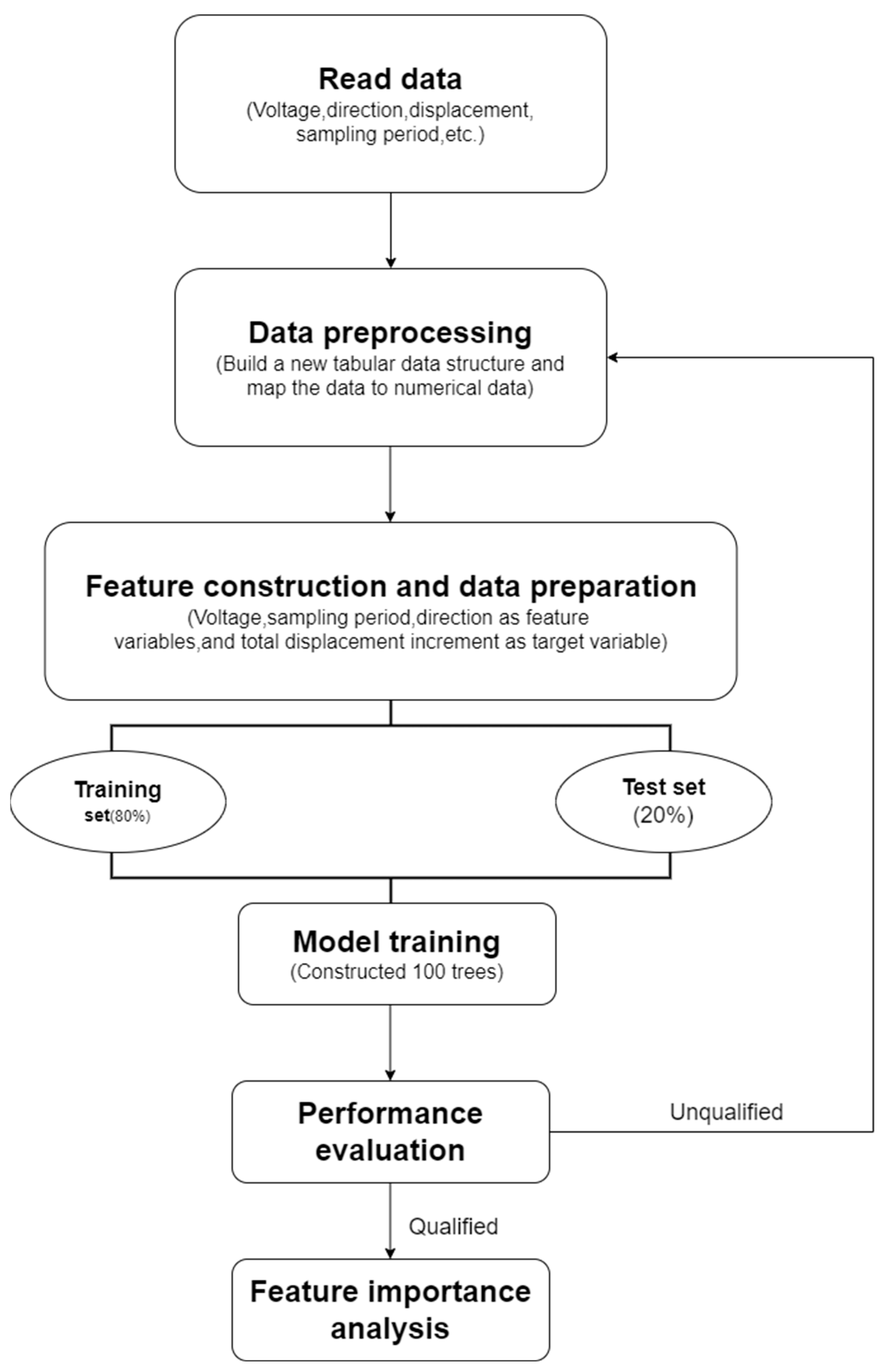
In this study, the Random Forest regression algorithm is employed to model and predict the relationship between voltage, frequency, period, and direction characteristics and the total displacement increment, as shown in the flowchart in Figure 8.
Information on voltage, frequency, period, and direction was extracted from the dataset, followed by calculating the mean, minimum, maximum, and standard deviation of the displacements. These metrics were arranged in a newly structured tabular format, with directional information converted to numerical values for processing. The data were then prepared for training a machine learning model by selecting voltage, sampling period, and direction as feature variables, and defining the total displacement increment as the target variable. The dataset was split into a training set and a test set, with the test set representing 20% of the total data.
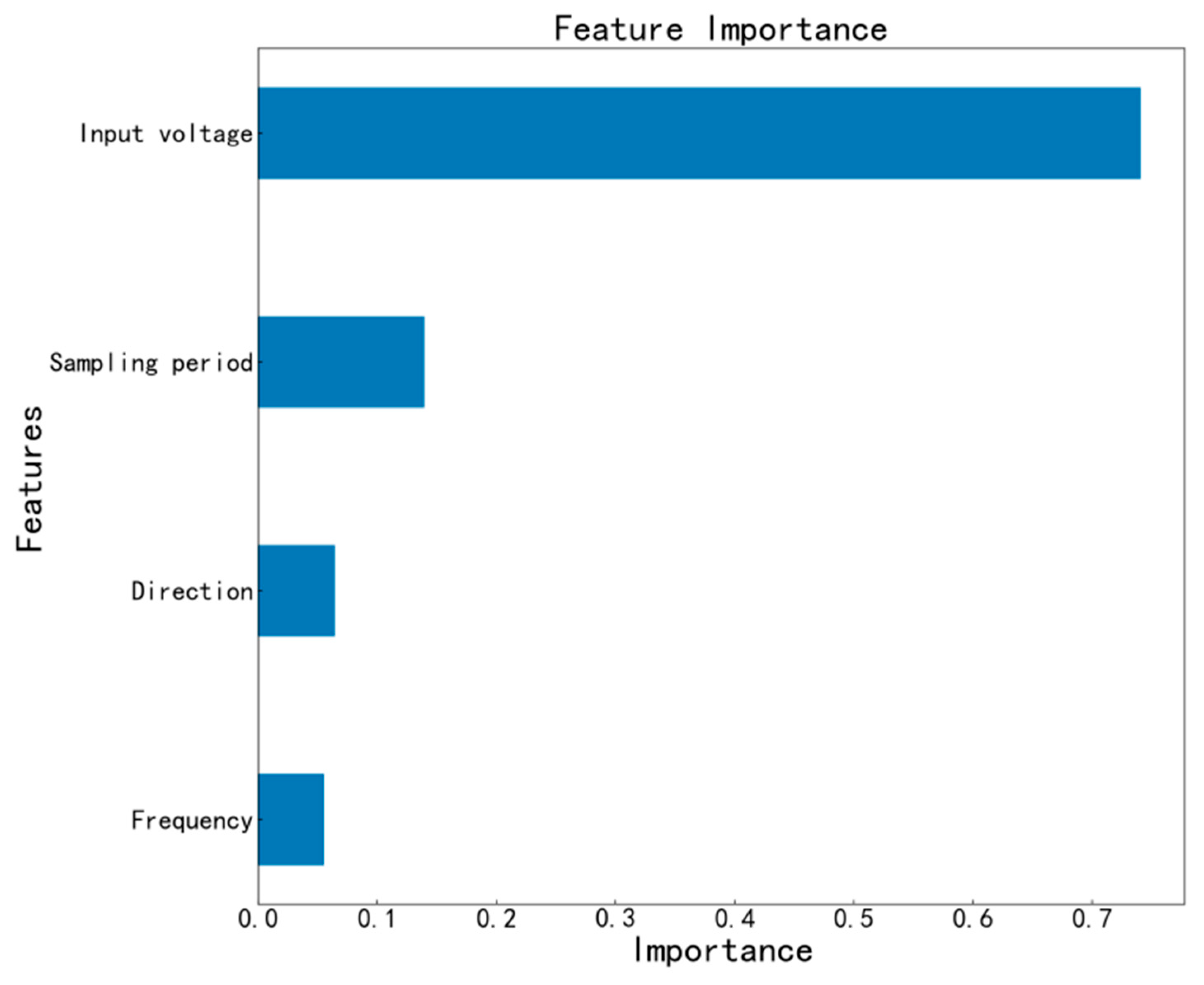
The total displacement increment was predicted using a Random Forest regression model with 100 trees. The model was trained on the training set, and its predictions were then evaluated against the test set. Model performance was assessed using the MSE, defined as the average squared difference between predicted and actual values. The resulting MSE was 0.0037, indicating that the model provides high predictive accuracy and is well-calibrated. Finally, a feature importance plot was generated to show the influence of each feature on the predictions, offering insights into the relative importance of each feature in forecasting the total displacement increment.
Due to significant differences in both physical dimensions and numerical magnitudes between the electrical parameters (voltage and frequency) and mechanical output (displacement) of the piezoelectric actuator, this study employs Z-score normalization to preprocess the feature data, effectively eliminating dimensional inconsistencies and improving numerical compatibility.
z i = x i μ σ
In this method, xi denotes the original feature value, μ represents the feature mean, and σ is the corresponding standard deviation. Following normalization, all features are transformed into a standard normal distribution with 0 mean and unit standard deviation, which enhances training stability and accelerates convergence during model optimization.
The study implements a gradient boosting decision tree algorithm, an ensemble learning-based approach for regression and classification tasks. The core mechanism involves sequentially training a series of weak learners—typically shallow decision trees—to progressively minimize the residual errors of the preceding models. The general formulation can be expressed as follows:
y ^ i t = y ^ i t 1 + η f t x i
A leaf-wise growth strategy is adopted, in which the leaf node exhibiting the highest split gain is selected for expansion at each iteration. This contrasts with the level-wise breadth-first approach by prioritizing splits that maximize performance improvement, leading to higher efficiency and often better predictive accuracy. The splitting criterion can be mathematically formulated as follows:
G a i n = 1 2 i L g i 2 i L h i + λ + i R g i 2 i R h i + λ i P g i 2 i P h i + λ γ
Model performance is evaluated using the coefficient of determination (R2 score), which quantifies the proportion of variance in the test set outputs explained by the model prediction. A higher R2 value indicates superior agreement between estimated and actual values, thus reflecting enhanced model fidelity.
R 2 = 1 i = 1 n t e s t y i y ^ i 2 i = 1 n t e s t y i y ¯ i 2
As shown in Figure 9, voltage is identified as the most critical feature for predicting displacement increments, followed in importance by period, direction, and frequency. The relatively low importance of frequency can be explained by the fact that the input frequency is significantly lower than the resonance frequency, aligning with theoretical expectations. Subsequent analysis will focus solely on the voltage parameter, with further data processing to identify the optimal input voltage that facilitates the linear motion of the motor.

3.3. Data Analysis

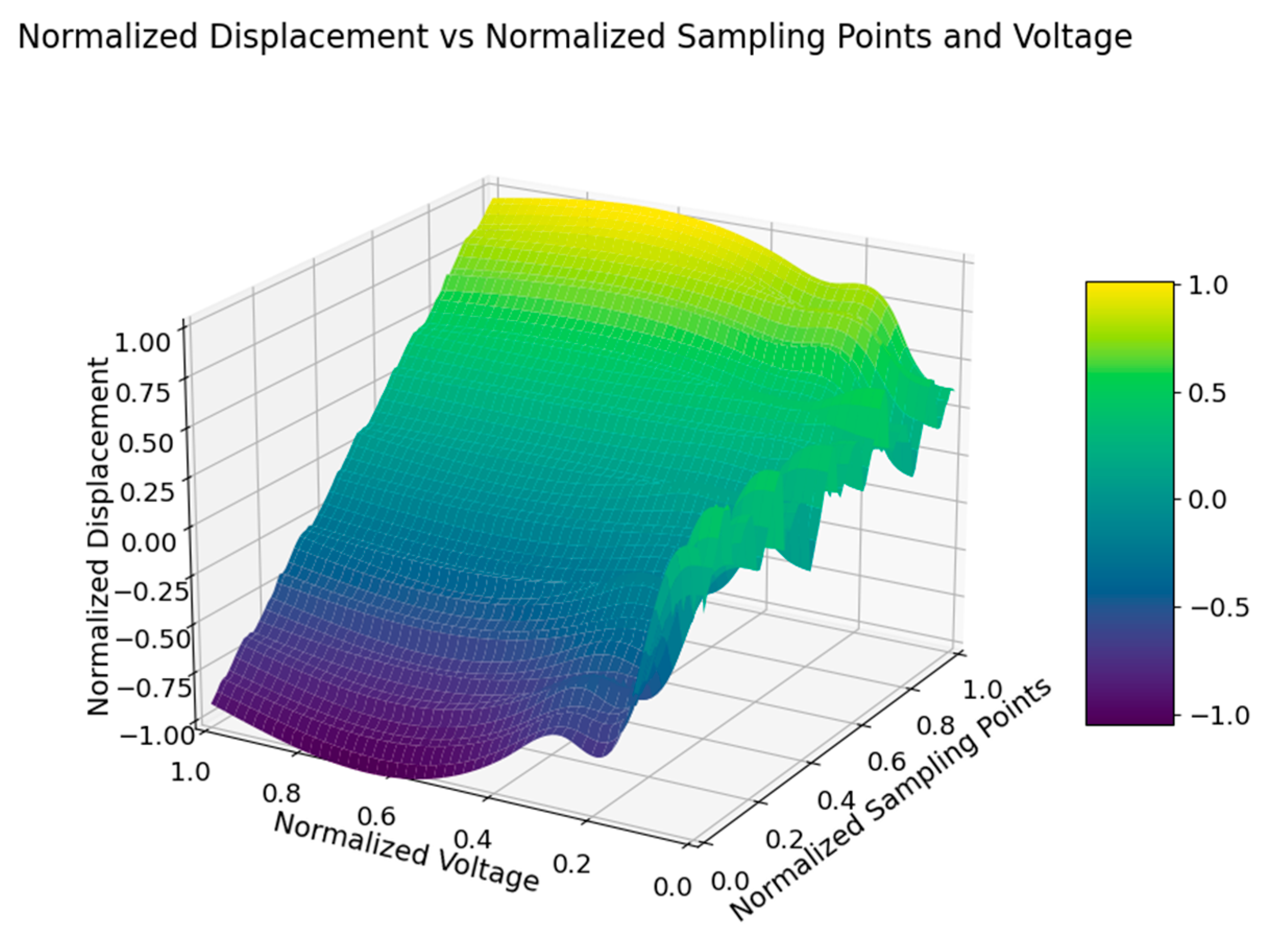
All data were collectively analyzed and visualized on a 3D graph, with voltage data on the x-axis, collection points on the y-axis, and displacement data on the z-axis. The data visualization process was conducted as follows:
(1)
Normalization: Due to the wide range of data values, normalization was applied [41]. Data along the x and y-axis were scaled to the range [0, 1], while the z-axis data were scaled to the range [−1, 1]. The normalization formula used is:
X n o r m = 2 · X X m i n X m a x X m i n 1
where X represents the original data, X m a x and X m i n are the maximum and minimum values of the data, respectively, and X n o r m is the normalized data.
(2)
Noise Reduction: Gaussian filters were employed to reduce noise and abrupt variations within the data [42]. The Gaussian function applied is defined as:
G x , y = 1 2 π σ 2 e x p ( x 2 + y 2 2 σ 2 )
where σ is the standard deviation that controls the degree of smoothing, and G x , y represents the two-dimensional Gaussian function.
The smoothed data, Z s m o o t h is obtained by convolving the original data Z with the Gaussian kernel function G :
Z s m o o t h i , j = m = k k n = k n Z ( i m , j n ) · G ( m , n )
(3)
Interpolation: To generate smoother surfaces [43], the data were interpolated to estimate new data points between known data points. The interpolation function used is:
Z i n t e r p x , y = i = 0 n j = 0 m Z i j · φ i j ( x , y )
where Z i n t e r p ( x , y ) denotes the interpolated data, φ i j ( x , y ) is the interpolation basis function, and Z i j are the original data points. A cubic interpolation function was chosen for this purpose.
The generated graph below illustrates the transition from immobility to mobility for the object of study. In Figure 10, the Z-axis values gradually increase from near zero, representing the shift from immobile to mobile states. Additionally, with color mapping applied, the color varies based on displacement magnitude: lower displacement values are typically shown in blue, while higher values appear in yellow or green. This color gradient facilitates visualization of the transition from immobility to mobility. Furthermore, a flat surface in certain regions suggests minimal displacement, indicating a likely state of immobility. Conversely, significant undulations in some areas indicate greater displacement, likely corresponding to a mobile state.
Each set of voltage and displacement data in the dataset was analyzed independently [44,45,46,47]. A linear fit was performed on the data using the least squares method, where the objective function is defined as:
E r r o r = i = 1 n ( y i ( m x i + b ) ) 2
where y i represents the actual values, and m x i + b denotes the predicted values.
The equation for the linearly fitted line is given by:
y = m x + b
where m and b are the fitting parameters determined by the least squares method to minimize the sum of the squared errors between the observed data points and the fitted line.
The optimal values of m and b are obtained by solving the following system of equations:
m = n x y ( x ) ( y ) n ( x 2 ) ( ( x ) ) 2 b = y m ( x ) n

3.3.1. Finding the Minimum Input Voltage

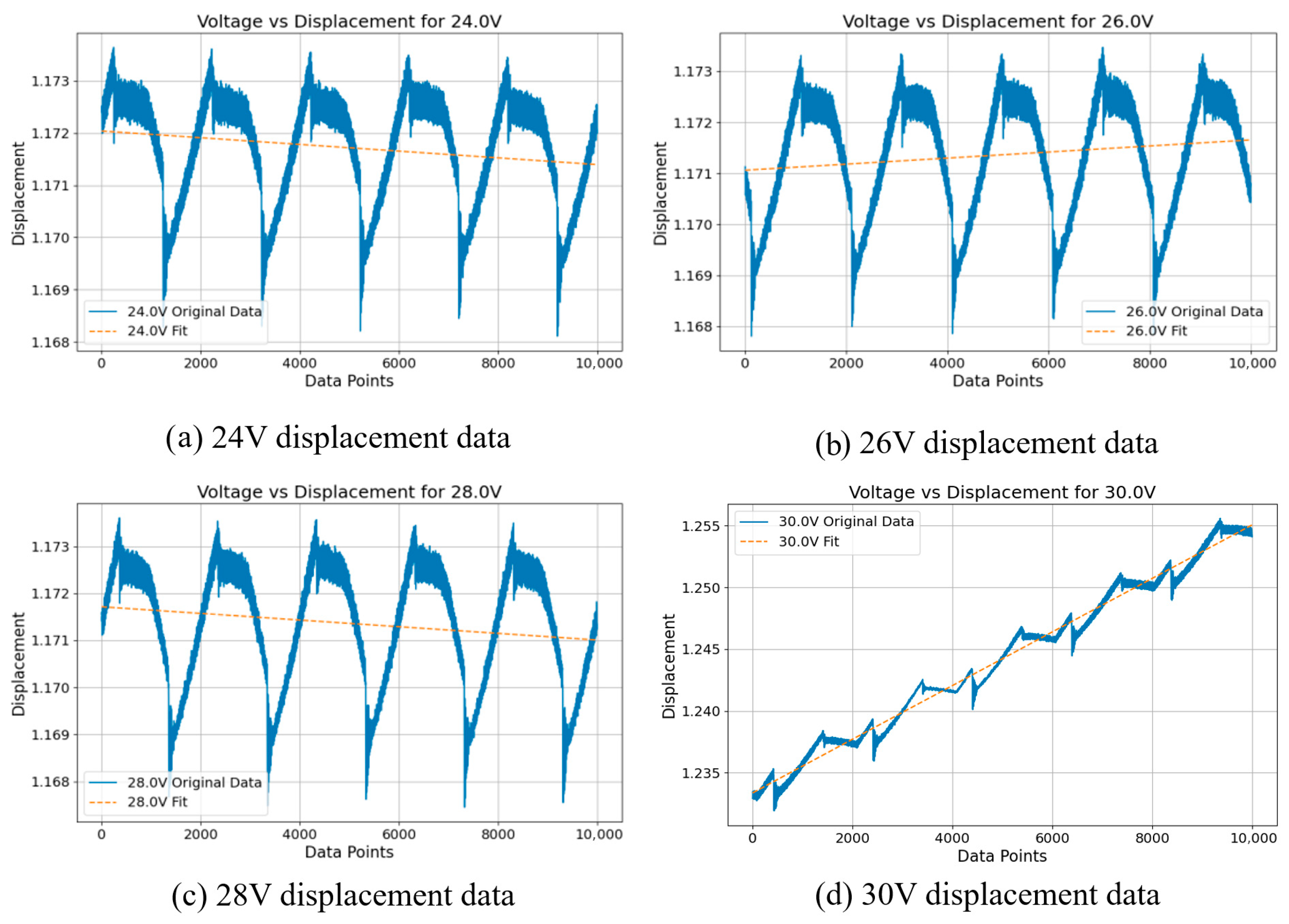
The displacement data at 24 V, 26 V, 28 V, and 30 V were fitted, and the corresponding fitted images are shown below in Figure 11.
Due to the characteristics of the input signal, the motor-driven guide rail exhibits alternating forward and backward motion, resulting in a displacement trajectory resembling a sawtooth waveform, as shown in the figure. Analysis of displacement data and their fitted curves across four different voltage levels indicates that the trajectories at 24 V, 26 V, and 28 V are similar, with the slope of the fitted line approximately zero. Specifically, the fitted line shows a decreasing trend at 24 V, an increasing trend at 26 V, and a decreasing trend again at 28 V. This behavior may be attributed to friction generated between the guide rail and the experimental platform during movement.
Notably, at 30 V, the fitted displacement curve exhibits a sudden change, indicating a critical transition point between 28 V and 30 V. This transition likely allows the guide to overcome friction, resulting in clear, linear movement. The next step is to precisely identify the voltage that initiates this transition.
The implementation method is outlined as follows:
(1)
Data Extraction and Fitting: The dataset was loaded, and displacement data for voltages of 28 V and 30 V were extracted. A linear fit was subsequently applied to this data to determine the slope and intercept of the fitted line.
(2)
Slope Analysis: By analyzing the range of slopes, it was observed that the slope of the fitted line is approximately −7.07 × 10⁻⁸ at 28 V and 2.17 × 10⁻⁶ at 30 V. Interpolation was then conducted to determine the voltage corresponding to intermediate slopes.
(3)
Interpolation Function Creation: A linear interpolation function was established to determine voltage values corresponding to slopes within the range of (0, 2.17 × 10⁻⁶). The interpolation formula is as follows:
y = y 0 + ( y 1 y 0 ) ( x x 0 ) ( x 1 x 0 )
(4)
Calculation Using Linear Interpolation: The displacement data for the corresponding intermediate voltage values were obtained through linear interpolation, using the following specific interpolation formula:
y t a r g e t = y 28 V + ( y 30 V y 28 V ) ( x t a r g e t 28 ) 30 28
(5)
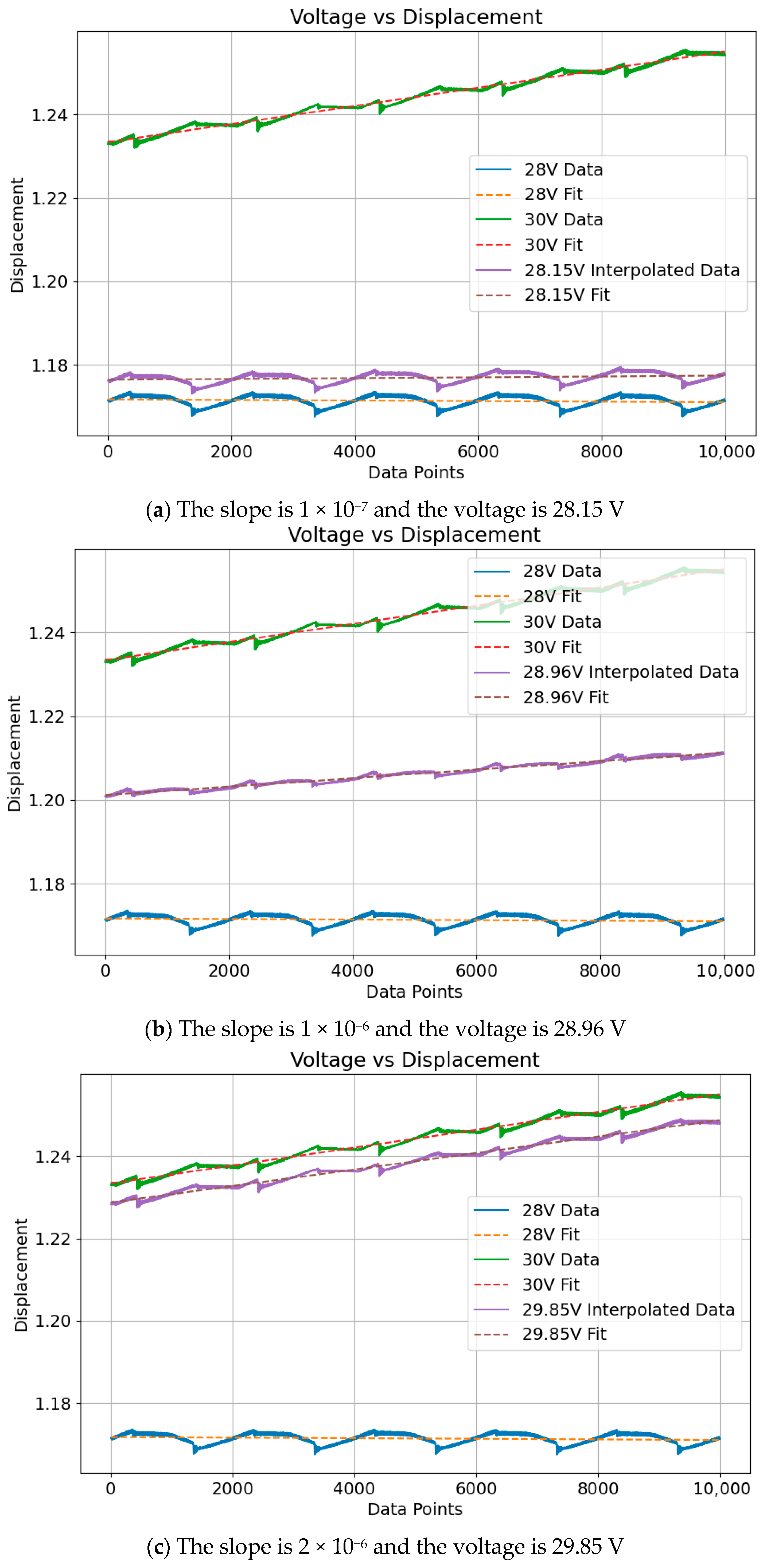
Data Fitting and Visualization: Finally, the interpolated data were subjected to a linear fit to determine the slope and intercept of the resulting line. The displacement data at 28 V, 30 V, and the interpolated voltages were visualized alongside their corresponding linear fitting results, as shown in Figure 12 below.
According to the data comparison chart, at a voltage of 28.15 V, the slope of the fitted straight line is 1 × 10⁻⁷. At this voltage, the motion is essentially similar to that observed at 28 V, exhibiting a positive slope but without significant change, indicating that the motion state is comparable to that at 26 V and that friction has not yet been overcome.
In contrast, when the voltage reaches 28.96 V, the slope increases to 1 × 10⁻⁶, signifying a noticeable change, suggesting that friction has been overcome and movement has commenced. At 29.85 V, the slope further increases to 2 × 10⁻⁶, at which point the motion resembles that at 30 V, confirming that friction has been overcome.
Therefore, a voltage of 28.96 V is identified as the critical input voltage required for the rail to overcome friction and initiate significant linear motion.
As shown in Figure 13, two primary factors contributing to numerical repeatability and discrepancies between estimated and predicted values are investigated: First, material replacement is considered. Experimental friction induces progressive wear of contact materials over time, altering interface characteristics and introducing systematic deviations between actual measurements and model estimates. Second, the clamping block within the preloading module is upgraded to an adaptive design. This new configuration enables real-time adjustment of the rear-end spring preload force by detecting vibrations of front-end vibration frequencies, thereby maintaining optimal contact conditions and improving long-term consistency.

3.3.2. Finding the Optimal Voltage for Linear Motion

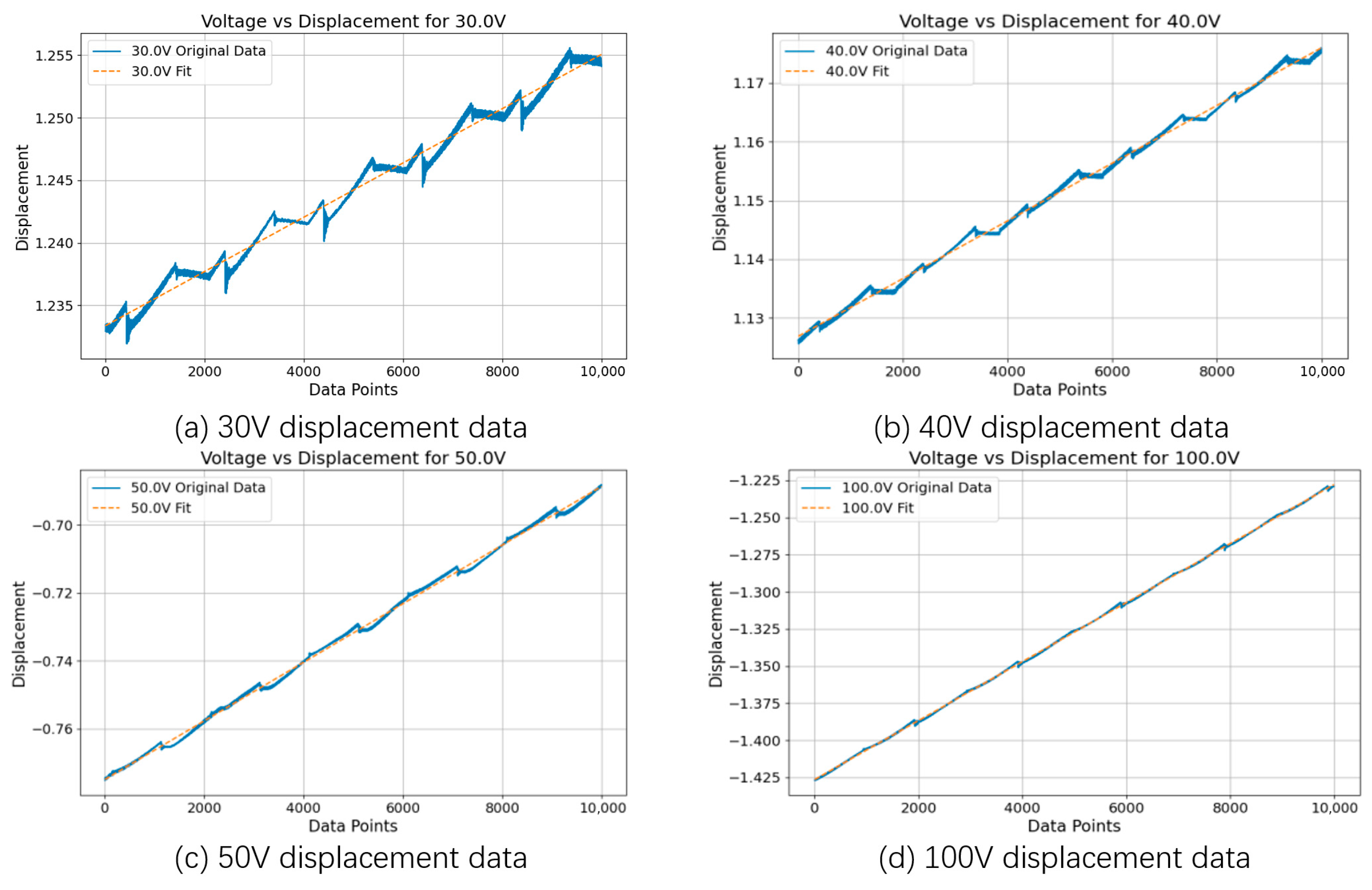
The displacement data at 30 V, 40 V, 50 V, and 100 V were fitted, and the corresponding fitted images are shown in Figure 14.
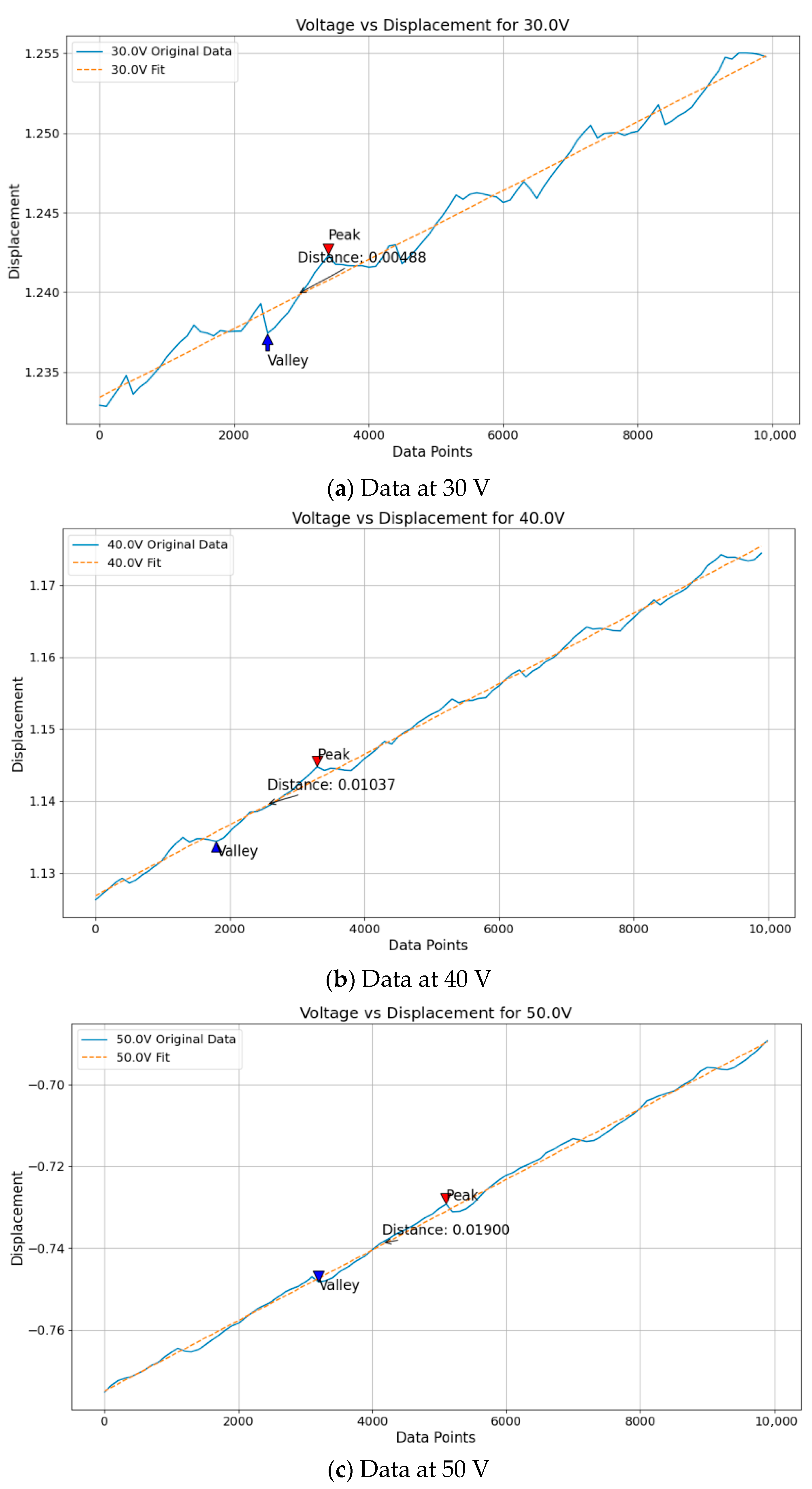
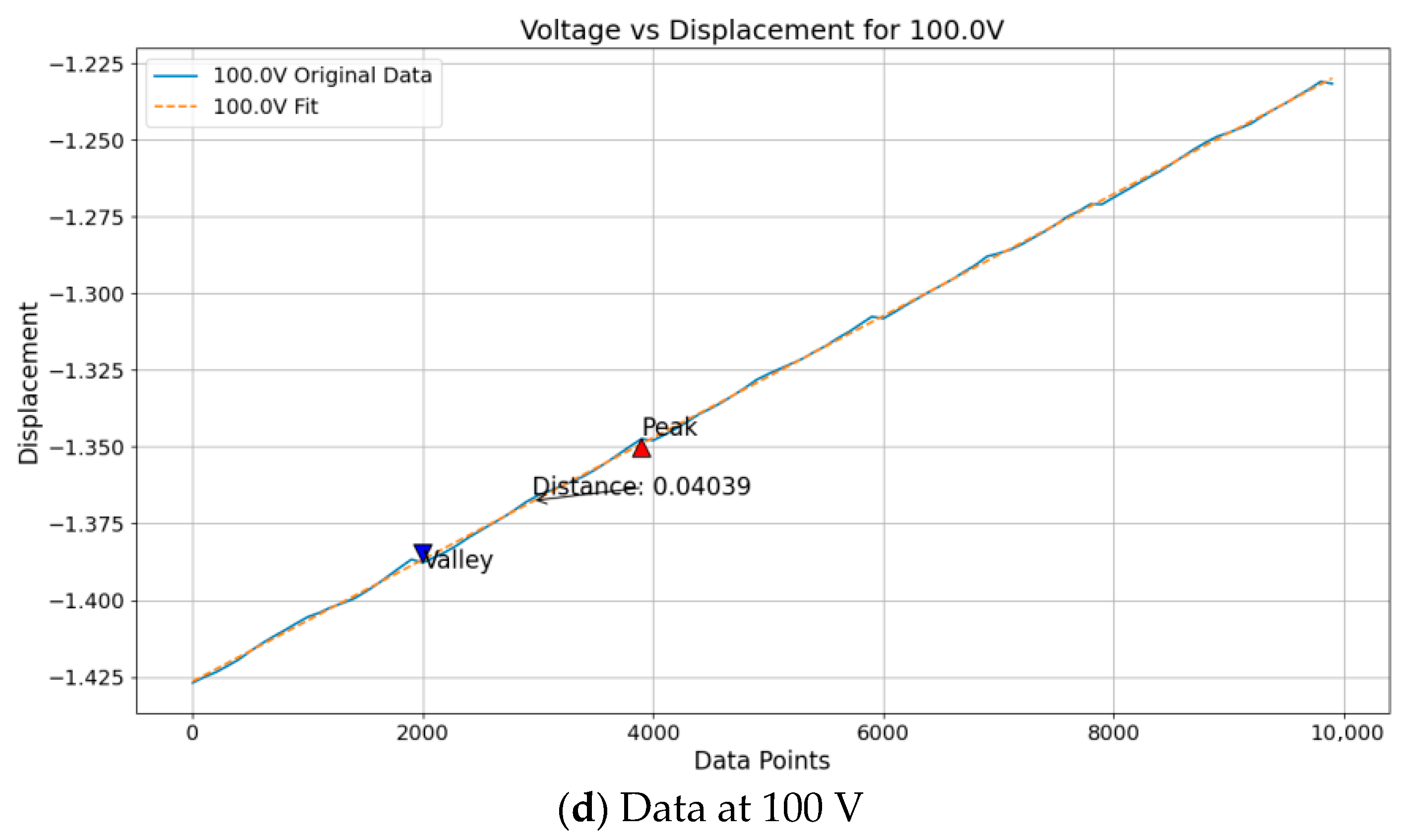
Preliminary image fitting indicated that the motion trajectories at all four voltage levels approximately converged to a linear state. However, due to inconsistencies in the vertical coordinate scale, further analysis was conducted by identifying local maxima and minima—namely, the peaks and troughs—in each plot and calculating the differences between these values. By comparing the magnitudes of these differences, the degree of linearity in the motion trajectories at different voltages was preliminarily assessed.
The implementation method is as follows:
(1)
Peak Detection: The data points were iterated through to identify local maxima (peaks) and local minima (valleys) by comparing their relative magnitudes.
(2)
Downsampling: To enhance visualization and handle the high number of collected points, downsampling was applied. One data point was selected for every 100 data points to reduce the dataset size.
The generated images are as follows:
Image analysis reveals that the rail exhibits minimal backward motion at 30 V, indicating that this voltage likely corresponds to the highest degree of linear motion. However, it was previously noted that the guideway starts to overcome friction and initiate movement at 28.96 V. This observation suggests the potential for an optimal voltage for linear motion within the 28.96 V to 30 V range. To further explore this hypothesis, a comprehensive analysis was conducted (Figure 15).
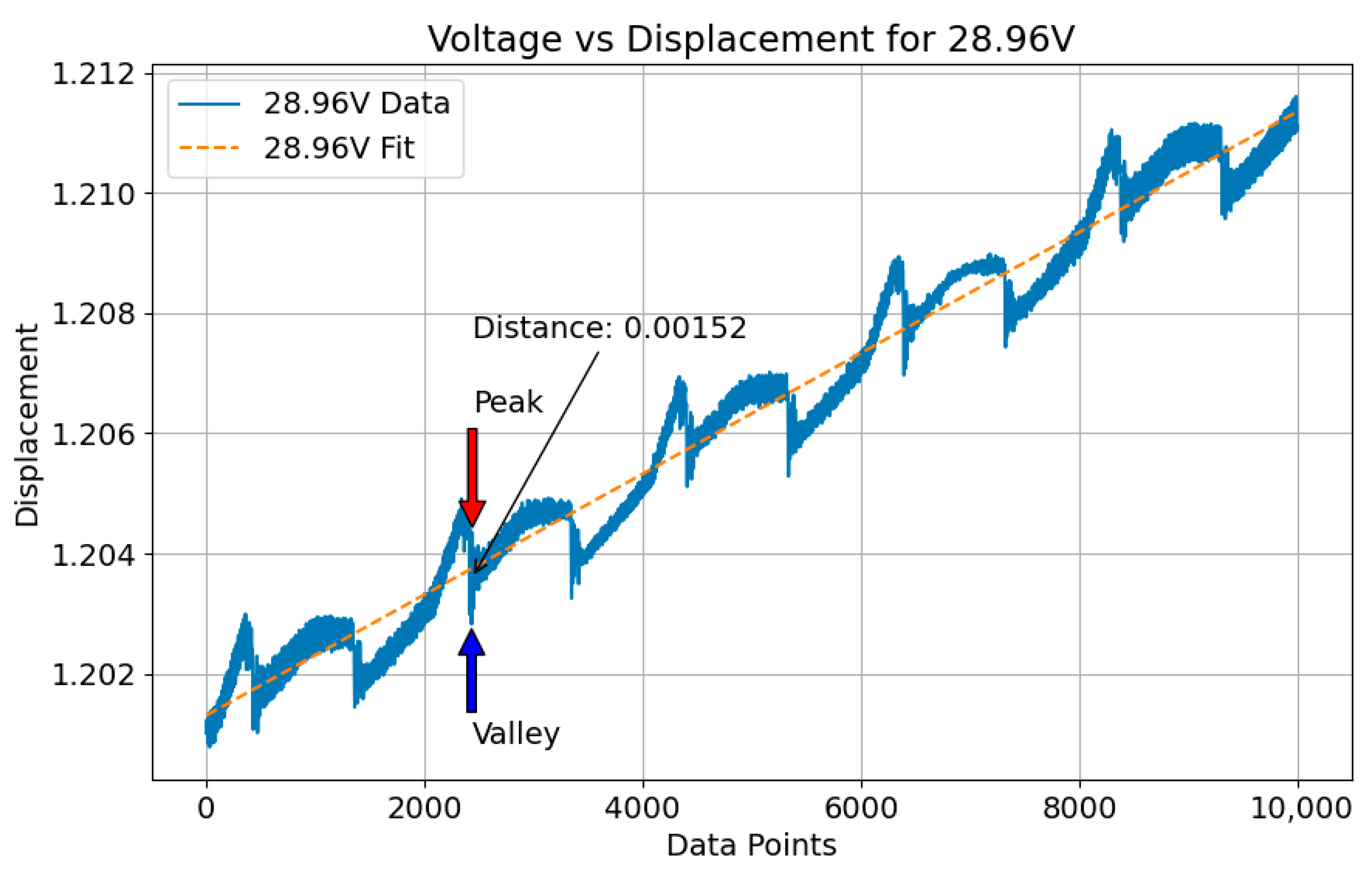
The data at 28.96 V were analyzed using the same methodology, and the corresponding visualization is presented below (Figure 16).
The maximum interval between peaks and valleys at 28.96 V is 0.00152, which is smaller than the interval observed at 30 V, suggesting that the highest linearity in rail motion is attained at 28.96 V.
Subsequently, data from 28.96 V to 30 V were analyzed and validated collectively. Linear interpolation was applied to fill any missing data points. Both linear regression and polynomial regression were employed to fit the nonlinear data. The polynomial regression equation is expressed as follows:
y = a d x d + a d 1 x d 1 + + a 1 x + a 0
As in linear regression, the objective here is to minimize the sum of squared errors, represented by the following equation:
E r r o r = i = 1 n ( y i ( a d x i d + a d 1 x i d 1 + + a 1 x i + a 0 ) ) 2
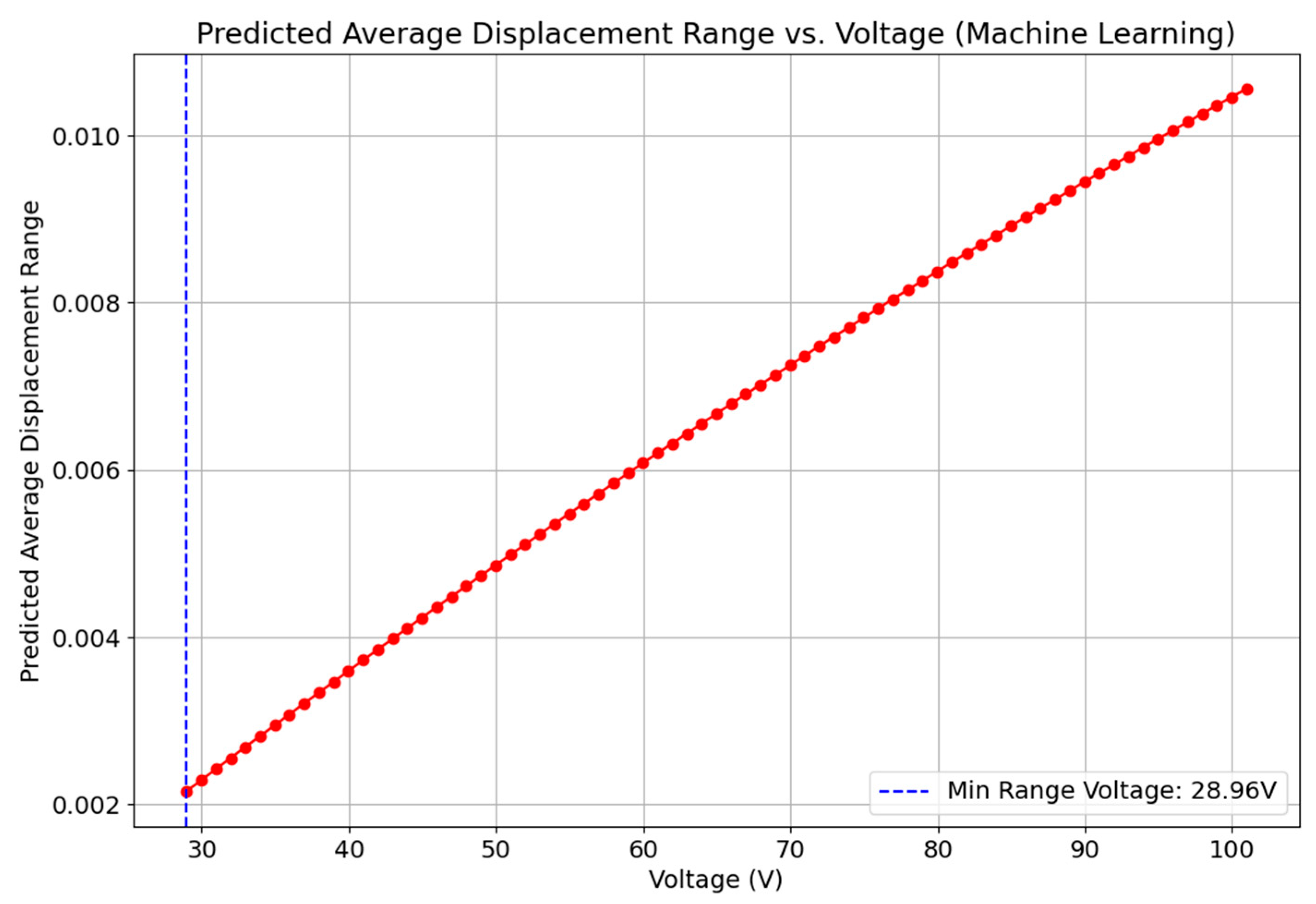
A polynomial regression model is constructed and fitted using linear regression techniques. This model is trained on existing data to estimate the average displacement range at untested voltage levels. The optimal fitting curve is identified by minimizing the sum of squared errors, thereby enhancing the predictive accuracy of the model. The predicted outcomes are then analyzed to determine the voltage value associated with the minimum regression. The resulting visualization is shown in Figure 17.
According to machine learning prediction, the guideway exhibits minimal backlash at 28.96 V, indicating the highest level of motion linearity, which aligns with previous studies.

4. Conclusions

This study investigates the feasibility of employing the RF algorithm to model the relationship between input physical parameters and output displacement in a non-resonant piezoelectric actuator. The algorithm was trained on 16 sets of empirical data to identify both the optimal voltage for achieving linear displacement and the minimum input voltage required to initiate guide rail motion. Key experimental findings are summarized as follows:
(a)
The developed model achieves a mean squared error (MSE) of 0.0037, demonstrating strong training stability and high predictive accuracy.
(b)
Among the four input features analyzed, voltage emerges as the most significant predictor of displacement increments, exhibiting substantially higher feature importance compared to the other variables. In contrast, the direction of guide rail motion, sampling period, and excitation frequency contribute negligibly to the model’s prediction capability.
(c)
The threshold input voltage required for the guide rail to overcome static friction and produce measurable displacement is determined to be 28.96 V. This voltage also corresponds to the point of maximum linearity in the guide rail’s motion, suggesting an optimal operating condition for precise positioning control.

Author Contributions

All authors contributed to the study conception and design. Material preparation, data collection, and analysis were performed by L.Z., M.S., S.S. and M.Z. The first draft of the manuscript was written by P.Y. and Z.C., and all authors commented on previous versions of the manuscript. All authors have read and agreed to the published version of the manuscript.

Funding

This work was supported by the Natural Science Foundation under Grant numbers 52375543, 52405063, and 52405062. This work was supported by the Jiangsu Provincial Natural Science Foundation under Grant numbers BK20251070.

Institutional Review Board Statement

Not applicable.

Informed Consent Statement

Not applicable.

Data Availability Statement

The datasets generated and/or analyzed during the current study are available from the corresponding author on reasonable request.

Conflicts of Interest

The authors declare no conflicts of interest.

References

  1. Zhou, S.; Wang, G. Finite element analysis of a compound device integrated into a piezoelectric actuator and a piezoelectric harvester. In Proceedings of the 2022 16th Symposium on Piezoelectricity, Acoustic Waves, and Device Applications (SPAWDA), Nanjing, China, 10–14 October 2022; pp. 415–419. [Google Scholar]
  2. Zymelka, D.; Takeshita, T.; Takei, Y.; Kobayashi, T.; Hanakawa, T. Soft packaging of flexible piezoelectric actuators for applications in wearable haptic devices. In Proceedings of the 2024 IEEE 37th International Conference on Micro Electro Mechanical Systems (MEMS), Austin, TX, USA, 21–25 January 2024; pp. 383–385. [Google Scholar]
  3. Surendran, N.; Durasiewicz, C.P.; Hoffmann, T.; Wille, A.; Bussmann, A.B.; Richter, M. Microfluidic delivery of high viscosity liquids using piezoelectric micropumps for subcutaneous drug infusion applications. IEEE Open J. Eng. Med. Biol. 2024, 5, 21–31. [Google Scholar] [CrossRef]
  4. Zhou, X.; Wu, S.; Wang, X.; Wang, Z.; Zhu, Q.; Sun, J.; Huang, P.; Wang, X.; Huang, W.; Lu, Q. Review on piezoelectric actuators: Materials, classifications, applications, and recent trends. Front. Mech. Eng. 2024, 19, 6. [Google Scholar] [CrossRef]
  5. Mohith, S.; Upadhya, A.R.; Navin, K.P.; Kulkarni, S.; Rao, M. Recent trends in piezoelectric actuators for precision motion and their applications: A review. Smart Mater. Struct. 2020, 30, 013002. [Google Scholar] [CrossRef]
  6. Xue, X. Plasmonic fiber-optic ultrasonic actuator. In Proceedings of the 2023 IEEE 7th International Symposium on Electromagnetic Compatibility (ISEMC), Hangzhou, China, 20–23 October 2023; pp. 1–5. [Google Scholar]
  7. Zhao, S.; Han, X.; Sang, Y. Application research of high-precision ultrasonic technology in position sensing for pneumatic actuators. In Proceedings of the 2024 International Conference on Intelligent Computing and Robotics (ICICR), Dalian, China, 12–14 April 2024; pp. 257–261. [Google Scholar]
  8. Li, Y.; Yuan, L.; Wang, L. Research on preload characteristics of the inertial piezoelectric actuator. In Proceedings of the 2023 17th Symposium on Piezoelectricity, Acoustic Waves, and Device Applications (SPAWDA), Chengdu, China, 10–12 November 2023; pp. 1–5. [Google Scholar]
  9. Sun, W.; Xu, Z.; Wang, K.; Li, X.; Tang, J.; Yang, Z.; Huang, H. An impact inertial piezoelectric actuator designed by means of the asymmetric friction. IEEE Trans. Ind. Electron. 2022, 70, 699–708. [Google Scholar] [CrossRef]
  10. Ma, J.; Li, J.; Lin, X.; He, X.; Hu, Y.; Li, J.; Wen, J. An inchworm and stick-slip dual mode piezoelectric linear actuator for cell injection. IEEE Access 2023, 11, 70534–70541. [Google Scholar] [CrossRef]
  11. Shan, J.; Li, Y.; Li, H.; Bai, D. Design and simulation of a 2-dof inchworm linear piezoelectric actuator. In Proceedings of the 2023 IEEE International Conference on Mechatronics and Automation (ICMA), Harbin, China, 6–9 August 2023; pp. 2283–2288. [Google Scholar]
  12. Guan, J.; Zhang, S.; Deng, J.; Liu, J.; Liu, Y. A driving-clamping integrated inch-worm linear piezoelectric actuator with miniaturization and high thrust density. IEEE Trans. Ind. Electron. 2024, 72, 801–810. [Google Scholar] [CrossRef]
  13. Ma, X.; Liu, J.; Deng, J.; Chang, Q.; Liu, Y. A simplified inchworm rotary piezoelectric actuator inspired by finger twist: Design, modeling, and experimental evaluation. IEEE Trans. Ind. Electron. 2023, 70, 12660–12669. [Google Scholar] [CrossRef]
  14. Qiu, C.; Ling, J.; Zhang, Y.; Ming, M.; Feng, Z.; Xiao, X. A novel cooperative compensation method to compensate for return stroke of stick-slip piezoelectric actuators. Mech. Mach. Theory 2021, 159, 104254. [Google Scholar] [CrossRef]
  15. Li, J.; Chen, S.; He, L.; Jian, J.; Hu, Y.; Wen, J.; Chen, S.; Kan, J. A bionic type piezoelectric actuator based on walking motion and asymmetrical l-shaped flexure mechanisms. IEEE/ASME Trans. Mechatron. 2022, 28, 1326–1336. [Google Scholar] [CrossRef]
  16. Wang, J.; Huang, H.; Zhao, H. Model-based optimization for structure dimension and driving signal of a stick-slip piezoelectric actuator. Mech. Syst. Signal Process. 2022, 164, 108191. [Google Scholar] [CrossRef]
  17. Gao, J.; Zhang, J.; Wang, Z.; She, M.; Tian, H.; Li, J.; Zhou, D. A multiple feedback parameter contact force closed-loop control piezoelectric actuator with high working performance retention. Mech. Syst. Signal Process. 2024, 212, 111275. [Google Scholar] [CrossRef]
  18. Hou, L. Research on the Compensation Control Method of Boost PFC Based on Data-Driven Technology. Doctoral Dissertation, Xi’an University of Technology, Xi’an, China, 2023. [Google Scholar] [CrossRef]
  19. Li, Y.H.; Zhao, C.H.; Zhou, Y.F.; Qing, Y.G. Data-driven deep neural network control for permanent magnet synchronous motors. J. Electr. Mach. Control 2022, 26, 115–125. [Google Scholar] [CrossRef]
  20. Makarem, S.; Delibas, B.; Koc, B. Data-Driven Tuning of PID Controlled Piezoelectric Ultrasonic Motor. Actuators 2021, 10, 148. [Google Scholar] [CrossRef]
  21. Sharadhi, A.K.; Gururaj, V.; Umadi, K.R.; Kumar, M.; Shankar, S.P.; Varadam, D. Comprehensive survey of different machine learning algorithms used for software defect prediction. In Proceedings of the 2022 International Conference on Decision Aid Sciences and Applications (DASA), Chiangrai, Thailand, 23–25 March 2022; pp. 425–430. [Google Scholar]
  22. Mozaffari, S.; Al-Jarrah, O.Y.; Dianati, M.; Jennings, P.; Mouzakitis, A. Deep learning-based vehicle behavior prediction for autonomous driving applications: A review. IEEE Trans. Intell. Transp. Syst. 2020, 23, 33–47. [Google Scholar] [CrossRef]
  23. Chang, L.; Wu, H.; Alshamrani, A.M. Nonlinear guided waves in the sandwich nanostructure coupled with piezoelectric actuator: Introducing machine learning approach to measure nonlinear phase velocities. Measurement 2024, 230, 114511. [Google Scholar] [CrossRef]
  24. Bender, A. Model-based condition monitoring of piezoelectric bending actuators. Sens. Actuators A Phys. 2023, 357, 114399. [Google Scholar] [CrossRef]
  25. Dai, Y.; Li, D.; Wang, D. Review on the nonlinear modeling of hysteresis in piezoelectric ceramic actuators. Actuators 2023, 12, 442. [Google Scholar] [CrossRef]
  26. Chen, G.; Yan, X.; Cai, J.; Guo, H. Hysteresis nonlinear modeling and compensation of piezoelectric ceramic sensors in micro measurement systems. Meas. Sci. Technol. 2018, 29, 095102. [Google Scholar] [CrossRef]
  27. He, L.; Wang, Z.; Zhou, Z. Dynamic modeling and control of piezoelectric ceramic actuators based on improved duhem. In Proceedings of the 2023 35th Chinese Control and Decision Conference (CCDC), Yichang, China, 20–22 May 2023; pp. 1622–1626. [Google Scholar]
  28. Qiu, S.; Cui, X.; Ping, Z.; Shan, N.; Li, Z.; Bao, X.; Xu, X. Deep learning techniques in intelligent fault diagnosis and prognosis for industrial systems: A review. Sensors 2023, 23, 1305. [Google Scholar] [CrossRef] [PubMed]
  29. Tama, B.A.; Vania, M.; Lee, S.; Lim, S. Recent advances in the application of deep learning for fault diagnosis of rotating machinery using vibration signals. Artif. Intell. Rev. 2023, 56, 4667–4709. [Google Scholar] [CrossRef]
  30. Sun, J.; Zhang, S.; Cheng, J.; Deng, J.; Liu, Y. Modeling and experiments of bipedal actuated linear piezoelectric platform with smooth motion and strong load capacity. IEEE Trans. Ind. Electron. 2024, 72, 2872–2881. [Google Scholar] [CrossRef]
  31. Wang, S.; Rong, W.; Wang, L.; Sun, L. Design, analysis and experimental performance of a stepping type piezoelectric linear actuator based on compliant foot driving. Smart Mater. Struct. 2016, 25, 115003. [Google Scholar] [CrossRef]
  32. Likitha, N.R.; Nagalakshmi, J. Improving prediction accuracy in drift detection using random forest in comparing with modified light gradient boost model. In Proceedings of the 2024 Ninth International Conference on Science Technology Engineering and Mathematics (ICONSTEM), Chennai, India, 4–5 April 2024; pp. 1–4. [Google Scholar]
  33. Briouza, S.; Gritli, H.; Khraief, N.; Belghith, S.; Singh, D. Classification of semg biomedical signals for upper-limb rehabilitation using the random forest method. In Proceedings of the 2022 5th International Conference on Advanced Systems and Emergent Technologies (IC_ASET), Hammamet, Tunisia, 22–25 March 2022; pp. 161–166. [Google Scholar]
  34. Wahyono, I.D.; Asfani, K.; Mohamad, M.M.; Saryono, D.; Putranto, H.; Haruzuan, M.N. Optimization of random forest with genetic algorithm for determination of assessment. In Proceedings of the 2022 International Conference on Electrical Engineering, Computer and Information Technology(ICEECIT), Jember, Indonesia, 22–23 November 2022; pp. 1–6. [Google Scholar]
  35. Aaboub, F.; Chamlal, H.; Ouaderhman, T. Analysis of the prediction performance of decision tree-based algorithms. In Proceedings of the 2023 International Conference on Decision Aid Sciences and Applications (DASA), Annaba, Algeria, 16–17 September 2023; pp. 7–11. [Google Scholar]
  36. Schidler, A.; Szeider, S. Sat-based decision tree learning for large data sets. J. Artif. Intell. Res. 2024, 80, 875–918. [Google Scholar] [CrossRef]
  37. Plaia, A.; Buscemi, S.; Fürnkranz, J.; Mencía, E.L. Comparing boosting and bagging for decision trees of rankings. J. Classif. 2022, 39, 78–99. [Google Scholar] [CrossRef]
  38. Louk, M.H.L.; Tama, B.A. Dualids: A bagging-based gradient boosting decision tree model for network anomaly intrusion detection system. Expert Syst. Appl. 2023, 213, 119030. [Google Scholar] [CrossRef]
  39. Khaire, U.M.; Dhanalakshmi, R. Stability of feature selection algorithm: A review. J. King Saud Univ.-Comput. Inf. Sci. 2022, 34, 1060–1073. [Google Scholar] [CrossRef]
  40. Au, Q.; Herbinger, J.; Stachl, C.; Bischl, B.; Casalicchio, G. Grouped feature importance and combined features effect plot. Data Min. Knowl. Discov. 2022, 36, 1401–1450. [Google Scholar] [CrossRef]
  41. Huang, L.; Qin, J.; Zhou, Y.; Zhu, F.; Liu, L.; Shao, L. Normalization techniques in training dnns: Methodology, analysis and application. IEEE Trans. Pattern Anal. Mach. Intell. 2023, 45, 10173–10196. [Google Scholar] [CrossRef]
  42. Särkkä, S.; Svensson, L. Bayesian Filtering and Smoothing; Cambridge University Press: Cambridge, UK, 2023; Volume 17. [Google Scholar]
  43. Panda, J.; Meher, S. An improved image interpolation technique using ola e-spline. Egypt. Inform. J. 2022, 23, 159–172. [Google Scholar] [CrossRef]
  44. Björck, A. Numerical Methods for Least Squares Problems; SIAM: Philadelphia, PA, USA, 2024. [Google Scholar]
  45. Luo, Y.-F.; Lu, K.-Y. An online state of health estimation technique for lithium-ion battery using artificial neural network and linear interpolation. J. Energy Storage 2022, 52, 105062. [Google Scholar] [CrossRef]
  46. James, G.; Witten, D.; Hastie, T.; Tibshirani, R.; Taylor, J. Linear Regression; Springer: Cham, Switzerland, 2023; pp. 69–134. [Google Scholar] [CrossRef]
  47. Calonico, S.; Cattaneo, M.D.; Farrell, M.H. Coverage error optimal confidence intervals for local polynomial regression. Bernoulli 2022, 28, 2998–3022. [Google Scholar] [CrossRef]
Figure 1. Research on piezoelectric actuators in recent years.
Actuators 15 00048 g001
Figure 2. Non-resonant piezo actuator structure.
Actuators 15 00048 g002
Figure 3. Working Principle Diagram.
Actuators 15 00048 g003
Figure 4. Experimental system of precision positioning linear stage.
Actuators 15 00048 g004
Figure 5. Speed versus frequency in continuous operation mode of precision positioning linear stage.
Actuators 15 00048 g005
Figure 6. Pulse Signal Waveform.
Actuators 15 00048 g006
Figure 7. Pulsed Voltage Peak to Peak of 40 V at 1 Hz Linear Plateau Output Curve.
Actuators 15 00048 g007
Figure 8. Random Forest Flowchart.
Actuators 15 00048 g008
Figure 9. Characteristic Importance Map.
Actuators 15 00048 g009
Figure 10. Three-dimensional diagram.
Actuators 15 00048 g010
Figure 11. Fitted images for three different voltages.
Actuators 15 00048 g011
Figure 12. Comparison of Displacement Data.
Actuators 15 00048 g012
Figure 13. Displacement data comparison showing a discrepancy between actual and reference values at a slope of 1 × 10⁻⁶ and a voltage of 28.96 V.
Actuators 15 00048 g013
Figure 14. Fitted images for four different voltages.
Actuators 15 00048 g014
Figure 15. Finding the maximum interval graph.
Actuators 15 00048 g015aActuators 15 00048 g015b
Figure 16. Maximum interval at 28.96 V.
Actuators 15 00048 g016
Figure 17. Machine Learning Predicts Voltage Values with Minimal Backoffs.
Actuators 15 00048 g017
Table 1. Product Attributes.
ParameterDimensionMaximum Free StrokePiezoelectric ConstantCapacitanceStiffness
Value5 × 5 × 1419.84431080118
Unitmm × mm × mmμmd33 (10−12 C/N)nFN/μm
Table 2. Data Acquisition Details.
Input Voltage (V)20242628304050100
Frequency (Hz)11111111/10
Sampling period (μs)50050050050050050050050/500
DirectionalLeft/
Right
Left/
Right
Left/
Right
Left/
Right
Left/
Right
Left/
Right
Left/
Right
Left/
Right
Disclaimer/Publisher’s Note: The statements, opinions and data contained in all publications are solely those of the individual author(s) and contributor(s) and not of MDPI and/or the editor(s). MDPI and/or the editor(s) disclaim responsibility for any injury to people or property resulting from any ideas, methods, instructions or products referred to in the content.