




Next Issue
Volume 16, January-1
Previous Issue
Volume 15, December-1


Diagnostics, Volume 15, Issue 24 (December-2 2025) – 157 articles
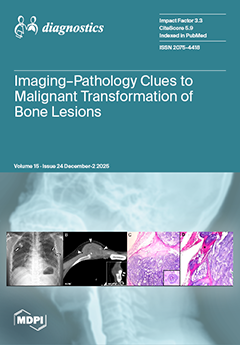
Cover Story (view full-size image): Malignant transformation of bone lesions, though uncommon, poses significant diagnostic challenges in musculoskeletal imaging. Benign tumors, non-tumorous conditions, and low-grade malignancies may progress to malignant transformation or dedifferentiation through diverse genetic and molecular pathways. This review highlights key imaging red flags—such as cortical destruction, loss of internal matrix, heterogeneous enhancement, and soft tissue extension—that warrant further pathologic evaluation. By integrating radiologic findings with histopathologic mechanisms and clinical risk factors, this article emphasizes the importance of imaging–pathology correlation in the early detection of malignant transformation of bone lesions and improved decision-making in orthopedic oncology. View this paper
  • Issues are regarded as officially published after their release is announced to the table of contents alert mailing list.
  • You may sign up for e-mail alerts to receive table of contents of newly released issues.
  • PDF is the official format for papers published in both, html and pdf forms. To view the papers in pdf format, click on the "PDF Full-text" link, and use the free Adobe Reader to open them.
Order results
Result details
Section
Select all
Export citation of selected articles as:
21 pages, 934 KB  
Case Report
Functional and Hemodynamic Restoration After Microsurgical Resection of Compact High-Flow Temporo-Parieto-Occipital Arteriovenous Malformation
by Adrian Tulin, Cosmin Pantu, Alexandru Breazu, Octavian Munteanu, Mugurel Petrinel Rădoi, Catalina-Ioana Tataru, Nicolaie Dobrin, Alexandru Vlad Ciurea and Adrian Vasile Dumitru
Diagnostics 2025, 15(24), 3249; https://doi.org/10.3390/diagnostics15243249 - 18 Dec 2025
Viewed by 418
Abstract
Background/Objectives: Arteriovenous malformations (AVMs) in the dominant temporo-parieto-occipital (TPO) junction of the brain are extremely rare and very difficult to remove surgically because this area includes multiple sensory and language networks. Due to the fact that many patients present with bleeding, surgeons [...] Read more.
Background/Objectives: Arteriovenous malformations (AVMs) in the dominant temporo-parieto-occipital (TPO) junction of the brain are extremely rare and very difficult to remove surgically because this area includes multiple sensory and language networks. Due to the fact that many patients present with bleeding, surgeons have to find a delicate balance between removing all of the AVM tissue and preserving the functional areas of the brain where important functions occur. This study is reporting a case demonstrating how precise clinical–radiologic correlation, detailed anatomical knowledge, and deliberate microsurgical techniques can allow safe removal of the AVM and improve the patient’s neurologic function without the need for additional intraoperative technology. Case Presentation: A 47-year-old right-handed male patient experienced persistent neurological deficits after experiencing a hemorrhage from an AVM in his dominant posterior hemisphere, which included mild language difficulties, right hemifacial–brachial spasticity, parietal sensory loss and a visual field defect of his right eye known as an inferior quadrantanopia localized to the TPO junction. Cerebral angiography identified a small, compact, high-flow AVM (40 × 30 mm) fed by distal branches of the middle cerebral artery (M4), posterior cerebral artery (P4), anterior cerebral artery (A4), as well as a small branch of the superior cerebellar artery (SCA). Blood drained into two veins of the Trolard and Labbé. The authors removed the AVM completely by circumferential dissection of the nidus along gliotic planes using a microscope. Feeders were then sequentially disconnected, and the venous outflow was preserved until the AVM could be removed en bloc. Post-operative angiograms demonstrated complete removal of the AVM with normalization of blood flow to the surrounding cortex. The patient’s neurologic function improved over time and at three months post-operatively, he was functioning independently (modified Rankin Scale = 1; Barthel Index = 100) and there was no evidence of residual nidus or edema on imaging. Conclusions: High-flow AVMs in the dominant TPO junction can be completely removed using a disciplined microsurgical approach and a feeder first/vein last disconnection method based on anatomy. The patient’s improvement in function represented reperfusion and reintegration of an injured but still functional network of the brain, reinforcing the idea that careful observation, a deep understanding of brain anatomy, and restrained surgical technique are critical to achieving long-term results in AVM surgery. Full article
(This article belongs to the Special Issue Cerebrovascular Lesions: Diagnosis and Management, 2nd Edition)
Show Figures

Figure 1

16 pages, 12158 KB  
Article
Shape-Sensing Robotic-Assisted Bronchoscopic Microwave Ablation for Primary and Metastatic Pulmonary Nodules: Retrospective Case Series
by Liqin Xu, Russell Miller, Mitchell Zhao, Grace Lin, Wenduo Gu, Niral Patel, Keriann Van Nostrand, Jorge A. Munoz Pineda, Bryce Duchman, Brian Tran and George Cheng
Diagnostics 2025, 15(24), 3248; https://doi.org/10.3390/diagnostics15243248 - 18 Dec 2025
Viewed by 576
Abstract
Background: Bronchoscopic thermal ablation has emerged as a minimally invasive therapeutic option for managing pulmonary nodules in patients unsuitable for surgery or radiotherapy. Robotic-assisted bronchoscopy (RAB) offers enhanced stability and precise navigation, potentially improving the safety and accuracy of bronchoscopic ablation. However, clinical [...] Read more.
Background: Bronchoscopic thermal ablation has emerged as a minimally invasive therapeutic option for managing pulmonary nodules in patients unsuitable for surgery or radiotherapy. Robotic-assisted bronchoscopy (RAB) offers enhanced stability and precise navigation, potentially improving the safety and accuracy of bronchoscopic ablation. However, clinical data on RAB-guided microwave ablation (MWA) remains limited. Therefore, further evidence is needed to evaluate its feasibility, safety, and early therapeutic performance. Methods: We conducted a single-center retrospective feasibility study of shape-sensing RAB-guided MWA (ssRAB-MWA) for pulmonary nodules between October 2024 and September 2025. Eligible lesions (≤3.0 cm) included both primary lung cancers and metastatic nodules. All procedures were performed under general anesthesia using the ssRAB system integrated with cone-beam CT for intra-procedural confirmation. Technical success, safety outcomes, and short-term efficacy were assessed. Results: Nine patients (with 11 lesions: 3 primary, 8 metastatic) underwent ssRAB-MWA with 100% technical success. The median ablation time per nodule was 10 min (range, 1–26). One patient developed post-ablation pneumonia requiring hospitalization; no pneumothorax, major bleeding, or airway injury occurred. All lesions exhibited a transient increase in size immediately following MWA, followed by gradual reduction or stabilization over time. PET-CT evaluation demonstrated metabolic remission in primary lesions, with one patient achieving pathologic complete response after surgery. Conclusions: ssRAB-MWA appears to be a feasible and safe navigation-guided technique for small pulmonary lesions, offering encouraging early local control in both primary and metastatic lung cancers. This platform may expand the therapeutic spectrum of interventional pulmonology, bridging diagnosis and local therapy. Larger multicenter studies are warranted to validate long-term outcomes. Full article
(This article belongs to the Special Issue Advances in Interventional Pulmonology)
Show Figures

Figure 1

32 pages, 1030 KB  
Systematic Review
The Application and Performance of Artificial Intelligence (AI) Models in the Diagnosis, Classification, and Prediction of Periodontal Diseases: A Systematic Review
by Mohammed Jafer, Wael Ibraheem, Tazeen Dawood, Ali Abbas, Khalid Hakami, Turki Khurayzi, Abdullah J. Hakami, Shahd Alqahtani, Mubarak Aldosari, Khaled Ageely, Sanjeev B Khanagar, Satish Vishwanathaiah and Prabhadevi C. Maganur
Diagnostics 2025, 15(24), 3247; https://doi.org/10.3390/diagnostics15243247 - 18 Dec 2025
Viewed by 621
Abstract
Background/Objectives: Artificial intelligence is revolutionizing healthcare across multiple areas, and periodontology is no exception to this emerging trend. This systematic study sought to rigorously assess the applicability and efficacy of artificial intelligence (AI) models in the diagnosis, classification, and prediction of periodontal [...] Read more.
Background/Objectives: Artificial intelligence is revolutionizing healthcare across multiple areas, and periodontology is no exception to this emerging trend. This systematic study sought to rigorously assess the applicability and efficacy of artificial intelligence (AI) models in the diagnosis, classification, and prediction of periodontal diseases. Methods: A web-based search was performed across many reputable databases, including PubMed, Scopus, Embase, Cochrane, Web of Science, Google Scholar, and the Saudi Digital Library. Articles published between January 2000 and January 2025 were included in the search. Following the application of the inclusion criteria, 33 publications were selected for critical analysis utilizing QUADAS-2, and their certainty of evidence was evaluated using the GRADE technique. Results: The primary applications of AI technology include the diagnosis, classification, and grading of periodontal diseases; diagnosis of gingivitis; evaluation of the radiographic alveolar bone level and degree of alveolar bone loss; and prediction of periodontal disease risk. The AI models utilized in these studies outperformed current clinical methods in diagnosing, classifying, and predicting periodontal diseases, demonstrating a superior level of precision and accuracy. Their accuracies ranged from 73% to 99.4%, their sensitivities from 75% to 100%, and their precisions from 56% to 99.5%. Conclusions: AI has a lot of potential to help with periodontal diagnosis and risk assessment. Its performance is often similar to or better than that of traditional clinical approaches. But before it can be used widely in clinical settings, problems with the quality of the dataset, its generalizability, its interpretability, and its acceptance by regulators must be solved. AI should be seen as a tool that helps doctors make better decisions and not as a way to replace their knowledge and skills. Full article
Show Figures

Figure 1

33 pages, 4027 KB  
Article
Characteristics of the Fatty Acid Composition in Elderly Patients with Occupational Pathology from Organophosphate Exposure
by Nikolay V. Goncharov, Elena I. Savelieva, Tatiana A. Koneva, Lyudmila K. Gustyleva, Irina A. Vasilieva, Mikhail V. Belyakov, Natalia G. Voitenko, Daria A. Belinskaia, Ekaterina A. Korf and Richard O. Jenkins
Diagnostics 2025, 15(24), 3246; https://doi.org/10.3390/diagnostics15243246 - 18 Dec 2025
Viewed by 420
Abstract
Background/Objectives: The delayed effects of organophosphate poisoning may manifest years after exposure, often masked by age-related diseases. The aim of this retrospective cohort study was to identify the biochemical “trace” that could remain in patients decades after poisoning. We determined a wide range [...] Read more.
Background/Objectives: The delayed effects of organophosphate poisoning may manifest years after exposure, often masked by age-related diseases. The aim of this retrospective cohort study was to identify the biochemical “trace” that could remain in patients decades after poisoning. We determined a wide range of biochemical parameters, along with the spectrum of esterified and non-esterified fatty acids (EFAs and NEFAs, respectively), in the blood plasma of a cohort of elderly patients diagnosed with occupational pathology (OP) due to (sub)chronic exposure to organophosphates in the 1980s. Methods: Elderly patients with and without a history of exposure to organophosphates were retrospectively divided into two groups: controls (n = 59, aged 73 ± 4, men 29% and women 71%) and those with OP (n = 84, aged 74 ± 4, men 29% and women 71%). The period of neurological examination and blood sampling for subsequent analysis was from mid-2022 to the end of 2023. Determination of the content of biomarkers of metabolic syndrome, NEFAs, and EFAs in blood plasma was performed by HPLC-MS/MS and GC-MS. Results: The medical histories of the examined elderly individuals with OP and the aged control group included common age-related diseases. However, patients with OP more often had hepatitis, gastrointestinal diseases, polyneuropathy, and an increased BMI. Analysis of metabolic biomarkers revealed, in the OP group, a decrease in the concentrations of 3-hydroxybutyrate (p < 0.05), 2-hydroxybutyrate (p < 0.0001), and acetyl-L-carnitine (p < 0.001) and the activity of butyrylcholinesterase (BChE) (p < 0.05), but an increase in the esterase activity of albumin (p < 0.05). Correlation analysis revealed significant relationships between albumin esterase activity and arachidonic acid concentrations in the OP group (0.64, p < 0.0001). A study of a wide range of fatty acids in patients with OP revealed reciprocal relationships between EFAs and NEFAs. A statistically significant decrease in concentration was shown for esters of margaric, stearic, eicosadienoic, eicosatrienoic, arachidonic, eicosapentaenoic, and docosahexaenoic fatty acids. A statistically significant increase in concentration was shown for non-esterified heptadecenoic, eicosapentaenoic, eicosatrienoic, docosahexaenoic, γ-linolenic, myristic, eicosenoic, arachidonic, eicosadienoic, oleic, linoleic, palmitic, linoelaidic, stearic, palmitoleic, pentadecanoic, and margaric acids. Decreases in the ratios of omega-3 to other unsaturated fatty acids were observed only for the esterified forms. Conclusions: The data obtained allow us to consider an increased level of NEFAs as one of the main cytotoxic factors for the vascular endothelium. Modification of albumin properties and decreased bioavailability of docosahexaenoic acid could be molecular links that cause specific manifestations of organophosphate-induced pathology at late stages after exposure. Full article
(This article belongs to the Special Issue Risk Factors for Frailty in Older Adults)
Show Figures

Figure 1

30 pages, 3641 KB  
Article
Modified EfficientNet-B0 Architecture Optimized with Quantum-Behaved Algorithm for Skin Cancer Lesion Assessment
by Abdul Rehman Altaf, Abdullah Altaf and Faizan Ur Rehman
Diagnostics 2025, 15(24), 3245; https://doi.org/10.3390/diagnostics15243245 - 18 Dec 2025
Viewed by 446
Abstract
Background/Objectives: Skin cancer is one of the most common diseases in the world, whose early and accurate detection can have a survival rate more than 90% while the chance of mortality is almost 80% in case of late diagnostics. Methods: A [...] Read more.
Background/Objectives: Skin cancer is one of the most common diseases in the world, whose early and accurate detection can have a survival rate more than 90% while the chance of mortality is almost 80% in case of late diagnostics. Methods: A modified EfficientNet-B0 is developed based on mobile inverted bottleneck convolution with squeeze and excitation approach. The 3 × 3 convolutional layer is used to capture low-level visual features while the core features are extracted using a sequence of Mobile Inverted Bottleneck Convolution blocks having both 3 × 3 and 5 × 5 kernels. They not only balance fine-grained extraction with broader contextual representation but also increase the network’s learning capacity while maintaining computational cost. The proposed architecture hyperparameters and extracted feature vectors of standard benchmark datasets (HAM10000, ISIC 2019 and MSLD v2.0) of dermoscopic images are optimized with the quantum-behaved particle swarm optimization algorithm (QBPSO). The merit function is formulated by the training loss given in the form of standard classification cross-entropy with label smoothing, mean fitness value (mfval), average accuracy (mAcc), mean computational time (mCT) and other standard performance indicators. Results: Comprehensive scenario-based simulations were performed using the proposed framework on a publicly available dataset and found an mAcc of 99.62% and 92.5%, mfval of 2.912 × 10⁻¹⁰ and 1.7921 × 10⁻⁸, mCT of 501.431 s and 752.421 s for HAM10000 and ISIC2019 datasets, respectively. The results are compared with state of the art, pre-trained existing models like EfficentNet-B4, RegNetY-320, ResNetXt-101, EfficentNetV2-M, VGG-16, Deep Lab V3 as well as reported techniques based on Mask RCCN, Deep Belief Net, Ensemble CNN, SCDNet and FixMatch-LS techniques having varying accuracies from 85% to 94.8%. The reliability of the proposed architecture and stability of QBPSO is examined through Monte Carlo simulation of 100 independent runs and their statistical soundings. Conclusions: The proposed framework reduces diagnostic errors and assists dermatologists in clinical decisions for an improved patient outcomes despite the challenges like data imbalance and interpretability. Full article
(This article belongs to the Special Issue Medical Image Analysis and Machine Learning)
Show Figures

Figure 1

20 pages, 653 KB  
Article
Longitudinal Monitoring of Brain Volume Changes After COVID-19 Infection Using Artificial Intelligence-Based MRI Volumetry
by Zeynep Bendella, Catherine Nichols Widmann, Christine Kindler, Robert Haase, Malte Sauer, Michael T. Heneka, Alexander Radbruch and Frederic Carsten Schmeel
Diagnostics 2025, 15(24), 3244; https://doi.org/10.3390/diagnostics15243244 - 18 Dec 2025
Viewed by 1295
Abstract
Background/Objectives: SARS-CoV-2 infection has been linked to long-term neurological sequelae and structural brain alterations. Previous analyses, including baseline results from the COVIMMUNE-Clin study, showed brain volume reductions in COVID-19 patients. Longitudinal data on progression are scarce. This study examined brain volume changes [...] Read more.
Background/Objectives: SARS-CoV-2 infection has been linked to long-term neurological sequelae and structural brain alterations. Previous analyses, including baseline results from the COVIMMUNE-Clin study, showed brain volume reductions in COVID-19 patients. Longitudinal data on progression are scarce. This study examined brain volume changes 12 months after baseline MRI in individuals who have recovered from mild or severe COVID-19 compared with controls. Methods: In this IRB-approved cohort study, 112 out of 172 recruited age- and sex-matched participants (38 controls, 36 mild/asymptomatic 38 severe COVID-19) underwent standardized brain MRI 12 months after baseline. Volumetric analysis was performed using AI-based software (mdbrain). Regional volumes were compared between groups with respect to absolute and normalized values. Multivariate regression controlled for demographics. Results: After 12 months, a significant decline in right hippocampal volume was observed across all groups, most pronounced in severe COVID-19 (SEV: Δ = −0.32 mL, p = 0.001). Normalized to intracranial volume, the reduction remained significant (SEV: Δ = −0.0003, p = 0.001; ASY: Δ = −0.0001, p = 0.001; CTL: minimal reduction, Δ ≈ 0, p = 0.005). Minor reductions in frontal and parietal lobes (e.g., right frontal SEV: Δ = −1.35 mL, p = 0.001), largely fell within physiological norms. These mild regional changes are consistent with expected ageing-related variability and do not suggest pathological progression. No widespread progressive atrophy was detected. Conclusions: This study demonstrates delayed, severity-dependent right hippocampal atrophy in recovered COVID-19 patients, suggesting long-term vulnerability of this memory-related region. In contrast, no progression of atrophy in other areas was observed. These findings highlight the need for extended post-COVID neurological monitoring, particularly of hippocampal integrity and its cognitive relevance. Full article
Show Figures

Figure 1

15 pages, 2420 KB  
Article
A Pre-Trained Model Customization Framework for Accelerated PET/MR Segmentation of Abdominal Fat in Obstructive Sleep Apnea
by Valentin Fauveau, Heli Patel, Jennifer Prevot, Bolong Xu, Oren Cohen, Samira Khan, Philip M. Robson, Zahi A. Fayad, Christoph Lippert, Hayit Greenspan, Neomi Shah and Vaishnavi Kundel
Diagnostics 2025, 15(24), 3243; https://doi.org/10.3390/diagnostics15243243 - 18 Dec 2025
Viewed by 448
Abstract
Background: Accurate quantification of visceral (VAT) and subcutaneous adipose tissue (SAT) is critical for understanding the cardiometabolic consequences of obstructive sleep apnea (OSA) and other chronic diseases. This study validates a customization framework using pre-trained networks for the development of automated VAT/SAT [...] Read more.
Background: Accurate quantification of visceral (VAT) and subcutaneous adipose tissue (SAT) is critical for understanding the cardiometabolic consequences of obstructive sleep apnea (OSA) and other chronic diseases. This study validates a customization framework using pre-trained networks for the development of automated VAT/SAT segmentation models using hybrid positron emission tomography (PET)/magnetic resonance imaging (MRI) data from OSA patients. While the widespread adoption of deep learning models continues to accelerate the automation of repetitive tasks, establishing a customization framework is essential for developing models tailored to specific research questions. Methods: A UNet-ResNet50 model, pre-trained on RadImageNet, was iteratively trained on 59, 157, and 328 annotated scans within a closed-loop system on the Discovery Viewer platform. Model performance was evaluated against manual expert annotations in 10 independent test cases (with 80–100 MR slices per scan) using Dice similarity coefficients, segmentation time, intraclass correlation coefficients (ICC) for volumetric and metabolic agreement (VAT/SAT volume and standardized uptake values [SUVmean]), and Bland–Altman analysis to evaluate the bias. Results: The proposed deep learning pipeline substantially improved segmentation efficiency. Average annotation time per scan was 121.8 min (manual segmentation), 31.8 min (AI-assisted segmentation), and only 1.2 min (fully automated AI segmentation). Segmentation performance, assessed on 10 independent scans, demonstrated high Dice similarity coefficients for masks (0.98 for VAT and SAT), though lower for contours/boundary delineation (0.43 and 0.54). Agreement between AI-derived and manual volumetric and metabolic VAT/SAT measures was excellent, with all ICCs exceeding 0.98 for the best model and with minimal bias. Conclusions: This scalable and accurate pipeline enables efficient abdominal fat quantification using hybrid PET/MRI for simultaneous volumetric and metabolic fat analysis. Our framework streamlines research workflows and supports clinical studies in obesity, OSA, and cardiometabolic diseases through multi-modal imaging integration and AI-based segmentation. This facilitates the quantification of depot-specific adipose metrics that may strongly influence clinical outcomes. Full article
Show Figures

Figure 1

21 pages, 1966 KB  
Article
Metabolomics of Prostate Cancer and Clinical Profiles Following Radiotherapy: Need for a Precision Phylometabolomics Approach
by Hakima Amri, Charles Sturgeon, David Posawatz, Mones Abu-Asab, Ryan R. Collins, Simeng Suy and Sean P. Collins
Diagnostics 2025, 15(24), 3242; https://doi.org/10.3390/diagnostics15243242 - 18 Dec 2025
Viewed by 315
Abstract
Introduction: Metabolomics-based phylogenetic profiling of prostate cancer (PCa) patients before and after stereotactic body radiation therapy (SBRT) can provide insight into the way in which treatment outcomes relate to the underlying physiology and physiological responses of individual patients. It also offers the [...] Read more.
Introduction: Metabolomics-based phylogenetic profiling of prostate cancer (PCa) patients before and after stereotactic body radiation therapy (SBRT) can provide insight into the way in which treatment outcomes relate to the underlying physiology and physiological responses of individual patients. It also offers the potential for helping identify precision biomarkers. Methods: In this study, we used integrated mass spectrometry to obtain untargeted serum metabolomics data from PCa patients (n = 55), which we then analyzed using a parsimony phylogenetic systems biology approach before correlating the results with the patients’ clinical parameters before and after treatment. Results: Radiotherapy (RT) generated five phylogenetic subgroups with distinct metabolomic profiles that did not correspond to hormonal treatment, risk assessment, metastasis, or PSA levels. PSA was neither a factor influencing clade membership nor an indicator of risk assessment or metastasis. Moreover, the hormone-treated patients did not form their own clade but were rather spread among the five clades. The same absence of correlation applied to risk assessment and metastasis. The 88 significantly altered pre-RT and 29 post-RT features showed aberrations in the metabolic pathways of purines, porphyrin, glycerophospholipids, and 2-methylglutaric acid, among others. Discussion: Significantly altered metabolites in a majority of patients who developed metastasis included D-tryptophan, carbamate, 5′-Benzoylphosphoadenosine, Phosphatidylcholine (PC), bilirubin, and hypoxanthine. In general, the cladogram offers a new perspective on evaluating the clinical variables that represent significant indicators of PCa progression, metastasis, and treatment response in individuals. Conclusions: Metabolic profiles and associated clinical phenotypes provided by this precision phylometabolomics approach may offer a deeper understanding of the metabolic factors and pathways implicated in cancer progression and metastasis and should contribute to the development of targeted treatments and more precise monitoring of cancer and cancer therapies. Full article
(This article belongs to the Special Issue An Update on Molecular Diagnostics in Prostate Cancer)
Show Figures

Figure 1

22 pages, 4598 KB  
Article
Explainable Cluster-Based Predictive Framework for Early Diagnosis of Autism Spectrum Disorder Using Behavioral Biomarkers
by Menwa Alshammeri, Zulfiqar Ahmad, Mamoona Humayun and Malak Alamri
Diagnostics 2025, 15(24), 3241; https://doi.org/10.3390/diagnostics15243241 - 18 Dec 2025
Viewed by 346
Abstract
Background/Objectives: Autism Spectrum Disorder (ASD) is a multifaceted neuropsychiatric condition characterized by early behavioral irregularities that often precede formal diagnosis. Timely and precise detection remains a major clinical challenge due to the complexity of behavioral manifestations and the limited accessibility of diagnostic resources. [...] Read more.
Background/Objectives: Autism Spectrum Disorder (ASD) is a multifaceted neuropsychiatric condition characterized by early behavioral irregularities that often precede formal diagnosis. Timely and precise detection remains a major clinical challenge due to the complexity of behavioral manifestations and the limited accessibility of diagnostic resources. Methods: In this study, we present an explainable machine learning framework for the early diagnosis of ASD using behavioral biomarkers derived from toddler screening data. The framework integrates unsupervised learning (DBSCAN and K-means clustering) to identify latent behavioral patterns, followed by predictive modeling using logistic regression (LR), random forest (RF), and support vector machine (SVM). To ensure transparency and clinical interpretability, a SHAP (SHapley Additive exPlanations) analysis is employed to quantify the contribution of each behavioral feature to the model’s predictions. Results: Experimental evaluations reveal that the RF model achieves the highest accuracy (98.85%), followed by SVM (97.70%) and LR (90.53%). The explainability results highlight meaningful and clinically relevant behavioral indicators associated with ASD risk. Conclusions: The proposed framework not only enhances diagnostic accuracy but also promotes interpretable AI for real-world integration into neuropsychiatric assessment pipelines. Full article
Show Figures

Figure 1

20 pages, 4447 KB  
Article
Pericardial Fat Radiomics to Predict Left Ventricular Involvement and Provide Incremental Prognostic Value in ARVC
by Mengqi Guo, Jinyu Zheng, Weihui Xie, Binghua Chen, Dongaolei An, Ruoyang Shi, Jinyi Xiang and Lianming Wu
Diagnostics 2025, 15(24), 3240; https://doi.org/10.3390/diagnostics15243240 - 18 Dec 2025
Viewed by 277
Abstract
Background/Objectives: To explore the predictive value of pericardial fat tissue (PFT) radiomics for left ventricular (LV) involvement and major adverse cardiac events (MACE) in arrhythmogenic right ventricular cardiomyopathy (ARVC). Methods: In this retrospective multicenter study, LV involvement was assessed using cardiac magnetic [...] Read more.
Background/Objectives: To explore the predictive value of pericardial fat tissue (PFT) radiomics for left ventricular (LV) involvement and major adverse cardiac events (MACE) in arrhythmogenic right ventricular cardiomyopathy (ARVC). Methods: In this retrospective multicenter study, LV involvement was assessed using cardiac magnetic resonance (CMR). A radiomic score (RS) derived from PFT was developed to predict LV involvement. The predictive accuracy of the RS was evaluated through receiver operating characteristic (ROC) analysis. Additionally, multivariable Cox regression analysis was employed to assess the prognosis across the entire dataset. Kaplan–Meier survival curves were used to evaluate the association between RS and MACE. Results: A total of 122 patients (mean age, 44 years ± 17; 76 male) were included, 90 for a development set and 32 for an external test set. The RS demonstrated good predictive performance for LV involvement in both the development and external test sets, with area under the curve (AUC) values of 0.771 and 0.785, respectively. Moreover, a high RS (≥−0.38) was independently associated with MACE during a median follow-up of 5 years (hazard ratio, 3.452; p < 0.001). Based on the right ventricular ejection fraction (RVEF) and RS, a simplified risk score was developed to categorize patients into three groups: high-risk (RVEF ≤ 40%, RS ≥ −0.38), intermediate-risk (RVEF ≤ 40%, RS < −0.38 or RVEF > 40%, RS ≥ −0.38), and low-risk (RVEF > 40%, RS < −0.38). Conclusions: The PFT radiomics can predict LV involvement and be associated with MACE in ARVC patients. Full article
(This article belongs to the Section Medical Imaging and Theranostics)
Show Figures

Figure 1

16 pages, 5540 KB  
Article
Comparison of Attenuation Imaging in the Rectus Femoris and Biceps Brachii Muscles with Multiecho Dixon-Based Fat Quantification and Ultrasound Echo Intensity
by Sophia Zoller, Karolina Pawlus, Catherine Paverd, Thomas Frauenfelder, Florian A. Huber and Alexander Martin
Diagnostics 2025, 15(24), 3239; https://doi.org/10.3390/diagnostics15243239 - 18 Dec 2025
Viewed by 352
Abstract
Background/Objectives: Sarcopenia, an underdiagnosed musculoskeletal disorder, is a serious cause of disability, poor quality of life, and healthcare costs in an increasingly elderly population. This study aimed to examine an ultrasound (US)-based, inexpensive, simple, and reproducible alternative to magnetic resonance imaging (MRI) [...] Read more.
Background/Objectives: Sarcopenia, an underdiagnosed musculoskeletal disorder, is a serious cause of disability, poor quality of life, and healthcare costs in an increasingly elderly population. This study aimed to examine an ultrasound (US)-based, inexpensive, simple, and reproducible alternative to magnetic resonance imaging (MRI) for assessing muscle quality. A study compared Dixon MR fat fraction with US attenuation imaging (ATI) and echo intensity (EI) in the rectus femoris (RF) and biceps brachii (BB). Methods: The US images were acquired from 34 participants who had previously received a whole-body MRI. The ATI measurements were carried out using a linear array on a Canon Aplio i800 scanner. The measurements of EI were assessed by manually tracing the cross-sectional border of the right RF and BB muscles. Corresponding T1-weighted Dixon VIBE-based fat and water images were required for the MRI fat fraction percentage (MR %FF) measurements. Results: Using Pearsons correlation coefficient, a good correlation was found between MR %FF and EI measurements. The results between operators’ measurements showed a strong correlation and were highly repeatable. Attenuation imaging revealed no correlation with MR %FF or EI. Conclusions: Echo intensity offers a low-cost, non-invasive, and widely accessible US-based imaging modality for screening patients at risk for sarcopenia. No correlation was found between the ATI and MR %FF or between the ATI and EI. Further adapted protocols and software adjustments are needed so that ATI has the potential to prove itself as an additional US-based method for assessing fat infiltration in muscles. Full article
(This article belongs to the Section Medical Imaging and Theranostics)
Show Figures

Figure 1

22 pages, 1306 KB  
Article
Integrated Anthropometric, Physiological and Biological Assessment of Elite Youth Football Players Using Machine Learning
by Luiza Camelia Nechita, Tudor Vladimir Gurau, Carmina Liana Musat, Ancuța Elena Țupu, Gabriela Gurau, Doina Carina Voinescu and Aurel Nechita
Diagnostics 2025, 15(24), 3238; https://doi.org/10.3390/diagnostics15243238 - 18 Dec 2025
Viewed by 369
Abstract
Background: Youth football players experience rapid physical and biological changes while being exposed to high training loads, increasing performance demands and musculoskeletal injury risk. Current evaluations often analyze anthropometric, physiological, and biological domains separately, and few studies integrate these dimensions using machine-learning [...] Read more.
Background: Youth football players experience rapid physical and biological changes while being exposed to high training loads, increasing performance demands and musculoskeletal injury risk. Current evaluations often analyze anthropometric, physiological, and biological domains separately, and few studies integrate these dimensions using machine-learning (ML) approaches. Objective: To provide a multidimensional assessment of elite youth football players and investigate how anthropometric, physical, and biological markers jointly relate to performance through classical statistics and ML. Methods: One hundred elite players (14–18 years) underwent standardized anthropometric, physical, and laboratory assessments. Analyses included descriptive statistics, ANOVA/MANOVA, PCA, factor analysis, composite biological indices, and ML models (linear regression, SVR) with 5-fold cross-validation. K-means clustering explored hidden adaptation phenotypes. Results: Older players showed higher weight and BMI, physical testing revealed consistent limb asymmetry (~5%), and biological markers remained within reference ranges. PCA and factor analysis extracted latent structural and metabolic domains. Linear regression predicted performance with R2 ≈ 0.59, while SVR underperformed. K-means identified three adaptation phenotypes. Conclusions: Performance and resilience arise from interactions between structural, functional, and biological domains. Interpretable ML methods enhance individualized monitoring, early risk detection, and evidence-based injury-prevention strategies. Full article
(This article belongs to the Section Machine Learning and Artificial Intelligence in Diagnostics)
Show Figures

Figure 1

13 pages, 998 KB  
Article
Balloon-Occluded Hepatic Radioembolization with Yttrium-90 (b-TARE) in Selected Patients with Unresectable Heterogeneous Hepatocellular Carcinoma (HCC): A Safe and Effective Approach to Improve the Dose Rate
by Leonardo Teodoli, Nicolò Ubaldi, Claudio Trobiani, Federico Cappelli, Sara Ungania, Pierleone Lucatelli, Rosa Sciuto and Giulio Vallati
Diagnostics 2025, 15(24), 3237; https://doi.org/10.3390/diagnostics15243237 - 18 Dec 2025
Viewed by 325
Abstract
Background/Objectives: To evaluate the efficacy of balloon occlusion trans-arterial hepatic radioembolization with Yttrium-90 (b-TARE) in optimizing dose activity in patients with large or multifocal Hepatocellular Carcinoma (HCC) lesions with heterogeneous macroaggregate distribution by retrospectively comparing outcomes with a similar cohort treated with standard [...] Read more.
Background/Objectives: To evaluate the efficacy of balloon occlusion trans-arterial hepatic radioembolization with Yttrium-90 (b-TARE) in optimizing dose activity in patients with large or multifocal Hepatocellular Carcinoma (HCC) lesions with heterogeneous macroaggregate distribution by retrospectively comparing outcomes with a similar cohort treated with standard TARE. Methods: This single-center restrospective study included sixty-three consecutive patients with unresectable HCC treated with TARE, of whom 24/63 had balloon-occluded TARE and 39/63 had standard TARE. Both cohorts included large or multifocal HCC lesions characterized by heterogeneous macroaggregate distribution, also in relation to the angiosome framework. The impact of b-TARE was analyzed using 2D and 3D dosimetry with dedicated software on post-procedural SPECT-CT. Dosimetric b-TARE results were retrospectively compared with standard TARE. Results: Both 2D and 3D SPECT-CT analyses demonstrated a better dosimetry profile in the b-TARE group. Concerning 2D evaluation, the activity intensity peak was significantly higher in the b-TARE group compared to the TARE group (998.6 ± 394.9 vs. 578.8 ± 313.3, p = 0.004). Regarding 3D dose analysis, the mean intra-lesion dose administered was significantly higher in the b-TARE group (162.7 ± 54.3 Gy vs. 111.2 ± 44.5 Gy, p = 0.01). There was no increase in significant complications or in the mean dose delivered to the normal liver in the b-TARE group. Conclusions: The employment of balloon occlusion in TARE was associated with a higher activity intensity peak and lesion absorbed dose on voxel-based dosimetry, compared to standard TARE, in patients with heterogeneous HCC and uneven macroaggregate distribution, without increasing mean non-tumoral liver dose. Full article
(This article belongs to the Special Issue Future Trends in Diagnostic and Interventional Radiology)
Show Figures

Figure 1

23 pages, 6739 KB  
Article
SPX-GNN: An Explainable Graph Neural Network for Harnessing Long-Range Dependencies in Tuberculosis Classifications in Chest X-Ray Images
by Muhammed Ali Pala and Muhammet Burhan Navdar
Diagnostics 2025, 15(24), 3236; https://doi.org/10.3390/diagnostics15243236 - 18 Dec 2025
Viewed by 555
Abstract
Background/Objectives: Traditional medical image analysis methods often suffer from locality bias, limiting their ability to model long-range contextual relationships between spatially distributed anatomical structures. To overcome this challenge, this study proposes SPX-GNN (Superpixel Explainable Graph Neural Network). This novel method reformulates image [...] Read more.
Background/Objectives: Traditional medical image analysis methods often suffer from locality bias, limiting their ability to model long-range contextual relationships between spatially distributed anatomical structures. To overcome this challenge, this study proposes SPX-GNN (Superpixel Explainable Graph Neural Network). This novel method reformulates image analysis as a structural graph learning problem, capturing both local anomalies and global topological patterns in a holistic manner. Methods: The proposed framework decomposes images into semantically coherent superpixel regions, converting them into graph nodes that preserve topological relationships. Each node is enriched with a comprehensive feature vector encoding complementary diagnostic clues, including colour (CIELAB), texture (LBP and Haralick), shape (Hu moments), and spatial location. A Graph Neural Network is then employed to learn the relational dependencies between these enriched nodes. The method was rigorously evaluated using 5-fold stratified cross-validation on a public dataset comprising 4200 chest X-ray images. Results: SPX-GNN demonstrated exceptional performance in tuberculosis classification, achieving a mean accuracy of 99.82%, an F1-score of 99.45%, and a ROC-AUC of 100.00%. Furthermore, an integrated Explainable Artificial Intelligence module addresses the black box problem by generating semantic importance maps, which illuminate the decision mechanism and enhance clinical reliability. Conclusions: SPX-GNN offers a novel approach that successfully combines high diagnostic accuracy with methodological transparency. By providing a robust and interpretable workflow, this study presents a promising solution for medical imaging tasks where structural information is critical, paving the way for more reliable clinical decision support systems. Full article
(This article belongs to the Section Machine Learning and Artificial Intelligence in Diagnostics)
Show Figures

Figure 1

44 pages, 6045 KB  
Article
A Multi-Stage Hybrid Learning Model with Advanced Feature Fusion for Enhanced Prostate Cancer Classification
by Sameh Abd El-Ghany and A. A. Abd El-Aziz
Diagnostics 2025, 15(24), 3235; https://doi.org/10.3390/diagnostics15243235 - 17 Dec 2025
Viewed by 330
Abstract
Background: Cancer poses a significant health risk to humans, with prostate cancer (PCa) being the second most common and deadly form among men, following lung cancer. Each year, it affects over a million individuals and presents substantial diagnostic challenges due to variations [...] Read more.
Background: Cancer poses a significant health risk to humans, with prostate cancer (PCa) being the second most common and deadly form among men, following lung cancer. Each year, it affects over a million individuals and presents substantial diagnostic challenges due to variations in tissue appearance and imaging quality. In recent decades, various techniques utilizing Magnetic Resonance Imaging (MRI) have been developed for identifying and classifying PCa. Accurate classification in MRI typically requires the integration of complementary feature types, such as deep semantic representations from Convolutional Neural Networks (CNNs) and handcrafted descriptors like Histogram of Oriented Gradients (HOG). Therefore, a more robust and discriminative feature integration strategy is crucial for enhancing computer-aided diagnosis performance. Objectives: This study aims to develop a multi-stage hybrid learning model that combines deep and handcrafted features, investigates various feature reduction and classification techniques, and improves diagnostic accuracy for prostate cancer using magnetic resonance imaging. Methods: The proposed framework integrates deep features extracted from convolutional architectures with handcrafted texture descriptors to capture both semantic and structural information. Multiple dimensionality reduction methods, including singular value decomposition (SVD), were evaluated to optimize the fused feature space. Several machine learning (ML) classifiers were benchmarked to identify the most effective diagnostic configuration. The overall framework was validated using k-fold cross-validation to ensure reliability and minimize evaluation bias. Results: Experimental results on the Transverse Plane Prostate (TPP) dataset for binary classification tasks showed that the hybrid model significantly outperformed individual deep or handcrafted approaches, achieving superior accuracy of 99.74%, specificity of 99.87%, precision of 99.87%, sensitivity of 99.61%, and F1-score of 99.74%. Conclusions: By combining complementary feature extraction, dimensionality reduction, and optimized classification, the proposed model offers a reliable and generalizable solution for prostate cancer diagnosis and demonstrates strong potential for integration into intelligent clinical decision-support systems. Full article
Show Figures

Figure 1

15 pages, 385 KB  
Article
Association of Endothelial Activation and Stress Index with Prognosis in Posterior Circulation Infarcts Treated with Recanalization Therapy
by Deniz Kamaci Sener, Cemile Haki, Gulcin Koc Yamanyar, Fatma Nur Kandemir, Suat Kamisli and Kaya Sarac
Diagnostics 2025, 15(24), 3234; https://doi.org/10.3390/diagnostics15243234 - 17 Dec 2025
Viewed by 327
Abstract
Background: Endothelial dysfunction plays a critical role in ischemic stroke. The Endothelial Activation and Stress Index (EASIX), calculated from creatinine, lactate dehydrogenase (LDH), and platelet levels, reflects endothelial injury. This study aimed to investigate the relationship between EASIX and 90-day mortality in [...] Read more.
Background: Endothelial dysfunction plays a critical role in ischemic stroke. The Endothelial Activation and Stress Index (EASIX), calculated from creatinine, lactate dehydrogenase (LDH), and platelet levels, reflects endothelial injury. This study aimed to investigate the relationship between EASIX and 90-day mortality in patients with posterior circulation ischemic stroke (PCIS) treated with mechanical thrombectomy. Methods: Fifty-eight patients with acute ischemic stroke who underwent mechanical thrombectomy (MT) or MT combined with intravenous thrombolysis (intravenous tissue plasminogen activator (tPA)) for posterior circulation ischemic stroke (PCIS) were included. EASIX was calculated using 24 h laboratory values of creatinine, LDH, and platelets. Its association with 90-day mortality, length of hospital stay, intubation, and parenchymal hemorrhage was analyzed. Results: In patients receiving reperfusion therapy, the Endothelial Activation and Stress Index (EASIX) showed modest ability to predict 90-day mortality (AUC = 0.583, 95% CI 0.428–0.739, p = 0.295). Higher EASIX values were linked to a 6.58-fold increase in mortality risk. Patients with elevated EASIX were generally older, had more frequent hyperlipidemia, had higher 24 h National Institutes of Health Stroke Scale (NIHSS) scores, had greater need for intubation, and had higher in-hospital mortality. Conclusions: EASIX is a simple, inexpensive, and non-invasive marker that may reflect endothelial dysfunction and help predict mortality in PCIS patients undergoing reperfusion therapy. Higher EASIX values are associated with poorer prognosis. Early identification of high-risk patients may support secondary prevention strategies. Full article
(This article belongs to the Section Clinical Diagnosis and Prognosis)
Show Figures

Figure 1

16 pages, 1440 KB  
Article
Multidetector Computed Tomography and Aortic Stenosis: The Emerging Potential of Bridging Morphology and Severity Grading
by Gabriele Cordoni, Diana Di Paolantonio, Maria Teresa Savo, Dan Alexandru Cozac, Eleonora Lassandro, Martina Palmisano, Giulia Andolina, Giorgio De Conti, Julien Ternacle, Raffaella Motta and Valeria Pergola
Diagnostics 2025, 15(24), 3233; https://doi.org/10.3390/diagnostics15243233 - 17 Dec 2025
Viewed by 328
Abstract
Background/Objectives: Echocardiography is the reference standard for grading aortic stenosis (AS); however, it yields discordant severity estimates in up to 40% of patients. Multidetector computed tomography (MDCT)-derived methods for calculating aortic valve area (AVA) may improve diagnostic concordance, but their diagnostic performance, [...] Read more.
Background/Objectives: Echocardiography is the reference standard for grading aortic stenosis (AS); however, it yields discordant severity estimates in up to 40% of patients. Multidetector computed tomography (MDCT)-derived methods for calculating aortic valve area (AVA) may improve diagnostic concordance, but their diagnostic performance, validation against invasive hemodynamics, and the influence of left ventricular outflow tract (LVOT) morphology on severity grading remain insufficiently investigated. Methods: We retrospectively analyzed 307 patients with normal-flow, high-gradient calcific AS who underwent echocardiography, MDCT, and cardiac catheterization. AVA was calculated using (1) echocardiographic LVOT diameter, (2) hybrid Doppler–MDCT planimetric LVOT area, and (3) corrected echocardiographic LVOT diameter (×1.13). Agreement, correlation, and diagnostic performance were assessed using Bland–Altman analysis, Pearson correlation, ROC analysis, and McNemar’s test. Subgroups defined by diagnostic concordance and MDCT-derived LVOT size were compared using ANOVA. Results: Hybrid AVA showed a strong correlation with echocardiographic AVA (r = 0.749, p < 0.001), with a mean difference of +0.11 ± 0.15 cm2. Both methods demonstrated similar relationships with invasive and non-invasive hemodynamic markers of AS severity. When combined with echocardiography, the hybrid method increased concordant classification of severe AS by 8%. In contrast, corrected AVA performed significantly worse, leading to more discordant classifications. LVOT size was significantly associated with variability in AVA and Doppler velocity index, independent of flow status. Conclusions: Hybrid MDCT-derived AVA provides diagnostic performance equivalent to echocardiography and improves concordance in selected patients. LVOT size influences key echocardiographic parameters and may warrant tailored diagnostic thresholds. Full article
(This article belongs to the Section Clinical Diagnosis and Prognosis)
Show Figures

Figure 1

11 pages, 807 KB  
Article
Comparison of Transvaginal and Transperineal Ultrasonographic Uterocervical Angle Measurements in Low-Risk Pregnancies at 24–34 Weeks’ Gestation
by Emrah Dagdeviren and Yucel Kaya
Diagnostics 2025, 15(24), 3232; https://doi.org/10.3390/diagnostics15243232 - 17 Dec 2025
Viewed by 307
Abstract
Background: The uterocervical angle (UCA) is a promising ultrasound parameter for predicting preterm birth. Transvaginal ultrasound (TVUS) is the gold standard for cervical assessment; however, some patients may decline the procedure due to discomfort or embarrassment. Although transperineal ultrasound (TPUS) offers an alternative [...] Read more.
Background: The uterocervical angle (UCA) is a promising ultrasound parameter for predicting preterm birth. Transvaginal ultrasound (TVUS) is the gold standard for cervical assessment; however, some patients may decline the procedure due to discomfort or embarrassment. Although transperineal ultrasound (TPUS) offers an alternative associated with less discomfort, comparative data on UCA measurements between these two methods are limited. Objective: We aimed to evaluate the consistency and agreement between UCA measurements obtained using TVUS and TPUS in pregnant women between 24 and 34 weeks of gestation. Methods: In this prospective cross-sectional study, UCA and CL measurements of 189 pregnant women between 24 and 34 weeks of gestation were performed using TVUS and TPUS by a single specialist. Of these, 25 women (13.2%) were excluded due to inadequate TPUS image quality. A total of 164 women were included in the statistical analysis. Pearson correlation analysis, intraclass correlation coefficient (ICC), Lin’s concordance correlation coefficient (CCC), and Bland–Altman analysis were performed. Results: UCA measurements showed a high positive correlation between TVUS and TPUS (r = 0.833, p < 0.001). The ICC was 0.827 (95% CI: 0.77–0.87), indicating good consistency, and the CCC was 0.81 (95% CI: 0.76–0.86). The Bland–Altman analysis demonstrated a median difference of 3° between UCA measurements obtained via TVUS and TPUS. The non-parametric limits of agreement, represented by the 2.5th and 97.5th percentiles, ranged from −20.9° to 34.8°. Conclusions: TPUS shows insufficient agreement to be used interchangeably with TVUS for UCA measurement. Although the level of consistency is high, inadequate image quality in a subset of cases and the uncertainty regarding the clinical utility of TPUS-derived measurements for predicting preterm birth limit its current clinical applicability. Full article
(This article belongs to the Section Medical Imaging and Theranostics)
Show Figures

Figure 1

45 pages, 903 KB  
Review
Integrating Biomarkers into Cervical Cancer Screening—Advances in Diagnosis and Risk Prediction: A Narrative Review
by Tudor Gisca, Daniela Roxana Matasariu, Alexandra Ursache, Demetra Gabriela Socolov, Ioana-Sadiye Scripcariu, Alina Fudulu, Ecaterina Tomaziu-Todosia Anton and Anca Botezatu
Diagnostics 2025, 15(24), 3231; https://doi.org/10.3390/diagnostics15243231 - 17 Dec 2025
Viewed by 771
Abstract
Background: Cervical cancer remains a major global health challenge, ranking fourth among malignancies in women, with an estimated 660,000 new cases and 350,000 deaths in 2022. Despite advances in vaccination and screening, incidence and mortality remain disproportionately high in low- and middle-income countries. [...] Read more.
Background: Cervical cancer remains a major global health challenge, ranking fourth among malignancies in women, with an estimated 660,000 new cases and 350,000 deaths in 2022. Despite advances in vaccination and screening, incidence and mortality remain disproportionately high in low- and middle-income countries. The disease is strongly linked to persistent infection with high-risk human papillomavirus (HPV) types, predominantly HPV 16 and 18, whose E6 and E7 oncoproteins drive cervical intraepithelial neoplasia (CIN) and invasive cancer. This review summarizes current evidence on clinically relevant biomarkers in HPV-associated CIN and cervical cancer, emphasizing their role in screening, risk stratification, and disease management. Methods: We analyzed the recent literature focusing on validated and emerging biomarkers with potential clinical applications in HPV-related cervical disease. Results: Biomarkers are essential tools for improving early detection, assessment of progression risk, and personalized management. Established markers such as p16 immunostaining, p16/Ki-67 dual staining, and HPV E6/E7 mRNA assays increase diagnostic accuracy and reduce overtreatment. Prognostic indicators, including squamous cell carcinoma antigen (SCC-Ag) and telomerase activity, provide information on tumor burden and recurrence risk. Novel approaches—such as DNA methylation panels, HPV viral load quantification, ncRNAs, and cervico-vaginal microbiota profiling—show promise in refining risk assessment and supporting non-invasive follow-up strategies. Conclusions: The integration of validated biomarkers into clinical practice facilitates more effective triage, individualized treatment decisions, and optimal use of healthcare resources. Emerging biomarkers, once validated, could further improve precision in predicting lesion outcomes, ultimately reducing the global burden of cervical cancer and improving survival. Full article
(This article belongs to the Special Issue New Trends in the Diagnosis of Gynecological and Obstetric Diseases)
Show Figures

Figure 1

14 pages, 736 KB  
Article
Diagnostic Delay and Mortality Risk in Gastric Cancer During the COVID-19 Pandemic: A Retrospective Tertiary-Center Study
by Alexandru-Marian Vieru, Virginia-Maria Rădulescu, Emil Trașcă, Sergiu-Marian Cazacu, Maria-Lorena Mustață, Petrică Popa and Ciurea Tudorel
Diagnostics 2025, 15(24), 3230; https://doi.org/10.3390/diagnostics15243230 - 17 Dec 2025
Viewed by 505
Abstract
Background/Objectives: The COVID-19 pandemic disrupted healthcare delivery worldwide, potentially delaying the diagnosis and treatment of oncologic diseases. This study aimed to evaluate the impact of the pandemic on stage at diagnosis, treatment allocation, and survival outcomes among patients with gastric cancer. Methods: [...] Read more.
Background/Objectives: The COVID-19 pandemic disrupted healthcare delivery worldwide, potentially delaying the diagnosis and treatment of oncologic diseases. This study aimed to evaluate the impact of the pandemic on stage at diagnosis, treatment allocation, and survival outcomes among patients with gastric cancer. Methods: We retrospectively analyzed 419 consecutive patients diagnosed with gastric cancer between January 2018 and December 2021 at a tertiary oncology–surgical center. Patients were divided into pre-pandemic (2018–2019) and pandemic (2020–2021) cohorts. Demographic, clinical, and treatment variables were compared using t-tests and χ2 tests. Multivariate logistics and Cox regression models were applied to identify independent predictors of metastatic presentation and mortality. Overall survival (OS) was calculated from diagnosis to death or last contact (OS_days), with same-day events censored at time zero. Results: Baseline characteristics were comparable between cohorts (age, p = 0.098; sex, p = 0.137; residence, p = 0.345). The proportion of metastatic cases (M1) increased from 42.8% in 2018–2019 to 64.4% in 2020–2021 (χ2 p < 0.001). Surgical rates remained stable (55.1% vs. 47.7%, p = 0.161). Diagnosis during the pandemic independently predicted metastatic presentation (OR = 2.63, 95% CI 1.68–4.11, p < 0.001) and higher mortality (HR = 1.72, 95% CI 1.41–2.03, p < 0.001). Kaplan–Meier analysis confirmed significantly reduced OS in the pandemic cohort (log-rank χ2 = 81.29, p < 0.001). Conclusions: The pandemic was associated with delayed diagnosis, stage migration toward advanced disease, and inferior survival in gastric cancer, despite comparable demographics and treatment capacity. These findings emphasize the need to safeguard diagnostic pathways—particularly endoscopy—during healthcare crises to prevent avoidable oncologic deterioration. Full article
(This article belongs to the Special Issue Diagnosis and Prognosis of Abdominal Diseases)
Show Figures

Figure 1

16 pages, 1208 KB  
Article
Myocardial Scar and Cardiac Biomarker Levels as Predictors of Mortality After Acute Myocardial Infarction: A CMR-Based Long-Term Study
by Philipp Ruile, Johannes Brado, Klaus Kaier, Ramona Schmitt, Manuel Hein, Thomas Nührenberg, Hannah Billig, Franz-Josef Neumann, Dirk Westermann and Philipp Breitbart
Diagnostics 2025, 15(24), 3229; https://doi.org/10.3390/diagnostics15243229 - 17 Dec 2025
Viewed by 434
Abstract
Background/Objectives: The extent of myocardial scar, visualized by late gadolinium enhancement (LGE) on cardiac magnetic resonance imaging (CMR), is associated with mortality after acute myocardial infarction (MI). However, data on optimal cardiac biomarker cut-off values (e.g., high-sensitivity cardiac troponin T, hs-cTnT) for [...] Read more.
Background/Objectives: The extent of myocardial scar, visualized by late gadolinium enhancement (LGE) on cardiac magnetic resonance imaging (CMR), is associated with mortality after acute myocardial infarction (MI). However, data on optimal cardiac biomarker cut-off values (e.g., high-sensitivity cardiac troponin T, hs-cTnT) for predicting LGE remain limited. This study aimed to evaluate the predictive value of cardiac biomarkers for LGE and their influence on clinical outcomes. Methods: We included 597 patients who underwent CMR a median of 3 days [interquartile range (IQR) 2–4 days] after MI (407 STEMI and 190 NSTEMI patients), with a median follow-up period of 3.0 years [IQR 1.3–3.5 years]. Results: After adjusting for key variables, maximum cardiac biomarker levels were found to have the strongest correlation with the presence and extent of LGE (p < 0.001). LGE mass and LVEF were the most robust predictors of all-cause mortality (hazard ratio [CI] 1.464 [1.050–2.040], p = 0.025, Harrell’s C 0.812; 0.697 [0.491–0.990], p = 0.044, Harrell’s C 0.810, respectively). We determined a receiver operating characteristic (ROC) area under the curve (AUC) of 0.73 and an optimal cut-off of 53 g for LGE mass and mortality, with a maximum hs-cTnT cut-off of 7270 ng/L predicting this extent of LGE. Conclusions: In this large cohort of MI patients with three-year follow-up, cardiac biomarker levels showed a strong correlation with the extent of LGE. While absolute LGE mass was associated with mortality, its predictive value was comparable to that of CMR-derived LVEF. These findings should be interpreted cautiously, given the study’s observational design, and should be considered hypothesis-generating, underscoring the need for prospective validation. Full article
(This article belongs to the Special Issue Advances in the Diagnosis and Management of Cardiovascular Diseases)
Show Figures

Figure 1

9 pages, 11404 KB  
Case Report
Diagnostic and Ethical Challenges in a Rare Case of Retroperitoneal Carcinosarcoma During Pregnancy—A Case Report and Literature Review
by Marius Florentin Popa, Mihaela Lavinia Mihai, Daniela Draguta Tabirca, Mariana Deacu, Sorin Vamesu, Daniel Ioan Ureche and Vlad Iustinian Tica
Diagnostics 2025, 15(24), 3228; https://doi.org/10.3390/diagnostics15243228 - 17 Dec 2025
Viewed by 227
Abstract
Background and Clinical Significance: Carcinosarcomas are highly aggressive tumors with both carcinomatous and sarcomatous components, typically arising from the female genital tract. Primary retroperitoneal carcinosarcomas are extremely rare, and their occurrence during pregnancy presents major clinical and ethical challenges. Case Presentation: We report [...] Read more.
Background and Clinical Significance: Carcinosarcomas are highly aggressive tumors with both carcinomatous and sarcomatous components, typically arising from the female genital tract. Primary retroperitoneal carcinosarcomas are extremely rare, and their occurrence during pregnancy presents major clinical and ethical challenges. Case Presentation: We report a case of a 24-year-old primigravida diagnosed with a large encapsulated retroperitoneal mass at 12 weeks of pregnancy, initially presenting with abdominal pain. The patient declined medical advice for pregnancy termination and chose to continue despite oncological risks. A multidisciplinary team planned delayed surgery after delivery. At 34 weeks, a cesarean section resulted in a healthy newborn, but surgical exploration revealed an inoperable, invasive tumor. The patient died two days later from postoperative complications. Autopsy confirmed widespread tumor invasion and lung metastases consistent with primary retroperitoneal carcinosarcoma. Conclusions: This case highlights the challenges of managing aggressive malignancies during pregnancy, emphasizing early diagnosis, multidisciplinary care, and ethical decision-making while respecting patient autonomy. Full article
(This article belongs to the Special Issue Advances in the Diagnosis and Management of Gynecological Oncology)
Show Figures

Figure 1

4 pages, 364 KB  
Interesting Images
Right-Ventricle-Adjacent Mass: A Multimodality Imaging Approach to Diagnosis
by Chirine Liu, Romain Van der Linden, Mohamed El Mallouli, Nasroola Damry and Georgiana Pintea Bentea
Diagnostics 2025, 15(24), 3227; https://doi.org/10.3390/diagnostics15243227 - 17 Dec 2025
Viewed by 236
Abstract
We report the case of a 53-year-old male patient who presented to the cardiology department with presyncope and atypical chest pain. The transthoracic echocardiography revealed a homogeneous hypoechoic mass measuring 2.5 × 5.7 cm at the level of the anterolateral wall of the [...] Read more.
We report the case of a 53-year-old male patient who presented to the cardiology department with presyncope and atypical chest pain. The transthoracic echocardiography revealed a homogeneous hypoechoic mass measuring 2.5 × 5.7 cm at the level of the anterolateral wall of the right ventricle. In order to further characterize the identified right-ventricle-adjacent mass, we performed a cardiac computed tomography, which confirmed the presence of a homogeneous hypodense mass with a single wall, without septation. Cardiac magnetic resonance imaging demonstrated a serous fluid mass capping the right atrium, right atrial appendage, and coronary sinus, without evidence of myocardial invasion. The multimodality imaging performed clarified the diagnosis of an uncomplicated pericardial cyst. The patient was managed conservatively with every 6 months echocardiographic evaluation. At a 2-year follow-up, he presented no recurrent symptoms, and the pericardial cyst maintained the same characteristics. The cornerstone of this case report was relying on multimodality imaging in order to characterize the adjacent cardiac mass and to arrive at the diagnosis of an uncomplicated pericardial cyst, which established the prognosis and management of the patient. Full article
(This article belongs to the Section Medical Imaging and Theranostics)
Show Figures

Figure 1

13 pages, 457 KB  
Article
LivSCP: Improving Liver Fibrosis Classification Through Supervised Contrastive Pretraining
by Yogita Dubey, Aditya Bhongade and Punit Fulzele
Diagnostics 2025, 15(24), 3226; https://doi.org/10.3390/diagnostics15243226 - 17 Dec 2025
Viewed by 493
Abstract
Background: Deep learning models have been used in the past for non-invasive liver fibrosis classification based on liver ultrasound scans. After numerous improvements in the network architectures, optimizers, and development of hybrid methods, the performance of these models has barely improved. This [...] Read more.
Background: Deep learning models have been used in the past for non-invasive liver fibrosis classification based on liver ultrasound scans. After numerous improvements in the network architectures, optimizers, and development of hybrid methods, the performance of these models has barely improved. This creates a need for a sophisticated method that helps improve this slow-improving performance. Methods: We propose LivSCP, a method to train liver fibrosis classification models for better accuracy than the traditional supervised learning (SL). Our method needs no changes in the network architecture, optimizer, etc. Results: The proposed method achieves state-of-the-art performance, with an accuracy, precision, recall, and F1-score of 98.10% each, and an AUROC of 0.9972. A major advantage of LivSCP is that it does not require any modification to the network architecture. Our method is particularly well-suited for scenarios with limited labeled data and computational resources. Conclusions: In this work, we successfully propose a training method for liver fibrosis classification models in low-data and computation settings. By comparing the proposed method with our baseline (Vision Transformer with SL) and multiple models, we demonstrate the state-of-the-art performance of our method. Full article
(This article belongs to the Special Issue 3rd Edition: AI/ML-Based Medical Image Processing and Analysis)
Show Figures

Figure 1

12 pages, 2310 KB  
Case Report
Limitations of DNA Methylation Profiling in High-Grade Gliomas: Case Series
by Marcus N. Milani, Constance P. Chen, Lindsey Sloan, Elizabeth C. Neil, Aundeep Yekula, Garret Fitzpatrick and Liam Chen
Diagnostics 2025, 15(24), 3225; https://doi.org/10.3390/diagnostics15243225 - 17 Dec 2025
Viewed by 396
Abstract
Background and Clinical Significance: DNA methylation profiling has revolutionized the classification of central nervous system (CNS) tumors, providing insights into tumor prognosis, recurrence, and personalized treatments. However, a significant challenge remains in classifying rare or molecularly undefined high-grade gliomas (HGGs) that fail [...] Read more.
Background and Clinical Significance: DNA methylation profiling has revolutionized the classification of central nervous system (CNS) tumors, providing insights into tumor prognosis, recurrence, and personalized treatments. However, a significant challenge remains in classifying rare or molecularly undefined high-grade gliomas (HGGs) that fail to match existing methylation reference classes. This study evaluates the clinical, histopathological, and molecular characteristics of three unclassifiable cases through a retrospective analysis. Methylation profiling was performed by the National Institute of Health based on the 11b6 and 12b6 of the Heidelberg classifier, as well as the National Cancer Institute/Bethesda classifier. The cases were evaluated for histopathological features, molecular markers, and clinical outcomes. Case Presentation: We present three adult patients with histologically confirmed HGGs that were unclassifiable by standard DNA methylation profiling. All patients presented with diverse clinical and radiographic findings. Histopathological examination confirmed high-grade glial neoplasms in each case. However, methylation profiling failed to yield clear matches for any known class. Instead, profiling suggested indeterminate IDH-wildtype neoplasms with aggressive clinical courses. Following treatment, one patient experienced disease progression and died, while the other two remained without evidence of recurrence at follow-up. Conclusions: These cases underscore the persistent diagnostic challenges posed by CNS tumors that are unclassifiable by current DNA methylation, highlighting the urgent need for expanded reference datasets. While methylation profiling has transformed the field of tumor diagnostics, its limitations still exist. Enhanced collaboration to broaden diagnostic categories is essential to broaden diagnostic classifiers. Until these tools are refined, integration of clinical, histological, and molecular findings is imperative to optimize patient management, improve classification accuracy, and optimize therapeutic outcomes. Unclassifiable HGGs represent a critical gap in CNS tumor diagnostics. Addressing this requires global collaboration to enrich methylation databases. In the interim, a multimodal diagnostic strategy remains essential for the management of these challenging tumors. Full article
(This article belongs to the Section Pathology and Molecular Diagnostics)
Show Figures

Figure 1

16 pages, 3803 KB  
Review
Multimodality Cardiovascular Imaging in Patients After Coronary Artery Bypass Grafting: Diagnosis and Risk Stratification
by Lucia La Mura, Annalisa Pasquini, Adriana D′Antonio, Eirini Beneki, Irfan Ullah, Ashot Avagimyan, Mahmoud Abdelnabi, Ramzi Ibrahim, Vikash Jaiswal and Francesco Perone
Diagnostics 2025, 15(24), 3224; https://doi.org/10.3390/diagnostics15243224 - 17 Dec 2025
Viewed by 597
Abstract
Coronary artery bypass grafting (CABG) remains a cornerstone of treatment for patients with advanced or complex coronary artery disease, yet long-term success is influenced by graft patency, progression of native disease, and ventricular remodeling. Optimizing the follow-up of these patients requires a structured [...] Read more.
Coronary artery bypass grafting (CABG) remains a cornerstone of treatment for patients with advanced or complex coronary artery disease, yet long-term success is influenced by graft patency, progression of native disease, and ventricular remodeling. Optimizing the follow-up of these patients requires a structured approach in which multimodality cardiovascular imaging plays a central role. Echocardiography remains the first-line modality, providing readily available assessment of ventricular function, valvular competence, and wall motion, while advanced techniques, such as strain imaging and myocardial work, enhance sensitivity for subclinical dysfunction. Coronary computed tomography angiography (CCTA) offers excellent diagnostic accuracy for graft patency and native coronary anatomy, with emerging applications of CT perfusion and fractional flow reserve derived from CT (FFR-CT) expanding its ability to assess lesion-specific ischemia. Cardiovascular magnetic resonance (CMR) provides comprehensive tissue characterization, quantifying scar burden, viability, and inducible ischemia, and stress CMR protocols have demonstrated both safety and independent prognostic value in post-CABG cohorts. Nuclear imaging with single-photon emission computed tomography (SPECT) and positron emission tomography (PET) remains essential for quantifying perfusion, viability, and absolute myocardial blood flow, with hybrid PET/CT approaches offering further refinement in patients with recurrent symptoms. In patients after CABG, multimodality imaging is tailored to the patient’s characteristics, symptoms, and pre-test probability of disease progression. In asymptomatic patients, imaging focuses on surveillance, risk stratification, and the early detection of subclinical abnormalities, whereas in symptomatic individuals, it focuses on establishing the diagnosis, defining prognosis, and guiding therapeutic interventions. Therefore, the aim of our review is to propose updated and comprehensive guidance on the crucial role of multimodality cardiovascular imaging in the evaluation and management of post-CABG patients and to provide a practical, evidence-based framework for optimizing outcomes. Full article
(This article belongs to the Special Issue Advances in Non-Invasive Diagnostic Technologies for Heart Diseases)
Show Figures

Figure 1

12 pages, 765 KB  
Article
Development and Validation of the Short-Form BrainOK: An Efficient Digital Screening Tool for Mild Cognitive Impairment
by Hyeyeoun Joo, Ye-jin Kim, Seungbo Lee, Jin-Young Min and Kyoung-Bok Min
Diagnostics 2025, 15(24), 3223; https://doi.org/10.3390/diagnostics15243223 - 17 Dec 2025
Viewed by 370
Abstract
Background/Objectives: Population aging requires scalable approaches for early identification of cognitive decline, particularly mild cognitive impairment (MCI). Although the full 11-task BrainOK smartphone assessment showed excellent discrimination (AUC = 0.941), its administration time constrains large-scale use. To develop and validate a brief [...] Read more.
Background/Objectives: Population aging requires scalable approaches for early identification of cognitive decline, particularly mild cognitive impairment (MCI). Although the full 11-task BrainOK smartphone assessment showed excellent discrimination (AUC = 0.941), its administration time constrains large-scale use. To develop and validate a brief Short-Form BrainOK (SF-BrainOK) that preserves diagnostic performance while substantially reducing testing time. Methods: We enrolled 168 community-dwelling older adults (≥60 years). MCI was defined using the Montreal Cognitive Assessment (MoCA; score ≤ 23) as the reference standard. Candidate tasks were selected from the original BrainOK via LASSO-based preselection. To maximize data utilization given the limited sample size, model performance was evaluated using Leave-One-Out Cross-Validation (LOOCV). The cut-off value was determined by maximizing Youden’s J. Results: The final two-task model combined executive function task (Rule-based Drumming I) and memory task (Password Memory I). On the independent test set, discrimination was robust (AUC = 0.783), with sensitivity = 0.75 (95% CI: 0.63–0.85, specificity = 0.71 (95% CI: 0.62–0.80, and accuracy = 0.765 (95% CI: 0.65–0.79) at the optimal cutoff. Conclusions: SF-BrainOK provides a brief, two-task digital screen that markedly reduces administration time while maintaining effective diagnostic performance. By targeting executive function and memory—domains repeatedly shown to be sensitive to early MCI-related change—SF-BrainOK supports scalable, opportunistic screening and the timely identification of at-risk individuals in resource-constrained settings. Full article
(This article belongs to the Section Clinical Diagnosis and Prognosis)
Show Figures

Figure 1

2 pages, 154 KB  
Correction
Correction: Lei et al. The Diagnostic Accuracy of Colon Capsule Endoscopy in Inflammatory Bowel Disease—A Systematic Review and Meta-Analysis. Diagnostics 2024, 14, 2056
by Ian Io Lei, Camilla Thorndal, Muhammad Shoaib Manzoor, Nicholas Parsons, Charlie Noble, Cristiana Huhulea, Anastasios Koulaouzidis and Ramesh P. Arasaradnam
Diagnostics 2025, 15(24), 3222; https://doi.org/10.3390/diagnostics15243222 - 17 Dec 2025
Viewed by 223
Abstract
There was an error in the abstract of the original publication [...] Full article
(This article belongs to the Special Issue Inflammatory Pathologies)
18 pages, 52336 KB  
Article
Self-Supervised Representation Learning for Data-Efficient DRIL Classification in OCT Images
by Pavithra Kodiyalbail Chakrapani, Akshat Tulsani, Preetham Kumar, Geetha Maiya, Sulatha Venkataraya Bhandary and Steven Fernandes
Diagnostics 2025, 15(24), 3221; https://doi.org/10.3390/diagnostics15243221 - 16 Dec 2025
Viewed by 365
Abstract
Background/Objectives: Disorganization of the retinal inner layers (DRIL) is an important biomarker of diabetic macular edema (DME) that has a very strong association with visual acuity (VA) in patients. But the unavailability of annotated training data from experts severely limits the adaptability of [...] Read more.
Background/Objectives: Disorganization of the retinal inner layers (DRIL) is an important biomarker of diabetic macular edema (DME) that has a very strong association with visual acuity (VA) in patients. But the unavailability of annotated training data from experts severely limits the adaptability of models pretrained on real-world images owing to significant variations in the domain, posing two primary challenges for the design of efficient computerized DRIL detection methods. Methods: In an attempt to address these challenges, we propose a novel, self-supervision-based learning framework that employs a huge unlabeled optical coherence tomography (OCT) dataset to learn and detect clinically applicable interpretations before fine-tuning with a small proprietary dataset of annotated OCT images. In this research, we introduce a spatial Bootstrap Your Own Latent (BYOL) with a hybrid spatial aware loss function aimed to capture anatomical representations from unlabeled OCT dataset of 108,309 images that cover various retinal abnormalities, and then adapt the learned interpretations for DRIL classification employing 823 annotated OCT images. Results: With an accuracy of 99.39%, the proposed two-stage approach substantially exceeds the direct transfer learning models pretrained on ImageNet. Conclusions: The findings demonstrate the efficacy of domain-specific self-supervised learning for rare retinal pathological detection tasks with limited annotated data. Full article
(This article belongs to the Special Issue Artificial Intelligence in Eye Disease, 4th Edition)
Show Figures

Graphical abstract

12 pages, 2498 KB  
Article
Residual Safety Margin-Based Risk Stratification for Hospital-Wide POCT Glucose Meters Anchored to ISO 15197: Moving Beyond Pass-Fail
by Hao Bi, Yuting Chen, Yihan Wu, Zuliang Shi, Jianbo Xia and Qiuyue Yan
Diagnostics 2025, 15(24), 3220; https://doi.org/10.3390/diagnostics15243220 - 16 Dec 2025
Viewed by 431
Abstract
Background: In this hospital-wide evaluation of point-of-care testing (POCT) glucose meters, we introduced a residual safety margin (r) anchored to ISO 15197:2013 thresholds to quantify tolerance, move beyond binary pass/fail assessments, and enable risk stratification. Methods: Thirty-five departmental glucose [...] Read more.
Background: In this hospital-wide evaluation of point-of-care testing (POCT) glucose meters, we introduced a residual safety margin (r) anchored to ISO 15197:2013 thresholds to quantify tolerance, move beyond binary pass/fail assessments, and enable risk stratification. Methods: Thirty-five departmental glucose meters were compared with a central laboratory reference at five predefined glucose concentrations. Compliance was assessed using ISO 15197:2013 point-wise limits, Bland–Altman analysis was used to estimate bias and limits of agreement, and the mean absolute relative difference (MARD) and root mean square error (RMSE) were calculated to summarize overall error. At each concentration, r was calculated for every department, ranked, and classified into low, medium, or high risk using allowable error thresholds based on biological variation, specifically total allowable error (TEa), mapped to the ISO limits. Results: All departments met ISO criteria (100% compliance; 95% CI: 97.9–100%). Mean bias was −1.43 mg/dL, with limits of agreement from −15.6 to 12.8 mg/dL; MARD was 3.8% (95% CI: 3.4–4.3%), and RMSE was 7.4 mg/dL (95% CI: 6.6–8.2 mg/dL). Despite universal compliance, r-based analysis revealed concentration-related heterogeneity and highlighted borderline-performing departments that were overlooked by conventional metrics. Conclusions: By anchoring residual safety margins to ISO thresholds, the r framework shifts POCT glucose assessment from a binary pass/fail decision to a risk-stratified ranking approach, exposing latent performance variation and supporting targeted quality improvement at the hospital level. Full article
(This article belongs to the Section Point-of-Care Diagnostics and Devices)
Show Figures

Figure 1

Previous Issue
Back to TopTop
