



Sustainability, Volume 17, Issue 23 (December-1 2025) – 456 articles
Cover Story (view full-size image):
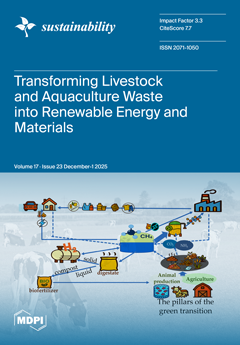
In recent years, concerns about the sustainability of livestock farming have increased. The livestock sector is often criticized for its substantial greenhouse gas emissions and environmental pollution. However, the sector’s polluting load can be harnessed to produce energy and valuable materials, thereby improving overall sustainability. Adopting a large-scale biorefinery model to replace traditional refineries appears to be an inevitable step toward enhancing sustainability, meeting circular bioeconomy requirements, decontaminating waste, and reducing health risks associated with pathogens and antibiotic resistance. Moreover, in a zero-waste framework, nearly all flows can be reabsorbed within the system. As such, the livestock sector can serve as a pillar of the complete green transition, which relies primarily on biomass and its advanced valorization. View this paper
- Issues are regarded as officially published after their release is announced to the table of contents alert mailing list.
- You may sign up for e-mail alerts to receive table of contents of newly released issues.
- PDF is the official format for papers published in both, html and pdf forms. To view the papers in pdf format, click on the "PDF Full-text" link, and use the free Adobe Reader to open them.
Previous Issue
Next Issue
