1. Introduction
Crisis situations such as wars, terrorism, pandemics, and natural disasters are occurring more frequently, making sustainability, security, and crisis management in tourism destinations imperative. The COVID-19 pandemic has confirmed the vulnerability of tourism to low-probability, high-impact events, highlighting the need for continuous risk analysis and vulnerability assessment. Although tourism supports local economies, over-reliance on it can lead to greater exposure to external shocks and fluctuations in demand. Destinations with a smaller range of tourism products and attractions are more vulnerable to crisis situations. Accordingly, it is important to develop diverse and sustainable tourism models in order to reduce risk and build resilience. Sustainability as such has numerous benefits for tourism destinations, such as destination resilience, local economic stability, and community well-being. Resilient destinations are better prepared to deal with change, foster inclusive growth, and contribute to long-term sustainable development. By implementing proactive crisis planning, with active collaboration between tourism stakeholders and private and public investments, destinations will be able to overcome numerous challenges. In addition, by learning from past crises, destinations will be able to better anticipate and mitigate future crises, ensuring more adaptive tourism.
Planning, crisis response, and recovery are usually three phases of crisis management. Planning aims to reduce risk and uncertainty in rare but high-risk events so that managers can better control crisis processes [
1]. In tourism, crisis plans focus on timely detection of the crisis, recovery of the destination, and restoration of its image to prevent a decline in tourist arrivals. Planning and communication in crisis management are closely linked and together form the basis for effective crisis management in tourism. In addition to careful and detailed planning, two-way communication also plays a crucial role in the crisis management process, as unclear and untimely information can exacerbate uncertainty [
2]. For crisis management to be effective, stakeholders must understand the needs of the destination and work together before, during, and after the crisis. Sectoral information sharing and the creation of local knowledge are necessary to strengthen the destination’s resilience. Collaboration is also crucial in preparing for a crisis and later mitigating its negative consequences and rebuilding communities [
3]. Although some crises cannot be avoided, proactive action by stakeholders has been shown to help reduce the risk of their occurrence and minimize their impact.
Today, tourism destinations face increasingly complex challenges due to frequent crisis situations, such as health crises and natural disasters. Such events have highlighted the need for systematic tourism destination management that integrates proactive crisis planning, transparent communication, and effective collaboration among key tourism stakeholders. Despite the existing literature on crisis management in tourism, there is still a limited understanding of how these components interact to achieve sustainable destination management, especially from a management perspective.
The paper aims to examine the connection between crisis planning, communication, and collaboration with effective and sustainable crisis management in tourist destinations. By analyzing the perceptions of tourism management at different levels of destination management, the paper seeks to identify key factors that strengthen preparedness and response capacity during crisis situations.
The novelty of this study is reflected in the empirical research of management perceptions of the connection between crisis planning, crisis communication, and crisis cooperation within the same analytical framework. In previous research, the aforementioned constructs were analyzed separately, while this paper highlights their synergistic effect on the basis of which effective crisis management and long-term resilience of the destination are achieved.
The following three hypotheses were formulated based on the literature review and theoretical foundations:
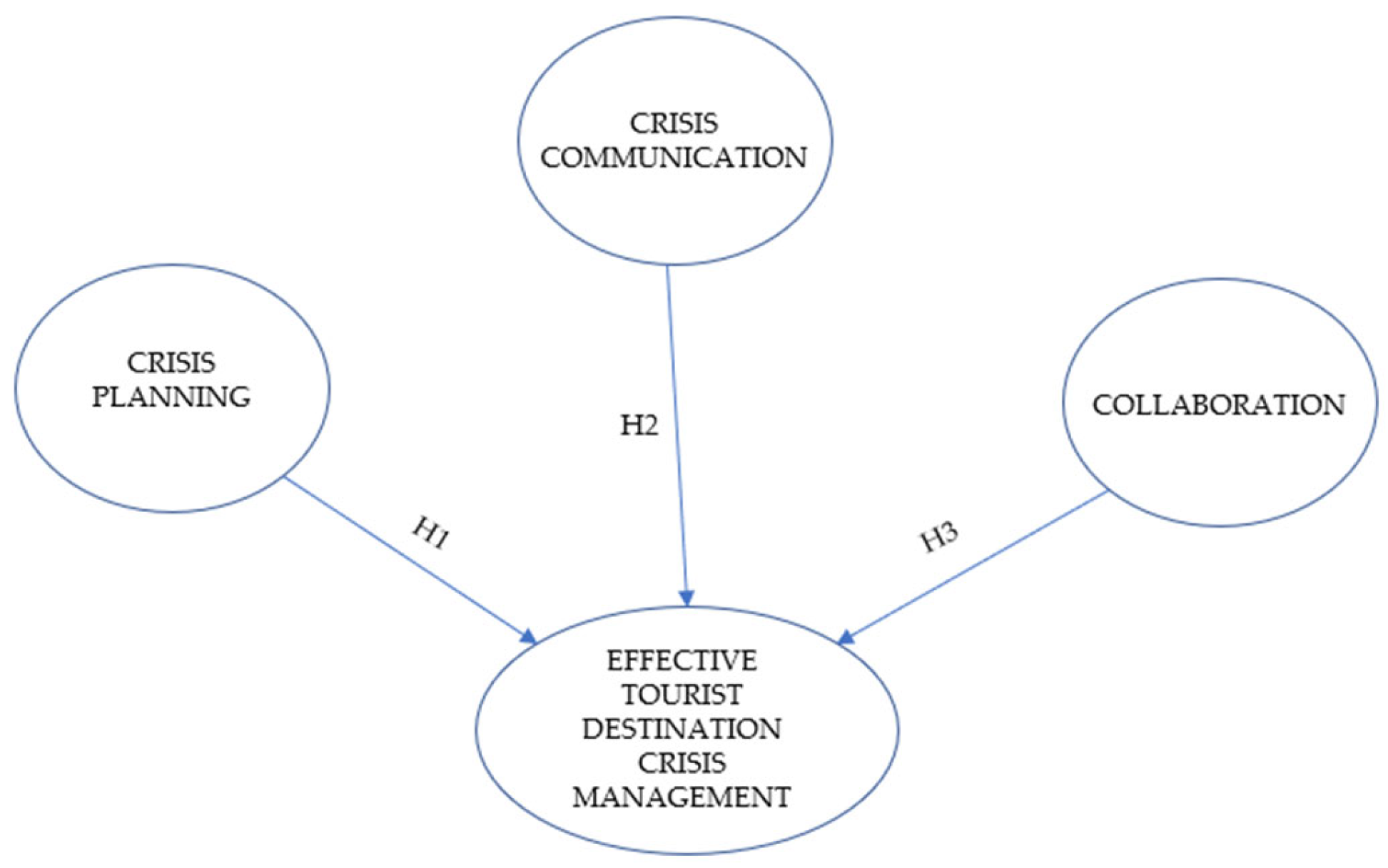
H1: Crisis planning is statistically significantly connected with effective tourist destination crisis management.
H2: Management’s attitudes on the importance of crisis communication are statistically significantly connected with effective tourist destination crisis management.
H3: Perception of the importance of collaboration with tourism stakeholders is statistically significantly connected with effective tourist destination crisis management.
The conceived research model provides a comprehensive basis for analyzing the interrelationships between the components of crisis management and sustainability, contributing to both theoretical progress and practical application in crisis management in tourist destinations. The management of crisis situations in tourism has been represented in previous research, in which its key components, such as crisis planning, communication, and cooperation of stakeholders, were mostly analyzed separately, focusing on individual aspects of preparedness or response. However, empirical evidence on how these dimensions interact and how they are jointly related to effective and sustainable destination crisis management remains scarce, especially from a management perspective. In this regard, this research has an integrated model that connects these three elements as determinants of effective crisis management in the destination. Examining the perceptions of tourism managers at different levels of management, the paper provides useful guidelines for improving internal organizational capacities and relations with external stakeholders in order to strengthen the destination’s resilience. It thus contributes to the theoretical development of crisis management in tourism and the formulation of practical recommendations for sustainable destination management. In addition, the practical contribution of the research is to provide practical insights to destination management organizations (DMOs), local authorities, and tourism policy makers that will enable them to improve preparedness for upcoming crises, foster inter-organizational coordination, and integrate sustainability principles into crisis management strategies. The paper also contributes to the development of resilient and adaptable destinations that will be stable and competitive in the long term.
2. The Connection Between Planning, Communication, and Cooperation in Crisis Circumstances and a Sustainable Destination
Crises can occur at different levels, from local to global, and have far-reaching effects. Preparing for and planning for large-scale, sudden, or rare events is particularly difficult for several reasons. These include the uncertainty of timing, the lack of collective memory of past consequences, the lack of political will to prioritize preparation, the need to allocate limited resources to urgent, immediate needs rather than future preparedness, the complexity of hazard response systems, and the unique characteristics of each disaster and its environment [
4].
The first step in crisis management is a detailed analysis of the current situation, i.e., the external and internal environment of the destination. This is followed by an assessment of the current situation, taking into account two important dimensions: the extent and the expected impact of the crisis. As not all potential risks are immediately visible, it is crucial to identify vulnerable assets in time to ensure their protection and improve the response to crisis situations [
5].
Active crisis plans, in addition to enabling a structured and timely response to a crisis, also aim to prevent potential crises in destinations and organizations and mitigate their negative consequences, such as damage to the destination’s image and loss of business [
6]. Plans also ensure a clear division of responsibilities and tasks between all parties involved, direct employees to the most important priorities, and reduce fears and uncertainties that can further exacerbate a crisis situation [
7]. In addition, crisis exercises and simulations associated with planning improve the identification of potential threats and the response when a crisis occurs.
Ref. [
8] emphasizes the important link between planning and communication in crisis management, noting that, in addition to prevention and preparation, planning also involves developing an effective communication infrastructure through clear protocols and procedures to be used during and after a crisis. An important aspect of crisis planning is also providing advisory support to those involved in all phases of the crisis. The authors emphasize that crisis planning is a communication activity that involves all relevant stakeholders from the outset, with a particular role for the media and predefined information-sharing plans. It is unfortunately a fact that crisis situations cannot always be prevented, but by their timely prediction, the potential damage can be reduced. The analysis and use of various crisis scenarios will improve risk management and will result in more effective crisis plans and their successful implementation.
The sustainability of tourism as a complex system represents both an opportunity and a challenge. This is especially evident in times of crisis, when effective communication and proper exchange of information among stakeholders are key components of crisis communication. In this regard, a cooperation platform that serves to share information and different experiences, provides the necessary resources, and promotes the implementation of prevention measures is characterized [
9]. Cross-communication is not only an important prerequisite for successful crisis management, but also an important element of public relations. It includes the following activities, among others: preparing for and anticipating potential crisis situations, communicating with affected stakeholders, and resolving crises. Cross-communication involves verbal and written interaction between organizations and the public before, during, and after a crisis. Its aim is to inform about the dangers of crisis events, which often come from the top and usually have significant consequences [
10]. Internal cross-communication is critical to maintaining the trust and commitment of employees while a crisis is ongoing. High-quality communication messages have a positive effect on employees and improve their co-operation. Timely information from employees contributes to greater commitment to the organization and the goal, and is of particular importance for supporting internal stakeholders [
11]. The perception of communication has changed significantly with the advent of social media. One example of this is platforms such as Facebook and Instagram, which connect people with similar interests and serve to share information and experiences [
12]. Thanks to technological progress, communication is increasingly taking place online, e.g., when organizing virtual events. In addition, tools such as QR codes and live streaming are gaining in importance. Such situations require continuous training to acquire competencies in the areas of digital and technical skills, communication, innovation, leadership, critical thinking, teamwork, and flexibility. Collaboration with stakeholders ensures the exchange of practical knowledge, proactive planning, and shared learning [
13].
During a crisis, the demand for information increases significantly, and the public expects answers to the questions of what is happening, why the crisis has occurred, and what measures are being taken to mitigate its consequences [
2]. A destination’s response during a crisis determines public attitudes and stakeholder trust. To respond to a crisis quickly and effectively, it is necessary to have a list of key contacts prepared in advance, such as emergency services, firefighters, police, and local government representatives [
2]. Since crises often cause stress and communication difficulties, message planning is essential to ensure consistent and timely communication with the public. It also reduces the risk of spreading misinformation [
10].
For crisis management to succeed, an effective crisis team [
14] is essential, based on successful cooperation among members, good interpersonal relationships, and professional diversity, which enables a broader perspective and innovative solutions. In addition, clearly defined powers and responsibilities of crisis team members are important. The role of stakeholders in crisis situations is of great importance, as their cooperation can significantly reduce the negative consequences of the crisis [
15]. The successful development of a destination depends on the coordinated actions of the public and private sectors jointly involved in the planning, decision-making, and management of the destination.
Collaborative crisis management involves tourism stakeholders and institutions acting together to adequately prepare for, respond to, and ultimately learn from risks and crisis events [
16,
17]. Despite the high level of uncertainty, crises require quick and effective action. For crisis management to be successful, managers and other relevant stakeholders must constantly collaborate and cooperate in all crisis phases, i.e., in preparation, response, recovery, and learning from the crisis experience [
18]. Stakeholder cooperation reduces the dependence of destinations and organizations on emergency services and other governmental and non-governmental organizations [
19]. Communication with stakeholders is an extremely important part of this process because if it is not transparent, it can lead to conflict, especially if there are unclear incentives or reporting chains. Successful cooperation is only possible with a high level of trust between tourism stakeholders, which needs to be established as early as possible. As crisis management is a continuous and iterative process, it is necessary to adapt to new conditions, learn from changes, and implement them in order to address the identified weaknesses of the destination.
Tourism has faced significant negative consequences during the COVID-19 pandemic, and recovery has been hampered by challenges in global crisis management. Due to insufficiently clear classification of the virus and ignorance of the actual risk, responses to the crisis were ineffective. Tourism was particularly vulnerable due to a lack of preparation and experience. Nevertheless, public and private sector cooperation supported recovery by enhancing communication and promoting destination safety, responsible travel behavior, and later domestic tourism to maintain visibility and restore tourist confidence [
20].
Tourism has shown its vulnerability to crisis situations in the last decade, and since tourism significantly affects the entire destination and the living conditions of the local population, the ability to apply crisis management is of utmost importance for the long-term sustainability of both tourism and the entire community where it develops. For this reason, the management of a tourist destination must master crisis management competencies in order to be able to manage the destination in accordance with the concept of sustainability.
Previous research [
21] has highlighted the growing importance of sustainability and crisis management in creating and maintaining economically, politically, and environmentally sustainable communities at all levels of society. Sustainability and crisis management are also increasingly seen as important collective and community responsibilities to be shared and practiced by all levels of government, the private sector, and individuals within an appropriate sphere of responsibility and scope of action [
21].
In recent years, the world has changed dramatically in terms of economic, technological, and tourism development. Crisis situations are occurring more and more frequently, which is why it is necessary to ensure long-term stability and prosperity. The solution to these problems lies in the concept of sustainable and responsible tourism, which includes issues such as mass tourism, preservation of natural and social heritage, environmental changes, global warming, pollution, and the like. The above-mentioned concept also advocates a responsible and sustainable approach to crisis management [
22].
Today’s environment is characterized by constant change and rapid technological advances in global competition, which also presents a challenge for destinations to continuously adapt to external circumstances and threats. As destinations have been confronted with numerous environmental and social issues in recent years, destinations must become sustainable [
23]. Destination managers and tourism stakeholders should strive for sustainability in order to minimize the negative impact of such a situation on the environment and local communities, to ensure long-term competitiveness and resilience to crises, and to maintain the attractiveness of the destination for future generations. One of the main obstacles to sustainability can be crisis situations in tourism, which lead to instability and uncertainty, and whose consequences significantly affect the local and regional level of tourism activities. In tourism, crises lead to a decline in tourist flows and also to lower income from tourism, which affects the sustainability of tourism activities. The sustainability of destinations largely depends on the continuity of their business. The main objective of sustainability is to increase the economic benefits of tourism activities while maintaining and improving social and environmental values. According to [
24], sustainability in tourism is closely linked to crises and their management, with the topic of discussion on tourism and sustainability being precisely crisis management and resilience. As the sustainability of tourism activities is important for the continuity of the company, crisis management in tourism is of crucial importance. The results of the study by [
25] showed that companies that are better in sustainability are more affected by financial performance, but the benefits of financial performance on sustainability are amplified during the financial crisis. During the pandemic, companies with strong sustainability performance were more resilient, and their financial performance declined less than companies with weak sustainability performance. This suggests that sustainability is proving to be a kind of insurance against economic downturns in times of crisis.
Destinations have concentrated on creating policies that support the development of more inventive goods and services since the COVID-19 pandemic. The success of each destination during the crisis has been largely dependent on the efficient cooperation, open innovation, and communication between government organizations, academic and research institutions, and the private sector. To achieve resilience and maintain long-term growth, new policy measures are required [
26]. Sustainability has emerged as a crucial issue in light of the pandemic’s severe negative effects, which have been mirrored in global technological advancements, consumer preferences, government policies, and the marketplace. Reflecting on various areas where innovative solutions could result in long-term sustainability improvements has been the aim of global economies and communities. These include the creation of social value through business model innovation, socially innovative and environmentally conscious managers, investors, and shareholders, and international organizations leading and supporting countries in developing their strategic initiatives and providing them with guidance on how to create social value [
27]. Despite all the negative consequences that the COVID-19 pandemic has left behind, it has also been an opportunity for a paradigm shift and an entry into a sustainable world, towards long-term, resilient, and sustainable global practices. The pandemic has brought tourism to a standstill, so to speak, in order to stimulate reflection and enable a new start towards the 17 Sustainable Development Goals of the 2030 Agenda. The aim was to adopt a responsible and thoughtful approach based on human rights and social justice for people and communities. It is the consolidation phase that argues in favor of long-term responsibility resulting from transformational learning. For a long-term transition to take hold, consumers need to be educated about sustainable consumption and responsible tourism behavior, and encouraged to embrace values such as fairness, global awareness, and collective action. In this regard, to promote sustainable tourism development, managers need to establish change programs, take measures for cleaner energy, and foster a greener and more balanced economy [
28]. Similarly, destinations that follow sustainable models have been shown to generate higher returns [
22].
Every crisis creates challenges for the destinations it impacts because it disrupts travel, jeopardizes the stability of tourism, and affects its sustainability. After the crisis is over, tourism destinations need to implement successful recovery plans for long-term success and sustainability, which necessitates a comprehensive and sustainable paradigm. Integrating and balancing social, environmental, and economic dimensions is the process of sustainability. This is the key to the long-term success of destinations and the sustainability of companies. For destinations to recover from crises as quickly as possible, sustainable policies are also needed to reduce their vulnerability to crises. Cooperation between tourism stakeholders is also essential to minimize the damage and ensure sustainability [
29].
3. Operationalization of Research Concepts and Hypotheses
The aim of the paper is to examine tourism management’s perception of crisis planning, crisis communication, and the importance of collaboration with tourism stakeholders in relation to effective action in crisis. Given the results of previous studies, it is assumed that those destinations that are more proactive in terms of crisis response planning and crisis communication have a greater chance of successfully managing crises and minimizing their negative consequences. Positive changes in crisis communication that can improve crisis management in tourism destinations include: the development of clear crisis communication plans in advance, the establishment of clear lines of communication with different stakeholders that improve the speed and accuracy of information, and the establishment of crisis communication centers that allow tourism destinations to centrally monitor the situation, coordinate responses and communicate with all relevant stakeholders. In addition, in the context of planning and responding to a crisis, positive changes can be seen through the creation of detailed and comprehensive plans for different scenarios (natural disasters, terrorism, pandemics) with clearly defined roles and responsibilities of all actors involved, more frequent staff training and timely establishment of protocols for emergencies, more intensive training of roles and responsibilities, and greater flexibility and adaptability to specific situations.
The conceptual model in this article is based on contingency theory and resilience theory. The first theory illustrates how effective destination responses depend on the alignment of internal capabilities and external circumstances [
30]. In crisis situations, contingency theory helps explain why a single, universal model of crisis management is insufficient and why destinations must tailor their actions to the specific characteristics, scale, and dynamics of each disruptive event. The framework justifies the emphasis on structured crisis planning and tailored communication, which vary depending on the nature and severity of the crisis. On the other hand, resilience theory, which is frequently applied in the literature on crises in tourism, emphasizes the importance of the ability of systems to absorb shocks and adapt proactively [
31]. In the context of tourism crises, resilience theory provides a basis for understanding how destinations recover, reorganize, and continue functioning despite significant disturbances, highlighting the role of learning, adaptation, and flexibility. In this regard, stakeholder collaboration is an important adaptive capacity as it facilitates coordinated and comprehensive responses to the crisis. The combination of planning, communication, and collaboration, therefore, helps to improve destination resilience while being in line with the sustainable development goals emphasized in the tourism literature [
32]. Thus, the conceptual model examined in this paper represents an integrative theoretical viewpoint, wherein the proposed connections among crisis planning, communication, teamwork, and successful response are based on both systemic adaptability (Resilience Theory) and strategic fit (Contingency Theory).
The research model consists of four constructs, namely crisis planning, crisis communication, crisis cooperation, and effective crisis management in tourist destinations. The constructs were measured using a five-point Likert scale for determining the degree of agreement and importance, where a score of 1 indicates I completely agree or it is not important at all, and a score of 5 indicates it is important or I completely agree. Hypothesis testing was performed for each construct using 4 composite variables.
The crisis planning construct includes seven variables: clear crisis warning plans, clearly defined command/control system, clearly defined division of responsibilities and tasks, clearly defined coordination/communication plans, clear protocols for identifying a crisis situation, clearly defined rules of action/behavior in the event of a crisis situation, and plans for various crisis situations for which respondents assessed the degree of agreement.
The crisis communication construct included seven variables for assessing the importance of communication processes: conveying the message to employees, conveying the message to tourists, conveying the message to key constituents (institutions, regulators, partners, suppliers), defining deadlines for rapid response, preparing posts on social networks, preparing press releases, and preparing statements for the media.
The construct of crisis cooperation included six variables, based on which respondents assessed the importance of cooperation with various stakeholders in tourism: local government units and bodies, the civil protection headquarters, national bodies, tourism businesses, tourism associations, and civil society.
Finally, the construct of effective crisis management in tourist destinations was operationalized through seven variables, or elements of successful crisis management in tourism: crisis exercises and simulations, emergency procedures, communication skills, training programs, written rules and procedures, information and communication technology, and team building, to which respondents gave a degree of agreement.
3.1. Crisis Planning
The crisis plan is the basis for a proactive approach to crisis management. For the plan to be applied effectively, possible scenarios and simulations of crisis situations must be developed and carried out regularly to provide a detailed understanding of the real circumstances [
6]. When preparing, it is important to anticipate as many crisis scenarios as possible, including natural disasters, security issues, and the like. This will lead to fewer frequent crises that last less time and whose consequences are less intense. The pre-crisis phase includes clearly defined operational measures relating to the duration, intensity, and outcome of crisis situations. These measures involve strategic planning, the formation of a crisis team, and the establishment of crisis communication protocols, in which the sequence and content of key messages must be clearly specified. In the initial management phase, it is important to form a crisis team comprising experts with relevant knowledge, skills, and experience, who have proven crucial in resolving complex crises. Forming such a team in a timely manner contributes to safety during crisis situations [
7].
Although crises are difficult to plan for, they can be roughly predicted, and guidelines can be developed in advance. The introduction of preventive measures and activities reduces the likelihood of a crisis and demonstrates that, if warnings are interpreted in a timely and effective manner, a crisis can be managed more easily and successfully. This enables a more efficient handling of the challenges that may arise during a crisis. Detailed guidelines and protocols are essential components of an effective crisis management plan, providing more detailed instructions for behavior in different crisis scenarios. Protocols also include communication strategies, escalation procedures, and contingency plans that reduce the possibility of errors in emergencies. A detailed crisis management plan defines the activities during a crisis and the people responsible for decisions to ensure fast and accurate decision-making. Clear roles and responsibilities reduce the risk of potential errors that can occur due to overlapping tasks or a lack of clarity.
3.2. Crisis Communication
High-quality management of communication processes is an integral part of the business of organizations and destinations, with a particular focus on careful and detailed communication planning in times of crisis. When a crisis occurs, destinations are the most vulnerable, and although they are aware that crises are an indispensable part of the business processes they will face sooner or later, many of them do not know how to deal with crises, or they do not do so in a correct and high-quality manner [
2]. Successful crisis communication depends on the anticipation of crises and thorough planning. Therefore, it is of utmost importance to establish a protocol for crisis communication, both within the destination and externally. A rapid and effective response with a minimum of potential damage to destinations is enabled by prescribed crisis management protocols. This includes a list of crisis contacts, crisis response plans, and templates for public communications. A comprehensive communication plan is also important for the speed and accuracy of information transfer between all actors involved, as it reduces the possibility of communication errors and inaccurate information flow [
10]. The communication plan also ensures clearly defined roles and responsibilities. In order for the above objectives to be achieved, competent staff are required who are able to convey information clearly, build good relationships, act appropriately in a crisis, and direct communication towards resolving the crisis [
12]. This can be achieved through strategic crisis management in all its phases. In addition, a detailed assessment of the challenges or threats in the destination that need to be turned into opportunities for the destination and its stakeholders is essential.
3.3. Crisis Cooperation
To prevent an event from developing into a crisis, public participatory emergency planning involves engaging all relevant stakeholders in the planning process. The benefits include information sharing, a better understanding of the interests and priorities of different groups, and educating members about potential damage and the needs of the destination [
20]. A shared understanding of the potential impact of a crisis is useful for problem-solving and preventing major damage. The above illustrates how aligning collaboration and communication leads to more effective management and, therefore, more meaningful and sustainable outcomes [
4,
12].
3.4. Effective Tourist Destination Crisis Management
In crisis situations, it is not only important to be structured and organized, but also to act quickly, decisively, and deliberately. The same is more effective when crises are managed by the whole team, which should be communicative and coherent, and not just by one person. Considering that failure to notify and inform the public in a timely manner can lead to improper crisis management, it is very important to make sure that the information is timely, accurate, and clear [
14,
15].
For crisis planning to be effective, managers must make timely decisions under pressure and coordinate activities within the organization. Planning for unforeseen situations is essential to mitigate the negative consequences of crises, as confirmed by previous research [
33,
34,
35,
36]. In the preparatory phase, it is necessary to develop plans for different scenarios, including both the best and worst possible outcomes, and to clearly define the management system and the distribution of responsibilities among crisis team members. Clear roles and authority enable coordinated action and faster decision-making in high-pressure situations [
37,
38,
39]. Destinations are better able to anticipate crises, make decisions more quickly, and coordinate actions in crises if they are planned in detail. Scenario planning not only improves crisis preparedness but also reduces the duration and intensity of crises and minimizes their consequences.
Crisis management will be more effective if the protocols are clearly defined and the response is quick and structured.
Whether proactive or reactive, crisis management is based on effective communication. In the preparatory phase of the crisis, clear communication protocols and channels are defined, as well as the roles and responsibilities of the members of the crisis team. In the crisis phase, the timely and accurate exchange of information that enables proactive communication with relevant stakeholders, transparency, and trust is crucial [
40,
41,
42]. Successful crisis communication is based on the use of different channels, such as traditional and digital media, social networks, and official websites, so that all target groups, such as employees, tourists, and local communities, receive the necessary messages in a timely manner. Different tourism stakeholders require customized information, which is why communication should take place in a clear, consistent, and contextually appropriate manner [
43,
44,
45]. Transparent communication with the public, tourists, and relevant institutions enables accurate assessment of the situation, faster decision-making, and effective mitigation of crisis consequences. Recognizing the importance of communication is the key to more effective crisis management. In destinations with developed crisis communication, there is a fast and transparent exchange of information. Crisis management improves timely public notification, coordinated internal communication, and clearly defined channels for key stakeholders.
Stakeholder collaboration is essential for achieving development goals and addressing challenges, as it results in multiple benefits, such as shared learning, policy development, and adaptation to environmental changes [
16,
46]. Effective collaboration also enables the mitigation of the negative consequences of crises, the implementation of emergency planning, and the reconstruction of local communities [
3]. During crises, government institutions, local communities, tourism businesses, and non-governmental organizations must jointly develop and implement resilience and response strategies. The exchange of resources, knowledge, and good practices contributes to faster recovery and long-term sustainability of tourism [
47]. Destinations that promote co-operation between tourism stakeholders ensure coordinated and effective crisis management. Coordinated and effective crisis management is based on good cooperation between tourism stakeholders. Joint participation in activities such as planning, information exchange, and decision-making leads to a faster crisis response while minimizing the negative consequences of the crisis. Adapting to crisis conditions requires good relationships and trust between stakeholders, which also improves the resilience of the destination.
To illustrate the relationship between three independent variables and one dependent variable in this study, a conceptual model is presented below in
Figure 1.
As can be seen from the model presented, a statistically significant correlation is assumed between each of the three independent variables and the effective tourist destination crisis management. The empirical testing of this model using regression analysis is described in the following chapters.
The next chapter presents the results of the hypothesis testing using regression analysis and empirical research. The aim of the study was to analyze management’s views on crisis planning, the importance of crisis communication and cooperation, and their relationship with effective tourist destination crisis management.
4. Tourism in Croatia: Key Indicators and Challenges
Tourism is one of the most important economic activities in Croatia, contributing significantly to employment, regional growth, and national income. However, Croatia is characterized by challenges related to regional disparities, seasonality, and spatial concentration of tourism activities. In 2019, the Adriatic region accounted for 94.5% of total tourist arrivals and 92.5% of all accommodation capacities, reflecting the strong dominance of the coast in tourist flows. Employment in tourism amounted to 46% in Adriatic Croatia, or 8% at the national level [
48,
49]. In the year before the pandemic, Croatia was among the leading destinations in the Mediterranean, with 19.5 million arrivals and 91.2 million overnight stays [
50].
Tourism in Croatia, although economically important, is highly seasonal and has negative environmental impacts, which are largely present on the Adriatic coast. For this reason, the priority is Sustainable Tourism Development, which is aimed at balancing economic growth with environmental protection, promoting low-carbon tourism, and regional balancing. Key strategic activities include extending the tourist season, diversifying tourism products, and strengthening crisis management systems to improve the resilience of destinations and prepare for future challenges.
Given that tourism is dependent on the stability of travel and the importance of coordinated actions by government, local communities, and private stakeholders, proactive planning and integrated crisis management are necessary, which has been further emphasized by the COVID-19 pandemic. In order for Croatia to position itself on the market as a safe and sustainable destination, continuous investments in security systems, crisis response mechanisms, and cooperation at all levels of tourism management are needed.
5. Methodology
A quantitative survey was conducted with the aim of collecting and analyzing the views of key stakeholders in tourism on development potentials, measures for improving and advancing existing models of destination management in crisis situations, thereby complementing previous research results in the field of crisis management in tourism. The target group of respondents comprises destination management, including directors of municipal, city, and county tourism associations and members of the Tourism Council of County Tourism Organizations in Croatia, a total of 533 people. Of the 333 questionnaires collected, 165 were validly completed, representing 30.96% of the total population. The number of valid questionnaires served as the sample for the quantitative analysis. The sample is representative, as it includes individuals who, by virtue of their managerial positions within the Croatian tourism board system, possess comprehensive insight into crisis management processes in tourism (e.g., adoption of plans and reports) and are able to provide expert opinions on the subject. Croatia was chosen as a research area because tourism is of great importance not only for the economy but also for society as a whole. In addition, the economy is heavily dependent on tourism, which is reflected in the data for 2023, according to which the direct contribution of the travel and tourism sector to GDP was 12.0%, which corresponds to 28.5% of total GDP, including the direct and indirect contribution [
29].
A structured online survey link was distributed via email. The online format was chosen due to its high accessibility and efficiency in reaching geographically dispersed respondents, as well as its time and cost-effectiveness. The questionnaire was created using the 1KA program and was available from October 2021 to January 2022.
The first part of the questionnaire included questions on the demographic characteristics of the respondents, the existence of a crisis plan, its applicability, and the formation of a crisis team [
51]. The second part focused on the activities undertaken in the preparation and response phases of the crisis, as well as respondents’ views on the key elements of crisis response planning and the importance of crisis communication. The items were adopted and adapted from research by [
52,
53,
54,
55,
56,
57]. These references ensured the content validity of the instrument, while minor modifications were made to adjust the terminology to the tourism management context.
In line with the research objectives, the study included one dependent variable—effective tourist destination crisis management and three independent variables: crisis planning, crisis communication, and stakeholder cooperation. Reliability of the constructs was tested using the Cronbach’s alpha coefficient, as the most commonly used indicator of internal consistency in social sciences. Descriptive statistics (means and standard deviations) were used to describe the socio-demographic characteristics of respondents, while the relationships between the variables and hypotheses were tested through the regression analysis using software IBM SPSS Statistics 29.0.0.0. The regression model was designed to identify the independent variables that best predict the dependent variable, effective tourist destination crisis management. This methodological design enabled the collection of comprehensive and reliable data, ensuring a valid interpretation of crisis management practices in tourism and providing a basis for formulating practical recommendations for sustainable destination management.
6. Research Results
This section presents the results of three regression analyses conducted to examine the relationship between the three independent variables: crisis planning, crisis communication, and crisis cooperation, and the dependent variable, effective tourist destination crisis management. Prior to the regression analyses, the reliability and validity of the constructs were confirmed, and the descriptive statistics of all variables were analyzed. Reliability was confirmed using Cronbach’s alpha coefficients, all exceeding the threshold value of 0.7, indicating satisfactory internal consistency. In the following, the results of three regression analyses are presented, in which the independent variables were crisis planning, the importance of crisis communication, and the importance of cooperation, while the dependent variable in all cases was effective tourist destination crisis management.
Based on the results in
Table 1, it is evident that crisis planning is statistically significantly connected with effective tourist destination crisis management (
p < 0.001), thereby confirming the first hypothesis regarding the positive impact of crisis planning on effective tourist destination crisis management. Furthermore, the following table presents the second regression analysis.
The statistically significant
p-value in
Table 2 confirms the existence of a relationship between the importance of crisis communication and effective tourist destination crisis management.
Finally, the third regression analysis is presented in
Table 3, and the results show that the statistically significant
p-value confirms a relationship between the importance of crisis cooperation and effective tourist destination crisis management.
The regression analyses confirmed all three hypotheses, i.e., a statistically significant relationship was found between crisis planning, management’s views on the importance of crisis communication, and the perceived importance of cooperation with tourism stakeholders for an effective crisis response. It follows from the results that proactivity, together with planning, strategic communication, and co-operation with stakeholders, is the key to an effective crisis response.
7. Discussion
The research conducted emphasized the role of planning, communication, and collaboration as key elements of effective crisis management. The confirmed hypotheses proved that management recognizes the importance of the aforementioned elements. This also shows that the perception of the key elements is statistically significantly linked to the ability of destinations to respond to crises in a fast, structured, and effective manner. The results of the study confirmed a statistically significant relationship between the tested constructs. According to the data in
Table 1, the regression model (F (1, 157) = 19.794,
p < 0.01; R = 0.335, R
2 = 0.111) shows that crisis planning is significantly associated with effective crisis management in destinations, which accounts for 17.7% of the total variance. This highlights how well-structured crisis plans and proactive preparedness measures significantly contribute to improving the effectiveness of crisis management in tourist destinations. The confirmed positive correlation between crisis planning and effective crisis response emphasizes the importance of anticipation and proactive planning to prevent a crisis from occurring. This is consistent with previous research on this topic [
1,
6], which found that timely planning and the formation of a crisis team enable more effective decision-making in conditions of fear and uncertainty. The research also highlighted the importance of continuously conducting crisis simulations and planning for different crisis scenarios, which reduces pressure and improves the speed of action in real crisis situations.
Table 2 shows the results of the regression analysis (F (1, 158) = 34.075,
p < 0.01; R = 0.421; R
2 = 0.177), according to which crisis communication is statistically significantly associated with effective crisis management. The R
2 value suggests that communication explains 17.7% of the total variance in effective crisis management in destinations, implying that transparent, timely, and well-coordinated communication during crisis situations improves the ability of destination management to respond effectively and maintain stakeholder trust. The results obtained are consistent with previous research [
52,
54], according to which clear and regular communication is key to the resilience and sustainability of a destination in crisis situations. Based on the data in
Table 3, it is evident that cooperation between tourism stakeholders is statistically significantly associated with effective crisis management in tourist destinations (F (1, 157) = 13.799,
p < 0.01; R = 0.284, R
2 = 0.081). Cooperation with different tourism stakeholders, such as local authorities, tourist boards, and private sector stakeholders, contributes to a better exchange of knowledge and resources, improves collective preparedness, and enables coordinated crisis response strategies. It can be concluded that coordinated action, with joint decision-making, is important for crisis management and for ensuring the long-term sustainability of tourist destinations. This is consistent with research results [
4,
12], according to which inter-organizational cooperation improves crisis preparedness and post-crisis recovery capacities. Also, a high level of trust and clearly defined relationships contribute to better coordination and mobilization in crisis situations.
Previous research has often considered planning, communication, or collaboration in crisis situations separately [
1,
12,
27], whereas this paper integrates these three key elements of crisis management into a single analytical framework and examines their connection to an effective crisis response. The originality of the paper is reflected in the management’s perception of crisis management and in the proposals for specific guidelines and strategies to strengthen the resilience of destinations. Unlike previous research that relied exclusively on theoretical analyses or case studies, this one used empirical methods to test three hypotheses through quantitative analysis, thus contributing to both practical and theoretical knowledge in the field of crisis management in tourism. The limitations of the research lie in the region, as it is a country like Croatia, and the sample includes stakeholders who manage destinations. Elements such as crisis experience, digital readiness, or institutional support were not considered in the research, which further explains the variability in the effectiveness of the response. All this leads to the conclusion that in further studies it is necessary to analyze a broader range of different stakeholders (e.g., local population, tourists) and to include more areas, i.e., countries. In terms of methodology, it is suggested to complement the quantitative research with qualitative research, e.g., focus groups or in-depth interviews, which would give a better insight into the real situations on the ground and deepen the knowledge already acquired.
8. Conclusions
Crisis events are certain to occur in the future, which is why it is necessary to prepare for them in advance. Co-operation must be established from the outset, even before planning, as it helps to build trust between stakeholders and also lays the foundation for a more coordinated and effective crisis response. The advantage of proactive management certainly lies in its flexibility and adaptability, as well as in the anticipation of risks and their timely management. A high degree of preparation for crisis situations is very important in the planning process and requires active action by stakeholders aimed at improving the destination’s resilience to crisis situations [
4]. Previous research [
4,
5,
6,
7,
8,
9,
10,
11,
12,
13,
14,
15,
16,
17,
18,
19,
20,
21,
22,
23,
24,
25,
26,
27,
28,
29] has mostly examined the aspects on which this paper is based, such as crisis preparedness, communication mechanisms, and stakeholder collaboration, individually, while this research integrates these components to provide a more comprehensive understanding of effective crisis management in tourist destinations.
All three hypotheses were confirmed on the basis of the investigation carried out. The analysis showed that there is a positive correlation between crisis planning and effective tourist destination crisis management, as well as between the importance that management attaches to the elements of crisis communication and the importance of cooperation with tourism stakeholders. The paper emphasizes that awareness of the importance of preventive measures and cross-sectoral cooperation is not yet sufficiently developed, imposing the need for education and stronger networking in the field of crisis management. Based on the research conducted, it is concluded that better perceived elements of crisis planning, communication, and the importance of co-operation contribute to a greater extent to more effective action in a crisis situation. The ability to act in a timely manner during crises can significantly promote the strengthening of strategic and communicative capacities and the development of cooperative relationships between stakeholders. It is particularly important to integrate the above components into the daily operations of organizations and destinations. As there is insufficient awareness of the need for preventive activities and procedures, the importance of a systematic and comprehensive approach to crisis management in tourism is emphasized. Such an approach would facilitate the prediction of potential crisis situations for the destination. In general, it can be stated that awareness of the need for preventive activities and procedures that would facilitate the prediction of potential crisis situations that could affect a destination is not sufficiently developed, which further emphasizes the importance of a systematic and comprehensive approach to crisis management in tourism.
The theoretical contribution of the paper is reflected in the understanding of crisis management in tourism by integrating crisis planning, communication, and cooperation within a unique empirical and analytical framework. In previous research, the mentioned constructs were most often observed separately, while this paper is based on a comprehensive model conceived first with the theory of contingency and resilience, showing how the harmonization of internal management capacities, communication strategies, and inter-organizational cooperation improves the resilience and sustainability of the destination. By empirically confirming the relationships between constructs, the paper complements existing theories by demonstrating that effective crisis management in tourism destinations is not the result of individual actions, but rather a systematic interaction between proactive planning, transparent communication, and cooperative governance. Furthermore, it advances theoretical discussions on destination sustainability, emphasizing that resilience-building mechanisms and integrated crisis management practices are essential components of sustainable tourism systems.
The limitations of the study are that it includes three independent variables (crisis planning, importance of crisis communication, and cooperation) that do not take into account other potentially important variables for effective action in a crisis, such as crisis experience. Furthermore, these are subjective assessments of the respondents, which can lead to biased conclusions. It is therefore important to expand the sample in future studies to include other relevant tourism stakeholders and a larger geographical area in order to carry out a comparative analysis and better apply the results. Although the research results provide useful information on crisis management in tourism, the applicability of the conclusions is limited by the geographical scope of the study. As the sample included only stakeholders from Croatia, the results are conditioned by the institutional, organizational, and cultural specificities of this country. Therefore, caution should be exercised when generalizing the results to other destinations operating in a different administrative, economic, or socio-political context. For future studies, a comparative analysis between countries with different levels of tourism development and crisis infrastructure is suggested in order to determine to what extent the identified factors are universally applicable or depend on the specific context. This would allow a better understanding of the mechanisms of effective crisis management in tourism at the international level.
Crisis planning, the importance of crisis communication, and the importance of cooperation with tourism stakeholders are statistically significantly related to effective action in crisis situations, which helps to complement existing theoretical and practical findings, especially in the field of tourism. In the research part of the thesis, the relationship between management perceptions and concrete actions in crisis situations was established as a basis for future quantitative and qualitative analyses in the field of crisis management in tourism. The results highlight the importance of incorporating crisis preparedness and cooperation into everyday management. This would facilitate a shift from a reactive to a proactive crisis management model and encourage the development of more resilient and flexible destinations. The results also provide useful guidance for destination managers, local authorities, and other relevant tourism stakeholders, and, given the increasing frequency and unpredictability of crises, encourage the development of more effective crisis management strategies.