ELECTRE-Based Optimization of Renewable Energy Investments: Evaluating Environmental, Economic, and Social Sustainability Through Sustainability Accounting

 , , , , and
Abstract
1. Introduction
2. Literature Review
2.1. Renewable Energy Investment Evaluation
2.2. Multi-Criteria Decision-Making (MCDM)
2.3. Sustainability Accounting
3. Materials and Methods
3.1. Mathematical Model Formulation for Optimization of Renewable Energy Investments
- Decision Variables
- Objective Function
- ▪
- is the economic score for the alternative;
- ▪
- is the environmental impact score for the alternative;
- ▪
- is the social impact score for the alternative;
- ▪
- and are the weights for environmental and social impacts, respectively.
- Sustainability Constraint
- ▪
- is the maximum acceptable environmental impact;
- ▪
- is the minimum acceptable social benefit.
- Investment Proportion Constraint
- Sustainability Index (SI)
- ▪
- are the weights assigned to the environmental, social, and economic dimensions, respectively;
- ▪
- is the overall sustainability score for the portfolio, which is to be maximized.
- Pairwise Comparison Matrix
- ▪
- is the threshold for concordance, indicating the required level of dominance on criterion ;
- ▪
- is the normalized ELECTRE weight for criterion ;
- ▪
- is the normalized score of alternative on criterion ;
- ▪
- is the normalized score of the alternative on criterion ;
- ▪
- is the indicator function.
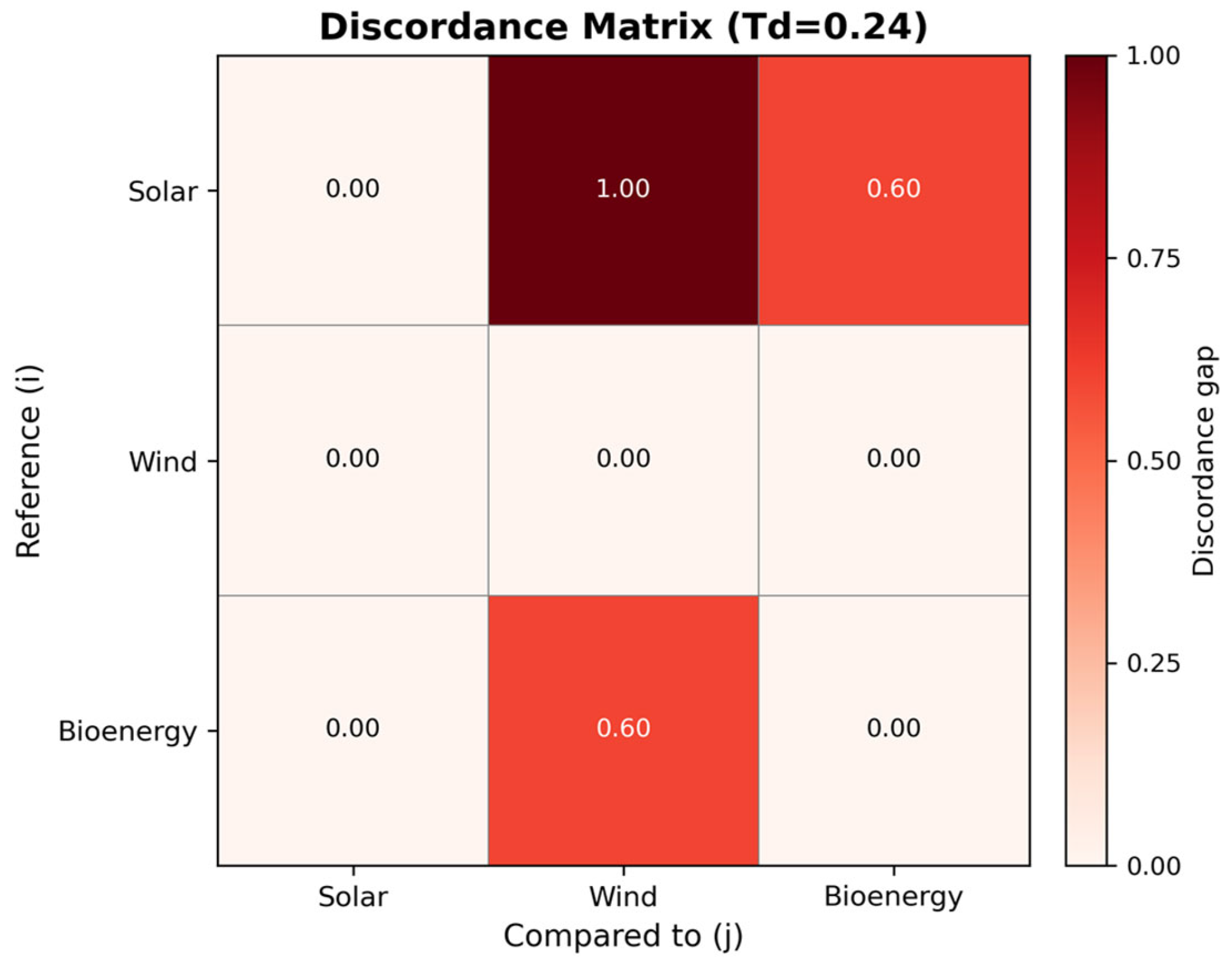
- Discordance Index
- ▪
- is the threshold for discordance, indicating the maximum acceptable disadvantage for any criterion.
- ELECTRE Ranking
- ▪
- is the ranking score for the alternative , with higher values indicating better performance.
- Normalization of Criteria Scores
- 1.
- Benefit-type (higher = better)
- ▪
- is the normalized score of the alternative on criterion k;
- ▪
- and are the maximum and minimum scores for criterion , respectively.
- 2.
- Cost-type (lower = better)
- Weighting of Criteria
- ▪
- is the weight for criterion , which reflects the relative importance of that criterion in the decision-making process.
3.2. Tools
4. Results and Discussion
4.1. Data Analysis
4.2. Weighting Process
4.3. Optimization and Ranking
4.4. Sensitivity and Robustness Analysis of Weight Variations in ELECTRE-Based Sustainability Evaluation
5. Conclusions
Author Contributions
Funding
Institutional Review Board Statement
Informed Consent Statement
Data Availability Statement
Conflicts of Interest
References
- Saleh, H.M.; Hassan, A.I. The challenges of sustainable energy transition: A focus on renewable energy. Appl. Chem. Eng. 2024, 7, 2084. [Google Scholar] [CrossRef]
- Sharman, A.; Bargh, M.; Lal, K.R.; Nissen, S.; Huggard, S.; Whineray, M.; Lum, R.K.; Lawrence, J.; Gibbon, A.; Frame, D. A Careful Revolution: Towards a Low-Emissions Future; Bridget Williams Books: Wellington, New Zealand, 2019. [Google Scholar]
- Ussiri, D.A.; Lal, R. Carbon Sequestration for Climate Change Mitigation and Adaptation; Springer: Berlin/Heidelberg, Germany, 2017. [Google Scholar]
- Williams, E.; Hittinger, E.; Carvalho, R.; Williams, R. Wind power costs expected to decrease due to technological progress. Energy Policy 2017, 106, 427–435. [Google Scholar] [CrossRef]
- Polzin, F.; Egli, F.; Steffen, B.; Schmidt, T.S. How do policies mobilize private finance for renewable energy?—A systematic review with an investor perspective. Appl. Energy 2019, 236, 1249–1268. [Google Scholar] [CrossRef]
- Mungiello, C.F. The Limitation of Investments in Solar: Evaluating the Rural Energy for America Program and Its Impact on Net Metering Capacity. Master’s Thesis, Georgetown University, Washington, DC, USA, 2023. [Google Scholar]
- Chandratreya, A. The Role of Renewable Energy in Promoting Social Equity and Inclusive Economic Growth. In Renewable Energy and the Economic Welfare of Society; IGI Global: Hershey, PA, USA, 2025; pp. 183–212. [Google Scholar]
- Thakkar, J.J. Multi-Criteria Decision Making; Springer: Berlin/Heidelberg, Germany, 2021; Volume 336. [Google Scholar]
- de Magalhães, R.F.; Danilevicz, Â.d.M.F.; Palazzo, J. Managing trade-offs in complex scenarios: A decision-making tool for sustainability projects. J. Clean. Prod. 2019, 212, 447–460. [Google Scholar] [CrossRef]
- Darko, A.; Chan, A.P.C.; Ameyaw, E.E.; Owusu, E.K.; Pärn, E.; Edwards, D.J. Review of application of analytic hierarchy process (AHP) in construction. Int. J. Constr. Manag. 2019, 19, 436–452. [Google Scholar] [CrossRef]
- Uzun, B.; Taiwo, M.; Syidanova, A.; Uzun Ozsahin, D. The technique for order of preference by similarity to ideal solution (TOPSIS). In Application of Multi-Criteria Decision Analysis in Environmental and Civil Engineering; Springer: Berlin/Heidelberg, Germany, 2021; pp. 25–30. [Google Scholar]
- Tavana, M.; Soltanifar, M.; Santos-Arteaga, F.J. Analytical hierarchy process: Revolution and evolution. Ann. Oper. Res. 2023, 326, 879–907. [Google Scholar] [CrossRef]
- Taherdoost, H.; Madanchian, M. A comprehensive overview of the ELECTRE method in multi-criteria decision-making. J. Manag. Sci. Eng. Res. 2023, 6, 5–16. [Google Scholar] [CrossRef]
- Reutter, F.; Lehmann, P. Environmental trade-offs of (de) centralized renewable electricity systems. Energy Sustain. Soc. 2024, 14, 37. [Google Scholar] [CrossRef]
- Estévez, R.A.; Espinoza, V.; Ponce Oliva, R.D.; Vásquez-Lavín, F.; Gelcich, S. Multi-criteria decision analysis for renewable energies: Research trends, gaps and the challenge of improving participation. Sustainability 2021, 13, 3515. [Google Scholar] [CrossRef]
- Alonso-Travesset, À.; Coppitters, D.; Martín, H.; de la Hoz, J. Economic and regulatory uncertainty in renewable energy system design: A review. Energies 2023, 16, 882. [Google Scholar] [CrossRef]
- Zoma, F.; Sawadogo, M. A multicriteria approach for biomass availability assessment and selection for energy production in Burkina Faso: A hybrid AHP-TOPSIS approach. Heliyon 2023, 9, e20999. [Google Scholar] [CrossRef] [PubMed]
- Dirma, V.; Neverauskienė, L.O.; Tvaronavičienė, M.; Danilevičienė, I.; Tamošiūnienė, R. The impact of renewable energy development on economic growth. Energies 2024, 17, 6328. [Google Scholar] [CrossRef]
- Van Rijnsoever, F.J.; Van Mossel, A.; Broecks, K.P. Public acceptance of energy technologies: The effects of labeling, time, and heterogeneity in a discrete choice experiment. Renew. Sustain. Energy Rev. 2015, 45, 817–829. [Google Scholar] [CrossRef]
- Delapedra-Silva, V.; Ferreira, P.; Cunha, J.; Kimura, H. Methods for financial assessment of renewable energy projects: A review. Processes 2022, 10, 184. [Google Scholar] [CrossRef]
- Radtke, J.; Renn, O. Participation in energy transitions: A comparison of policy styles. Energy Res. Soc. Sci. 2024, 118, 103743. [Google Scholar] [CrossRef]
- Strantzali, E.; Aravossis, K. Decision making in renewable energy investments: A review. Renew. Sustain. Energy Rev. 2016, 55, 885–898. [Google Scholar] [CrossRef]
- Fragkos, P.; Fragkiadakis, K. Analyzing the macro-economic and employment implications of ambitious mitigation pathways and carbon pricing. Front. Clim. 2022, 4, 785136. [Google Scholar] [CrossRef]
- Ekins, P.; Zenghelis, D. The costs and benefits of environmental sustainability. Sustain. Sci. 2021, 16, 949–965. [Google Scholar] [CrossRef]
- Toniolo, S.; Borsoi, L.; Camana, D. Life cycle assessment: Methods, limitations, and illustrations. In Methods in Sustainability Science; Elsevier: Amsterdam, The Netherlands, 2021; pp. 105–118. [Google Scholar]
- Lebepe, P.; Mathaba, T.N. Enhancing energy resilience in enterprises: A multi-criteria approach. Sustain. Energy Res. 2025, 12, 7. [Google Scholar] [CrossRef]
- Madanchian, M.; Taherdoost, H. A comprehensive guide to the TOPSIS method for multi-criteria decision making. Sustain. Soc. Dev. 2023, 1, 2220. [Google Scholar] [CrossRef]
- Mary, S.S.A.; Suganya, G. Multi-criteria decision making using ELECTRE. Circuits Syst. 2016, 7, 1008–1020. [Google Scholar] [CrossRef]
- Govindan, K.; Jepsen, M.B. ELECTRE: A comprehensive literature review on methodologies and applications. Eur. J. Oper. Res. 2016, 250, 1–29. [Google Scholar] [CrossRef]
- Sánchez-Lozano, J.; García-Cascales, M.S.; Lamata, M.T. Comparative TOPSIS-ELECTRE TRI methods for optimal sites for photovoltaic solar farms. Case study in Spain. J. Clean. Prod. 2016, 127, 387–398. [Google Scholar] [CrossRef]
- Li, H.; Huang, X.; Xia, Q.; Jiang, Z.; Xu, C.; Gu, X.; Long, H. Dynamic evaluation of urban sustainability based on ELECTRE: A case study from China. Discret. Dyn. Nat. Soc. 2021, 2021, 6659623. [Google Scholar] [CrossRef]
- Cinelli, M.; Coles, S.R.; Kirwan, K. Analysis of the potentials of multi criteria decision analysis methods to conduct sustainability assessment. Ecol. Indic. 2014, 46, 138–148. [Google Scholar] [CrossRef]
- Sundarasen, S.; Rajagopalan, U.; Alsmady, A.A. Environmental accounting and sustainability: A meta-synthesis. Sustainability 2024, 16, 9341. [Google Scholar] [CrossRef]
- Onabola, C.O.; Andrews, N.; Gislason, M.K.; Harder, H.G.; Parkes, M.W. Exploring cross-sectoral implications of the sustainable development goals: Towards a framework for integrating health equity perspectives with the land-water-energy nexus. Public Health Rev. 2022, 43, 1604362. [Google Scholar] [CrossRef]
- Alaraji, F.A.A.S.; Aljuhishi, B.I.M. The Scope of Applicability of the Standard of the Global Reporting Initiative (GRI) for Sustainability in the Iraqi’s Environment. Qual.-Access Success 2020, 21, 102. [Google Scholar]
- García Torea, N. Sustainability accounting standards board (SASB). In Encyclopedia of Sustainable Management; Springer: Berlin/Heidelberg, Germany, 2022; pp. 1–3. [Google Scholar]
- Priya, M.S.R. The Triple Bottom Line of Green Transitions: Assessing the Economic, Social, and Environmental Impacts of Sustainable Development Goals by 2030. In Green Transition Impacts on the Economy, Society, and Environment; IGI Global: Hershey, PA, USA, 2024; pp. 182–201. [Google Scholar]
- Hackenhaar, I.C.; Moraga, G.; Thomassen, G.; Taelman, S.E.; Dewulf, J.; Bachmann, T.M. A comprehensive framework covering Life Cycle Sustainability Assessment, resource circularity and criticality. Sustain. Prod. Consum. 2024, 45, 509–524. [Google Scholar] [CrossRef]
- Gudmundsdottir, S.; Sigurjonsson, T.O. A need for standardized approaches to manage sustainability strategically. Sustainability 2024, 16, 2319. [Google Scholar] [CrossRef]
- Baurzhan, S.; Jenkins, G.P.; Olasehinde-Williams, G.O. The economic performance of hydropower dams supported by the World Bank Group, 1975–2015. Energies 2021, 14, 2673. [Google Scholar] [CrossRef]
- Joanna, W.; Jerzy, K. Conceptualizing job satisfaction and its determinants: A systematic literature review. J. Econ. Sociol. 2020, 21, 138–167. [Google Scholar] [CrossRef]
- Jogi, S.; Vashisth, K.K.; Srivastava, S.; Alturas, B.; Kumar, D. Job satisfaction and turnover intention: A comprehensive review of the shared determinants. Hum. Syst. Manag. 2025, 44, 379–395. [Google Scholar] [CrossRef]
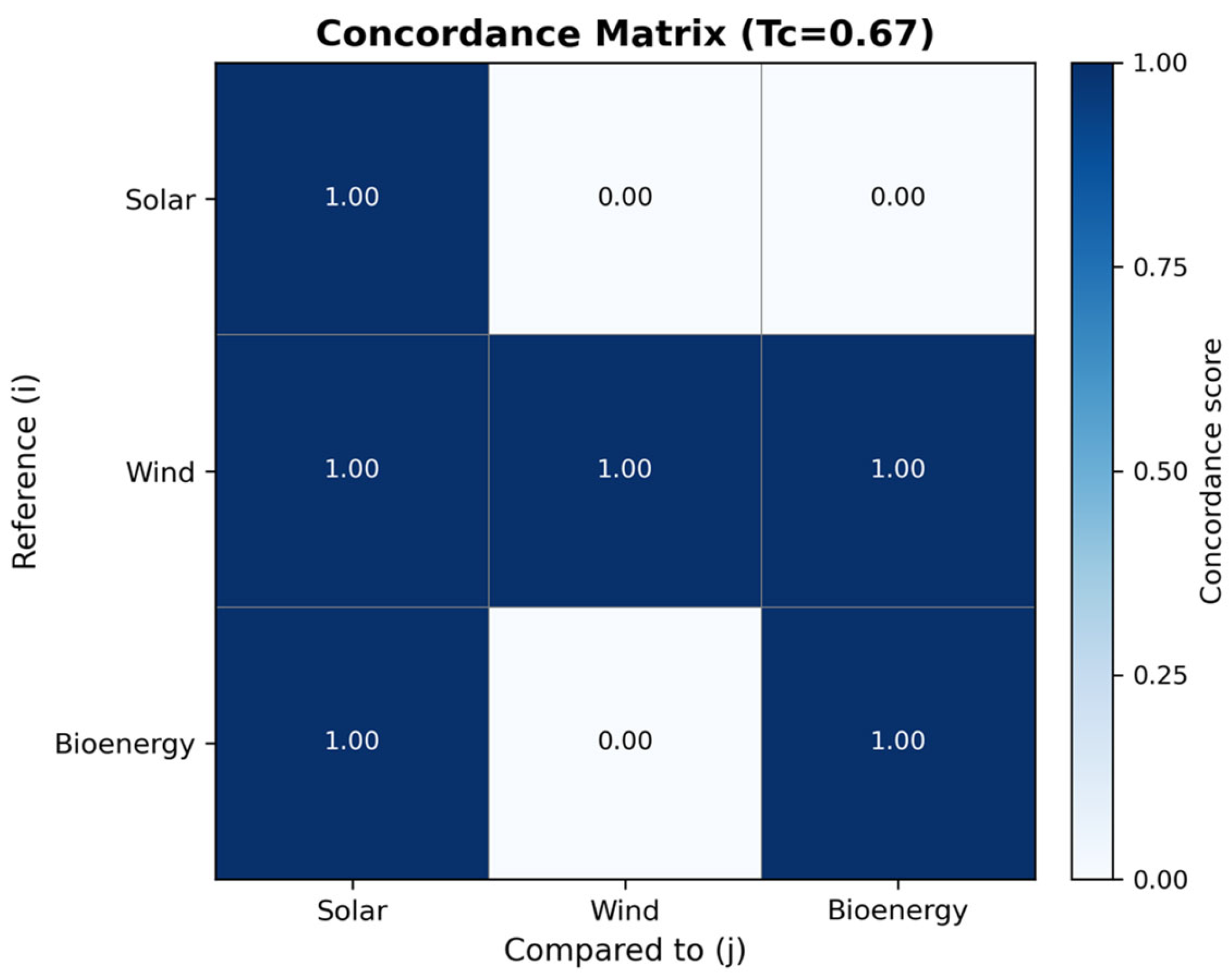


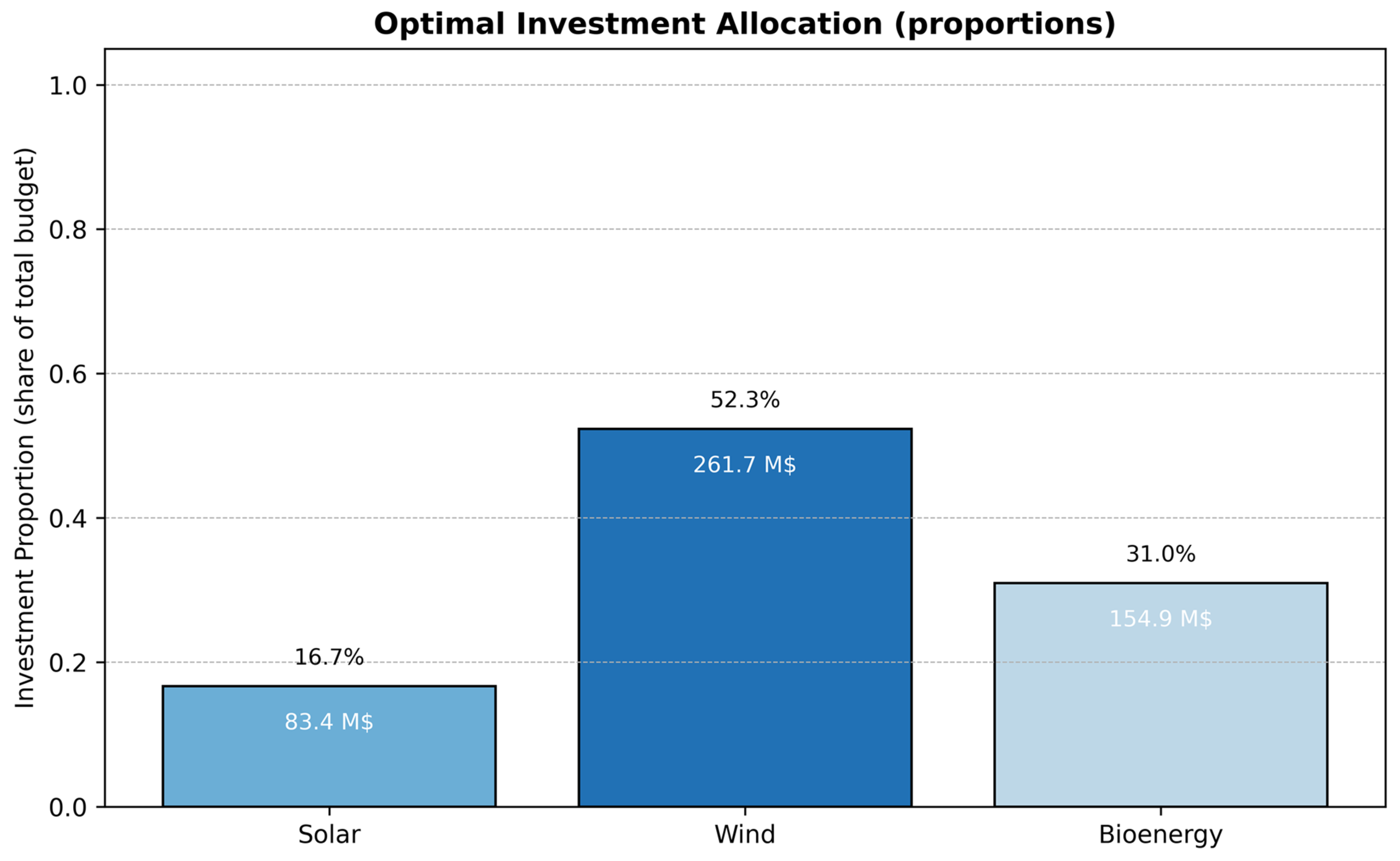
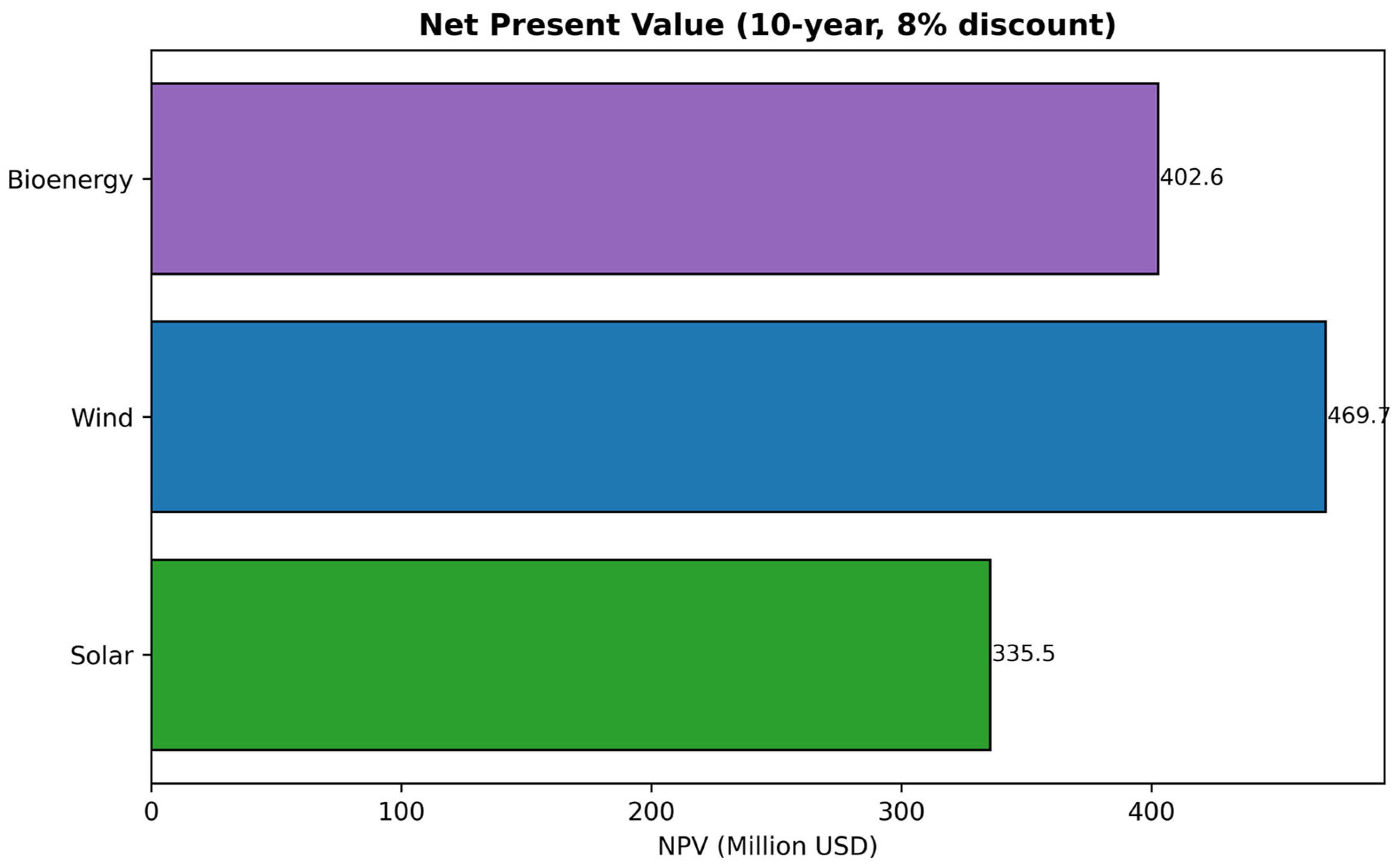

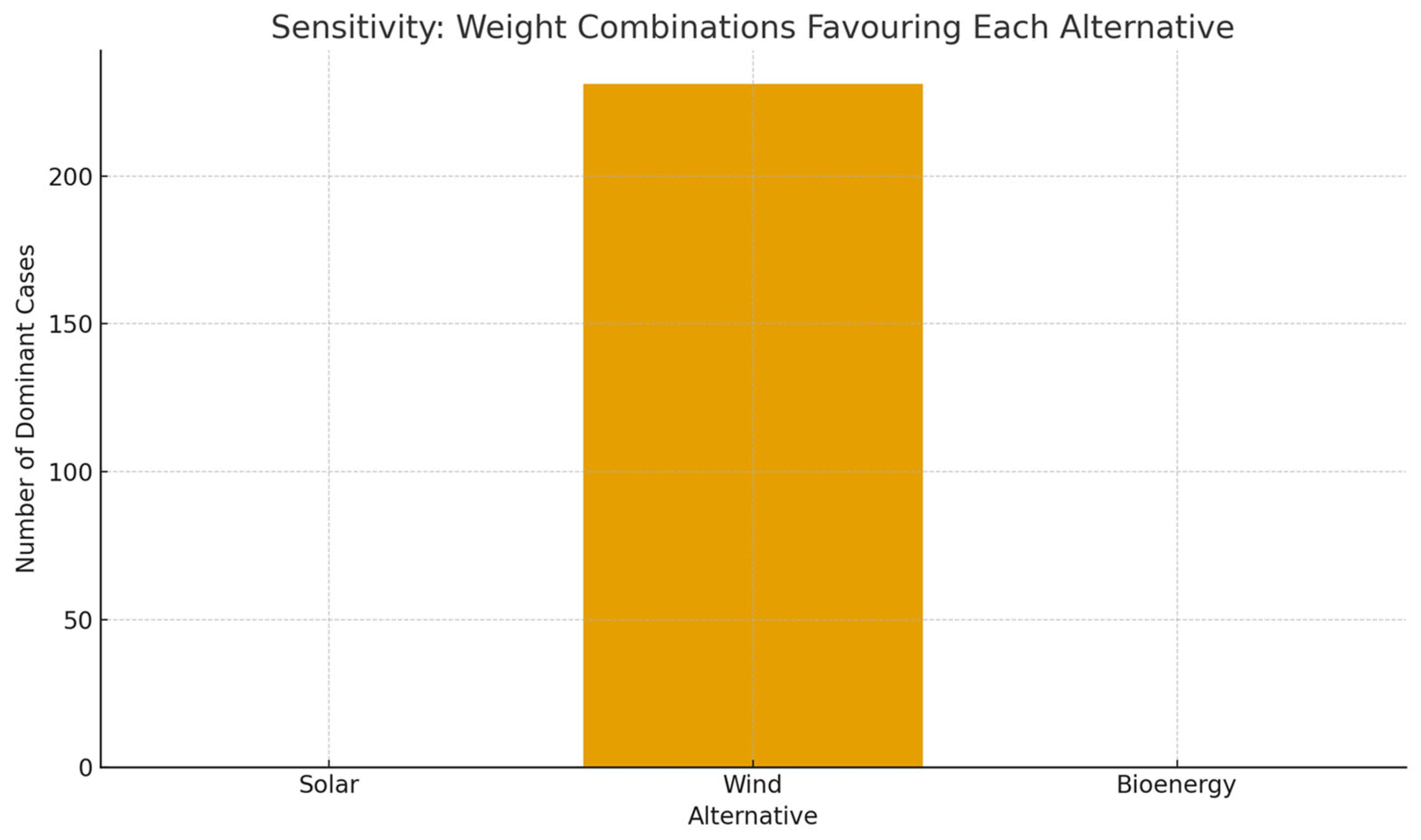


| Variables | Definition |
|---|---|
| The proportion of investment allocated to the renewable energy alternative | |
| n | The number of alternatives. |
| ci | Is the economic score for the alternative |
| ei | The environmental impact score for the alternative |
| si | The social impact score for the alternative |
| The weights for environmental impacts | |
| βi | The weights for social impacts |
| pi | The price per unit of investment for alternative . |
| The total available budget | |
| The maximum acceptable environmental impact | |
| The minimum acceptable social benefit | |
| The weights assigned to the environmental dimensions | |
| The weights assigned to the social dimensions | |
| The weights assigned to the economic dimensions | |
| The scores of alternatives on criterion . | |
| The scores of alternatives on criterion . | |
| The threshold for concordance, indicating the required level of dominance on criterion . | |
| The threshold for discordance, indicating the maximum acceptable disadvantage for any criterion | |
| The ranking score for the alternative , with higher values indicating better performance. | |
| The normalized score of the alternative on criterion k. | |
| The maximum scores for criterion , respectively. | |
| The minimum scores for criterion , respectively. | |
| The weight for criterion , which reflects the relative |
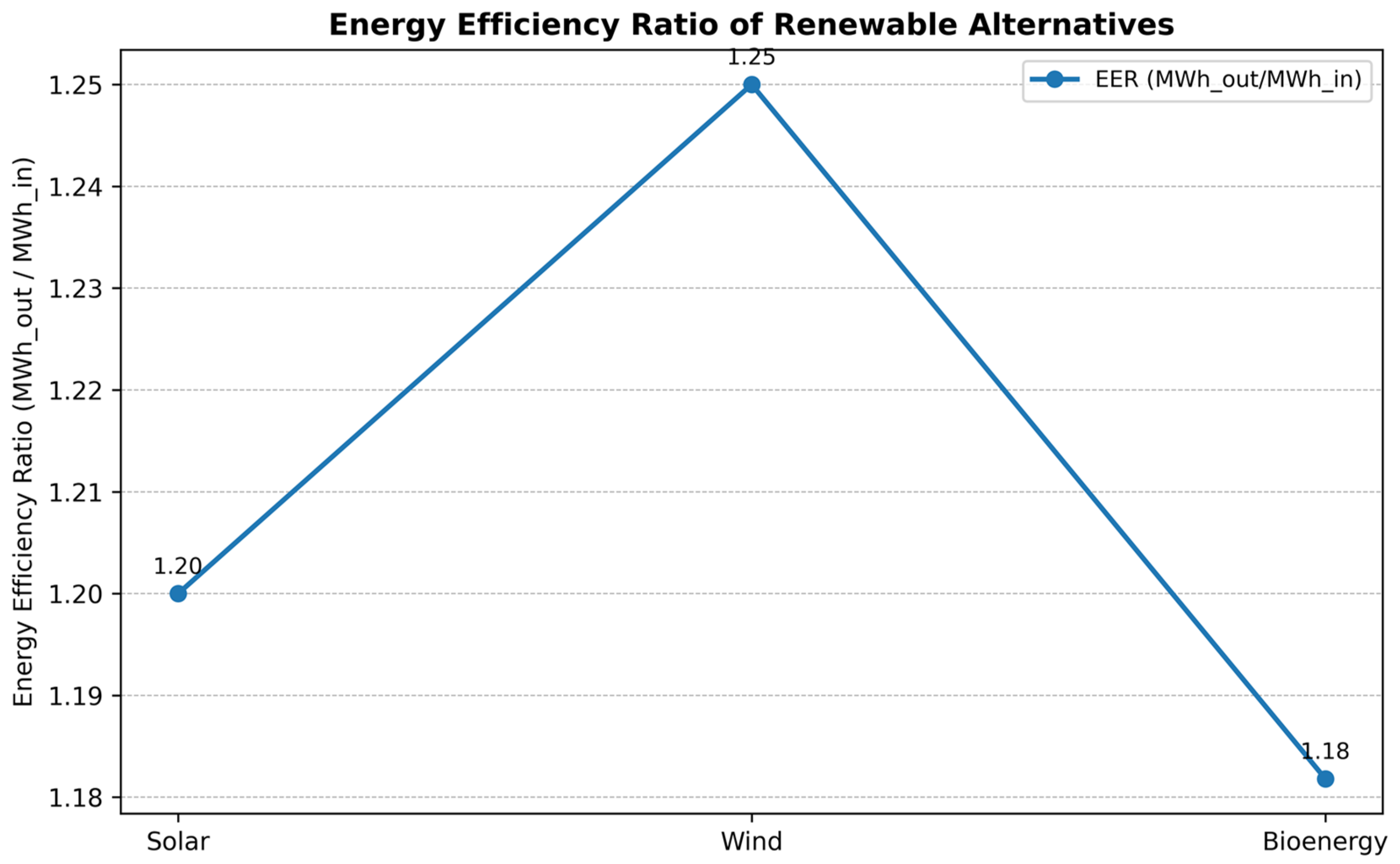
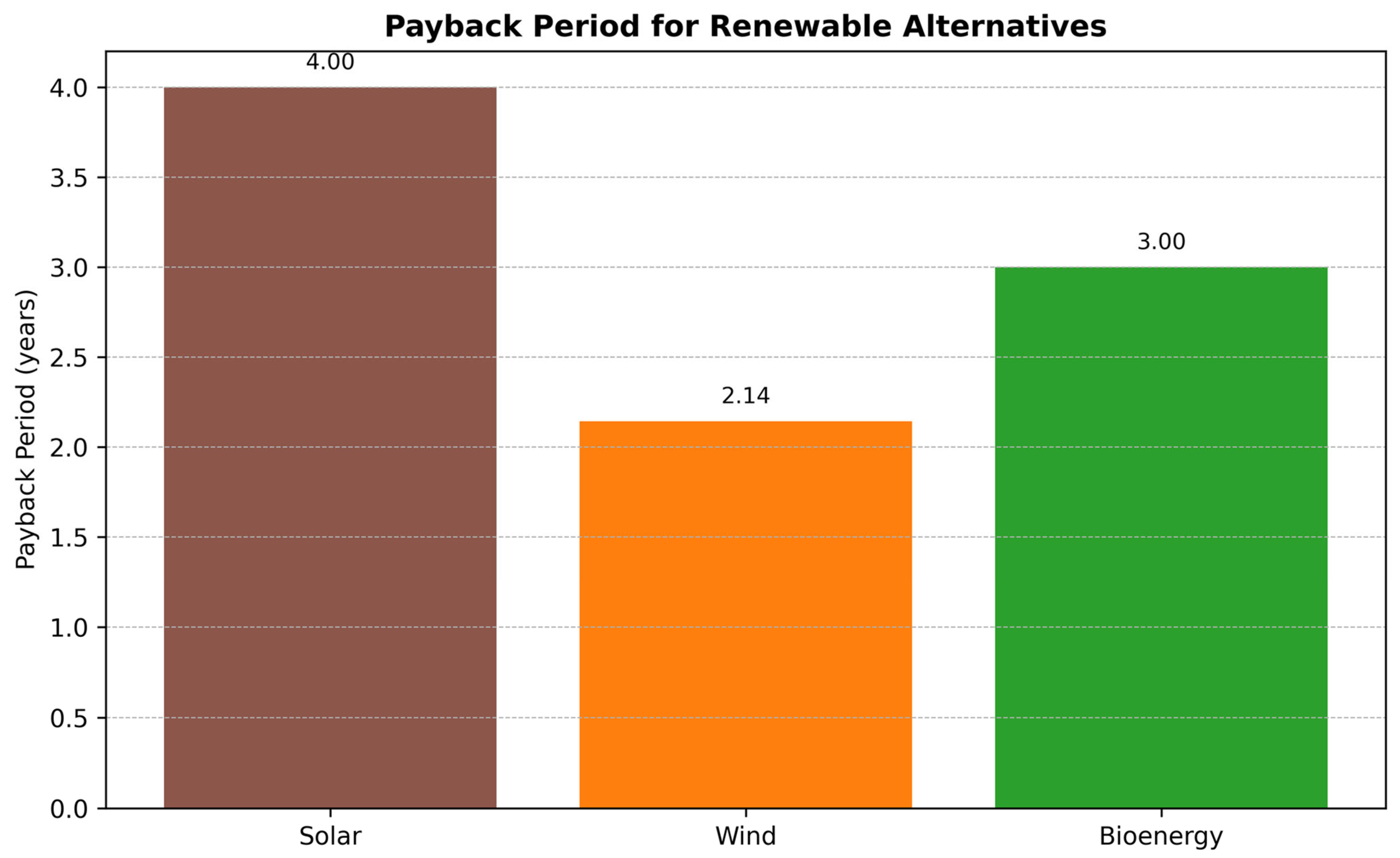
| Alternative | Unit Cost (Million USD) | ROI (Annual Return | CO2 Emissions (Tons/Year) | Social Benefit (Jobs Created) | Energy Output (MWh/Year) | Energy Input (MWh/Year) | Annual Cash Inflow (Million$) |
|---|---|---|---|---|---|---|---|
| Solar | 200 | 0.15 | 50 | 1000 | 1200 | 1000 | 50 |
| Wind | 150 | 0.20 | 30 | 1500 | 1500 | 1200 | 70 |
| Bioenergy | 180 | 0.18 | 40 | 1200 | 1300 | 1100 | 60 |
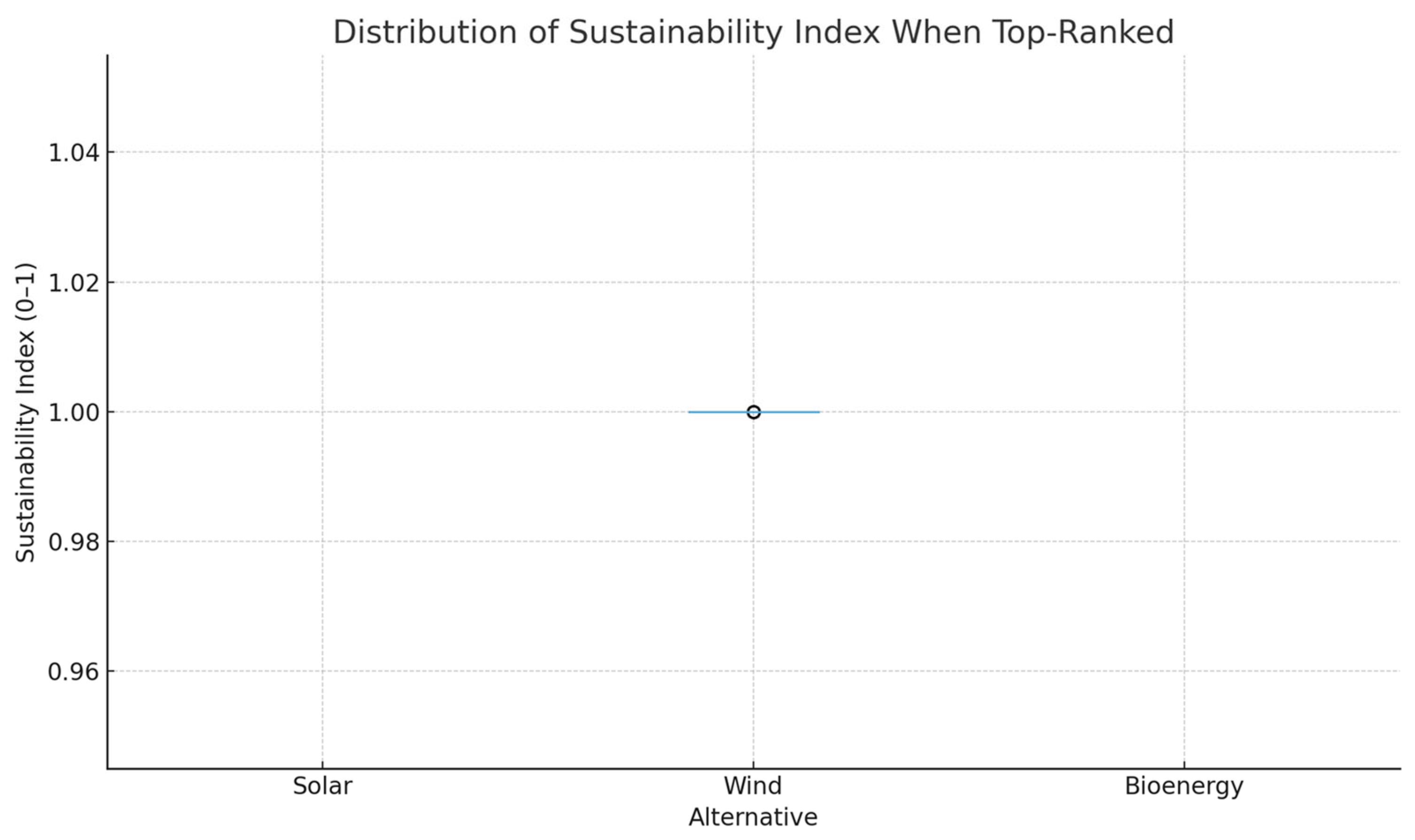
| Alternative | Wins | Share | SI–Min | SI–Median | SI–Max |
|---|---|---|---|---|---|
| Solar | 0 | 0 | |||
| Wind | 231 | 1 | 1 | 1 | 1 |
| Bioenergy | 0 | 0 |
Disclaimer/Publisher’s Note: The statements, opinions and data contained in all publications are solely those of the individual author(s) and contributor(s) and not of MDPI and/or the editor(s). MDPI and/or the editor(s) disclaim responsibility for any injury to people or property resulting from any ideas, methods, instructions or products referred to in the content. |
© 2025 by the authors. Licensee MDPI, Basel, Switzerland. This article is an open access article distributed under the terms and conditions of the Creative Commons Attribution (CC BY) license (https://creativecommons.org/licenses/by/4.0/).
Share and Cite
Ojetunde, E.; Babatunde, O.; Akintayo, B.; Dosa, A.; Ogbemhe, J.; Ighravwe, D.; Oludolapo, O. ELECTRE-Based Optimization of Renewable Energy Investments: Evaluating Environmental, Economic, and Social Sustainability Through Sustainability Accounting. Sustainability 2025, 17, 10872. https://doi.org/10.3390/su172310872
Ojetunde E, Babatunde O, Akintayo B, Dosa A, Ogbemhe J, Ighravwe D, Oludolapo O. ELECTRE-Based Optimization of Renewable Energy Investments: Evaluating Environmental, Economic, and Social Sustainability Through Sustainability Accounting. Sustainability. 2025; 17(23):10872. https://doi.org/10.3390/su172310872
Chicago/Turabian StyleOjetunde, Elias, Olubayo Babatunde, Busola Akintayo, Adebayo Dosa, John Ogbemhe, Desmond Ighravwe, and Olanrewaju Oludolapo. 2025. "ELECTRE-Based Optimization of Renewable Energy Investments: Evaluating Environmental, Economic, and Social Sustainability Through Sustainability Accounting" Sustainability 17, no. 23: 10872. https://doi.org/10.3390/su172310872
APA StyleOjetunde, E., Babatunde, O., Akintayo, B., Dosa, A., Ogbemhe, J., Ighravwe, D., & Oludolapo, O. (2025). ELECTRE-Based Optimization of Renewable Energy Investments: Evaluating Environmental, Economic, and Social Sustainability Through Sustainability Accounting. Sustainability, 17(23), 10872. https://doi.org/10.3390/su172310872