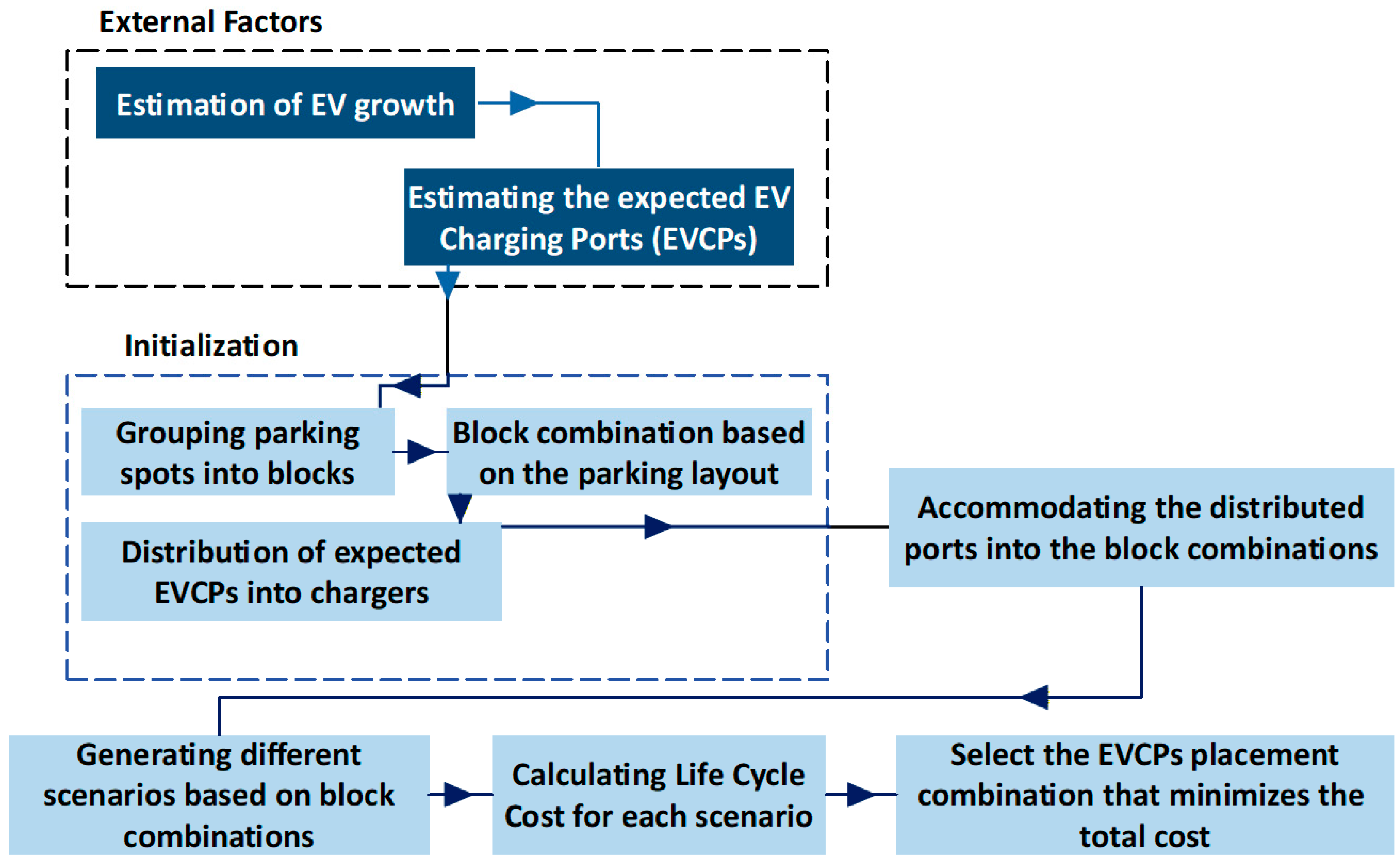
From a sustainability perspective, retrofitting existing facilities for EV charging is particularly valuable because it avoids the material and energy burdens associated with new construction while accelerating the adoption of low-carbon mobility. The following discussion interprets the key results of the proposed framework, compares them with findings from prior research, and highlights its main contributions, limitations, and practical implications.
5.1. Case Study
A shopping complex parking lot with 236 parking spots is selected as the case study. The facility is currently equipped with four charging stations. Based on the expected growth data presented in [
32], the demand for EV charging infrastructure at this location is projected to increase by a factor of 6.1 by the year 2035. Accordingly, the number of EV chargers required at the site should increase from the existing four units to approximately twenty-five units by 2035.
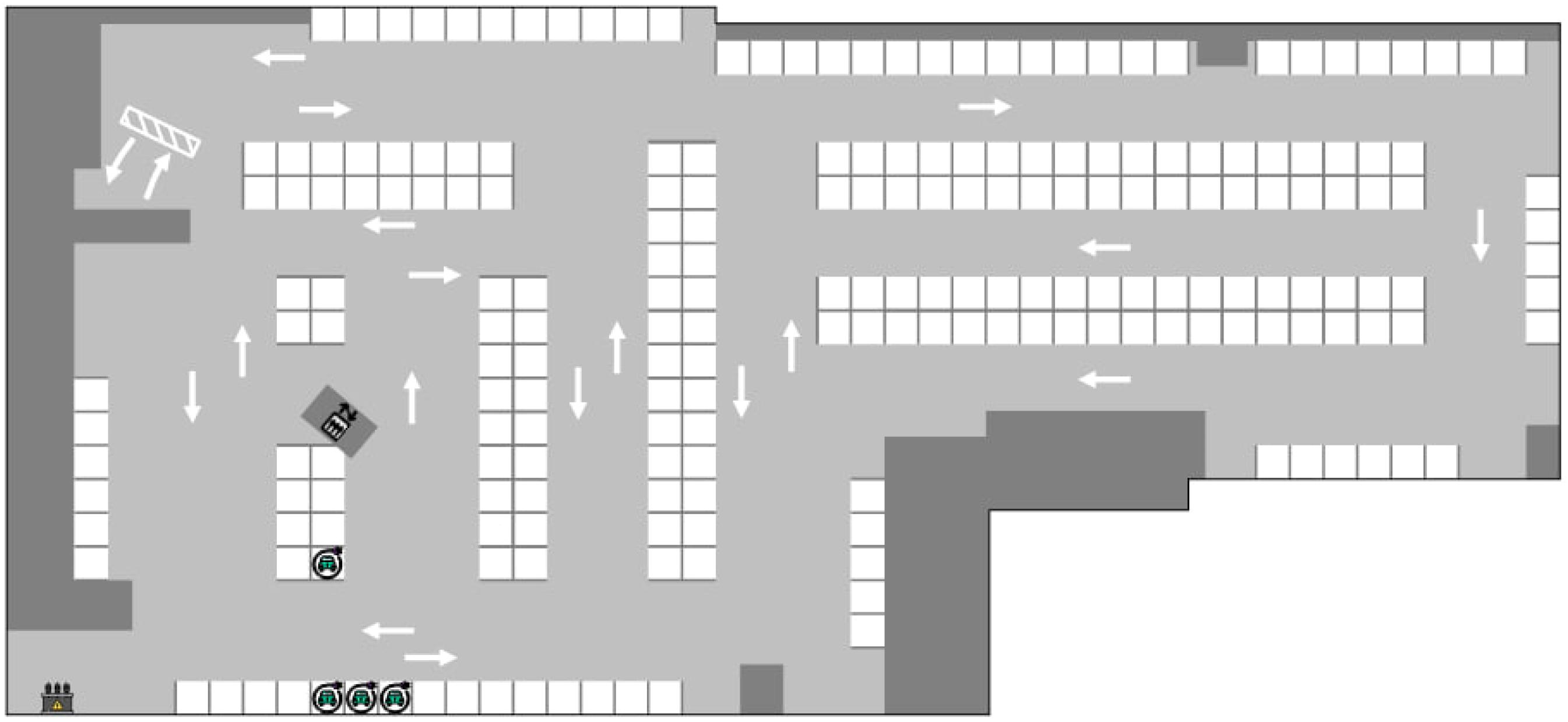
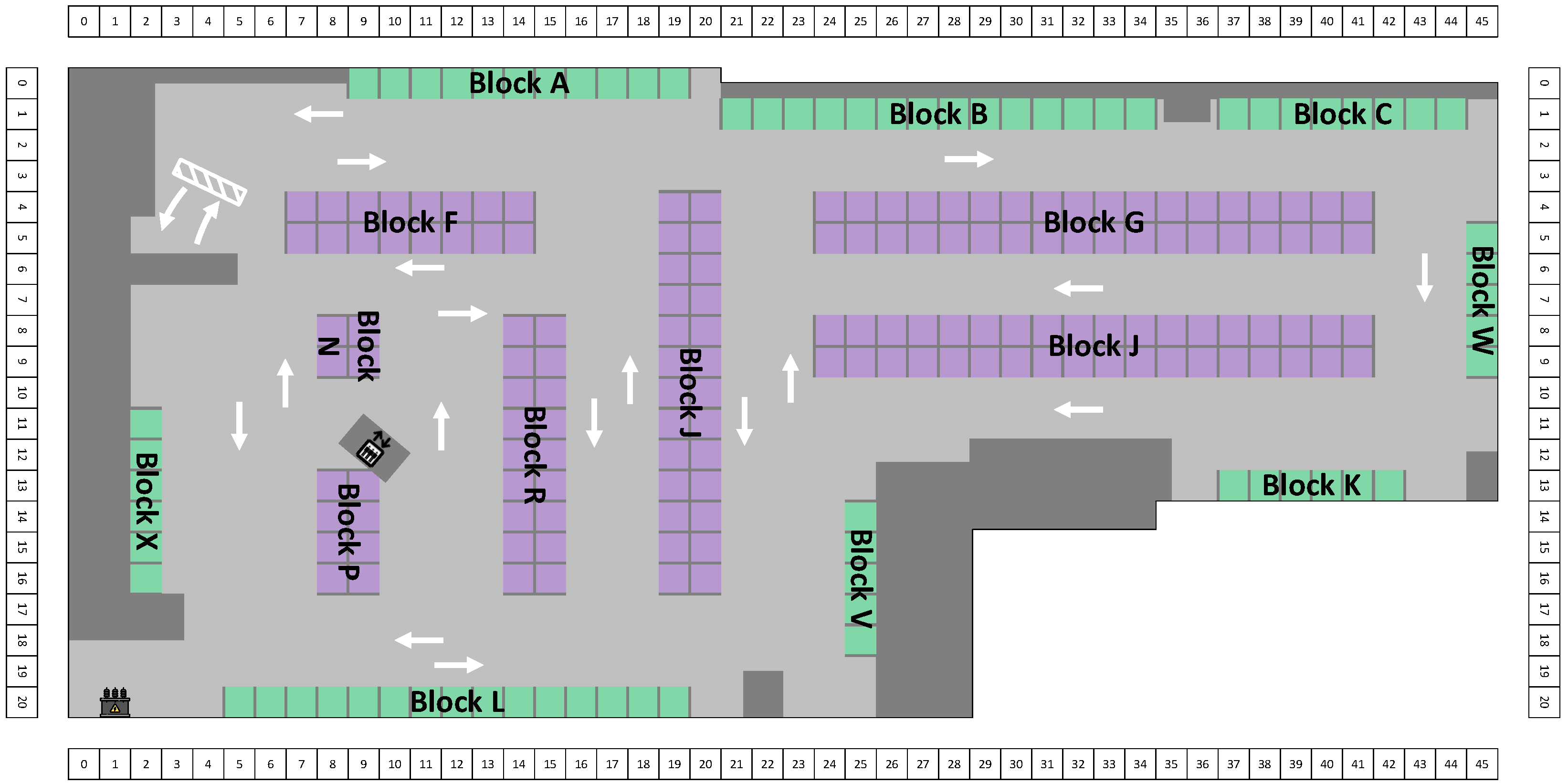
Figure 8 illustrates the layout of the parking lot used in this study, with the utility distribution power facility located at the bottom-left corner of the site.
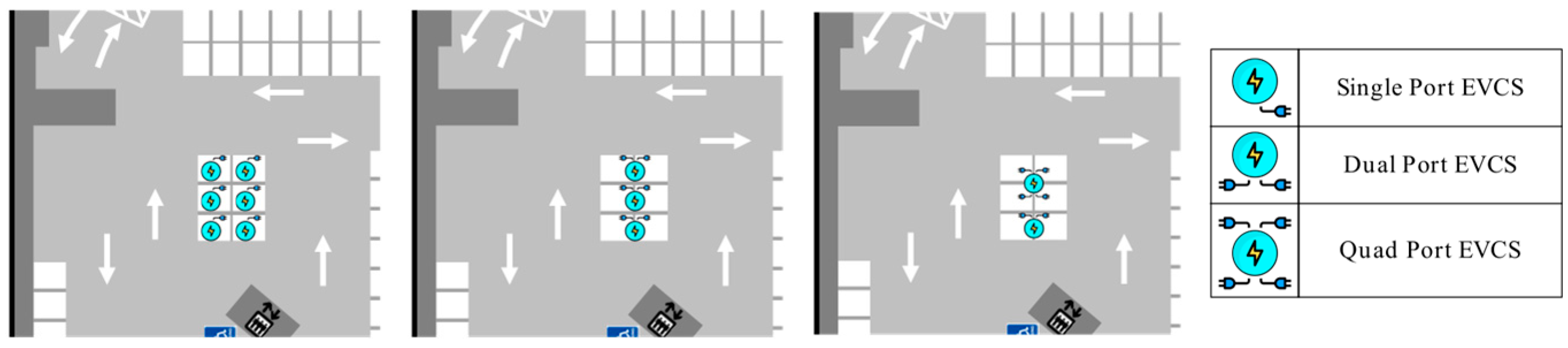
For this analysis, the EV charging devices are considered in three configurations: single-port, dual-port, and quad-port chargers. These variations are incorporated into the optimization model to evaluate all feasible combinations and identify the most cost-effective configuration for meeting the projected charging demand.
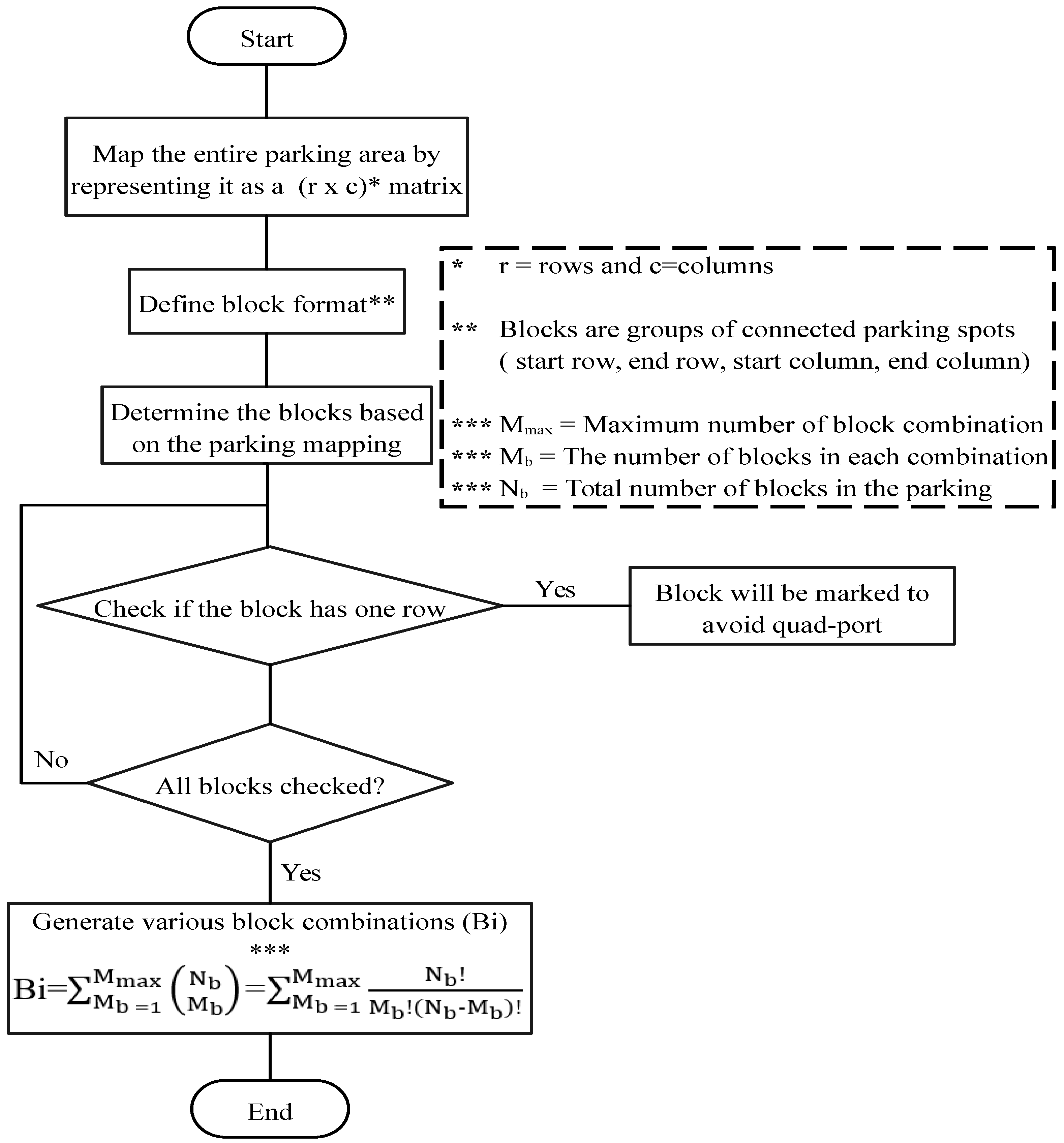
The minimum and maximum number of block combinations are set to 1 and 3, respectively. These Minimum and Maximum Block Combination settings define the range of block groupings the model is permitted to consider. For example, specifying a maximum of three blocks enables the algorithm to explore configurations that use up to three distinct blocks within a single scenario. This constraint limits impractical or overly dispersed layouts while maintaining sufficient flexibility in the search space.
The life-cycle discount rate and the estimated operational lifespan of the charging units are both defined as 10, reflecting a 10 percent discount rate and a 10-year service life for this case study.
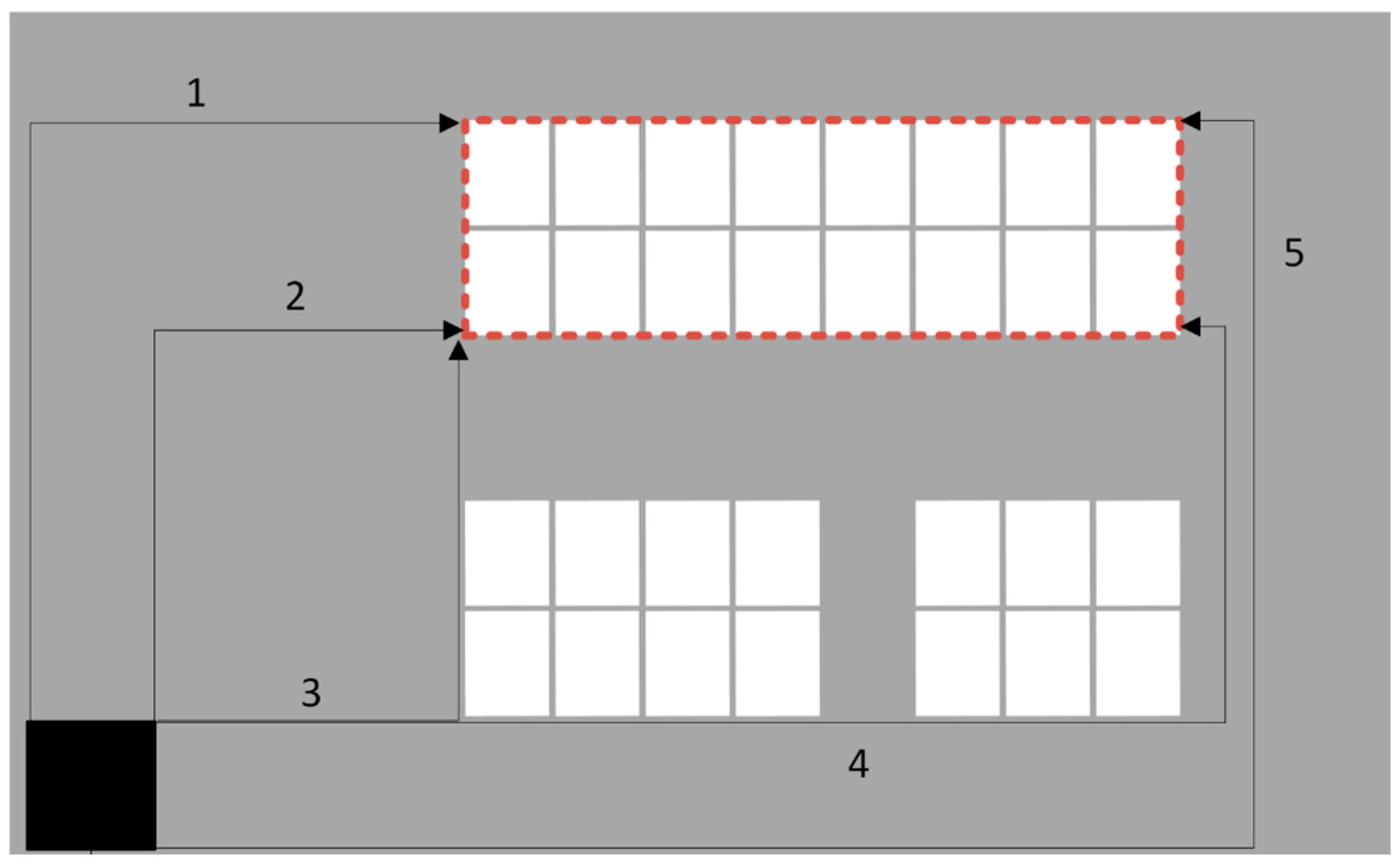
Using the layout shown in
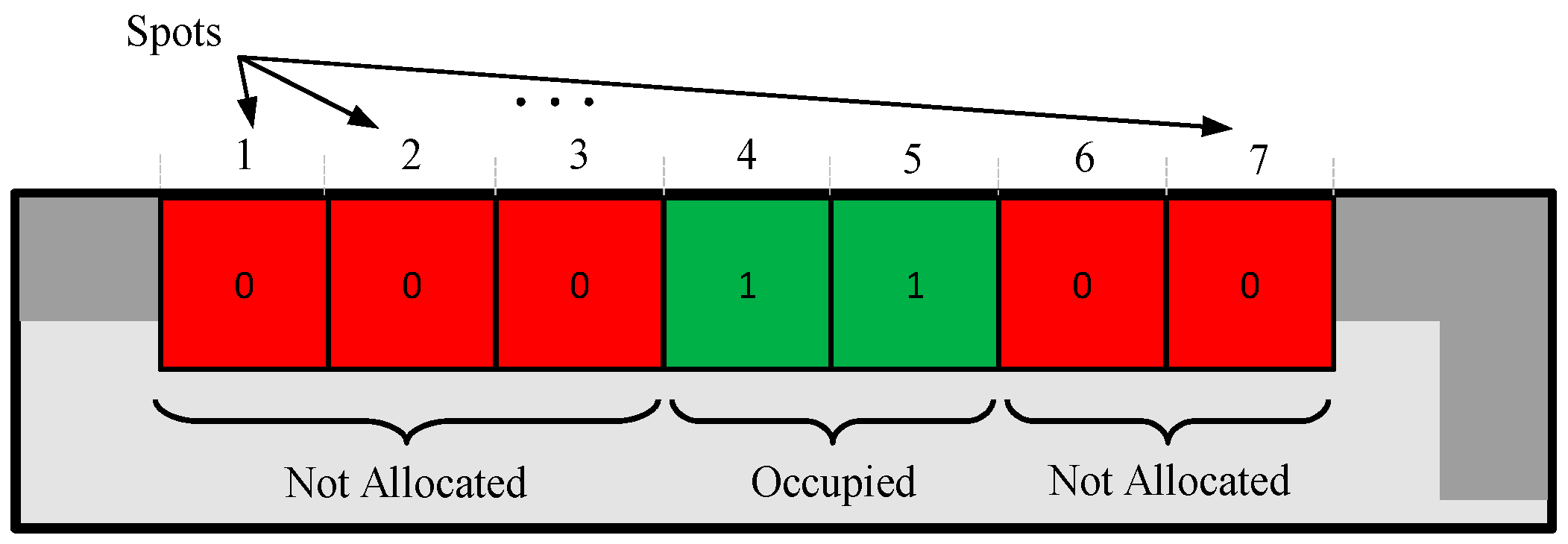
Figure 8, the parking lot is segmented into blocks to create a mathematically manageable configuration, as illustrated in
Figure 9.
The cost structure of the model accounts for retrofit-specific characteristics of indoor facilities through the Electrical System Equipment Cost (CSEE) and geometric feasibility mapping. Cable and conduit installation costs implicitly capture the additional labor and materials required for routing through existing walls, floors, and ceilings. The spatial occupancy matrix excludes areas affected by ventilation ducts, lighting fixtures, and structural elements such as columns or ramps to ensure that all selected charger locations are physically feasible. The existing power infrastructure is assumed to have sufficient capacity to support the selected charger mix; transformer and panel components are incorporated into the fixed-cost term of the CSEE.
As an example, Block F is defined as [
4,
5,
7,
14], corresponding to [Start Row, End Row, Start Column, End Column]. The cost parameters used in the algorithm incorporate all essential cost-related inputs of the model. Each cost component is provided as an input, as shown in
Table 3, and the model applies these values throughout its calculations. By defining these costs individually, the model can more accurately project the total cost of each scenario over the infrastructure’s lifespan. The cost values presented here are based on available current data; however, they are subject to change over time and may vary across different jurisdictions.
The assumed prices for wall-mounted and pedestal EV charging units are provided in
Table 4. The cable and associated electrical equipment costs used in the model are listed in
Table 5.
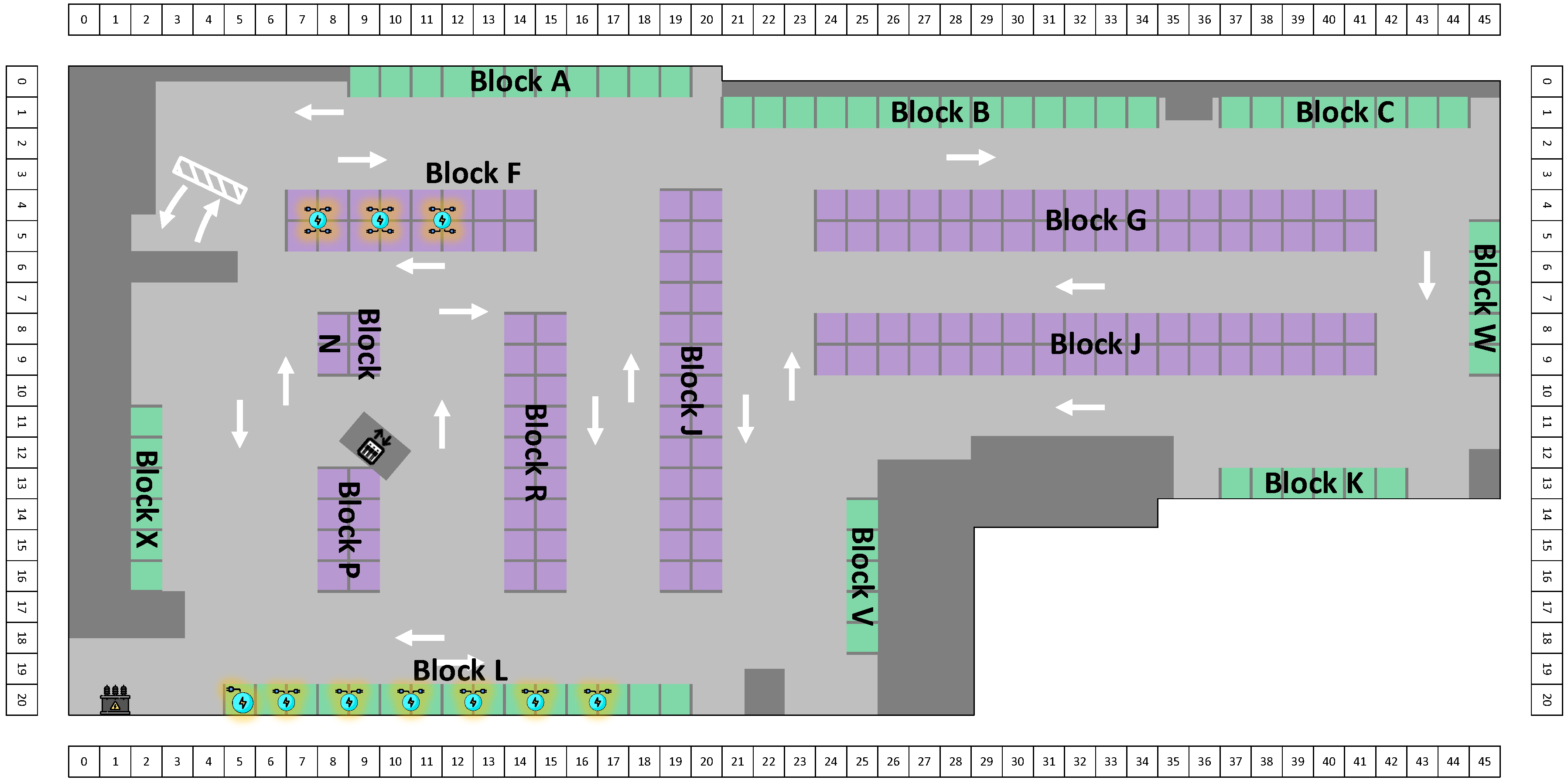
The most optimized result for the case study is shown in the corresponding figure. As illustrated, Blocks F and L yield the best overall configuration. The optimized solution includes a combination of single-port, dual-port, and quad-port EVCS units. As shown in
Figure 10 and summarized in
Table 6, the allocation is divided between Block F and Block L. As expected, the pedestal quad-port units and wall-mounted dual-port units produce the most cost-effective outcome. This result follows from the fact that combining these two charger types minimizes redundant installation requirements and reduces total life-cycle cost.
While the optimal and all-single-port configurations result in concentrated charger placement within a limited number of blocks, this outcome reflects the model’s objective of minimizing life-cycle cost under the assumption of sufficient upstream electrical capacity. In practical applications, however, highly clustered layouts may introduce additional considerations such as localized electrical loading, transformer or feeder constraints, ventilation requirements, and potential congestion around charging areas. These factors may lead facility operators to distribute chargers more evenly across a parking structure despite the slight cost premium. Incorporating such operational and capacity-related constraints into the optimization framework presents a valuable direction for future work and would enable the model to balance cost efficiency with operational resilience and user accessibility.
Although this study validated the framework using a single shopping-complex parking lot, the modeling approach is inherently scalable to facilities of different sizes, geometries, and use profiles. Because the formulation defines spatial blocks parametrically, it can accommodate varying parking densities, aisle orientations, and charger-access constraints by adjusting the matrix mapping and feasibility rules. The same optimization logic can be applied to multi-level structures, open-air parking lots, or mixed-use facilities by redefining boundary conditions and spatial adjacency parameters. Therefore, the case study serves as a proof of concept that demonstrates the methodological validity of the framework rather than a limitation of scope. Future work will incorporate additional facility configurations to further evaluate the model’s performance across diverse layouts and usage conditions.
The optimization results demonstrated that combining dual- and quad-port chargers outperformed single-port configurations in terms of total life-cycle cost. The single-port-only configuration, which was included within the optimization search space, consistently produced higher life-cycle costs because each charger required separate cabling and individual installation work. Based on the case study data, the optimized mixed configuration resulted in a total life-cycle cost of approximately $143,800, compared with about $175,000 for an equivalent all-single-port layout, representing a reduction of roughly 22 percent. This confirms that multi-port combinations offer substantial cost advantages by sharing electrical infrastructure and minimizing redundant installation components. This outcome is expected, as multi-port units consolidate installation requirements and electrical components, thereby reducing both per-port capital and operational expenses. The model also revealed that spatial constraints significantly influence cost efficiency; maximizing port density within available spaces contributes to the greatest overall savings.
In our experiments, multi-port layouts significantly reduced per-port electrical balance-of-system costs and annual operations and maintenance (O&M) expenses relative to single-port configurations, as shown in
Table 7. These reductions result from shared conduit and cabling runs, as well as consolidated protection and communication systems. Compared with the single-port baseline (NPV ≈
$168,000), the optimized dual- and quad-port mix (NPV ≈
$143,800) achieved approximately a 15 percent lower total life-cycle cost while maintaining the same charging capacity. Average wiring length and conduit installation requirements per port decreased by a similar proportion, reflecting the reduced number of independent circuits and shorter overall installation runs. Even simplified practical layouts that utilized only one type of multi-port charger produced cost savings of approximately 16 percent compared with the all-single-port configuration (
Table 8), reinforcing that shared-infrastructure efficiencies are the primary drivers of cost reduction.
The model further revealed that spatial constraints have a substantial influence on cost efficiency; maximizing port density within the available spaces yielded the greatest overall savings.
The comparative results also reveal the underlying cost drivers behind the optimal configuration. The model showed that dual- and quad-port chargers achieved lower life-cycle costs primarily because they share electrical balance-of-system components such as conduits, breakers, and protective devices, thereby reducing per-port installation costs. In addition, multi-port configurations lowered recurring maintenance costs per charging point by consolidating service, monitoring, and communication systems. In contrast, single-port options generated higher per-port costs because each unit required its own dedicated electrical runs and protective hardware. These interactions among equipment sharing, space utilization, and maintenance demands explain the consistent advantage of multi-port setups in both capital and operational terms.
This study advances recent research on electric-vehicle charging-station planning by integrating complementary perspectives and addressing critical gaps in prior work. Zhang et al. [
34] optimized techno-economic scheduling for community charging hubs in multi-unit dwellings, focusing on levelized costs and shared-hub operations, but their analysis did not incorporate spatial feasibility or retrofit constraints arising from fixed building geometries. In contrast, our framework addresses the micro-siting problem directly by enforcing adjacency and footprint rules to ensure that multi-port hardware is physically deployable within existing indoor layouts.
Similarly, Zheng and Zheng [
35] employed an enhanced particle-swarm optimization (PSO) algorithm to optimize regional charging layouts for improved renewable-energy integration, prioritizing grid-level coordination. Our approach, however, resolves site-specific life-cycle cost trade-offs—including equipment, electrical balance-of-system, and fixed costs—at the facility scale, where local retrofit conditions significantly influence total cost. Likewise, Campaña and Inga [
36] developed a graph-based mixed-integer optimization model for public charging infrastructure in smart cities, accounting for vehicle flow and traffic density, but their work did not capture the geometric and structural constraints of existing facilities. Our model extends these efforts by integrating physical layout feasibility with cost minimization for indoor retrofits, effectively bridging urban-scale planning with facility-level implementation, where spatial constraints frequently dominate cost outcomes.
The primary contribution of this study lies in its integration of spatial feasibility with life-cycle cost optimization for retrofitting existing indoor parking facilities. This approach fills an important gap in prior research, which has largely focused on new or open-air installations, and provides a practical, owner-focused framework for designing EV charging layouts that are both cost-efficient and compatible with the physical constraints of existing structures.
By combining spatial feasibility with life-cycle costing, this framework offers property owners a more realistic decision-making tool compared with earlier location-only or coverage-based models. It demonstrates that cost efficiency can be achieved without expanding facility footprints or requiring extensive infrastructure upgrades, thereby improving the practicality of EV charging optimization in existing commercial spaces. While the formulation builds on the classical facility-location structure, its application here differs fundamentally from standard siting models. The novelty lies in adapting the problem to existing indoor environments where charger placement must adhere to discrete parking geometries, adjacency requirements, and shared electrical infrastructure constraints. These spatial considerations, combined with a life-cycle cost formulation that captures both capital and recurring elements, transform the problem into a layout-constrained cost-minimization task rather than a traditional open-space location problem. Consequently, the framework extends facility-location theory into retrofit contexts that have received limited analytical attention in previous work.
From an owner’s perspective, these results highlight the importance of incorporating life-cycle cost analysis into investment planning. Rather than focusing solely on initial equipment costs, the model accounts for ongoing operations, maintenance, and end-of-life expenses, offering a comprehensive long-term financial assessment. Ultimately, the findings show that cost-optimal solutions are achievable within existing facilities, enabling owners to meet increasing EV charging demand without securing additional land or undertaking major infrastructure upgrades. Beyond facility owners, the results also provide valuable insights for utilities and municipalities seeking to design targeted incentives that support retrofits capable of adding charging capacity without requiring new land use or significant service enhancements.
Practically, these findings provide parking facility owners with clear guidance for planning retrofit investments that support broader sustainability and decarbonization objectives. By leveraging existing structures, such retrofits can substantially expand EV charging capacity with minimal additional land or material use. This approach aligns with municipal emission-reduction goals and promotes more efficient urban space utilization. Moreover, it demonstrates how private investment decisions can support public sustainability policies by balancing economic viability with environmental benefits.
The current model is deterministic, relying on fixed demand and cost inputs, simplified tariff and grid-capacity assumptions, and a single enclosed-garage geometry. Nevertheless, it is readily extensible through sensitivity or scenario analyses to assess robustness under uncertain conditions, including stochastic variations in EV uptake, equipment and installation costs, and energy prices. Future enhancements could incorporate additional garage layouts, more detailed tariff modules (such as time-of-use (TOU) rates or demand charges), and explicit grid-capacity constraints to improve the model’s applicability for broader planning studies.
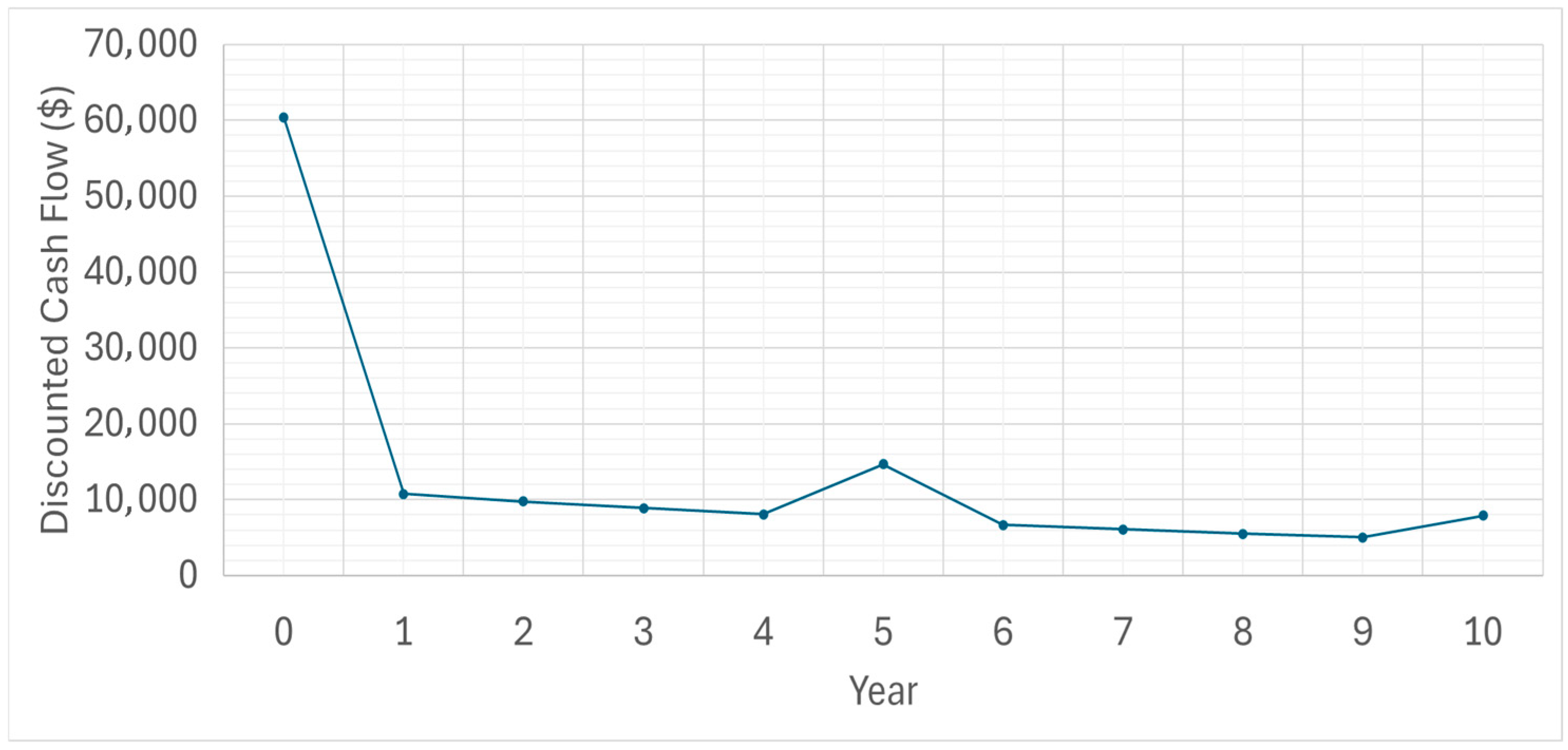
As shown in the optimization results, the configuration with the minimum total cost over a 10-year lifespan selects Blocks F and L for charger installation. The optimal setup includes a mix of port types consisting of single-port units (4 percent of the total), dual-port units (48 percent), and quad-port units (48 percent). The high initial cost in year 0 corresponds to the EVCS equipment cost, electrical system equipment cost, and fixed costs associated with installation.
Table 9 provides a detailed breakdown of the life-cycle cost (LCC) calculation based on the total net present value (NPV) using a discount rate of 10 percent. The discounted cash flow of the optimal result is depicted in
Figure 11.
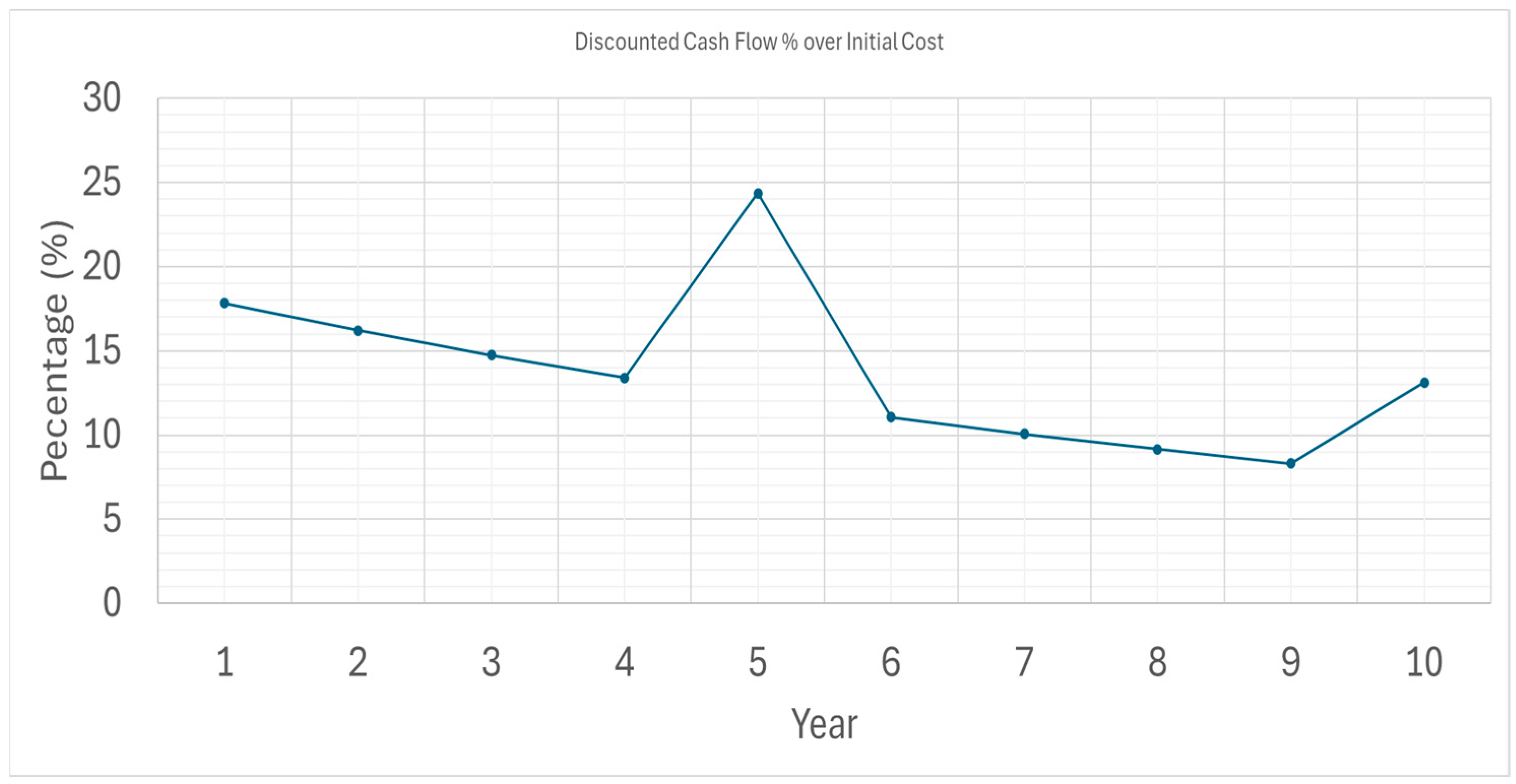
Additionally, the percentage of the yearly discounted cash flow relative to the optimal result’s initial cost is shown in
Figure 12. As expected, the annual discounted cash flow represents only a portion of the initial investment cost.
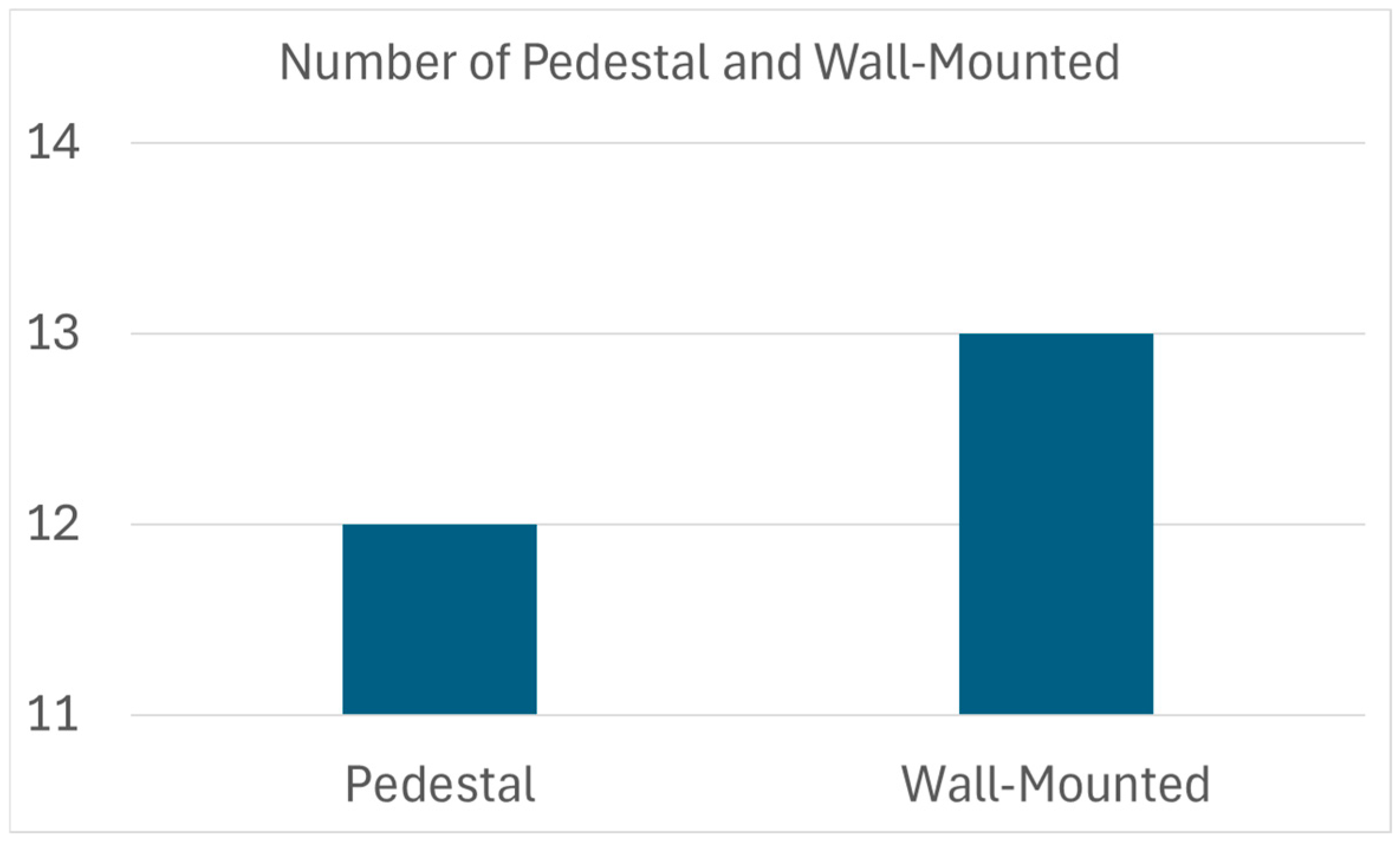
The comparison between the number of wall-mounted and pedestal EV charging stations (EVCs) in the optimized result is shown in
Figure 13. As expected, the distribution reflects a balance between the two types, driven by the direct influence of equipment cost, electrical system costs, and the labor associated with installing electrical components.
A 10 percent annual discount rate was applied to represent the owner’s opportunity cost of capital, consistent with typical values used in EV infrastructure investment analyses (8–12 percent). Equipment, installation, and maintenance costs were sourced from publicly available manufacturer data, industry cost guides such as RSMeans (construction cost database) (2023), and published EV infrastructure reports. These standardized values ensure that the case study reflects representative market conditions rather than project-specific quotations.
Overall, the results demonstrate the practicality and flexibility of this framework for optimizing indoor EV charging retrofits.