1. Introduction
The road construction sector faces growing pressure to minimize its environmental footprint while aligning with the principles of the circular economy and the European Green Deal. Asphalt pavements, which rely heavily on virgin aggregates and bituminous binders, are highly resource-intensive and contribute significantly to greenhouse gas emissions, resource depletion, and pollution throughout their life cycle. To address these challenges, recent research has increasingly focused on the partial substitution of virgin materials with recycled and secondary resources, aiming to reduce environmental burdens without compromising pavement performance. Among these strategies, the use of Reclaimed Asphalt (RA) has been extensively studied and implemented, with several life cycle assessment (LCA) studies confirming its potential to reduce energy demand, greenhouse gas emissions, and raw material consumption compared to conventional hot mix asphalt (HMA) [
1,
2,
3,
4,
5,
6,
7,
8,
9,
10,
11]. Similarly, the incorporation of industrial by-products such as blast furnace slag (BFS) has been shown to improve both mechanical performance and environmental outcomes by diverting waste from landfills and reducing reliance on virgin aggregates [
12,
13,
14,
15]. More recently, bio-based additives such as cellulose fibres have gained attention for their potential to enhance asphalt durability while partially offsetting fossil-derived modifiers [
16,
17,
18]. In parallel, increasing concern over post-consumer plastic waste management has stimulated studies on the incorporation of waste polymers into asphalt mixtures. Several works have examined the use of polyethylene, polypropylene, or polystyrene from end-of-life packaging, reporting mixed environmental and performance outcomes depending on processing requirements and substitution ratios [
18,
19,
20,
21]. However, research on the use of marine-derived plastic waste remains extremely limited. Post-consumer fishing nets represent a particularly challenging waste stream due to their persistence in marine environments and the difficulty of recycling them into high-value applications [
22,
23,
24,
25,
26].
The reuse of discarded fishing nets in asphalt mixtures supports the objectives of the blue circular economy and directly responds to the European Directive (EU) 2019/904, which identifies fishing gear containing plastics as a major contributor to marine litter [
27]. By promoting collection, recycling and extended producer responsibility schemes, the Directive seeks to prevent the loss of fishing gear and reduce its environmental footprint [
28]. Valorising these materials as secondary raw resources creates a closed loop between marine waste recovery and sustainable infrastructure [
29], aligning with the Directive’s goals to reduce plastic leakage and foster circular production–consumption systems. Despite this growing body of literature, few studies have systematically compared multiple “end-of-waste” materials in asphalt mixtures within a harmonised LCA framework, and, to the authors’ knowledge, none have simultaneously considered recycled fishnets, reclaimed asphalt, and cellulose fibres alongside BFS-modified mixtures. Furthermore, existing LCAs on asphalt typically focus on a limited set of impact categories, often neglecting potential trade-offs such as toxicity, eutrophication, or land use impacts [
17,
30,
31].
This study addresses these gaps by conducting a comparative LCA of four hot mix asphalt mixtures incorporating different secondary materials: (i) a conventional mixture with styrene-butadiene-styrene (SBS)-modified bitumen and BFS, (ii) a modified mixture with recycled fishnets, (iii) a mixture combining recycled fishnets and 15% RA, and (iv) a mixture incorporating cellulose fibres. The three selected secondary materials, that provided comparable performance for the alternative asphalt mixtures, were chosen to represent distinct circularity pathways and policy relevance. RA is widely adopted as an aggregate substitute and serves as an established benchmark for circular strategies in pavement engineering. Recycled fishing nets represent a marine-derived plastic waste stream of growing regulatory and societal concern (e.g., EU measures on marine litter); however, their environmental consequences when valorised in infrastructure remain underexplored. Cellulose fibres were included to represent bio-based additives, which may offer climate benefits while potentially increasing land-use and ecotoxicity burdens. By comparing these contrasting materials within a harmonized ReCiPe framework, the study aims to reveal different classes of trade-offs that inform both technical deployment and procurement policy. A cradle-to-gate system boundary was adopted, covering raw material acquisition [A1], transport [A2], and asphalt production [A3]. Environmental impacts were assessed using the ReCiPe 2016 Midpoint (H) method, encompassing 18 impact categories and allowing for a more comprehensive comparison of trade-offs. The novelty of this work lies in introducing recycled fishnets into asphalt LCA, assessed under end-of-waste criteria, comparing multiple circular additives (fishnets, RA, cellulose fibres) within a consistent methodological framework, and performing hotspot and trade-off analysis across 18 environmental categories to identify both benefits and unintended burdens for valuable recommendations for stakeholders and regulatory bodies. By integrating diverse waste-derived and bio-based inputs, this study contributes to the ongoing discussion on the environmental viability of circular economy strategies in road construction and provides decision-makers with a nuanced understanding of material selection trade-offs.
2. Methods
2.1. Goal and Scope Definition
Building on the growing interest in integrating circular and waste-derived materials into asphalt mixtures [
32], the objective of this study is to quantify and compare the environmental impacts associated with the product stage [A1–A3] of four hot mix asphalt mixture alternatives. The first mixture represents a conventional HMA containing virgin aggregates, BFS, and SBS-modified bitumen. The second alternative includes the same mixture as the control, with the addition of recycled fishnets treated as end-of-waste. The third mixture is further modified by substituting 15% of virgin aggregates with RA, also treated as end-of-waste and assumed to function as “black rock”, contributing to bitumen film activation. The fourth mixture integrates cellulose fibres as an additive to the base formulation of SBS and BFS. A “cradle-to-gate” approach was adopted, covering all life cycle stages from raw material acquisition to asphalt mixture production. Additionally, the study aims to determine the most environmentally impactful processes through a hot spot analysis within the A1–A3 stages. The study’s scope is defined through a clearly specified declared unit, system boundaries, and impact assessment methodology, ensuring a rigorous and comparable evaluation of circular additives. To ensure that the environmental comparison was carried out on technically viable and functionally equivalent materials, the four mixtures considered in this study were previously characterised in the laboratory and also compared to results of similar studies [
24,
33]. Basic mechanical indicators, including air voids and Indirect Tensile Strength (ITS), were evaluated according to Italian technical specifications. The requirements prescribe air void values of at least 20% and ITS values within 0.36–0.70 GPa·10
−3. The produced mixtures achieved values between 22% and 25%, and ITS values that fell within or above the specified range, confirming that all formulations exhibit adequate mechanical resistance for pavement applications. Establishing this minimum performance baseline ensures that each alternative is suitable for practical use and therefore comparable from a functional standpoint. With this technical equivalence validated, a life cycle assessment can meaningfully explore how different secondary raw materials influence environmental performance, providing a more holistic understanding of trade-offs between mechanical suitability and sustainability outcomes. The summarised results can be seen in
Table 1.
2.2. LCA and Impact Assessment Methodology
The modelling was performed using GaBi ts (v 9.1.0.53), developed by Thinkstep AG, with all relevant flows and processes sourced from the GaBi Professional database (v8.7). This assessment complies with the principles and requirements set by the ISO 14040 and ISO 14044 international standards, in accordance with guidance from the European Asphalt Pavement Association [
34,
35]. Environmental impacts were quantified using the ReCiPe 2016 v1.1 Midpoint (H) method, which was selected over alternatives such as ILCD 2011, CML-IA, and TRACI due to its broader coverage of eighteen impact categories, offering a more comprehensive and granular environmental evaluation. ReCiPe’s midpoint-level indicators enable consistent and scientifically robust comparisons across scenarios, making it particularly suitable for assessing complex systems that involve multiple waste and secondary material streams, as is the case in this study. No cut-off rules were applied.
2.3. System Boundaries and LCA Inventory Inputs
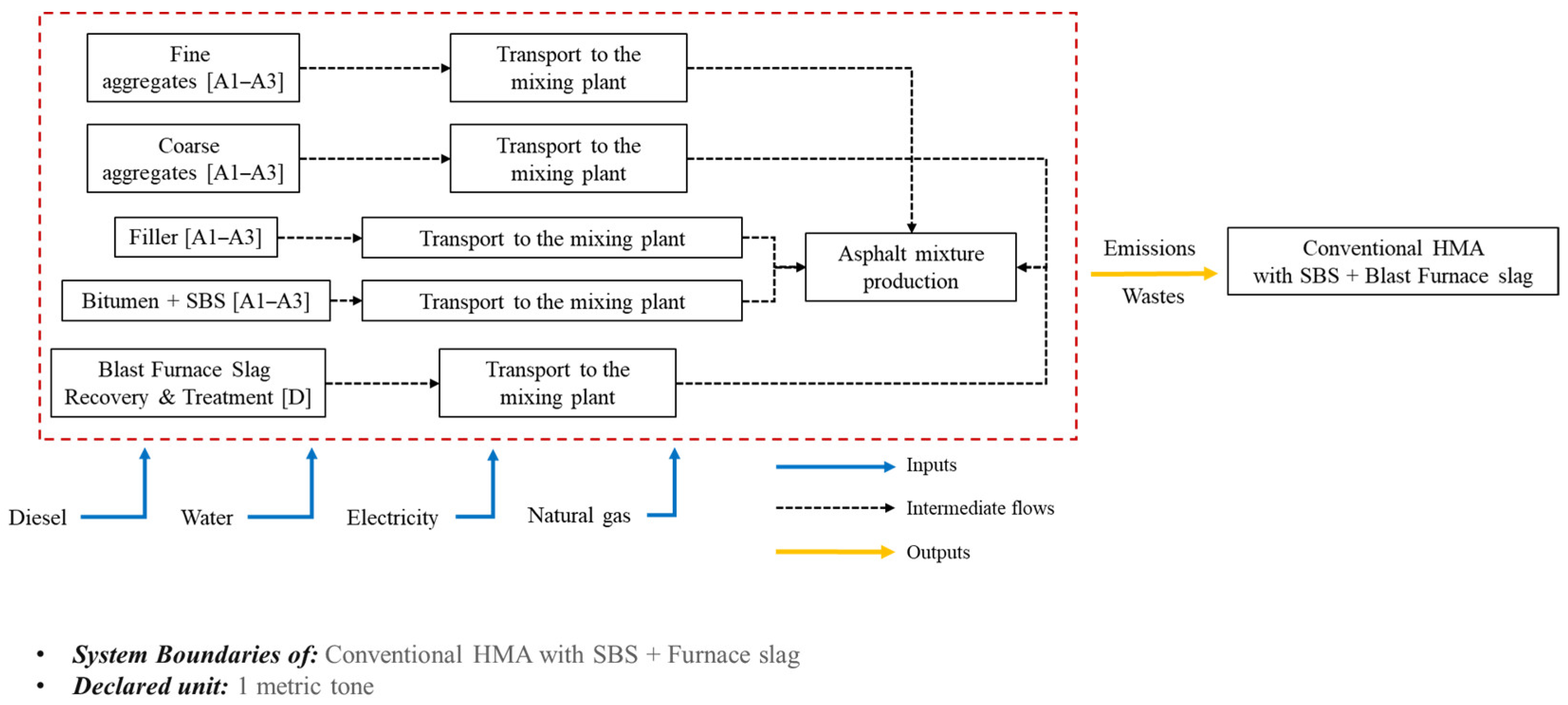
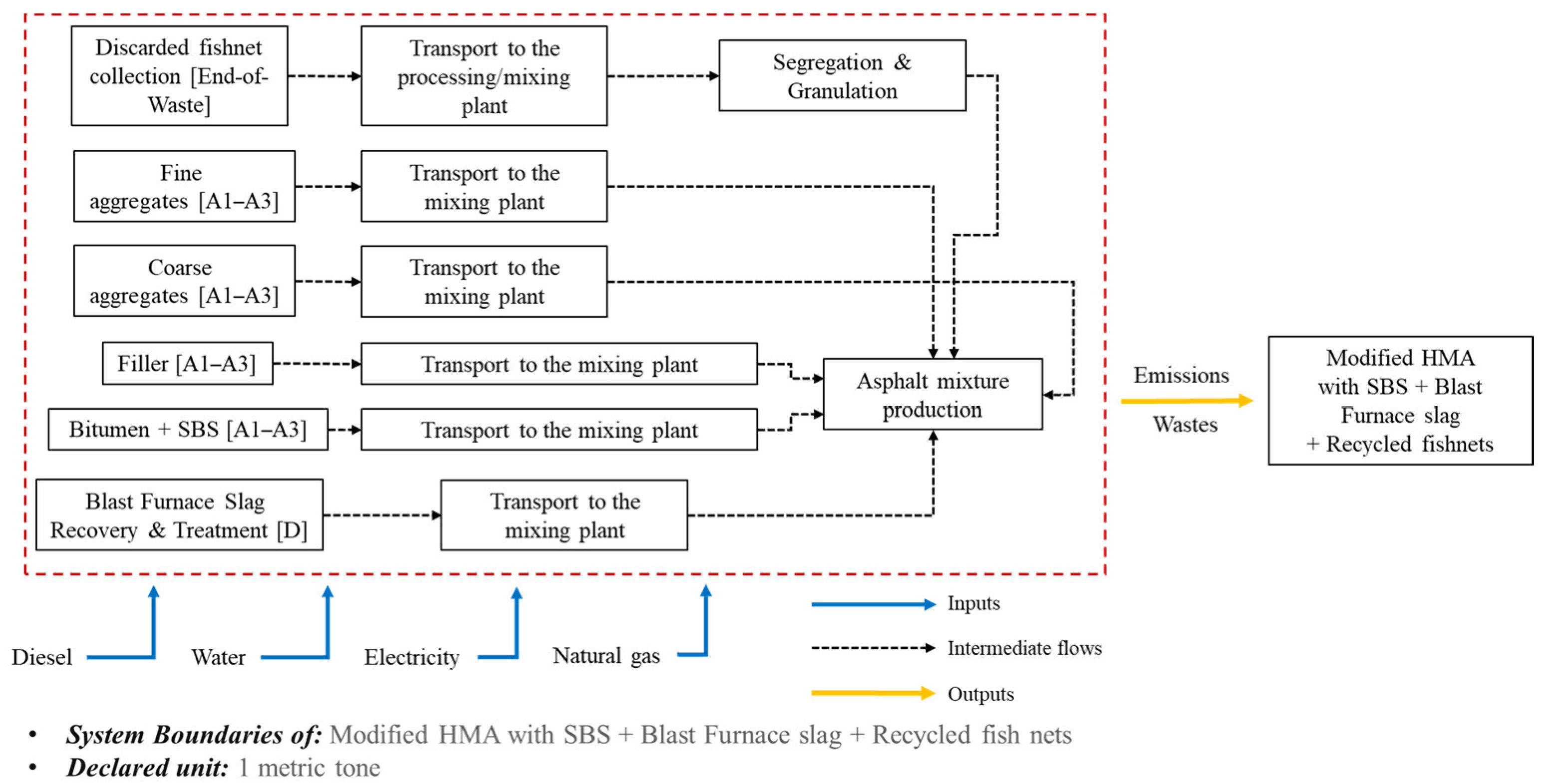
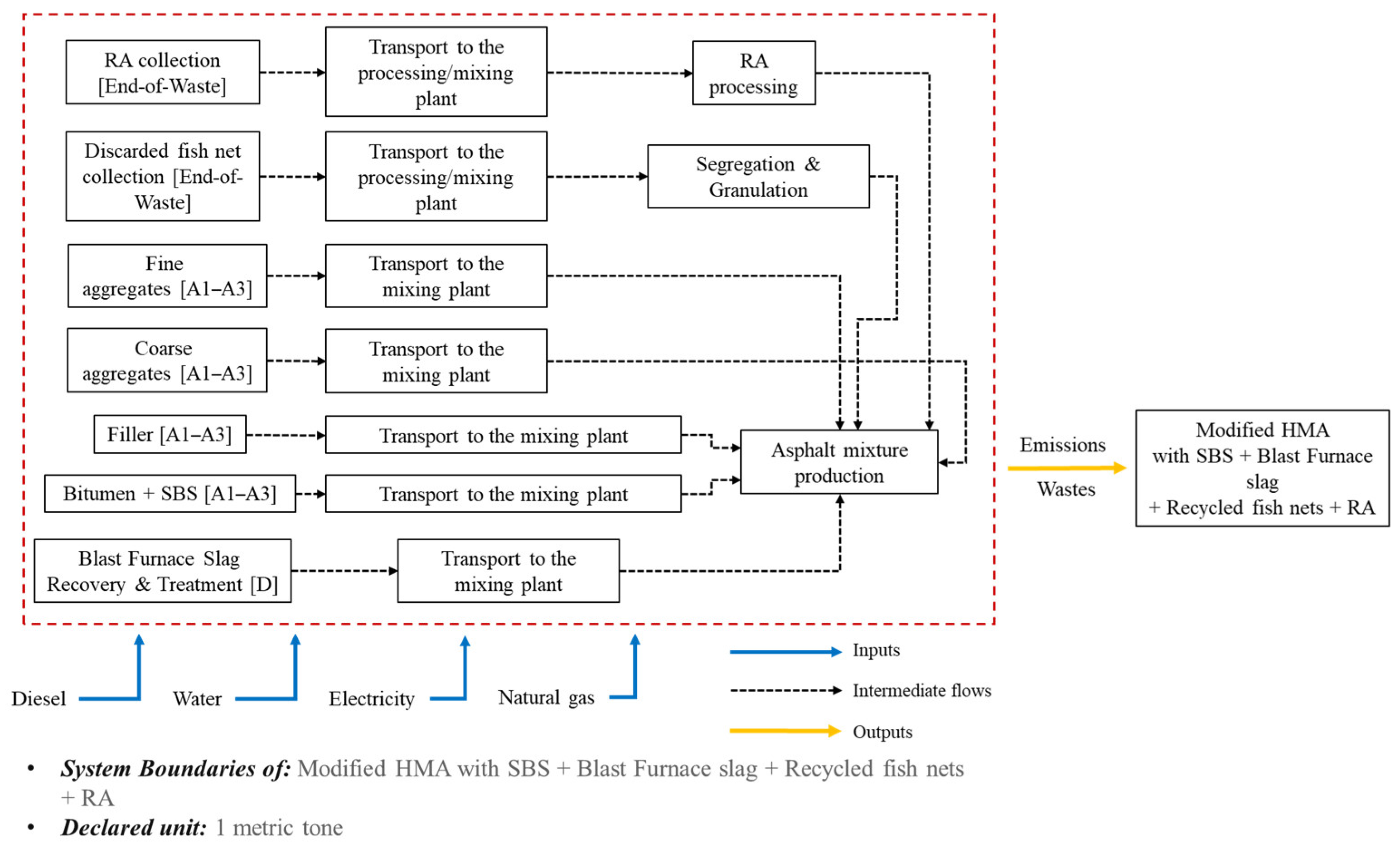
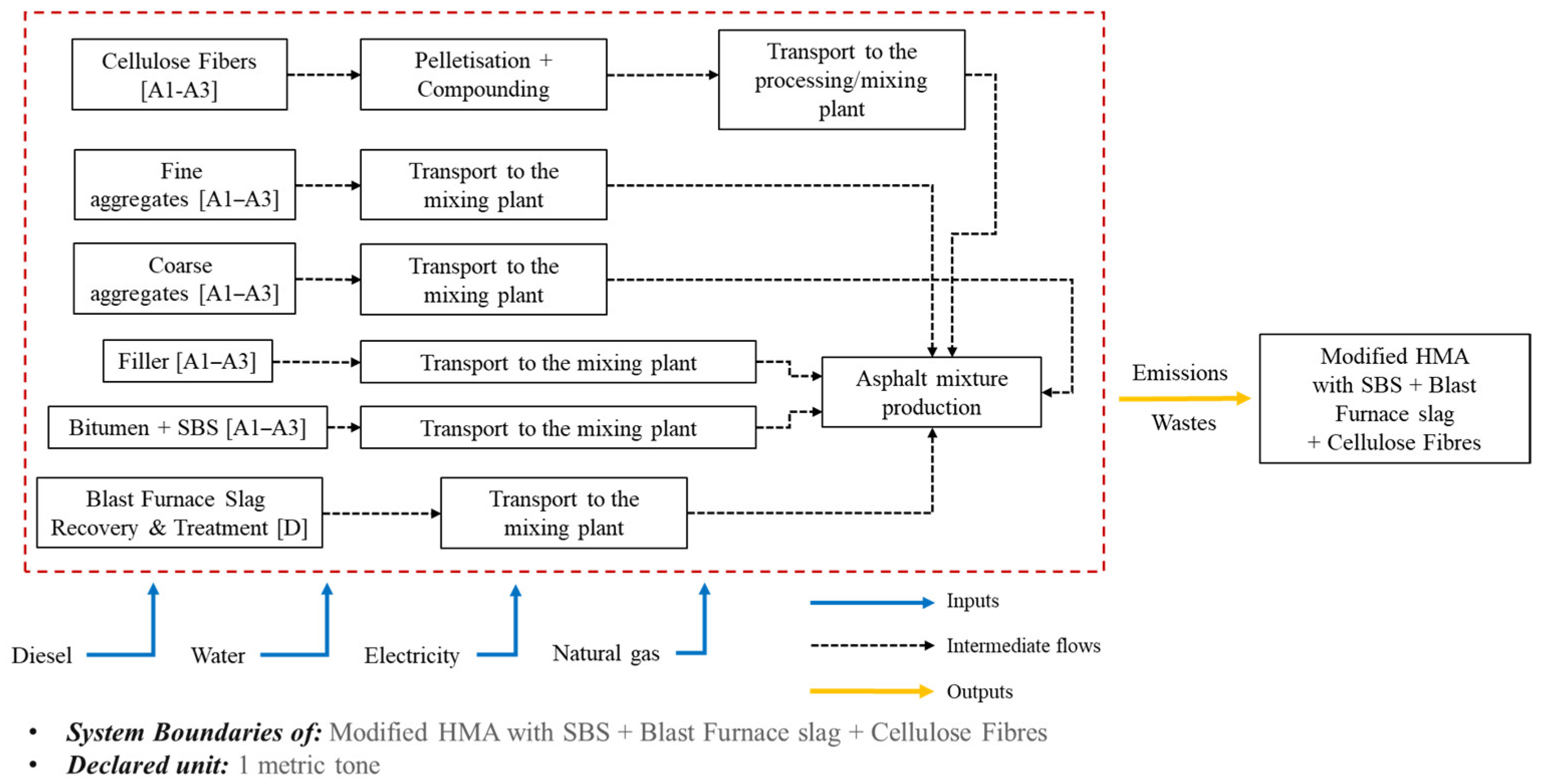
This study evaluates an open-loop system aligned with the principles of the circular economy. End-of-waste materials such as recycled fishnets and reclaimed asphalt are incorporated into the asphalt mixtures as secondary raw materials. The system boundaries include raw material extraction and processing [A1], transportation to the asphalt plant [A2], and asphalt mixture production [A3], and can be seen in
Figure 1,
Figure 2,
Figure 3 and
Figure 4. Additional processes, such as blast furnace slag recovery, treatment segregation and granulation of fishnets, and RA processing are also included. Cellulose fibre palletisation and compounding are modelled within the manufacturing phase. The functional unit for this assessment is defined as the production of 1 tonne of hot mix asphalt, intended for flexible pavement applications designed under national technical specifications for the intended use. Recycled components are classified according to the European Waste Code list: reclaimed asphalt under EWC 17 01 01 and fishnets under EWC 16 10 02.
The life cycle inventory was developed using a combination of primary data collected during the experimental production of the mixtures and secondary data sourced from the GaBi Professional database.
Table 2 summarises the material quantities and
Table 3 the transport distances used to produce 1 tonne of asphalt mixture. All virgin aggregates, RA, SBS, BFS, waste fishing nets and cellulose fibres were modelled using the corresponding GaBi datasets for extraction, processing and manufacturing. For secondary materials the datasets include pre-processing operations such as crushing, washing, grinding or granulation, depending on the material type.
These processes reflect typical industrial-scale treatments and were selected to align with the existing literature and European market conditions and specifically for the region of Italy. Energy use for asphalt mixing, drying and handling was modelled using the GaBi dataset and more specifically the GaBi Professional database for a conventional batch-production asphalt plant powered by natural gas and diesel. This dataset includes burner operation, aggregate heating, mixing energy, internal plant logistics and on-site machinery operation. Fuel consumption and emission rates are consistent with standard European practice and align with previous LCA studies on asphalt production. Emissions from material production, fuel combustion and transport were taken directly from the GaBi Professional database which incorporates measured or industry-average emission factors compliant with EN 15804 [
36] and relevant EU- and Italy-focused environmental inventories. This allows reproducibility of the results and ensures that all mixtures were modelled under consistent system boundaries, technological assumptions and data sources.
3. Results
3.1. Overview of Environmental Performance
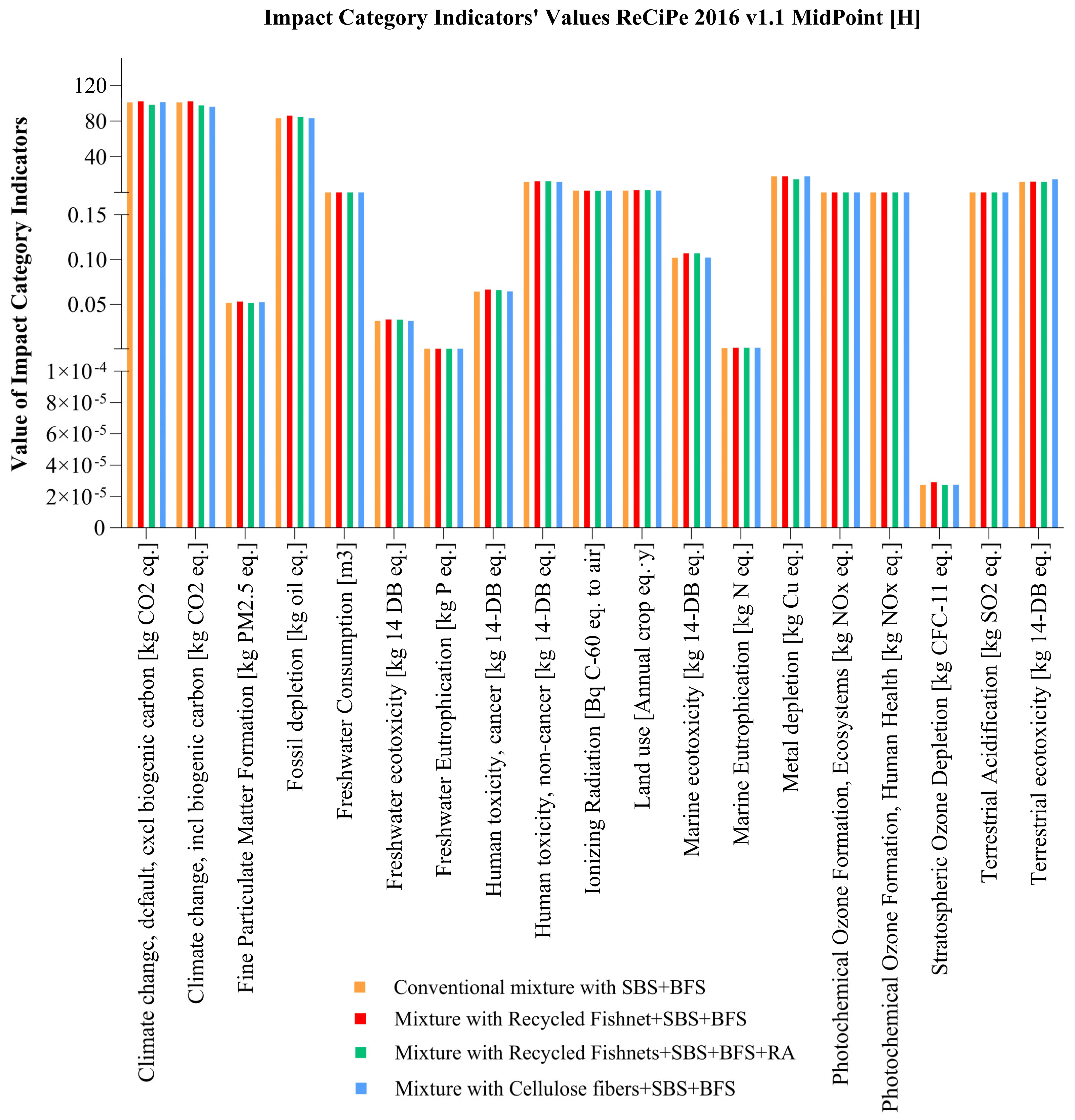
The comparative life cycle assessment of the four HMA mixtures revealed both commonalities and divergences in environmental impacts across the selected ReCiPe 2016 Midpoint (H) categories. Results are presented per functional unit, defined as 1 tonne of produced asphalt.
Figure 5 presents data graphically, facilitating a comparative assessment across all alternatives. The results across the ReCiPe midpoint categories span several orders of magnitude. When presented together on a single axis, impact categories with comparatively low absolute values (e.g., stratospheric ozone depletion) become visually compressed, obscuring relevant differences. For this reason, three Y axis segments have been introduced in the graph, enabling clear visualization.
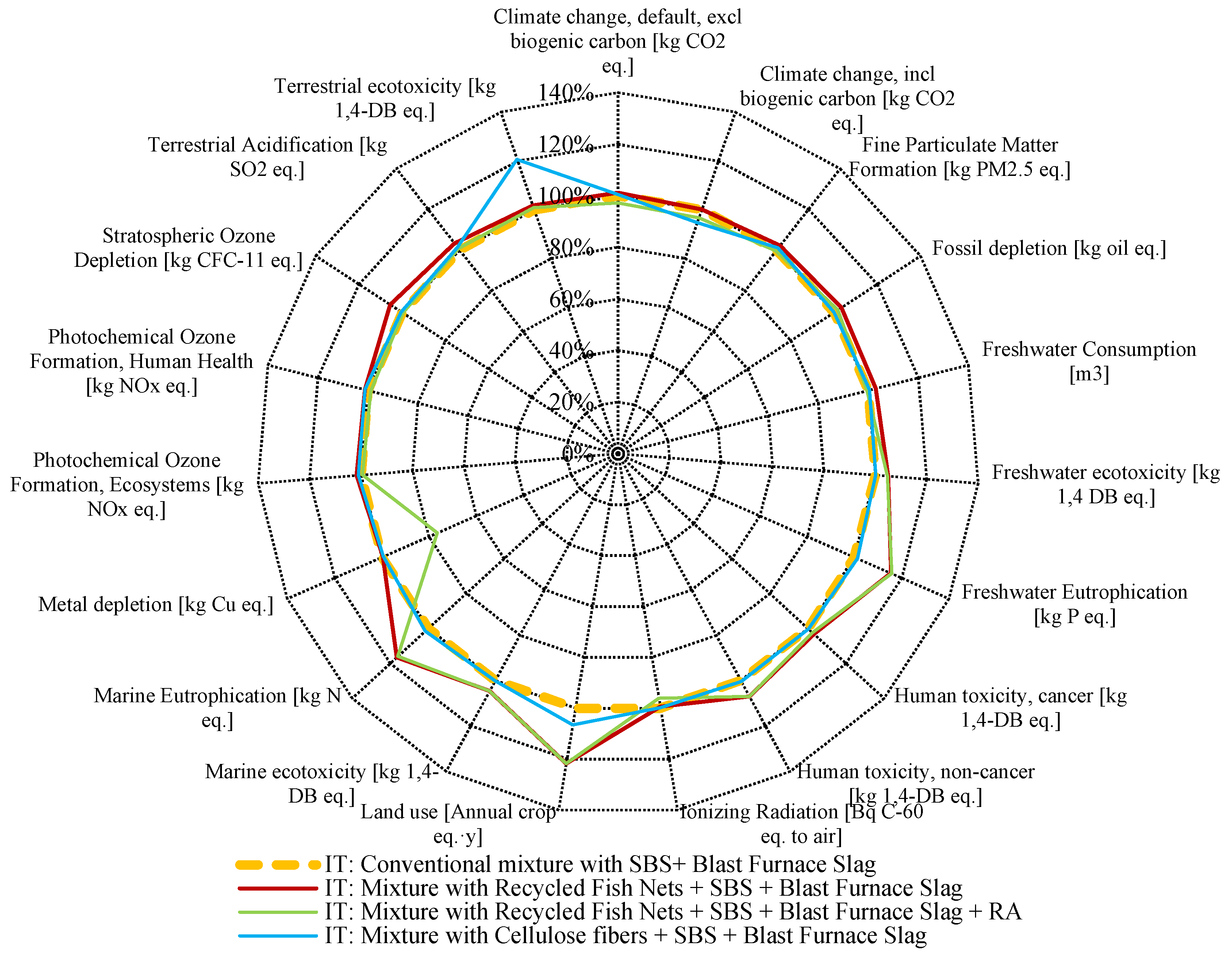
A further analysis undertaken was the normalisation of the results to the baseline mixture for a better understanding of the differences in the environmental performance of the investigated mixtures.
Figure 6 complements this analysis by visually mapping the variations across all impact categories simultaneously, providing a comprehensive view of the multi-dimensional environmental profile of each alternative. Deviations from the centre indicate increases or reductions in environmental impact compared to the baseline, making overall trends and outliers easily identifiable.
This highlights both improvements and trade-offs, making it easier to assess relative performance across diverse categories, and enables a side-by-side comparison among the alternatives themselves, highlighting which mixture performs best or worst in each impact category. This approach provides a clearer understanding of the trade-offs between mixtures, supporting more informed material selection based on specific environmental priorities.
3.2. Life Cycle Stage Contribution Hotspot Analysis
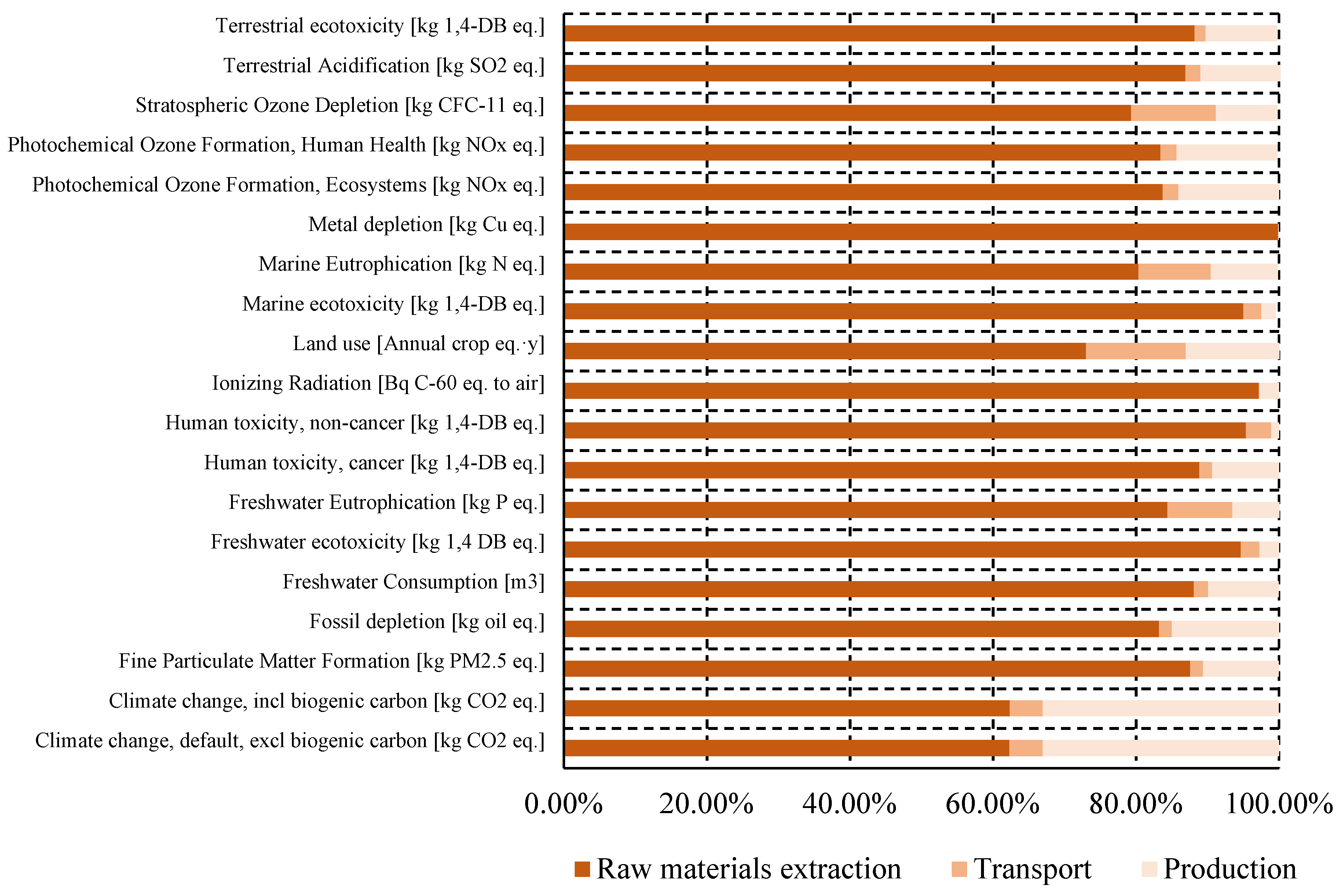
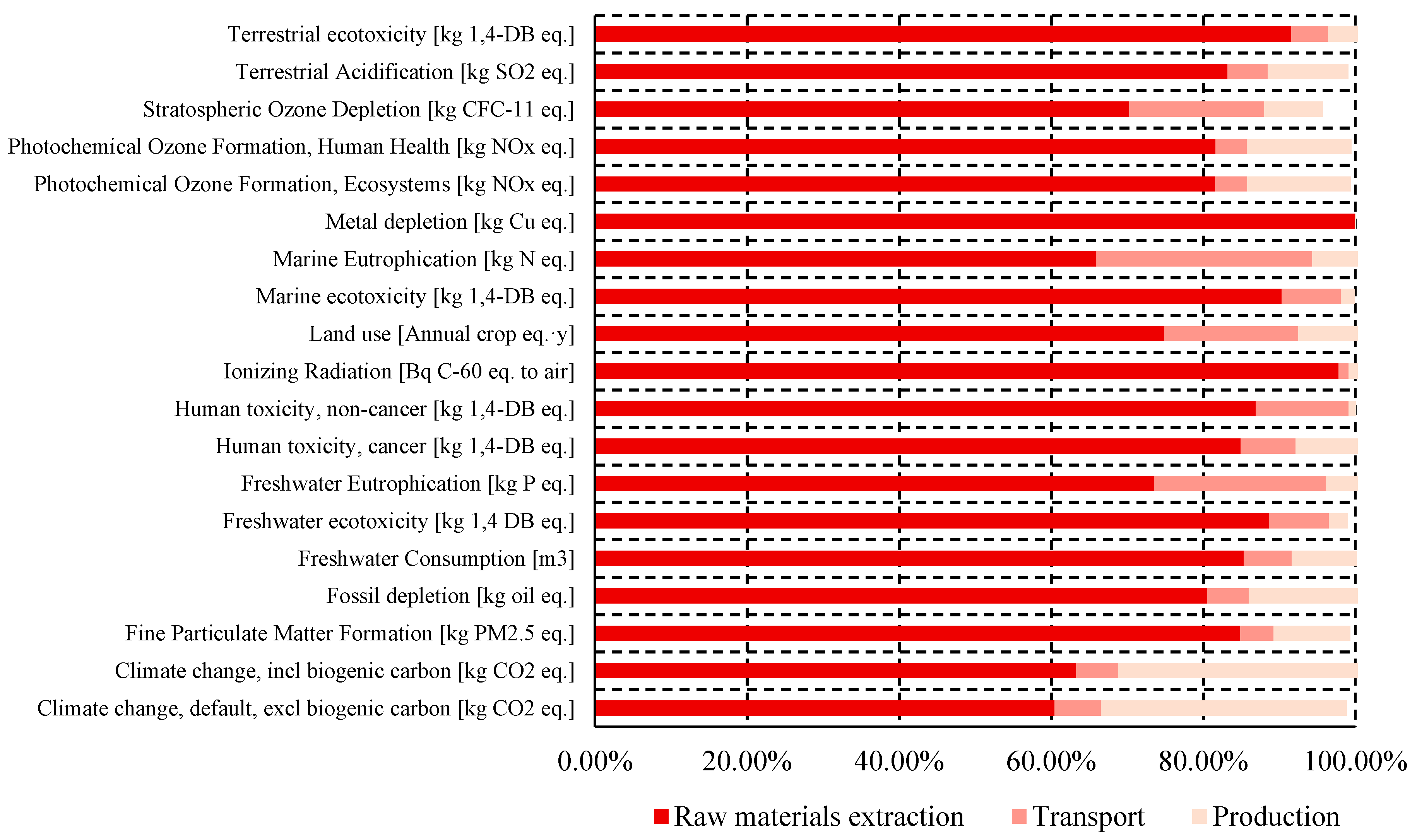
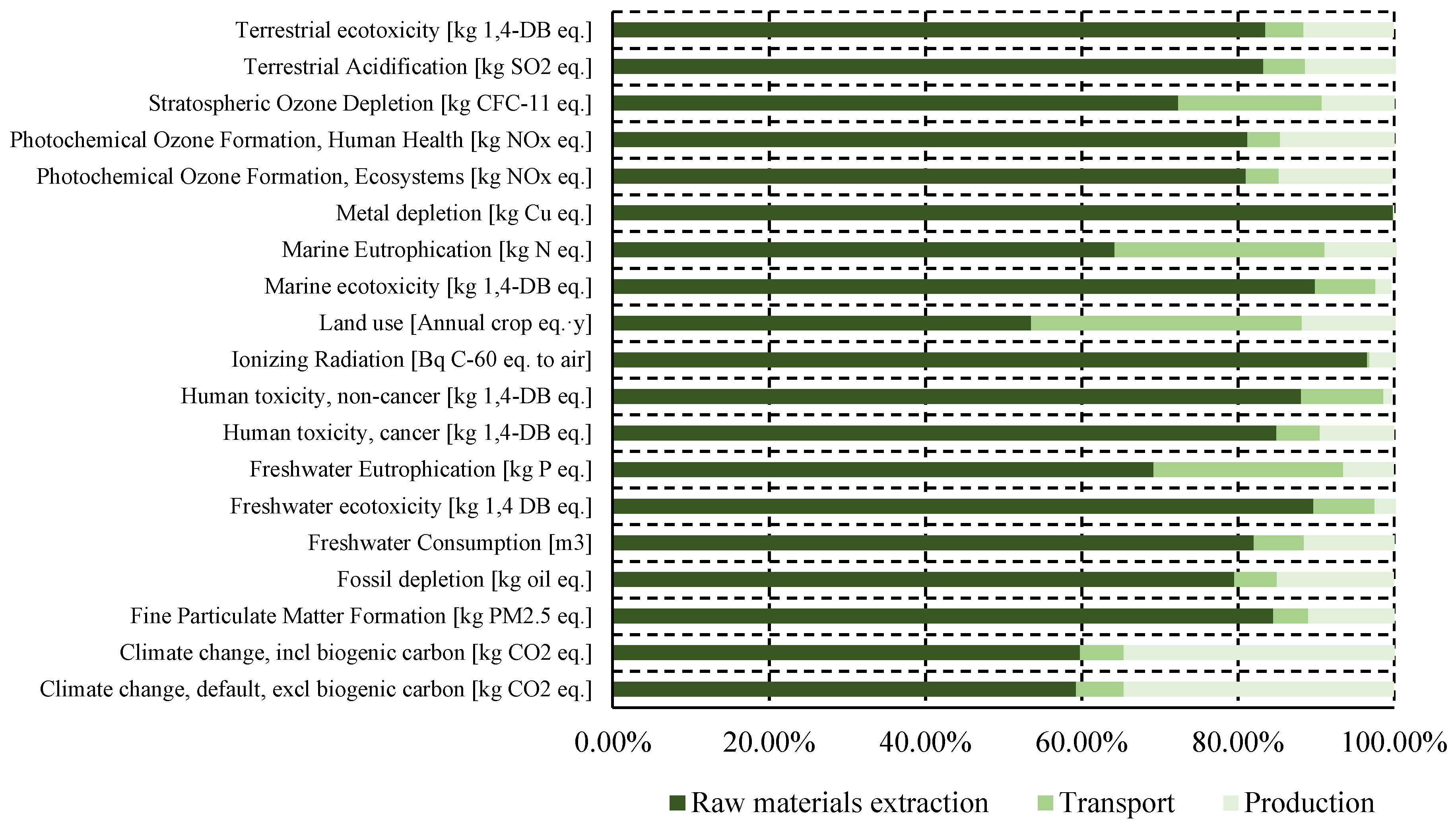
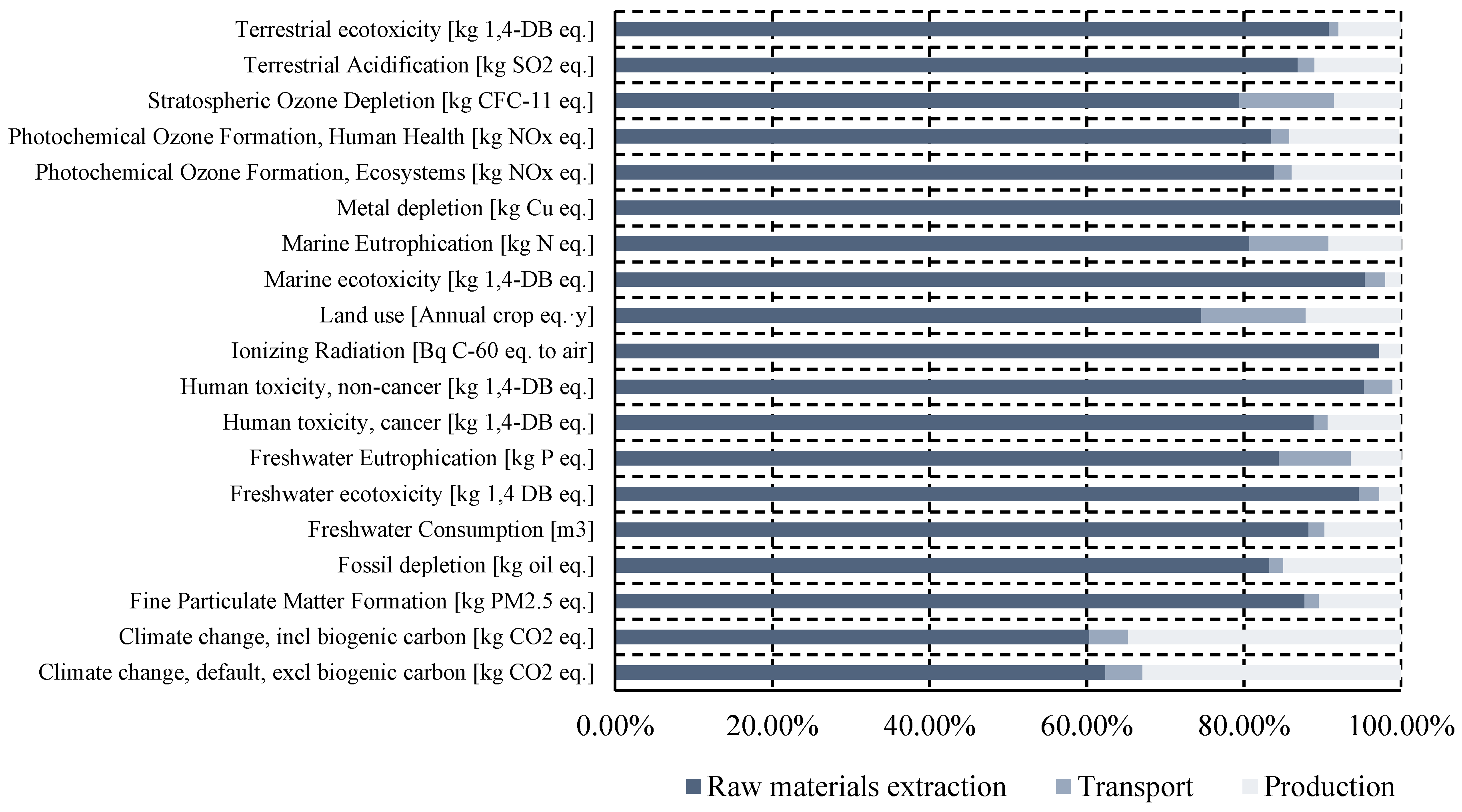
To better understand the distribution of environmental burdens across the life cycle of each asphalt mixture, a hotspot analysis was performed. This approach identifies the life cycle stages of raw material extraction and processing [A1], transportation [A2], and asphalt production [A3] that contribute most significantly to the overall environmental impacts. By breaking down each impact category according to its stage-wise contribution, the analysis provides critical insight into where mitigation measures or process optimisations would be most effective. Such stage-specific evaluation enables targeted interventions in both material sourcing and production practices, supporting resource efficiency and life cycle thinking.
Figure 7,
Figure 8,
Figure 9 and
Figure 10 represent the results for each alternative.
3.3. Sensitivity Analysis of Transport Distances
To evaluate the robustness of the comparative results presented in
Section 3.1 and
Section 3.2, a sensitivity analysis was conducted on the transport stage (A2). Transport was selected because it is one of the contributors to the cradle-to-gate impacts of asphalt mixtures and represents a parameter that is highly context-dependent and can vary substantially depending on the geographical location of suppliers, construction sites, and recycling facilities. The sensitivity analysis was performed by varying the transport distances of all raw materials (aggregates, filler, bitumen, SBS, BFS, fishnets, recycled asphalt (RA), and cellulose fibres) by −50/+50 km relative to the baseline scenario. In the −50 km scenario, the modified distance becomes (d
i − 50). To avoid physically unrealistic or negative values, any distance below 0 km was assumed 0 km (i.e., assuming extremely local sourcing rather than negative transport). In the +50 km scenario, all distances become (d
i + 50), assuming a longer supply chain or more distant sourcing. The results can be seen in
Table 4.
The results of the sensitivity analysis show that the effect of transport distance variation on the total cradle-to-gate impacts is generally modest. For most impact categories—including climate change, fossil depletion, particulate matter formation, photochemical ozone formation, and human toxicity—the variations induced by ±50 km changes in transport range from approximately −1% to −6% for the reduction scenario and +2% to +6% for the increase scenario. Larger relative variations occur in impact categories where the transport stage contributes a higher share of total impacts, particularly in freshwater and marine eutrophication, land use and stratospheric ozone depletion. For these categories, mixtures containing fishnets or RA exhibit variations up to approximately −15 to 20% (for the −50 km scenario) and 20 to 30% (for the +50 km scenario).
4. Discussion
The comparative life cycle assessment revealed that introducing alternative secondary materials into HMA mixtures generates both environmental benefits and trade-offs across the 18 ReCiPe 2016 midpoint categories. RA consistently provided the most noticeable environmental improvements, while recycled fishnets and cellulose fibres showed more mixed results, highlighting the importance of context-specific evaluations. The integration of 15% RA alongside recycled fishnets led to reductions in several key categories, including climate change (−2.8%), fossil depletion (−0.5%), and metal depletion (−23.5%), relative to the conventional SBS-BFS mixture. These results are consistent with previous studies that have reported climate change savings between 5 and 15% when RA is incorporated into asphalt mixes [
37,
38,
39]. The primary driver of these benefits lies in the displacement of virgin aggregates, which significantly reduces burdens from raw material extraction. However, trade-offs were also observed, particularly for freshwater ecotoxicity (+4.7%) and eutrophication (+15.8%), likely resulting from potential leachates or contaminants associated with aged asphalt. Similar concerns have been raised by [
40], who noted that while RA typically improves energy and GHG balances, it can introduce localized toxicity impacts depending on the quality of reclaimed material streams. Incorporating recycled fishnets in asphalt mixtures increased impacts in several categories, such as freshwater eutrophication (+15.5%) and land use (+21.9%), largely due to the energy-intensive processes of segregation, cleaning, and granulation required to prepare post-consumer polymer waste for reuse. While fishnets were treated under end-of-waste criteria, excluding upstream burdens such as collection and transport, the preparation stage still contributed to toxicity and fossil resource impacts. This finding contrasts with some studies on recycled packaging plastics in asphalt, which have reported net environmental benefits when substitution levels are high and processing is less energy-intensive [
41,
42]. The discrepancy highlights that not all plastic waste streams can be generalized as beneficial from an environmental perspective; rather, their net contribution depends heavily on the balance between avoided virgin material and processing energy. The case of marine-derived plastics such as fishnets underscores the complexity of valorising highly contaminated and degraded waste streams within a circular economy framework.
The cellulose fibre-modified mixture showed a relatively favourable profile in terms of climate change mitigation (−5.4% including biogenic carbon) and remained near-neutral in most other categories. However, it exhibited a significant increase in terrestrial ecotoxicity (+20.5%), likely linked to agricultural inputs and land occupation associated with fibre production. This observation aligns with previous research on bio-based asphalt additives, which cautions that agricultural feedstocks may shift burdens from fossil depletion to land use and toxicity categories [
43]. Land use is reported here using the ReCiPe midpoint indicator “annual crop eq.*y” and refers to the occupation and transformation of land associated with the production of material inputs (e.g., agricultural land for cellulose fibre feedstock), not to landfilling or end-of-life land occupation. As the system boundary is cradle-to-gate (A1–A3), end-of-life land occupation is not considered. Therefore, observed increases in the land-use indicator for cellulose fibres are attributable to upstream agricultural inputs, cultivation and supply-chain activities required for fibre production. Such results emphasize that bio-based solutions are not inherently more sustainable and require careful supply chain management, possibly using agricultural residues or secondary biomass rather than dedicated fibre production.
Regarding the hotspot analysis across all mixtures, raw material acquisition and processing [A1] emerged as the dominant life cycle stage, often exceeding 70% of total climate change and resource-related impacts. This finding is consistent with Balaguera et al., who identified aggregate and binder production as the most critical hotspots in asphalt LCAs [
44]. Incorporating secondary materials altered the distribution of burdens across stages, with fishnets and RA increasing the relative contribution of asphalt production [A3] due to additional handling and mixing requirements. However, these shifts did not necessarily increase total burdens, suggesting that process-level optimisations at the plant could enhance the benefits of circular additives. By adopting an open-loop system and applying end-of-waste criteria to secondary materials, this study positions itself within a circular economy framework. This approach simplifies attribution by considering only the environmental burdens directly affecting asphalt plant inputs and excluding upstream impacts. Similarly, avoided burden credits from Module D were not included, meaning the full environmental benefits of circularity, particularly for marine plastics, may be underestimated. The results highlight the non-linear nature of circularity benefits: RA consistently reduces impacts by displacing virgin aggregates, whereas fishnets and cellulose fibres produce mixed outcomes depending on processing energy and supply chain characteristics These findings reinforce that waste valorisation does not inherently guarantee environmental improvements and underscore the need for careful assessment and process optimisation.
The sensitivity analysis helps clarify the importance of transport-related assumptions in interpreting the environmental performance of the mixtures. Overall, the four mixtures show very similar cradle-to-gate impacts, since they share the same production process and comparable binder contents. As a result, most midpoint indicators change only slightly when transport distances are modified, confirming that the differences between mixtures are generally small. Some impact categories, such as eutrophication and land use, show larger percentage variations when transport distances are altered. This is mainly because these categories are more sensitive to upstream supply chains and to longer transport of specific materials such as fishnets or RA. Even in these cases, however, the comparative ranking of the mixtures remains unchanged, indicating that the main conclusions are robust. These results highlight that environmental differences between mixtures can be influenced by logistical factors such as supplier location and availability of recycled materials. They also suggest that the potential advantages of innovative materials may become more evident when use-phase and end-of-life stages are included in a cradle-to-grave assessment.
Overall, the findings demonstrated that integrating circular and bio-based inputs in asphalt may be promising but requires a holistic, life cycle-oriented approach to fully realize environmental benefits while managing trade-offs.
5. Conclusions
The results of this study align with the overarching principles of the European Green Deal and the Circular Economy Action Plan, which promote systemic resource efficiency and cross-sectoral integration of circularity objectives. Within this policy framework, the reuse of end-of-life fishing nets exemplifies how marine-derived waste streams can contribute to sustainable infrastructure while advancing the objectives of the Marine Strategy Framework Directive (2008/56/EC) [
45], particularly the achievement and maintenance of Good Environmental Status in European seas. To operationalise such synergies, governance frameworks should encourage stronger coordination between the infrastructure and marine waste management sectors, fostering the joint development of recycling chains, certification protocols and monitoring systems that connect marine litter recovery with land-based reuse in construction [
46].
In the study, a cradle-to-gate life cycle assessment was conducted in order to evaluate the environmental performance of four HMA mixtures incorporating different secondary raw materials, i.e., recycled fishnets, RA, and cellulose fibres, alongside a conventional SBS-BFS mixture. The results show that while circular additives can reduce environmental burdens, their benefits are not uniform across impact categories and trade-offs must be carefully managed. Among the alternatives, RA emerged as the most consistently advantageous option, delivering tangible environmental improvements, particularly in climate change, fossil depletion, and metal depletion categories. These findings reaffirm the role of RA as a cornerstone of sustainable pavement strategies and support its prioritisation in road authority specifications and green procurement schemes. In contrast, valorising marine plastic waste such as recycled fishnets presents more complex challenges. Although using fishing gear waste aligns with global marine pollution reduction goals, the energy-intensive processing required for segregation, cleaning, and granulation offsets many of the potential environmental benefits. The incorporation of cellulose fibres produced a different set of outcomes. Their bio-based origin contributed to reduced climate impacts; however, agricultural supply chains behind fibre production introduced significant terrestrial ecotoxicity and land-use burdens. Future adoption of fibre-modified mixtures should therefore focus on fibres sourced from agricultural residues or secondary biomass streams in order to minimise such trade-offs.
Hotspot analysis confirmed that raw material acquisition and processing of aggregates and bitumen remain the dominant contributors to overall environmental burdens across all mixtures. This finding indicates that material substitution strategies, while valuable, must be coupled with broader decarbonisation efforts, such as low-carbon binders, renewable energy in asphalt plants, and more efficient logistics to achieve transformative reductions. The implications for stakeholders are significant. For road authorities, the findings provide a scientific basis for refining environmental criteria in public procurement, in line with the European Union’s Green Public Procurement (GPP) directives. LCA indicators can be directly incorporated into GPP by defining measurable environmental performance criteria. For example, contracting authorities may set minimum thresholds for specific impacts (such as a maximum climate change impact per tonne of asphalt mixture) or introduce scoring systems that award additional points to bidders proposing mixtures with lower cradle-to-gate impacts than a benchmark design. Alternatively, tenders may require mandatory LCA documentation for key categories such as climate change, resource depletion and toxicity to ensure transparent comparison across suppliers. These mechanisms make it possible to integrate environmental considerations into procurement procedures in a consistent and actionable manner. For industry stakeholders, they underscore the importance of assessing processing burdens of secondary inputs before their deployment at large scale. For policymakers, the results make clear that granting “end-of-waste” status to a material does not automatically ensure environmental superiority, underlining the necessity of incorporating LCA-based verification criteria into circular economy legislation. For researchers, the study demonstrates the importance of extending analyses beyond cradle-to-gate to include use and end-of-life phases, thereby capturing avoided burdens and durability effects. The sensitivity analysis shows that the environmental differences among the four mixtures are generally small and often influenced by transport-related assumptions. Most impact categories change only slightly when transport distances are varied, and no ranking reversal occurs. This confirms that the comparative results are robust and that the mixtures have similar cradle-to-gate environmental profiles. The benefits of alternative fibres and recycled materials are therefore incremental at the production stage. Larger differences may emerge when use-phase performance, durability and end-of-life recovery are considered in a cradle-to-grave assessment, which represents an important direction for future work.
Context-specific application is essential in urban areas where landfill diversion and marine litter reduction are pressing priorities; recycled fishnets may still be justified if supported by cleaner recycling technologies or by accounting for avoided burdens beyond the system’s defined boundaries. For large-scale highway projects, RA remains the most reliable option for reducing environmental impacts without significant trade-offs. In pilot or demonstration projects, cellulose fibres could play a role if sustainably sourced, although their land-use implications should be carefully monitored. Overall, this study shows that circularity in asphalt is not a guarantee of sustainability. The environmental performance of secondary raw materials depends heavily on their supply chains, processing requirements, and integration efficiency. Material-specific trade-offs must therefore be transparently assessed and aligned with policy priorities. A more nuanced and context-dependent integration of RA, fishnets, and cellulose fibres, considering local waste streams, legislative frameworks, and infrastructure needs, can help road authorities and stakeholders move towards more resilient, low-impact pavements within the European circular economy agenda. For large-scale highway projects, RA remains the most reliable option for reducing environmental impacts without significant trade-offs. Cellulose fibres could be employed in pilot or demonstration projects if sustainably sourced, with careful monitoring of land-use implications. Future work should extend the assessment to the use and end-of-life phases to quantify durability effects, avoided burdens and potential improvements beyond the production stage.
Author Contributions
Conceptualization, K.M. and C.C.; methodology, K.M.; software, K.M.; validation, K.M.; formal analysis, K.M.; investigation, K.M.; resources, K.M., F.G., R.T., M.C.M., G.S. and C.C.; data curation, K.M.; writing—original draft preparation, K.M.; writing—review and editing, K.M., C.C., M.C.M. and G.S.; visualization, K.M.; supervision, C.C.; project administration, K.M.; funding acquisition, C.C. All authors have read and agreed to the published version of the manuscript.
Funding
This study was carried out within (i) the CNMS (Sustainable Mobility Centre) Extended Partnership and received funding from the European Union Fund “Next-Generation EU (PNRR)—Mission 4, Component 2 Investment 1.4”, Award Number: Project code, CN00000023, as well as within (ii) the TECMARECO project “High-resolution technologies to monitor marine litter and detect effects on protected marine ecosystems toward a cross-border early detection system”, supported by the European Regional Development Fund, under the INTERREG VI—A Italy Malta 2021–2027.
Institutional Review Board Statement
Not applicable.
Informed Consent Statement
Not applicable.
Data Availability Statement
The original contributions presented in this study are included in the article. Further inquiries can be directed to the corresponding author.
Conflicts of Interest
The authors declare no conflicts of interest.
Abbreviations
The following abbreviations are used in this manuscript:
| RA | Reclaimed Asphalt |
| HMA | Hot Mix Asphalt |
| SBS | Styrene Butadiene Styrene |
| BFS | Blast Furnace Slag |
| LCA | Life Cycle Assessment |
| GPP | Green Public Procurement |
| H | Hierarchy |
References
- Mantalovas, K.; Di Mino, G. Integrating circularity in the sustainability assessment of asphalt mixtures. Sustainability 2020, 12, 594. [Google Scholar] [CrossRef]
- Mantalovas, K.; Di Mino, G. The sustainability of reclaimed asphalt as a resource for road pavement management through a circular economic model. Sustainability 2019, 11, 2234. [Google Scholar] [CrossRef]
- Celauro, C.; Corriere, F.; Guerrieri, M.; Lo Casto, B. Environmentally appraising different pavement and construction scenarios: A comparative analysis for a typical local road. Transp. Res. Part D Transp. Environ. 2015, 34, 41–51. [Google Scholar] [CrossRef]
- Antunes, V.; Neves, J.; Freire, A.C. Performance Assessment of Reclaimed Asphalt Pavement (RAP) in Road Surface Mixtures. Recycling 2021, 6, 32. [Google Scholar] [CrossRef]
- Lo Presti, D.; Airey, G.; Di Liberto, M.; Noto, S.; Di Mino, G.; Blasl, A.; Falla, G.C.; Wellner, F. Allback2pave: Towards a sustainable recycling of asphalt in wearing courses. In Transport Infrastructure and Systems, Proceedings of the AIIT International Congress on Transport Infrastructure and Systems, TIS 2017, Rome, Italy, 10–12 April 2017; CRC Press: Boca Raton, FL, USA, 2017; pp. 109–118. [Google Scholar] [CrossRef]
- Sohail Jameel, M.; Hassan Khan, A.; ur Rehman, Z.; Akhtar Tarar, M. Evaluation of performance characteristics of asphalt mixtures modified with renewable oils and reclaimed asphalt pavement (RAP). Constr. Build. Mater. 2023, 375, 130925. [Google Scholar] [CrossRef]
- Mantalovas, K.; Dunn, I.P.; Acuto, F.; Vijayan, V.; Inzerillo, L.; Di Mino, G. A Top-Down Approach Based on the Circularity Potential to Increase the Use of Reclaimed Asphalt. Infrastructures 2023, 8, 83. [Google Scholar] [CrossRef]
- Vijayan, V.; Mantalovas, K.; Acuto, F.; Mino, G. Di Evaluating the Ageing Sensitivity of the Asphalt Binder via Distinct Ageing Methods. Infrastructures 2023, 8, 163. [Google Scholar] [CrossRef]
- Sollazzo, G.; Longo, S.; Cellura, M.; Celauro, C. Impact analysis using life cycle assessment of asphalt production from primary data. Sustainability 2020, 12, 10171. [Google Scholar] [CrossRef]
- Sollazzo, G.; Longo, S.; Cellura, M.; Celauro, C. LCA of an Asphalt Mixture Produced in a Southern Italian Plant: Analysis and Perspectives. In Proceedings of the RILEM International Symposium on Bituminous Materials, Lyon, France, 14–16 December 2020; Di Benedetto, H., Baaj, H., Chailleux, E., Tebaldi, G., Sauzéat, C., Mangiafico, S., Eds.; Springer International Publishing: Cham, Switzerland, 2022; pp. 1273–1279. [Google Scholar]
- Celauro, C.; Corriere, F.; Guerrieri, M.; Lo Casto, B.; Rizzo, A. Environmental analysis of different construction techniques and maintenance activities for a typical local road. J. Clean. Prod. 2017, 142, 3482–3489. [Google Scholar] [CrossRef]
- Huang, Y.; Bird, R.N.; Heidrich, O. A review of the use of recycled solid waste materials in asphalt pavements. Resour. Conserv. Recycl. 2007, 52, 58–73. [Google Scholar] [CrossRef]
- Mroueh, U.M.; Laine-Ylijoki, J.; Eskola, P. Life-cycle impacts of the use of industrial by-products in road and earth construction. Waste Manag. Ser. 2000, 1, 438–448. [Google Scholar] [CrossRef]
- Chien, H.T.; Chang, J.R.; Hsu, H.M. Determining the content of steel furnace slag in asphalt concrete. Case Stud. Constr. Mater. 2023, 19, e02399. [Google Scholar] [CrossRef]
- Pasetto, M.; Baliello, A.; Giacomello, G.; Pasquini, E. The Use of Steel Slags in Asphalt Pavements: A State-of-the-Art Review. Sustainability 2023, 15, 8817. [Google Scholar] [CrossRef]
- Mantalovas, K.; Jimenez Del Barco-Carrion, A.; Blanc, J.; Chailleux, E.; Hornych, P.; Planche, J.P.; Porot, L.; Pouget, S.; Williams, C.; Lo Presti, D. Interpreting Life Cycle Assessment results of bio-asphalt pavements for more informed decision-making. In Pavement, Roadway, and Bridge Life Cycle Assessment 2020, Proceedings of the International Symposium on Pavement. Roadway, and Bridge Life Cycle Assessment 2020 (LCA 2020), Sacramento, CA, USA, 3–6 June 2020; CRC Press: Boca Raton, FL, USA, 2020; ISBN 9781003092278. [Google Scholar]
- Jiménez del Barco Carrión, A.; Mantalovas, K.; Pouget, S.; Porot, L.; Williams, C.; Blanc, J.; Hornych, P.; Planche, J.-P.; Chailleux, E.; Lo Presti, D. Life Cycle Assessment of Bio-Reused Asphalt Pavements. In Proceedings of the 2nd International Workshop on the Use of Biomaterials in Pavements. IWBP 2024, São Paulo, Brazil, 23–24 September 2024; RILEM Bookseries. Springer: Cham, Switzerland, 2024; Volume 58, pp. 109–121. [Google Scholar] [CrossRef]
- D’angelo, S.; Ferrotti, G.; Cardone, F.; Canestrari, F. Asphalt Binder Modification with Plastomeric Compounds Containing Recycled Plastics and Graphene. Materials 2022, 15, 516. [Google Scholar] [CrossRef]
- Di Mino, G.; Vijayan, V.; Eskandarsefat, S.; Venturini, L.; Mantalovas, K. Investigating the Multi-Recyclability of Recycled Plastic-Modified Asphalt Mixtures. Infrastructures 2023, 8, 84. [Google Scholar] [CrossRef]
- Duarte, G.M.; Faxina, A.L. Asphalt concrete mixtures modified with polymeric waste by the wet and dry processes: A literature review. Constr. Build. Mater. 2021, 312, 125408. [Google Scholar] [CrossRef]
- Vijayan, V.; Manthos, E.; Mantalovas, K.; Di Mino, G. Multi-recyclability of asphalt mixtures modified with recycled plastic: Towards a circular economy. Results Eng. 2024, 23, 102523. [Google Scholar] [CrossRef]
- Lusher, A.; Hollman, P.; Mendozal, J. Microplastics in Fisheries and Aquaculture: Status of Knowledge on Their Occurrence and Implications for Aquatic Organisms and Food Safety; Food and Agriculture Organization of the United Nations: Rome, Italy, 2017; ISBN 978-92-5-109882-0. Available online: https://openknowledge.fao.org/server/api/core/bitstreams/a9a298e0-9db6-beac-37325be3e280/content (accessed on 17 September 2025).
- Richardson, K.; Hardesty, B.D.; Wilcox, C. Estimates of fishing gear loss rates at a global scale: A literature review and meta-analysis. Fish Fish. 2019, 20, 1218–1231. [Google Scholar] [CrossRef]
- Celauro, C.; Graziano, F.; Garofalo, S.; Teresi, R. Use of fibres from waste fishing nets in porous asphalt mixtures for road pavement. Constr. Build. Mater. 2025, 462, 140004. [Google Scholar] [CrossRef]
- Celauro, C.; Teresi, R.; Graziano, F.; La Mantia, F.P.; Protopapa, A. Preliminary evaluation of plasmix compound from plastics packaging waste for reuse in bituminous pavements. Sustainability 2021, 13, 2258. [Google Scholar] [CrossRef]
- Do, H.L.; Armstrong, C.W. Ghost fishing gear and their effect on ecosystem services—Identification and knowledge gaps. Mar. Policy 2023, 150, 105528. [Google Scholar] [CrossRef]
- OSPAR Commission. OSPAR Scoping Study on Best Practices for the Design and Recycling of Fishing Gear as a Means to Reduce Quantities of Fishing Gear Found as Marine Litter in the North-East Atlantic; OSPAR Commission: London, UK, 2020; Volume 2. [Google Scholar]
- Hanke, G.; Walvoort, D.; van Loon, W.; Maria Addamo, A.; Brosich, A.; del Mar Chaves Montero, M.; Eugenia Molina Jack, M.; Vinci, M.; Giorgetti, A. EU Marine Beach Litter Baselines—Analysis of a Pan-European 2012–2016 Beach Litter Dataset; EUR 30022 EN, Publications Office of the European Union: Luxembourg, 2019; ISBN 978-92-76-14243-0. [Google Scholar]
- Zlaugotne, B.; Pubule, J.; Gusca, J. Fishing net waste management: Quantification and valorization. Front. Mar. Sci. 2025, 12, 1607436. [Google Scholar] [CrossRef]
- Yue, Y.; Abdelsalam, M.; Khater, A.; Ghazy, M. A comparative life cycle assessment of asphalt mixtures modified with a novel composite of diatomite powder and lignin fiber. Constr. Build. Mater. 2022, 323, 126608. [Google Scholar] [CrossRef]
- Chen, X.; Wang, H. Life cycle assessment of asphalt pavement recycling for greenhouse gas emission with temporal aspect. J. Clean. Prod. 2018, 187, 148–157. [Google Scholar] [CrossRef]
- Barakat, B.; Abou Jaoude, A.; Mantalovas, K.; Peter Dunn, I.; Acuto, F.; Yazoghli-Marzouk, O.; Di Mino, G.; Srour, I. Examining the Critical Factors that Influence the Success of Construction and Demolition Waste Reverse Logistics Operations. Int. J. Environ. Impacts 2022, 5, 236–248. [Google Scholar] [CrossRef]
- De Pascale, B.; Tataranni, P.; Lantieri, C.; Bonoli, A.; Vignali, V. Mechanical performance and environmental assessment of porous asphalt mixtures produced with EAF steel slags and RAP aggregates. Constr. Build. Mater. 2023, 400, 132889. [Google Scholar] [CrossRef]
- EN ISO 14044:2006; Environmental Management—Life Cycle Assessment—Requirements and Guidelines. International Organization for Standardization: Geneva, Switzerland, 2006.
- ISO 14040; Environmental Management—Life Cycle Assessment—Principles and Framework. International Organization for Standardization: Geneva, Switzerland, 2006.
- EN 15804:2012; Standards Publication Sustainability of Construction Works—Environmental Product Declarations—Core Rules for the Product Category of Construction Products. International Organization for Standardization: Geneva, Switzerland, 2012.
- Aurangzeb, Q.; Al-Qadi, I.L.; Ozer, H.; Yang, R. Hybrid life cycle assessment for asphalt mixtures with high RAP content. Resour. Conserv. Recycl. 2014, 83, 77–86. [Google Scholar] [CrossRef]
- Santos, J.; Bressi, S.; Cerezo, V.; Lo Presti, D.; Dauvergne, M. Life cycle assessment of low temperature asphalt mixtures for road pavement surfaces: A comparative analysis. Resour. Conserv. Recycl. 2018, 138, 283–297. [Google Scholar] [CrossRef]
- Vidal, R.; Moliner, E.; Martínez, G.; Rubio, M.C. Life cycle assessment of hot mix asphalt and zeolite-based warm mix asphalt with reclaimed asphalt pavement. Resour. Conserv. Recycl. 2013, 74, 101–114. [Google Scholar] [CrossRef]
- Liu, T.; Yang, S.; Zhu, L.; Liao, B.; Zhang, Q. Influence of climate change on asphalt binder selection in China. Int. J. Pavement Eng. 2023, 24, 2252145. [Google Scholar] [CrossRef]
- You, L.; Long, Z.; You, Z.; Ge, D.; Yang, X.; Xu, F.; Hashemi, M.; Diab, A. Review of recycling waste plastics in asphalt paving materials. J. Traffic Transp. Eng. 2022, 9, 742–764. [Google Scholar] [CrossRef]
- Calderón-Ramírez, J.; Sepúlveda-Valdez, D.; García, L.; Lomeli-Banda, M.A.; Salazar-Briones, C.; Montoya-Alcaraz, M. Recycled Plastics in Asphalt Mixtures: A Systematic Review of Mechanical Performance, Environmental Impact and Practical Implementation. Appl. Sci. 2025, 15, 9901. [Google Scholar] [CrossRef]
- Klabunde, K.J.; Shrestha, K. Sustainable Asphalt Pavements Using Bio-Binders from Bio-Fuel Waste; Report No. MATC-KSU: 164; Mid-America Transportation Center (MATC), Region VII University Transportation Center, University of Nebraska-Lincoln: Lincoln, NE, USA, 2014. Available online: https://rosap.ntl.bts.gov/view/dot/36615/dot_36615_DS1.pdf (accessed on 14 October 2025).
- Balaguera, A.; Carvajal, G.I.; Albertí, J.; Fullana-i-Palmer, P. Life cycle assessment of road construction alternative materials: A literature review. Resour. Conserv. Recycl. 2018, 132, 37–48. [Google Scholar] [CrossRef]
- The European Parliament; The Council of The European Union. Directive 2008/56/EC of the European Parliament and of the Council of 17 June 2008 Establishing a Framework for Community Action in the Field of Marine Environmental Policy (Marine Strategy Framework Directive); The Council of The European Union: Brussels, Belgium, 2008. [Google Scholar]
- Movilla-Quesada, D.; Raposeiras, A.C.; Ramos-Gavilán, A.B.; Lagos-Varas, M. Transforming end-of-life fishing nets into solutions for sustainable infrastructure: A strategy for circular development. J. Environ. Manag. 2025, 380, 124933. [Google Scholar] [CrossRef] [PubMed]
| Disclaimer/Publisher’s Note: The statements, opinions and data contained in all publications are solely those of the individual author(s) and contributor(s) and not of MDPI and/or the editor(s). MDPI and/or the editor(s) disclaim responsibility for any injury to people or property resulting from any ideas, methods, instructions or products referred to in the content. |
© 2025 by the authors. Licensee MDPI, Basel, Switzerland. This article is an open access article distributed under the terms and conditions of the Creative Commons Attribution (CC BY) license (https://creativecommons.org/licenses/by/4.0/).




 ,
,