Skip to Content

Virtual Worlds

Virtual Worlds is an international, peer-reviewed, open access journal on virtual reality, augmented and mixed reality, published quarterly online by MDPI.

Get Alerted

Add your email address to receive forthcoming issues of this journal.

All Articles (169)

  • Article
  • Open Access

Immersive Learning in Industrial Robotics: User Evaluation and Workload Assessment of the X-MAIN Platform

  • David Mulero-Pérez,
  • Beatriz Zambrano-Serrano and
  • Michael Fernández-Vega
  • + 5 authors

This work details the design, technical deployment, and empirical validation of X-MAIN (eXtended Reality for Maintenance and Inspection Training), an Extended Reality (XR) environment designed for preventive maintenance and safety protocols in industrial robotics. By replacing physical robotic cells with a safe and highly repeatable virtual workshop, X-MAIN enables learners to perform hands-on tool manipulation and fault diagnostics without relying on physical hardware availability or real-time supervision. The framework is structured into a Simulation Zone for operational checks and a Maintenance Zone for hands-on tasks, governed by a generic, rule-matrix pair-based interaction model that formalizes user actions as tool–target pairs across Virtual Reality (VR) and desktop deployments. To evaluate its efficacy, a counterbalanced cross-over pilot study was conducted with a cohort of N=23 technical vocational students in immersive VR mode. Quantitative results demonstrate statistically significant technical knowledge acquisition. System usability assessments yielded a highly favorable Net Promoter Score of 8.6/10, while subjective workload mapping via an adapted NASA-TLX index confirmed low frustration levels and optimal cognitive engagement. Automated event-driven telemetry further substantiates system efficacy through low procedural error rates and high diagnostic accuracy (75.8%).

Virtual Worlds

24 September 2026
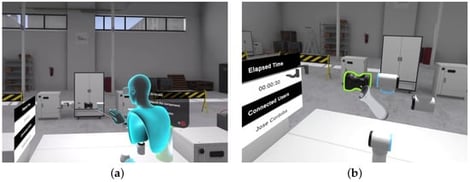
Overview of the X-MAIN platform in VIROO: (a) Third-person view of the robotic cell. (b) First-person VR perspective during component identification.
  • Review
  • Open Access

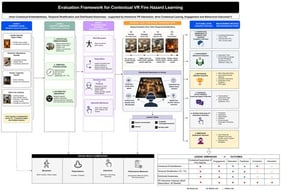
True-Context (TContext) is a gamified VR platform for fire hazard recognition; empirical evidence shows it outperforms non-contextual VR delivery, but its theoretical positioning relative to established learning frameworks remains unarticulated. This study examined TContext against thirteen learning frameworks to: (1) assess the degree of theoretical alignment between TContext’s design and each framework’s prescriptions; (2) identify significant gaps; and (3) derive design recommendations to strengthen TContext’s theoretical completeness and future development. Using qualitative document analysis of the published TContext corpus and the canonical literature on thirteen learning frameworks, the study examined alignment, divergence, and potential integration. We coded each framework using a directed content analysis approach, then analyzed six cross-framework themes (social/collaborative mediation, individualization/adaptivity, reflective/metacognitive processing, learner agency, transfer/longitudinal validation, and design-inferred versus measured-outcome evidence) to identify recurring patterns. The analysis produced 52 documented strengths and 44 limitations. TContext aligned most strongly with ELT, CLT, CTML, LM-GM, and Constructivism; moderately with FT, Gamification of Learning, LBD, and DT; partially with TPACK and LPS; and least with SDL and Social Constructivism. Four persistent cross-framework gaps emerged: the absence of collaborative learning affordances, the lack of adaptive personalization, the lack of longitudinal retention measurement, and constrained learner agency within pre-scripted scenarios, along with seven targeted design recommendations to address each gap. TContext emerges as a novel multi-framework integrative model whose three core constructs, Contextual Embeddedness, Temporal Stratification, and Distributed Awareness, are not collectively anticipated by any existing framework. Future research should test the recommendations, measure longitudinal retention, and validate the model cross-culturally beyond the UAE.

Virtual Worlds

20 September 2026

True-Context Framework.
  • Article
  • Open Access

The need for efficiency in radiology has been made clear and augmented reality (AR) has the potential to address this by aiding with issues around irregular lighting conditions impacting the accuracy of reports, while also speeding up the process with improved interactions. However, some interaction questions are still very much open, and interactions for radiological applications deserve more attention. This short-term exposure study involved a series of seven interviews with practising radiologists and radiology registrars, most of whom were AR-novices. Participants engaged in AR tasks using the Microsoft HoloLens 2 and Meta Quest 3, running software provided by GigXR, as a basis for rich dialogue around the interaction value of AR for radiological tasks. Reflexive thematic analysis was used to analyse the resulting data, generating five themes, with the NASA-TLX providing additional context. The themes were mapped to three design considerations that stand as the contribution of this work and highlight how radiological AR requires interaction design distinguishing intended from unintended movement, standardised hardware requirements for clinical-grade HMDs, and versatile, workflow-integrated deployment to overcome resistance to clinical adoption. These are embodied in the speculation of an AR-First world that illustrates key requirements.

Virtual Worlds

9 September 2026

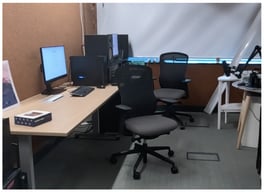
Workshop setup. Participant closest to camera; researcher to their right.
  • Article
  • Open Access

Immersive interactive experiences like virtual field trips are increasingly popular in K-12 education, yet they often position youth as consumers. This paper details a design-based-research approach to developing a learning sequence that empowers students as creators of their own immersive learning experiences, grounded in principles of project- and place-based learning. An initial series of four case studies, involving six educators and 100+ youth, illustrates design milestones; highlighting that while students enjoy creating these experiences and educators recognize the pedagogical value, challenges such as time constraints and project scaffolding can impede implementation. Although these case studies represent small, non-controlled samples, findings were consistent across iterations. In response to these findings we present the VFT Creation Sequence, a suite of learning resources that uplifts the student experience and provides practical support for authentic implementation. A final case study showcases the sequence in practice in an elementary science classroom and examines domain-specific features of the student work, yielding promising results in using student products as evidence of sense-making. VFT creation can complement instruction across domains and learning contexts; the VFT Creation Sequence was designed to be easily distributed to and adapted by educators interested in integrating learner-driven digital activities into their curriculum.

Virtual Worlds

1 September 2026

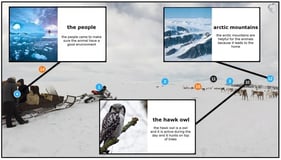
Screenshot of a student-created VFT about the Arctic Tundra ecosystem. Inset images show embedded tags that contain information about the ecosystem’s animals, geographic features, and human impacts. The screenshot only shows a section of the full 360° product.

Featured Articles of Last Quarter

Highly Accessed Articles

News & Conferences

Latest Issues

Open for Submission

Journal Sections

Simulations and Applications of Augmented and Virtual Reality
Reprint

Simulations and Applications of Augmented and Virtual Reality

Editors: Radu Comes, Dorin-Mircea Popovici, Calin Gheorghe Dan Neamtu, Jing-Jing Fang
XFacebookLinkedIn
Virtual Worlds - ISSN 2813-2084