


Abstract
Virtual Reality (VR) has emerged as a promising technology in engineering education and industrial training, enabling interactive and realistic learning environments. This paper presents the design and implementation of a VR-based oil-drilling training simulator aimed at supporting procedural learning in petroleum engineering with the current Process Simulation Module focusing on wireline logging. The system integrates detailed 3D models of drilling equipment, physics-based interactions, and scenario-driven training modules within a simulated drilling rig environment. The simulator combines equipment exploration, a virtual guide, and a wireline logging scenario that visualizes real logging data. Initial user evaluation through a preliminary exploratory pilot study involving five participants showed positive self-reported ratings for immersion, interaction quality, and perceived learning facilitation. The proposed system demonstrates a scalable and cost-effective approach for developing interactive training solutions and highlighting the potential of VR as an effective tool in complex engineering domains.
1. Introduction
Oil drilling remains one of the most technically demanding and high-risk operations in the energy industry [1]. The process involves complex mechanical systems, high-pressure environments, and coordinated procedural workflows requiring precision, expertise, and strict adherence to safety protocols [2]. Errors in drilling operations may lead to severe financial losses, environmental damage, and safety hazards [3]. Consequently, effective training of petroleum engineering students and newly recruited professionals is essential for ensuring operational reliability and risk mitigation [4].
Traditional drilling training methods primarily rely on classroom-based theoretical instruction, video demonstrations, and limited exposure to real drilling sites. While these approaches provide foundational knowledge, they often fail to deliver hands-on procedural experience. Access to operational drilling rigs is expensive, logistically constrained, and associated with significant safety risks for inexperienced trainees. As a result, learners frequently enter field environments with limited practical confidence and insufficient exposure to real operational workflows [5].
Recent advances in immersive technologies have introduced new possibilities for experiential learning. Virtual Reality (VR), characterized by its three fundamental components—immersion [6], interaction [7], and perception [8]—has emerged as a powerful educational tool, enabling users to engage in realistic simulations within a safe and controlled environment. As part of a broader family of immersive technologies that blend real and virtual components to create interactive and experiential learning environments [9], VR immerses learners in interactive three-dimensional scenarios, thereby enhancing understanding [10], facilitating skill acquisition [11], and improving decision-making abilities [12].
In the oil and gas sector, existing digital solutions primarily focus on drilling optimization [13], well planning automation [14], and real-time monitoring systems. Although these platforms contribute significantly to engineering efficiency and operational analytics, they are generally designed for expert supervision and decision support rather than immersive pedagogical training. Fully interactive VR environments dedicated to hands-on drilling equipment familiarization and procedural simulation remain limited.
This limitation highlights a critical gap in current petroleum engineering training methodologies: the lack of immersive, interactive, and scenario-driven learning platforms specifically designed for drilling operations.
To address this gap, this paper presents the development of a Virtual Reality-based oil-drilling training simulator designed to support procedural learning and equipment familiarization.
The proposed system integrates:
- Realistic 3D modeling of drilling equipment;
- Physics-based interaction mechanisms;
- Collision detection and response management;
- Scenario-based simulation of wireline logging operations;
- Real-time feedback and performance monitoring.
The simulator is structured around two complementary modules:
- Virtual Visit Module: Enabling spatial exploration and contextual equipment understanding;
- Process Simulation Module: Focusing on the procedural execution of wireline logging operations.
The main contributions of this work are as follows:
- Design of a layered and modular VR architecture tailored for oil-drilling training.
- Implementation of a complete virtual drilling environment featuring an interactive virtual guide that provides detailed explanations of drilling equipment and system components to enhance user understanding.
- Integration of physics-based interaction and bounding-box collision strategies for real-time immersive simulation.
- Development of a procedural wireline logging simulation incorporating real logging datasets for realistic signal visualization.
- Implementation of a real-time feedback mechanism to reinforce safe operational behavior.
Experimental validation was performed through system performance evaluation and a preliminary user acceptance study.
By combining immersive visualization, interactive procedural execution, and real-time feedback mechanisms, the proposed system provides a scalable and cost-effective framework for industrial VR training applications in petroleum engineering.
The remainder of this paper is organized as follows. Section 2 reviews related work in VR-based industrial training and drilling simulation systems. Section 3 presents the overall system architecture. Section 4 describes the methodological framework and module implementation. Section 5 presents the system results, including performance evaluation and user study. Section 6 discusses the results, outlines limitations, and concludes the paper.
Extension of the Conference Version. This article is an extended and substantially revised version of the conference paper, entitled VR-Based Training Environment for Oil Drilling [15]. Compared with the conference version, the present manuscript provides a more comprehensive related-work analysis, including a detailed gap analysis and positioning of the proposed approach. The system architecture and implementation methodology have also been significantly expanded, with detailed descriptions of equipment modeling and optimization, navigation mechanisms, hybrid object interaction, collision detection and response, contextual information display, and the virtual guide agent. The process simulation is further detailed through the modeling of wireline logging equipment, user interaction and control mechanisms, simulation workflow, and dedicated algorithms. In addition, the present version introduces a more detailed description of the animation and system implementation. The experimental section has been extended with a detailed presentation of the simulator, system performance analysis, internal technical validation, and a structured user acceptance evaluation based on five criteria: immersion, interaction quality, learning facilitation, ease of use, and reliability. Finally, an extended discussion of the results, limitations, and future research directions is provided.
2. Related Work
This section follows a progressive structure, starting with general applications of VR in education, then focusing on simulation technologies in the oil and gas industry, and finally bridging both perspectives through VR-based industrial training systems.
2.1. VR in Education
Virtual Reality (VR) has gained increasing attention in education due to its ability to create immersive, interactive, and experiential learning environments. Unlike traditional instructional methods, VR enables users to engage actively with three-dimensional representations of complex systems, thereby enhancing spatial cognition and procedural understanding [16,17].
Several studies report that immersive VR environments improve knowledge retention, learner engagement, and decision-making skills in technical domains. In medical training, de Toro Santos et al. [18] developed an immersive VR simulator for the clinical management of knee monoarthritis, enabling users to practice arthrocentesis and medical decision-making within a safe virtual environment. More recently, Penumarti et al. [19] introduced an immersive Virtual Reality simulation platform for dental implant training, integrating interactive 3D anatomical models, procedural guidance, and performance evaluation to enhance psychomotor skill acquisition and clinical decision-making.
Similarly, in aviation training, Collet et al. [20] investigated the effects of a VR-based procedural training system on senior airline pilots. Their study evaluated the impact of immersive VR exposure on visual parameters and cybersickness symptoms in professional pilots aged over 40. The results indicated no deleterious effects on vision and only mild, manageable cybersickness symptoms, highlighting the feasibility and safety of VR-based procedural training in high-responsibility operational domains.
In mechanical and manufacturing engineering, Ma et al. [21] developed a VR-based teaching module for manufacturing system design, specifically targeting queuing theory concepts. Their immersive system, implemented using the Oculus Rift and Unity 3D, demonstrated significant improvements in students’ knowledge gain and motivation compared to traditional instructional methods, while maintaining low levels of simulation sickness and high usability scores.
Despite these advances, many VR training applications focus primarily on visualization and interaction fidelity, while limited attention is given to structured procedural learning design, real-time performance feedback, and industrial-specific workflow simulation. This limitation becomes particularly evident in complex industrial sectors such as oil and gas operations.
2.2. Digital Simulation in the Oil and Gas Industry
Within the oil and gas sector, simulation technologies are widely used for operational planning, well design optimization, and risk assessment [22,23]. Well design and engineering involve several processes including drilling program development, casing and tubing design, risk assessment, and cost optimization to ensure safe and efficient well construction [24]. Real-time drilling simulators integrate downhole and surface data to support decision-making processes during active operations.
Among the commercial tools supporting these activities, Petrel is a reservoir modeling and simulation software developed by Schlumberger. It is widely used in the oil and gas industry for subsurface interpretation, geological modeling, and reservoir simulation. The software integrates seismic data, well logs, and geological information to support exploration, drilling planning, and reservoir management [25].
While these systems are technically advanced, their primary objective is engineering optimization rather than immersive pedagogical training. They are typically designed for experienced engineers and decision-makers rather than students or novice trainees. Interaction is often limited to parameter input and data visualization on desktop interfaces, without full spatial immersion or embodied interaction.
Moreover, many digital drilling platforms focus on analytical modeling and computational accuracy but do not provide interactive three-dimensional environments that allow users to manipulate equipment components or practice procedural sequences in real time.
2.3. VR-Based Industrial Training Systems
VR-based industrial training has demonstrated strong potential in hazardous and high-risk domains, providing safe training environments for workers and engineers.
In mining, construction, and chemical plant operations, VR has become a promising tool for safety training. Van Wyk and de Villiers [26] investigated the use of Virtual Reality for safety training in the mining industry. Their study proposed several VR training prototypes designed to simulate hazardous mining scenarios such as ground falls, machinery risks, and accident reconstructions. The results showed that VR-based training can enhance hazard awareness and improve workers’ engagement compared to traditional classroom-based training methods.
In industries such as oil and gas, VR simulations enable trainees to practice procedures, equipment handling, and safety protocols without exposure to real-world hazards. Pascarelli et al. [27] presented a case study investigating the benefits of Virtual Assembly strategies. Their study highlights how the integration of CAD and Virtual Reality can support assembly process validation and improve visualization and interaction with complex industrial products. In another work, Zaki et al. [28] proposed a drone-based Virtual Reality simulation system for inspecting oil and gas platforms, enabling safe operator training and reducing operational risks.
Similarly, Park et al. [29] proposed a virtual simulation of an offshore drilling platform aimed at providing a virtual onboard experience. The system enables users to explore offshore structures and understand platform organization. However, its scope is restricted to offshore drilling environments, limiting its applicability to more general drilling workflows and varied operational settings.
More recently, VR applications have been proposed to provide interactive visualization of drilling equipment in safe virtual environments [30]. However, these systems are often limited in scope, focusing on specific subsystems and offering only basic interaction, without covering complete drilling workflows or supporting advanced procedural training.
In addition to academic research, several commercial VR and digital simulators have been developed for drilling training in the oil and gas industry. For instance, the Schramm Drilling Rig Training Simulator provides an interactive platform designed to train operators in drilling rig operations and safety procedures [31]. Similarly, professional drilling simulators such as DrillSIM Educator and DrillSIM-5000 developed by Drilling Systems are widely used for training drilling crews and engineers in well control, rig operations, and procedural workflows [32].
While these commercial platforms demonstrate the industrial interest in simulation-based training, their internal architectures and implementation details are generally proprietary and not extensively documented in the scientific literature. Consequently, limited information is available regarding their interaction models, collision-handling mechanisms, or pedagogical evaluation.
2.4. Gap Analysis
From the analysis of existing works, several limitations can be observed.
First, while modern game engines such as Unity and Unreal Engine provide advanced capabilities for real-time rendering, physics simulation, and interactive 3D environments, their potential for modeling complex industrial drilling procedures remains underexplored in current training systems. Many existing drilling simulators primarily focus on engineering optimization and data analysis through analytical or data-driven models, with limited support for immersive and interactive learning experiences. Consequently, these systems provide fewer opportunities for hands-on procedural training and realistic equipment interaction within a simulated drilling environment.
Second, despite the existence of a few VR-based drilling training simulators in the oil and gas industry [29,30], most of these systems are developed as proprietary commercial solutions [31,32]. As a result, their internal architectures, interaction mechanisms, and implementation strategies are rarely reported in the scientific literature. This lack of publicly documented research limits the understanding and reproducibility of drilling training system design.
Another limitation concerns the use of operational data. Many training applications rely on simplified or synthetic datasets, which may reduce the realism and technical accuracy of the training environment.
Finally, current drilling training simulators often provide limited real-time feedback and user performance evaluation mechanisms for assessing trainee progress.
These limitations highlight the need for a VR-based drilling training system that combines immersive 3D interaction, realistic physical behavior, structured procedural simulation, and the integration of real operational data within a unified educational framework.
2.5. Positioning of the Present Work
To address the limitations identified in the previous sections, this work introduces an immersive Virtual Reality-based oil-drilling training simulator designed to support procedural learning in petroleum engineering. Unlike conventional digital drilling simulators that mainly rely on analytical modeling and parameter-based interfaces, the proposed system emphasizes interactive and experiential learning within an immersive virtual environment.
The simulator enables users to interact directly with drilling equipment and operational procedures through structured scenario-based simulations that guide trainees through sequential operational tasks. In addition, real wireline logging datasets are integrated into the virtual environment to reproduce realistic signal visualization during the simulation process.
Furthermore, the system incorporates real-time feedback mechanisms that monitor user actions and detect incorrect operations in order to reinforce safe procedural practices. By combining physics-based interaction with optimized bounding-box collision detection, the proposed framework delivers realistic interaction while maintaining real-time VR performance, contributing to the advancement of VR-based industrial training systems for petroleum engineering education.
3. System Architecture
This section describes the architecture of the proposed VR-based oil-drilling training system. The system follows a layered architecture designed to transform real-world drilling information into an immersive training environment.
3.1. Overall System Framework
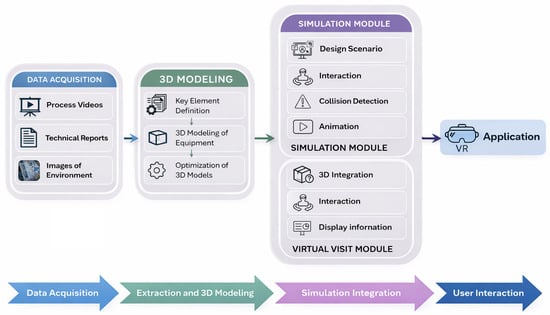
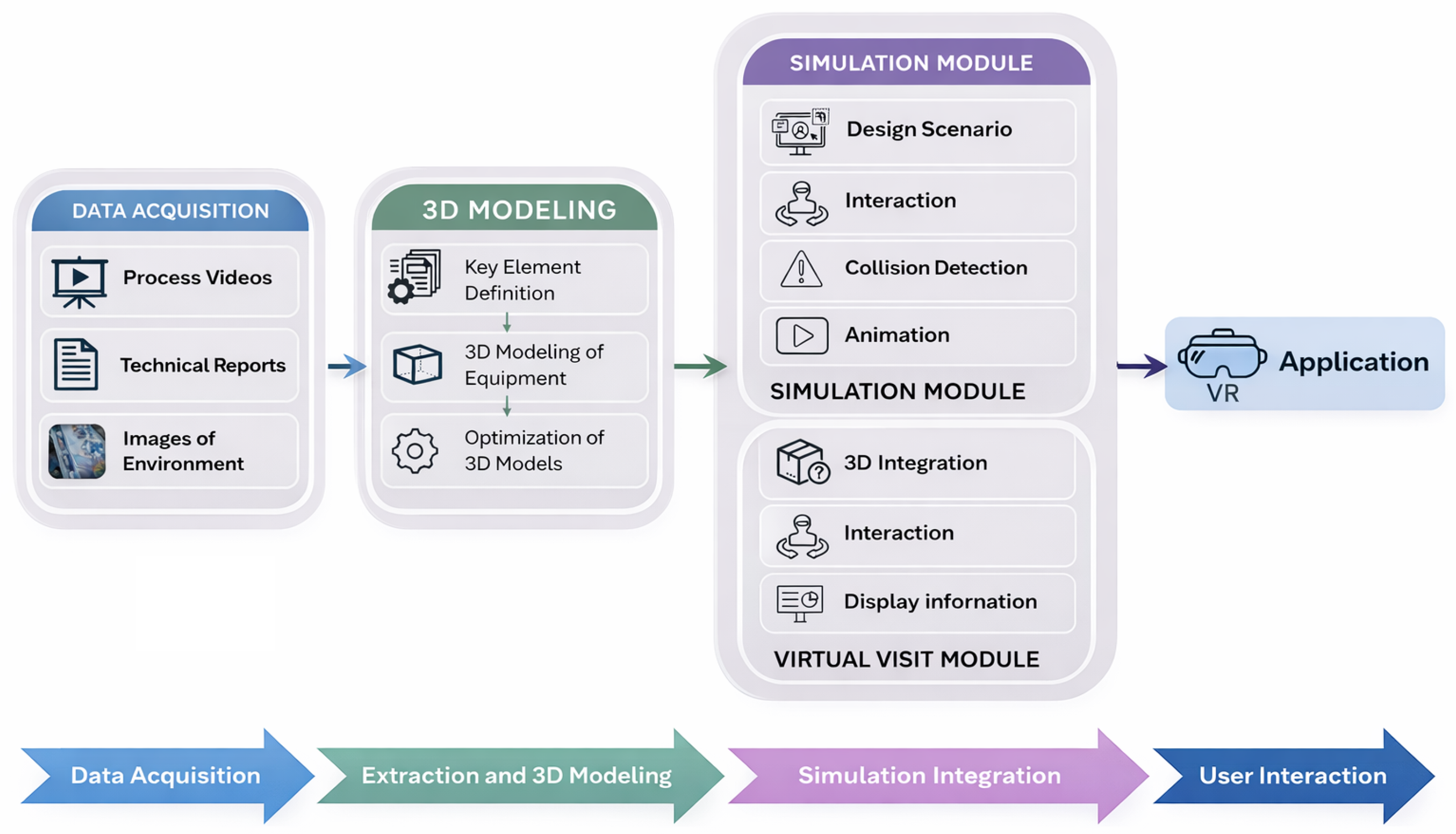
As shown in Figure 1, the proposed Virtual Reality (VR) learning application is based on a layered and modular architecture. The system architecture is organized into four main layers: (1) Data Acquisition, (2) Extraction and 3D Modeling, (3) Integration and Simulation, and (4) User Interaction.
Figure 1.
Proposed system architecture of the VR-based oil-drilling training application.
This structured pipeline enables a progressive transformation from raw industrial data to a fully operational VR training system, allowing realistic visualization, interactive exploration, and scenario-based simulation of oil-drilling operations.
3.2. Data Acquisition
The data acquisition represents the initial stage of the proposed VR training system. Its primary objective is to collect and organize real-world information related to oil-drilling operations in order to ensure the realism and technical accuracy of the virtual environment. Multiple sources of information were used to reproduce the physical structure of drilling equipment, operational procedures, and measurement data associated with drilling activities.
Several categories of data were collected during this phase. First, images of drilling environments and equipment were gathered from industrial documentation and publicly available resources. These images provide visual references for the geometric structure, spatial arrangement, and appearance of drilling components such as derricks, winch systems, pipes, and control units.
Second, technical reports and engineering documentation describing drilling operations were analyzed to understand the functional roles of each component and the sequence of operational procedures. These documents provide essential information regarding equipment specifications, workflow organization, and safety constraints.
Third, operational process videos collected from previous executions of drilling operations were used to observe real drilling activities and equipment manipulation procedures. These videos provide valuable insights into the sequence of operations, equipment-handling techniques, and workflow organization. In addition, they allow the observation of technical gestures performed by operators during drilling activities, enabling the reproduction of realistic operational sequences and user interactions within the virtual simulation.
Finally, well logging datasets were integrated to simulate realistic measurement signals during the wireline logging training scenario. These datasets include signals obtained from real well logging processes, allowing the virtual system to display depth-dependent logging curves similar to those observed during actual drilling operations.
Together, these data sources provide the foundation for constructing a technically accurate and immersive virtual drilling environment.
3.3. Extraction and 3D Modeling
Following the data acquisition stage, the collected information is processed to extract the relevant elements required for constructing the virtual drilling environment. This layer focuses on identifying key drilling components, developing accurate three-dimensional models, and optimizing these assets to ensure efficient performance within the VR simulation.
3.3.1. Key Element Identification
The first step of this layer consists of identifying and defining the main drilling equipment components that must be represented within the virtual environment, based on the collected images, technical documentation, and operational videos. Several key elements involved in drilling operations were selected. These include major structural components such as the derrick, drill pipes, winch systems, mud pumps, control units, storage tanks, and wireline logging equipment.
For each element, its operational role and spatial placement within the drilling platform were analyzed in order to reproduce a coherent and realistic environment. Understanding the functional relationships between these components is essential for accurately simulating drilling procedures and equipment interactions within the virtual training system.
3.3.2. 3D Modeling of Equipment
After identifying the key components, three-dimensional models of the drilling equipment were created using the Blender 3D modeling software. A polygon-based modeling approach was adopted to reproduce the external geometry and mechanical structure of each component while maintaining compatibility with real-time rendering constraints.
Particular attention was given to preserving realistic proportions, structural details, and material appearance to enhance visual fidelity within the virtual environment. The models were designed to accurately represent the physical layout of drilling equipment while remaining suitable for interactive simulation. Once completed, the models were exported in FBX format in order to preserve geometry, scale, and texture information for integration into the Unity game engine.
3.3.3. Model Optimization for VR
To ensure smooth real-time performance within the VR environment, several model optimization techniques were applied. High-polygon models can significantly impact rendering performance in immersive applications; therefore, mesh simplification and polygon reduction techniques were used to decrease computational complexity while preserving visual quality.
Additional optimization strategies included texture compression, topology refinement, and the implementation of Levels of Detail (LODs) to dynamically adjust model complexity depending on the user’s distance from objects. These techniques help maintain stable frame rates and responsive interaction within the virtual environment.
Through this optimization process, the generated 3D assets achieve an appropriate balance between visual realism and computational efficiency, ensuring that the VR drilling simulator operates smoothly while maintaining an immersive user experience.
3.4. Integration and Simulation Layer
The integration and simulation layer represents the core component of the proposed VR training system. In this stage, the optimized 3D assets generated during the modeling phase are integrated into the virtual environment using the Unity game engine. This layer is responsible for reconstructing the complete drilling environment and implementing the interactive mechanisms required for the training simulation.
The Unity engine provides the necessary tools for real-time rendering, physics simulation, user interaction, and scenario management. By combining these functionalities, the system transforms static 3D models into an interactive and immersive training platform. The integration and simulation layer is structured around two main modules: the Virtual Visit Module and the Process Simulation Module.
3.4.1. Virtual Visit Module: Functional Overview
The Virtual Visit Module is designed to allow users to explore the drilling environment and become familiar with the equipment present on the drilling site. This module focuses on spatial exploration and contextual information delivery, enabling learners to progressively understand the structure and functionality of the drilling installation before performing operational simulations.
Within this module, users can freely navigate the virtual drilling environment using several locomotion techniques supported by the VR system. These include natural movement within the tracked physical space, joystick-based navigation for exploring larger areas, and teleportation mechanisms that allow users to quickly move between different locations of the drilling platform. These navigation techniques improve user comfort while maintaining immersion within the virtual environment.
In addition to navigation, the system provides contextual information related to the equipment present in the environment. Informational interaction zones are defined around key drilling components. When the user approaches one of these components, a contextual user interface panel is automatically displayed, presenting relevant information such as the equipment name, its operational role, and its function within the drilling process.
In addition, the system provides the possibility for the user to request assistance from a virtual guide agent during the exploration of the drilling environment. This virtual agent acts as an instructional assistant that accompanies the learner throughout the virtual visit. The agent contains detailed information about the different drilling equipment and provides explanations as the user navigates through the environment.
Once activated, the virtual guide verbally presents each piece of equipment, explains its role in the drilling process, and accompanies the learner by progressively providing relevant information, similarly to what occurs during a real industrial guided visit.
This approach allows learners to interactively discover the drilling environment and build a conceptual understanding of the equipment before engaging in more complex procedural training.
3.4.2. Process Simulation Module: Functional Overview
The Process Simulation Module focuses on reproducing operational drilling procedures within the virtual environment. This module enables users to interact with drilling equipment and perform structured training scenarios that simulate real drilling operations.
In the current implementation, the simulation focuses on the wireline logging process, which is a critical operation used during drilling activities to collect geological and reservoir data. The simulation scenario reproduces the main steps of the wireline logging operation, including the deployment of logging tools into the wellbore, monitoring tool depth, and visualizing measurement signals obtained during the logging process. The training scenario places the learner in the role of the operator located inside the control unit, who supervises the logging operation and controls the deployment of the logging tools.
User interaction with the equipment is achieved through interactive control mechanisms implemented within the virtual environment. For example, the user interacts with the control unit panel to initiate and regulate the descent of the logging tools. The system continuously processes user inputs and updates the simulation state accordingly.
In addition to the operator located inside the control unit, the simulation also incorporates a virtual field operator positioned on the derrick. This operator plays a guiding role during the logging operation and provides instructions to the control unit operator regarding the movement of the logging tools. The field operator indicates when the tools should be lowered or raised, reproducing the coordination that typically occurs during real drilling operations. To enhance the realism of the training scenario, the gestures and movements of this guiding operator are simulated using animated technical gestures that replicate real operational practices observed in drilling environments.
To ensure realistic behavior of objects within the simulation, the system integrates physics-based interaction mechanisms and collision detection algorithms. These techniques prevent non-physical overlap between objects and allow realistic manipulation of equipment components. In addition, animation techniques are used to simulate the motion of mechanical elements such as cables, pulleys, and logging tools during the execution of the simulation.
Furthermore, the system incorporates real-time visualization of logging signals derived from datasets obtained from real logging operations. As the logging tool progresses within the wellbore, measurement curves are dynamically displayed on the virtual control interface, allowing users to observe and interpret logging responses in a realistic operational context.
Through the combination of interactive control, coordinated operator guidance, physics-based simulation, and real-time data visualization, the Process Simulation Module provides an immersive training experience that closely replicates real drilling procedures.
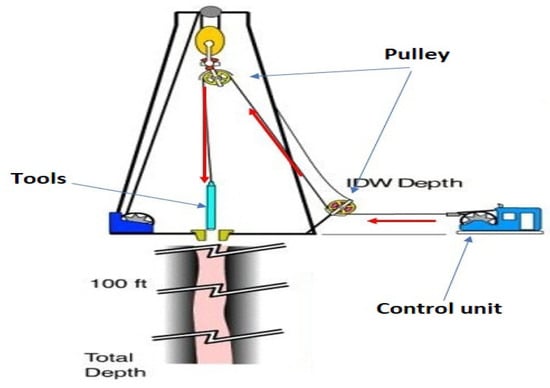
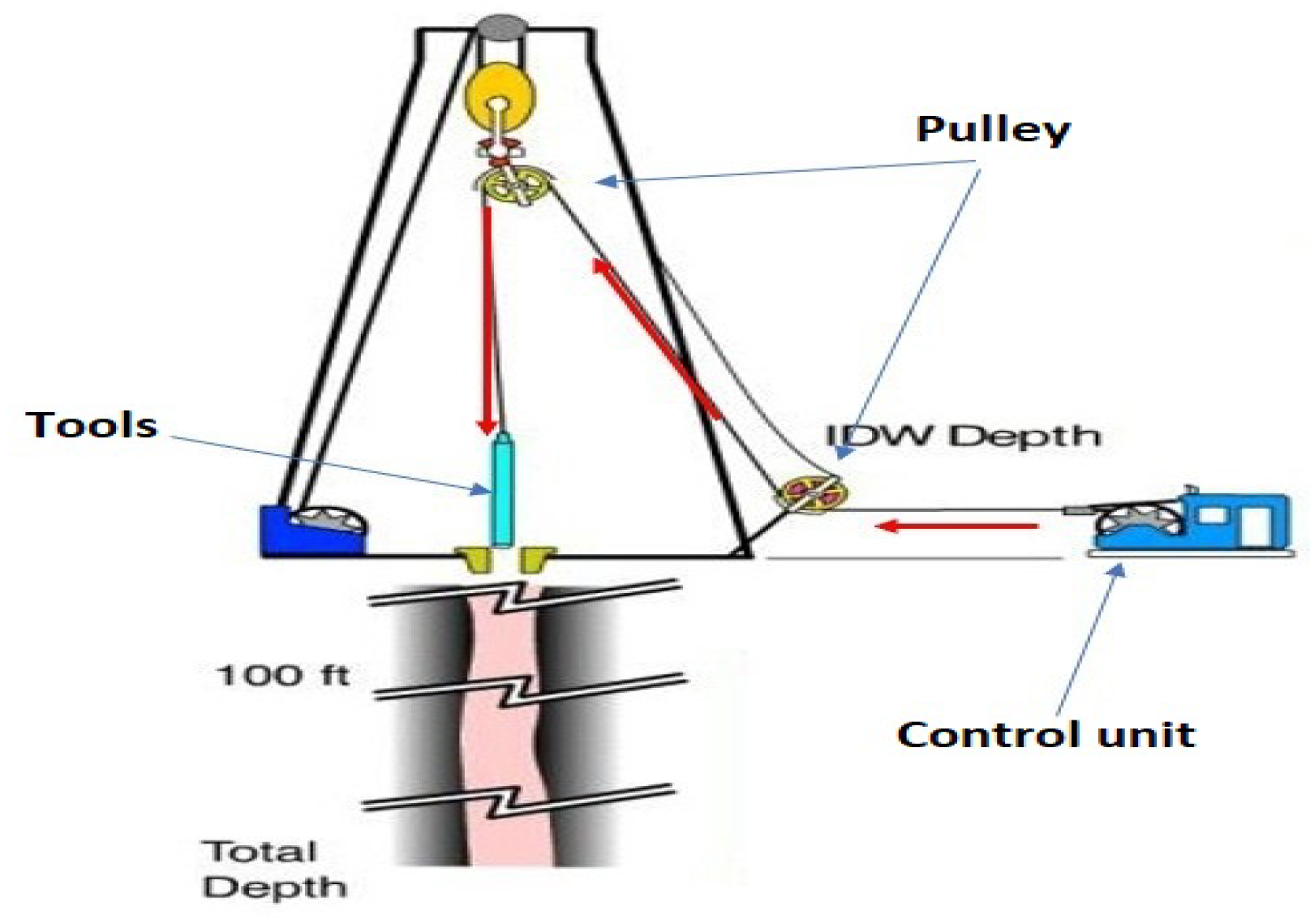
Figure 2 illustrates the key components that must be modeled within the virtual environment, including the logging tool, pulley system, control unit, and wellbore structure. These elements collectively define the mechanical and operational framework of the wireline logging process.
Figure 2.
Key components of the wireline logging process, including the logging tool, pulley system, IDW, which denotes the depth measurement wheel, and the control unit. Adapted from [33], with permission from the author Koko Kyi, 2026.
3.5. User Interaction
The user interaction step represents the interface between the learner and the virtual drilling training system. This layer enables users to navigate within the virtual environment, interact with drilling equipment, and access instructional information during the training process. The system was implemented using the Oculus Rift S headset, which provides immersive visualization through stereoscopic rendering and real-time head tracking. The headset is complemented by motion controllers that allow users to perform natural hand interactions with virtual objects and interface elements.
Within the virtual environment, users can freely explore the drilling platform using multiple navigation techniques. These include physical movement within the tracked space, joystick-based locomotion for exploring larger areas, and teleportation mechanisms designed to improve comfort and reduce motion sickness during extended training sessions.
Interaction with equipment is achieved through intuitive control mechanisms integrated into the VR environment. Users can interact with control panels, activate simulation processes, and manipulate interface elements using the handheld controllers. Contextual information panels and visual indicators provide real-time guidance and feedback during the interaction process.
In addition to visual feedback, the system also integrates audio guidance and instructional cues to support the learning experience. Together, these interaction mechanisms create an immersive and intuitive training environment that enhances user engagement and facilitates the understanding of drilling operations.
4. Methodology
This section presents the methodological framework used to implement and evaluate the proposed Virtual Reality (VR) training system for oil-drilling operations. The methodology describes the functional workflow of the system and details the two main operational modules: the Virtual Visit Module and the Process Simulation Module.
4.1. System Functional Overview
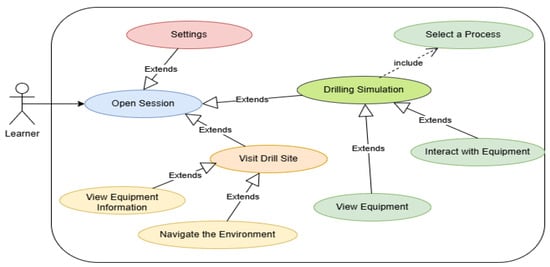
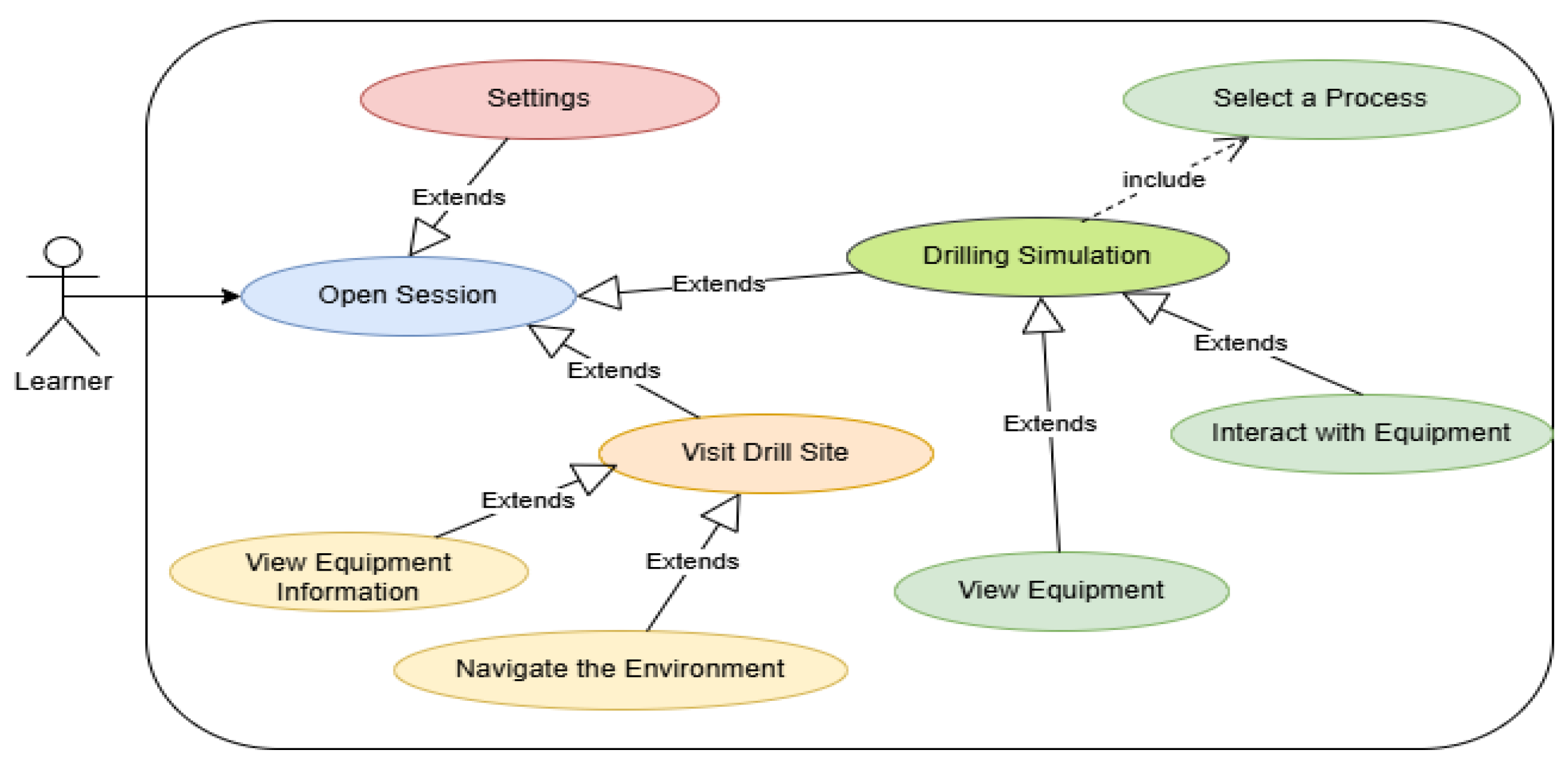
The overall functionality of the VR training system is organized around a sequence of interactions between the learner and the virtual environment. The system allows users to start a training session, explore the drilling site, access information about equipment, and perform procedural simulations of drilling operations.
Figure 3 illustrates the main interactions between the learner and the VR system through a use case representation. The learner can initiate a session, perform a virtual visit of the drilling environment, interact with equipment to obtain contextual information, and launch the drilling simulation process. These functionalities provide a structured learning workflow that combines environment exploration with procedural training.
Figure 3.
Use case diagram illustrating the main interactions between the learner and the VR-based drilling training system.
4.2. Virtual Visit Module
The implementation of this module follows a structured pipeline that includes several stages: equipment modeling, model optimization, environment creation, navigation, interaction mechanisms, and collision management.
4.2.1. Equipment Modeling
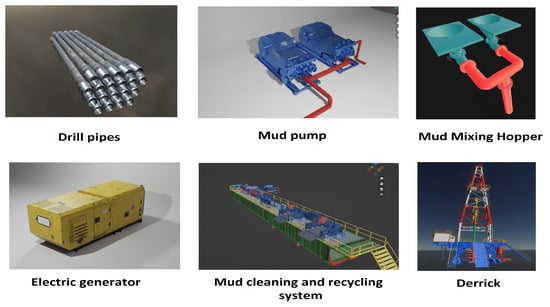
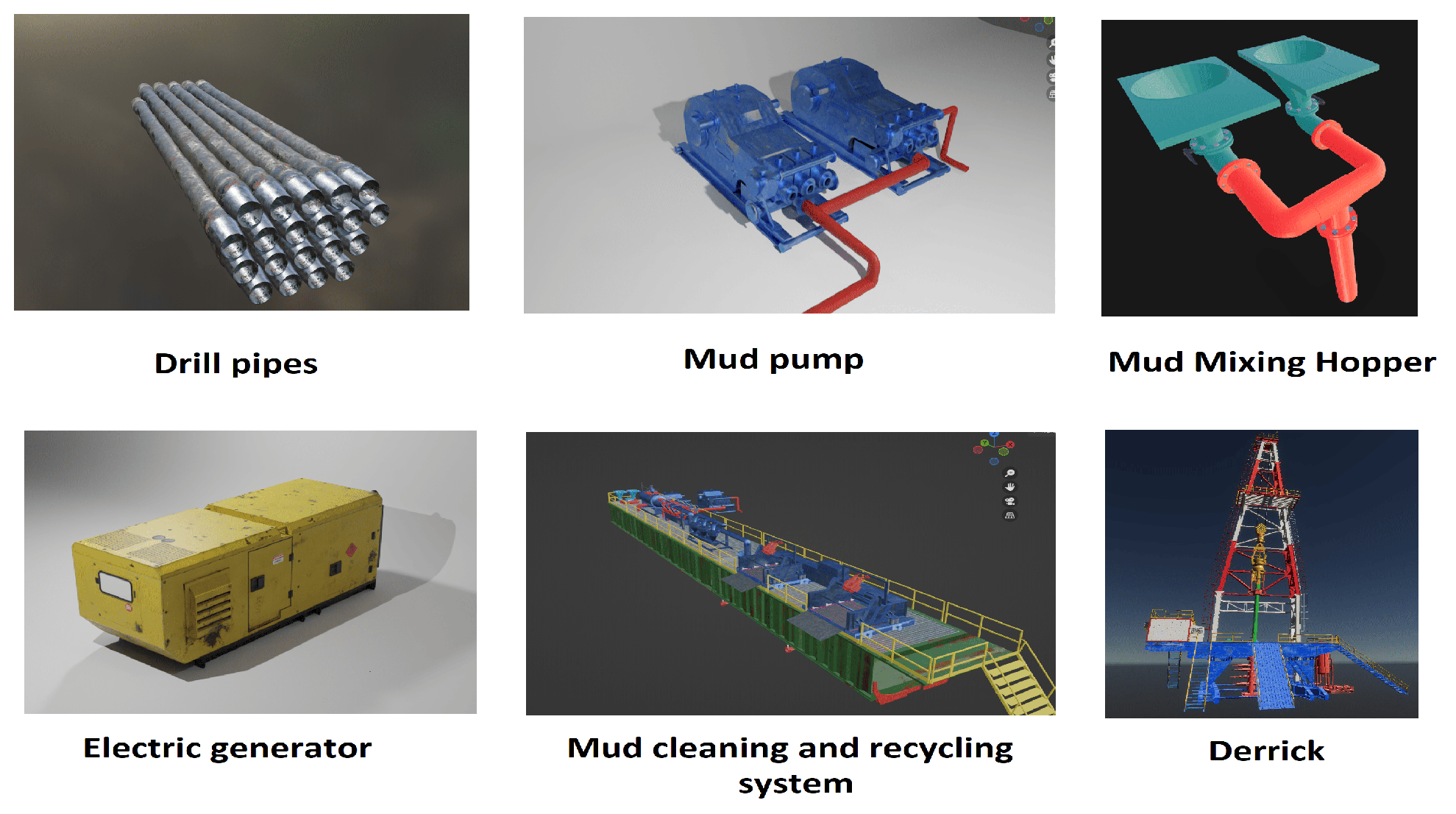
The first stage consists of modeling the main drilling equipment required to reconstruct the virtual environment. Based on the data collected during the acquisition phase, key components such as the derrick, drill pipes, winch systems, mud pumps, mud tanks, and the mud recycling system were identified and modeled using Blender. The modeling process focused on reproducing the geometric structure and visual appearance of the equipment while maintaining realistic proportions. Figure 4 illustrates examples of the main 3D equipment models developed for the simulation environment.
Figure 4.
3D models of key drilling equipment created using Blender.
4.2.2. Model Optimization
To ensure efficient rendering in the VR environment, the generated 3D models were optimized before integration into the simulation platform. Optimization techniques such as polygon reduction, mesh simplification, and texture optimization were applied in order to reduce computational complexity while preserving visual fidelity.
The optimization strategy depended on the role of each object within the virtual environment. For equipment that does not require direct user interaction, UV mapping techniques were applied in Blender to efficiently manage textures and significantly reduce the overall data size of the models. This approach helps minimize memory usage while maintaining sufficient visual quality. These optimizations are essential for maintaining stable frame rates and smooth interaction in real-time VR applications.
4.2.3. Virtual Environment Creation
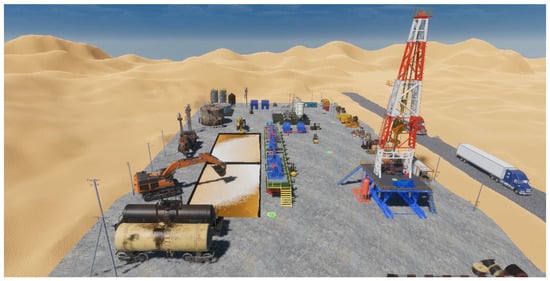
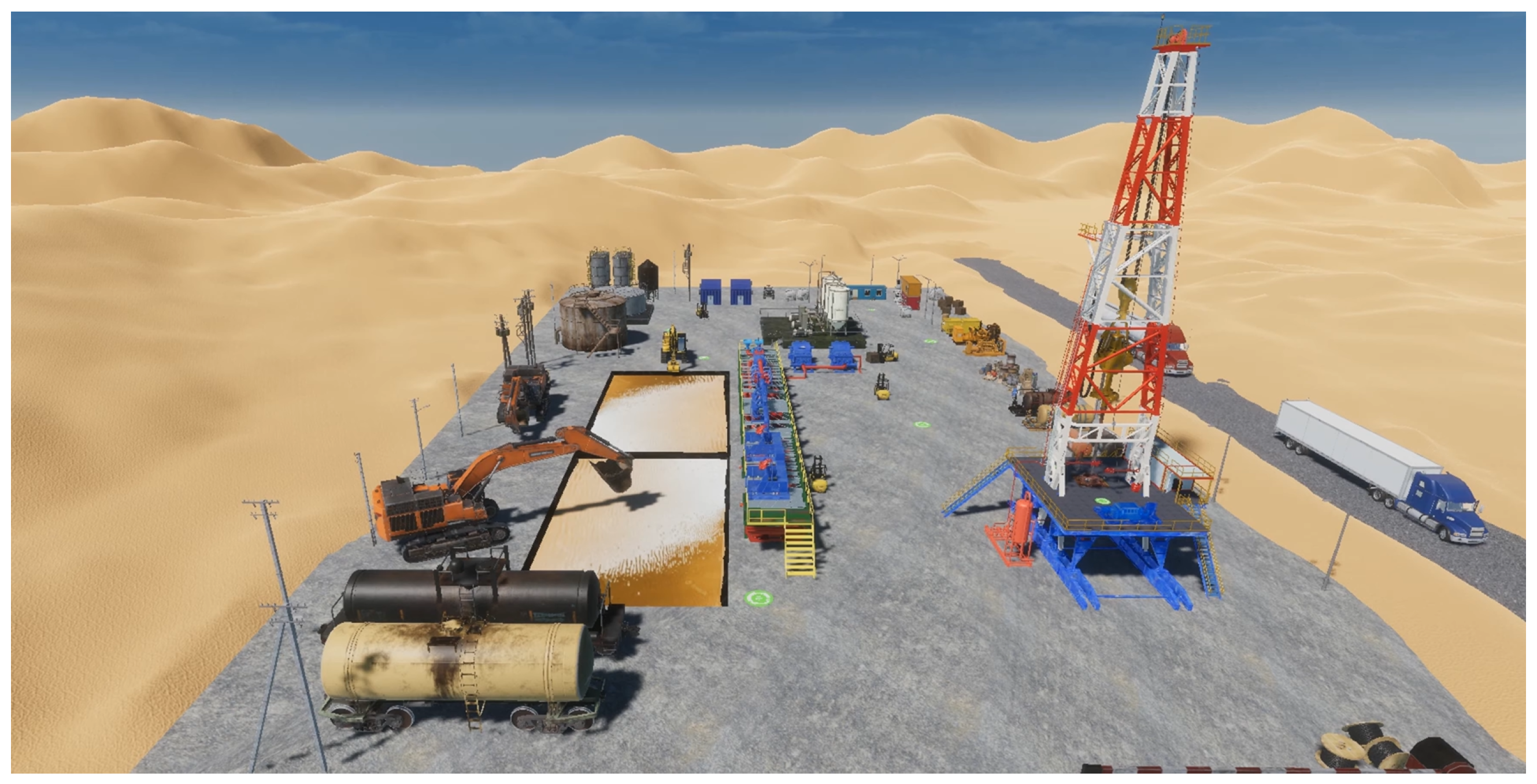
After optimization, the models were exported in FBX format and imported into the Unity game engine. Within Unity, the different equipment models were spatially arranged to reconstruct a realistic drilling platform. This stage also includes the configuration of lighting, environmental elements, and scene organization to create a coherent virtual environment that reflects the layout of a real drilling site (see Figure 5).
Figure 5.
Reconstructed virtual drilling environment in Unity showing spatial arrangement of equipment and realistic lighting.
4.2.4. Navigation in the Virtual Environment
Similar to a real drilling environment, users must be able to move freely within the virtual space in order to explore the platform and perform different tasks. To support this exploration, several navigation techniques were implemented.
First, natural walking allows users to physically move within the tracked VR space. The headset tracking system reproduces these movements in the virtual environment, providing an intuitive and highly immersive navigation method for short distances.
Second, joystick-based locomotion enables users to move more efficiently across larger areas of the environment. By using the joysticks on the VR controllers, users can navigate in different directions with ease.
Finally, a teleportation mechanism was implemented to allow rapid movement across the virtual environment or access to distant locations. Users can point a virtual ray from the controller to a desired location and instantly teleport to that position. This method is particularly useful for reducing motion discomfort that may occur during continuous virtual movement.
These navigation techniques can be used individually or in combination, allowing users to choose the most suitable method depending on the task and their personal comfort.
4.2.5. Interaction with Virtual Objects
Interaction with virtual objects is a fundamental component of the developed virtual environment. These objects include various drilling equipment, tools, control interfaces, and other elements commonly found on a real drilling site.
The interaction technique implemented in this system is based on the Hybrid Object Manipulation (HOMER) technique, which combines virtual hand interaction with ray-casting to provide a flexible and immersive user experience [34].
When users hold the VR controllers, virtual hands are displayed in the environment and synchronized with the real movements of the controllers. These virtual hands allow users to naturally grasp and manipulate nearby objects, such as selecting, moving, or interacting with equipment using controller buttons.
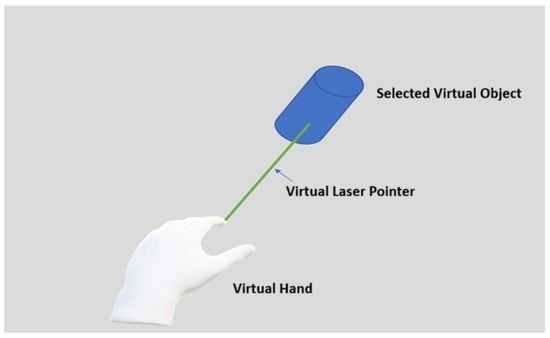
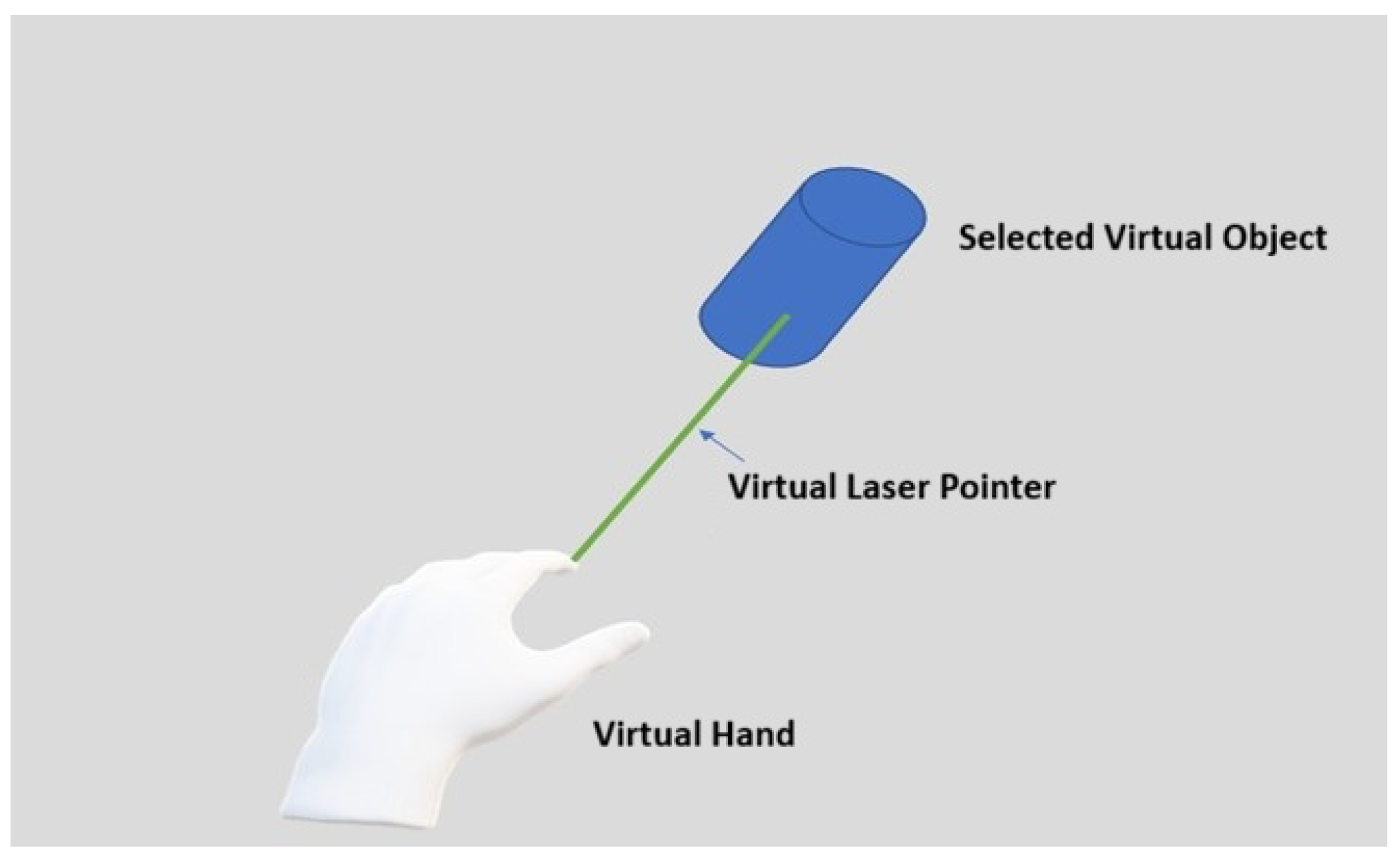
In addition, a ray-casting technique is used for interacting with distant objects. A virtual ray is projected from the user’s hand into the virtual environment, allowing objects located further away to be selected and manipulated efficiently, as illustrated in Figure 6.
Figure 6.
Illustration of the hybrid interaction technique combining a virtual hand and ray-casting for selecting distant objects in the VR environment.
4.2.6. Collision Detection
To ensure proper management of interactions between virtual objects and to prevent them from intersecting, an efficient collision detection mechanism is required. A collision occurs when two objects overlap in the virtual environment. In this work, collision detection is primarily based on bounding volume techniques.
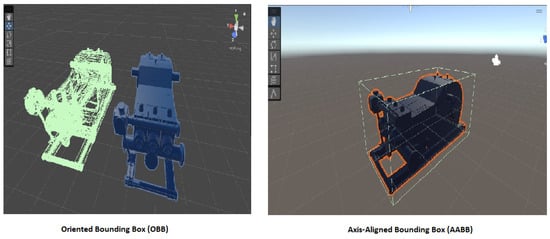
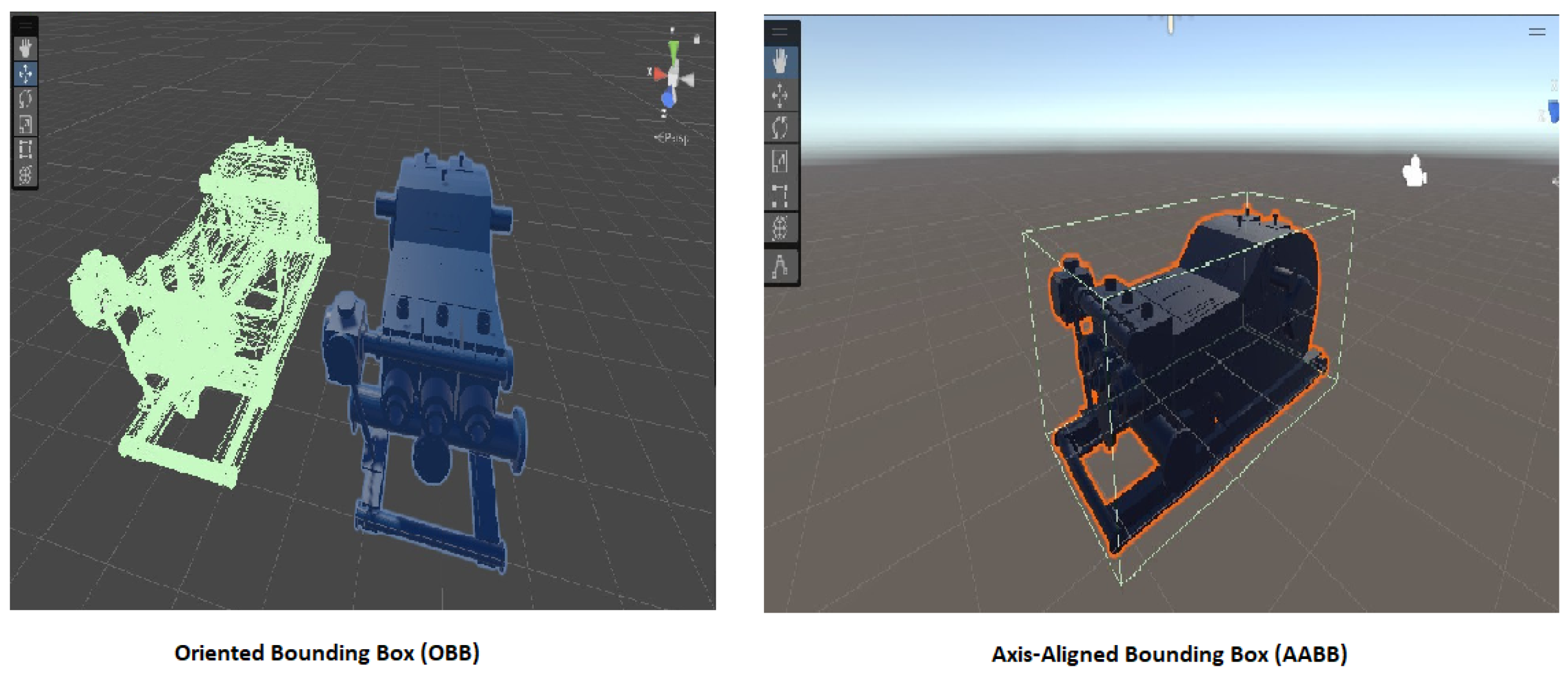
A bounding box is the smallest rectangular parallelepiped that completely encloses an object. As illustrated in Figure 7, in the case of the Axis-Aligned Bounding Box (AABB), the sides of the box are aligned with the axes of the coordinate system. This approach is computationally simple and efficient for real-time collision detection; however, it may introduce inaccuracies when objects are rotated, since the bounding box may become significantly larger than the object itself [35].
Figure 7.
Comparison between Oriented Bounding-Box (OBB) and Axis-Aligned Bounding-Box (AABB) collision detection methods implemented in Unity 2021.3.23f1. The OBB (left) provides a tighter fit around rotated objects, while the AABB (right) remains aligned with the global coordinate axes.
To reduce the empty space between the bounding box and the object geometry, an improved method known as the Oriented Bounding Box (OBB) is used. Unlike the AABB, the OBB adapts its orientation to the shape of the object, allowing a tighter fit and more accurate collision detection [35].
The choice between classical bounding boxes and Oriented Bounding Boxes depends on the object’s geometry and its role in user interaction within the virtual environment. OBB is preferred for equipment that requires direct manipulation by the user to perform an operational task, such as control levers and movable control components on the wireline logging control panel, as well as tools that must be grasped or positioned accurately. For these objects, a tighter bounding volume helps reduce unnecessary collision overlaps and supports more precise interaction with the intended equipment, particularly when the objects are elongated or rotated.
In contrast, the AABB is suitable for static or non-interactive equipment that is primarily intended for observation rather than direct manipulation. Examples include fixed structural elements and equipment that remains stationary during the training scenario. In these cases, a simpler axis-aligned bounding volume is sufficient for detecting spatial overlaps and preventing unwanted penetration, without requiring the tighter geometric fit provided by the OBB.
This allocation strategy aims to balance collision detection accuracy and computational efficiency. By reserving the OBB for equipment requiring more precise interaction and using the AABB for objects with simpler collision requirements, the system avoids unnecessary geometric complexity where it is not needed.
4.2.7. Collision Response
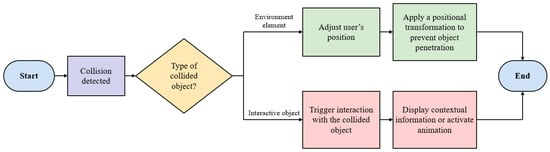
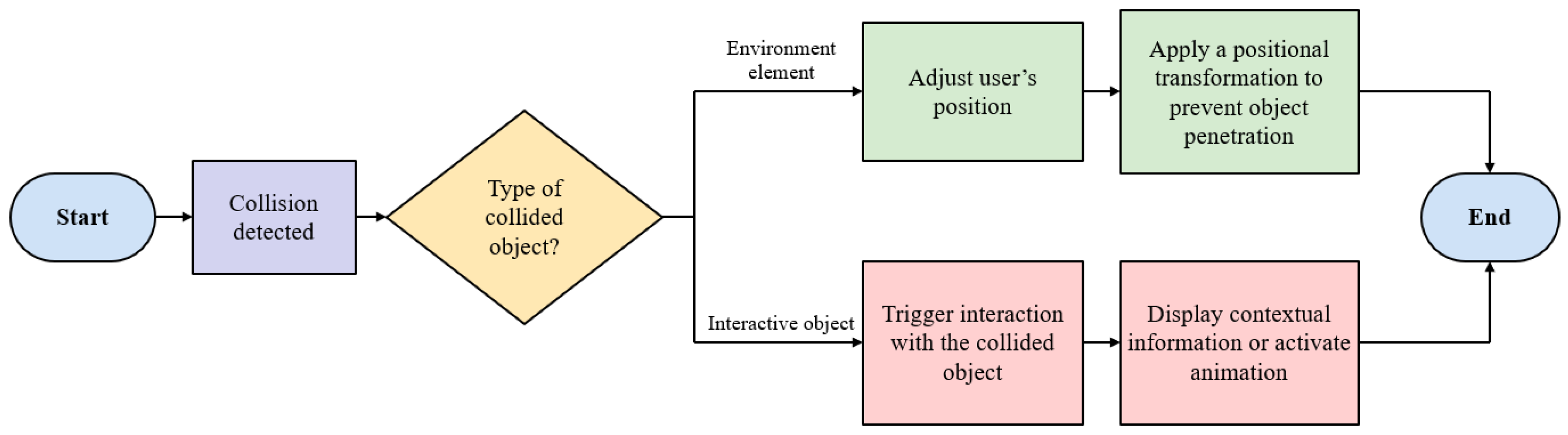
Once a collision is detected, the system determines the appropriate response according to the type of object involved. For collisions with environmental elements, such as walls or non-interactive equipment, the user’s position is adjusted to prevent penetration and maintain physical consistency. For collisions with interactive objects, the system triggers the corresponding interaction, which may include displaying contextual information or activating an animation. The collision response workflow is illustrated in Figure 8.
Figure 8.
Flowchart of the collision response process.
4.2.8. Contextual Display of Equipment Information
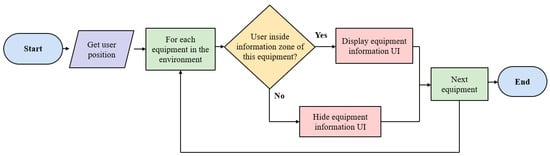
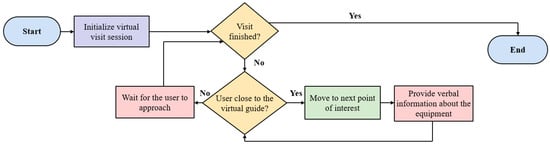
To help users become familiar with drilling equipment, the system provides contextual information. When the user enters a predefined interaction zone around an equipment element, an information interface is displayed presenting relevant details such as the name of the equipment and a brief description of its function in the drilling process.
The workflow for displaying contextual equipment information is illustrated in Figure 9.
Figure 9.
Flowchart of the contextual equipment information display process.
4.2.9. Virtual Guide Agent
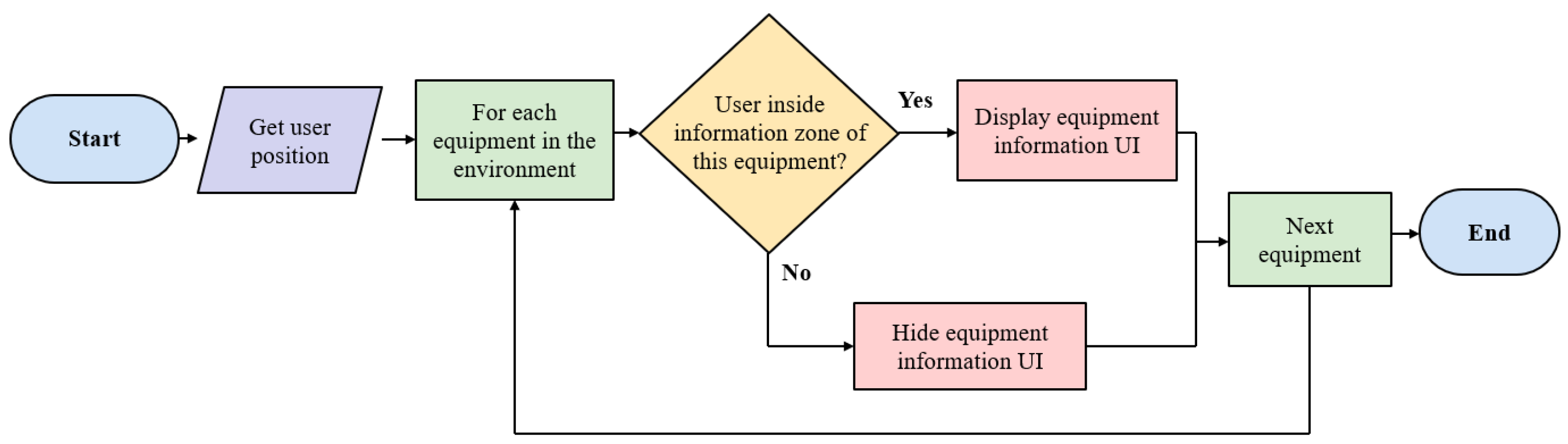
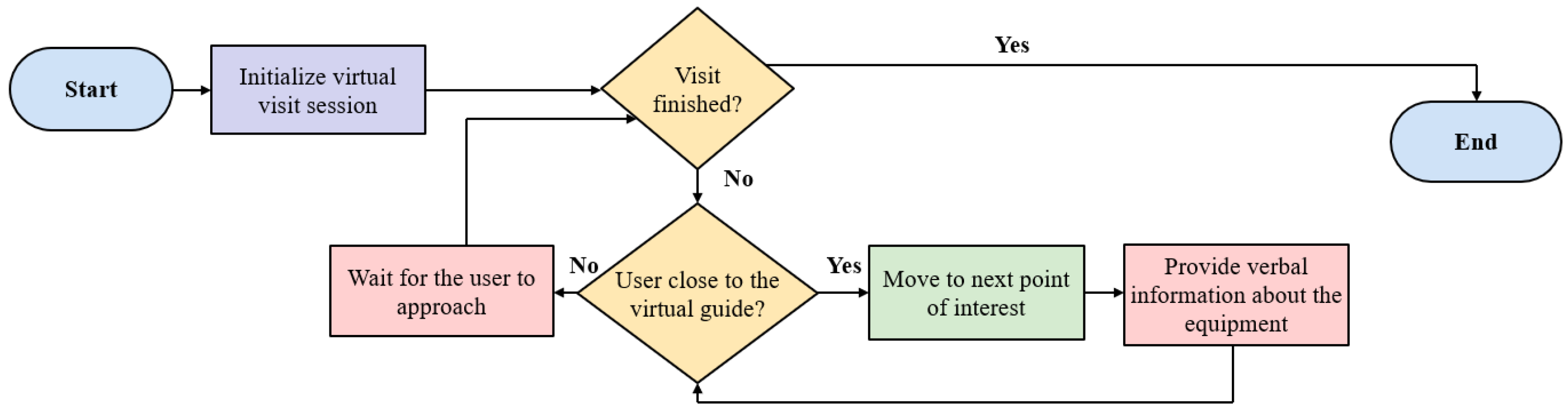
The virtual guide agent plays an important role in the application by enhancing interactivity, user engagement, and learning efficiency. The agent is designed to guide users throughout the virtual visit of the drilling platform and provide verbal explanations for each piece of equipment.
During the exploration of the environment, the agent accompanies the user and moves between predefined points of interest. When the user approaches the guide, the agent provides contextual explanations describing the equipment and its role in the drilling process.
The workflow of the virtual guide agent is illustrated in Figure 10.
Figure 10.
Flowchart of the virtual guide agent behavior.
4.3. Process Simulation Module
The Process Simulation Module aims to reproduce operational drilling procedures within the virtual environment in order to provide practical and experiential training. In the current implementation, the simulation focuses on the wireline logging operation.
Wireline logging is a key procedure in oil and gas exploration used to collect geological and reservoir data from the wellbore. The operation involves lowering logging tools into the well using a cable in order to measure physical properties of the surrounding formations.
4.3.1. Modeling of Logging Equipment and Tools
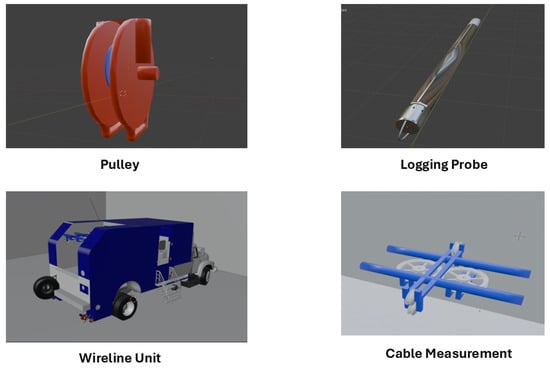
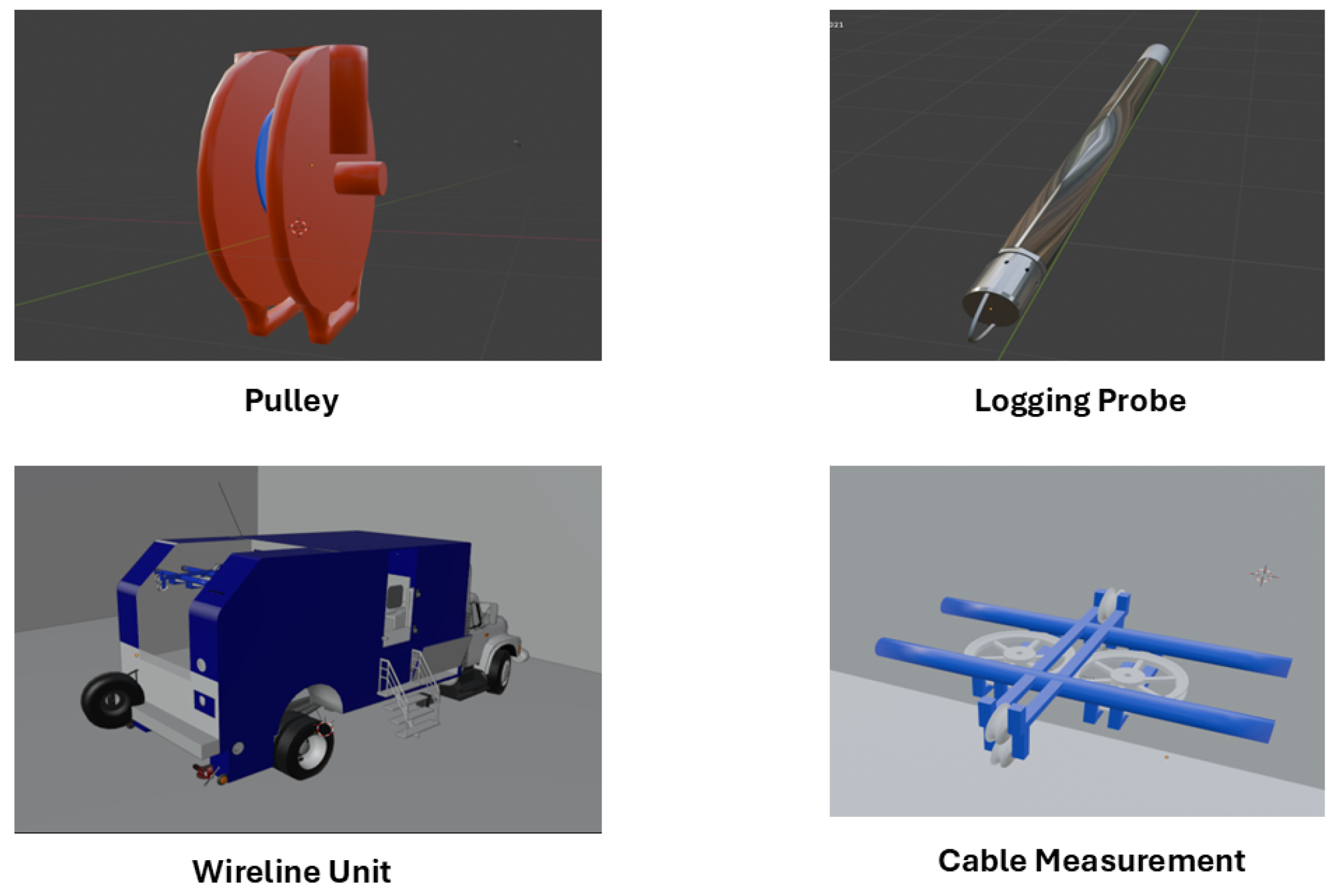
To reproduce the logging procedure within the virtual environment, several key components involved in wireline operations were modeled. These include the logging cable, pulleys, winch system, logging probe, and the control unit interface. These components were modeled using Blender in order to reproduce their geometric structure and operational configuration. Figure 11 presents examples of the developed 3D models used in the simulation environment.
Figure 11.
Examples of 3D models of wireline logging equipment developed for the VR simulation environment, including a pulley system, logging probe, wireline unit, and cable measurement.
The 3D models of these elements were created and integrated into the Unity simulation environment to replicate the physical layout of a real wireline logging system. Particular attention was given to the mechanical elements involved in the movement of the logging tool inside the wellbore.
The modeled equipment enables the simulation of realistic operations such as cable deployment, tool descent, and depth monitoring during the logging procedure.
4.3.2. User Interaction and Control Interface
During the simulation, the learner assumes the role of the control unit operator responsible for managing the wireline logging process. The user interacts with the virtual control interface to deploy the logging tools into the well and monitor the progression of the operation.
The control interface provides real-time information such as tool depth, cable movement, and logging signals. User inputs are continuously processed by the simulation system, which updates the state of the virtual environment accordingly.
In addition to the control unit operator, the simulation integrates a virtual field operator positioned on the derrick. This operator provides guidance through animated gestures and operational instructions that replicate real field practices.
4.3.3. Simulation Workflow
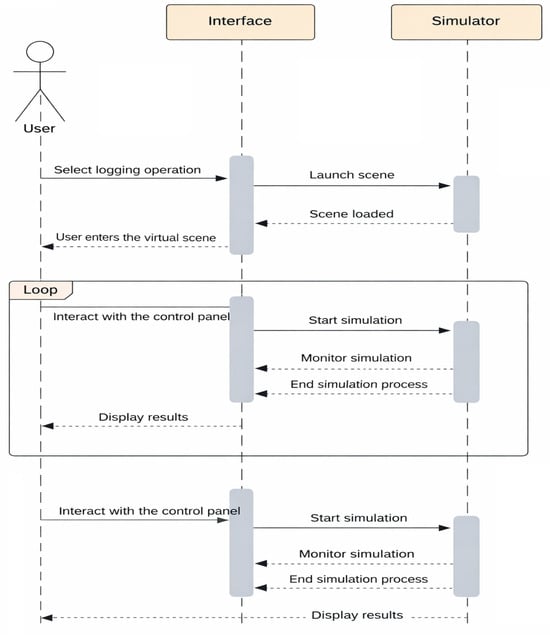
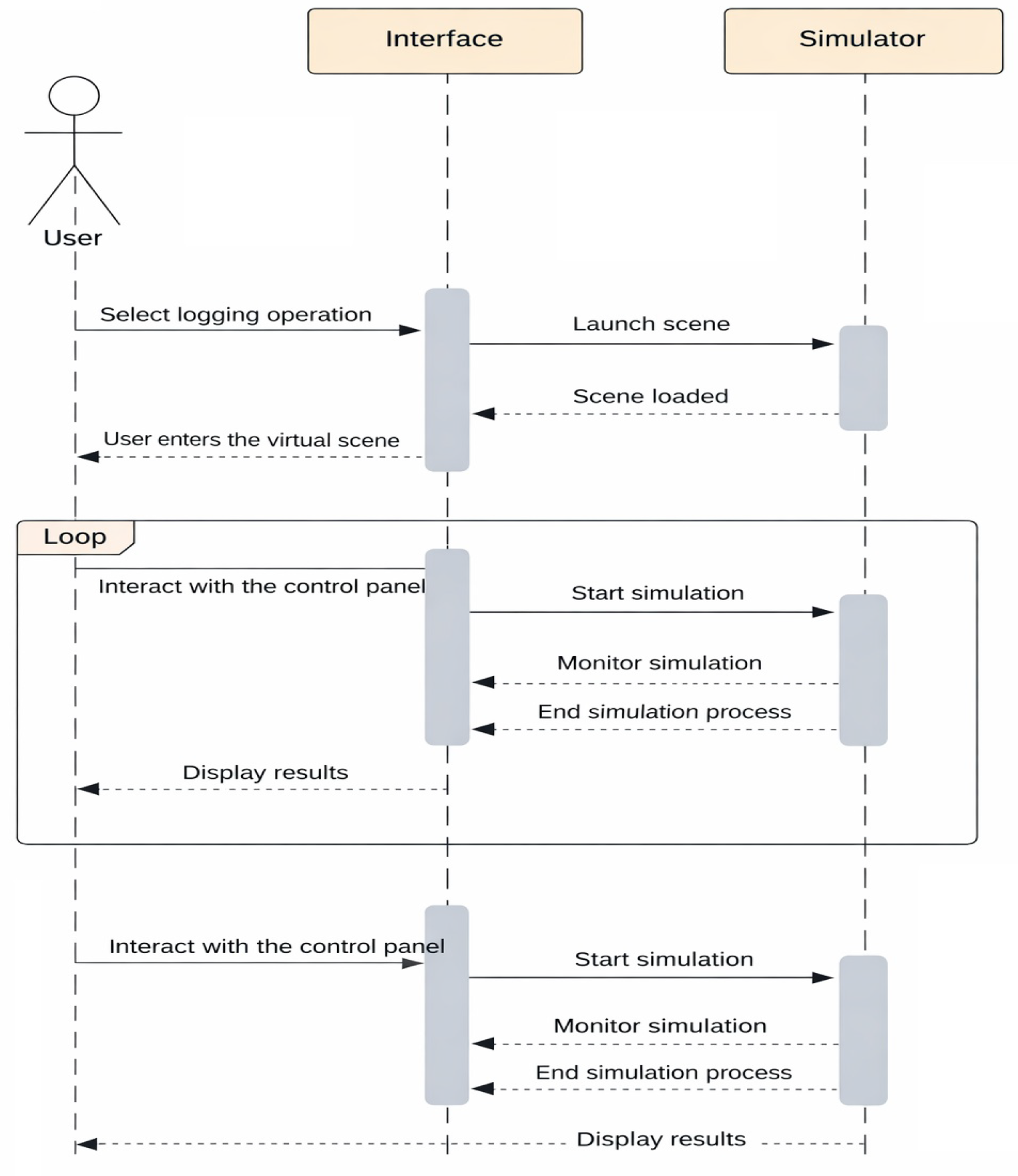
The interaction between the user, the control interface, and the simulation system follows a structured sequence of actions during the execution of the wireline logging operation.
Figure 12 presents the sequence diagram describing the communication between the user and the simulation environment during the logging process.
Figure 12.
Sequence diagram illustrating the interaction flow between the user and the VR drilling simulation system during the wireline logging operation.
4.3.4. Wireline Logging Simulation
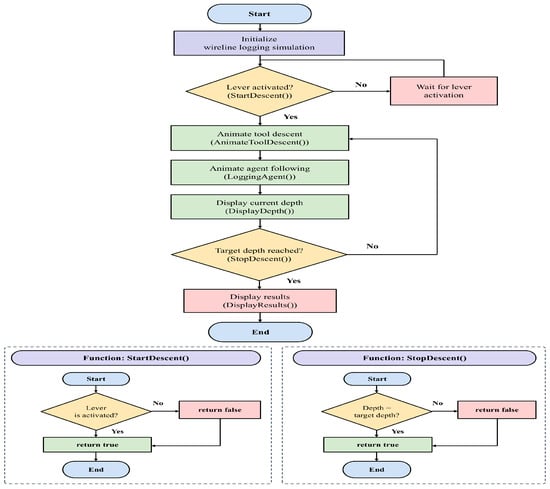
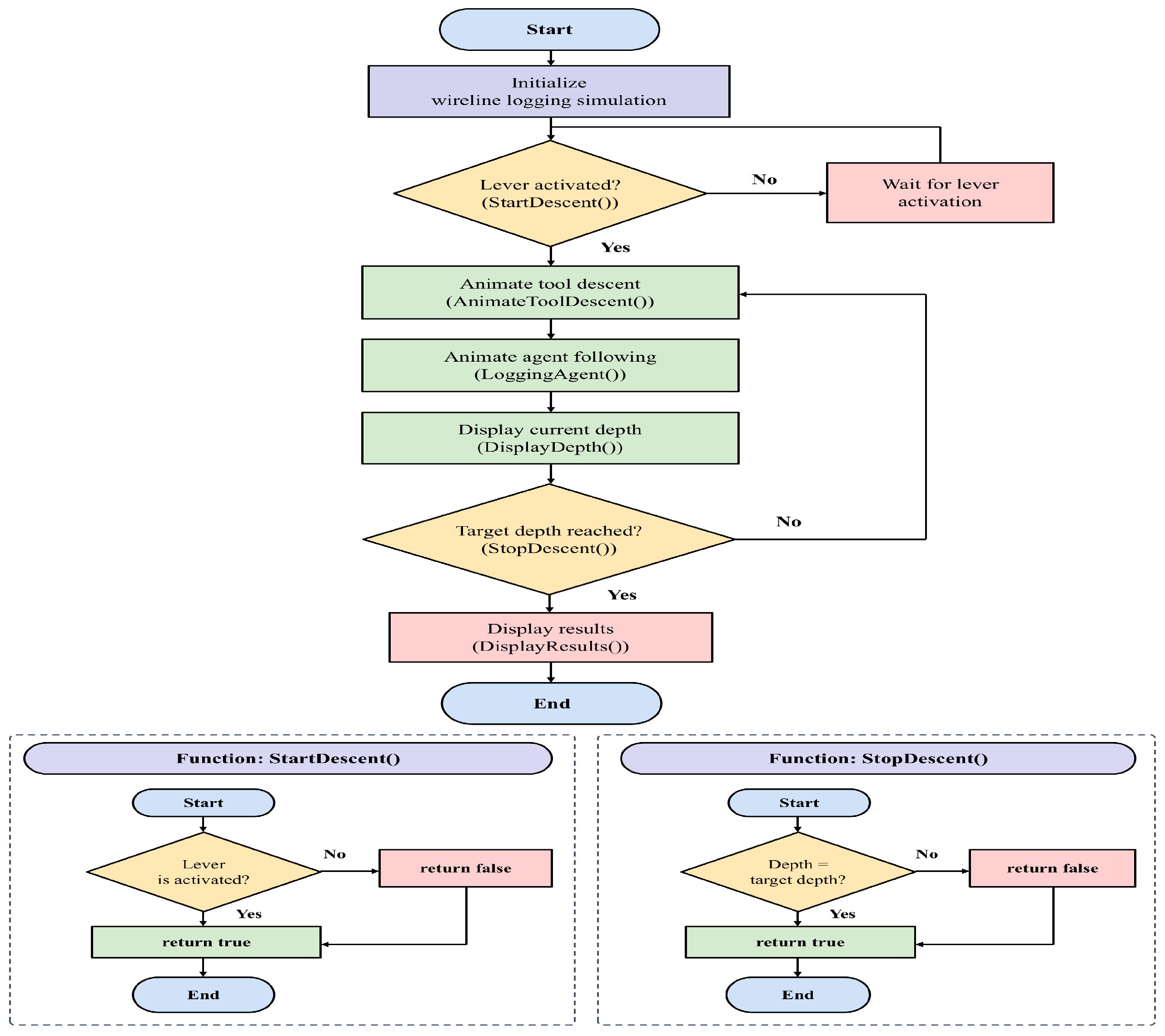
The wireline logging simulation manages user interaction, tool deployment, and real-time updates of the virtual environment. When the user activates the control lever, the logging tool begins its descent while the virtual agent follows the operation and the current depth is displayed. This process continues until the target depth is reached, at which point the simulation displays the results and terminates. If the lever is not activated, the system waits for user input. The workflow of the wireline logging simulation is illustrated in Figure 13.
Figure 13.
Flowchart Sequence diagram of the wireline logging simulation process.
4.3.5. Procedural Guidance and Warning Alerts
During the wireline logging procedure, the simulator provides procedural guidance through a virtual guide and warning alerts. When a required operational action is omitted or performed incorrectly in a situation covered by the implemented warning mechanism, an alert informs the user that the procedure should be followed carefully. For example, a warning can remind the user to follow the prescribed steps to avoid potentially damaging the logging probe.
These alerts are intended to reinforce awareness of correct operational procedures and help users follow the simulated workflow. They complement the visual guidance provided by the virtual guide. However, the mechanism is limited to the situations explicitly implemented in the simulator and should not be considered a comprehensive system for detecting all operational errors or assessing user performance.
4.4. Animation
To reproduce realistic operations within the process simulation module, several animation techniques are integrated to control both equipment motion and human operator behavior within the virtual drilling environment.
Keyframe-based animation using Forward Kinematics (FK) is employed to animate drilling tools and other scene objects. By defining key states such as position and rotation at specific moments, the animation system automatically interpolates intermediate states, producing smooth and controlled object movements during the simulation.
For the animation of human operators, skeletal Forward Kinematics is used to reproduce realistic body movements such as walking, handling tools, and interacting with drilling equipment. This approach improves the realism of the virtual environment and helps illustrate operational procedures more clearly.
In addition, Inverse Kinematics (IK) is integrated to support dynamic and user-driven interactions. By defining the target position of an end-effector such as a hand, the system automatically computes the required joint movements, allowing virtual characters or tools to adapt naturally to user actions within the VR environment.
4.5. System Implementation
The VR drilling training simulator was implemented using the Unity game engine and developed on a workstation equipped with an AMD Ryzen 5 4600H processor, an NVIDIA GeForce RTX 3050 GPU, and 16 GB of RAM running Windows 11. The development pipeline combined several software tools including Blender for 3D modeling, SOLIDWORKS for the design of technical equipment, and Rokoko Studio and Mixamo for character animation. The application logic and interaction mechanisms were implemented in C#, while SteamVR and OpenXR were used to ensure compatibility with VR devices.
5. Results
5.1. Presentation of the Simulator
The developed application provides an immersive training environment that allows users to explore the drilling site and observe operational processes. The simulator includes a main menu interface and several interactive scenes that illustrate different aspects of drilling operations.
5.1.1. Main Menu
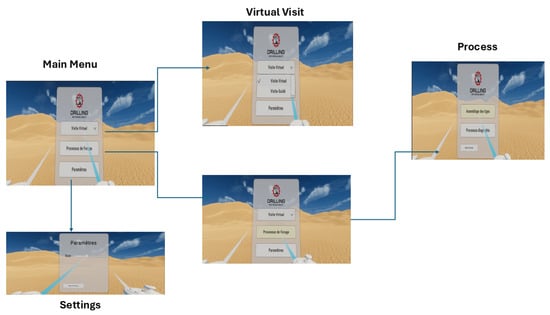
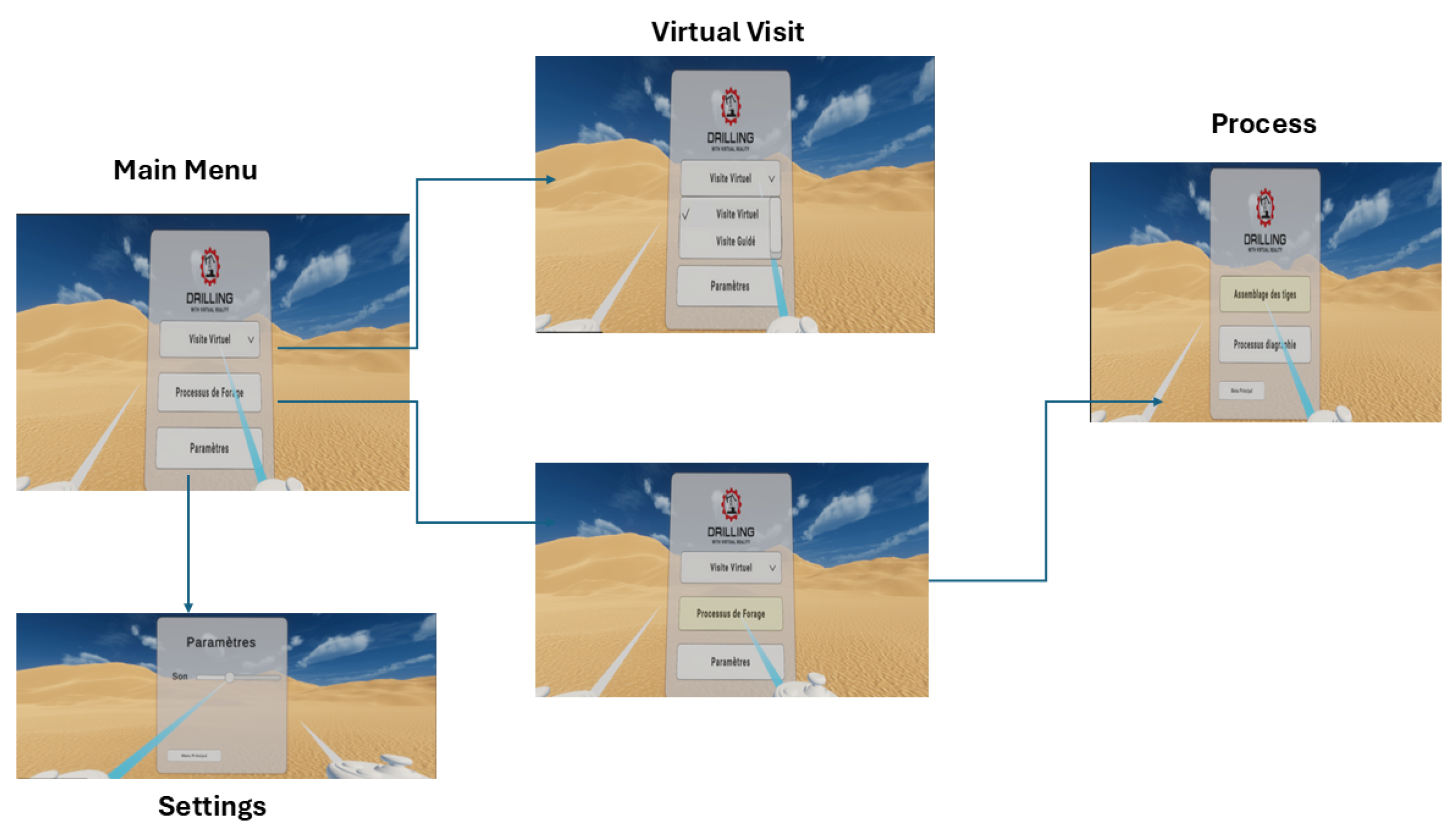
The main menu interface is designed to be intuitive and easy to navigate while maintaining immersion in the virtual environment. As illustrated in Figure 14, the menu presents three main options represented by clear icons. Users can select an option by pointing and clicking using the VR controller, allowing natural interaction within the immersive environment.
Figure 14.
Menu interfaces of the proposed VR simulator. The displayed interface labels are in French: “Visite Virtuelle” (Virtual Visit), “Processus de Forage” (Drilling Process), “Paramètres” (Settings), and “Visite Guidée” (Guided Visit).
5.1.2. Virtual Visit Scene
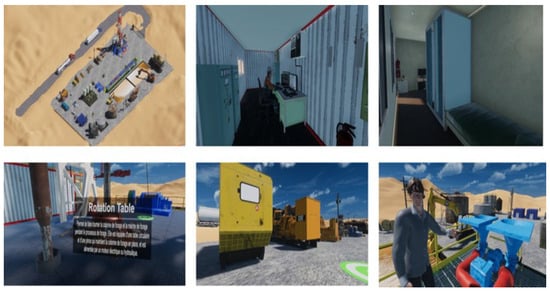
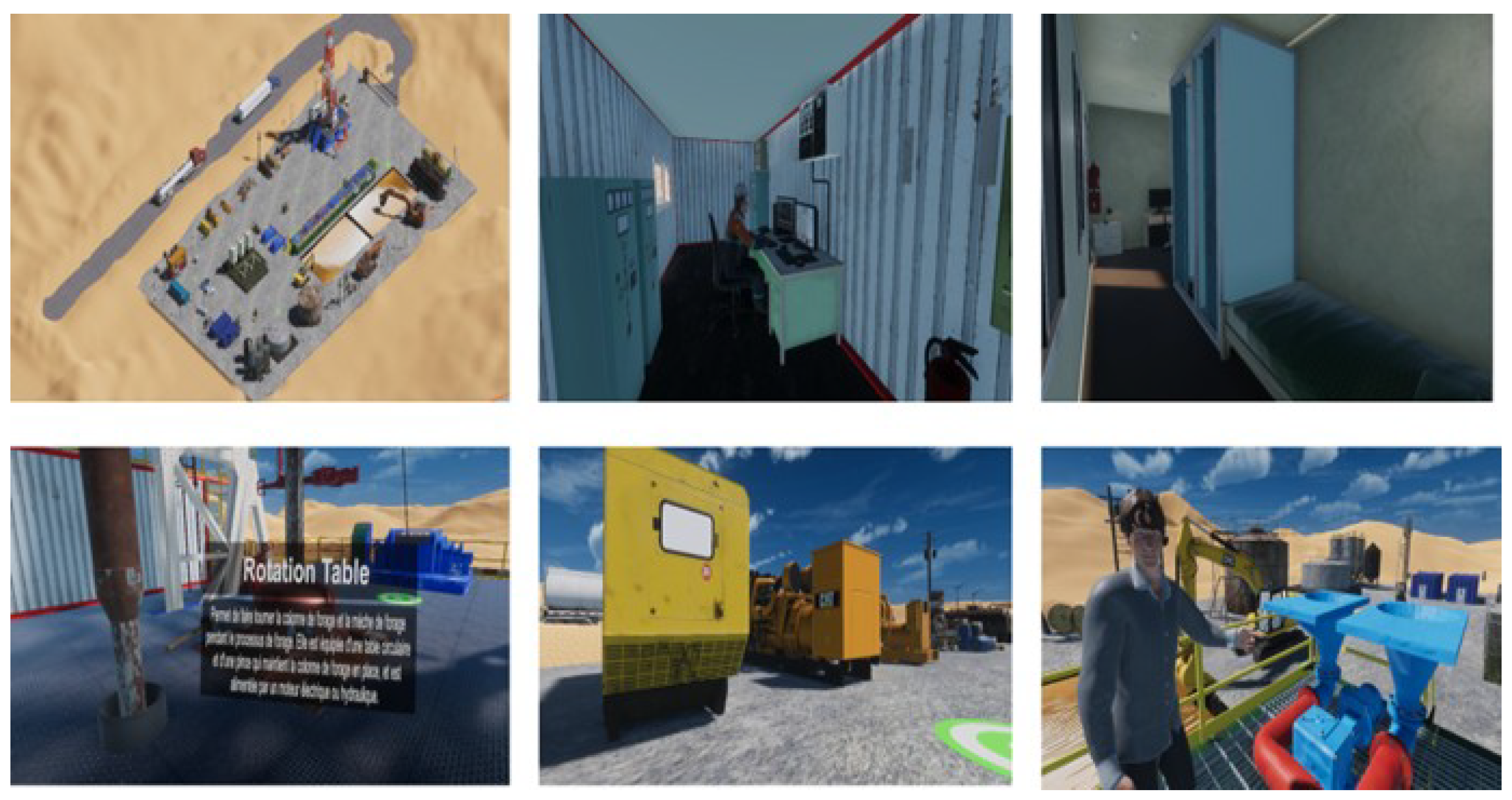
The virtual visit scene allows users to explore the drilling environment and observe the equipment used in drilling operations. As illustrated in Figure 15, this scene provides an immersive visualization of the drilling site and its main components. Users can navigate through the environment and inspect different elements of the drilling infrastructure, enabling them to better understand the spatial organization of the equipment and gain familiarity with the operational environment.
Figure 15.
Virtual visit scene showing the drilling environment and equipment.
5.1.3. Visualization of the Wireline Logging Procedure
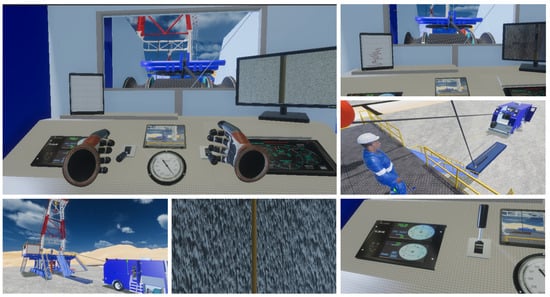
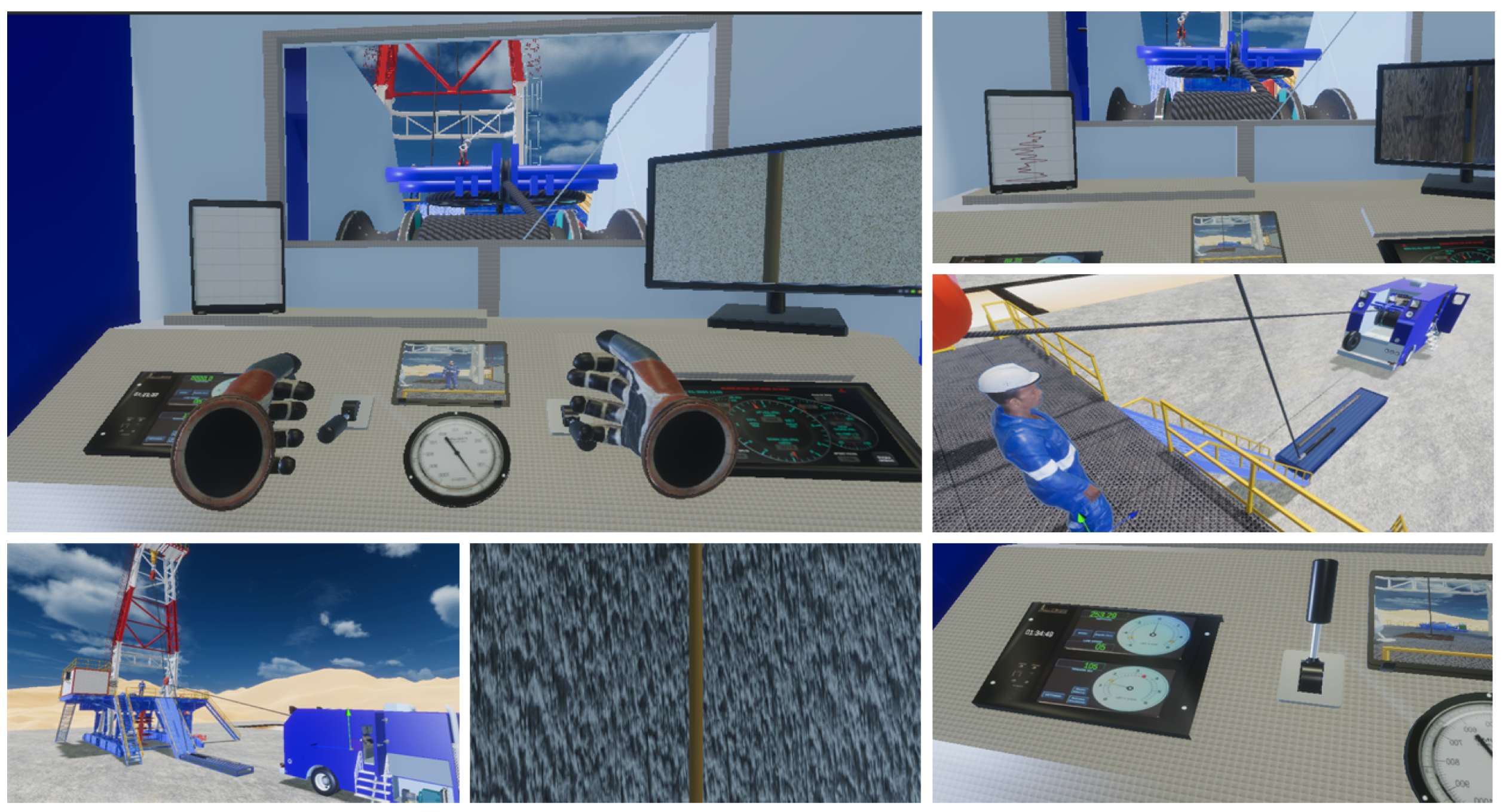
The process simulation scene focuses on the wireline logging procedure. As illustrated in Figure 16, users can observe the logging process within the virtual environment and follow the operational workflow. This scene demonstrates how VR can be used to visualize and explain complex operational processes in a controlled and interactive environment.
Figure 16.
Wireline logging simulation scene.
5.2. System Performance and Internal Validation
The system performance was evaluated during the execution of different simulation scenarios. The application achieved an average frame rate between 40 and 50 FPS depending on the complexity of the virtual scene, with an average interaction response time of approximately 60 ms. This response time was estimated by measuring the elapsed time between the detection of a user input from the VR controller and the execution of the corresponding software response in Unity. The integration of optimized 3D models, physics-based interaction, and bounding-box collision detection supported execution throughout the simulation. Animations of equipment and virtual operators remained synchronized with user actions, providing a coherent simulation experience.
Before conducting user-based evaluation, an internal validation process was carried out by the development team to assess system stability and functional robustness. Critical system components—including VR interaction mechanisms, collision detection, equipment behavior, and alert scenarios—were examined within the Unity 3D environment. Debugging and profiling tools were used to identify and resolve issues related to physics simulation, interaction consistency, and user navigation.
5.3. User Evaluation
A preliminary exploratory pilot evaluation was conducted with five participants (P1–P5), recruited through the authors’ academic and professional contacts. The participants comprised two interns at a petroleum company, one geophysicist engineer, and two researchers. All participants tested both the Virtual Visit and Wireline Logging Simulation modules. This small convenience sample was not intended to be representative of the wider population of petroleum engineering learners or professionals.
After testing the simulator, participants rated five dimensions on a scale from 0 to 10: immersion, interaction quality, perceived learning facilitation, ease of use, and perceived reliability. The questionnaire was used to collect exploratory self-reported feedback and was not formally validated. The descriptive results in Table 1 show that the five participants gave positive ratings to the simulator, particularly for perceived learning facilitation (9.0/10), immersion (8.5/10), and interaction quality (8.3/10). These preliminary findings suggest that participants perceived the simulator as a potentially useful and engaging learning environment. This observation is consistent with previous research exploring the role of VR in supporting learners’ understanding [10]. However, the small sample size and reliance on self-reported ratings limit the generalizability of the findings and do not provide evidence of objective learning gains or educational effectiveness. Furthermore, cybersickness was not assessed using a standardized instrument; therefore, its occurrence and severity could not be evaluated. Cybersickness may be influenced by both software-related factors, such as virtual content and interaction design, and hardware-related characteristics, including head-mounted display performance, latency, and ergonomics [36]. Future work will address these limitations by involving a larger and more diverse participant sample and testing the simulator with newer-generation VR headsets. Further details on these limitations and directions for future research are provided in Section 6.2.
Table 1.
Individual ratings from the preliminary exploratory pilot evaluation (scores out of 10).
5.4. Comparative Analysis with Existing Systems
To complement the qualitative gap analysis presented in Section 2.4, Table 2 compares the proposed simulator with the commercial and research systems discussed in Section 2, namely Petrel [25], DrillSIM [32], the Schramm simulator [31], and the VR systems of Park et al. [29] and Rangwala et al. [30]. The comparison covers nine criteria: immersion level, interaction modality, procedural coverage, use of real data, feedback and assessment mechanisms, hardware requirements, cost, reproducibility, and user validation. Since commercial platforms are proprietary, their entries are derived from publicly available documentation and from the cited literature; information that is not publicly reported is indicated by “NR” rather than inferred.
Table 2.
Comparison of the proposed simulator with representative commercial and research systems. NR: not reported; † based on publicly available product descriptions.
Three main observations can be drawn from Table 2. First, among the compared systems, the proposed simulator is the only one that combines full immersion, real operational data, and a complete procedural workflow while remaining executable on mid-range consumer hardware. Second, unlike the commercial platforms, its architecture, collision-handling strategy, and simulation workflow are fully documented, which addresses the reproducibility gap identified in Section 2.4. Third, the comparison also makes the current limitations of the work explicit: procedural coverage is restricted to wireline logging, feedback is guidance-oriented rather than assessment-oriented, and validation relies on a small, non-representative sample of self-reported ratings. These limitations motivate the future work described in Section 6.2.
6. Discussion and Conclusions
6.1. Discussion
The results obtained from the implementation and evaluation of the proposed VR-based oil-drilling training simulator demonstrate the potential of immersive technologies for supporting procedural learning in petroleum engineering education. By combining interactive exploration, realistic equipment modeling, and scenario-based simulation, the developed system enables users to experience drilling operations within a safe and controlled virtual environment.
The system architecture integrates several complementary components, including immersive visualization, physics-based interaction, collision detection mechanisms, and real-time procedural simulation. These elements collectively contribute to creating a coherent and responsive training platform capable of reproducing essential aspects of drilling operations. In particular, the integration of realistic 3D equipment models and operational datasets allows the simulation to reflect technical characteristics of real drilling processes while maintaining the flexibility of a virtual training environment.
The experimental results indicate that the system maintains stable real-time performance, achieving frame rates between 40 and 50 FPS and interaction response times of approximately 60 ms. These performance values demonstrate that immersive industrial simulations can be executed efficiently even on mid-range hardware configurations, which is an important factor for the accessibility and scalability of VR-based training solutions.
User acceptance testing further highlights the educational potential of the proposed simulator. Participants reported high levels of immersion, interaction quality, and perceived learning facilitation. In particular, the high score obtained for learning facilitation suggests that immersive VR environments can effectively support conceptual understanding and procedural awareness in complex technical domains. These observations are consistent with previous studies indicating that immersive virtual environments enhance learner engagement, knowledge retention, and experiential learning in engineering education [6,7,10].
From a pedagogical perspective, the system supports two complementary learning stages. The Virtual Visit Module enables learners to explore the drilling environment and understand the spatial organization of equipment, which helps build foundational knowledge before engaging in operational tasks. The Process Simulation module then focuses on procedural training by reproducing the workflow of wireline logging operations. This progressive approach aligns with experiential learning principles, where learners first acquire contextual understanding and then apply this knowledge through interactive practice.
6.2. Limitations and Future Work
Despite these promising results, several limitations remain. First, the current evaluation was conducted with a limited number of participants, which restricts the statistical generalization of the results. Future studies should evaluate the system with larger and more diverse groups of learners, including students from different academic levels and specializations, as well as professional drilling operators. This would provide a more comprehensive assessment of the system’s usability, adaptability, and learning effectiveness across different user profiles.
Second, the current simulation scenario focuses primarily on wireline logging operations. Although this procedure represents an important component of drilling activities, the training platform could be extended to include additional drilling processes such as drilling assembly operations, mud circulation management, well control procedures, and emergency response simulations.
Another limitation concerns the level of realism of the simulated environment. While the system integrates realistic equipment models and operational data, further improvements could be achieved by incorporating more advanced physical simulations, haptic feedback devices, and real-time collaborative features enabling multi-user training scenarios.
Future developments of the system will therefore focus on several directions. First, the simulation platform could be expanded to include additional operational scenarios covering a wider range of drilling procedures. Second, the integration of performance assessment mechanisms and automated feedback systems could enable objective evaluation of trainee performance during simulation sessions. Third, the virtual guide system could be enhanced by integrating an artificial intelligence-based conversational assistant. Such a system would allow users to interact with the virtual guide through natural language and ask questions related to drilling equipment, operational procedures, or safety instructions during the training session. This AI-driven interaction could improve learner engagement and provide on-demand explanations tailored to the user’s needs. Finally, the development of collaborative VR environments could allow multiple users to participate simultaneously in the same virtual drilling scenario, supporting team-based training and communication exercises.
6.3. Conclusions
In conclusion, this paper presented the design and implementation of an immersive VR-based oil-drilling training simulator that combines realistic equipment modeling, physics-based interaction, and procedural simulation within an interactive virtual environment. The system combines equipment familiarization through a virtual visit of the drilling site with a Process Simulation Module focused on wireline logging.
The results highlight the potential of immersive simulation technologies to complement traditional petroleum engineering education. A preliminary exploratory pilot evaluation involving five participants showed positive self-reported perceptions of immersion, interaction quality, and perceived learning facilitation. However, these findings do not establish objective learning gains or training effectiveness. Future work will focus on larger-scale evaluations, objective learning and performance measures, cybersickness assessment, and the extension of the simulator to additional drilling procedures.
Author Contributions
Conceptualization, M.A.S. and A.O.; methodology, M.A.S., A.O. and M.I.; software, M.A.S.; validation, A.O., M.I., R.E.M. and M.A.S.; formal analysis, M.A.S. and M.I.; data curation, M.A.S. and M.I.; writing—original draft preparation, M.A.S., A.O. and R.E.M.; writing—review and editing, M.A.S. and M.I.; visualization, A.O., R.E.M. and M.I. All authors have read and agreed to the published version of the manuscript.
Funding
This research received no external funding.
Institutional Review Board Statement
The study was conducted in accordance with the Declaration of Helsinki, and the protocol was approved by the Ethics Committee of the University of Science and Technology Houari Boumediene (USTHB), Algeria (Project identification code: MIV21/23), on 3 July 2023.
Informed Consent Statement
Informed consent was obtained from all subjects involved in the study.
Data Availability Statement
Restrictions apply to the availability of the well logging datasets used in this study. These data were provided by Sonatrach and are not publicly available due to third-party restrictions. They may be available from the corresponding author upon reasonable request and subject to permission from Sonatrach.
Acknowledgments
The authors gratefully acknowledge Azouaou Said and Neffah Mohamed from Sonatrach for providing and validating the drilling and wireline logging datasets used in this work, as well as for giving the authors the opportunity to test the system in an operational context. During the preparation of this work, the authors used ChatGPT (GPT-6, OpenAI) in order to enhance clarity and improve the quality of the text. After using this service, the authors reviewed and edited the content as needed and take full responsibility for the content of the publication.
Conflicts of Interest
The authors declare no conflicts of interest.
References
- Bourgoyne, A.T., Jr.; Millheim, K.K.; Chenevert, M.E.; Young, F.S., Jr. Applied Drilling Engineering; Society of Petroleum Engineers: Richardson, TX, USA, 1986. [Google Scholar]
- Skalle, P. Drilling Fluid Engineering; Ventus Publishing: Frederiksberg, Denmark, 2010. [Google Scholar]
- Oyekanmi, O.E.; Onwumere, A.A. Safety, Environmental Compliance, and Risk Management in Offshore Operations. NIPES J. Energy Technol. Environ. 2025, 7, 279–299. [Google Scholar] [CrossRef] [Scilit]
- Allaoui, M.E.; Ouddane, B.; Tidjani, C. The Importance of Training Programs in the Improvement of the Performance of Employees in Petroleum Companies; MPRA Paper; University Library of Munich: Munich, Germany, 2017; pp. 407–414. [Google Scholar]
- Salas, E.; Tannenbaum, S.I.; Kraiger, K.; Smith-Jentsch, K.A. The science of training and development in organizations: What matters in practice. Psychol. Sci. Public Interest 2012, 13, 74–101. [Google Scholar]
- Fealy, S.; Jones, D.; Hutton, A.; Graham, K.; McNeill, L.; Sweet, L.; Hazelton, M. The integration of immersive virtual reality in tertiary nursing and midwifery education: A scoping review. Nurse Educ. Today 2019, 79, 14–19. [Google Scholar] [CrossRef] [Scilit]
- Ke, S.; Xiang, F.; Zhang, Z.; Zuo, Y. An enhanced interaction framework based on VR, AR and MR in digital twin. Procedia CIRP 2019, 83, 753–758. [Google Scholar] [CrossRef] [Scilit]
- Goldstein, E.B. Sensation and Perception, 9th ed.; Cengage Learning: Boston, MA, USA, 2014. [Google Scholar]
- Hu-Au, E.; Lee, J.J. Virtual reality in education: A tool for learning in the experience age. Int. J. Innov. Educ. 2017, 4, 215–226. [Google Scholar] [CrossRef] [Scilit]
- Nshimiyimana, E.; Ndayambaje, I. Enhancing Students’ Understanding of Earth’s Spatial Relationships Using Virtual Reality: A Case Study of Secondary Schools in Nyamasheke District, Rwanda. Afr. J. Empir. Res. 2025, 6, 773–791. [Google Scholar] [CrossRef] [Scilit]
- Nassar, A.K.; Al-Manaseer, F.; Knowlton, L.M.; Tuma, F. Virtual reality (VR) as a simulation modality for technical skills acquisition. Ann. Med. Surg. 2021, 70, 102945. [Google Scholar] [CrossRef] [Scilit]
- Ibrahim, F.; Schumacher, J.; Hofer, P.; Daseking, M. Decision-Making in Virtual Reality: An Experimental Study on Virtual Reality’s Effect on Presence, Task-Load and Decision-Making Performance within Operational Command. Telemat. Inform. 2025, 21, 100282. [Google Scholar] [CrossRef] [Scilit]
- Mwakipunda, G.C.; Yang, Z.; Guo, C. Infill Drilling Optimization for Enhanced Oil Recovery by Waterflooding: A Simulation Study. J. Energy Eng. 2023, 149, 04022053. [Google Scholar] [CrossRef] [Scilit]
- Zarra, A.F.; Medea, A.; Bianchini, L.P.; Borra, S.; Gravante, E.; Szemat-Vielma, W.; Banjo, M.; Mouzali, N.; Botnan, E. Artificial Intelligence Driving Automation to Enhance Drilling Operations—First Deployment Offshore Africa Case Study. In Proceedings of the Abu Dhabi International Petroleum Exhibition and Conference (ADIPEC), Abu Dhabi, United Arab Emirates, 4–7 November 2024; p. D041S140R005. [Google Scholar] [CrossRef] [Scilit]
- Souidi, M.A.; Mohammed, I.; Djekoune, I.E.; Ourahmoune, A.; Neffah, M.; Azouaou, S.; Elmeouche, R. VR-Based Training Environment for Oil Drilling. In Proceedings of the 5th International Conference on Extended Reality (XR Salento 2026), Otranto, Italy, 16–20 June 2026; Springer: Cham, Switzerland, 2027; pp. 86–103. [Google Scholar] [CrossRef] [Scilit]
- Peña, A.M.; Ragan, E.D. Contextualizing construction accident reports in virtual environments for safety education. In Proceedings of the 2017 IEEE Virtual Reality (VR), Los Angeles, CA, USA, 18–22 March 2017; IEEE: Piscataway, NJ, USA, 2017; pp. 389–390. [Google Scholar] [CrossRef] [Scilit]
- Kose, A.; Tepljakov, A.; Petlenkov, E. Towards Assisting Interactive Reality: Interactive Reality for Education, Data Analysis and Industry. In Augmented Reality, Virtual Reality, and Computer Graphics, Proceedings of the 5th International Conference (AVR 2018), Otranto, Italy, 24–27 June 2018; Lecture Notes in Computer Science; Springer: Cham, Switzerland, 2018; Volume 10851, pp. 569–588. [Google Scholar] [CrossRef] [Scilit]
- de Toro Santos, J.; Turrión, A.I.; Collado, M.A.; San José Méndez, M.C.; Rilo Antelo, R.; Juanes Méndez, J.A. Utility of virtual reality in medical training: Clinical management of a patient with knee monoarthritis. Reumatol. Clínica 2024, 20, 555–559. [Google Scholar]
- Penumarti, Y.S.V.; Varghese, J.; William, D.; Shaju, K.F.K.; Liu, M.; Uzomba, H.; Brunton, T.; Iqbal, M.Z. Evaluating the efficacy of Toothy VR: A virtual reality simulation for dental implant training. Digit. Dent. J. 2026, 3, 100076. [Google Scholar] [CrossRef] [Scilit]
- Collet, A.-C.; Drouot, S.; Nemmi, F.; Aujeu, E.; Buratto, F.; Bach, C. Effects of a VR-based procedure trainer on vision and cybersickness in senior airline pilots. Cogn. Technol. Work 2025, 27, 713–727. [Google Scholar] [CrossRef] [Scilit]
- Ma, J.; Jaradat, R.; Ashour, O.; Hamilton, M.; Jones, P.; Dayarathna, V.L. Efficacy Investigation of Virtual Reality Teaching Module in Manufacturing System Design Course. J. Mech. Des. 2019, 141, 012002. [Google Scholar] [CrossRef] [Scilit]
- Farias, R.C.; De Barros, P.G.; Pessoa, D.A.; Leite, P.J.S.; Teichrieb, V.; Kelner, J. Three-Dimensional Oil Well Planning in Ultra-Deep Water. In Proceedings of the Symposium on Virtual Reality, Belém, Brazil, 2–5 May 2006. [Google Scholar]
- Kbah, Z.; Erdil, N.O.; Aqlan, F. Risk Assessment in Oil and Gas Industry Using Simulation and Bow-Tie Analysis. Int. J. Ind. Eng. Theory Appl. Pract. 2020, 27, 110–123. [Google Scholar] [CrossRef]
- Oil and Gas Engineering Services. Well Design and Engineering. Available online: https://www.oilgas-solutions.com/en/our-capabilities/well-design-and-engineering (accessed on 15 March 2026).
- Schlumberger. Petrel Reservoir Engineering Software Platform. Available online: https://www.slb.com/products-and-services/delivering-digital-at-scale/software/petrel-subsurface-software/petrel/petrel-reservoir-engineering (accessed on 18 March 2026).
- van Wyk, E.; de Villiers, R. Virtual reality training applications for the mining industry. In Proceedings of the 6th International Conference on Computer Graphics, Virtual Reality, Visualisation and Interaction in Africa (AFRIGRAPH ’09), Pretoria, South Africa, 4–6 February 2009; pp. 53–63. [Google Scholar] [CrossRef] [Scilit]
- Pascarelli, C.; Lazoi, M.; Papadia, G.; Galli, V.; Piarulli, L. CAD-VR Integration as a Tool for Industrial Assembly Processes Validation: A Practical Application. In Proceedings of the Augmented Reality, Virtual Reality, and Computer Graphics (AVR 2018), Otranto, Italy, 24–27 June 2018; pp. 435–450. [Google Scholar] [CrossRef] [Scilit]
- Zaki, M.L.H.M.; Sovuthy, C.; Elamvazuthi, I.; Prasetyo, T.; Su, S.; Ali, S.S.A. Drone based Virtual Reality System for Inspection of Oil and Gas Platform. In 2022 IEEE 5th International Symposium in Robotics and Manufacturing Automation (ROMA); IEEE: Piscataway, NJ, USA, 2021. [Google Scholar]
- Park, K.-P.; Ham, S.-H.; Ku, N.; Jo, A.; Suh, H.-W. Development of offshore drilling platform simulation for virtual onboard experience. J. Comput. Des. Eng. 2019, 6, 524–537. [Google Scholar] [CrossRef] [Scilit]
- Rangwala, P.; Patel, P.; Dudhat, P.; Shah, H.; Dubey, A.; Marakana, P. VR Oil Drilling Simulator: An Immersive Virtual Platform for Industrial Training. Int. J. Innov. Res. Sci. Eng. Technol. 2025, 14, 3655–3659. [Google Scholar]
- Schramm, I. Schramm Drilling Rig Training Simulator. Available online: https://www.schramminc.com (accessed on 5 April 2026).
- Systems, D. DrillSIM: Advanced Drilling and Well Control Simulator. Available online: https://www.drillingsystems.com (accessed on 10 April 2026).
- Kyi, K.K. Formation Evaluation in a Nutshell; Educational Presentation. 2019. Available online: https://petrophysics.home.blog/wp-content/uploads/2019/03/formation_evaluation_nutshell-2.pdf (accessed on 20 March 2026).
- Bowman, D.A.; Hodges, L.F. An evaluation of techniques for grabbing and manipulating remote objects in immersive virtual environments. In Proceedings of the ACM Symposium on Interactive 3D Graphics, Providence, RI, USA, 27–30 April 1997; pp. 35–38. [Google Scholar]
- Ericson, C. Real-Time Collision Detection; CRC Press: Boca Raton, FL, USA, 2005; Chapter 4; pp. 75–123. [Google Scholar]
- Caserman, P.; Garcia-Agundez, A.; Gámez Zerban, A.; Göbel, S. Cybersickness in current-generation virtual reality head-mounted displays: Systematic review and outlook. Virtual Real. 2021, 25, 1153–1170. [Google Scholar] [CrossRef] [Scilit]

Disclaimer/Publisher’s Note: The statements, opinions and data contained in all publications are solely those of the individual author(s) and contributor(s) and not of MDPI and/or the editor(s). MDPI and/or the editor(s) disclaim responsibility for any injury to people or property resulting from any ideas, methods, instructions or products referred to in the content. |
© 2026 by the authors. Licensee MDPI, Basel, Switzerland. This article is an open access article distributed under the terms and conditions of the Creative Commons Attribution (CC BY) license.