
Theoretical Positioning of TContext: A Comparative Analysis of a Contextual VR Platform for Fire Hazard Recognition


Abstract
1. Introduction
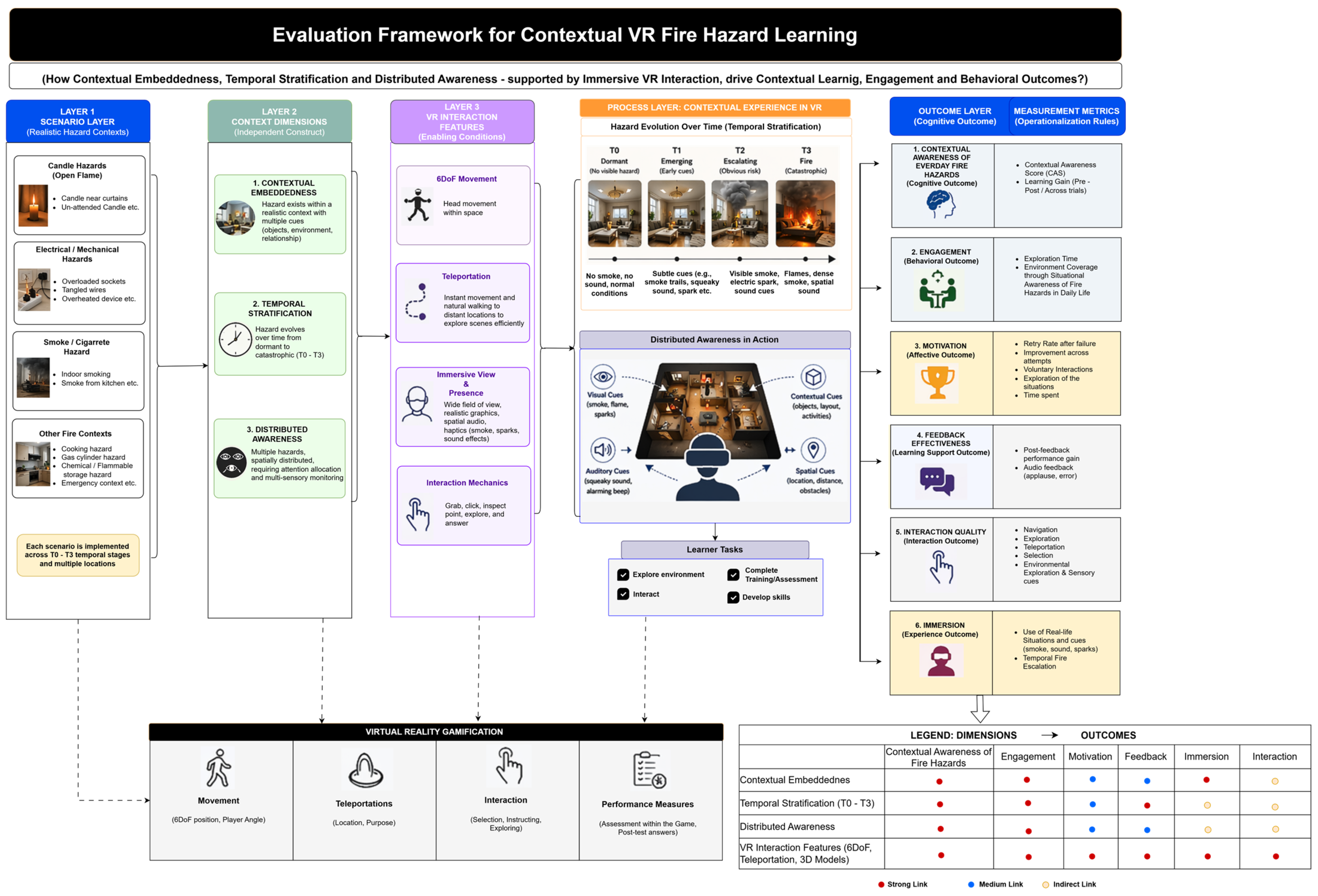
2. Background: True-Context Framework
3. Methodology
3.1. Research Design
3.2. Framework Selection Criteria
3.3. Coding Procedure Across the Thirteen Frameworks
3.4. Limitations
4. Results: Comparative Analysis and Consolidated Matrix
4.1. Overview
4.2. Constructivism
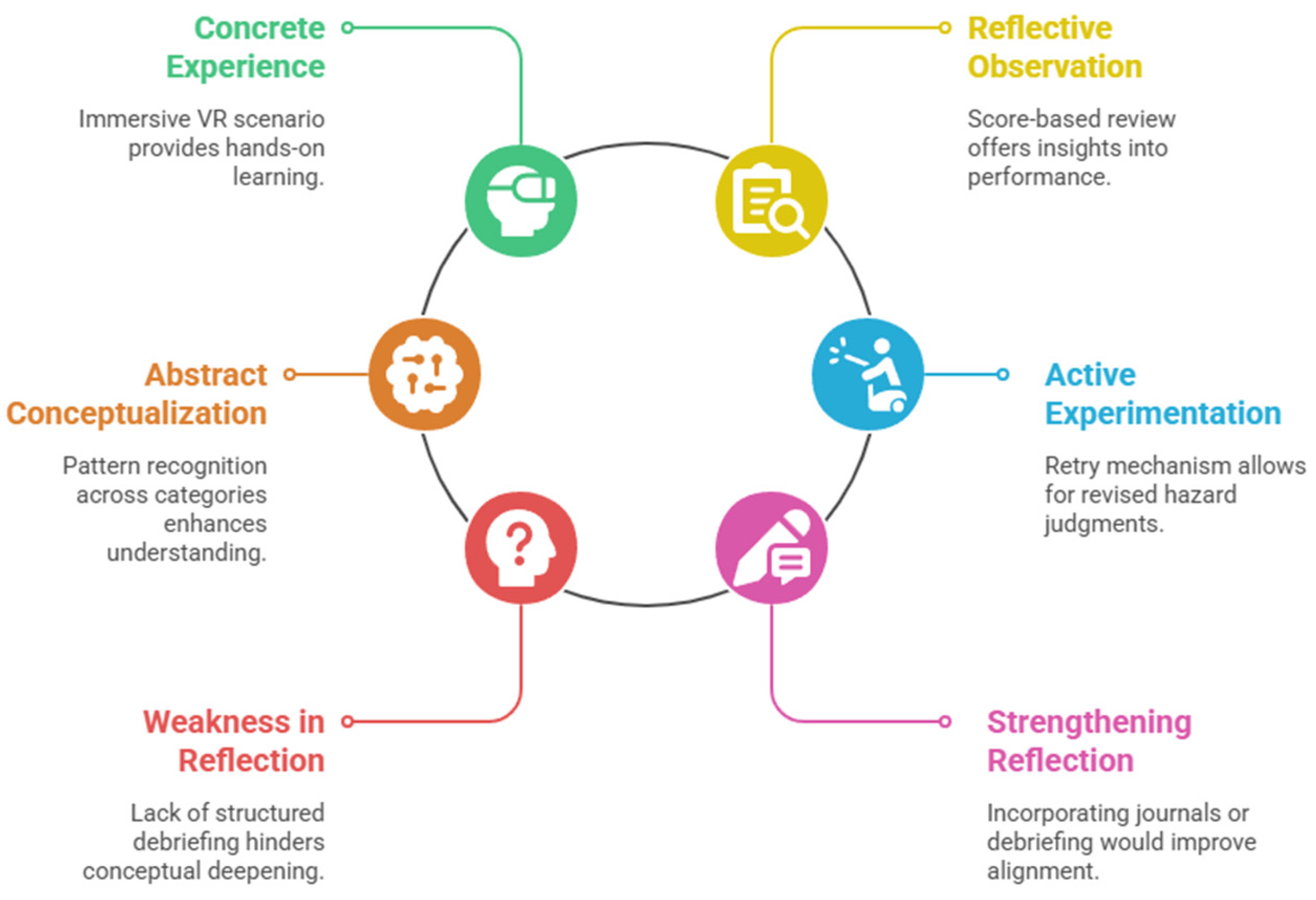
4.3. Experiential Learning Theory
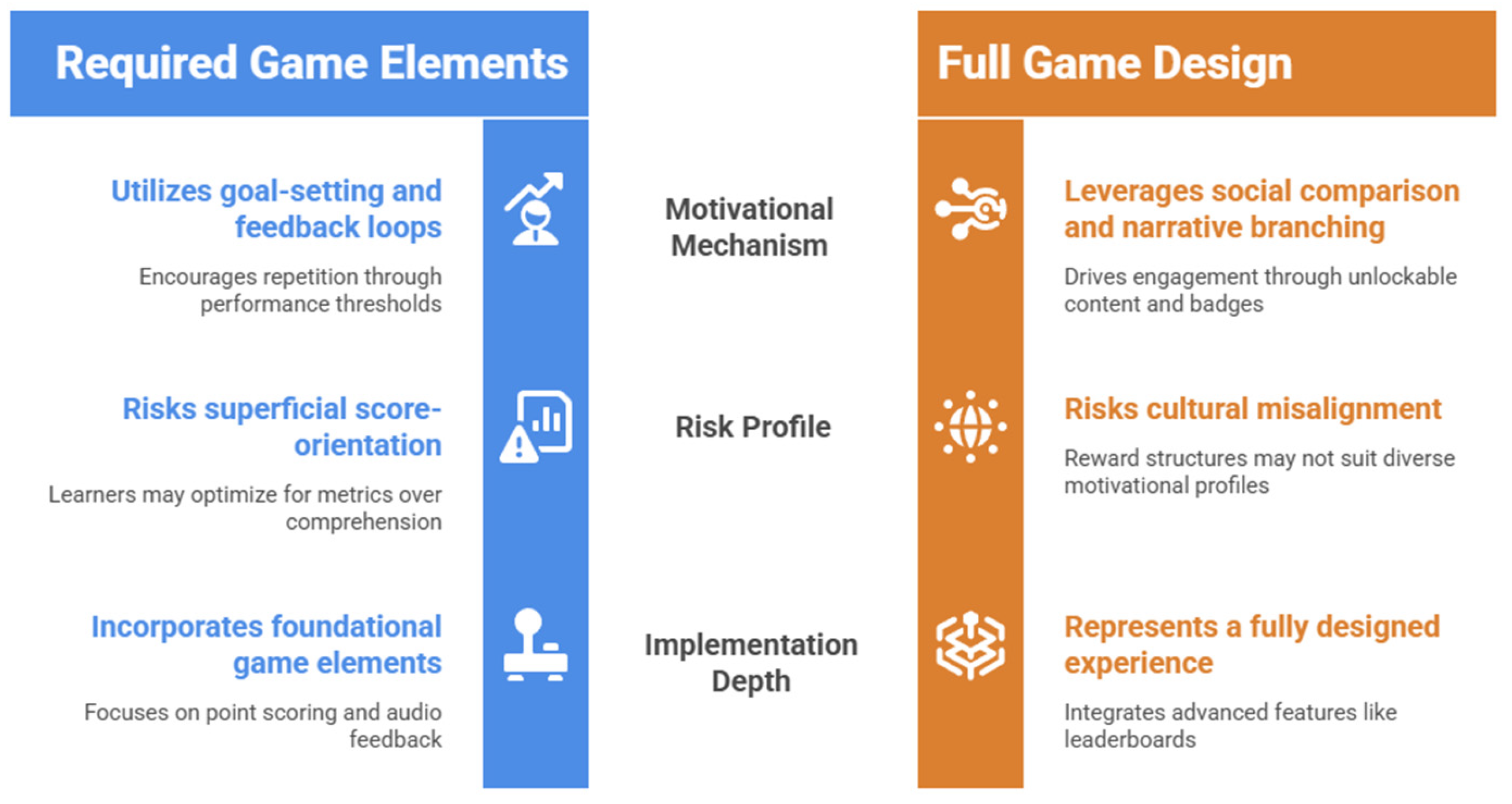
4.4. Gamification of Learning
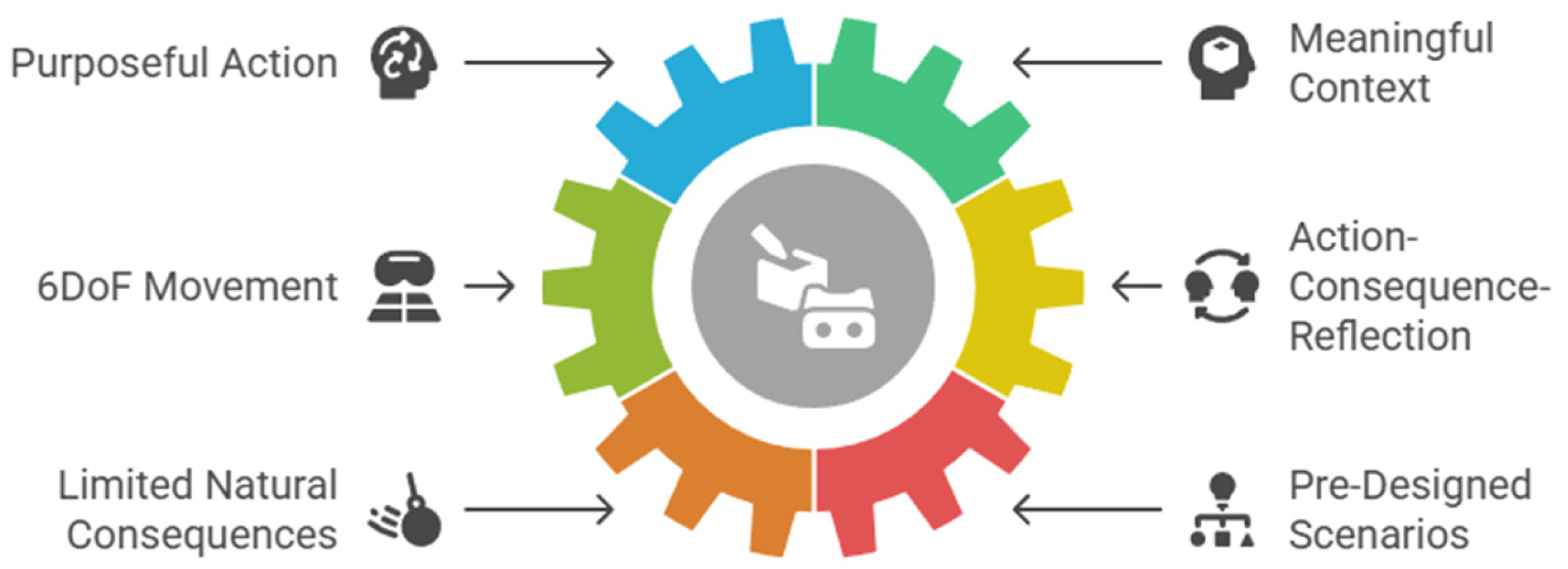
4.5. Learning by Doing
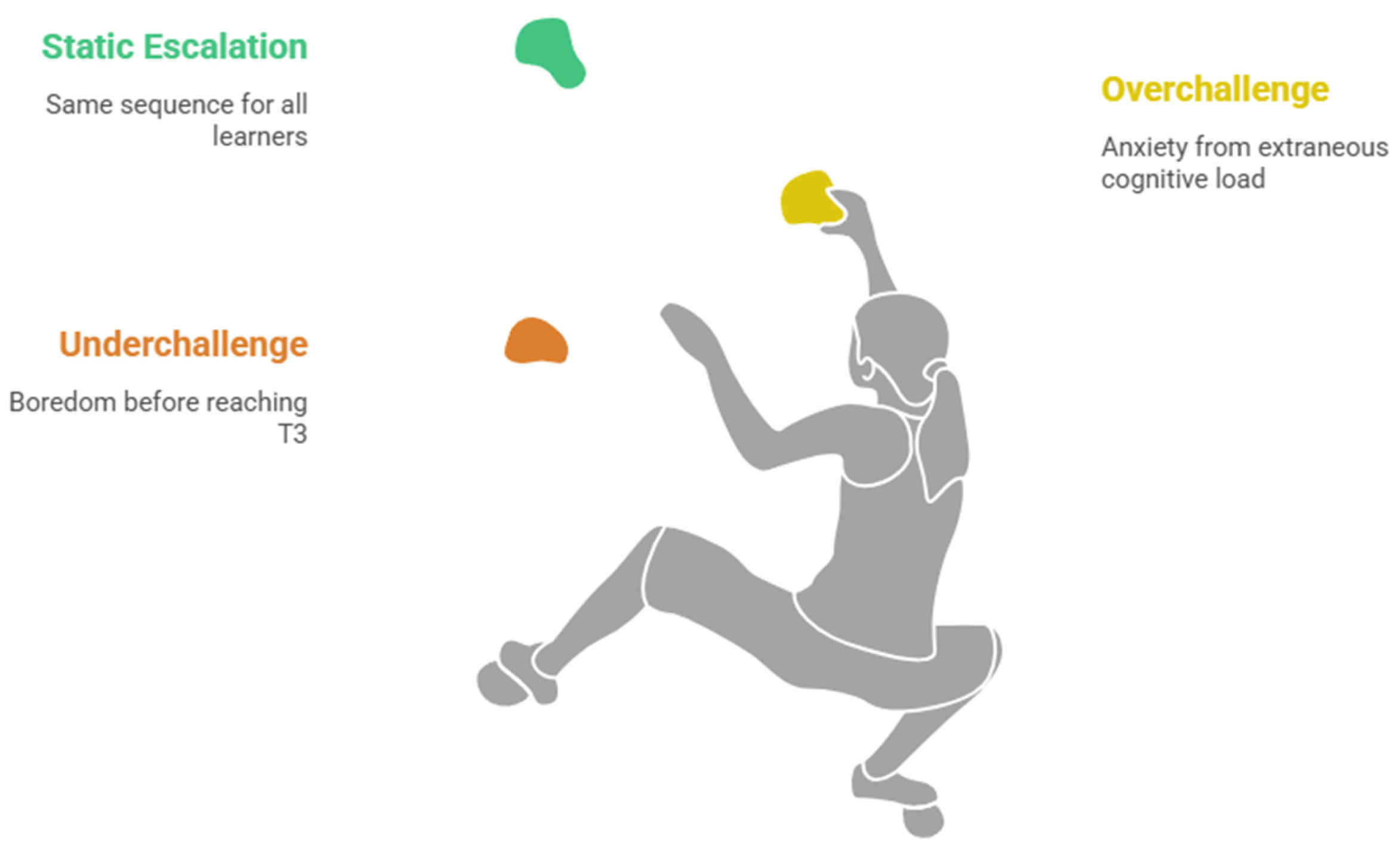
4.6. Flow Theory
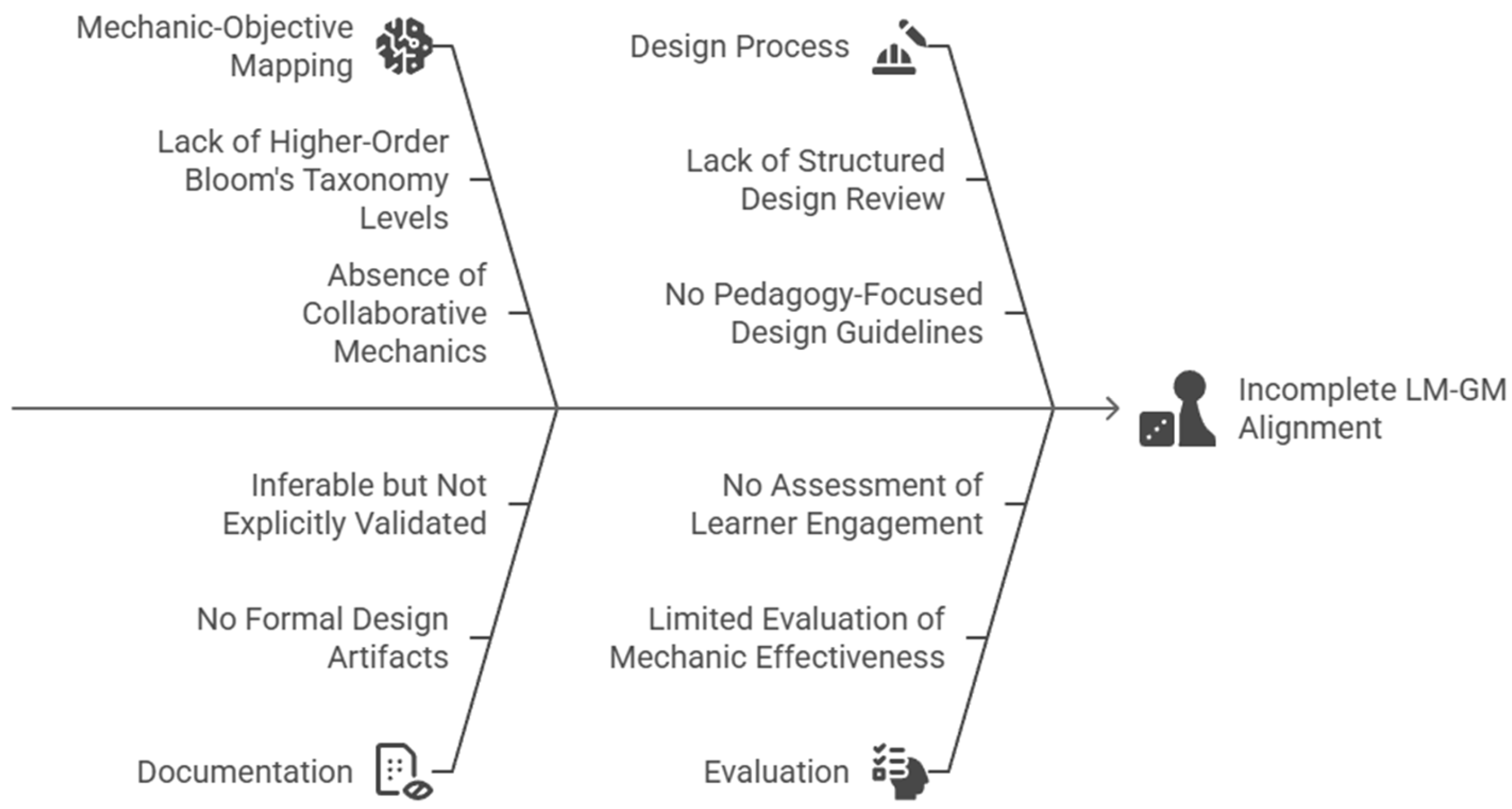
4.7. Learning Mechanics–Game Mechanics (LM-GM)
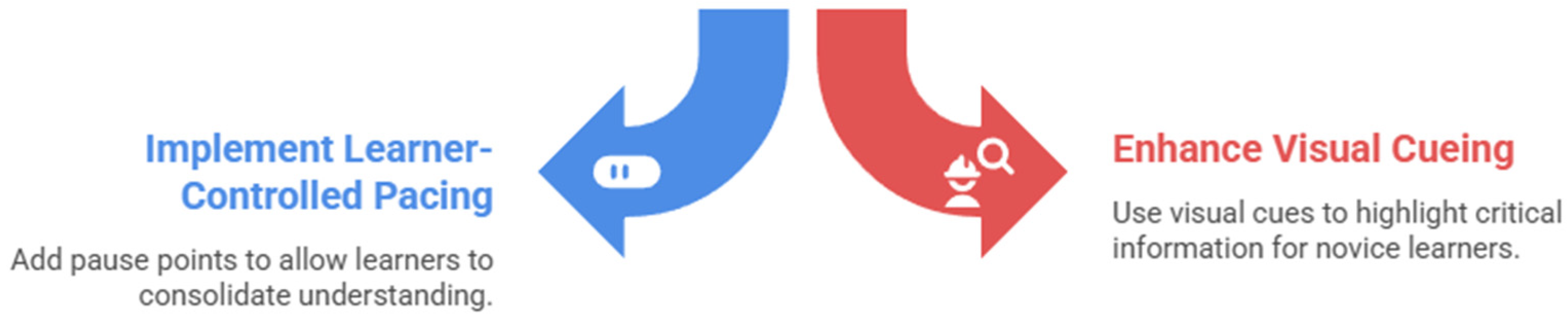
4.8. Cognitive Theory of Multimedia Learning (CTML)
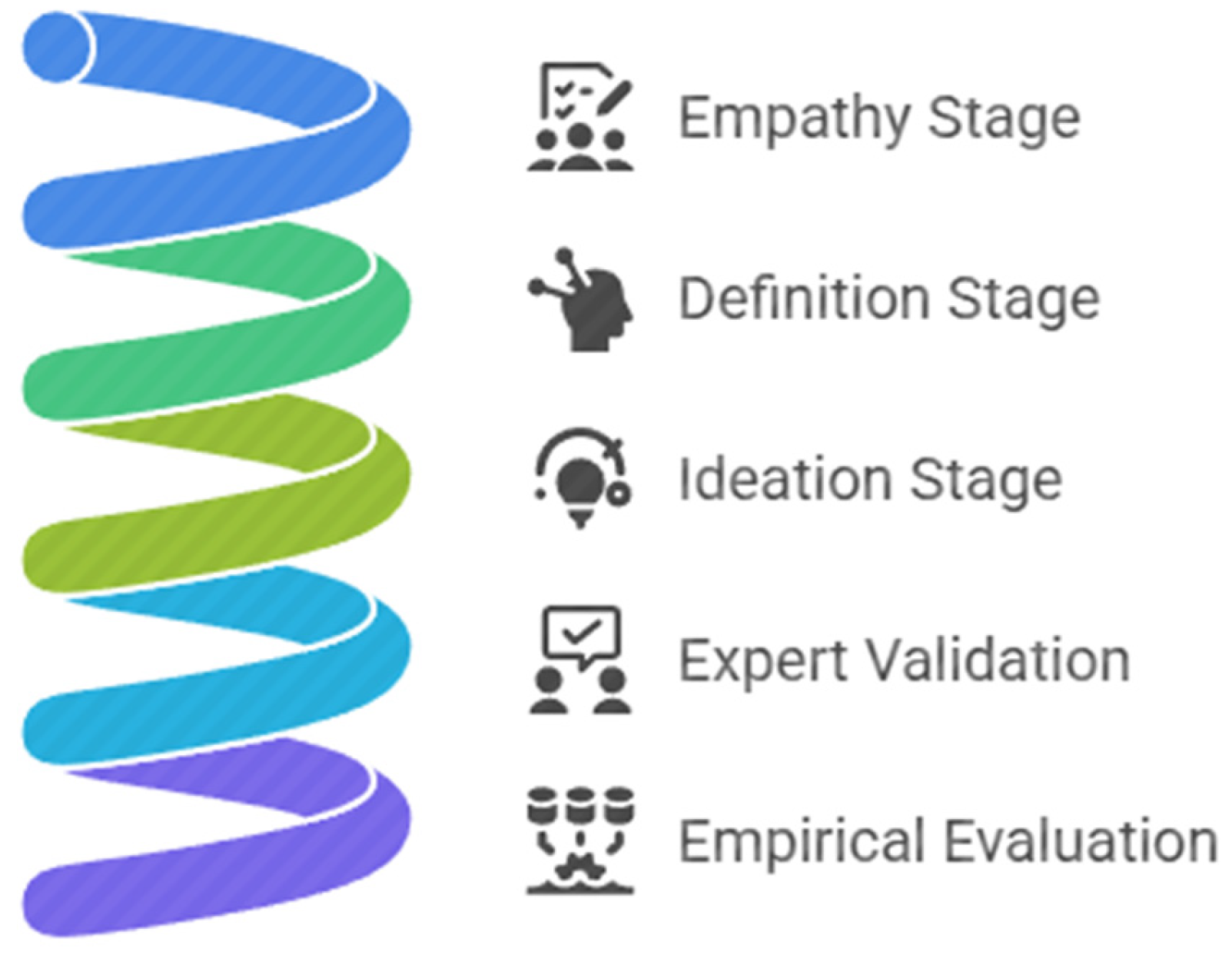
4.9. Design Thinking
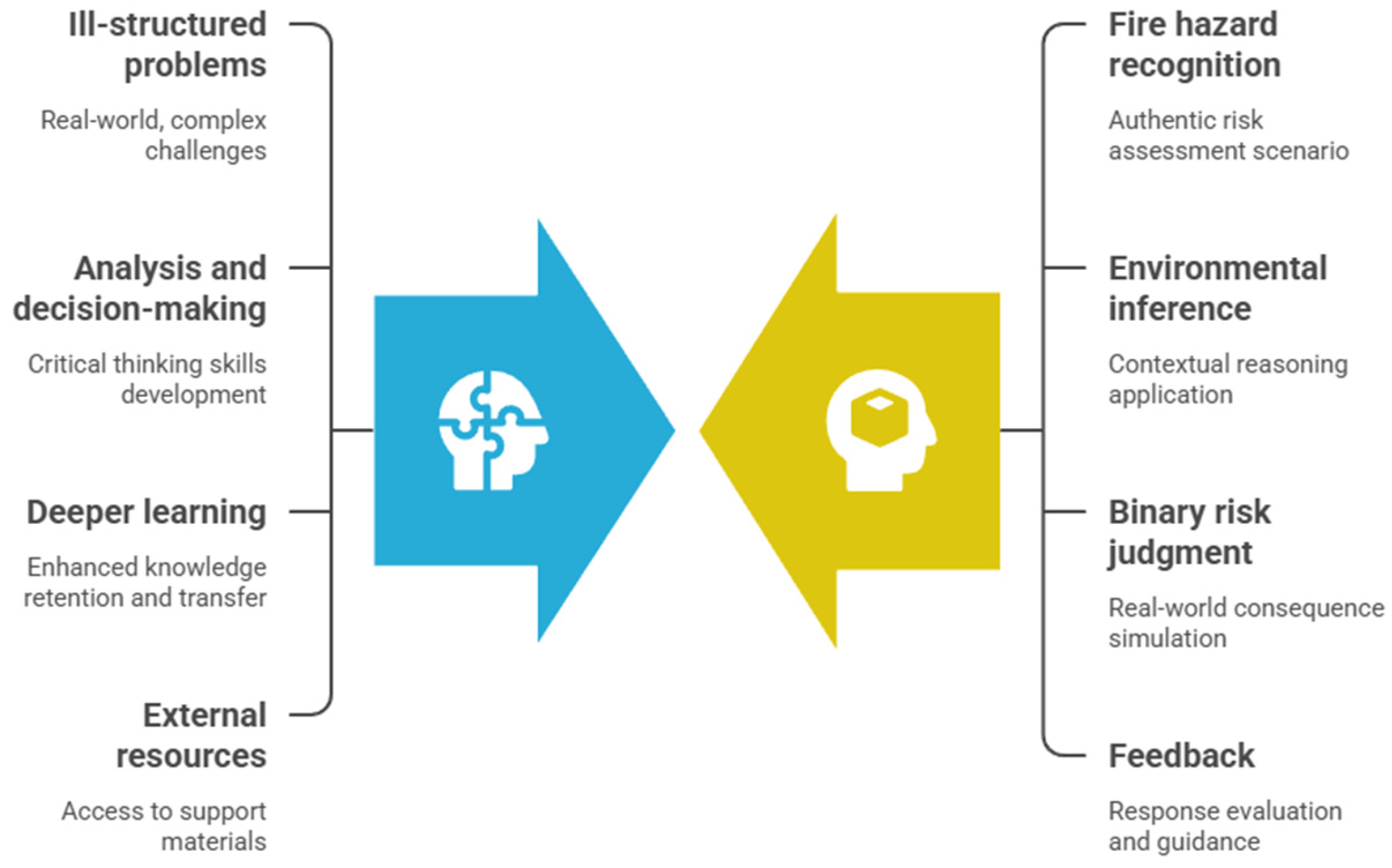
4.10. Learning Through Problem Solving (LPS)
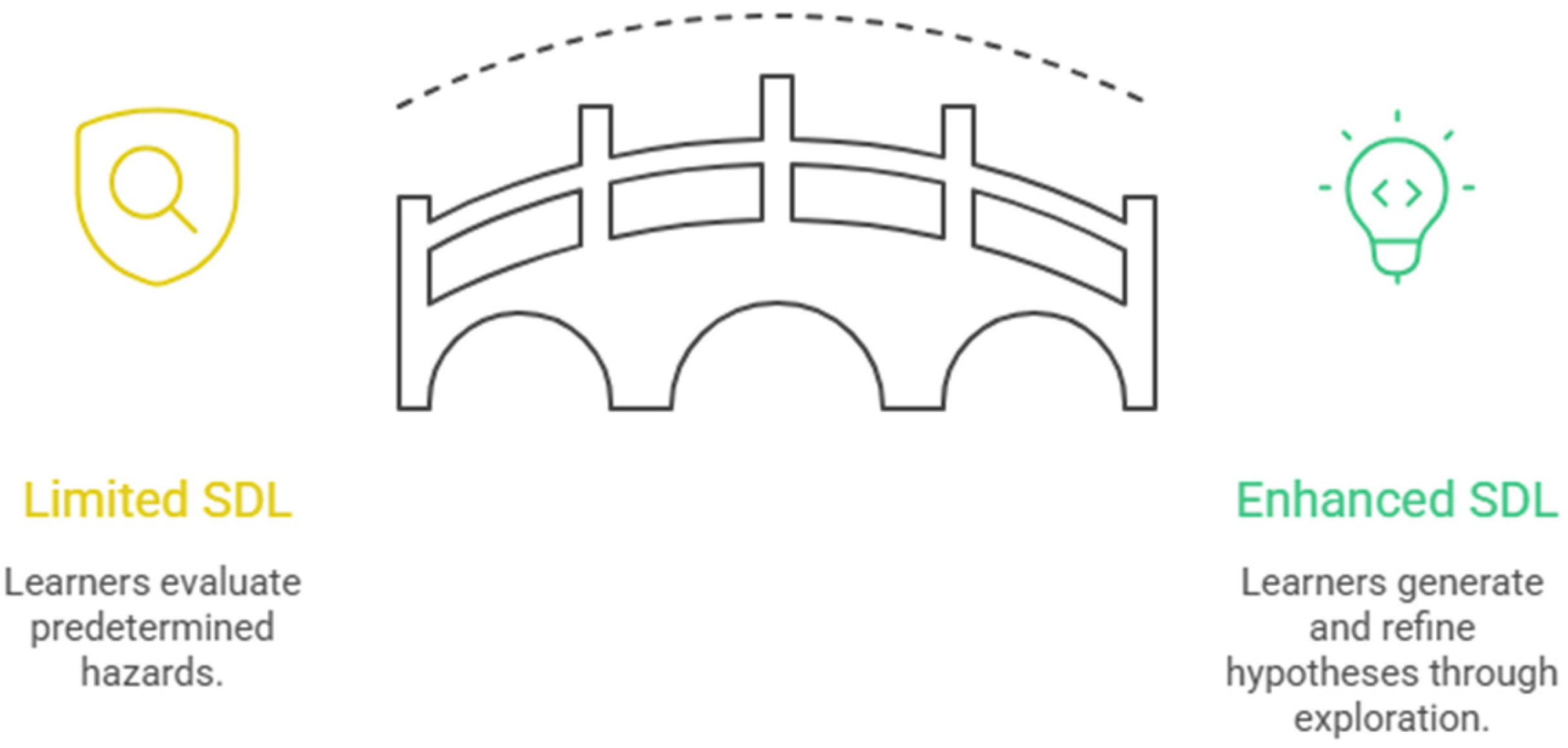
4.11. Scientific Discovery Learning (SDL)
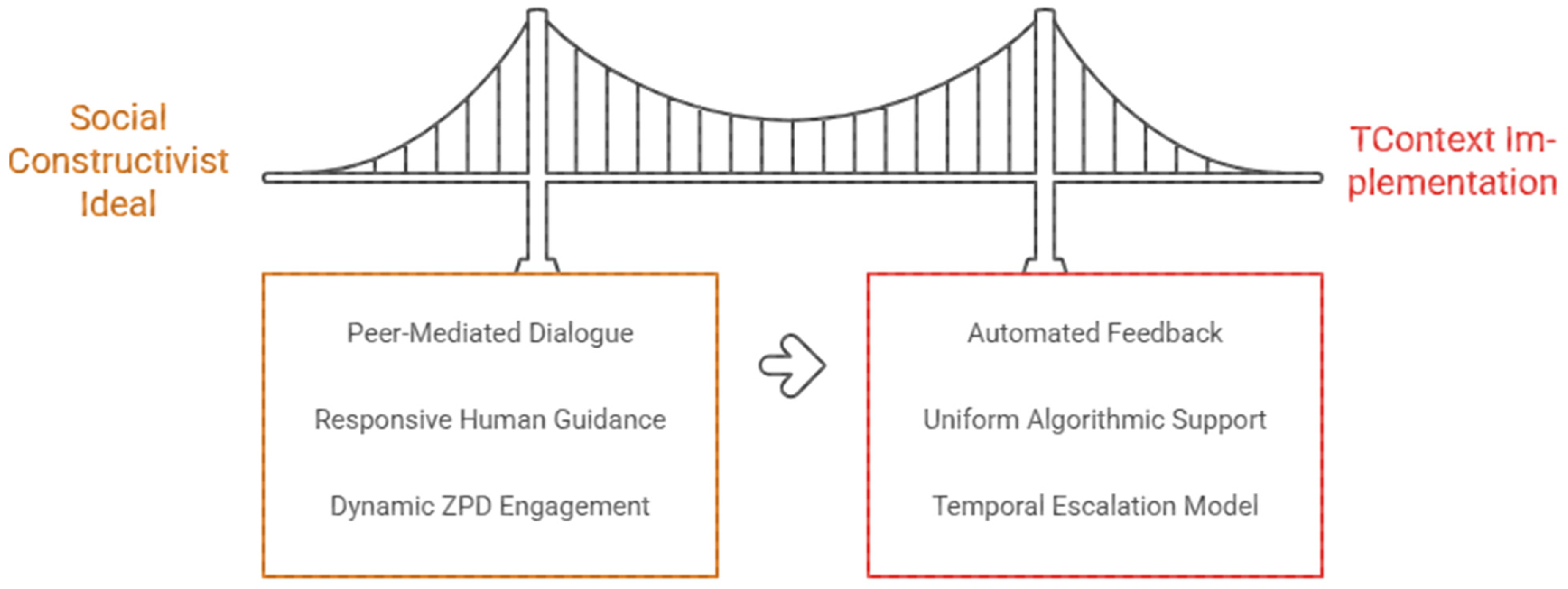
4.12. Social Constructivism
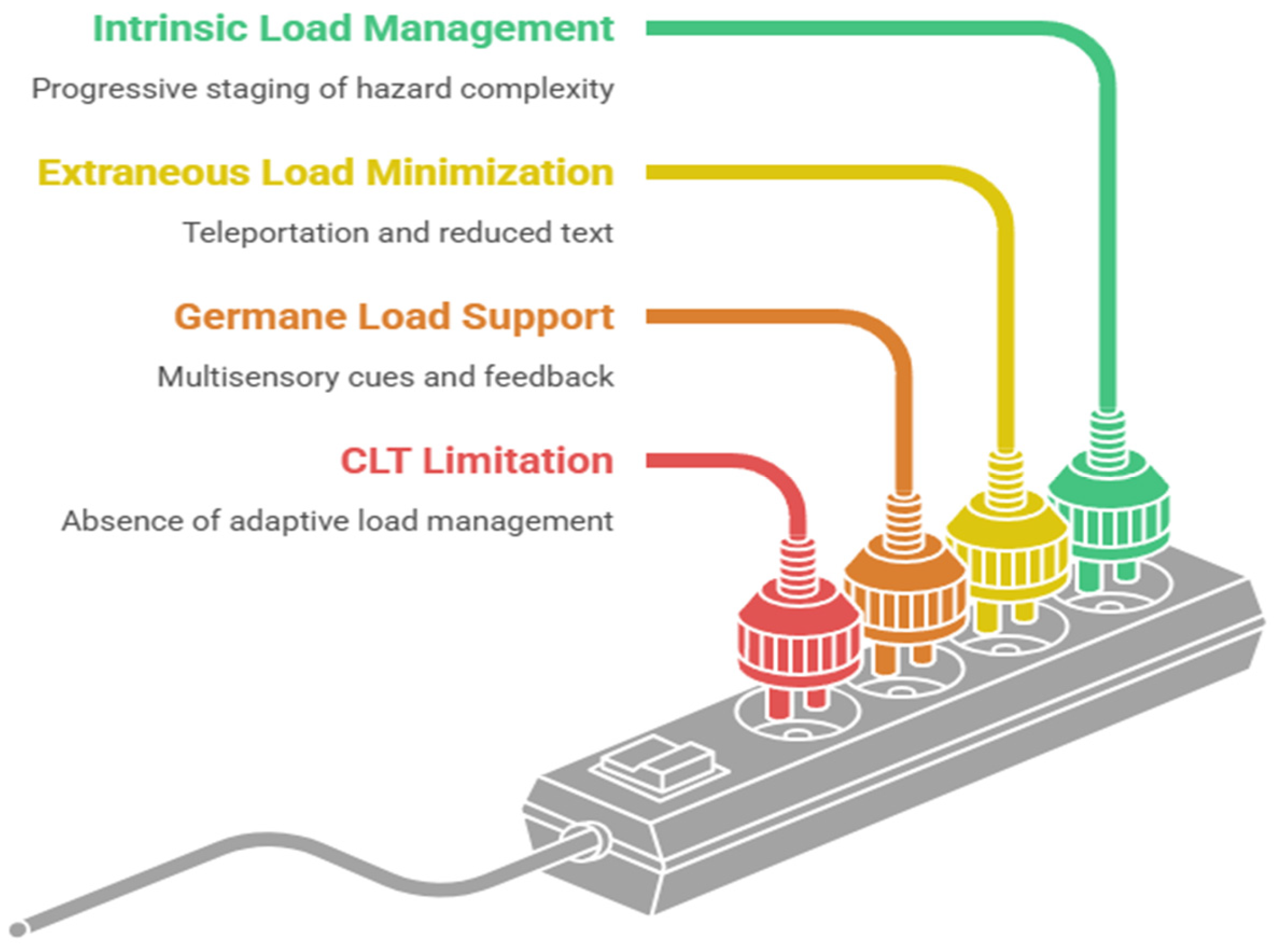
4.13. Cognitive Load Theory (CLT)
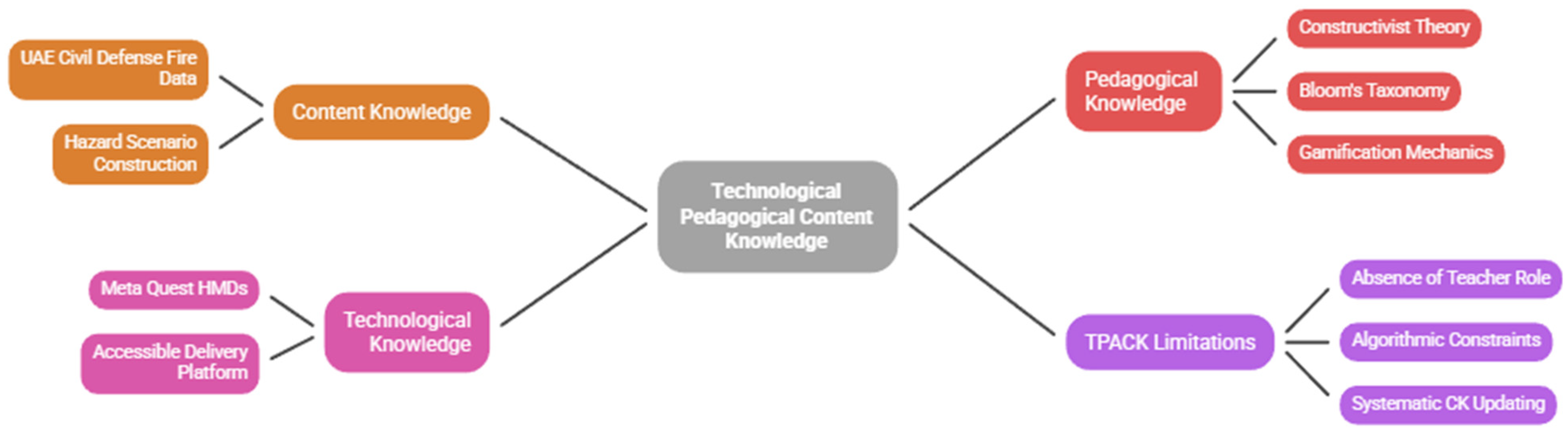
4.14. TPACK Framework
5. Discussion
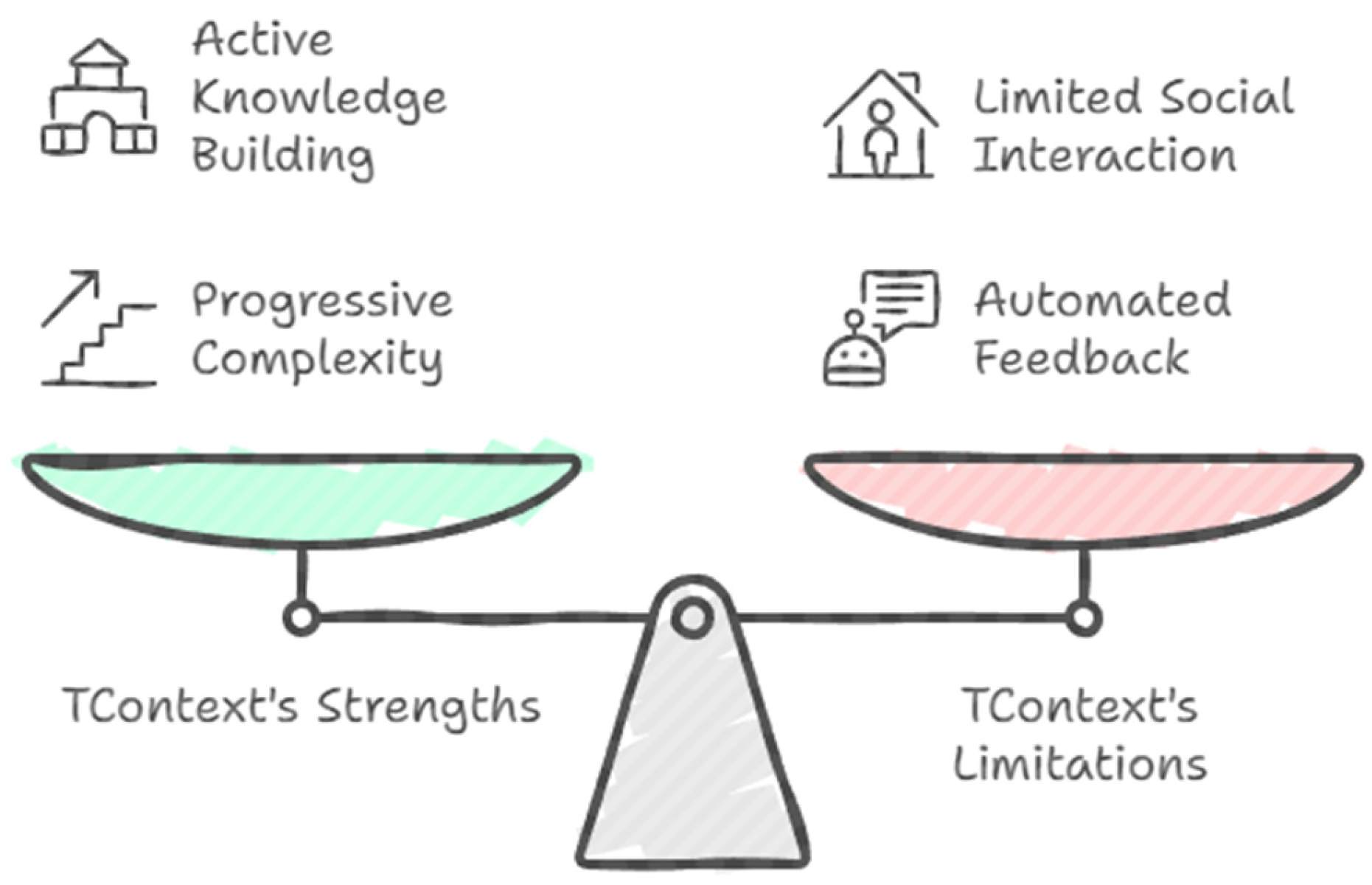
5.1. Cross-Framework Synthesis: Where TContext Is Strongest
5.2. Cross-Framework Synthesis: Persistent Gaps
5.3. TContext as a Multiple-Framework Integrative Model
5.4. Design Recommendations
6. Conclusions
Author Contributions
Funding
Institutional Review Board Statement
Informed Consent Statement
Data Availability Statement
Acknowledgments
Conflicts of Interest
References
- Tao, G.; Garrett, B.; Taverner, T.; Cordingley, E.; Sun, C. Immersive virtual reality health games: A narrative review of game design. J. Neuroeng. Rehabil. 2021, 18, 31. [Google Scholar] [CrossRef] [Scilit] [PubMed]
- Faiz, T.; Tsun, M.T.K.; Mahmud, A.A.; Sim, K.Y. A Scoping Review on Hazard Recognition and Prevention Using Augmented and Virtual Reality. Computers 2024, 13, 307. [Google Scholar] [CrossRef] [Scilit]
- Faiz, T.; Tsun, M.T.K.; Mahmud, A.A. Does Contextual Learning Matter in Fire Hazard Recognition Awareness Campaigns? Front. Virtual Real. 2025, 6, 1638300. [Google Scholar] [CrossRef] [Scilit]
- Tsun, M.T.K.; Faiz, T.; Mahmud, A.A. Bridging the Fire Safety Awareness Training Gaps: Survey Findings from Dubai and Sharjah Emirates. Indian. J. Inf. Sources Serv. 2025, 16, 324–337. [Google Scholar] [CrossRef] [Scilit]
- Faiz, T.; Tee Kit Tsun, M.; Al Mahmud, A. Enhancing fire hazard recognition through contextual virtual reality learning: A game design approach. Interact. Learn. Environ. 2026, 1–30. [Google Scholar] [CrossRef] [Scilit]
- Lave, J.; Wenger, E. Situated Learning: Legitimate Peripheral Participation; Cambridge University Press: Cambridge, UK, 1991. [Google Scholar]
- Endsley, M.; Endsley, M.R. Toward a Theory of Situation Awareness in Dynamic Systems. Hum. Factors J. Hum. Factors Ergon. Soc. 1995, 37, 32–64. [Google Scholar] [CrossRef] [Scilit]
- Hutchins, E. Cognition in the Wild; The MIT Press: Cambridge, MA, USA, 1995; p. xviii, 381. [Google Scholar]
- Reddy, P.J.K.; Revathy, K. Contextual learning. In Digital Skill Development for Industry 4.0; Auerbach Publications: Boca Raton, FL, USA, 2024; pp. 83–104. [Google Scholar]
- Kelly, S.D. Temporal awareness. In Phenomenology and Philosophy of Mind; Clarendon Press: Oxford, UK, 2005; pp. 222–234. [Google Scholar]
- Hollan, J.; Hutchins, E.; Kirsh, D. Distributed cognition: Toward a new foundation for human-computer interaction research. ACM Trans. Comput.-Hum. Interact. 2000, 7, 174–196. [Google Scholar] [CrossRef] [Scilit]
- Muffato, V.; Mazzella di Bosco, M.; Zuzzi, S.; Pellegrini, D.; Meneghetti, C. Fire safety training for workers: An investigation into how learning modalities in VR relate to performance and self-evaluations. Front. Psychol. 2026, 17, 1740985. (In English) [Google Scholar] [CrossRef] [Scilit] [PubMed]
- Miller, A.L.; Lambert, A.D. Open-Ended Survey Questions: Item Nonresponse Nightmare or Qualitative Data Dream? Surv. Pract. 2014, 7. [Google Scholar] [CrossRef] [Scilit]
- Creswell, J.W.; Creswell, J.D. Research Design: Qualitative, Quantitative, and Mixed Methods Approaches; SAGE Publications: Thousand Oaks, CA, USA, 2014. [Google Scholar]
- Doğan, E.; Şahin, F.; Şahin, Y.L.; Kobak, K.; Okur, M.R. Enhancing clinical law education through immersive virtual reality: A flow experience perspective. Learn. Instr. 2024, 94, 101989. [Google Scholar] [CrossRef] [Scilit]
- Thomas, J.; Harden, A. Methods for the thematic synthesis of qualitative research in systematic reviews. BMC Med. Res. Methodol. 2008, 8, 45. [Google Scholar] [CrossRef] [Scilit] [PubMed]
- Marougkas, A.; Troussas, C.; Krouska, A.; Sgouropoulou, C. Virtual Reality in Education: A Review of Learning Theories, Approaches and Methodologies for the Last Decade. Electronics 2023, 12, 2832. [Google Scholar] [CrossRef] [Scilit]
- Moher, D.; Liberati, A.; Tetzlaff, J.; Altman, D.; Moher, D.; Liberati, A.; Tetzlaff, J.; Altman, D.G.; The PRISMA Group. Preferred Reporting Items for Systematic Reviews and Meta-Analyses: The PRISMA Statement. J. Clin. Epidemiol. 2009, 62, 1006–1012. [Google Scholar] [CrossRef] [Scilit] [PubMed]
- Kitchenham, B. Procedures for Performing Systematic Reviews; Keele University: Keele, UK, 2004; Volume 33. [Google Scholar]
- Piaget, J. The Origin of Intelligence in Children; International Universities Press, Inc.: New York, NY, USA, 1952; Available online: https://www.scirp.org/reference/referencespapers?referenceid=2284793 (accessed on 17 June 2026). [CrossRef] [Scilit]
- Vygotsky, L.S. Mind in Society: The Development of Higher Psychological Processes; Harvard University Press: Cambridge, MA, USA, 1978; Volume 86. [Google Scholar]
- Kolb, D. Experiential Learning: Experience as The Source of Learning and Development; Prentice Hall: Hoboken, NJ, USA, 1984; Volume 1. [Google Scholar]
- Hamari, J.; Koivisto, J.; Sarsa, H. Does Gamification Work?—A Literature Review of Empirical Studies on Gamification. In Proceedings of the 2014 47th Hawaii International Conference on System Sciences, Waikoloa, HI, USA, 6–9 January 2014; pp. 3025–3034. [Google Scholar]
- Deterding, S.; Dixon, D.; Khaled, R.; Nacke, L. From Game Design Elements to Gamefulness: Defining Gamification. In Proceedings of the 15th International Academic MindTrek Conference: Envisioning Future Media Environments, Tampere, Finland, 29–30 September 2011; Volume 11, pp. 9–15. [Google Scholar]
- Dewey, J. Experience and Education. Kappa Delta Pi 1938. [Online]. Available online: https://dn720204.ca.archive.org/0/items/experienceeducat00dewe_0/experienceeducat00dewe_0.pdf (accessed on 17 June 2026).
- Csikszentmihalyi, M. Flow: The Psychology of Optimal Experience. 1990. Available online: https://www.researchgate.net/publication/224927532_Flow_The_Psychology_of_Optimal_Experience (accessed on 17 June 2026).
- Mayer, R. The Past, Present, and Future of the Cognitive Theory of Multimedia Learning. Educ. Psychol. Rev. 2024, 36, 8. [Google Scholar] [CrossRef] [Scilit]
- Brown, T. Design Thinking. Harv. Bus. Rev. 2008, 86, 84–92, 141. [Google Scholar] [PubMed]
- Jonassen, D.H. Toward a design theory of problem solving. Educ. Technol. Res. Dev. 2000, 48, 63–85. [Google Scholar] [CrossRef] [Scilit]
- Sedlák, M.; Šašinka, Č.; Stachoň, Z.; Chmelík, J.; Doležal, M. Collaborative and individual learning of geography in immersive virtual reality: An effectiveness study. PLoS ONE 2022, 17, e0276267. (In English) [Google Scholar] [CrossRef] [Scilit] [PubMed]
- de Jong, T.; van Joolingen, W. Scientific Discovery Learning with Computer Simulations of Conceptual Domains. Rev. Educ. Res. 1998, 68, 179–201. [Google Scholar] [CrossRef]
- Southgate, E.; Smith, S.P.; Cividino, C.; Saxby, S.; Kilham, J.; Eather, G.; Scevak, J.; Summerville, D.; Buchanan, R.; Bergin, C. Embedding immersive virtual reality in classrooms: Ethical, organisational and educational lessons in bridging research and practice. Int. J. Child-Comput. Interact. 2019, 19, 19–29. [Google Scholar] [CrossRef] [Scilit]
- Sweller, J. Cognitive load during problem solving: Effects on learning. Cogn. Sci. 1988, 12, 257–285. [Google Scholar] [CrossRef] [Scilit]
- Sweller, J.; Van Merrienboer, J.J.G.; Paas, F. Cognitive Architecture and Instructional Design: 20 Years Later. Educ. Psychol. Rev. 2019, 31, 261–292. [Google Scholar] [CrossRef] [Scilit]
- Koehler, M.; Mishra, P.; Akcaoglu, M.; Rosenberg, J. The Technological Pedagogical Content Knowledge Framework for Teachers and Teacher Educators; Springer: New York, NY, USA, 2013. [Google Scholar]
- Lim, T.; Carvalho, M.B.; Bellotti, F.; Arnab, S.; De Freitas, S.; Louchart, S.; Suttie, N.; Berta, R.; De Gloria, A. The LM-GM Framework for Serious Games Analysis; University of Pittsburgh: Pittsburgh, PA, USA, 2015. [Google Scholar]
- Hsieh, H.F.; Shannon, S.E. Three approaches to qualitative content analysis. Qual. Health Res. 2005, 15, 1277–1288. [Google Scholar] [CrossRef] [Scilit] [PubMed]
- Carroll, C.; Booth, A.; Cooper, K. A worked example of “best fit” framework synthesis: A systematic review of views concerning the taking of some potential chemopreventive agents. BMC Med. Res. Methodol. 2011, 11, 29. [Google Scholar] [CrossRef] [Scilit] [PubMed]
- Lave, J.; Wenger, E. Learning in doing: Social, cognitive, and computational perspectives. Situated Learn. Legitimate Peripher. Particip. 1991, 10, 109–155. [Google Scholar] [CrossRef] [Scilit]
- Jackson, S.A.; Marsh, H. Development and validation of a scale to measure optimal experience: The Flow State Scale. J. Sport. Exerc. Psychol. 1996, 18, 17–35. [Google Scholar] [CrossRef] [Scilit]
- Arnab, S.; Lim, T.; Carvalho, M.; Bellotti, F.; Freitas, S.; Louchart, S.; Suttie, N.; Berta, R.; De Gloria, A. Mapping learning and game mechanics for serious games analysis: Mapping learning and game mechanics. Br. J. Educ. Technol. 2014, 46, 391–411. [Google Scholar] [CrossRef] [Scilit]
- Johansson-Sköldberg, U.; Woodilla, J.; Çetinkaya, M. Design Thinking: Past, Present and Possible Futures. Creat. Innov. Manag. 2013, 22, 121–146. [Google Scholar] [CrossRef] [Scilit]
- Bruner, J.S. The act of discovery. Harv. Educ. Rev. 1961, 31, 21–32. [Google Scholar]
- Mayer, R.E. Should There Be a Three-Strikes Rule Against Pure Discovery Learning? Am. Psychol. 2004, 59, 14–19. [Google Scholar] [CrossRef] [Scilit] [PubMed]
- McLeod, S. Vygotsky’s Theory of Cognitive Development. 2024. Available online: https://zenodo.org/records/15680745 (accessed on 10 June 2026).
- Wehrmann, F.; Zender, R. A Systematic Review of Cooperation in Multi-User Virtual Reality Learning Environments. J. Comput. Assist. Learn. 2025, 41, e70112. [Google Scholar] [CrossRef] [Scilit]
- Li, T.; Zhu, Y.; Liang, H.-N.; Wang, Y. Adapting to the User: A Systematic Review of Personalized Interaction in VR. arXiv 2025. [Google Scholar] [CrossRef] [Scilit]
- Scorgie, D.; Feng, Z.; Paes, D.; Parisi, F.; Yiu, T.W.; Lovreglio, R. Virtual reality for safety training: A systematic literature review and meta-analysis. Saf. Sci. 2024, 171, 106372. [Google Scholar] [CrossRef] [Scilit]
- Garrido, G.; Nair, V.; Song, D. SoK: Data Privacy in Virtual Reality. Proc. Priv. Enhancing Technol. 2024, 2024, 21–40. [Google Scholar] [CrossRef] [Scilit]
- Hancko, D.; Majlingova, A.; Kačíková, D. Integrating Virtual Reality, Augmented Reality, Mixed Reality, Extended Reality, and Simulation-Based Systems into Fire and Rescue Service Training: Current Practices and Future Directions. Fire 2025, 8, 228. [Google Scholar] [CrossRef] [Scilit]





| Theme Name | Theme Key |
|---|---|
| Social/Collaborative Mediation | T1 |
| Individualization/Adaptivity | T2 |
| Reflective/Metacognitive Processing | T3 |
| Learner Agency/Openness of inquiry | T4 |
| Transfer/Longitudinal Validation | T5 |
| Design Inferred vs. Measured-outcome Evidence | T6 |
| Framework | Strengths of TContext | Limitations of TContext |
|---|---|---|
| Constructivism [20,21] | 1. TContext embeds hazards in familiar domestic settings, fulfilling constructivism’s demand that knowledge is built through direct experience in context (T4). 2. Learners construct mental models by navigating authentic residential fire scenarios rather than receiving symbolic instruction (T4). 3. The T0–T3 temporal escalation model scaffolds knowledge construction progressively, mirroring the zone of proximal development (T2). 4. Immediate audio-visual feedback mirrors social constructivism’s emphasis on corrective dialogue with a knowledgeable agent (T1). | 1. TContext does not accommodate social constructivism’s peer-interaction requirement; all learning is solitary (T1). 2. Scaffolding is uniform rather than individually adapted to each learner’s prior knowledge level (T2). 3. No collaborative scenario mode; group sense-making, central to Vygotskian approaches, is absent (T1). |
| Experiential Learning Theory (ELT) [22] | 1. TContext’s structure maps directly onto Kolb’s cycle: concrete experience (VR exploration), reflective observation (post-scenario review), abstract conceptualization (score-based pattern recognition), and active experimentation such as retry attempts (T3). 2. Retry functionality enables iterative cycling through the experiential loop within a single session (T3). 3. Multisensory cues (smoke visuals, electrical spark sounds) enrich the concrete experience stage beyond what passive media can provide (T6). 4. Scenario diversity across kitchen, living room, electrical, and emergency contexts broadens experiential breadth (T5). 5. TContext’s pre-test/post-test experimental design operationalizes ELT’s requirement for empirical validation of learning gain through the full experiential cycle, demonstrating that contextual VR engagement produces measurable improvement over non-contextual delivery (T6). | 1. The reflective observation stage is underdeveloped; TContext provides score feedback but no structured debriefing or journaling mechanism (T3). 2. Abstract conceptualization is implicit; TContext does not prompt learners to articulate transferable principles after scenario completion (T3). 3. Transfer to real-world behavior beyond the VR session is untested, a known weakness in all short-cycle experiential designs (T5). |
| Gamification of Learning [24] | 1. TContext employs core game mechanics: point scoring, progressive hazard levels, success/failure audio feedback, and minimum performance thresholds for progression (T6). 2. Gamification sustains motivation through challenge calibration; the 7/10 pass threshold creates goal-directed persistence evidenced by five voluntary retries (T2, T6). 3. Score visibility and immediate feedback operationalize reinforcement without extrinsic rewards alone, aligning with self-determination theory within gamification (T3). 4. Narrative residential context converts abstract safety knowledge into meaningful, story-embedded decision points (T4). | 1. TContext lacks advanced gamification elements such as social comparison, badges, or unlockable content that sustain long-term engagement (T1). 2. The gamification layer is not culturally differentiated; reward structures may carry different motivational salience across TContext’s diverse user base (T2). 3. Risk of performance focus displacing genuine learning: learners may optimize for scoring rather than genuine hazard comprehension (T4). |
| Learning by Doing (LBD) [25] | 1. TContext operationalizes Dewey’s core principle: fire hazard learning is structured as purposeful action in a realistic environment, not passive reception (T4). 2. Six-degrees-of-freedom (6DoF) movement enables learners to physically inspect object relationships (e.g., candle proximity to the curtain) as an act of doing (T4). 3. Interaction mechanics requiring selection and risk-status assessment of objects embody Dewey’s insistence on learner agency in the inquiry process (T4). 4. The training-then-assessment sequence mirrors Dewey’s problem-action-consequence cycle (T3, T5). | 1. TContext’s virtual actions carry no physical consequences; Dewey’s emphasis on natural consequences is attenuated in simulation (T3). 2. The structured scenario sequence constrains open-ended inquiry; Dewey’s progressive education favors learner-directed problem formulation, which TContext does not support (T4). 3. Skill transfer to actual fire emergency actions is not empirically verified (T5). |
| Flow Theory (FT) [26] | 1. TContext’s challenge-skill balance is structured through the T0–T3 escalation model: hazards begin non-threatening and escalate, maintaining challenge progression (T2). 2. The 7/10 minimum score threshold prevents boredom from trivially easy tasks and anxiety from overwhelming difficulty (T2). 3. Phase 3 SUS data confirming high engagement and immersion scores indicate that TContext consistently evokes flow-state conditions (T6). 4. Temporal pressure inherent in escalating hazard scenarios creates focused attention characteristic of flow (T4). | 1. TContext does not dynamically adapt challenge level to individual performance in real time; learners with markedly different skill levels receive identical scenario difficulty (T2). 2. Flow measurement in TContext is indirect (SUS and engagement scales); dedicated flow measurement instruments (e.g., Flow State Scale) were not deployed (T6). 3. Repeated retry sessions may reduce novelty and therefore reduce flow propensity across multiple uses (T5). 4. TContext does not incorporate dedicated flow measurement instruments such as the Flow State Scale [40]; relying solely on SUS and general engagement scales provides indirect evidence of flow, limiting the precision of flow-based design evaluation and iteration (T6). |
| Learning Mechanics–Game Mechanics (LM-GM) [36,41] | 1. TContext demonstrates explicit LM-GM alignment: the game mechanic of object inspection maps to the learning mechanic of hazard identification; temporal escalation maps to anticipatory reasoning (T6). 2. Score progression mechanics are linked to contextual awareness outcomes, not merely task completion, strengthening the pedagogical function of game design (T6). 3. Teleportation as an attentional allocation mechanic directly serves the distributed awareness learning construct (T4). 4. 6DoF serves spatial cognition and multi-angle hazard inspection as a mapped mechanic-mechanic pair (T4). | 1. The LM-GM mapping in TContext was not formally documented as a design artefact; alignment is inferable but not explicitly validated against the Arnab et al. framework [41] (T6). 2. Higher-order mechanics for synthesis and evaluation-level outcomes (Bloom Levels 5–6) are absent; TContext targets application and analysis only (T3). 3. Collaborative game mechanics that support social learning objectives are not present (T1). |
| Cognitive Theory of Multimedia Learning (CTML) [27] | 1. TContext uses dual-channel presentation: visual (3D environments, escalating fire cues, smoke particle effects) and auditory (electrical buzz, smoke fan sounds, feedback tones) channels are deliberately separated to exploit both cognitive channels (T6). 2. Temporal and spatial contiguity principles are satisfied: audio cues are synchronized with the visual hazard events they describe (T6). 3. TContext’s 10–15-min training sessions respect the cognitive load limits implied by CTML’s limited channel capacity principle (T2). 4. Scenario-based organization reduces split attention; related visual and auditory elements are co-presented within the same 3D space (T6). 5. TContext’s gamified scenario structure avoids the seductive details effect; all multimedia elements such as fire visuals, audio cues, and hazard escalation animations serve direct pedagogical functions aligned with fire hazard learning objectives, with no decorative or irrelevant media present (T6). | 1. TContext does not comply with CTML’s segmenting principle in a structured way; hazard sequences are not explicitly chunked with learner-controlled pace breaks (T2). 2. On-screen text was present, creating a potential redundancy effect (T2). 3. CTML’s signalling principle is partially applied; not all critical hazard relationships are explicitly highlighted for novice learners (T2). |
| Design Thinking (DT) [28,42] | 1. TContext’s three-phased research design (survey, framework, experiment) mirrors design thinking’s empathize-define-ideate-prototype-test cycle (T5). 2. Phase 1 survey directly empathized with Dubai/Sharjah residents’ training failures, producing user-centred design requirements (T1). 3. Phase 2 expert validation with eight domain experts operationalized the test phase of design thinking and produced iterative refinements (T6). 4. Modular scenario architecture (kitchen, living room, electrical, emergency) supports iterative redesign of individual components without system-wide rebuilds (T5). | 1. The design thinking principle of early failure is not explicitly documented (T6). 2. User co-design (participatory design) was absent; residents did not contribute to scenario selection or interaction design (T1). 3. Post-deployment iteration based on real-world use data has not yet been conducted, leaving the design thinking cycle incomplete (T5). 4. No explicit re-emphasizing phase was conducted during the evaluation in TContext. Design Thinking’s iterative double diamond cycle requires returning to user needs after testing to validate that design solutions continue to align with evolving community fire safety requirements [28] (T1, T5). |
| Learning through Problem Solving (LPS) [29] | 1. TContext presents each hazard scenario as an authentic, ill-defined problem: learners must determine whether a given environmental configuration constitutes a risk, requiring analysis rather than recall (T4). 2. The binary risk-judgment structure mirrors LPS problem formats with real-world consequences, grounding the problem in learners’ actual domestic environments (T5). 3. Distributed awareness tasks require simultaneous multi-hazard problem decomposition, a higher-order LPS cognitive demand (T4). 4. Feedback after incorrect identification supports metacognitive reflection on problem-solving errors (T3). | 1. TContext does not support open-ended problem formulation; all problem boundaries are set by designers, limiting authentic problem ownership (T4). 2. Ill-structured problem features are constrained; hazard scenarios follow a predictable escalation script, reducing the genuine ambiguity central to LPS (T4). 3. No external resource access (manuals, peers, expert consultation) is available during task performance, which LPS frameworks often incorporate (T1). |
| Scientific Discovery Learning (SDL) [31,43] | 1. TContext’s VR environment affords self-directed spatial exploration; learners navigate and inspect objects in their chosen sequence, partially enacting SDL’s principle of learner-driven inquiry and discovery within authentic domestic contexts (T4). 2. The retry mechanism enables iterative hypothesis-correction cycles analogous to SDL’s trial-and-refinement process; learners who receive incorrect feedback can re-engage with the scenario to test revised hazard judgments (T3). 3. Multisensory, contextually embedded cues across kitchen, electrical, mechanical, and emergency scenarios enable inductive discovery of hazard patterns, supporting SDL’s principle that learners discover underlying rules through direct engagement with stimulus-rich environments (T4). | 1. TContext hazard scenarios are reviewed by HCI experts; learners respond to designated hazard cues rather than formulating their own hypotheses about environmental risk, directly contradicting SDL’s foundational requirement for learner-generated inquiry and self-directed problem definition [43] (T4). 2. The structured T0–T3 escalation sequence controls the pace and direction of exploration; SDL requires learner autonomy over the discovery trajectory and the sequencing of inquiry steps [31] (T4). 3. No hypothesis-generation or prediction interface is provided; SDL typically requires learners to explicitly state expected outcomes before receiving feedback, a cognitive step that deepens knowledge construction through prediction-error learning [44] (T3, T4). 4. Pure discovery approaches carry significant risk of cognitive overload for novice learners without worked examples or instructional guidance; TContext provides binary feedback but lacks scaffolded example demonstrations that SDL research identifies as essential for preventing misconception formation (T2). |
| Social Constructivism [21] | 1. TContext’s immediate audio-visual feedback partially enacts the role of a More Knowledgeable Other (MKO) by providing corrective guidance after each hazard judgment, offering a form of algorithmically mediated scaffolding within the ZPD (T1). 2. The T0–T3 temporal escalation operationalizes a form of systemic scaffolding by progressively increasing hazard complexity, structurally mirroring the Zone of Proximal Development (ZPD)’s requirement that challenge be calibrated just beyond the learner’s current independent capability (T2). | 1. TContext is a single-user platform; peer-mediated dialogue and collaborative knowledge construction through social interaction are absent, directly violating Social Constructivism’s foundational claim that all higher cognitive functions arise first between people before being internalized (T1). 2. Automated audio-visual feedback cannot replicate the nuanced, responsive scaffolding of a human MKO (More Knowledge Other); the system delivers binary correct/incorrect signals rather than the dialogic, context-sensitive support that Vygotsky identifies as the mechanism through which the ZPD is bridged [45] (T1, T2). 3. No shared meaning-making or intersubjective sense-making mechanisms exist; fire preparedness is inherently a community-level concern requiring collective interpretation of domestic risks; nevertheless, TContext’s solitary architecture forecloses this dimension entirely (T1). 4. The cultural and linguistic diversity of TContext’s UAE target population is not addressed through differentiated social scaffolding; Social Constructivism emphasizes that cultural tools and language are the primary mediators of cognitive development, requiring culturally responsive interaction design that goes beyond multilingual audio narration (T1, T2). |
| Cognitive Load Theory (CLT) [33,34] | 1. TContext’s 10–15-min scenario sessions contain extraneous cognitive load by limiting irrelevant environmental complexity (T2). 2. Teleportation eliminates physical navigation overhead, freeing working memory for hazard-recognition processing (T2). 3. Temporal staging (T0 to T3) manages intrinsic load by sequencing hazard complexity progressively rather than presenting fully developed fires immediately (T2). 4. Audio-visual feedback provides immediate load-efficient error correction without requiring learners to hold error states in working memory (T3). 5. TContext’s single-session constrained design (10–15 min) aligns with the element interactivity principle; by limiting per-session exposure to one residential context, the platform prevents element interactivity from escalating beyond working memory capacity before learners have formed foundational hazard schemas (T2). | 1. Distributed awareness tasks, requiring simultaneous multi-hazard monitoring, may exceed working memory capacity for VR novices or lower-literacy learners (T2). 2. TContext does not include adaptive load management; intrinsic load is not dynamically reduced for learners showing signs of cognitive overload (T2). 3. Prior VR unfamiliarity among some participants constitutes extraneous load that was not measured or controlled in Phase 3 (T6). |
| TPACK Framework [35] | 1. TContext achieves strong integration across all three TPACK domains: fire safety content knowledge, constructivist-gamification pedagogical knowledge, and VR-HMD technological knowledge (T6). 2. Temporal escalation model (T0–T3) reflects deep domain (content) knowledge of how real fire incidents develop, fulfilling the CK component (T5). 3. Gamification mechanics and contextual scenario structure demonstrate deliberate pedagogical knowledge (PK) embedded in design rather than added post hoc (T6). 4. Consumer-grade Meta Quest HMDs demonstrate technology knowledge (TK) choices aligned with accessibility and scalability constraints (T2). | 1. TContext does not fully exploit VR’s unique capabilities for collaborative learning or adaptive instruction (T1, T2). 2. Content knowledge (CK) is UAE-specific; TPACK requires ongoing reassessment when TContext is deployed in different fire hazard contexts or cultural settings (T5). 3. TContext does not include a teacher/facilitator role, which TPACK typically addresses; all PCK decisions are embedded in the system rather than negotiated with an educator (T1). 4. TContext’s technological knowledge (TK) component does not encompass emerging VR capabilities such as eye-tracking, biometric sensing, or adaptive haptic feedback, which represent the current frontier of immersive instructional technology; TPACK’s TK dimension requires ongoing re-assessment as these technologies become accessible on consumer platforms (T2). |
Disclaimer/Publisher’s Note: The statements, opinions and data contained in all publications are solely those of the individual author(s) and contributor(s) and not of MDPI and/or the editor(s). MDPI and/or the editor(s) disclaim responsibility for any injury to people or property resulting from any ideas, methods, instructions or products referred to in the content. |
© 2026 by the authors. Licensee MDPI, Basel, Switzerland. This article is an open access article distributed under the terms and conditions of the Creative Commons Attribution (CC BY) license.
Share and Cite
Faiz, T.; Tee, M.K.T.; Al Mahmud, A. Theoretical Positioning of TContext: A Comparative Analysis of a Contextual VR Platform for Fire Hazard Recognition. Virtual Worlds 2026, 5, 46. https://doi.org/10.3390/virtualworlds5030046
Faiz T, Tee MKT, Al Mahmud A. Theoretical Positioning of TContext: A Comparative Analysis of a Contextual VR Platform for Fire Hazard Recognition. Virtual Worlds. 2026; 5(3):46. https://doi.org/10.3390/virtualworlds5030046
Chicago/Turabian StyleFaiz, Tauqeer, Mark Kit Tsun Tee, and Abdullah Al Mahmud. 2026. "Theoretical Positioning of TContext: A Comparative Analysis of a Contextual VR Platform for Fire Hazard Recognition" Virtual Worlds 5, no. 3: 46. https://doi.org/10.3390/virtualworlds5030046
APA StyleFaiz, T., Tee, M. K. T., & Al Mahmud, A. (2026). Theoretical Positioning of TContext: A Comparative Analysis of a Contextual VR Platform for Fire Hazard Recognition. Virtual Worlds, 5(3), 46. https://doi.org/10.3390/virtualworlds5030046