
Skip to Content

Sensors

Sensors is an international, peer-reviewed, open access journal on the science and technology of sensors, published semimonthly online by MDPI. The Polish Society of Applied Electromagnetics (PTZE), Japan Society of Photogrammetry and Remote Sensing (JSPRS), Spanish Society of Biomedical Engineering (SEIB)International Society for the Measurement of Physical Behaviour (ISMPB)Chinese Society of Micro-Nano Technology (CSMNT) and more are affiliated with Sensors and their members receive discounts on the article processing charges.

Get Alerted

Add your email address to receive forthcoming issues of this journal.

All Articles (80,577)

In static acrobatic gymnastics pyramids, maintaining stability in a multi-person system is critical, yet unconstrained floor baselines and base-to-top pairing mechanics remain poorly quantified. This study evaluated postural stability in shoulder-stand pyramids, examining the interplay of two specific top-athlete variations (lighter Pyramid T1 vs. heavier Pyramid T2) and base-athlete stances (parallel vs. tandem). Five elite base-athletes were monitored while supporting two top-athlete variations, a lighter (Pyramid T1) and a heavier (Pyramid T2) during a standard static shoulder-stand pyramid across parallel and tandem foot placement configurations (three trials in each Pyramid variation). Unconstrained free floor-standing baselines were also recorded for base-athletes and for tops prior to and following pyramid trials. The root mean square (RMS) of the resultant 3D free acceleration (Xsens MTw Awinda inertial sensors sampling at 100 Hz, Xsens MT Manager version 4.6.5 software) positioned at the bases’ and the tops’ shanks (right and left) was used to assess postural stability. A five-point median filter followed by a zero-phase, 2nd-order forward and reverse Butterworth low-pass filter (yielding an effective 4th-order response at 5 Hz and 10 Hz cutoffs) was applied to all signals (MATLAB R2025b). Stance-envelope dimensions were calculated from rectangular boundaries fitted to the base’s foot outlines. Non-parametric Spearman rank correlations (ρ) and parametric correlations (r,R2) were used to test the interbase-consistency and base-to-top coupling. Two-way repeated measures ANOVAs (pyramid x stance configurations) were applied with primary analytical emphasis placed on descriptive effect sizes alongside exact p-values (SPSS v30, p < 0.05). The acrobatic tandem stance expanded the parallel stance-envelope area by 148.3% and its width by 24.7%. When base-athletes transitioned from free standing to pyramids there was a substantial acceleration RMS increase (Pyramid T1: +24.3% to 83.6%, Pyramid T2: 47.2% to 166.2%). Supporting the heavier top-athlete (Pyramid T2) significantly increased the bases’ resultant acceleration RMS by +37% to +48% across both filter cutoff thresholds (p<0.05). Furthermore, top athletes exhibited differential behaviors: while Top 2 displayed lower acceleration RMS than Top 1, she experienced a greater acceleration surge when in Pyramid ( ). The bases’ and the tops’ acceleration profiles did not exhibit parallel responses, indicating decoupled rather than mirrored stability adjustments. Furthermore, when the acceleration RMS was normalized to stance-envelope dimensions, significant pyramid x stance interaction (p<0.05) was observed in the anteroposterior but not the mediolateral acceleration. Base-athlete stability varies significantly across top-athlete variations and stance geometries. Evaluating unconstrained floor baselines alongside spatial stance boundaries is essential for capturing structural loading dynamics in multi-person athletic tasks.

Sensors

14 September 2026

Schematic representation of foot placements in the parallel (left) and the tandem (right) stances. The white rectangle indicates the bounding rectangle used to calculate the stance-envelope area, defined as the product of its ML (width) and AP (length) dimensions.

Reducing user-specific calibration is critical for practical steady-state visual evoked potential (SSVEP)-based brain–computer interfaces (BCIs), yet few-shot cross-subject decoding remains challenged by heterogeneous source transferability and inter-subject variability. We propose SQ-HAF, a source quality-guided framework that combines target-relevant source selection, frequency neighborhood-regularized spatial filtering, covariance alignment, and multi-branch decision fusion. Candidate source subjects are ranked primarily by target–source template similarity; when more than one labeled calibration trial per stimulus is available, split-half template consistency (STC) provides a bounded confidence adjustment. The retained source data are used to construct aligned generalized and source-specific templates. For recognition, SQ-HAF fuses a five-subband harmonic reference CCA score with generalized source template and source-specific template scores. We evaluated SQ-HAF using leave-one-subject-out validation on the 35-subject Benchmark and 70-subject BETA datasets. Under the 1.0 s protocol with one labeled calibration trial per stimulus, the complete SQ-HAF configuration achieved 81.57% accuracy (ACC) and 227.83 bits/min information transfer rate (ITR) on Benchmark, and 65.56% ACC and 163.42 bits/min ITR on BETA. In a matched 0.5 s analysis with two calibration trials per stimulus, the five-subband harmonic reference design improved ACC over single-band processing on both datasets after Holm correction. These results indicate that target-relevant source screening and complementary harmonic/template evidence can support low-calibration cross-subject SSVEP decoding.

Sensors

14 September 2026

Overview of SQ-HAF for few-shot cross-subject SSVEP recognition. Candidate source subjects are evaluated using target–source template similarity and split-half template consistency (STC) of each source subject, while Stage 1 learns stimulus-specific spatial filters using each target class and its physical frequency neighbors. The highest-ranked source subjects are retained, and Stage 2 aligns their templates in a common covariance space and applies calibration-only target alignment when labeled target trials are available. Recognition combines a five-subband harmonic reference score, a generalized source template score, and a source-specific template score.
Manual sorting is still the mainstream scheme for component identification in down feather quality evaluation, which suffers from low detection efficiency and poor stability. To address these drawbacks, this paper proposes a fine-grained component detection algorithm based on YOLO12 for down feather quality classification. Five typical down feather components are selected as detection targets, including discolored feathers, down filaments, immature down, feathers and pure down. A dedicated down feather object detection dataset consisting of 1140 images is established accordingly. To improve the feature representation capacity of the model for tiny objects, faint boundary features and subtle distinctions between analogous categories, this work integrates the Convolutional Gated Linear Unit (CGLU) into the A2C2f module of YOLO12. While maintaining the original feature aggregation pathways and residual architecture, the conventional MLP feed-forward branch within ABlock is replaced with convolutional gated transformation. Experimental results demonstrate that the proposed A2C2f-CGLU model achieves precision of 96.50%, recall of 94.49%, mAP50 of 98.05% and mAP50-95 of 57.89% with the optimal weights on the validation set. Compared with the original YOLO12, the mAP50-95 metric is elevated by 3.04 percentage points, and the overall performance surpasses two comparative variants, A2C2f-DFFN and A2C2f-KAN. Visualizations of PR curves, confusion matrices and real test samples validate that the proposed method effectively enhances the recognition stability of tiny down feather targets and similar classes. This research provides a visual inspection foundation for subsequent component proportion calculation, quality grade discrimination and the development of intelligent detection systems.

Sensors

14 September 2026

(a) Down feather samples with sparsely distributed targets. (b) Down feather samples with densely distributed multiple targets.

As core weighing equipment in the logistics and industrial sectors, the accuracy of truck scales is significantly affected by environmental noise, sensor errors, and nonlinear factors. This paper proposes an adaptive smoothing-constrained broad learning system (PSO-MCC-SCBLS) to enhance the precision and robustness of truck-scale weighing. Particle swarm optimization (PSO) is employed to optimize the number of feature windows, feature nodes, enhancement nodes, and the smoothing coefficient of the SCBLS; the maximum correntropy criterion (MCC) replaces the minimum mean square error (MMSE) criterion for training the output-weight matrix; and a smoothing constraint derived from the physical continuity of the weighing system is introduced to improve generalization in small-sample scenarios. The method was validated on real data from an 8-channel, 40-ton truck scale under a corrected evaluation protocol that uses group-wise five-fold cross-validation, selects all hyperparameters by an inner cross-validation on the training folds only, and matches the effective regularization strength across MCC and non-MCC variants. A complete component ablation over the seven BLS-family variants (BLS, MCC-BLS, SCBLS, PSO-BLS, PSO-SCBLS, PSO-MCC-BLS and the full model) is reported alongside RBLS, CatBoost, CNN_Attention and LSTM, together with anti-interference tests under a composite Gaussian-plus-impulsive disturbance injected in three scenarios: disturbed calibration only (A), disturbed calibration and deployment (B), and disturbed deployment only (C). The results delimit the contribution of each component. Automated structural search is the one component whose benefit is large and consistent, reducing clean-data RMSE by 47.7% over a plain BLS. On clean data the full model does not lead: PSO-MCC-BLS attains the lowest RMSE (0.0209×10³ kg) while the full model records 0.0292×10³ kg, indicating that under a leakage-free protocol this calibration task is already close to a low-complexity regime. The advantage of the full model is specific and is reported as such: in Scenario B at a noise ratio of 0.5 it achieves the lowest RMSE (1.7670×10³ kg) and the best Friedman rank among all eleven models (p<0.05), whereas at the weaker intensity and in Scenario C the deep-learning baselines lead. Once the effective regularization is matched, the MCC term contributes negligibly on this dataset, so the observed robustness is attributable to the tuned BLS-family model as a whole rather than to correntropy weighting in isolation.

Sensors

14 September 2026

Topological schematic of an 8-channel-sensor electronic truck scale.

Featured Articles

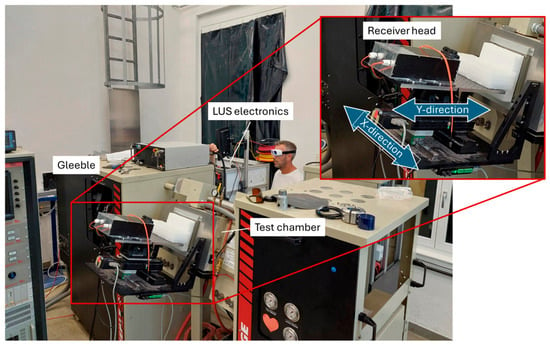
Two-antenna gain measurement setup.
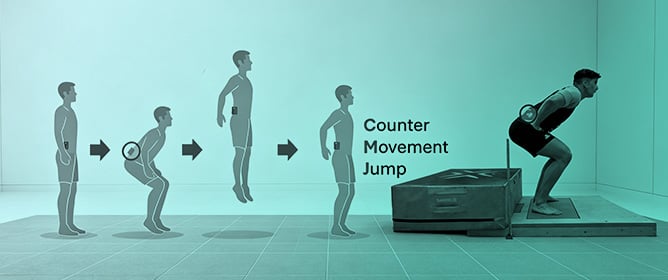
Overview of the developed IMU-based system for CMJ performance evaluation, composed of (a) sensing module; (b) stimulus and synchronization module; and (c) PC/smartphone applications with uploading to the MyoTrainer cloud platform.

Highly Accessed Articles

News & Conferences

Latest Issues

Open for Submission

Journal Sections

Radar Target Detection, Imaging and Recognition
Reprint

Radar Target Detection, Imaging and Recognition

Editors: Tianxian Zhang, Xueting Li, Yuanhang Wang
Advances in Security for Emerging Intelligent Systems
Reprint

Advances in Security for Emerging Intelligent Systems

Editors: Cong Wu, Jing Chen, Yebo Feng, Xianhao Chen
XFacebookLinkedIn
Sensors - ISSN 1424-8220