
- Article

21 Pages
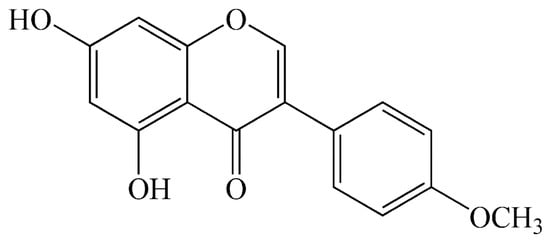
Background/Objectives: Biochanin A belongs to the isoflavone group of phytoestrogens with numerous beneficial effects on human health. Its application in therapy is significantly limited by low aqueous solubility and bioavailability. Cyclodextrin inclusion complexes are used in pharmaceutical formulations to improve the unfavorable properties of the active substance while maintaining its activity. The aim of this work was to examine the influence of complexation with 2-hydroxypropyl-β-cyclodextrin (HPβCD) on the biological activities of biochanin A. The antimicrobial activity of biochanin A and the inclusion complex against Helicobacter pylori was tested using disc diffusion and micro-well dilution assays. Methods: The antioxidant activity of biochanin A and its inclusion complex was examined using radical scavenging (DPPH and ABTS), reducing power (CUPRAC and FRAP), phosphomolybdenum, and metal-chelating assays. The inhibitory activity on enzymes α-amylase, α-glucosidase, tyrosinase, and cholinesterases was also evaluated. Results: The inclusion complex showed stronger antimicrobial activity against H. pylori (MIC = 1.9 mg/mL) than biochanin A itself (MIC = 7.5 mg/mL). Both biochanin A and its inclusion complex showed weak, dose-dependent radical-scavenging activity. The inclusion complex inhibited cholinesterases, whereas free biochanin A did not; the possible contribution of HPβCD itself requires further study. Conclusions: The enhanced activity of biochanin A after complexation may enable the development of more effective formulations.
Pharmaceutics
1 November 2026