




Journal Menu
► ▼ Journal Menu-
- Pharmaceutics Home
- Aims & Scope
- Editorial Board
- Reviewer Board
- Topical Advisory Panel
- Instructions for Authors
- Special Issues
- Topics
- Sections & Collections
- Article Processing Charge
- Indexing & Archiving
- Editor’s Choice Articles
- Most Cited & Viewed
- Journal Statistics
- Journal History
- Journal Awards
- Society Collaborations
- Conferences
- Editorial Office
Journal Browser
► ▼ Journal BrowserNeed Help?
Announcements
27 January 2026
Meet Us at the 5th Molecules Medicinal Chemistry Symposium, 14–17 May 2026, Beijing, China
Conference: 5th MMCS: New Trends in Chemical Biology and Drug Discovery
Date: 14–17 May 2026, Beijing Time
Conference website: https://sciforum.net/event/MMCS2026
This conference is organized by the MDPI journal Molecules (ISSN: 1420-3049, IF: 4.6, and CiteScore: 8.6) and will take place in Beijing, China, from 14 to 17 May 2026 (Beijing time).
Conference Chairs:
- Prof. Dr. Xiaoguang Lei, College of Chemistry and Molecular Engineering, Peking University, China;
- Prof. Dr. Diego Muñoz-Torrero, Faculty of Pharmacy and Food Sciences, and Institute of Biomedicine (IBUB), University of Barcelona, Spain.
Topics of interest:
S1. Chemical biology for drug discovery;
S2. AI for drug discovery;
S3. New proximity-based drug modalities;
S4. Natural products in drug discovery;
S5. Biocatalysis for natural product and drug synthesis;
S6. Drug discovery targeting GPCRs and ion channels;
S7. DNA-encoded libraries in drug discovery;
S8. Medicinal chemistry tales.
Important dates:
Deadline for abstract submission: 13 March 2026;
Abstract acceptance notification: 27 March 2026;
Early bird registration deadline: 3 April 2026;
Covering author registration deadline: 3 April 2026;
Registration deadline: 14 May 2026.
Guide for authors:
To submit your abstract, please visit the following link: https://sciforum.net/user/submission/create/1319.
To register for the event, please visit the following link: https://sciforum.net/event/MMCS2026?section=#registration.
For more information, you may refer to the following link: https://sciforum.net/event/MMCS2026.
For any inquiries regarding the event, please contact mmcs2026@mdpi.com.
We look forward to seeing you at the 5th MMCS: New Trends in Chemical Biology and Drug Discovery.
19 May 2026
Interview with Dr. João Carlos Fernandes da Silva—Winner of the Pharmaceutics Young Investigator Award

Pharmaceutics (ISSN: 1999-4923) is proud to announce the winner of the 2025 Pharmaceutics Young Investigator Award.
Name: João Carlos Fernandes da Silva
Affiliation: iBB-Institute for Bioengineering and Biosciences, Instituto Superior Técnico - Universidade de Lisboa, Portugal
The following is a short interview with Dr. João Carlos Fernandes da Silva:
1. Could you briefly introduce yourself to the readers? Also, can you introduce your current research direction and provide an update on your progress?
I am currently an Assistant Researcher (Tenure-track position) at the Stem Cell Engineering Research Group from the Institute for Bioengineering and Biosciences (iBB), where I am leading the “Biomimetic and Functional Regenerative Biomaterials Lab”, and an Invited Assistant Professor at the Department of Bioengineering at Instituto Superior Técnico-Universidade de Lisboa, Portugal. Previously, I was awarded a prestigious Marie Skłodowska-Curie Action (MSCA) Postdoctoral Fellowship (2024-2025) to develop the SYNERGIES project at Politecnico di Torino (Italy), which was focused on novel hybrid biomaterials coupled with physical stimulation bioreactors for osteochondral tissue regeneration.
Regarding my educational background, I hold a master’s degree in biomedical engineering (2013) from Instituto Superior Técnico—Universidade de Lisboa and received my PhD in bioengineering—cell therapies and regenerative medicine in 2019 from the same institution. During my PhD studies, I had the opportunity to work as a visiting researcher at the Center for Biotechnology and Interdisciplinary Studies (CBIS) at Rensselaer Polytechnic Institute (RPI, New York, USA) under the guidance of Prof. Robert J. Linhardt (2017-2018).
Currently, our group’s main research interests include: (1) tailoring biomaterial composition and architecture to support stem cell culture and recapitulate specific tissue microenvironments; (2) developing bioinspired and smart stimuli-responsive biomaterial platforms for drug delivery and tissue engineering applications; and (3) designing, prototyping, and manufacturing bioreactor systems and medical devices capable of generating tissue-engineered constructs under controlled, physiologically relevant biophysical stimulation conditions. Our group strongly believes that harnessing biophysical phenomena, such as bioelectricity and mechanotransduction, through external stimulation, can significantly enhance cell differentiation and tissue maturation processes.
Over the years, my research has primarily focused on the development of innovative tissue engineering scaffolds for bone and cartilage regeneration using fabrication technologies such as 3D printing, bioprinting, and electrospinning. More recently, I have expanded these efforts toward periodontal, dental, and skeletal muscle regeneration, as well as the development of advanced 3D in vitro disease models for studying conditions like osteoarthritis, osteosarcoma, and periodontitis.
2. Which research topics do you think will be of particular interest to the research community in the coming years?
I believe some of the most exciting and impactful research areas will emerge at the intersection of stimuli-responsive biomaterials, pharmaceutics, artificial intelligence, and mechanobiology. In particular, there is a clear growing interest in “smart” drug delivery systems, biofabrication and 3D bioprinting technologies, organoid-based disease models, and personalized regenerative medicine approaches. AI-assisted biomaterials design and predictive modeling are also expected to significantly accelerate the development of more efficient and reproducible therapeutic platforms. In addition, advanced human-relevant in vitro models that better replicate tissue physiology and pathology will become increasingly important for drug screening and for reducing reliance on animal experimentation.
3. Could you share any particularly interesting or unexpected results you have discovered so far in your research?
One particularly interesting observation from our work has been how strongly the cellular microenvironment influences therapeutic response and cell behavior. For example, in our recent 3D bioprinted osteosarcoma models, we observed that integrating decellularized cell-derived extracellular matrix components and 3D tumor architecture significantly altered drug sensitivity compared to conventional 2D cultures. These findings reinforced how critical biomimetic complexity is for developing predictive in vitro models. Another exciting aspect has been the ability of electroactive and piezoelectric biomaterials to modulate cellular responses through physical stimulation, opening promising opportunities for tissue regeneration and controlled therapeutic delivery. Moreover, the pioneering development of aligned coaxial electrospun nanofibers capable of mimicking the native structural organization of articular cartilage while enabling the controlled delivery of a chondrogenic drug (Kartogenin) represented a significant scientific advancement, paving the way for innovative therapeutic strategies to address the unmet clinical need for functional cartilage regeneration.
4. Do you have any advice for aspiring young researchers looking to make a meaningful impact in their respective fields?
My main advice would be to remain curious, resilient, and open to interdisciplinary collaboration. Many important scientific advances emerge at the interface between different fields, making it extremely valuable and rewarding to step outside one’s comfort zone. Young researchers should also not become discouraged by setbacks, as failed experiments, rejected manuscripts, and unsuccessful grant applications are inherent to the scientific process. Boldness, persistence, and consistency are key factors in the development of a young researcher's career. Finally, I strongly encourage early career researchers to seek supportive yet challenging mentorship and to build strong multidisciplinary networks, since modern science is increasingly collaborative and international.
5. As the winner of this award, would you like to take a moment to share your thoughts with our readers or express gratitude towards those who have played a significant role in your research accomplishments?
I am deeply grateful to all the students, collaborators, mentors, and institutions that have supported my scientific journey. Research is always a collective effort, and this recognition reflects the contributions of many talented and dedicated people I have had the privilege to work with over the years. I would especially like to thank my former/current MSc/PhD students and colleagues at Instituto Superior Técnico and iBB – Institute for Bioengineering and Biosciences for fostering such a collaborative and stimulating research environment. I am also very thankful to my team in the recently established “Biomimetic and Functional Regenerative Biomaterials Lab”, whose enthusiasm, creativity, and hard work continuously inspire me. Most importantly, I would like to express my deepest gratitude to my family for their unconditional encouragement, patience, and continuous support throughout this journey. Their belief in me has been a constant source of strength and motivation during both the most rewarding and the most challenging moments of my academic career. This achievement would not have been possible without their presence, understanding, and unwavering support over all these years. Finally, I would like to sincerely thank the Pharmaceutics editorial team and the award committee for this distinction and for their continued support of early-career researchers in the field.
19 May 2026
MDPI Open Science Insights: Academic Publishing Workshop at the University of Hong Kong, 12 May 2026
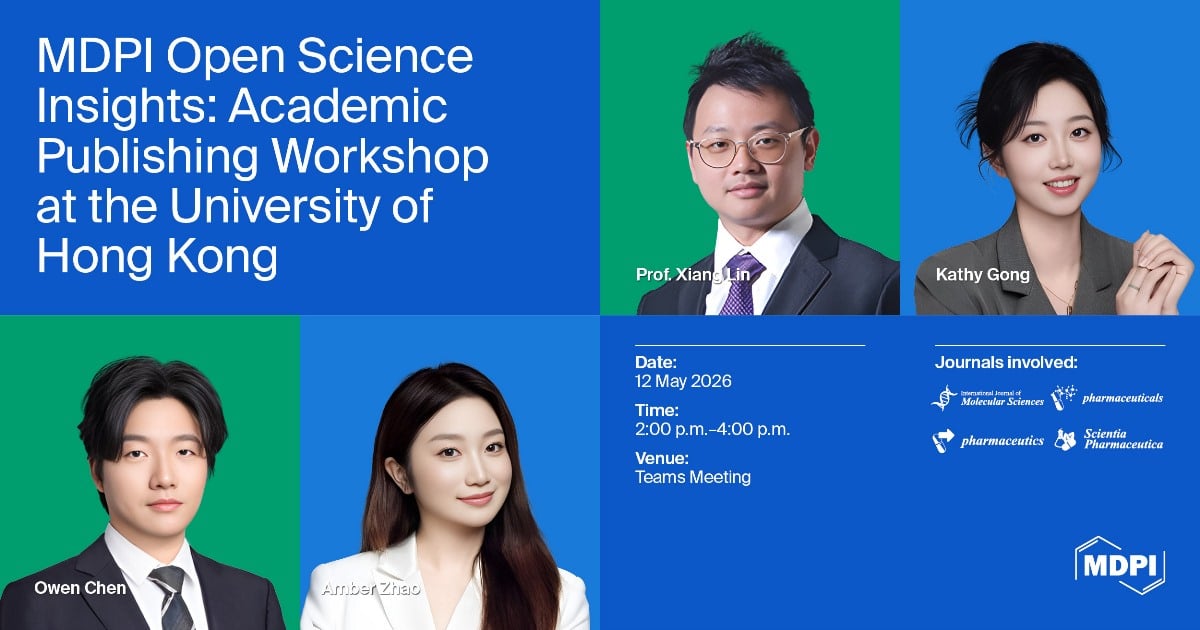
MDPI, together with the leading journals IJMS, Pharmaceutics, Pharmaceuticals and Sci. Pharm., is excited to collaborate with the University of Hong Kong to host an exclusive Academic Publishing Workshop aimed at empowering researchers with the knowledge and tools needed for successful academic publishing. This workshop will explore key topics including open access publishing insights, how to write and structure a journal article, common reasons for pre-check rejection, and the MDPI editorial and peer review processes. The session is designed to equip attendees with practical knowledge and valuable skills to support and enhance their publishing journey.
Date: 12 May 2026
Time: 2:00–4:00 p.m.
Venue: Teams Meeting
| Speaker | Program | Time |
| Prof. Xiang Lin | Opening Speech | 2:00–2:10 p.m. |
| Dr. Kathy Gong | How to Write and Structure a Journal Article | 2:10–2:40 p.m. |
| Q&A Session | 2:40–2:45 p.m. | |
| Mr. Owen Chen | Rejection Reasons for Pre-Check | 2:45–3:15 p.m. |
| Q&A Session | 3:15–3:20 p.m. | |
| Ms. Amber Zhao | MDPI Editorial Process and Peer Review Process | 3:20–3:50 p.m. |
| Q&A Session | 3:50–3:55 p.m. | |
| Closing of Program | 3:55–4:00 p.m. |
Chair:

Prof. Xiang Lin received his BSc degree in Chinese medicines from China Pharmaceutical University in 2007 and his PhD degree in Chinese medicine from the School of Chinese Medicine, Li Ka Shing Faculty of Medicine, The University of Hong Kong, in 2012. He subsequently conducted postdoctoral research at HKU before joining the School of Chinese Medicine as an Assistant Professor in 2019. He currently also serves as the Assistant Director (Knowledge Exchange and Technology Development). His research focuses on immunology, autoimmune diseases, and Chinese medicine-based therapeutic strategies, with particular emphasis on Sjögren’s syndrome and immune regulation. He has led multiple competitive research projects funded by local and international agencies, including the General Research Fund and the Health and Medical Research Fund.
Prof. Lin has received several academic honors, including the Excellence in Leukocyte Biology Award from the Society of Leukocyte Biology and the Early Career Faculty Grant from the American Association of Immunologists. He is also active in academic service, holding editorial roles in several international journals in immunology and pharmacology.
MDPI Speakers:

Dr. Kathy Gong obtained her PhD in crop science from the University of Queensland, Australia, where she also completed her postdoctoral research. She joined MDPI in 2025 as an Assistant Editor for the journal Pharmaceutics and currently serves as a Publishing Specialist. In this role, she focuses on supporting the strategic development of journals, strengthening collaboration with academic editors, and ensuring efficient and high-quality publishing services for the research community.

Mr. Owen Chen graduated from Auburn University and joined MDPI in 2018. He previously served as an Assistant Editor for Microorganisms and Section Managing Editor for IJMS. He currently works as the Journal Development Editor for IJMS and Managing Editor for Stresses. In addition to his role in journal relations, he also served as the Deputy Section Leader for overseas editors, providing guidance and support to ensure high editorial standards and efficient workflow management.

Ms. Amber Zhao graduated from the University of York and joined MDPI in 2020. She is currently working as the Managing Editor for Pharmaceuticals. She is responsible for the management of the journal, overseeing content quality, and fostering effective communication and collaboration with authors and academic editors. She is dedicated to delivering efficient, professional publishing support to researchers.
14 May 2026
Topics Webinar | 2025 Young Investigator Award Ceremony for Biomedicines, Pharmaceutics & Pharmaceuticals, 22 May 2026

A welcome message from the webinar Chair:
Welcome to the Young Investigator Award Webinar! I am Professor Victor M. Rivera, Department of Neurology, Baylor College of Medicine in Houston, Texas, USA, and I have the great pleasure of chairing this important scientific event celebrating the Biomedicines, Pharmaceutics and Pharmaceuticals Young Investigator Award winners for the 2025 cycle. These young scientists have been selected from an outstanding and competitive group of international young investigators contending for this prestigious scientific award. The winners were all nominated by two senior scientists, received their PhD/MD degree no more than 10 years before the 31 December 2025, and produced work that was selected for being ground-breaking research and a significant contribution to the advancement of therapeutic medicines. I thank the journals Biomedicines, Pharmaceutics, and Pharmaceuticals, their editorial groups and staff, and their respective Award Committees of recognized and distinguished scholars and members of the Editorial Boards for making this possible.
The 2025 winners will receive 1000 or 2000 CHF, a recognition certificate, and a free voucher for article processing fees valid for one year. The 2025 winners for Biomedicines are Dr. Adil Rasheed and Dr. Meghna Gupta; the winner for Pharmaceutics is Dr. João Carlos Fernandes da Silva; and the winner for Pharmaceuticals is Dr. Karolina Beton-Mysur. We hope you join us for this important scientific recognition and celebration.
Date: 22 May 2026 at 5:00 p.m. CEST | 11:00 a.m. EDT
Webinar ID: 850 8375 3671
Landing page: https://sciforum.net/event/Topics-49?subscribe
Register now for free!

Program:
| Speaker | Presentation Title | Time in CEST | Time in EDT |
| MDPI Host-Marco Pedretti | Opening Remarks | 5:00–5:05 p.m. | 11:00–11:05 a.m. |
| Prof. Dr. Victor M. Rivera | Award Ceremony | 5:05–5:15 p.m. | 11:05–11:15 a.m. |
| Dr. Adil Rasheed | MLKL (Mixed Lineage Kinase Domain-Like Protein): An Immunometabolic Nexus of Cardiovascular Disease |
5:15–5:35 p.m. | 11:15–11:35 a.m. |
| Dr. Meghna Gupta | Supramolecular Assembly Shapes Autoantibody Recognition in Neuromyelitis Optica |
5:35–5:55 p.m. | 11:35–11:55 a.m. |
| Dr. Karolina Beton-Mysur | What Cells Whisper: Raman Spectroscopy and Nanomechanical Signatures in Gastrointestinal Cancer Research | 5:55–6:15 p.m. | 11:55–12:15 p.m. |
| Dr. João Carlos Silva | Bio-instructive and Functional Biomaterials for Drug Delivery and Tissue Engineering Applications targeting Bone and Cartilage Regeneration | 6:15–6:35 p.m. | 12:15–12:35 p.m. |
| Q&A Session | 6:35–6:55 p.m. | 12:35–12:55 p.m. | |
| MDPI Host-Marco Pedretti | Overview of the Submission Process | 6:55–7:00 p.m. | 12:55–1:00 p.m. |
| Prof. Dr. Victor M. Rivera | Closing of Webinar | 7:00–7:05 p.m. | 1:00–1:05 p.m. |
After registering, you will receive a confirmation email containing information on how to join the webinar. Registrations with academic institutional email addresses will be prioritized.
Unable to attend? You can register anyway and we will let you know when the recording is available to watch.
Webinar Chair and Keynote Speakers:
- Prof. Dr. Victor M. Rivera, Baylor College of Medicine, Houston, USA;
- Dr. Adil Rasheed, Medical College of Georgia at Augusta University, Augusta, USA;
- Dr. Meghna Gupta, Oregon Health & Science University, Portland, USA;
- Dr. João Carlos Silva, Universidade de Lisboa, Lisboa, Portugal;
- Dr. Karolina Beton-Mysur, Lodz University of Technology, Lodz, Poland.
6 May 2026
MDPI INSIGHTS: The CEO's Letter #34 - MDPI US Office, Coatings 2026, Media and Partnerships, Recapping Poland Summit & Serbia Salon

Welcome to the MDPI Insights: The CEO's Letter.
In these monthly letters, I will showcase two key aspects of our work at MDPI: our commitment to empowering researchers and our determination to facilitating open scientific exchange.
Opening Thoughts

MDPI Opens First US Office in Philadelphia
I am delighted to highlight an important milestone in MDPI’s continued global development: the recent opening of our first office in the United States, located in Philadelphia.
This marks a significant step in building our engagement with one of the world’s most important research communities. The new office will serve as a hub for supporting scholars across the US, creating closer connections and more localized support.
As highlighted in recent coverage by our press release in InPublishing, this expansion reflects MDPI’s broader commitment to growing our international presence while remaining focused on the needs of the research community.
A Key Market for Research and Collaboration
The United States continues to play a central role in global research. To date, MDPI has published more than 237,000 articles affiliated with US institutions, and we collaborate with nearly 12,000 Editorial Board Members across the country. These relationships are fundamental to our mission of supporting Open Access and advancing scientific communication.
The opening of this office is not just about geography; it is about proximity to the communities we serve. It allows us to better understand the evolving needs of researchers while continuing to build collaboration and trust within the academic ecosystem.
The Team Behind this Milestone

This milestone reflects the efforts of teams across MDPI. I extend a special thank-you to Bob Vrooman (Head of Business Development, MDPI), who is leading this expansion, as well as to our colleagues in Toronto and across our North American teams for their continued support.
Bob shared: “MDPI is already a trusted partner of the North American research community, due in no small part to our dedicated team in Canada. Launching our first US office in Philadelphia is a great first step towards expanding MDPI’s market share and recognition in the US. I’m thrilled to be a part of this new phase in MDPI’s journey.”
As we continue to grow, our focus remains on supporting researchers globally and advancing Open Access with integrity.
Impactful Research

Coatings 2026: Highlights from Our Latest MDPI Conference (20-22 April)
I am pleased to share the successful completion of MDPI conference Coatings 2026, which took place last week in Athens from 20 to 22 April 2026. This conference brought together a diverse international community of researchers, industry experts, and partners, highlighting MDPI’s role not only as a publisher but also as a platform for scientific exchange and collaboration.
Conference Highlights
Coatings 2026 in numbers:
- The event attracted approximately 140 participants from 25 countries
- 143 submissions and a strong scientific program of talks and posters
- 2 keynote speakers and a wide range of invited contributions
- 7 sponsors and 11 media partners supporting the event
|
|
|
|
|
|


Scientific Programme
The program centered on “Safe and Sustainable by Design,” reflecting the growing importance of sustainability, regulatory frameworks, and technological innovation in materials science. Topics ranged from advanced coating technologies and additive manufacturing to AI-driven simulations and strategies to phase out potentially harmful substances in industrial processes.
Importantly, the conference brought together both academic and industrial perspectives, creating a space for dialogue on how research can translate into real-world impact. This is important as industries navigate environmental challenges, evolving regulations, and the need for more sustainable and circular approaches to production.
Thank You!
I would like to thank the entire conference team for their work in organizing this successful event. As we continue to grow, conferences like this play an important role in building our connection with global research communities, supporting interdisciplinary collaboration, and positioning MDPI at the intersection of science, technology, and societal impact.
 Members from Exelisis and MDPI EU Conference & Social Media team at the Coatings 2026 Conference in Athens, Greece.
Inside MDPI

Recent Media Coverage and Partnerships
Over the past two months, news from MDPI has enjoyed strong visibility across international publishing and academic media, reflecting our continued expansion and the increasing relevance of our work within the research community.
Below are some highlights covering partnerships, institutional agreements, and milestones that continue to shape our position in publishing – some of which are featured in leading industry platforms such as InPublishing, which is highly selective and reflects the growing recognition of MDPI’s growth within the publishing ecosystem.
Key Press Releases & Coverage (March–April 2026)
-
MDPI × Sikt (Norway): Partnership Renewal
We renewed our national Open Access agreement with Sikt, a key consortium partnership, continuing to support researchers across Norway through this partnership. The renewal was covered by several international publishing trade outlets.
Covered by: Research Information, STM Publishing News, ALPSP, Europe Says
-
MDPI × Jisc (UK): New Two-Year Open Access Agreement
A new two-year agreement with Jisc significantly expands MDPI’s footprint across UK academic institutions. Coverage appeared across major publishing industry titles in the UK and internationally.
Covered by: InPublishing, Research Information, STM Publishing News, ALPSP
-
MDPI Opens First US Office
The opening of our first US office marks an important milestone in our North American expansion to build engagement with one of the world’s leading research communities.
Coverage by: EurekAlert!, InPublishing, EdTech Innovation Hub, STM Publishing News, ALPSP
-
MDPI × SIGG: Italian Society of Gerontology and Geriatrics
We established a new partnership with the Italian Society of Gerontology and Geriatrics (SIGG), adding to our growing portfolio of society collaborations.
Coverage by: EurekAlert!, STM Publishing News, ALPSP
-
MDPI × Fast Track Health: New Journal Launch
The launch of a new journal in partnership with Fast Track Health reflects our continued expansion into emerging areas of health innovation.
Coverage by: EurekAlert!, Scienmag, STM Publishing News, ALPSP
-
MDPI 2025 Annual Report
Our 2025 Annual Report was also widely covered across international media, highlighting a 12% increase in submissions and continued investment in research integrity, infrastructure, and partnerships.
Coverage by: EurekAlert!, Research Information, STM Publishing News, ALPSP, Choice 360
Coverage also spanned multiple regions including Poland, Romania and South Korea, reflecting our ongoing efforts to communicate more effectively with regional research communities.
Looking Ahead
This coverage shows that MDPI is growing and building on its position through partnerships, visibility, and engagement across regions. As we continue to expand, our focus remains on supporting researchers globally, building on our institutional collaborations, and advancing Open Access with integrity.
Thank you to all teams involved in delivering these initiatives, and to our External Affairs team for ensuring our work is effectively communicated across the global publishing landscape!
Coming Together for Science

Recapping MDPI Poland Summit 2026 in Krakow (23 April)
On 23 April 2206, we hosted the first MDPI Poland Summit 2026 in Kraków, bringing together an engaged group of editors, researchers, and academic leaders from the country.
The Poland Summit welcomed some 45 participants, including Editors-in-Chief, Associate Editors, and Editorial Board Members, many with strong academic track records and international recognition.
Our engagements were open and constructive, focusing on MDPI’s positioning and reputation in Poland, alongside community interest in supporting our development, with active participation across our sessions, including Q&A and panel discussions.
|
|
|
|


MDPI Poland Summit Programme
From research integrity and peer review quality to AI in publishing and the future of academic communication, the agenda featured important topics currently shaping our industry.
During the day, MDPI colleagues shared a series of presentations covering:
- MDPI’s performance, growth, and impact in Poland: Stefan Tochev (CEO)
- Engagement with Academic Community: Dr. Marta Colomer (Public Affairs Lead)
- Research Integrity and Publication Ethics: Anna Pena (Research Integrity Manager)
- MDPI Editorial Process and Peer-Review Quality Metrics: Dr. Liliane Auwerter (Conference Organizer)
- AI in the Publishing Industry – Challenges, Innovation and MDPI’s vision: Dr. Enric Sayas (AI Product Owner)
- Panel Session: The Future of Academic Publishing, moderated by Dr. Marta Colomer
|
|
|
|
|
|
|
|


Poland as a Key Market for Open Access
The summit also highlighted the importance of Poland within the global research landscape.
In 2025:
- 75% of publications in Poland were made in Open Access
- 71% of those in Gold Open Access
- and over 344,000 publications produced in the last five years
MDPI plays a significant role in the Polish publishing ecosystem:
- #1 Open Access publisher in Poland
- 17% share of Open Access publications in 2025
- More than 12,500 publications from Polish institutions in 2025
- More than 91,000 publications overall since 1996
Looking Ahead
Events like the Poland Summit are an important part of how we evolve as an organization. They allow us to share the latest developments of MDPI and listen directly to our researchers and editors to better understand the market and align our development with the needs of the local community.
As MDPI continues to grow, this type of engagement will remain essential in ensuring that we are not only scaling globally, but doing so in a way that is aligned, trusted, and collaborative.

With Igor Matic (Office Manager, Krakow, Poland, MDPI) at the MDPI Poland Summit in Krakow.
Closing Thoughts

Recapping MDPI Serbia Salon 2026 in Belgrade (22 April)
On 22 April 2026, we hosted the MDPI Serbia Salon 2026 in Belgrade. The Salon welcomed over 50 participants, including more than 40 invited scholars from leading Serbian institutions, alongside colleagues from MDPI. The event also marked two important milestones: 30 years of MDPI and 10 years of our presence in Serbia, making it a celebration and an opportunity for reflection.

A Platform for Exchange
The Salon was designed not just as a series of presentations, but as a place for dialogue. Throughout the day, discussions focused on important topics around publishing today: research integrity and editorial standards, journal indexing and visibility, the evolving role of artificial intelligence, and funding and support for Open Access publishing.
|
|
|
|
|
|
|
|


Program Overview
- Opening the Salon MDPI Serbia 2026 – Serbia results and direction: Emir Ramadani (Operations Manager)
- Update on MDPI’s performance and growth: Stefan Tochev (CEO)
- Collaboration with MDPI – A personal perspective: Prof. Dr Srećko Stopić (Editorial Board Member)
- Linking Scientific Quality and Visibility: The role of indexing in publishing
- Research integrity and editorial ethics: Ana Stanković (Research Integrity Specialist)
- Artificial Intelligence in Scientific Publishing – Challenges, innovations and vision of MDPI: Dr Miloš Čučulović (Head of Technology Innovation)
It was encouraging to see the high level of engagement and discussion with the local academic community.
|
|
|
|
|
|
|
|


Publishing in Serbia
With 10 years of MDPI in Serbia (since 2016) and over 620 colleagues across 10 departments spread across offices in Belgrade and Novi Sad, MDPI continues to invest in the long-term development of the research community in Serbia and beyond.
Some high-level indicators illustrate both the strength of the local research ecosystem and MDPI’s role within it:
- 12,910 total publications in Serbia in 2025, of which 8,708 (67%) were Open Access (of which, in turn, 75% were Gold OA)
- A total of more than 55,000 publications (2021–2025), with 68% published Open Access
- 2,122 MDPI publications from Serbian institutions in 2025
- 25% of all Open Access publications in Serbia are published with MDPI
- More than 11,000 MDPI publications from Serbian institutions since 1996
- More than 75 Editorial Board Members from Serbia, including Editors-in-Chief and Associate Editors.
These figures reflect the growth of OA publishing in Serbia and the strong collaboration between MDPI and Serbia's research community.
Top 5 Publishers in Serbia (MDPI #1 with steady growth)

Looking Ahead
Research integrity and artificial intelligence will remain central topics for the industry. At the same time, clear communication of editorial processes will be essential in building trust and transparency.
Workshops and direct engagement remain among the most effective ways to strengthen these connections. As Open Access funding models continue to evolve, new opportunities for collaboration are emerging across institutions, publishers, and the broader research community.
Thank You!
The excellent feedback from participants shows the value of creating spaces where ideas can be exchanged openly and constructively. Sincere thanks to everyone who contributed to the success of this event: our speakers, participants, and especially the MDPI Serbia team for their great organization and support.

Chief Executive Officer
MDPI AG
28 April 2026
MDPI’s Journal Cluster of Pharmaceutical Science Webinar | Drug Design in the AI Era, 4 May 2026
A welcome message from the webinar Chair:
It is our pleasure to host this webinar on drug design in the artificial intelligence era. We are living through a transformative period in pharmaceutical science, where artificial intelligence and advanced computational methods are reshaping how we identify targets, design molecules, and bring new therapies closer to patients.
This webinar brings together two experts who are contributing to this rapidly evolving landscape. Their perspectives will highlight both the opportunities and the challenges that lie ahead as we integrate AI more deeply into drug discovery.
Thank you all for being here. I hope this webinar inspires insightful discussion and new scientific connections.
Date: 4 May 2026 at 3:00 p.m. CEST | 9:00 a.m. EDT | 9:00 p.m. CST Asia
Webinar ID: 878 8692 5680
Register now for free!

Program:
| Speaker/Presentation | Time in CEST |
| Prof. Dr. Osvaldo Andrade Santos-Filho & Prof. Dr. Bill J. Baker Chair Introduction |
3:00–3:10 p.m. |
| Prof. Dr. Jose L. Medina-Franco Biologically Relevant Chemical Space: From Characterization to Predictive Modeling |
3:10–3:30 p.m. |
| Prof. Dr. Alexander Tropsha Knowledge-Based and AI-Accelerated Approaches to Drug Discovery and Repurposing |
3:30–3:50 p.m. |
| Q&A Session | 3:50–4:05 p.m. |
| Closing of Webinar | 4:05–4:10 p.m. |
After registering, you will receive a confirmation email containing information on how to join the webinar. Registrations with academic institutional email addresses will be prioritized.
Unable to attend? Register anyway and we’ll let you know when the recording is available to watch.
Webinar Chairs and Keynote Speaker:
- Prof. Dr. Osvaldo A. Santos-Fihlo, Center of Health Sciences, Laboratory of Molecular Modeling and Computational Structural Biology, Federal University of Rio de Janeiro, Brazil;
- Prof. Dr. Bill J. Baker, Department of Chemistry, University of South Florida, USA;
- Prof. Dr. Jose L. Medina-Franco, DIFACQUIM Research Group, Department of Pharmacy, National Autonomous University of Mexico (UNAM), Avenida Universidad 3000, Mexico City 04510, Mexico;
- Prof. Dr. Alexander Tropsha, UNC Eshelman School of Pharmacy, University of North Carolina, USA.
Relevant Special Issues:
“Computer-Aided Drug Design and Molecular Synthesis”
Guest Editors: Prof. Dr. Osvaldo Andrade Santos-Filho and Dr. Arthur Eugen Kummerle
Manuscript submission deadline: 31 May 2026
“Marine Drug Discovery Powered by AI”
Guest Editor: Dr. Yin-Chu Wang
Manuscript submission deadline: 30 June 2026
“Advances in AI-Driven Drug Delivery Systems”
Guest Editors: Dr. Junhuang Jiang and Prof. Dr. Xin Pan
Manuscript submission deadline: 30 June 2026
“Computational Methods in Drug Development”
Guest Editor: Prof. Dr. Yunjie Zhao
Manuscript submission deadline: 26 May 2026
“AI Use in Pharmacy and Pharmacy Education”
Guest Editors: Dr. Bernadette Cornelison and Dr. Christopher J. Edwards
Manuscript submission deadline: 31 July 2026
28 April 2026
Interview with Dr. Dinesh Nyavanandi—Winner of the Pharmaceutics Outstanding Reviewer Award

Pharmaceutics (ISSN: 1999-4923) is proud to announce the winner of the 2025 Pharmaceutics Outstanding Reviewer Award—Dr. Dinesh Nyavanandi. We would like to express our profound gratitude to Dr. Dinesh Nyavanandi for his invaluable contributions to the peer-review process in Pharmaceutics.
Name: Dinesh Nyavanandi
Affiliation: Small Molecule Drug Product Development, AbbVie
The following is an interview with Dr. Dinesh Nyavanandi:
1. Congratulations on receiving the Pharmaceutics Outstanding Reviewer Award! To begin, could you briefly introduce yourself and tell us about your primary research interests within pharmaceutics?
Thank you very much. I am a formulation scientist working in small-molecule drug development, with a primary interest in translational pharmaceutics—especially the design of formulations that can bridge early discovery, clinical development, and eventual commercialization. My work has focused on challenges such as solubility enhancement, bioavailability improvement, dosage form design, excipient selection, and manufacturing approaches for oral drug products. I am particularly interested in how formulation strategies can be used not only to solve technical problems, but also to accelerate development timelines and improve the likelihood of clinical and commercial success.
2. In your view, what are the essential qualities of a constructive and high-quality peer review? How do you approach crafting a review that is both rigorous and helpful?
A high-quality peer review should be fair, objective, technically rigorous, and ultimately useful to the authors and editors. I believe a constructive review does not simply identify weaknesses; it explains why those weaknesses matter and, when possible, suggests practical ways to strengthen the work.
When I prepare a review, I try to balance critical evaluation with respect for the authors’ effort. My goal is not to “reject” a paper, but to assess whether the science is sound, whether the conclusions are supported by the data, and whether the manuscript meaningfully advances the field. I also try to separate major scientific concerns from minor presentation issues, so the authors can clearly understand what is essential to address. In my view, the most valuable reviews are those that are honest and rigorous, but also specific, professional, and solution-oriented.
I usually begin by reading the manuscript once from a broad perspective to understand the central question, the novelty, and the claimed contribution. On a second pass, I evaluate the work in more detail.
I typically focus on several key elements:
- Scientific rationale and originality – Is the research question important, and does the manuscript offer something genuinely new or useful?
- Study design and methodological rigor – Are the experiments appropriate, sufficiently controlled, and described clearly enough to allow reproducibility?
- Data quality and interpretation – Are the data internally consistent, statistically sound, and interpreted without overstating the findings?
- Connection between results and conclusions – Do the conclusions truly follow from the evidence presented?
- Relevance to the field – Will the work be informative to researchers in pharmaceutics, and does it advance scientific understanding or practical application?
- Clarity of presentation – Is the manuscript organized logically, and are the figures, tables, and discussion clear and effective?
I find it especially important to evaluate whether the manuscript provides mechanistic insight or practical translational value, rather than only reporting a set of observations.
4. How has serving as a reviewer influenced your own approach to writing manuscripts and preparing submissions? Have you learned lessons from reviewing that you’ve applied to your own work?
Serving as a reviewer has had a significant influence on how I write manuscripts. Reviewing exposes recurring issues very clearly—unclear objectives, incomplete method descriptions, weak data presentation, unsupported conclusions, or insufficient discussion of limitations. Seeing these issues repeatedly has made me much more deliberate in my own writing.
One important lesson I have applied is the need to make the manuscript easy for the reviewer and reader to follow. That means having a clear scientific story, a logical flow, transparent methods, and figures that communicate the key findings efficiently. I have also become more careful about aligning claims with evidence and anticipating the questions a reviewer may raise. In many ways, reviewing has helped me become a more disciplined author because it trains you to look at a manuscript from the outside, with a critical but fair perspective.
5. What do you see as the most significant challenges facing peer review today, and how might the community address them?
One major challenge is reviewer fatigue. The volume of submissions has increased substantially, while the pool of experienced reviewers is limited. This can place pressure on the system and sometimes affect turnaround time or review depth. Another challenge is inconsistency in reviews—different reviewers may apply different standards, especially in interdisciplinary areas where expectations can vary.
I also think the community is facing a challenge in maintaining rigor while keeping pace with the speed of modern publishing. Authors, reviewers, and editors all operate under time constraints, but scientific quality cannot be compromised.
Addressing these challenges will require a shared effort. Journals can continue to improve reviewer guidance, recognize reviewer contributions, and support early-career researchers in developing reviewing skills. Senior scientists can help by mentoring younger reviewers on how to perform balanced and thoughtful evaluations. Authors also play an important role by submitting well-prepared, transparent manuscripts that reduce avoidable review burden. Peer review works best when it is treated as a collective responsibility to uphold scientific quality.
6. Finally, what message would you like to share with the Pharmaceutics community, particularly with authors who submit their work to the journal and the editorial team who manage the review process?
To the authors, I would say that peer review should be viewed as part of the scientific process, not just as a gatekeeping step. Even critical comments are often an opportunity to strengthen the work, improve clarity, and increase the impact of the final manuscript. The strongest submissions are usually those that are scientifically rigorous, transparent in their limitations, and written with the reader in mind.
To the editorial team, I would like to express my appreciation for the tremendous effort involved in managing a fair and efficient review process. Editors play an essential role in maintaining quality, matching manuscripts with appropriate reviewers, and helping move the field forward.
More broadly, I believe Pharmaceutics serves an important role in connecting fundamental research with practical pharmaceutical applications. I am honored to contribute as a reviewer, and I look forward to continuing to support the journal and the broader Pharmaceutics community.
27 April 2026
Pharmaceutics Sponsoring the 42nd Annual Meeting of the Japanese Society for Drug Delivery System (DDS42), 30–31 July 2026, Tokushima, Japan

The 42nd Annual Meeting of the Japanese Society of Drug Delivery System (DDS42) is proud to announce its upcoming conference, bringing together researchers, clinicians, engineers, and industry professionals dedicated to advancing innovation in drug delivery science. This meeting reflects society’s continued commitment to fostering interdisciplinary collaboration and promoting cutting-edge discussions that drive the future of Drug Delivery Systems (DDS).
Under the theme “Aiming for the Pinnacle of DDS,” the conference draws inspiration from the summit of Mount Tsurugi, a sacred peak located in western Tokushima Prefecture. Just as Japan’s mountain ranges contain many unique peaks, the field of DDS encompasses diverse research areas and scientific approaches. By gathering experts from medicine, engineering, pharmacy, materials science, and related disciplines, DDS42 symbolizes a collective effort to reach new scientific heights and advance toward an even greater summit of innovation.
The theme also highlights the vital role of emerging scientists, emphasizing support for young researchers who are beginning their ascent toward future breakthroughs in DDS research. Set in the vibrant summer season of Tokushima, the meeting aims to create an energetic environment for knowledge exchange, collaboration, and passionate scientific dialogue.
Program highlights:
- Plenary and Special Lectures: Inspiring presentations from leading experts shaping the future of DDS research;
- Scientific Sessions: Multidisciplinary discussions covering fundamental science, translational research, and emerging technologies in drug delivery;
- Young Investigator Programs: Oral presentations, poster sessions, mentoring opportunities, and platforms supporting the next generation of scientists;
- Industry and Technology Exchange: Opportunities to explore innovations connecting academic research with clinical and industrial applications;
- Networking and Community Engagement: Social events and informal gatherings designed to strengthen collaborations across disciplines.
Key details:
- Date: 30–31 July 2026;
- Location: Awagin Hall (Tokushima Prefectural Local Culture Center), Tokushima, Japan;
- Audience: researchers, clinicians, pharmacists, engineers, industry professionals, students, and stakeholders involved in drug delivery science and technology.
We look forward to welcoming participants to Tokushima for DDS42 and engaging together in dynamic discussions that aim for the pinnacle of Drug Delivery Systems research.
For more information, please visit the official conference website: https://dds42.mons.work/.
24 April 2026
Prof. Dr. William Gerwick Appointed Chair of the 2026 Tu Youyou Award Committee
We are honored to announce that Prof. Dr. William Gerwick will serve as the Chair of the 2026 Tu Youyou Award Committee.
A world-renowned authority in marine natural products chemistry and pharmacology, Professor Gerwick is a Distinguished Professor at both the Scripps Institution of Oceanography and the Skaggs School of Pharmacy and Pharmaceutical Sciences at the University of California San Diego (UCSD). His pioneering work at the intersection of ocean sciences and drug discovery makes him a fitting leader for an award centered on transformative medicinal breakthroughs.
Under Professor Gerwick’s stewardship, the 2026 Tu Youyou Award Committee will focus on recognizing innovative and impactful research in natural products chemistry and medicinal chemistry, particularly work with the potential to drive meaningful advances in both scientific understanding and human health.
To provide further insight into his perspectives, we include below an interview with Professor Gerwick, in which he reflects on his scientific journey, his views on the field, and his vision for the Tu Youyou Award.
A Conversation with the Chair

1. Could you please introduce yourself and your research journey?
My research focuses on the natural products of marine algae and cyanobacteria, their application in medicine, their biosynthesis using genomic approaches, and innovative methods in the structure elucidation of natural products.
I received my BS degree from the University of California at Davis, my PhD from the University of California at San Diego, and conducted postdoctoral work at the University of Connecticut. After a couple of years in a junior faculty position at the Department of Chemistry at the University of Puerto Rico, I spent 21 years as Professor of Pharmacy at Oregon State University. In 2005, I returned to my PhD institution at the Scripps Institution of Oceanography and the Skaggs School of Pharmacy and Pharmaceutical Sciences at UC San Diego, where I am currently a Distinguished Professor of Oceanography and Pharmaceutical Sciences.
Throughout my career, I have been dedicated to advancing the field through both leadership and mentorship. I have served as president of the American Society of Pharmacognosy, chaired and co-chaired several major research conferences, and served as an associate editor for the Journal of Natural Products. I am a Fellow of the American Association for the Advancement of Science (AAAS) and of the American Society of Pharmacognosy. I have trained over 100 doctoral and postdoctoral students, and my research group has published nearly 500 papers and more than 25 patents on topics in the natural product sciences and medicinal chemistry.
2. What motivated you to accept the role of Chair of the 2026 Tu Youyou Award Committee?
Of course, I am a huge supporter of all awards that are given in recognition of excellent scientific research, and especially so in the natural products sciences and medicinal chemistry. However, this award is truly special in that it recognizes scientific excellence as well as impact, and is given in the name of an individual, Tu Youyou, who clearly had many challenges along the path to reach the pinnacle of her success. Not only was she the first Chinese person to win a Nobel prize in this area, but she was also the first Chinese woman to receive a Nobel prize, and this was achieved without graduate education in China or elsewhere. It’s a true testament to what can be achieved by hard work, determination, and vision. To read the history of her extraordinary approach to discovering novel antimalarial compounds from Traditional Chinese Medicine is truly inspirational. It is, therefore, the inspiration provided by the extraordinary life and career of Tu Youyou that motivated me to accept the Chair of the Award Committee for 2026.
3. How do you view the role of natural products chemistry and medicinal chemistry in today’s scientific landscape, and what major advances over the past decade have shaped this field?
A quite remarkable integration of fields is currently transforming natural products science and medicinal chemistry. In natural products, we are seeing integration of different omics methods, from metabolites to proteins to nucleic acids. Sophisticated biological and pharmacological approaches are driving the discovery of exquisitely potent and selective natural products. Advances are being made to integrate molecular-level recognition of natural products with chemical ecological studies, and sophisticated methods of structure determination using Artificial Intelligence or pioneering new tools such as microED are being applied with increasing frequency. High-level synthetic methodologies, such as protecting group-free synthetic routes, are enhancing medicinal chemistry, accelerating the identification of lead molecules with attractive pharmaceutical properties at an increasing pace.
4. How do you consider the balance between fundamental discovery (e.g., new molecules or mechanisms) and practical impact (e.g., therapeutic applications)?
Many individuals are excellent scientists and mentors, and have essential roles in developing our culture that values science and the scientific method. It should also be pointed out that not all scientific discoveries are going to have a broad societal impact, but they are nevertheless critical to the overall body and structure of science. But it is a truly remarkable individual who makes a key scientific discovery, recognizes its potential value to society in general, and then has the skills and determination to bring it forward as a useful product. That was the type of person the Tu Youyou is, and that is the type of person who is honored by the prize in her name.
5. What do you see as the key challenges or opportunities currently facing the field?
We are on the crux of an amazing revolution in many of the sciences, including natural products and medicinal chemistry; the purposeful application of Artificial Intelligence to solving many of the difficulties involved in the search for new pharmaceuticals from Nature. AI is transforming how we select organisms for study, what pharmaceutical targets to go after, rapidly resolving the chemical structures of new compounds, identifying efficient routes to their chemical synthesis, understanding their molecular mechanisms of action, and finally, designing their clinical application. The role of people in these pursuits is changing. Increasingly, the human role will be providing overall vision: what can we do? What should we do? And it is important to remember that AI is providing hypotheses, not truth. Scientists with expert domain knowledge will be critical for discerning the correctness of hypotheses put forth by AI. Altogether, advances in technology, expanding knowledge, and the appropriate use of AI methods are preparing society to be able to address emerging diseases, such as pandemics, as well as conditions that are not effectively treated by currently existing therapeutics.
6. How do you expect the Tu Youyou Award to contribute to the advancement of natural product chemistry, medicinal chemistry, and human health over the coming years?
The Tu Youyou Award is potentially transformative for the broad fields of natural products science and medicinal chemistry as it brings a significantly increased level of visibility to these topics and their contributions to human health. It will be crucial to have excellent communication to news agencies, social media and other communication outlets so that the general public is informed and educated on the high impact of these natural product/medicinal chemistry contributions. This will bring increased funding, attract promising students, and generally enrich the interface of these fields with the health sector.
7. What message would you like to convey to the research community and the public during this open nomination phase?
This prize gives broad societal visibility to the role that natural products have had in shaping a majority of our current medicines, as well as understanding the life forms with whom we share the planet. Further, it recognizes a woman scientist working under sub-optimal conditions who could persevere and make discoveries of global impact. The prize and what it represents, therefore, inspires current and future generations to engage in the study of Nature and its relationship to Human Health, to overcome adversity, and to aspire to making one’s life impactful.
About the Tu Youyou Award
Established in 2016, the Tu Youyou Award seeks to honor those who excel in the fields of natural products chemistry and medicinal chemistry. This award offers a total prize of CHF 100,000, which will be equally divided among the winners if there is more than one, with each recipient receiving an award medal and a certificate.
The 2026 Tu Youyou Award is open for nominations until 31 October 2026. We encourage all eligible candidates to participate in this prestigious recognition, as this award not only honors individual achievement but also encourages further scientific exchange, exploration and discovery in critical areas of medicine.
If you are interested in participating, please visit the Tu Youyou Award website for more information on the nomination requirements.
24 April 2026
Interview with Dr. Van-An Duong—Winner of the Pharmaceutics Outstanding Reviewer Award

Pharmaceutics (ISSN: 1999-4923) is proud to announce the winner of the 2025 Pharmaceutics Outstanding Reviewer Award: Dr. Van-An Duong. We would like to express our profound gratitude to Dr. Van-An Duong for his invaluable contributions to the peer-review process in Pharmaceutics.
Name: Van-An Duong
Affiliation: The Institute of Molecular Medicine, The University of Texas Health Science Center at Houston, USA
The following is a short interview with Dr. Van-An Duong:
- Congratulations on receiving the Pharmaceutics Outstanding Reviewer Award! To begin, could you briefly introduce yourself and tell us about your primary research interests within pharmaceutics?
Hi. My name is Van-An Duong. I am currently working at The Institute of Molecular Medicine, The University of Texas Health Science Center at Houston. My research focuses on drug development and analytical characterization, particularly using advanced analytical techniques such as LC-MS/MS. Within pharmaceutics, I am especially interested in formulation strategies and drug delivery systems to improve drug stability, bioavailability, and therapeutic efficacy. - In your view, what are the essential qualities of a constructive and high-quality peer review? How do you approach crafting a review that is both rigorous and helpful?
A high-quality peer review should be objective, constructive, and actionable. It should not only evaluate the scientific rigor of a manuscript but also help authors improve the clarity and impact of their work. When reviewing a manuscript, I aim to assess the scientific soundness of the study, provide specific and constructive feedback rather than general criticism, and distinguish between major concerns (e.g., methodology, interpretation) and minor issues (e.g., clarity, presentation). I believe a good review should guide authors toward improvement while maintaining a respectful and professional tone. - Once you agree to a review, how do you structure your evaluation? What key elements do you focus on when assessing a manuscript's quality, rigor, and contribution to the field?
When reviewing a manuscript, I typically follow a structured approach to ensure a comprehensive and balanced evaluation. I begin by assessing the novelty and overall significance of the study, considering whether it addresses a meaningful research question and contributes new insights or practical value to the field. I then examine the methodological rigor, including whether the experimental design, formulation strategies, and analytical methods are appropriate and sufficiently described. Next, I evaluate the quality and interpretation of the data to determine whether the results are robust and reproducible and whether the conclusions are justified by the data. I also assess the quality and clarity of the tables and figures, ensuring they effectively present the data. Finally, I review the organization and readability of the manuscript to confirm that the content is clearly structured and communicated. - How has serving as a reviewer influenced your own approach to writing manuscripts and preparing submissions? Have you learned lessons from reviewing that you have applied to your own work?
Serving as a reviewer has significantly influenced my own approach to manuscript preparation. Through reviewing, I have become more attentive to the clarity and transparency of methodological descriptions, ensuring that experiments are described in sufficient detail for reproducibility. It has also improved my ability to structure manuscripts with a clear logical flow, particularly in aligning results with conclusions and avoiding overinterpretation of data. Additionally, reviewing has helped me anticipate common concerns raised during peer review, allowing me to critically evaluate my own work before submission and strengthen it accordingly. - What do you see as the most significant challenges facing peer review today, and how might the community address them?
One of the most significant challenges in peer review today is the increasing volume of submissions, which places a substantial burden on reviewers and can affect both the quality and timeliness of the review process. To address this issue, it is important to expand and better prepare the reviewer pool. Providing short courses on conducting high-quality peer reviews could equip early-career researchers with the necessary skills and confidence. In addition, encouraging PhD students to participate in the review process under their supervisors' guidance would not only distribute the workload more effectively but also provide valuable training. Recognizing these contributions, for example, through co-reviewer acknowledgment, could further motivate broader participation and support the sustainability of the peer review system. - Finally, what message would you like to share with the Pharmaceutics community—particularly with authors who submit their work to the journal and the editorial team who manage the review process?
I would like to thank the Pharmaceutics editorial team for their efforts in maintaining an efficient and constructive peer review process. To authors, I encourage clear and transparent reporting of experimental design and methods, as well as careful alignment between results and conclusions, both of which are essential to ensuring reproducibility and scientific rigor. I believe that peer review is an important collaboration between authors, reviewers, and editors to maintain the quality and integrity of published research.
