
-
Full-Scale Laboratory Testing of Laser Clad Rail Track—Results of Sub-Surface Microstructural and Residual Stress Analysis -
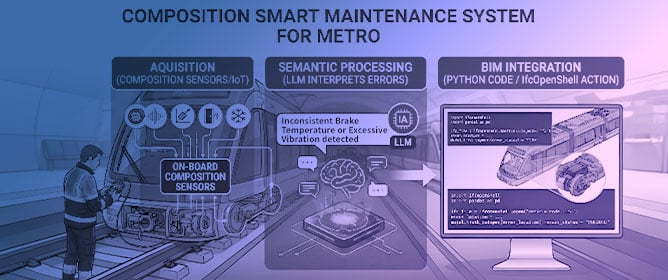
BIM and PdM of Railway Rolling Stock with Automatic Upgrading Based on GenAI -
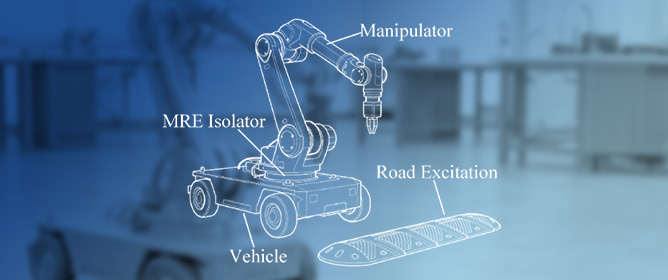
Enhanced Trajectory Tracking Accuracy of a Mobile Manipulator via MRE Intelligent Isolation System Under Continuous Impact Disturbances -
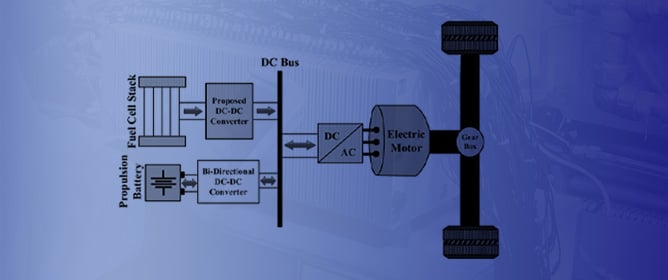
Design of a High-Gain Common-Grounded ZVT DC-DC Converter with Sustained Soft Switching
Journal Description
Machines
Machines
is an international, peer-reviewed, open access journal on machinery and engineering, published monthly online by MDPI. The International Federation for the Promotion of Mechanism and Machine Science (IFToMM) is affiliated with Machines and its members receive a discount on the article processing charges.
- Open Access— free for readers, with article processing charges (APC) paid by authors or their institutions.
- High Visibility: indexed within Scopus, SCIE (Web of Science), Inspec, and other databases.
- Journal Rank: JCR - Q2 (Engineering, Mechanical) / CiteScore - Q1 (Control and Optimization)
- Rapid Publication: manuscripts are peer-reviewed and a first decision is provided to authors approximately 15.9 days after submission; acceptance to publication is undertaken in 2.9 days (median values for papers published in this journal in the first half of 2026).
- Recognition of Reviewers: reviewers who provide timely, thorough peer-review reports receive vouchers entitling them to a discount on the APC of their next publication in any MDPI journal, in appreciation of the work done.
- Journal Cluster of Mechanical Manufacturing and Automation Control: Aerospace, Automation, Drones, Journal of Manufacturing and Materials Processing, Machines, Robotics and Technologies.
- Companion journal: Industries.
Impact Factor:
3.0 (2025);
5-Year Impact Factor:
2.9 (2025)
Latest Articles
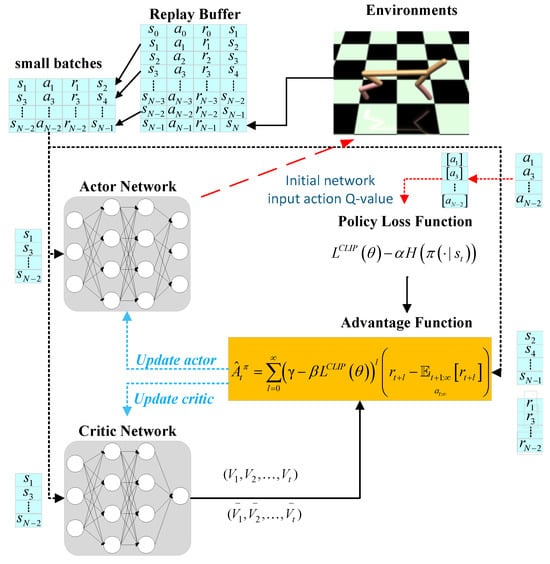
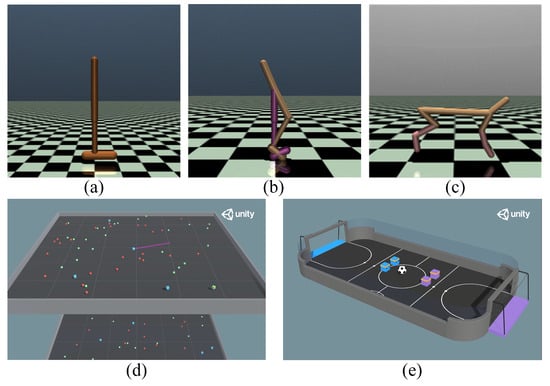
Adaptive Adjustment of Advantage Estimation for Robot Control Using Reinforcement Learning
Machines 2026, 14(7), 767; https://doi.org/10.3390/machines14070767 (registering DOI) - 8 Jul 2026
Abstract
In robotics control experiments, the balance between exploration and exploitation, as well as the accuracy of the advantage function estimation, are crucial factors that affect the effectiveness of policy optimization methods. To overcome these challenges, this paper proposes an adaptive adjustment of advantage
[...] Read more.
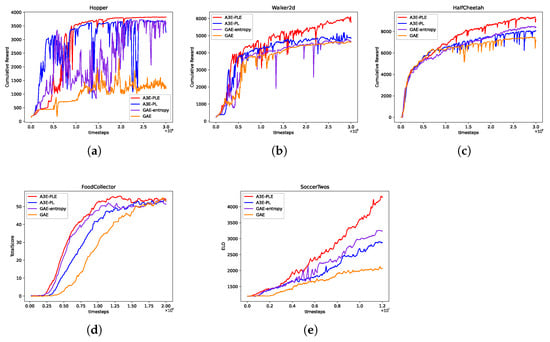
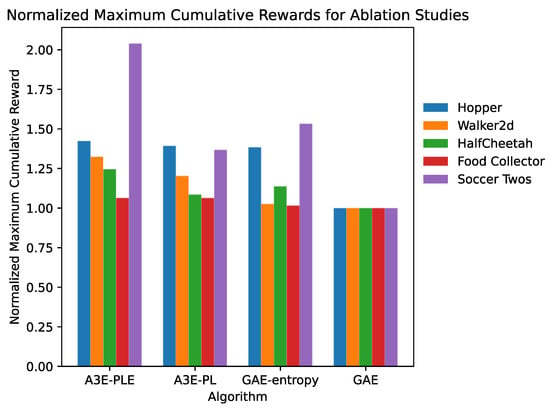
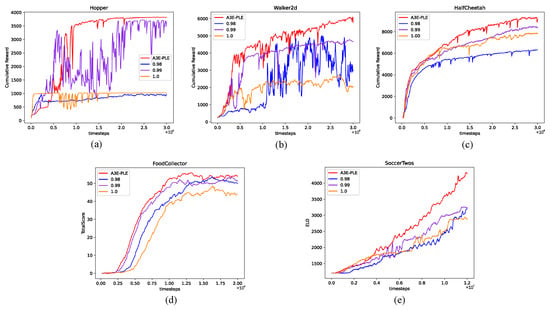
In robotics control experiments, the balance between exploration and exploitation, as well as the accuracy of the advantage function estimation, are crucial factors that affect the effectiveness of policy optimization methods. To overcome these challenges, this paper proposes an adaptive adjustment of advantage estimation based on the policy loss and policy entropy algorithm (A3E-PLE), which can improve the exploratory capabilities of the proximal policy optimization (PPO) algorithm. Specifically, on the one hand, the policy loss is adjusted using a Gaussian distribution policy entropy to mitigate randomness and separate policy improvement from random noise, thereby improving exploration efficiency. On the other hand, to adapt flexibly to various training scenarios and further enhance the accuracy of advantage function estimation, the policy loss is incorporated into the advantage function estimation. This enables the algorithm to adaptively adjust according to changes in the strategy. Finally, the proposed reinforcement learning (RL) framework was validated using robot control simulations and complex decision-making environments. It is shown that A3E-PLE achieves higher learning efficiency and greater rewards compared to traditional generalized advantage estimation.
Full article
(This article belongs to the Special Issue Motion Planning and Control in Autonomous Robotic Systems)
►
Show Figures
Open AccessArticle
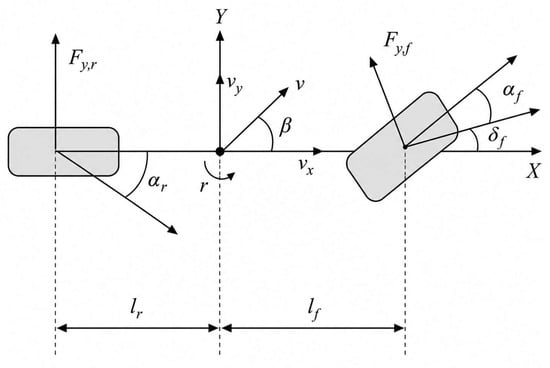
Reliability- and Sensitivity-Guided Co-Estimation of Vehicle States, Tire Cornering Stiffness, and Tire-Road Adhesion Coefficient
by
Lei Liu, Jue Yang and Yiting Kang
Machines 2026, 14(7), 766; https://doi.org/10.3390/machines14070766 (registering DOI) - 8 Jul 2026
Abstract
Reliable estimation of vehicle states, tire cornering stiffness, and the tire-road adhesion coefficient are essential for vehicle lateral stability and intelligent chassis control. Under low adhesion, nonlinear tire operation, and weak excitation, lateral-force residuals are jointly affected by cornering-stiffness variation, adhesion-coefficient variation, and
[...] Read more.
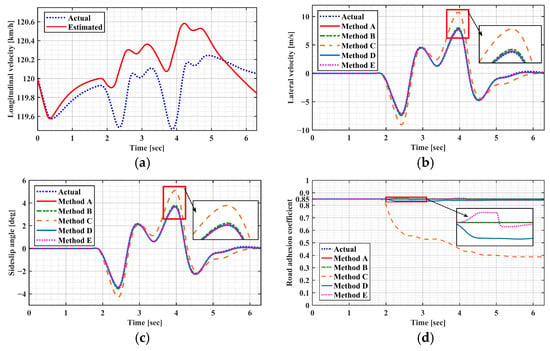
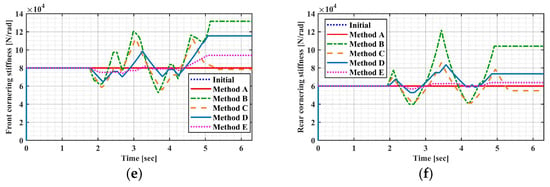
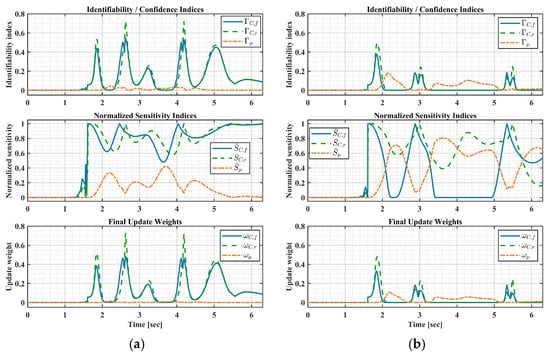
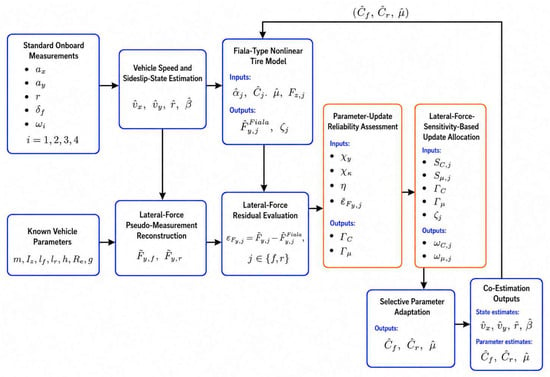
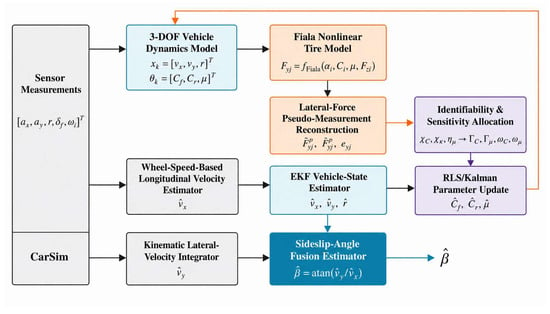
Reliable estimation of vehicle states, tire cornering stiffness, and the tire-road adhesion coefficient are essential for vehicle lateral stability and intelligent chassis control. Under low adhesion, nonlinear tire operation, and weak excitation, lateral-force residuals are jointly affected by cornering-stiffness variation, adhesion-coefficient variation, and tire-force saturation, which may cause erroneous parameter adaptation. This paper proposes a reliability- and sensitivity-guided co-estimation method for vehicle states, tire cornering stiffness, and the tire-road adhesion coefficient. A hierarchical framework is developed based on a planar 3-DOF vehicle model and a Fiala-type nonlinear tire model. Front- and rear-axle lateral-force pseudo-measurements are reconstructed from lateral acceleration and yaw angular acceleration, without requiring additional tire-force sensors. Parameter-update reliability is evaluated by considering lateral excitation, longitudinal slip, adhesion utilization, and normalized lateral-force residual consistency. Normalized lateral-force sensitivities are then used to allocate the residual between the cornering-stiffness and adhesion-coefficient update channels. CarSim/Simulink co-simulations under high-, intermediate-, and low-adhesion double-lane-change maneuvers demonstrate that the proposed method improves sideslip-angle and lateral-velocity estimation accuracy, suppresses erroneous cornering-stiffness adaptation, and provides more stable estimates of the tire-road adhesion coefficient.
Full article
(This article belongs to the Section Vehicle Engineering)
►▼
Show Figures

Figure 1

Open AccessArticle
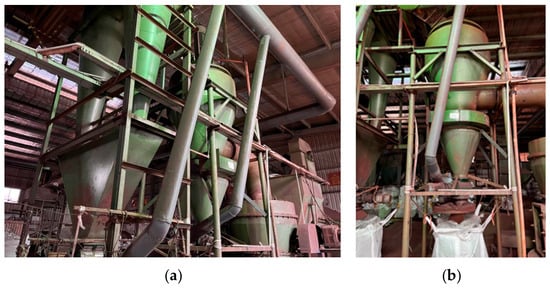
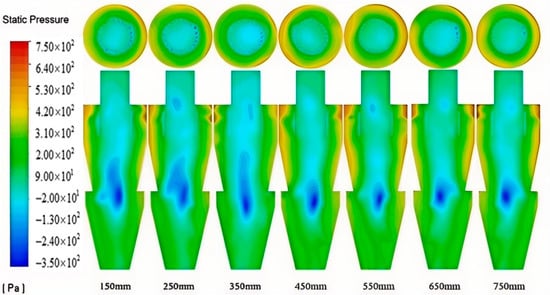
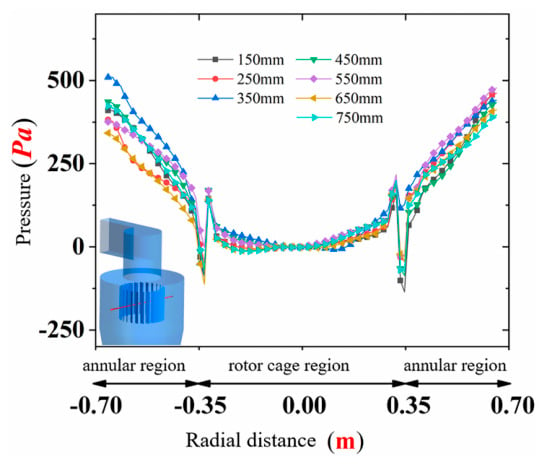
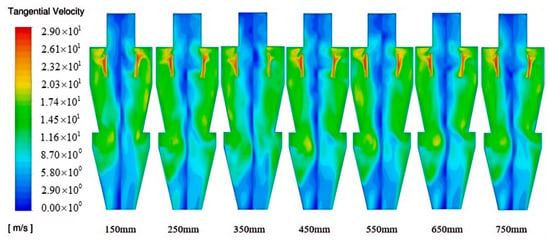
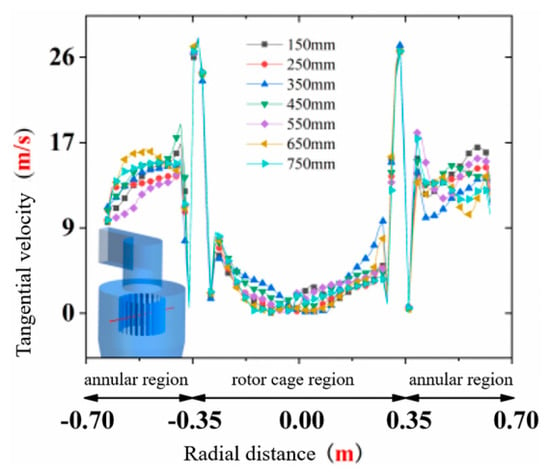
Structural Parameter Effects on Flow Stability and Classification Performance in a Turbo Air Classifier
by
Weifeng Qian and Yun Zeng
Machines 2026, 14(7), 765; https://doi.org/10.3390/machines14070765 (registering DOI) - 8 Jul 2026
Abstract
Understanding which structural parameters govern flow stability and particle separation is essential for turbo air classifier design. In this study, the Y160L-6 turbo air classifier was used to examine whether different categories of spatial structural parameters influence classification performance through the same flow
[...] Read more.
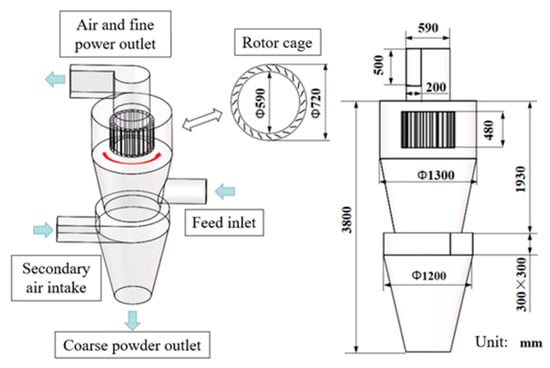
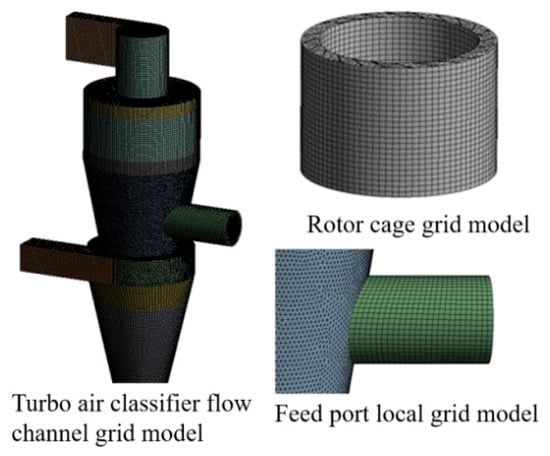
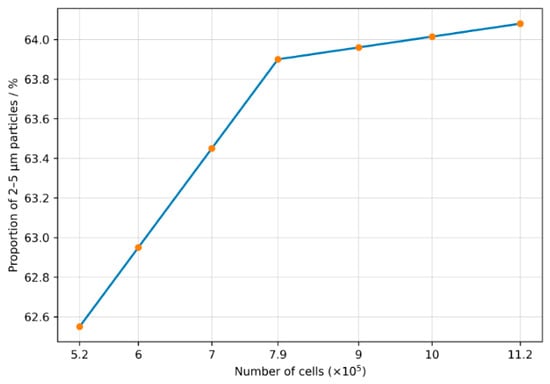
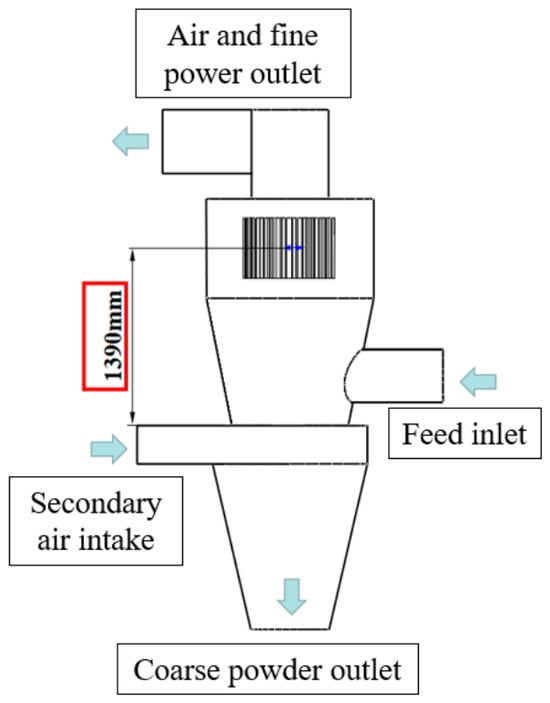
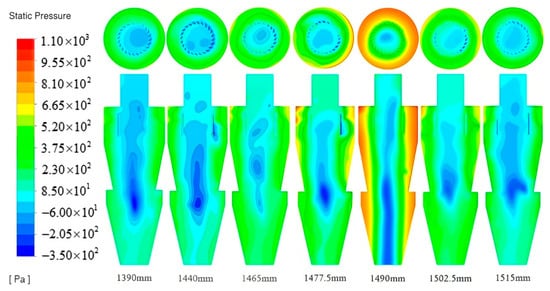
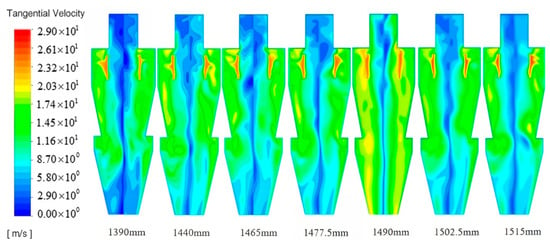
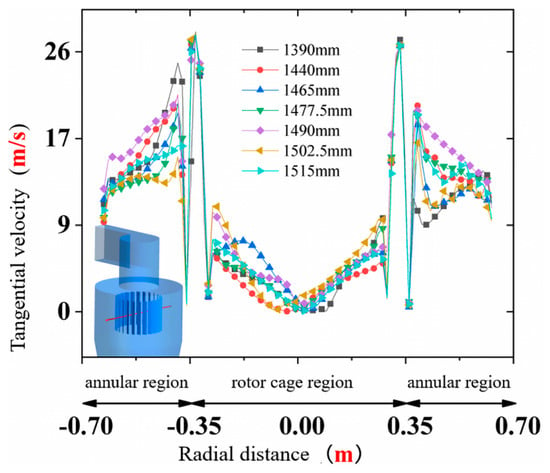
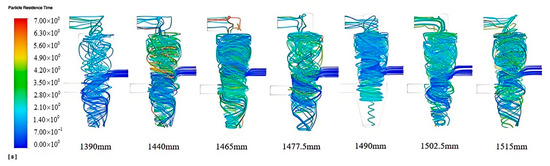
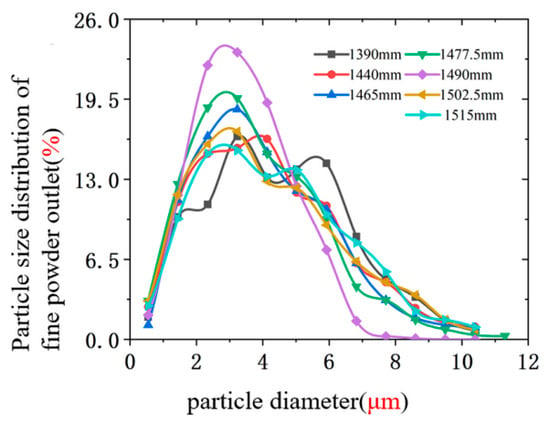
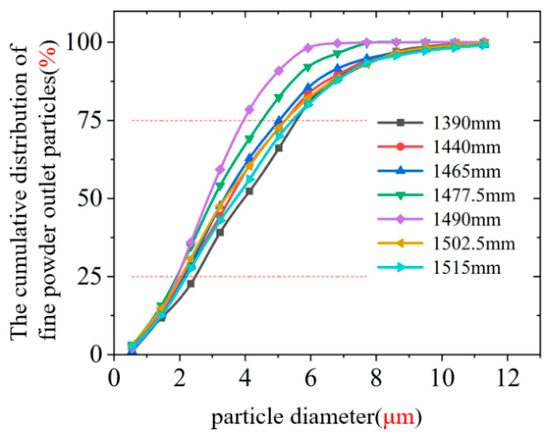
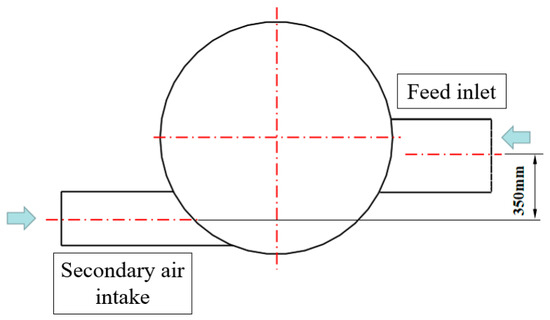
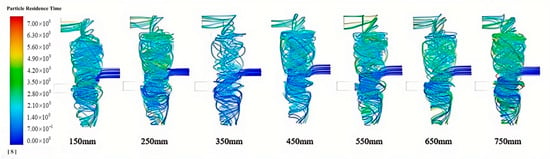
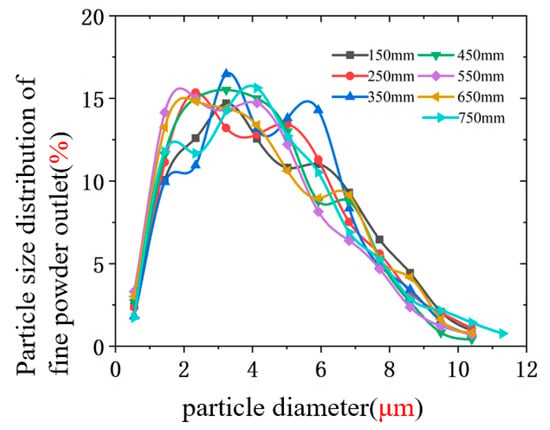
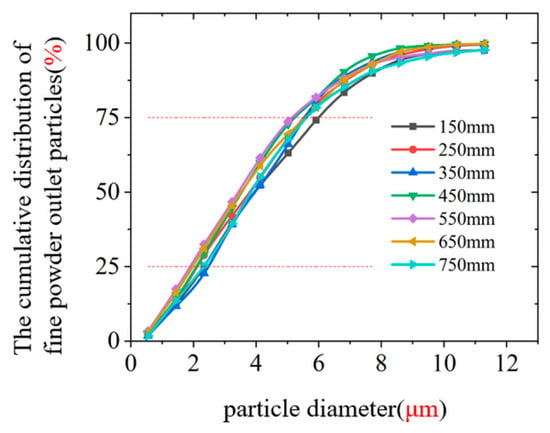
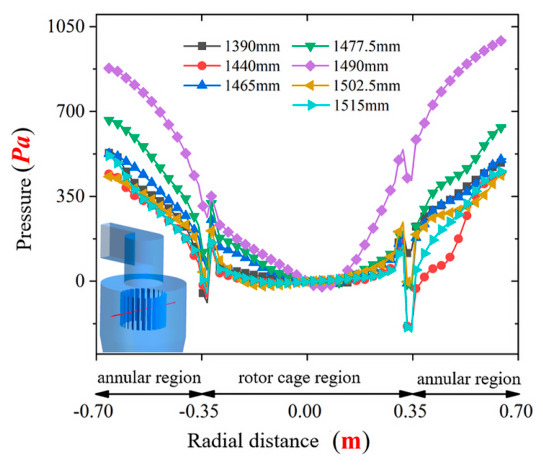
Understanding which structural parameters govern flow stability and particle separation is essential for turbo air classifier design. In this study, the Y160L-6 turbo air classifier was used to examine whether different categories of spatial structural parameters influence classification performance through the same flow mechanism or play distinct roles in regulating the internal flow field. Two representative parameters, namely the spacing between the secondary air inlet and the rotor cage and the spacing between the secondary air inlet and the feed inlet, were analyzed using computational fluid dynamics (CFD) coupled with the RNG k–ε turbulence model and the discrete phase model (DPM). The results show that the two parameters affect the classifier through different mechanisms. Increasing the secondary air inlet–rotor cage spacing causes a non-monotonic variation in wall pressure and tangential velocity, indicating a strong influence on the global swirling structure. At a spacing of 1490 mm, the pressure distribution in the classification zone becomes more uniform, the tangential velocity reaches a relatively high level, and the intensity of the precessing vortex core (PVC) is reduced. Under this condition, the cumulative proportion of 2–5 μm particles at the fine powder outlet increases by 34.1% compared with the initial configuration. In contrast, variations in the secondary air inlet–feed inlet spacing exert only a limited influence on the overall flow structure and classification characteristics under relatively low feed inlet velocity conditions, indicating that this parameter mainly affects local flow disturbance rather than global flow stability. These findings demonstrate that structural parameters associated with the coupling between secondary airflow and rotor rotation dominate classifier performance, whereas parameters related to feed–air interaction exert only a secondary effect under low feed momentum conditions. These findings provide design guidance for the investigated Y160L-6 turbo air classifier and may serve as a reference for similar classifier structures under comparable operating conditions.
Full article
(This article belongs to the Section Turbomachinery)
►▼
Show Figures

Figure 1
Open AccessArticle
Asymmetric S-Curve Velocity Control for Smooth Obstacle-Avoidance Trajectory Execution in Stepper-Motor-Driven Selective Compliance Assembly Robot Arms
by
Qihui Guo, Maksim A. Grigorev, Zihan Zhang, Ivan Kholodilin, Victor Kushnarev, Dmitry Khriukin and Nikita Maksimov
Machines 2026, 14(7), 764; https://doi.org/10.3390/machines14070764 (registering DOI) - 7 Jul 2026
Abstract
Stepper-motor-driven Selective Compliance Assembly Robot Arms are susceptible to motion control challenges under short-stroke and high-frequency start–stop conditions, including high sensitivity to pulse timing, difficulty in multi-joint coordination, and insufficient trajectory smoothness. To address these issues, this paper proposes an optimized motion control
[...] Read more.
Stepper-motor-driven Selective Compliance Assembly Robot Arms are susceptible to motion control challenges under short-stroke and high-frequency start–stop conditions, including high sensitivity to pulse timing, difficulty in multi-joint coordination, and insufficient trajectory smoothness. To address these issues, this paper proposes an optimized motion control method for smooth execution of obstacle-avoidance trajectories, integrating path smoothing, asymmetric S-curve velocity planning, and pulse-frequency-based multi-axis synchronization. First, piecewise cubic Hermite interpolation, Gaussian smoothing, and end-effector-based equidistant resampling are applied to post-process Rapidly-exploring Random Tree-generated paths, thereby eliminating polyline turning points and improving uniformity of waypoint distribution. Second, an asymmetric S-curve velocity planning method with nonzero boundary velocity constraints is developed, and multi-axis synchronization is achieved based on the maximum segment duration principle. Finally, instantaneous reference velocities are converted into per-axis pulse frequency commands via proportional mapping, enabling real-time stepper motor drive control. Experimental results show that the proposed method reduces the obstacle-avoidance path length by 8.52% and significantly decreases the dispersion of trajectory step sizes. In single-segment dynamic simulations, the proposed method reduces the peak dynamic output force by 62%. In real robot experiments, the average motion time across three obstacle-avoidance tasks is reduced by approximately 55.21%, while end-effector trajectory continuity and inter-joint coordination are improved, suggesting the effectiveness and preliminary engineering feasibility of the proposed method under the tested conditions.
Full article
(This article belongs to the Section Robotics, Mechatronics and Intelligent Machines)
Open AccessArticle
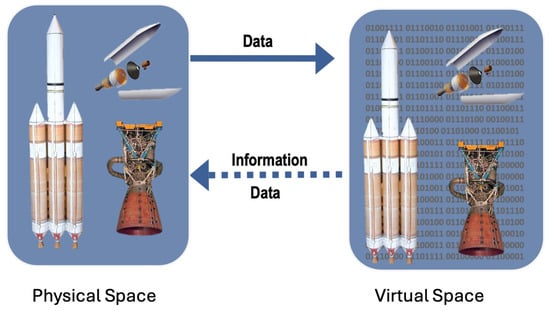
Front Running Simulation: A Digital Twin Framework for Real-Time Replication, Prediction, and Goal Navigation
by
Michael Grieves
Machines 2026, 14(7), 763; https://doi.org/10.3390/machines14070763 - 7 Jul 2026
Abstract
Front Running Simulation (FRS) is a digital twin-enabled capability that continuously replicates the current state of physical systems, predicts probable future states, and identifies actions to navigate defined goals while minimizing the expenditure of scarce physical resources. Unlike traditional simulation, which operates offline
[...] Read more.
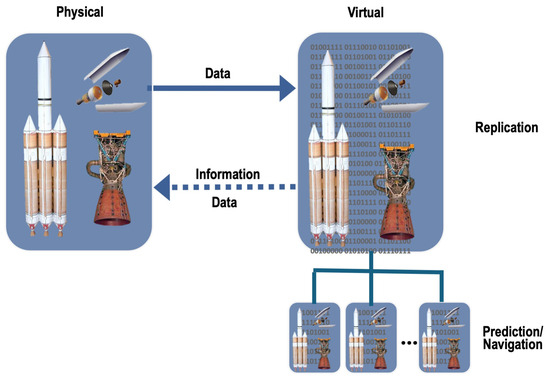
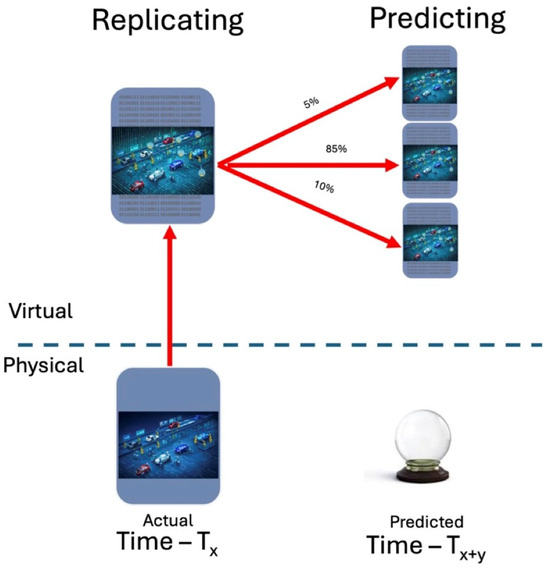
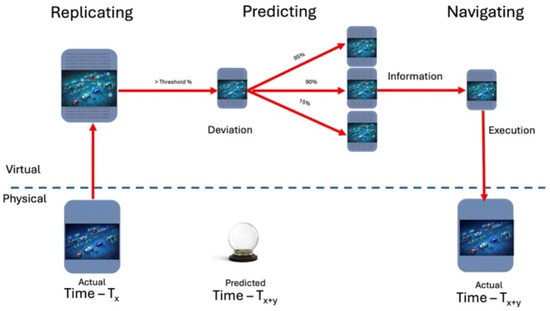
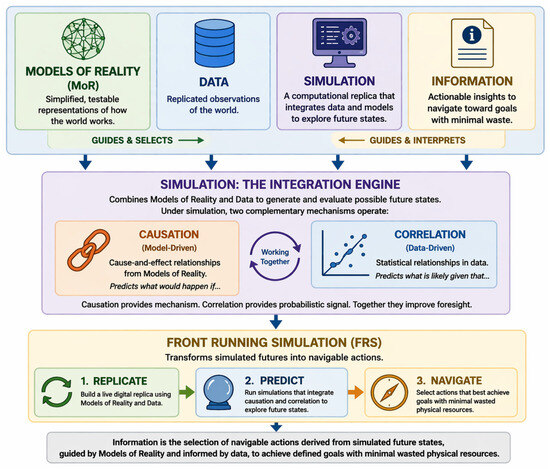
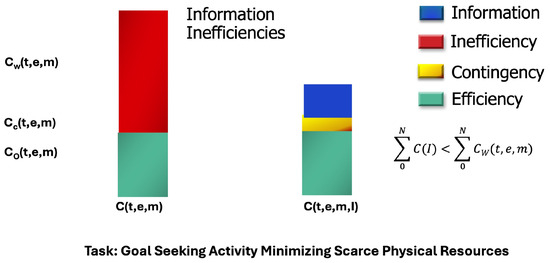
Front Running Simulation (FRS) is a digital twin-enabled capability that continuously replicates the current state of physical systems, predicts probable future states, and identifies actions to navigate defined goals while minimizing the expenditure of scarce physical resources. Unlike traditional simulation, which operates offline with predefined initial conditions, FRS is continuously synchronized with reality through Digital Twin Instances (DTIs), allowing forward-looking simulations from the present state. FRS is based on three core activities—replication, prediction, and navigation—supported by data, Models of Reality (MoR), simulation, and information. Data enable replication. Simulations based on MoRs enable prediction through causal and probabilistic methods, and information enables goal-directed action selection. The integration of Digital Twin Aggregates (DTAs) and Artificial Intelligence (AI) introduces Bayesian data-driven prediction that complements physics-based simulations. This hybrid approach combines exploration of possible futures with rapid identification of probable outcomes. As the examples demonstrate, FRS shifts the focus from only adverse event avoidance to goal attainment under constraints, enabling proactive, information-driven decision-making. It provides a unifying Digital Twin FRS framework for Models of Reality, data, simulation, information, and AI to improve operational efficiency and effectiveness in complex systems.
Full article
(This article belongs to the Special Issue Digital Twin-Driven Machine Performance and Reliability: Replication, Prediction and Front Running Simulation)
►▼
Show Figures

Figure 1
Open AccessArticle
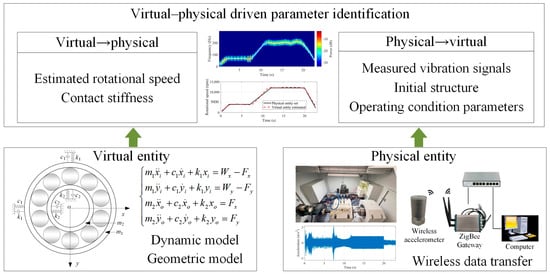
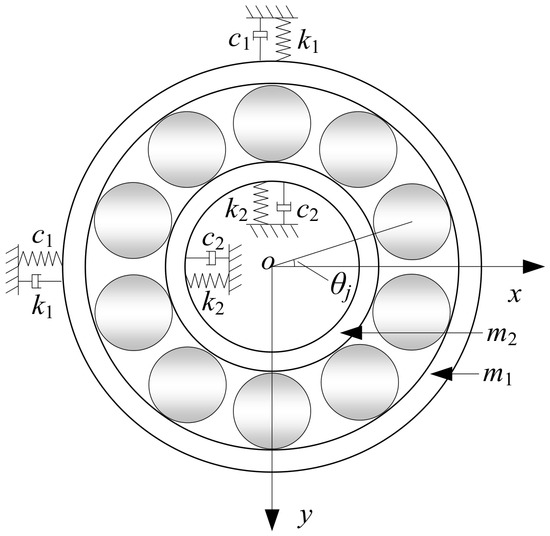
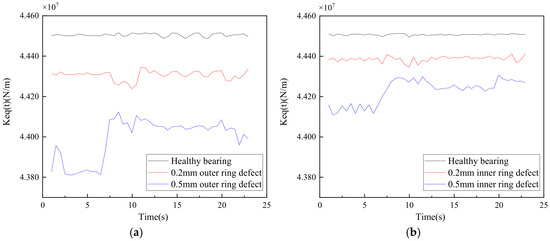
Identification of Rotational Speed and Contact Stiffness of EV Motor Bearings Using a Virtual Dynamic Model and a Physical Entity
by
Hongfan Yang, Yujun Xue, Ziteng Mi, Haichao Cai, Jun Ye, Honglin Du and Fengya Pang
Machines 2026, 14(7), 762; https://doi.org/10.3390/machines14070762 - 7 Jul 2026
Abstract
Motor bearings are key transmission components in drive motors and they play an important role in the operational safety and stability of electric vehicles (EVs). The contact stiffness and rotational speed are key factors governing the frequency and vibration responses of bearing systems.
[...] Read more.
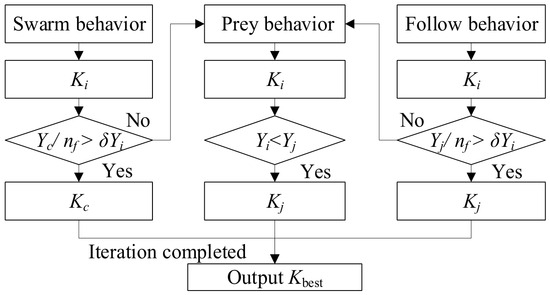
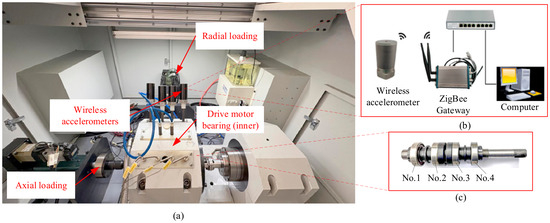
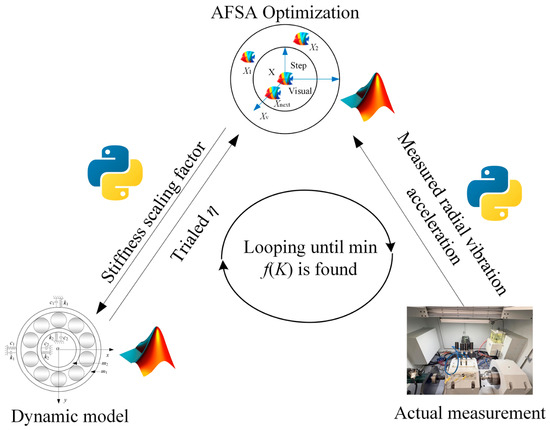
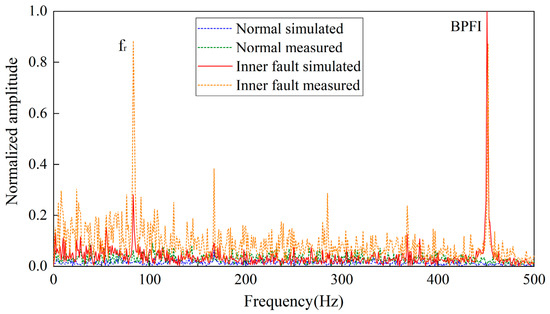
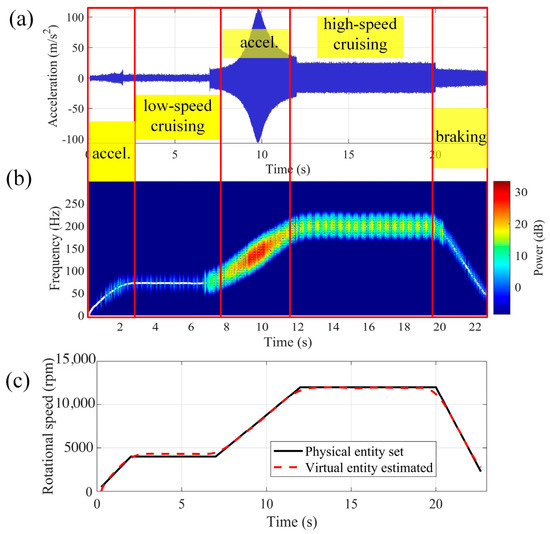
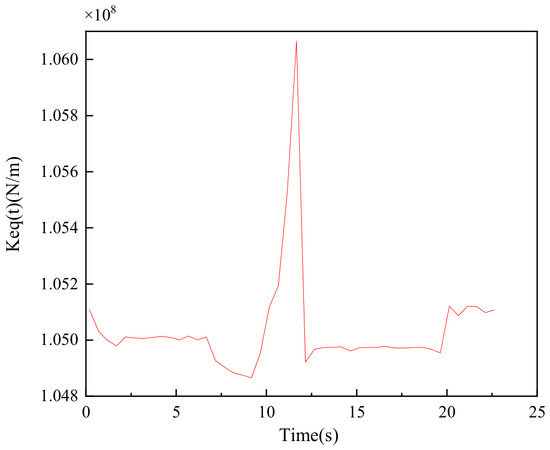
Motor bearings are key transmission components in drive motors and they play an important role in the operational safety and stability of electric vehicles (EVs). The contact stiffness and rotational speed are key factors governing the frequency and vibration responses of bearing systems. Identifying these two parameters provides critical information for a better characterization of the dynamic behavior of bearings. In this study, we developed an efficient hybrid parameter identification method to estimate rotational speed and contact stiffness. An EV motor-bearing test rig with wireless data transmission was established, along with a four-degree-of-freedom dynamic bearing model. The rotational speed was estimated from vibration signals by time-frequency ridge tracking without a physical tachometer. The evolution of the effective equivalent contact stiffness was inversely identified by scaling the Hertzian stiffness coefficient using the artificial fish swarm algorithm. The proposed method is a potential technique for sequential updating of rotational speed and contact stiffness, which is suitable for assisting in the construction of a virtual–physical parameter-identification framework for bearing systems.
Full article
(This article belongs to the Section Advanced Manufacturing)
►▼
Show Figures

Figure 1

Open AccessReview
Recyclability in Metal Additive Manufacturing: Bridging Powder Lifecycle, Defect Evolution and Fatigue-Critical Reliability Across SLM and EBM
by
Ana Catarina Lopes, André F. V. Pedroso, Francisco J. G. Silva, Raul D. S. G. Campilho, Naiara P. V. Sebbe and Rúben D. F. S. Costa
Machines 2026, 14(7), 761; https://doi.org/10.3390/machines14070761 - 6 Jul 2026
Abstract
Powder recyclability in metal additive manufacturing has become a critical requirement for improving sustainability, cost-efficiency, and industrial scalability, particularly in powder bed fusion processes such as Selective Laser Melting (SLM) and Electron Beam Melting (EBM). Despite growing interest in powder reuse, the available
[...] Read more.
Powder recyclability in metal additive manufacturing has become a critical requirement for improving sustainability, cost-efficiency, and industrial scalability, particularly in powder bed fusion processes such as Selective Laser Melting (SLM) and Electron Beam Melting (EBM). Despite growing interest in powder reuse, the available literature remains fragmented, often addressing powder degradation, process defects, or mechanical performance as isolated topics. This separation limits understanding of how powder lifecycle evolution affects fatigue-critical reliability, where small variations in powder condition may strongly influence long-term structural integrity. This review aims to establish a unified process–structure–performance perspective linking powder reuse, degradation mechanisms, defect evolution, and mechanical reliability in SLM and EBM. A structured literature analysis was conducted to examine changes in powder morphology, particle size distribution, chemical composition, oxygen uptake, moisture interaction, flowability, and thermal history across reuse cycles. Attention was given to the relationship between powder degradation mechanisms and defect formation during processing. The review shows that static mechanical properties, including tensile strength and hardness, may remain comparatively stable after multiple reuse cycles. In contrast, fatigue performance is markedly more sensitive to powder condition, owing to the accumulation of defects such as oxide inclusions, porosity, lack-of-fusion regions, and irregular melt-pool features. Distinct degradation pathways were identified: SLM is mainly governed by oxidation-related effects, whereas EBM is more strongly influenced by particle coarsening, morphology changes, and thermal exposure. Powder recyclability should be considered not only as a sustainability issue but also as a reliability-driven engineering challenge. The proposed framework supports reuse decisions by integrating powder lifecycle assessment with defect tolerance and fatigue-critical performance requirements.
Full article
(This article belongs to the Special Issue Advanced Machining Strategies for Conventional and Additively Manufactured Components)
Open AccessArticle
Comparative Thermal Performance Evaluation of Compact Magnetic Gears with High-Saturation Magnetic Alloys for High-Speed Applications
by
Kadir Yılmaz, Taner Dindar, Ufuk Ayhan, Murat Ayaz, Serkan Aktaş and Serkan Sezen
Machines 2026, 14(7), 760; https://doi.org/10.3390/machines14070760 - 6 Jul 2026
Abstract
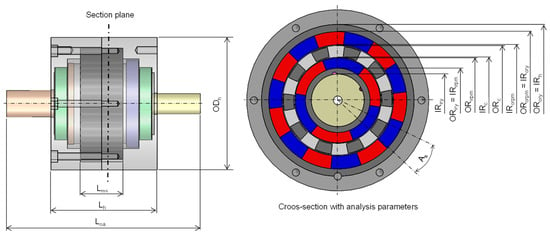
Coaxial magnetic gears (CMGs) have emerged as a promising alternative to conventional mechanical gear systems due to their contactless torque transmission, low maintenance requirements, and high reliability. However, under high-speed operation, conductivity-induced eddy current losses become dominant and significantly limit thermal performance. This
[...] Read more.
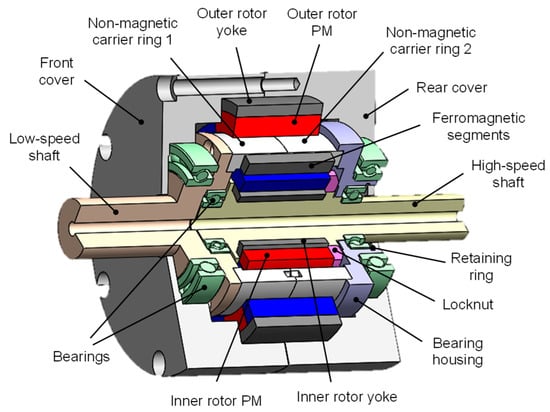
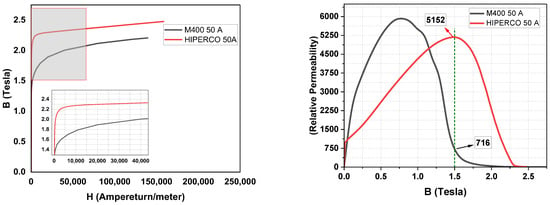
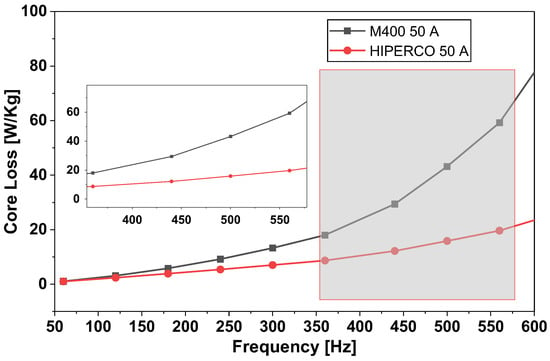
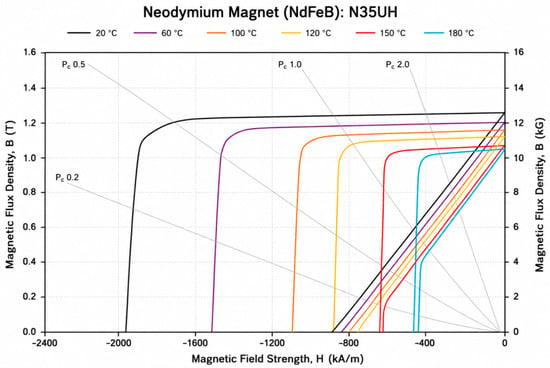
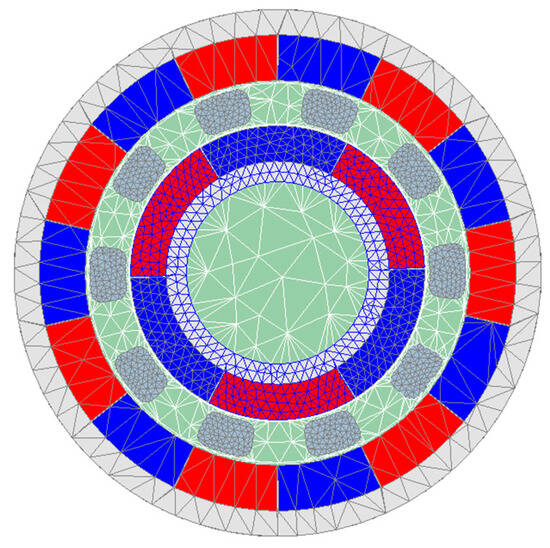
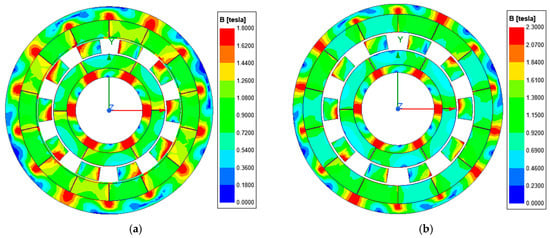
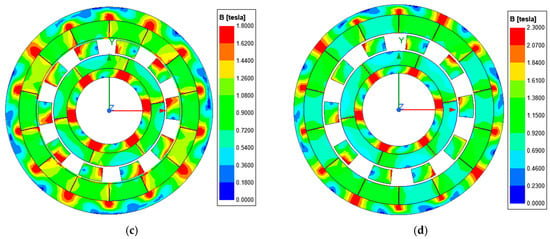
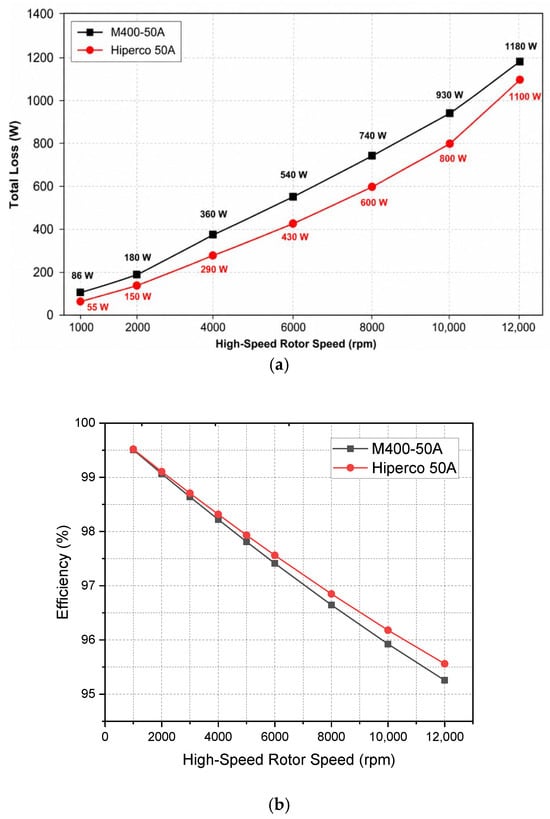
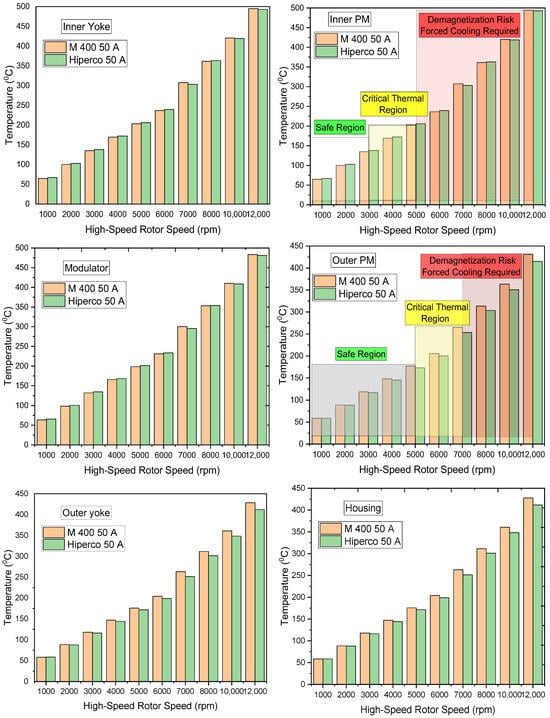
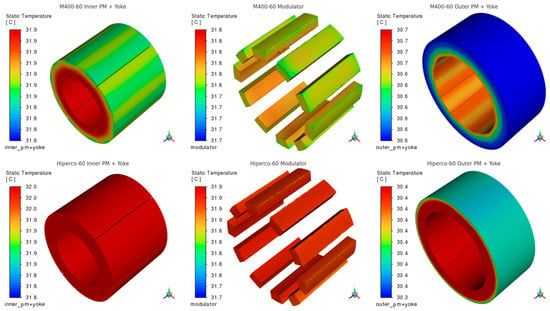
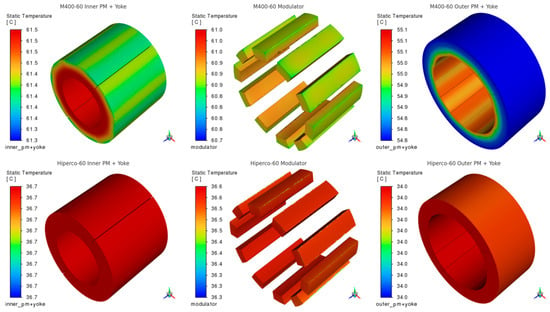
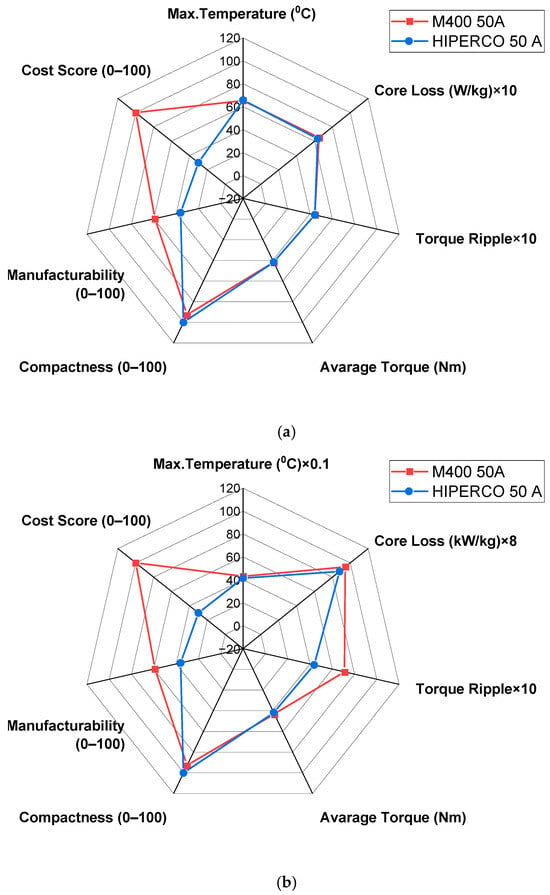
Coaxial magnetic gears (CMGs) have emerged as a promising alternative to conventional mechanical gear systems due to their contactless torque transmission, low maintenance requirements, and high reliability. However, under high-speed operation, conductivity-induced eddy current losses become dominant and significantly limit thermal performance. This study comparatively investigates the coupled electromagnetic and thermal behavior of two compact CMGs with identical torque capacity using M400-50A electrical steel and cobalt-based Hiperco 50A. Coupled electromagnetic–thermal finite element analyses are performed from 1000 to 12,000 rpm under worst-case natural convection conditions. The results demonstrate that the use of Hiperco 50A reduces core losses by up to 71% at high speeds and enables approximately 7.3% greater volumetric compactness owing to its higher saturation capability. Eddy-current-related losses remain the dominant loss mechanism at elevated speeds, causing inner-rotor permanent-magnet temperatures to exceed the allowable limits of NdFeB materials. Under natural convection, the outer permanent-magnet temperature remains below the critical threshold of 200 °C up to approximately 5800 rpm for the M400-50A design. With Hiperco 50A, this limit increases to approximately 6000 rpm under identical operating conditions, corresponding to an improvement of about 3%. These findings demonstrate the thermal benefits of high-saturation magnetic alloys; however, additional cooling strategies are required for operation at higher speeds.
Full article
(This article belongs to the Section Electrical Machines and Drives)
►▼
Show Figures

Figure 1
Open AccessArticle
An Improved Mesh Stiffness Model for Cracked Spur Gears Considering Tooth Surface Contact Characteristics
by
Shihua Zhou, Xuan Li, Chenhui Zhou, Tengyuan Xu, Ye Zhang and Zhaohui Ren
Machines 2026, 14(7), 759; https://doi.org/10.3390/machines14070759 - 6 Jul 2026
Abstract
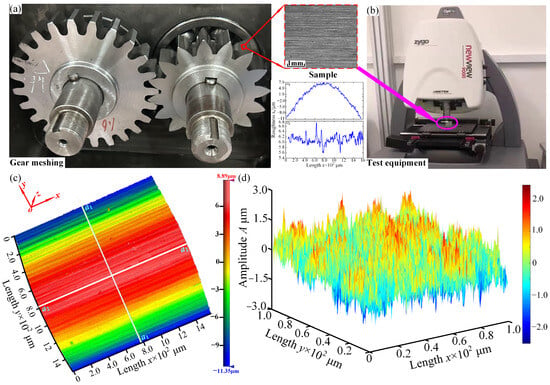
Tooth crack, as a typical fault, directly affects the meshing characteristics of gears, which causes abnormal vibration and noise during the gear meshing process, with some even threatening the operational safety of the mechanical device. Meanwhile, the mapping relation between the tooth crack
[...] Read more.
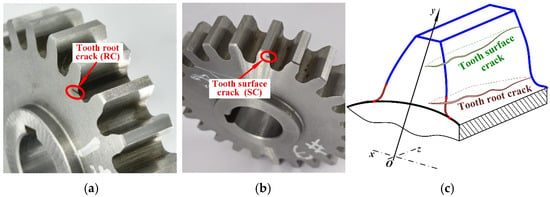
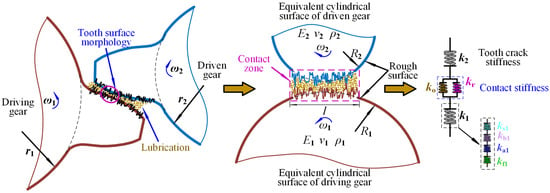
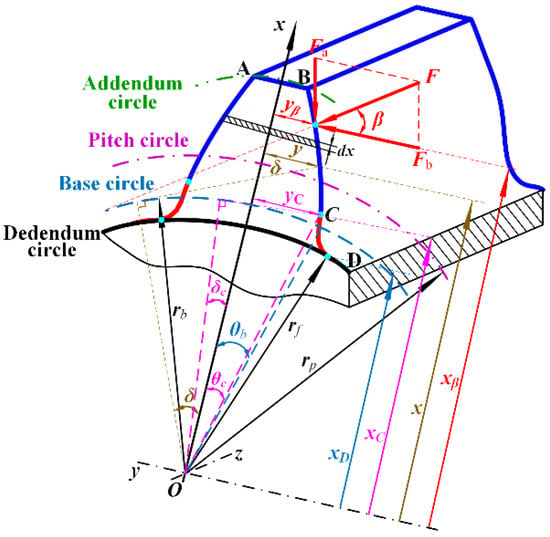
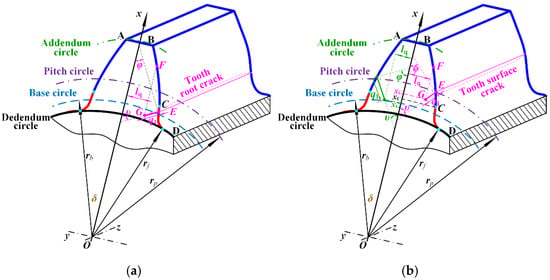
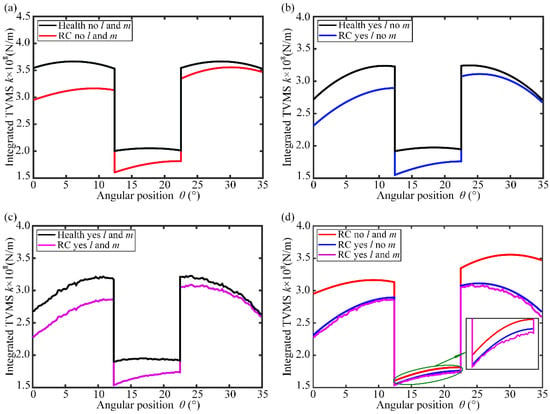
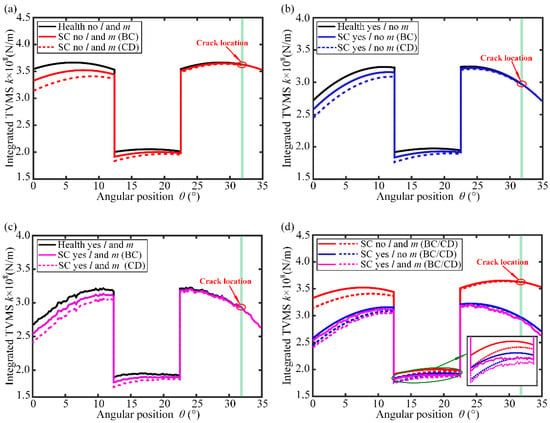
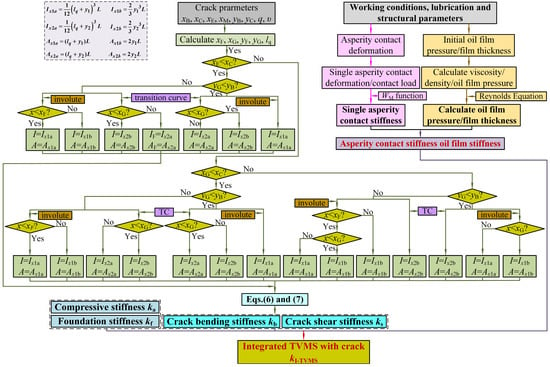
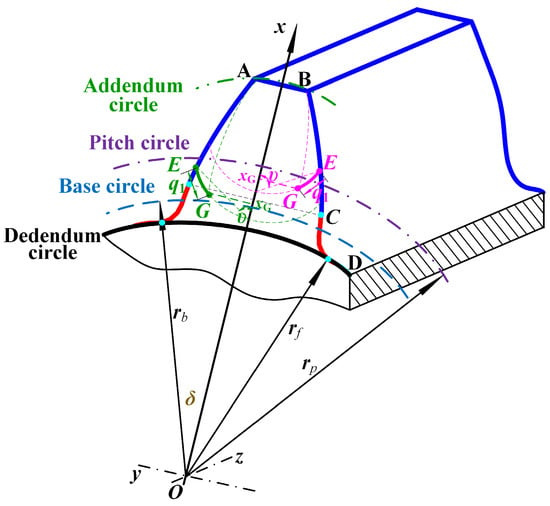
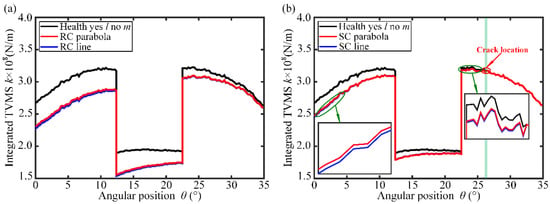
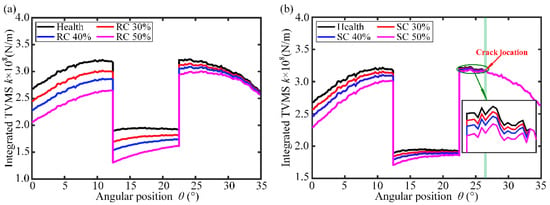
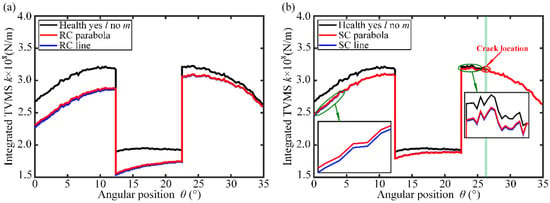
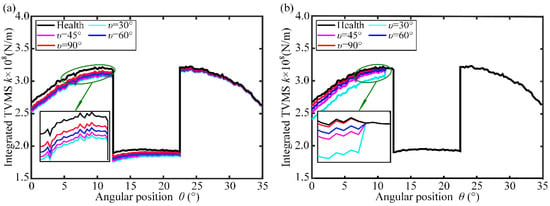
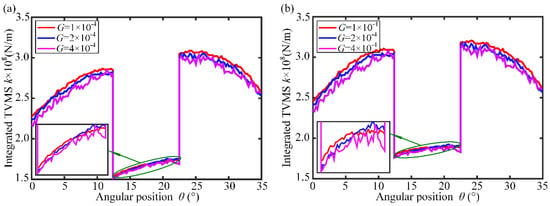
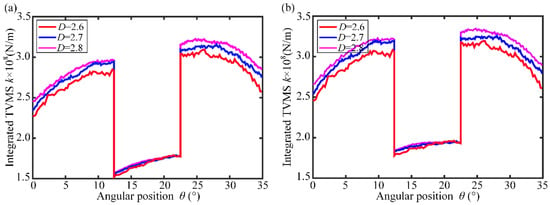
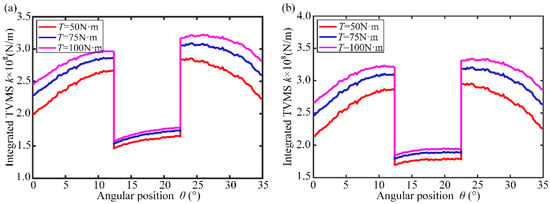
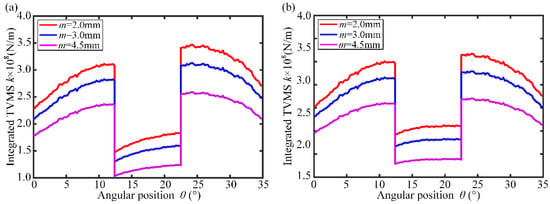
Tooth crack, as a typical fault, directly affects the meshing characteristics of gears, which causes abnormal vibration and noise during the gear meshing process, with some even threatening the operational safety of the mechanical device. Meanwhile, the mapping relation between the tooth crack and the actual meshing characteristics is still unclear under the tooth surface morphology and lubrication properties. Aiming at this issue, an integrated time-varying meshing stiffness (I-TVMS) model with cracks is proposed under the complex and variable working conditions. Based on the potential energy method, the analytical expressions with cracks are derived and calculated, and, then, the variation laws of I-TVMS under different crack parameters, tooth surface morphology, and structural and excitation parameters are investigated. Combined with the healthy tooth, the crack increases the contact load on the tooth surface, and reduces the oil film thickness, which decreases the I-TVMS of the cracked tooth. The greater the crack depth and torque is, the smaller the oil film thickness, and the weaker the I-TVMS fluctuation will be. The influence of the crack angle depends on the crack type and meshing region. The tooth-root crack is more sensitive in the single-tooth region, whereas the tooth surface crack shows a larger change only in the double-tooth mean value. When the crack location transitions from the tooth root to the tooth top, the stiffness attenuation gradually weakens.
Full article
(This article belongs to the Section Machine Design and Theory)
►▼
Show Figures

Figure 1

Open AccessArticle
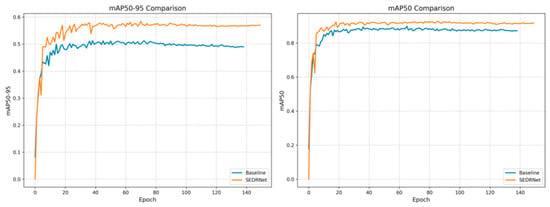
SEDR-Net: A YOLOv11-Based Network for Conveyor Belt Surface Defect Detection in Complex Industrial Scenes
by
Fei Cong, Yiping Yuan, Lu Xiao, Tingting Wang and Weiwei Han
Machines 2026, 14(7), 758; https://doi.org/10.3390/machines14070758 - 6 Jul 2026
Abstract
Belt conveyors are essential to continuous material transport systems, and reliable surface defect detection is therefore critical for safe and stable operation. In real industrial environments, defects such as tears, punctures, and localized damage are often small, elongated, and characterized by weak boundary
[...] Read more.
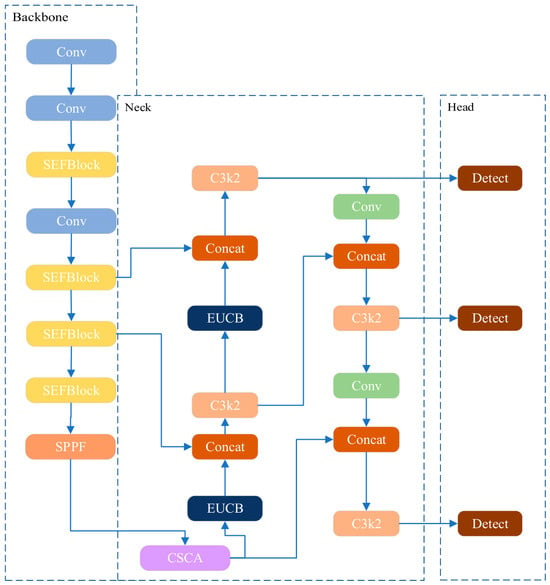
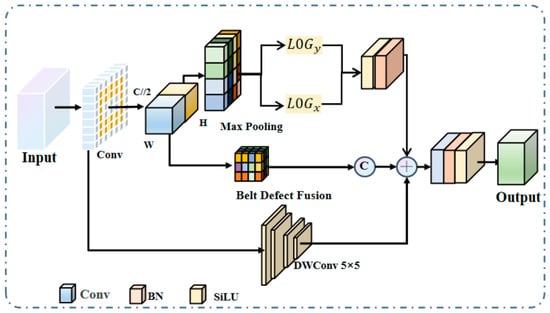
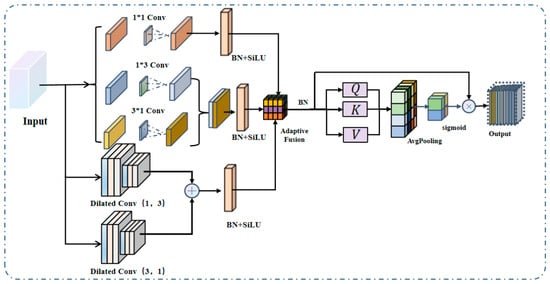
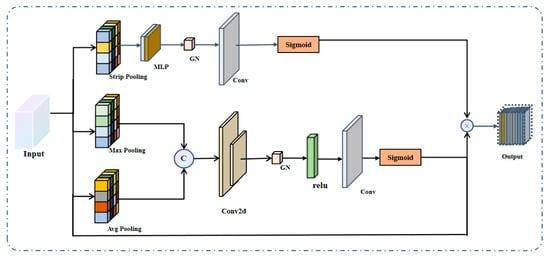
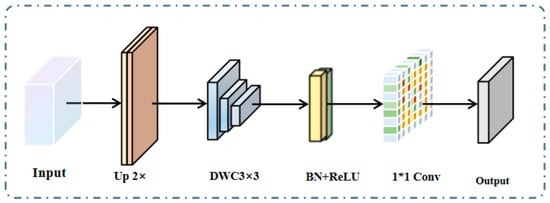
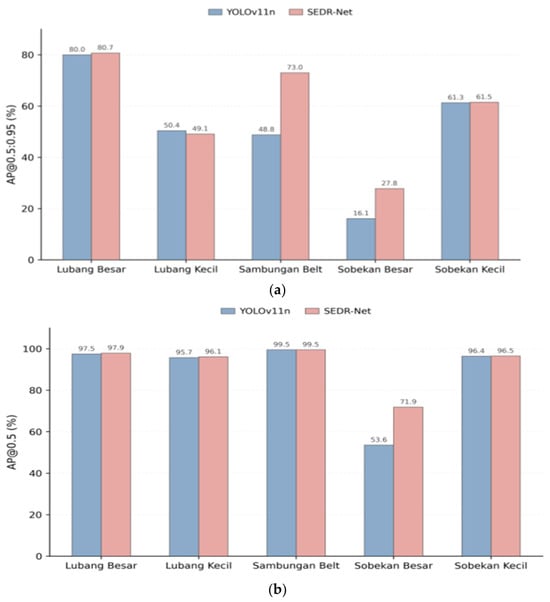
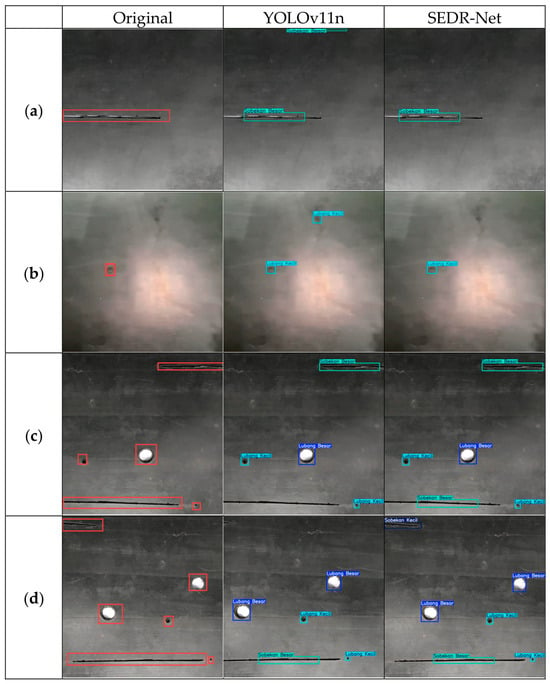
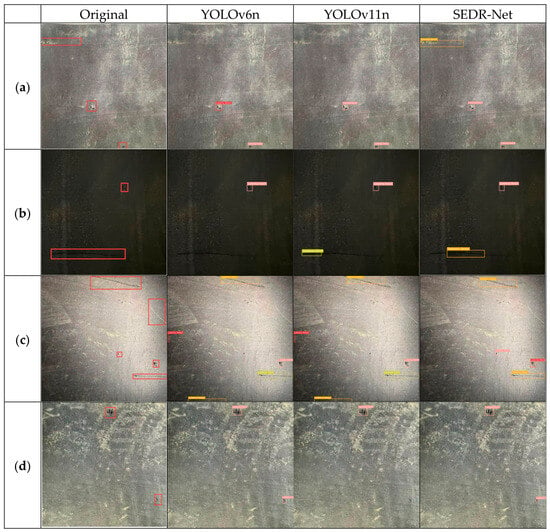
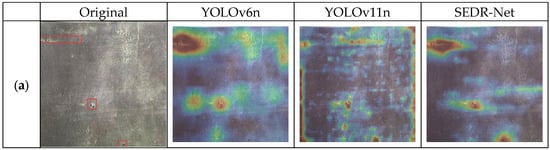
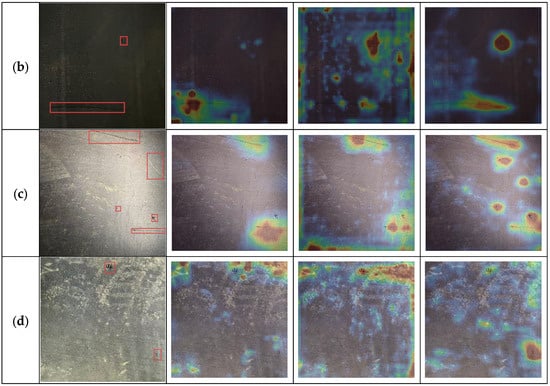
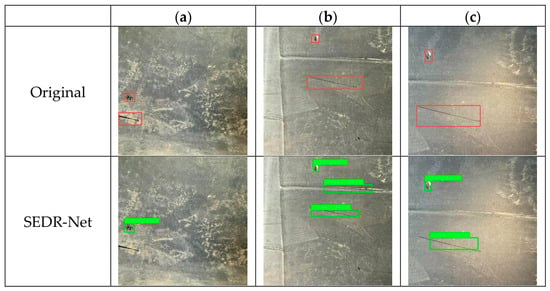
Belt conveyors are essential to continuous material transport systems, and reliable surface defect detection is therefore critical for safe and stable operation. In real industrial environments, defects such as tears, punctures, and localized damage are often small, elongated, and characterized by weak boundary contrast. Complex background interference further increases the difficulty of accurate and reliable detection for real-time defect detectors. To address these challenges, this paper proposes SEDR-Net (Structure-Edge and Detail Reconstruction Network), a YOLOv11n-based network, for this task. The Structural-Edge Fusion Block (SEFBlock), Channel-Spatial Collaborative Attention (CSCA), and Efficient Up-Convolution Block (EUCB) respectively enhance structural-edge representation, suppress redundant background responses, and recover local structures and boundary details. On a public conveyor-belt defect dataset, SEDR-Net achieves 90.8% Recall, with an mAP@0.5 of 92.4% and an mAP@0.5:0.95 of 58.4%, yielding improvements of 4.7, 3.8, and 7.1 percentage points over YOLOv11n, respectively. Meanwhile, SEDR-Net uses 2.42 M trainable parameters and maintains an inference speed of 134.2 FPS, indicating a favorable accuracy–complexity trade-off for real-time inspection. An independent external industrial test set further verifies the cross-scenario robustness and practical applicability of the proposed method under real mining conveyor-belt conditions.
Full article
(This article belongs to the Section Machines Testing and Maintenance)
►▼
Show Figures

Figure 1
Open AccessArticle
Modeling and Selection of Rational Parameters for Sensors Installation Assemblies on Coal Charging Car Hoppers
by
Volodymyr Lipovskyi, Kostiantyn Baiul, Pavlo Krot, Serhii Vashchenko, Olexander Khudyakov and Yurii Semenov
Machines 2026, 14(7), 757; https://doi.org/10.3390/machines14070757 - 6 Jul 2026
Abstract
This study presents a comprehensive analysis of the modeling and optimization of sensor installation nodes for weight measurement in the hoppers of a charging car utilized in coke production. The research highlights the critical role of precise load monitoring in preventing technological disruptions,
[...] Read more.
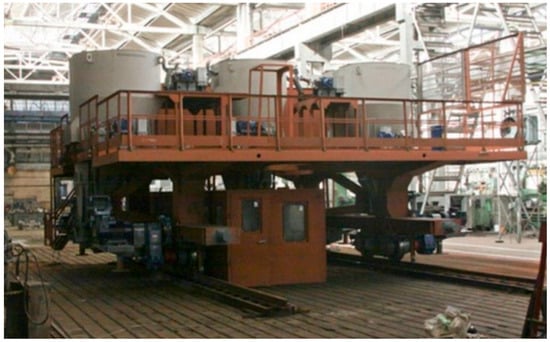
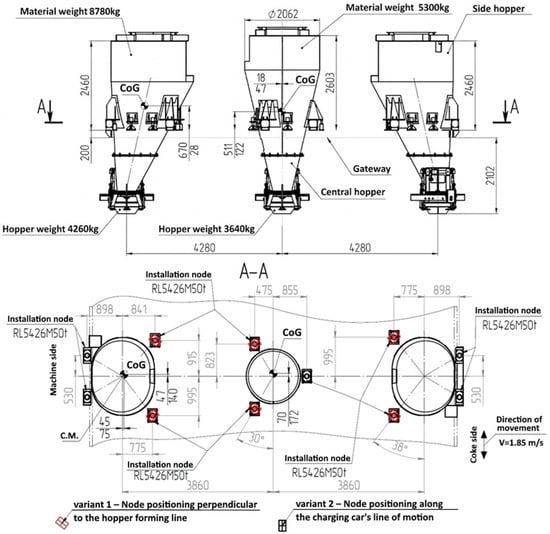
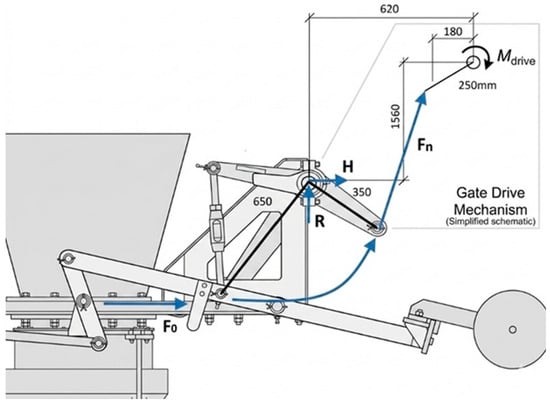
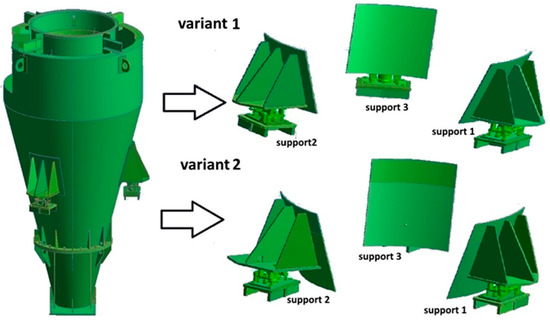
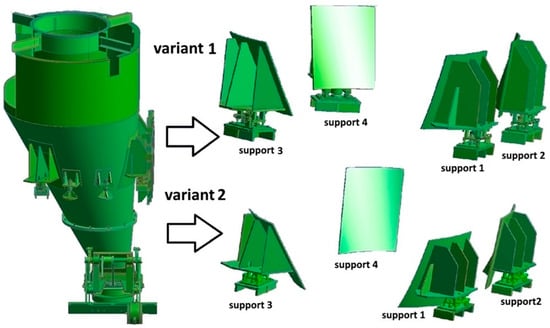
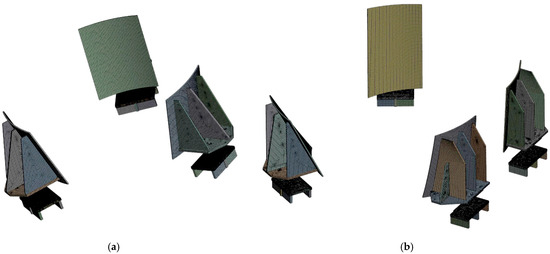
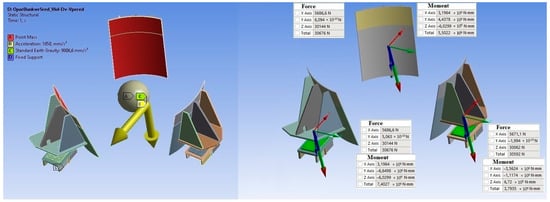
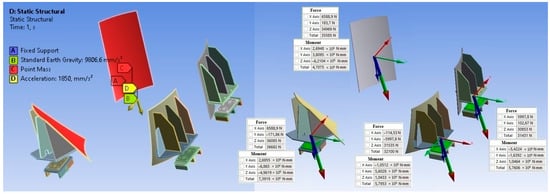
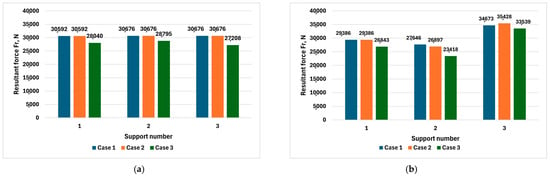
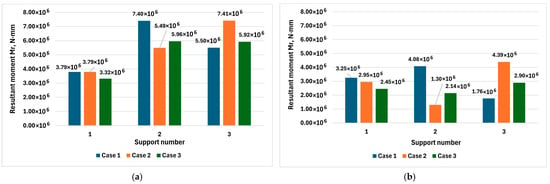
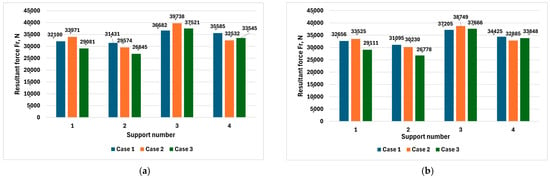
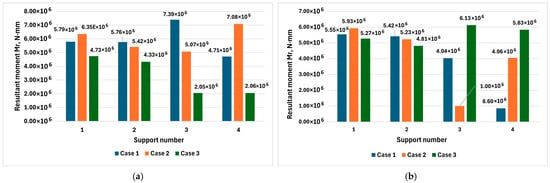
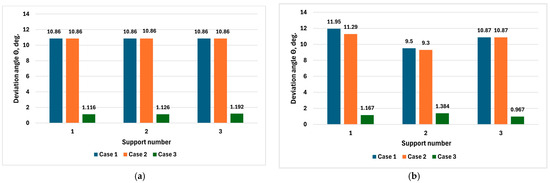
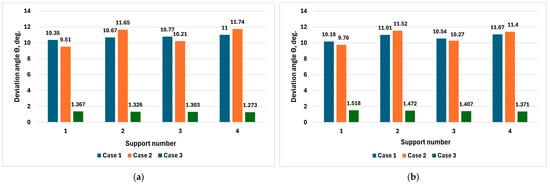
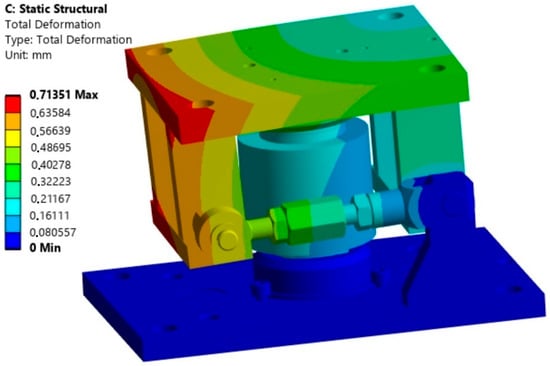
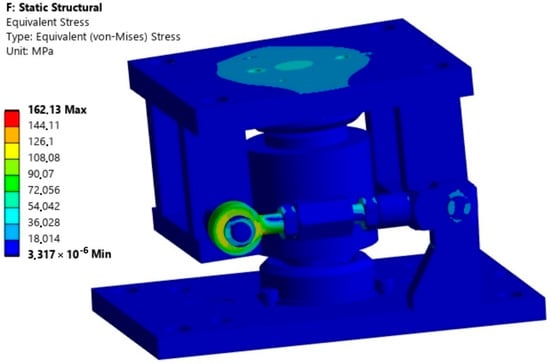
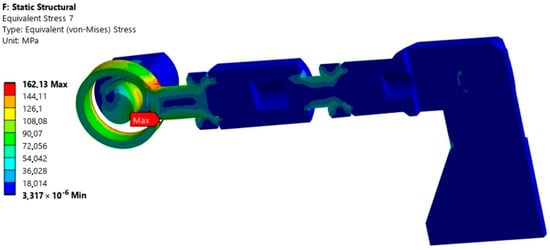
This study presents a comprehensive analysis of the modeling and optimization of sensor installation nodes for weight measurement in the hoppers of a charging car utilized in coke production. The research highlights the critical role of precise load monitoring in preventing technological disruptions, minimizing equipment degradation, and optimizing energy consumption. Conventional sensor technologies, including capacitive, ultrasonic, and laser-based systems, are evaluated, with weight sensors mounted on hopper supports identified as the most robust solution for real-time mass determination under industrial conditions characterized by high dust levels, temperature fluctuations, and mechanical vibrations. A finite element analysis (FEA) was conducted to assess the structural behavior of sensor installation nodes under three distinct loading scenarios, corresponding to different operational conditions of the charging car. The four-point support structure of the hopper experienced the highest loads and non-uniformities. A stress–strain analysis of the sensor mounting assembly, performed using the Ansys software package, confirmed that both the sensor and its support structure maintain a sufficient safety margin (version 2024 R1, Ansys Inc., Canonsburg, PA, USA, the academic license provided to Wrocław University of Science and Technology). The findings validate the structural integrity and operational reliability of the proposed sensor configuration, contributing to the advancement of automated monitoring and control systems in coke production.
Full article
(This article belongs to the Special Issue Trends and Challenges in the Development and Operation of Modern Vehicles)
►▼
Show Figures

Figure 1
Open AccessArticle
AI-Driven Prediction of Surface Roughness and Cutting Force in Milling Aluminum Alloy Under Data-Scarce Conditions
by
Mohammad Hossein Ebrahimi and Seyed Ali Niknam
Machines 2026, 14(7), 756; https://doi.org/10.3390/machines14070756 - 5 Jul 2026
Abstract
Accurate prediction of surface roughness and cutting forces in milling aluminum alloys remains challenging under data-scarce conditions, where limited experimental data restricts the application of conventional machine learning models. This study addresses this gap by developing a systematic machine learning framework using 108
[...] Read more.
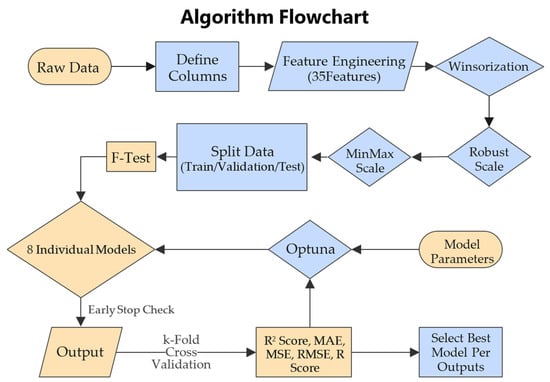
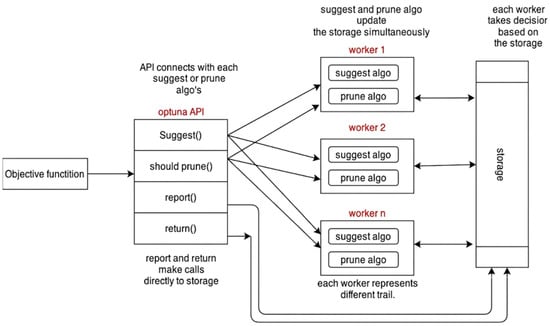
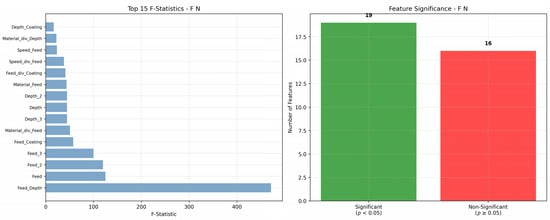
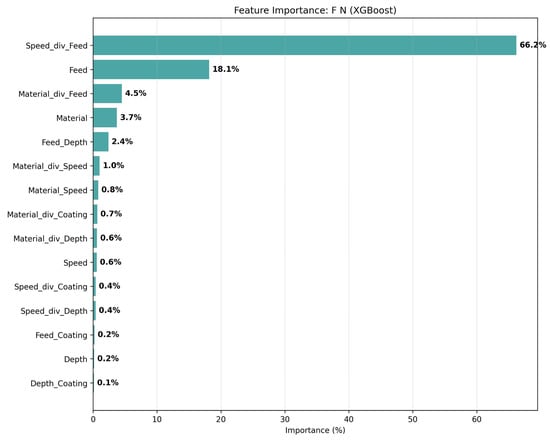
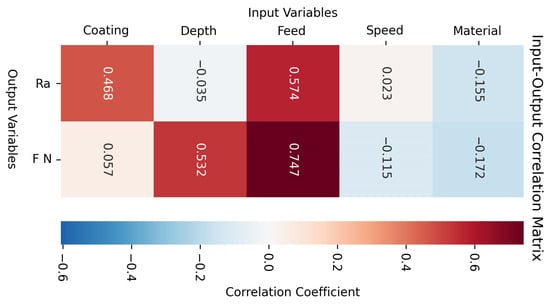
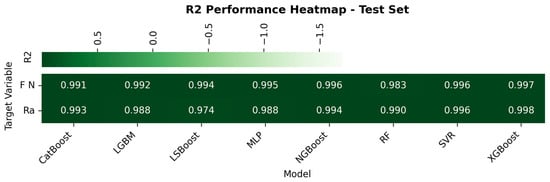
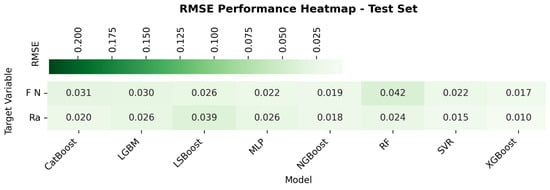
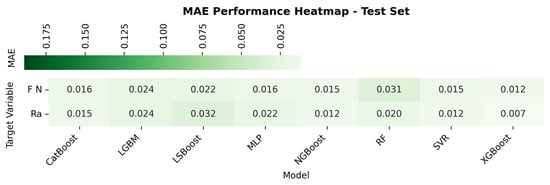
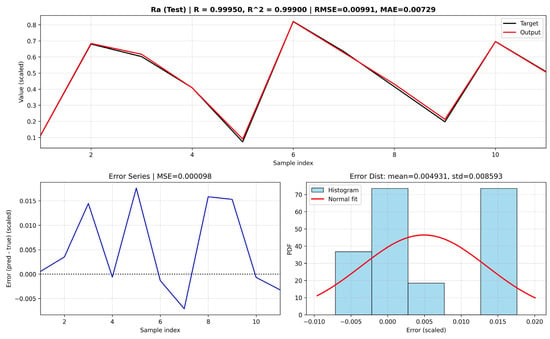
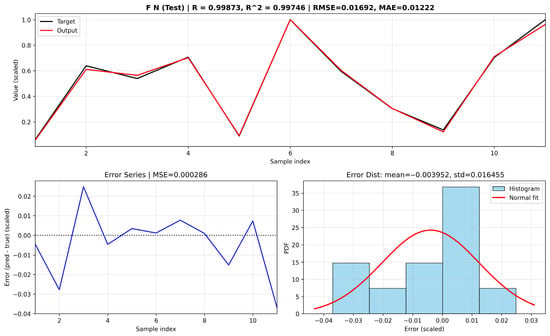
Accurate prediction of surface roughness and cutting forces in milling aluminum alloys remains challenging under data-scarce conditions, where limited experimental data restricts the application of conventional machine learning models. This study addresses this gap by developing a systematic machine learning framework using 108 milling experiments (repeated to 216 tests) on aluminum alloys AA2024-T351 and AA6061-T6. Five primary machining inputs—material type, spindle speed, feed rate, depth of cut, and tool coating—were used. Through feature engineering, 35 interaction features were generated to capture non-linear relationships. A two-step preprocessing strategy was applied: Winsorization at the 5th and 95th percentiles to handle outliers, followed by hybrid scaling combining RobustScaler and MinMaxScaler. Eight machine learning algorithms, including XGBoost, NGBoost, LightGBM, CatBoost, Random Forest, MLP, SVR, and Least Squares Boosting, were developed and hyperparameter-optimized using the Optuna framework with Tree-structured Parzen Estimator. Models were evaluated using R2, MAE, and RMSE on a 70/15/15 train–validation–test split. Results demonstrate that XGBoost achieved the highest predictive accuracy for surface roughness (Ra) (R2 = 0.99829) and for resultant cutting force (FN) (R2 = 0.997). Feed rate was identified as the dominant machining parameter, accounting for 87.7% of the total importance in predicting surface roughness. SHAP analysis confirmed that engineered interaction features—particularly Feed_Coating and Material_Feed—carry strong physical relevance. Additionally, NGBoost enabled probabilistic regression, providing uncertainty estimates. The proposed framework proves highly effective for multi-output prediction in machining under limited data, offering a robust, interpretable, and industry-ready solution for quality control in aluminum alloy milling operations.
Full article
(This article belongs to the Special Issue Tool Wear Condition Monitoring in Smart Manufacturing: Sensors, Analytics, and Decision-Making)
►▼
Show Figures

Figure 1
Open AccessArticle
Padé Approximant Neural Networks as Feature Extractors for Unsupervised Domain Adaptation in Bearing Fault Diagnosis
by
Sertac Kilickaya, Cansu Celebioglu, Murat Askar, Turker Ince and Levent Eren
Machines 2026, 14(7), 755; https://doi.org/10.3390/machines14070755 - 5 Jul 2026
Abstract
Variations in mechanical load constitute a dominant source of domain shift in data-driven fault diagnosis of rotating machinery, causing models trained under one operating condition to degrade sharply when deployed under another. This work addresses the problem through unsupervised domain adaptation (UDA)—which transfers
[...] Read more.
Variations in mechanical load constitute a dominant source of domain shift in data-driven fault diagnosis of rotating machinery, causing models trained under one operating condition to degrade sharply when deployed under another. This work addresses the problem through unsupervised domain adaptation (UDA)—which transfers diagnostic knowledge from a labeled source condition to an unlabeled target condition by aligning their feature distributions—and introduces Padé Approximant Neural Networks (PadéNets) as compact yet highly expressive feature extractors. One-dimensional PadéNet encoders are embedded into three established adaptation frameworks—Deep CORAL, Domain-Adversarial Neural Networks (DANNs), and Conditional Domain-Adversarial Networks (CDANs)—to learn load-invariant representations without any labeled target data. On the Case Western Reserve University benchmark, where the models operate directly on raw time-domain vibration signals, replacing conventional convolutional encoders with PadéNets consistently improves cross-load diagnostic accuracy, reaching up to 99.28% average target-domain accuracy at a low parameter count. To assess generalization to a more demanding setting, the CDAN–PadéNet configuration is further evaluated on frequency-domain representations of the Paderborn University dataset, where domain shift arises from simultaneous variation of load torque and radial force on bearings with real accelerated-lifetime damage, attaining 99.84% average accuracy across six cross-condition transfer tasks while requiring fewer parameters than competing methods. These results establish PadéNet-enhanced UDA as an accurate, broadly applicable approach for robust bearing fault diagnosis under varying operating conditions, with a reduced parameter count suited to resource-constrained embedded platforms.
Full article
(This article belongs to the Special Issue Diagnostics and Fault Detection in Induction Motors: Trends and Applications)
Open AccessArticle
Design and Motion Control Strategies for an Omniwheel System
by
Jiaqi Duan, Zelin Yang, Jiankang Zhi, Jian Zhao, Shize Qin, Yanbo Wang and Baosen Du
Machines 2026, 14(7), 754; https://doi.org/10.3390/machines14070754 - 5 Jul 2026
Abstract
Space debris mitigation is a pivotal endeavor essential for sustaining human space exploration. To address the challenges posed by irregularly shaped, variably sized, and dynamically unpredictable debris in orbit, this paper proposes a mechanical design and motion control strategy for an omniwheel-based driving
[...] Read more.
Space debris mitigation is a pivotal endeavor essential for sustaining human space exploration. To address the challenges posed by irregularly shaped, variably sized, and dynamically unpredictable debris in orbit, this paper proposes a mechanical design and motion control strategy for an omniwheel-based driving system. The mechanical architecture and kinematic principles of the system are elaborated in detail, complemented by the formulation of tailored motion control algorithms. First, the fundamental architecture of the driving subsystem is introduced, and the linear mapping between the uniformly distributed triad of omniwheels and the spherical drive is derived. Building upon this foundation, the kinematic transmission from the three evenly spaced driving subsystems to the contact sphere is established. This leads to the derivation of the overall linear mapping relationship between the nine uniformly distributed omniwheels and the contact sphere’s motion, thereby enabling precise trajectory tracking of the contact sphere via omniwheel actuation. Finally, comprehensive experimental validation was conducted in two phases. The first phase evaluated the fidelity and stability of the driving subsystem’s simulation model, as well as the accuracy of the kinematic mapping. Results demonstrate that the simulation model is highly stable and reliable. Under identical desired trajectories, the Root Mean Square Error (RMSE) between theoretical calculations and simulations was 4.082 × 10⁻⁴, while the RMSE between theory and physical prototypes was 0.0032. These results confirm that the motion errors remain within acceptable tolerances and the kinematic mapping is accurate. For the spherical end-effector, under the same trajectory conditions, the RMSE values among theoretical calculations, simulations, and physical prototypes were 0.0929 and 1.62, respectively. These findings validate the derived linear kinematic mapping, demonstrating its efficacy in precise motion control, which lays the foundation for future on-orbit detumbling tasks.
Full article
(This article belongs to the Special Issue Smart Structures and Applications in Aerospace Engineering)
Open AccessArticle
Research on the Influence of Piston Pair Wear on Pump Output Characteristics of Axial Piston Pump Under Multiple Working Conditions
by
Sibo Liu, Hongwang Zhao, Dandan Wu, Jiabao Li, Hao Li and Zhong Liu
Machines 2026, 14(7), 753; https://doi.org/10.3390/machines14070753 - 4 Jul 2026
Abstract
To clarify the nonlinear degradation of volumetric performance caused by piston–cylinder wear in axial piston pumps under multiple operating conditions, this study develops an integrated framework linking local wear-induced leakage to whole-pump output characteristics. A mathematical model incorporating piston kinematics, eccentric-clearance leakage, chamber-pressure
[...] Read more.
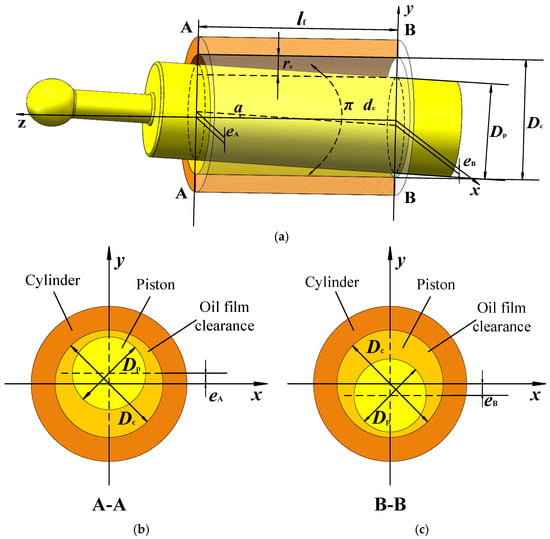
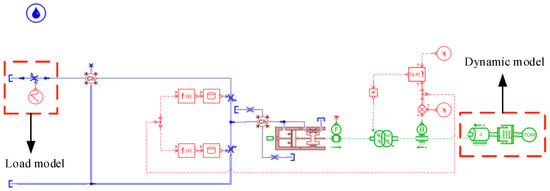
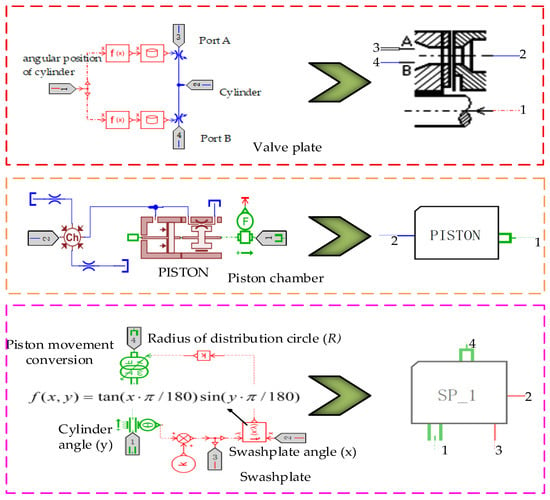
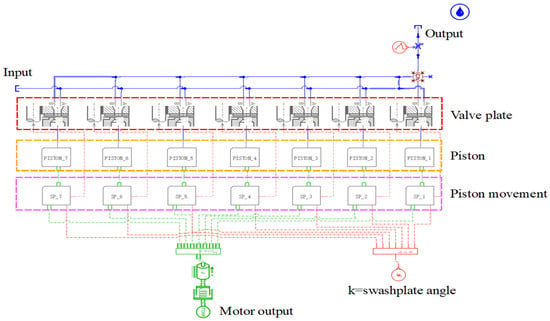
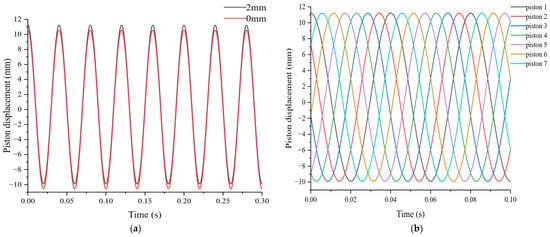
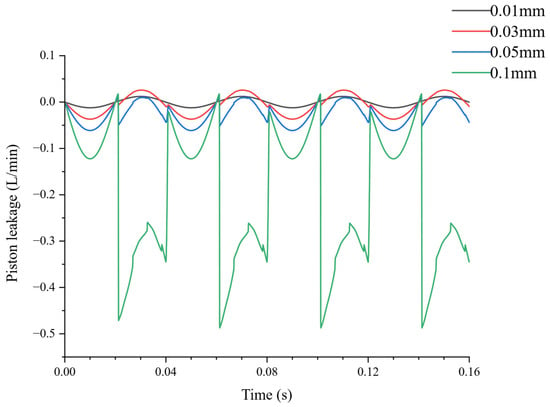
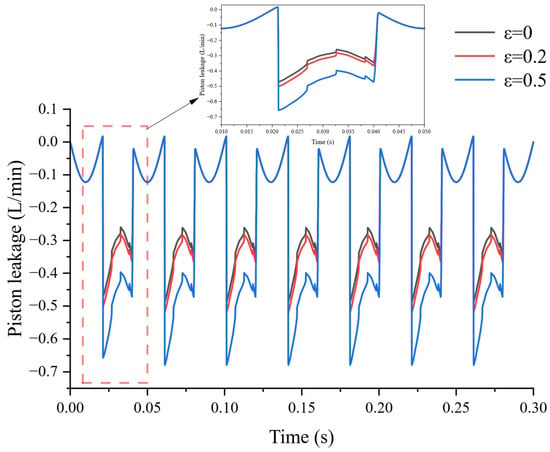
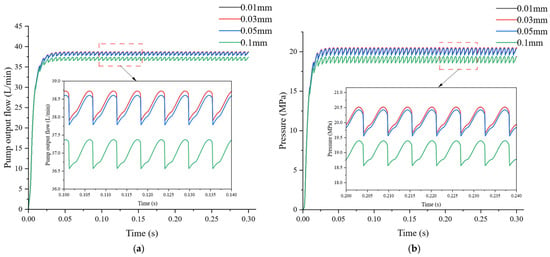
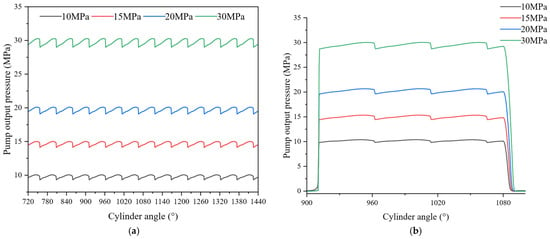
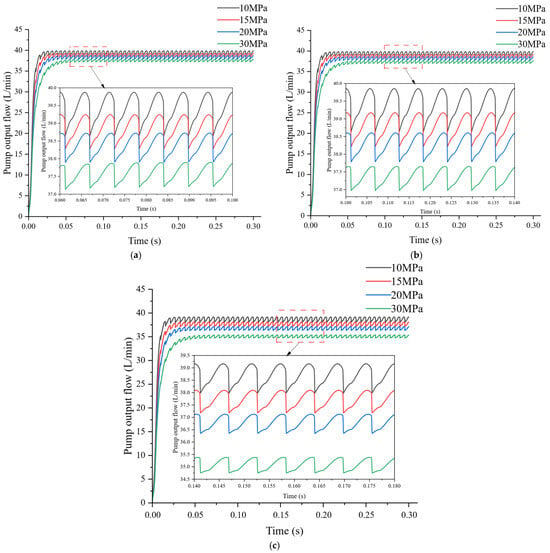
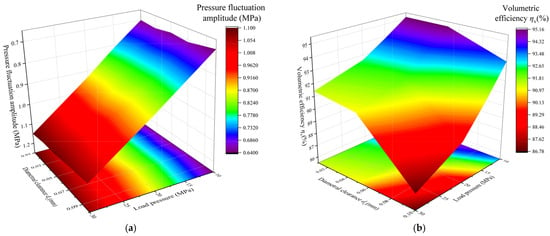
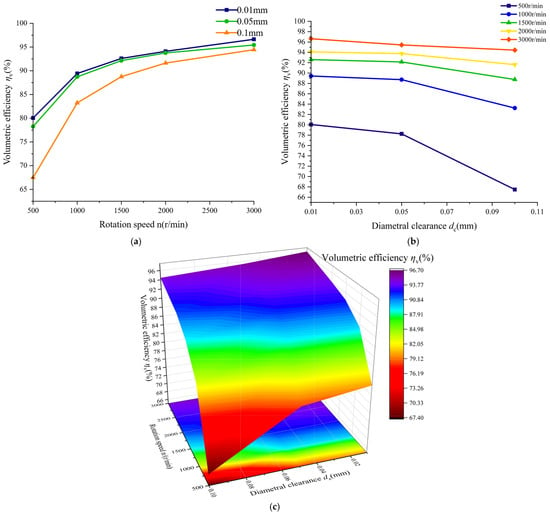
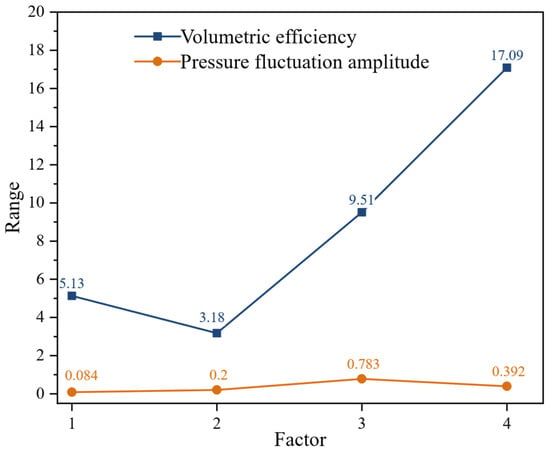
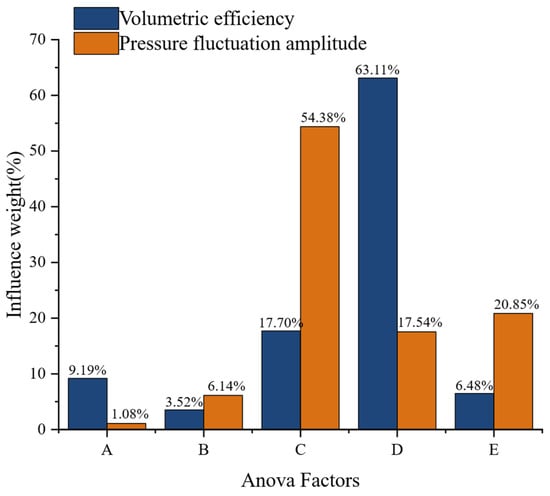
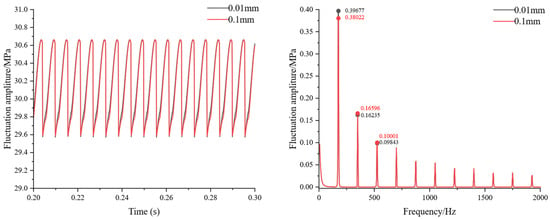
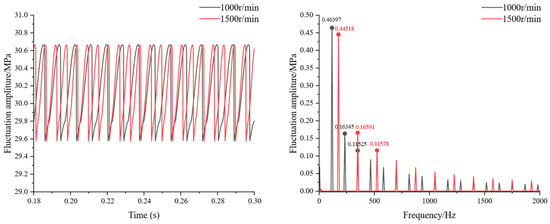
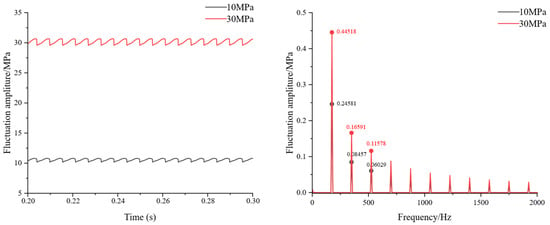
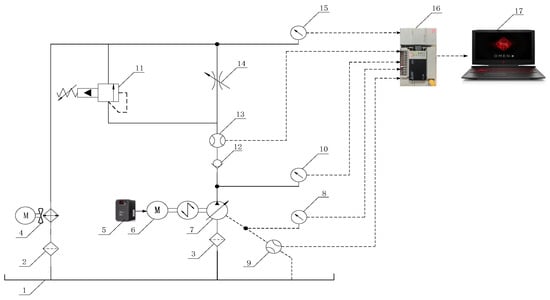
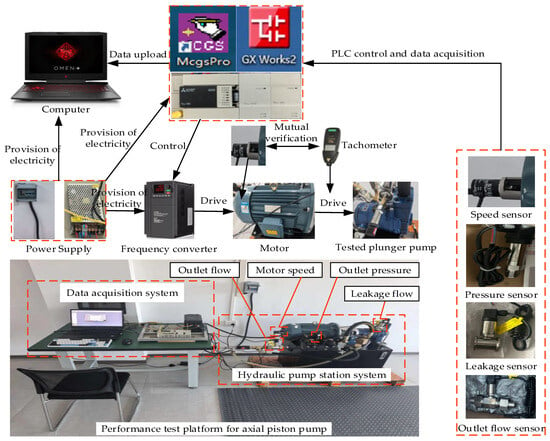
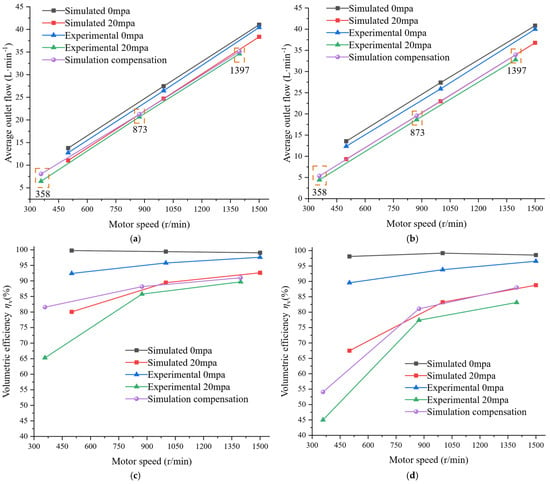
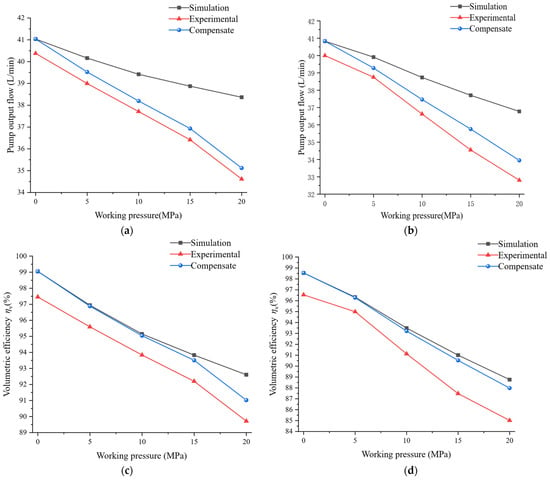
To clarify the nonlinear degradation of volumetric performance caused by piston–cylinder wear in axial piston pumps under multiple operating conditions, this study develops an integrated framework linking local wear-induced leakage to whole-pump output characteristics. A mathematical model incorporating piston kinematics, eccentric-clearance leakage, chamber-pressure dynamics, and whole-pump flow was established and implemented in Amesim. A four-factor mixed-level orthogonal design and analysis of variance were then employed to quantify the effects of wear clearance, eccentricity, load pressure, and shaft rotational speed. The results show that their contributions to volumetric efficiency follow the order: motor rotational speed > load pressure > wear clearance > eccentricity, whereas load pressure is the dominant factor affecting pressure ripple. A wear clearance of approximately 0.1 mm marks the onset of pronounced leakage-induced performance degradation. At this clearance and a load pressure of 20 MPa, increasing the rotational speed from 500 to 3000 r/min improves the volumetric efficiency from 67.48% to 94.44%, with an average increase of 5.39 percentage points per 500 r/min. Comparative experiments on normal and artificially worn pumps were conducted to validate the model. The measured motor-speed slip under high-load conditions was incorporated to correct the theoretical displacement and distinguish speed-induced flow reduction from internal leakage. After correction, the maximum relative error between the simulated and experimental results was below 3.7%. The proposed framework integrates mechanism-based leakage modeling, multi-factor contribution analysis, and speed-corrected experimental validation, providing a theoretical basis for the wear assessment, piston–cylinder clearance design, and flow compensation of axial piston pumps under variable operating conditions.
Full article
(This article belongs to the Section Machines Testing and Maintenance)
►▼
Show Figures

Figure 1
Open AccessArticle
Vibration Signal-Based Fault Detection and Classification in Friction Stir Welding Process Using Statistical Features and Lazy Learning Classifiers
by
Jegadeeshwaran Rakkiyannan, Balachandar Krishnamurthy, Lakshmi Pathi Jakkamputi, Sakthivel Gnanasekaran and Mohanraj Thangamuthu
Machines 2026, 14(7), 752; https://doi.org/10.3390/machines14070752 - 3 Jul 2026
Abstract
This paper proposes a vibration-based approach for real-time condition monitoring of Friction Stir Welding (FSW) tools, which are widely used in the marine and automotive industries. Conventional inspection techniques such as visual examination and endoscopy are not practicable during active welding operations. The
[...] Read more.
This paper proposes a vibration-based approach for real-time condition monitoring of Friction Stir Welding (FSW) tools, which are widely used in the marine and automotive industries. Conventional inspection techniques such as visual examination and endoscopy are not practicable during active welding operations. The Locally Weighted Learning (LWL) algorithm, a lazy learning method, is used to address this limitation. Vibration signals are collected from a PLC-controlled FSW machine under five tool conditions, statistical features are extracted from the raw data, and a J48 decision tree is applied for feature selection to reduce computational overhead. Classification performance is evaluated using three lazy learning algorithms K-star (K*), LWL, and k-Nearest Neighbour (kNN) with LWL yielding the best result. The previously reported best accuracy for the same FSW setup was 73.16% at 1400 rpm using Random Forest; the proposed LWL-based approach achieves 92% accuracy under identical conditions, enabling earlier detection of tool faults before they result in weld defects or component failures.
Full article
(This article belongs to the Special Issue Intelligent Predictive Maintenance and Machine Condition Monitoring)
Open AccessReview
A Review of Electric Machine Stator Winding Insulation Diagnostic Signal Processing Methods and Metrics
by
Daniel Addae and Emmanuel Agamloh
Machines 2026, 14(7), 751; https://doi.org/10.3390/machines14070751 - 3 Jul 2026
Abstract
Stator winding insulation failure is a leading cause of electric machine failure. Early detection of winding insulation deterioration is essential to preventing catastrophic damage and ultimate electric machine failure. Various condition monitoring and diagnostic methods have been developed to assess insulation health while
[...] Read more.
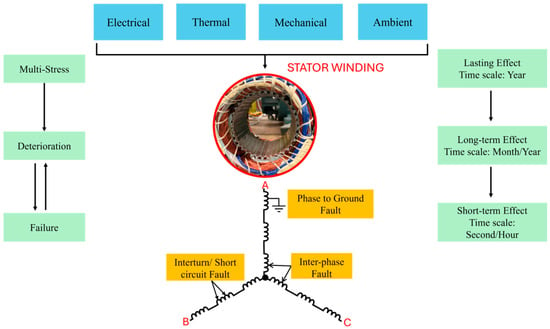
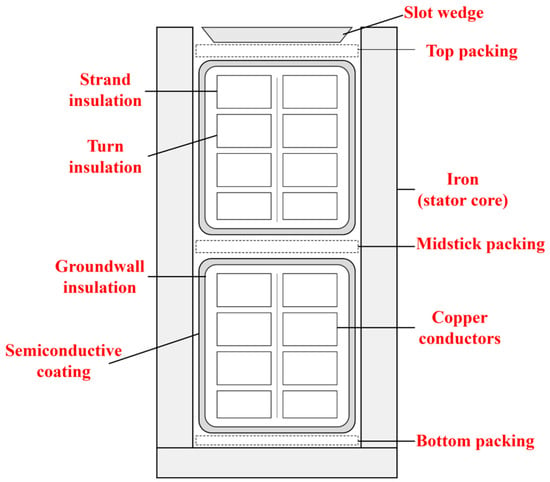
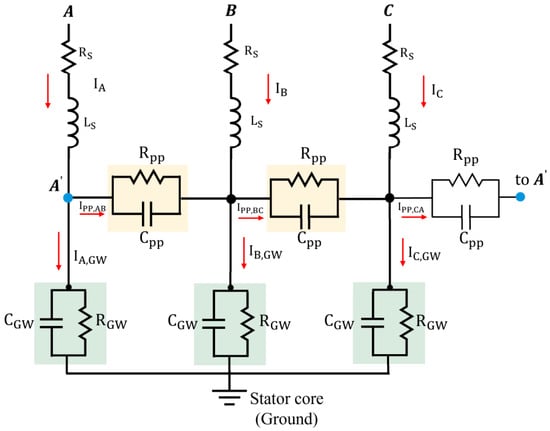
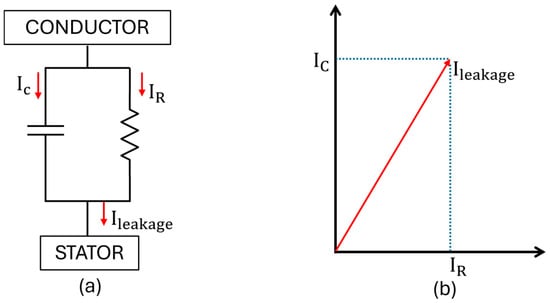
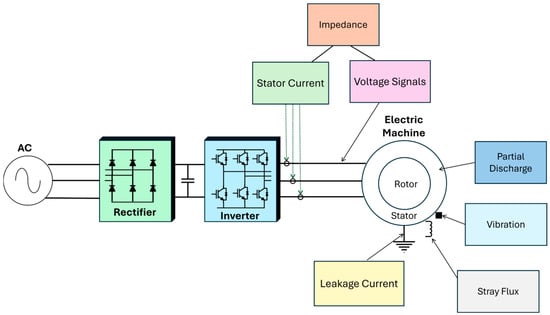
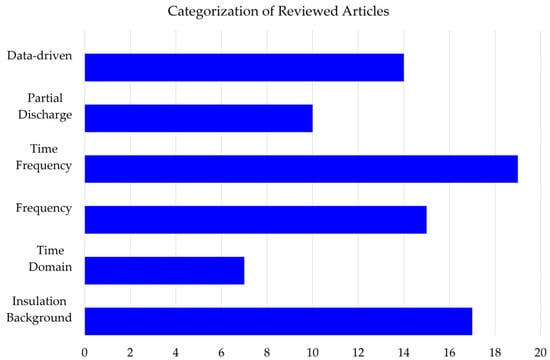
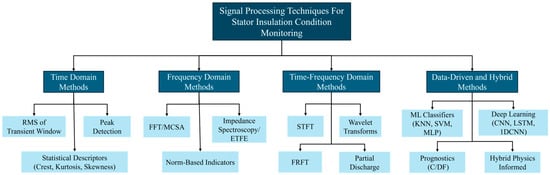
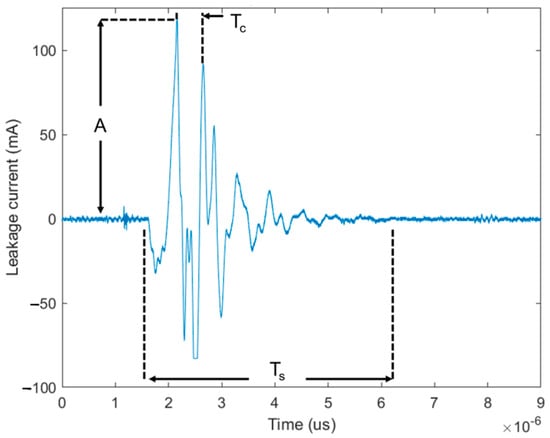
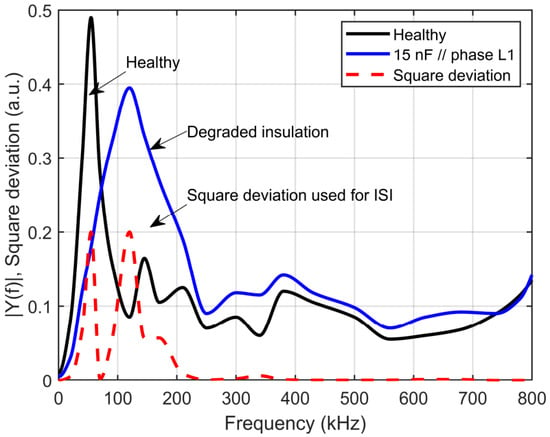
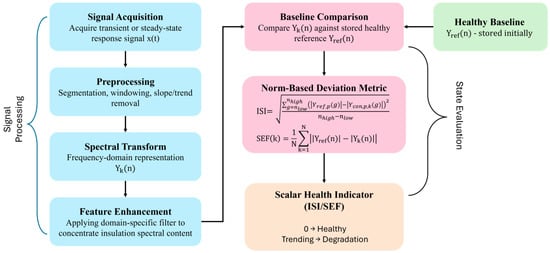
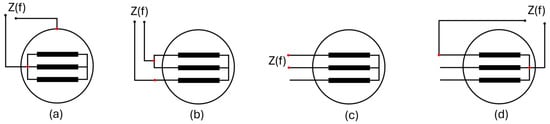
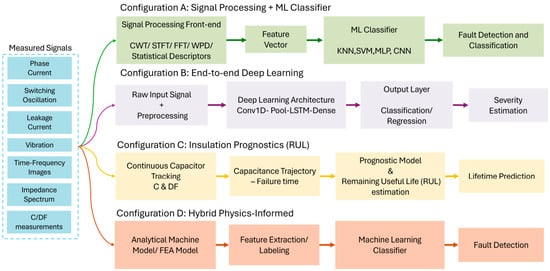
Stator winding insulation failure is a leading cause of electric machine failure. Early detection of winding insulation deterioration is essential to preventing catastrophic damage and ultimate electric machine failure. Various condition monitoring and diagnostic methods have been developed to assess insulation health while the machine is in operation. These diagnostic methods depend on different signal processing techniques that are used to extract insulation-sensitive information from measured signals. This paper presents a review of the diagnostic signal processing techniques that have been applied to stator winding insulation condition monitoring, spanning time-domain, frequency-domain, time–frequency-domain and data-driven approaches. Where appropriate, the underlying mathematical formulation of the reviewed technique is presented, the physical basis for its sensitivity to insulation condition monitoring is discussed, and the key strengths and limitations are identified. A comparative analysis with summary tables is provided to highlight the trade-offs between detection sensitivity, computational cost, hardware requirements and practical deployment considerations. The review shows that time- and frequency-domain methods are simple to implement, while time–frequency and data-driven methods generally offer higher performance, but require greater computation and validation. Also, the comparison shows that turn-to-turn and groundwall insulation monitoring have received more research attention, while phase-to-phase remains less developed. This review concludes by identifying the challenges and future research directions needed to advance this field from laboratory demonstrations toward industrial adoption.
Full article
(This article belongs to the Special Issue Fault Diagnostics and Fault Tolerance of Synchronous Electric Drives, 2nd Edition)
►▼
Show Figures

Figure 1
Open AccessArticle
An Integrated Path Planning Algorithm Based on Vector Jump Point Search and Ant Colony Optimization for Quay Crane Inspection
by
Haoye Zhang, Zihan Lei, Mingxiao Wang, Zhipeng Hou, Hongren Zhao, Christophe Claramunt, Gang Tang and Weidong Zhu
Machines 2026, 14(7), 750; https://doi.org/10.3390/machines14070750 - 3 Jul 2026
Abstract
Unmanned aerial vehicles have become a promising platform for inspecting large port machinery; however, quay cranes contain sparse but complex steel-frame structures, multiple inspection points, and narrow collision-constrained spaces, which make efficient inspection path planning difficult. Existing approaches often focus either on global
[...] Read more.
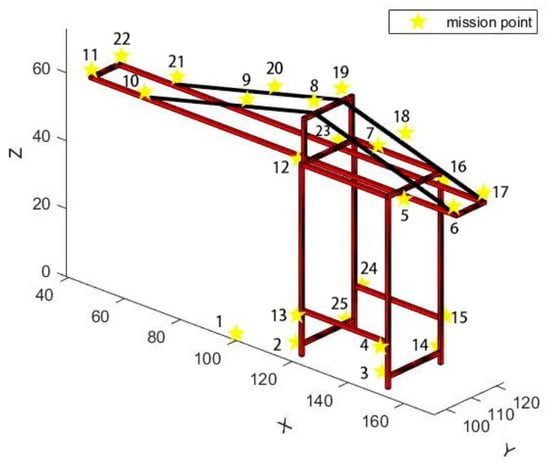
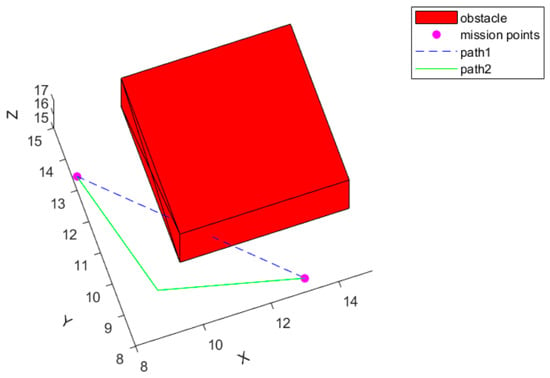
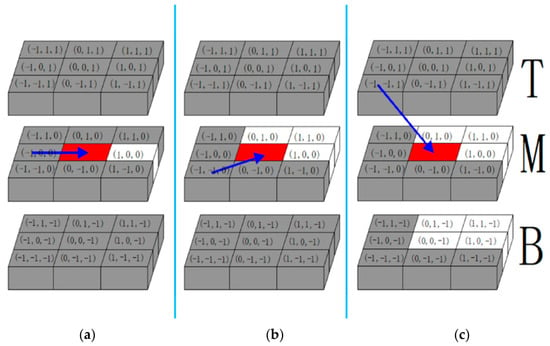
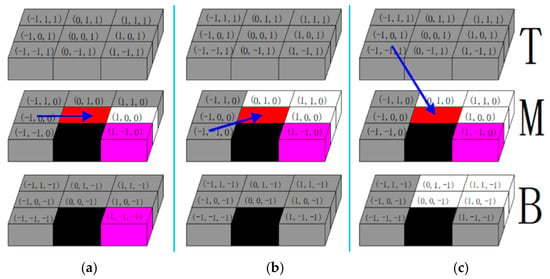
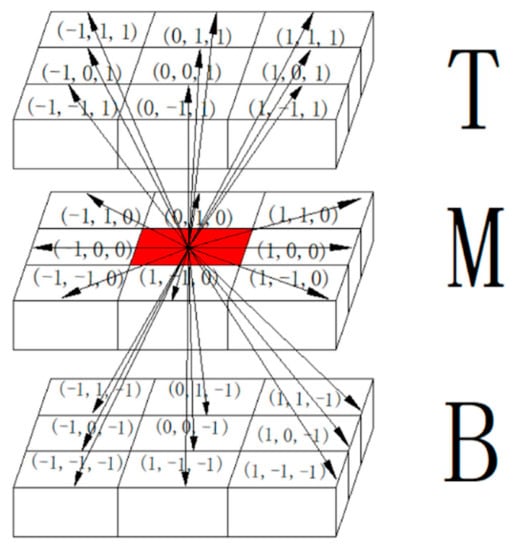
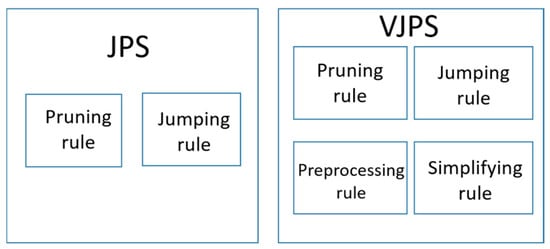
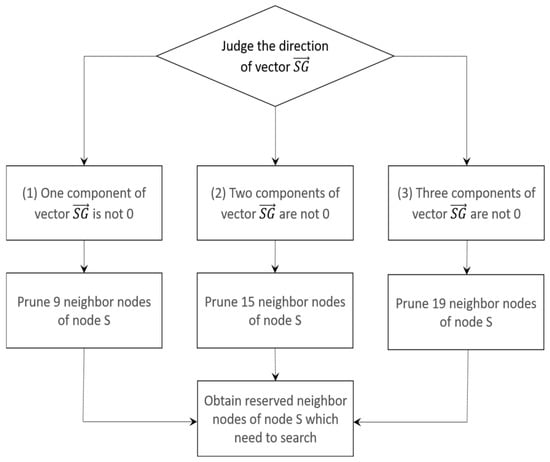
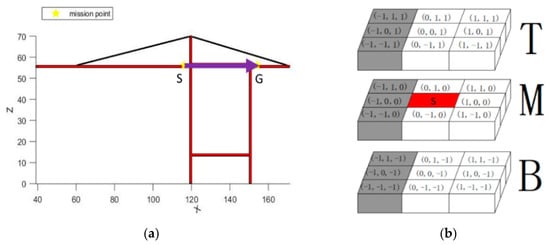
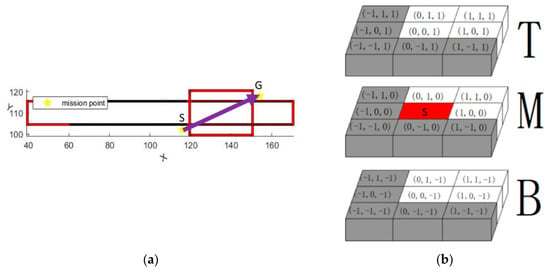
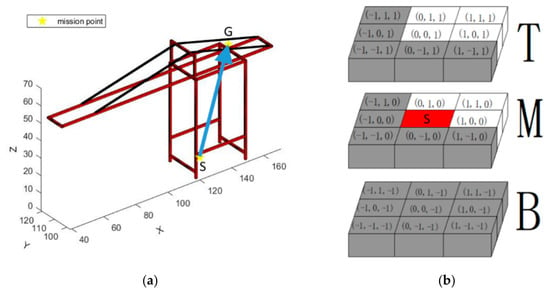
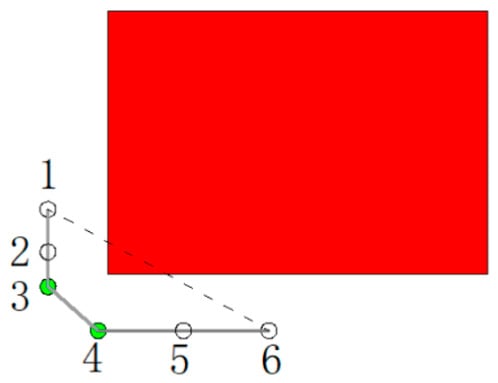
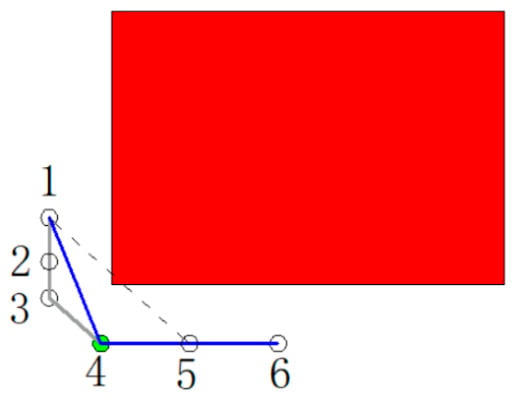
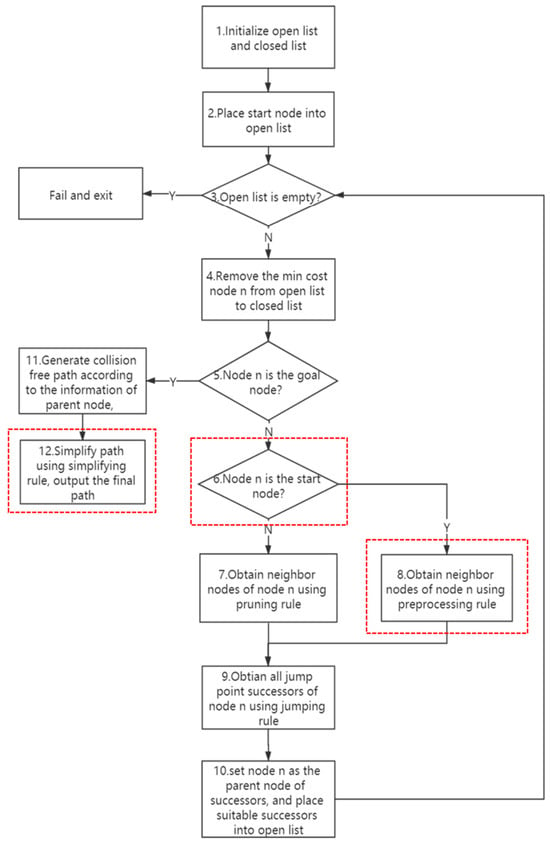
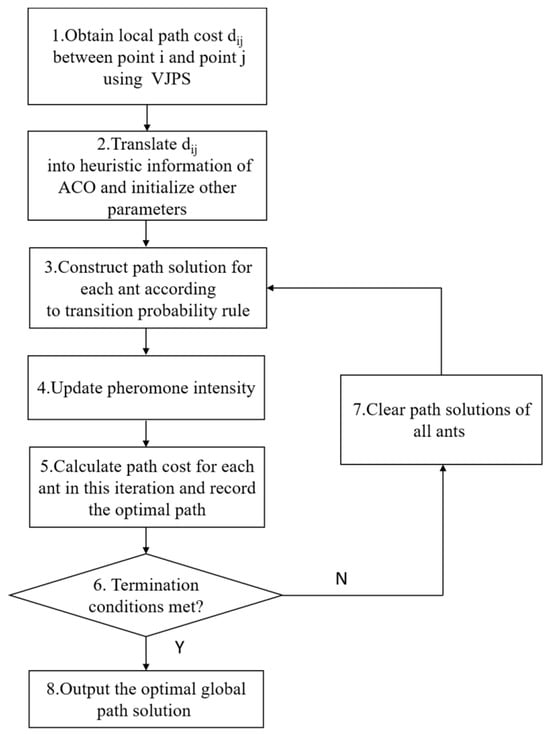
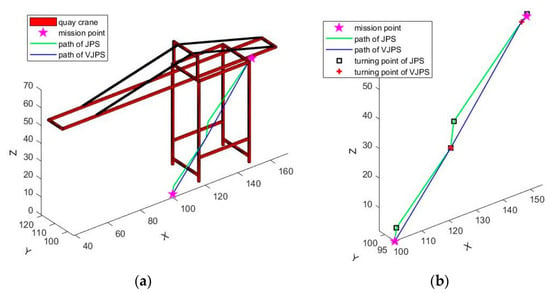
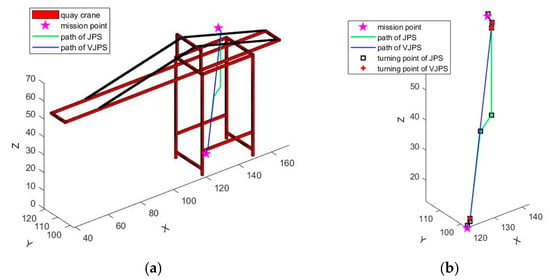
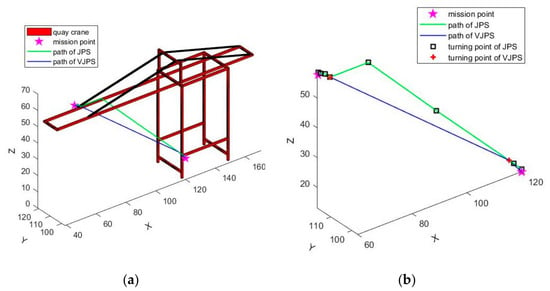
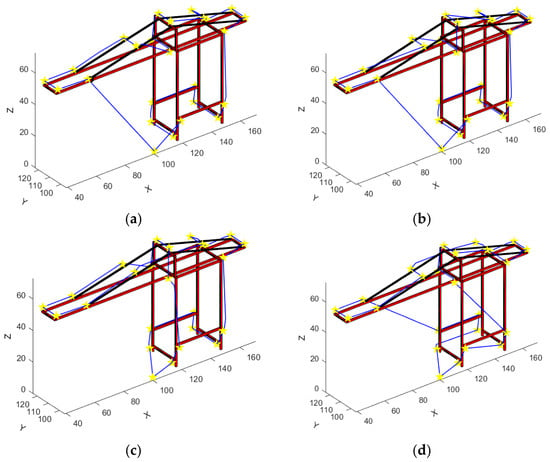
Unmanned aerial vehicles have become a promising platform for inspecting large port machinery; however, quay cranes contain sparse but complex steel-frame structures, multiple inspection points, and narrow collision-constrained spaces, which make efficient inspection path planning difficult. Existing approaches often focus either on global point sequencing or local collision-free search, and conventional global optimizers usually use straight-line distances that do not reflect obstacle-constrained flight costs. This paper proposes an integrated path planning method for quay crane inspection based on vector jump point search and ant colony optimization. In the local path-searching stage, vector-guided preprocessing and path simplification are used to calculate collision-free paths between mission points and construct a path cost matrix. In the global optimization stage, ant colony optimization determines the inspection sequence using the collision-free cost matrix rather than Euclidean distances. Simulation experiments were conducted on a simplified quay crane model of 132 m × 22 m × 70 m with 25 mission points. The results show that the proposed method reduced the average local path-searching time from 5.3392 s to 4.2907 s, corresponding to a 19.6% improvement over jump point search, while reducing the average local path length by 5.1%. The final global inspection path obtained in the experimental case was 516.1 m, which was shorter than those obtained by simulated annealing, genetic algorithm, particle swarm optimization, and the previous method. These results indicate that the proposed method can improve local planning efficiency and provide an effective inspection route for unmanned aerial vehicle-based quay crane inspection.
Full article
(This article belongs to the Special Issue Towards Embodied Intelligence: Novel Kinematic Structures and AI-Guided Mechanism Design)
►▼
Show Figures

Figure 1
Open AccessReview
Overview of Thermal Management System for Hydrogen-Fueled Aero-Engines Driven by Energy Conservation and Digital Intelligence
by
Yiqiao Li, Jing Huang, Yang Xiao, Shanlin Liu, Yifei Chen, Luyuan Gong, Yali Guo and Shengqiang Shen
Machines 2026, 14(7), 749; https://doi.org/10.3390/machines14070749 - 2 Jul 2026
Abstract
Under the background of the green transformation and energy conservation in the aviation field, hydrogen-fueled aero-engines are the primary direction for achieving sustainable aviation power development. However, the unique thermophysical properties of hydrogen fuel induce extreme thermal load challenges to engine thermal management.
[...] Read more.
Under the background of the green transformation and energy conservation in the aviation field, hydrogen-fueled aero-engines are the primary direction for achieving sustainable aviation power development. However, the unique thermophysical properties of hydrogen fuel induce extreme thermal load challenges to engine thermal management. Based on the requirements of energy conservation and digital-intelligent technologies, this paper reviewed the recent research progress, important challenges, and future development directions in the thermal management field for hydrogen-fueled aero-engines, and filled the gaps in existing related reviews. (1) As for the liquid hydrogen thermal properties and thermal management requirements, the unique thermal physical properties of liquid hydrogen can easily cause fluctuations in heat load, large temperature differences, and material compatibility issues such as hydrogen embrittlement during storage, transportation, and combustion. The application of thermal barrier coatings, the design of targeted cooling structures, and the regulation of heat loss in the pipeline of the hydrogen supply system require particular attention. (2) As for the technical architecture and optimization of thermal management, the optimization of the high-pressure side manifolds in the cooled cooling air heat exchanger increases the flow uniformity by 18.8% and reduces the weight by 22.5%. The intercooled recuperated engine with the optimum area ratio reduces specific fuel consumption by 5.3% compared to the baseline engine in cruise. However, the system-level optimization research of the above widely recognized solutions is relatively limited in terms of coordinating the energy flow of engines. The baseline engine employed the method of system integration optimization to achieve a 2.99% increase in thrust and a 6.78% reduction in fuel consumption. (3) As for the thermal management modeling and simulation, the intelligent optimization method based on computational fluid dynamics reduces the pressure loss coefficient of the vane-integrated heat exchanger by 36%. Nevertheless, the multiphysics coupling model confronts a contradiction between computational cost and accuracy. (4) As for the comprehensive evaluation method, the advanced configuration of the hydrogen-fueled aero-engine can approximately reduce specific fuel consumption by 68.5% and NOx emission by 12.7% under the same maximum thrust condition. The hydrogen consumption of the proton exchange membrane fuel cells system model compared with the baseline system, optimized by the multi-objective optimization algorithm, has decreased by 15%, while the thermal uniformity has improved by 20–30%. However, the current evaluation system mostly focuses on a single dimension, lacking the analysis of nonlinear coupling among multiple factors and a closed-loop mechanism for evaluation, optimization, and verification. Future research should focus on the matching model of liquid hydrogen’s thermophysical properties and full flight conditions, global multi-energy flows optimization methods, multidimensional collaborative numerical simulation, multiphysics coupling models, and multidimensional comprehensive evaluation systems, to provide closed-loop theoretical support for the efficient, intelligent, and reliable thermal management system for hydrogen-fueled aero-engines.
Full article
(This article belongs to the Special Issue Machine Tools for Precision Machining: Design, Control and Prospects)
Open AccessArticle
Higher-Order Kinematic Analysis of a Six-Bar Mechanism with a Prismatic Joint: Centrodes and Bresse Circles
by
Eddie Gazo-Hanna, Ahmed Saber and Semaan Amine
Machines 2026, 14(7), 748; https://doi.org/10.3390/machines14070748 - 2 Jul 2026
Abstract
Planar linkage mechanisms remain a cornerstone of motion generation and trajectory control, yet the geometric tools that desRcribe their instantaneous behavior, namely centrodes and Bresse’s circles, have been developed almost exclusively for mechanisms with entirely revolute joints, where a sliding pair fundamentally alters
[...] Read more.
Planar linkage mechanisms remain a cornerstone of motion generation and trajectory control, yet the geometric tools that desRcribe their instantaneous behavior, namely centrodes and Bresse’s circles, have been developed almost exclusively for mechanisms with entirely revolute joints, where a sliding pair fundamentally alters the velocity and acceleration fields and disrupts the symmetries on which classical curvature theory relies. This paper presents a comprehensive higher-order kinematic analysis of a planar six-link, single-degree-of-freedom mechanism in which a slider-crank stage and a rocker stage are coupled through a shared prismatic joint that acts simultaneously as output and input. Using vector algebra and a matrix-based loop-closure formulation, the position, velocity, and acceleration analyses are derived in closed form, yielding angular velocity ratios, the instantaneous centers of rotation and acceleration of both coupler links, and their inflection and stationarity circles. The analysis reveals a distinctive geometric constraint on the slider-side coupler’s instantaneous center, a decoupling of the curvature loci of the two couplers, and degenerate configurations, linked to coupler instantaneous-stop and rocker dead-point conditions, that arise at joint-invariant crank angles. Implemented as a computational algorithm and demonstrated on a carton flap-closing mechanism and cross-validated against independent multibody simulation, the framework confirms favorable transmission and dead-point clearance behavior, extending curvature-theory tools to linkages containing sliding pairs.
Full article
(This article belongs to the Section Machine Design and Theory)
Journal Menu
► ▼ Journal Menu-
- Machines Home
- Aims & Scope
- Editorial Board
- Reviewer Board
- Topical Advisory Panel
- Early Career Editorial Board
- Instructions for Authors
- Special Issues
- Topics
- Sections & Collections
- Article Processing Charge
- Indexing & Archiving
- Editor’s Choice Articles
- Most Cited & Viewed
- Journal Statistics
- Journal History
- Journal Awards
- Society Collaborations
- Conferences
- Editorial Office
Journal Browser
► ▼ Journal BrowserHighly Accessed Articles
Latest Books
E-Mail Alert
News
Topics
Topic in
Applied Sciences, Electronics, IoT, Materials, Robotics, Sensors, Machines, Automation
Smart Production in Terms of Industry 4.0 and 5.0
Topic Editors: Iwona Paprocka, Cezary Grabowik, Jozef HusarDeadline: 29 July 2026
Topic in
Electronics, Fluids, Machines, Micromachines, Applied Sciences
Micro-Mechatronic Engineering, 2nd Edition
Topic Editors: Teng Zhou, Antonio F. MiguelDeadline: 31 October 2026
Topic in
Applied Sciences, Electronics, J. Imaging, JMSE, Machines, Robotics, Sensors, Drones
Applications and Development of Underwater Robotics and Underwater Vision Technology, 2nd Edition
Topic Editors: Jingchun Zhou, Wenqi Ren, Qiuping Jiang, Yan-Tsung PengDeadline: 30 November 2026
Topic in
Alloys, Metals, Machines, Applied Sciences
Welding Experiment and Simulation
Topic Editors: Yuewei Ai, Jiangwei LiuDeadline: 31 December 2026
Conferences
Special Issues
Special Issue in
Machines
Advances in Dynamics and Vibration Control in Mechanical Engineering
Guest Editor: Ahmed GuerineDeadline: 31 July 2026
Special Issue in
Machines
Advances in Electrical Power System Design and Artificial Intelligence
Guest Editors: Saddam Aziz, Sadiq Ahmad, Raziq YaqoobDeadline: 31 July 2026
Special Issue in
Machines
Intelligent Control Techniques for Unmanned Aerial Vehicles
Guest Editors: Maolong Lv, Junkai Ren, Haibin DuanDeadline: 31 July 2026
Special Issue in
Machines
Advanced Battery Management Technology in Electric Vehicles: Present Status and Future Trends
Guest Editors: Xinghua Liu, Jiaqiang Tian, Beibei LiDeadline: 31 July 2026
Topical Collections
Topical Collection in
Machines
Machines, Mechanisms and Robots: Theory and Applications
Collection Editor: Raffaele Di Gregorio