

BIM and PdM of Railway Rolling Stock with Automatic Upgrading Based on GenAI

 ,
,  ,
,  and
and 
Abstract
1. Introduction
2. Theory Framework
2.1. BIM and Digital Twin Integration
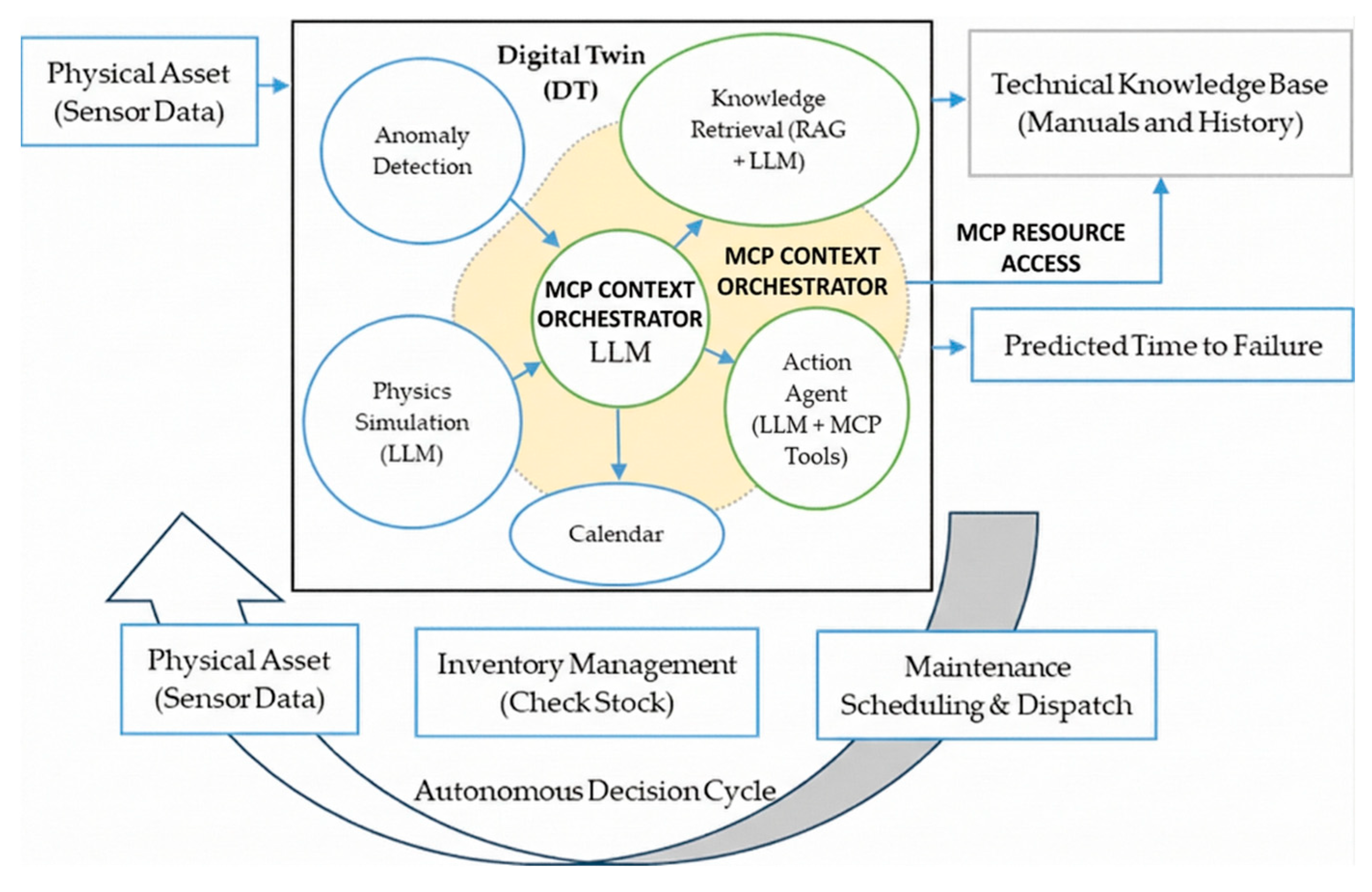
- Dynamic response—the system can process anomalies in real time, utilising specialised diagnostic agents;
- Contextual validation—the use of Retrieval-Augmented Generation (RAG) ensures that all detected faults are cross-referenced with technical manuals and maintenance histories, increasing the accuracy of responses;
- Autonomous logic—the DT’s reasoning shifts from rigid scripts to a flexible multi-agent architecture based on Large Language Models (LLMs).
2.2. The Role of GenAI in Semantic Translation
- Feature extraction—identifying critical threshold breaches in vibration and temperature;
- Mapping to IFC—the GenAI engine maps these findings to specific IFC parameters (e.g., IfcPropertySet);
- Command generation—the system generates automated scripts that update the GUID-specific properties of the railway components within the BIM environment, ensuring that the transition from raw data to model parameters occurs without semantic loss.
2.3. System Architecture: A Tri-Layer Framework for Autonomous Synchronisation
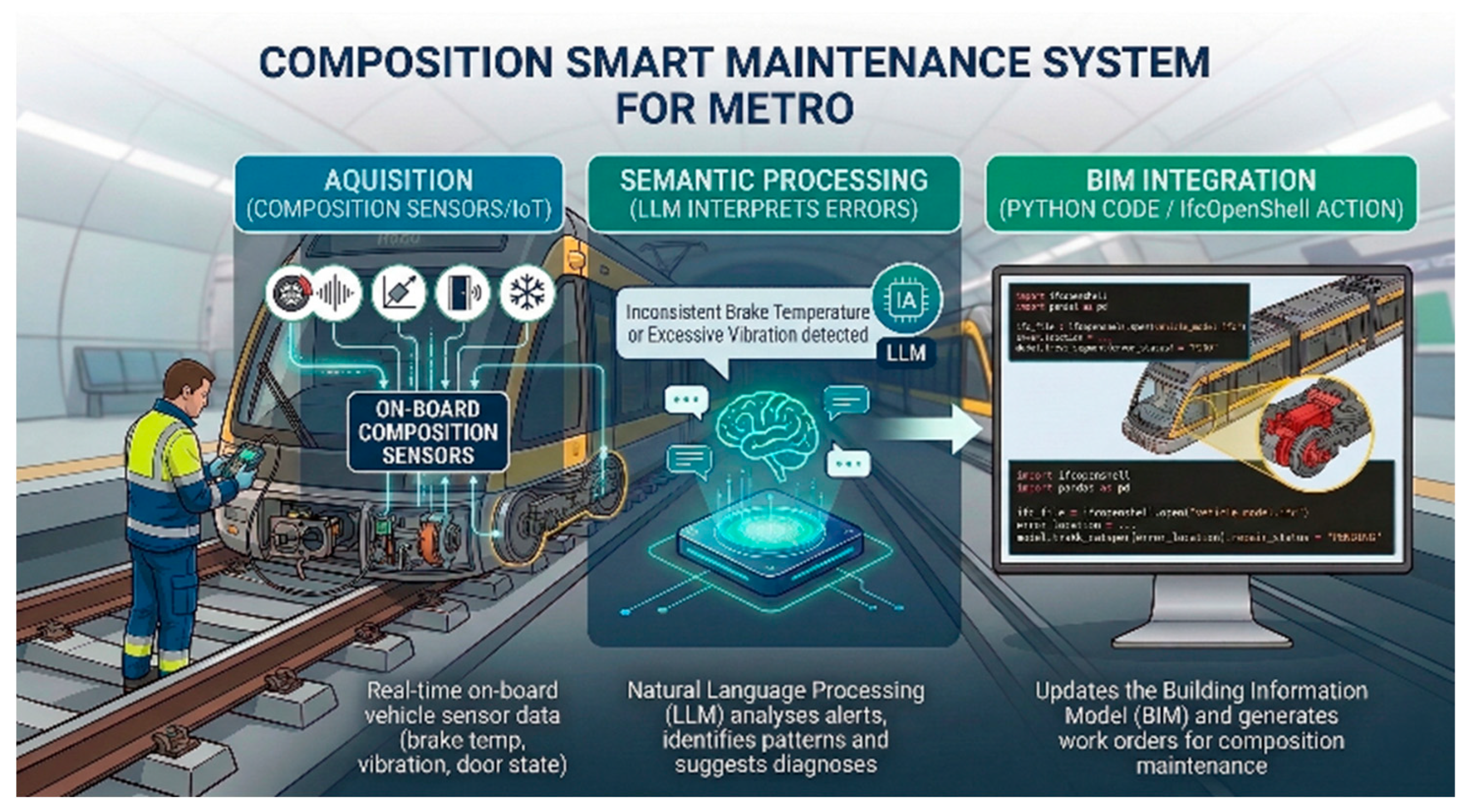
- Acquisition (physical layer)—responsible for collecting high-frequency data from axle boxes and bogie suspension systems;
- Semantic processing (semantic layer)—the data is filtered and interpreted. By processing the data at the edge before sending interpreted summaries to the GenAI engine, the system reduces the computational load, thereby avoiding network bottlenecks;
- BIM integration (integration layer)—uses automated APIs to insert the processed data into the IFC schema. This modular approach enables real-time synchronisation, allowing the DT to analyse physical degradation as it occurs.
- ○
- Spyder version: 6.1.3 (standalone);
- ○
- Python version: 3.12.11 64-bit;
- ○
- Qt version: 5.15.15;
- ○
- PyQt5 version: 5.15.11;
- ○
- Operating System: Windows-10-10.0.19045-SP0 and IfcOpenShell.
- Data acquisition layer (IoT and sensor fusion)
- ○
- The first layer manages the continuous ingestion of telemetry from the rolling stock’s integrated sensors. In this stage, raw numerical data—including vibration frequencies, temperature gradients, and pressure levels—are collected via IoT gateways. Unlike traditional systems that merely archive these logs, this layer performs initial signal conditioning and timestamps the data, preparing it for high-level semantic interpretation. This stage represents the “physical pulse” of the asset, capturing the degradation indicators that are often lost in static BIM models.
- Semantic processing layer (GenAI and LLM interpretation)
- ○
- The main innovation of this framework lies in the functional distinction between numerical analysis and semantic interpretation. While the RF algorithm acts as the primary diagnostic mechanism, responsible for identifying failure patterns and estimating RULs, the LLM acts as the semantic translation mechanism. At this stage, the LLM converts the RF diagnostic results into structured maintenance narratives and IFC-compliant update commands. This ensures that complex analytical outputs are accurately translated into the DT architectural scheme without losing technical context.
- ○
- The core innovation of this framework lies in the second layer, where Generative AI, specifically Large Language Models (LLMs), acts as the primary diagnostic engine. At this stage, the unstructured and numerical sensor logs are processed to identify fault patterns or wear trends. The LLM functions as a “semantic translator”, interpreting the numerical deviations (e.g., a 15% increase in bearing temperature) and converting them into logical maintenance narratives. By synthesising these degradation scenarios, the GenAI identifies exactly which parameters within the Digital Twin require updating, moving beyond simple threshold alerts to complex diagnostic reasoning.
- BIM integration layer (automated scripting and IfcOpenShell)
- ○
- The final layer executes the physical-to-digital synchronisation. Once the GenAI has defined the necessary updates, the system triggers automated Python scripts utilising the IfcOpenShell library. This layer translates the AI’s semantic conclusions into direct modifications of the IFC (buildingSMART [3]) schema. These modifications include real-time parametric updates—such as altering the ‘State of Health’ property sets or adjusting 3D geometry to reflect component wear. This process ensures that the BIM model evolves autonomously, eliminating the “information degradation” typical of manual data entry and providing an up-to-date Digital Twin for decision-making.
2.4. Data Augmentation via GenAI: Overcoming the Long-Tail Failure Challenge
2.5. BIM for Rolling Stock—Geometric Representation to Dynamic Semantics
2.5.1. Interoperability Crisis and the Evolution of the IFC Standard
2.5.2. GenAI Configuration
- Model selection—the GPT-4o model was utilised, with the temperature set to 0. This specific calibration ensures precise technical outputs by eliminating stochastic variability (hallucinations), thereby guaranteeing that DT synchronisation remains deterministic and reliable.
- Prompt engineering strategy—a structured prompt engineering approach was developed to interpret non-structured error logs. The system instructs the LLM to map detected physical anomalies directly to IFC parameters, preventing the “critical semantic loss” previously identified in manual exports.
- System input (sensor log): [2025-03-05 14:20] ALERT: Sensor_Bogie_A1 detected 15% wear on brake pad (ID: BK-772). Current thickness: 22 mm.
- GenAI processing: the model identifies the specific IfcMechanicalFastener entity and the corresponding Pset_BrakeMaintenance.
- Output (IFC update command):
- JSON{“ifc_entity”: “IfcMechanicalFastener”,“global_id”: “BK-772”,“property_set”: “Pset_BrakeMaintenance”,“parameter”: “BrakePadThickness”,“new_value”: 22.0,“unit”: “mm”}
2.5.3. IFC Model Manipulation and Semantic Mapping
- Component localisation—the system uses the GlobalId as the primary key to locate the specific railway component within the model spatial and semantic;
- Property set modification—once the entity is identified (e.g., an IfcMechanicalFastener), the algorithm accesses the Pset_Maintenance;
- Parametric update—the interpreted values from the GenAI (wear percentage or remaining useful life) are injected directly into the corresponding attributes. This ensures that the digital representation evolves alongside the physical asset degradation, mitigating the “critical semantic loss” typically found in static exports.
2.5.4. Information Specification (IDM/MVD) and Level of Detail (LOD)
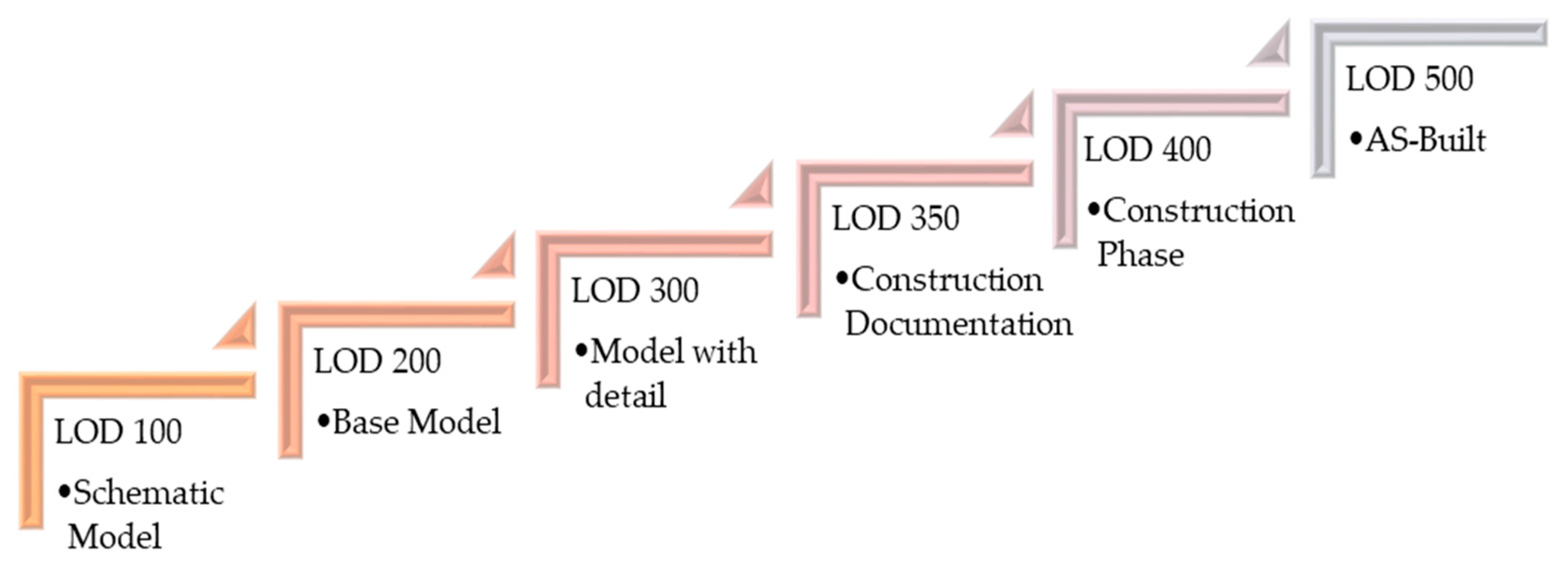
- LOD 100—definition of the project under study, area, volume, location and orientation;
- LOD 200—in this stage, the construction model includes approximate quantities, dimensions, simplified shapes, location and orientation;
- LOD 300—in this phase, the model is more accurate with detail drawings where the elements are defined for construction from structures, models and budgets;
- LOD 350—the elements are consolidated so there can be an interconnection of information in the project and everyone involved in it;
- LOD 400—it is already considered a high level of development, having reached the planning phase, physical-financial schedule, documentation and execution;
- LOD 500—The elements are modelled, reflecting the built elements and with information for the maintenance and operation of the equipment.
2.6. Generative Revolution: Scenario Synthesis and Data Augmentation
2.6.1. PdM—Overcoming the “Data Bottleneck” with GenAI
2.6.2. Statistical Limitations of Discriminative Machine Learning
2.7. Digital Twin and Industrial Metaverso
2.7.1. Real-Time Development and Synchronisation
2.7.2. Cognitive Agents and the MCP Protocol
2.7.3. Immersive Visualisation and Metaverse Collaboration
3. Methodology
3.1. Data Acquisition and Pre-Processing
3.2. Predictive Modelling and Feature Selection
3.3. BIM-IFC Integration Logic
3.4. Technical Justification and Predictive Modelling
3.4.1. Random Forest for Predictive Maintenance Modelling
3.4.2. Data Augmentation and Synthetic Data Generation
3.4.3. Analysis of Dominant vs. Recursive Perturbations
4. Case Study—Predictive Maintenance of Railway Bogies
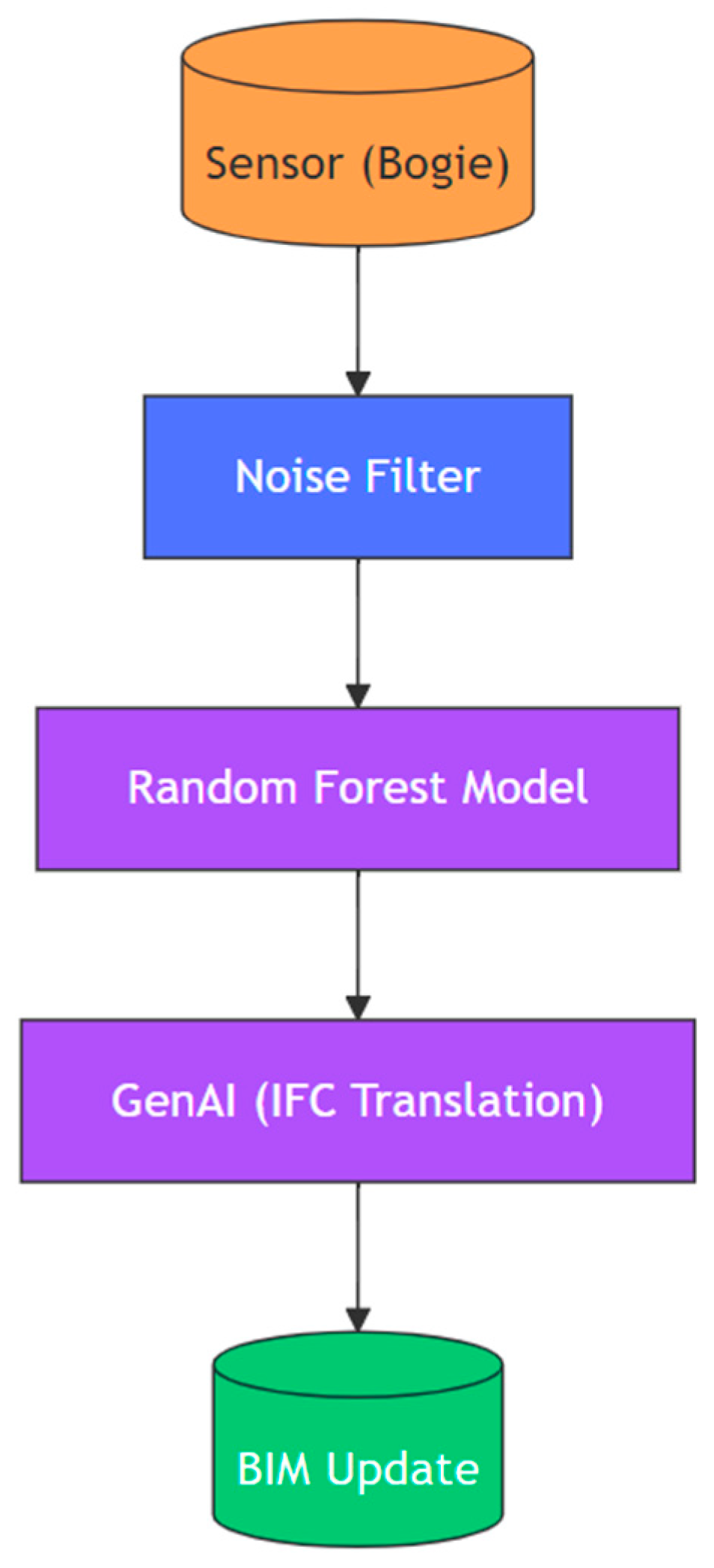
- Sensors (bogie)—capture raw dynamic signals;
- Noise filter—identifies and removes environmental noise, focusing on recurring disturbances indicative of wear;
- Random Forest model—processes the filtered data to estimate the RUL;
- GenAI (IFC Translation)—Interprets these results and generates the corresponding parameters in accordance with the IFC;
- BIM update—digital model is automatically updated via the API, reflecting the current ‘as-maintained’ status.
4.1. Technical Specifications of the Rolling Stock
4.2. Sensor Mapping
- Accelerometers—detect abnormal vibration patterns in the axle boxes;
- Thermal sensors—allow the heat dissipation of the bearings to be monitored;
- Displacement transducers—measure the vertical deflection of the primary suspension.
4.3. Predictive Maintenance Workflow and Experimental Validation
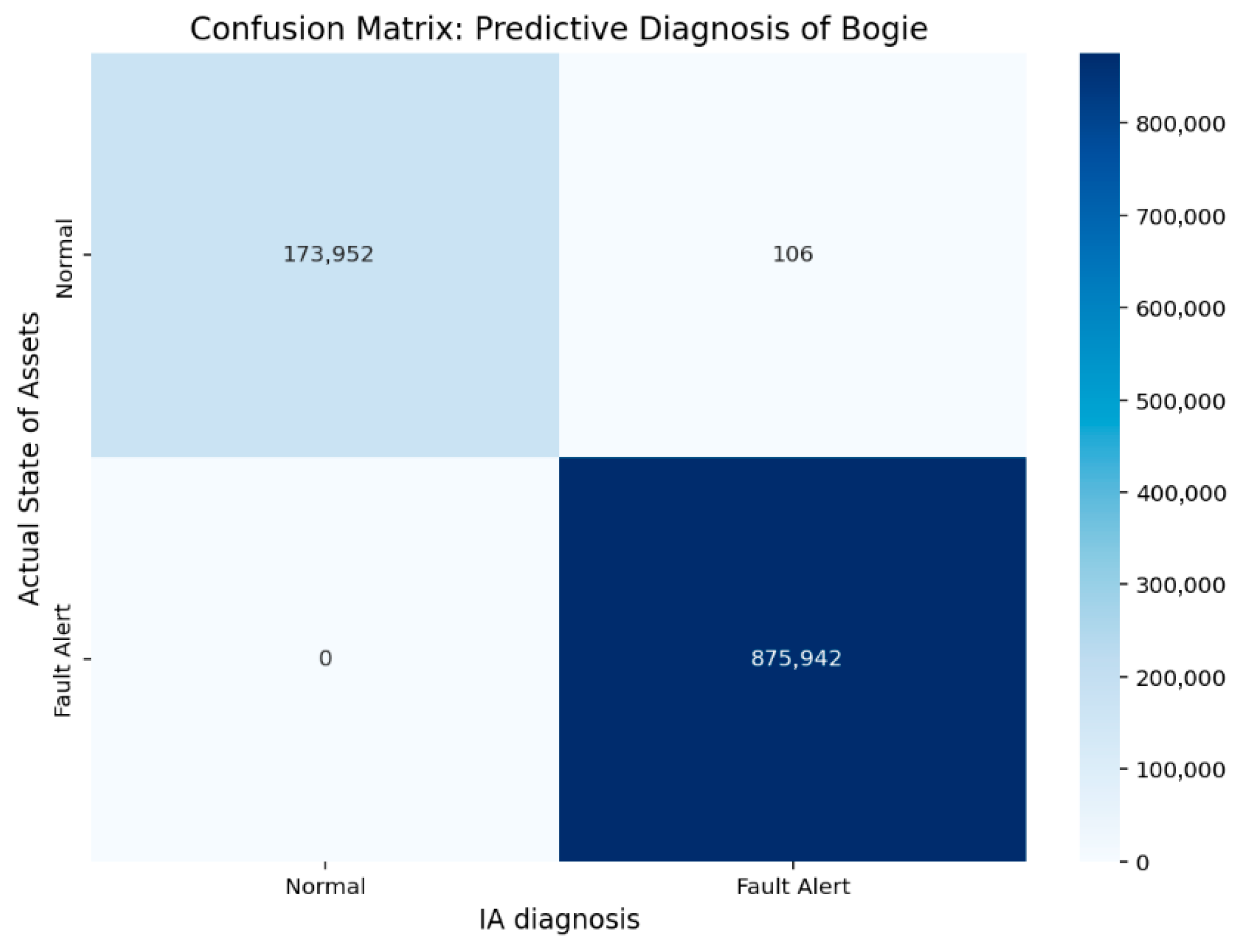
- Predictive performance and safety reliability—the Random Forest (RF) model demonstrated an exceptional ability to identify critical states, correctly classifying 875,942 failure events (True Positives);
- Critical safety metric (zero false negatives)—from a railway safety perspective, the most significant result is the total absence of false negatives (0). This indicates that the system did not allow any critical mechanical degradation to go undetected, fulfilling the stringent safety requirements of the railway sector;
- Diagnostic precision—the volume of false positives was restricted to only 106 occurrences. While these represent a minor operational cost for unnecessary checks, they are statistically negligible compared to the total support of 324,450 instances analysed;
- Sensitivity and recall—the integration of GenAI-based data augmentation raised the model’s sensitivity (recall) from a baseline of 0.797 to 0.99. This proves that the framework is capable of recognising rare “long-tail” failure patterns that traditional models typically ignore due to dataset imbalance.
5. Bogie Architecture and Components
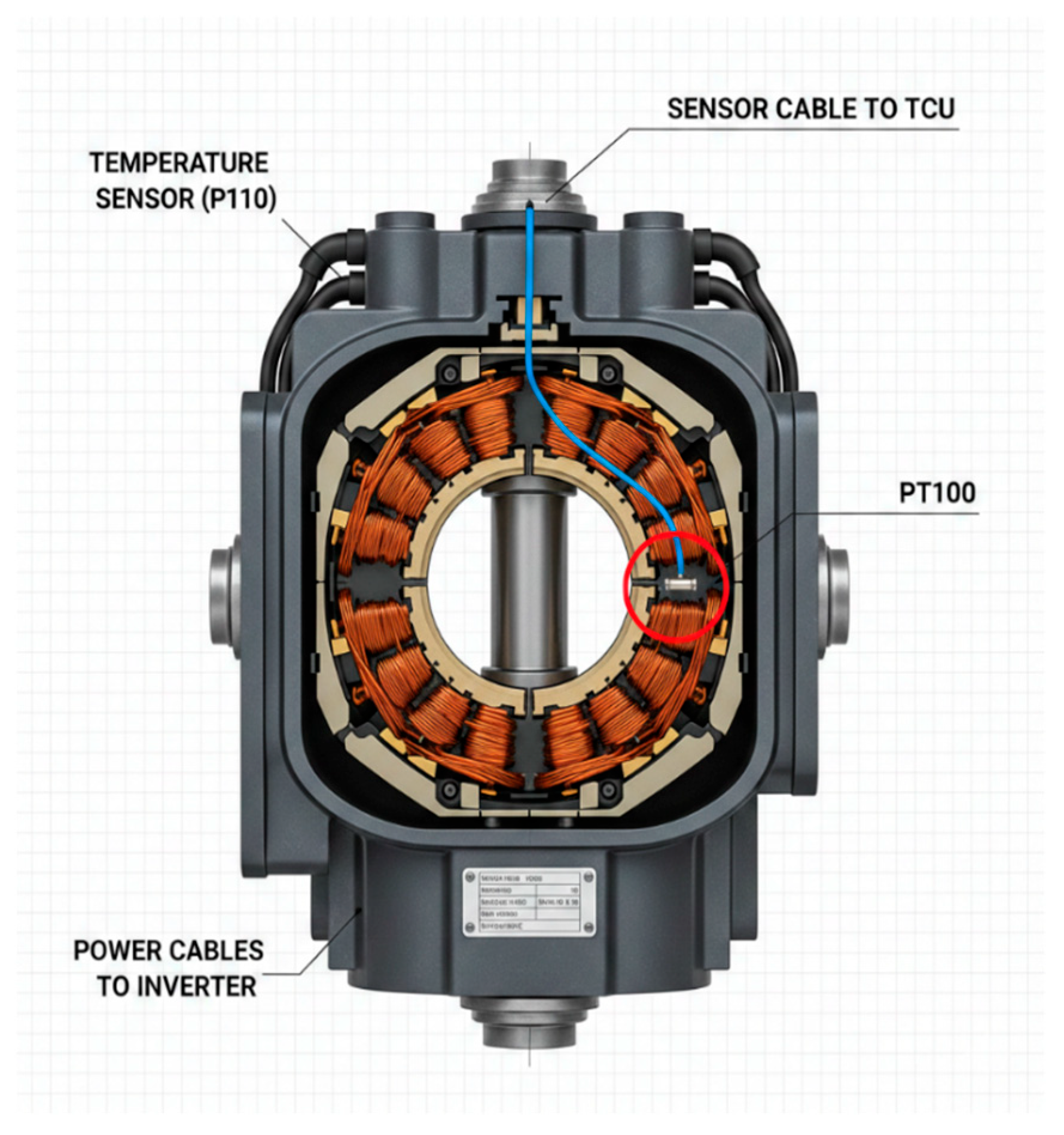
- Motors (temperature sensor)—unlike conventional trains, the MP00 has the motors mounted vertically and outside the wheels. The temperature sensor (usually a PT100 resistor) is embedded in the stator. This wire is shielded and goes directly into the engine shield.
- TP2 and TP3 (passage terminals)—these connections are located on the connecting crossbar (of the bogie). As the bogie rotates in relation to the vehicle housing, these terminals serve as an interface so that the flexible cables do not suffer excessive stress. They are protected by insulating covers near the centre of the bogie.
- Control wiring—the cables come out of the motor. Then they climb to a technical rail that takes them to the PT points, where the bridge is made to the power electronics located on the roof of the metro.
5.1. Sensor Mapping and Data Acquisition
- TP2 and TP3 (pressure)—these sensors monitor the brake line and secondary reservoirs. Physically, a deviation in these readings indicates a loss of pneumatic circuit integrity, such as valve leakage or seal failure, which directly impacts braking reliability and suspension levelling;
- H1 (vibration)—this accelerometer identifies dynamic anomalies by capturing recursive perturbations indicative of internal wear. It is crucial for detecting imbalances in the wheelsets or early-stage bearing fatigue, as it can isolate mechanical degradation signatures from transient environmental noise;
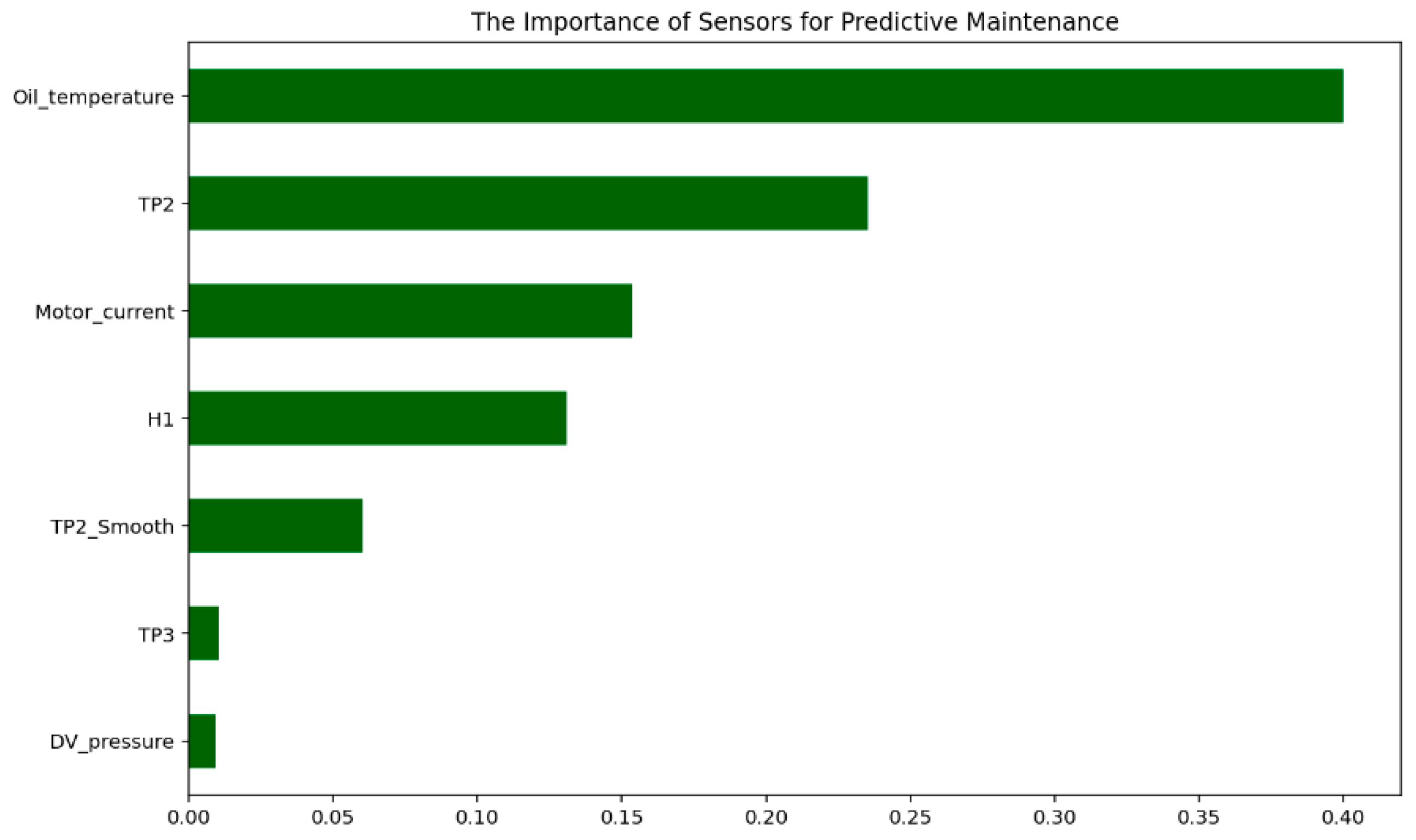
- Oil_temperature—identified as the most robust predictor (index 0.40), it measures thermal stress and lubrication efficiency. From a physical standpoint, heat dissipation is the earliest indicator of friction-related wear in the motor units and gearboxes, allowing the model to anticipate failures before structural boundaries are reached;
- Motor_current—records torque variations that reflect the mechanical load regime. Variations in current consumption are direct indicators of mechanical resistance caused by component misalignment or overload conditions.
5.2. Overcoming Industrial Data Secrecy
5.3. Maintenance System Block Diagram
- Acquisition—collection of raw data via IoT;
- Semantic processing—GenAI (LLM) interprets anomalies and translates numerical logs into maintenance narratives;
- BIM integration—automatic updating of the IFC via Python (IfcOpenShell); thereby, modifying property sets (Psets) in real time.
5.4. Semantic Synchronisation Layer: From Sensor to IFC
5.5. Random Forest and Data Augmentation
5.5.1. Justification for Random Forest
- Resilience to overfitting—the model uses random sampling to train 100 independent trees, thereby ensuring stability to face the statistical noise common in operational sensors;
- Processing of non-linear relationships—the algorithm is effective at identifying complex patterns among thermal, pneumatic and electrical variables that define the metro’s state;
- Maximisation of information gain—using the entropy criterion, the classifier isolates the most relevant signatures, such as oil temperature and motor current, which have proven to be the most robust predictors.
5.5.2. Synthetic Data and Generative Data Augmentation
- Sensitivity enhancement—the inclusion of synthetic failure modes raised the model’s recall for anomalies from 0.797 to 0.99;
- Diagnostic reliability—this increase in sensitivity ensures that critical, albeit rare, degradation trajectories are no longer ignored by the classifier, providing a deterministic safety margin essential for rolling stock management;
- Dataset balancing—by simulating predictive scenarios, the framework transformed an initially skewed dataset into a comprehensive training tool, allowing the Random Forest tool to establish a precise decision boundary between nominal operation and imminent mechanical failure;
- Consequently, the use of Generative AI serves as a “semantic bridge” that compensates for the natural scarcity of failure data, ensuring the Digital Twin remains proactive and resilient under extreme conditions.
5.5.3. Prediction and Validation Matrix
5.6. Methodology and Innovation
- Real data (historical obligation)—use of the MetroPT-3 [36] dataset to ensure technical integrity. The model analyses real variables from pressure sensors (TP2 and TP3), vibration (H1) and oil temperature, ensuring that it understands the real physical behaviour of the machine.
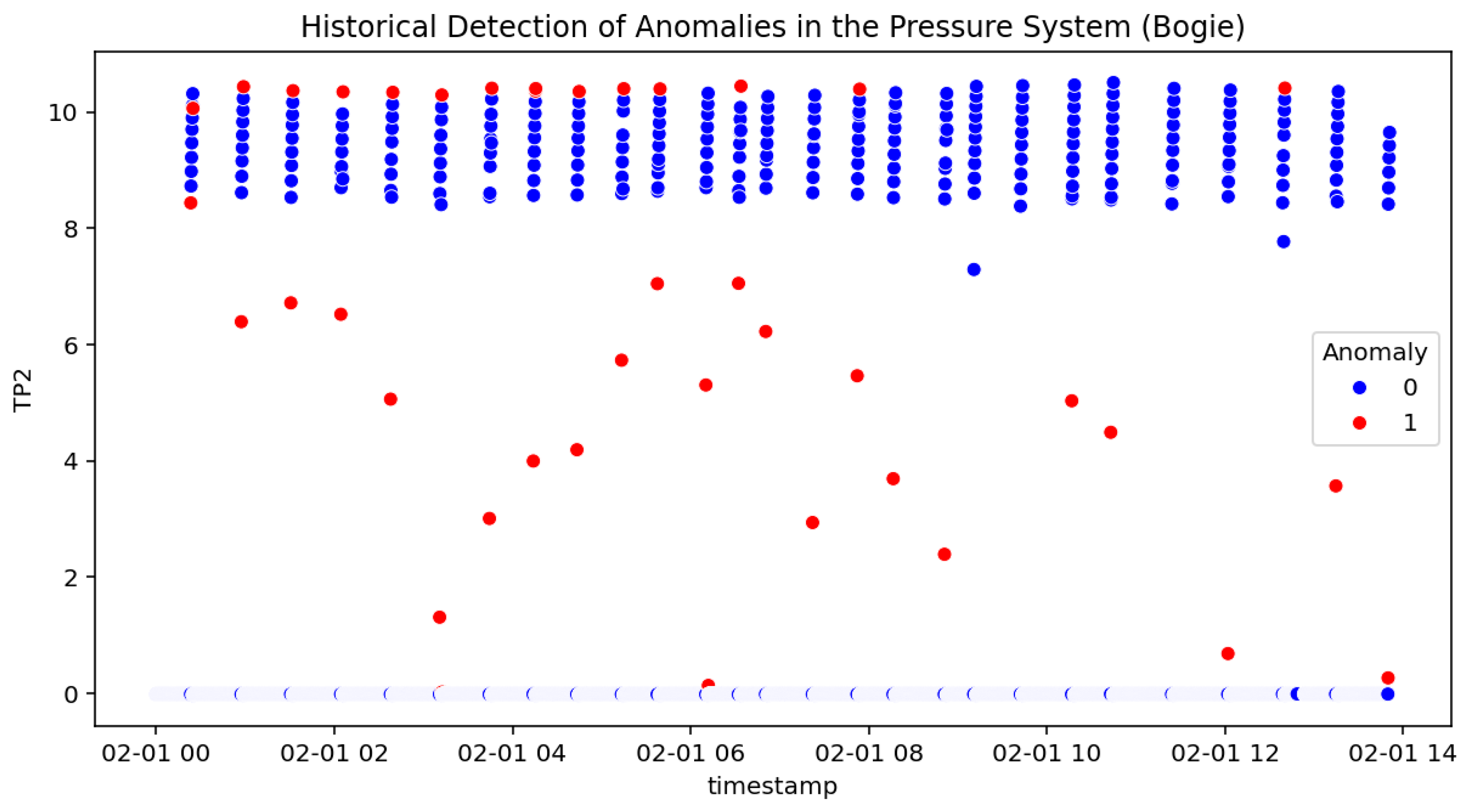
- Blue (0)—represents the normal operating state;
- Red (1)—represents the detection of an anomaly;
- TP2—this sensor typically measures the pressure in the brake line (or secondary reservoirs) of the bogie.
- Leak detection—the scattering of red dots between levels 2 and 7 is a strong indication of compressed air leaks. If the TP2 pressure drops without a corresponding brake command, the ML model signals the anomaly.
- Algorithm efficiency—the model appears to be effective at identifying drift before the system fails entirely, allowing the maintenance team to intervene on the bogie before a line breakdown.
- False positives versus critical—red dots at the top (near 10) should be analysed with caution; these can be pressure spikes (overpressure) that are also harmful to the sealing components.
- Attribute engineering (pre-processing accuracy)—application of Moving Averages to clean up noise from analogue sensors. This step is crucial to identify long-term degradation trends, distinguishing them from mere momentary reading errors (Equation (1)).
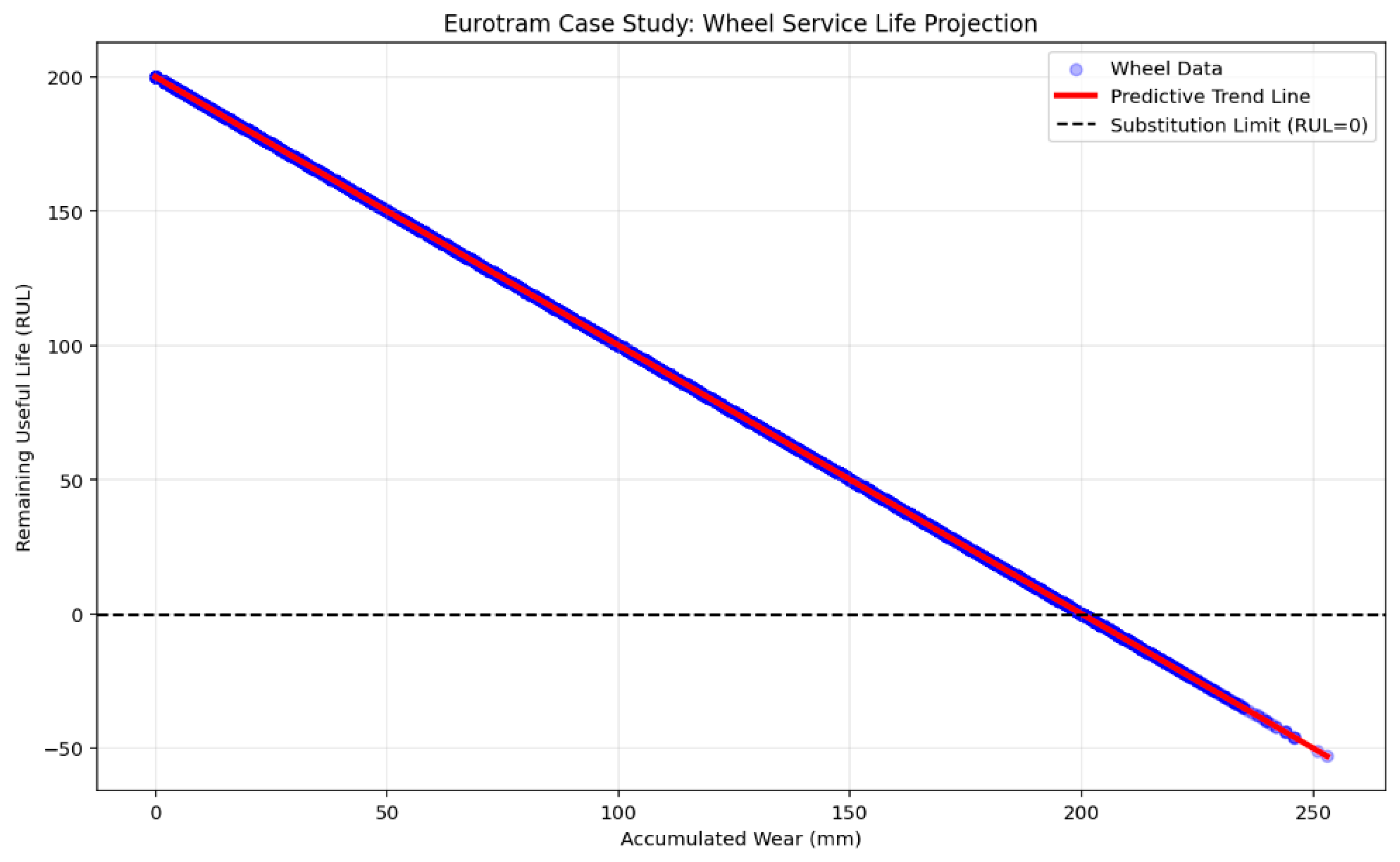
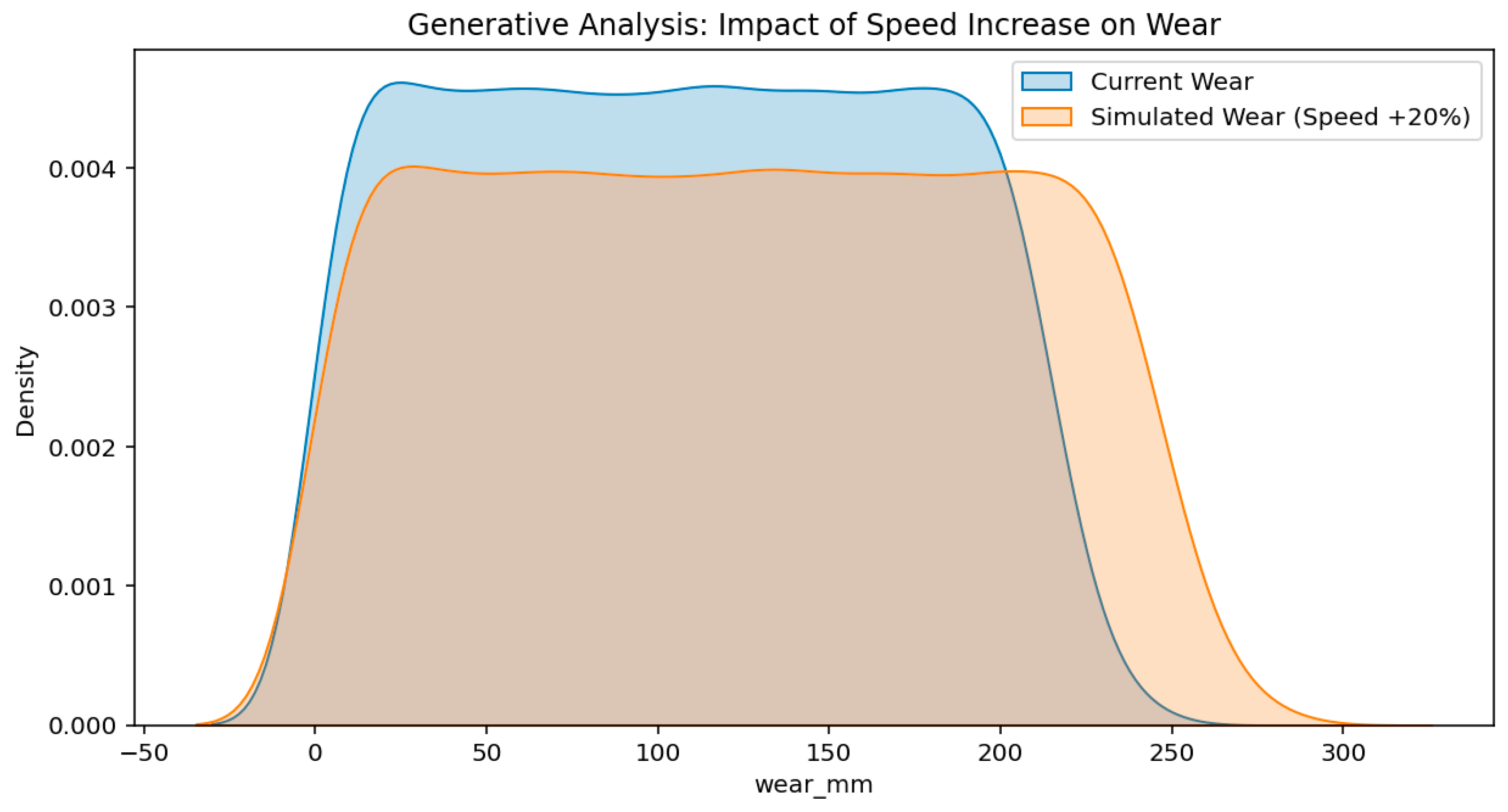
- The blue graph has a perfect linear ratio, meaning there is a direct and steady drop in RUL as the accumulated wear increases. The service life reaches the exact zero when the wear reaches 200 mm. There is a huge risk. The blue dots extending beyond 200 mm (negative RUL) represent wheels that have continued in service past the safety limit, reaching up to 250 mm of wear. When it increases, the spindle speed increases by 20%. The risk becomes visible from the displacement of the curve, increased to a maximum wear and criticism;
- The orange (simulated) curve is the offset of the curve that shifts significantly to the right compared to the blue (current) curve. This simulation was generated using GenAI-based data augmentation to predict fleet behaviour under stress conditions where real-world historical data is scarce. Regarding the increase of maximum wear, it is mostly below 200 mm; the simulation shows a high probability of wear reaching values between 250 mm and 300 mm. At the risk level, with an increase of only 20% in speed, it does not increase wear linearly; it “pushes” a large part of the fleet into the negative RUL zone before the time stipulated by the manufacturer.
- ○
- Status—ALERT
- ○
- RUL Dear—50.00 units
- ○
- Terms and conditions—1600 RPM|150 mm of wear
- ○
- Procedure—schedule preventative maintenance
5.7. Generative AI
5.8. Prediction Tools
5.8.1. Random Forest Tools
5.8.2. Model Performance (Random Forest)
5.9. Generative Complementary Data
6. Discussion of Results
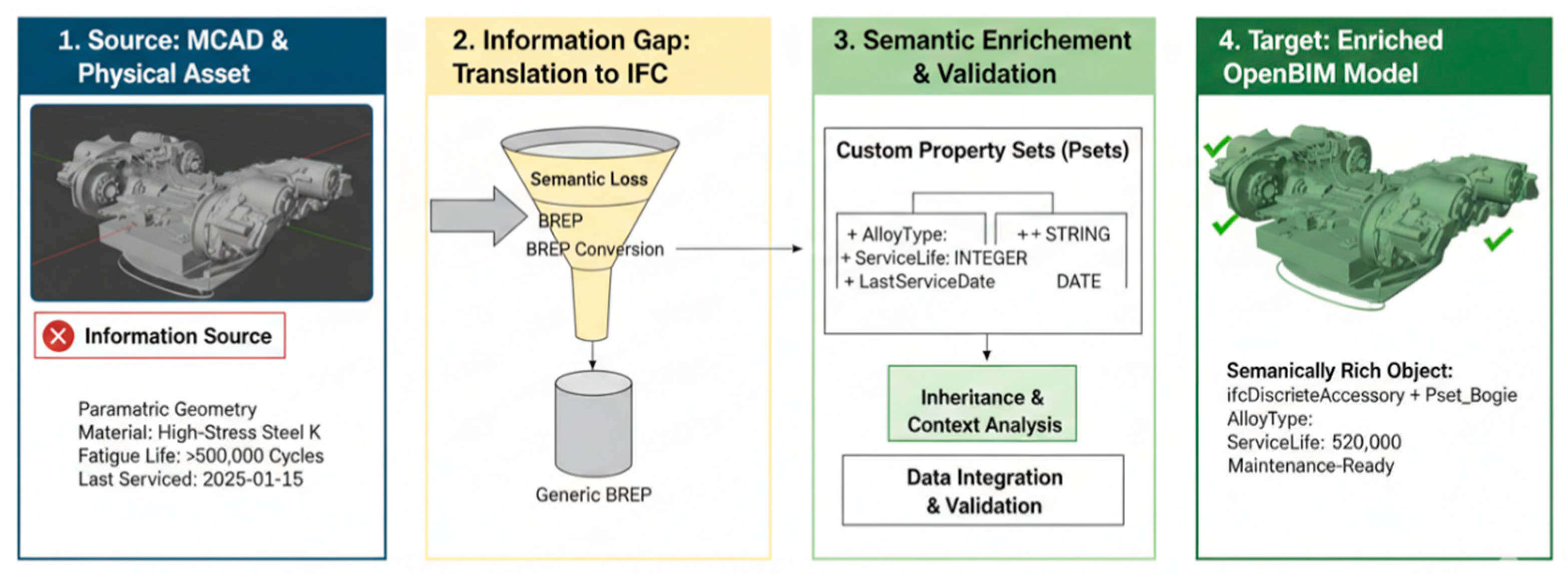
6.1. Semantic Enrichment and Dynamic IFC Property Sets
6.2. Performance Benchmarking and Efficiency Analysis
6.2.1. Quantitative Latency Reduction
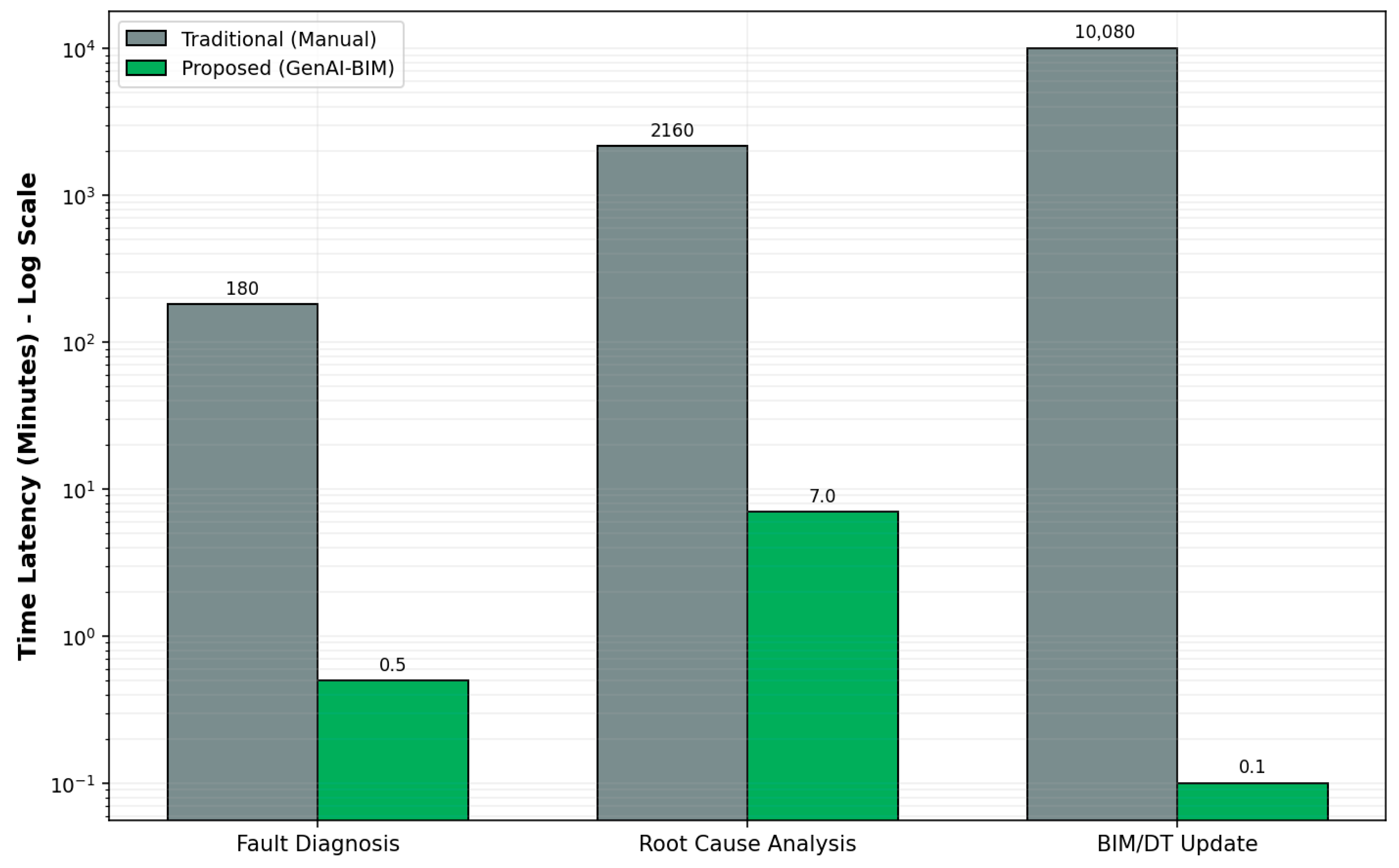
- Data interpretation—traditional specialist review of logs typically spans 2 to 4 h. In contrast, the AI inference model processes the same dataset in under 30 s, achieving a reduction in processing time of over 99%;
- Root cause analysis—by leveraging Retrieval-Augmented Generation (RAG) to parse technical manuals, the requirement for a 1-to-2-day expert panel review is superseded by an automated process taking 5 to 10 min;
- DT synchronisation—the update frequency has shifted from weekly or monthly manual CAD interventions to real-time synchronisation, facilitated by automated writing directly into the IFC schema.
6.2.2. Quantitative Impact on Asset Management
6.3. Discussion: Scientific and Framework Limitations
Mitigating the Risk of AI
- Semantic anchoring in the processing layer—the LLM does not generate data in isolation; it acts as a “semantic translator” for raw numerical inputs (such as vibration frequencies and temperature gradients) collected in the Acquisition Layer. This ensures that every diagnostic narrative is strictly anchored to the “physical pulse” of the asset.
- Parametric constraint mapping—before any modification to the IFC schema occurs, the GenAI identifies specific parameters within the DT that require updating. These proposed updates are filtered through predefined engineering thresholds within the Python scripts that utilise the IfcOpenShell library, preventing the execution of physically impossible geometry or property set changes.
- Final validation protocols—although the framework optimises the operational life cycle through automation, it maintains a “human-in-the-loop” capability for high-consequence maintenance decisions. This ensures that the autonomous evolution of the BIM model remains a transparent and verifiable process, eliminating the “information degradation” typical of manual entry without sacrificing technical accuracy.
6.4. System Limitations
- Autonomous synchronisation—the system proves to be able to convert raw sensor logs into asset health parameters in real time, eliminating the “information degradation”, typical of manual processes and ensuring the continuous updating of the DT;
- Predictive effectiveness—the RF model achieved 99% accuracy and recall, validating the robustness of the data augmentation strategy to mitigate the scarcity of real failure data and balance the training datasets;
- Resource optimisation—benchmarking analysis revealed a drastic reduction in diagnostic latency, with time savings of over 98% compared to traditional manual inspection and reporting methods;
- Industrial sustainability—the transition to an “as-maintained” DT enables an effective shift to CBM, reducing premature component waste and the fleet’s operational carbon footprint.
6.5. Case Study and Validation of the Autonomous Workflow
- Model detail (LOD)—the rolling stock digital representation was developed at LOD 400 (LOD, Level of Detail), ensuring that all functional components, including brake pads, axles, and wheelsets, were geometrically defined and parametrically linked to the IFC schema.
- Simulated failure scenarios—two primary degradation modes were simulated to test the GenAI’s interpretive accuracy:
- Wheelset wear—a progressive reduction of 2 mm in the wheel diameter (flange wear);
- Brake pad degradation—a critical thickness reduction from 25 mm to 18 mm, triggered by high-frequency braking logs.
- Efficiency analysis—Table 5 reflects a shift from manual engineering oversight to an automated pipeline. While the traditional manual method requires approximately 120 min for an engineer to interpret the sensor log, locate the component in the BIM environment, and manually update the Pset (property set), the GenAI-BIM framework completed the same task in under 45 s. This represents a time saving of over 98%, virtually eliminating human-induced synchronisation errors.
6.6. Sustainability and Asset Life Cycle Management
7. Conclusions and Future Developments
Author Contributions
Funding
Data Availability Statement
Acknowledgments
Conflicts of Interest
Abbreviations
| AEC | Architecture, Engineering, and Construction |
| ARC | Automated Rule Checking |
| AI | Artificial Intelligence |
| BIM | Building Information Modelling |
| BREP | Boundary Representations |
| CBM | Condition-Based Maintenance |
| CNNs | Convolutional Neural Networks |
| DTs | Digital Twins |
| EN | European Standards |
| GANs | Generative Adversarial Networks |
| GenAI | Generative Artificial Intelligence |
| GUID | Global Unique Identifier |
| GPR | Ground Penetrating Radar |
| IDMs | Information Delivery Manuals |
| IFCs | Industry Foundation Classes |
| LiDAR | Light Detection and Ranging |
| LLMs | Large Language Models |
| LOD | Level of Development |
| MCP | Model Context Protocol |
| ML | Machine Learning |
| MP | Maintenance Predictive |
| MVDs | Model View Definitions |
| NDM | Non-Destructive Monitoring |
| O&M | Operation and Maintenance |
| Pstes | Property Sets |
| RAG | Retrieval- Augmented Generation |
| RF | Random Forest |
| RUL | Remaining Useful Life |
| SoH | State of Health |
| TSI | Technical Specifications for Interoperability |
References
- Kavaliauskas, P.; Fernandez, J.B.; McGuinness, K.; Jurelionis, A. Automação do monitoramento do progresso da construção por meio da integração de dados de nuvem de pontos 3D com um modelo BIM baseado em IFC. Buildings 2022, 12, 1754. [Google Scholar] [CrossRef]
- Krishnan Vadakkum Vadukkal, U.; Cardellicchio, A.; Nitti, M.; Fiume, M.; Renó, V. Recent Advances and Innovative Approaches to Railway Safety Based on Applications, Sensors and Algorithms: A Systematic Review. IEEE Access 2025, 13, 200271–200289. [Google Scholar] [CrossRef]
- ISO 16739-1:2018; Industry Foundation Classes (IFC) for Data Sharing in the Construction and Facility Management Industries. buildingSMART: Kings Langley, Hertfordshire, UK, 2018. Available online: https://www.buildingsmart.org/standards/bsi-standards/industry-foundation-classes/ (accessed on 20 March 2026).
- Hu, W.; Ou, Y.; Liu, H.; Ni, P.; Chang, C. Integrating Digital Twin Technologies for Maintenance 4.0 in the Building Industry: A Review and Conceptual Framework. Build. Environ. 2026, 288, 113997. [Google Scholar] [CrossRef]
- Dholakia, N.; Shukla, M.; Khan, S.B.; Jadeja, R. An Overview of GenAI 2.0 Partnering With Digital Twin to Enhance Decision Making. IEEE Commun. Stand. Mag. 2025, 9, 42–48. [Google Scholar] [CrossRef]
- Xu, H.; Sun, Y.; Tupayachi, J.; Omitaomu, O.; Zlatanova, S.; Li, X. Towards Autonomous Freight Intermodal Optimization via Generative AI and Agentic Digital Twins. SSRN Sch. 2025, 5623194. [Google Scholar] [CrossRef]
- Volk, R.; Stengel, J.; Schultmann, F. Building Information Modeling (BIM) for Existing Buildings—Literature Review and Future Needs. Autom. Constr. 2014, 38, 109–127. [Google Scholar] [CrossRef]
- Gerbino, S.; Cieri, L.; Rainieri, C.; Fabbrocino, G. On BIM Interoperability via the IFC Standard: An Assessment from the Structural Engineering and Design Viewpoint. Appl. Sci. 2021, 11, 11430. [Google Scholar] [CrossRef]
- Biancardo, S.A.; Intignano, M.; Viscione, N.; Guerra De Oliveira, S.; Tibaut, A. Procedural Modeling-Based BIM Approach for Railway Design. J. Adv. Transp. 2021, 2021, 8839362. [Google Scholar] [CrossRef]
- Li, Y.; Zhao, Q.; Yang, M.; Ma, Z.; Hei, X. Advancements and Applications of Industry Foundation Classes Standards in Engineering: A Comprehensive Review. Buildings 2025, 15, 2927. [Google Scholar] [CrossRef]
- Hasan, M. BIM (IFC Standardization Interoperability). Front. Struct. Eng. Educ. Train. 2025. [Google Scholar] [CrossRef]
- Antunes, M.L.R.; César Júnior, K.M.L.; Ribeiro, J.C.L.; Oliveira, D.S.; Carvalho, J.M.F. Analysis of IFC Interoperability Data Schema for Project Representation. Autom. Constr. 2024, 166, 105650. [Google Scholar] [CrossRef]
- Lee, Y.-C.; Eastman, C.M.; Lee, J.-K. Validations for Ensuring the Interoperability of Data Exchange of a Building Information Model. Autom. Constr. 2015, 58, 176–195. [Google Scholar] [CrossRef]
- Gigante-Barrera, Á.; Dindar, S.; Kaewunruen, S.; Ruikar, D. LOD BIM Element Specification for Railway Turnout Systems Risk Mitigation Using the Information Delivery Manual. IOP Conf. Ser. Mater. Sci. Eng. 2017, 245, 042022. [Google Scholar] [CrossRef]
- Vale, C.; Simões, M.L. Prediction of Railway Track Condition for Preventive Maintenance by Using a Data-Driven Approach. Infrastructures 2022, 7, 34. [Google Scholar] [CrossRef]
- Justo, A.; Lamas, D.; Sánchez-Rodríguez, A.; Soilán, M.; Riveiro, B. Generating IFC-Compliant Models and Structural Graphs of Truss Bridges from Dense Point Clouds. Autom. Constr. 2023, 149, 104786. [Google Scholar] [CrossRef]
- Fontul, S.; Falcão Silva, M.J.; Couto, P. IFC Development for BIM Application to Railway Projects. In Eleventh International Conference on the Bearing Capacity of Roads, Railways and Airfields; CRC Press: Boca Raton, FL, USA, 2022; Volume 2, pp. 413–422. [Google Scholar] [CrossRef]
- Bensalah, M.; Elouadi, A.; Mharzi, H. BIM Integration into Railway Projects—Case Study. Commun. Eng. Sci. 2018, 11, 2181–2199. [Google Scholar] [CrossRef]
- Bellon, F.G.; Martins, A.C.P.; Franco de Carvalho, J.M.; de Souza, C.A.F.; Ribeiro, J.C.L.; César Júnior, K.M.L.; de Oliveira, D.S. IFC Framework for Inspection and Maintenance Representation in Facility Management. Autom. Constr. 2025, 174, 106157. [Google Scholar] [CrossRef]
- Sobhkhiz, S.; Zhou, Y.-C.; Lin, J.-R.; El-Diraby, T.E. Framing and Evaluating the Best Practices of IFC-Based Automated Rule Checking: A Case Study. Buildings 2021, 11, 456. [Google Scholar] [CrossRef]
- Wilczok, D. Deep Learning and Generative Artificial Intelligence in Aging Research and Healthy Longevity Medicine. Aging 2025, 17, 251–275. [Google Scholar] [CrossRef]
- Singh, P.; Hazarika, B.; Singh, K.; Huang, W.-J.; Duong, T.Q. GenAI-Enhanced Federated Multiagent DRL for Digital-Twin-Assisted IoV Networks. IEEE Internet Things J. 2025, 12, 4834–4851. [Google Scholar] [CrossRef]
- Patel, H.; Kumar, S. Identification of AI for Predictive Analytics in Cyber Threat Intelligence Gathering. Unique J. Artif. Intell. 2026, 4, 11–26. Available online: https://l1nq.com/TJK73 (accessed on 8 February 2026).
- Saidur, M.J.I. AI-Enhanced Business Intelligence Dashboards for Predictive Market Strategy in U.S. Enterprises. Int. J. Bus. Econ. Innov. 2025, 5, 603–648. [Google Scholar] [CrossRef]
- Falegan, O.; Aniebonam, S. Data-Driven Performance Optimization of Produced Water Treatment Infrastructure, A Conceptual Modeling Approach. Eng. Technol. J. 2026, 11, 41. [Google Scholar] [CrossRef]
- Kumari, J. Augmented Asset Management of Railway System Empowered by Industrial AI. Master’s Thesis, Luleå University of Technology, Luleå, Sweden, 2022. Available online: https://urn.kb.se/resolve?urn=urn:nbn:se:ltu:diva-90416 (accessed on 5 March 2026).
- Stradi, J.A. A Digital-Cooperative Framework for Cross-Border Railway Maintenance Decision Support. Master’s Thesis, Delft University of Technology, Delft, The Netherlands, 2024. Available online: https://resolver.tudelft.nl/uuid:86de5a0c-a9e7-4509-8544-22a66827c01d (accessed on 2 March 2026).
- Negi, G.S.; Mohan, H.; Gupta, M.K.; Singh, R.; Gehlot, A.; Thakur, A.K.; Dogra, S.; Gupta, L.R. Leveraging Machine Learning for Optimized Microgrid Management: Advances, Applications, Challenges, and Future Directions. Renew. Sustain. Energy Rev. 2026, 226, 116345. [Google Scholar] [CrossRef]
- Katangoori, A. The Role of Big Data in Advancing Artificial Intelligence: Methods and Case Studies. Int. J. Artif. Intell. Mach. Learn. 2026, 6, 37–54. [Google Scholar] [CrossRef]
- Naeem, F.; Ali, M.; Kaddoum, G.; Faheem, Y.; Zhang, Y.; Debbah, M.; Yuen, C. A Survey on GenAI-Driven Digital Twins: Toward Intelligent 6G Networks and Metaverse Systems. IEEE Open J. Commun. Soc. 2025, 6, 10365–10402. [Google Scholar] [CrossRef]
- Gebreab, S.; Musamih, A.; Salah, K.; Jayaraman, R.; Boscovic, D. Accelerating Digital Twin Development With Generative AI: A Framework for 3D Modeling and Data Integration. IEEE Access 2024, 12, 185918–185936. [Google Scholar] [CrossRef]
- Memon, S.A.; Shehata, W.; Rowlinson, S.; Sunindijo, R.Y. Generative Artificial Intelligence in Architecture, Engineering, Construction, and Operations: A Systematic Review. Buildings 2025, 15, 2270. [Google Scholar] [CrossRef]
- Guan, W.; Li, P.; Zhang, H.; Wu, Y. Integrating Generative AI with Network Digital Twin for 6G: An Edge-Cloud Collaborative Approach. IEEE Commun. Mag. 2025, 63, 181–187. [Google Scholar] [CrossRef]
- Ghosh, D.P. Intelligent Infrastructure Delivery: AI-Driven Solutions for Lifecycle Design and Engineering Management. 2025. Available online: https://www.researchgate.net/publication/391279441_Intelligent_Infrastructure_Delivery_AI-Driven_Solutions_for_Lifecycle_Design_and_Engineering_Management?channel=doi&linkId=68112c54bfbe974b23bd7370&showFulltext=true (accessed on 31 January 2026).
- Shrestha, A.; Imamoto, K. Generative AI Based Industrial Metaverse Creation Methodology. In Proceedings of the 2024 Artificial Intelligence for Business (AIxB), Online, 30 September–2 October 2024; pp. 53–57. [Google Scholar] [CrossRef]
- Neupane, A. MetroPT3 Database. 2025. Available online: https://www.kaggle.com/code/neupaneaaditya/metropt3/input (accessed on 6 March 2026).
- Salman, H.A.; Kalakech, A.; Steiti, A. Random Forest Algorithm Overview. Babylon. J. Mach. Learn. 2024, 2024, 69–79. [Google Scholar] [CrossRef]





| Scenario | Wear and Tear | RUL Status |
|---|---|---|
| Current | 0–200 mm | Usually within the limit |
| Speed +20% | 0–275 mm | High probability of failure/over-threshold |
| IA Previous: Normal | AI Predicted: FAILURE | |
|---|---|---|
| Reality: Normal | True Negatives (VN) (The metro is fine and the AI does not bother) | False Positives (False Alarms) (The AI says there is a glitch, but that is okay) |
| Reality: FAILURE | False Negatives (THE DANGER) (The bogie will fail and the AI did not warn you) | True Positives (Success) (The AI detected the flaw before it happened) |
| Precision | Recall | F1-Score | Support | |
|---|---|---|---|---|
| Operation Normal | 0.988 | 0.995 | 0.991 | 305,675.000 |
| Anomaly Bogie | 0.911 | 0.797 | 0.850 | 18,775.000 |
| Accuracy | 0.984 | 0.984 | 0.984 | 0.984 |
| Macro Avg | 0.949 | 0.896 | 0.921 | 324,450.000 |
| Weighted avg | 0.983 | 0.984 | 0.983 | 324,450.000 |
| Metrics | Value Obtained | Result for the Metro |
|---|---|---|
| GLOBAL Accuracy | 99% | High reliability of general system diagnostics |
| Recall (Failure) | 0.99 | Ability to detect 99% of failures before they occur |
| Precision (Failure) | 0.99 | Minimised false alarms, reducing unnecessary inspections |
| F1-Score (Failure) | 0.99 | Perfect balance between detection sensitivity and precision |
| Feature | Standard IFC (Static) | GenAI-Enhanced IFC (Dynamic) |
|---|---|---|
| Entity Class | IfcBuildingElementProxy | IfcMechanicalElement (Brake System) |
| Attribute | Name: “Brake_Pad_01” | Name: “Brake_Pad_01” |
| Property Set | None or Static | Pset_Maintenance {Wear_Level: 14.2 mm} |
| Semantic Value | Geometry only | Geometry + Real-time Health State |
| Process Phase | Traditional Manual Method | Proposed GenAI-BIM Framework | Time Saving (%) |
|---|---|---|---|
| Data Interpretation | 2–4 h (Manual Review) | <30 s (AI Inference) | ~99% |
| Root Cause Analysis | 1–2 Days (Expert Panel) | 5–10 m (RAG Search) | ~95% |
| Digital Twin Update | Weekly/Monthly (Manual CAD) | Real-time (Automated IFC Write) | ~100% |
| Maintenance Scheduling | Manual ERP Entry | Autonomous (via Logistics Agent) | ~90% |
Disclaimer/Publisher’s Note: The statements, opinions and data contained in all publications are solely those of the individual author(s) and contributor(s) and not of MDPI and/or the editor(s). MDPI and/or the editor(s) disclaim responsibility for any injury to people or property resulting from any ideas, methods, instructions or products referred to in the content. |
© 2026 by the authors. Licensee MDPI, Basel, Switzerland. This article is an open access article distributed under the terms and conditions of the Creative Commons Attribution (CC BY) license.
Share and Cite
Coutinho, J.M.; Raposo, H.; Farinha, J.M.T.; Marques Cardoso, A.J. BIM and PdM of Railway Rolling Stock with Automatic Upgrading Based on GenAI. Machines 2026, 14, 535. https://doi.org/10.3390/machines14050535
Coutinho JM, Raposo H, Farinha JMT, Marques Cardoso AJ. BIM and PdM of Railway Rolling Stock with Automatic Upgrading Based on GenAI. Machines. 2026; 14(5):535. https://doi.org/10.3390/machines14050535
Chicago/Turabian StyleCoutinho, João Matos, Hugo Raposo, José M. Torres Farinha, and Antonio J. Marques Cardoso. 2026. "BIM and PdM of Railway Rolling Stock with Automatic Upgrading Based on GenAI" Machines 14, no. 5: 535. https://doi.org/10.3390/machines14050535
APA StyleCoutinho, J. M., Raposo, H., Farinha, J. M. T., & Marques Cardoso, A. J. (2026). BIM and PdM of Railway Rolling Stock with Automatic Upgrading Based on GenAI. Machines, 14(5), 535. https://doi.org/10.3390/machines14050535