



Conferences
Upcoming Journal Conferences (0)
No conferences found for the selection.Upcoming MDPI Conferences (1)
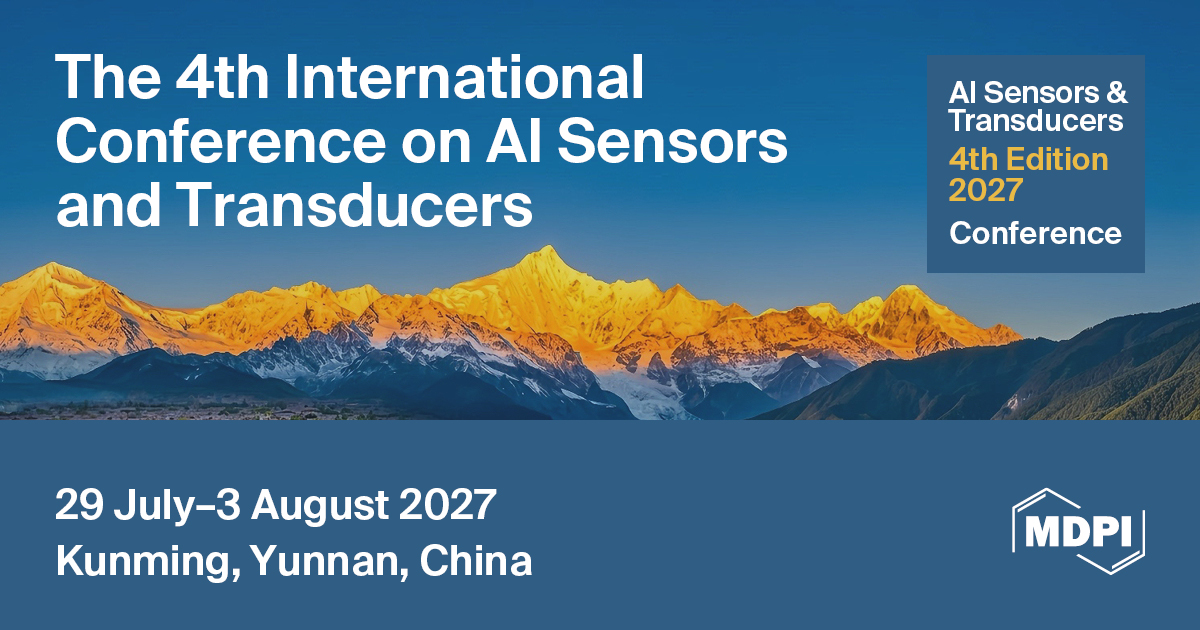
Kunming, China
We invite you to submit your abstract and participate in the upcoming 4th International Conference on AI Sensors and Transducers (AIS 2027), co-organized by MDPI Sensors, Micromachines, AI Sensors, Micro and Robotics. The conference will be held from 29 July to 03 August 2027 in Kunming, Yunnan, China.
Following successful editions in Singapore (2024), Kuala Lumpur, Malaysia (2025), and Jeju, South Korea (2026), which collectively brought together nearly 1,350 participants from over 40 countries, AIS 2027 will continue to bring together leading researchers, engineers, and industry experts to explore emerging technologies and future directions.
Event Chairs
Prof. Eric M. Yeatman, University of Glasgow
Prof. Alexander Star, University of Pittsburgh
Prof. Wen Jung Li, City University of Hong Kong
Prof. Chengkuo Lee, National University of Singapore
Plenary Speaker
Prof. Zhonglin Wang, Beijing Institute of Nanoenergy and Nanosystems
(The speaker lineup will be updated continuously.)
Important Dates
Deadline for Abstract Submission: 26 March 2027
Abstract Acceptance Notification: 30 April 2027
Early Bird Registration Deadline: 7 June 2027
Covering Author Registration Deadline: 11 June 2027
Registration Deadline: 30 July 2027
Guide for authors:
To submit your abstract, please click:
To register for the event, please click:
For details regarding abstract submission, poster and slide submission, please refer to the “Instructions for Authors” Section: https://sciforum.net/event/AIS2027/instructions-for-authors.
For more information, you may refer to the following link: https://sciforum.net/event/AIS2027.
For any inquiries regarding the event, please contact ais@mdpi.com.
Please feel free to share information about this conference with your colleagues and students. We look forward to receiving your submissions and learning about your research at AIS 2027!
Upcoming Partner Conferences (6)
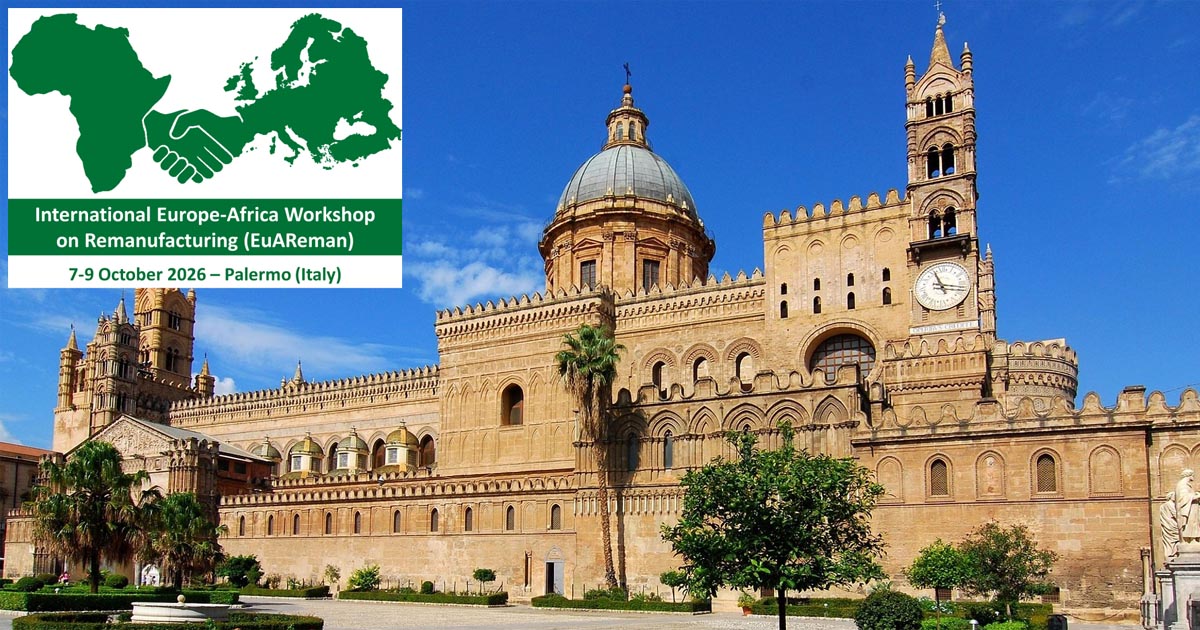
Palermo, Italy
The first International Europe-Africa Workshop on Remanufacturing is seeking to highlight the state-of-the-art of remanufacturing in both Europe and Africa. It brings together global North and South experts, researchers and practitioners to explore remanufacturing innovations and collaborations. In the quest for sustainability, Europe lacks raw material resource and thus must determine avenues to maintain its manufacturing base by doing more with less while Africa must industrialise with minimum resource use whilst also reducing its existing manufacturing-related environmental issues. Remanufacturing is a high-impact solution but is under-utilised, forming less than 2% of production in comparison to the 98% of the unsustainable conventional manufacturing.
Emerging technologies can enhance efficiency, capacity and scalability to mainstream remanufacturing. Sustainability is a global concern but efforts to fuse the expertise and needs of the global North and South to obtain viable local and global solutions is lacking. Africa’s involvement has been overlooked, with the continent largely perceived as a bystander and recipient of potential solutions which are detached and unfit. Meanwhile, sustainability is unattainable without effective global cooperation and coordination.
Scope & Audience
Academic and research institutions, industry and persons concerned with the challenges and significance of remanufacturing as a pillar for global sustainability such as, but not limited to:
- Engineers interested in remanufacturing strategy, technique, and technology;
- Business leaders, decision-makers and policymakers, operating within the general reuse and conventional manufacturing environments;
- Researchers interested in the environmental dimensions or implications of remanufacturing;
- Management scholars interested in remanufacturing from the operations perspective (e.g., modelling of reverse supply chains).
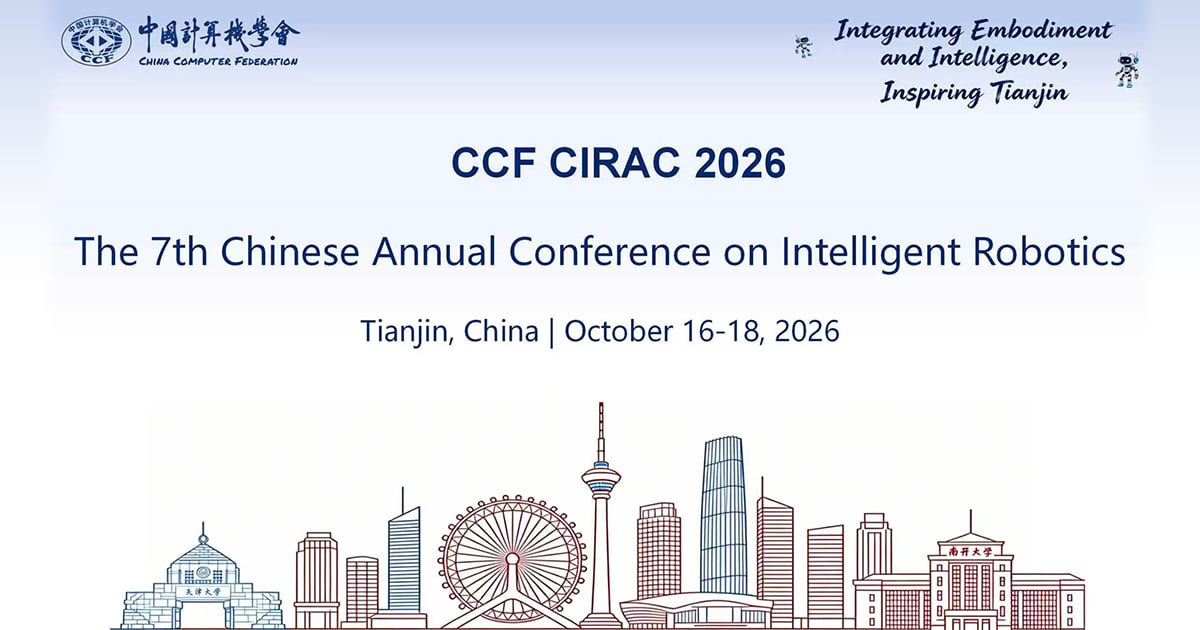
Tianjin, China
The China Annual Conference on Intelligent Robotics is an important nationwide academic conference in the field of intelligent robotics. Under the theme of “Integrating Embodiment and Intelligence, Inspiring Tianjin”, this year’s conference upholds the philosophy of “innovation-driven development and industry–academia integration.” Centered on embodied intelligence and the deep integration of artificial intelligence with robotics, it focuses on cutting-edge directions including service robots, industrial robots, intelligent interaction, human–robot collaboration, and autonomous control. The conference will feature extensive exchanges and discussions on the fundamental theories, key technologies, and innovative applications of intelligent robotics, with the goal of building a full-chain academic exchange platform spanning theoretical research, technological development, and industrial application. It will further promote the deep integration of industry, academia, research, and application, and support the independent innovation of China’s intelligent robotics technologies and the high-quality development of the industrial ecosystem.
Call for papers—Topics include but are not limited to the following:
- Large models for robotics.
- Embodied intelligence for robots.
- 3D vision.
- Robotics and digital twins.
- Robot operating systems and software.
- Developmental learning for robot intelligence.
- Marine robots.
- Interactive cognition.
- Collaborative robots.
- Intelligent perception and sensing for robots.
- Natural human–robot interaction technologies.
- Autonomous navigation technologies for robots.
- Collaborative technologies for unmanned swarms.
- Artificial intelligence and cloud robotics technologies.
- Robot safety technologies.
- Software-defined robotics.
- Brain-controlled robots.
- Bionic and novel-concept robots.
- Advanced industrial robots.
- Medical and service robots.
- Emergency rescue robots.
- Other robotics-related technologies.
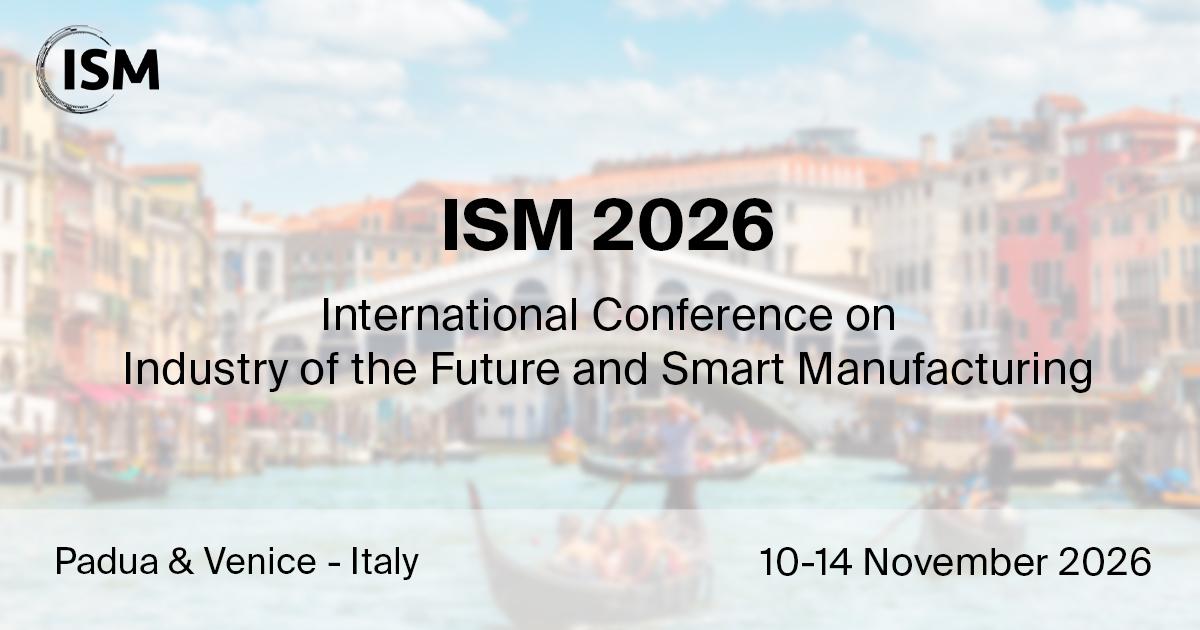
Padua & Venice, Italy
The International Conference on Industry of the Future and Smart Manufacturing (ISM) is a yearly open forum fostering the smart culture and exploring the transformative impact of digital technologies characterizing the fourth industrial revolution across the full breadth of economic sectors.
The manufacturing community is leading a series of world-class breakthroughs driven by the convergence of physical and digital spaces, operational excellence and human–automation symbiosis that are intimately impacting the profile and behavior of socio-technical ecosystems at all levels of public and private sectors.
To support this transition, ISM promotes the cross-fertilization of multidisciplinary knowledge, bringing together a global community of eminent academics, research innovators, professionals, leaders and policymakers committed to building more efficient, agile, safe, sustainable and ethical systems; encourages the dissemination of the latest scientific advances, research results and industrial stories to strengthen the theoretical base of Industry 4.0/5.0; and provides a stimulating ground for business-to-science cooperation opportunities.
Topics & Tracks
Authors are invited to submit a regular or short paper on the following topics. Papers dealing with other topics relevant to Industry of the Future and Smart Manufacturing are also welcome.
TOPICS
- Additive Manufacturing
- AI-enhanced Manufacturing
- Autonomous production
- Big Data Analytics in Manufacturing and Logistics
- Blockchain for Manufacturing and Logistics
- Cloud Computing
- Cyber Physical Production Systems
- Cyber Security
- Digital Twins
- Economics & Business Models
- Industrial Engineering Education 4.0
- Ergonomics and Social Factor
- Human–Machine Interaction
- Industrial Internet of Things
- Smart and Digital Supply Chains
- Maintenance and Lifecycle Management
- Manufacturing Technologies
- Product & Process Design
- Production Systems and Supply Network Engineering
- Project and Risk Management
- Quality Management & Assurance
- Robotics in Industry
- Occupational Health & Safety
- Simulation in Production and Logistics
- Smart Operators and Human-centric Systems
- Sustainability-oriented production
- VR/AR Applications in Industry
APPLICATION AREAS
- Agriculture, Food, Drinks & Tobacco Industry
- Biotech, Pharmaceutical & Cosmetic Product Industry
- Chemical Industry
- Commerce & Finance
- Construction Industry
- Education Sector
- Electrical and Electronic Engineering Industries
- Healthcare Sector
- Manufacturing & Production
- Mechanical Engineering Industry
- Oil & Gas Industry
- Public service
- Raw materials, metals, minerals and forest-based industries
- Telecommunication Industry
- Textiles, fashion and creative industries
- Tourism Industry
- Transport equipment manufacturing
- Transportation & Shipping Industry
- Utilities Industry
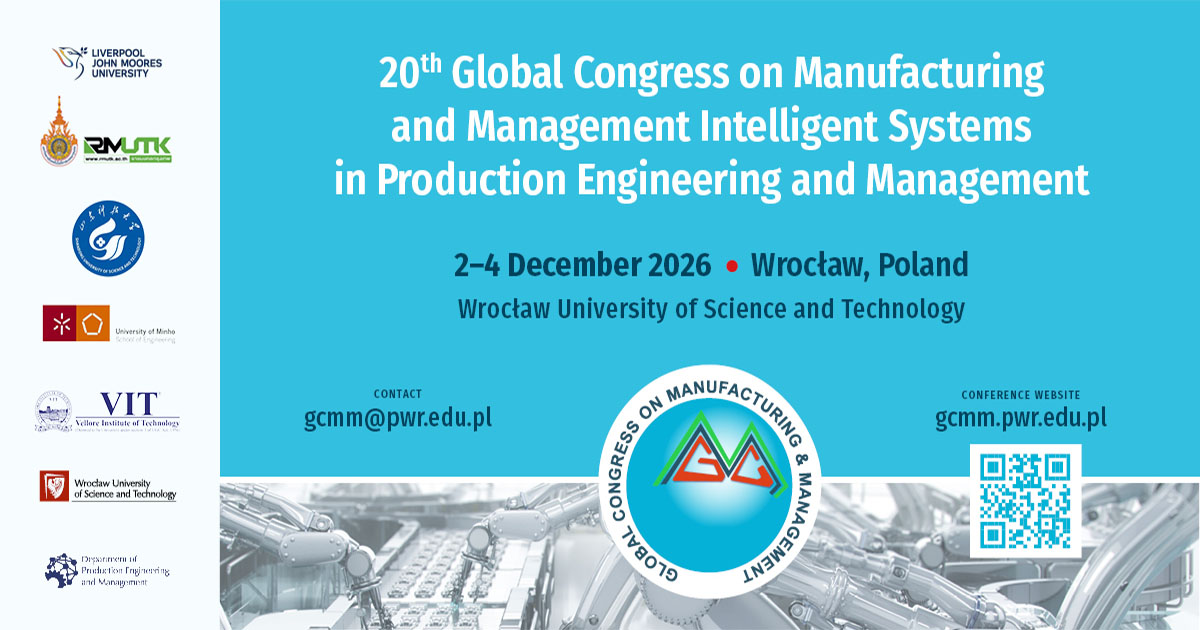
Wrocław, Poland
Conference
About GCMM 2026
The Global Congress on Manufacturing and Management (GCMM) is a non-profit organization governed by the GCMM Board, comprising one or two representatives from academia and industry from each participating country. Currently, GCMM brings together members from twenty-two countries worldwide.
The Congress serves as an international platform for collaboration among leading researchers and industrial partners, enabling the exchange of knowledge, experience, and perspectives on the dynamic changes taking place in manufacturing and production management. This thematic focus is of key importance for the development and competitiveness of national economies, particularly in the context of globalization, digital transformation, and sustainable development.
Traditionally, GCMM conferences have been organized on a biennial basis; however, due to growing interest—in recent years each edition has attracted more than 1,000 participants, mainly from Asian countries—the events are now held annually. GCMM has consistently attracted high-quality research contributions and continues to serve as a central hub where global manufacturing research knowledge is integrated with industrial strategy in a globalized market.
Recent editions of GCMM, held in India (2025), Thailand (2024), Malaysia (2023), New Zealand (2022), the United Kingdom (2021), Australia (2018), China (2016), India (2014), New Zealand (2012), and Thailand (2010), were highly successful and attracted participants from over 25 countries. It is therefore a great honor for us to host the 20th anniversary edition of the Congress in Poland, at Wrocław University of Science and Technology.
Topics
Production Engineering and Management
- Production Systems Management and Maintenance;
- Application of Artificial Intelligence Methods in Production Management;
- Quality Management;
- Lean Management;
- Industry 4.0 and Industry 5.0;
- Modeling, Simulation, and Design;
- Knowledge Management and Decision-Support Systems in Production;
- Supply Chain Management;
- Reliability and Risk Assessment in Production Systems;
- Green Production and Circular Economy;
- Human Aspects in Industry;
- Project Management.
Advanced Machining
- Manufacturing Technology and System Engineering;
- Machining and Forming of Advanced Materials;
- Sustainable Machining;
- Advanced Machining Systems;
- Cutting-Tool Engineering and Management;
- Advanced Abrasive Technology;
- Water Jet Technology Machining;
- CAD/CAM/CAE;
- Modeling and Simulation;
- Laser Machining Technology.
Advanced Material and Forming
- Additive Manufacturing;
- Advanced Processing Engineering;
- Material Science and Engineering;
- Material Processing and Technology;
- Surface-Coating Technology;
- Lightweight Materials;
- Biomaterials and Tissue Engineering;
- Biomanufacturing and Biomechanics;
- Geopolymer Materials;
- Advanced Aerospace Materials and Composites.
Intelligent and Autonomous Robotics
- Mechatronics Engineering and Design;
- Autonomous Mobile Robots (AMRs)/Automatic Guided Vehicles (AGVs);
- Industrial Robots and Cobots;
- Digital Twin Technology;
- Cyber–Physical Systems (CPSs);
- Robotic Operation Systems (ROSs);
- Fuzzy Logic, Artificial Neural Networks (ANNs), and Genetic Algorithms (GAs);
- Augmented Reality and Virtual Reality;
- Control and Supervision.
Optimization, Control and Quantum Computing
- Quantum Optimization in Operational Research;
- Classification with Quantum Neural Networks;
- Hybrid Approaches in Quantum Machine Learning;
- Compilation Techniques for Gate-Based Superconducting Quantum Computers;
- Generation of True Quantum Random Numbers;
- Intelligent Control of Production Systems;
- Artificial Intelligence, Machine Learning and Deep Learning;
- Scheduling and Transport Problems.
Compliance, Regulatory and Quality Management Systems in the Life Sciences Industry
- Automated Platforms for Quality Assurance Management (eQMSs);
- Automated Platforms for Laboratories (LIMSs);
- AI in Supporting Production Sites in Compliance Areas;
- Information Security Management: Regulations for the Life Sciences Industry;
- Cybersecurity in the Life Sciences Industry;
- ALCOA++ Requirements in Practice in the Life Sciences Industry;
- Automation Testing Usage in Computer-Aided Systems for Validation in Life Sciences;
- Automated Qualification and Validation Processes in Life Sciences;
- Mechatronics Engineering and Design.
Life Science Industry: Production
- Life Science Products Technology Design and Development;
- Design of Manufacturing Processes—Use of New Tools;
- Technological Specificity of Manufacturing Single-Use and Reusable Devices;
- Scaling Up Life Science Products Manufacturing—Technological Challenges;
- Manufacturing/Application of Active Devices and Implants;
- Integration of Product and Process Design (DfM/DfA);
- Micro- and Nanotechnologies in Biomedical Engineering and Life Sciences;
- Advanced Manufacturing and Packaging Technologies for Life Sciences;
- IT Systems Supporting Design and Manufacturing in Life Sciences;
- Mechatronics Engineering and Design;
- Control and Supervision;
- Cyber–Physical Systems (CPSs);
- Robotic Operation Systems (ROSs) in Medicine and the Life Sciences Industry;
- Cybersecurity in OT Systems;
- Industrial Robots and Cobots;
- Fuzzy Logic, Artificial Neural Networks (ANNs), and Genetic Algorithms (GAs);
- Augmented Reality and Virtual Reality.

Geneva, Switzerland
The series of annual ARCI Winter IFSA conferences have been launched to provide a forum for open discussion of state-of-the-art technologies related to control, automation, robotics, communication and data analysis—the main components of Industry 4.0—and the new, emerging technologies of Industry 5.0. The ARCI’ 2027 conference will incorporate four symposiums covering research and development across the fields of automation, robotics, communication and data analysis and united by the Industry 4.0/5.0/6.0 challenges. The ARCI’ 2027 conference is organized by the IFSA—one of the major professional, non-profit associations serving the sensor industry and academy since 1999.
Main Topics:
Industry 4.0/5.0/6.0;
Automation;
Robotics;
Communications.
Hong Kong, China
New material technology is one of the significant symbols of today's high-tech revolution. Most high-tech development is on the premise of breakthroughs in new materials technology. Material is the foundation of strategic emerging industries. It plays an important role in the high-tech industry and it is the impetus of promoting technological progress. Every major technological development and successful development of new products is inseparable from the discovery and application of new materials. In order for new material to be applied, they must undergo careful preparation and manufacturing. There is no doubt that manufacturing is critical in every walk of life. With rapid development computer technology, communications technology and network technology, the traditional manufacturing process has evolved to intelligent manufacturing which is more intelligent, and has more precision and efficiency.
Call for Papers
ICMIM welcomes manuscripts and abstracts on materials and intelligent manufacturing. Topics of interest include, but are not limited to, the following:
|
Track 1. Advanced Materials and Materials Engineering |
Track 2. Advanced Manufacturing Processes and Technologies |
| ● Structural and lightweight materials; ● Functional and smart materials; ● Composite and hybrid materials; ● Nanomaterials and biomaterials; ● Energy and environmental materials; ● Surface and interface engineering; ● Materials characterization and testing; ● Computational materials design. |
● Materials processing and forming; ● Additive manufacturing and 3D printing; ● Precision and micro/nano manufacturing; ● Joining, welding and surface modification; ● Laser and advanced manufacturing; ● Process optimization and quality control; ● Sustainable manufacturing technologies; ● Advanced manufacturing systems. |
|
Track 3. Intelligent Manufacturing and Digital Technologies |
Track 4. Mechanical Systems and Intelligent Equipment |
| ● Artificial intelligence for manufacturing; ● Digital twin and cyber–physical systems; ● Industrial Internet of Things (IIoT); ● Robotics and intelligent automation; ● Intelligent sensing and monitoring; ● Computer vision and intelligent inspection; ● Human–robot collaboration; ● Cloud and edge manufacturing. |
● Mechanical design and optimization; ● Mechatronics and intelligent equipment; ● Dynamics, vibration and control; ● Tribology, reliability and maintenance; ● CAD/CAM/CAE technologies; ● Intelligent control systems; ● Precision engineering; ● Advanced electromechanical systems. |
|
Track 5. Industrial Engineering and Manufacturing Systems |
Track 6. Sustainable Manufacturing and Emerging Technologies |
| ● Manufacturing system engineering; ● Production planning and scheduling; ● Industrial engineering and operations management; ● Quality engineering and management; ● Supply chain and logistics; ● Predictive maintenance and asset management; ● Data-driven manufacturing analytics; ● Smart factory and production optimization. |
● Green and low-carbon manufacturing; ● Circular economy and remanufacturing; ● Energy-efficient manufacturing; ● Sustainable materials and production; ● Industry 5.0; ● Intelligent factories; ● Emerging manufacturing technologies; ● Future trends in materials and manufacturing. |
