



Journal Menu
► ▼ Journal Menu-
- Bioengineering Home
- Aims & Scope
- Editorial Board
- Reviewer Board
- Topical Advisory Panel
- Instructions for Authors
- Special Issues
- Topics
- Sections & Collections
- Article Processing Charge
- Indexing & Archiving
- Editor’s Choice Articles
- Most Cited & Viewed
- Journal Statistics
- Journal History
- Journal Awards
- Conferences
- Editorial Office
Journal Browser
► ▼ Journal BrowserNeed Help?
Announcements
29 November 2022
Editorial Board Members from Bioengineering Featured among the World’s Top 2% Scientists in 2022
Scientists at Stanford have recently published an update of the list of the top 2% most widely cited scientists—the World’s Top 2% Scientists.
The time node of the statistical data of this list is from 1960 to 2022, and it is divided into two lists: "Lifetime Scientific Influence Ranking" and "2022 Annual Scientific Influence Ranking". The "Lifetime Scientific Influence Ranking" counts the comprehensive influence performance of scientists during their careers, and the "2022 Annual Influence Ranking" focuses on highlighting the academic influence of scientists in the previous year. This ranking, considered the most prestigious worldwide, is based on the bibliometric information contained in the Scopus database and includes more than 200,000 researchers from the more than 10 million scientists considered to be active worldwide, with 22 scientific fields and 176 subfields taken into account.
We are pleased to share that 59 Editorial Board Members from MDPI’s Bioengineering (ISSN: 2306-5354) were featured in the list of the World’s Top 2% Scientists in 2022.
|
Name |
Affiliation |
|
Dr. Anthony Atala |
Medical Center Boulevard, USA |
|
Prof. Dr. Abhay Pandit |
National University of Ireland, Ireland |
|
Prof. Dr. Ali Zarrabi |
Istinye University, Turkey |
|
Prof. Dr. Bin Zheng |
University of Oklahoma, USA |
|
Prof. Dr. Jason A. Burdick |
University of Pennsylvania, USA |
|
Prof. Dr. Charles Antzelevitch |
Thomas Jefferson University, USA |
|
Prof. Dr. Christoph Herwig |
Vienna University of Technology, Austria |
|
Prof. Dr. Christoph Wittmann |
1. Saarland University, Germany; 2. Technische Universät Braunschweig, Germany; 3. Technische Universät Braunschweig, Germany |
|
Prof. Dr. Chandan K. Sen |
Indiana University, USA |
|
Prof. Dr. Qinghua Cui |
Peking University, China |
|
Dr. Danièle Noël |
University of Montpellier, France |
|
Prof. Dr. Danny Bluestein |
Stony Brook University, USA |
|
Prof. Dr. Ziad El Rassi |
Oklahoma State University, USA |
|
Prof. Dr. Elazer R. Edelman |
Massachusetts Institute of Technology, USA |
|
Prof. Dr. Fengxian Xin |
Xi'an Jiaotong University, China |
|
Prof. Dr. Fergal J. O'Brien |
Royal College of Surgeons in Ireland (RCSI), Dublin, Ireland |
|
Prof. Dr. Franz Konstantin Fuss |
University of Bayreuth, Germany |
|
Prof. Dr. Guy M. Genin |
Washington University in St. Louis, USA |
|
Prof. Dr. Giovanni Esposito |
University of Napoli "Federico II", Italy |
|
Prof. Dr. George J. Christ |
University of Virginia, USA |
|
Prof. Dr. Gary L. Bowlin |
The University of Memphis, USA |
|
Prof. Dr. George A. Truskey |
Duke University, USA |
|
Prof. Dr. Farshid Guilak |
Washington University, USA |
|
Prof. Dr. Anthony Guiseppi-Elie |
1. Anderson University, Anderson; 2. Houston Methodist Research Institute, USA |
|
Prof. Dr. Hala Zreiqat |
The University of Sydney, Australia |
|
Prof. Dr. Giovanni Improta |
University of Naples Federico II, Italy |
|
Prof. Dr. Jan De Boer |
Eindhoven University of Technology, the Netherlands |
|
Prof. Dr. Joyce Y. Wong |
Boston University, USA |
|
Dr. Ke Tang |
Huazhong University of Science & Technology, China |
|
Dr. Subhas C. Kundu |
University of Minho, Portugal |
|
Prof. Dr. Hongen Liao |
Tsinghua University, China |
|
Prof. Dr.Kaili Lin |
Shanghai Jiao Tong University, China |
|
Dr. Yusheng Li |
Central South University, China |
|
Dr. Giorgos Markou |
Hellenic Agricultural Organization-Demeter, Greece |
|
Dr. Martin Koller |
University of Graz, Austria |
|
Dr. Ngan F. Huang |
Stanford University, USA |
|
Prof. Dr. Nikolaos Uzunoglu |
National Technical University of Athens, Greece |
|
Prof. Dr. Angela Panoskaltsis-Mortari |
University of Minnesota, USA |
|
Prof. Dr. Qi Zhang |
Fudan University, China |
|
Prof. Dr. Thomas A. Rando |
Stanford University School of Medicine, USA |
|
Prof. Dr. Reeta Rani Singhania |
National Kaohsiung University of Science and Technology, Taiwan |
|
Prof. Dr. Roderick Melnik |
Wilfrid Laurier University, Canada |
|
Prof. Dr. Ramana Pidaparti |
The University of Georgia, USA |
|
Prof. Dr. Sashwati Roy |
Indiana University, USA |
|
Prof. Dr. Sharon Gerecht |
Duke University, USA |
|
Prof. Dr. Xiaoming He |
University of Maryland, USA |
|
Prof. Dr. Donglu Shi |
University of Cincinnati, USA |
|
Prof. Dr. Ning Sun |
Fudan University, China |
|
Prof. Dr. Tingrui Pan |
University of Science and Technology of China, China |
|
Prof. Dr. Treena Livingston Arinzeh |
New Jersey Institute of Technology, USA |
|
Prof. Dr. David A. Vorp |
University of Pittsburgh, USA |
|
Prof. Dr. Hai Wang |
University of Chinese Academy of Sciences, China |
|
Prof. Dr. Wenguo Cui |
Shanghai Jiao Tong University, China |
|
Dr. Xiaohu Xia |
University of Central Florida, USA |
|
Prof. Dr. Wassana Yantasee |
Oregon Health and Science University, USA |
|
Prof. Dr. Yadong Wang |
Cornell University, Ithaca, USA |
|
Prof. Dr. Chengfei Zhang |
The University of Hong Kong, China |
|
Prof. Dr. Zhenhua Hu |
Chinese Academy of Sciences, China |
|
Prof. Dr. Zhijian Pei |
Texas A&M University, USA |
The latest rankings reflect the significant influence and research excellence of the scientists, who are committed to furthering their knowledge for the benefit of the world.
We would like to congratulate our Editorial Board Members on their excellent achievement and thank them for their immense contribution to the scientific progression and development of Bioengineering.
28 November 2022
Bioengineering | Issue Cover Papers in 2021
It is our pleasure to invite you to read the issue cover papers from the Bioengineering (ISSN: 2306-5354) journal published in 2021. The selected papers are listed below:
1. “Electrospun Fiber Scaffolds for Engineering Glial Cell Behavior to Promote Neural Regeneration”
by Devan L. Puhl, Jessica L. Funnell, Derek W. Nelson, Manoj K. Gottipati, and Ryan J. Gilbert
Bioengineering 2021, 8(1), 4; https://doi.org/10.3390/bioengineering8010004
Available online: https://www.mdpi.com/2306-5354/8/1/4
2. “Navigating the Collagen Jungle: The Biomedical Potential of Fiber Organization in Cancer”
by Jonathan N. Ouellette, Cole R. Drifka, Kelli B. Pointer, Yuming Liu, Tyler J Lieberthal, W John Kao, John S. Kuo, Agnes G. Loeffler and Kevin W. Eliceiri
Bioengineering 2021, 8(2), 17; https://doi.org/10.3390/bioengineering8020017
Available online: https://www.mdpi.com/2306-5354/8/2/17
3. “Suitable CO2 Solubility Models for Determination of the CO2 Removal Performance of Oxygenators”
by Benjamin Lukitsch, Paul Ecker, Martin Elenkov, Christoph Janeczek, Christian Jordan, Claus G. Krenn, Roman Ullrich, Margit Gfoehler and Michael Harasek
Bioengineering 2021, 8(3), 33; https://doi.org/10.3390/bioengineering8030033
Available online: https://www.mdpi.com/2306-5354/8/3/33
4. “Octreotide-Targeted Lcn2 siRNA PEGylated Liposomes as a Treatment for Metastatic Breast Cancer”
by Vrinda Gote and Dhananjay Pal
Bioengineering 2021, 8(4), 44; https://doi.org/10.3390/bioengineering8040044
Available online: https://www.mdpi.com/2306-5354/8/4/44
5. “The Use of Microfabrication Techniques for the Design and Manufacture of Artificial Stem Cell Microenvironments for Tissue Regeneration”
by David H. Ramos-Rodrigue, Sheila MacNeil, Frederik Claeyssens and Ilida Ortega Asencio
Bioengineering 2021, 8(5), 50; https://doi.org/10.3390/bioengineering8050050
Available online: https://www.mdpi.com/2306-5354/8/5/50
6. “Regenerative Strategies in Cleft Palate: An Umbrella Review”
by Inês Francisco, Anabela Baptista Paula, Bárbara Oliveiros, Maria Helena Fernandes, Eunice Carrilho, Carlos Miguel Marto and Francisco Vale
Bioengineering 2021, 8(6), 76; https://doi.org/10.3390/bioengineering8060076
Available online: https://www.mdpi.com/2306-5354/8/6/76
7. “Electrospun Microfibers Modulate Intracellular Amino Acids in Liver Cells via Integrin β1”
by Tianjiao Huang, John A. Terrell, Jay H. Chung and Chengpeng Chen
Bioengineering 2021, 8(7), 88; https://doi.org/10.3390/bioengineering8070088
Available online: https://www.mdpi.com/2306-5354/8/7/88
8. “Dual Network Composites of Poly(vinyl alcohol)-Calcium Metaphosphate/Alginate with Osteogenic Ions for Bone Tissue Engineering in Oral and Maxillofacial Surgery”
by Lilis Iskandar, Lucy DiSilvio, Jonathan Acheson and Sanjukta Deb
Bioengineering 2021, 8(8), 107; https://doi.org/10.3390/bioengineering8080107
Available online: https://www.mdpi.com/2306-5354/8/8/107
9. “Improved Repopulation Efficacy of Decellularized Small Diameter Vascular Grafts Utilizing the Cord Blood Platelet Lysate”
by Panagiotis Mallis, Dimitrios P. Sokolis, Michalis Katsimpoulas, Alkiviadis Kostakis, Catherine Stavropoulos-Giokas and Efstathios Michalopoulos
Bioengineering 2021, 8(9), 118; https://doi.org/10.3390/bioengineering8090118
Available online: https://www.mdpi.com/2306-5354/8/9/118
10. “Operative Workflow from CT to 3D Printing of the Heart: Opportunities and Challenges”
by Michele Bertolini, Marco Rossoni and Giorgio Colombo
Bioengineering 2021, 8(10), 130; https://doi.org/10.3390/bioengineering8100130
Available online: https://www.mdpi.com/2306-5354/8/10/130
11. “Two-Stage Polyhydroxyalkanoates (PHA) Production from Cheese Whey Using Acetobacter pasteurianus C1 and Bacillus sp. CYR1”
by Young-Cheol Chang, Motakatla Venkateswar Reddy, Kazuma Imura, Rui Onodera, Natsumi Kamada and Yuki Sano
Bioengineering 2021, 8(11), 157; https://doi.org/10.3390/bioengineering8110157
Available online: https://www.mdpi.com/2306-5354/8/11/157
12. “Mechanisms Driving Microbial Community Composition in Anaerobic Co-Digestion of Waste-Activated Sewage Sludge”
by Jan Torsten Jeske and Claudia Gallert
Bioengineering 2021, 8(12), 197; https://doi.org/10.3390/bioengineering8120197
Available online: https://www.mdpi.com/2306-5354/8/12/197
28 November 2022
Bioengineering | Highly Cited Papers in 2021
It is our pleasure to invite you to read the highly cited papers from Bioengineering (ISSN: 2306-5354), published in 2021. The selected papers are listed below:
1. “Collagen in Wound Healing”
by Shomita S. Mathew-Steiner, Sashwati Roy and Chandan K. Sen
Bioengineering 2021, 8(5), 63; https://doi.org/10.3390/bioengineering8050063
Available online: https://www.mdpi.com/2306-5354/8/5/63
2. “High-Throughput Screening Platforms in the Discovery of Novel Drugs for Neurodegenerative Diseases”
by Hasan Aldewachi, Radhwan N. Al-Zidan, Matthew T. Conner and Mootaz M. Salman
Bioengineering 2021, 8(2), 30; https://doi.org/10.3390/bioengineering8020030
Available online: https://www.mdpi.com/2306-5354/8/2/30
3. “Natural Biomaterials and Their Use as Bioinks for Printing Tissues”
by Claire Benwood,Josie Chrenek,Rebecca L. Kirsch, Nadia Z. Masri, Hannah Richards, Kyra Teetzen, and Stephanie M. Willerth
Bioengineering 2021, 8(2), 27; https://doi.org/10.3390/bioengineering8020027
Available online: https://www.mdpi.com/2306-5354/8/2/27
4. “COVID-19 Biomarkers and Advanced Sensing Technologies for Point-of-Care (POC) Diagnosis”
by Ernst Emmanuel Etienne, Bharath Babu Nunna, Niladri Talukder, Yudong Wang and Eon Soo Lee
Bioengineering 2021, 8(7), 98; https://doi.org/10.3390/bioengineering8070098
Available online: https://www.mdpi.com/2306-5354/8/7/98
5. “Characterization of Gelatin Hydrogels Cross-Linked with Microbial Transglutaminase as Engineered Skeletal Muscle Substrates”
by Divya Gupta, Jeffrey W. Santoso and Megan L. McCain
Bioengineering 2021, 8(1), 6; https://doi.org/10.3390/bioengineering8010006
Available online: https://www.mdpi.com/2306-5354/8/1/6
6. “Bioremediation of Agricultural Soils Polluted with Pesticides: A Review”
by Carla Maria Raffa and Fulvia Chiampo
Bioengineering 2021, 8(7), 92; https://doi.org/10.3390/bioengineering8070092
Available online: https://www.mdpi.com/2306-5354/8/7/92
7. “An Update on Nickel-Titanium Rotary Instruments in Endodontics: Mechanical Characteristics, Testing and Future Perspective—An Overview”
by Alessio Zanza, Maurilio D’Angelo, Rodolfo Reda, Gianluca Gambarini, Luca Testarelli and Dario Di Nardo
Bioengineering 2021, 8(12), 218; https://doi.org/10.3390/bioengineering8120218
Available online: https://www.mdpi.com/2306-5354/8/12/218
8. “The Role of Collagen-Based Biomaterials in Chronic Wound Healing and Sports Medicine Applications”
by David A. Yeung and Natalie H. Kelly
Bioengineering 2021, 8(1), 8; https://doi.org/10.3390/bioengineering8010008
Available online: https://www.mdpi.com/2306-5354/8/1/8
9. “Navigating the Collagen Jungle: The Biomedical Potential of Fiber Organization in Cancer”
by Jonathan N. Ouellette, Cole R. Drifka, Kelli B. Pointer, Yuming Liu, Tyler J Lieberthal, W John Kao, John S. Kuo, Agnes G. Loeffler and Kevin W. Eliceiri
Bioengineering 2021, 8(2), 17; https://doi.org/10.3390/bioengineering8020017
Available online: https://www.mdpi.com/2306-5354/8/2/17
10. “3D Printing of Thermoresponsive Hydrogel Laden with an Antimicrobial Agent towards Wound Healing Applications”
by Martyna Nizioł, Justyna Paleczny, Adam Junka, Amin Shavandi, Anna Dawiec-Liśniewska and Daria Podstawczyk
Bioengineering 2021, 8(6), 79; https://doi.org/10.3390/bioengineering8060079
Available online: https://www.mdpi.com/2306-5354/8/6/79
28 November 2022
Bioengineering | Interview with Dr. Dong-Wook Han
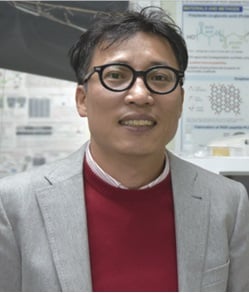
Name: Dr. Dong-Wook Han
Email: nanohan@pusan.ac.kr
Article: “Advanced Techniques for Skeletal Muscle Tissue Engineering and Regeneration”
We had the pleasure of speaking with Dr. Dong-Wook Han, author of the recently published paper "Advanced Techniques for Skeletal Muscle Tissue Engineering and Regeneration", to discuss the recent research trends in scaffold fabrication for skeletal muscle tissue regeneration using advanced techniques, such as electrospinning and 3D bioprinting.
Dr. Dong-Wook Han works as an Professor at the Department of Optics and Mechatronics Engineering, BK21+ Nano-Integrated Cogno-Mechatronics Engineering, College of Nanoscience & Nanotechnology, Pusan National University. We hope you enjoy the interview!
- Congratulations on your published paper. Can you give a bit of background about yourself and what your research areas are?
I obtained my Ph.D. degree in the graduate program of biomedical engineering from Yonsei University, Seoul, South Korea in 2004. After undertaking a postdoctoral fellowship at the Institute for Frontier Medical Sciences, Kyoto University, Japan for two and a half years, I joined the faculty of the Department of Optics and Mechatronics Engineering at Pusan National University. Since 2008, I have authored or co-authored over 180 scientific publications, possessed over 20 international and domestic patents, and joined several book chapters. My research interest concerns BT-NT convergence, especially tissue engineering and biomedical imaging with smart nanobiomaterials, development of artificial tissues, organs and medical devices by 3D printing, and assessment of nanomaterials toxicity (nanotoxicity).
- What made you decide to publish a bioengineering article? Why did you choose Bioengineering?
As a researcher in the field of biomedical engineering, I have been conducting tissue engineering research for the production of artificial structures that can replace various body parts such as bones, nerves, skin, and skeletal muscle based on diverse biomaterials for the past 20 years. To this end, it is essential to use advanced technologies such as electrospinning or 3D bioprinting to transform multifunctional nanobiomaterials into biocompatible and bioactive specific scaffolds. In recent years, I have been carrying out research with an emphasis on the creation of functional skeletal muscle. While I was thinking of writing a review paper to share and communicate with researchers in related fields about comparisons between other results and future prospects based on some experiences and know-how accumulated so far, I came across the introduction of the Special Issue of Bioengineering by chance, which led me to the decision to submit a paper here because I was convinced that it best suited my thoughts and intentions.
- What was your experience publishing with Bioengineering?
In a word, it was one of the best ever. Most journals and publishers operate their own characteristic submission system, but it is felt that the effectiveness of the system, although speed would be of great importance, depends on the accuracy of the review process, transparency, and the quality of review comments. In this respect, my experience publishing with Bioengineering is a so-called strong recommendation.
- Was it important to you that the journal is open access?
Whether a journal is open access or not is one of the most important factors when choosing a journal to submit my paper to. As mentioned above, review papers can be a valuable means to share many years of research experience and knowledge in a specific field with interested people as well as all researchers regardless of field, and open access is considered to be a basic prerequisite for this.
- What do you hope that readers will get from your paper?
The subject matter of my review paper dealt with advanced techniques such as electrospinning and 3D bioprinting using different types of polymers for skeletal muscle tissue engineering and regeneration. If relevant or interested researchers read my paper, I hope that it will be of some help in understanding the state-of-the-art research trend in various technology for skeletal muscle tissue engineering as well as in setting the direction of research or obtaining necessary ideas for your research.
17 November 2022
Recruiting Reviewer Board Members for Bioengineering
We are now recruiting Reviewer Board Members for Bioengineering (ISSN: 2306-5354, IF: 5.046). If you are an active researcher in the field and are passionate about promoting the publication of cutting-edge research, please contact the Bioengineering Editorial Office (bioengineering@mdpi.com) to apply.
Bioengineering is an international, peer-reviewed, open access journal on the science and technology of bioengineering, published monthly online by MDPI. Bioengineering has been indexed within Scopus, SCIE (Web of Science), PubMed, PMC, CAPlus / SciFinder, and many other databases. The ambitions and scope of this journal are further described at the following link: https://www.mdpi.com/journal/bioengineering/about.
Reviewer Board Members’ benefits include:
- An announcement of your position on the journal’s Reviewer Board;
- A discount code for each review if a comprehensive and timely report is provided. These vouchers can be used for future publications in all MDPI journals;
- A personalized reviewer certificate;
- A flexible workload that can be tailored to your schedule;
- Recognition of your peer review and editorial contributions to our journal.
If you would like to apply for this role, please send a short CV to the Bioengineering Editorial Office (bioengineering@mdpi.com). We look forward to hearing from you.
Bioengineering Editorial Office
17 November 2022
Recruiting Topical Advisory Panel Members for Bioengineering
We are currently recruiting Topical Advisory Panel Members for Bioengineering (ISSN: 2306-5354, IF: 5.046). Your responsibility would be to regularly provide support to Guest Editors and Editorial Board Members. More information regarding this is available at the following link: https://www.mdpi.com/editors#Supporting_Editor_Responsibilities. The aims and scope of the journal can be found on the following website: https://www.mdpi.com/journal/bioengineering/about.
The benefits of becoming a Topical Advisory Panel Member include the following:
- The opportunity to publish one paper in Bioengineering per year at a discount, as well as potential discounts for additional papers you invite;
- A certificate of recognition of your position;
- Additional sponsorships for conferences organized by Topical Advisory Panel Members of Bioengineering;
- Travel grants for conferences that you attend or organize.
The main responsibilities of new members of the Topical Advisory Panel are as follows:
- Providing regular reviews of manuscripts;
- Setting up at least one Special Issue (SI) in partnership with a senior researcher within two years of your appointment, with the topic of the proposal being within the scope of Bioengineering;
- Providing a strategy plan for the SI, including assisting in preparing the Special Issue’s/topic’s title, aim and scope, summary, and keywords, as well as soliciting papers for and promoting the SI;
- Promoting our journal at conferences, social media, and other relevant platforms.
To qualify as a Topical Advisory Panel Member, applicants must:
- Have expertise and experience in a field related to the journal;
- Have published at least six papers in the last five years as a first author or a corresponding author;
- Currently hold an independent research position in academia or a government institute.
Each year, members’ performance is evaluated, and outstanding members are promoted to the Editorial Board by the Editor-in-Chief. Please contact the Editorial Office (bioengineering@mdpi.com) or visit the following link to submit your application: https://www.mdpi.com/journal/bioengineering/topical_advisory_panel_application.
Bioengineering Editorial Office
17 November 2022
Recruiting Editorial Board Members for Bioengineering
Bioengineering (ISSN: 2306-5354, IF: 5.046) is currently recruiting prestigious scholars from around the world to join our Editorial Board for the following five Sections:
- “Regenerative Engineering”;
- “Biochemical Engineering”;
- “Biosignal Processing”;
- “Biomedical Engineering and Biomaterials”;
- “Nanotechnology Applications in Bioengineering”.
Bioengineering is an international, peer-reviewed, open access journal published monthly online by MDPI. It publishes original research papers, comprehensive reviews, communications and case reports. All aspects of bioengineering are welcomed, from theoretical concepts to education and applications.
The main responsibilities of Editorial Board Members are as follows:
- Pre-checking and making decisions for several manuscripts, based on your area of expertise;
- Acting as, or recommending, a Guest Editor for a Special Issue on a topic related to your research interests;
- Promoting Bioengineering and increasing its visibility on related academic social media.
The benefits of becoming an Editorial Board Member include the following:
- The opportunity to publish one paper per year free of charge in Bioengineering, as well as the opportunity to receive certain discounts for papers invited from your scientific network;
- A certificate recognizing you as an Editorial Board Member of Bioengineering;
- Bioengineering may offer sponsorship for conferences organized by you;
- Bioengineering may offer travel grants of CHF 300–500 per year for conferences that you attend or organize.
To apply for this position (in one of our Sections), recommend potential candidates, or request further information, please contact the Bioengineering Editorial Office (bioengineering@mdpi.com) with the following two files attached:
- A full academic CV (the applicants should have a good standing in the research area of bioengineering, and excellent editorial experience);
- A short cover letter that details your interest and enthusiasm for the position.
Bioengineering Editorial Office
21 October 2022
Bioengineering | Issue Cover Papers in 2020
It is our pleasure to invite you to read the issue cover papers from Bioengineering (ISSN: 2306-5354), published in 2020. The selected papers are listed below:
1. “MMP24 as a Target of YAP Is a Potential Prognostic Factor in Cancer Patients”
by Wataru Sugimoto, Katsuhiko Itoh, Hiroaki Hirata, Yoshinori Abe, Takeru Torii, Yasumasa Mitsui, Yemima Budirahardja, Nobuyuki Tanaka and Keiko Kawauchi
Bioengineering 2020, 7(1), 18; https://doi.org/10.3390/bioengineering7010018
Available online: https://www.mdpi.com/2306-5354/7/1/18
2. “Collagen Fibril Density Modulates Macrophage Activation and Cellular Functions during Tissue Repair”
by Jiranuwat Sapudom, Walaa Kamal E. Mohamed, Anna Garcia-Sabaté, Aseel Alatoom, Shaza Karaman, Nikhil Mahtani and Jeremy C. M. Teo
Bioengineering 2020, 7(2), 33; https://doi.org/10.3390/bioengineering7020033
Available online: https://www.mdpi.com/2306-5354/7/2/33
3. “Coupling of Fibrin Reorganization and Fibronectin Patterning by Corneal Fibroblasts in Response to PDGF BB and TGFβ1”
by Miguel Miron-Mendoza, Dalia Vazquez, Nerea García-Rámila, Hikaru R. Ikebe and W. Matthew Petroll
Bioengineering 2020, 7(3), 89; https://doi.org/10.3390/bioengineering7030089
Available online: https://www.mdpi.com/2306-5354/7/3/89
4. “Encapsulation of Hydrophobic Drugs in Shell-by-Shell Coated Nanoparticles for Radio—and Chemotherapy—An In Vitro Study”
by Stefanie Klein, Tobias Luchs, Andreas Leng, Luitpold V. R. Distel, Winfried Neuhuber and Andreas Hirsch
Bioengineering 2020, 7(4), 126; https://doi.org/10.3390/bioengineering7040126
Available online: https://www.mdpi.com/2306-5354/7/4/126
21 October 2022
Bioengineering | Highly Cited Papers in 2020
It is our pleasure to invite you to read the highly cited papers from Bioengineering (ISSN: 2306-5354), published in 2020. The selected papers are listed below:
1. “Up-Flow Anaerobic Sludge Blanket (UASB) Technology for Energy Recovery: A Review on State-of-the-Art and Recent Technological Advances”
by Matia Mainardis, Marco Buttazzoni and Daniele Goi
Bioengineering 2020, 7(2), 43; https://doi.org/10.3390/bioengineering7020043
Available online: https://www.mdpi.com/2306-5354/7/2/43
2. “Progress in Delivery of siRNA-Based Therapeutics Employing Nano-Vehicles for Treatment of Prostate Cancer”
by Milad Ashrafizadeh, Kiavash Hushmandi, Ebrahim Rahmani Moghadam, Vahideh Zarrin, Sharareh Hosseinzadeh Kashani, Saied Bokaie, Masoud Najafi, Shima Tavakol, Reza Mohammadinejad, Noushin Nabavi, Chia-Ling Hsieh, Atefeh Zarepour, Ehsan Nazarzadeh Zare, Ali Zarrabi, and Pooyan Makvandi
Bioengineering 2020, 7(3), 91; https://doi.org/10.3390/bioengineering7030091
Available online: https://www.mdpi.com/2306-5354/7/3/91
3. “Sol-Gel Derived Hydroxyapatite Coatings for Titanium Implants: A Review”
by Alaa Jaafar, Christine Hecker, Pál Árki and Yvonne Joseph
Bioengineering 2020, 7(4), 127; https://doi.org/10.3390/bioengineering7040127
Available online: https://www.mdpi.com/2306-5354/7/4/127
4. “Green and Cost-Effective Synthesis of Metallic Nanoparticles by Algae: Safe Methods for Translational Medicine”
by Bushra Uzair, Ayesha Liaqat, Haroon Iqbal, Bouzid Menaa, Anam Razzaq, Gobika Thiripuranathar, Nosheen Fatima Rana and Farid Menaa
Bioengineering 2020, 7(4), 129; https://doi.org/10.3390/bioengineering7040129
Available online: https://www.mdpi.com/2306-5354/7/4/129
5. “Nanocellulose-Based Inks for 3D Bioprinting: Key Aspects in Research Development and Challenging Perspectives in Applications—A Mini Review”
by Xiaoju Wang, Qingbo Wang and Chunlin Xu
Bioengineering 2020, 7(2), 40; https://doi.org/10.3390/bioengineering7020040
Available online: https://www.mdpi.com/2306-5354/7/2/40
6. “3D Bioprinting Strategies for the Regeneration of Functional Tubular Tissues and Organs”
by Hun-Jin Jeong, Hyoryung Nam, Jinah Jang and Seung-Jae Lee
Bioengineering 2020, 7(2), 32; https://doi.org/10.3390/bioengineering7020032
Available online: https://www.mdpi.com/2306-5354/7/2/32
7. “Innovative Human Three-Dimensional Tissue-Engineered Models as an Alternative to Animal Testing”
by Patrick Bédard, Sara Gauvin, Karel Ferland, Christophe Caneparo, Ève Pellerin, Stéphane Chabaud and Stéphane Bolduc
Bioengineering 2020, 7(3), 115; https://doi.org/10.3390/bioengineering7030115
Available online: https://www.mdpi.com/2306-5354/7/3/115
8. “Economic Perspectives of Biogas Production via Anaerobic Digestion”
by Arpit H. Bhatt and Ling Tao
Bioengineering 2020, 7(3), 74; https://doi.org/10.3390/bioengineering7030074
Available online: https://www.mdpi.com/2306-5354/7/3/74
9. “Collagen Fibril Density Modulates Macrophage Activation and Cellular Functions during Tissue Repair”
by Jiranuwat Sapudom, Walaa Kamal E. Mohamed, Anna Garcia-Sabaté, Aseel Alatoom, Shaza Karaman, Nikhil Mahtani and Jeremy C. M. Teo
Bioengineering 2020, 7(2), 33; https://doi.org/10.3390/bioengineering7020033
Available online: https://www.mdpi.com/2306-5354/7/2/33
10. “Translational Roadmap for the Organs-on-a-Chip Industry toward Broad Adoption”
by Vanessa Allwardt, Alexander J. Ainscough, Priyalakshmi Viswanathan, Stacy D. Sherrod, John A. McLean, Malcolm Haddrick and Virginia Pensabene
Bioengineering 2020, 7(3), 112; https://doi.org/10.3390/bioengineering7030112
Available online: https://www.mdpi.com/2306-5354/7/3/112
29 September 2022
Meet Us at the 2022 BMES Annual Meeting, 12–15 October 2022, San Antonio, Texas, USA

Conference: 2022 BMES Annual Meeting
Date: 12–15 October 2022
Place: San Antonio, Texas, USA
Booth: #346
MDPI will be attending the 2022 BMES Annual Meeting as an exhibitor from 12 to 15 October 2022 in San Antonio, Texas, USA.
BMES holds an annual meeting where they have hosted up to 5,500 biomedical engineers who attend more than 2,500 scientific presentations on cancer treatment, heart disease, women’s health, global health disparities, and more. The meeting allows members to advocate for their innovative solutions, demonstrating their commitment to the society’s core value of health equity for all individuals. In addition, BMES shares scientific information to inspire the up-and-coming generation through four scientific journals, three special interest groups, and collaborations with other scientific societies to elevate the visibility and significant impact that the biomedical engineering community has worldwide as the thought leaders behind the future of human health.
From 12 to 15 October 2022, in the vibrant multicultural city of San Antonio, we will celebrate the tremendous contributions made by BMES members in research, teaching, education, and the workforce that directly impact many sectors of our society. We also aim to highlight equity issues in healthcare and education, stemming from racial and socioeconomic diversity, gender and sexual orientation, and disabilities.
The following MDPI journals will be represented:
- Applied Sciences;
- Bioengineering;
- Biomedicines;
- Biomimetics;
- Biomolecules;
- Biosensors;
- Cancers;
- CIMB;
- Diseases.
Please do not hesitate to reach out if you plan on attending this conference. Our delegates look forward to meeting you in person and answering any questions that you might have.
For more information about the conference, please visit the following website: https://www.bmes.org/annualmeeting.
